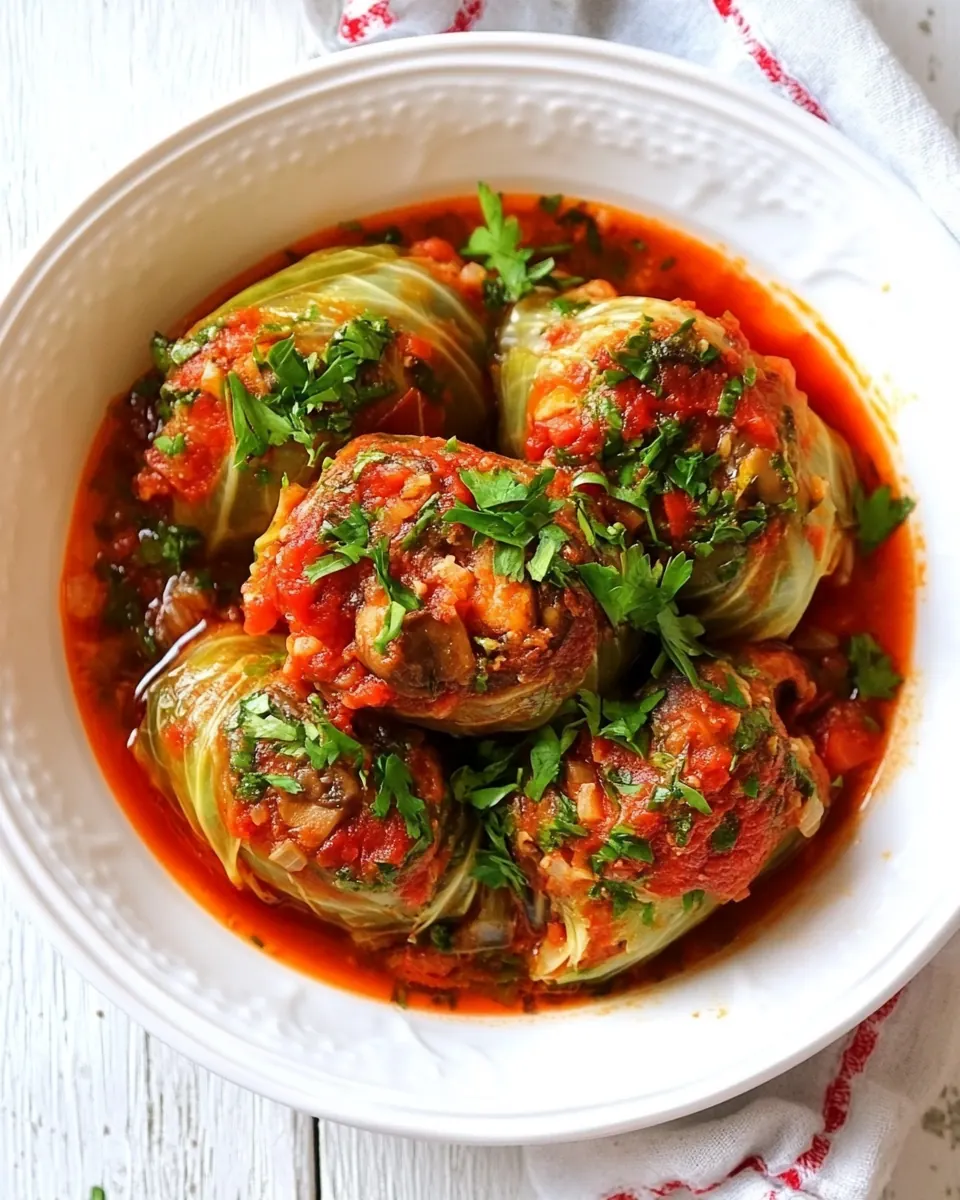
Mushroom Stuffed Cabbage Rolls
Mushroom Stuffed Cabbage Rolls are one of those recipes I go back to when I want food that feels like a warm, hearty welcome on a chilly evening.
My first memory of these rolls is from a tiny kitchen where my neighbor taught me how to carefully separate cabbage leaves without tearing them, while we chatted about everything from market prices to family stories. I still remember the soft, slightly tangy scent of the pickled cabbage and the earthy aroma of the pan where the mushrooms and onion sizzled, and I’ve recreated that comforting combination countless times since.
This version, the one I make when I want simplicity and depth, focuses on a savory mushroom and rice filling scented with dill and thyme. It’s a recipe that asks for patience at the rolling stage, but rewards you with tender leaves wrapped around a flavorful center. Family gatherings and quiet weeknight dinners have both been improved by a batch of these rolls, and I almost always make extra to freeze for days when I need a homey lift without much effort.
One thing I love about Mushroom Stuffed Cabbage Rolls is how adaptable they are. You can make them rustic and chunky, or refine the filling by mincing the vegetables finer for a silkier texture. Wherever I serve them, people slow down to enjoy the layers of taste, which for me is the ultimate compliment.
Recipe Snapshot
1 hr 20 mins
20 mins
60 mins
Medium
250 kcal
Mediterranean
Vegan, Gluten-Free
Dinner
Skillet, Clay pot, Non stick pan
What You’ll Enjoy About This Mushroom Stuffed Cabbage Rolls
Layered Comfort
I adore how Mushroom Stuffed Cabbage Rolls combine textures. The tender, slightly tangy cabbage leaf contrasts beautifully with the soft, savory filling, creating a bite that feels thoughtfully composed. I notice guests relax as they eat them, because each mouthful is balanced and familiar.
Vegetarian Satisfying Filling
I rely on the mix of mushrooms, rice, and aromatic herbs to deliver umami and body that stand in for meat. The sautéed vegetables caramelize lightly, adding complexity, and the rice swells to create a hearty, cohesive center that holds up well during simmering.
Pickled Cabbage Advantage
Using a pickled cabbage speeds the process and adds a gentle acidity that lifts the whole dish. When I rinse the leaves briefly, I keep an eye on the texture, choosing the softest leaves for rolling so the final result cuts cleanly without crumbling.
Make Ahead Friendly
These rolls are fantastic for planning. I often prepare the filling in advance, and the rolling or simmering can be done just before serving. That convenience makes them perfect for weekday dinners when I want something wholesome without last minute stress.
Comfort That Travels
They reheat beautifully and keep well in the fridge or freezer. I like to bring a pan to a gentle simmer so the sauce perks back up, since reheated rolls can sometimes seem dry if heated too aggressively.
Ingredients to Make Mushroom Stuffed Cabbage Rolls
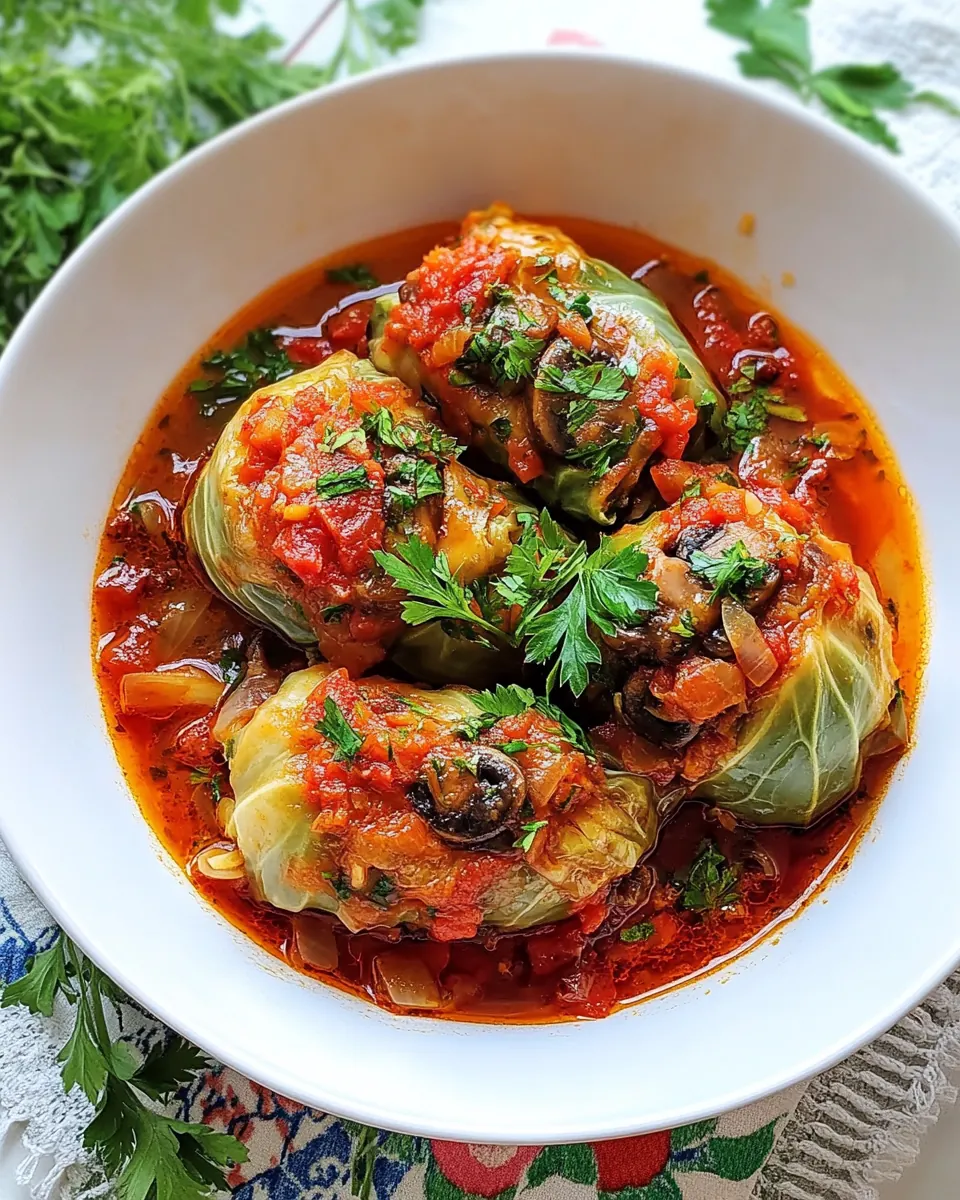
These ingredients form a harmonious ensemble. I think of the filling as the heart of the dish, while the pickled cabbage provides both structure and brightness. The key players are the earthy mushrooms, the sweet root vegetables, and the neutral, binding starch of rice. Together they create a filling that is savory, textured, and deeply satisfying.
- 1 medium carrot: Shredded finely to add natural sweetness and moisture that balances the savory filling; cooks until tender and blends with rice for texture contrast. Adds color and a subtle earthy flavor that complements mushrooms and tomato paste in the rolls.
- 1 onion: Sautéed until translucent to provide a savory aromatic base that deepens the overall flavor; releases natural sugars that enhance umami. Works with carrot and peppers to create a cohesive stuffing that binds with rice and mushrooms.
- 1 bell pepper: Chopped and cooked to lend a bright, slightly sweet peppery note and crunchy texture when lightly softened; balances the richness of mushrooms and tomato. Contributes freshness and color to the filling, harmonizing with dill and spices.
- 200 g mushrooms (button, cremini, or portobello): Finely chopped and sautéd to supply the primary umami and meaty texture in the vegetarian stuffing; helps create a hearty mouthfeel that mimics meat-based versions. Absorbs seasonings and pairs well with rice and tomato paste to form a flavorful core.
- 200 ml tomato paste: Diluted or used as a sauce base to bring concentrated tomato flavor, acidity, and a cohesive moistness to the rolls; helps bind the filling during baking or simmering. Balances the savory elements while providing a rich, tangy coating that prevents dryness.
- 1 bunch fresh dill: Chopped roughly to inject a fresh, bright herbal lift that cuts through the richness of the filling and sauce; adds aromatic complexity and a characteristic regional flavor. Sprinkled in filling and sauce for aroma and visual appeal.
- 150 g rice: Cooked until just tender and mixed into the filling to add bulk, neutral flavor, and a slightly creamy texture that helps bind ingredients. Absorbs surrounding flavors, ensuring the rolls are hearty and satisfying without overpowering herbs and vegetables.
- 1 medium pickled cabbage: Separated carefully into leaves and used as wrappers after softening; provides a slightly tangy, fermented background flavor that distinguishes this style of cabbage rolls. Holds the filling securely while contributing subtle acidity that balances the tomato and rice.
- 1 tbsp olive oil (or vegetable oil): Heated gently to coat vegetables and rice, aiding in sautéing and preventing sticking; contributes subtle fruitiness and smooth mouthfeel. Helps transfer heat evenly and enhances the overall richness without overwhelming other ingredients.
- salt: Added to taste to enhance and balance flavors by amplifying natural sweetness and suppressing bitterness; essential for seasoning the filling and sauce. Used sparingly to avoid over-salting, ensuring all ingredients sing together.
- pepper: Ground to season and highlight other flavors with mild heat and aromatic notes; helps round out the savory profile of the stuffing and sauce. Sprinkled during cooking and adjusted at the end for balanced seasoning.
- dried thyme (to taste): Sprinkled judiciously to introduce an earthy, slightly minty aroma that complements dill and mushrooms; used to taste to avoid overpowering delicate flavors. Adds a warm herbal undertone that elevates the overall bouquet of the dish.
Preparation Steps for Mushroom Stuffed Cabbage Rolls
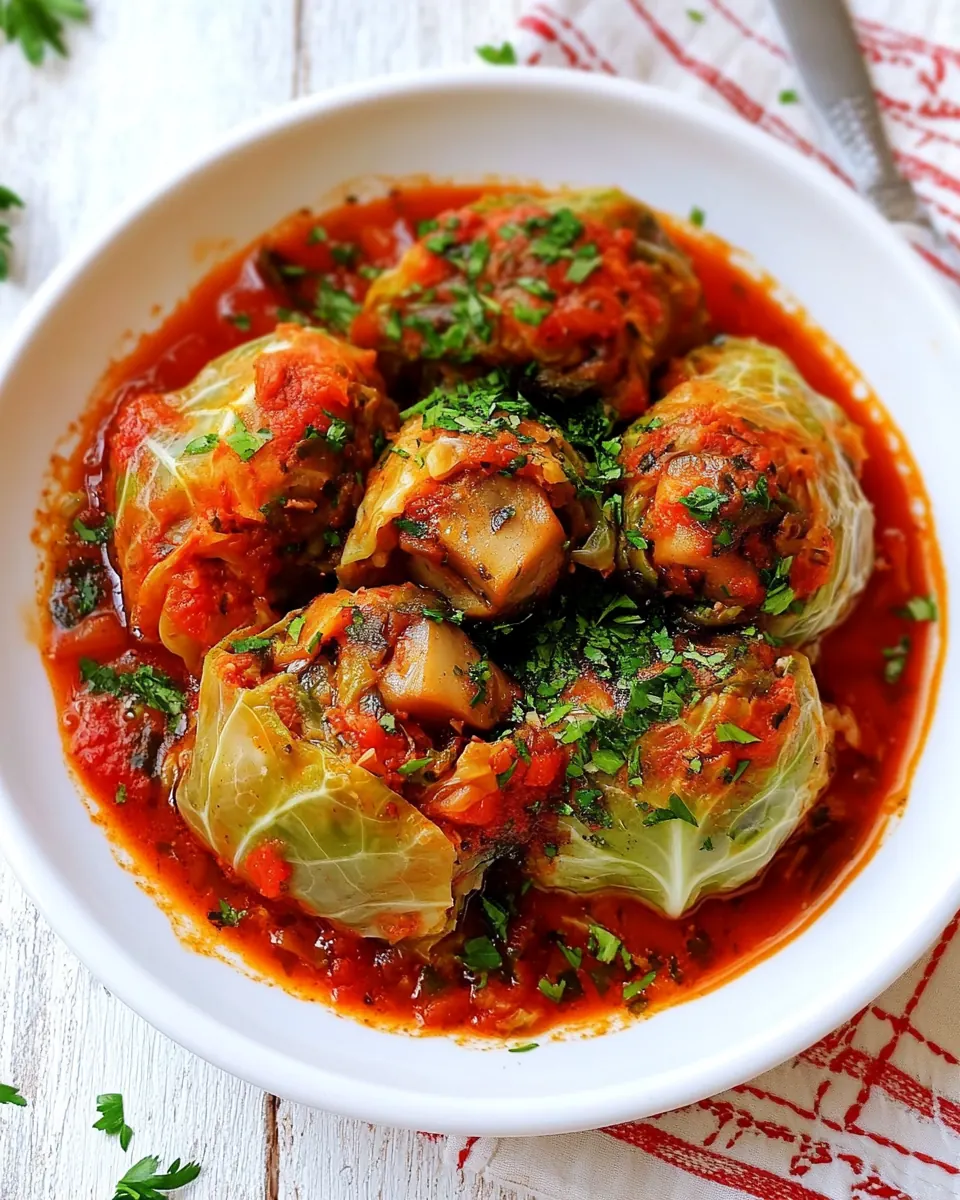
These steps guide you from prep to a simmering pot of fragrant rolls. I like to move methodically, giving each element its moment so the flavors build properly.
- Grate the carrot, dice the onion, bell pepper and mushrooms, and sauté in olive oil.: The pan should sing softly as the olive oil warms, releasing an aromatic shimmer that carries the first scent of the dish. You will hear a gentle sizzle as the diced onion hits the pan, and within moments it will soften and begin to pick up golden edges, signaling the Maillard reaction that brings sweetness and depth. The grated carrot quickly loses any raw edge and integrates, while the diced mushrooms release moisture then brown, concentrating their umami. Stir frequently so pieces cook evenly, and watch for a fragrant, caramelized mix rather than a steamed one. One common mistake is overcrowding the pan, which causes steaming instead of browning, so use a wide skillet or work in batches if needed. The reason this step matters is that caramelization builds complexity that can never be replicated by simply simmering later.
- When the vegetables turn golden brown, add 2-3 tablespoons of water and the rice.: At this point the pan carries nutty, roasted aromas and small browned bits cling to the surface, which is flavor gold. Adding a splash of water helps deglaze the pan, releasing those fond bits into the mix, and the rice will begin to toast slightly as it absorbs that flavor. You should hear a softer sound, more like gentle bubbling than active sizzle, and the visual should shift to a cohesive filling with the grains separating but beginning to plump. Stir thoroughly so each grain is coated. Avoid adding too much water here, which can create a mushy texture. This brief toasting and initial hydration gives the rice structure and allows it to finish cooking with the tomato base, ensuring the final filling is neither dry nor soupy.
- When the liquid is almost completely absorbed by the rice, add 2 tablespoons of tomato paste, sprinkle thyme, salt, pepper and 350 ml (1 1/2 cups) water. Cook until the liquid is absorbed, then add the chopped dill. Once cooked, allow to cool to room temperature.: As the liquid pulls into the rice , the mixture becomes denser and steam rises with a faint tang from any tomato notes present. Stirring after adding the tomato paste helps it dissolve and coat the grains, giving a rich, savory color. You will notice the aroma deepen and the texture transition from loose to a slightly sticky, cohesive mass when the liquid is gone. Folding in the chopped dill at the end adds a fresh herbal brightness that cuts through the richness, and cooling to room temperature firms the filling so it is easier to handle when rolling. A frequent error is rolling while the filling is still warm, which can make leaves soggy and cause them to split. Cooling avoids that and helps the rolls keep their shape.
- Choose the softer, easier to handle cabbage leaves for the sarmale. Rinse with water if they seem too salty.: The right leaf feels pliable and slightly tender when you press it, not stiff or brittle. If the leaves carry strong brine, a quick rinse and gentle squeeze will tame excess salt without removing their characteristic tang. Lay them flat and pat dry so the filling adheres and the leaf folds without tearing. Visual cues include flexible edges and minimal resistance as you fold; avoid the thick core pieces for rolling, they are better reserved for layering the pan. A common oversight is not trimming the tough rib from the center, which can make rolling awkward and leave a hard bite inside. Removing that rib creates a consistently textured wrap that cooks evenly.
- Place a small amount of the filling on the cabbage leaf and roll to your preferred size. Place in a clay pot or non-stick pan (place some chopped pickled cabbage on the bottom of the pot to make sure the rolls don't stick).: When you portion the filling, you're aiming for uniformity so cooking time remains consistent. The filling should feel moist but not dripping, and as you roll you should hear a subtle friction as the leaf wraps snugly around the center. Arranging a layer of chopped pickled cabbage on the bottom of the pot creates a protective barrier that prevents sticking and infuses extra flavor during simmering. Avoid overfilling, which can cause the rolls to burst open while cooking. Properly shaped rolls will sit compactly in the pan, creating an even surface for the sauce to cover and penetrate.
- Once the pan is filled with cabbage rolls, cover them with the water and the rest of the tomato paste (optionally add extra thyme) mixed together, and simmer for about an hour (or until the cabbage is soft and easy to cut. The cooking time will depend on the thickness of the leaf and how pickled it is.: As the pot comes to a gentle simmer you will notice a fragrant steam that carries tomato and herb notes, and small bubbles should break slowly across the surface. This low, steady simmer softens the leaves while allowing flavors to meld; high heat risks breaking the leaves or causing the filling to overcook. After thirty minutes check for tenderness by piercing a roll, you want the leaf soft but still holding shape. A common error is boiling vigorously, which can make rolls fall apart and the sauce reduce too quickly. The purpose of the slow simmer is to marry the filling with the tangy tomato broth and let the textures become uniformly tender.
- Serve with sour cream or Greek yogurt, while for the vegan version you can try soy cream or coconut yogurt. Don't forget the chili, polenta or freshly baked bread.: The final plate should present a warm bundle with glossy sauce and a hint of herb on top. The cool, tangy dollop of Greek yogurt or sour cream balances the acidity and amplifies creaminess, while a side like polenta or bread soaks up the sauce and completes the meal. When tasting, you should perceive a combination of tender texture, concentrated tomato, and herb lift, with a cooling contrast from the yogurt. Avoid serving everything piping hot without a resting moment, since the flavors settle and meld beautifully if they sit for a short while before eating.
Helpful Hints
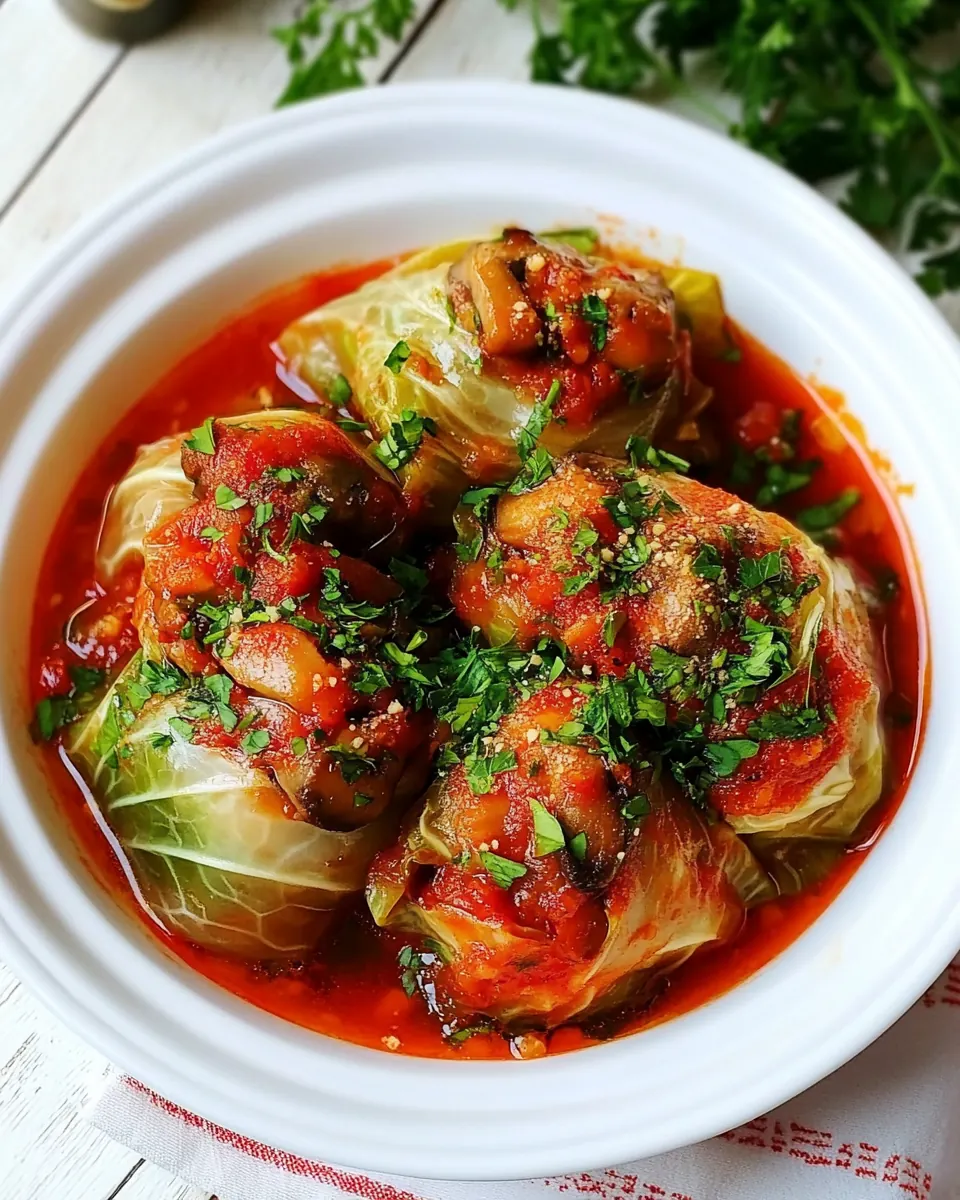
I like to collect little tricks that make this recipe more dependable. These hints focus on timing, texture, and storage so you get a reliably delicious result each time.
- Prep mise en place: Have all vegetables chopped and measured before you heat the pan, so the sauté proceeds smoothly and nothing overcooks while you prep other components.
- Control pan crowding: If the pan is too full the mushrooms and onion will steam instead of browning, so cook in batches if necessary to achieve caramelization.
- Adjust salt last: Because the pickled cabbage can add salt, taste the assembled rolls or the simmering liquid before adding more salt.
- Cool the filling: Let the filling reach room temperature before rolling so the leaves do not become soggy and the rolls hold their shape.
- Store smart: Keep leftover rolls in an airtight container with some sauce to prevent drying, and reheat gently over low heat to preserve texture.
Serving Options for Mushroom Stuffed Cabbage Rolls
This dish fits many occasions, and thoughtful serving can elevate it from weekday supper to celebratory centerpiece. I’ll outline complementary sides, occasion suggestions, and storage tips to help you plan meals around these rolls.
- Classic cozy dinner: Serve warm with a generous spoonful of Greek yogurt or sour cream on top, and fresh dill sprinkled for garnish, creating a comforting family meal.
- Weeknight bowl: Pair a few rolls with pan-softened polenta or steamed grains so the sauce can be mopped up, offering a quick and filling weeknight option.
- Vegetarian holiday: For fall gatherings, present a platter of neatly arranged rolls with extra sauce on the side and a bowl of cooling yogurt to balance the acidity, giving vegetarian guests a hearty main.
- Meal prep and storage: Cool completely, then transfer to airtight containers with some sauce to maintain moisture; store in the fridge up to four days, or freeze for up to three months.
- Reheating: Reheat gently over low heat with a splash of water or extra sauce, covering the pan to trap steam and keep the leaves tender without drying out.
- Seasonal pairings: In fall, highlight roasted root vegetables alongside the rolls; in spring, serve with a light green salad and lemony dressing for brightness.
FAQ
Conclusion
These Mushroom Stuffed Cabbage Rolls shine because they combine earthy mushrooms, tender rice, and bright herbs wrapped in tangy pickled cabbage, creating layers of comforting flavor. I encourage you to try them when you want a meal that feels like a warm hug and rewards a bit of slow, thoughtful cooking. Serve them with a cooling dollop of yogurt and perhaps a side of soft polenta, and enjoy how each bite balances texture and taste in a way that becomes even better the next day.
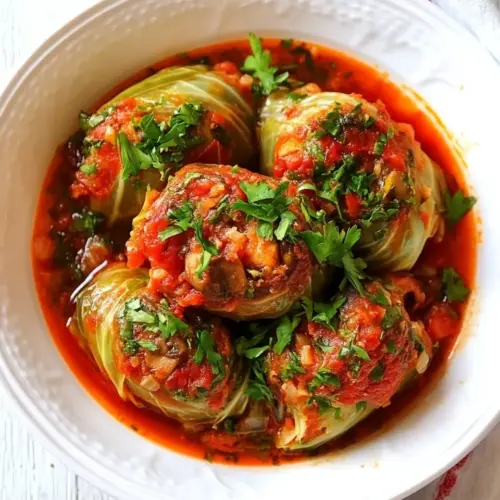
Mushroom Stuffed Cabbage Rolls
Equipment
- Skillet
- Clay pot
- Non-stick pan
Ingredients
- 1 medium carrot Shredded finely to add natural sweetness and moisture that balances the savory filling; cooks until tender and blends with rice for texture contrast. Adds color and a subtle earthy flavor that complements mushrooms and tomato paste in the rolls.
- 1 onion Sautéed until translucent to provide a savory aromatic base that deepens the overall flavor; releases natural sugars that enhance umami. Works with carrot and peppers to create a cohesive stuffing that binds with rice and mushrooms.
- 1 bell pepper Chopped and cooked to lend a bright, slightly sweet peppery note and crunchy texture when lightly softened; balances the richness of mushrooms and tomato. Contributes freshness and color to the filling, harmonizing with dill and spices.
- 200 g mushrooms (button, cremini, or portobello) Finely chopped and sautéd to supply the primary umami and meaty texture in the vegetarian stuffing; helps create a hearty mouthfeel that mimics meat-based versions. Absorbs seasonings and pairs well with rice and tomato paste to form a flavorful core.
- 200 ml tomato paste Diluted or used as a sauce base to bring concentrated tomato flavor, acidity, and a cohesive moistness to the rolls; helps bind the filling during baking or simmering. Balances the savory elements while providing a rich, tangy coating that prevents dryness.
- 1 bunch fresh dill Chopped roughly to inject a fresh, bright herbal lift that cuts through the richness of the filling and sauce; adds aromatic complexity and a characteristic regional flavor. Sprinkled in filling and sauce for aroma and visual appeal.
- 150 g rice Cooked until just tender and mixed into the filling to add bulk, neutral flavor, and a slightly creamy texture that helps bind ingredients. Absorbs surrounding flavors, ensuring the rolls are hearty and satisfying without overpowering herbs and vegetables.
- 1 medium pickled cabbage Separated carefully into leaves and used as wrappers after softening; provides a slightly tangy, fermented background flavor that distinguishes this style of cabbage rolls. Holds the filling securely while contributing subtle acidity that balances the tomato and rice.
- 1 tbsp olive oil (or vegetable oil) Heated gently to coat vegetables and rice, aiding in sautéing and preventing sticking; contributes subtle fruitiness and smooth mouthfeel. Helps transfer heat evenly and enhances the overall richness without overwhelming other ingredients.
- salt Added to taste to enhance and balance flavors by amplifying natural sweetness and suppressing bitterness; essential for seasoning the filling and sauce. Used sparingly to avoid over-salting, ensuring all ingredients sing together.
- pepper Ground to season and highlight other flavors with mild heat and aromatic notes; helps round out the savory profile of the stuffing and sauce. Sprinkled during cooking and adjusted at the end for balanced seasoning.
- dried thyme (to taste) Sprinkled judiciously to introduce an earthy, slightly minty aroma that complements dill and mushrooms; used to taste to avoid overpowering delicate flavors. Adds a warm herbal undertone that elevates the overall bouquet of the dish.
Instructions
- Grate the carrot, dice the onion, bell pepper and mushrooms, and sauté in olive oil.: The pan should sing softly as the olive oil warms, releasing an aromatic shimmer that carries the first scent of the dish. You will hear a gentle sizzle as the diced onion hits the pan, and within moments it will soften and begin to pick up golden edges, signaling the Maillard reaction that brings sweetness and depth. The grated carrot quickly loses any raw edge and integrates, while the diced mushrooms release moisture then brown, concentrating their umami. Stir frequently so pieces cook evenly, and watch for a fragrant, caramelized mix rather than a steamed one. One common mistake is overcrowding the pan, which causes steaming instead of browning, so use a wide skillet or work in batches if needed. The reason this step matters is that caramelization builds complexity that can never be replicated by simply simmering later.
- When the vegetables turn golden brown, add 2-3 tablespoons of water and the rice.: At this point the pan carries nutty, roasted aromas and small browned bits cling to the surface, which is flavor gold. Adding a splash of water helps deglaze the pan, releasing those fond bits into the mix, and the rice will begin to toast slightly as it absorbs that flavor. You should hear a softer sound, more like gentle bubbling than active sizzle, and the visual should shift to a cohesive filling with the grains separating but beginning to plump. Stir thoroughly so each grain is coated. Avoid adding too much water here, which can create a mushy texture. This brief toasting and initial hydration gives the rice structure and allows it to finish cooking with the tomato base, ensuring the final filling is neither dry nor soupy.
- When the liquid is almost completely absorbed by the rice, add 2 tablespoons of tomato paste, sprinkle thyme, salt, pepper and 350 ml (1 1/2 cups) water. Cook until the liquid is absorbed, then add the chopped dill. Once cooked, allow to cool to room temperature.: As the liquid pulls into the rice , the mixture becomes denser and steam rises with a faint tang from any tomato notes present. Stirring after adding the tomato paste helps it dissolve and coat the grains, giving a rich, savory color. You will notice the aroma deepen and the texture transition from loose to a slightly sticky, cohesive mass when the liquid is gone. Folding in the chopped dill at the end adds a fresh herbal brightness that cuts through the richness, and cooling to room temperature firms the filling so it is easier to handle when rolling. A frequent error is rolling while the filling is still warm, which can make leaves soggy and cause them to split. Cooling avoids that and helps the rolls keep their shape.
- Choose the softer, easier to handle cabbage leaves for the sarmale. Rinse with water if they seem too salty.: The right leaf feels pliable and slightly tender when you press it, not stiff or brittle. If the leaves carry strong brine, a quick rinse and gentle squeeze will tame excess salt without removing their characteristic tang. Lay them flat and pat dry so the filling adheres and the leaf folds without tearing. Visual cues include flexible edges and minimal resistance as you fold; avoid the thick core pieces for rolling, they are better reserved for layering the pan. A common oversight is not trimming the tough rib from the center, which can make rolling awkward and leave a hard bite inside. Removing that rib creates a consistently textured wrap that cooks evenly.
- Place a small amount of the filling on the cabbage leaf and roll to your preferred size. Place in a clay pot or non-stick pan (place some chopped pickled cabbage on the bottom of the pot to make sure the rolls don't stick).: When you portion the filling, you're aiming for uniformity so cooking time remains consistent. The filling should feel moist but not dripping, and as you roll you should hear a subtle friction as the leaf wraps snugly around the center. Arranging a layer of chopped pickled cabbage on the bottom of the pot creates a protective barrier that prevents sticking and infuses extra flavor during simmering. Avoid overfilling, which can cause the rolls to burst open while cooking. Properly shaped rolls will sit compactly in the pan, creating an even surface for the sauce to cover and penetrate.
- Once the pan is filled with cabbage rolls, cover them with the water and the rest of the tomato paste (optionally add extra thyme) mixed together, and simmer for about an hour (or until the cabbage is soft and easy to cut. The cooking time will depend on the thickness of the leaf and how pickled it is.: As the pot comes to a gentle simmer you will notice a fragrant steam that carries tomato and herb notes, and small bubbles should break slowly across the surface. This low, steady simmer softens the leaves while allowing flavors to meld; high heat risks breaking the leaves or causing the filling to overcook. After thirty minutes check for tenderness by piercing a roll, you want the leaf soft but still holding shape. A common error is boiling vigorously, which can make rolls fall apart and the sauce reduce too quickly. The purpose of the slow simmer is to marry the filling with the tangy tomato broth and let the textures become uniformly tender.
- Serve with sour cream or Greek yogurt, while for the vegan version you can try soy cream or coconut yogurt. Don't forget the chili, polenta or freshly baked bread.: The final plate should present a warm bundle with glossy sauce and a hint of herb on top. The cool, tangy dollop of Greek yogurt or sour cream balances the acidity and amplifies creaminess, while a side like polenta or bread soaks up the sauce and completes the meal. When tasting, you should perceive a combination of tender texture, concentrated tomato, and herb lift, with a cooling contrast from the yogurt. Avoid serving everything piping hot without a resting moment, since the flavors settle and meld beautifully if they sit for a short while before eating.
Notes
- Prep mise en place: Have all vegetables chopped and measured before you heat the pan, so the sauté proceeds smoothly and nothing overcooks while you prep other components.
- Control pan crowding: If the pan is too full the mushrooms and onion will steam instead of browning, so cook in batches if necessary to achieve caramelization.
- Adjust salt last: Because the pickled cabbage can add salt, taste the assembled rolls or the simmering liquid before adding more salt.
- Cool the filling: Let the filling reach room temperature before rolling so the leaves do not become soggy and the rolls hold their shape.
- Store smart: Keep leftover rolls in an airtight container with some sauce to prevent drying, and reheat gently over low heat to preserve texture.