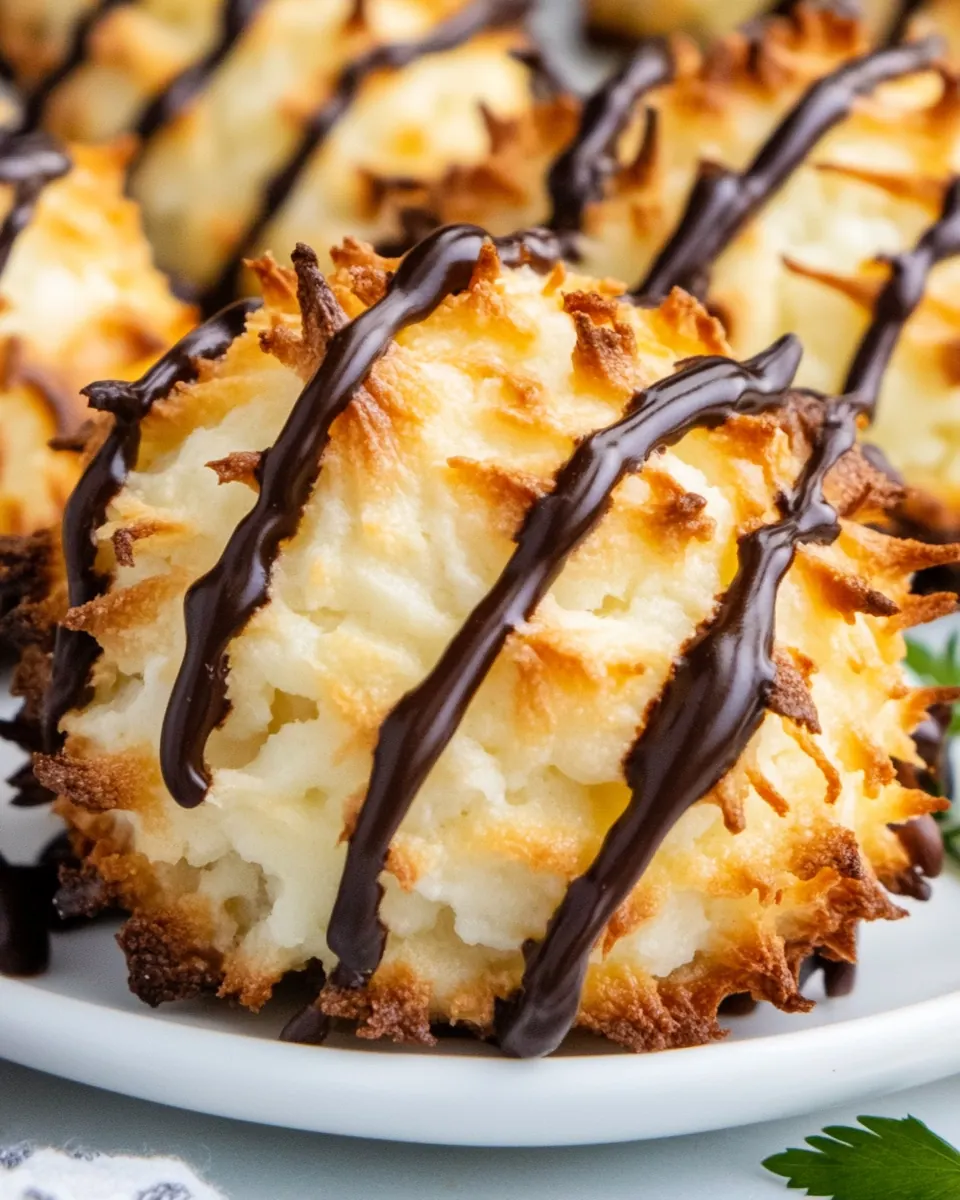
Kokosmakronen German Coconut Macaroons
Kokosmakronen German Coconut Macaroons have been a comfort from my childhood kitchen, the kind of cookie that signaled a visit from a beloved neighbor or a holiday table coming to life. I still remember the first time I tried to make them on my own, palms sticky with shredded coconut, the whole house smelling faintly of toasted sugar and warm egg whites. That initial batch was imperfect, but the texture and the memory it created were perfect enough to keep me baking them for years.
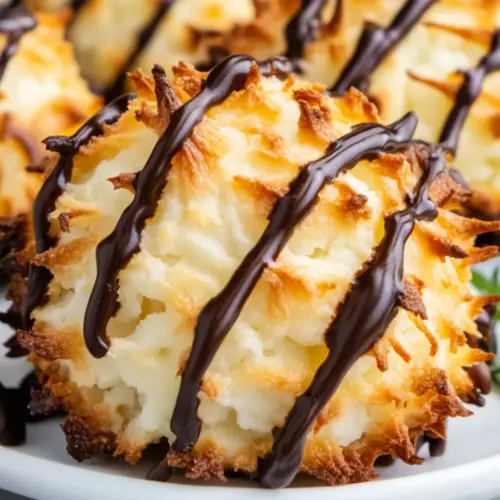
Over time I learned little tricks to coax out the best from coconut and egg whites, and every variation taught me something new. Sometimes I toast just a portion of the shredded coconut to add a smoky nuttiness, other times I keep everything pale for a softer, chewier bite. I also developed a fondness for dipping the finished macaroons in melted chocolate, the way it transforms each bite into a little celebration.
When I bring a tin of Kokosmakronen German Coconut Macaroons to a gathering, people hover before they ask for a recipe. They taste light, airy, and packed with coconut flavor, and there is a satisfying contrast when you add a glossy chocolate finish. Baking them became my way of offering a warm hello, and now I love sharing the steps that make them predictable and joyful every time.
Recipe Snapshot
40 mins
15 mins
25 mins
Easy
150 kcal
German
Gluten-Free, Low FODMAP
Desserts
Mixing bowl, Electric mixer, Skillet, Baking sheets, Parchment paper, Wire rack, Spatula, Cookie scoop
The Best Thing About This Kokosmakronen German Coconut Macaroons
Crunch and Chew in One Bite
I adore how Kokosmakronen German Coconut Macaroons manage to be both crisp on the outside and tender inside. When you bake them until the edges are lightly golden, you get that tiny shatter followed by a soft, coconutty chew, a contrast that keeps me reaching for another.
Simple Ingredients, Bold Flavor
These macaroons are proof that a short shopping list can still deliver on taste. With just egg whites, granulated sugar, vanilla sugar, salt, and lots of coconut, the flavors concentrate. I love that each component plays a clear role, and I often marvel at how a minimal approach produces such a memorable cookie.
Fast to Make, Great for Gifts
I’ve wrapped these cookies as presents many times, they bake quickly and stack neatly. Because they hold up well in an airtight tin, they’re ideal for making a batch ahead for birthdays or casual get togethers, and they travel without falling apart.
Flexible Finish Options
Whether you choose to leave them plain or dip them in chocolate, the result feels intentional. I often alternate between dipping the bottoms in dark chocolate for contrast, or drizzling milk chocolate for a playful look. That flexibility keeps the recipe interesting.
Accessible to All Skill Levels
I recommend this to bakers of every level because the technique is forgiving. Even if your first batch is not perfectly uniform, the flavors still shine. With a few pointers, you can easily master them and feel proud of the results.
Ingredients Required for Kokosmakronen German Coconut Macaroons
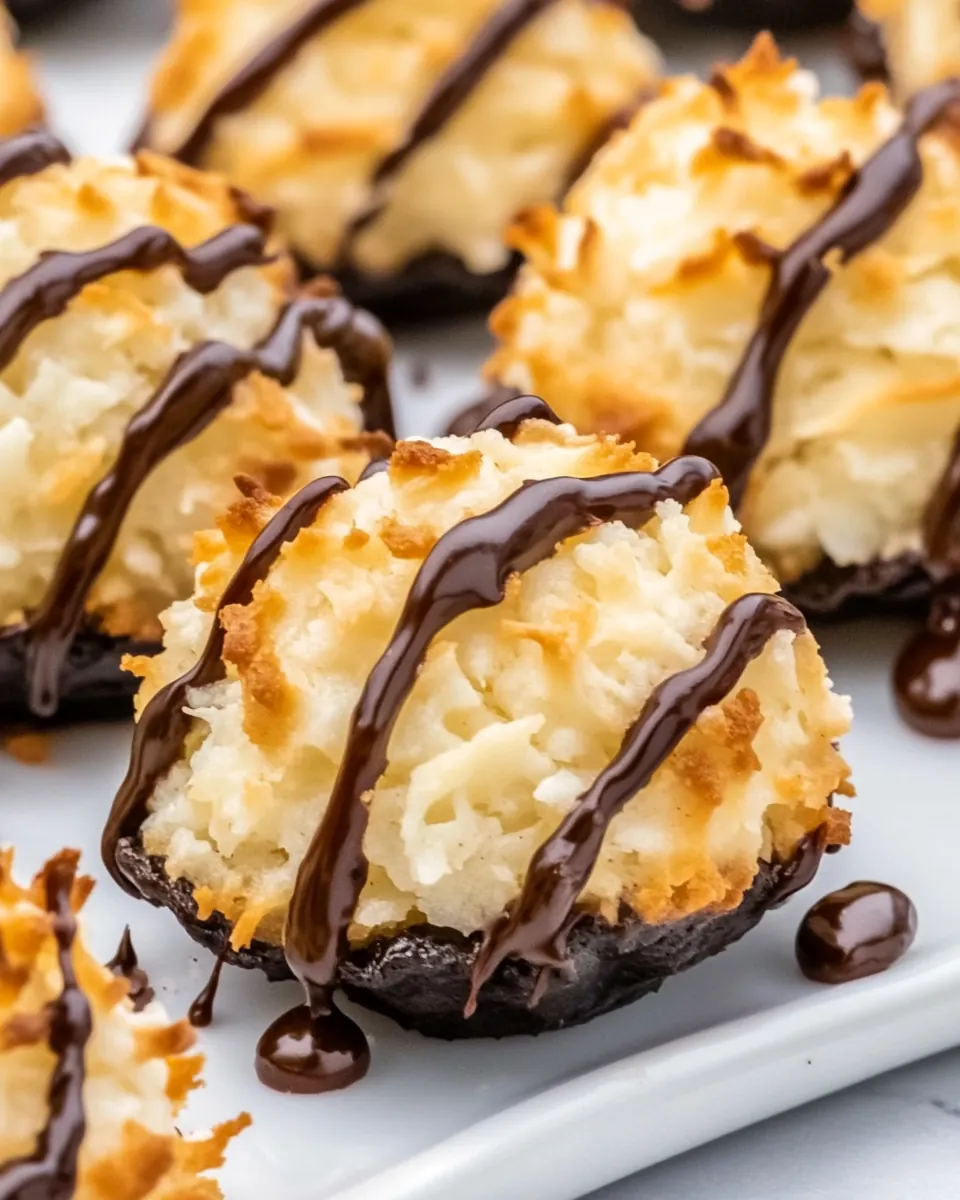
These ingredients are unapologetically straightforward, built to highlight the tropical nuttiness of coconut. The core idea is energy and balance: whipped egg whites provide lift, sugar stabilizes texture and sweetness, and a pinch of salt sharpens the flavors. The optional chocolate adds depth and a glossy finish. Together, they produce a cookie that is at once simple and nuanced, relying on technique more than complexity.
- 4 egg whites: Whip to soft peaks and provide structure and lift when beaten, creating the airy base for the macaroons' chewy interior; incorporate slowly for stable meringue and glossy texture.
- 3/4 cup granulated sugar: Sweeten and stabilize the egg whites while adding necessary sweetness to balance coconut; dissolve fully to avoid graininess and to help create a firm outer crust.
- 1 packet vanillezucker (vanilla sugar), can substitute 3/4 teaspoon vanilla extract: Flavor subtly with fragrant vanilla notes and enhance overall aroma; use the packet as traditional or substitute extract sparingly for consistent vanilla flavor.
- 1/8 teaspoons salt: Season delicately to enhance sweetness and balance flavors; even a small pinch improves overall taste and strengthens the meringue slightly.
- 3 1/2 cups unsweetened shredded coconut: Add bulk, texture, and primary coconut flavor to form the body of the macaroons; fold in thoroughly so each bite has moist, chewy coconut strands.
- 8 ounces dark, milk, or white chocolate for dipping or drizzling (), chopped (or about 1 1/3 cup chocolate chips) (optional): Melt for dipping or chop for drizzling to add richness and complementary chocolate notes; choose preferred chocolate type and temper or melt gently for glossy finish.
- 40 size 40mm Back Oblaten (see blog post for reasons these are used), for GF omit the Oblaten: Provide a thin edible base that prevents sticking and keeps bottoms flat during baking; omit for gluten-free versions and use parchment or lightly greased sheets instead.
The Process for Making Kokosmakronen German Coconut Macaroons
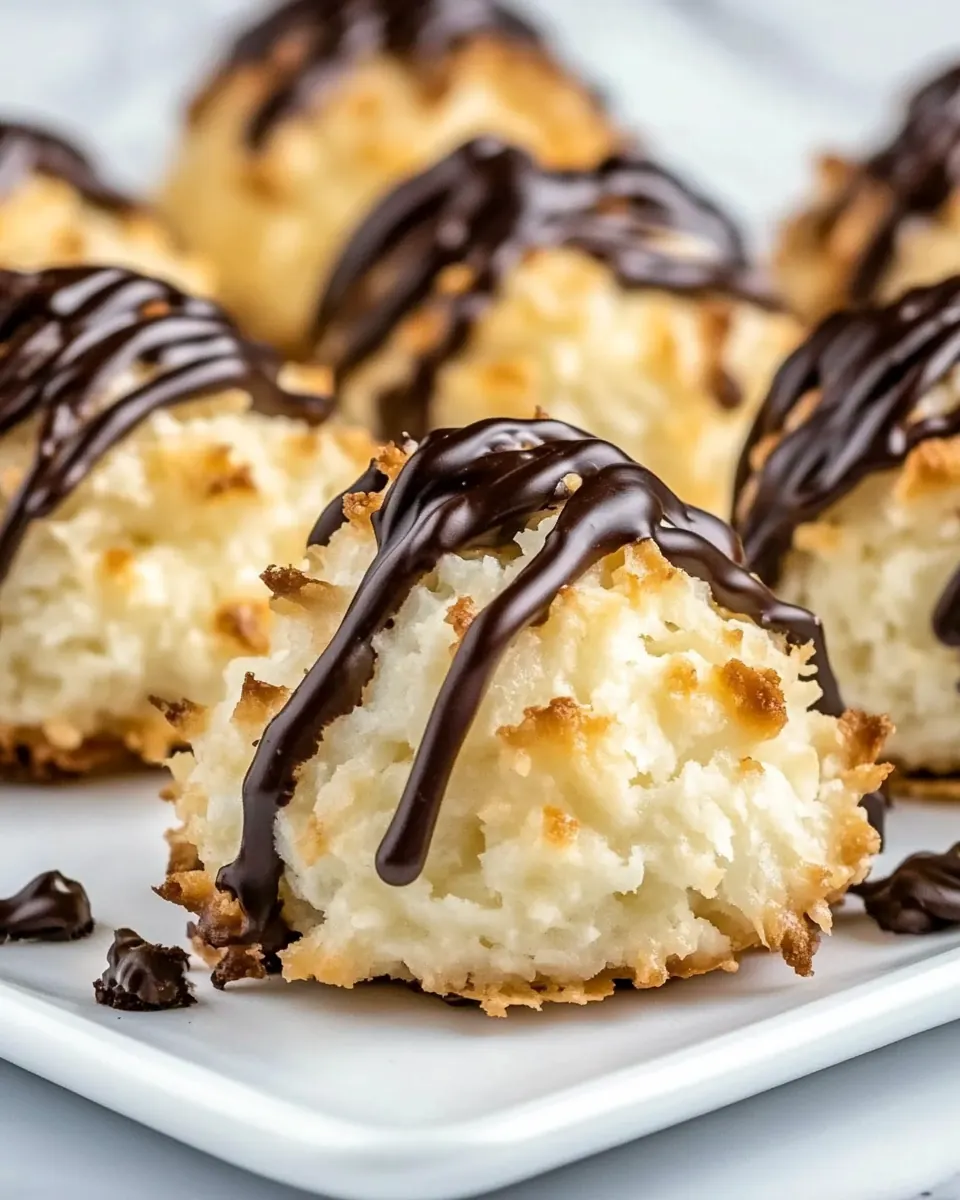
I like to approach baking these as a calm, sensory process where small observations guide decisions. Start focused, listen for the rhythm of the whisk, and watch how the coconut changes as it toasts, because these cues tell you when you are on track.
- Preheat the oven to 325 F and line two baking sheets with either parchment paper or a silicone mat. Distribute 40 Back Oblaten on the baking sheets.: The scent of warm air fills the kitchen as the oven reaches 325 F , and preparing the sheets early means you won't be rushed when the mixture is ready. Lining pans prevents sticking and makes cleanup painless, while placing the Back Oblaten ensures each macaroon has a stable base. A common slip is to skip spacing the Oblaten evenly, which can cause uneven baking, so arrange them with attention to gaps between pieces. You should notice a faint warm hum from the oven when it's ready, and the prepared trays should feel light and easy to move in and instant rhythm when sliding them in.
- In a dry skillet, toast the coconut over medium heat for a few minutes until roughly half of the coconut turns golden. This step is optional but it brings out more of the coconut flavor. Transfer the coconut to a plate to cool.: Toasting releases fragrant oils from the coconut , producing a toasty, nutty aroma that deepens the final cookie flavor. As you stir, listen for a gentle whisper of movement and watch for flecks of gold to appear, keeping the heat at medium to avoid burning. If the skillet becomes too hot, the coconut will darken too quickly and taste bitter, so lift it off the heat and transfer to a cool plate as soon as color appears. Cooling the coconut prevents it from steaming the meringue mixture and changing texture, and the contrast between toasted and untoasted bits creates a layered flavor profile.
- In a mixing bowl beat the egg whites until they're foamy then add the salt and vanilla sugar. Gradually add the granulated sugar as you continue to beat the egg whites. Beat until stiff peaks form. Gently fold in the coconut. Use two spoons or a medium cookie scoop to evenly distribute the mixture onto the Oblaten. Bake the coconut macaroons on the middle shelf of the oven for 25-30 minutes until they're golden brown. How brown you let your macaroons get is up to you. Some prefer them paler, some browner to bring out more coconut flavor. Transfer the coconut macaroons to a wire rack to cool completely.: As the egg whites start to foam, you will hear a soft change in the sound of the whisk, and the mixture will shift from glossy liquid to airy foam. Adding the salt and vanillezucker at this stage helps the foam stabilise and adds structure. Be mindful of bowl cleanliness since any trace of grease will prevent proper whipping, and avoid adding the sugar too early or the whites may remain watery. The foamy stage should feel light under the whisk and look pearly before moving to the next addition.
- If dipping the macaroons in chocolate, gently melt the chocolate in the microwave, stirring every 20 seconds, or over a double boiler until smooth. Dip and/or drizzle each macaroon and set them on parchment paper to fully set. Once set, transfer them to an airtight container. The Kokosmakronen will keep for up to a week. You can also freeze them for up to 3 months (layer them between parchment paper to avoid sticking) and let them thaw at room temperature.: When the granulated sugar blends in slowly, you will feel the mixture gaining body and the peaks will become shinier. Pouring the sugar in increments allows it to dissolve and prevents a gritty texture, which is why I always add a spoonful at a time while the mixer runs. If you rush this, you can deflate the foam or leave undissolved sugar, so patience here ensures a silky, stable meringue that will carry the coconut without collapsing.
- Beat until stiff peaks form. Gently fold in the coconut.: At the stiff peak stage, the egg whites will hold firm, standing tall and glossy, and the bowl will feel stable when tipped slightly. Folding in the coconut requires a light touch, using a spatula to combine without knocking the air out. This keeps the macaroons airy; overmixing will make them dense and flat. The texture after folding should look cohesive yet lofty, with coconut evenly distributed and no streaks of white meringue visible.
- Use two spoons or a medium cookie scoop to evenly distribute the mixture onto the Oblaten.: Scooping the mixture gives the macaroons consistent size and bake time, and you will hear a soft plop as each mound is placed. Aim for uniformity because varied sizes lead to uneven browning. A frequent mistake is packing the scoop too tightly, which compacts the air and yields heavier cookies. Leave space between mounds so air circulates, and you will notice the tops hold shape and take on a gentle dome as they bake.
- Bake the coconut macaroons on the middle shelf of the oven for 25 to 30 minutes until they're golden brown.: As they bake, the kitchen fills with the evolving scent of caramelising sugar and toasted coconut . The visual cue to stop is a warm golden brown at the edges and peaks that look set, while the bottoms on the Oblaten will firm. Baking on the middle shelf gives even heat exposure, avoiding overbrowning at the top or undercooking below. Opening the oven too often cools the environment and can cause uneven rise, so resist peeking frequently and use color and firmness as your guide.
- How brown you let your macaroons get is up to you. Some prefer them paler, some browner to bring out more coconut flavor.: Deciding color affects both aroma and taste, with deeper browning amplifying nutty notes through Maillard reactions, and paler cookies retaining a softer, subtler coconut character. Watch carefully near the end of the bake because color can change quickly, and remove them when they meet your preferred shade. A common error is leaving them until they crack or darken too much, which creates a bitter edge, so err on the side of slightly lighter if unsure.
- Transfer the coconut macaroons to a wire rack to cool completely.: Cooling on a rack allows air to circulate and prevents steam from making the bottoms soggy, preserving that crisp exterior. As they cool, you will notice the aroma mellow and the texture set, turning slightly firmer to the touch. Rushing to package warm cookies traps moisture and softens them, so allow full cooling for the best snap and storage life.
- If dipping the macaroons in chocolate, gently melt the chocolate in the microwave, stirring every 20 seconds, or over a double boiler until smooth.: Melted chocolate should be glossy and fluid, and stirring regularly prevents hotspots that can seize the mixture. Using short microwaving bursts keeps temperature control easy, and a double boiler provides gentle, even heat that protects the chocolate. If chocolate seizes, it will grain and be unusable, so avoid water exposure and high heat. Keeping the melted chocolate warm but not hot helps it coat the macaroons smoothly.
- Dip and/or drizzle each macaroon and set them on parchment paper to fully set. Once set, transfer them to an airtight container.: The sensation of dipping is tactile and careful, you will feel the contrast between the dry coconut and the warm, silky chocolate . Letting the coating set on parchment ensures a clean release and tidy presentation. Place the finished macaroons in a single layer or with parchment between layers in an airtight container to preserve texture. A mistake to avoid is stacking them before the chocolate firms, which smudges the finish and sticks layers together.
- The Kokosmakronen will keep for up to a week. You can also freeze them for up to 3 months (layer them between parchment paper to avoid sticking) and let them thaw at room temperature.: Stored properly, these cookies maintain a pleasant chew and crisp edge, while freezing locks in freshness for longer. When thawing, let them come to room temperature to regain their balanced texture, and avoid condensation by thawing in an airtight container when possible. Repeated freeze thaw cycles can degrade the texture, so portion before freezing for best results.
Customization Ideas
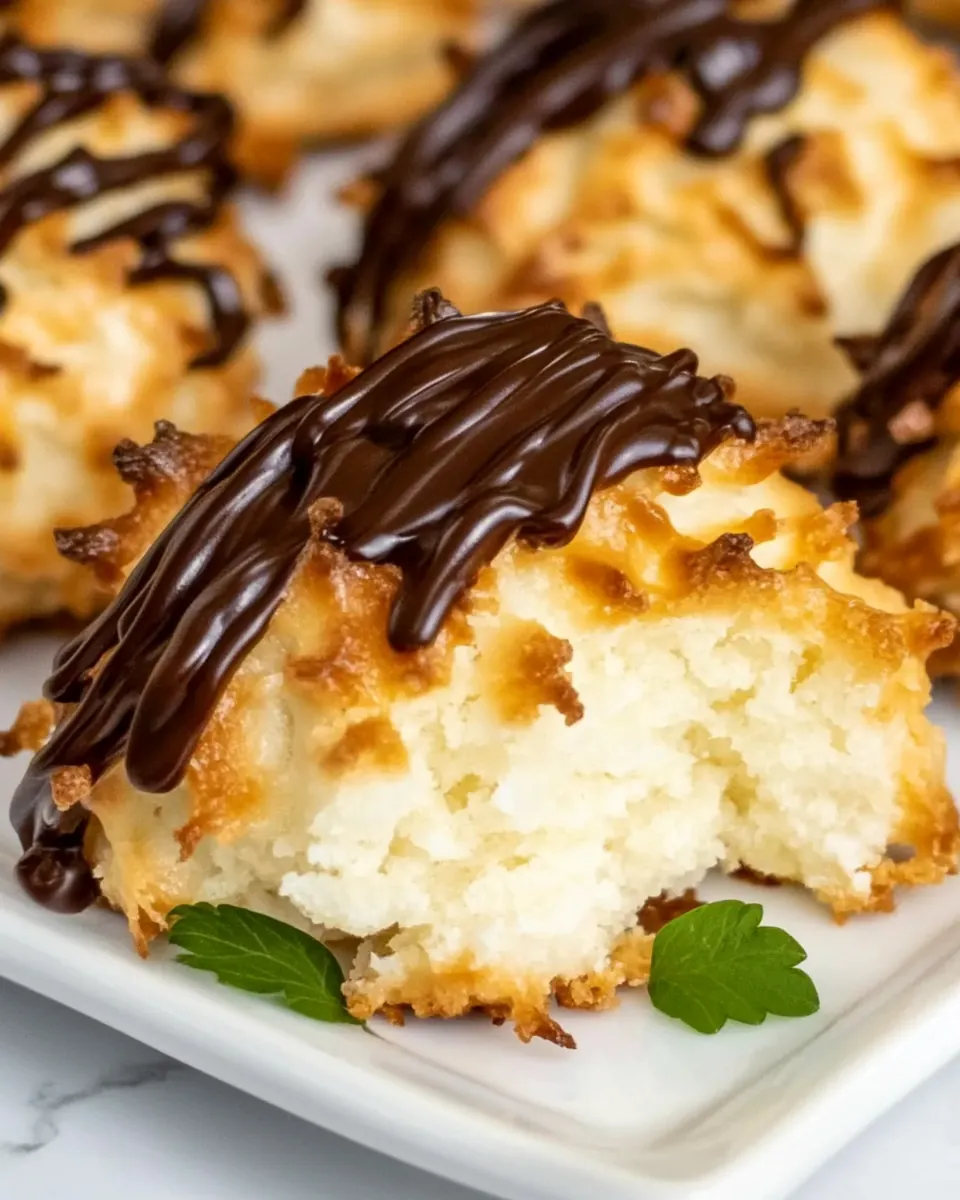
These ideas help you make the recipe your own while honoring the classic spirit of the cookie. Below are practical variations and serving notes to expand what these macaroons can do.
- Chocolate Dipped Make the cookies more decadent by coating the bottoms or drizzling the tops with melted chocolate, using tempered chocolate for a glossy finish and snap.
- Partial Toasting Toast only half of the shredded coconut to introduce a nutty dimension while keeping some chewy, untoasted pieces for textural contrast.
- Vanilla Swap If you do not have vanillezucker, use 3/4 teaspoon vanilla extract instead, adding it with the salt during whipping for balanced flavor.
- Oblaten Optional If you omit the Back Oblaten for a gluten free approach, space mounds slightly wider to accommodate minor spreading and prevent sticking.
- Freeze Ahead Freeze baked macaroons in single layers separated by parchment for up to 3 months, then thaw at room temperature before serving to preserve texture.
Serving Suggestions
These macaroons are wonderfully versatile for year round gatherings and small celebrations. Serve them at brunch with coffee, include them on a holiday cookie plate, or pack them as a thoughtful homemade gift. Their compact size makes them ideal for nibbling, and their shelf stability means you can prepare them in advance for busy hosting days.
- Casual Coffee Break Place a small stack on a saucer beside espresso or strong brewed coffee for a midday treat that balances sweet and toasted notes.
- Holiday Cookie Tray Arrange with other small cookies and confections for seasonal get togethers, offering a lighter coconut option among richer choices.
- Gifting Layer macaroons between parchment in a decorative tin for an elegant homemade present that travels well.
- Event Favor Package three to five in a clear bag with ribbon for wedding favors or shower takeaways, highlighting their handcrafted charm.
- Storage Keep in an airtight container at room temperature for up to a week, or freeze in single layers separated by parchment for up to three months, then thaw at room temperature.
- Seasonal Pairings These work especially well alongside citrusy cookies in winter or light fruit tartlets in summer, offering contrast in texture and sweetness.
FAQ
Conclusion
What makes these Kokosmakronen German Coconut Macaroons special is their simplicity and the way a few thoughtful steps coax deep coconut flavor and an irresistible texture. They are approachable for bakers at any level, travel well, and adapt easily to finishing touches like chocolate. Give them a try the next time you want a small, comforting batch to share, and enjoy how quickly they become a go to in your repertoire.
Kokosmakronen German Coconut Macaroons
Equipment
- Mixing Bowl
- Electric Mixer
- Skillet
- Baking Sheets
- Parchment Paper
- Wire Rack
- Spatula
- Cookie Scoop
Ingredients
- 4 egg whites Whip to soft peaks and provide structure and lift when beaten, creating the airy base for the macaroons' chewy interior; incorporate slowly for stable meringue and glossy texture.
- 3/4 cup granulated sugar Sweeten and stabilize the egg whites while adding necessary sweetness to balance coconut; dissolve fully to avoid graininess and to help create a firm outer crust.
- 1 packet vanillezucker (vanilla sugar), can substitute 3/4 teaspoon vanilla extract Flavor subtly with fragrant vanilla notes and enhance overall aroma; use the packet as traditional or substitute extract sparingly for consistent vanilla flavor.
- 1/8 teaspoons salt Season delicately to enhance sweetness and balance flavors; even a small pinch improves overall taste and strengthens the meringue slightly.
- 3 1/2 cups unsweetened shredded coconut Add bulk, texture, and primary coconut flavor to form the body of the macaroons; fold in thoroughly so each bite has moist, chewy coconut strands.
- 8 ounces dark, milk, or white chocolate for dipping or drizzling (optional), chopped (or about 1 1/3 cup chocolate chips) Melt for dipping or chop for drizzling to add richness and complementary chocolate notes; choose preferred chocolate type and temper or melt gently for glossy finish.
- 40 size 40mm Back Oblaten (see blog post for reasons these are used), for GF omit the Oblaten Provide a thin edible base that prevents sticking and keeps bottoms flat during baking; omit for gluten-free versions and use parchment or lightly greased sheets instead.
Instructions
- Preheat the oven to 325 F and line two baking sheets with either parchment paper or a silicone mat. Distribute 40 Back Oblaten on the baking sheets.: The scent of warm air fills the kitchen as the oven reaches 325 F , and preparing the sheets early means you won't be rushed when the mixture is ready. Lining pans prevents sticking and makes cleanup painless, while placing the Back Oblaten ensures each macaroon has a stable base. A common slip is to skip spacing the Oblaten evenly, which can cause uneven baking, so arrange them with attention to gaps between pieces. You should notice a faint warm hum from the oven when it's ready, and the prepared trays should feel light and easy to move in and instant rhythm when sliding them in.
- In a dry skillet, toast the coconut over medium heat for a few minutes until roughly half of the coconut turns golden. This step is optional but it brings out more of the coconut flavor. Transfer the coconut to a plate to cool.: Toasting releases fragrant oils from the coconut , producing a toasty, nutty aroma that deepens the final cookie flavor. As you stir, listen for a gentle whisper of movement and watch for flecks of gold to appear, keeping the heat at medium to avoid burning. If the skillet becomes too hot, the coconut will darken too quickly and taste bitter, so lift it off the heat and transfer to a cool plate as soon as color appears. Cooling the coconut prevents it from steaming the meringue mixture and changing texture, and the contrast between toasted and untoasted bits creates a layered flavor profile.
- In a mixing bowl beat the egg whites until they're foamy then add the salt and vanilla sugar. Gradually add the granulated sugar as you continue to beat the egg whites. Beat until stiff peaks form. Gently fold in the coconut. Use two spoons or a medium cookie scoop to evenly distribute the mixture onto the Oblaten. Bake the coconut macaroons on the middle shelf of the oven for 25-30 minutes until they're golden brown. How brown you let your macaroons get is up to you. Some prefer them paler, some browner to bring out more coconut flavor. Transfer the coconut macaroons to a wire rack to cool completely.: As the egg whites start to foam, you will hear a soft change in the sound of the whisk, and the mixture will shift from glossy liquid to airy foam. Adding the salt and vanillezucker at this stage helps the foam stabilise and adds structure. Be mindful of bowl cleanliness since any trace of grease will prevent proper whipping, and avoid adding the sugar too early or the whites may remain watery. The foamy stage should feel light under the whisk and look pearly before moving to the next addition.
- If dipping the macaroons in chocolate, gently melt the chocolate in the microwave, stirring every 20 seconds, or over a double boiler until smooth. Dip and/or drizzle each macaroon and set them on parchment paper to fully set. Once set, transfer them to an airtight container. The Kokosmakronen will keep for up to a week. You can also freeze them for up to 3 months (layer them between parchment paper to avoid sticking) and let them thaw at room temperature.: When the granulated sugar blends in slowly, you will feel the mixture gaining body and the peaks will become shinier. Pouring the sugar in increments allows it to dissolve and prevents a gritty texture, which is why I always add a spoonful at a time while the mixer runs. If you rush this, you can deflate the foam or leave undissolved sugar, so patience here ensures a silky, stable meringue that will carry the coconut without collapsing.
- Beat until stiff peaks form. Gently fold in the coconut.: At the stiff peak stage, the egg whites will hold firm, standing tall and glossy, and the bowl will feel stable when tipped slightly. Folding in the coconut requires a light touch, using a spatula to combine without knocking the air out. This keeps the macaroons airy; overmixing will make them dense and flat. The texture after folding should look cohesive yet lofty, with coconut evenly distributed and no streaks of white meringue visible.
- Use two spoons or a medium cookie scoop to evenly distribute the mixture onto the Oblaten.: Scooping the mixture gives the macaroons consistent size and bake time, and you will hear a soft plop as each mound is placed. Aim for uniformity because varied sizes lead to uneven browning. A frequent mistake is packing the scoop too tightly, which compacts the air and yields heavier cookies. Leave space between mounds so air circulates, and you will notice the tops hold shape and take on a gentle dome as they bake.
- Bake the coconut macaroons on the middle shelf of the oven for 25 to 30 minutes until they're golden brown.: As they bake, the kitchen fills with the evolving scent of caramelising sugar and toasted coconut . The visual cue to stop is a warm golden brown at the edges and peaks that look set, while the bottoms on the Oblaten will firm. Baking on the middle shelf gives even heat exposure, avoiding overbrowning at the top or undercooking below. Opening the oven too often cools the environment and can cause uneven rise, so resist peeking frequently and use color and firmness as your guide.
- How brown you let your macaroons get is up to you. Some prefer them paler, some browner to bring out more coconut flavor.: Deciding color affects both aroma and taste, with deeper browning amplifying nutty notes through Maillard reactions, and paler cookies retaining a softer, subtler coconut character. Watch carefully near the end of the bake because color can change quickly, and remove them when they meet your preferred shade. A common error is leaving them until they crack or darken too much, which creates a bitter edge, so err on the side of slightly lighter if unsure.
- Transfer the coconut macaroons to a wire rack to cool completely.: Cooling on a rack allows air to circulate and prevents steam from making the bottoms soggy, preserving that crisp exterior. As they cool, you will notice the aroma mellow and the texture set, turning slightly firmer to the touch. Rushing to package warm cookies traps moisture and softens them, so allow full cooling for the best snap and storage life.
- If dipping the macaroons in chocolate, gently melt the chocolate in the microwave, stirring every 20 seconds, or over a double boiler until smooth.: Melted chocolate should be glossy and fluid, and stirring regularly prevents hotspots that can seize the mixture. Using short microwaving bursts keeps temperature control easy, and a double boiler provides gentle, even heat that protects the chocolate. If chocolate seizes, it will grain and be unusable, so avoid water exposure and high heat. Keeping the melted chocolate warm but not hot helps it coat the macaroons smoothly.
- Dip and/or drizzle each macaroon and set them on parchment paper to fully set. Once set, transfer them to an airtight container.: The sensation of dipping is tactile and careful, you will feel the contrast between the dry coconut and the warm, silky chocolate . Letting the coating set on parchment ensures a clean release and tidy presentation. Place the finished macaroons in a single layer or with parchment between layers in an airtight container to preserve texture. A mistake to avoid is stacking them before the chocolate firms, which smudges the finish and sticks layers together.
- The Kokosmakronen will keep for up to a week. You can also freeze them for up to 3 months (layer them between parchment paper to avoid sticking) and let them thaw at room temperature.: Stored properly, these cookies maintain a pleasant chew and crisp edge, while freezing locks in freshness for longer. When thawing, let them come to room temperature to regain their balanced texture, and avoid condensation by thawing in an airtight container when possible. Repeated freeze thaw cycles can degrade the texture, so portion before freezing for best results.
Notes
- Chocolate Dipped Make the cookies more decadent by coating the bottoms or drizzling the tops with melted chocolate, using tempered chocolate for a glossy finish and snap.
- Partial Toasting Toast only half of the shredded coconut to introduce a nutty dimension while keeping some chewy, untoasted pieces for textural contrast.
- Vanilla Swap If you do not have vanillezucker, use 3/4 teaspoon vanilla extract instead, adding it with the salt during whipping for balanced flavor.
- Oblaten Optional If you omit the Back Oblaten for a gluten free approach, space mounds slightly wider to accommodate minor spreading and prevent sticking.
- Freeze Ahead Freeze baked macaroons in single layers separated by parchment for up to 3 months, then thaw at room temperature before serving to preserve texture.
