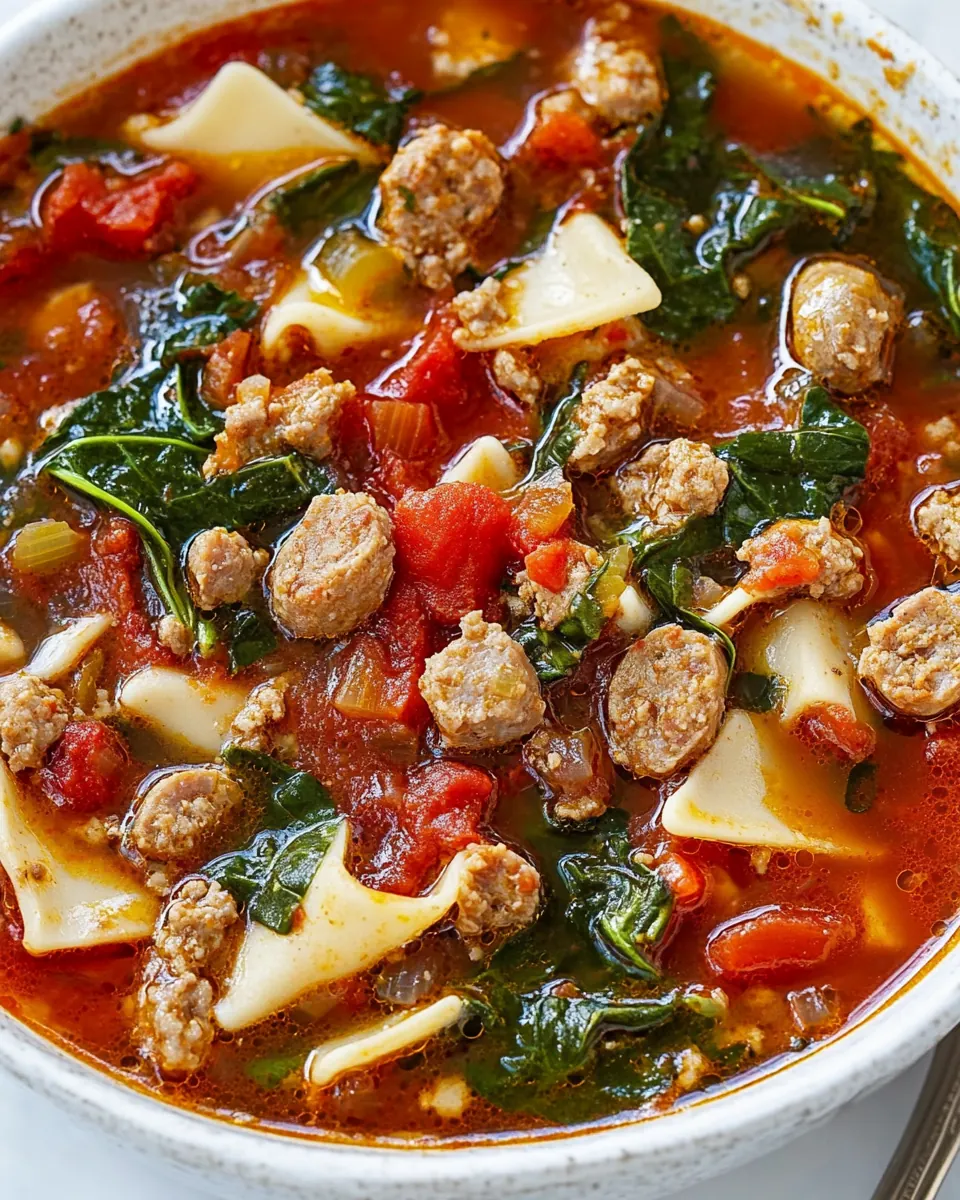
Italian Sausage Soup
Italian Sausage Soup has been a weekday lifesaver in my kitchen ever since a blustery evening pushed me to toss together whatever I had on hand and call it dinner. I still remember the cozy steam fogging the window as I stirred the pot, the kitchen filling with the warm, herbaceous aroma of Italian seasoning and the savory, heady scent of browned Italian sausage. That night my family gathered around the table, bowls steaming, and an offhand comment from my partner turned into the highest compliment a recipe can receive, we need this in rotation.
Over the years I refined the balance, cutting back on salt while letting the vegetables and canned diced tomatoes do the heavy lifting for flavor. I love how the tender pasta nests in the broth and how a handful of baby spinach at the end brightens everything up. What began as comfort food on a cold evening has become the recipe I turn to when I want something simple, hearty, and reliably satisfying.
Recipe Snapshot
30 mins
10 mins
20 mins
Easy
320 kcal
Italian
Paleo, Gluten-Free
Soups
Large pot, Wooden spoon
The Best Thing About This Italian Sausage Soup
Hearty comfort with minimal fuss
I adore how Italian Sausage Soup feels like a full meal in one pot, yet it does not demand a lot of hands on time. The combination of a savory protein and tender vegetables means you get protein, veggies, and carbs all at once, perfect for busy nights when I want something nourishing without a long list of steps.
Deep flavor from simple techniques
Browning the Italian sausage first creates caramelized bits, which dissolve into the broth and lend a rich backbone to the soup. I always take a moment to scrape the bottom of the pot after browning, that little bit of fond is flavor gold and it keeps the finished bowl tasting layered and satisfying.
Flexible and family friendly
What I love most is how easy it is to adapt the soup to what you have. Want it chunkier, leave the pasta out and add extra vegetables. Need it faster, use small pastas that cook quickly. My kids are fans because the pasta makes it familiar, while the broth keeps it comforting and spoonable for little hands.
Balanced textures and fresh finish
The soft, chewy pasta paired with tender-crisp vegetables and wilted baby spinach gives a pleasing mouthfeel in every spoonful. A scattering of bright, fresh parsley at the end lifts the soup, offering a clean contrast to the savory broth that I find irresistible.
Year round crowd pleaser
Even though I first made this on a cold night, Italian Sausage Soup works across seasons. It warms you in winter yet is light enough for cooler spring evenings. I often make a double batch and feel grateful for the leftovers that reheat so well without losing their character.
Ingredients You’ll Need for Italian Sausage Soup
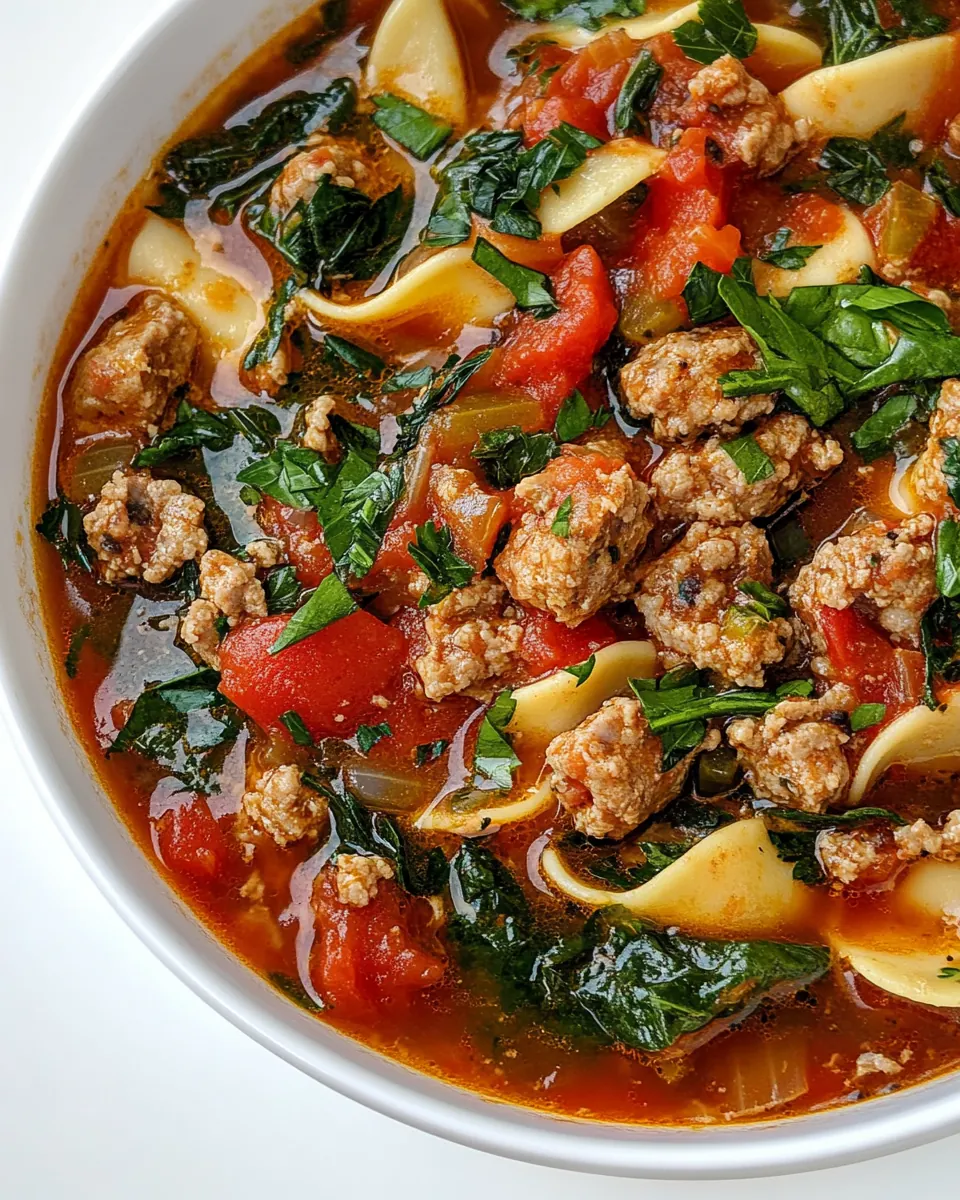
These ingredients are chosen to create a balanced, comforting soup where each element plays a clear role. The Italian sausage delivers savory depth, while the trio of onion, carrots, and celery forms a classic aromatic base. Canned diced tomatoes and chicken broth build a flavorful liquid, and pasta plus baby spinach add body and bright freshness at the end.
- 1 tablespoon olive oil: Heat and lightly coat the pot to prevent sticking and provide a flavorful base for sautéing aromatics; olive oil also adds a subtle fruity richness that carries herbs and spices throughout the soup.
- 1 pound Italian sausage casings removed: Brown and crumble into bite-sized pieces to render fat and develop savory, spicy flavor; removing casings ensures even distribution of meat and seasoning throughout the soup.
- 1 medium onion diced: Sauté and soften to build the aromatic foundation, releasing natural sweetness and helping meld flavors; diced onion also contributes body and slight acidity when cooked down.
- 2 carrots peeled and chopped: Peel and chop to add natural sweetness, texture, and a tender bite; carrots balance savory elements and contribute color and nutrients to the broth.
- 2 celery stalks chopped: Chop and sweat to add aromatic depth and a slight crunch when not overcooked; celery provides savory, aromatic notes that enhance overall complexity.
- 1 red bell pepper diced: Dice and sauté to contribute bright, sweet, and slightly bitter flavors; red bell pepper adds vibrant color and a fresh contrast to rich sausage.
- 5 garlic cloves minced: Mince and cook briefly to release pungent, aromatic oils that build savory depth; garlic adds warm, slightly spicy undertones that permeate the broth.
- 1 can diced tomatoes (15 ounces) with juice: Include with its juice to contribute acidity, umami, and tomato texture; diced tomatoes add body and a balancing brightness to the rich broth.
- 5 cups low-sodium chicken broth: Pour and simmer to create the liquid base and infuse the soup with savory, light flavor; low-sodium broth allows better control over final seasoning.
- 1 1/2 teaspoons Italian seasoning: Season and layer Mediterranean herb flavors to complement sausage and vegetables; Italian seasoning brings a balanced blend of basil, oregano, rosemary, and thyme.
- 1/2 teaspoon dried thyme: Sprinkle and infuse subtle, earthy, floral notes that enhance savory components; dried thyme adds depth without overpowering other herbs.
- 1/2 teaspoon dried oregano: Add and contribute warm, slightly bitter herbal notes that match well with tomatoes and meat; dried oregano reinforces classic Italian flavors.
- 1 1/2 cups medium shell pasta: Stir in and cook until tender to add comforting, chewy texture and substance; medium shell pasta captures broth and bits of sausage for satisfying bites.
- 2 cups baby spinach: Fold in at the end to wilt gently and introduce bright, leafy freshness; baby spinach adds color, nutrients, and a tender contrast to pasta and sausage.
- Salt and pepper to taste: Season and adjust flavor to personal preference, enhancing balance and bringing out other ingredients; salt and pepper sharpen and unify the soup's taste.
- Fresh parsley chopped, for garnish: Garnish and finish with a burst of fresh, herbaceous flavor and visual appeal; chopped parsley brightens the dish and adds a clean, green note.
Step by Step Instructions for Italian Sausage Soup
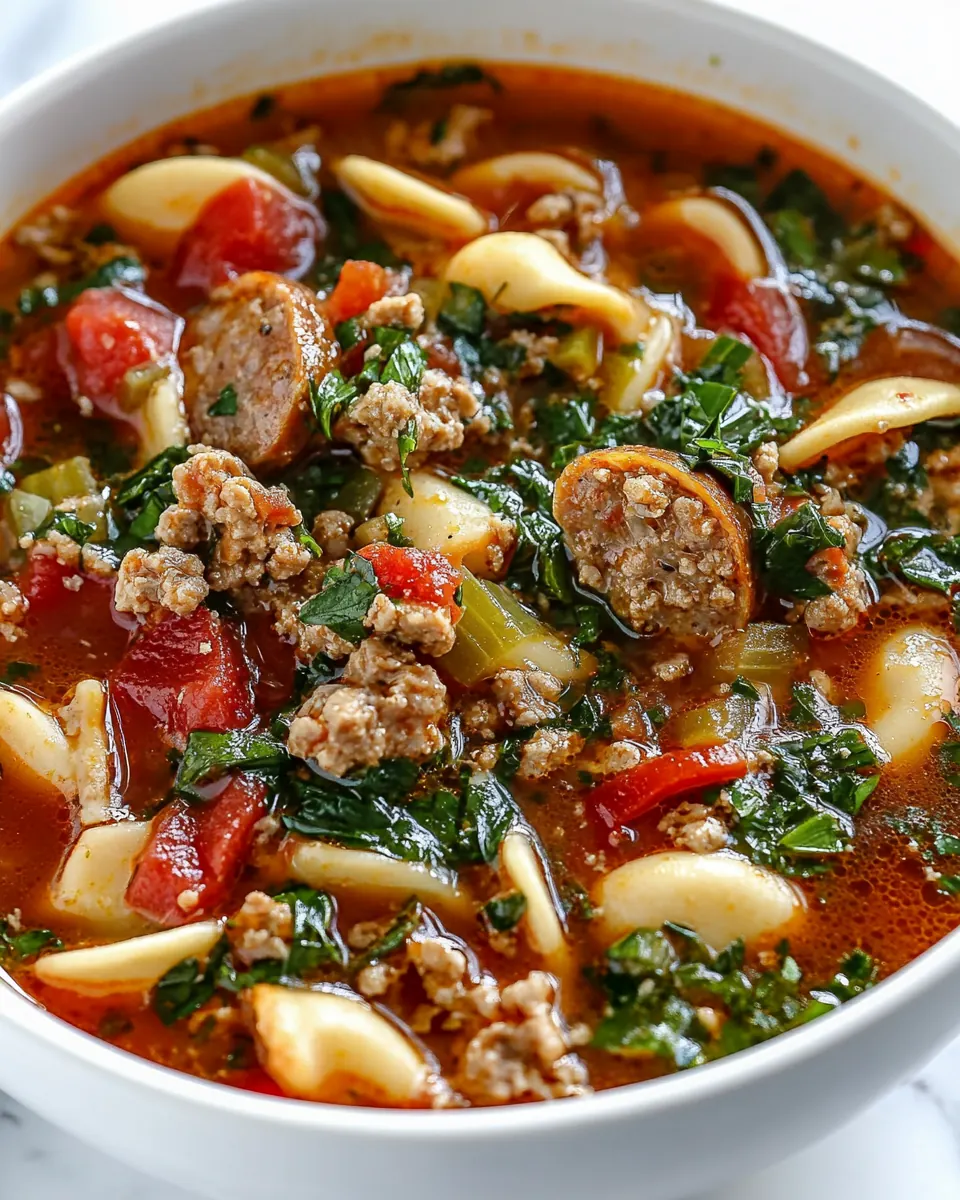
I like to keep the cooking welcoming and conversational, so I go step by step and pay attention to sensory cues rather than the clock alone. Each action influences texture and flavor, so listen for sounds and watch for visual cues as you work through the recipe.
- Heat olive oil in a large pot over medium-high heat. Add the Italian sausage and cook until browned, breaking it into pieces as it cooks.: When the oil shimmers and moves easily across the pan, you know the surface is hot enough to create good browning, which gives a nutty aroma. The sound will be a light sizzle when food first hits the pan, and the oil should not smoke. If it does, lower the heat to prevent burning. A common mistake is adding meat to a pan that is not hot enough, which leads to steaming instead of browning, so be patient and give the pan time to come up to temperature.
- Remove the sausage from the pot and set aside. In the same pot, add the diced onion, chopped carrots, celery, and red bell pepper. Sauté for about 5 minutes until the vegetables begin to soften, then stir in the minced garlic and cook for another minute.: As the sausage sears, you will notice brown bits forming on the surface and a richer, meaty smell filling the kitchen. Use a wooden spoon to break the meat into bite sized pieces, so it cooks evenly and creates more surface area for caramelization. Avoid stirring constantly, or the meat will not develop color. One pitfall is crowding the pot, which releases moisture and results in less browning, so brown in batches if needed.
- Return the sausage to the pot. Add the diced tomatoes with juice, chicken broth, Italian seasoning, dried thyme, and dried oregano. Bring the mixture to a boil, then add the pasta.: Lifting the browned sausage out at this point preserves the pan fond, which holds concentrated flavor. Set the meat on a plate, keeping the drippings in the pot, as they will flavor the vegetables when added. Be careful not to leave the pot on too high heat empty, it can burn the fond. A common misstep is rinsing the pan now, which would lose those flavorful browned bits.
- Lower the heat to a simmer, stirring occasionally for 8-10 minutes until the pasta is al dente. Finally, stir in the baby spinach until wilted and season with salt and pepper before serving, garnished with fresh parsley.: The vegetables should sizzle gently in the warm fat, releasing sweet and aromatic notes. Stir occasionally so each piece softens and golden edges develop, which builds complexity in the broth. Cook until they begin to soften, using the sight of translucent onion and tender carrots as your cue. Overcooking until they turn mushy can flatten the final texture, so aim for tender crispness at this stage.
- Sauté for about 5 minutes until the vegetables begin to soften, then stir in the minced garlic and cook for another minute: When the garlic hits the pan you will smell an immediate fragrant lift, a heady garlic perfume that signals it is time to move quickly. One minute is enough for garlic to become aromatic without turning bitter. A frequent error is adding garlic too early or leaving it unattended, which can cause it to burn and impart a harsh taste.
- Return the sausage to the pot: Adding the browned Italian sausage back in reunites the savory juices with the softened vegetables, creating a balanced base. You will see the ingredients come together visually, and the combined aroma will deepen. If the pot seems dry, a splash from your broth can loosen the fond and incorporate those flavors. Do not stir aggressively, gentle folding keeps the pieces intact.
- Add the diced tomatoes with juice, chicken broth, Italian seasoning, dried thyme, and dried oregano: Pouring in the canned diced tomatoes and chicken broth will deglaze the pan, lifting the fond into the liquid and forming the soup's body. The herbs will perfume the broth as it warms, and you will see tiny flecks of dried leaves infuse the liquid. A common oversight is not scraping the bottom of the pot, which leaves flavor behind, so use a wooden spoon to loosen any stuck bits.
- Bring the mixture to a boil, then add the pasta: As the pot reaches a rolling boil, you will notice a lively bubbling and steam rising, and that is the moment to add the pasta . The vigorous boil helps the pasta start cooking quickly and prevents it from sticking. Stir gently after adding to keep it separated. Avoid adding pasta to a lukewarm pot, which can lead to clumping and uneven cooking.
- Lower the heat to a simmer, stirring occasionally for 8 to 10 minutes until the pasta is al dente: The simmer will turn the aggressive boil into gentle movement, allowing the pasta to cook through while absorbing the broth flavors. Al dente means slightly firm to the bite, not mushy, and you can test by tasting a piece. If you simmer too long, the pasta will over soften and thicken the soup excessively, so check early to avoid that mistake.
- Finally, stir in the baby spinach until wilted and season with salt and pepper before serving, garnished with fresh parsley: Adding the baby spinach at the end preserves its bright green color and fresh flavor, and within moments it will collapse into the hot broth, releasing a green, vegetal aroma. Finish by tasting and adjusting with salt and pepper , remembering that the Italian sausage and chicken broth may already contribute salt. One common pitfall is over seasoning too early, so wait until the end to achieve the perfect balance.
Making Adjustments
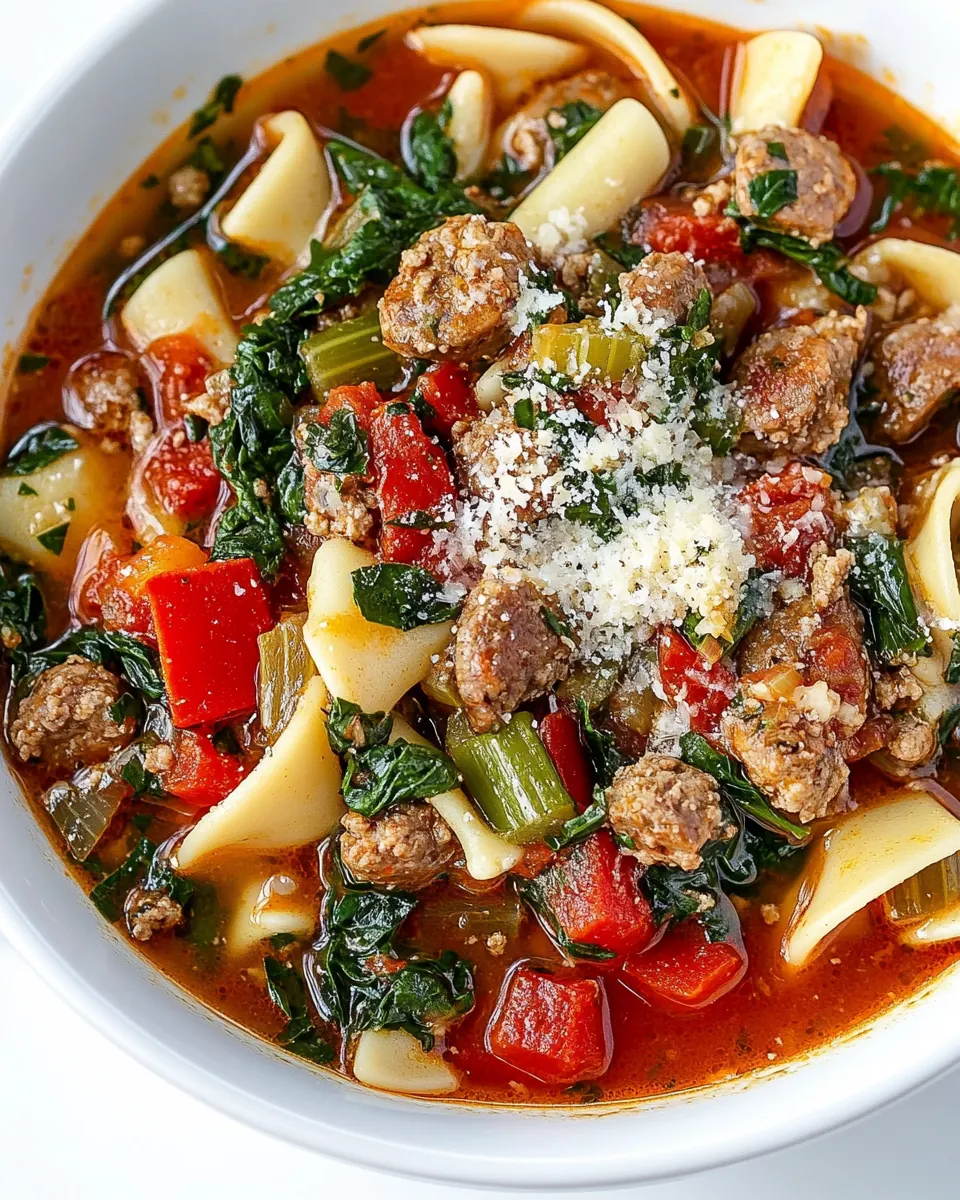
I like to think of adjustments as gentle nudges rather than rewrites. These tips let you tune the soup to your preference, whether you want it heartier, lighter, or more herb forward.
- To make it faster use smaller pasta shapes so they cook in less time, and prep vegetables while the sausage browns to streamline the process.
- To reduce sodium choose low sodium chicken broth and taste before adding extra salt, the cured Italian sausage often adds a surprising amount of saltiness.
- To thicken the broth let the soup simmer uncovered for a few extra minutes so some liquid evaporates, concentrating the flavor without changing ingredients.
- To keep leftovers store pasta separately if you plan to reheat, adding it back into warmed soup to avoid mushy texture after refrigeration.
- To boost vegetables increase the quantity of the mirepoix, keeping cut sizes uniform so everything softens at the same rate during simmering.
Great Combinations for Italian Sausage Soup
This soup pairs well with simple sides and occasions where warmth and comfort matter. Below are thoughtful serving suggestions, seasonal ideas, and storage tips that help you present and preserve the recipe well.
- Crusty bread such as a torn loaf offers an ideal vehicle for soaking up the savory broth, especially when served hot at family dinners.
- Light green salad with a bright vinaigrette provides a crisp counterpoint, making it a balanced lunch or weeknight meal option.
- Occasion suggestion serve this for casual dinners or cozy winter gatherings, it works well for nights when you want comfort without fuss.
- Make ahead the soup stores well for two to three days in the refrigerator; reheat gently and add fresh pasta if you stored it separately to preserve texture.
- Seasonal pairing in colder months, serve with a warm, spiced beverage and roasted vegetables to create a full, comforting menu.
- Ramadan friendly this soup offers a nourishing option for iftar, the broth and protein help replenish energy after fasting.
- Presentation note garnish with freshly chopped parsley right before serving to keep the color vibrant and add a final aromatic lift.
FAQ
Conclusion
Italian Sausage Soup stands out for its comforting combination of browned savory meat, bright tomatoes, and tender pasta that come together in a deeply flavorful broth. Give it a try on a busy weeknight or when you need a warming bowl to gather around, the recipe is forgiving, fast, and rewarding. I hope you enjoy the cozy aroma and the satisfying balance of textures as much as I do, and that it becomes a regular in your dinner rotation.
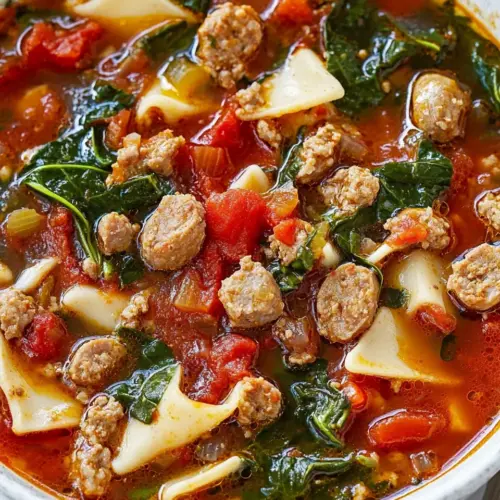
Italian Sausage Soup
Equipment
- Large Pot
- Wooden Spoon
Ingredients
- 1 tablespoon olive oil Heat and lightly coat the pot to prevent sticking and provide a flavorful base for sautéing aromatics; olive oil also adds a subtle fruity richness that carries herbs and spices throughout the soup.
- 1 pound Italian sausage casings removed Brown and crumble into bite-sized pieces to render fat and develop savory, spicy flavor; removing casings ensures even distribution of meat and seasoning throughout the soup.
- 1 medium onion diced Sauté and soften to build the aromatic foundation, releasing natural sweetness and helping meld flavors; diced onion also contributes body and slight acidity when cooked down.
- 2 carrots peeled and chopped Peel and chop to add natural sweetness, texture, and a tender bite; carrots balance savory elements and contribute color and nutrients to the broth.
- 2 celery stalks chopped Chop and sweat to add aromatic depth and a slight crunch when not overcooked; celery provides savory, aromatic notes that enhance overall complexity.
- 1 red bell pepper diced Dice and sauté to contribute bright, sweet, and slightly bitter flavors; red bell pepper adds vibrant color and a fresh contrast to rich sausage.
- 5 garlic cloves minced Mince and cook briefly to release pungent, aromatic oils that build savory depth; garlic adds warm, slightly spicy undertones that permeate the broth.
- 1 can diced tomatoes (15 ounces) with juice Include with its juice to contribute acidity, umami, and tomato texture; diced tomatoes add body and a balancing brightness to the rich broth.
- 5 cups low-sodium chicken broth Pour and simmer to create the liquid base and infuse the soup with savory, light flavor; low-sodium broth allows better control over final seasoning.
- 1 1/2 teaspoons Italian seasoning Season and layer Mediterranean herb flavors to complement sausage and vegetables; Italian seasoning brings a balanced blend of basil, oregano, rosemary, and thyme.
- 1/2 teaspoon dried thyme Sprinkle and infuse subtle, earthy, floral notes that enhance savory components; dried thyme adds depth without overpowering other herbs.
- 1/2 teaspoon dried oregano Add and contribute warm, slightly bitter herbal notes that match well with tomatoes and meat; dried oregano reinforces classic Italian flavors.
- 1 1/2 cups medium shell pasta Stir in and cook until tender to add comforting, chewy texture and substance; medium shell pasta captures broth and bits of sausage for satisfying bites.
- 2 cups baby spinach Fold in at the end to wilt gently and introduce bright, leafy freshness; baby spinach adds color, nutrients, and a tender contrast to pasta and sausage.
- Salt and pepper to taste Season and adjust flavor to personal preference, enhancing balance and bringing out other ingredients; salt and pepper sharpen and unify the soup's taste.
- Fresh parsley chopped, for garnish Garnish and finish with a burst of fresh, herbaceous flavor and visual appeal; chopped parsley brightens the dish and adds a clean, green note.
Instructions
- Heat olive oil in a large pot over medium-high heat. Add the Italian sausage and cook until browned, breaking it into pieces as it cooks.: When the oil shimmers and moves easily across the pan, you know the surface is hot enough to create good browning, which gives a nutty aroma. The sound will be a light sizzle when food first hits the pan, and the oil should not smoke. If it does, lower the heat to prevent burning. A common mistake is adding meat to a pan that is not hot enough, which leads to steaming instead of browning, so be patient and give the pan time to come up to temperature.
- Remove the sausage from the pot and set aside. In the same pot, add the diced onion, chopped carrots, celery, and red bell pepper. Sauté for about 5 minutes until the vegetables begin to soften, then stir in the minced garlic and cook for another minute.: As the sausage sears, you will notice brown bits forming on the surface and a richer, meaty smell filling the kitchen. Use a wooden spoon to break the meat into bite sized pieces, so it cooks evenly and creates more surface area for caramelization. Avoid stirring constantly, or the meat will not develop color. One pitfall is crowding the pot, which releases moisture and results in less browning, so brown in batches if needed.
- Return the sausage to the pot. Add the diced tomatoes with juice, chicken broth, Italian seasoning, dried thyme, and dried oregano. Bring the mixture to a boil, then add the pasta.: Lifting the browned sausage out at this point preserves the pan fond, which holds concentrated flavor. Set the meat on a plate, keeping the drippings in the pot, as they will flavor the vegetables when added. Be careful not to leave the pot on too high heat empty, it can burn the fond. A common misstep is rinsing the pan now, which would lose those flavorful browned bits.
- Lower the heat to a simmer, stirring occasionally for 8-10 minutes until the pasta is al dente. Finally, stir in the baby spinach until wilted and season with salt and pepper before serving, garnished with fresh parsley.: The vegetables should sizzle gently in the warm fat, releasing sweet and aromatic notes. Stir occasionally so each piece softens and golden edges develop, which builds complexity in the broth. Cook until they begin to soften, using the sight of translucent onion and tender carrots as your cue. Overcooking until they turn mushy can flatten the final texture, so aim for tender crispness at this stage.
- Sauté for about 5 minutes until the vegetables begin to soften, then stir in the minced garlic and cook for another minute: When the garlic hits the pan you will smell an immediate fragrant lift, a heady garlic perfume that signals it is time to move quickly. One minute is enough for garlic to become aromatic without turning bitter. A frequent error is adding garlic too early or leaving it unattended, which can cause it to burn and impart a harsh taste.
- Return the sausage to the pot: Adding the browned Italian sausage back in reunites the savory juices with the softened vegetables, creating a balanced base. You will see the ingredients come together visually, and the combined aroma will deepen. If the pot seems dry, a splash from your broth can loosen the fond and incorporate those flavors. Do not stir aggressively, gentle folding keeps the pieces intact.
- Add the diced tomatoes with juice, chicken broth, Italian seasoning, dried thyme, and dried oregano: Pouring in the canned diced tomatoes and chicken broth will deglaze the pan, lifting the fond into the liquid and forming the soup's body. The herbs will perfume the broth as it warms, and you will see tiny flecks of dried leaves infuse the liquid. A common oversight is not scraping the bottom of the pot, which leaves flavor behind, so use a wooden spoon to loosen any stuck bits.
- Bring the mixture to a boil, then add the pasta: As the pot reaches a rolling boil, you will notice a lively bubbling and steam rising, and that is the moment to add the pasta . The vigorous boil helps the pasta start cooking quickly and prevents it from sticking. Stir gently after adding to keep it separated. Avoid adding pasta to a lukewarm pot, which can lead to clumping and uneven cooking.
- Lower the heat to a simmer, stirring occasionally for 8 to 10 minutes until the pasta is al dente: The simmer will turn the aggressive boil into gentle movement, allowing the pasta to cook through while absorbing the broth flavors. Al dente means slightly firm to the bite, not mushy, and you can test by tasting a piece. If you simmer too long, the pasta will over soften and thicken the soup excessively, so check early to avoid that mistake.
- Finally, stir in the baby spinach until wilted and season with salt and pepper before serving, garnished with fresh parsley: Adding the baby spinach at the end preserves its bright green color and fresh flavor, and within moments it will collapse into the hot broth, releasing a green, vegetal aroma. Finish by tasting and adjusting with salt and pepper , remembering that the Italian sausage and chicken broth may already contribute salt. One common pitfall is over seasoning too early, so wait until the end to achieve the perfect balance.
Notes
- To make it faster use smaller pasta shapes so they cook in less time, and prep vegetables while the sausage browns to streamline the process.
- To reduce sodium choose low sodium chicken broth and taste before adding extra salt, the cured Italian sausage often adds a surprising amount of saltiness.
- To thicken the broth let the soup simmer uncovered for a few extra minutes so some liquid evaporates, concentrating the flavor without changing ingredients.
- To keep leftovers store pasta separately if you plan to reheat, adding it back into warmed soup to avoid mushy texture after refrigeration.
- To boost vegetables increase the quantity of the mirepoix, keeping cut sizes uniform so everything softens at the same rate during simmering.
