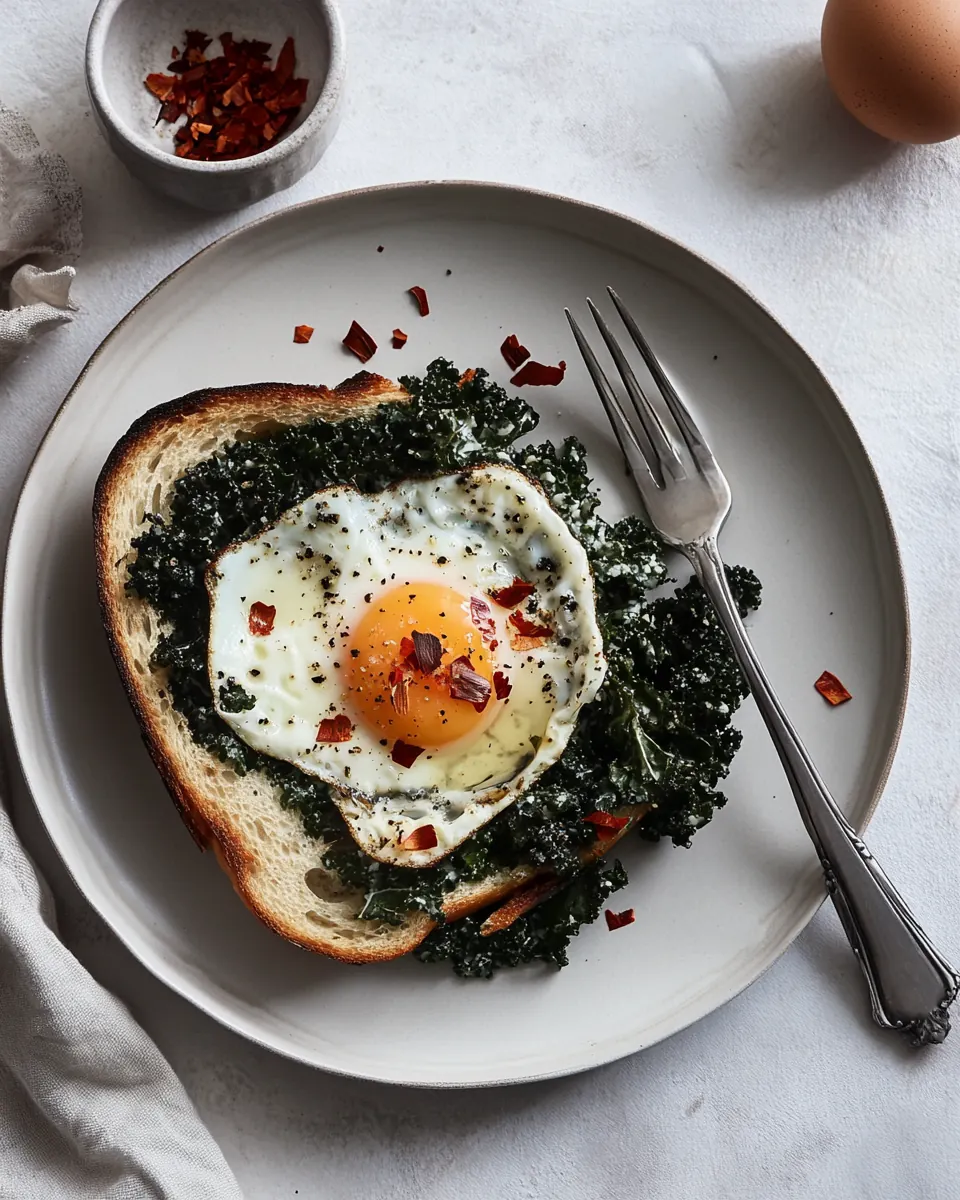
Kale Egg in a Hole
Kale Egg in a Hole started showing up on my weeknight radar the day I realized I wanted breakfast flavors at dinnertime without the fuss. I remember standing in my tiny kitchen with a single skillet, a bag of kale that had seen better days, and two slices of bread asking myself how to make something quick feel thoughtful. I grabbed a shallot, a knob of fat, and whatever melty cheese I had on hand and set about turning humble pantry items into something that actually made me pause and savor the moment.
That night, the sound of shallots sizzling in hot oil felt like a little victory. I loved how the kale wilted down to a glossy, tender pile that wrapped itself around the bread‘s edge. When the eggs set and the cheese melted, the combination of textures and temperatures made simple ingredients taste like more than the sum of their parts. Since then, I’ve come back to this idea whenever I need comfort, a fast dinner, or a way to make greens feel indulgent.
Recipe Snapshot
30 mins
10 mins
20 mins
Easy
350 kcal
American
Gluten-Free, Low FODMAP
Breakfast
Skillet, Oven, Sheet tray, Parchment paper, Biscuit cutter or glass
Why This Kale Egg in a Hole Shines
1. Big flavor from humble beginnings
I adore how Kale Egg in a Hole turns basic pantry staples into something bright and satisfying. Tiny changes, like letting the shallot soften slowly, coax out a sweet, savory base that carries the whole dish. The kale adds a leafy, almost vegetal backbone, while the egg and melted cheese bring richness.
2. Fast enough for weeknights
I often make this when I have less than an hour. You can get from stovetop to table in under a half hour, which makes Kale Egg in a Hole an ideal easy weeknight dinner. I value recipes that respect time but still feel crafted, and this one fits that bill perfectly.
3. Flexible and forgiving
One of the reasons I return to Kale Egg in a Hole is how forgiving it is. You can crisp the bread a touch more or leave the kale a little toothsome depending on your mood. I once cooked it without cheese and it still tasted great, though the melted cheese does add a silky finish I love.
4. Textural contrast that sings
The best version balances crisp toast, tender wilted kale, and a runny or set egg depending on preference. That interplay keeps every bite interesting, and it’s why I often serve this when I want something simple but not boring.
5. A recipe that elevates greens
I’m always looking for ways to make leafy greens feel central, not secondary. With Kale Egg in a Hole, the kale becomes the star, uniting with eggs and cheese to create a dish that’s both nourishing and craveable.
Ingredients You’ll Need for Kale Egg in a Hole
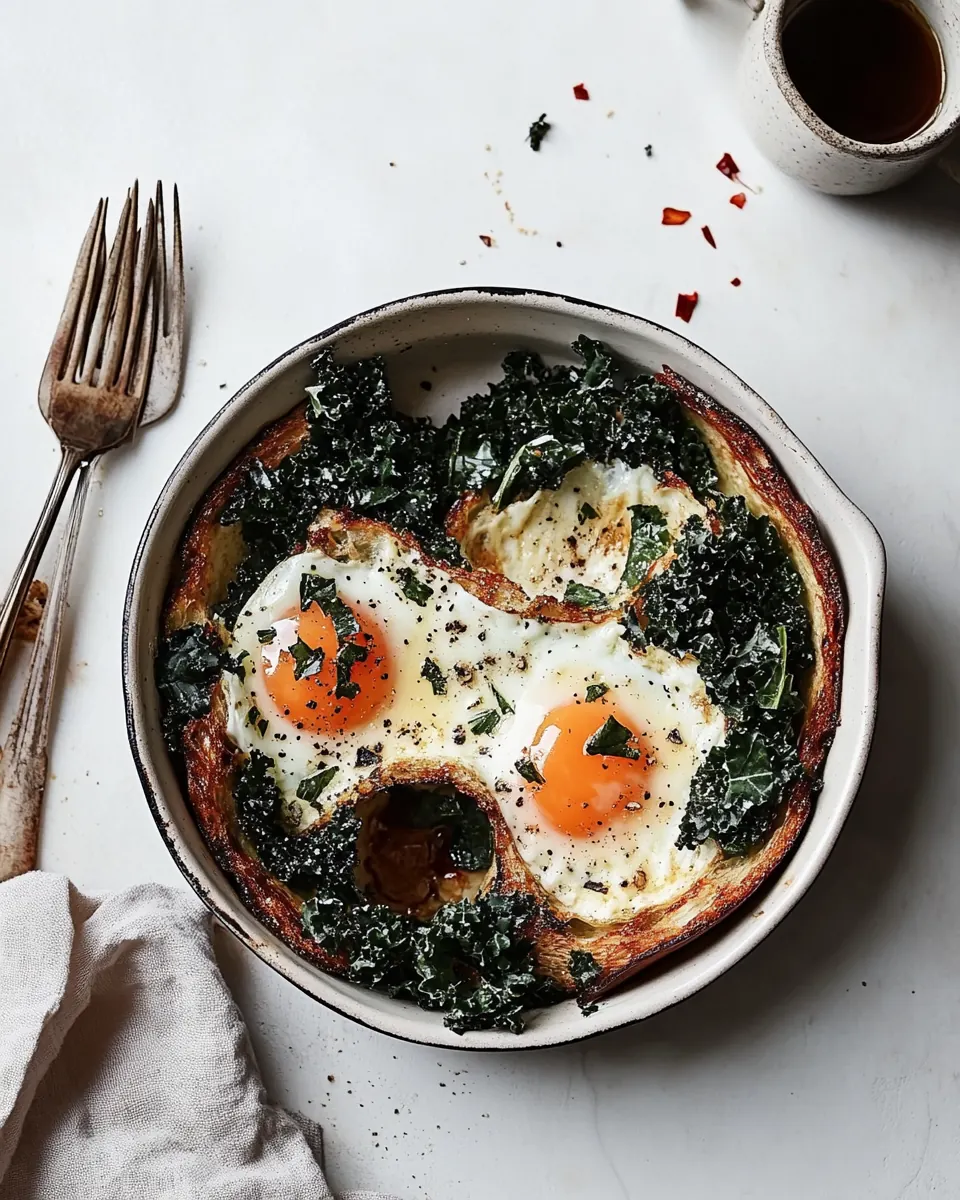
I think of these ingredients as a small, harmonious ensemble. The aromatics build a savory foundation, the kale brings structure and color, and the eggs and cheese supply richness and body. Each element plays a clear role: one to flavor, one to texture, one to bind, and one to finish. Together they deliver a meal that feels composed yet effortless.
- 1 tablespoon olive oil or ghee: Sauté briefly in the pan to provide a flavorful cooking fat and help crisp the kale and shallot; choose olive oil for a fruity note or ghee for a rich, nutty aroma that withstands higher heat.
- 1 small shallot (minced): Mince finely to release a sweet, mild onion flavor that melds with the kale; cook until translucent to build a savory base without overpowering the eggs.
- 4 cups lightly packed chopped kale (about 4 large kale leaves): Massage or wilt down in the hot pan to concentrate its earthy, slightly bitter flavor and add bulk and nutrition; chop to bite-size pieces so it cooks evenly and fits inside the bread holes.
- 1/4 teaspoons ea salt: Season lightly to enhance and balance the overall dish, sprinkling a quarter teaspoon to bring out the natural flavors of the greens and eggs without making the dish salty.
- 2 large slices of bread: Cut or hollow to create the ‘hole’ that holds the egg, providing a toasted, chewy base and contrast in texture; choose sturdy slices to support the filling as it cooks.
- 2 eggs: Crack into the bread hole to supply protein and set the centerpiece of the recipe; cook until the white is set and yolk is at desired doneness for optimal texture.
- 1 ounce cheese that melts well (fontina, Gruyère, or Taleggio, shredded): Shred finely to melt over the finished eggs, adding creamy, savory richness and a slightly nutty or tangy character depending on the cheese selected.
- Chili flakes (for finishing): Sprinkle sparingly at the end to add a bright, spicy finish and visual contrast; adjust amount to taste for a gentle heat that complements the richness of the egg and cheese.
Making Kale Egg in a Hole
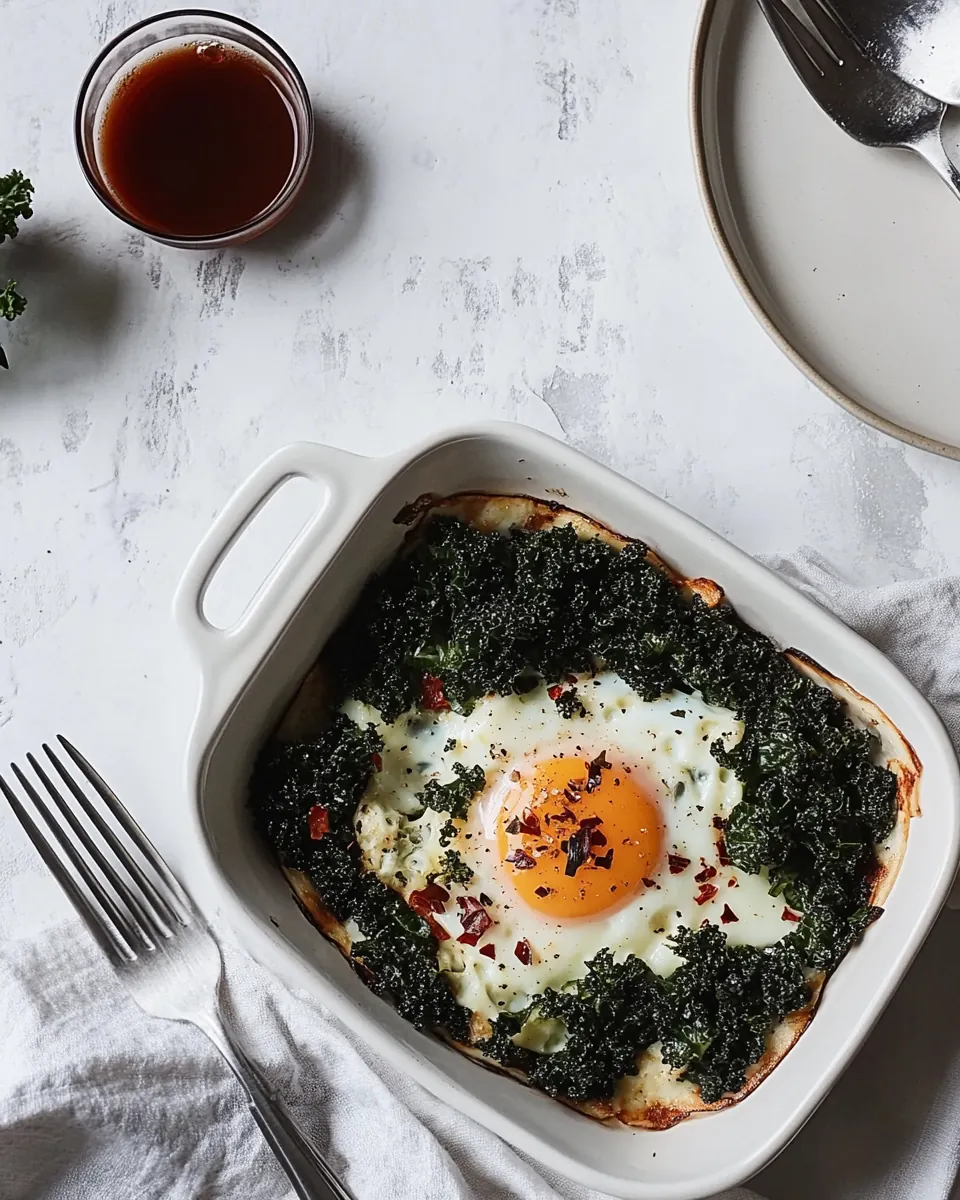
These directions are straightforward, but the magic is in small details. I’ll walk you through each moment, from sizzling the shallot to the rewarding crack of an egg yolk. Take your time with the sensory cues and you’ll end up with a perfectly composed plate.
- Heat your oven to 400˚F.: You will notice the oven warming and the air in your kitchen becoming more buoyant, which sets the stage for crisping the bread . This temperature gives the toast enough heat to form a golden crust while finishing the eggs in the oven. Preheating is essential, because putting the toast into a cold oven will prevent the bread from crisping properly. A common mistake is skipping preheat to save time, but that usually yields limp toast.
- Heat a skillet over medium-low heat and add the olive oil or ghee. Once the oil is hot, add the minced shallot and cook until fragrant and softened, about 6 minutes.: The fat should shimmer gently, not smoke. When it loosens and begins to move across the pan, it signals readiness. This gentle heat allows the shallot to soften without burning, producing a sweet aroma. If the oil smokes, reduce the heat as burnt fat will taint the whole dish. Avoid crowding the pan, which can drop the temperature suddenly and steam instead of sauté.
- To the shallot, add in the kale and a pinch of salt. Cook, stirring often, until the kale has softened and is beginning to wilt. You can take some liberty here depending on your preference. Cook for less time if you like your kale to have some texture or cook for longer if you like your kale softer.: You will hear a soft sizzle as the shallot hits the pan, then a quieting as moisture escapes. Watch for translucence and a light caramel color, which hints at sweetness. Stir frequently so it cooks evenly. If you rush this step with higher heat, the shallot will brown too quickly and become bitter.
- While the kale is cooking, use a biscuit cutter or a glass to cut a hole in the middle of the bread slices. Place the bread on a sheet tray lined with parchment and pop into the oven. Toast until just starting to crisp, flipping once halfway through baking. Remove from the oven and carefully crack an egg into each hole.: As the kale meets the warm shallot and fat, it will make a green, fragrant hiss and rapidly reduce in volume. Toss it so the leaves are coated and begin to wilt. The salt helps pull moisture out, aiding the wilting and intensifying flavor. A pitfall here is overcooking; stop when the leaves turn vivid green and feel tender, not mushy.
- Spoon the kale mixture around the rest of the toast, then top with the shredded cheese of your choice. Return the pan to the oven and cook until the cheese has melted and the egg white has set, about 10 to 12 minutes.: You'll notice the texture change from stiff to supple and the color brighten. This is when the kale releases an earthy, slightly sweet aroma that pairs beautifully with the savory shallot. Adjust time to your texture preference, because some like a little bite while others want it very tender. Avoid leaving it unattended, as small leaves can go from perfect to overly soft quickly.
- Remove and serve with an extra sprinkle of salt and/or chili flakes if desired.: Cutting the hole should feel clean, leaving a rim of bread that will cradle the egg . The removed center makes a perfect little toast scoop if you like to serve it alongside. Pressing too hard or using very thin bread may tear the slice, so choose a sturdy loaf for best results.
- Place the bread on a sheet tray lined with parchment and pop into the oven: The tray will radiate even heat, and the parchment protects the bread from sticking. As the bread toasts, you will hear a light crackle and see edges begin to bronze, signaling the formation of a protective crust. Leaving the bread in a cold pan or an underheated oven will prevent that crisping effect.
- Toast until just starting to crisp, flipping once halfway through baking: Flip when the underside has turned a faint golden hue. This creates two evenly crisp surfaces that can hold moisture from the kale and the egg . Overtoasting will make the bread too rigid and harder to bite through, while undertoasting can lead to sogginess after the egg is added.
- Remove from the oven and carefully crack an egg into each hole: Cracking the eggs directly into the holes will create a lovely visual and allow the whites to set against the bread. The sound of the shell opening and the yolk settling is satisfying, and you can nudge whites into gaps to ensure even cooking. Be gentle to avoid tearing the bread rim or letting the yolk spill out.
- Spoon the kale mixture around the rest of the toast, then top with the shredded cheese of your choice: The warm kale should sit snugly around the egg , providing a cushion of flavor and texture. The shredded cheese melts into pockets, creating creamy ribbons. If the kale is too wet, it may make the toast limp, so drain any excess liquid before spooning it on.
- Return the pan to the oven and cook until the cheese has melted and the egg white has set, about 10 to 12 minutes: In the oven you will see the cheese become glossy and the egg whites firm up around the yolks. The aroma will turn richer and more cohesive, signaling readiness. Keep an eye to avoid overcooking if you prefer runny yolks, and undercooking leaves the whites unset which can be unsafe to eat.
- Remove and serve with an extra sprinkle of salt and/or chili flakes if desired: The finishing salt sharpens the entire plate and the chili flakes add a bright lift. Serve while the toast is warm so textures remain distinct. A common mistake is letting the dish sit too long, which causes the toast to lose its crisp charm.
Expert Tips about Kale Egg in a Hole
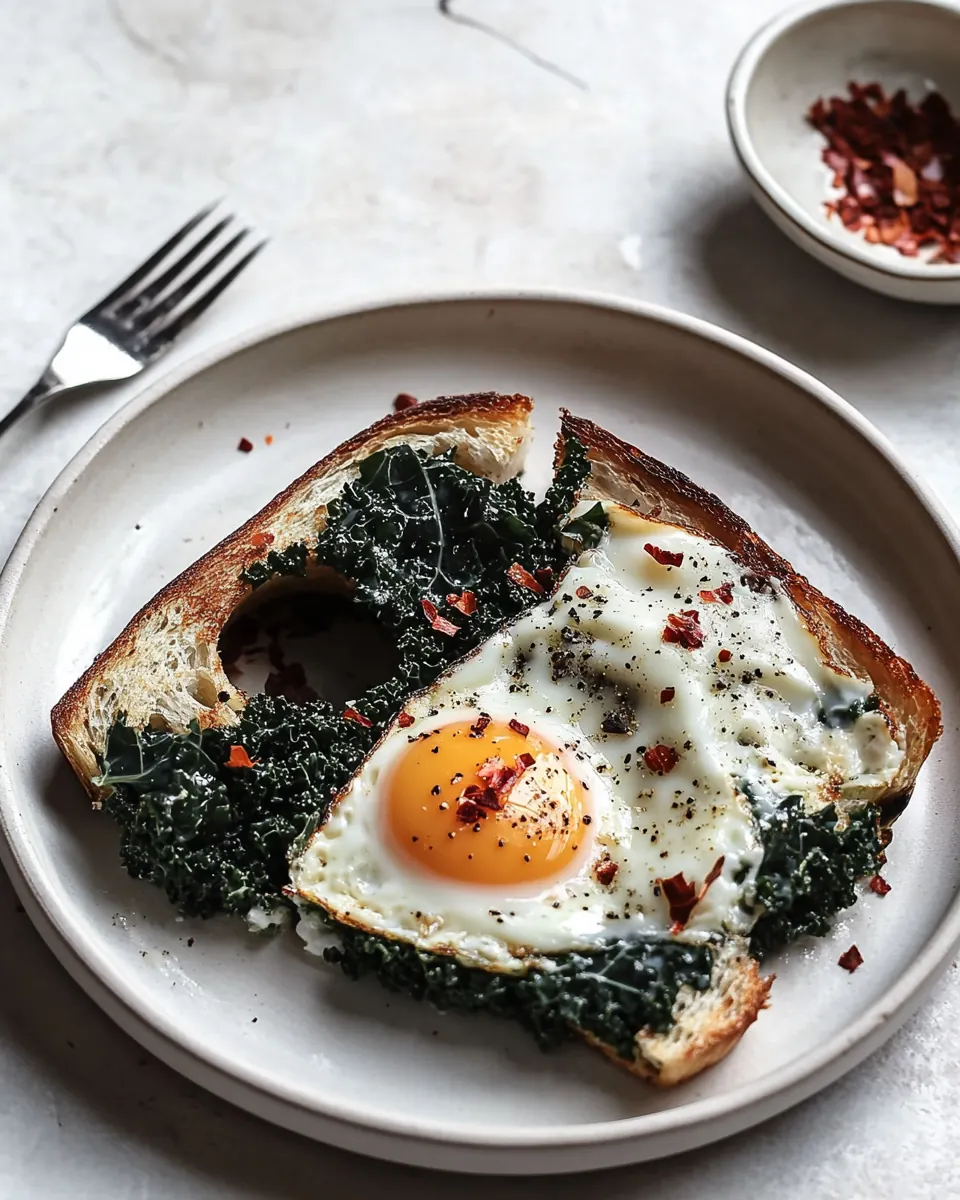
This recipe rewards small, intentional choices. Below are focused tips to help you get the best texture and flavor from each ingredient. I’ll highlight the practical first, then explain why it matters.
- Choose firm bread: A dense slice creates a sturdy cradle for the egg and prevents sogginess, especially important if your kale releases moisture. Rustic country loaves or sourdough work best, because they toast to a satisfying bite.
- Low and slow for shallots: Cooking the shallot at medium low pulls out sweet, caramelized notes without bitterness, which deepens the overall flavor profile and complements the earthy kale.
- Salt incrementally: Add small amounts of salt as you cook to build seasoning layers. Salting too much at once can flatten the dish, while gradual seasoning lets you balance flavors precisely.
- Drain excess liquid: If your kale releases a lot of water, spoon it into a sieve for a moment. This prevents the toast from becoming soggy and keeps textures distinct, preserving the crispiness of the base.
- Use a melty cheese: Pick cheeses like fontina or Gruyère because they add creaminess without overpowering the greens, creating those luscious, stringy pockets when warmed in the oven.
- Monitor egg doneness: Check the eggs during the oven finish for the exact yolk texture you prefer. For runny yolks remove earlier, for firmer yolks allow a couple more minutes while watching closely.
What to Serve Alongside Kale Egg in a Hole
This dish stands nicely on its own, but the right accompaniments elevate the meal. Think bright, acidic sides or simple roasted vegetables that complement the richness without competing. Below are thoughtful pairings and serving ideas that suit casual weeknights as well as relaxed brunches.
- Simple green salad: A lightly dressed salad with lemon or vinegar cuts through the richness and refreshes the palate, balancing the savory cheese and egg.
- Roasted tomatoes: Slow roasted tomatoes add sweetness and acidity, pairing well with the earthy kale and creamy cheese, and they make the meal feel more substantial for dinner.
- Pickled vegetables: Quick pickles bring a crisp, tangy counterpoint that brightens each bite, especially useful if you serve this at brunch or lunch.
- Light soup starter: A clear vegetable broth or simple carrot soup complements without overwhelming, making it a cozy option for chilly fall evenings.
- When to serve: Perfect for breakfast, brunch, or a fuss free dinner. It’s especially nice during fall when hearty greens are at their best and you want something warming but not heavy.
- Storage tips: Store components separately if possible. Keep leftover kale refrigerated and reheat gently, and toast fresh slices to preserve texture. Assembling and reheating whole is possible, but the bread will lose crispness.
- Seasonal pairings: In cooler months serve with roasted root vegetables, while in warmer months pair with bright salads and fresh herbs to keep the plate lively.
FAQ
Conclusion
What makes this recipe special is how it elevates basic pantry and fridge ingredients into a satisfying, textured meal. It combines crisp toast, tender wilted greens, melty cheese, and perfectly cooked eggs into one comforting plate. Give it a try when you want something quick that still feels intentional, and don’t be afraid to tweak the greens, cheese, or seasoning to suit your taste. I find it reliable, adaptable, and a lovely way to celebrate simple cooking.
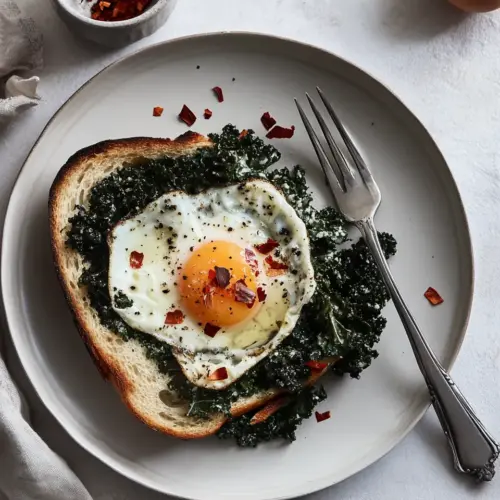
Kale Egg in a Hole
Equipment
- Skillet
- Oven
- Sheet tray
- Parchment Paper
- Biscuit cutter or glass
Ingredients
- 1 tablespoon olive oil or ghee Sauté briefly in the pan to provide a flavorful cooking fat and help crisp the kale and shallot; choose olive oil for a fruity note or ghee for a rich, nutty aroma that withstands higher heat.
- 1 small shallot (minced) Mince finely to release a sweet, mild onion flavor that melds with the kale; cook until translucent to build a savory base without overpowering the eggs.
- 4 cups lightly packed chopped kale (about 4 large kale leaves) Massage or wilt down in the hot pan to concentrate its earthy, slightly bitter flavor and add bulk and nutrition; chop to bite-size pieces so it cooks evenly and fits inside the bread holes.
- 1/4 teaspoons ea salt Season lightly to enhance and balance the overall dish, sprinkling a quarter teaspoon to bring out the natural flavors of the greens and eggs without making the dish salty.
- 2 large slices of bread Cut or hollow to create the ‘hole’ that holds the egg, providing a toasted, chewy base and contrast in texture; choose sturdy slices to support the filling as it cooks.
- 2 eggs Crack into the bread hole to supply protein and set the centerpiece of the recipe; cook until the white is set and yolk is at desired doneness for optimal texture.
- 1 ounce cheese that melts well (fontina, Gruyère, or Taleggio, shredded) Shred finely to melt over the finished eggs, adding creamy, savory richness and a slightly nutty or tangy character depending on the cheese selected.
- Chili flakes (for finishing) Sprinkle sparingly at the end to add a bright, spicy finish and visual contrast; adjust amount to taste for a gentle heat that complements the richness of the egg and cheese.
Instructions
- Heat your oven to 400˚F.: You will notice the oven warming and the air in your kitchen becoming more buoyant, which sets the stage for crisping the bread . This temperature gives the toast enough heat to form a golden crust while finishing the eggs in the oven. Preheating is essential, because putting the toast into a cold oven will prevent the bread from crisping properly. A common mistake is skipping preheat to save time, but that usually yields limp toast.
- Heat a skillet over medium-low heat and add the olive oil or ghee. Once the oil is hot, add the minced shallot and cook until fragrant and softened, about 6 minutes.: The fat should shimmer gently, not smoke. When it loosens and begins to move across the pan, it signals readiness. This gentle heat allows the shallot to soften without burning, producing a sweet aroma. If the oil smokes, reduce the heat as burnt fat will taint the whole dish. Avoid crowding the pan, which can drop the temperature suddenly and steam instead of sauté.
- To the shallot, add in the kale and a pinch of salt. Cook, stirring often, until the kale has softened and is beginning to wilt. You can take some liberty here depending on your preference. Cook for less time if you like your kale to have some texture or cook for longer if you like your kale softer.: You will hear a soft sizzle as the shallot hits the pan, then a quieting as moisture escapes. Watch for translucence and a light caramel color, which hints at sweetness. Stir frequently so it cooks evenly. If you rush this step with higher heat, the shallot will brown too quickly and become bitter.
- While the kale is cooking, use a biscuit cutter or a glass to cut a hole in the middle of the bread slices. Place the bread on a sheet tray lined with parchment and pop into the oven. Toast until just starting to crisp, flipping once halfway through baking. Remove from the oven and carefully crack an egg into each hole.: As the kale meets the warm shallot and fat, it will make a green, fragrant hiss and rapidly reduce in volume. Toss it so the leaves are coated and begin to wilt. The salt helps pull moisture out, aiding the wilting and intensifying flavor. A pitfall here is overcooking; stop when the leaves turn vivid green and feel tender, not mushy.
- Spoon the kale mixture around the rest of the toast, then top with the shredded cheese of your choice. Return the pan to the oven and cook until the cheese has melted and the egg white has set, about 10 to 12 minutes.: You'll notice the texture change from stiff to supple and the color brighten. This is when the kale releases an earthy, slightly sweet aroma that pairs beautifully with the savory shallot. Adjust time to your texture preference, because some like a little bite while others want it very tender. Avoid leaving it unattended, as small leaves can go from perfect to overly soft quickly.
- Remove and serve with an extra sprinkle of salt and/or chili flakes if desired.: Cutting the hole should feel clean, leaving a rim of bread that will cradle the egg . The removed center makes a perfect little toast scoop if you like to serve it alongside. Pressing too hard or using very thin bread may tear the slice, so choose a sturdy loaf for best results.
- Place the bread on a sheet tray lined with parchment and pop into the oven: The tray will radiate even heat, and the parchment protects the bread from sticking. As the bread toasts, you will hear a light crackle and see edges begin to bronze, signaling the formation of a protective crust. Leaving the bread in a cold pan or an underheated oven will prevent that crisping effect.
- Toast until just starting to crisp, flipping once halfway through baking: Flip when the underside has turned a faint golden hue. This creates two evenly crisp surfaces that can hold moisture from the kale and the egg . Overtoasting will make the bread too rigid and harder to bite through, while undertoasting can lead to sogginess after the egg is added.
- Remove from the oven and carefully crack an egg into each hole: Cracking the eggs directly into the holes will create a lovely visual and allow the whites to set against the bread. The sound of the shell opening and the yolk settling is satisfying, and you can nudge whites into gaps to ensure even cooking. Be gentle to avoid tearing the bread rim or letting the yolk spill out.
- Spoon the kale mixture around the rest of the toast, then top with the shredded cheese of your choice: The warm kale should sit snugly around the egg , providing a cushion of flavor and texture. The shredded cheese melts into pockets, creating creamy ribbons. If the kale is too wet, it may make the toast limp, so drain any excess liquid before spooning it on.
- Return the pan to the oven and cook until the cheese has melted and the egg white has set, about 10 to 12 minutes: In the oven you will see the cheese become glossy and the egg whites firm up around the yolks. The aroma will turn richer and more cohesive, signaling readiness. Keep an eye to avoid overcooking if you prefer runny yolks, and undercooking leaves the whites unset which can be unsafe to eat.
- Remove and serve with an extra sprinkle of salt and/or chili flakes if desired: The finishing salt sharpens the entire plate and the chili flakes add a bright lift. Serve while the toast is warm so textures remain distinct. A common mistake is letting the dish sit too long, which causes the toast to lose its crisp charm.
Notes
- Choose firm bread: A dense slice creates a sturdy cradle for the egg and prevents sogginess, especially important if your kale releases moisture. Rustic country loaves or sourdough work best, because they toast to a satisfying bite.
- Low and slow for shallots: Cooking the shallot at medium low pulls out sweet, caramelized notes without bitterness, which deepens the overall flavor profile and complements the earthy kale.
- Salt incrementally: Add small amounts of salt as you cook to build seasoning layers. Salting too much at once can flatten the dish, while gradual seasoning lets you balance flavors precisely.
- Drain excess liquid: If your kale releases a lot of water, spoon it into a sieve for a moment. This prevents the toast from becoming soggy and keeps textures distinct, preserving the crispiness of the base.
- Use a melty cheese: Pick cheeses like fontina or Gruyère because they add creaminess without overpowering the greens, creating those luscious, stringy pockets when warmed in the oven.
- Monitor egg doneness: Check the eggs during the oven finish for the exact yolk texture you prefer. For runny yolks remove earlier, for firmer yolks allow a couple more minutes while watching closely.