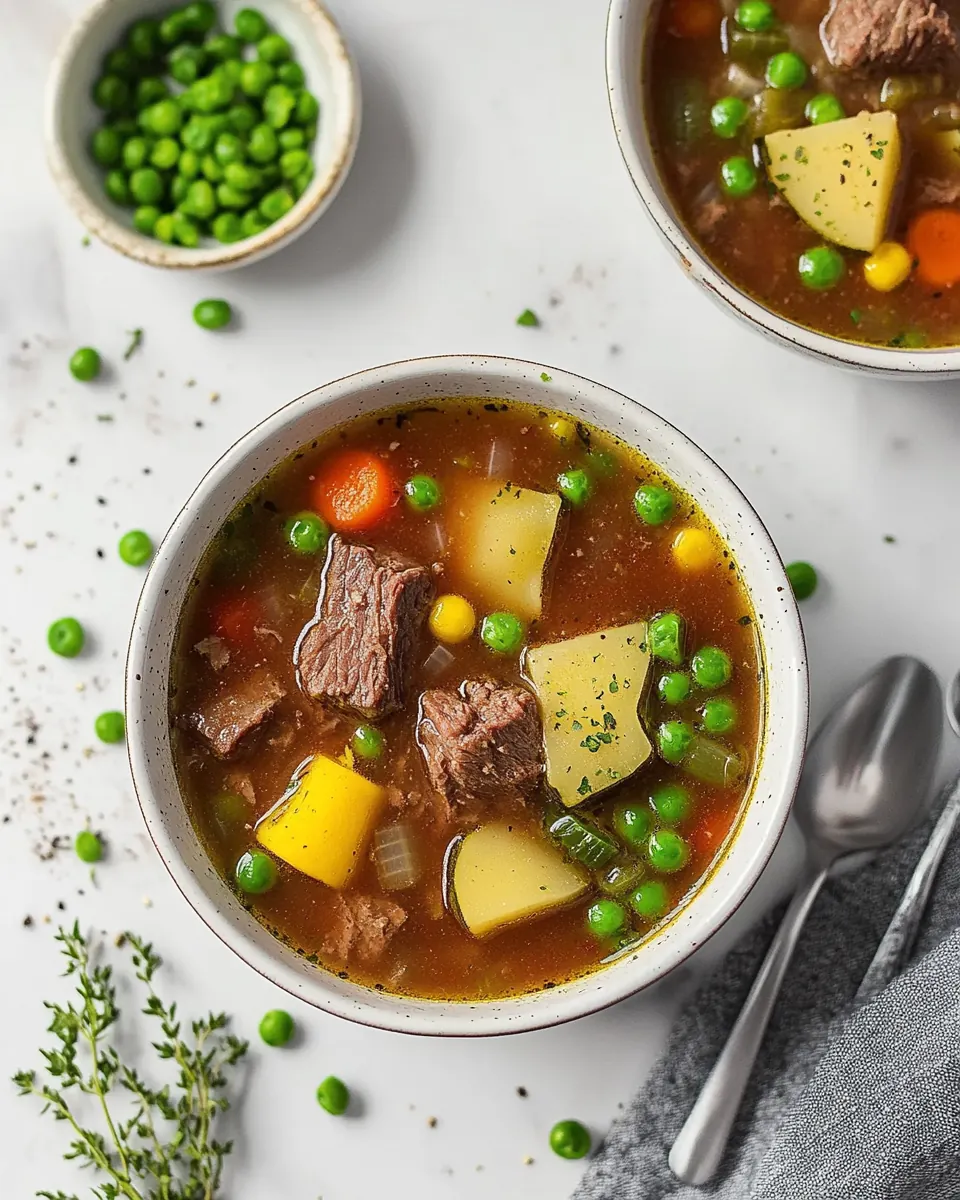
Vegetable Beef Soup
Vegetable Beef Soup is the kind of bowl I reach for when winter evenings close in and the house needs a warm, honest meal that feels like a hug. The first time I made this, I was chasing comfort after a long day, and the scent of sautéing onion and garlic pulled everyone into the kitchen. The beef browned low and slow filled the room with a rich note that promised something hearty and restorative.
Over the years I have adjusted tiny details, like the way I chop the carrots and the timing on the potatoes, because small changes transform the texture and mouthfeel. This recipe became my go to when I wanted something filling that still felt wholesome. I love how the mix of fresh and frozen vegetables makes the soup feel both rustic and practical.
On blustery afternoons I like to ladle this into deep bowls, top it with a scattering of bright parsley, and settle into the couch with a blanket. It always sparks conversation, because the aroma is irresistible and because everyone seems to have a memory linked to soup. I promise it rewards a little patience with big flavor, and it stretches to feed a crowd without losing its soul.
Recipe Snapshot
1 hr 30 mins
20 mins
70 mins
Medium
320 kcal
American
Gluten-Free, Low FODMAP
Soups
Large pot, Tongs, Knife, Cutting board
The Appeal of This Vegetable Beef Soup
Hearty, not heavy
I adore how Vegetable Beef Soup manages to feel substantial without weighing you down. The combination of tender beef and starchy potatoes creates comforting richness, while the bright vegetables keep each spoonful lively. I often tell friends this is the kind of soup that fills you in the best possible way.
Layered flavors
We get deep savory notes from searing the beef first, and the long simmer builds a broth that tastes like it took all day, even when it did not. I like that the dried basil, oregano, and thyme settle into the broth, lending savory herbal echoes that make every bite interesting.
Flexible and forgiving
This recipe is forgiving for busy cooks. You can brown the beef in batches and still keep momentum, and frozen corn and peas go in at the end to preserve texture. I appreciate meals that let me improvise without risking the whole dish.
Seasonal crowd pleaser
Since I usually make this in the colder months, the soup fits snugly into winter menus. It works for family dinners, friendly potlucks, or nights when you want something that reheats beautifully. I find guests often ask for the recipe after one bowl.
Simple ingredient synergy
There is a satisfying chemistry here: the beef lends umami, the tomatoes contribute a gentle acidity, and the mix of fresh and frozen vegetables gives texture variety. That balance makes Vegetable Beef Soup reliably delicious every time.
Everything You Need for Vegetable Beef Soup
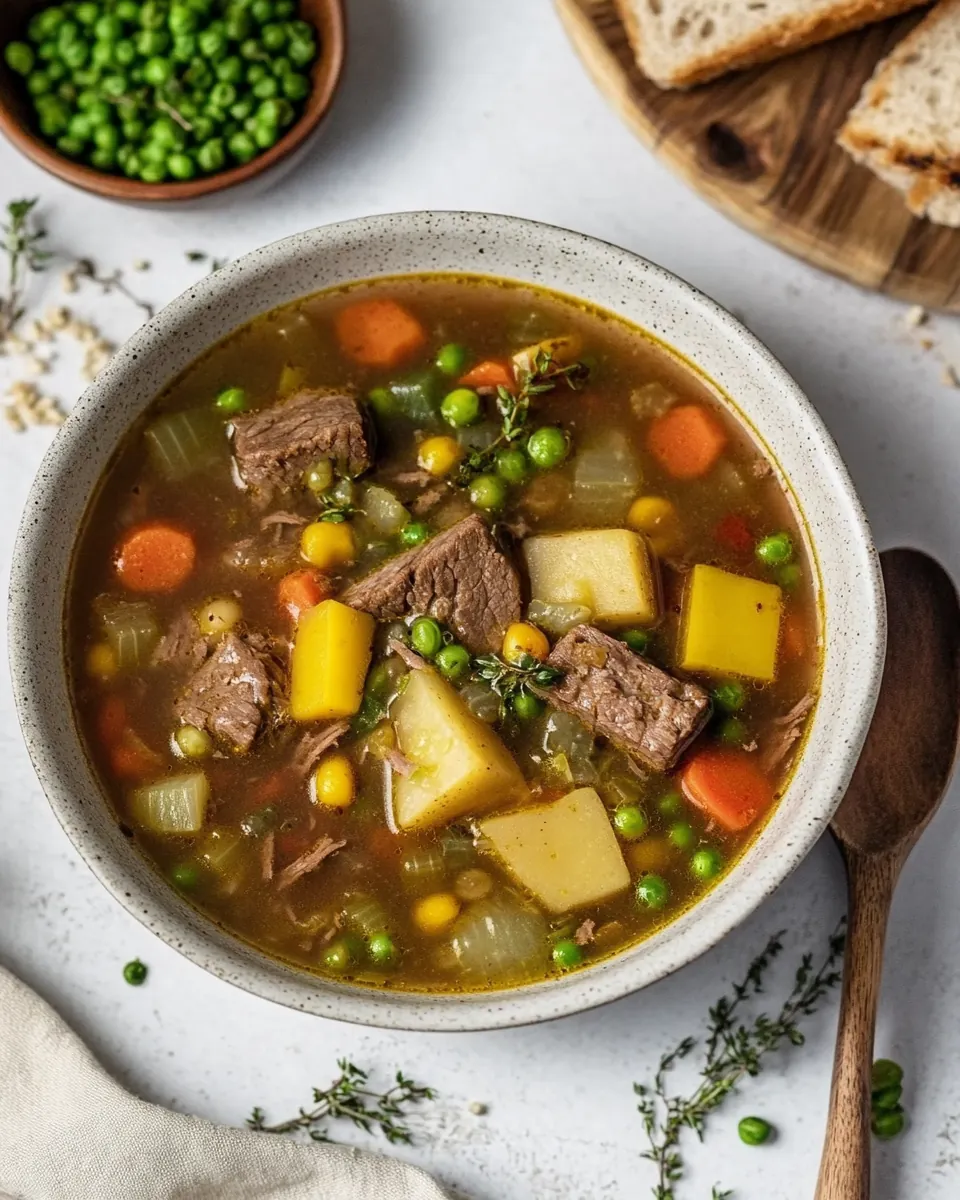
These ingredients form a simple, robust framework that leans on classic soup building blocks. The core players are the beef for savory depth, the vegetables for texture and brightness, and the broth and herbs to bind everything into a warming, unified bowl. Each item plays a clear role in flavor, body, or finishing freshness.
- 2 tablespoons olive oil plus more as needed: Used to sauté aromatics and brown beef, adding a fruity, peppery richness that enhances overall flavor; warm the oil before adding other ingredients to prevent sticking. Adjust quantity as needed to control the pan temperature and finish with a drizzle for added silkiness if desired.
- 24 ounces beef stew meat: Cut into bite-sized pieces and seared to develop deep, caramelized flavor and a hearty texture; provides the primary savory and protein foundation of the soup. Trim excess fat to control richness and brown in batches so pieces get a good crust without steaming.
- Salt and freshly ground black pepper: Season generously to build and balance flavors throughout cooking; helps to enhance the natural taste of vegetables and beef when added during searing and adjusted at the end. Grind black pepper freshly to add aromatic heat and complexity without overpowering the soup.
- 1 large yellow onion chopped: Sautéed until translucent to contribute a sweet, savory base and aromatic depth; chopped size controls how much onion integrates into the broth. Add with carrots and celery at the start to form a classic mirepoix that supports long simmering.
- 2 large carrots chopped: Added early and cooked until tender to contribute sweetness, body, and texture; chopping ensures even cooking and integration into the broth. Use carrots to lend natural sweetness that balances the savory beef and tomatoes.
- 1 1/4 cups chopped celery: Cooked with onions and carrots as part of the aromatics to provide a subtle, vegetal backbone and mouthfeel; chopping ensures even distribution and quicker softening. Celery adds a slight bitterness and depth that complements tomatoes and herbs.
- 5 cloves garlic minced: Mince finely and add early to release pungent, savory aromas that infuse the broth; garlic boosts savory depth and layers of flavor. Stir briefly after adding to avoid bitterness from burning, then allow it to mellow during simmering.
- 8 cups low-sodium beef broth: Used as the cooking liquid to simmer meat and vegetables, delivering a rich, beefy base while controlling saltiness when low-sodium is chosen. Add gradually and taste to adjust seasoning, as it determines the soup’s overall body and mouthfeel.
- 1 can diced tomatoes (28 ounces): Introduced for acidity, sweetness, and tomato texture; the diced form disperses evenly to add brightness and balance to the stew. Include both juices to enhance the broth and create a cohesive tomato-infused background.
- 1/2 tablespoon dried basil: Sprinkled in for an earthy, slightly sweet herbal note that complements tomatoes and beef; dried form releases flavor during simmering. Use measured amounts so it supports but doesn’t dominate the herb profile.
- 1/2 tablespoon dried oregano: Added to contribute a robust, slightly peppery Mediterranean herbiness that pairs well with basil and tomatoes; dried oregano releases flavor during long simmering. Balance with other herbs to achieve an aromatic, savory finish.
- 3/4 teaspoon dried thyme: Incorporated for subtle floral and lemony undertones that add complexity without overwhelming; dried thyme slowly infuses the broth while simmering. Use sparingly to provide background depth to the soup’s herb mix.
- 1 pound potatoes peeled and chopped into cubes: Added as the primary starchy component to thicken and add heartiness; cubed potatoes absorb flavors while contributing creamy texture as they cook. Choose waxy or all-purpose potatoes and add early enough to become tender but not falling apart.
- 1 1/4 cups fresh green beans chopped: Included for fresh, crisp green vegetable texture and color; chopping creates manageable bites that cook quickly and evenly. Add during the latter half of simmering to preserve a tender-crisp bite and vibrant green color.
- 1 1/2 cups frozen corn: Stirred in toward the end to add natural sweetness and a pop of color; frozen corn cooks quickly and contributes pleasant kernels throughout the soup. No need to thaw—add during final simmer to heat through evenly.
- 1 cup frozen peas: Added near the end to preserve delicate sweetness and texture; frozen peas brighten flavor and provide small tender bites. Fold in during the last few minutes of cooking so they remain vibrant and not mushy.
- 1/4 cup chopped fresh parsley: Sprinkled at the finish to introduce a fresh, herbaceous lift and subtle peppery notes; chopped parsley brightens and balances the rich soup flavors. Add just before serving to maintain its color and aromatic freshness.
How to Prepare Vegetable Beef Soup
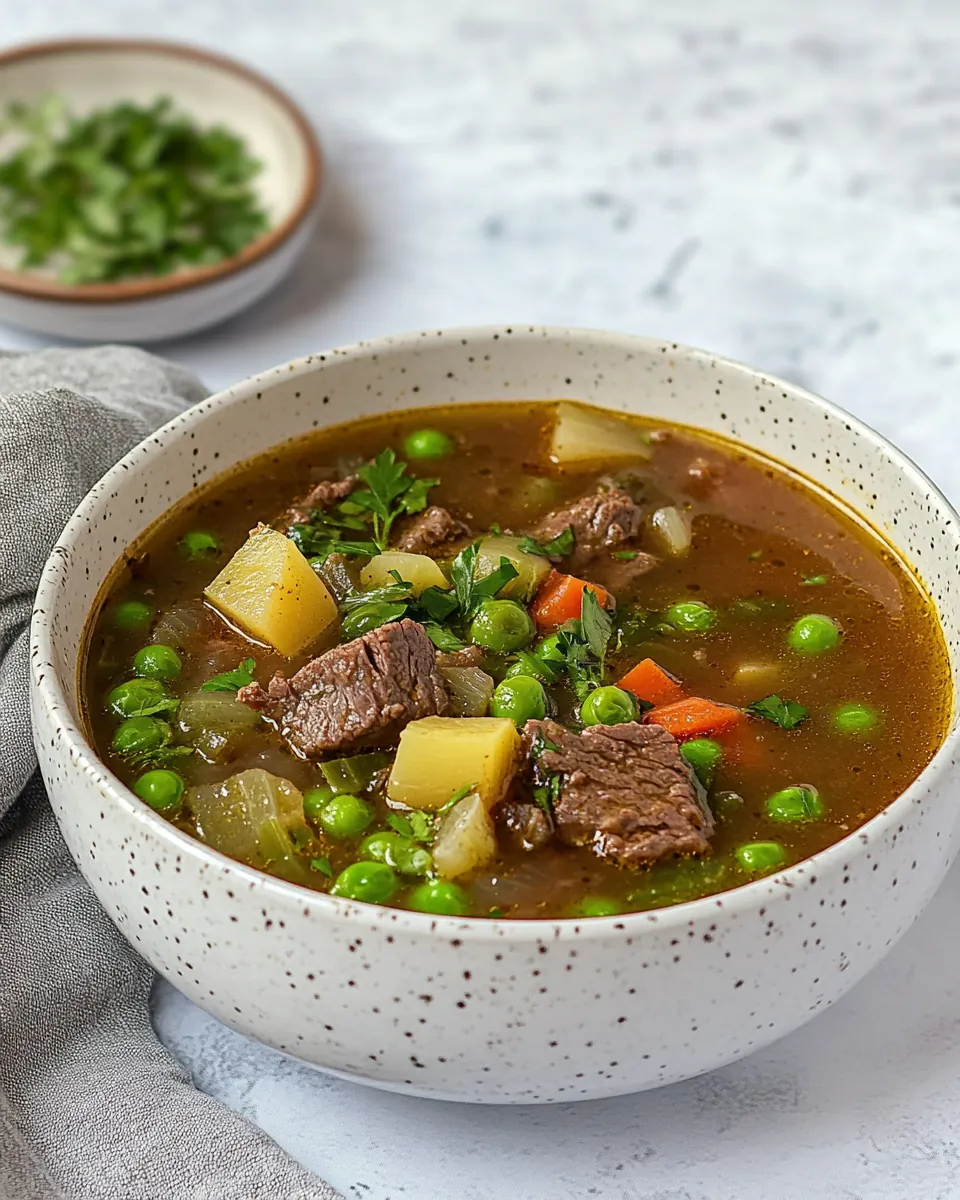
I like to walk through this soup in a way that keeps momentum without feeling rushed. Each step focuses on building flavor progressively, from browning the beef to gently coaxing the vegetables to tenderness. Take your time at the sear and the simmer, and your bowl will reward you.
- Add 1 tablespoon olive oil to a large pot over medium-high heat. Pat the beef with paper towels, season with salt and pepper, and add half of the beef to the pot.: The aroma of hot olive oil meeting meat is one of the first signals that flavor is happening. You should hear a clear sizzle when the meat hits the pan, and within a minute the edges will begin to brown and caramelize, releasing a nutty scent. Browning creates the Maillard reaction which deepens the final broth in ways that boiling alone cannot. If the sizzle sounds weak, the pan is not hot enough, and the meat may steam instead of brown. Avoid crowding the pot, because too many pieces will lower the pan temperature and prevent good color development.
- Brown for approximately 4 minutes, flipping halfway. Move to a plate, pour in 1 more tablespoon of olive oil to the pot, and continue with the other half of the beef.: As you flip, look for a consistent golden brown crust, and notice the caramel scent that intensifies when the surface sugars darken. Transferring the browned pieces keeps them from overcooking while you finish the rest. The brief rest on a plate protects juiciness until the simmering stage. A common mistake is to leave the meat in too long in one spot which can lead to burning rather than even browning.
- Add more oil to the pot if needed, then add onions, carrots, and celery, and sauté for a few minutes. Add garlic and sauté for 1 minute longer.: Sautéing the aromatic vegetables softens their edges and converts raw sharpness into sweet, savory depth, releasing a fragrant, slightly sweet scent. The onions should become translucent and start to show soft golden edges, while the carrots and celery soften and release their vegetal perfume. Add minced garlic later because it browns quickly and can turn bitter if overcooked. Stir frequently to avoid sticking, and maintain medium heat so the vegetables sweat rather than brown too fast.
- Pour in broth, tomatoes, browned beef, basil, oregano, thyme, and season with salt and pepper. Bring to a boil, then reduce heat to low, cover, and simmer, stirring once or twice throughout, for 30 minutes.: When the liquid meets the hot pot, you will see steam rise and hear a gentle bubbling, and the aroma will evolve into a deep, rounded scent. Bringing the mixture to a boil initially helps the flavors marry, then lowering to a slow simmer ensures gentle collagen breakdown in the beef , which yields tender pieces rather than tough ones. Stir occasionally so the bottom does not catch. Avoid a rapid, rolling boil at low heat, because too vigorous a boil can make the meat tough and the broth cloudy.
- Add potatoes then continue to simmer, covered, 15-20 minutes. Stir in green beans and simmer 15 minutes longer, or until all of the veggies and beef are tender.: Adding the cubed potatoes at this point allows them to cook through and slightly thicken the broth as their starches release. You should notice the soup thicken a touch and the potato cubes yield to a fork when done. Introducing the fresh green beans later keeps them vibrant and slightly crisp. A common mistake is adding all vegetables at once, which can lead to overcooked beans or undercooked potatoes, so sequence matters for ideal texture balance.
- Add corn and peas and simmer until heated, approximately 5 minutes. Mix in parsley and serve warm.: At this final stage the scent shifts toward bright sweetness as the corn and peas come up to temperature, and the surface will show gentle, even movement rather than a hard boil. The peas and corn should remain distinct and tender, offering small pops of sweetness against the savory broth. Stirring in fresh parsley at the end refreshes the aroma and adds a green contrast on the palate. Overcooking here will lead to soft, indistinct vegetables, so keep a close eye and remove from heat promptly when heated through.
Helpful Notes about Vegetable Beef Soup
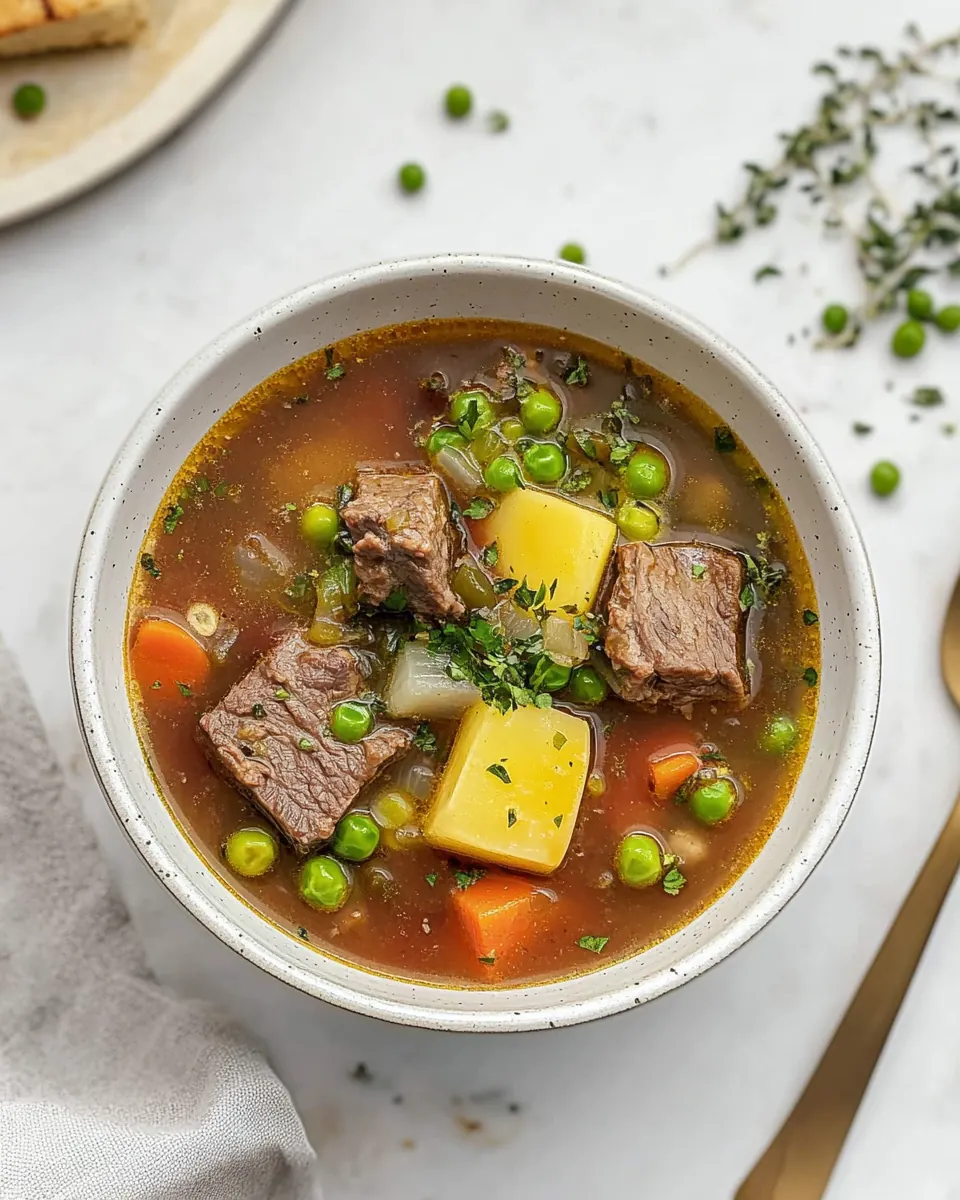
This section gathers useful notes that I return to whenever I make Vegetable Beef Soup. They cover timing, texture, and finishing touches to ensure consistent results. Read them before you start so you have the right mindset and tools.
- Get a good sear, because proper browning on the beef builds a deep savory foundation that simmering alone won t create, and moderate pan crowding helps achieve that crust.
- Layer your seasoning, seasoning at multiple stages builds complexity; a little at sear time, a bit during simmering, and a final adjustment at the end prevents flat flavor.
- Mind the vegetable timing, add sturdier vegetables like potatoes earlier and delicate frozen items like peas at the end to preserve textural contrast.
- Use low sodium broth to control salt levels; it lets you dial seasoning precisely rather than oversalting early.
- Finish with fresh herbs, stirring in chopped parsley at the end brightens the bowl and adds visual appeal without altering the base cooking.
How to Enjoy Vegetable Beef Soup
Serving Vegetable Beef Soup is about comfort and practicality. It works as a main course or a generous starter, and it fits casual family dinners as well as cozy gatherings. Below are detailed ideas for pairing, occasions, and storage so you can enjoy it across meals.
- Serve as a main for weeknight dinners: Ladle hot soup into deep bowls with a sprinkle of fresh parsley on top, and provide crusty bread on the side for dipping. This arrangement makes a simple, satisfying meal that is easy to assemble after a busy day.
- Offer as a starter for casual gatherings: Present small cups of the soup before the main course to warm guests up without filling them. The savory aroma sets a welcoming tone, and the chunks of beef and vegetables make it feel generous even in a small portion.
- Pack for lunches: Cool to room temperature then transfer to airtight containers; the soup reheats very well and often tastes better the next day as flavors continue to meld. Keep the containers sealed and reheat gently to preserve vegetable texture.
- Ideal for winter and comfort menus: Because of its warming profile, this soup fits perfectly into colder months, holiday prep days, or anytime you want a hearty, restorative bowl. It s a natural for nights when you crave familiar, home style food.
- Storage and freezing tips: Refrigerate leftovers up to four days, and freeze in portions for up to three months. Thaw overnight in the fridge before reheating, and add a splash of broth if it thickens too much on standing.
- Occasion flexibility, this recipe suits casual weeknights, potlucks, or comforting solo dinners, making it a versatile choice across many meal plans and seasonal menus.
FAQ
Conclusion
What makes this recipe special is the way simple ingredients combine to create a richly flavored, comforting bowl that feels like home. The interplay of seared beef, tender potatoes, and a mix of fresh and frozen vegetables yields a satisfying texture and depth of flavor. I encourage you to give this a try on a chilly night or when you need a reliable dish to feed a few people. It s forgiving to make, scales easily, and rewards a little attention with big, soothing results.
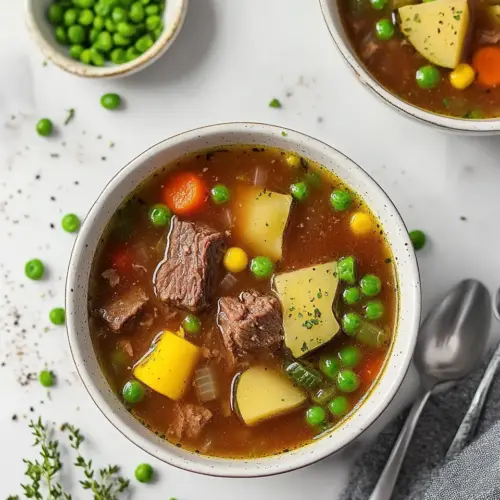
Vegetable Beef Soup
Equipment
- Large Pot
- Tongs
- Knife
- Cutting Board
Ingredients
- 2 tablespoons olive oil plus more as needed Used to sauté aromatics and brown beef, adding a fruity, peppery richness that enhances overall flavor; warm the oil before adding other ingredients to prevent sticking. Adjust quantity as needed to control the pan temperature and finish with a drizzle for added silkiness if desired.
- 24 ounces beef stew meat Cut into bite-sized pieces and seared to develop deep, caramelized flavor and a hearty texture; provides the primary savory and protein foundation of the soup. Trim excess fat to control richness and brown in batches so pieces get a good crust without steaming.
- Salt and freshly ground black pepper Season generously to build and balance flavors throughout cooking; helps to enhance the natural taste of vegetables and beef when added during searing and adjusted at the end. Grind black pepper freshly to add aromatic heat and complexity without overpowering the soup.
- 1 large yellow onion chopped Sautéed until translucent to contribute a sweet, savory base and aromatic depth; chopped size controls how much onion integrates into the broth. Add with carrots and celery at the start to form a classic mirepoix that supports long simmering.
- 2 large carrots chopped Added early and cooked until tender to contribute sweetness, body, and texture; chopping ensures even cooking and integration into the broth. Use carrots to lend natural sweetness that balances the savory beef and tomatoes.
- 1 1/4 cups chopped celery Cooked with onions and carrots as part of the aromatics to provide a subtle, vegetal backbone and mouthfeel; chopping ensures even distribution and quicker softening. Celery adds a slight bitterness and depth that complements tomatoes and herbs.
- 5 cloves garlic minced Mince finely and add early to release pungent, savory aromas that infuse the broth; garlic boosts savory depth and layers of flavor. Stir briefly after adding to avoid bitterness from burning, then allow it to mellow during simmering.
- 8 cups low-sodium beef broth Used as the cooking liquid to simmer meat and vegetables, delivering a rich, beefy base while controlling saltiness when low-sodium is chosen. Add gradually and taste to adjust seasoning, as it determines the soup’s overall body and mouthfeel.
- 1 can diced tomatoes (28 ounces) Introduced for acidity, sweetness, and tomato texture; the diced form disperses evenly to add brightness and balance to the stew. Include both juices to enhance the broth and create a cohesive tomato-infused background.
- 1/2 tablespoon dried basil Sprinkled in for an earthy, slightly sweet herbal note that complements tomatoes and beef; dried form releases flavor during simmering. Use measured amounts so it supports but doesn’t dominate the herb profile.
- 1/2 tablespoon dried oregano Added to contribute a robust, slightly peppery Mediterranean herbiness that pairs well with basil and tomatoes; dried oregano releases flavor during long simmering. Balance with other herbs to achieve an aromatic, savory finish.
- 3/4 teaspoon dried thyme Incorporated for subtle floral and lemony undertones that add complexity without overwhelming; dried thyme slowly infuses the broth while simmering. Use sparingly to provide background depth to the soup’s herb mix.
- 1 pound potatoes peeled and chopped into cubes Added as the primary starchy component to thicken and add heartiness; cubed potatoes absorb flavors while contributing creamy texture as they cook. Choose waxy or all-purpose potatoes and add early enough to become tender but not falling apart.
- 1 1/4 cups fresh green beans chopped Included for fresh, crisp green vegetable texture and color; chopping creates manageable bites that cook quickly and evenly. Add during the latter half of simmering to preserve a tender-crisp bite and vibrant green color.
- 1 1/2 cups frozen corn Stirred in toward the end to add natural sweetness and a pop of color; frozen corn cooks quickly and contributes pleasant kernels throughout the soup. No need to thaw—add during final simmer to heat through evenly.
- 1 cup frozen peas Added near the end to preserve delicate sweetness and texture; frozen peas brighten flavor and provide small tender bites. Fold in during the last few minutes of cooking so they remain vibrant and not mushy.
- 1/4 cup chopped fresh parsley Sprinkled at the finish to introduce a fresh, herbaceous lift and subtle peppery notes; chopped parsley brightens and balances the rich soup flavors. Add just before serving to maintain its color and aromatic freshness.
Instructions
- Add 1 tablespoon olive oil to a large pot over medium-high heat. Pat the beef with paper towels, season with salt and pepper, and add half of the beef to the pot.: The aroma of hot olive oil meeting meat is one of the first signals that flavor is happening. You should hear a clear sizzle when the meat hits the pan, and within a minute the edges will begin to brown and caramelize, releasing a nutty scent. Browning creates the Maillard reaction which deepens the final broth in ways that boiling alone cannot. If the sizzle sounds weak, the pan is not hot enough, and the meat may steam instead of brown. Avoid crowding the pot, because too many pieces will lower the pan temperature and prevent good color development.
- Brown for approximately 4 minutes, flipping halfway. Move to a plate, pour in 1 more tablespoon of olive oil to the pot, and continue with the other half of the beef.: As you flip, look for a consistent golden brown crust, and notice the caramel scent that intensifies when the surface sugars darken. Transferring the browned pieces keeps them from overcooking while you finish the rest. The brief rest on a plate protects juiciness until the simmering stage. A common mistake is to leave the meat in too long in one spot which can lead to burning rather than even browning.
- Add more oil to the pot if needed, then add onions, carrots, and celery, and sauté for a few minutes. Add garlic and sauté for 1 minute longer.: Sautéing the aromatic vegetables softens their edges and converts raw sharpness into sweet, savory depth, releasing a fragrant, slightly sweet scent. The onions should become translucent and start to show soft golden edges, while the carrots and celery soften and release their vegetal perfume. Add minced garlic later because it browns quickly and can turn bitter if overcooked. Stir frequently to avoid sticking, and maintain medium heat so the vegetables sweat rather than brown too fast.
- Pour in broth, tomatoes, browned beef, basil, oregano, thyme, and season with salt and pepper. Bring to a boil, then reduce heat to low, cover, and simmer, stirring once or twice throughout, for 30 minutes.: When the liquid meets the hot pot, you will see steam rise and hear a gentle bubbling, and the aroma will evolve into a deep, rounded scent. Bringing the mixture to a boil initially helps the flavors marry, then lowering to a slow simmer ensures gentle collagen breakdown in the beef , which yields tender pieces rather than tough ones. Stir occasionally so the bottom does not catch. Avoid a rapid, rolling boil at low heat, because too vigorous a boil can make the meat tough and the broth cloudy.
- Add potatoes then continue to simmer, covered, 15-20 minutes. Stir in green beans and simmer 15 minutes longer, or until all of the veggies and beef are tender.: Adding the cubed potatoes at this point allows them to cook through and slightly thicken the broth as their starches release. You should notice the soup thicken a touch and the potato cubes yield to a fork when done. Introducing the fresh green beans later keeps them vibrant and slightly crisp. A common mistake is adding all vegetables at once, which can lead to overcooked beans or undercooked potatoes, so sequence matters for ideal texture balance.
- Add corn and peas and simmer until heated, approximately 5 minutes. Mix in parsley and serve warm.: At this final stage the scent shifts toward bright sweetness as the corn and peas come up to temperature, and the surface will show gentle, even movement rather than a hard boil. The peas and corn should remain distinct and tender, offering small pops of sweetness against the savory broth. Stirring in fresh parsley at the end refreshes the aroma and adds a green contrast on the palate. Overcooking here will lead to soft, indistinct vegetables, so keep a close eye and remove from heat promptly when heated through.
Notes
- Get a good sear, because proper browning on the beef builds a deep savory foundation that simmering alone won t create, and moderate pan crowding helps achieve that crust.
- Layer your seasoning, seasoning at multiple stages builds complexity; a little at sear time, a bit during simmering, and a final adjustment at the end prevents flat flavor.
- Mind the vegetable timing, add sturdier vegetables like potatoes earlier and delicate frozen items like peas at the end to preserve textural contrast.
- Use low sodium broth to control salt levels; it lets you dial seasoning precisely rather than oversalting early.
- Finish with fresh herbs, stirring in chopped parsley at the end brightens the bowl and adds visual appeal without altering the base cooking.