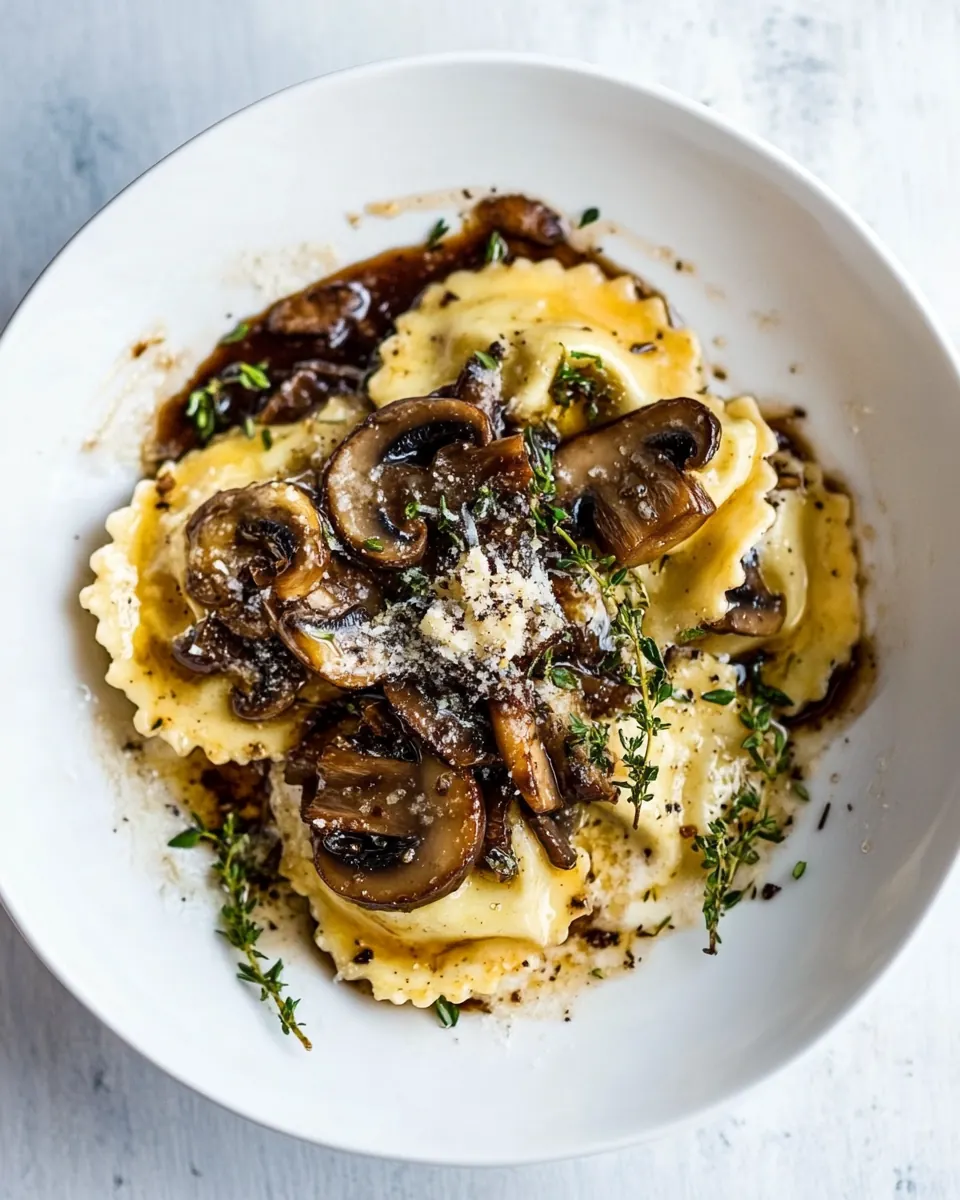
Herby Buttered Balsamic Mushroom Ravioli
Herby Buttered Balsamic Mushroom Ravioli has been one of those dishes that sneaks into my weeknight rotation and refuses to leave. The first time I made it, I was short on time but craving something comforting and layered, so I grabbed a store bought package of cheese ravioli and a handful of mushrooms. One pan later, I had a rustic, restaurant worthy plate that felt both indulgent and wonderfully approachable.
I remember the sound of the mushrooms hitting the hot pan, that immediate sizzling that promises depth, and how the kitchen filled with an earthy aroma as they browned. I love how simple pantry items like olive oil and butter transform together, giving the sauce a silky texture and a glossy finish. A splash of balsamic vinegar lifts everything with bright, sweet tang, while fresh thyme and sage ground the dish with herbaceous warmth.
What keeps me coming back is the balance of textures, the tender pillows of ravioli against slightly chewy, caramelized mushrooms. It feels like cooking that makes you look clever without demanding a lot of fuss. Friends have told me this recipe is their new favorite for cozy dinners, and I find that it works equally well for a casual weeknight or a small, intimate gathering.
Recipe Snapshot
25 mins
10 mins
15 mins
Easy
450 kcal
Italian
Keto, Gluten-Free
Dinner
Large pot, Large skillet, Colander
Why You’ll Love This Herby Buttered Balsamic Mushroom Ravioli
Bright, Balanced Flavors
I love how Herby Buttered Balsamic Mushroom Ravioli manages to taste layered without being complicated. The roasted, caramelized notes from the mushrooms meet the glossy richness of melted butter, and a splash of balsamic vinegar cuts through with a sweet acidity. That contrast keeps every bite interesting, and I always notice guests reaching for seconds.
Speed Without Sacrifice
One of my favorite reasons to make this recipe is how quickly it comes together. From boiling the ravioli to finishing the sauce takes under a half hour, yet it delivers flavors that feel like they took longer. I often rely on this dish when I want an impressive meal but only have a short window, and it never feels rushed.
Comforting But Elegant
This recipe reads like comfort food with a refined edge. The combination of butter and fresh herbs such as thyme and sage gives the sauce a comforting, homey quality, while caramelized mushrooms and bright balsamic vinegar elevate it. I like serving it when I want something cozy, yet a little special.
Flexible and Forgiving
I appreciate how forgiving the method is. Whether you use homemade or store bought cheese ravioli, the sauce comes together easily. If your mushrooms release more liquid than expected, a quick increase in heat pulls off the moisture and concentrates flavor. I often tweak the herb balance depending on what I have, and it still sings.
Great for Sharing
Finally, this dish scales well. It feels intimate when plated for two, but you can increase quantities for a small gathering and maintain the same depth of flavor. I like that it gives me flexibility when planning a dinner that needs to please a crowd without wearing me out.
What’s In This Herby Buttered Balsamic Mushroom Ravioli
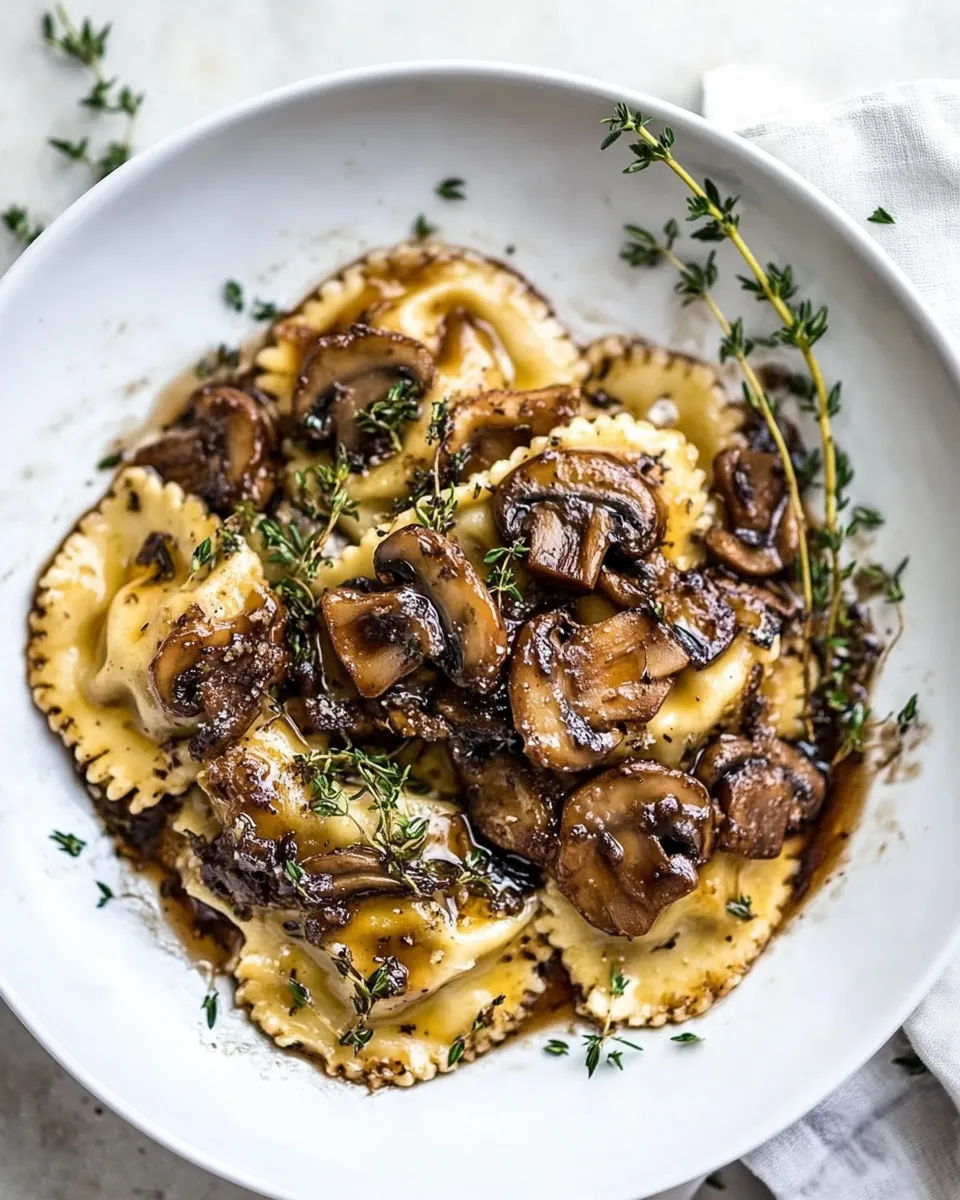
I approach ingredients like musicians in a string quartet each playing their part. The mushrooms provide the soulful base, while the butter and olive oil add body and sheen. Fresh herbs contribute bright, aromatic notes that keep the sauce lively, and the balsamic vinegar gives a finishing acidity that ties everything together.
- 2 tablespoons extra virgin olive oil: Drizzle extra virgin olive oil to provide a fragrant, fruity foundation for sautéing and to help brown aromatics and mushrooms; its high-flavor profile enhances the dish's Mediterranean character. Use it sparingly to coat the pan evenly and prevent sticking while building layers of caramelization. Retain some oil flavor to balance the richness of butter and balsamic.
- 1 shallot, thinly sliced: Slice thinly shallot to add a delicate, sweet onion flavor that gently mellows as it cooks and integrates with mushrooms. Cook slowly in oil to release sugars and create a subtle aromatic base without overpowering herbs. Allow softened shallot to form a translucent layer that complements garlic and butter.
- 1 pound mixed mushrooms, roughly torn or sliced: Tear or slice mixed mushrooms to contribute umami, earthy depth, and varied textures that become tender and slightly caramelized when sautéed. Choose an assortment for contrast in flavor and mouthfeel, and dry-pan or oil-sear until golden to concentrate savory notes. Combine with herbs and balsamic to create a robust topping for ravioli.
- kosher salt and pepper: Season with kosher salt and pepper to elevate natural flavors, enhance umami from mushrooms, and balance acidity from balsamic. Add salt gradually during cooking to control seasoning and finish with a crack of pepper for brightness. Use kosher salt for easy distribution and adjust to taste.
- 4 tablespoons butter: Melt butter to bring rich, creamy mouthfeel and a nutty, toasted note when it browns; it helps create a silky sauce that coats the ravioli and mushrooms. Add near the end of cooking to emulsify with balsamic and pan juices for gloss and depth. Butter also carries herb aromas effectively.
- 2 cloves garlic cloves, smashed: Smash garlic cloves to release pungent, aromatic oils that infuse the butter and oil with savory bite; cook briefly to mellow sharpness and avoid bitterness. Add garlic toward the end of sautéing shallots and mushrooms so it becomes fragrant but not burned. Use smashed cloves to flavor without overpowering delicate cheese ravioli.
- 2 tablespoons fresh thyme leaves: Strip fresh thyme leaves to contribute piney, slightly minty herbal notes that pair well with mushrooms and butter; thyme withstands longer cooking and releases flavor gradually. Sprinkle into the pan during sautéing to infuse the sauce and create aromatic harmony. Fresh leaves provide brighter, fresher intensity than dried.
- 1 tablespoon fresh chopped sage: Chop fresh sage to offer warm, slightly peppery and savory herbaceousness that complements butter and mushrooms; its savory aroma deepens the sauce. Add near the end of cooking to preserve its flavor without becoming bitter. Chopped sage also adds textural flecks and visual appeal.
- 3 tablespoons balsamic vinegar: Splash balsamic vinegar to introduce sweet-tart acidity that brightens rich butter and mushrooms, creating a balanced glaze for the ravioli. Reduce slightly in the pan to concentrate flavor and develop a glossy finish that clings to pasta. Use quality balsamic for nuanced complexity and caramel undertones.
- 1 pound cheese ravioli, homemade or store bought: Cook cheese ravioli to serve as the tender, creamy center of the dish that soaks up sauce and contrasts the umami mushroom topping. Boil until al dente to maintain shape, then toss gently with the herby butter–balsamic mixture so each piece is lightly coated. Use homemade or store–bought ravioli based on preference and availability.
- fresh dill, for serving: Garnish with fresh dill to add a bright, slightly grassy, and citrusy finish that lifts the rich flavors of butter, cheese, and mushrooms. Chop or snip dill just before serving to preserve aroma and color, scattering over plated ravioli for freshness and contrast. Use sparingly to avoid overpowering the primary herbs.
How to Make Herby Buttered Balsamic Mushroom Ravioli
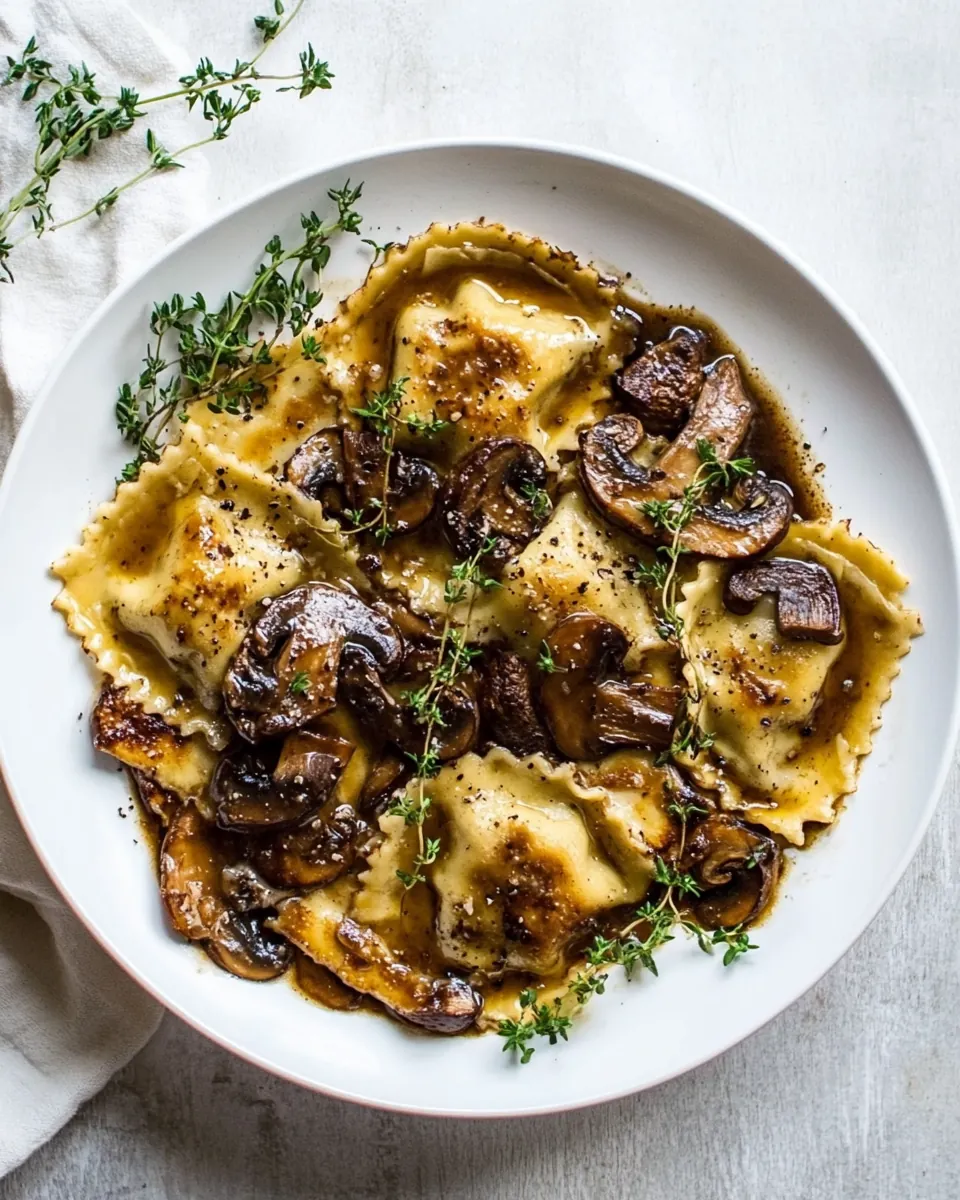
This recipe is approachable and paced so you can focus on technique and sensory cues. Keep an eye on the mushrooms while they brown, and save a bit of the pasta water to marry the sauce to the ravioli. Below I expand the directions into detailed steps so you can confidently reproduce the flavors and textures I love.
- Bring a large pot of salted water to a boil. Cook the ravioli according to package directions until al dente. Reserve 1/2 cup of the pasta cooking water. Drain the ravioli. Meanwhile, heat the olive oil in a large skillet over high heat. When the oil shimmers, add the shallots and cook until fragrant, 2-3 minutes. Add the mushrooms and season with salt and pepper. Cook undisturbed for 5 minutes or until golden, stir and continue cooking until the mushrooms have caramelized, 3-5 minutes. Reduce the heat to medium. Add the butter, garlic, thyme, and sage. Cook, stirring occasionally until the garlic is caramelized and fragrant, about 5 minutes. Add the balsamic and a splash (about 1/4 cup) of the pasta cooking water). Cook for a 2 minutes. Remove from the heat and discard the garlic cloves. Divide the ravioli among bowls and spoon the mushroom sauce over top. Garnish with fresh herbs. Enjoy!: The sound of a rolling boil should be decisive, and the water will shimmer when it is hot enough. Salt the water generously so it seasons the ravioli from the inside out, which is why I always wait until it simmers strongly before adding pasta. A common mistake is under salting, which leaves the final dish flat. If your water is not simmering after a few minutes, raise the heat, and be patient, the right temperature matters for proper texture.
- Cook the ravioli according to package directions until al dente.: You will see the ravioli start to float and the edges become slightly translucent, which signals they are nearly done. Taste a piece for that gentle resistance in the center to confirm al dente. Overcooking will make the filling soggy and the pasta too soft, so test early and often toward the end of the prescribed time.
- Reserve 1/2 cup of the pasta cooking water.: That starchy water is gold for the sauce, adding body and helping the butter and balsamic vinegar cling to the ravioli . I scoop it out before draining; if you forget, a little extra can be salvaged later, but too much will thin the sauce. Use warm water, as cold will knock down the sauce temperature.
- Drain the ravioli.: Shake gently in the colander so they do not stick together, and transfer them straight to a warm serving dish if you are plating immediately. The sound here is a soft trickle. Leaving them to sit in the colander will cool them and can cause them to cling, so work quickly.
- Meanwhile, heat the olive oil in a large skillet over high heat.: You want the oil to shimmer, not smoke, which indicates it is properly hot. That heat jumpstarts caramelization for the shallot and mushrooms , giving the sauce its savory backbone. If the oil smokes, lower the heat to avoid a bitter taste.
- When the oil shimmers, add the shallots and cook until fragrant, 2 to 3 minutes.: The shallots should soften and become translucent, releasing a sweet aroma. Stir once or twice to prevent burning, and listen for a gentle sizzle. If they brown too quickly, reduce the heat to medium to avoid an acrid flavor that can overpower the rest of the sauce.
- Add the mushrooms and season with salt and pepper.: The initial contact will make a loud sizzle as moisture hits the hot pan, and you should let the mushrooms sit undisturbed to develop a golden crust. Doing this creates the depth of flavor I love. Stirring too often prevents browning and yields a stewy texture rather than caramelized edges.
- Cook undisturbed for 5 minutes or until golden, stir and continue cooking until the mushrooms have caramelized, 3 to 5 minutes.: You will notice edges turning deep brown and a nutty aroma as sugars caramelize. The pan will go from wet to drier as moisture evaporates, intensifying flavor. A pitfall here is crowding the pan; if the mushrooms steam, they will not brown properly, so use a wide skillet or work in batches.
- Reduce the heat to medium.: Lowering the heat gives you control for the next stage, allowing the flavors to meld without burning the aromatics. You will see the sizzling calm, and the pan temperature will stabilize. Rushing this step with high heat risks scorching the herbs and garlic, which brings bitterness.
- Add the butter, garlic, thyme, and sage.: The butter will melt and foam, coating the mushrooms in a glossy sheen while the smashed garlic infuses the sauce. The herbs will sizzle briefly, releasing fragrant oils that perfume the pan. Stir occasionally as the garlic softens and the herbs wilt. Watch closely because garlic can go from golden to burnt very fast, and burnt garlic will impart a harsh flavor.
- Cook, stirring occasionally until the garlic is caramelized and fragrant, about 5 minutes.: You will smell a rich, toasty garlic scent and see the garlic cloves take on a deep golden hue. This step deepens the sauce and mellows the garlic bite, making the final dish balanced and round. Avoid leaving the pan unattended, because once garlic reaches deep color it can quickly tip into bitterness.
- Add the balsamic and a splash about 1/4 cup of the pasta cooking water.: The sizzle will return as the liquid hits the hot pan, deglazing browned bits and creating a glossy, slightly reduced sauce. The balsamic vinegar interacts with the starch in the pasta water to thicken the sauce and make it cling beautifully to the ravioli . A too heavy hand with water will thin the sauce, so add gradually until you reach a silky consistency.
- Cook for a 2 minutes.: During this brief simmer the sauce concentrates and the vinegar's bite softens, knitting the flavors together. You will see the sauce reduce slightly and become more syrupy. Skipping this reduction leaves the sauce tangy and loose, so give it the time it needs to settle.
- Remove from the heat and discard the garlic cloves.: The pan will stop sizzling and the aroma will mellow, signaling the right moment to pull it off heat. Removing the garlic cloves avoids an overpowering raw bite on the plate while leaving behind subtle flavor. If you leave them in, they can dominate the delicate herb notes.
- Divide the ravioli among bowls and spoon the mushroom sauce over top.: You should see a glossy coating cling to each ravioli , with pieces of caramelized mushroom nestled between. The contrast of textures and the visual shine make the dish inviting. Plate carefully to showcase the caramelized bits, and if the sauce seems too thick, loosen with a teaspoon of reserved pasta water.
- Garnish with fresh herbs.: A final sprinkle of fresh dill adds a bright, herbal note and a pop of color. The contrast immediately lifts the plate and adds a fresh finish. Avoid overgarnishing, which can dilute the carefully built flavors.
Tips and Tricks about Herby Buttered Balsamic Mushroom Ravioli
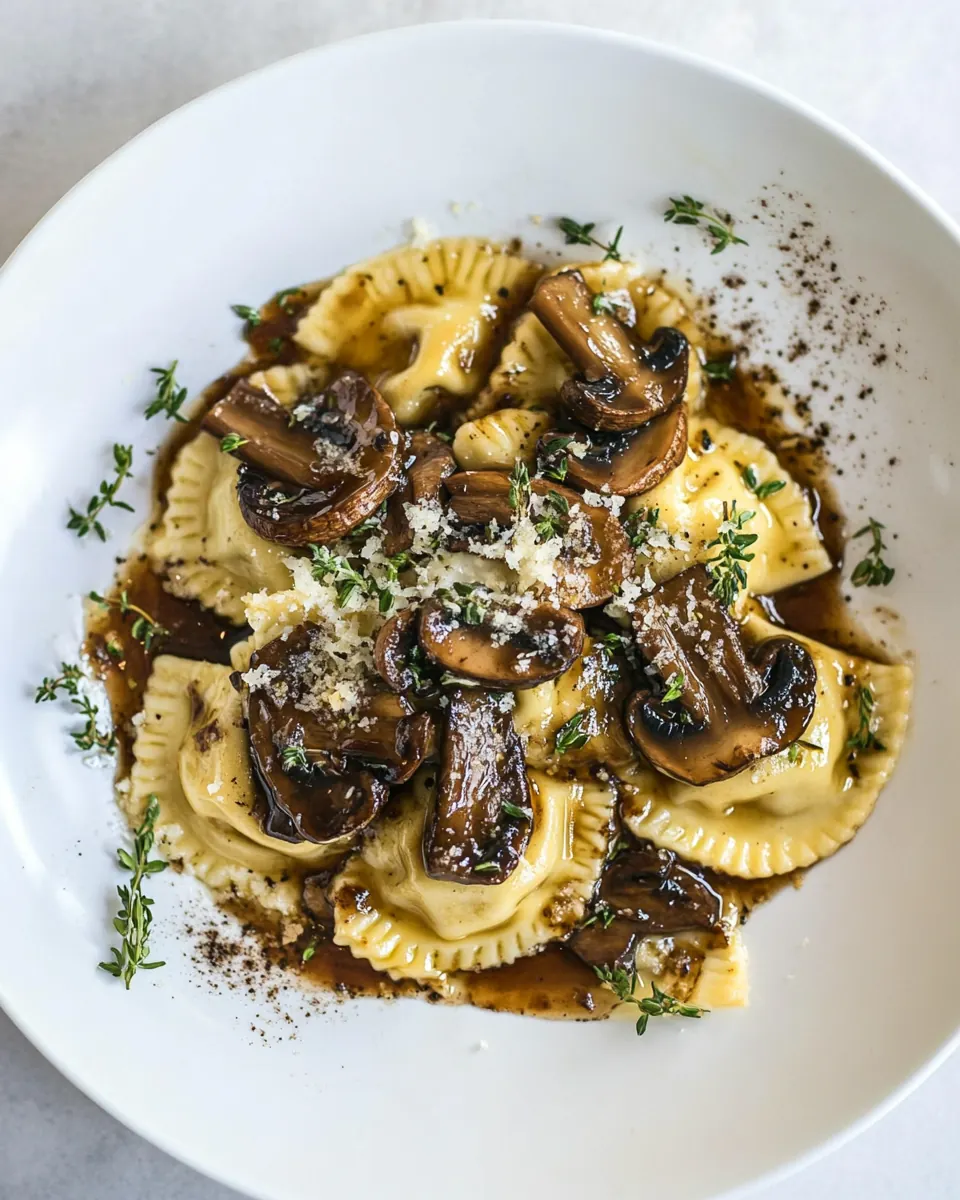
I like to keep these tips practical and actionable so you get consistent results. Each tip begins with a short, bolded phrase to highlight the core idea, followed by an explanation you can use at the stove.
- Choose a variety of mushrooms. Mixing cremini, shiitake, and oyster delivers different textures and depths of umami, which makes the sauce more interesting than a single mushroom type.
- Don’t overcrowd the pan. Overcrowding causes steaming rather than browning; use a wide skillet or do two batches to ensure golden caramelization.
- Save pasta water. That starchy liquid links the fat and vinegar into a glossy emulsion that clings to the ravioli for a restaurant finish.
- Time the garlic carefully. Add smashed garlic to mellow it and remove the cloves after infusing, this prevents any bitter burnt garlic flavor from developing.
- Finish with fresh herbs. Adding herbs at the end preserves their brightness and keeps the dish smelling fresh and layered.
Serving Suggestions
This dish is versatile enough for weeknight dinners and small gatherings. The plating is simple, and finishing touches like a bright herb and a drizzle of olive oil can make it feel more celebratory. Below are detailed serving ideas and contexts where the recipe shines.
- Weeknight comfort: Serve a bowl of Herby Buttered Balsamic Mushroom Ravioli on its own for a quick, cozy dinner when you want minimal cleanup and maximum flavor.
- Casual dinner party: Plate the ravioli individually and garnish with extra fresh herbs to make each portion look elegant and inviting at a small gathering.
- Seasonal pairing: In the fall, complement the earthy mushrooms with roasted root vegetables or a simple green salad dressed with lemon and olive oil.
- Storage tips: Cool any leftovers quickly and refrigerate in an airtight container for up to two days; reheat gently in a skillet with a splash of reserved pasta water to restore silkiness.
- Occasions: This works well for cozy dinners, date nights at home, or any time you want a flavorful pasta that feels special without a lot of fuss.
FAQ
Conclusion
What makes this recipe special is the harmony between rich, buttery sauce, caramelized mushrooms, and the pillowy comfort of cheese filled ravioli. It comes together quickly, yet rewards you with layered textures and flavors that feel thoughtfully crafted. I encourage you to give it a try the next time you want a fuss free meal that still impresses; experiment with a mix of mushrooms and finish with fresh herbs to tailor it to your taste. Enjoy the process, and savor the cozy satisfaction of a simple dish done exceptionally well.
Herby Buttered Balsamic Mushroom Ravioli
Equipment
- Large Pot
- Large Skillet
- Colander
Ingredients
- 2 tablespoons extra virgin olive oil Drizzle extra virgin olive oil to provide a fragrant, fruity foundation for sautéing and to help brown aromatics and mushrooms; its high-flavor profile enhances the dish's Mediterranean character. Use it sparingly to coat the pan evenly and prevent sticking while building layers of caramelization. Retain some oil flavor to balance the richness of butter and balsamic.
- 1 shallot, thinly sliced Slice thinly shallot to add a delicate, sweet onion flavor that gently mellows as it cooks and integrates with mushrooms. Cook slowly in oil to release sugars and create a subtle aromatic base without overpowering herbs. Allow softened shallot to form a translucent layer that complements garlic and butter.
- 1 pound mixed mushrooms, roughly torn or sliced Tear or slice mixed mushrooms to contribute umami, earthy depth, and varied textures that become tender and slightly caramelized when sautéed. Choose an assortment for contrast in flavor and mouthfeel, and dry-pan or oil-sear until golden to concentrate savory notes. Combine with herbs and balsamic to create a robust topping for ravioli.
- kosher salt and pepper Season with kosher salt and pepper to elevate natural flavors, enhance umami from mushrooms, and balance acidity from balsamic. Add salt gradually during cooking to control seasoning and finish with a crack of pepper for brightness. Use kosher salt for easy distribution and adjust to taste.
- 4 tablespoons butter Melt butter to bring rich, creamy mouthfeel and a nutty, toasted note when it browns; it helps create a silky sauce that coats the ravioli and mushrooms. Add near the end of cooking to emulsify with balsamic and pan juices for gloss and depth. Butter also carries herb aromas effectively.
- 2 cloves garlic cloves, smashed Smash garlic cloves to release pungent, aromatic oils that infuse the butter and oil with savory bite; cook briefly to mellow sharpness and avoid bitterness. Add garlic toward the end of sautéing shallots and mushrooms so it becomes fragrant but not burned. Use smashed cloves to flavor without overpowering delicate cheese ravioli.
- 2 tablespoons fresh thyme leaves Strip fresh thyme leaves to contribute piney, slightly minty herbal notes that pair well with mushrooms and butter; thyme withstands longer cooking and releases flavor gradually. Sprinkle into the pan during sautéing to infuse the sauce and create aromatic harmony. Fresh leaves provide brighter, fresher intensity than dried.
- 1 tablespoon fresh chopped sage Chop fresh sage to offer warm, slightly peppery and savory herbaceousness that complements butter and mushrooms; its savory aroma deepens the sauce. Add near the end of cooking to preserve its flavor without becoming bitter. Chopped sage also adds textural flecks and visual appeal.
- 3 tablespoons balsamic vinegar Splash balsamic vinegar to introduce sweet-tart acidity that brightens rich butter and mushrooms, creating a balanced glaze for the ravioli. Reduce slightly in the pan to concentrate flavor and develop a glossy finish that clings to pasta. Use quality balsamic for nuanced complexity and caramel undertones.
- 1 pound cheese ravioli, homemade or store bought Cook cheese ravioli to serve as the tender, creamy center of the dish that soaks up sauce and contrasts the umami mushroom topping. Boil until al dente to maintain shape, then toss gently with the herby butter-balsamic mixture so each piece is lightly coated. Use homemade or store-bought ravioli based on preference and availability.
- fresh dill, for serving Garnish with fresh dill to add a bright, slightly grassy, and citrusy finish that lifts the rich flavors of butter, cheese, and mushrooms. Chop or snip dill just before serving to preserve aroma and color, scattering over plated ravioli for freshness and contrast. Use sparingly to avoid overpowering the primary herbs.
Instructions
- Bring a large pot of salted water to a boil. Cook the ravioli according to package directions until al dente. Reserve 1/2 cup of the pasta cooking water. Drain the ravioli. Meanwhile, heat the olive oil in a large skillet over high heat. When the oil shimmers, add the shallots and cook until fragrant, 2-3 minutes. Add the mushrooms and season with salt and pepper. Cook undisturbed for 5 minutes or until golden, stir and continue cooking until the mushrooms have caramelized, 3-5 minutes. Reduce the heat to medium. Add the butter, garlic, thyme, and sage. Cook, stirring occasionally until the garlic is caramelized and fragrant, about 5 minutes. Add the balsamic and a splash (about 1/4 cup) of the pasta cooking water). Cook for a 2 minutes. Remove from the heat and discard the garlic cloves. Divide the ravioli among bowls and spoon the mushroom sauce over top. Garnish with fresh herbs. Enjoy!: The sound of a rolling boil should be decisive, and the water will shimmer when it is hot enough. Salt the water generously so it seasons the ravioli from the inside out, which is why I always wait until it simmers strongly before adding pasta. A common mistake is under salting, which leaves the final dish flat. If your water is not simmering after a few minutes, raise the heat, and be patient, the right temperature matters for proper texture.
- Cook the ravioli according to package directions until al dente.: You will see the ravioli start to float and the edges become slightly translucent, which signals they are nearly done. Taste a piece for that gentle resistance in the center to confirm al dente. Overcooking will make the filling soggy and the pasta too soft, so test early and often toward the end of the prescribed time.
- Reserve 1/2 cup of the pasta cooking water.: That starchy water is gold for the sauce, adding body and helping the butter and balsamic vinegar cling to the ravioli . I scoop it out before draining; if you forget, a little extra can be salvaged later, but too much will thin the sauce. Use warm water, as cold will knock down the sauce temperature.
- Drain the ravioli.: Shake gently in the colander so they do not stick together, and transfer them straight to a warm serving dish if you are plating immediately. The sound here is a soft trickle. Leaving them to sit in the colander will cool them and can cause them to cling, so work quickly.
- Meanwhile, heat the olive oil in a large skillet over high heat.: You want the oil to shimmer, not smoke, which indicates it is properly hot. That heat jumpstarts caramelization for the shallot and mushrooms , giving the sauce its savory backbone. If the oil smokes, lower the heat to avoid a bitter taste.
- When the oil shimmers, add the shallots and cook until fragrant, 2 to 3 minutes.: The shallots should soften and become translucent, releasing a sweet aroma. Stir once or twice to prevent burning, and listen for a gentle sizzle. If they brown too quickly, reduce the heat to medium to avoid an acrid flavor that can overpower the rest of the sauce.
- Add the mushrooms and season with salt and pepper.: The initial contact will make a loud sizzle as moisture hits the hot pan, and you should let the mushrooms sit undisturbed to develop a golden crust. Doing this creates the depth of flavor I love. Stirring too often prevents browning and yields a stewy texture rather than caramelized edges.
- Cook undisturbed for 5 minutes or until golden, stir and continue cooking until the mushrooms have caramelized, 3 to 5 minutes.: You will notice edges turning deep brown and a nutty aroma as sugars caramelize. The pan will go from wet to drier as moisture evaporates, intensifying flavor. A pitfall here is crowding the pan; if the mushrooms steam, they will not brown properly, so use a wide skillet or work in batches.
- Reduce the heat to medium.: Lowering the heat gives you control for the next stage, allowing the flavors to meld without burning the aromatics. You will see the sizzling calm, and the pan temperature will stabilize. Rushing this step with high heat risks scorching the herbs and garlic, which brings bitterness.
- Add the butter, garlic, thyme, and sage.: The butter will melt and foam, coating the mushrooms in a glossy sheen while the smashed garlic infuses the sauce. The herbs will sizzle briefly, releasing fragrant oils that perfume the pan. Stir occasionally as the garlic softens and the herbs wilt. Watch closely because garlic can go from golden to burnt very fast, and burnt garlic will impart a harsh flavor.
- Cook, stirring occasionally until the garlic is caramelized and fragrant, about 5 minutes.: You will smell a rich, toasty garlic scent and see the garlic cloves take on a deep golden hue. This step deepens the sauce and mellows the garlic bite, making the final dish balanced and round. Avoid leaving the pan unattended, because once garlic reaches deep color it can quickly tip into bitterness.
- Add the balsamic and a splash about 1/4 cup of the pasta cooking water.: The sizzle will return as the liquid hits the hot pan, deglazing browned bits and creating a glossy, slightly reduced sauce. The balsamic vinegar interacts with the starch in the pasta water to thicken the sauce and make it cling beautifully to the ravioli . A too heavy hand with water will thin the sauce, so add gradually until you reach a silky consistency.
- Cook for a 2 minutes.: During this brief simmer the sauce concentrates and the vinegar's bite softens, knitting the flavors together. You will see the sauce reduce slightly and become more syrupy. Skipping this reduction leaves the sauce tangy and loose, so give it the time it needs to settle.
- Remove from the heat and discard the garlic cloves.: The pan will stop sizzling and the aroma will mellow, signaling the right moment to pull it off heat. Removing the garlic cloves avoids an overpowering raw bite on the plate while leaving behind subtle flavor. If you leave them in, they can dominate the delicate herb notes.
- Divide the ravioli among bowls and spoon the mushroom sauce over top.: You should see a glossy coating cling to each ravioli , with pieces of caramelized mushroom nestled between. The contrast of textures and the visual shine make the dish inviting. Plate carefully to showcase the caramelized bits, and if the sauce seems too thick, loosen with a teaspoon of reserved pasta water.
- Garnish with fresh herbs.: A final sprinkle of fresh dill adds a bright, herbal note and a pop of color. The contrast immediately lifts the plate and adds a fresh finish. Avoid overgarnishing, which can dilute the carefully built flavors.
Notes
- Choose a variety of mushrooms. Mixing cremini, shiitake, and oyster delivers different textures and depths of umami, which makes the sauce more interesting than a single mushroom type.
- Don’t overcrowd the pan. Overcrowding causes steaming rather than browning; use a wide skillet or do two batches to ensure golden caramelization.
- Save pasta water. That starchy liquid links the fat and vinegar into a glossy emulsion that clings to the ravioli for a restaurant finish.
- Time the garlic carefully. Add smashed garlic to mellow it and remove the cloves after infusing, this prevents any bitter burnt garlic flavor from developing.
- Finish with fresh herbs. Adding herbs at the end preserves their brightness and keeps the dish smelling fresh and layered.