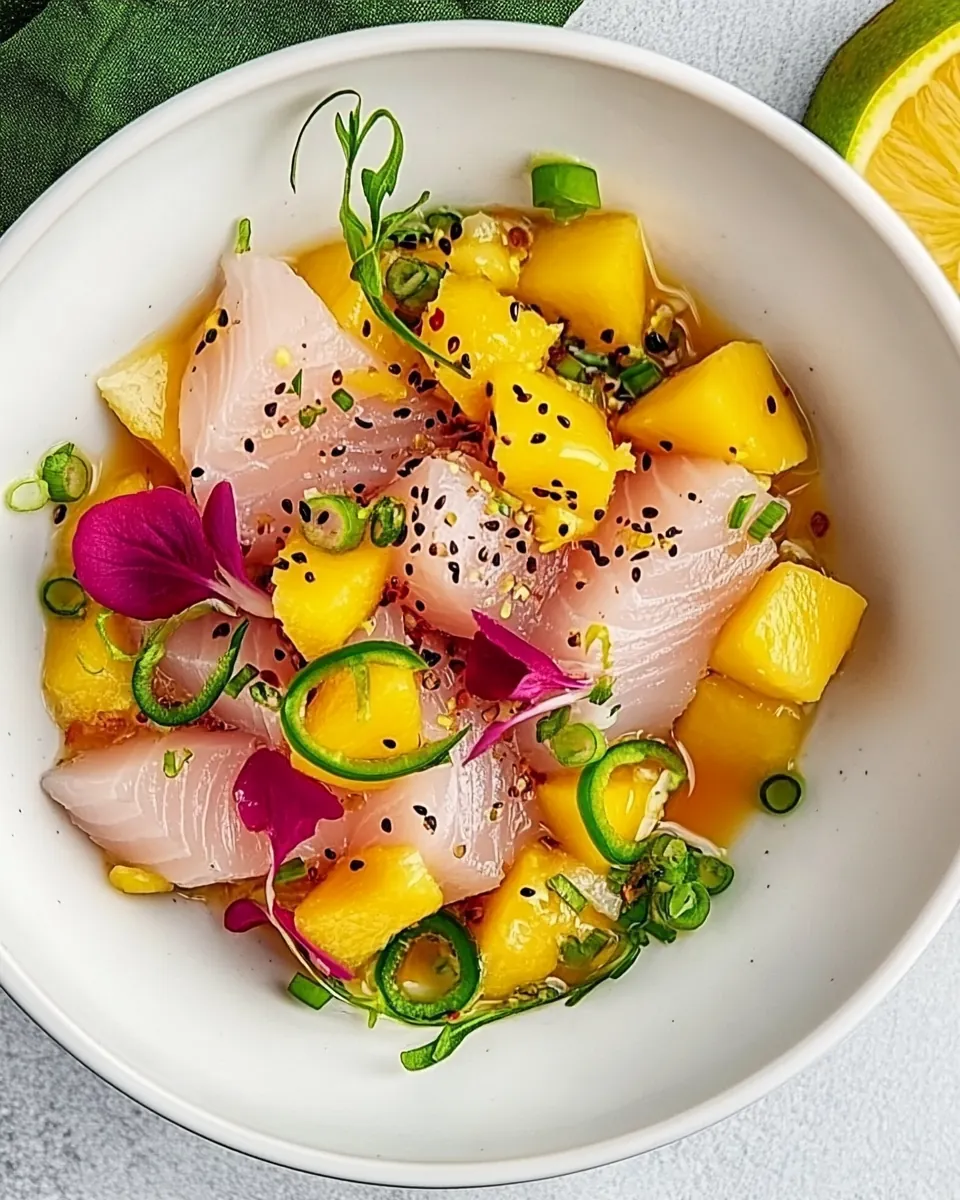
Hamachi Crudo With Mango
Hamachi Crudo With Mango came into my life on a humid summer evening when I wanted something light, bright, and a little bit wild, yet utterly approachable.
That night I wandered into the fish market, drawn to the pale, buttery flesh of yellowtail, and I knew I wanted a dish that celebrated the fish without burying it. I paired it with a single ripe mango and a quick tangy dressing, and the result felt like the kind of simple luxury you find at a seaside counter rather than a formal restaurant. I remember slicing the fish paper thin, listening to the clean, rice vinegary scent as it met the fruit, and thinking how raw preparations let ingredients speak.
Making Hamachi Crudo With Mango is one of those evenings where the work is minimal and the payoff is maximal. The salty snap of pickled jalapeño threads through the sweet mango, while a whisper of sesame oil adds warmth. It is a dish I reach for when friends drop by unexpectedly, or when I want a tasteful, effortless starter that feels special without being fussy.
Recipe Snapshot
6 mins
5 mins
1 mins
Easy
180 kcal
Japanese
Vegan, Gluten-Free
Appetizers
Small bowl, Microwave, Serving platter, Knife
The Beauty of This Hamachi Crudo With Mango
Vibrant contrast of textures and flavors
I love how the buttery, silky texture of yellowtail plays against the firm yet yielding slices of mango. The pop of sesame seeds and the slight chew of green onion give each bite dimension. When I eat Hamachi Crudo With Mango, I’m always surprised anew by how little technique is needed to create complexity.
Fast and restaurant worthy
Because the recipe mostly involves slicing and whisking, it feels like something you’d get at a beachside bistro. I appreciate that with under ten minutes of hands on work, the dish looks like a plated course. That makes it perfect for last minute entertaining when you want to impress with minimal fuss.
Bright, balanced dressing
The quick dressing of rice vinegar, ponzu, lime juice, and a touch of toasted sesame oil bridges sweet and acidic notes, making the fish sing. I usually let thin slices of jalapeño rest in the vinegar mix to mellow and lend a clean heat that cuts through the richness.
Fresh ingredient focus
I adore recipes that celebrate one or two stars. With Hamachi Crudo With Mango, the yellowtail and mango are the protagonists. Keeping the seasoning light and precise lets their natural flavors shine, which is why sourcing sashimi grade fish matters to me.
Versatile for occasions
This dish works as an elegant appetizer or a light main on warm nights. I often bring it to dinners because it travels well for short stints and looks beautiful on a platter, giving hosts something effortless yet refined.
What to Gather for Hamachi Crudo With Mango
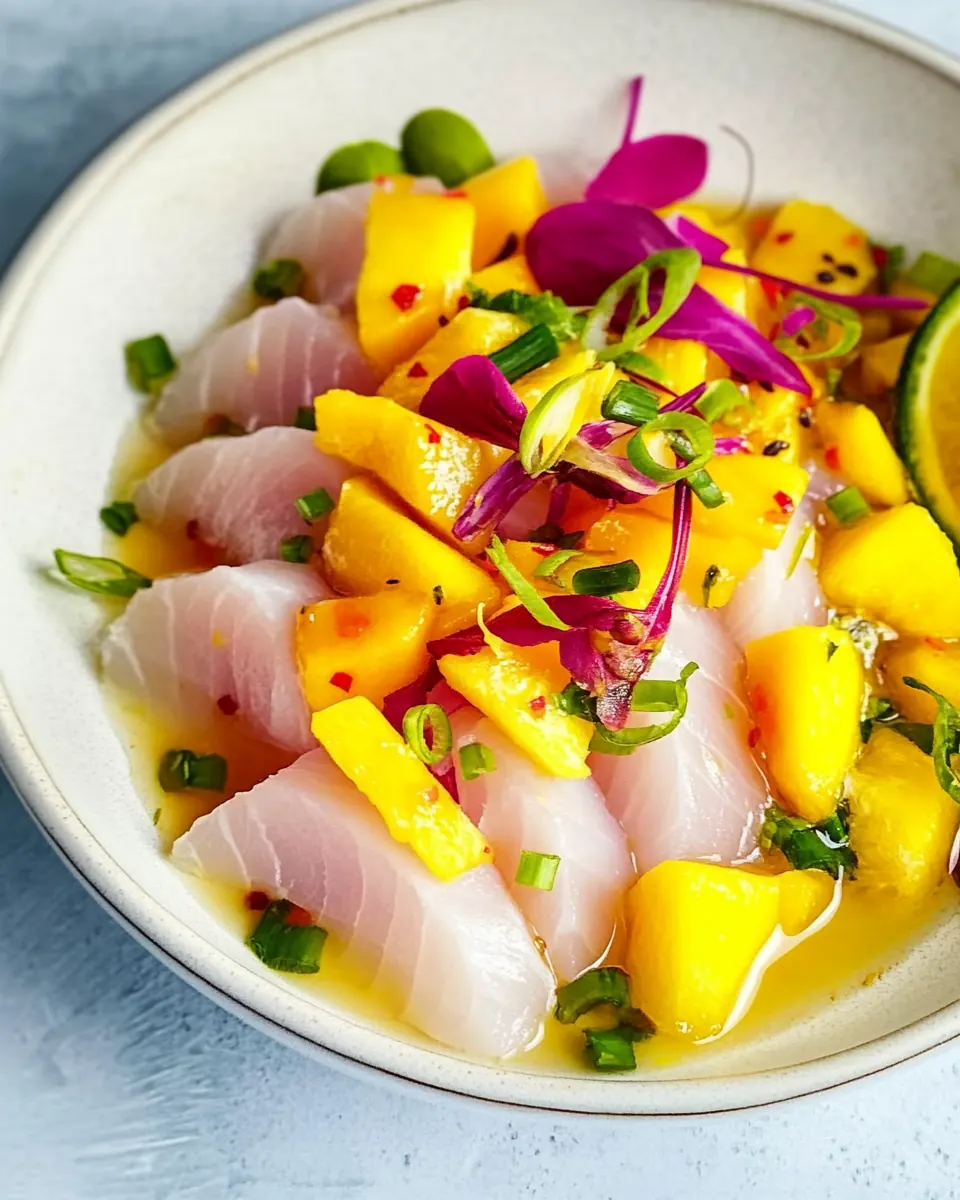
The philosophy behind these ingredients is restraint and harmony. Each item plays a clear role: acid and a touch of sugar to balance, oil for warmth, a little heat for lift, and the two main players, yellowtail and mango, to provide texture and flavor contrast. Together they form a simple, balanced ensemble where nothing competes, everything complements.
- 1/4 cup unseasoned rice vinegar: Provide a bright acidic backbone that balances sweetness and oil; use to marinate fish briefly or toss with other liquids to create a light crudo dressing. Adjust amount to taste to avoid overpowering delicate yellowtail, and combine with sugar and salt to dissolve evenly.
- 1 tablespoon granulated sugar: Add subtle sweetness and help balance the vinegar and citrus; stir into the dressing until fully dissolved to create a rounded flavor profile. Use sparingly to prevent excessive sweetness that would mask the fish and fruit.
- 1 teaspoon Morton kosher salt: Season and enhance overall flavors while drawing out a touch of moisture from the fish; sprinkle into the dressing so salt disperses evenly without over-salting. Taste as you go to ensure the brininess complements the ponzu and lime.
- 1 large jalapeño, thinly sliced: Lend bright heat and fresh herbal aroma when thinly sliced; scatter through the dressing or atop the crudo for bursts of spice and visual contrast. Remove seeds if milder heat is desired, and slice thinly so it integrates smoothly with fish and mango.
- 2 tablespoons ponzu: Contribute savory umami and tangy complexity to the dressing; whisk into the rice vinegar, lime, and sesame oil for a balanced citrus-soy note. Use a small amount to enhance depth without dominating the delicate yellowtail.
- 1 tablespoon freshly squeezed lime juice: Introduce fresh, zesty acidity that brightens flavors and lifts the dish; squeeze in just before serving to preserve its vibrant character. Combine with vinegar and ponzu for layered citrus notes that complement the mango and fish.
- 1 teaspoon toasted sesame oil: Offer a toasty, nutty aroma that rounds the dressing and pairs well with sesame seeds; add sparingly as a finishing oil to avoid overpowering the crudo. Use a small drizzle to enhance richness while preserving the dish's lightness.
- 8 ounces sashimi-grade yellowtail, thinly sliced against the grain: Provide the delicate, buttery protein centerpiece that benefits from light citrus and umami seasoning; slice thinly against the grain for tender pieces that absorb the dressing. Keep chilled and sashimi–grade to ensure safety and optimal texture.
- 1 ripe mango, thinly sliced: Bring juicy sweetness and tropical fragrance that contrasts the savory yellowtail; slice thinly to match the fish for harmonious bites. Use ripe but firm mango to avoid mushiness and to provide bright color and natural sugar.
- 1 tablespoon thinly sliced green onion: Add mild oniony sharpness and a fresh green note when thinly sliced; sprinkle over the assembled crudo for crisp texture and a pop of color. Use the thin slices sparingly to prevent overwhelming the delicate flavors.
- sesame seeds, for garnish: Provide a crunchy, toasty finishing touch and subtle nutty flavor when sprinkled as a garnish; scatter lightly over the plated crudo for visual appeal. Use a mix of white and black sesame seeds if desired for contrast.
How to Make Hamachi Crudo With Mango
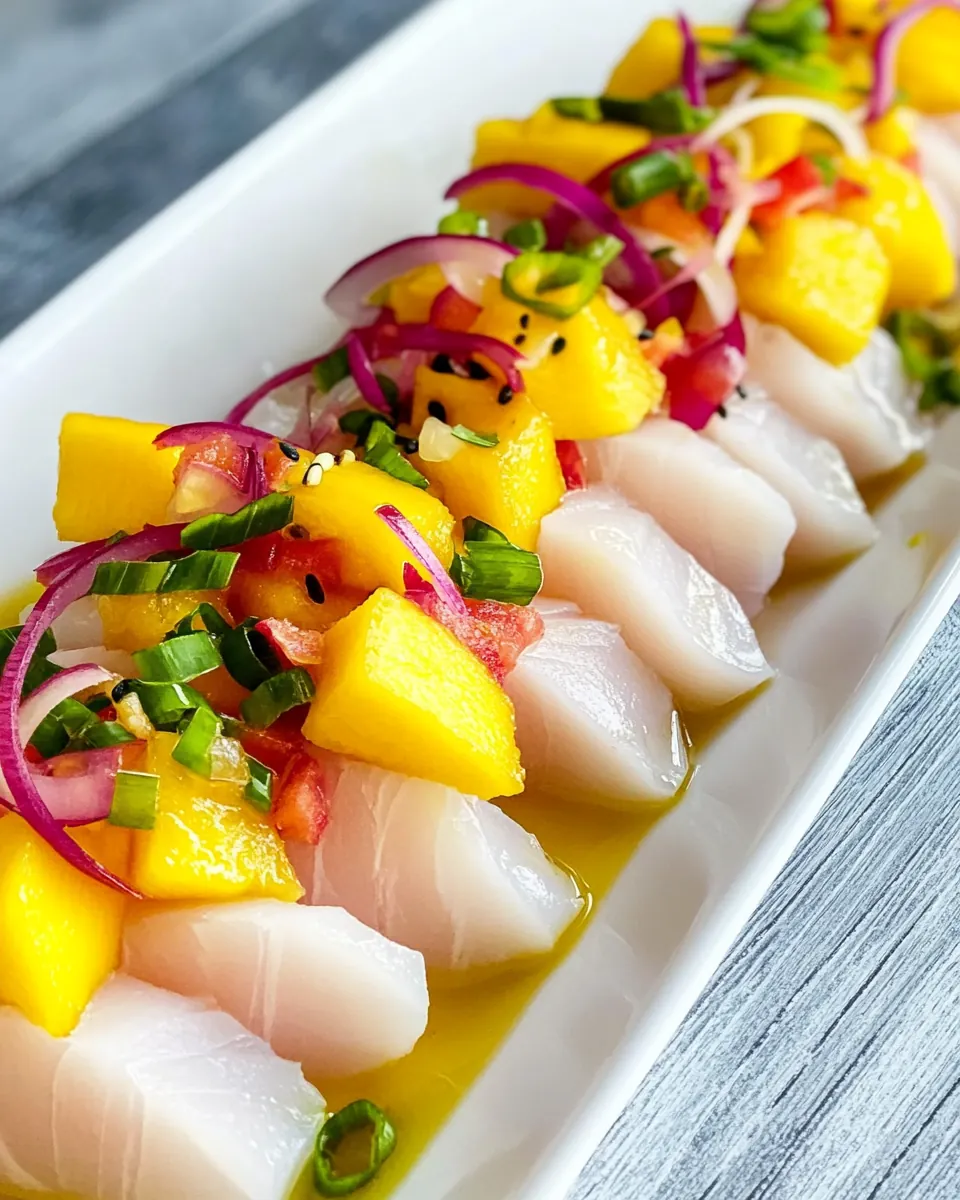
This recipe is straightforward yet demands attention to detail. The directions are short, but each action affects texture and balance, so move deliberately and trust your senses as you assemble the dish.
- Mix rice vinegar, sugar, and salt in a small bowl. Microwave for 30 seconds, or until the salt and sugar have dissolved. Add jalapeño and set it aside to pickle while you prepare the rest of the ingredients.: The first blend should yield a bright, slightly sweet liquid that smells sharp but balanced. When you warm the bowl briefly, the sugar and salt dissolve into the vinegar so you get an even pickling medium for the jalapeño . You should hear nothing from this step, but you will notice the texture change as the sugar vanishes. This matters because undissolved sugar can leave grittiness on the pepper, which distracts from the clean bite of the final dish. A common mistake is to skip warming the bowl, leaving sugar grainy, so take the thirty seconds to dissolve everything fully.
- In a small bowl, stir together ponzu, lime juice, and sesame oil.: The gentle warming releases fragrant vinegar vapors and makes dissolution quick, helping the mixture become uniform. You will catch a faint steam and a slightly intensified aroma. The heat also helps the jalapeño pickle faster, softening its edge. Avoid overheating, which can mute the bright vinegary scent and make the pepper too soft in texture.
- Arrange sliced yellowtail and mango on a serving platter.: Once submerged, the thinly sliced pepper will begin to change color and soften within minutes, offering a milder, more rounded heat. The visual cue is a subtle translucence and a less rigid structure. This step matters because raw, unpicked jalapeño can be aggressively spicy and distract from the delicate yellowtail . A typical slip up is slicing the pepper too thick, which slows pickling and yields inconsistent heat.
- Drizzle prepared dressing over the hamachi, then sprinkle green onion and some sesame seeds over the top. Top with slices of pickled jalapeño and enjoy immediately.: These three ingredients combine to form the bright, savory dressing; when mixed, the aroma should shift toward citrus and toasted nuttiness. Swirl until you notice a faint sheen as the oil emulsifies with the ponzu and lime juice. This emulsion ensures even coating on the fish and mango , and helps the seasoning distribute without pooling. If the oil is added last and not whisked, the dressing may separate, so whisk briskly to marry the flavors.
- Arrange sliced yellowtail and mango on a serving platter: Lay the paper thin slices of yellowtail flat and intersperse with the mango so each bite can combine fish and fruit. The visual cue is alternating pale and golden slices across the platter. This matters because arrangement affects mouthful composition, ensuring every forkful includes both components. A common misstep is crowding the platter, which causes overlapping pieces to stick together and lose their delicate texture.
- Drizzle prepared dressing over the hamachi, then sprinkle green onion and some sesame seeds over the top: The dressing should shimmer as it lands, coating the fish and mango in a thin, glossy layer. You will smell citrus and sesame, and hear nothing, but you will notice the slight slick on the surface. The finishing aromatics of green onion and sesame seeds add sharpness and crunch. It is important not to drown the dish; use a light hand so the dressing enhances rather than overwhelms. Overdressing will make the fish seem soggy and mask subtle flavors.
- Top with slices of pickled jalapeño and enjoy immediately: The pickled slices add a pleasing pop of acid and tempered heat, and you should serve right away so the texture of the yellowtail remains silken. The final plate should glint and smell faintly vinegary with nutty undertones. Waiting too long will allow the acid to 'cook' the fish slightly, changing the intended texture, so serve promptly. A frequent oversight is letting the assembled platter sit, which flattens flavors and softens the fruit excessively.
Ways to Adapt This Recipe
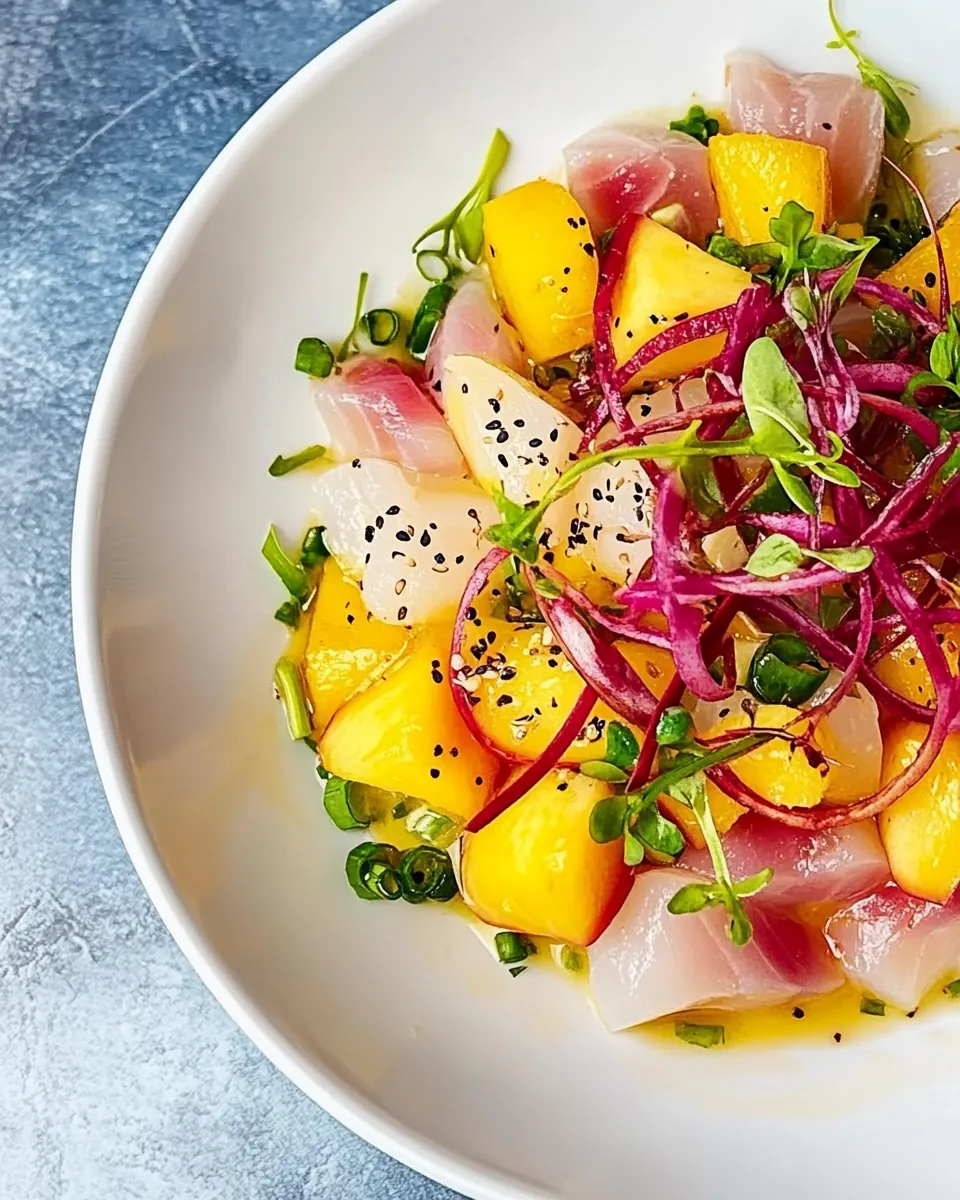
This dish is forgiving and invites small adaptations without losing its essence. Below are ways I’ve adjusted the plate for different palates and occasions while keeping the core harmony intact.
- Make it milder by removing the seeds from the jalapeño before slicing, which reduces heat while retaining flavor.
- Boost umami by increasing the ponzu slightly, which deepens the savory backbone without adding heaviness.
- Brighten the acidity by adding an extra splash of lime juice just before serving, to freshen the top notes.
- Toast textures by briefly toasting the sesame seeds in a dry pan, which amplifies their nutty aroma for garnish.
- Plate for a crowd by arranging multiple overlapping rows of yellowtail and mango on a larger platter, garnishing evenly to ensure balanced bites.
Great Combinations for Hamachi Crudo With Mango
This preparation pairs beautifully with light, fresh accompaniments, and it shines at casual gatherings or sundown dinners. Below I outline serving suggestions and contexts where the dish feels particularly appropriate.
- Light starters: Serve small portions as an elegant appetizer before a seafood forward meal or a tasting menu, letting it set the tone with bright, clean flavors.
- Summer dinners: This recipe is ideal for warm evenings when heavy fare feels out of place; the crisp acidity and fresh fruit create a cooling effect.
- Entertaining: Because it comes together quickly, Hamachi Crudo With Mango is excellent for impromptu gatherings, presented on a single platter for an easy, impressive course.
- Storage notes: Assemble just before serving; the fish is best fresh and chilled, and leftovers should be kept in the fridge for no more than a day to preserve texture.
- Seasonal pairing: This recipe sings in summer when mangos are at their sweetest and fish markets are flush with fresh sashimi quality catches.
FAQ
Conclusion
This recipe is special because it celebrates simplicity, letting high quality yellowtail and ripe mango shine with just a few bright seasonings. The result is a light, elegant dish that feels both fresh and indulgent. I encourage you to give it a try the next warm evening when you want to serve something impressive with minimal effort. Enjoy the colors, the contrasts, and the way small details like toasted sesame oil and pickled jalapeño elevate the whole plate.
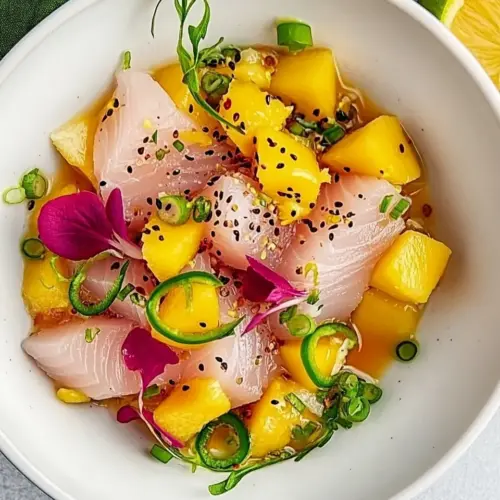
Hamachi Crudo With Mango
Equipment
- Small Bowl
- Microwave
- Serving Platter
- Knife
Ingredients
- 1/4 cup unseasoned rice vinegar Provide a bright acidic backbone that balances sweetness and oil; use to marinate fish briefly or toss with other liquids to create a light crudo dressing. Adjust amount to taste to avoid overpowering delicate yellowtail, and combine with sugar and salt to dissolve evenly.
- 1 tablespoon granulated sugar Add subtle sweetness and help balance the vinegar and citrus; stir into the dressing until fully dissolved to create a rounded flavor profile. Use sparingly to prevent excessive sweetness that would mask the fish and fruit.
- 1 teaspoon Morton kosher salt Season and enhance overall flavors while drawing out a touch of moisture from the fish; sprinkle into the dressing so salt disperses evenly without over-salting. Taste as you go to ensure the brininess complements the ponzu and lime.
- 1 large jalapeño, thinly sliced Lend bright heat and fresh herbal aroma when thinly sliced; scatter through the dressing or atop the crudo for bursts of spice and visual contrast. Remove seeds if milder heat is desired, and slice thinly so it integrates smoothly with fish and mango.
- 2 tablespoons ponzu Contribute savory umami and tangy complexity to the dressing; whisk into the rice vinegar, lime, and sesame oil for a balanced citrus-soy note. Use a small amount to enhance depth without dominating the delicate yellowtail.
- 1 tablespoon freshly squeezed lime juice Introduce fresh, zesty acidity that brightens flavors and lifts the dish; squeeze in just before serving to preserve its vibrant character. Combine with vinegar and ponzu for layered citrus notes that complement the mango and fish.
- 1 teaspoon toasted sesame oil Offer a toasty, nutty aroma that rounds the dressing and pairs well with sesame seeds; add sparingly as a finishing oil to avoid overpowering the crudo. Use a small drizzle to enhance richness while preserving the dish's lightness.
- 8 ounces sashimi-grade yellowtail, thinly sliced against the grain Provide the delicate, buttery protein centerpiece that benefits from light citrus and umami seasoning; slice thinly against the grain for tender pieces that absorb the dressing. Keep chilled and sashimi-grade to ensure safety and optimal texture.
- 1 ripe mango, thinly sliced Bring juicy sweetness and tropical fragrance that contrasts the savory yellowtail; slice thinly to match the fish for harmonious bites. Use ripe but firm mango to avoid mushiness and to provide bright color and natural sugar.
- 1 tablespoon thinly sliced green onion Add mild oniony sharpness and a fresh green note when thinly sliced; sprinkle over the assembled crudo for crisp texture and a pop of color. Use the thin slices sparingly to prevent overwhelming the delicate flavors.
- sesame seeds, for garnish Provide a crunchy, toasty finishing touch and subtle nutty flavor when sprinkled as a garnish; scatter lightly over the plated crudo for visual appeal. Use a mix of white and black sesame seeds if desired for contrast.
Instructions
- Mix rice vinegar, sugar, and salt in a small bowl. Microwave for 30 seconds, or until the salt and sugar have dissolved. Add jalapeño and set it aside to pickle while you prepare the rest of the ingredients.: The first blend should yield a bright, slightly sweet liquid that smells sharp but balanced. When you warm the bowl briefly, the sugar and salt dissolve into the vinegar so you get an even pickling medium for the jalapeño . You should hear nothing from this step, but you will notice the texture change as the sugar vanishes. This matters because undissolved sugar can leave grittiness on the pepper, which distracts from the clean bite of the final dish. A common mistake is to skip warming the bowl, leaving sugar grainy, so take the thirty seconds to dissolve everything fully.
- In a small bowl, stir together ponzu, lime juice, and sesame oil.: The gentle warming releases fragrant vinegar vapors and makes dissolution quick, helping the mixture become uniform. You will catch a faint steam and a slightly intensified aroma. The heat also helps the jalapeño pickle faster, softening its edge. Avoid overheating, which can mute the bright vinegary scent and make the pepper too soft in texture.
- Arrange sliced yellowtail and mango on a serving platter.: Once submerged, the thinly sliced pepper will begin to change color and soften within minutes, offering a milder, more rounded heat. The visual cue is a subtle translucence and a less rigid structure. This step matters because raw, unpicked jalapeño can be aggressively spicy and distract from the delicate yellowtail . A typical slip up is slicing the pepper too thick, which slows pickling and yields inconsistent heat.
- Drizzle prepared dressing over the hamachi, then sprinkle green onion and some sesame seeds over the top. Top with slices of pickled jalapeño and enjoy immediately.: These three ingredients combine to form the bright, savory dressing; when mixed, the aroma should shift toward citrus and toasted nuttiness. Swirl until you notice a faint sheen as the oil emulsifies with the ponzu and lime juice. This emulsion ensures even coating on the fish and mango , and helps the seasoning distribute without pooling. If the oil is added last and not whisked, the dressing may separate, so whisk briskly to marry the flavors.
- Arrange sliced yellowtail and mango on a serving platter: Lay the paper thin slices of yellowtail flat and intersperse with the mango so each bite can combine fish and fruit. The visual cue is alternating pale and golden slices across the platter. This matters because arrangement affects mouthful composition, ensuring every forkful includes both components. A common misstep is crowding the platter, which causes overlapping pieces to stick together and lose their delicate texture.
- Drizzle prepared dressing over the hamachi, then sprinkle green onion and some sesame seeds over the top: The dressing should shimmer as it lands, coating the fish and mango in a thin, glossy layer. You will smell citrus and sesame, and hear nothing, but you will notice the slight slick on the surface. The finishing aromatics of green onion and sesame seeds add sharpness and crunch. It is important not to drown the dish; use a light hand so the dressing enhances rather than overwhelms. Overdressing will make the fish seem soggy and mask subtle flavors.
- Top with slices of pickled jalapeño and enjoy immediately: The pickled slices add a pleasing pop of acid and tempered heat, and you should serve right away so the texture of the yellowtail remains silken. The final plate should glint and smell faintly vinegary with nutty undertones. Waiting too long will allow the acid to 'cook' the fish slightly, changing the intended texture, so serve promptly. A frequent oversight is letting the assembled platter sit, which flattens flavors and softens the fruit excessively.
Notes
- Make it milder by removing the seeds from the jalapeño before slicing, which reduces heat while retaining flavor.
- Boost umami by increasing the ponzu slightly, which deepens the savory backbone without adding heaviness.
- Brighten the acidity by adding an extra splash of lime juice just before serving, to freshen the top notes.
- Toast textures by briefly toasting the sesame seeds in a dry pan, which amplifies their nutty aroma for garnish.
- Plate for a crowd by arranging multiple overlapping rows of yellowtail and mango on a larger platter, garnishing evenly to ensure balanced bites.