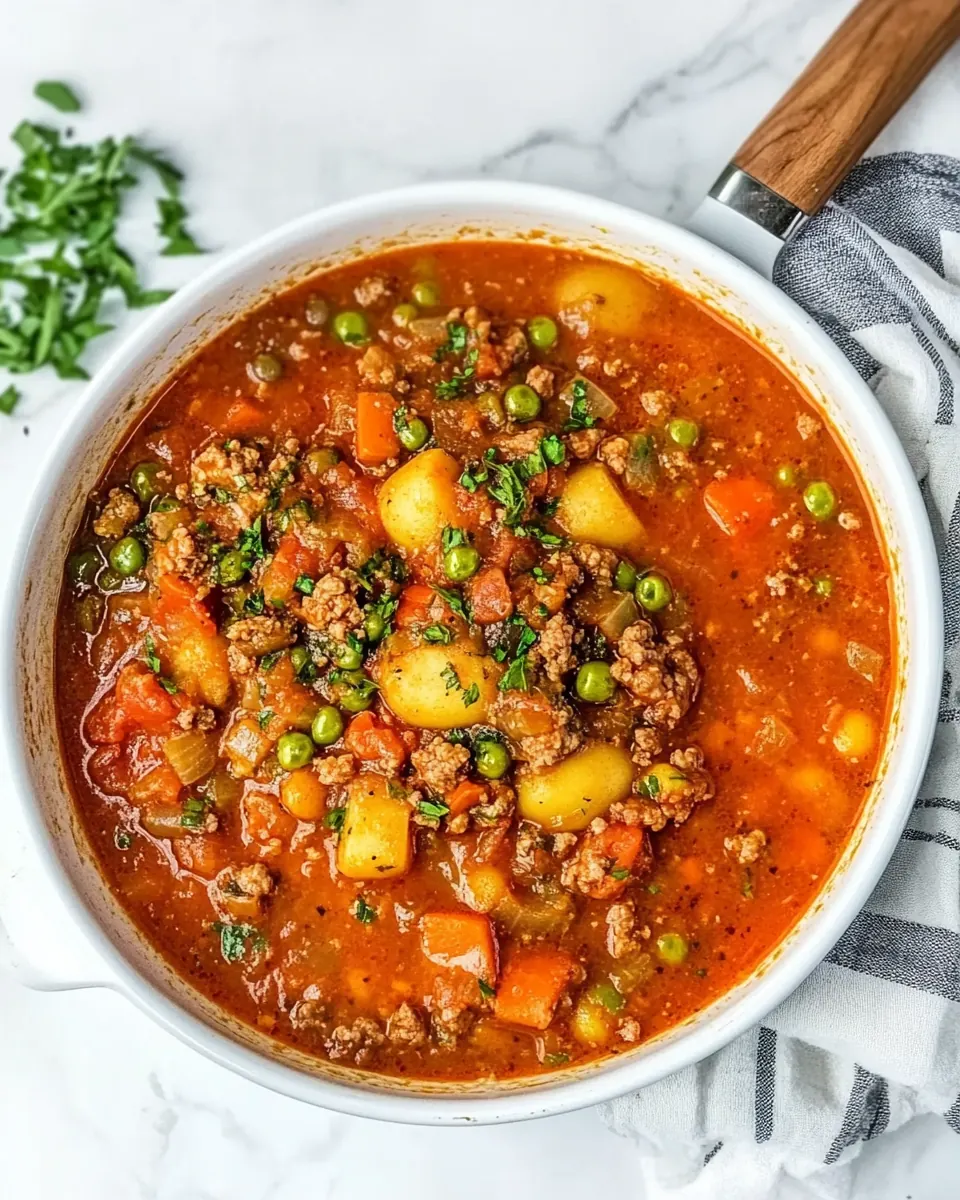
Hamburger Stew
Hamburger Stew is one of those warm, honest dishes I turn to when I want comfort without fuss. The first time I made this, I was juggling a busy week and a fridge full of odds and ends, and the way the savory ground beef mingled with tender potatoes and bright tomatoes felt like an instant hug at the table.
Over the years I have learned to lean into the simplicity of this bowl. I love how a humble list of pantry and fridge staples becomes layered and satisfying. There are evenings when I start this while helping with homework, and by the time we set the table the kitchen smells like home. Other nights I simmer a big pot and stash half in the freezer for a weeknight rescue.
Recipe Snapshot
25 mins
5 mins
20 mins
Easy
300 kcal
American
Paleo, Whole30
Dinner
Large stockpot, Wooden spoon, Ladle
Why You Need This Hamburger Stew
Satisfyingly Simple
I adore how Hamburger Stew turns minimal effort into maximum comfort. The base of browned ground beef and softened Mirepoix vegetables gives the dish a savory backbone that is both filling and familiar. You do not need fancy technique to get deep flavor, just patience while the onion and carrot soften and the meat browns.
Flexible for Weeknights
This dish is a champion for hectic evenings. You can easily adjust the amount of beef stock to make it a hearty stew or a spoonable soup. I often tweak the consistency depending on what the family wants, and it never complains. The recipe stretches to feed a crowd or scales down for two without losing its warmth.
Fridge and Freezer Friendly
I love that Hamburger Stew freezes beautifully. When I double the batch, I label portions for busy nights. Reheating gently on the stove preserves texture, and the flavors meld even more after resting in the fridge, so leftovers can taste better than the first night.
Hearty, Balanced Ingredients
The combination of potatoes, mixed vegetables, and diced tomatoes creates balance. The starchy potatoes add body, while the vegetables contribute brightness and color. A bay leaf and a pinch of dried basil or Italian seasoning bring aromatic depth without complexity.
Reliable and Adaptable
What makes this recipe stand out is how reliably it comes together. I have leaned on it for everything from post-game dinners to low-key Sunday suppers. It is a recipe that invites small adjustments, so you can personalize seasoning and consistency while keeping the core comfort intact.
What You’ll Need for Hamburger Stew
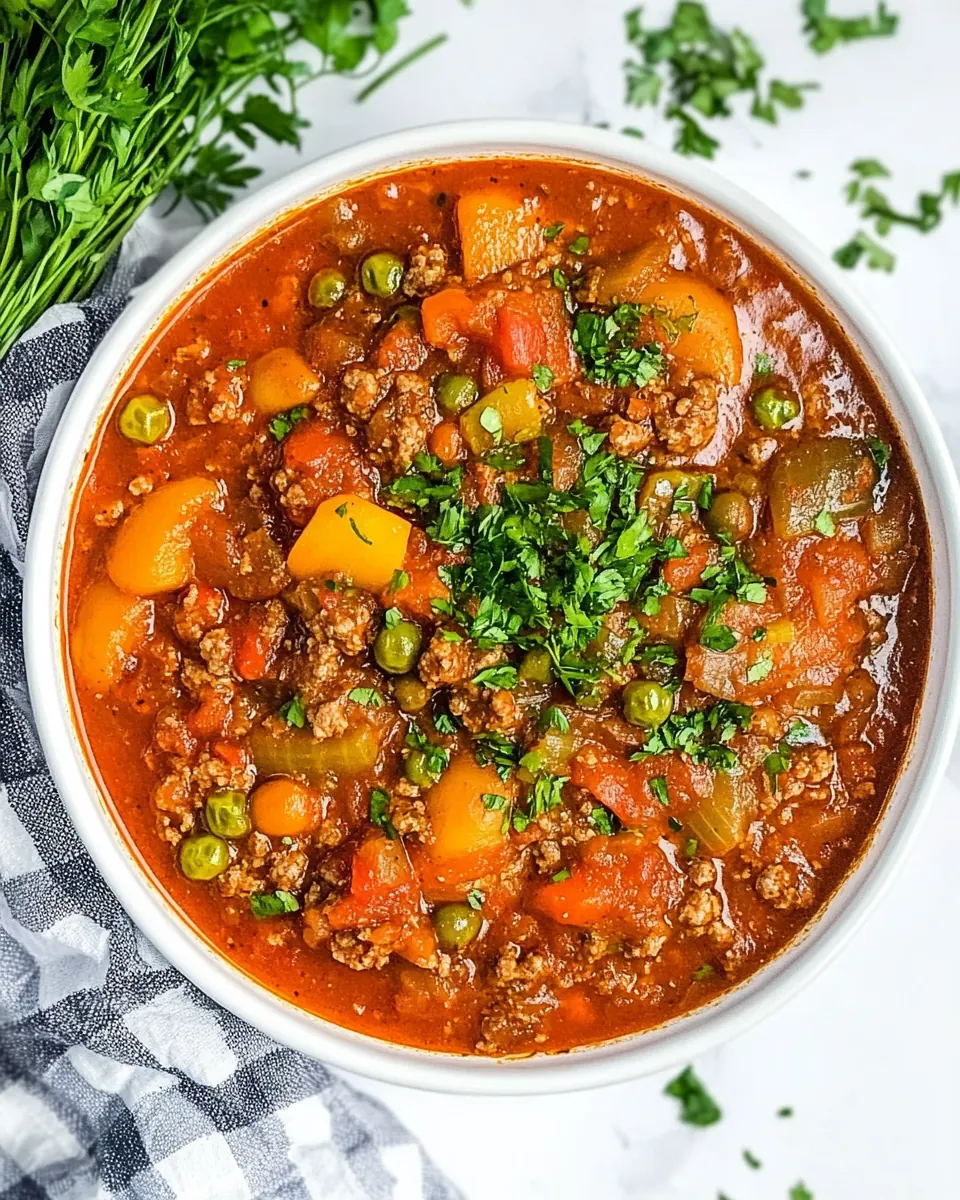
These ingredients are straightforward, honest, and built to work together. The ground beef provides savory richness, while the Mirepoix blend brings subtle sweetness and aromatic depth. Tomatoes and tomato sauce add acidity and body, and the potatoes bulk up the bowl so it feels like a meal. The bay leaf and dried basil or Italian seasoning lift the broth with herbal notes.
- 1 pound ground beef: Brown or sauté to develop rich flavor and create the hearty protein base for the stew; break up into small pieces while cooking until no pink remains. Drain excess fat if desired and incorporate into the sauce so the beef absorbs seasonings and melds with other vegetables.
- 10 ounces Mirepoix blend vegetables onions (celery, carrots): Sauté gently to release natural sweetness and aromatic flavors that form the savory backbone of the stew; include onions, celery, and carrots for depth. Cook until softened to blend into the broth and complement the meat and tomatoes.
- 14.5 ounces tomatoes diced: Add directly to the pot to contribute bright acidity and chunky texture that balances richness; diced tomatoes provide liquid and tomatoey depth. Simmer with other ingredients so their juices blend into the stew for body and flavor.
- 15 ounces tomato sauce: Pour in to supply smooth tomato flavor and a saucy base that helps thicken the stew; tomato sauce rounds out the diced tomatoes. Stir well to create a cohesive sauce that coats the meat and vegetables evenly during simmering.
- 1 teaspoon basil or Italian seasoning: Sprinkle or stir in to introduce herbal notes and fragrant seasoning that elevates overall flavor; use basil or Italian seasoning according to preference. Adjust amount to taste and add early to allow flavors to infuse into the stew.
- salt and pepper to taste: Season liberally to enhance and balance flavors throughout the cooking process; add salt and pepper gradually and taste as the stew reduces. Use sparingly at first since other components like stock and canned tomatoes can contribute sodium.
- 1 bay leaf: Simmer whole to impart subtle herbal aroma and a slightly bitter complexity while cooking; add early and remove before serving. Leave bay leaf in during simmering to let its flavor gently infuse into the stew without overpowering other elements.
- 16 ounces mixed vegetables: Stir in for added texture, color, and nutritional value; mixed vegetables contribute peas, corn, green beans, or similar veggies depending on the blend. Add at a time that preserves their bite or cook longer for softer vegetables according to preference.
- 2 to 4 cups beef stock: Pour in to adjust consistency and build savory depth with concentrated beef flavor; use 2 to 4 cups depending on desired thickness. Start with less and add more as needed while simmering to achieve the preferred stew density.
- 3/4 pounds potatoes cut into bite-size pieces: Cube and add to provide hearty body and satisfying substance; potatoes absorb flavors and thicken the stew slightly as they cook. Cut into bite–size pieces to ensure even cooking and add early enough to become tender without disintegrating.
Step by Step Guide for Hamburger Stew

We keep the technique approachable while paying attention to sensory cues so you know exactly when each stage is ready. These steps will guide you through browning, combining, simmering, and finishing the stew for a balanced bowl.
- In a large stockpot over medium heat, sauté ground beef and the onion, celery, carrot vegetable mixture until the beef is browned and the vegetables are soft.: As you start, listen for the steady sizzle that signals hot pan contact, and breathe in the evolving aroma of caramelizing meat and sweetening onion . The color change of the ground beef from pink to deep brown, combined with the visual softening and translucence of the carrot and celery , are your primary cues. This browning creates Maillard flavor compounds that the whole stew depends on, so do not rush; medium heat allows rendered fat to collect flavor and helps the vegetables release their sweetness. If the pan looks crowded, brown the ground beef in batches to avoid steaming, and scrape up any fond stuck to the bottom for extra depth. A common mistake here is undercooking the meat, which leaves a raw taste, or overcooking the vegetables, which can make them mushy.
- Add the rest of the ingredients and stir to combine.: When you add the canned tomatoes , tomato sauce , beef stock , dried basil or Italian seasoning, bay leaf , and the rest of the vegetables , note how the pot transforms visually into a cohesive, fragrant liquid. Stirring helps deglaze the bottom, lifting concentrated browned bits into the broth, which intensifies flavor. The temperature drop from adding liquids is normal, and once stirred, the pot will recover and move toward a gentle simmer. Watch for splatter when adding hot liquids to a hot pot, and always taste and adjust seasoning after everything has had a few minutes to mingle. Avoid adding all the beef stock at once if you are uncertain about consistency; you can always add more later.
- Bring to a simmer over medium heat and cook for 20 minutes until the potatoes are soft when pierced with a fork.: As the stew comes to a simmer, you will see gentle bubbles rise and a soft steam escaping. The aroma will shift toward a richer, unified tomato and meat scent. Stir occasionally to prevent sticking and to check the tenderness of the potatoes . The fork test is crucial; the potatoes should offer little resistance and feel tender through. Simmering at a steady, moderate temperature allows flavors to meld without breaking down the vegetables too quickly. A frequent error is simmering too hard which can cause rapid evaporation and uneven cooking, so maintain a gentle simmer rather than a rolling boil.
- Adjust the amount of beef stock for the desired stew/soup consistency. For a stew-like consistency, use less stock and simmer uncovered. To maintain a thinner soup, use more stock and simmer with the lid on.: Pay attention to how thick the broth looks and how it clings to a spoon. If you prefer a spoonable stew, let the pot reduce uncovered until it thickens, which concentrates flavor and yields a silkier mouthfeel. For a soupier finish, add extra beef stock and keep the lid on to retain liquid. The sound of a slow simmer versus a lively boil and the coating of the spoon are helpful indicators of progress. Avoid over-reducing if you want leftovers to reheat well, because too little liquid can make reheating require added broth later.
- Garnish with a bit of fresh parsley and serve.: The final flourish of fresh parsley adds a green brightness and herby aroma that lifts the finished bowl. Before serving, remove the bay leaf and taste for final seasoning adjustments with salt and pepper . The contrast between the warm, savory stew and the fresh herb brightness is delightful, and plating in warmed bowls helps maintain temperature. A common oversight is forgetting to remove the bay leaf , which is inedible, so check the pot carefully before ladling into bowls.
Recipe Variations about Hamburger Stew
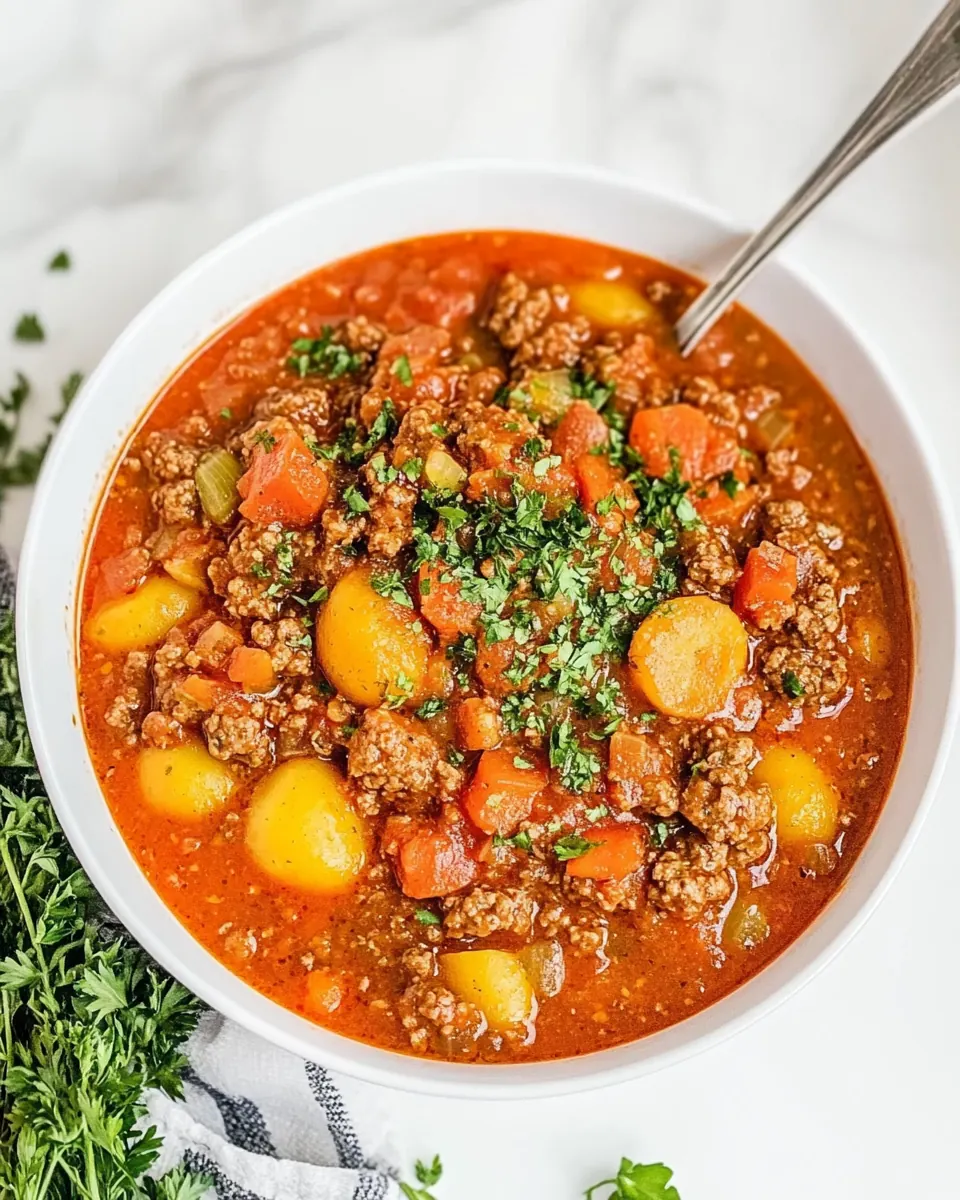
This stew is a wonderful template for small changes that shift the character of the bowl. Below are practical variations and ideas to tailor the recipe to your pantry and preferences.
- Make it thicker: Reduce the amount of beef stock and simmer uncovered until the broth concentrates and coats a spoon.
- Make it thinner: Add more beef stock and simmer with the lid on to preserve the liquid for a soupier finish.
- Freeze for future meals: Cool completely, portion into airtight containers, and freeze for up to three months for a quick reheat dinner.
- Boost vegetable variety: Swap in different frozen mixed vegetables blends for seasonal variety while keeping the stew balanced.
- Adjust seasoning at the end: Finish with salt and pepper to taste after the stew has simmered, because flavors concentrate during cooking.
Accompaniments for Hamburger Stew
Serving this stew is about choosing what you want alongside it, and how you want the meal to feel. Here are ideas for sides, occasions, and storage that pair well with the recipe.
- Crusty bread or rolls: A warm, crusty loaf is perfect for soaking up the savory broth, especially if you want a casual dinner called together at the table.
- Rice or mashed potatoes: Serve the stew over a bed of rice or spoon it atop creamy mashed potatoes if you want extra heft and a comfort-food presentation.
- Weeknight family dinner: This recipe is ideal for busy weeknights when you need something quick, satisfying, and forgiving of time pressures.
- Freezer meal option: Portion into labeled containers and freeze. Thaw overnight in the fridge and reheat gently on the stove for a ready dinner on a hectic night.
- Seasonal pairing – winter: The warm, savory profile is especially comforting during cold months, making it a go-to for winter suppers.
- Storage tips: Store leftovers in airtight containers in the refrigerator for up to four days. Reheat slowly on the stovetop and add a little extra beef stock if the stew has thickened too much.
- Occasions: Serve this for casual dinners, potlucks, or anytime you want a low fuss, hearty meal that satisfies a crowd.
FAQ
Conclusion
What makes this Hamburger Stew special is its straightforward, comforting flavor and how little effort delivers a deeply satisfying meal. It is a flexible, reliable recipe that fits weeknight routines and makes great leftovers or freezer portions. Give it a try on a chilly evening, and you will quickly see why I keep returning to this simple, hearty bowl.

Hamburger Stew
Equipment
- Large Stockpot
- Wooden Spoon
- Ladle
Ingredients
- 1 pound ground beef Brown or sauté to develop rich flavor and create the hearty protein base for the stew; break up into small pieces while cooking until no pink remains. Drain excess fat if desired and incorporate into the sauce so the beef absorbs seasonings and melds with other vegetables.
- 10 ounces Mirepoix blend vegetables onions (celery, carrots) Sauté gently to release natural sweetness and aromatic flavors that form the savory backbone of the stew; include onions, celery, and carrots for depth. Cook until softened to blend into the broth and complement the meat and tomatoes.
- 14.5 ounces tomatoes diced Add directly to the pot to contribute bright acidity and chunky texture that balances richness; diced tomatoes provide liquid and tomatoey depth. Simmer with other ingredients so their juices blend into the stew for body and flavor.
- 15 ounces tomato sauce Pour in to supply smooth tomato flavor and a saucy base that helps thicken the stew; tomato sauce rounds out the diced tomatoes. Stir well to create a cohesive sauce that coats the meat and vegetables evenly during simmering.
- 1 teaspoon basil or Italian seasoning Sprinkle or stir in to introduce herbal notes and fragrant seasoning that elevates overall flavor; use basil or Italian seasoning according to preference. Adjust amount to taste and add early to allow flavors to infuse into the stew.
- salt and pepper to taste Season liberally to enhance and balance flavors throughout the cooking process; add salt and pepper gradually and taste as the stew reduces. Use sparingly at first since other components like stock and canned tomatoes can contribute sodium.
- 1 bay leaf Simmer whole to impart subtle herbal aroma and a slightly bitter complexity while cooking; add early and remove before serving. Leave bay leaf in during simmering to let its flavor gently infuse into the stew without overpowering other elements.
- 16 ounces mixed vegetables Stir in for added texture, color, and nutritional value; mixed vegetables contribute peas, corn, green beans, or similar veggies depending on the blend. Add at a time that preserves their bite or cook longer for softer vegetables according to preference.
- 2 to 4 cups beef stock Pour in to adjust consistency and build savory depth with concentrated beef flavor; use 2 to 4 cups depending on desired thickness. Start with less and add more as needed while simmering to achieve the preferred stew density.
- 3/4 pounds potatoes cut into bite-size pieces Cube and add to provide hearty body and satisfying substance; potatoes absorb flavors and thicken the stew slightly as they cook. Cut into bite-size pieces to ensure even cooking and add early enough to become tender without disintegrating.
Instructions
- In a large stockpot over medium heat, sauté ground beef and the onion, celery, carrot vegetable mixture until the beef is browned and the vegetables are soft.: As you start, listen for the steady sizzle that signals hot pan contact, and breathe in the evolving aroma of caramelizing meat and sweetening onion . The color change of the ground beef from pink to deep brown, combined with the visual softening and translucence of the carrot and celery , are your primary cues. This browning creates Maillard flavor compounds that the whole stew depends on, so do not rush; medium heat allows rendered fat to collect flavor and helps the vegetables release their sweetness. If the pan looks crowded, brown the ground beef in batches to avoid steaming, and scrape up any fond stuck to the bottom for extra depth. A common mistake here is undercooking the meat, which leaves a raw taste, or overcooking the vegetables, which can make them mushy.
- Add the rest of the ingredients and stir to combine.: When you add the canned tomatoes , tomato sauce , beef stock , dried basil or Italian seasoning, bay leaf , and the rest of the vegetables , note how the pot transforms visually into a cohesive, fragrant liquid. Stirring helps deglaze the bottom, lifting concentrated browned bits into the broth, which intensifies flavor. The temperature drop from adding liquids is normal, and once stirred, the pot will recover and move toward a gentle simmer. Watch for splatter when adding hot liquids to a hot pot, and always taste and adjust seasoning after everything has had a few minutes to mingle. Avoid adding all the beef stock at once if you are uncertain about consistency; you can always add more later.
- Bring to a simmer over medium heat and cook for 20 minutes until the potatoes are soft when pierced with a fork.: As the stew comes to a simmer, you will see gentle bubbles rise and a soft steam escaping. The aroma will shift toward a richer, unified tomato and meat scent. Stir occasionally to prevent sticking and to check the tenderness of the potatoes . The fork test is crucial; the potatoes should offer little resistance and feel tender through. Simmering at a steady, moderate temperature allows flavors to meld without breaking down the vegetables too quickly. A frequent error is simmering too hard which can cause rapid evaporation and uneven cooking, so maintain a gentle simmer rather than a rolling boil.
- Adjust the amount of beef stock for the desired stew/soup consistency. For a stew-like consistency, use less stock and simmer uncovered. To maintain a thinner soup, use more stock and simmer with the lid on.: Pay attention to how thick the broth looks and how it clings to a spoon. If you prefer a spoonable stew, let the pot reduce uncovered until it thickens, which concentrates flavor and yields a silkier mouthfeel. For a soupier finish, add extra beef stock and keep the lid on to retain liquid. The sound of a slow simmer versus a lively boil and the coating of the spoon are helpful indicators of progress. Avoid over-reducing if you want leftovers to reheat well, because too little liquid can make reheating require added broth later.
- Garnish with a bit of fresh parsley and serve.: The final flourish of fresh parsley adds a green brightness and herby aroma that lifts the finished bowl. Before serving, remove the bay leaf and taste for final seasoning adjustments with salt and pepper . The contrast between the warm, savory stew and the fresh herb brightness is delightful, and plating in warmed bowls helps maintain temperature. A common oversight is forgetting to remove the bay leaf , which is inedible, so check the pot carefully before ladling into bowls.
Notes
- Make it thicker: Reduce the amount of beef stock and simmer uncovered until the broth concentrates and coats a spoon.
- Make it thinner: Add more beef stock and simmer with the lid on to preserve the liquid for a soupier finish.
- Freeze for future meals: Cool completely, portion into airtight containers, and freeze for up to three months for a quick reheat dinner.
- Boost vegetable variety: Swap in different frozen mixed vegetables blends for seasonal variety while keeping the stew balanced.
- Adjust seasoning at the end: Finish with salt and pepper to taste after the stew has simmered, because flavors concentrate during cooking.