Potato Shingled Salmon
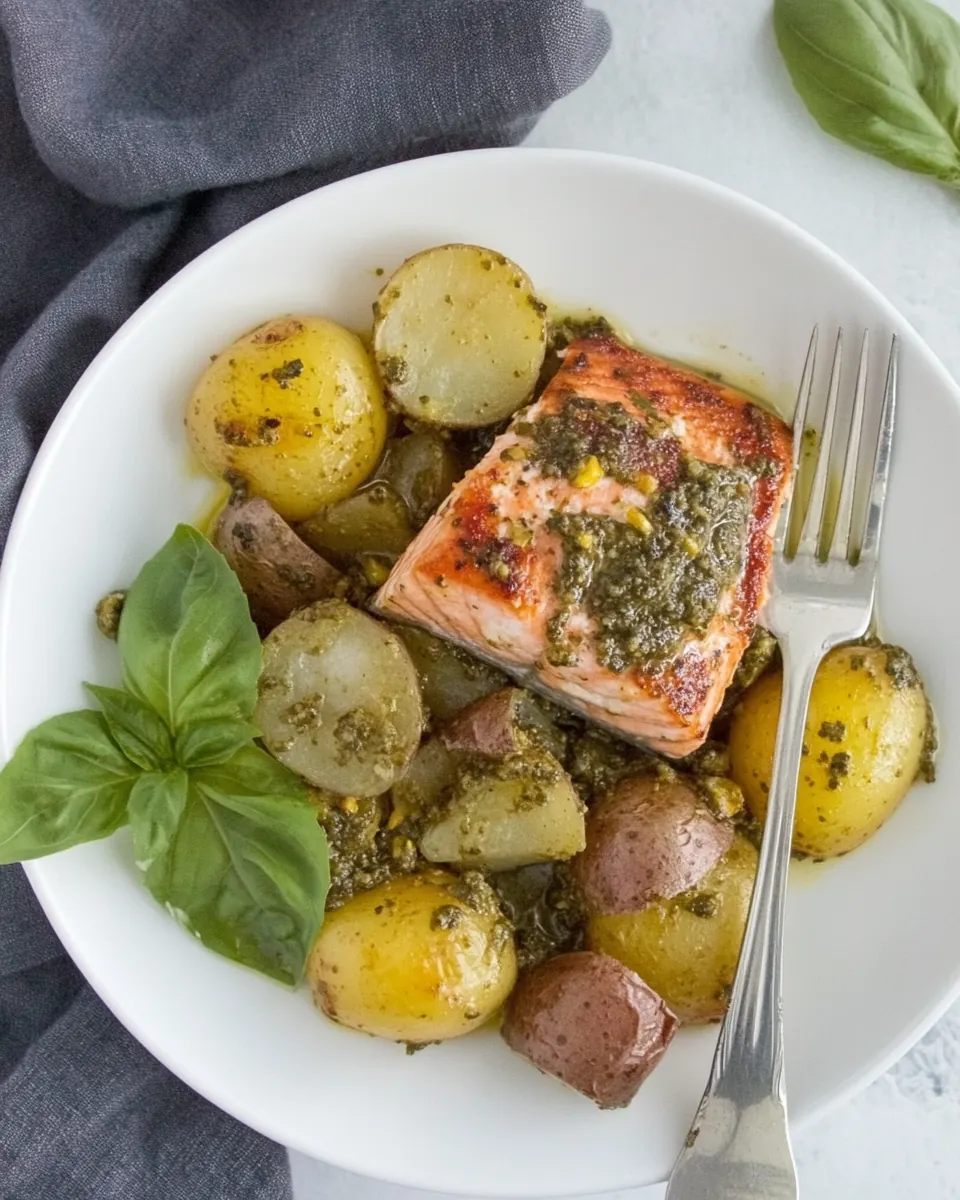
Potato Shingled Salmon is the kind of dish I love to make when I want to impress without fuss. The first time I made it, I was juggling a busy weeknight and a guest who adored texture, so I leaned into the idea of wrapping each salmon fillet in paper thin potato slices for a crunchy exterior and a tender, juicy interior. That evening turned into one of those meals everyone remembers, because the contrast between the crisped potato and the flaky salmon was unforgettable.
I learned along the way that patience pays off, especially when you shave the potato slices thinly and give them a light brush of olive oil before pan searing. I enjoy the small ritual of layering the shingled potato rectangle and spreading a bright smear of herby basil pesto on top of the salmon, it feels like dressing up weeknight food. Over the years I have tweaked technique, but the heart of the recipe stays the same: crisped potato, seasoned salmon, and a kiss of basil pesto.
Recipe Snapshot
30 mins
15 mins
15 mins
Easy
400 kcal
American
Paleo, Gluten-Free
Dinner
Nonstick Skillet, Mandolin, Wide Spatula
The Charm of This Potato Shingled Salmon
Elegant texture play
I adore how Potato Shingled Salmon combines crisp and tender in each bite. The thin potato slices crisp into a golden shell while the salmon inside stays moist, creating a satisfying mouthfeel that feels fancy but is straightforward to achieve.
Fast but impressive
We can get this on the table in roughly the time it takes to peel and slice the potato and sear the fillets. It reads like a restaurant plate, yet it is very much doable for an easy weeknight dinner, which is why I keep it in my rotation.
Bright herby lift
The spoonful of basil pesto layered on the salmon injects fresh, aromatic flavor that cuts through the richness. That little green smear turns something humble into a vivid bite, and I never skip it.
Flexible for company
This recipe scales nicely, because each fillet gets its own shingled blanket. Whether you are cooking for two or a group, you can work in batches and still deliver consistent results that look plated and thoughtful.
Simple pantry focus
With just a few ingredients like potato, salmon, olive oil, and basil pesto, this feels accessible and forgiving. The technique is the star, making small pantry items shine without needing complicated sauces or lengthy prep.
Main Ingredients for Potato Shingled Salmon
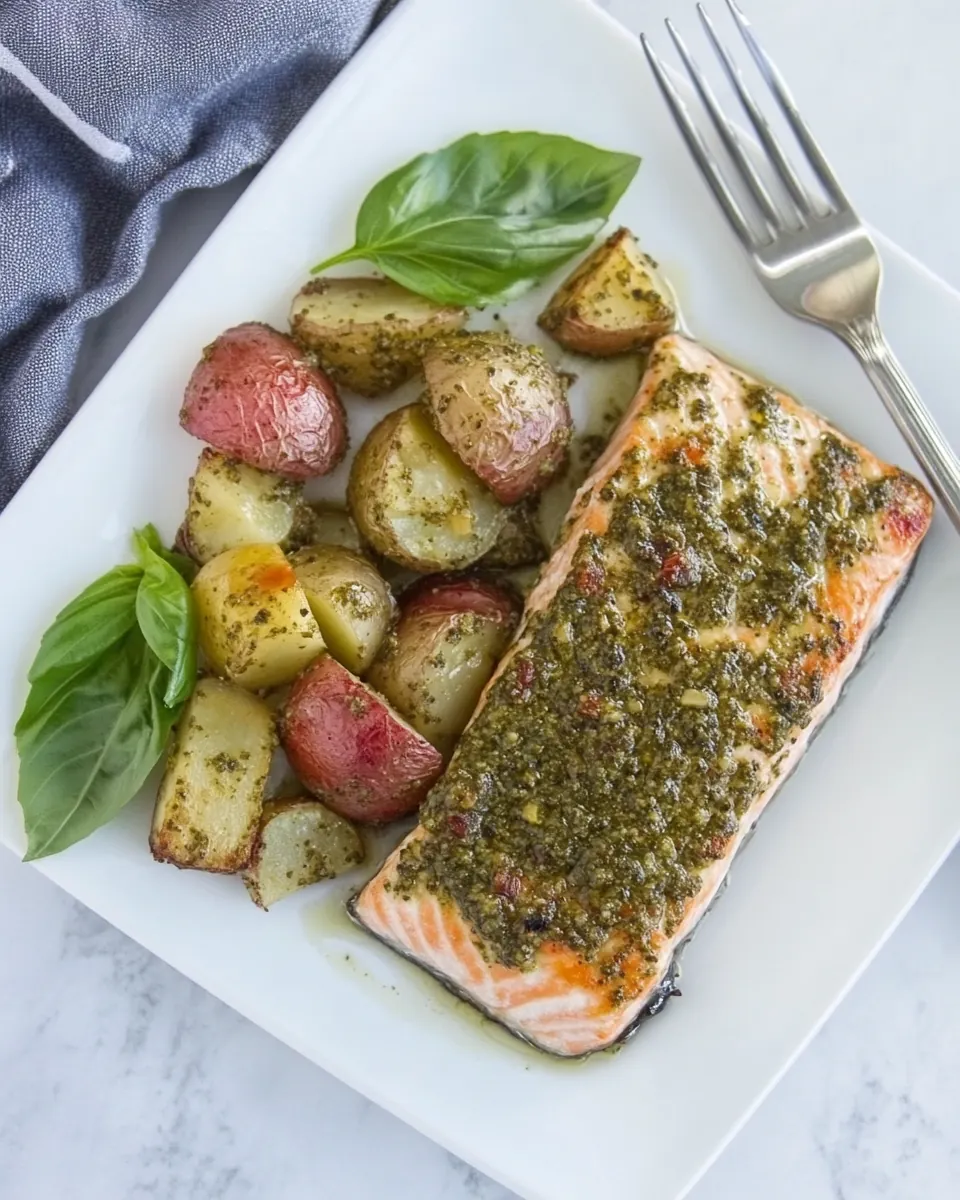
The philosophy here is straightforward: a handful of dependable ingredients, each playing a clear role. The potato provides crisp texture and a toasty, comforting base. The salmon lends rich, flaky protein and a slightly oily mouthfeel that keeps each bite moist. Olive oil helps achieve those golden edges and prevents sticking. Finally, basil pesto brightens the whole thing with herbaceous, savory lift. Together they balance texture, richness, and freshness.
- 4 8-ounce fillets of salmon, skin removed: Provide protein and richness to the dish while offering a firm texture that holds together during baking; season lightly and avoid overcooking to preserve moisture and flake. Pair well with the potato shingle crust and pesto for a balanced, savory centerpiece.
- 2 medium russet potatoes: Thinly slice to create overlapping shingle layers that crisp when brushed with oil; choose starchy russets for their structure and ability to brown evenly. Rinse and pat dry to remove excess starch, which helps achieve a crisp exterior under the broiler or in the oven.
- 2 tablespoons olive oil: Coat potato slices lightly to promote even browning and prevent sticking while adding a subtle fruity finish; use sparingly to avoid greasiness. Brush between shingle layers and on the baking sheet to help crisp the potatoes and carry flavors.
- 6 tablespoons basil pesto: Spread or dollop to introduce concentrated herbaceous flavor and an oily richness that complements the salmon and potatoes; choose a basil pesto with balanced salt and garlic. Apply a thin layer under or over the salmon as desired to infuse the dish without overpowering delicate fish flavors.
- Kosher salt, to taste: Season to enhance overall flavor and to bring out natural sweetness and umami in both salmon and potatoes; apply to taste at multiple stages of cooking. Use kosher salt for even coverage and easier control compared with finer salts.
- Freshly ground black pepper, to taste.: Season to brighten flavors and add subtle warmth; freshly grind to preserve aromatics and adjust coarseness for finishing. Sprinkle last-minute to provide a gentle peppery bite that complements pesto and balances richness.
Making This Potato Shingled Salmon
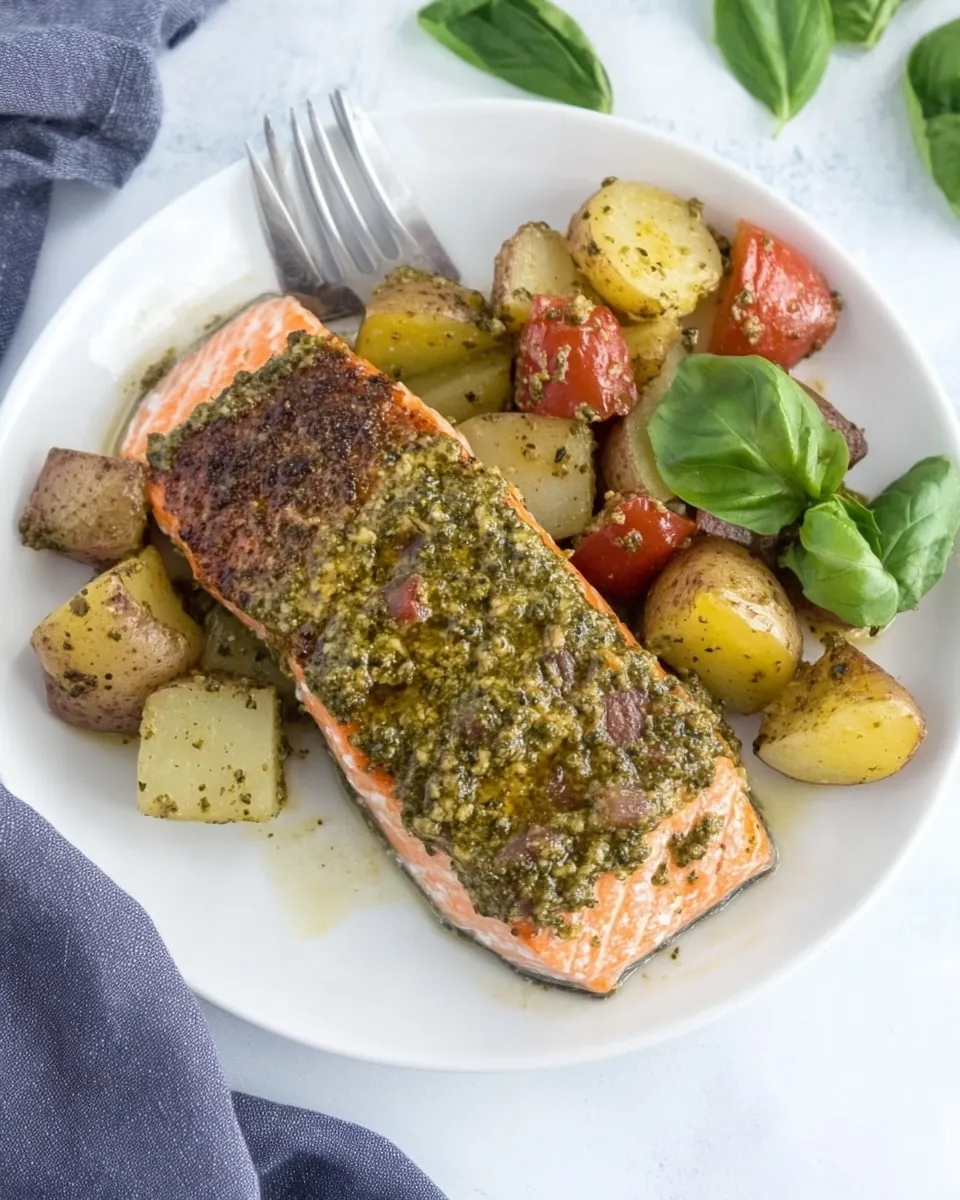
We are going to transform thin potato slices into a crisped blanket around the salmon, then pan sear for that golden shell. Follow the steps to capture the sound of browning, the aroma of toasted potato, and the delicate flake of properly cooked salmon. Pay attention to visual cues and gentle handling for best results.
- Peel potatoes. Thinly slice using a mandolin or benriner (the slices should be paper thin).: As you work, you will notice the potato slices shimmer with translucent edges and almost whisper when cut. The reason for such thin slicing is to ensure the slices will cook quickly to a crisp without overcooking the salmon inside. If the slices are thicker than paper thin, the exterior will take much longer to brown and the interior salmon may overcook. A common slip here is rushing and producing uneven slices, which leads to patchy browning. Take your time, steady the mandolin, and adjust your grip so each slice matches the last for even results.
- Lay out potatoes in a rectangle for each fillet. The slices should overlap and the rectangle should be equal to the length of the salmon fillets and wide enough to wrap over the salmon with a slight overlap.: The laid out arrangement should look like shimmering shingles, with each slice slightly overlapping the next, creating a unified sheet. This overlap is crucial because it creates structural integrity when you fold the sheet over the salmon . You will see a woven texture and the slight translucence where slices double up. If you leave gaps, the salmon will poke through during cooking, so aim for consistent coverage. A frequent oversight is making rectangles that are too small, which leads to exposed fish and uneven crisping.
- Brush the potatoes with a light coat of olive oil and top with a piece of salmon. Season the salmon with salt and pepper, then cover with about 1 1/2 tablespoons pesto. Fold the potato slices over the salmon and brush with olive oil. Sprinkle with salt and pepper to taste.: You will feel the gentle give of the wrapped package as it comes together. The light brush of olive oil is what creates those glossy, golden edges when seared. Adding the basil pesto at this stage infuses the fish with its aromatic oils and herbs, which mingle as the potato browns. Smell the burst of basil as you spread the pesto; it helps you gauge how much is enough. Avoid over-brushing with oil, or the potato will fry rather than crisp, becoming too heavy and greasy.
- Heat a tablespoon of olive oil in a nonstick skillet. When heated to medium-medium high, place as many wrapped salmon fillets as will fit in the pan without overcrowding. Cook until bottom potatoes are golden brown, then carefully flip to brown the tops and finally the sides. Depending on the thickness of your fillets, the salmon should be cooked after about 10-15 minutes in the skillet.: When the oil shimmers and gives a soft sizzle as you tilt the pan, it is time to add the wrapped fillets. You will hear a satisfying sizzle as the potato hits the pan and begin to smell the nutty, toasted aroma. Patience is key here, allow the bottom to develop a deep golden color before attempting to flip; rushing will tear the shingled crust. Use a wide spatula and take care to support the package while turning, because the seam can come apart if handled too roughly. If the pan is overcrowded, steam will form and the potato will not crisp, so cook in batches if needed. Check the salmon for doneness by looking for flaky flesh and an internal color change rather than relying solely on time.
- Serve immediately.: Right after cooking, you will notice a crisp sound when you cut into the shingled crust and the aroma will be at its most vibrant. Serving without delay preserves the contrast between the crunchy potato and tender salmon . The plates will look inviting, with golden edges and a glossy sheen from the olive oil . Waiting too long allows steam to soften the crust, so plan to time plating so guests can enjoy the texture at its peak.
Helpful Notes about Potato Shingled Salmon
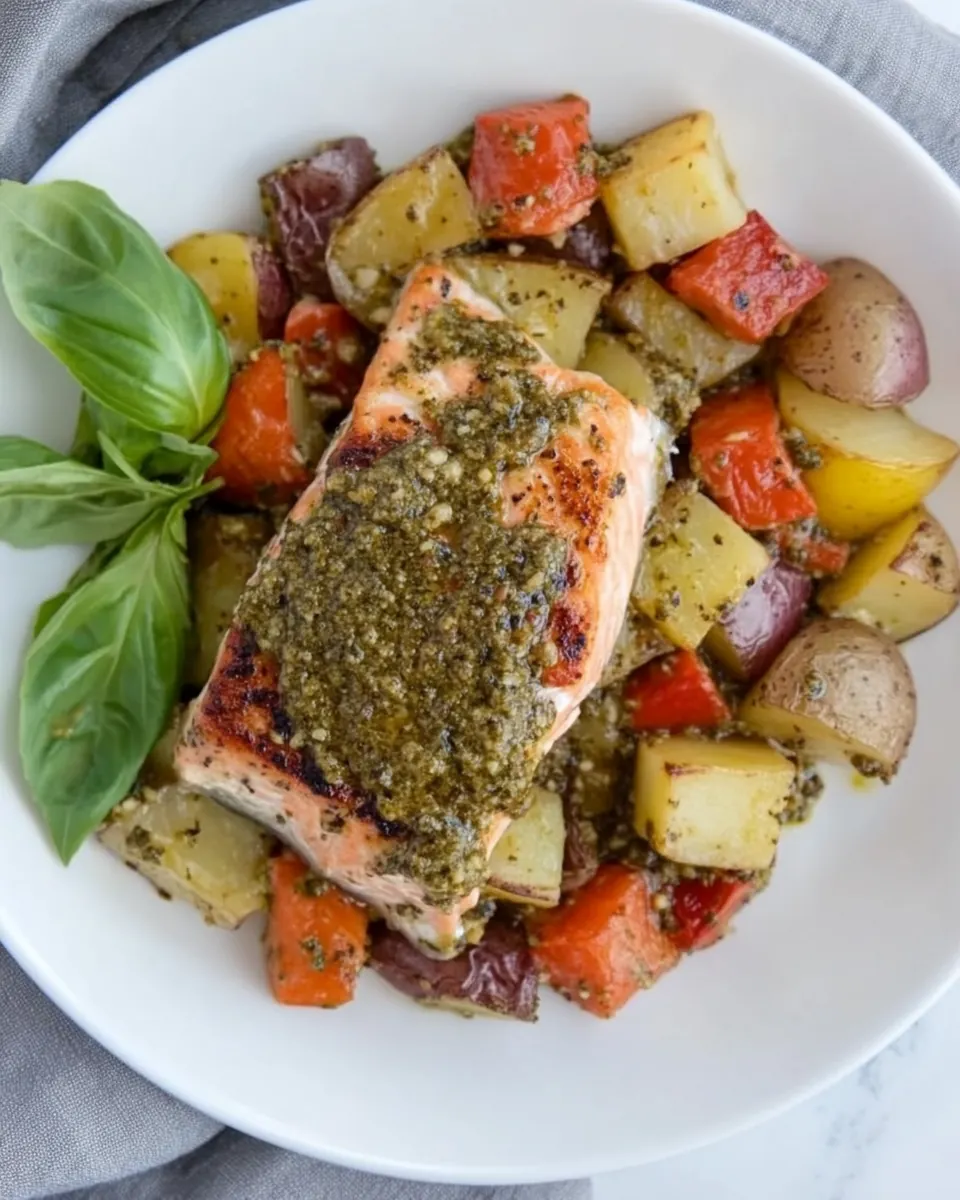
This dish benefits from small, practical habits that preserve texture and flavor. Below are focused notes I use every time, expanded into useful guidance so you can avoid common pitfalls and get the best results.
- Thin Slices Matter Make sure your potato slices are paper thin so they crisp through during the short sear, otherwise the outer layer will remain soft and underdone.
- Room in the Pan Give each wrapped fillet breathing room. Crowding lowers temperature and causes steaming instead of browning, which ruins the crisp crust.
- Use Fresh Pesto A vibrant basil pesto brightens the rich salmon, but use it sparingly so it does not create moisture between the fish and the potato sheet.
- Careful Flipping Support the entire package with a wide spatula when turning to prevent the shingled crust from unraveling at the seam.
- Serve Immediately The crisped potato is best right out of the pan; waiting will soften the crust as steam accumulates.
What Goes Well With This Potato Shingled Salmon
Potato Shingled Salmon pairs wonderfully with simple sides that complement the crisp texture and herbaceous pesto. Keep accompaniments bright and textural, and match the occasion whether it’s a cozy dinner or a special gathering. Below are thoughtful serving ideas and seasonal notes to help you complete the plate.
- Light green salad A crisp salad with lemon vinaigrette balances the richness of the salmon and adds contrasting acidity and crunch to the plate.
- Steamed vegetables Lightly steamed green beans or asparagus bring fresh, green flavors that pair well with the basil notes in the pesto.
- Simple grains Plain rice or quinoa acts as a gentle backdrop that soaks up any juices and lets the shingled texture remain the star of the meal.
- Occasion suggestions This recipe is excellent for dinner guests or a weekend lunch where you want a special presentation without hours of work; it scales easily and looks plated.
- Storage tips Store leftovers tightly covered in the refrigerator for up to two days, but know the crisp texture will soften; reheat briefly in a skillet to regain some crunch.
- Seasonal pairings In spring and summer, serve with bright lemon wedges and fresh herbs; in cooler months, pair with roasted root vegetables for a heartier plate.
FAQ
Conclusion
Potato Shingled Salmon stands out because it marries a crunchy, golden potato crust with moist, flaky salmon and a bright note of basil pesto. It looks like a special occasion plate but feels completely achievable on a weeknight, thanks to straightforward prep and focused technique. Try it when you want an impressive texture contrast and fresh herb flavor without complicated steps. Once you master the thin slicing and patient searing, this recipe becomes a reliable favorite that guests will praise and you will happily repeat.
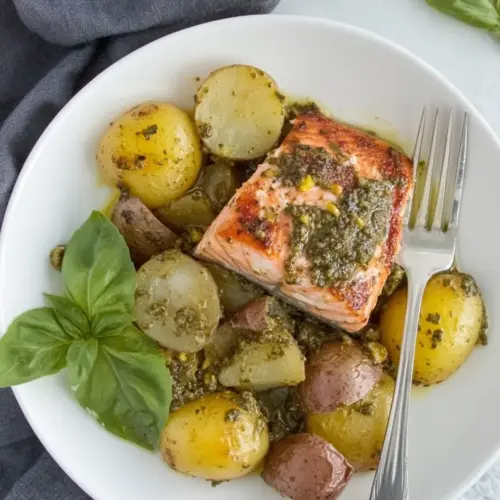
Potato Shingled Salmon
Equipment
- nonstick skillet
- Mandolin
- Wide spatula
Ingredients
- 4 8-ounce fillets of salmon, skin removed Provide protein and richness to the dish while offering a firm texture that holds together during baking; season lightly and avoid overcooking to preserve moisture and flake. Pair well with the potato shingle crust and pesto for a balanced, savory centerpiece.
- 2 medium russet potatoes Thinly slice to create overlapping shingle layers that crisp when brushed with oil; choose starchy russets for their structure and ability to brown evenly. Rinse and pat dry to remove excess starch, which helps achieve a crisp exterior under the broiler or in the oven.
- 2 tablespoons olive oil Coat potato slices lightly to promote even browning and prevent sticking while adding a subtle fruity finish; use sparingly to avoid greasiness. Brush between shingle layers and on the baking sheet to help crisp the potatoes and carry flavors.
- 6 tablespoons basil pesto Spread or dollop to introduce concentrated herbaceous flavor and an oily richness that complements the salmon and potatoes; choose a basil pesto with balanced salt and garlic. Apply a thin layer under or over the salmon as desired to infuse the dish without overpowering delicate fish flavors.
- Kosher salt, to taste Season to enhance overall flavor and to bring out natural sweetness and umami in both salmon and potatoes; apply to taste at multiple stages of cooking. Use kosher salt for even coverage and easier control compared with finer salts.
- Freshly ground black pepper, to taste. Season to brighten flavors and add subtle warmth; freshly grind to preserve aromatics and adjust coarseness for finishing. Sprinkle last-minute to provide a gentle peppery bite that complements pesto and balances richness.
Instructions
- Peel potatoes. Thinly slice using a mandolin or benriner (the slices should be paper thin).: As you work, you will notice the potato slices shimmer with translucent edges and almost whisper when cut. The reason for such thin slicing is to ensure the slices will cook quickly to a crisp without overcooking the salmon inside. If the slices are thicker than paper thin, the exterior will take much longer to brown and the interior salmon may overcook. A common slip here is rushing and producing uneven slices, which leads to patchy browning. Take your time, steady the mandolin, and adjust your grip so each slice matches the last for even results.
- Lay out potatoes in a rectangle for each fillet. The slices should overlap and the rectangle should be equal to the length of the salmon fillets and wide enough to wrap over the salmon with a slight overlap.: The laid out arrangement should look like shimmering shingles, with each slice slightly overlapping the next, creating a unified sheet. This overlap is crucial because it creates structural integrity when you fold the sheet over the salmon . You will see a woven texture and the slight translucence where slices double up. If you leave gaps, the salmon will poke through during cooking, so aim for consistent coverage. A frequent oversight is making rectangles that are too small, which leads to exposed fish and uneven crisping.
- Brush the potatoes with a light coat of olive oil and top with a piece of salmon. Season the salmon with salt and pepper, then cover with about 1 1/2 tablespoons pesto. Fold the potato slices over the salmon and brush with olive oil. Sprinkle with salt and pepper to taste.: You will feel the gentle give of the wrapped package as it comes together. The light brush of olive oil is what creates those glossy, golden edges when seared. Adding the basil pesto at this stage infuses the fish with its aromatic oils and herbs, which mingle as the potato browns. Smell the burst of basil as you spread the pesto; it helps you gauge how much is enough. Avoid over-brushing with oil, or the potato will fry rather than crisp, becoming too heavy and greasy.
- Heat a tablespoon of olive oil in a nonstick skillet. When heated to medium-medium high, place as many wrapped salmon fillets as will fit in the pan without overcrowding. Cook until bottom potatoes are golden brown, then carefully flip to brown the tops and finally the sides. Depending on the thickness of your fillets, the salmon should be cooked after about 10-15 minutes in the skillet.: When the oil shimmers and gives a soft sizzle as you tilt the pan, it is time to add the wrapped fillets. You will hear a satisfying sizzle as the potato hits the pan and begin to smell the nutty, toasted aroma. Patience is key here, allow the bottom to develop a deep golden color before attempting to flip; rushing will tear the shingled crust. Use a wide spatula and take care to support the package while turning, because the seam can come apart if handled too roughly. If the pan is overcrowded, steam will form and the potato will not crisp, so cook in batches if needed. Check the salmon for doneness by looking for flaky flesh and an internal color change rather than relying solely on time.
- Serve immediately.: Right after cooking, you will notice a crisp sound when you cut into the shingled crust and the aroma will be at its most vibrant. Serving without delay preserves the contrast between the crunchy potato and tender salmon . The plates will look inviting, with golden edges and a glossy sheen from the olive oil . Waiting too long allows steam to soften the crust, so plan to time plating so guests can enjoy the texture at its peak.
Notes
- Thin Slices Matter Make sure your potato slices are paper thin so they crisp through during the short sear, otherwise the outer layer will remain soft and underdone.
- Room in the Pan Give each wrapped fillet breathing room. Crowding lowers temperature and causes steaming instead of browning, which ruins the crisp crust.
- Use Fresh Pesto A vibrant basil pesto brightens the rich salmon, but use it sparingly so it does not create moisture between the fish and the potato sheet.
- Careful Flipping Support the entire package with a wide spatula when turning to prevent the shingled crust from unraveling at the seam.
- Serve Immediately The crisped potato is best right out of the pan; waiting will soften the crust as steam accumulates.