French Onion Soup
French Onion Soup is the kind of recipe I reach for when the air turns crisp and I want something that feels like a warm hug from the inside out.
Years ago I learned to slow cook onions late into the evening while I read on the couch, the kitchen light low, and the scent of sweet caramelizing onion drifting through the house. That memory is stitched into every bowl I make, and every time I stir a pot and hear the soft, sustained sizzle I’m transported back to that cozy night. I love how the long, gentle cook transforms simple ingredients into something layered and soulful.
On a busy weeknight I’ll choose the Dutch oven method to control the heat and coax the maximum sweetness from the onion. When friends come over, I’ll use the slow cooker so I can spend time with them instead of hovering over the stove. Either way the final flourish of toasted French bread and bubbling, browned Gruyere cheese always inspires a chorus of satisfied sighs around the table. I’ve learned little tricks along the way, like adding a touch of butter at the right moment and using both beef and chicken stocks for depth, that keep this soup reliably rich yet balanced.
Recipe Snapshot
1 hr 15 mins
15 mins
60 mins
Medium
350 kcal
French
Gluten-Free, Keto
Soups
Dutch Oven, Baking Sheet
The Magic of This French Onion Soup
Classic caramelization for deep flavor
I adore how patient caramelization turns ordinary onion into something almost luxurious. When you take the time to let the sugars break down, the soup gains a sweet nutty backbone that no shortcut can replicate. I often tell people that the payoff is worth the wait, since that golden, sticky texture is the foundation of everything that follows.
Comfort with elegant finishing
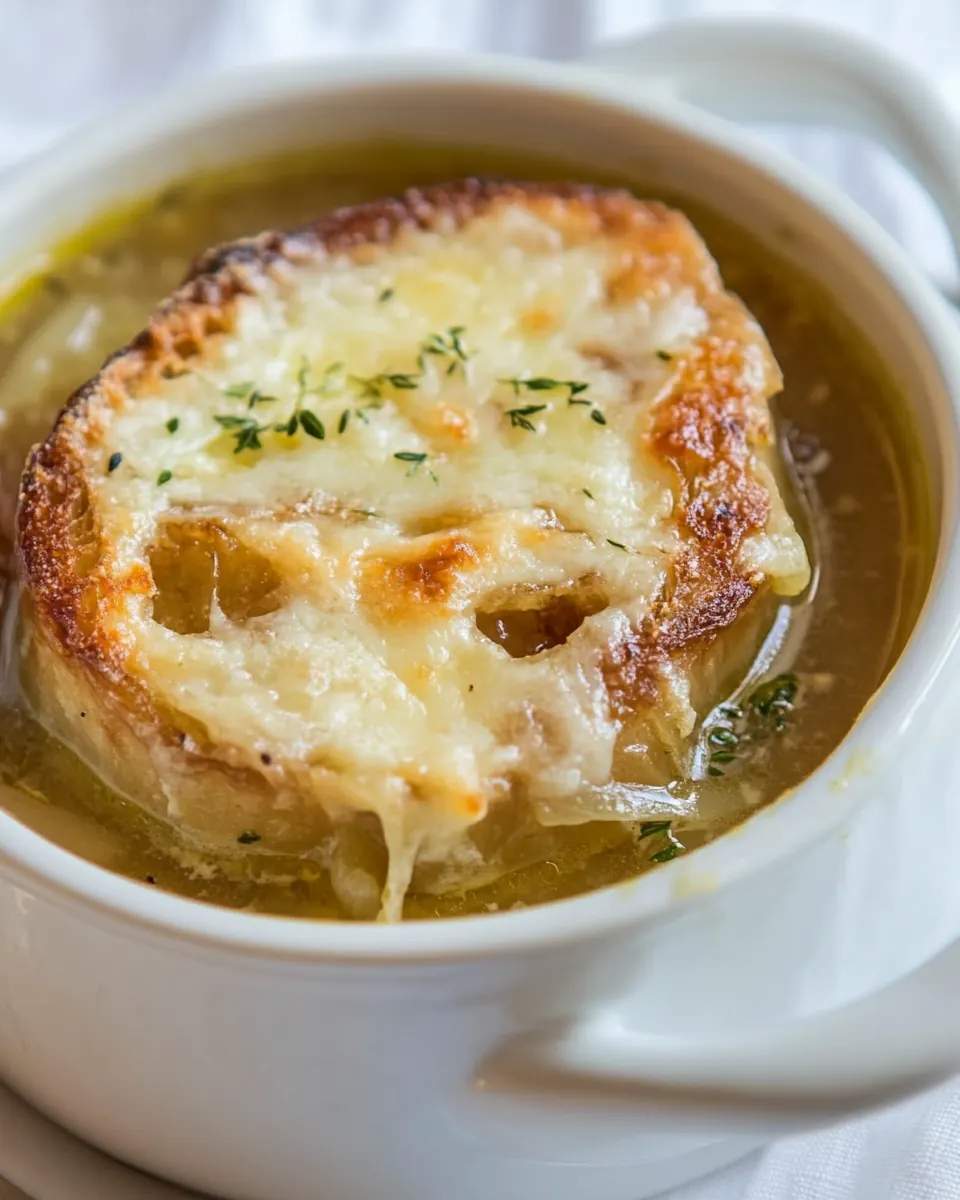
We get comfort food vibes and a restaurant finish in one bowl. The moment the Gruyere cheese bubbles and browns on top of toasted French bread, you have texture and richness combined. I love that this simple step elevates the soup from pantry fare to something special for guests.
Flexible cooking methods
I value versatility. You can make this on the stovetop in a Dutch Oven for hands on control, or use a slow cooker when life is busy. Both paths produce deep flavor, and I often switch depending on time. That adaptability makes the recipe approachable for cooks at any level.
Layered savory balance
The union of beef stock with a splash of chicken stock gives the soup an umami backbone without becoming one dimensional. I appreciate how the stocks play off the sweet onion and sharp Parmesan cheese, creating interest in each spoonful. It’s a lesson in balance that rewards attention to proportion.
Make ahead and shareable
I love that this soup holds up well overnight or frozen for later. That means you can prepare ahead for a dinner, or freeze portions for a comforting meal on a weeknight. I often make a big batch, because friends always want more, and it reheats beautifully with the same savory personality.
Shopping List for French Onion Soup
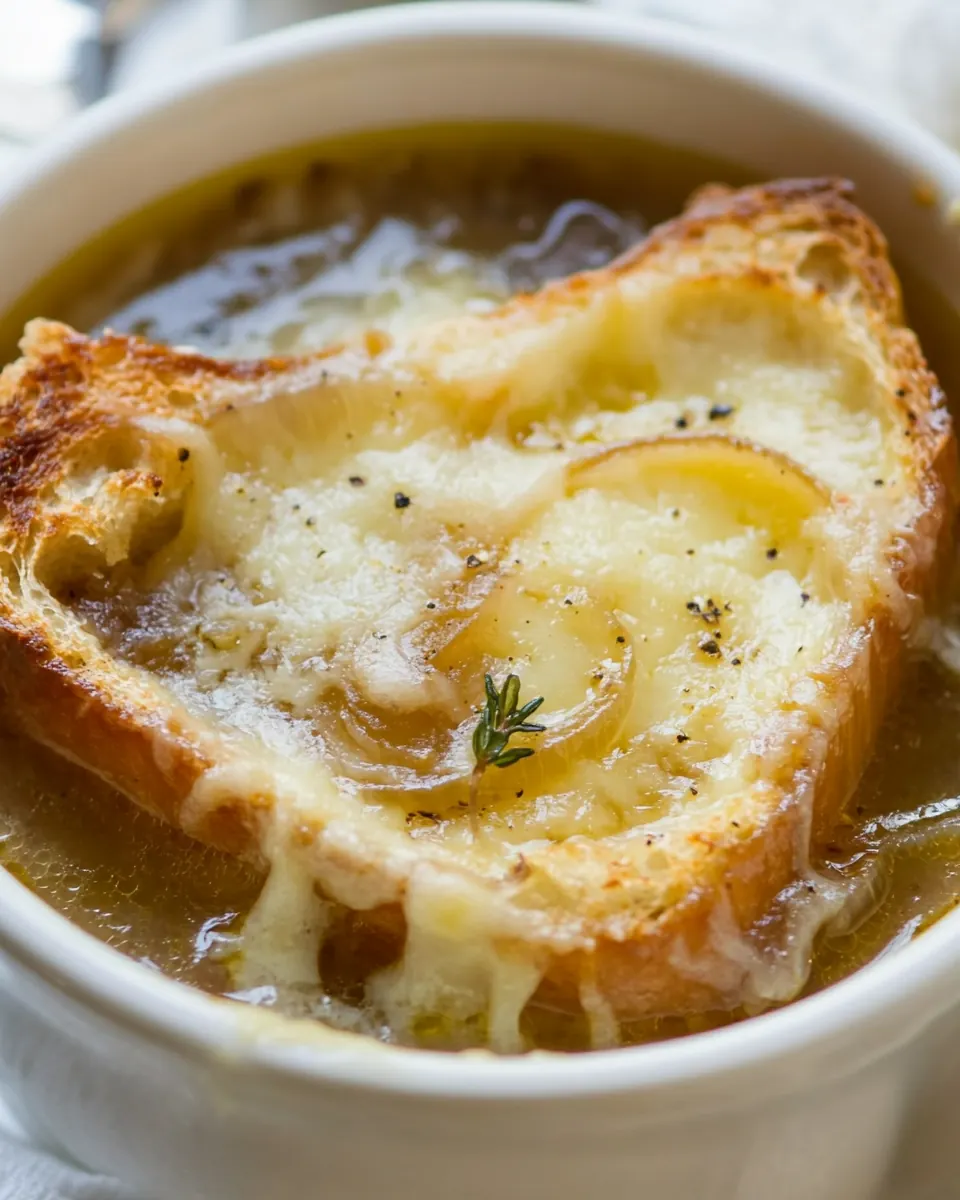
These ingredients are simple but intentional. I choose high quality stocks and a good melting cheese because those components carry the most flavor. The key players are the onion for sweetness, the beef stock for depth, and the cheeses for the glossy, savory finish. Together they create a soup that feels indulgent but is wonderfully straightforward to assemble.
- 6 medium onion, thinly sliced, sweet onion such as Vidalia: Caramelize to bring out deep sweetness and form the flavorful base of the soup; thin slices cook evenly and develop rich, golden-brown edges when slowly sautéed, contributing classic French onion aroma to the broth.
- 4 tablespoons butter: Melt to provide a luxurious cooking fat for caramelizing onions; butter adds a silky mouthfeel and helps develop color and nutty flavors that enhance the overall richness of the soup.
- 1/2 teaspoon kosher salt: Season to draw out moisture from the onions and to enhance natural flavors; kosher salt helps accelerate caramelization and balances sweetness while boosting the savory profile of the broth.
- 2 tablespoons olive oil: Sauté to add a high-heat cooking fat that complements butter; olive oil raises the smoke point, prevents burning, and contributes a mild fruity note to the caramelized onions.
- 1 clove garlic, minced: Infuse to add aromatic depth with a subtle pungency; minced garlic enhances savory complexity when briefly cooked with onions but is used sparingly to avoid overpowering the delicate caramelized flavors.
- 8 cups beef stock or broth, (64-ounces): Simmer to supply robust beefy stock that defines the soup’s savory backbone; using 64 ounces ensures a concentrated, meaty base that melds with caramelized onions for a traditional, full-bodied French onion soup.
- 1/2 cup chicken stock or broth: Balance to add subtle lighter poultry notes and round out the beef stock; chicken broth contributes extra umami and depth without overwhelming the primary beef flavor.
- 8 slices French bread, toasted: Top to provide crusty, absorbent rounds that hold melted cheese and soak up flavorful broth; toasting improves texture and prevents rapid sogginess when broiled with cheese.
- 2 cups Gruyere cheese, grated: Melt to create the signature gooey, nutty topping atop the bread; grated Gruyere browns beautifully under heat and lends creamy, slightly sweet complexity to each serving.
- 1/2 cup Parmesan cheese, grated: Grate to add sharp, savory finishing notes and enhance browning; Parmesan contributes a salty, umami finish that complements Gruyere and intensifies the soup’s overall flavor.
Recipe Directions for French Onion Soup
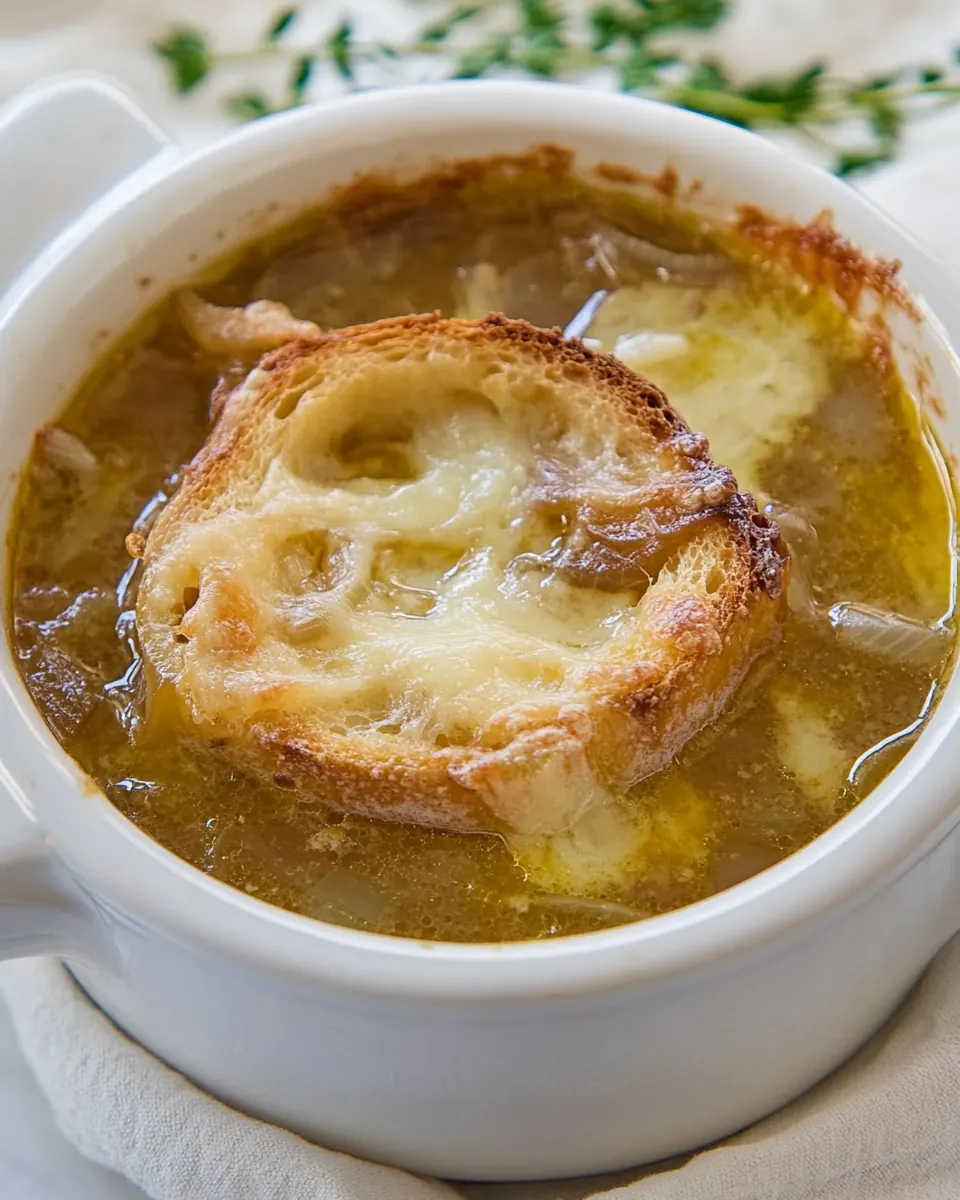
These directions cover both the stovetop Dutch oven method and the slow cooker option that appears later in the instructions. I’ll walk you through sensory cues to watch for, and troubleshooting tips so each step builds the flavor you expect.
- Add onions, butter and salt to large Dutch oven with olive oil set on low heat until the onions are browned and caramelized, about 1 hour. Add garlic and heat thoroughly, about one minute. Pour in beef stock and chicken stock. Stir, cover and allow to simmer over low heat for 30 minutes.: The pot should start with a gentle sheen of bubbling fat, and within minutes the onion will begin to soften and release a sweet fragrance, like warm caramel. As the hour progresses you will notice the sound shift to a softer, almost whispering sizzle, and the color moving from pale to a deep golden brown with sticky edges, which is the sign the sugars are transforming. This slow process is crucial because high heat will sear the outside and leave raw, sharp centers; patience yields a uniformly sweet, jam like texture that carries the whole soup. A common mistake is turning the heat up to rush color, which risks burning and bitterness. If some pieces brown faster, stir gently and scrape the fond from the bottom to incorporate those caramelized bits into the mixture, they are full of flavor.
- When ready to serve, ladle soup into oven proof bowls and top with bread and cheeses. Place on lined baking sheet and under the broiler in the oven until the cheeses have melted and browned lightly, about 8 minutes.: Right after the onion reaches its warm brown hue, add the minced garlic , and you will immediately notice a bright, aromatic lift in the steam rising from the pot. The garlic needs very little time to bloom, and one minute allows it to become fragrant without turning bitter. You should hear a short, brisk sizzle as the garlic hits the hot fat, and the scent will sharpen the overall aroma. Avoid leaving the garlic in the pan alone for long because burnt garlic tastes acrid and can undo the careful sweetness you developed. If you accidentally scorch it, remove the pan from heat and scrape out any bitter bits, then consider starting that small portion again.
- Add onions, butter and salt to slow cooker. Cook on low setting for 10 hours.: When the stocks hit the pot you will see ribbons of liquid loosening the cooked onion , and a savory steam will rise, blending the caramel notes with meaty depth. This is the stage where the soup finds its body, so pour slowly and stir to deglaze, scraping up any browned bits stuck to the bottom, which dissolve into the liquid as concentrated flavor. Combining both stocks balances robustness and clarity, giving a rounded mouthfeel that tastes layered rather than one dimensional. A typical pitfall is adding cold stock directly which can shock the pot and temporarily slow down the melding; bringing stocks to room temperature is helpful but not required if you stir thoroughly. After adding, bring the surface to very gentle movement to integrate flavors.
- Add garlic, beef stock, and chicken stock. Stir well to combine and cook on low setting for 8 hours.: As the pot moves to a low simmer you will notice tiny, steady bubbles and a steady stream of steam; this is when flavors marry and the aromatic profile deepens. The gentle simmer concentrates the liquid slightly while keeping the onion tender, and it allows time for the stocks to meld with the caramelized sugars until each spoonful feels cohesive. Keep the lid slightly ajar if the simmer becomes too vigorous, and stir occasionally to ensure even cooking. A common error is boiling too hard which can make the soup cloudy and evaporate too much liquid; stay vigilant and adjust the heat to maintain a calm, consistent simmer.
- When ready to serve, ladle soup into oven proof bowls and top with bread and cheeses. Place on lined baking sheet and under the broiler in the oven until the cheeses have melted and browned lightly, about 8 minutes.: At this point the aroma should be intensely savory with sweet undertones, and you will ladle the hot soup into sturdy, oven safe bowls. Place a slice of toasted French bread on top of each bowl so it becomes a platform for the melted cheeses, and then mound the grated Gruyere cheese and Parmesan cheese over the bread to form an even blanket. The visual cue is a neat, cheese topped crown ready for the broiler; the contrast of steaming soup below and dry toasted bread above is intentional to build texture. Do not skip toasting the bread first or it will become an unappetizing mush once broiled.
- Place on lined baking sheet and under the broiler in the oven until the cheeses have melted and browned lightly, about 8 minutes: Slide the bowls onto a lined baking sheet and position them under a preheated broiler where intense radiant heat will cause the Gruyere cheese to bubble and the Parmesan cheese to develop golden brown flecks. You should watch closely as the sound changes to a lively bubbling and occasional popping, and the surface goes from glossy to blistered and browned in spots. This quick, high heat finish gives you that irresistible crust; if you step away you risk overbrowning or scorching, so stay attentive. If the cheese starts to smoke, lower the rack or reduce broiler time to prevent bitterness.
- Add onions, butter and salt to slow cooker: For the slow cooker method begin by placing the sliced onion , butter , and salt into the vessel, and set it to the low setting; you will notice a gentle, muffled warmth instead of the active sizzle you get on the stove, and over several hours the onion will quietly transform into deeply sweet, soft ribbons. This hands off approach is perfect when you cannot stand by the pot, but remember that slow cooker temperatures vary, so check the texture occasionally. A danger here is layering too much at once without stirring, which can create uneven caramelization; give a gentle stir a few times during the long cook for uniformity.
- Cook on low setting for 10 hours: As the hours pass the kitchen will fill with a mellow, savory perfume and the onion will take on a concentrated, almost jam like texture. The long, low heat extracts sugars and softens fibers without much attention, and the result is a deeply flavored base that requires minimal finishing. Because the process is prolonged, avoid adding acids or extra seasonings early which can inhibit proper browning. A typical oversight is lifting the lid too often, which lets heat escape and extends cook time, so only check briefly when needed.
- Add garlic, beef stock, and chicken stock: After the onion has slowly sweetened in the slow cooker, add the minced garlic and both stocks, stirring to combine and waking up the pot with savory steam. The sound will be subtle, and the resulting aroma merges the caramel notes with meaty depth, similar to the stovetop method. Mixing well is important so the concentrated onion flavors disperse through the liquid. If you add cold liquids, stir thoroughly to equalize temperature and avoid cool pockets in the slow cooker which can affect finish.
- Stir well to combine and cook on low setting for 8 hours: Let the flavors mingle on low heat, where gentle simmering will further meld the stocks and the sweetened onion . Over time the soup will taste more integrated, with fewer sharp edges and more rounded savory character. Because the slow cooker runs for long periods, be cautious about seasoning until the end, since flavors concentrate and saltiness can escalate. A common mistake is over seasoning early; instead, check seasoning just before serving and adjust.
- When ready to serve, ladle soup into oven proof bowls and top with bread and cheeses: Finish the slow cooker version the same way as the stovetop: ladle hot soup into oven safe bowls, float toasted French bread on top, and cover with the grated Gruyere cheese and Parmesan cheese . The visual goal is a neat mound of cheese ready to brown, and the mouthfeel should be a balance of silky broth and a crisp to soft transition from bread to melted cheese. If the bowls are too full, remove a little broth before broiling to avoid spills and messy cleanup.
- Place on lined baking sheet and under the broiler in the oven until the cheeses have melted and browned lightly, about 8 minutes: As the slow cooker version reaches the broiler, watch for the same tell tale bubbling and blistering on the cheese surface. The sound and scent are immediate signals that the finish is near, and when the cheeses show small golden pockets you know the soup is ready to enjoy. Broil briefly to preserve those contrasting textures; over broiling will harden the cheese and change the pleasant mouthfeel you worked toward.
Ways to Customize
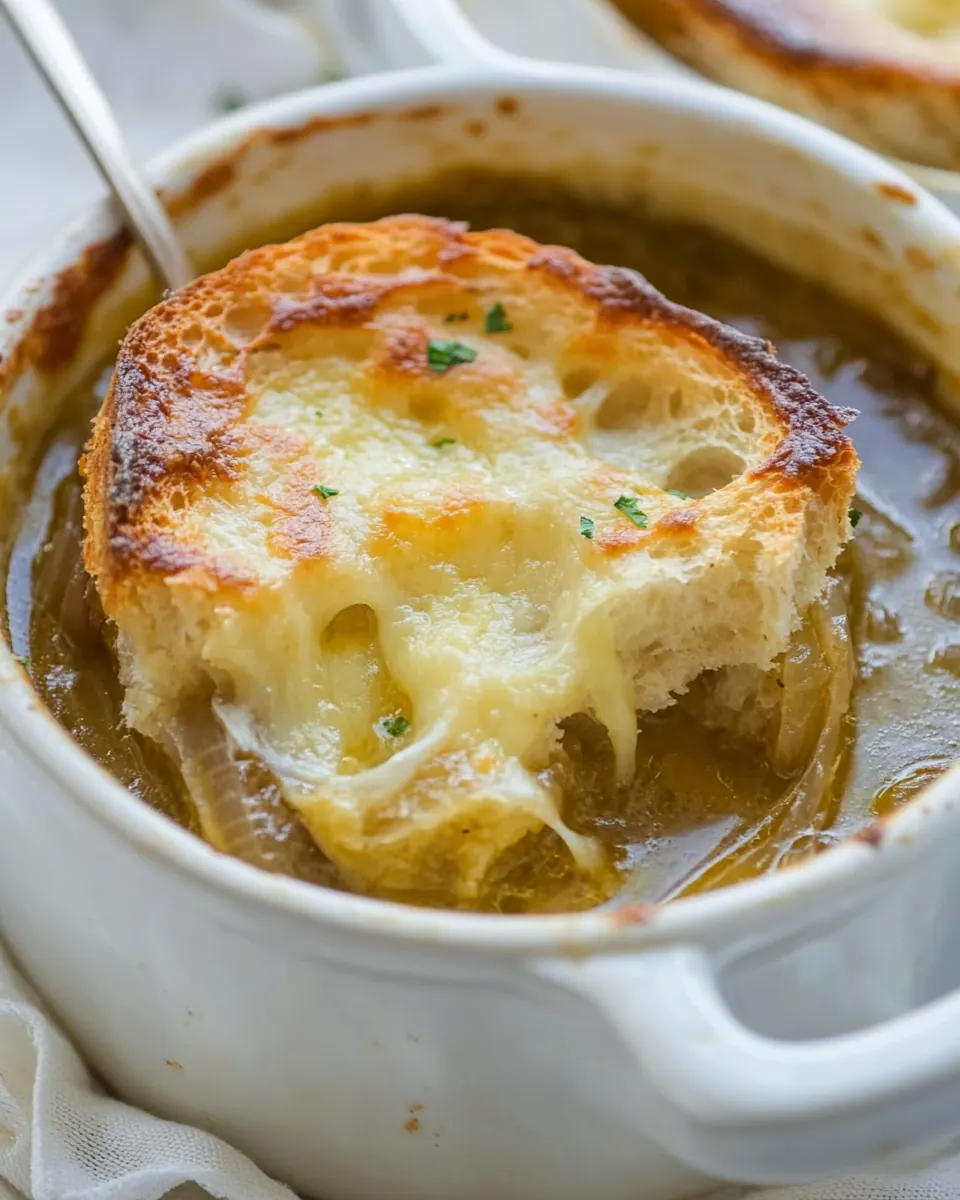
This section gives practical variations and notes from my kitchen experiments, so you can adapt the recipe to timing and taste.
- Make Ahead: Cook the soup fully and refrigerate for up to three days, then reheat in the oven for 15 minutes before adding bread and cheese to broil, this keeps textures intact and flavors melded.
- Freeze for Later: Freeze the soup without bread and cheese in a freezer safe container for up to three months, thaw in the refrigerator overnight, then proceed with reheating and broiling when ready to serve.
- Cheese Blend: If you want a slightly sharper finish, increase the Parmesan cheese fraction slightly while keeping plenty of Gruyere cheese for meltability, this changes the top crust character.
- Stock Choice: Use a richer, reduced beef stock for maximum depth, or a lower sodium stock to better control seasoning at the end.
- Slow Cooker Timing: If your slow cooker runs hot, check the onion after 6 to 8 hours to avoid overcooking, you want soft ribbons not a paste.
Serving This French Onion Soup
This soup is versatile for casual and special occasions, and I’ll outline pairing ideas and storage strategies. It shines at dinner but also works as a sophisticated starter.
- Family Dinner: Serve bowls straight from the oven with extra napkins because the cheese topping invites a satisfying pull and communal atmosphere.
- Entertaining: Present the broiled bowls on a tray, garnished simply with a light dusting of Parmesan cheese, and accompany with a crisp green salad to cut richness.
- Meal Prep: Store soup in airtight containers for up to three days in the refrigerator, reheat gently, then add bread and cheeses for the broiler finish just before serving to preserve texture.
- Freezing: Freeze in portions without bread and cheese for up to three months, thaw overnight in the refrigerator and reheat before assembling the broiled topping.
- Seasonal Pairings: This soup is lovely in colder months, paired with roasted root vegetables or a simple vinaigrette salad to balance the warm, savory profile.
FAQ
Conclusion
French Onion Soup shines because of its deep caramelized onion flavor, layered stocks, and the irresistible melted cheese topping that brings texture and warmth. I encourage you to give this version a try, whether you take the patient stovetop route or the hands off slow cooker method. It rewards care with a bowl that feels both comforting and refined, perfect for chilly evenings or when you want a dish that feels like a small celebration.
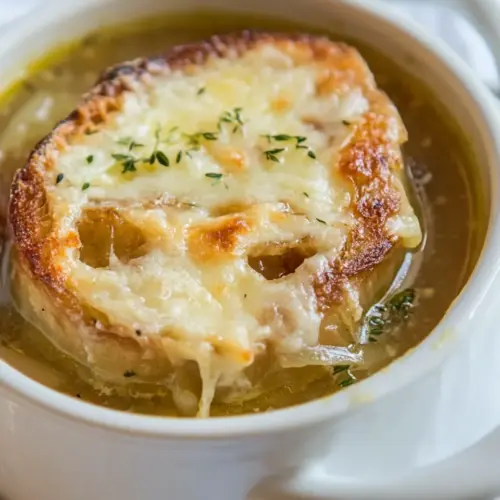
French Onion Soup
Equipment
- Dutch Oven
- Baking Sheet
Ingredients
- 6 medium onion, thinly sliced, sweet onion such as Vidalia Caramelize to bring out deep sweetness and form the flavorful base of the soup; thin slices cook evenly and develop rich, golden-brown edges when slowly sautéed, contributing classic French onion aroma to the broth.
- 4 tablespoons butter Melt to provide a luxurious cooking fat for caramelizing onions; butter adds a silky mouthfeel and helps develop color and nutty flavors that enhance the overall richness of the soup.
- 1/2 teaspoon kosher salt Season to draw out moisture from the onions and to enhance natural flavors; kosher salt helps accelerate caramelization and balances sweetness while boosting the savory profile of the broth.
- 2 tablespoons olive oil Sauté to add a high-heat cooking fat that complements butter; olive oil raises the smoke point, prevents burning, and contributes a mild fruity note to the caramelized onions.
- 1 clove garlic, minced Infuse to add aromatic depth with a subtle pungency; minced garlic enhances savory complexity when briefly cooked with onions but is used sparingly to avoid overpowering the delicate caramelized flavors.
- 8 cups beef stock or broth, (64-ounces) Simmer to supply robust beefy stock that defines the soup’s savory backbone; using 64 ounces ensures a concentrated, meaty base that melds with caramelized onions for a traditional, full-bodied French onion soup.
- 1/2 cup chicken stock or broth Balance to add subtle lighter poultry notes and round out the beef stock; chicken broth contributes extra umami and depth without overwhelming the primary beef flavor.
- 8 slices French bread, toasted Top to provide crusty, absorbent rounds that hold melted cheese and soak up flavorful broth; toasting improves texture and prevents rapid sogginess when broiled with cheese.
- 2 cups Gruyere cheese, grated Melt to create the signature gooey, nutty topping atop the bread; grated Gruyere browns beautifully under heat and lends creamy, slightly sweet complexity to each serving.
- 1/2 cup Parmesan cheese, grated Grate to add sharp, savory finishing notes and enhance browning; Parmesan contributes a salty, umami finish that complements Gruyere and intensifies the soup’s overall flavor.
Instructions
- Add onions, butter and salt to large Dutch oven with olive oil set on low heat until the onions are browned and caramelized, about 1 hour. Add garlic and heat thoroughly, about one minute. Pour in beef stock and chicken stock. Stir, cover and allow to simmer over low heat for 30 minutes.: The pot should start with a gentle sheen of bubbling fat, and within minutes the onion will begin to soften and release a sweet fragrance, like warm caramel. As the hour progresses you will notice the sound shift to a softer, almost whispering sizzle, and the color moving from pale to a deep golden brown with sticky edges, which is the sign the sugars are transforming. This slow process is crucial because high heat will sear the outside and leave raw, sharp centers; patience yields a uniformly sweet, jam like texture that carries the whole soup. A common mistake is turning the heat up to rush color, which risks burning and bitterness. If some pieces brown faster, stir gently and scrape the fond from the bottom to incorporate those caramelized bits into the mixture, they are full of flavor.
- When ready to serve, ladle soup into oven proof bowls and top with bread and cheeses. Place on lined baking sheet and under the broiler in the oven until the cheeses have melted and browned lightly, about 8 minutes.: Right after the onion reaches its warm brown hue, add the minced garlic , and you will immediately notice a bright, aromatic lift in the steam rising from the pot. The garlic needs very little time to bloom, and one minute allows it to become fragrant without turning bitter. You should hear a short, brisk sizzle as the garlic hits the hot fat, and the scent will sharpen the overall aroma. Avoid leaving the garlic in the pan alone for long because burnt garlic tastes acrid and can undo the careful sweetness you developed. If you accidentally scorch it, remove the pan from heat and scrape out any bitter bits, then consider starting that small portion again.
- Add onions, butter and salt to slow cooker. Cook on low setting for 10 hours.: When the stocks hit the pot you will see ribbons of liquid loosening the cooked onion , and a savory steam will rise, blending the caramel notes with meaty depth. This is the stage where the soup finds its body, so pour slowly and stir to deglaze, scraping up any browned bits stuck to the bottom, which dissolve into the liquid as concentrated flavor. Combining both stocks balances robustness and clarity, giving a rounded mouthfeel that tastes layered rather than one dimensional. A typical pitfall is adding cold stock directly which can shock the pot and temporarily slow down the melding; bringing stocks to room temperature is helpful but not required if you stir thoroughly. After adding, bring the surface to very gentle movement to integrate flavors.
- Add garlic, beef stock, and chicken stock. Stir well to combine and cook on low setting for 8 hours.: As the pot moves to a low simmer you will notice tiny, steady bubbles and a steady stream of steam; this is when flavors marry and the aromatic profile deepens. The gentle simmer concentrates the liquid slightly while keeping the onion tender, and it allows time for the stocks to meld with the caramelized sugars until each spoonful feels cohesive. Keep the lid slightly ajar if the simmer becomes too vigorous, and stir occasionally to ensure even cooking. A common error is boiling too hard which can make the soup cloudy and evaporate too much liquid; stay vigilant and adjust the heat to maintain a calm, consistent simmer.
- When ready to serve, ladle soup into oven proof bowls and top with bread and cheeses. Place on lined baking sheet and under the broiler in the oven until the cheeses have melted and browned lightly, about 8 minutes.: At this point the aroma should be intensely savory with sweet undertones, and you will ladle the hot soup into sturdy, oven safe bowls. Place a slice of toasted French bread on top of each bowl so it becomes a platform for the melted cheeses, and then mound the grated Gruyere cheese and Parmesan cheese over the bread to form an even blanket. The visual cue is a neat, cheese topped crown ready for the broiler; the contrast of steaming soup below and dry toasted bread above is intentional to build texture. Do not skip toasting the bread first or it will become an unappetizing mush once broiled.
- Place on lined baking sheet and under the broiler in the oven until the cheeses have melted and browned lightly, about 8 minutes: Slide the bowls onto a lined baking sheet and position them under a preheated broiler where intense radiant heat will cause the Gruyere cheese to bubble and the Parmesan cheese to develop golden brown flecks. You should watch closely as the sound changes to a lively bubbling and occasional popping, and the surface goes from glossy to blistered and browned in spots. This quick, high heat finish gives you that irresistible crust; if you step away you risk overbrowning or scorching, so stay attentive. If the cheese starts to smoke, lower the rack or reduce broiler time to prevent bitterness.
- Add onions, butter and salt to slow cooker: For the slow cooker method begin by placing the sliced onion , butter , and salt into the vessel, and set it to the low setting; you will notice a gentle, muffled warmth instead of the active sizzle you get on the stove, and over several hours the onion will quietly transform into deeply sweet, soft ribbons. This hands off approach is perfect when you cannot stand by the pot, but remember that slow cooker temperatures vary, so check the texture occasionally. A danger here is layering too much at once without stirring, which can create uneven caramelization; give a gentle stir a few times during the long cook for uniformity.
- Cook on low setting for 10 hours: As the hours pass the kitchen will fill with a mellow, savory perfume and the onion will take on a concentrated, almost jam like texture. The long, low heat extracts sugars and softens fibers without much attention, and the result is a deeply flavored base that requires minimal finishing. Because the process is prolonged, avoid adding acids or extra seasonings early which can inhibit proper browning. A typical oversight is lifting the lid too often, which lets heat escape and extends cook time, so only check briefly when needed.
- Add garlic, beef stock, and chicken stock: After the onion has slowly sweetened in the slow cooker, add the minced garlic and both stocks, stirring to combine and waking up the pot with savory steam. The sound will be subtle, and the resulting aroma merges the caramel notes with meaty depth, similar to the stovetop method. Mixing well is important so the concentrated onion flavors disperse through the liquid. If you add cold liquids, stir thoroughly to equalize temperature and avoid cool pockets in the slow cooker which can affect finish.
- Stir well to combine and cook on low setting for 8 hours: Let the flavors mingle on low heat, where gentle simmering will further meld the stocks and the sweetened onion . Over time the soup will taste more integrated, with fewer sharp edges and more rounded savory character. Because the slow cooker runs for long periods, be cautious about seasoning until the end, since flavors concentrate and saltiness can escalate. A common mistake is over seasoning early; instead, check seasoning just before serving and adjust.
- When ready to serve, ladle soup into oven proof bowls and top with bread and cheeses: Finish the slow cooker version the same way as the stovetop: ladle hot soup into oven safe bowls, float toasted French bread on top, and cover with the grated Gruyere cheese and Parmesan cheese . The visual goal is a neat mound of cheese ready to brown, and the mouthfeel should be a balance of silky broth and a crisp to soft transition from bread to melted cheese. If the bowls are too full, remove a little broth before broiling to avoid spills and messy cleanup.
- Place on lined baking sheet and under the broiler in the oven until the cheeses have melted and browned lightly, about 8 minutes: As the slow cooker version reaches the broiler, watch for the same tell tale bubbling and blistering on the cheese surface. The sound and scent are immediate signals that the finish is near, and when the cheeses show small golden pockets you know the soup is ready to enjoy. Broil briefly to preserve those contrasting textures; over broiling will harden the cheese and change the pleasant mouthfeel you worked toward.
Notes
- Make Ahead: Cook the soup fully and refrigerate for up to three days, then reheat in the oven for 15 minutes before adding bread and cheese to broil, this keeps textures intact and flavors melded.
- Freeze for Later: Freeze the soup without bread and cheese in a freezer safe container for up to three months, thaw in the refrigerator overnight, then proceed with reheating and broiling when ready to serve.
- Cheese Blend: If you want a slightly sharper finish, increase the Parmesan cheese fraction slightly while keeping plenty of Gruyere cheese for meltability, this changes the top crust character.
- Stock Choice: Use a richer, reduced beef stock for maximum depth, or a lower sodium stock to better control seasoning at the end.
- Slow Cooker Timing: If your slow cooker runs hot, check the onion after 6 to 8 hours to avoid overcooking, you want soft ribbons not a paste.