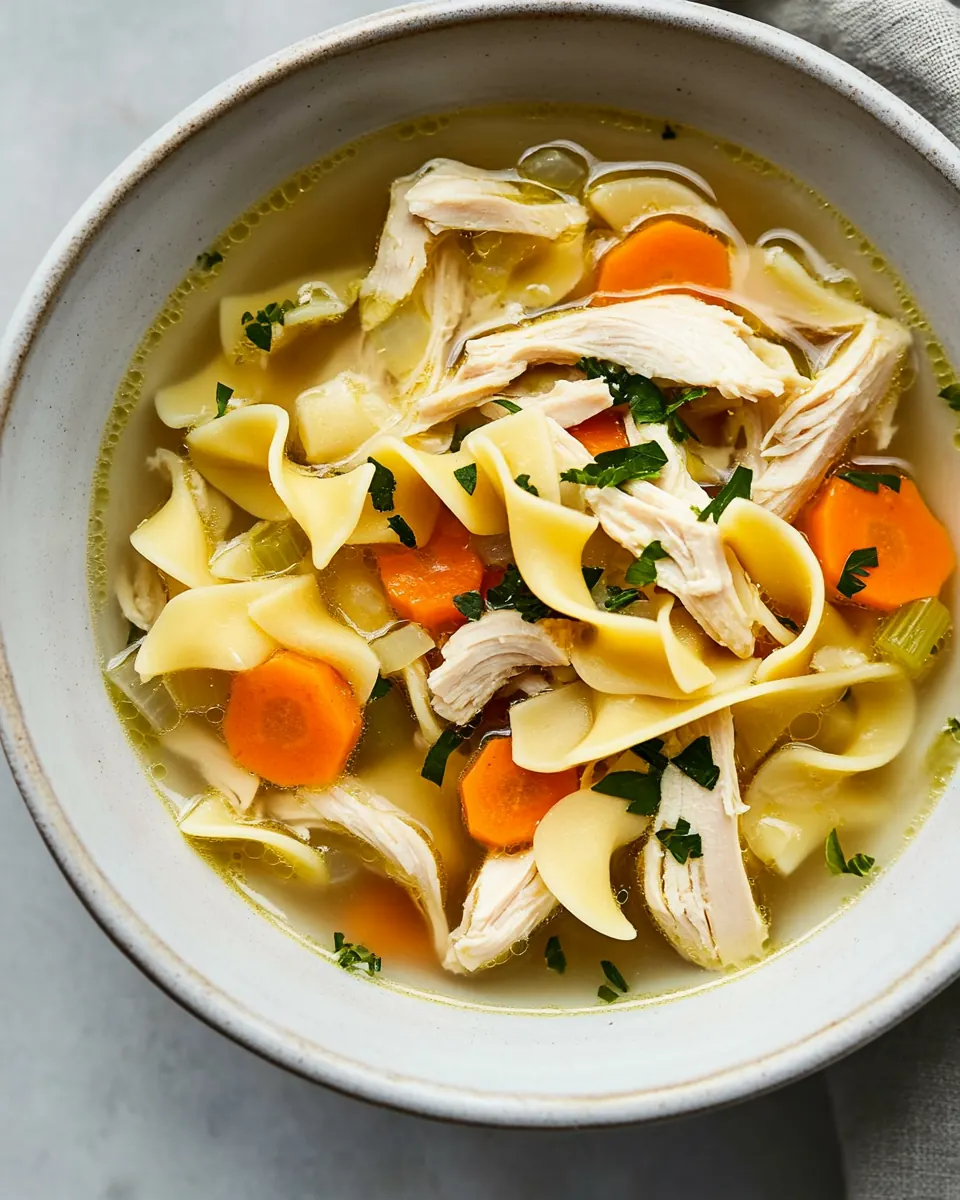
Easy Chicken Noodle Soup
Easy Chicken Noodle Soup is the kind of bowl I reach for when I need warmth, familiarity, and something that feels like a hug from the inside out. The first time I made this version I was nursing a cold and short on energy, but determined to make something nourishing with what I had on hand. As I chopped the vegetables and let the aromas bloom, the kitchen transformed into a small, comforting refuge.
Over the years I have learned to treat this recipe as flexible and forgiving, a framework rather than a strict rulebook. I love how the simple trio of chicken, carrots, and celery creates a savory backbone, while the egg noodles add a pleasing, slurpy texture that makes every spoonful satisfying. When I serve it to friends after a long day, conversation slows and shoulders relax.
Recipe Snapshot
45 mins
10 mins
35 mins
Medium
350 kcal
American
Gluten-Free, Paleo
Soups
Soup pot, Knife, Cutting board, Wooden spoon, Instant read thermometer
Why You Need This Easy Chicken Noodle Soup
Comfort in a Bowl
I always say a bowl of Easy Chicken Noodle Soup can reset the mood of an entire evening. The warm, savory broth calms and comforts, making this recipe a go to for anyone feeling rundown or just wanting a gentle, wholesome meal. I remember once coming home after a late shift and finding that a hot pot of this soup made everything seem manageable again.
Simple Ingredients, Big Flavor
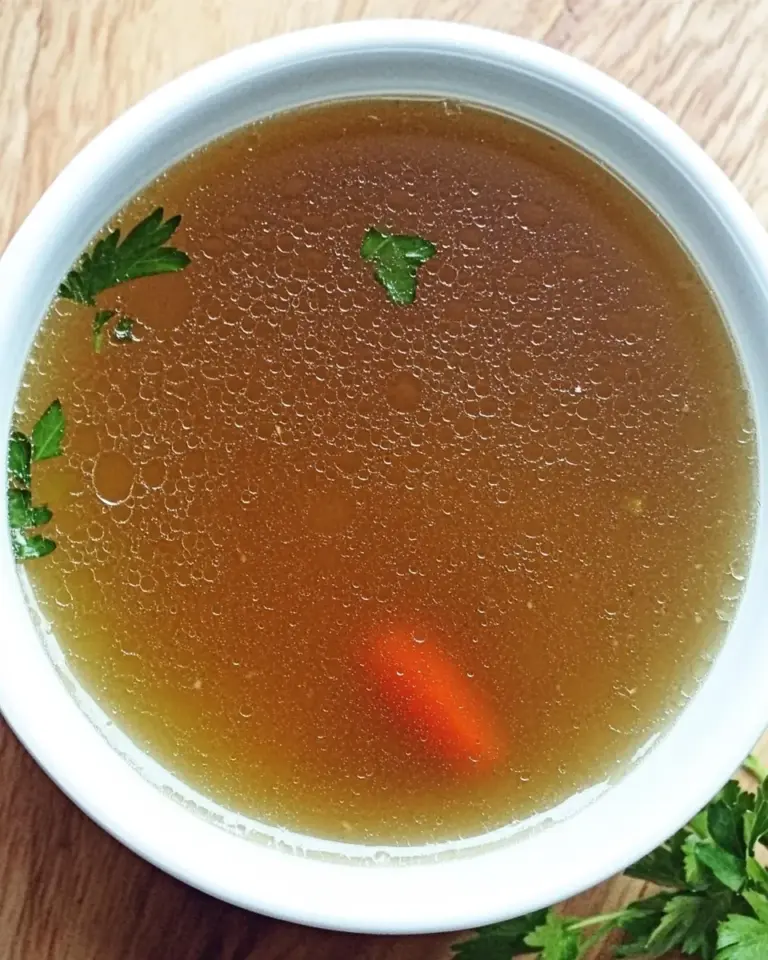
One reason I reach for this recipe is how little you need to make something satisfying. With pantry staples like chicken broth, a few fresh vegetables, and basic seasonings, you get a bright, layered broth. The gentle simmering coaxes sweetness from the onion and carrots, while the Italian seasoning ties the flavors together without overwhelming the subtlety of the chicken.
Adaptable and Kid Friendly
This version of Easy Chicken Noodle Soup is forgiving. If you have rotisserie chicken on hand, you can add it late to keep it tender. I often make a double batch when I know friends with kids are coming, since the mild flavors and soft egg noodles are usually a hit. It is a crowd pleaser that scales easily.
Texture that Comforts
The way the egg noodles soften in the broth is part of the experience. Cooked just right they hold a bit of chew while soaking up the savory liquid, making each spoonful both slippery and substantial. I watch and taste as they cook, because a perfectly timed noodle can make the difference between good and memorable.
Quick Enough for Weeknights
Finally, I love that Easy Chicken Noodle Soup comes together quickly. When life is busy, you can still produce a fresh, homemade meal in under an hour. The routine of chopping and simmering is oddly soothing, and the payoff is immediate comfort, which is exactly what I want on a hectic night.
Key Ingredients for Easy Chicken Noodle Soup
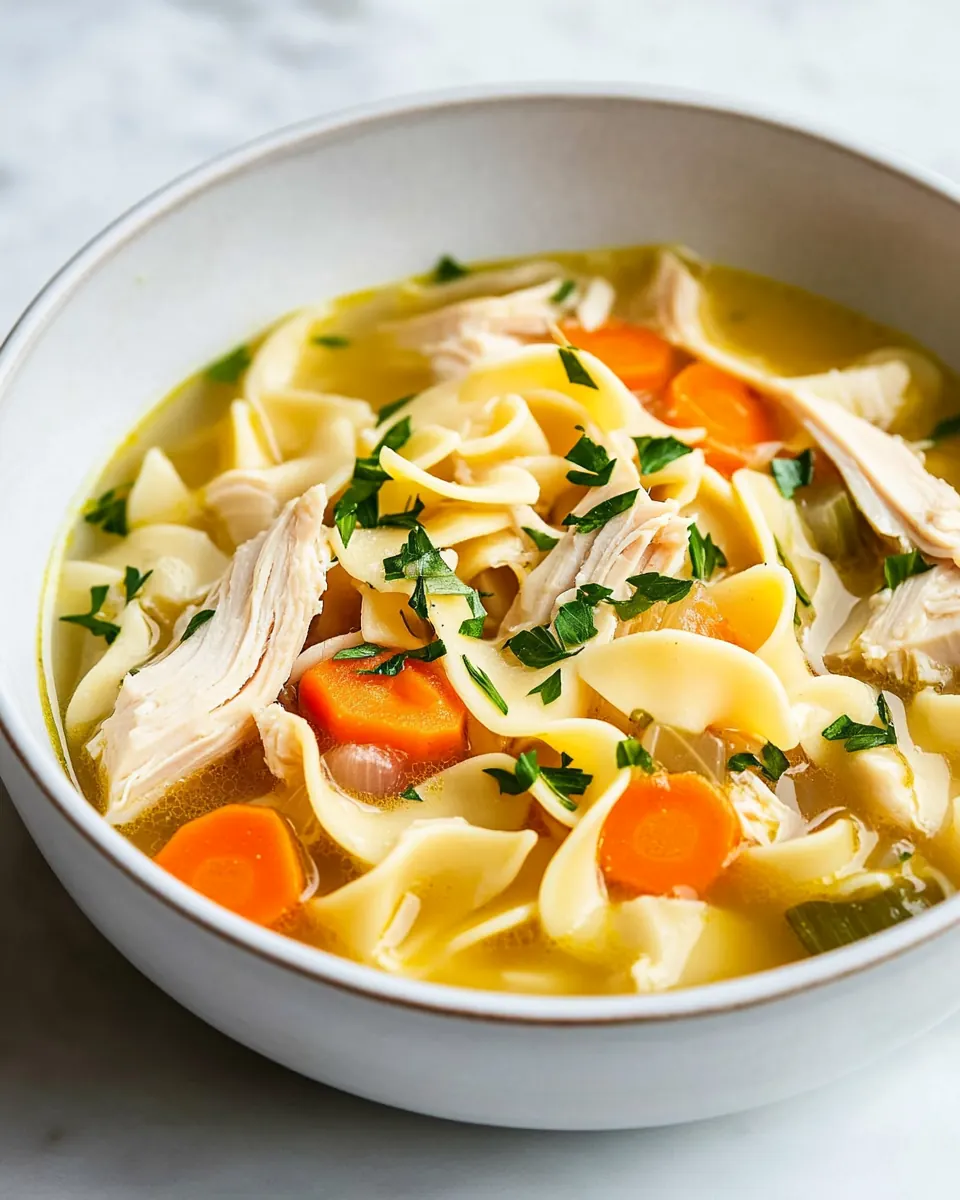
This soup is built on clear, intentional choices. Each ingredient plays a distinct role, from creating the savory broth to adding texture and brightness. I lean on simple, fresh produce and straightforward seasonings so the chicken and broth can shine. The result is a balanced, cozy bowl that tastes like care.
- 1 tablespoon olive oil: Sauté to add a fruity, aromatic base and help cook aromatics; warms the pan and contributes healthy fats for flavor integration.
- 1 tablespoon butter: Melt to provide richness and a silky mouthfeel; helps brown vegetables slightly and carries butter-soluble flavors into the broth.
- 1 medium onion chopped: Chop to offer sweetness and savory depth; softens while simmering to build the soup's foundational savory profile and texture.
- 2 medium carrots peeled & sliced: Peel and slice to contribute natural sweetness and body; softens with cooking and adds color and subtle vegetal flavor to the broth.
- 2 sticks celery chopped: Chop to supply aromatic crunch and savory backbone; mellows as it simmers and balances the soup's flavor with herbal notes.
- 2 cloves garlic minced: Mince to provide a pungent, aromatic kick; releases essential oils when sautéed, enhancing overall savory complexity in the broth.
- 4 cups chicken broth: Simmer to form the liquid base that concentrates savory flavors; hydrates noodles and cooks chicken while carrying seasonings throughout.
- 2 cups water: Combine to extend the liquid volume and control broth concentration; helps achieve desired soup consistency and cooking temperature.
- 1.5 pounds uncooked chicken breasts boneless skinless: Cook to supply tender protein and savory richness; poaches in the broth to release flavor and provide substantial, healthy meat for the soup.
- 1/2 teaspoon Italian seasoning: Sprinkle to introduce a mix of dried herbs that add Italian-style warmth; seasons the broth with thyme, oregano, and basil notes.
- 2 cups uncooked egg noodles: Boil to add comforting, soft texture and body; absorbs broth flavors and makes the dish a classic, hearty noodle soup.
- Salt & pepper to taste: Season to adjust overall flavor balance; enhances taste by bringing out savory, salty, and peppery notes to preference.
- 1 tablespoon fresh parsley chopped: Chop to finish with bright, fresh herbal lift; sprinkled at the end for color, freshness, and a subtle parsley aroma.
How to Prepare Easy Chicken Noodle Soup
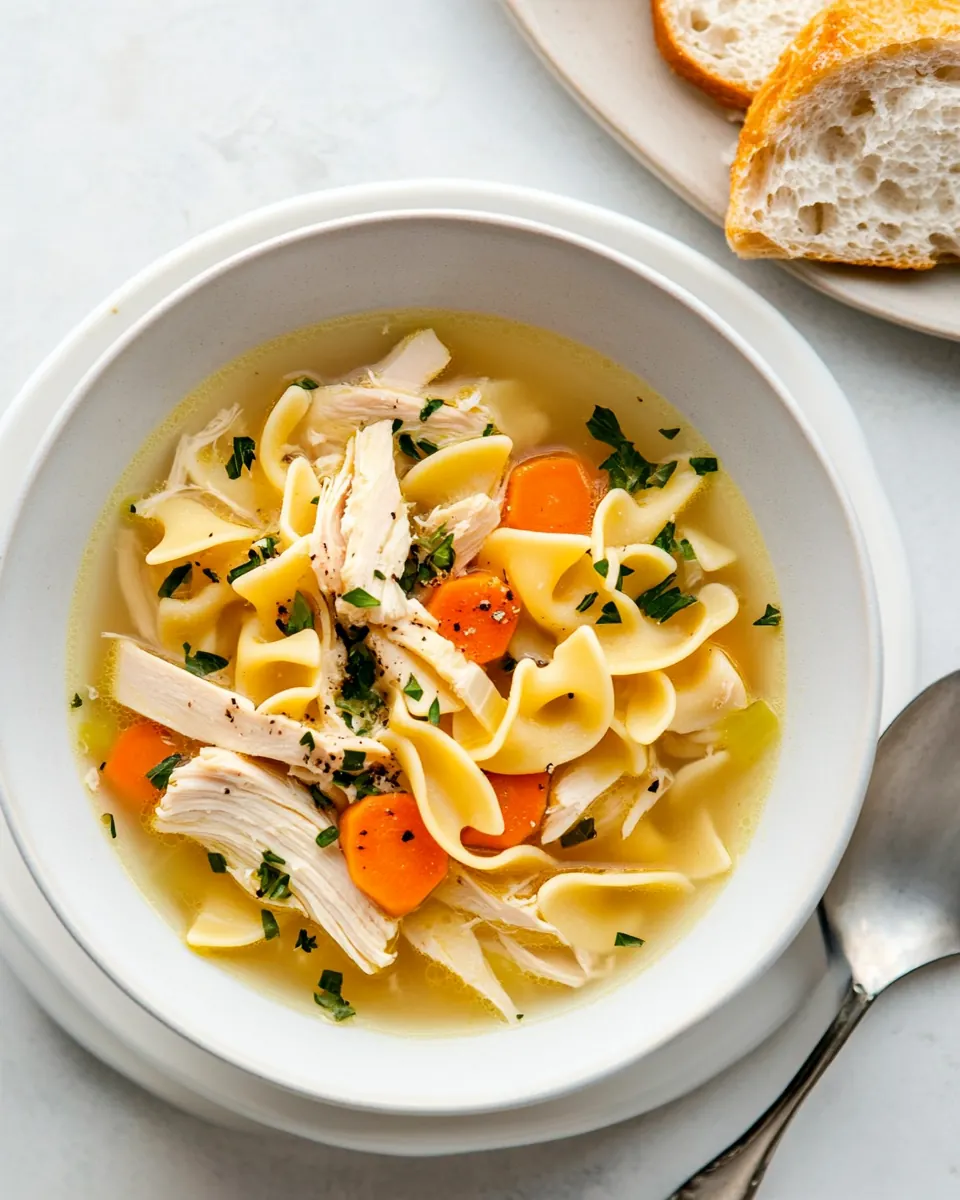
These steps walk you through building flavor from the bottom up, with sensory cues to guide you. I write them as if I am standing beside you, tasting and adjusting, so you can craft a bowl that feels made with intention. Keep a spoon and a thermometer handy for best results.
- Add the oil, butter, onion, carrots, and celery to a soup pot. Sauté over medium-high heat for 5-7 minutes.: The pan should smell bright and vegetal as the olive oil and butter warm. You will hear a quiet sizzle as the diced onion , sliced carrots , and chopped celery meet the fat, and little steam will rise as they begin to soften. This step builds caramelized notes that underpin the broth, making flavors round and layered. If the vegetables brown too quickly, lower the heat to avoid bitter bits, and scrape the bottom to prevent sticking. A common mistake is rushing this step at too high heat, which yields raw centers or burnt edges, so aim for a gentle, steady sauté that leaves the vegetables glossy and slightly translucent.
- Stir in the garlic and cook for 30 seconds or so.: As you stir in the minced garlic , you will smell an immediate perfume of warmth and spice, a sign the aromatics are blooming. The sizzling should be gentle, and the garlic will soften in under a minute, releasing its savory oils. This short, intense moment intensifies the base without introducing bitterness. Garlic cooks fast, so watch it closely, because overcooking makes it taste acrid instead of sweet, which can throw off the whole pot. If you smell any char, lower the heat and add a splash of broth to cool the pan.
- Add in the chicken broth, water, chicken breasts, and Italian seasoning.: When you pour in the chicken broth and water , the pan will release a gentle hiss as the liquid meets the warm base, dissolving browned bits and lifting concentrated flavor into the pot. Nestle the chicken breasts into the simmering liquid and sprinkle the Italian seasoning so its dried herb oils can infuse the broth. This assembly step converts the sautéed aromatics into a cohesive soup, where the chicken imparts savory richness. A mistake to avoid is adding cold chicken straight from the fridge without bringing the pot back to a simmer, which slows the cooking and can make the texture uneven. Ensure the liquid covers the chicken for even cooking.
- Turn the heat up to high and bring the soup to a boil, and once it's boiling, reduce the heat, cover the pot (with the lid slightly ajar), and simmer for 15 minutes.: As the liquid climbs toward a boil you will hear a steady rolling sound, with bubbles rising rhythmically. Bring it up fully so the chicken begins to cook through, then reduce to a gentle simmer where the surface ripples quietly. Leaving the lid slightly ajar controls the intensity, preventing a violent boil that can toughen the chicken and cloud the broth. Simmering allows connective tissues to relax and release flavor without aggressive agitation. One common pitfall is letting the pot roar, which makes the meat firm and the broth murky, so aim for soft, steady heat that yields tender chicken .
- Stir in the noodles and cook for another 8 minutes, with the lid off, stirring occasionally so the noodles don't stick to the bottom of the pot. You may need to turn the heat up a bit again so it's boiling gently.: When you add the egg noodles , the pot will sound livelier as they slip into the simmering liquid. With the lid off you can watch their transformation from stiff to plump and tender. Stirring occasionally prevents clumping and helps the pasta cook evenly while allowing steam to escape so the noodles do not overexpand. The smell will shift toward a fuller, pasta laden aroma as starches leach into the broth, slightly thickening it. A common error is overcooking the noodles until they are mushy, so check a strand early; you want tender yet springy texture. If the broth becomes too absorbent for leftovers, add extra chicken broth before serving.
- Take the chicken out of the pot and cut it up/shred it, then add it back in. It should be cooked through, but you can always give it a few more minutes if it's not (chicken is safe to eat at 165 F).: Removing the chicken to a cutting board reveals its doneness by sight and touch, with juices running clear and the meat firm but yielding. Shredding or dicing produces bite sized pieces that distribute through the soup, creating a pleasing balance in each spoonful. When you return the pieces, they will warm and soak up surrounding broth, integrating texture and flavor. Use an instant read thermometer to confirm the internal temperature is at least 165 F for safety. A typical mistake is leaving large, uneven chunks that cook at different rates, so aim for consistent pieces. If the chicken seems underdone after shredding, slide it back into the simmer briefly until it reaches the safe temperature.
- Season the soup with salt & pepper as needed (I am generous with both) and add in the fresh parsley.: This final touch brightens the entire pot. As you taste, the bowl will reveal whether it needs more salt to lift flavors or more pepper for warmth. Sprinkle the chopped parsley and stir; the fresh herb will add a green, lively note that cuts through the richer elements. Season gradually, because adding too much salt is hard to reverse. A common oversight is over seasoning early, before the noodles soak and the flavors settle, so adjust at the end for the truest balance.
Recipe Notes about Easy Chicken Noodle Soup
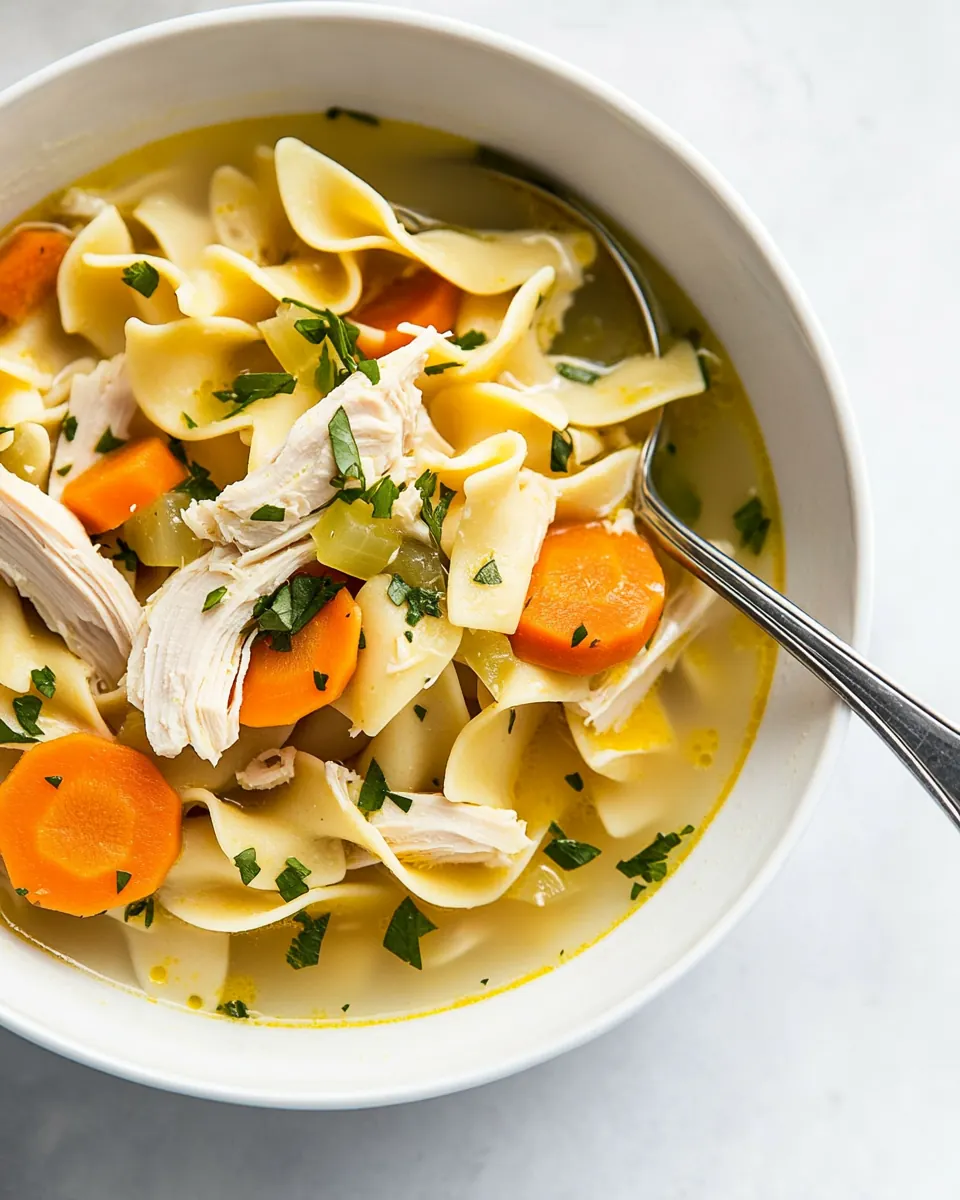
I like to think of these notes as small tricks that make a big difference. They cover timing, texture, and storage so your soup performs well from first simmer to leftover reheats. Use them to refine the details and avoid common pitfalls.
- Serving size guidance, this recipe is flexible; the note about serving 4 to 6 depends on appetite, so plan accordingly and consider extra broth if you expect leftovers to be reheated.
- Using cooked chicken, if you prefer rotisserie chicken, add it near the end to keep it tender, and skip the initial simmer with raw chicken.
- Swapping cuts, thighs can be used in place of chicken breasts for slightly richer flavor and more forgiving cooking times.
- Thermometer recommendation, an instant read is the best way to prevent overcooking; aim for 165 F internal temperature for safety.
- Noodle timing, if you expect leftovers, cook noodles just shy of done or hold them separately to prevent them from soaking up all the broth.
Pairing Suggestions for Easy Chicken Noodle Soup
This is a versatile soup that works for casual lunches, cozy dinners, and family gatherings. Think about simple accompaniments and serving styles that complement the savory broth and tender chicken. I often pair it with a crisp element and something soft to balance textures.
- Crusty bread or rolls make a classic pairing, perfect for dunking and soaking up the broth, adding a hearty contrast to the tender egg noodles.
- Light salad with bright vinaigrette offers a refreshing counterpoint, especially if serving at lunch or alongside heavier mains.
- Family dinner occasions benefit from a large pot served buffet style, letting guests ladle bowls and customize with extra parsley or cracked black pepper.
- Storage tips, cool the soup quickly and refrigerate in a sealed container for up to three days, noting that the egg noodles will absorb broth over time.
- Reheating advice, gently simmer leftovers and add a splash of chicken broth if it seems dry to restore the original consistency.
- Seasonal serving, this soup shines in winter evenings, offering warmth and comfort, but it is welcome any time you want a simple, nourishing meal.
FAQ
Conclusion
This version of Easy Chicken Noodle Soup is special because it combines simple, fresh ingredients into a bowl that feels both restorative and familiar. I hope the sensory cues and practical tips make it easy for you to produce tender chicken, flavorful broth, and perfectly cooked egg noodles every time. Give it a try on a cold evening or whenever you need a comforting meal, and don’t hesitate to personalize the final seasoning to match your family’s taste. Enjoy the warmth and the way a humble pot of soup can bring people together.
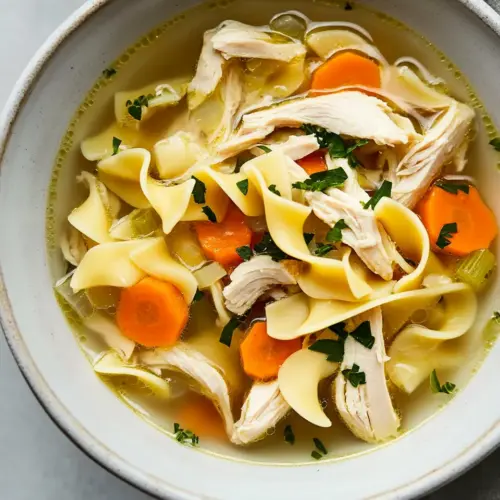
Easy Chicken Noodle Soup
Equipment
- Soup pot
- Knife
- Cutting Board
- Wooden Spoon
- Instant read thermometer
Ingredients
- 1 tablespoon olive oil Sauté to add a fruity, aromatic base and help cook aromatics; warms the pan and contributes healthy fats for flavor integration.
- 1 tablespoon butter Melt to provide richness and a silky mouthfeel; helps brown vegetables slightly and carries butter-soluble flavors into the broth.
- 1 medium onion chopped Chop to offer sweetness and savory depth; softens while simmering to build the soup's foundational savory profile and texture.
- 2 medium carrots peeled & sliced Peel and slice to contribute natural sweetness and body; softens with cooking and adds color and subtle vegetal flavor to the broth.
- 2 sticks celery chopped Chop to supply aromatic crunch and savory backbone; mellows as it simmers and balances the soup's flavor with herbal notes.
- 2 cloves garlic minced Mince to provide a pungent, aromatic kick; releases essential oils when sautéed, enhancing overall savory complexity in the broth.
- 4 cups chicken broth Simmer to form the liquid base that concentrates savory flavors; hydrates noodles and cooks chicken while carrying seasonings throughout.
- 2 cups water Combine to extend the liquid volume and control broth concentration; helps achieve desired soup consistency and cooking temperature.
- 1.5 pounds uncooked chicken breasts boneless skinless Cook to supply tender protein and savory richness; poaches in the broth to release flavor and provide substantial, healthy meat for the soup.
- 1/2 teaspoon Italian seasoning Sprinkle to introduce a mix of dried herbs that add Italian-style warmth; seasons the broth with thyme, oregano, and basil notes.
- 2 cups uncooked egg noodles Boil to add comforting, soft texture and body; absorbs broth flavors and makes the dish a classic, hearty noodle soup.
- Salt & pepper to taste Season to adjust overall flavor balance; enhances taste by bringing out savory, salty, and peppery notes to preference.
- 1 tablespoon fresh parsley chopped Chop to finish with bright, fresh herbal lift; sprinkled at the end for color, freshness, and a subtle parsley aroma.
Instructions
- Add the oil, butter, onion, carrots, and celery to a soup pot. Sauté over medium-high heat for 5-7 minutes.: The pan should smell bright and vegetal as the olive oil and butter warm. You will hear a quiet sizzle as the diced onion , sliced carrots , and chopped celery meet the fat, and little steam will rise as they begin to soften. This step builds caramelized notes that underpin the broth, making flavors round and layered. If the vegetables brown too quickly, lower the heat to avoid bitter bits, and scrape the bottom to prevent sticking. A common mistake is rushing this step at too high heat, which yields raw centers or burnt edges, so aim for a gentle, steady sauté that leaves the vegetables glossy and slightly translucent.
- Stir in the garlic and cook for 30 seconds or so.: As you stir in the minced garlic , you will smell an immediate perfume of warmth and spice, a sign the aromatics are blooming. The sizzling should be gentle, and the garlic will soften in under a minute, releasing its savory oils. This short, intense moment intensifies the base without introducing bitterness. Garlic cooks fast, so watch it closely, because overcooking makes it taste acrid instead of sweet, which can throw off the whole pot. If you smell any char, lower the heat and add a splash of broth to cool the pan.
- Add in the chicken broth, water, chicken breasts, and Italian seasoning.: When you pour in the chicken broth and water , the pan will release a gentle hiss as the liquid meets the warm base, dissolving browned bits and lifting concentrated flavor into the pot. Nestle the chicken breasts into the simmering liquid and sprinkle the Italian seasoning so its dried herb oils can infuse the broth. This assembly step converts the sautéed aromatics into a cohesive soup, where the chicken imparts savory richness. A mistake to avoid is adding cold chicken straight from the fridge without bringing the pot back to a simmer, which slows the cooking and can make the texture uneven. Ensure the liquid covers the chicken for even cooking.
- Turn the heat up to high and bring the soup to a boil, and once it's boiling, reduce the heat, cover the pot (with the lid slightly ajar), and simmer for 15 minutes.: As the liquid climbs toward a boil you will hear a steady rolling sound, with bubbles rising rhythmically. Bring it up fully so the chicken begins to cook through, then reduce to a gentle simmer where the surface ripples quietly. Leaving the lid slightly ajar controls the intensity, preventing a violent boil that can toughen the chicken and cloud the broth. Simmering allows connective tissues to relax and release flavor without aggressive agitation. One common pitfall is letting the pot roar, which makes the meat firm and the broth murky, so aim for soft, steady heat that yields tender chicken .
- Stir in the noodles and cook for another 8 minutes, with the lid off, stirring occasionally so the noodles don't stick to the bottom of the pot. You may need to turn the heat up a bit again so it's boiling gently.: When you add the egg noodles , the pot will sound livelier as they slip into the simmering liquid. With the lid off you can watch their transformation from stiff to plump and tender. Stirring occasionally prevents clumping and helps the pasta cook evenly while allowing steam to escape so the noodles do not overexpand. The smell will shift toward a fuller, pasta laden aroma as starches leach into the broth, slightly thickening it. A common error is overcooking the noodles until they are mushy, so check a strand early; you want tender yet springy texture. If the broth becomes too absorbent for leftovers, add extra chicken broth before serving.
- Take the chicken out of the pot and cut it up/shred it, then add it back in. It should be cooked through, but you can always give it a few more minutes if it's not (chicken is safe to eat at 165 F).: Removing the chicken to a cutting board reveals its doneness by sight and touch, with juices running clear and the meat firm but yielding. Shredding or dicing produces bite sized pieces that distribute through the soup, creating a pleasing balance in each spoonful. When you return the pieces, they will warm and soak up surrounding broth, integrating texture and flavor. Use an instant read thermometer to confirm the internal temperature is at least 165 F for safety. A typical mistake is leaving large, uneven chunks that cook at different rates, so aim for consistent pieces. If the chicken seems underdone after shredding, slide it back into the simmer briefly until it reaches the safe temperature.
- Season the soup with salt & pepper as needed (I am generous with both) and add in the fresh parsley.: This final touch brightens the entire pot. As you taste, the bowl will reveal whether it needs more salt to lift flavors or more pepper for warmth. Sprinkle the chopped parsley and stir; the fresh herb will add a green, lively note that cuts through the richer elements. Season gradually, because adding too much salt is hard to reverse. A common oversight is over seasoning early, before the noodles soak and the flavors settle, so adjust at the end for the truest balance.
Notes
- Serving size guidance, this recipe is flexible; the note about serving 4 to 6 depends on appetite, so plan accordingly and consider extra broth if you expect leftovers to be reheated.
- Using cooked chicken, if you prefer rotisserie chicken, add it near the end to keep it tender, and skip the initial simmer with raw chicken.
- Swapping cuts, thighs can be used in place of chicken breasts for slightly richer flavor and more forgiving cooking times.
- Thermometer recommendation, an instant read is the best way to prevent overcooking; aim for 165 F internal temperature for safety.
- Noodle timing, if you expect leftovers, cook noodles just shy of done or hold them separately to prevent them from soaking up all the broth.