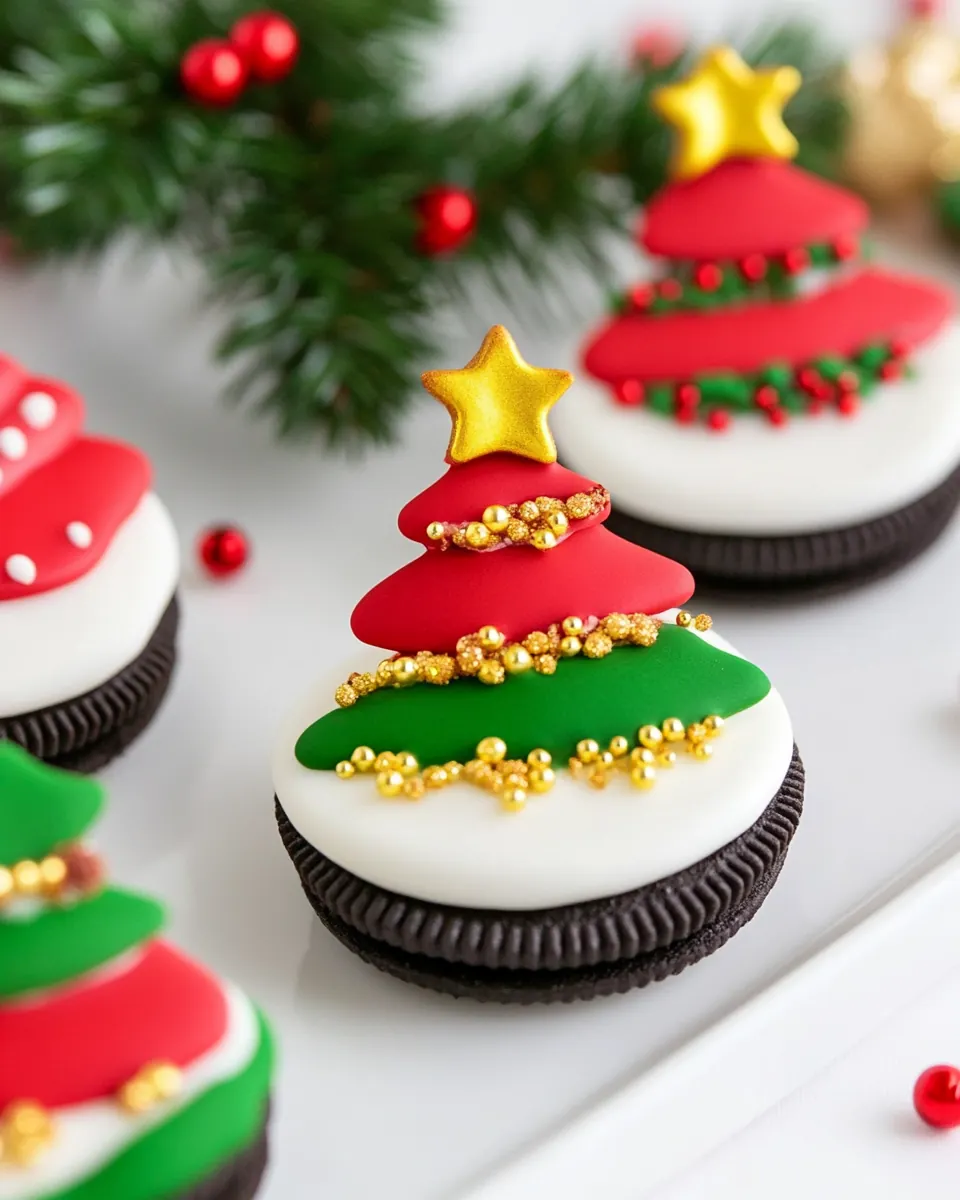
Dipped Oreo Christmas Tree Cookies
Dipped Oreo Christmas Tree Cookies are my go to party treat when I want something festive that feels fancy but is shockingly simple to make. The first time I brought a batch to a holiday cookie swap I felt proud watching people pick them up, eyes lighting at the glossy candy coating and tiny star on top. I remember balancing a tray on my knees as kids argued politely over who would get the last white one, and that cozy chaos is part of why I keep making them each season.
I learned to make these on a snowy afternoon, listening to holiday music while melting candy in small bowls and chatting with a friend on the phone. The act of dipping each Oreo, tapping off the excess coating, and laying them gently on parchment felt almost therapeutic. Decorating with the green icing brought out my playful side, and the tiny sprinkles added that nostalgic crunch that takes you back to childhood cookie decorating sessions.
Recipe Snapshot
1 hr 20 mins
60 mins
20 mins
Medium
150 kcal
American
Keto, Vegan
Desserts
Microwave safe bowls, Toothpicks or forks, Parchment lined baking sheet, Small round piping tip or decorating tube
What Makes This Dipped Oreo Christmas Tree Cookies Special
They look impressive with minimal effort
I love that Dipped Oreo Christmas Tree Cookies feel like a bakery treat, yet require almost no baking skill. The glossy candy coating and neat squiggle of green icing make each cookie feel handcrafted, and guests often assume you spent way more time than you actually did.
Fun to make with kids and friends
I often involve young helpers because there are safe, tactile steps like dipping and sprinkling. It becomes a shared memory, and the process sparks creativity as everyone pipes their own unique tree designs. I do watch for choking risks and keep tiny decor for older kids, but the joy of decorating together is unbeatable.
Customizable for any holiday palette
Changing candy melt colors instantly shifts the theme, so these cookies adapt to your party vibe. I like red and white for classic holidays, while switching to pastel melts creates a spring or birthday version without altering the technique.
Great make ahead and transport
These cookies set firm and travel well when stacked carefully in a single layer. I usually make them a day ahead for gatherings, which helps me relax on the event day while still presenting a fresh looking platter.
Small ingredient list, big payoff
I appreciate that a handful of pantry staples deliver a festive result. With just candy melts, Oreos, icing, and sprinkles, you can produce a platter that reads holiday special, without cluttering your grocery list.
What You Need for Dipped Oreo Christmas Tree Cookies
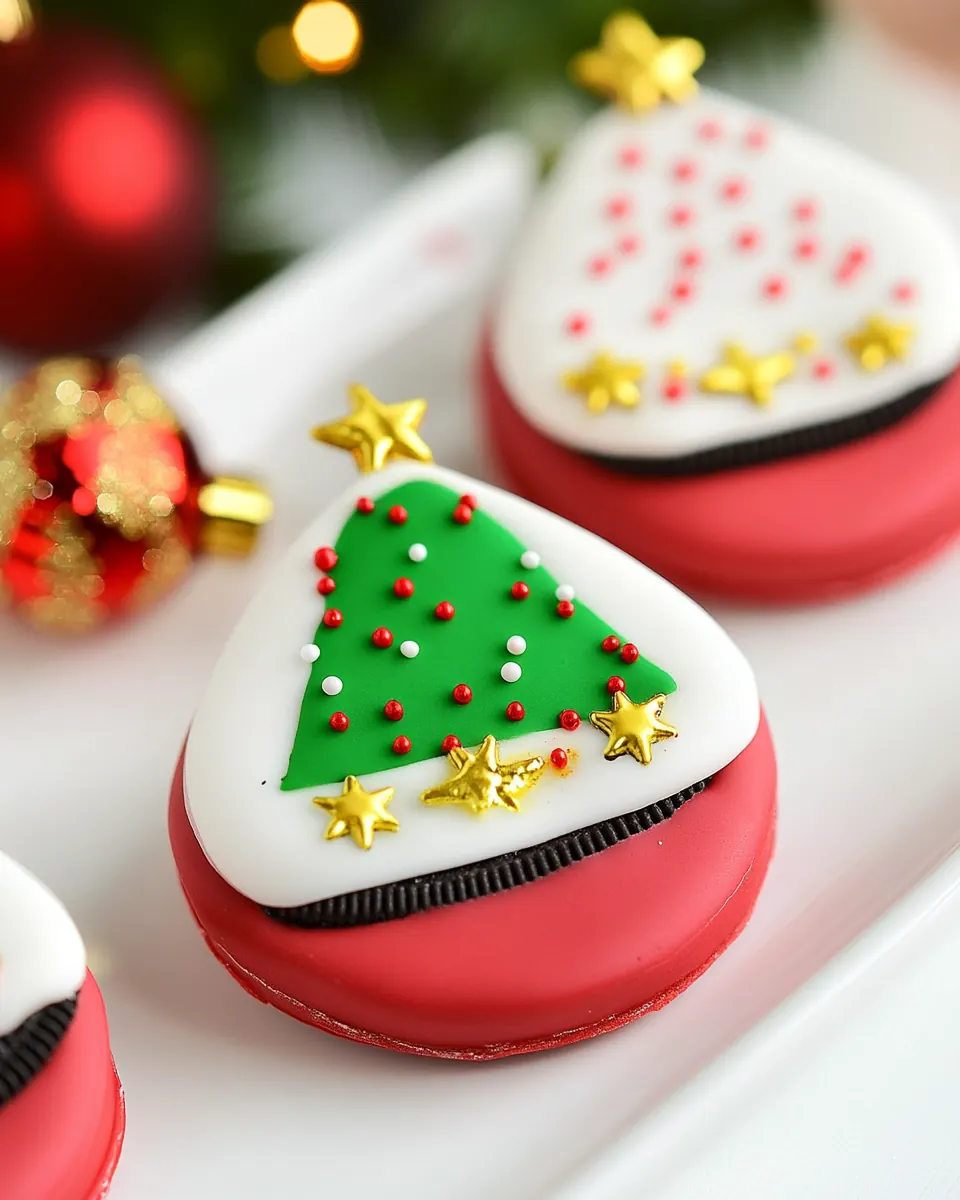
These ingredients are intentionally simple, each playing a clear role. The candy melts become the colorful shell that firms up to hold the decoration, while the Oreo provides a familiar crunchy cream center contrast. The icing and small candies are finishing touches that turn a basic dipped cookie into a festive centerpiece.
- 12 ounces red candy melts: Meltable for coating and creating a smooth, red candy shell; provides color and sweetness when tempered or gently heated and stirred to a glossy consistency. Use microwave-safe intervals or a double boiler to avoid scorching, and maintain fluidity for easy dipping. Ideal for creating festive red sections on cookies and adheres well to cooled surfaces.
- 12 ounces white candy melts: Meltable for coating and creating a bright white candy shell; offers a neutral, sweet contrast and a smooth finish when properly melted and stirred. Use careful gentle heating to prevent graininess and keep it fluid for even dipping coverage. Works well for layering and defining white detail on the cookies.
- 24 Oreo cookies: Dunkable sandwich cookies that serve as the base structure; provide a crunchy, chocolaty center with cream that helps the coating adhere. Handle gently to avoid breaking when dipping into warm melts, and cool on parchment to set the coating. Act as the main edible 'tree' shapes once decorated.
- 1 tube green decorating icing, 4.25 ounces (not "gel" writers): Pipable for adding green decorative details and accents; offers precise control for drawing tree branches, trunks, or zigzag garlands. Use straight from the tube to create raised lines and patterns that contrast with the smooth candy coating. Ideal for quick, no-mess embellishments that set without additional tools.
- 1/4 cup rainbow nonpareil sprinkles: Sparkling textural topper used to add colorful, tiny dots resembling ornaments or snowy flecks; adheres well to wet candy coating for immediate decoration. Sprinkle lightly to avoid clumping and achieve even distribution across cookies. Adds visual interest and festive color pops.
- 24 g old star sprinkles: Shaped star toppers intended to crown each cookie tree; provide focal points with metallic or bright finishes that contrast against green icing. Place immediately on wet icing or candy coating so they stick securely, and use sparingly to maintain balance and avoid overpowering decorations.
How to Assemble Dipped Oreo Christmas Tree Cookies
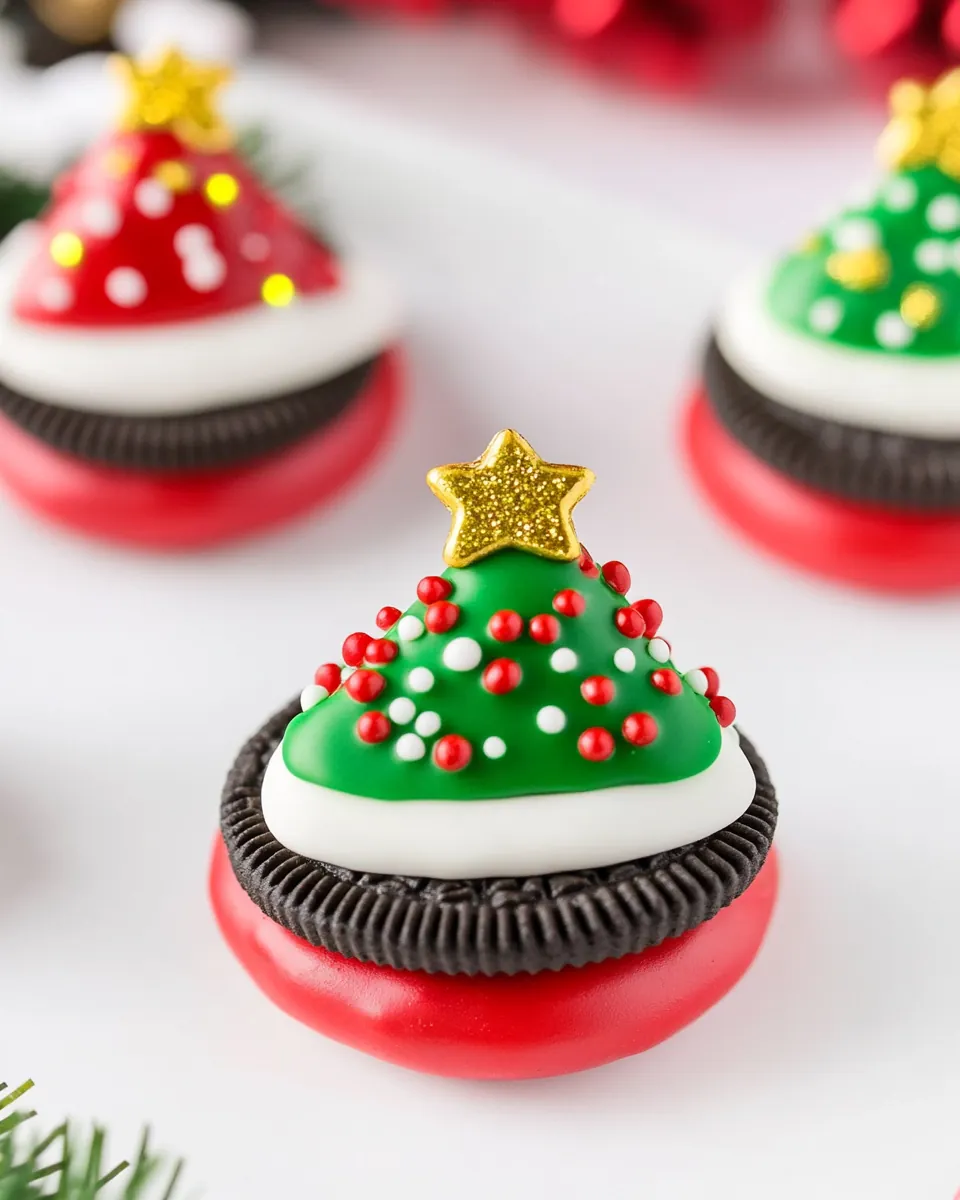
I like to move through these steps deliberately, setting up a clean workspace with parchment and a couple of bowls for melting. Keep paper towels handy, and work in series so one bowl is active while the other stays smooth. Below I expand each direction into sensory cues, troubleshooting, and why each choice matters.
- Place the candy melts in separate bowls and heat, according to package instructions for the microwave or double boiler. Be careful not to overheat or get water into the bowls.: The warm smell of melting candy fills the kitchen and the mixture becomes silky and glossy when fully melted, which is the visual cue you want before dipping. Use low heat, stir frequently to prevent high spots that can scorch, and if you use the microwave, heat in short bursts of about 15 to 20 seconds, stirring between each burst so the chocolate melts evenly. Too high heat or rushing this step often results in grainy texture or separation, so patience here preserves the smooth finish that helps the coating adhere and set properly. If water gets into the bowl while using a double boiler, the candy can seize into a thick paste, which makes it unusable for dipping. To avoid overheating, remove from heat when only a few small unmelted pieces remain, and continue stirring off the heat until smooth.
- Gently insert a toothpick or fork between the two cookie layers. Dip the cookie into the melted candy, coating all sides. Tap off the excess coating and place cookie on parchment-lined baking sheet. Repeat to make 12 red and 12 white dipped cookies.: You will feel a slight resistance as the utensil slips between the cookie faces, and this creates a secure grip for dipping without crushing the cookie. Aim to insert the toothpick close to the edge so you can hold the cookie steady while rotating it in the coating bowl. One common mistake is pushing too deeply and splitting the cookie, so go slowly and test your grip on a single cookie first. This small mechanical step matters because it reduces fingerprints and gives you control when tapping off excess coating, which preserves the neat tree canvas for piping.
- Let the cookies sit until the coating is fully hardened. I like to pop them into the refrigerator for 10-20 minutes to help the coating set.: As you plunge the cookie, you will hear a quiet slosh and see the candy wrap the cookie in a glossy blanket. Rotate the cookie gently to get even coverage, and lift it with a slow, steady motion so a thin film clings instead of a weighty blob. Tap the utensil edge on the bowl to encourage excess to run back in, and then hold the cookie above the bowl for a second before placing it on parchment to avoid pooling. A common pitfall is dipping too quickly or jerking the cookie which causes drips and uneven thickness; aim for smooth, controlled motions for a bakery finish. Proper coverage ensures the icing will adhere well and that the cookie looks pristine for decorating.
- Use a small round piping tip with the tube of green icing to draw a squiggle in the center of the cookie to make a “tree.” Start with a small back and forth motion for the top of the tree, moving in larger swirls down to the tree's base.: The tap releases visual ripples in the coating that level into a satin sheen as they settle, and the contact with parchment avoids sticking. Set each cookie with space between them to prevent touching while the coating firms. If too much coating remains, the cookie will set with drips that obscure the decorating area, so a few firm taps help produce a tidy edge. Avoid moving the cookie once placed until it has started to set, otherwise the glossy surface can mark or collect crumbs.
- Sprinkle nonpareils over the freshly piped icing and place a star candy at the top.: Working in batches keeps the melted candy fluid and allows you to maintain consistent temperature across the set, which affects final gloss. Alternate between bowls if you are worried about one thickening sooner, and use a clean toothpick for each cookie if crumbs are a concern. A typical error is trying to dip too many at once which cools the candy and produces a dull finish, so pacing yourself helps maintain shine and smoothness for the whole platter.
- Store cookies in a single layer in airtight containers at room temperature for 1-2 weeks.: When the coating is set, it will feel firm to the touch and will no longer glisten wetly, that is your cue to move to decorating. I often chill them in the refrigerator for 10 to 20 minutes to speed this stage and to ensure the icing adheres cleanly, but rapid cooling can sometimes produce faint bloom lines on the surface, which do not affect taste. One mistake to avoid is stacking cookies while the coating is still tacky, which can ruin the finish and smash decorations. Properly hardened shells make piping easier and keep sprinkles from sinking into soft candy.
- Use a small round piping tip with the tube of green icing to draw a squiggle in the center of the cookie to make a “tree”: As you squeeze the tube, you will see a steady ribbon of icing form, and the tactile resistance helps you control the movement as you create progressively larger loops down the cookie for a tree silhouette. Start with short back and forth motions for the top and gradually widen your strokes for the base, letting the icing nestle atop the candy shell. The contrast between the smooth coating and the piped texture is satisfying visually and texturally. A common slip is overpressing the tube which creates thick blobs instead of a neat squiggle, so practice a few test lines on parchment if you want confidence before decorating the cookies.
- Sprinkle nonpareils over the freshly piped icing and place a star candy at the top: The sprinkles should catch and adhere to the wet icing, creating tiny pops of color that mimic ornaments, and the little star crowns the tree. I like to hold the cookie over a small dish while sprinkling to catch extras for reuse. If you wait too long and the icing firms, the sprinkles won’t stick well, so timing is key. Another mistake is using too many sprinkles which can overwhelm the tree shape; aim for a light, balanced scatter for the best visual appeal.
- Store cookies in a single layer in airtight containers at room temperature for 1 to 2 weeks: Proper storage keeps the candy shell crisp and the cookie interior stable, and the airtight environment prevents stale air from softening the crunch. I place parchment layers between tiers if I must stack, but single layer storage is ideal for presentation. Avoid refrigerating long term, as condensation can affect the coating if moved back to room temperature. A typical storage error is crowding the container, which can cause decoration transfer, so keep cookies separated when possible.
Recipe Variations about Dipped Oreo Christmas Tree Cookies
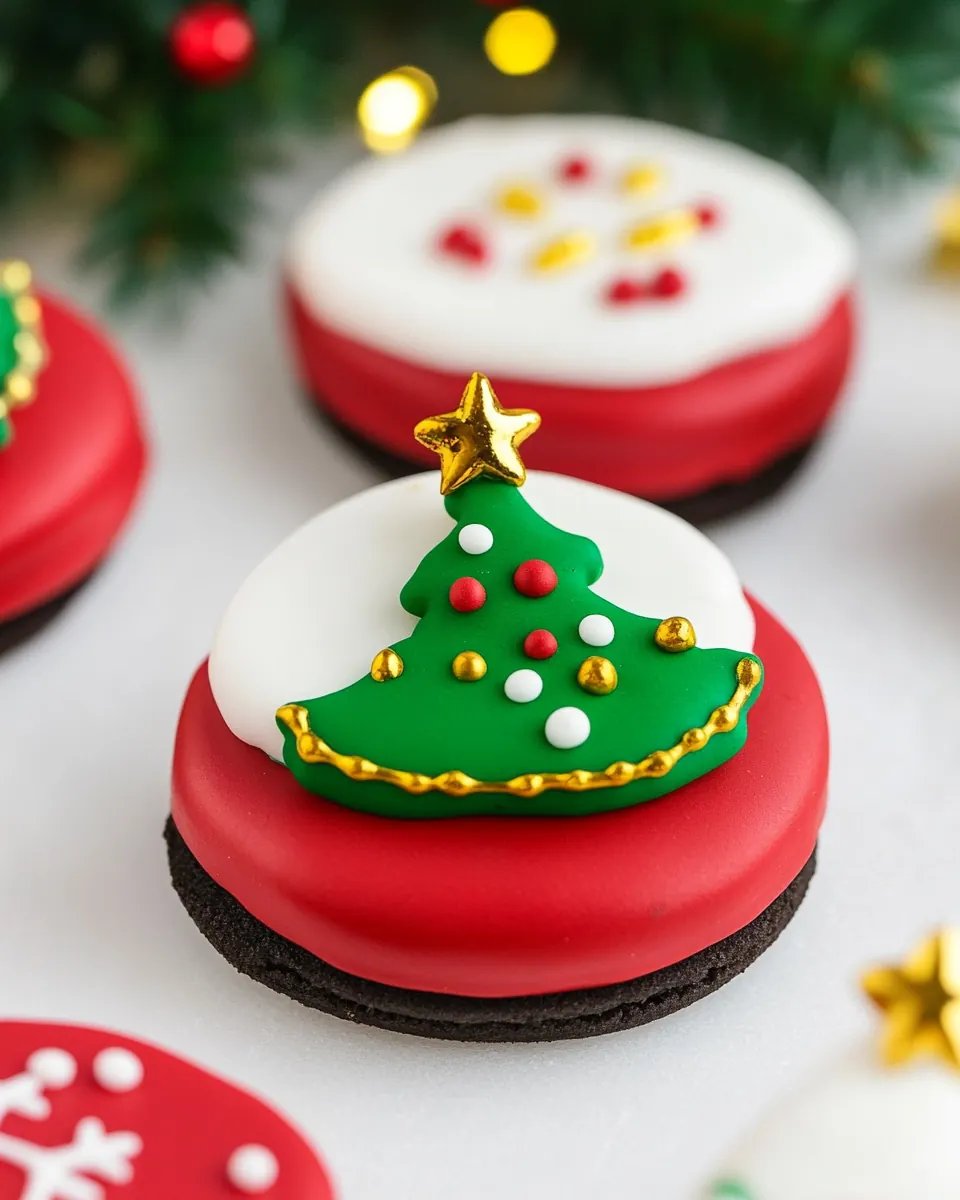
These ideas help you adapt the recipe for different looks and situations, while keeping the core technique intact. Each tip below highlights a simple change that transforms presentation or ease of making.
- Color swap: Use different candy melt colors to match any party palette, such as pastels for a spring theme or metallics for an elegant dessert table.
- Mini cookie version: Try using sandwich mini cookies for bite sized party nibbles, keeping in mind smaller cookies set faster and require gentler handling.
- Textured finish: After dipping, drag the back of a fork gently across the coating for subtle ridges that catch light and add a handcrafted look.
- Semi sweet twist: Mix a small amount of dark colored candy melts into white for a marbled effect that adds depth without changing the technique.
- Make ahead: Complete decoration up to three days in advance and store in a single layer to keep them fresh for your event.
- Kid friendly setup: Preportion sprinkles into small cups and let kids decorate while you control the piping, which reduces mess and speeds assembly.
What Complements This Dipped Oreo Christmas Tree Cookies
These cookies are a festive snack that pairs well with many occasions, especially gatherings and holiday buffets. Serve them on dessert platters, add to cookie exchange boxes, or tuck into treat bags for party favors. They are versatile, travel well, and fit both casual and more polished spreads.
- Holiday cookie platters: Arrange Dipped Oreo Christmas Tree Cookies alongside other small cookies for visual contrast, using tiers or decorative plates for impact.
- Party favors: Wrap individual cookies in clear cello and tie with ribbon for easy giveaways at parties or school events.
- Beverage pairings: Offer warm drinks like hot cocoa or spiced tea nearby, the sweet crunch complements a creamy beverage and rounds out a cozy snack setup.
- Occasions: Perfect for holiday cookie swaps, classroom parties, or as a simple dessert for family gatherings during winter and Christmas celebrations.
- Storage tips: Keep cookies at room temperature in airtight containers in a single layer for up to 1 to 2 weeks, and avoid stacking while decorations are still tacky.
- Seasonal pairings: The red white and green palette reads festive in winter, but swapping colors makes them suitable year round for birthdays or themed events.
FAQ
Conclusion
What makes this recipe special is its charming presentation paired with a very approachable technique. The combination of glossy candy shells, playful piped green trees, and tiny sprinkles creates a festive treat that looks like it came from a bakery, yet it is simple enough to make with kids or last minute for a party. Try these cookies at your next holiday gathering, a cookie swap, or as a sweet homemade gift, and enjoy how such a short list of steps yields a big smile around the table.

Dipped Oreo Christmas Tree Cookies
Equipment
- Microwave safe bowls
- Toothpicks or forks
- Parchment lined baking sheet
- Small round piping tip or decorating tube
Ingredients
- 12 ounces red candy melts Meltable for coating and creating a smooth, red candy shell; provides color and sweetness when tempered or gently heated and stirred to a glossy consistency. Use microwave-safe intervals or a double boiler to avoid scorching, and maintain fluidity for easy dipping. Ideal for creating festive red sections on cookies and adheres well to cooled surfaces.
- 12 ounces white candy melts Meltable for coating and creating a bright white candy shell; offers a neutral, sweet contrast and a smooth finish when properly melted and stirred. Use careful gentle heating to prevent graininess and keep it fluid for even dipping coverage. Works well for layering and defining white detail on the cookies.
- 24 Oreo cookies Dunkable sandwich cookies that serve as the base structure; provide a crunchy, chocolaty center with cream that helps the coating adhere. Handle gently to avoid breaking when dipping into warm melts, and cool on parchment to set the coating. Act as the main edible 'tree' shapes once decorated.
- 1 tube green decorating icing, 4.25 ounces (not "gel" writers) Pipable for adding green decorative details and accents; offers precise control for drawing tree branches, trunks, or zigzag garlands. Use straight from the tube to create raised lines and patterns that contrast with the smooth candy coating. Ideal for quick, no-mess embellishments that set without additional tools.
- 1/4 cup rainbow nonpareil sprinkles Sparkling textural topper used to add colorful, tiny dots resembling ornaments or snowy flecks; adheres well to wet candy coating for immediate decoration. Sprinkle lightly to avoid clumping and achieve even distribution across cookies. Adds visual interest and festive color pops.
- 24 g old star sprinkles Shaped star toppers intended to crown each cookie tree; provide focal points with metallic or bright finishes that contrast against green icing. Place immediately on wet icing or candy coating so they stick securely, and use sparingly to maintain balance and avoid overpowering decorations.
Instructions
- Place the candy melts in separate bowls and heat, according to package instructions for the microwave or double boiler. Be careful not to overheat or get water into the bowls.: The warm smell of melting candy fills the kitchen and the mixture becomes silky and glossy when fully melted, which is the visual cue you want before dipping. Use low heat, stir frequently to prevent high spots that can scorch, and if you use the microwave, heat in short bursts of about 15 to 20 seconds, stirring between each burst so the chocolate melts evenly. Too high heat or rushing this step often results in grainy texture or separation, so patience here preserves the smooth finish that helps the coating adhere and set properly. If water gets into the bowl while using a double boiler, the candy can seize into a thick paste, which makes it unusable for dipping. To avoid overheating, remove from heat when only a few small unmelted pieces remain, and continue stirring off the heat until smooth.
- Gently insert a toothpick or fork between the two cookie layers. Dip the cookie into the melted candy, coating all sides. Tap off the excess coating and place cookie on parchment-lined baking sheet. Repeat to make 12 red and 12 white dipped cookies.: You will feel a slight resistance as the utensil slips between the cookie faces, and this creates a secure grip for dipping without crushing the cookie. Aim to insert the toothpick close to the edge so you can hold the cookie steady while rotating it in the coating bowl. One common mistake is pushing too deeply and splitting the cookie, so go slowly and test your grip on a single cookie first. This small mechanical step matters because it reduces fingerprints and gives you control when tapping off excess coating, which preserves the neat tree canvas for piping.
- Let the cookies sit until the coating is fully hardened. I like to pop them into the refrigerator for 10-20 minutes to help the coating set.: As you plunge the cookie, you will hear a quiet slosh and see the candy wrap the cookie in a glossy blanket. Rotate the cookie gently to get even coverage, and lift it with a slow, steady motion so a thin film clings instead of a weighty blob. Tap the utensil edge on the bowl to encourage excess to run back in, and then hold the cookie above the bowl for a second before placing it on parchment to avoid pooling. A common pitfall is dipping too quickly or jerking the cookie which causes drips and uneven thickness; aim for smooth, controlled motions for a bakery finish. Proper coverage ensures the icing will adhere well and that the cookie looks pristine for decorating.
- Use a small round piping tip with the tube of green icing to draw a squiggle in the center of the cookie to make a “tree.” Start with a small back and forth motion for the top of the tree, moving in larger swirls down to the tree's base.: The tap releases visual ripples in the coating that level into a satin sheen as they settle, and the contact with parchment avoids sticking. Set each cookie with space between them to prevent touching while the coating firms. If too much coating remains, the cookie will set with drips that obscure the decorating area, so a few firm taps help produce a tidy edge. Avoid moving the cookie once placed until it has started to set, otherwise the glossy surface can mark or collect crumbs.
- Sprinkle nonpareils over the freshly piped icing and place a star candy at the top.: Working in batches keeps the melted candy fluid and allows you to maintain consistent temperature across the set, which affects final gloss. Alternate between bowls if you are worried about one thickening sooner, and use a clean toothpick for each cookie if crumbs are a concern. A typical error is trying to dip too many at once which cools the candy and produces a dull finish, so pacing yourself helps maintain shine and smoothness for the whole platter.
- Store cookies in a single layer in airtight containers at room temperature for 1-2 weeks.: When the coating is set, it will feel firm to the touch and will no longer glisten wetly, that is your cue to move to decorating. I often chill them in the refrigerator for 10 to 20 minutes to speed this stage and to ensure the icing adheres cleanly, but rapid cooling can sometimes produce faint bloom lines on the surface, which do not affect taste. One mistake to avoid is stacking cookies while the coating is still tacky, which can ruin the finish and smash decorations. Properly hardened shells make piping easier and keep sprinkles from sinking into soft candy.
- Use a small round piping tip with the tube of green icing to draw a squiggle in the center of the cookie to make a “tree”: As you squeeze the tube, you will see a steady ribbon of icing form, and the tactile resistance helps you control the movement as you create progressively larger loops down the cookie for a tree silhouette. Start with short back and forth motions for the top and gradually widen your strokes for the base, letting the icing nestle atop the candy shell. The contrast between the smooth coating and the piped texture is satisfying visually and texturally. A common slip is overpressing the tube which creates thick blobs instead of a neat squiggle, so practice a few test lines on parchment if you want confidence before decorating the cookies.
- Sprinkle nonpareils over the freshly piped icing and place a star candy at the top: The sprinkles should catch and adhere to the wet icing, creating tiny pops of color that mimic ornaments, and the little star crowns the tree. I like to hold the cookie over a small dish while sprinkling to catch extras for reuse. If you wait too long and the icing firms, the sprinkles won’t stick well, so timing is key. Another mistake is using too many sprinkles which can overwhelm the tree shape; aim for a light, balanced scatter for the best visual appeal.
- Store cookies in a single layer in airtight containers at room temperature for 1 to 2 weeks: Proper storage keeps the candy shell crisp and the cookie interior stable, and the airtight environment prevents stale air from softening the crunch. I place parchment layers between tiers if I must stack, but single layer storage is ideal for presentation. Avoid refrigerating long term, as condensation can affect the coating if moved back to room temperature. A typical storage error is crowding the container, which can cause decoration transfer, so keep cookies separated when possible.
Notes
- Color swap: Use different candy melt colors to match any party palette, such as pastels for a spring theme or metallics for an elegant dessert table.
- Mini cookie version: Try using sandwich mini cookies for bite sized party nibbles, keeping in mind smaller cookies set faster and require gentler handling.
- Textured finish: After dipping, drag the back of a fork gently across the coating for subtle ridges that catch light and add a handcrafted look.
- Semi sweet twist: Mix a small amount of dark colored candy melts into white for a marbled effect that adds depth without changing the technique.
- Make ahead: Complete decoration up to three days in advance and store in a single layer to keep them fresh for your event.
- Kid friendly setup: Preportion sprinkles into small cups and let kids decorate while you control the piping, which reduces mess and speeds assembly.