Raspberry Donuts
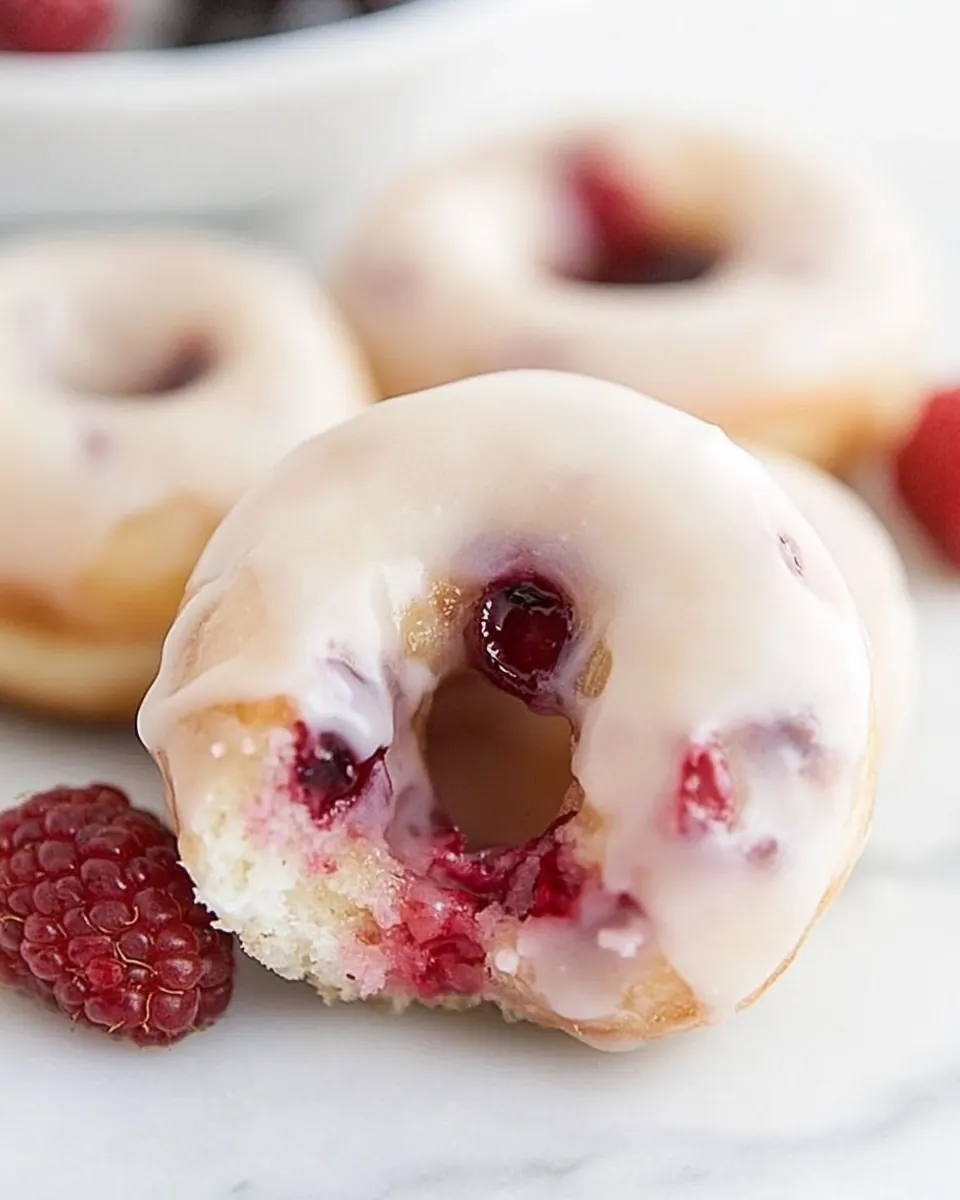
Raspberry Donuts have a way of showing up on my kitchen counter like a small celebration, each ring promising a soft crumb and a bright burst of fruit.
One rainy afternoon I decided to swap out the usual coffee cake for something nostalgic and hands on. I grew up with simple treats made from pantry staples, and these Raspberry Donuts felt like that but fresher, thanks to the tang of real raspberries folded straight into the batter. I remember leaning over the mixing bowl, laughing at the way the batter clung to my spoon, and how the scent of baking coconut oil warmed the whole house.
Later that week I made them again, this time with a neighbor stopping by. We dipped a donut and she closed her eyes, saying it tasted like summer. That moment convinced me that these are not just weekend treats, they are a recipe to pull out when you want to impress without fuss. The glaze, with its powdered sugar sheen, feels indulgent but actually keeps things light, letting the raspberries sing.
Recipe Snapshot
20 mins
5 mins
15 mins
Easy
220 kcal
American
Gluten-Free, Vegan
Desserts
Donut pan, Mixing bowl, Ziplock bag, Wire rack, Whisk
Why You’ll Love This Raspberry Donuts
They are refreshingly simple to make
I love how approachable these Raspberry Donuts are. With pantry friendly staples like self rising flour, powdered sugar, and a splash of milk, you can get from mixing bowl to hot from the oven in under an hour. That ease matters on busy mornings, or when you want a last minute treat for friends.
Raspberries add natural brightness
Using fresh raspberries gives you pockets of tartness that cut through the sweetness of the glaze. I find that fruit folded in at the end prevents the batter from turning a uniform pink, creating delightful speckles of berry on every bite. It is a freshness boost you can taste, not just see.
Texture is everything
The combination of self rising flour and just enough coconut oil keeps the crumb tender yet sturdy enough to hold glaze. I love the contrast between the soft interior and the glossy, slightly crusted glaze. That mouthfeel makes you come back for another piece, and I often catch myself planning the second batch while the first cools.
Glaze is forgiving and customizable
The powdered sugar glaze mixed with a touch of milk and vanilla extract is quick to whisk together, and you can control the thickness spoon by spoon. Thicker glaze clings prettily to the edges, while thinner runs into pretty drips. I appreciate how forgiving it is, especially if you are juggling kids or guests.
Perfect for many occasions
These Raspberry Donuts work as a weekend breakfast or a sweet treat for afternoon tea. They are simple enough for casual moments, yet pretty enough for gatherings. I find myself making them for small celebrations because everyone feels special biting into something homemade.
Raspberry Donuts Ingredients
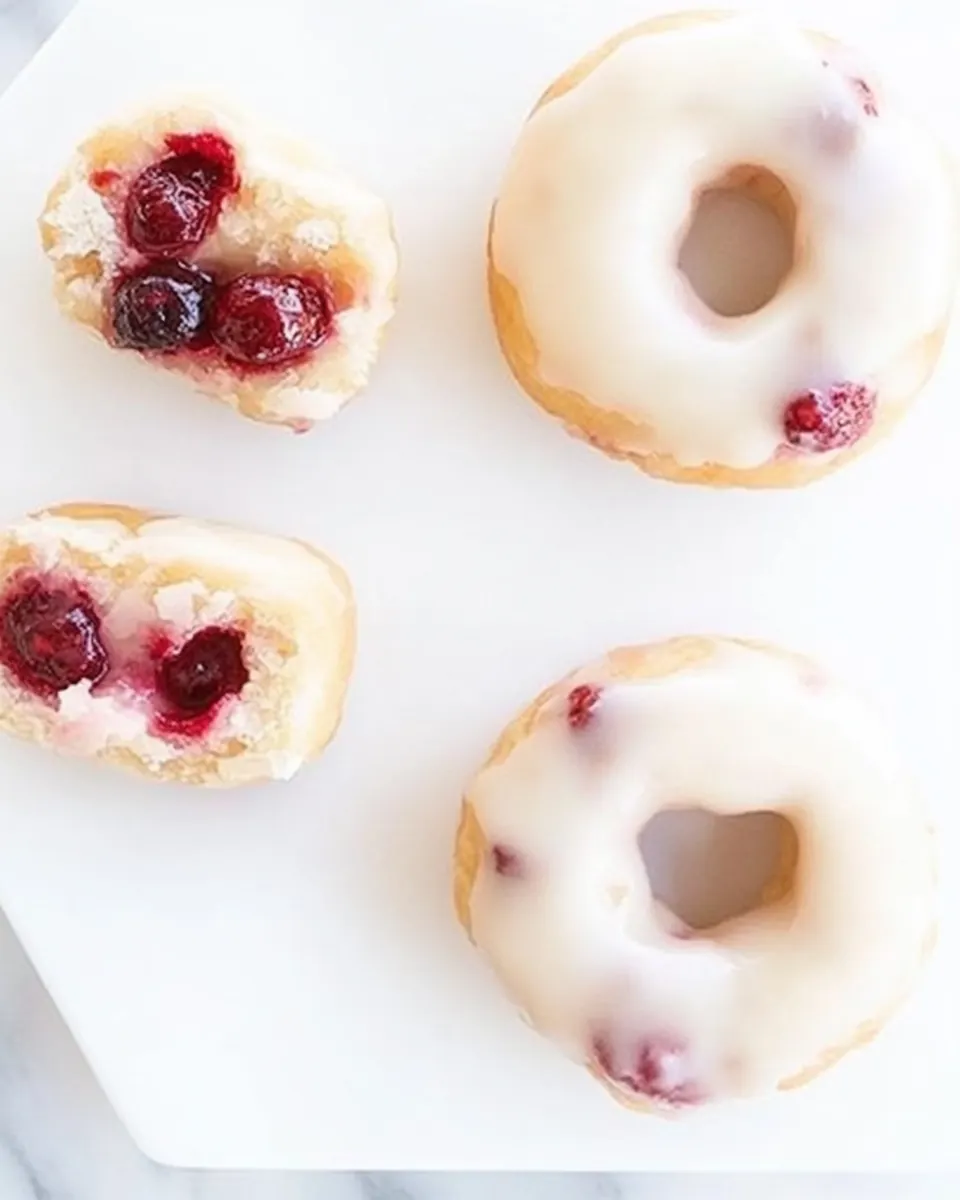
The ingredients here are humble yet purposeful. I lean on a few key players to deliver texture, flavor, and ease. The self rising flour provides lift without measuring separate leavening, while the agave nectar and powdered sugar balance sweetness in batter and glaze. Coconut oil adds tender crumb and subtle richness, and fresh raspberries give bright pops of fruit throughout.
- 2 1/2 cups self-rising flour: Provide structure and leavening to the donuts by using self–rising flour, which already contains baking powder and salt to help the dough rise evenly. It combines with liquids and fats to form the batter's gluten network while keeping the texture tender when not overworked. Measure precisely to maintain proper balance between wet and dry ingredients for consistent donut shape and crumb.
- 1/2 cup agave nectar can substitute for pure maple syrup: Sweeten and lightly moisten the batter using agave nectar, offering a milder sweetness and a smooth mouthfeel compared with granulated sugar. Substitute option notes that pure maple syrup can be used for a different flavor profile while preserving liquid balance in the recipe. Add gradually and taste the batter if adjusting to ensure sweetness and texture remain balanced.
- 1/4 cup coconut oil: Contribute richness and tenderness to the donuts through melted or softened coconut oil, which adds a subtle coconut aroma and helps create a moist crumb. Act as the fat that coats flour proteins, limiting gluten formation and resulting in a softer texture. Use measured amount to avoid greasiness and maintain proper batter consistency.
- 1 cup milk of choice: Hydrate the dry ingredients and activate any leavening while providing additional flavor depending on the type chosen, as milk of choice can range from dairy to plant-based alternatives. Help determine batter thickness and final crumb tenderness, so choose a milk with similar fat content to the original for consistent results. Warm slightly if using coconut oil to ensure smooth incorporation.
- 1/4 cup raspberries: Introduce fresh raspberry flavor and natural fruit moisture to the batter or garnish, imparting tartness, color, and small bursts of juice when bitten. Mash or fold gently to distribute without overworking the batter, which could cause excessive moisture pockets or color streaking. Reserve a few for topping if desired to enhance visual appeal and fresh flavor.
- 2 cups powdered sugar: Create a smooth, sweet glaze or dusting that adds sweetness and a delicate finish to the donuts, dissolving easily when mixed with liquid. Sift before mixing to remove lumps and combine with small amounts of milk or flavoring to achieve the desired consistency for dipping or drizzling. Adjust quantity for thicker coating or lighter dusting according to preference.
- 1 teaspoon vanilla extract: Enhance aroma and deepen the overall flavor profile by adding vanilla extract, which complements the raspberries and sweeteners. Use a measured teaspoon to avoid overpowering delicate fruit notes while providing a rounded, familiar sweetness. Stir in with wet ingredients to evenly distribute its flavor throughout the batter.
- 1 3 tablespoons milk * See notes: Adjust glaze or batter consistency by adding one to three tablespoons of milk as noted, allowing fine-tuning for desired thickness in icing or moisture in batter. Start with the smaller amount and increase gradually until the glaze pours smoothly or the batter achieves correct viscosity. Consider milk choice impact on flavor and texture when making final adjustments.
Step by Step Guide for Raspberry Donuts
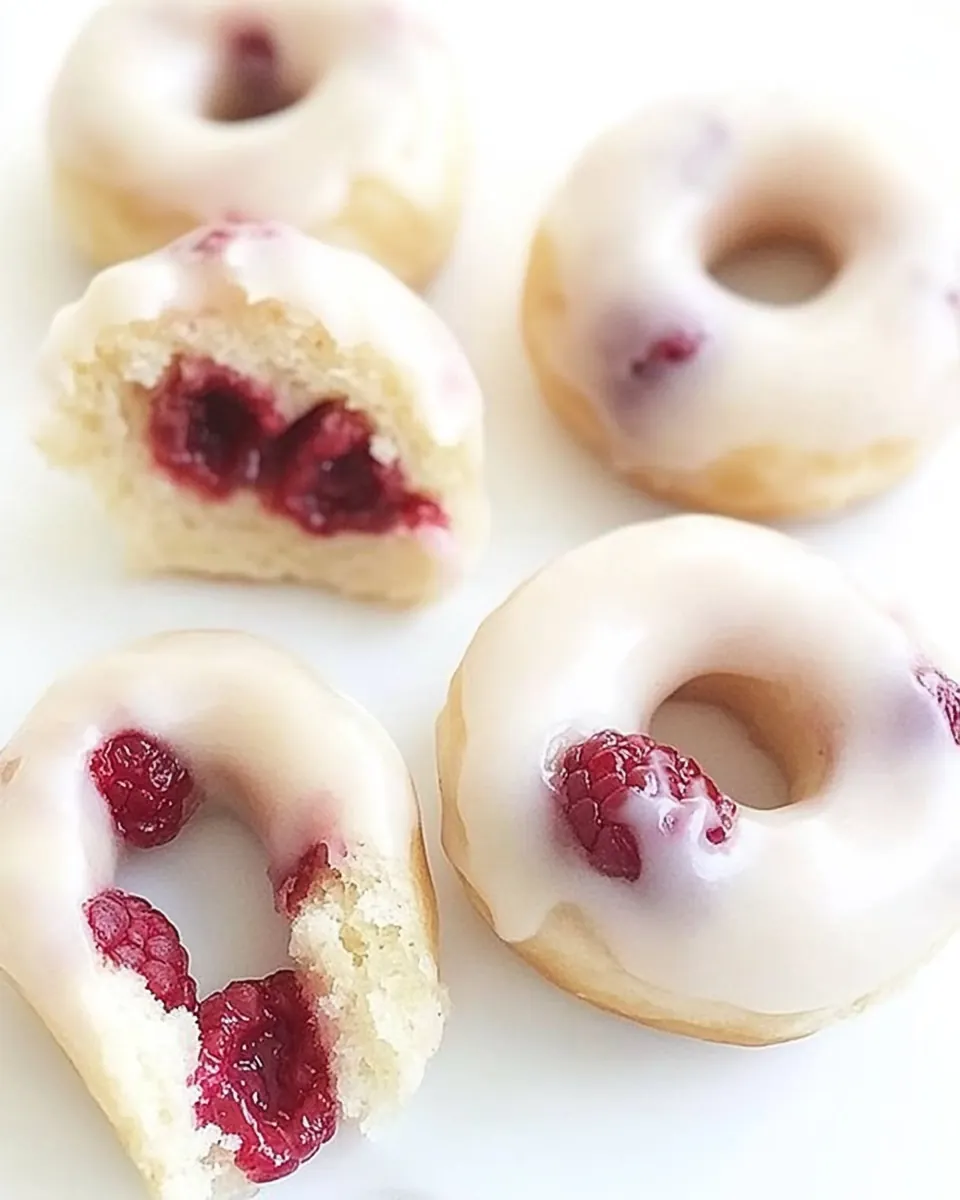
These directions will walk you from preheating the oven to the final glaze drizzle. Take your time with each sensory cue and enjoy the small wins along the way, like the first scent of baking and the glossy sheen of the glaze.
- Preheat the oven to 180 C/350 F. Coat a 12-count donut pan with cooking spray and set aside.: Warmth should fill the kitchen, and you will notice a subtle change in the air when the oven reaches temperature, signaling that baking chemistry is ready to begin. This step ensures even rise and predictable bake times. If you skip a full preheat, the donuts may bake unevenly, with dense centers. Use an oven thermometer if your oven runs hot or cool, since temperature variances change browning and texture.
- Sift your flour into a large mixing bowl. Add the rest of the ingredients, except the raspberries, and mix until a thick dough remains. Fold through the raspberries.: The slick surface will let the donuts release cleanly, and you might hear the faint hiss when the spray hits the warm pan if it is already in the oven. Proper coating prevents sticking and preserves the donut shape. Avoid overfilling cavities with excess oil, which can cause pooling and uneven browning; a light, even coating is best.
- Pour the donut batter into a large ziplock bag. Cut off one corner of the bag and pipe out the donut batter into the donut pan. Lightly wet your hands and shape into the donut cavities. Do not overfill.: Sifting aerates the self rising flour , creating a lighter base. You will see a fluffy white mound form, and it invites the other ingredients to combine more smoothly. If you skip sifting, you risk lumps and uneven distribution of the rising agents. Use a whisk to further break up pockets, and mix gently to avoid overworking gluten.
- Bake for 12-15 minutes, or until just done, and a skewer comes out just clean. Allow cooling in the pan for 5 minutes, before transferring to a wire rack to cool completely.: As you add agave nectar , melted coconut oil , and milk , the batter will transform from dry to glossy and cohesive. Listen for the soft drag of the spoon and watch for streaks to disappear, indicating uniform mixing. Overmixing makes the texture tough, so stop as soon as the dough comes together into a thick consistency.
- Make the glaze. Add 1 tablespoon of the milk and vanilla extract to the powdered sugar and mix well. Slowly add more milk, one teaspoon at a time, until a glaze remains.: Folding keeps the raspberries intact, delivering bursts of color and tartness without turning the batter pink. You should see flecks of red distributed evenly, and smell the fruity brightness. Aggressive stirring crushes the berries, releasing moisture that can thin the batter and muddy the crumb, so fold gently with a spatula.
- Once cool, drizzle each donut in glaze.: The bag helps you pipe neat rings and keeps hands cleaner; you will feel the weight of the batter shift as you squeeze. Once transferred, seal and snip a corner to create a makeshift piping bag. If the hole is too large, the batter will flow too quickly and overfill the pan; too small and it will be hard to pipe evenly.
- Cut off one corner of the bag and pipe out the donut batter into the donut pan: Watch the batter form clean rings that settle into each cavity, and if needed, lightly wet your hands to nudge batter into perfect shapes. The sound is quiet and tactile, a soft plop as each cavity fills. Avoid overfilling, which leads to misshapen, spilling donuts that will bake into uneven edges and may stick to the pan.
- Lightly wet your hands and shape into the donut cavities: A damp fingertip smooths tops and ensures uniform rings, helping trapped air escape for an even rise. The touch is important to feel if the batter needs slight redistribution. Too much water will make the surface globby and cause the batter to spread, so use minimal moisture and gentle shaping.
- Do not overfill: Slightly under the brim is ideal, as the batter will rise modestly and keep the classic donut silhouette. Watch for the batter to settle into the cavity but not spill over the edges. Overfilled cavities can merge and form peaks that brown irregularly and make the donuts harder to remove from the pan.
- Bake for 12 to 15 minutes, or until just done, and a skewer comes out just clean: The oven will fill with a warm, sweet aroma and the edges will just begin to set, showing a faint golden tint. A clean skewer tells you the interior is baked through without drying out. If you leave them too long they will lose moisture and become cakey, so test early and often within the time window.
- Allow cooling in the pan for 5 minutes, before transferring to a wire rack to cool completely: The brief rest lets the donuts firm up so they release easily, and you will notice steam lifting when you move them, a sign of retained moisture. Transferring to a wire rack prevents condensation and keeps bottoms from becoming soggy. Leaving them too long in the pan can trap steam, softening the exterior and dulling the final texture.
- Make the glaze: Mixing 1 tablespoon of the milk with vanilla extract into the powdered sugar creates a shiny, smooth glaze that clings and sets attractively. Start with less liquid and whisk until velvety, adding more milk one teaspoon at a time to reach the right flow. Adding too much milk at once will make the glaze runny and unable to coat fully.
- Add 1 tablespoon of the milk and vanilla extract to the powdered sugar and mix well: The first tablespoon helps hydrate the sugar and eliminate lumps, and the vanilla lifts the overall flavor. You will hear the whisk and see a thick paste form before you thin it. If lumps persist, strain for a silky finish; failing to do so can leave gritty pockets in the glaze.
- Slowly add more milk, one teaspoon at a time, until a glaze remains: This careful approach ensures control over consistency, letting you achieve glaze that either clings or drips, depending on your preference. A perfect glaze will coat the spoon and drip slowly back. Rushing with larger quantities will make the glaze too thin and watery, ruining the look and cling of the final finish.
- Once cool, drizzle each donut in glaze: The moment of truth is both tactile and aromatic as the glaze settles, creating bright, glossy tops that catch the light. Use a fork or spoon to drizzle, and allow excess to run off onto the rack below. Glazing donuts while still warm can cause the glaze to slide off, so ensure they are fully cool for best adherence.
Expert Tips about Raspberry Donuts
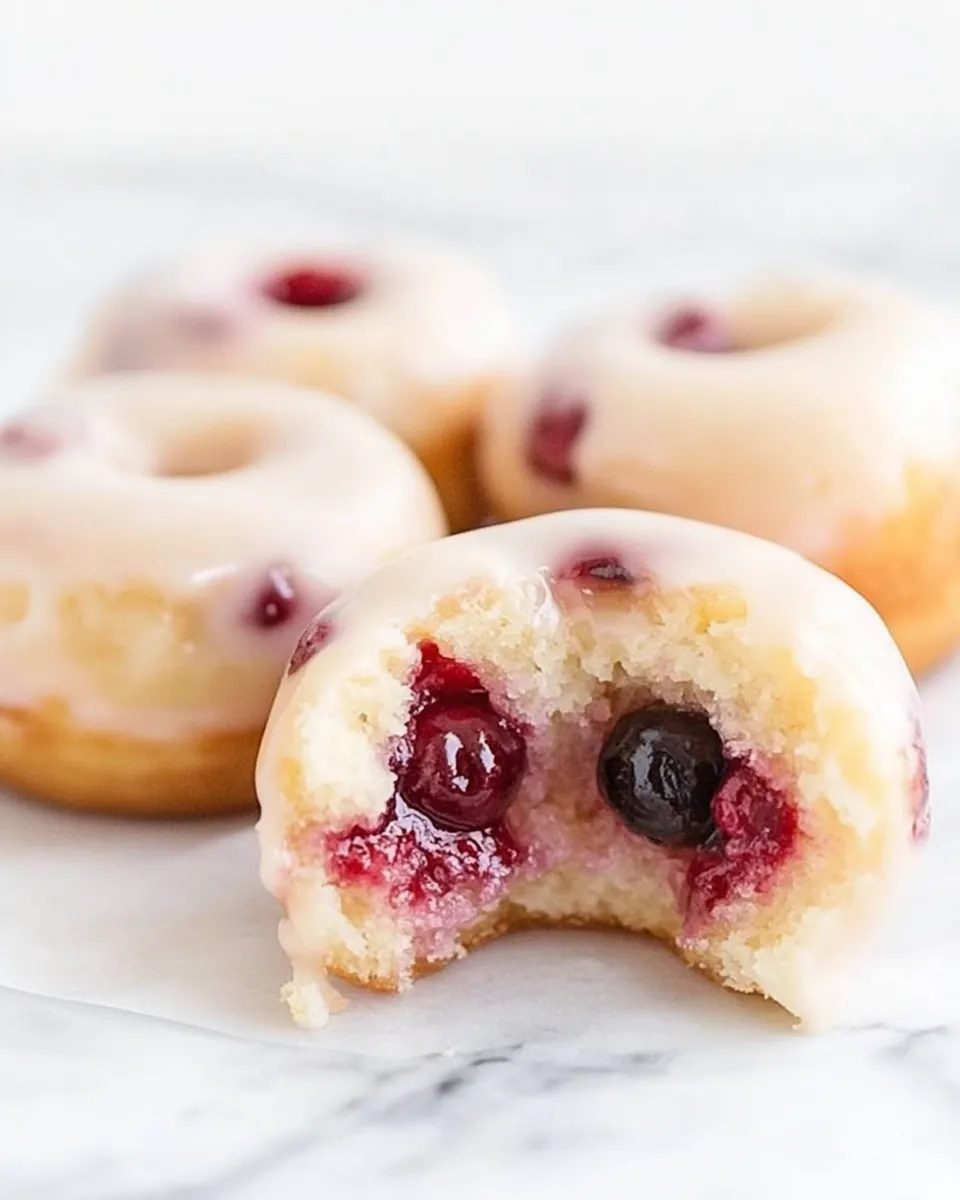
These tips come from repeated bakes and little adjustments that lift the final donut. Read them and keep a few in your pocket next time you bake so you avoid common pitfalls and maximize flavor and texture.
- Measure flour properly by spooning it into the cup and leveling off, rather than scooping directly, to avoid dense donuts caused by packed flour.
- Keep your raspberries cool and dry before folding them in, blotting any excess moisture to prevent thinning the batter and creating soggy spots.
- Do not overmix once wet and dry ingredients are combined; stop when the batter forms and a few streaks remain, to keep the crumb tender.
- Use a piping bag or a ziplock with a corner snipped for neat, even rings that bake uniformly and look professional.
- Let donuts cool completely before glazing so the glaze sets properly and does not slide off, preserving the donut shape and finish.
- Store properly in an airtight container at room temperature for up to two days, or refrigerate to extend freshness for up to one week as noted.
Great Combinations for Raspberry Donuts
These donuts shine on many occasions, and there are classic pairings that make them feel complete. Below I outline serving ideas, storage notes, and occasions where they excel.
- Casual breakfast Serve warm with a pot of coffee or tea, placing the glazed donuts on a simple platter so the shiny tops invite passing hands.
- Brunch centerpiece Arrange on a tiered stand alongside fresh fruit for a bright, celebratory table centerpiece that coordinates flavors and colors.
- Afternoon tea Pair with light herbal or black tea for a sweet treat that balances the tannins of the brew with the fruity glaze.
- Small gatherings Present on a decorative tray for guests to help themselves, and keep extra glaze on the side for those who prefer heavier coating.
- Storage tips Keep in an airtight container at room temperature for up to two days; refrigerate for up to one week to extend freshness, and bring to room temperature before serving for best texture.
- Freezing Individually wrap each donut in parchment and place in a freezer bag for up to three months, then thaw overnight in the fridge before serving.
FAQ
Conclusion
What makes these Raspberry Donuts special is their balance of tender cake, bright fruit, and a simple glaze that feels celebratory yet effortless. I encourage you to give them a try, whether for a relaxed breakfast, a small gathering, or an afternoon pick me up. They are quick to make, forgiving in technique, and reward you with warm, fresh pastry and bursts of real raspberry flavor that feel like a little homemade luxury.
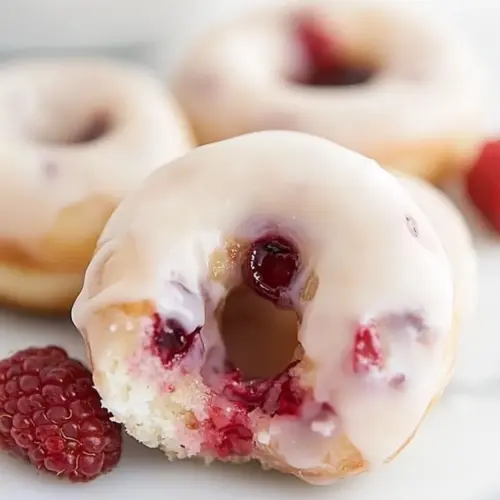
Raspberry Donuts
Equipment
- Donut Pan
- Mixing Bowl
- Ziplock bag
- Wire Rack
- Whisk
Ingredients
- 2 1/2 cups self-rising flour Provide structure and leavening to the donuts by using self-rising flour, which already contains baking powder and salt to help the dough rise evenly. It combines with liquids and fats to form the batter's gluten network while keeping the texture tender when not overworked. Measure precisely to maintain proper balance between wet and dry ingredients for consistent donut shape and crumb.
- 1/2 cup agave nectar can substitute for pure maple syrup Sweeten and lightly moisten the batter using agave nectar, offering a milder sweetness and a smooth mouthfeel compared with granulated sugar. Substitute option notes that pure maple syrup can be used for a different flavor profile while preserving liquid balance in the recipe. Add gradually and taste the batter if adjusting to ensure sweetness and texture remain balanced.
- 1/4 cup coconut oil Contribute richness and tenderness to the donuts through melted or softened coconut oil, which adds a subtle coconut aroma and helps create a moist crumb. Act as the fat that coats flour proteins, limiting gluten formation and resulting in a softer texture. Use measured amount to avoid greasiness and maintain proper batter consistency.
- 1 cup milk of choice Hydrate the dry ingredients and activate any leavening while providing additional flavor depending on the type chosen, as milk of choice can range from dairy to plant-based alternatives. Help determine batter thickness and final crumb tenderness, so choose a milk with similar fat content to the original for consistent results. Warm slightly if using coconut oil to ensure smooth incorporation.
- 1/4 cup raspberries Introduce fresh raspberry flavor and natural fruit moisture to the batter or garnish, imparting tartness, color, and small bursts of juice when bitten. Mash or fold gently to distribute without overworking the batter, which could cause excessive moisture pockets or color streaking. Reserve a few for topping if desired to enhance visual appeal and fresh flavor.
- 2 cups powdered sugar Create a smooth, sweet glaze or dusting that adds sweetness and a delicate finish to the donuts, dissolving easily when mixed with liquid. Sift before mixing to remove lumps and combine with small amounts of milk or flavoring to achieve the desired consistency for dipping or drizzling. Adjust quantity for thicker coating or lighter dusting according to preference.
- 1 teaspoon vanilla extract Enhance aroma and deepen the overall flavor profile by adding vanilla extract, which complements the raspberries and sweeteners. Use a measured teaspoon to avoid overpowering delicate fruit notes while providing a rounded, familiar sweetness. Stir in with wet ingredients to evenly distribute its flavor throughout the batter.
- 1 -3 tablespoons milk * See notes Adjust glaze or batter consistency by adding one to three tablespoons of milk as noted, allowing fine-tuning for desired thickness in icing or moisture in batter. Start with the smaller amount and increase gradually until the glaze pours smoothly or the batter achieves correct viscosity. Consider milk choice impact on flavor and texture when making final adjustments.
Instructions
- Preheat the oven to 180 C/350 F. Coat a 12-count donut pan with cooking spray and set aside.: Warmth should fill the kitchen, and you will notice a subtle change in the air when the oven reaches temperature, signaling that baking chemistry is ready to begin. This step ensures even rise and predictable bake times. If you skip a full preheat, the donuts may bake unevenly, with dense centers. Use an oven thermometer if your oven runs hot or cool, since temperature variances change browning and texture.
- Sift your flour into a large mixing bowl. Add the rest of the ingredients, except the raspberries, and mix until a thick dough remains. Fold through the raspberries.: The slick surface will let the donuts release cleanly, and you might hear the faint hiss when the spray hits the warm pan if it is already in the oven. Proper coating prevents sticking and preserves the donut shape. Avoid overfilling cavities with excess oil, which can cause pooling and uneven browning; a light, even coating is best.
- Pour the donut batter into a large ziplock bag. Cut off one corner of the bag and pipe out the donut batter into the donut pan. Lightly wet your hands and shape into the donut cavities. Do not overfill.: Sifting aerates the self rising flour , creating a lighter base. You will see a fluffy white mound form, and it invites the other ingredients to combine more smoothly. If you skip sifting, you risk lumps and uneven distribution of the rising agents. Use a whisk to further break up pockets, and mix gently to avoid overworking gluten.
- Bake for 12-15 minutes, or until just done, and a skewer comes out just clean. Allow cooling in the pan for 5 minutes, before transferring to a wire rack to cool completely.: As you add agave nectar , melted coconut oil , and milk , the batter will transform from dry to glossy and cohesive. Listen for the soft drag of the spoon and watch for streaks to disappear, indicating uniform mixing. Overmixing makes the texture tough, so stop as soon as the dough comes together into a thick consistency.
- Make the glaze. Add 1 tablespoon of the milk and vanilla extract to the powdered sugar and mix well. Slowly add more milk, one teaspoon at a time, until a glaze remains.: Folding keeps the raspberries intact, delivering bursts of color and tartness without turning the batter pink. You should see flecks of red distributed evenly, and smell the fruity brightness. Aggressive stirring crushes the berries, releasing moisture that can thin the batter and muddy the crumb, so fold gently with a spatula.
- Once cool, drizzle each donut in glaze.: The bag helps you pipe neat rings and keeps hands cleaner; you will feel the weight of the batter shift as you squeeze. Once transferred, seal and snip a corner to create a makeshift piping bag. If the hole is too large, the batter will flow too quickly and overfill the pan; too small and it will be hard to pipe evenly.
- Cut off one corner of the bag and pipe out the donut batter into the donut pan: Watch the batter form clean rings that settle into each cavity, and if needed, lightly wet your hands to nudge batter into perfect shapes. The sound is quiet and tactile, a soft plop as each cavity fills. Avoid overfilling, which leads to misshapen, spilling donuts that will bake into uneven edges and may stick to the pan.
- Lightly wet your hands and shape into the donut cavities: A damp fingertip smooths tops and ensures uniform rings, helping trapped air escape for an even rise. The touch is important to feel if the batter needs slight redistribution. Too much water will make the surface globby and cause the batter to spread, so use minimal moisture and gentle shaping.
- Do not overfill: Slightly under the brim is ideal, as the batter will rise modestly and keep the classic donut silhouette. Watch for the batter to settle into the cavity but not spill over the edges. Overfilled cavities can merge and form peaks that brown irregularly and make the donuts harder to remove from the pan.
- Bake for 12 to 15 minutes, or until just done, and a skewer comes out just clean: The oven will fill with a warm, sweet aroma and the edges will just begin to set, showing a faint golden tint. A clean skewer tells you the interior is baked through without drying out. If you leave them too long they will lose moisture and become cakey, so test early and often within the time window.
- Allow cooling in the pan for 5 minutes, before transferring to a wire rack to cool completely: The brief rest lets the donuts firm up so they release easily, and you will notice steam lifting when you move them, a sign of retained moisture. Transferring to a wire rack prevents condensation and keeps bottoms from becoming soggy. Leaving them too long in the pan can trap steam, softening the exterior and dulling the final texture.
- Make the glaze: Mixing 1 tablespoon of the milk with vanilla extract into the powdered sugar creates a shiny, smooth glaze that clings and sets attractively. Start with less liquid and whisk until velvety, adding more milk one teaspoon at a time to reach the right flow. Adding too much milk at once will make the glaze runny and unable to coat fully.
- Add 1 tablespoon of the milk and vanilla extract to the powdered sugar and mix well: The first tablespoon helps hydrate the sugar and eliminate lumps, and the vanilla lifts the overall flavor. You will hear the whisk and see a thick paste form before you thin it. If lumps persist, strain for a silky finish; failing to do so can leave gritty pockets in the glaze.
- Slowly add more milk, one teaspoon at a time, until a glaze remains: This careful approach ensures control over consistency, letting you achieve glaze that either clings or drips, depending on your preference. A perfect glaze will coat the spoon and drip slowly back. Rushing with larger quantities will make the glaze too thin and watery, ruining the look and cling of the final finish.
- Once cool, drizzle each donut in glaze: The moment of truth is both tactile and aromatic as the glaze settles, creating bright, glossy tops that catch the light. Use a fork or spoon to drizzle, and allow excess to run off onto the rack below. Glazing donuts while still warm can cause the glaze to slide off, so ensure they are fully cool for best adherence.
Notes
- Measure flour properly by spooning it into the cup and leveling off, rather than scooping directly, to avoid dense donuts caused by packed flour.
- Keep your raspberries cool and dry before folding them in, blotting any excess moisture to prevent thinning the batter and creating soggy spots.
- Do not overmix once wet and dry ingredients are combined; stop when the batter forms and a few streaks remain, to keep the crumb tender.
- Use a piping bag or a ziplock with a corner snipped for neat, even rings that bake uniformly and look professional.
- Let donuts cool completely before glazing so the glaze sets properly and does not slide off, preserving the donut shape and finish.
- Store properly in an airtight container at room temperature for up to two days, or refrigerate to extend freshness for up to one week as noted.