Creamy Tomato Soup
Creamy Tomato Soup has been my go to when crisp evenings arrive and I need something that warms me from the inside out. The first time I made it I remember juggling a tray of blistered tomatoes while the kitchen filled with a sweet, roasted scent that made me slow down and breathe. I loved how simple pantry items transformed into something soulful, and that moment convinced me this soup deserved a permanent spot in my weeknight rotation.
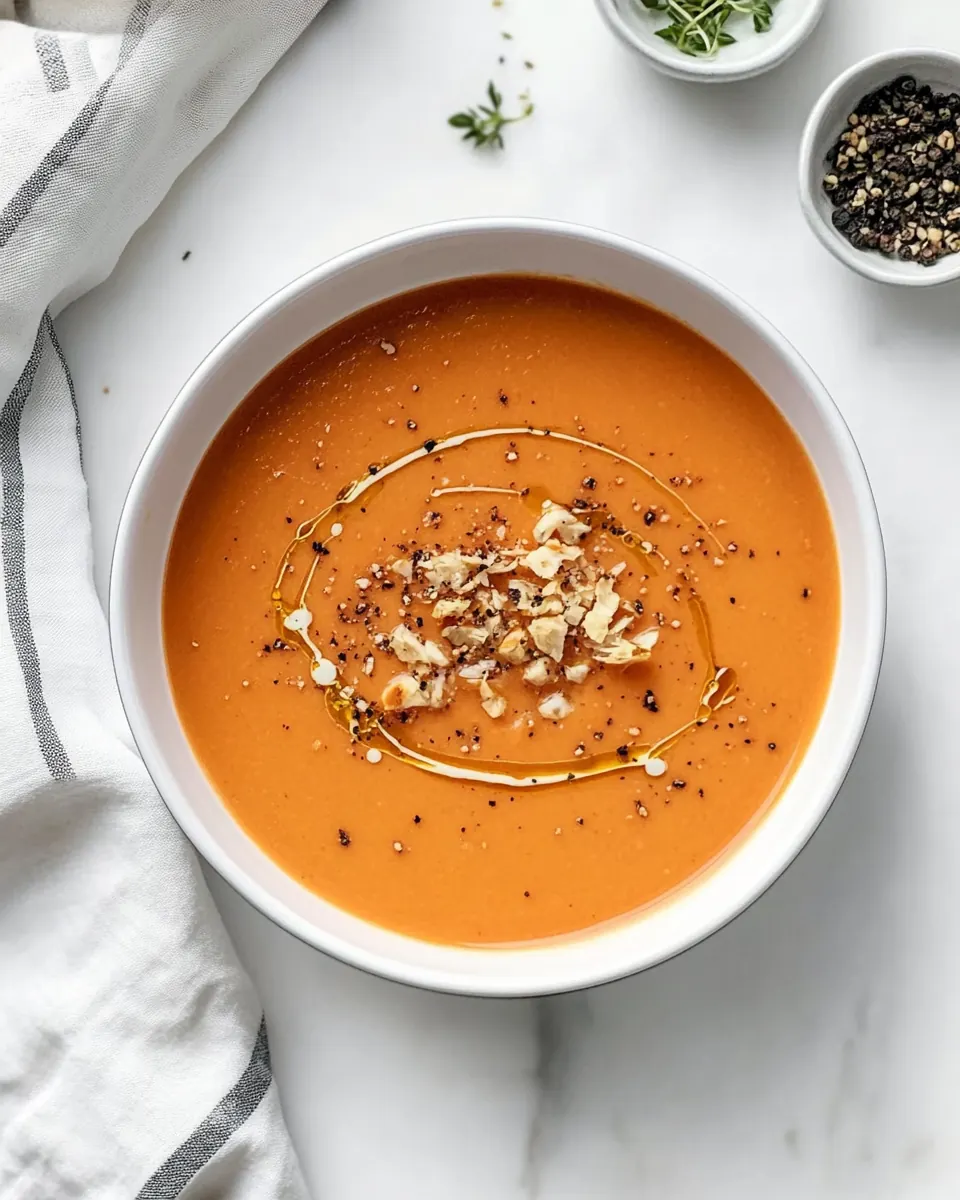
Over the years I’ve tweaked the balance between bright acidity and gentle creaminess, and this version is the one my friends ask for again and again. I often pair it with toasted olive oil bread and a scatter of fresh thyme, and those little rituals turned making soup into a small ceremony. When I serve Creamy Tomato Soup I like to set aside a few chickpeas and extra thyme for topping, because the contrast between silky soup and chewy chickpea adds interest.
Recipe Snapshot
45 mins
15 mins
30 mins
Medium
250 kcal
American
Vegan, Gluten-Free
Soups
Oven, Baking sheet, Parchment paper, Foil, Blender, Knife, Serrated knife
Why This Creamy Tomato Soup Shines
Roasted Flavor That Feels Homemade
I roast the tomatoes, onion, and garlic because caramelization brings a depth you just can’t get from raw ingredients. You can taste the difference in the first warm spoonful, it makes the soup feel made from scratch even when time is tight.
Built On Pantry Staples
This recipe leans on a few canned staples like the diced tomatoes and pantry items such as olive oil and balsamic vinegar. I love that you can pull this together without a special grocery run, and still end up with layers of complexity.
Comfort With Texture Play
The addition of chickpeas and toasted bread croutons with vegan mozzarella adds chew and melty richness, so the soup never feels flat. I enjoy the way a spoonful of smooth soup with a crispy crouton changes the eating rhythm.
Flexible and Friendly
I often adjust the spice level with red pepper flakes and a touch of maple syrup to balance the acidity, so you can make it as gentle or lively as you like. This adaptability is why I keep returning to this recipe for different moods and meals.
Fast Enough for Weeknights
While it feels special, the technique is straightforward, so it’s perfect for an easy weeknight dinner when you want comforting food without fuss. I appreciate recipes that are forgiving, and this one fits the bill every time.
Ingredients You’ll Need for Creamy Tomato Soup
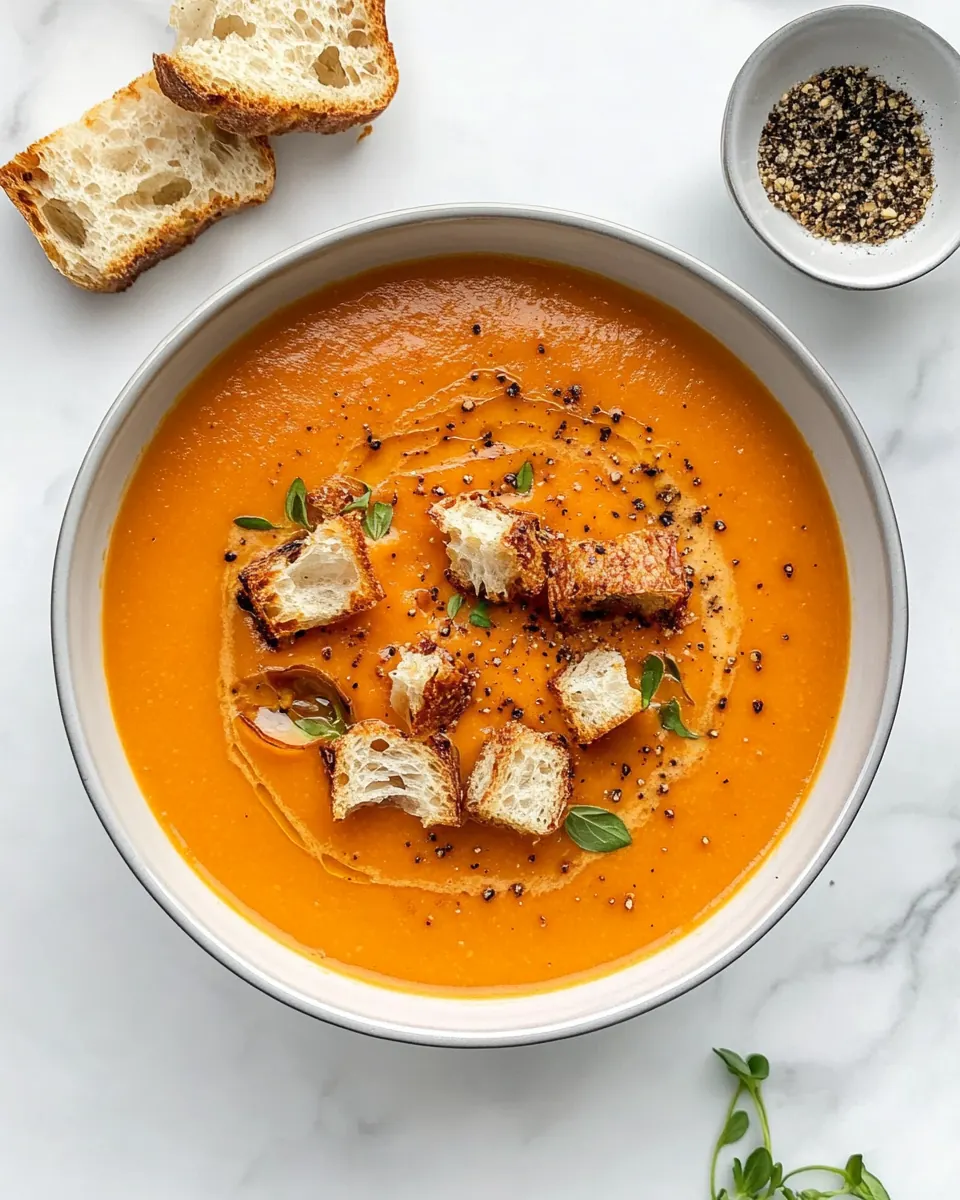
These ingredients work together to create a soup that is both bright and rounded. The key players are the roasted tomatoes and onion, which bring caramelized sweetness, while the canned diced tomatoes and olive oil provide body and richness. Small additions like balsamic vinegar, maple syrup, and thyme lift the flavor profile and keep each spoonful interesting.
- 3 garlic cloves, unpeeled: Roast to mellow and sweeten the flavor while making the cloves easy to squeeze; unpeeled roasting protects the flesh and concentrates aroma. Use the softened garlic to add depth and a gentle savory backbone when blended into the soup. Discard skins after roasting and mash or puree the cloves into the tomato base for a smooth texture.
- 4 medium fresh tomatoes* (see note): Ripen until juicy and slightly softened to provide fresh brightness and natural acidity that balances the soup. Chop or quarter before roasting or simmering so the fresh tomatoes break down and contribute body and a vibrant color. Use as part of the fresh tomato component alongside canned tomatoes for layered tomato flavor.
- 1 small yellow onion, sliced into quarters: Sauté or roast to build sweet, aromatic base flavors and add savory complexity to the soup. Slice into quarters to release juices and ensure even cooking; softened onion helps thicken the soup when pureed. Cook until translucent or caramelized depending on desired sweetness and depth.
- 1 (14-oz) can diced tomatoes: Add for reliable tomato richness and concentrated savory umami when fresh tomatoes are not enough. Include the canned diced tomatoes with their juices to boost liquid volume and deepen overall tomato flavor. Simmer with fresh tomatoes and aromatics to marry flavors before blending.
- 1/3 cup cooked chickpeas: Blend or puree to contribute subtle creaminess and a boost of plant-protein that thickens the soup without dairy. Use pre-cooked chickpeas to add body and a slightly nutty flavor that rounds out the acidity of the tomatoes. Incorporate at blending stage for smooth texture or mash lightly for a more rustic finish.
- 1 tablespoon balsamic vinegar: Splash in to brighten flavors with a tangy, slightly sweet complexity that enhances roasted and fresh tomato notes. Add near the end of cooking for a balanced acidity that lifts the dish while complementing the savory elements. Adjust amount to taste to avoid overpowering the soup.
- 1/2 teaspoon maple syrup: Drizzle to balance acidity and add a hint of natural sweetness, softening the tomato edge. Stir in sparingly during simmering or at finish to round flavors and create a more harmonious profile. Use as an optional sweetener for tomatoes that are especially tart.
- 2 teaspoons fresh thyme leaves: Strip and sprinkle leaves to infuse the soup with a fresh, aromatic herbaceous note and subtle woodsy flavor. Add during simmering so thyme releases essential oils and integrates into the tomato base. Use fresh leaves for brightness; adjust quantity to taste to avoid overpowering delicate flavors.
- 1 tablespoon extra-virgin olive oil: Heat to create a glossy base for sautéing tomatoes, onions, and garlic while contributing fruity and peppery undertones. Use at the beginning of cooking to soften aromatics and prevent sticking, helping flavors meld together. Choose extra–virgin for optimal flavor and quality.
- 1/4 to 1/2 teaspoon red pepper flakes: Sprinkle to introduce a warm, smoky heat that builds complexity and provides subtle kick without overwhelming. Add gradually to control spiciness and tailor the soup to taste, using less for mild heat and more for a spicier finish. Toast gently in oil if you want to release more flavor.
- Heaping 1/2 teaspoon sea salt: Season to enhance and balance flavors by elevating the natural sweetness and acidity of the tomatoes. Add during cooking and adjust at the end to achieve the desired savory profile and proper seasoning level. Use as a base reference and taste before final adjustments.
- freshly ground black pepper: Grind to finish and provide a bright, aromatic pepperiness that complements the tomatoes and herbs. Add freshly ground black pepper toward the end of cooking for maximum flavor impact and to avoid excessive bitterness. Adjust quantity to preference for mild warmth or assertive spice.
- 8 slices SimplyNature 7 Grain Bread: Toast or grill to create crunchy, absorbent accompaniments perfect for dipping into creamy tomato soup and adding grainy texture. Use slices as croutons, crostini, or as a side to scoop up soup; the 7-grain bread brings nutty, hearty notes. Lightly butter or brush with olive oil before toasting for extra flavor.
- heaping 1/2 cup Earth Grown Vegan Mozzarella: Melt to provide a creamy, dairy-free topping with mild, melty texture that mimics traditional mozzarella on grilled bread or croutons. Sprinkle over toasted bread slices and broil briefly to achieve bubbly, golden finish that complements the soup. Use heaping amounts for indulgent, cheesy bites.
Cooking Instructions for Creamy Tomato Soup
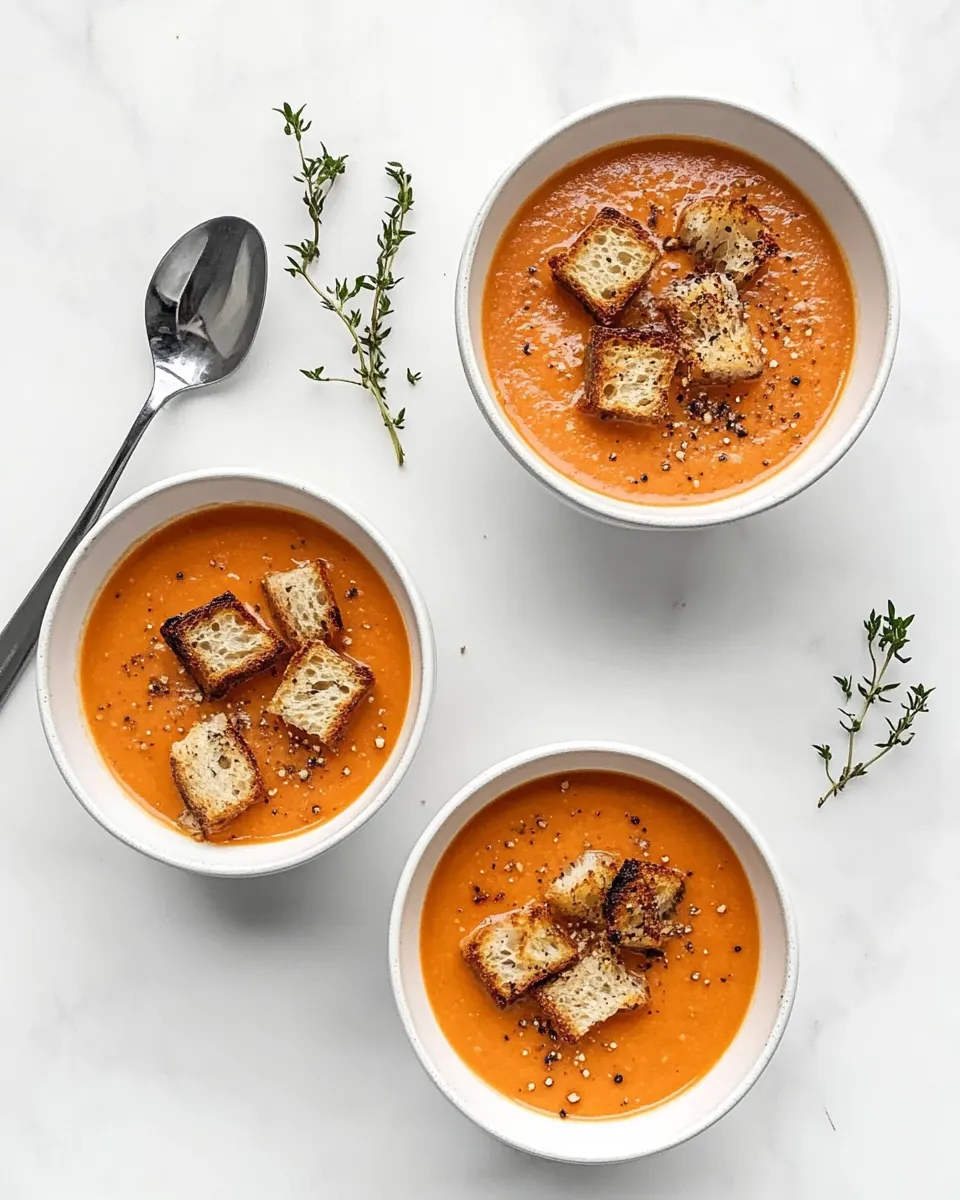
I like to walk through roasting, blending, and finishing with croutons in a relaxed order so each element gets proper attention. The method is straightforward, and taking time to notice the visual and aromatic cues at each stage makes all the difference. Below you’ll find detailed, sensory rich steps to guide you confidently from raw ingredients to a steaming bowl.
- Preheat the oven to 450° F and line a baking sheet with parchment paper.: As the oven warms you should feel the kitchen air change, a hint that caramelization will soon begin. A hot oven is crucial for properly roasting tomatoes and onion , because high heat encourages browning rather than steaming. Listen for the faint whisper of heat as the oven cycles; that steady warmth ensures even roast. A common mistake is using a too low temperature, which leaves vegetables pale and weak in flavor. Use parchment to prevent sticking and to make cleanup easier. Position the rack in the center so the vegetables receive consistent heat and brown evenly.
- Wrap the garlic cloves in a piece of foil and place it on the baking sheet along with the whole tomatoes and the onion wedges. Drizzle with olive oil and a pinch of salt and pepper and roast for 20 to 25 minutes, or until the tomatoes and onions are well browned. Peel the garlic and transfer the roasted vegetables to a blender.: As the garlic roasts in foil it turns soft and sweet, developing a nutty aroma that becomes irresistible. Drizzle the tray with a tablespoon of olive oil and sprinkle a pinch of sea salt and freshly ground black pepper so the surfaces begin to sizzle when they hit the heat. When the vegetables roast for 20 to 25 minutes you want to see near char on the tomato skins and golden edges on the onion, these visual cues indicate deep flavor. Avoid overcrowding the pan because that causes steaming rather than browning. If you skip the foil, the garlic can dry out, losing its mellow creaminess.
- Reduce the oven heat to 400° F and line the baking sheet with a fresh sheet of parchment paper.: Once the garlic is cool enough to handle, squeezing it from its skin reveals soft, luscious cloves that smell sweet and slightly caramelized. Placing the roasted tomatoes and onion into the blender while still hot helps build a velvety texture. The warmth enhances the aroma as you pulse, and you should notice a glossy sheen as the mixture homogenizes. A common slip is adding too much liquid at this point, which can thin the puree; keep it concentrated for body. If using a standard blender, pulse and scrape frequently to ensure even blending.
- To the blender, add the canned tomatoes, garbanzo beans, balsamic vinegar, maple syrup, thyme leaves, 1 tablespoon olive oil, red pepper flakes, 1/2 teaspoon sea salt, and freshly ground pepper and blend until creamy (a Vitamix is ideal here. If using a regular blender, just blend longer!). Taste and adjust seasonings as desired. At this stage, the soup should still be hot. If not, pour it into a pot to reheat it.: Lowering the oven prepares it for melting the vegan mozzarella on the bread without burning, and fresh parchment prevents flavors from lingering. The residual heat will still be useful for toasting, and a slightly lower temperature helps the cheese melt gently so it becomes gooey without crisping too fast. This step is about control, giving the croutons the right texture to hold in the soup. A mistake here is leaving the oven too hot, which can char the bread edges before the cheese melts.
- Make the croutons: Sprinkle 4 slices of the bread with a thin layer of cheese. Top with the remaining bread slices to make sandwiches and drizzle the outsides of the bread with olive oil. Bake until the cheese is melted and the bread is golden brown, about 8 minutes. Let cool completely before slicing into croutons so that the cheese doesn’t ooze out when you cut it.: Right after blending you should notice a fragrant steam carrying notes of roasted tomato and sweet balsamic vinegar . The garbanzo beans act as a natural thickener, giving the soup a velvety mouthfeel while keeping it plant based. A Vitamix will produce a silkier texture quickly, while a standard blender needs more time and occasional pauses to prevent overheating. Taste as you go, because this is when you calibrate acidity and sweetness; the tiny amount of maple syrup softens sharp edges. If the soup has cooled too much, transferring it to a pot to reheat gently prevents that raw, starchy blender flavor from developing.
- Serve the soup with the croutons (some in the soup, some on the side) and additional fresh thyme, red pepper flakes, and chickpeas, if desired.: Sprinkle 4 slices of the bread with a thin layer of cheese : Building the sandwich style croutons gives you melted interior cheese and toasted exterior crunch. Lay the remaining 4 slices on top to form sandwiches and brush the outsides with a drizzle of olive oil so they brown evenly. Bake until the cheese melts and the bread turns golden, about 8 minutes, then allow them to cool fully before slicing; this cooling step prevents the cheese from oozing out. While cooling you will hear a faint crackle as the crust firms, indicating the right moment to slice. A typical error is slicing too soon, which causes the melted cheese to spill and the croutons to lose their neat, handheld form.
- Let cool completely before slicing into croutons so that the cheese doesn’t ooze out when you cut it: Waiting feels counterintuitive when the aroma is so inviting, but patience preserves the structural integrity of the croutons and ensures tidy, melty centers. As they rest the cheese sets slightly while remaining gooey, and the bread cools enough to slice with clean edges. If you cut too early you sacrifice presentation and may end up with sticky slices. Use a serrated knife and gentle sawing motions to maintain crisp edges and preserve the melted pockets inside.
- Serve the soup with the croutons and additional fresh thyme, red pepper flakes, and chickpeas, if desired: The final bowl should be steaming, sending up aromas of roasted tomato , herbaceous thyme , and a hint of heat from the red pepper flakes . Spoon in a few toasted croutons and scatter reserved chickpeas for contrast. The interplay of silky soup and crunchy crouton is important to the eating experience, giving you textural interplay with every bite. A last sprinkle of flaky sea salt brightens the flavors. Beware of adding all the croutons directly into the pot, as they can turn soggy; plate some on the side to keep things crisp.
Tips and Variations
I like offering a few thoughtful variations that keep the spirit of the soup while allowing for different textures and flavor profiles. Below are practical tips and ideas, each expanded so you can adapt the recipe confidently.
- Roast for depth: Always roast the tomatoes and onion until you see darkened, blistered spots, because that caramelization transforms the flavor from flat to layered.
- Vitamix advantage: If you have a high speed blender pulse in bursts to reach a super smooth texture faster, it also reduces reheating time and preserves brightness.
- Chickpea texture: Reserve some chickpeas to garnish for chew, while blending the rest to add body without graininess.
- Cheese melting: Use the lower oven temperature for croutons so the vegan mozzarella melts gently and becomes gooey rather than burning the crust.
- Balance acidity: If the soup tastes too sharp, add a tiny bit more maple syrup or a splash more balsamic vinegar to round and brighten the flavors.
Perfect Pairings for Creamy Tomato Soup
This soup is versatile enough to suit casual lunches and cozy dinners, and it pairs beautifully with simple sides that echo its textures and flavors. Below are thoughtful pairing suggestions, serving occasions, and storage tips to keep you confident when planning a meal.
- Classic lunch pairing: Serve with extra toasted croutons and a small side salad for a light midday meal that feels complete without being heavy.
- Weeknight dinner: Plate the soup with a grain bowl on the side or simple roasted vegetables to make a satisfying, balanced dinner that is quick to assemble.
- Ramadan or cozy evenings: Offer warm bowls at iftar or during quiet nights, accompanied by soft bread and extra thyme for fragrance and comfort.
- Seasonal notes: This soup shines in fall when tomatoes transition to a richer profile, but it also works year round when you use quality canned tomatoes.
- Storage tips: Store the soup in an airtight container in the refrigerator for up to four days, reheat gently on the stovetop, and keep croutons separate to preserve crunch.
- Serving styles: For casual gatherings ladle into bowls with croutons on top and a small platter of extra bread on the side so guests can customize their textures.
- Make ahead: Roast the vegetables earlier in the day and blend before serving to save time without losing flavor.
FAQ
Conclusion
This version of Creamy Tomato Soup stands out for its roasted depth, silky texture, and the playful contrast between smooth soup and melty, crunchy croutons. I encourage you to try it because it transforms simple pantry ingredients into something layered and utterly comforting. Serve it on a cool evening, adjust the seasoning to your taste, and enjoy the satisfying ritual of a warm bowl made with attention and a few small, flavorful details.

Creamy Tomato Soup
Equipment
- Oven
- Baking Sheet
- Parchment Paper
- Foil
- Blender
- Knife
- Serrated Knife
Ingredients
- 3 garlic cloves, unpeeled Roast to mellow and sweeten the flavor while making the cloves easy to squeeze; unpeeled roasting protects the flesh and concentrates aroma. Use the softened garlic to add depth and a gentle savory backbone when blended into the soup. Discard skins after roasting and mash or puree the cloves into the tomato base for a smooth texture.
- 4 medium fresh tomatoes* (see note) Ripen until juicy and slightly softened to provide fresh brightness and natural acidity that balances the soup. Chop or quarter before roasting or simmering so the fresh tomatoes break down and contribute body and a vibrant color. Use as part of the fresh tomato component alongside canned tomatoes for layered tomato flavor.
- 1 small yellow onion, sliced into quarters Sauté or roast to build sweet, aromatic base flavors and add savory complexity to the soup. Slice into quarters to release juices and ensure even cooking; softened onion helps thicken the soup when pureed. Cook until translucent or caramelized depending on desired sweetness and depth.
- 1 (14-oz) can diced tomatoes Add for reliable tomato richness and concentrated savory umami when fresh tomatoes are not enough. Include the canned diced tomatoes with their juices to boost liquid volume and deepen overall tomato flavor. Simmer with fresh tomatoes and aromatics to marry flavors before blending.
- 1/3 cup cooked chickpeas Blend or puree to contribute subtle creaminess and a boost of plant-protein that thickens the soup without dairy. Use pre-cooked chickpeas to add body and a slightly nutty flavor that rounds out the acidity of the tomatoes. Incorporate at blending stage for smooth texture or mash lightly for a more rustic finish.
- 1 tablespoon balsamic vinegar Splash in to brighten flavors with a tangy, slightly sweet complexity that enhances roasted and fresh tomato notes. Add near the end of cooking for a balanced acidity that lifts the dish while complementing the savory elements. Adjust amount to taste to avoid overpowering the soup.
- 1/2 teaspoon maple syrup Drizzle to balance acidity and add a hint of natural sweetness, softening the tomato edge. Stir in sparingly during simmering or at finish to round flavors and create a more harmonious profile. Use as an optional sweetener for tomatoes that are especially tart.
- 2 teaspoons fresh thyme leaves Strip and sprinkle leaves to infuse the soup with a fresh, aromatic herbaceous note and subtle woodsy flavor. Add during simmering so thyme releases essential oils and integrates into the tomato base. Use fresh leaves for brightness; adjust quantity to taste to avoid overpowering delicate flavors.
- 1 tablespoon extra-virgin olive oil Heat to create a glossy base for sautéing tomatoes, onions, and garlic while contributing fruity and peppery undertones. Use at the beginning of cooking to soften aromatics and prevent sticking, helping flavors meld together. Choose extra-virgin for optimal flavor and quality.
- 1/4 to 1/2 teaspoon red pepper flakes Sprinkle to introduce a warm, smoky heat that builds complexity and provides subtle kick without overwhelming. Add gradually to control spiciness and tailor the soup to taste, using less for mild heat and more for a spicier finish. Toast gently in oil if you want to release more flavor.
- Heaping 1/2 teaspoon sea salt Season to enhance and balance flavors by elevating the natural sweetness and acidity of the tomatoes. Add during cooking and adjust at the end to achieve the desired savory profile and proper seasoning level. Use as a base reference and taste before final adjustments.
- freshly ground black pepper Grind to finish and provide a bright, aromatic pepperiness that complements the tomatoes and herbs. Add freshly ground black pepper toward the end of cooking for maximum flavor impact and to avoid excessive bitterness. Adjust quantity to preference for mild warmth or assertive spice.
- 8 slices SimplyNature 7 Grain Bread Toast or grill to create crunchy, absorbent accompaniments perfect for dipping into creamy tomato soup and adding grainy texture. Use slices as croutons, crostini, or as a side to scoop up soup; the 7-grain bread brings nutty, hearty notes. Lightly butter or brush with olive oil before toasting for extra flavor.
- heaping 1/2 cup Earth Grown Vegan Mozzarella Melt to provide a creamy, dairy-free topping with mild, melty texture that mimics traditional mozzarella on grilled bread or croutons. Sprinkle over toasted bread slices and broil briefly to achieve bubbly, golden finish that complements the soup. Use heaping amounts for indulgent, cheesy bites.
Instructions
- Preheat the oven to 450° F and line a baking sheet with parchment paper.: As the oven warms you should feel the kitchen air change, a hint that caramelization will soon begin. A hot oven is crucial for properly roasting tomatoes and onion , because high heat encourages browning rather than steaming. Listen for the faint whisper of heat as the oven cycles; that steady warmth ensures even roast. A common mistake is using a too low temperature, which leaves vegetables pale and weak in flavor. Use parchment to prevent sticking and to make cleanup easier. Position the rack in the center so the vegetables receive consistent heat and brown evenly.
- Wrap the garlic cloves in a piece of foil and place it on the baking sheet along with the whole tomatoes and the onion wedges. Drizzle with olive oil and a pinch of salt and pepper and roast for 20 to 25 minutes, or until the tomatoes and onions are well browned. Peel the garlic and transfer the roasted vegetables to a blender.: As the garlic roasts in foil it turns soft and sweet, developing a nutty aroma that becomes irresistible. Drizzle the tray with a tablespoon of olive oil and sprinkle a pinch of sea salt and freshly ground black pepper so the surfaces begin to sizzle when they hit the heat. When the vegetables roast for 20 to 25 minutes you want to see near char on the tomato skins and golden edges on the onion, these visual cues indicate deep flavor. Avoid overcrowding the pan because that causes steaming rather than browning. If you skip the foil, the garlic can dry out, losing its mellow creaminess.
- Reduce the oven heat to 400° F and line the baking sheet with a fresh sheet of parchment paper.: Once the garlic is cool enough to handle, squeezing it from its skin reveals soft, luscious cloves that smell sweet and slightly caramelized. Placing the roasted tomatoes and onion into the blender while still hot helps build a velvety texture. The warmth enhances the aroma as you pulse, and you should notice a glossy sheen as the mixture homogenizes. A common slip is adding too much liquid at this point, which can thin the puree; keep it concentrated for body. If using a standard blender, pulse and scrape frequently to ensure even blending.
- To the blender, add the canned tomatoes, garbanzo beans, balsamic vinegar, maple syrup, thyme leaves, 1 tablespoon olive oil, red pepper flakes, 1/2 teaspoon sea salt, and freshly ground pepper and blend until creamy (a Vitamix is ideal here. If using a regular blender, just blend longer!). Taste and adjust seasonings as desired. At this stage, the soup should still be hot. If not, pour it into a pot to reheat it.: Lowering the oven prepares it for melting the vegan mozzarella on the bread without burning, and fresh parchment prevents flavors from lingering. The residual heat will still be useful for toasting, and a slightly lower temperature helps the cheese melt gently so it becomes gooey without crisping too fast. This step is about control, giving the croutons the right texture to hold in the soup. A mistake here is leaving the oven too hot, which can char the bread edges before the cheese melts.
- Make the croutons: Sprinkle 4 slices of the bread with a thin layer of cheese. Top with the remaining bread slices to make sandwiches and drizzle the outsides of the bread with olive oil. Bake until the cheese is melted and the bread is golden brown, about 8 minutes. Let cool completely before slicing into croutons so that the cheese doesn’t ooze out when you cut it.: Right after blending you should notice a fragrant steam carrying notes of roasted tomato and sweet balsamic vinegar . The garbanzo beans act as a natural thickener, giving the soup a velvety mouthfeel while keeping it plant based. A Vitamix will produce a silkier texture quickly, while a standard blender needs more time and occasional pauses to prevent overheating. Taste as you go, because this is when you calibrate acidity and sweetness; the tiny amount of maple syrup softens sharp edges. If the soup has cooled too much, transferring it to a pot to reheat gently prevents that raw, starchy blender flavor from developing.
- Serve the soup with the croutons (some in the soup, some on the side) and additional fresh thyme, red pepper flakes, and chickpeas, if desired.: Sprinkle 4 slices of the bread with a thin layer of cheese : Building the sandwich style croutons gives you melted interior cheese and toasted exterior crunch. Lay the remaining 4 slices on top to form sandwiches and brush the outsides with a drizzle of olive oil so they brown evenly. Bake until the cheese melts and the bread turns golden, about 8 minutes, then allow them to cool fully before slicing; this cooling step prevents the cheese from oozing out. While cooling you will hear a faint crackle as the crust firms, indicating the right moment to slice. A typical error is slicing too soon, which causes the melted cheese to spill and the croutons to lose their neat, handheld form.
- Let cool completely before slicing into croutons so that the cheese doesn’t ooze out when you cut it: Waiting feels counterintuitive when the aroma is so inviting, but patience preserves the structural integrity of the croutons and ensures tidy, melty centers. As they rest the cheese sets slightly while remaining gooey, and the bread cools enough to slice with clean edges. If you cut too early you sacrifice presentation and may end up with sticky slices. Use a serrated knife and gentle sawing motions to maintain crisp edges and preserve the melted pockets inside.
- Serve the soup with the croutons and additional fresh thyme, red pepper flakes, and chickpeas, if desired: The final bowl should be steaming, sending up aromas of roasted tomato , herbaceous thyme , and a hint of heat from the red pepper flakes . Spoon in a few toasted croutons and scatter reserved chickpeas for contrast. The interplay of silky soup and crunchy crouton is important to the eating experience, giving you textural interplay with every bite. A last sprinkle of flaky sea salt brightens the flavors. Beware of adding all the croutons directly into the pot, as they can turn soggy; plate some on the side to keep things crisp.
Notes
- Roast for depth: Always roast the tomatoes and onion until you see darkened, blistered spots, because that caramelization transforms the flavor from flat to layered.
- Vitamix advantage: If you have a high speed blender pulse in bursts to reach a super smooth texture faster, it also reduces reheating time and preserves brightness.
- Chickpea texture: Reserve some chickpeas to garnish for chew, while blending the rest to add body without graininess.
- Cheese melting: Use the lower oven temperature for croutons so the vegan mozzarella melts gently and becomes gooey rather than burning the crust.
- Balance acidity: If the soup tastes too sharp, add a tiny bit more maple syrup or a splash more balsamic vinegar to round and brighten the flavors.