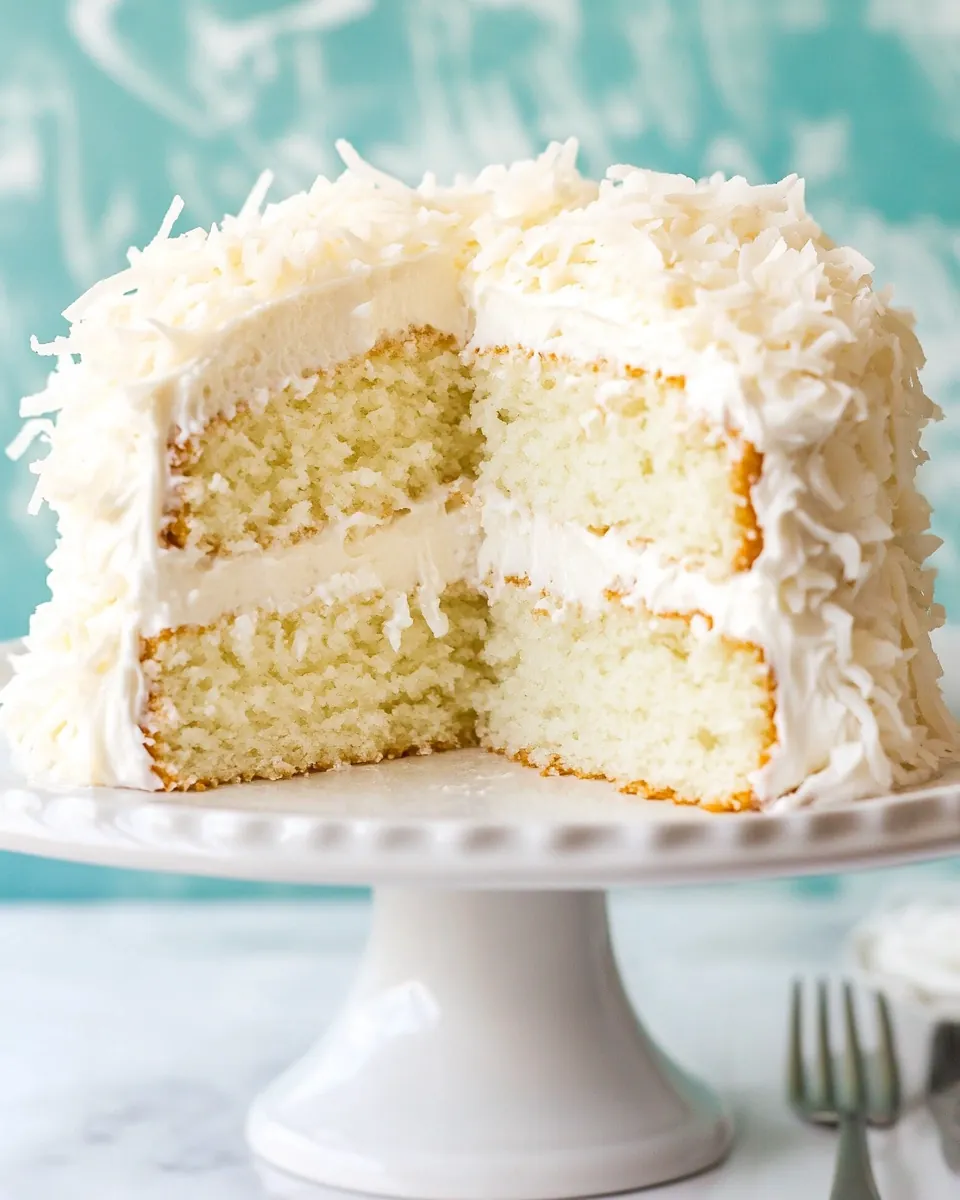
Coconut Cake with Coconut Meringue Buttercream Frosting
Coconut Cake with Coconut Meringue Buttercream Frosting is the kind of dessert I reached for when I wanted to celebrate a small victory, and it never failed to lift the mood in the room. The first time I made it, I was chasing a memory from a beachside bakery, and the heady scent of toasted coconut and warm cake filled my kitchen, drawing neighbors over as if by magic.
That day I learned how forgiving this recipe can be. I remember stirring the batter slowly, feeling its weight change as air folded in, and thinking about how simple ingredients like cake flour, egg whites, and coconut milk can combine to create something elegant. Each layer feels delicate yet substantial, and the frosting has a glossy, satiny sheen that looks like it took far more effort than it actually does.
I also discovered little tricks that saved the day, like letting the layers cool fully before leveling them, and taking an extra few minutes to whip the meringue until it was cool to the touch. Those small choices made the texture sing, and guests kept asking for the recipe. Over time I adapted my technique to be more relaxed, confident that the recipe will reward gentle handling more than frantic rushing.
Now I make this cake for birthdays, small dinner parties, and any weekend when I want to feel indulgent without being extravagant. It carries a bright coconut flavor and a silky mouthfeel that pairs surprisingly well with coffee or an afternoon tea. If you take away one thing from my experience, let it be this, the recipe is approachable, forgiving, and utterly charming when you give it patience and attention.
Recipe Snapshot
2 hr 15 mins
90 mins
45 mins
Hard
350 kcal
American
Gluten-Free, Vegan
Desserts
Electric mixer, Whisk, Saucepan, Wire rack, 8 inch round cake pans, Offset spatula
The Charm of This Coconut Cake with Coconut Meringue Buttercream Frosting
1. Coconut forward but balanced
I love how Coconut Cake with Coconut Meringue Buttercream Frosting manages to be unapologetically coconutty without becoming cloying. The combination of coconut milk in the batter and sweetened shredded coconut in both cake and garnish layers provides layers of texture and flavor. This keeps each bite interesting, and the frosting tones the sweetness back with its airy structure.
2. Texture that sings
The crumb is tender because of the cake flour and the whipped egg whites, while the butter in the batter gives a richness that stops the cake from feeling sponge like. That contrast between tender crumb and satiny buttercream makes every forkful satisfying, and I’ve found it impresses both casual guests and serious pastry lovers.
3. Frosting technique yields a professional finish
The coconut meringue buttercream takes a bit of patience but the payoff is a glossy, stable frosting that holds texture and sheen. Whipping the heated sugar and egg whites until cool creates a meringue base that whips into a stable foam, and then adding the unsalted butter slowly produces that luxurious mouthfeel people rhapsodize about.
4. Adaptable and forgiving
I appreciate that this recipe is forgiving of small timing errors. If your frosting looks separated at first, keep beating and it will come together. If a layer bakes a touch longer, you can level it and it still stacks beautifully. That versatility makes it my go to when I want an elevated dessert without high stress.
5. Great for gatherings and special moments
The cake is showy without being fussy. It slices cleanly and stores well for a few days, so it works for parties where I need something I can prepare ahead. The shredded coconut on the outside gives it a signature look that always elicits compliments.
Ingredients Required for Coconut Cake with Coconut Meringue Buttercream Frosting
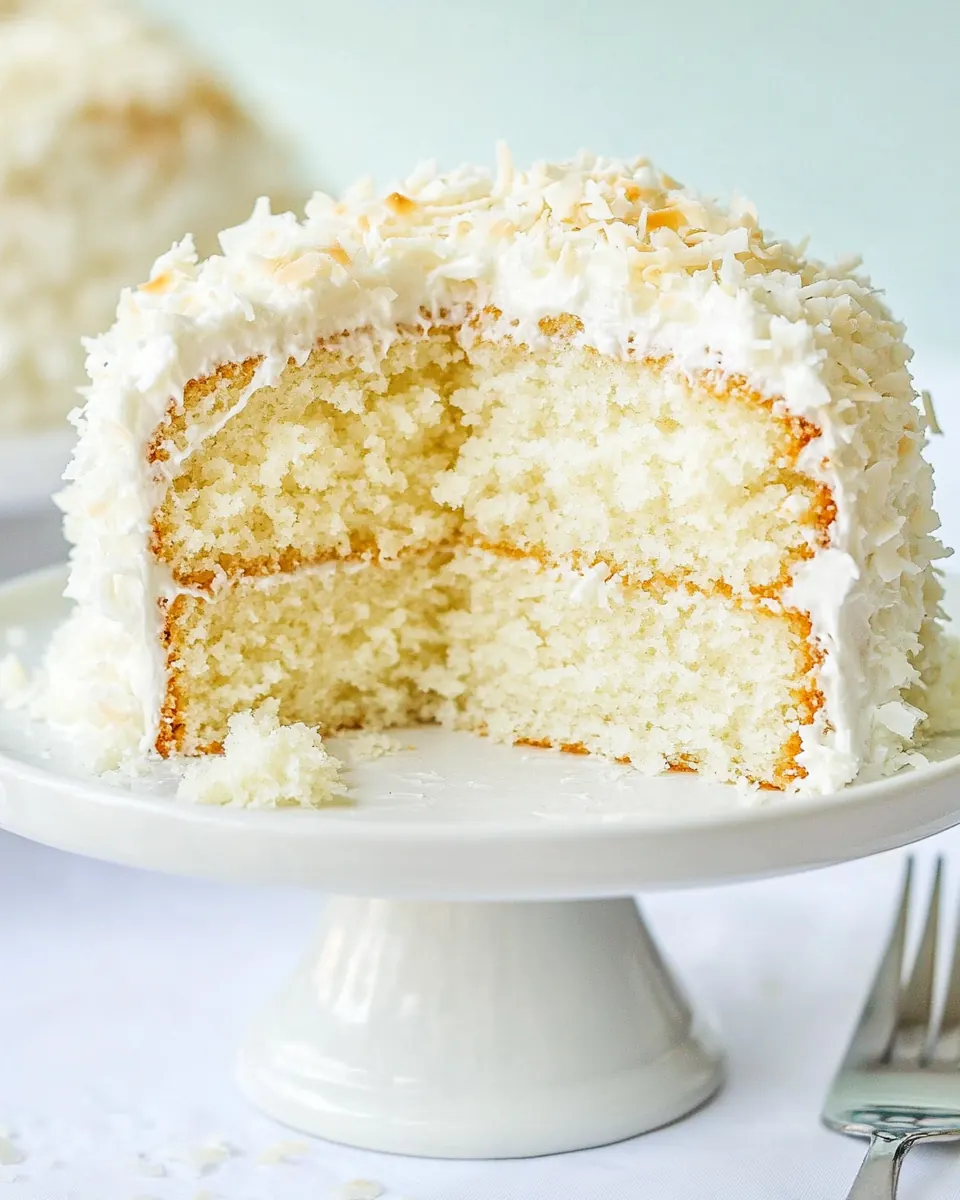
These ingredients are chosen to create a cake that is light yet buttery, and a frosting that is glossy and luxurious. The key players are the cake flour for tenderness, the whipped egg whites for lift, and the combination of coconut milk and sweetened shredded coconut for unmistakable coconut character. The butter anchors the flavor and the sugar balances and stabilizes both batter and meringue.
- 2 1/4 cups (281.25 g) cake flour: Sifted and lightly aerated to create a tender crumb in the cake batter; provides structure while keeping the texture soft and delicate. Measure accurately by weight for consistent results and avoid overmixing once combined with liquids. Works best when combined with leavening agents to produce even rise.
- 1 1/4 cups (250 g) granulated sugar: Granulated and used to sweeten and tenderize the cake; dissolves into the batter to help create a fine crumb. Creams with the butter to incorporate air that aids in leavening and texture development. Adds balance to coconut flavors without overwhelming them.
- 2 teaspoons baking powder: Leavening agent that releases gas when activated by moisture and heat to raise the cake. Combine evenly with the flour to ensure uniform lift and avoid dense spots. Works best when measured precisely and added to dry ingredients only.
- 1/2 teaspoon (0.5 teaspoon) kosher salt: Fine crystalline salt used to enhance overall flavor and balance sweetness in the cake. Dissolves into the batter to bring out other flavor components and strengthen gluten slightly. Measure carefully to avoid oversalting delicate cake layers.
- 3/4 cup (170.25 g) unsalted butter, at room temperature, cut into 2-inch pieces: Softened unsalted butter contributes richness, moisture, and flavor while helping to create a fine, tender crumb through creaming. Cut into pieces to allow even creaming and incorporation of air when beaten with sugar. Use at room temperature to ensure smooth emulsion with eggs and liquids.
- 6 egg whites: Whites beaten to provide lift, lightness, and structure through aeration when folded into batter. Separate from yolks to reduce fat and produce a lighter cake crumb while enabling meringue-like volume. Whisk to appropriate stiffness depending on recipe stage to avoid collapse.
- 1 cup (226 ml) coconut milk: Coconut milk adds moisture, subtle coconut flavor, and tenderizes the crumb due to its fat content. Use full-fat for richest flavor and consistent texture; shake or stir before measuring to reincorporate solids. Complements shredded coconut and enhances overall coconut profile.
- 1 cup (90 g) sweetened shredded coconut: Sweetened shredded coconut offers concentrated coconut flavor and chewy texture, distributed through the batter for pockets of coconut taste. Toast lightly if desired to deepen nuttiness and reduce excess moisture. Can absorb some liquid, so ensure batter accounts for additional texture.
- 1 vanilla bean, split in half lengthwise: Vanilla bean imparts intense aromatic vanilla flavor from seeds and pod, adding depth and complexity beyond extract. Split to scrape seeds into batter and steep pod in milk if desired to maximize flavor extraction. Use fresh beans for the most pronounced and natural vanilla notes.
- 1 1/2 cups (300 g) granulated sugar: Granulated sugar used in frosting to build structure and sweetness; dissolves during cooking or whipping to create a stable meringue-based buttercream. Adds body and helps stabilize egg whites when making Italian or Swiss meringue. Use measured by weight for consistent frosting texture.
- 6 egg whites: Egg whites used to form a stable meringue base for buttercream, providing lightness and structure when whipped with hot sugar. Separate from yolks and ensure no fat contamination to achieve maximum volume and stability. Gradually incorporate melted sugar to create a glossy, firm meringue.
- 1 1/2 cups (340.5 g) unsalted butter, at room temperature, cut into 2-inch pieces: Softened unsalted butter provides richness, smoothness, and a spreadable consistency to the buttercream; incorporated slowly into meringue to produce a silky emulsion. Cut into pieces for even creaming and to prevent lumps when beating into whipped egg whites. Use at proper temperature to avoid separation.
- 1 teaspoon vanilla extract: Vanilla extract contributes straightforward aromatic vanilla flavor to the buttercream, rounding out sweetness and enhancing other flavors. Add toward the end of mixing to preserve volatile aromatic compounds. Measure carefully since extracts are concentrated.
- 1/4 teaspoon (0.25 teaspoon) kosher salt: Fine salt used sparingly to balance sweetness and enhance the other flavors in the frosting. Dissolves easily into the buttercream to prevent any localized salinity and to lift the overall taste profile. A small pinch creates a more rounded and less cloying finish.
- 2/3 cup (150.67 ml) coconut milk: Coconut milk adds richness and coconut flavor to the buttercream while slightly loosening consistency for spreadability. Incorporate gradually to reach desired frosting texture and to enhance the overall coconut character. Use full-fat for best creaminess and stability.
- 1 cup (90 g) sweetened shredded coconut: Sweetened shredded coconut used as mix-in or garnish for the buttercream, adding texture and concentrated coconut sweetness. Sprinkle or fold in to distribute chewy coconut throughout the frosting and add visual interest. Toasting can intensify flavor and reduce moisture if needed.
How to Cook Coconut Cake with Coconut Meringue Buttercream Frosting
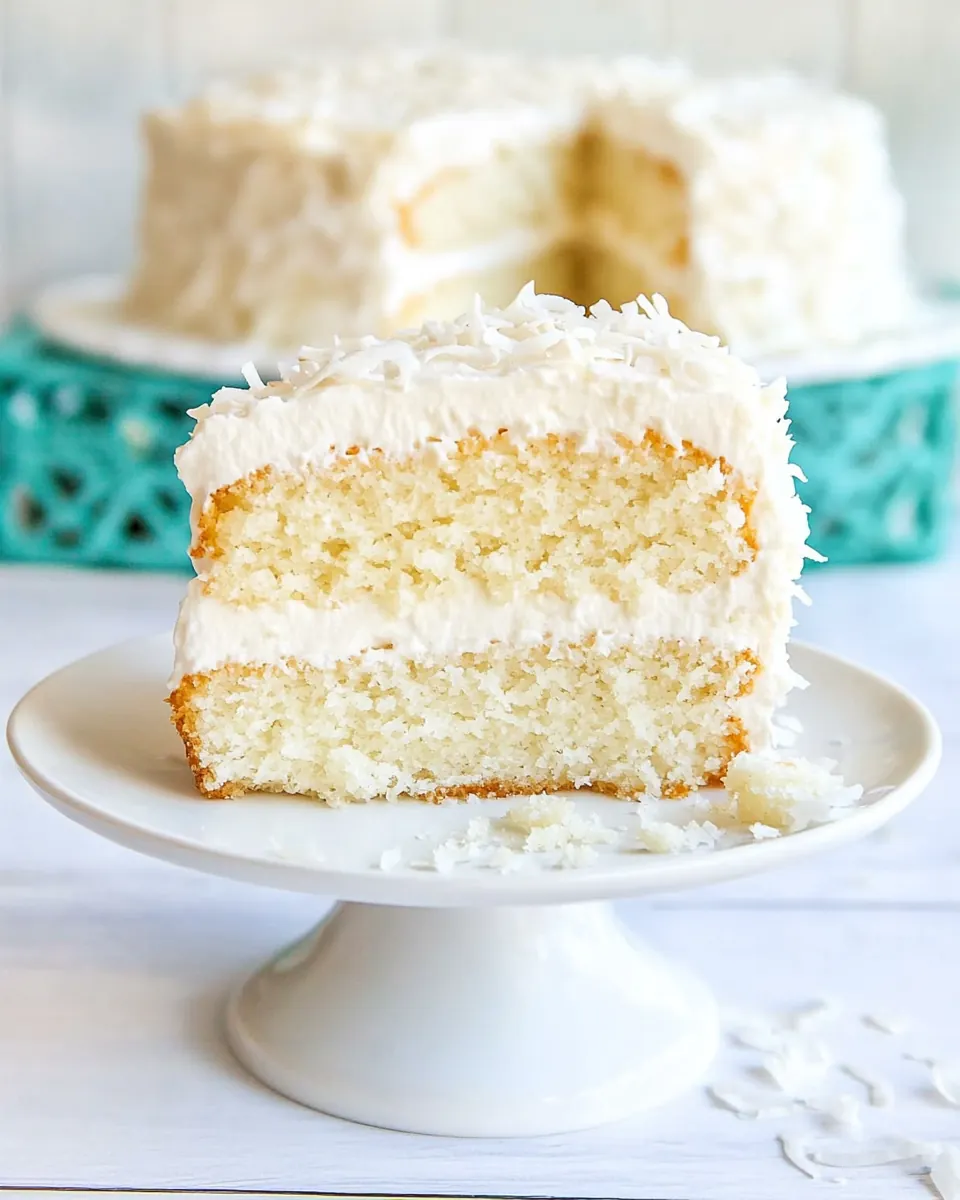
These instructions walk you through baking and assembling the cake with a conversational, hands on approach. Follow each step patiently, and you will be rewarded with layers that stack cleanly and a frosting that whips into a glossy finish. Keep your tools handy and pay attention to sensory cues like texture, smell, and temperature.
- Make the Cake: Preheat oven to 350 degrees F. Grease and flour two 8-inch round cake pans; set aside.: Preheat oven to 350 degrees F. Grease and flour two 8 inch round cake pans; set aside. : Warmth in the oven awakens the leavening agents and sets the scene, so preheating until it holds a steady heat is crucial, you should feel the small rush of heat when you open the door. Greasing and flouring the pans creates a thin barrier so the crumb releases cleanly, and when you tap the pan gently you should hear a dull thud rather than a sticky slap. If you skip properly preparing the pans, the layers may stick, tearing the crumb on release. A common misstep is not checking the oven temperature, so an oven thermometer is a simple safeguard to ensure even baking.
- Sift the cake flour into the bowl of an electric mixer. Add the sugar, baking powder and salt and beat on low speed for 15 seconds to combine. Add the butter pieces and beat on low speed for 1 minute, or until the mixture is coarse and crumbly.: As you blend, the dry ingredients should smell faintly wheaty with a hint of sweetness from the granulated sugar , and the butter will begin to distribute into pea size bits swallowing pockets of flour. That coarse, crumbly texture is the visual cue you want before adding liquids; it helps create a tender crumb by coating flour with fat and reducing gluten development. Over mixing here will cause the mixture to become too smooth and lead to denser cake. Avoid working the mixture on high speed, which can create too much air too early and alter the finished texture.
- In a separate medium bowl, whisk together the egg whites, coconut milk and the 1 cup shredded coconut until combined. Scrape the seeds from the vanilla bean into the mixture and whisk to thoroughly incorporate the seeds throughout the mixture.: When you stir the egg whites and coconut milk , the mix should shimmer slightly as the liquid binds to the shredded coconut; the vanilla bean seeds look like tiny black flecks distributed through the liquid, offering aromatic bursts. This wet mix adds moisture and flavor that will steam in the oven, contributing to lift and a tender crumb. A typical error is using cold ingredients; room temperature liquids help emulsify with the fat. If the vanilla bean seeds clump, use a spatula to disperse them fully.
- Add half of the coconut milk mixture to the dry ingredients and beat on medium-high for 1 minute. Scrape down the sides and bottom of the bowl, add the remainder of the coconut milk mixture and beat on medium speed for 30 seconds, or until the batter is well-mixed, light and fluffy.: At this stage the batter should transition from floury pockets to a smooth mixture with a matte sheen and slight billowy texture, and you might hear a soft hum from your mixer as it incorporates air. Scraping the bowl prevents unmixed pockets that would bake dense; the time on the mixer allows the egg whites to trap air for lift while the butter contributes richness. Over beating after full incorporation risks deflating those air pockets, so stop once it looks light. Avoid leaving unmixed streaks that show as flour in the baked cake.
- Divide the batter evenly between the cake pans and bake for 35 to 45 minutes, or until the tops are firm and golden brown and spring back when pressed lightly in the center. Let the cakes cool completely in the pans on a wire rack.: As the cakes bake, the kitchen will fill with a toasty, coconut scented aroma and the tops will gradually brown, signaling the Maillard reaction. The spring back test is tactile, press gently in the center and you should feel a subtle give that quickly recovers, indicating doneness without dryness. Letting the cakes cool in the pans prevents sudden temperature shifts that could make them sink, and the wire rack promotes airflow so bottoms do not trap steam. A common mistake is removing them too early which can cause collapse, and cutting into them warm will result in crumbly slices.
- Make the Frosting: In a small, heatproof bowl, whisk together the sugar and egg whites. Place the bowl on top of a saucepan with about an inch of simmering water (do not let the bottom of the bowl touch the water). Heat the mixture, whisking occasionally, for 6 to 8 minutes, or until the mixture is hot to the touch and the sugar is dissolved.: In a small, heatproof bowl, whisk together the sugar and egg whites. Place the bowl on top of a saucepan with about an inch of simmering water do not let the bottom of the bowl touch the water. : Heating the sugar with the egg whites dissolves the granules so the meringue will be silky and stable; you should feel the bowl warm and see small steam wisps without boiling. Whisking occasionally prevents cooked egg strings and encourages even heating. If the bowl touches the water, the eggs may scramble, ruining the base for your buttercream. Keeping the water at a gentle simmer is safer than a rolling boil that could overheat the mixture.
- Remove the bowl from the heat and transfer the mixture into the bowl of an electric mixer. Using the whisk attachment, whip on medium-high speed for 6 to 8 minutes, or until the mixture becomes a light, white meringue and the mixture is cool to the touch. Reduce the speed to low and add the butter a couple of pieces at a time. Increase the speed to medium and mix for 4 to 5 minutes, or until the butter is thoroughly incorporated and the frosting is smooth and glossy. The frosting may initially look curdled after adding the butter, but continue beating and it will come together, looking smooth and creamy by the end of the mixing time.: As you heat, the mixture will turn glossy and lose any graininess when a pinch between fingers no longer feels gritty, that is the test for dissolved sugar. You should notice the aroma brighten as the sugar melts and the whites loosen. If you stop too soon, undissolved sugar will give the frosting a gritty mouthfeel; too long or too hot risks cooking the whites into ribboned strands. Watch carefully and test by rubbing a small amount between fingers.
- Add the vanilla extract, salt and coconut milk and whip for another few minutes on medium speed, or until the coconut milk is thoroughly incorporated and the frosting is smooth. Again, the buttercream may look thin and separated, but continue mixing until it comes together. It will be more of a satin-like consistency, versus the thick powdered sugar frostings that are often used. Note: Use the frosting within 30 minutes, or transfer to an airtight container and store at room temperature for up to 1 day, then beat with a mixer (using the paddle attachment) until smooth before using. You can also store the frosting in an airtight container in the refrigerator for up to 2 weeks, then bring to room temperature and beat with a mixer (using the paddle attachment) for 6 to 8 minutes until smooth before using.: The whipped meringue will transform from glossy liquid to stiff, cloud like peaks, and the bowl should become cool, which is an important signal before adding butter. The sound of the mixer may change as the foam tightens, and you should see a bright white mass that holds shape. If you add butter to a warm meringue, it can melt and separate, so patience here preserves texture. A typical mistake is under whipping, which leaves the meringue too soft to hold butter properly.
- Assemble the Cake: Remove the cooled cakes from their pans and level the tops, if necessary. Place one cake layer on a cake stand and top with 2 cups of the frosting, using an offset spatula to spread it evenly to the edges.: When the unsalted butter is added slowly, the meringue and butter will emulsify into a silky buttercream; initially it may look curdled and lumpy and that shock is normal. Keep beating steadily and you will see it begin to unify into a satin texture with a luminous sheen. If you add the butter too quickly you risk a separated frosting that will take much longer to come together. If separation persists, chilling briefly and then beating again can bring it back.
- Place the second layer on top, top-side down. Spoon 1 cup of the frosting onto the top of the cake and use a large offset spatula to spread the frosting on top and over the sides of the cake, covering it with a very thin layer (this is the crumb coat). Refrigerate for 20 minutes.: The transition from curdled to smooth is a visual journey, watch as the mixture becomes uniform and glossy, and smell the rich buttery aroma melding with sweet coconut. This final smoothing step is what yields that professional looking finish. Avoid panic if it looks off at first, most of the time perseverance is the remedy. If it remains broken after extended beating, you can start with a small amount of fresh meringue and slowly reincorporate it to rescue the batch.
- Use a wooden spoon to mix the remaining frosting to lighten it up since it has been sitting. Spoon it onto the cake and spread it evenly over the top and down the sides. Use an offset spatula to create a smooth finish. Press the 1 cup shredded coconut onto the top and sides of the frosted cake. The cake can be stored in an airtight container at room temperature for up to 3 days.: Adding vanilla extract and coconut milk brightens the flavor and adjusts the consistency to a satin spreadable state, you should notice a fragrant lift and a smoother flow in the frosting. The coconut milk will thin the texture slightly so whip until it holds yet spreads easily. Adding too much liquid will make the frosting runny, while too little leaves it overly stiff. If it becomes too thin, chill briefly and beat again to regain body.
- Note: Use the frosting within 30 minutes, or transfer to an airtight container and store at room temperature for up to 1 day then beat with a mixer using the paddle attachment until smooth before using. : The frosting tastes best when freshly whipped because the air is at its peak, and the texture will be most satiny. If you store it, the fats may firm up or separate slightly, but re beating restores consistency. Avoid leaving it exposed to warm temperatures which may cause melting. A common oversight is forgetting to bring refrigerated frosting back to room temperature before re beating, which makes it harder to reincorporate.
- Assemble the Cake: Remove the cooled cakes from their pans and level the tops, if necessary. Place one cake layer on a cake stand and top with 2 cups of the frosting, using an offset spatula to spread it evenly to the edges. : When assembling, the tactile feedback of spreading should be smooth and slightly resistant, showing that the frosting has body to support the layers. Leveling the tops ensures stable stacking and even bite size across slices, and a light press will show if any air pockets remain. Work on a cool surface to keep frosting from softening too fast. Slicing into un leveled layers often creates a leaning cake that is harder to frost neatly.
- Place the second layer on top top side down. Spoon 1 cup of the frosting onto the top of the cake and use a large offset spatula to spread the frosting on top and over the sides of the cake covering it with a very thin layer this is the crumb coat. Refrigerate for 20 minutes.: The crumb coat traps loose crumbs so the final outer layer appears pristine, and chilling firms the buttercream so the next layer spreads without pulling crumbs. You should see a thin opaque layer that dulls the surface and feels cool to touch after refrigeration. Skipping the chill risks a messy exterior when you apply the final coat. If the crumb coat is too thin, it may not catch all crumbs, so err slightly thicker rather than thinner.
- Use a wooden spoon to mix the remaining frosting to lighten it up since it has been sitting. Spoon it onto the cake and spread it evenly over the top and down the sides. Use an offset spatula to create a smooth finish.: Mixing the frosting refreshes its texture and reincorporates any settled air, producing a lighter spread that will glide across the chilled crumb coat. As you smooth, watch for tiny air bubbles and work them out with gentle strokes to achieve a flawless appearance. Press the sweetened shredded coconut onto the top and sides to adhere, which provides texture and an attractive finish. If the frosting resists smoothing, let it warm a touch and then continue, but not so much that it becomes soft and slumps.
- Press the 1 cup shredded coconut onto the top and sides of the frosted cake. The cake can be stored in an airtight container at room temperature for up to 3 days.: The final press of the shredded coconut should be even and gentle, leaving a pleasing uniform coating that delivers a slight chew against the satin frosting. Storage at room temperature preserves the buttercream texture while keeping the crumb moist, and an airtight container prevents the coconut from drying out. Refrigeration can firm the cake but may mute the coconut aroma. A common error is leaving the cake uncovered which will dry the frosting and the outer coconut.
Ways to Adapt This Recipe
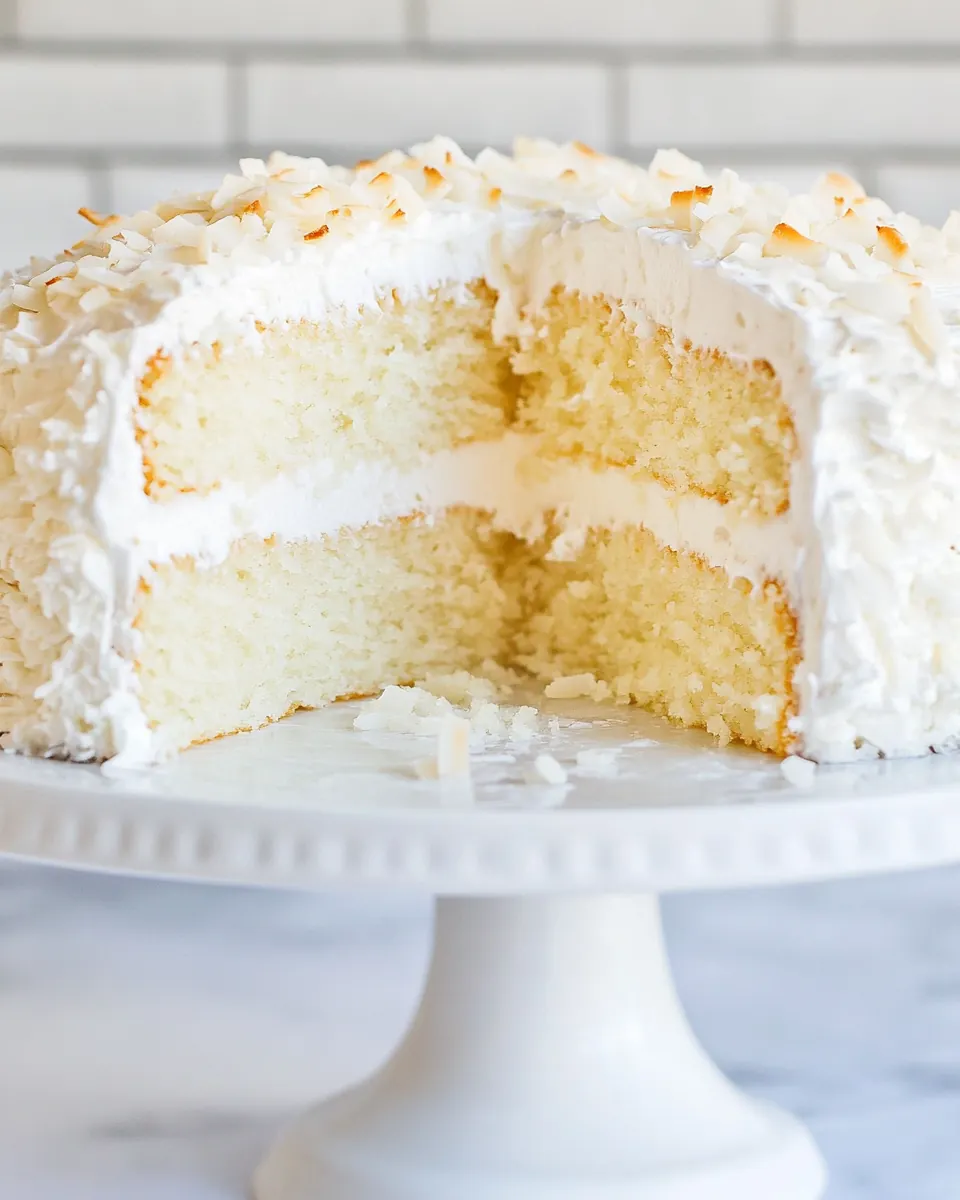
This cake is quite flexible, so small technique changes can tailor it to your taste or schedule. Below are practical, tested adaptations that preserve the cake’s character while offering different textures, timelines, and presentations.
- Swap presentation: Turn the layers into cupcakes by dividing batter into lined muffin tins and reduce baking time, checking for spring back in the center to avoid dry crumb.
- Lighten the frosting: Chill the butter briefly if the buttercream looks greasy and then beat again, which helps re integrate the fats into a smoother emulsion.
- Make ahead strategy: Bake the layers a day early and wrap tightly, then finish frosting on the event day to keep flavors fresh and make assembly less stressful.
- Storage tip: Keep the finished cake in an airtight container at room temperature for up to three days, or refrigerate for longer storage, bringing it back to room temperature before serving for best texture.
- Textural contrast: Toast half the shredded coconut for garnish to add a toasty crunch that contrasts with the satin buttercream without changing the inner crumb.
Perfect Pairings for Coconut Cake with Coconut Meringue Buttercream Frosting
This cake performs beautifully across many occasions, and pairing ideas help you plan menus, storage, and serving. Below are considered serving recommendations, side pairings, and storage approaches to make the most of each slice.
- Afternoon tea serving: Slice thin and serve with a light herbal tea, letting the cake’s coconut aroma play off delicate tea notes for an elegant midday treat.
- Celebration dessert: Present on a cake stand for birthdays or small dinner parties, pairing with fresh fruit on the side to cut the sweetness and add bright contrast.
- Seasonal fit: Works well year round but shines in summer when tropical flavors feel seasonal, pair with chilled fruit salads or citrus syrups for contrast.
- Occasion planning: Ideal for intimate gatherings or holidays where you want a showpiece dessert that can be made partially ahead.
- Storage guidance: Keep at room temperature in an airtight container for up to three days, refrigerate for longer storage and bring to room temperature before serving to restore texture.
- Serving size tips: For thin slices at a party, aim for 10 to 12 portions, while thicker celebratory slices comfortably serve 8 guests.
FAQ
Conclusion
This cake stands out because it balances tender layers with a glossy, coconut forward buttercream for a finish that looks and tastes special. Give it a little patience and attention during the meringue and assembly and you will be rewarded with a show stopping dessert that feels celebratory without being complicated. I hope you try it the next time you want to impress friends or treat yourself, and that the spice free, coconutty notes bring a bright, comforting moment to your table.
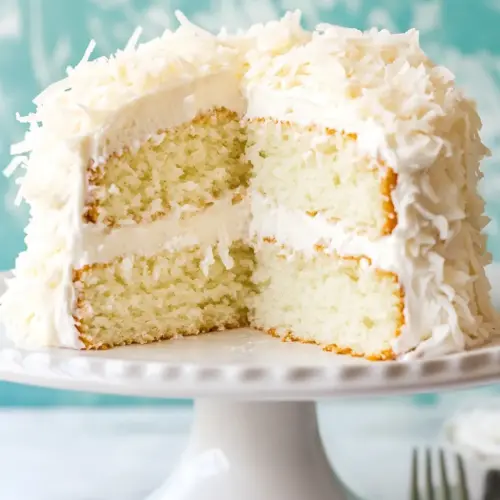
Coconut Cake with Coconut Meringue Buttercream Frosting
Equipment
- Electric Mixer
- Whisk
- Saucepan
- Wire Rack
- 8 inch round cake pans
- Offset Spatula
Ingredients
- 2 1/4 cups (281.25 g) cake flour Sifted and lightly aerated to create a tender crumb in the cake batter; provides structure while keeping the texture soft and delicate. Measure accurately by weight for consistent results and avoid overmixing once combined with liquids. Works best when combined with leavening agents to produce even rise.
- 1 1/4 cups (250 g) granulated sugar Granulated and used to sweeten and tenderize the cake; dissolves into the batter to help create a fine crumb. Creams with the butter to incorporate air that aids in leavening and texture development. Adds balance to coconut flavors without overwhelming them.
- 2 teaspoons baking powder Leavening agent that releases gas when activated by moisture and heat to raise the cake. Combine evenly with the flour to ensure uniform lift and avoid dense spots. Works best when measured precisely and added to dry ingredients only.
- 1/2 teaspoon (0.5 teaspoon) kosher salt Fine crystalline salt used to enhance overall flavor and balance sweetness in the cake. Dissolves into the batter to bring out other flavor components and strengthen gluten slightly. Measure carefully to avoid oversalting delicate cake layers.
- 3/4 cup (170.25 g) unsalted butter, at room temperature, cut into 2-inch pieces Softened unsalted butter contributes richness, moisture, and flavor while helping to create a fine, tender crumb through creaming. Cut into pieces to allow even creaming and incorporation of air when beaten with sugar. Use at room temperature to ensure smooth emulsion with eggs and liquids.
- 6 egg whites Whites beaten to provide lift, lightness, and structure through aeration when folded into batter. Separate from yolks to reduce fat and produce a lighter cake crumb while enabling meringue-like volume. Whisk to appropriate stiffness depending on recipe stage to avoid collapse.
- 1 cup (226 ml) coconut milk Coconut milk adds moisture, subtle coconut flavor, and tenderizes the crumb due to its fat content. Use full-fat for richest flavor and consistent texture; shake or stir before measuring to reincorporate solids. Complements shredded coconut and enhances overall coconut profile.
- 1 cup (90 g) sweetened shredded coconut Sweetened shredded coconut offers concentrated coconut flavor and chewy texture, distributed through the batter for pockets of coconut taste. Toast lightly if desired to deepen nuttiness and reduce excess moisture. Can absorb some liquid, so ensure batter accounts for additional texture.
- 1 vanilla bean, split in half lengthwise Vanilla bean imparts intense aromatic vanilla flavor from seeds and pod, adding depth and complexity beyond extract. Split to scrape seeds into batter and steep pod in milk if desired to maximize flavor extraction. Use fresh beans for the most pronounced and natural vanilla notes.
- 1 1/2 cups (300 g) granulated sugar Granulated sugar used in frosting to build structure and sweetness; dissolves during cooking or whipping to create a stable meringue-based buttercream. Adds body and helps stabilize egg whites when making Italian or Swiss meringue. Use measured by weight for consistent frosting texture.
- 6 egg whites Egg whites used to form a stable meringue base for buttercream, providing lightness and structure when whipped with hot sugar. Separate from yolks and ensure no fat contamination to achieve maximum volume and stability. Gradually incorporate melted sugar to create a glossy, firm meringue.
- 1 1/2 cups (340.5 g) unsalted butter, at room temperature, cut into 2-inch pieces Softened unsalted butter provides richness, smoothness, and a spreadable consistency to the buttercream; incorporated slowly into meringue to produce a silky emulsion. Cut into pieces for even creaming and to prevent lumps when beating into whipped egg whites. Use at proper temperature to avoid separation.
- 1 teaspoon vanilla extract Vanilla extract contributes straightforward aromatic vanilla flavor to the buttercream, rounding out sweetness and enhancing other flavors. Add toward the end of mixing to preserve volatile aromatic compounds. Measure carefully since extracts are concentrated.
- 1/4 teaspoon (0.25 teaspoon) kosher salt Fine salt used sparingly to balance sweetness and enhance the other flavors in the frosting. Dissolves easily into the buttercream to prevent any localized salinity and to lift the overall taste profile. A small pinch creates a more rounded and less cloying finish.
- 2/3 cup (150.67 ml) coconut milk Coconut milk adds richness and coconut flavor to the buttercream while slightly loosening consistency for spreadability. Incorporate gradually to reach desired frosting texture and to enhance the overall coconut character. Use full-fat for best creaminess and stability.
- 1 cup (90 g) sweetened shredded coconut Sweetened shredded coconut used as mix-in or garnish for the buttercream, adding texture and concentrated coconut sweetness. Sprinkle or fold in to distribute chewy coconut throughout the frosting and add visual interest. Toasting can intensify flavor and reduce moisture if needed.
Instructions
- Make the Cake: Preheat oven to 350 degrees F. Grease and flour two 8-inch round cake pans; set aside.: Preheat oven to 350 degrees F. Grease and flour two 8 inch round cake pans; set aside. : Warmth in the oven awakens the leavening agents and sets the scene, so preheating until it holds a steady heat is crucial, you should feel the small rush of heat when you open the door. Greasing and flouring the pans creates a thin barrier so the crumb releases cleanly, and when you tap the pan gently you should hear a dull thud rather than a sticky slap. If you skip properly preparing the pans, the layers may stick, tearing the crumb on release. A common misstep is not checking the oven temperature, so an oven thermometer is a simple safeguard to ensure even baking.
- Sift the cake flour into the bowl of an electric mixer. Add the sugar, baking powder and salt and beat on low speed for 15 seconds to combine. Add the butter pieces and beat on low speed for 1 minute, or until the mixture is coarse and crumbly.: As you blend, the dry ingredients should smell faintly wheaty with a hint of sweetness from the granulated sugar , and the butter will begin to distribute into pea size bits swallowing pockets of flour. That coarse, crumbly texture is the visual cue you want before adding liquids; it helps create a tender crumb by coating flour with fat and reducing gluten development. Over mixing here will cause the mixture to become too smooth and lead to denser cake. Avoid working the mixture on high speed, which can create too much air too early and alter the finished texture.
- In a separate medium bowl, whisk together the egg whites, coconut milk and the 1 cup shredded coconut until combined. Scrape the seeds from the vanilla bean into the mixture and whisk to thoroughly incorporate the seeds throughout the mixture.: When you stir the egg whites and coconut milk , the mix should shimmer slightly as the liquid binds to the shredded coconut; the vanilla bean seeds look like tiny black flecks distributed through the liquid, offering aromatic bursts. This wet mix adds moisture and flavor that will steam in the oven, contributing to lift and a tender crumb. A typical error is using cold ingredients; room temperature liquids help emulsify with the fat. If the vanilla bean seeds clump, use a spatula to disperse them fully.
- Add half of the coconut milk mixture to the dry ingredients and beat on medium-high for 1 minute. Scrape down the sides and bottom of the bowl, add the remainder of the coconut milk mixture and beat on medium speed for 30 seconds, or until the batter is well-mixed, light and fluffy.: At this stage the batter should transition from floury pockets to a smooth mixture with a matte sheen and slight billowy texture, and you might hear a soft hum from your mixer as it incorporates air. Scraping the bowl prevents unmixed pockets that would bake dense; the time on the mixer allows the egg whites to trap air for lift while the butter contributes richness. Over beating after full incorporation risks deflating those air pockets, so stop once it looks light. Avoid leaving unmixed streaks that show as flour in the baked cake.
- Divide the batter evenly between the cake pans and bake for 35 to 45 minutes, or until the tops are firm and golden brown and spring back when pressed lightly in the center. Let the cakes cool completely in the pans on a wire rack.: As the cakes bake, the kitchen will fill with a toasty, coconut scented aroma and the tops will gradually brown, signaling the Maillard reaction. The spring back test is tactile, press gently in the center and you should feel a subtle give that quickly recovers, indicating doneness without dryness. Letting the cakes cool in the pans prevents sudden temperature shifts that could make them sink, and the wire rack promotes airflow so bottoms do not trap steam. A common mistake is removing them too early which can cause collapse, and cutting into them warm will result in crumbly slices.
- Make the Frosting: In a small, heatproof bowl, whisk together the sugar and egg whites. Place the bowl on top of a saucepan with about an inch of simmering water (do not let the bottom of the bowl touch the water). Heat the mixture, whisking occasionally, for 6 to 8 minutes, or until the mixture is hot to the touch and the sugar is dissolved.: In a small, heatproof bowl, whisk together the sugar and egg whites. Place the bowl on top of a saucepan with about an inch of simmering water do not let the bottom of the bowl touch the water. : Heating the sugar with the egg whites dissolves the granules so the meringue will be silky and stable; you should feel the bowl warm and see small steam wisps without boiling. Whisking occasionally prevents cooked egg strings and encourages even heating. If the bowl touches the water, the eggs may scramble, ruining the base for your buttercream. Keeping the water at a gentle simmer is safer than a rolling boil that could overheat the mixture.
- Remove the bowl from the heat and transfer the mixture into the bowl of an electric mixer. Using the whisk attachment, whip on medium-high speed for 6 to 8 minutes, or until the mixture becomes a light, white meringue and the mixture is cool to the touch. Reduce the speed to low and add the butter a couple of pieces at a time. Increase the speed to medium and mix for 4 to 5 minutes, or until the butter is thoroughly incorporated and the frosting is smooth and glossy. The frosting may initially look curdled after adding the butter, but continue beating and it will come together, looking smooth and creamy by the end of the mixing time.: As you heat, the mixture will turn glossy and lose any graininess when a pinch between fingers no longer feels gritty, that is the test for dissolved sugar. You should notice the aroma brighten as the sugar melts and the whites loosen. If you stop too soon, undissolved sugar will give the frosting a gritty mouthfeel; too long or too hot risks cooking the whites into ribboned strands. Watch carefully and test by rubbing a small amount between fingers.
- Add the vanilla extract, salt and coconut milk and whip for another few minutes on medium speed, or until the coconut milk is thoroughly incorporated and the frosting is smooth. Again, the buttercream may look thin and separated, but continue mixing until it comes together. It will be more of a satin-like consistency, versus the thick powdered sugar frostings that are often used. Note: Use the frosting within 30 minutes, or transfer to an airtight container and store at room temperature for up to 1 day, then beat with a mixer (using the paddle attachment) until smooth before using. You can also store the frosting in an airtight container in the refrigerator for up to 2 weeks, then bring to room temperature and beat with a mixer (using the paddle attachment) for 6 to 8 minutes until smooth before using.: The whipped meringue will transform from glossy liquid to stiff, cloud like peaks, and the bowl should become cool, which is an important signal before adding butter. The sound of the mixer may change as the foam tightens, and you should see a bright white mass that holds shape. If you add butter to a warm meringue, it can melt and separate, so patience here preserves texture. A typical mistake is under whipping, which leaves the meringue too soft to hold butter properly.
- Assemble the Cake: Remove the cooled cakes from their pans and level the tops, if necessary. Place one cake layer on a cake stand and top with 2 cups of the frosting, using an offset spatula to spread it evenly to the edges.: When the unsalted butter is added slowly, the meringue and butter will emulsify into a silky buttercream; initially it may look curdled and lumpy and that shock is normal. Keep beating steadily and you will see it begin to unify into a satin texture with a luminous sheen. If you add the butter too quickly you risk a separated frosting that will take much longer to come together. If separation persists, chilling briefly and then beating again can bring it back.
- Place the second layer on top, top-side down. Spoon 1 cup of the frosting onto the top of the cake and use a large offset spatula to spread the frosting on top and over the sides of the cake, covering it with a very thin layer (this is the crumb coat). Refrigerate for 20 minutes.: The transition from curdled to smooth is a visual journey, watch as the mixture becomes uniform and glossy, and smell the rich buttery aroma melding with sweet coconut. This final smoothing step is what yields that professional looking finish. Avoid panic if it looks off at first, most of the time perseverance is the remedy. If it remains broken after extended beating, you can start with a small amount of fresh meringue and slowly reincorporate it to rescue the batch.
- Use a wooden spoon to mix the remaining frosting to lighten it up since it has been sitting. Spoon it onto the cake and spread it evenly over the top and down the sides. Use an offset spatula to create a smooth finish. Press the 1 cup shredded coconut onto the top and sides of the frosted cake. The cake can be stored in an airtight container at room temperature for up to 3 days.: Adding vanilla extract and coconut milk brightens the flavor and adjusts the consistency to a satin spreadable state, you should notice a fragrant lift and a smoother flow in the frosting. The coconut milk will thin the texture slightly so whip until it holds yet spreads easily. Adding too much liquid will make the frosting runny, while too little leaves it overly stiff. If it becomes too thin, chill briefly and beat again to regain body.
- Note: Use the frosting within 30 minutes, or transfer to an airtight container and store at room temperature for up to 1 day then beat with a mixer using the paddle attachment until smooth before using. : The frosting tastes best when freshly whipped because the air is at its peak, and the texture will be most satiny. If you store it, the fats may firm up or separate slightly, but re beating restores consistency. Avoid leaving it exposed to warm temperatures which may cause melting. A common oversight is forgetting to bring refrigerated frosting back to room temperature before re beating, which makes it harder to reincorporate.
- Assemble the Cake: Remove the cooled cakes from their pans and level the tops, if necessary. Place one cake layer on a cake stand and top with 2 cups of the frosting, using an offset spatula to spread it evenly to the edges. : When assembling, the tactile feedback of spreading should be smooth and slightly resistant, showing that the frosting has body to support the layers. Leveling the tops ensures stable stacking and even bite size across slices, and a light press will show if any air pockets remain. Work on a cool surface to keep frosting from softening too fast. Slicing into un leveled layers often creates a leaning cake that is harder to frost neatly.
- Place the second layer on top top side down. Spoon 1 cup of the frosting onto the top of the cake and use a large offset spatula to spread the frosting on top and over the sides of the cake covering it with a very thin layer this is the crumb coat. Refrigerate for 20 minutes.: The crumb coat traps loose crumbs so the final outer layer appears pristine, and chilling firms the buttercream so the next layer spreads without pulling crumbs. You should see a thin opaque layer that dulls the surface and feels cool to touch after refrigeration. Skipping the chill risks a messy exterior when you apply the final coat. If the crumb coat is too thin, it may not catch all crumbs, so err slightly thicker rather than thinner.
- Use a wooden spoon to mix the remaining frosting to lighten it up since it has been sitting. Spoon it onto the cake and spread it evenly over the top and down the sides. Use an offset spatula to create a smooth finish.: Mixing the frosting refreshes its texture and reincorporates any settled air, producing a lighter spread that will glide across the chilled crumb coat. As you smooth, watch for tiny air bubbles and work them out with gentle strokes to achieve a flawless appearance. Press the sweetened shredded coconut onto the top and sides to adhere, which provides texture and an attractive finish. If the frosting resists smoothing, let it warm a touch and then continue, but not so much that it becomes soft and slumps.
- Press the 1 cup shredded coconut onto the top and sides of the frosted cake. The cake can be stored in an airtight container at room temperature for up to 3 days.: The final press of the shredded coconut should be even and gentle, leaving a pleasing uniform coating that delivers a slight chew against the satin frosting. Storage at room temperature preserves the buttercream texture while keeping the crumb moist, and an airtight container prevents the coconut from drying out. Refrigeration can firm the cake but may mute the coconut aroma. A common error is leaving the cake uncovered which will dry the frosting and the outer coconut.
Notes
- Swap presentation: Turn the layers into cupcakes by dividing batter into lined muffin tins and reduce baking time, checking for spring back in the center to avoid dry crumb.
- Lighten the frosting: Chill the butter briefly if the buttercream looks greasy and then beat again, which helps re integrate the fats into a smoother emulsion.
- Make ahead strategy: Bake the layers a day early and wrap tightly, then finish frosting on the event day to keep flavors fresh and make assembly less stressful.
- Storage tip: Keep the finished cake in an airtight container at room temperature for up to three days, or refrigerate for longer storage, bringing it back to room temperature before serving for best texture.
- Textural contrast: Toast half the shredded coconut for garnish to add a toasty crunch that contrasts with the satin buttercream without changing the inner crumb.