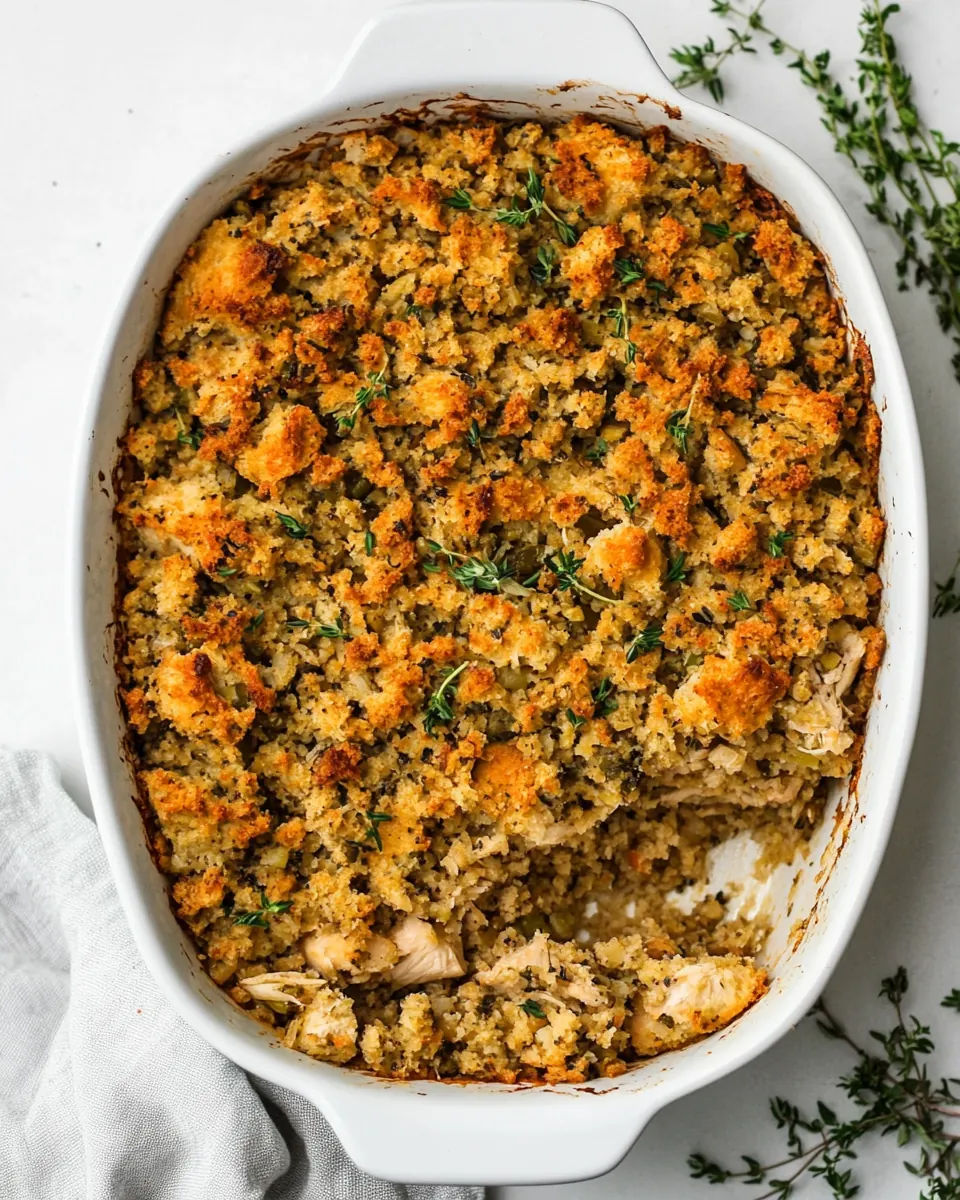
Chicken and Stuffing Casserole
Chicken and Stuffing Casserole has been the warm, comforting centerpiece of so many of my family meals, and the first time I made it I remember the way the house smelled like a small bakery crossbred with a Sunday kitchen, full of savory steam and browned edges. That first casserole came from a weeknight scramble that turned into a kitchen success, when I used leftover chicken and a box of stuffing to turn ordinary pantry items into something cozy and memorable.
Over the years I’ve adjusted the balance of cream and broth, added more aromatic vegetables, and learned when to hold back on salt so the herbs have room to sing. When friends drop by unexpectedly, I often reach for this dish because it feels both casual and a little celebratory, simple enough to make without stress, yet rich enough to serve to guests. I love how the top layer crisps while the filling stays creamy, giving you two delightful textures in every spoonful.
Recipe Snapshot
50 mins
20 mins
30 mins
Medium
400 kcal
American
Gluten-Free, Keto
Dinner
Skillet, 9 x 13 inch baking dish, Oven
The Appeal of This Chicken and Stuffing Casserole
Comfort Food That Feels Homemade
I keep making Chicken and Stuffing Casserole because it tastes like home, not like takeout. The combination of buttery stuffing and a creamy, herb kissed chicken filling gives you the cozy, familiar flavors everyone asks about at the table. I always say this recipe is one that hugs you from the inside.
Fast Prep, Big Yield
We often need a hearty dish that serves many, and this casserole answers that call. Using boxed stuffing and pre cooked chicken cuts active time dramatically, so you spend minutes assembling instead of hours cooking. I love that you can feed a crowd without turning dinner into a marathon.
Textural Contrast That Wins
The creamy interior made from heavy whipping cream and chicken broth contrasts with the crunchy golden top of the prepared stuffing. That interplay of silken and crisp keeps each bite interesting, and I always find people going back for just one more spoonful to chase the contrast.
Built In Versatility
This casserole is a forgiving platform. I rely on the base of onion, celery, and carrots for aromatic depth, and the herbs pull everything together. Whenever I need to adapt for what is in the fridge, the structure of the recipe lets me do it without losing the signature flavor.
A Classic for Gatherings
For holiday meals and family nights alike, Chicken and Stuffing Casserole feels appropriate and special. It reheats well, travels well, and keeps its character if you need to make it ahead. I always recommend it when you want something dependable that still impresses.
Main Ingredients for Chicken and Stuffing Casserole
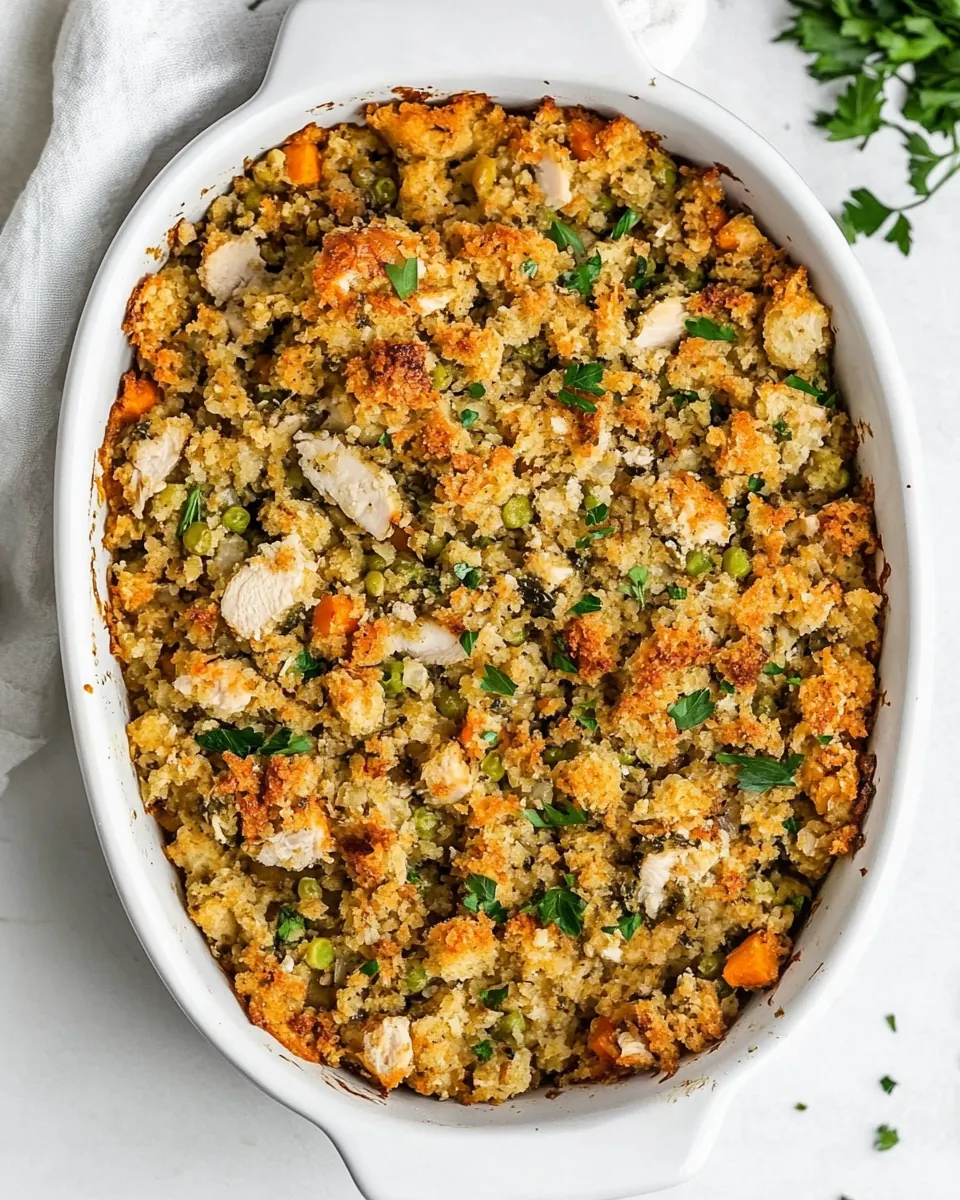
The ingredients here are straightforward, and they work together like a small orchestra. The stuffing provides texture and savory backbone, the trio of onion, celery, and carrots gives aromatic sweetness and crunch, while the creamy base holds everything together. Together these elements make a casserole that is both rich and balanced.
- 2 packages stuffing mix: Adds a convenient seasoned base that crisps when baked and soaks up savory juices to form the casserole topping; helps provide structure and familiar holiday flavors.
- 1/2 cup unsalted butter: Provides rich, nutty flavor and a silky mouthfeel when melted into the filling; also helps brown the top and carry fat-soluble aromas.
- 1/2 yellow onion minced: Lends subtle sweetness and aromatic depth when sautéed; softens to blend with other vegetables and forms a savory foundation for the sauce.
- 3 stalks celery sliced: Contributes a mild vegetal crunch and aromatic backbone when cooked; releases natural moisture and complements the other mirepoix vegetables.
- 3 medium carrots peeled and diced: Offers natural sweetness and tender texture once cooked; adds color, body, and balanced flavor to the vegetable base of the casserole.
- 3 cloves garlic minced: Imparts pungent, savory notes and aromatic warmth when minced and sautéed; enhances overall umami and ties the filling flavors together.
- 1/3 cup all-purpose flour: Serves as a thickening agent to create a smooth, cohesive sauce; helps bind liquids and produce a velvety consistency for the casserole filling.
- 3 cups chicken broth: Provides savory, chicken-forward liquid to build the sauce and infuse the filling with depth; balances the cream and hydrates the stuffing topping.
- 1 cup heavy whipping cream: Adds luxurious creaminess and a rich mouthfeel to the sauce; enriches flavor and creates a silky texture that melds the ingredients.
- 3 cups cooked chicken chopped: Supplies protein, texture, and hearty substance to the casserole; contributes roasted or cooked chicken flavor throughout the dish.
- 2 teaspoons fresh thyme: Offers bright, herbaceous notes and a slightly minty, lemony aroma; complements poultry and elevates overall savory complexity.
- 1 teaspoon fresh oregano: Delivers a warm, slightly peppery herbaceous flavor that pairs well with poultry; helps round out the herb profile in the filling.
- 1 teaspoon fresh parsley: Provides fresh, clean, slightly bitter-green flavor to lift the dish; acts as a finishing herb that adds brightness to each bite.
- 1 teaspoon salt: Adds necessary seasoning to enhance all flavors and balance richness; ensures the casserole tastes fully developed and well-seasoned.
- 1 teaspoon pepper: Brings mild heat and flavor contrast to balance richness and herbs; helps highlight individual ingredients and brighten the overall taste.
How to Cook Chicken and Stuffing Casserole
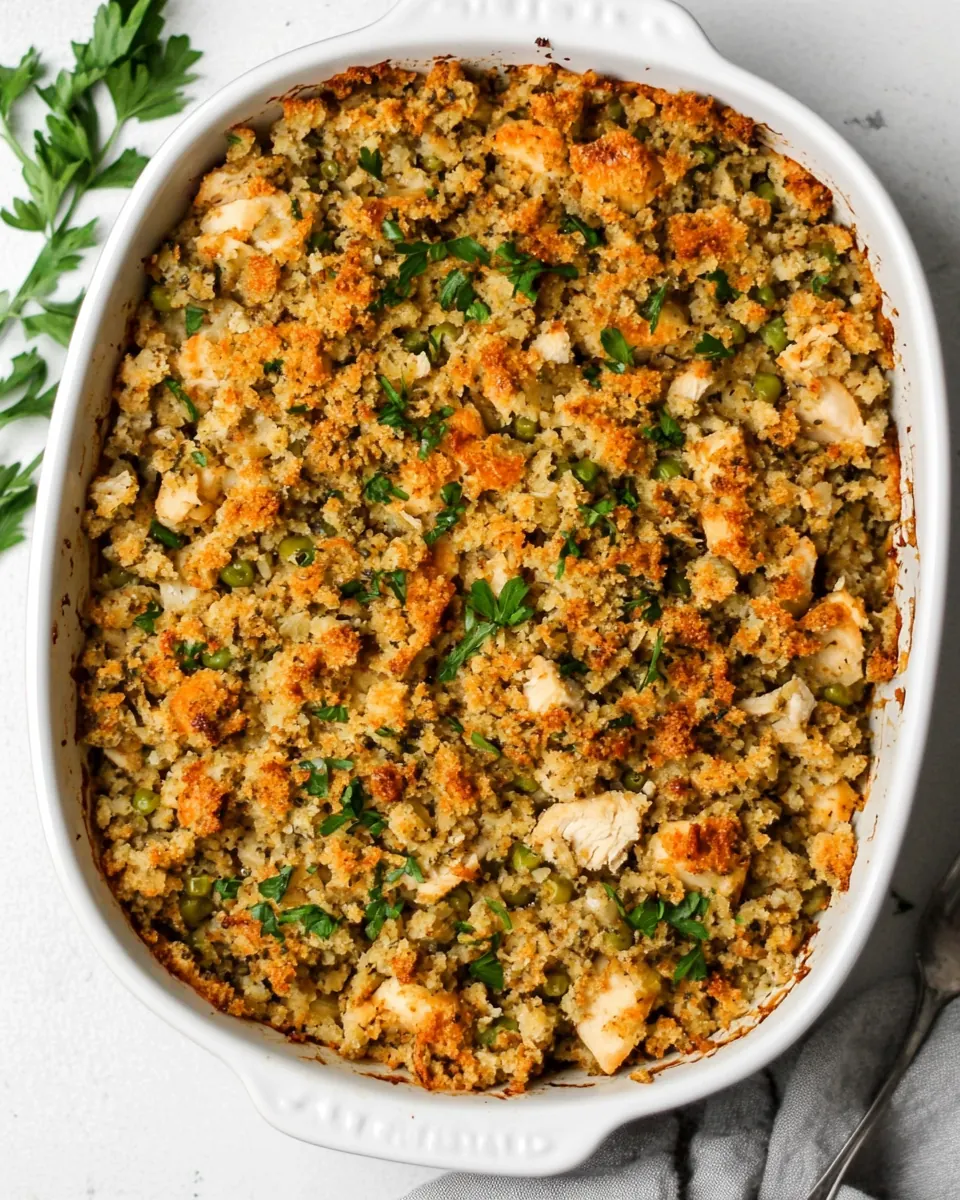
This casserole is straightforward to assemble, and the reward is a bubbling, fragrant dish with a crisp top. Below I expand each step with sensory notes, troubleshooting tips, and reasons why each action matters, so you can feel confident as you go.
- Preheat an oven to 375 degrees Fahrenheit and spray a 9 X 13 inch baking dish with non-stick cooking spray.: As the oven warms, you'll notice a dry, warm scent that promises browning, which is essential for the top layer to crisp properly. Spraying the dish prevents sticking and helps the edges release cleanly, so you keep that attractive serving appearance. A common mistake is under preheating, which can result in a soggy top instead of golden brown, so wait until the oven reaches the full temperature before inserting the casserole.
- Cook 2 packages stuffing mix according to the package directions and set it aside.: While the stuffing cooks, its aroma will deepen into toasted breadcrumbs, and letting it rest slightly prevents it from steaming and becoming limp. Setting it aside maintains its loft so it crisps when baked. Avoid overhydrating the stuffing during preparation, because excess moisture will stop it from getting crisp in the oven.
- In a large skillet over medium-high heat, melt 1/2 cup unsalted butter, add in the 1/2 yellow onion, 3 stalks celery, and 3 medium carrots. Saute the vegetables until the onion is translucent, about 5 minutes. Add in 3 cloves garlic and saute for 2 minutes.: The butter should shimmer, not smoke, releasing a warm dairy scent as the vegetables hit the pan. As the onion softens and the celery and carrots begin to sound like a gentle sizzle, you'll know the aromatics are releasing their sugars and building flavor. Stir frequently to prevent browning too quickly, which can make the vegetables bitter. A too hot pan will brown the edges before the centers soften, so regulate the heat to medium-high.
- Add 1/3 cup all-purpose flour and cook, stirring, for 1 minute. Slowly add 3 cups chicken broth, stirring constantly. Add in 1 cup heavy whipping cream and bring it back to a gentle boil.: Translucent onion indicates the cell walls have broken down and the sweet flavors have emerged, while the celery and carrots will still have some texture. The sound at this stage is a gentle, steady sizzle, and the smell is sweet and savory combined. Avoid undercooking the vegetables, because raw pieces will disrupt the casserole's mouthfeel.
- Add 3 cups cooked chicken, 2 teaspoons fresh thyme, 1 teaspoon fresh oregano, 1 teaspoon fresh parsley, 1 teaspoon salt and 1 teaspoon pepper. Stir everything together until well combined.: When you add the minced garlic , the kitchen fills with a bright, pungent aroma very quickly. Two minutes is enough to release its flavor into the vegetables without letting it burn, which would create bitterness. Stir constantly during this short period and watch the garlic's color; it should remain pale, not brown.
- Pour the chicken and vegetable mixture into the greased baking dish. Top the mixture with the prepared stuffing.: The flour will absorb the butter and vegetable juices, creating a nutty scent as it toasts briefly. This step builds the base for a smooth sauce, removing the raw flour taste. Cook only about a minute, because longer toasting can darken the roux and alter the flavor profile.
- Bake until the stuffing on top is golden brown and the chicken mixture is bubbling, about 30 to 35 minutes.: Pouring the chicken broth slowly while stirring prevents lumps and allows the sauce to come together with a silky consistency. You'll notice the sound change from individual splashes to a steady simmer as the liquid integrates. If you add the broth too quickly you risk a lumpy sauce, so patience here pays off.
- Remove the casserole from the oven and allow it to set at room temperature for about 10 minutes before serving.: The heavy whipping cream enriches the sauce, creating a creamy aroma and a thicker texture that coats the spoon. Bringing it to a gentle boil activates the thickening power of the roux, but avoid a rolling boil which can break the cream or scald it. A common error is overheating, which may cause the sauce to thin or separate.
- Add 3 cups cooked chicken, 2 teaspoons fresh thyme, 1 teaspoon fresh oregano, 1 teaspoon fresh parsley, 1 teaspoon salt and 1 teaspoon pepper: At this point, the filling takes on its full character, with herbaceous notes from thyme , oregano , and parsley , and the savory body of the chicken . Stir gently so the meat stays in good pieces and the herbs release without becoming dusty. Taste carefully for seasoning because the prepared stuffing and broth may already contain salt.
- Stir everything together until well combined: The mixture should be glossy and coherent, with visible flecks of herb and tender chunks of chicken . You'll see steam rising and hear a soft simmer if the pan is still warm. Combining thoroughly ensures even seasoning and consistent texture throughout the casserole. Avoid vigorous stirring which can shred the meat into an undesired texture.
- Pour the chicken and vegetable mixture into the greased baking dish: As you transfer the filling, notice the contrast between the hot, fragrant filling and the cool dish. Spread it evenly so each portion has the same proportion of sauce, meat, and vegetables. Pockets of uneven filling can cause some spots to dry out or others to be overly saucy.
- Top the mixture with the prepared stuffing: Gently mound the prepared stuffing across the surface, covering the filling. The stuffing will create the crisp, golden crust once baked, so distribute it evenly for uniform browning. Pressing too hard compacts the topping and prevents it from airing out and crisping properly.
- Bake until the stuffing on top is golden brown and the chicken mixture is bubbling, about 30 to 35 minutes: In the oven you will hear a faint bubbling and smell a toasty, savory aroma as the top turns golden. Visual cues are important here the center should gently bubble and the top should be an even golden brown. Opening the oven too often lowers temperature and extends bake time, which can affect texture, so check sparingly through the oven light.
- Remove the casserole from the oven and allow it to set at room temperature for about 10 minutes before serving: Resting lets the sauce thicken and settle, giving cleaner portions and a balanced consistency, while the heat redistributes and the flavors meld. Serve warm so the contrast between the crisp top and creamy filling is at its best. Cutting into it immediately can make the filling runny and lose structure.
Tips for Success
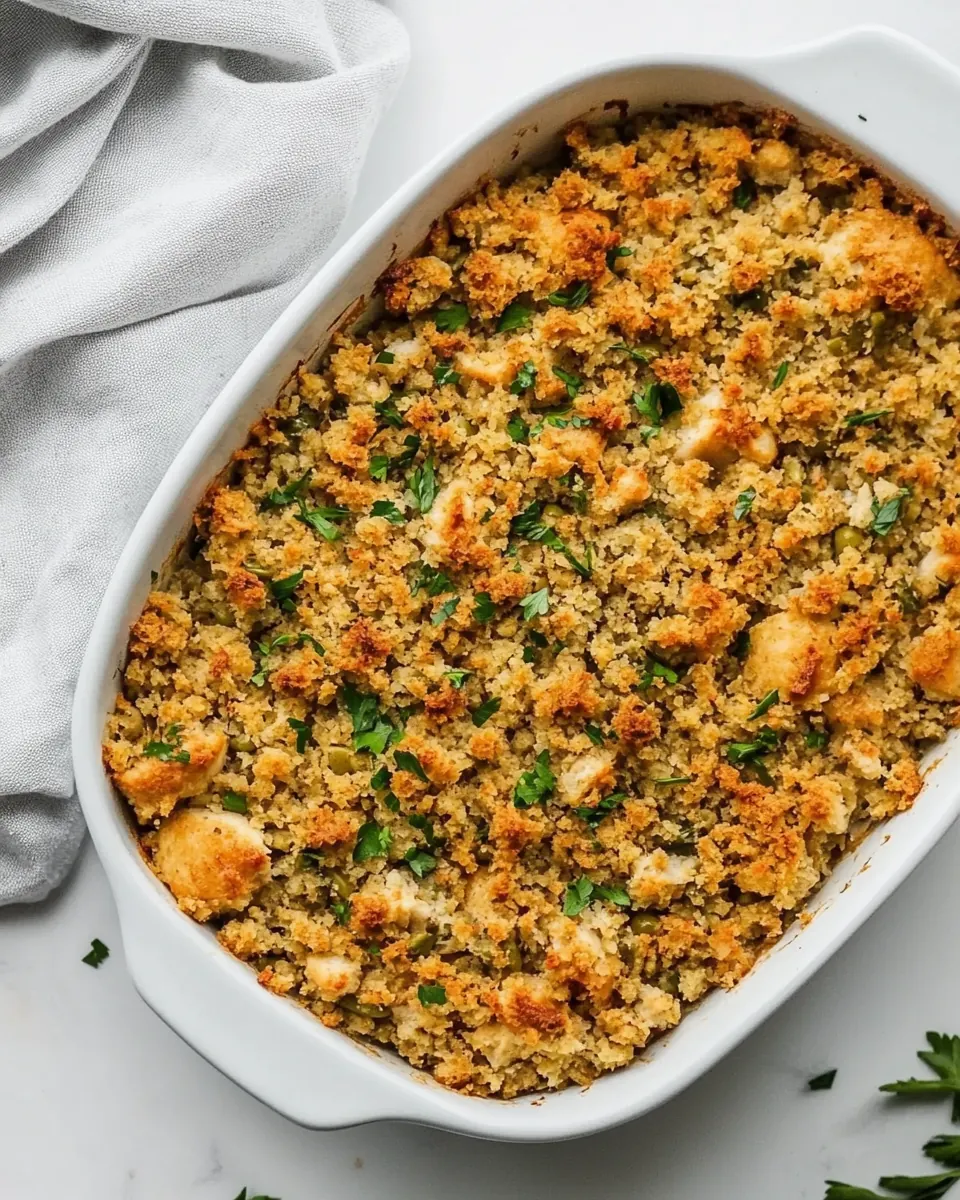
This recipe rewards attention to texture and seasoning, so the tips here focus on timing, temperature, and sensible swaps to ensure the best result. Below are practical pointers to help every stage go smoothly.
- Heat control: Maintain medium-high for sautéing so vegetables soften without burning, and adjust if you see too rapid browning.
- Herb freshness: Use fresh herbs when possible, because they deliver brighter aroma than dried; if using dried, reduce the quantity to avoid overpowering.
- Stuffing texture: Keep the prepared stuffing slightly drier than you think, as oven baking will further moisten it; soggy stuffing will not crisp properly.
- Sauce thickness: The sauce should coat a spoon; if too thin, simmer gently until it reduces, if too thick, stir in a splash of broth until balanced.
- Even layering: Spread the filling evenly in the dish to ensure consistent baking and to avoid burned edges or undercooked centers.
- Rest before serving: Allow ten minutes to set, for cleaner slices and a fuller flavor as the components meld together.
Serving Options for Chicken and Stuffing Casserole
This casserole works beautifully for family dinners, holiday spreads, or casual potlucks, and it pairs well with simple, bright sides to balance its richness. Below are ideas for serving occasions, side dishes, and storage that make the dish versatile and guest friendly.
- Holiday centerpiece: Serve Chicken and Stuffing Casserole at Thanksgiving as a comforting, easier alternative to traditional roast poultry, letting it sit alongside roasted vegetables and a green salad.
- Weeknight dinner: Pair with a crisp green salad dressed lightly to cut the richness, and serve warm for a quick family meal that feels substantial without a long cook.
- Potluck friendly: Transport the casserole in the baking dish and reheat gently in an oven until bubbly; it holds well and is easy to serve to a crowd.
- Storage tips: Refrigerate leftovers in an airtight container for up to three days, and reheat in a 350 degree Fahrenheit oven until warmed through so the top regains some crispness.
- Seasonal pairing: In winter this casserole complements roasted winter vegetables and a tart cranberry chutney, adding contrast and brightness to the plate.
FAQ
Conclusion
This Chicken and Stuffing Casserole stands out for its comforting balance of creamy filling and crunchy topping, making it a reliable hit whether for weeknight family dinner or a holiday table. I hope you give it a try and discover how pantry friendly ingredients can transform into something truly satisfying. Make it on a chilly evening or for a gathering, and enjoy the way it brings people together around the table.

Chicken and Stuffing Casserole
Equipment
- Skillet
- 9 x 13 inch baking dish
- Oven
Ingredients
- 2 packages stuffing mix Adds a convenient seasoned base that crisps when baked and soaks up savory juices to form the casserole topping; helps provide structure and familiar holiday flavors.
- 1/2 cup unsalted butter Provides rich, nutty flavor and a silky mouthfeel when melted into the filling; also helps brown the top and carry fat-soluble aromas.
- 1/2 yellow onion minced Lends subtle sweetness and aromatic depth when sautéed; softens to blend with other vegetables and forms a savory foundation for the sauce.
- 3 stalks celery sliced Contributes a mild vegetal crunch and aromatic backbone when cooked; releases natural moisture and complements the other mirepoix vegetables.
- 3 medium carrots peeled and diced Offers natural sweetness and tender texture once cooked; adds color, body, and balanced flavor to the vegetable base of the casserole.
- 3 cloves garlic minced Imparts pungent, savory notes and aromatic warmth when minced and sautéed; enhances overall umami and ties the filling flavors together.
- 1/3 cup all-purpose flour Serves as a thickening agent to create a smooth, cohesive sauce; helps bind liquids and produce a velvety consistency for the casserole filling.
- 3 cups chicken broth Provides savory, chicken-forward liquid to build the sauce and infuse the filling with depth; balances the cream and hydrates the stuffing topping.
- 1 cup heavy whipping cream Adds luxurious creaminess and a rich mouthfeel to the sauce; enriches flavor and creates a silky texture that melds the ingredients.
- 3 cups cooked chicken chopped Supplies protein, texture, and hearty substance to the casserole; contributes roasted or cooked chicken flavor throughout the dish.
- 2 teaspoons fresh thyme Offers bright, herbaceous notes and a slightly minty, lemony aroma; complements poultry and elevates overall savory complexity.
- 1 teaspoon fresh oregano Delivers a warm, slightly peppery herbaceous flavor that pairs well with poultry; helps round out the herb profile in the filling.
- 1 teaspoon fresh parsley Provides fresh, clean, slightly bitter-green flavor to lift the dish; acts as a finishing herb that adds brightness to each bite.
- 1 teaspoon salt Adds necessary seasoning to enhance all flavors and balance richness; ensures the casserole tastes fully developed and well-seasoned.
- 1 teaspoon pepper Brings mild heat and flavor contrast to balance richness and herbs; helps highlight individual ingredients and brighten the overall taste.
Instructions
- Preheat an oven to 375 degrees Fahrenheit and spray a 9 X 13 inch baking dish with non-stick cooking spray.: As the oven warms, you'll notice a dry, warm scent that promises browning, which is essential for the top layer to crisp properly. Spraying the dish prevents sticking and helps the edges release cleanly, so you keep that attractive serving appearance. A common mistake is under preheating, which can result in a soggy top instead of golden brown, so wait until the oven reaches the full temperature before inserting the casserole.
- Cook 2 packages stuffing mix according to the package directions and set it aside.: While the stuffing cooks, its aroma will deepen into toasted breadcrumbs, and letting it rest slightly prevents it from steaming and becoming limp. Setting it aside maintains its loft so it crisps when baked. Avoid overhydrating the stuffing during preparation, because excess moisture will stop it from getting crisp in the oven.
- In a large skillet over medium-high heat, melt 1/2 cup unsalted butter, add in the 1/2 yellow onion, 3 stalks celery, and 3 medium carrots. Saute the vegetables until the onion is translucent, about 5 minutes. Add in 3 cloves garlic and saute for 2 minutes.: The butter should shimmer, not smoke, releasing a warm dairy scent as the vegetables hit the pan. As the onion softens and the celery and carrots begin to sound like a gentle sizzle, you'll know the aromatics are releasing their sugars and building flavor. Stir frequently to prevent browning too quickly, which can make the vegetables bitter. A too hot pan will brown the edges before the centers soften, so regulate the heat to medium-high.
- Add 1/3 cup all-purpose flour and cook, stirring, for 1 minute. Slowly add 3 cups chicken broth, stirring constantly. Add in 1 cup heavy whipping cream and bring it back to a gentle boil.: Translucent onion indicates the cell walls have broken down and the sweet flavors have emerged, while the celery and carrots will still have some texture. The sound at this stage is a gentle, steady sizzle, and the smell is sweet and savory combined. Avoid undercooking the vegetables, because raw pieces will disrupt the casserole's mouthfeel.
- Add 3 cups cooked chicken, 2 teaspoons fresh thyme, 1 teaspoon fresh oregano, 1 teaspoon fresh parsley, 1 teaspoon salt and 1 teaspoon pepper. Stir everything together until well combined.: When you add the minced garlic , the kitchen fills with a bright, pungent aroma very quickly. Two minutes is enough to release its flavor into the vegetables without letting it burn, which would create bitterness. Stir constantly during this short period and watch the garlic's color; it should remain pale, not brown.
- Pour the chicken and vegetable mixture into the greased baking dish. Top the mixture with the prepared stuffing.: The flour will absorb the butter and vegetable juices, creating a nutty scent as it toasts briefly. This step builds the base for a smooth sauce, removing the raw flour taste. Cook only about a minute, because longer toasting can darken the roux and alter the flavor profile.
- Bake until the stuffing on top is golden brown and the chicken mixture is bubbling, about 30 to 35 minutes.: Pouring the chicken broth slowly while stirring prevents lumps and allows the sauce to come together with a silky consistency. You'll notice the sound change from individual splashes to a steady simmer as the liquid integrates. If you add the broth too quickly you risk a lumpy sauce, so patience here pays off.
- Remove the casserole from the oven and allow it to set at room temperature for about 10 minutes before serving.: The heavy whipping cream enriches the sauce, creating a creamy aroma and a thicker texture that coats the spoon. Bringing it to a gentle boil activates the thickening power of the roux, but avoid a rolling boil which can break the cream or scald it. A common error is overheating, which may cause the sauce to thin or separate.
- Add 3 cups cooked chicken, 2 teaspoons fresh thyme, 1 teaspoon fresh oregano, 1 teaspoon fresh parsley, 1 teaspoon salt and 1 teaspoon pepper: At this point, the filling takes on its full character, with herbaceous notes from thyme , oregano , and parsley , and the savory body of the chicken . Stir gently so the meat stays in good pieces and the herbs release without becoming dusty. Taste carefully for seasoning because the prepared stuffing and broth may already contain salt.
- Stir everything together until well combined: The mixture should be glossy and coherent, with visible flecks of herb and tender chunks of chicken . You'll see steam rising and hear a soft simmer if the pan is still warm. Combining thoroughly ensures even seasoning and consistent texture throughout the casserole. Avoid vigorous stirring which can shred the meat into an undesired texture.
- Pour the chicken and vegetable mixture into the greased baking dish: As you transfer the filling, notice the contrast between the hot, fragrant filling and the cool dish. Spread it evenly so each portion has the same proportion of sauce, meat, and vegetables. Pockets of uneven filling can cause some spots to dry out or others to be overly saucy.
- Top the mixture with the prepared stuffing: Gently mound the prepared stuffing across the surface, covering the filling. The stuffing will create the crisp, golden crust once baked, so distribute it evenly for uniform browning. Pressing too hard compacts the topping and prevents it from airing out and crisping properly.
- Bake until the stuffing on top is golden brown and the chicken mixture is bubbling, about 30 to 35 minutes: In the oven you will hear a faint bubbling and smell a toasty, savory aroma as the top turns golden. Visual cues are important here the center should gently bubble and the top should be an even golden brown. Opening the oven too often lowers temperature and extends bake time, which can affect texture, so check sparingly through the oven light.
- Remove the casserole from the oven and allow it to set at room temperature for about 10 minutes before serving: Resting lets the sauce thicken and settle, giving cleaner portions and a balanced consistency, while the heat redistributes and the flavors meld. Serve warm so the contrast between the crisp top and creamy filling is at its best. Cutting into it immediately can make the filling runny and lose structure.
Notes
- Heat control: Maintain medium-high for sautéing so vegetables soften without burning, and adjust if you see too rapid browning.
- Herb freshness: Use fresh herbs when possible, because they deliver brighter aroma than dried; if using dried, reduce the quantity to avoid overpowering.
- Stuffing texture: Keep the prepared stuffing slightly drier than you think, as oven baking will further moisten it; soggy stuffing will not crisp properly.
- Sauce thickness: The sauce should coat a spoon; if too thin, simmer gently until it reduces, if too thick, stir in a splash of broth until balanced.
- Even layering: Spread the filling evenly in the dish to ensure consistent baking and to avoid burned edges or undercooked centers.
- Rest before serving: Allow ten minutes to set, for cleaner slices and a fuller flavor as the components meld together.