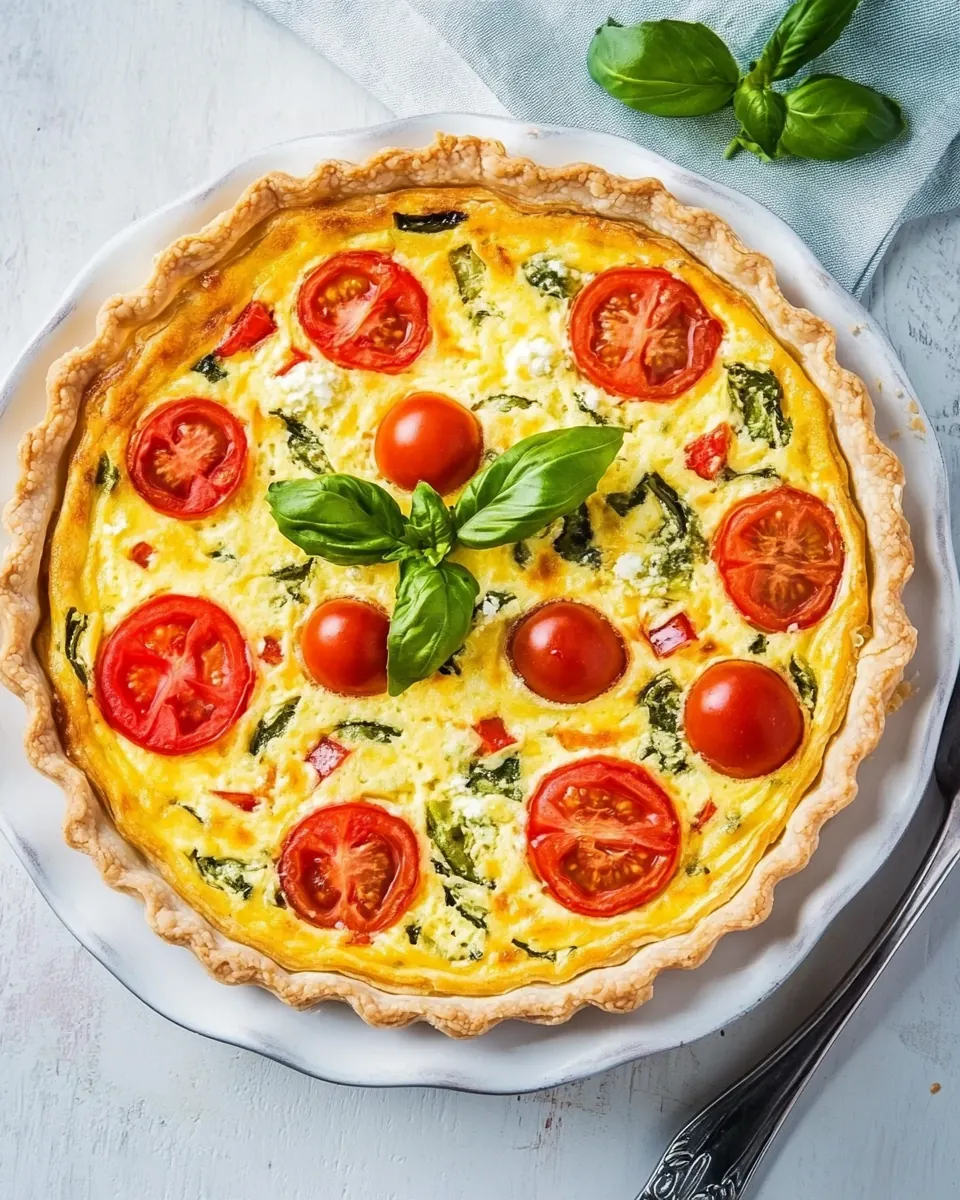
Caprese Quiche
Caprese Quiche is one of those recipes I reach for when I want something bright, comforting, and just a little bit showy without a lot of fuss. The first time I made it I was headed to a spring brunch with friends, and I wanted a dish that felt like sunshine on a plate. I remember gathering the eggs, whole milk, and heaps of mozzarella cheese, and feeling a little giddy about how simple ingredients could look so elegant when baked in a flaky crust.
That morning I put on some music, sipped a quick coffee, and set to work assembling the filling. The scent of warm basil and roasting cherry tomatoes filled the kitchen as the oven did its quiet work. When it came out, the top was gently golden, the edges of the crust crisp, and the center still tender but set. Friends gathered around the table, and I loved the way they paused before the first bite, like they could already taste the contrast of creamy filling and bright herbs.
Recipe Snapshot
45 mins
10 mins
35 mins
Medium
320 kcal
Italian
Gluten-Free, Keto
Dinner
Oven, Pie pan, Parchment paper, Pie weights or dried beans, Mixing bowl, Whisk
Why This Caprese Quiche Stands Out
Fresh, simple flavors that sing
I adore how Caprese Quiche uses a handful of high quality components to create depth. The bright basil and sweet cherry tomatoes cut through the richness of the eggs and mozzarella cheese, so every forkful feels balanced. I often say that when the ingredients are this good, the technique is there to showcase them, not hide them.
Flexible for any meal
I make this when I need a relaxed brunch or an easy weeknight dinner that still impresses. The recipe travels well to potlucks, and leftovers reheat beautifully. Because it slices neatly, you can serve it warm, at room temperature, or chilled, which gives me options when I am planning a menu.
Effortless but elegant presentation
One thing I love is how little time this takes to look polished. A golden crust and a scattering of fresh basil make it pop on the table. I find guests assume I spent longer than I actually did, which never gets old.
Kid friendly yet sophisticated
My kids always ask for a slice, and the combination of gooey mozzarella cheese and tender eggs is comforting for little palates while still pleasing adults. It hits that sweet spot where everyone at the table feels included.
Reliable technique with room for tweaks
There is a method to getting a perfectly set quiche, and once you understand it, you can adapt the filling freely. I like that I can swap crusts, tweak the herbs, or add seasonal tomatoes while keeping the same dependable bake time and technique.
Main Ingredients for Caprese Quiche
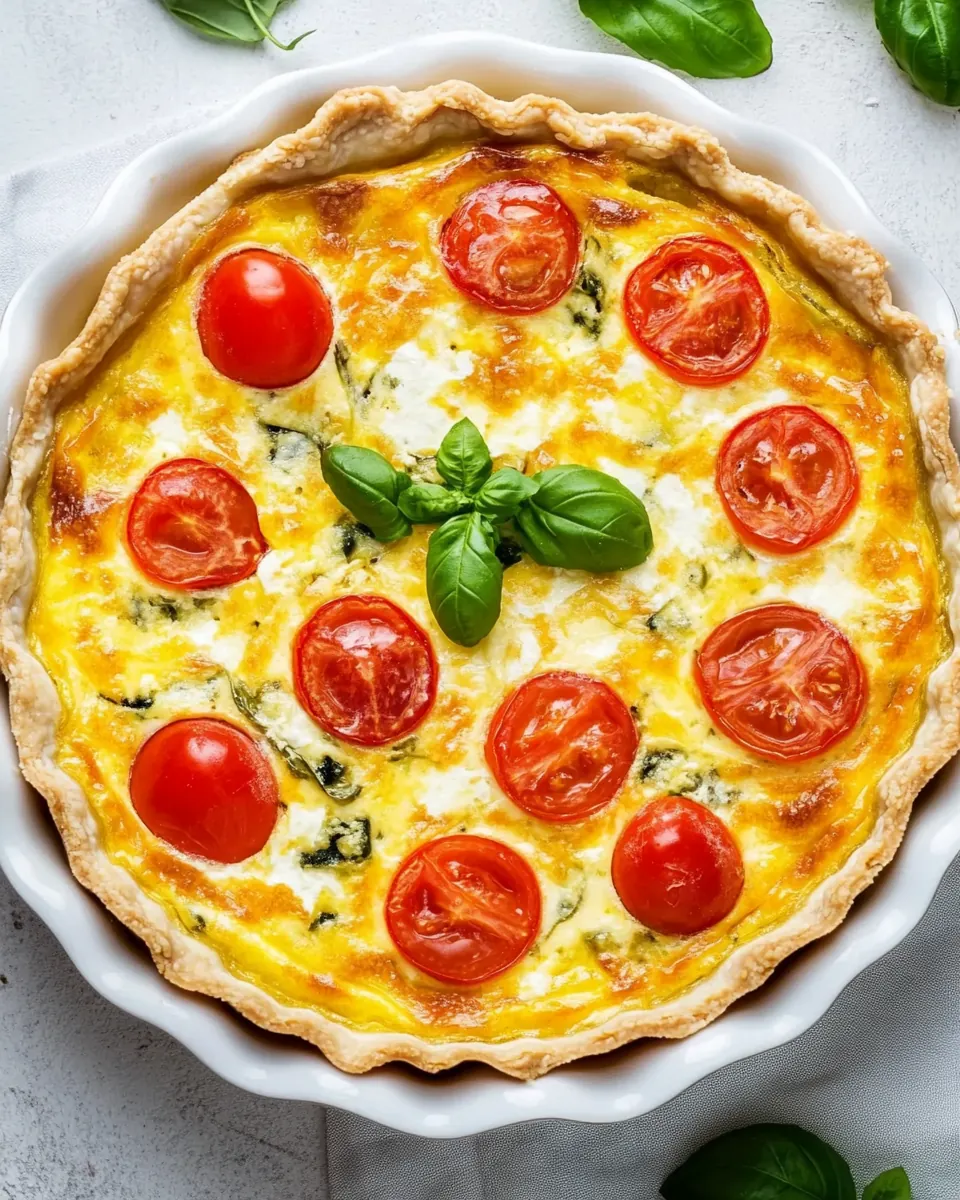
This dish is all about harmony, letting creamy, fresh, and herbal players shine together. The philosophy is simple, use a sturdy base, a custardy filling, and vivid, fresh toppings. The key players are the eggs for structure, the whole milk for silkiness, the mozzarella cheese for stretch and cream, the basil for lift, and the cherry tomatoes for a little pop of acidity. Each ingredient earns its place and supports the final texture and flavor.
- 6 large eggs: Provide structure and richness to the quiche by setting the custard base; whisk until homogeneous to ensure even cooking and a smooth texture.
- 3/4 cup whole milk: Add creaminess and help create a silky custard that blends with the eggs; opt for whole milk for balanced fat that yields tender curds.
- 1 cup shredded mozzarella cheese: Contribute melty, gooey cheese flavor and help bind fillings while creating a golden top; shred finely so it disperses through the custard evenly.
- 1 cup packed basil, thinly sliced: Provide bright herbal aroma and fresh, peppery flavor that lightens the rich custard; slice thinly to distribute flavor throughout each slice.
- 1 cup quartered cherry tomatoes: Deliver bursts of acidity and sweetness that contrast the creamy custard; quarter small tomatoes so they cook quickly and release flavorful juices.
- 1/2 teaspoon kosher salt: Season the custard to enhance all flavors and control balance; dissolve evenly into the egg mixture to avoid pockets of over-salted bites.
- 1 unbaked pie crust (store bought or homemade): Hold the custard and fillings together while providing a crisp, buttery base; use an unbaked crust to bake directly with the quiche for best texture.
The Process for Making Caprese Quiche
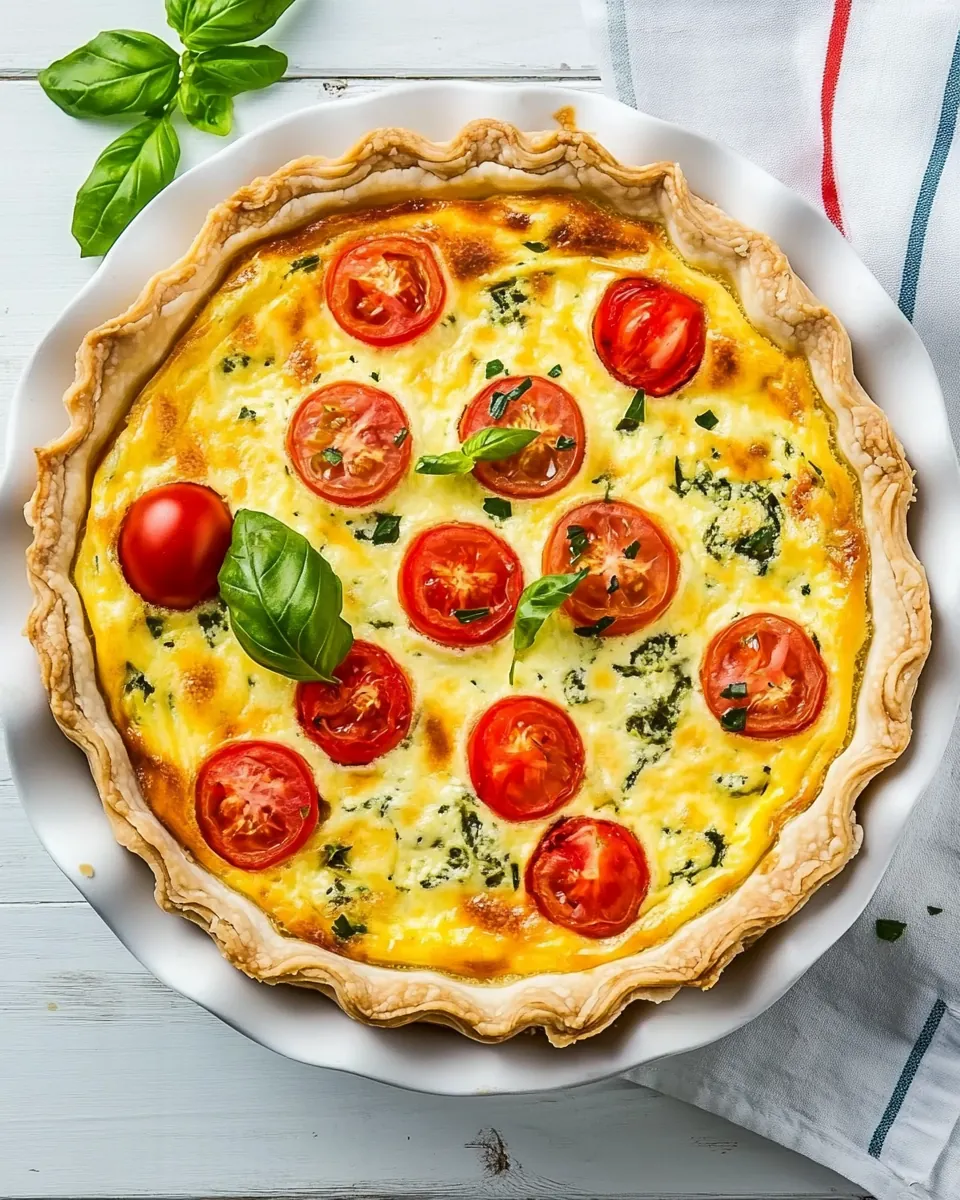
These steps walk you through temperature, tactile cues, and small checks that make the difference between a pale custard and a perfectly set, slightly golden quiche. Take your time between steps and pay attention to visual and sensory signals, they will guide you to success.
- Preheat oven to 350° F.: The moment the oven starts to warm you will smell a neutral warm air that promises even baking. Preheating ensures the crust begins setting right away, preventing sogginess. If the oven is not fully up to temperature the custard can take longer to set and the crust may overbrown, so always let the oven reach 350° F before inserting your quiche. A common mistake is placing a cold dish into a not fully preheated oven, which causes uneven rising and longer cook times. Listen for the faint hum of the oven cycling as a cue that it is ready.
- Place the dough into a pie or tart pan and mold into the shape of the dish. Place the pie crust in the freezer for 10 minutes to chill.: Chilling tightens the gluten slightly and helps the crust hold its shape, producing flakier, crispier edges when baked. As you press the dough in, your fingertips will warm it, so putting it in the freezer cools and firms the fat, leading to a better texture. If you skip this step the crust can shrink or slump during blind baking, creating gaps. A typical error is overworking the dough, which makes it tough, so handle it lightly and give it that quick chill.
- Line the crust with parchment paper and pie weights or dried beans and bake for 15 minutes.: The weights press the crust down so it does not bubble up, and you will notice the edges starting to take on a faint golden hue after this stage. The sound is subtle, a steady oven hum, while the smell is faintly toasty. This partial bake creates a shield that prevents a soggy bottom when the wet filling is added. If you skip weights your crust could puff, forming air pockets that ruin the base. Check that the parchment lies flat and the weights are evenly distributed.
- In a bowl, whisk together the eggs, milk and mozzarella cheese. Gently fold in the basil and cherry tomatoes.: As you whisk the eggs and milk , the mixture should look smooth and glossy, without foam. The shredded mozzarella cheese will add flecks of creaminess. Folding in the basil and cherry tomatoes at the end keeps their color and texture vibrant. If you overwhisk you can incorporate too much air which causes the custard to puff and crack, so mix only until homogeneous. When you fold, you should hear a soft swish and see the tomatoes suspended evenly through the custard.
- Pour the filling into the partially baked pie crust and bake an additional 35 minutes or until golden and cooked through (the center shouldn’t jiggle).: As the quiche bakes the aroma shifts from raw dairy to a warm, herby perfume. Visual cues are important, watch for a lightly golden top and set edges, and the center should be just firm, with a slight wobble that disappears as it cools. This texture means the custard is tender and not rubbery. One mistake to avoid is overbaking, which yields a dry, grainy custard, so start checking a few minutes before the end of the suggested time. If you notice deep browning, tent with foil to protect the surface while the center finishes.
- Allow to cool 15 minutes before serving.: Cooling lets the custard finish setting and makes slicing neater, the warm steam will settle and the aroma will mellow into a balanced, savory bouquet. You will feel the top firm slightly under your fingers, and the crust will crisp as it cools. Serving too hot risks a runny slice, and cutting immediately can make the pieces collapse, so patience pays off. A common slip is cutting right away because the quiche looks done, but it will hold shape and taste better after this brief rest.
Pro Tips and Tweaks
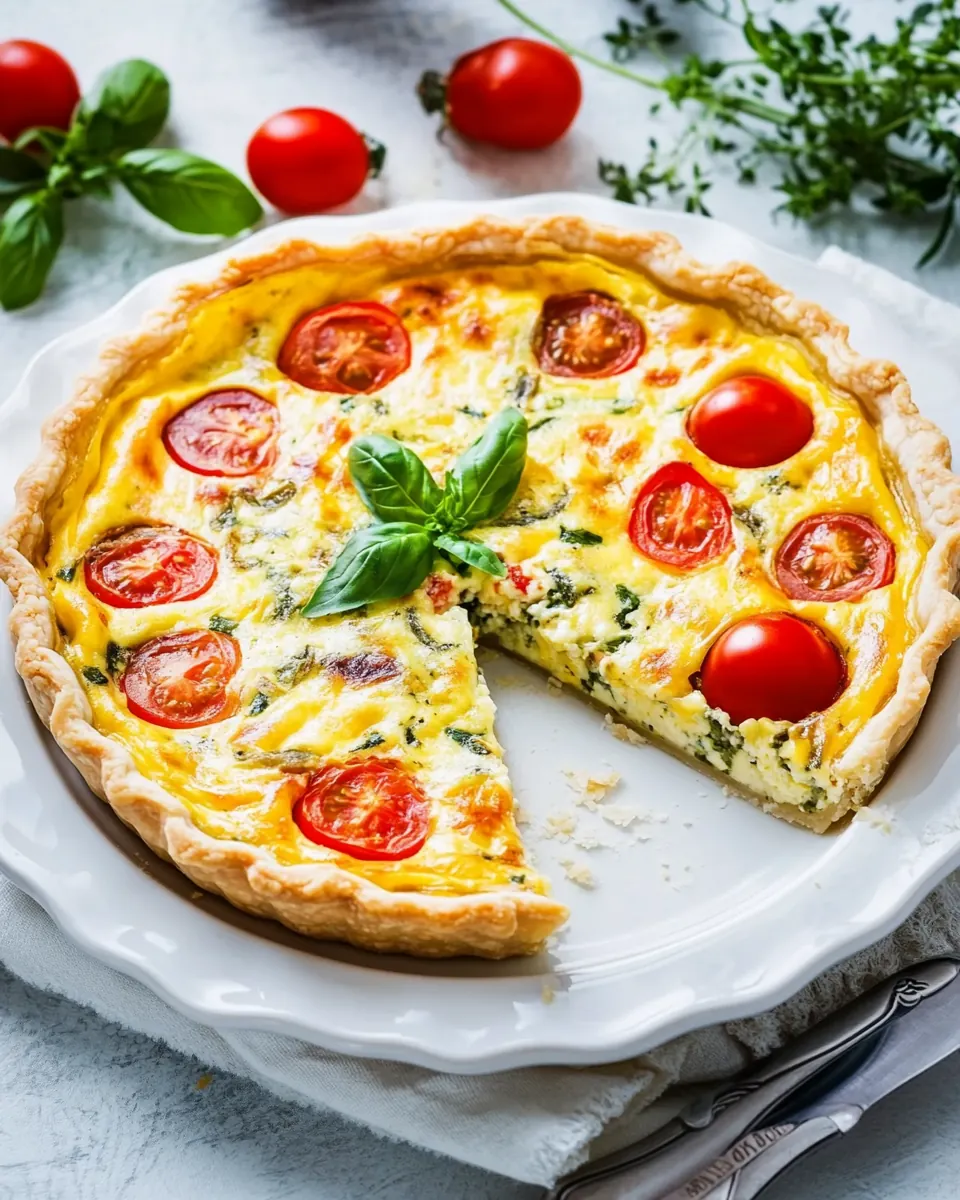
I like to think of a few simple tweaks that elevate the finished quiche without adding complexity. Small technique changes yield the best results, and most of them are about timing and temperature.
- Chill the crust: Cooling the shaped dough before blind baking helps it hold a fluted edge and prevents shrinking during the initial bake.
- Fresh shredded cheese: Shred the mozzarella cheese yourself for smoother melting and a cleaner texture in the custard.
- Even tomato pieces: Quarter the cherry tomatoes so they distribute evenly and avoid sinking to the bottom during baking.
- Don’t overwhisk: Mix the custard until just combined to avoid incorporating excess air that leads to cracks and uneven texture.
- Tent if browning: If the top is browning too quickly, loosely tent foil over the quiche while the center finishes setting.
- Room temperature eggs: Letting the eggs come to room temperature improves the emulsion and helps the custard bake evenly.
What to Pair With Caprese Quiche
This quiche is versatile and pairs well with light sides and seasonal salads, making it suitable for brunch, lunch, or a casual dinner. Think about balance, texture, and how the flavors complement the bright notes in the filling.
- Fresh green salad: A crisp tossed salad with a simple vinaigrette provides a refreshing counterpoint to the rich quiche.
- Roasted vegetables: Lightly roasted asparagus or zucchini dressed with a squeeze of lemon works beautifully alongside warm slices.
- Crusty bread: Serve with a small wedge of warm, crusty bread to soak up any custard and add a rustic element to the plate.
- Brunch spread: Include small bowls of olives, marinated vegetables, and a fruit platter to make a varied brunch table.
- Occasions: Perfect for spring gatherings, casual celebrations, or a laid back weekend brunch with friends and family.
- Storage tips: Refrigerate leftovers tightly covered for up to three days and reheat gently in a low oven to preserve texture.
FAQ
Conclusion
Caprese Quiche stands out because it balances rich, creamy custard with bright, herbaceous flavors for a satisfying yet light dish. I encourage you to try it when you want something that looks elegant but is straightforward to prepare, whether for brunch or a cozy dinner. It rewards simple, quality ingredients and a little attention to technique, and you will likely find it becomes a go to in your recipe rotation. Share it with friends, slice it warm or at room temperature, and enjoy the easy, comforting flavors that make this quiche a repeat favorite.
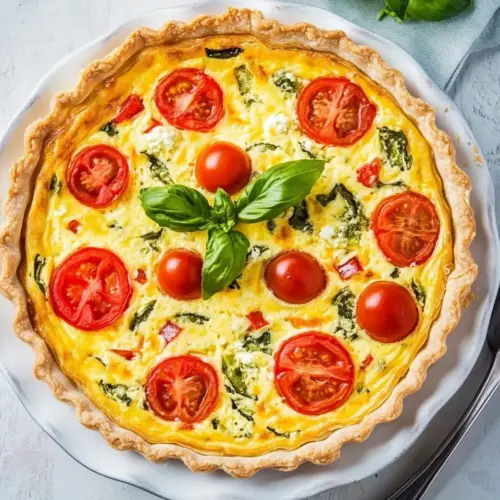
Caprese Quiche
Equipment
- Oven
- Pie Pan
- Parchment Paper
- Pie weights or dried beans
- Mixing Bowl
- Whisk
Ingredients
- 6 large eggs Provide structure and richness to the quiche by setting the custard base; whisk until homogeneous to ensure even cooking and a smooth texture.
- 3/4 cup whole milk Add creaminess and help create a silky custard that blends with the eggs; opt for whole milk for balanced fat that yields tender curds.
- 1 cup shredded mozzarella cheese Contribute melty, gooey cheese flavor and help bind fillings while creating a golden top; shred finely so it disperses through the custard evenly.
- 1 cup packed basil, thinly sliced Provide bright herbal aroma and fresh, peppery flavor that lightens the rich custard; slice thinly to distribute flavor throughout each slice.
- 1 cup quartered cherry tomatoes Deliver bursts of acidity and sweetness that contrast the creamy custard; quarter small tomatoes so they cook quickly and release flavorful juices.
- 1/2 teaspoon kosher salt Season the custard to enhance all flavors and control balance; dissolve evenly into the egg mixture to avoid pockets of over-salted bites.
- 1 unbaked pie crust (store bought or homemade) Hold the custard and fillings together while providing a crisp, buttery base; use an unbaked crust to bake directly with the quiche for best texture.
Instructions
- Preheat oven to 350° F.: The moment the oven starts to warm you will smell a neutral warm air that promises even baking. Preheating ensures the crust begins setting right away, preventing sogginess. If the oven is not fully up to temperature the custard can take longer to set and the crust may overbrown, so always let the oven reach 350° F before inserting your quiche. A common mistake is placing a cold dish into a not fully preheated oven, which causes uneven rising and longer cook times. Listen for the faint hum of the oven cycling as a cue that it is ready.
- Place the dough into a pie or tart pan and mold into the shape of the dish. Place the pie crust in the freezer for 10 minutes to chill.: Chilling tightens the gluten slightly and helps the crust hold its shape, producing flakier, crispier edges when baked. As you press the dough in, your fingertips will warm it, so putting it in the freezer cools and firms the fat, leading to a better texture. If you skip this step the crust can shrink or slump during blind baking, creating gaps. A typical error is overworking the dough, which makes it tough, so handle it lightly and give it that quick chill.
- Line the crust with parchment paper and pie weights or dried beans and bake for 15 minutes.: The weights press the crust down so it does not bubble up, and you will notice the edges starting to take on a faint golden hue after this stage. The sound is subtle, a steady oven hum, while the smell is faintly toasty. This partial bake creates a shield that prevents a soggy bottom when the wet filling is added. If you skip weights your crust could puff, forming air pockets that ruin the base. Check that the parchment lies flat and the weights are evenly distributed.
- In a bowl, whisk together the eggs, milk and mozzarella cheese. Gently fold in the basil and cherry tomatoes.: As you whisk the eggs and milk , the mixture should look smooth and glossy, without foam. The shredded mozzarella cheese will add flecks of creaminess. Folding in the basil and cherry tomatoes at the end keeps their color and texture vibrant. If you overwhisk you can incorporate too much air which causes the custard to puff and crack, so mix only until homogeneous. When you fold, you should hear a soft swish and see the tomatoes suspended evenly through the custard.
- Pour the filling into the partially baked pie crust and bake an additional 35 minutes or until golden and cooked through (the center shouldn’t jiggle).: As the quiche bakes the aroma shifts from raw dairy to a warm, herby perfume. Visual cues are important, watch for a lightly golden top and set edges, and the center should be just firm, with a slight wobble that disappears as it cools. This texture means the custard is tender and not rubbery. One mistake to avoid is overbaking, which yields a dry, grainy custard, so start checking a few minutes before the end of the suggested time. If you notice deep browning, tent with foil to protect the surface while the center finishes.
- Allow to cool 15 minutes before serving.: Cooling lets the custard finish setting and makes slicing neater, the warm steam will settle and the aroma will mellow into a balanced, savory bouquet. You will feel the top firm slightly under your fingers, and the crust will crisp as it cools. Serving too hot risks a runny slice, and cutting immediately can make the pieces collapse, so patience pays off. A common slip is cutting right away because the quiche looks done, but it will hold shape and taste better after this brief rest.
Notes
- Chill the crust: Cooling the shaped dough before blind baking helps it hold a fluted edge and prevents shrinking during the initial bake.
- Fresh shredded cheese: Shred the mozzarella cheese yourself for smoother melting and a cleaner texture in the custard.
- Even tomato pieces: Quarter the cherry tomatoes so they distribute evenly and avoid sinking to the bottom during baking.
- Don’t overwhisk: Mix the custard until just combined to avoid incorporating excess air that leads to cracks and uneven texture.
- Tent if browning: If the top is browning too quickly, loosely tent foil over the quiche while the center finishes setting.
- Room temperature eggs: Letting the eggs come to room temperature improves the emulsion and helps the custard bake evenly.
