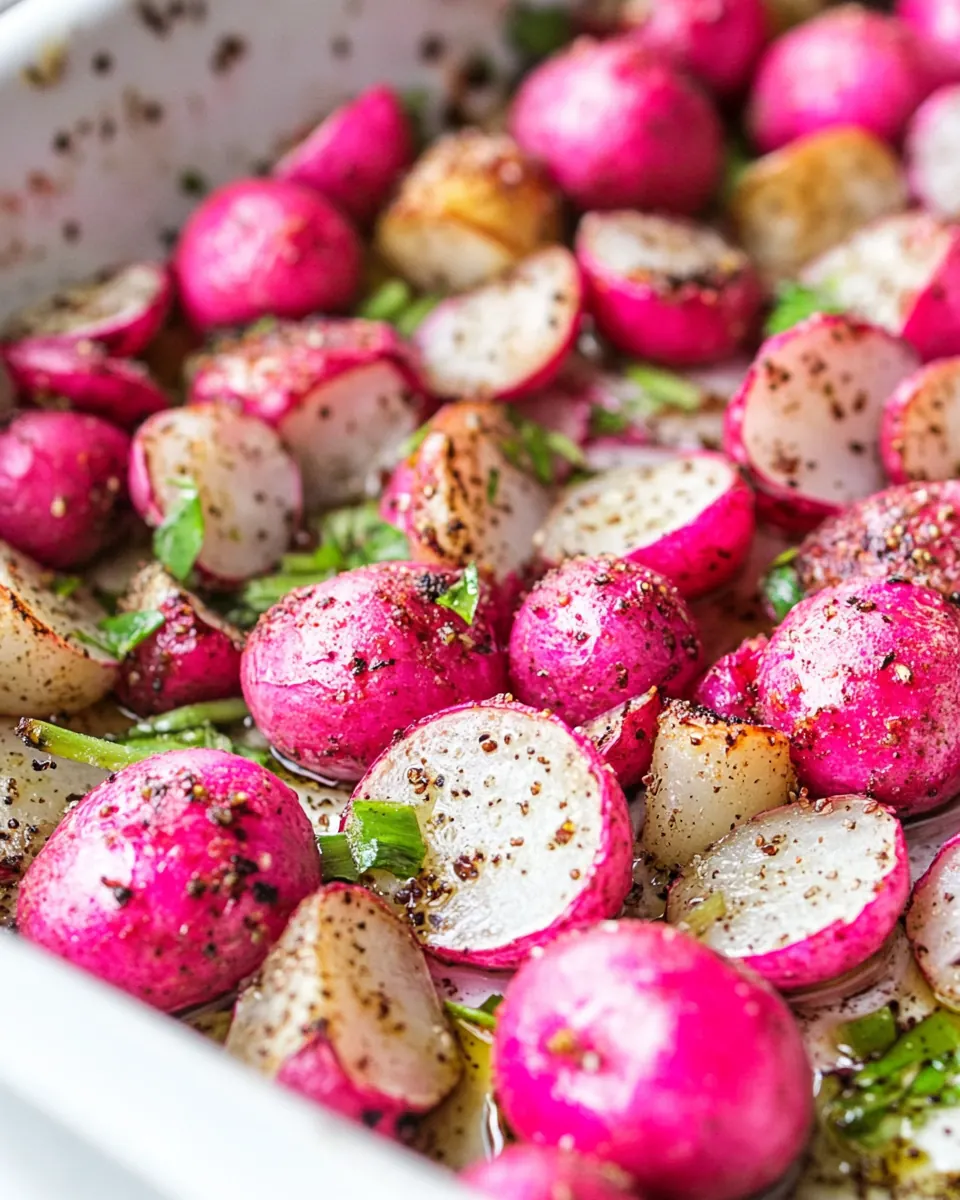
Roasted Radishes
Roasted Radishes came into my life the way small discoveries often do, tucked between a bag of carrots and a mound of potatoes at the farmers market on a blustery spring morning. The vendor handed me a bundle, insisting I try them roasted, and I remember thinking I had no idea what to expect, yet I bought them on a whim. At home I sliced a few, tossed them on a pan, and within minutes the kitchen filled with a toasty, peppery aroma that caught me off guard in the best possible way.
From that first batch I fell for how simple ingredients and a hot oven transform these modest little roots into something crisp on the outside, tender and slightly sweet inside, with a caramelized edge that tastes like spring. Over time I learned little tricks, like how spacing on the pan matters and why a light coating of olive oil makes all the difference. Every time I make Roasted Radishes now, I’m reminded of that market morning, and I like to think of this as a recipe that rewards patience and curiosity.
When friends come over, I serve this as a humble side that always sparks questions. It travels well for picnics, and it works as a bright counterpoint to richer mains. If you have a bunch of radishes sitting in the crisper, this is the recipe you’ll reach for again and again because it is quick, forgiving, and unexpectedly elegant.
Recipe Snapshot
25 mins
5 mins
20 mins
Easy
80 kcal
Mediterranean
Keto, Paleo
Side Dishes
sheet pan
What’s Great About This Roasted Radishes
1. A surprising texture contrast
I love that Roasted Radishes swap the raw bite for a crisp outer shell and a creamy interior. The high heat creates caramelized edges, and that contrast elevates the humble radishes into something that feels special. I find myself reaching for them when I want a side that adds both crunch and tenderness.
2. Minimal ingredients, maximum flavor
There is real joy in cooking when a handful of pantry staples yield bold results. With just olive oil, Italian seasoning, salt, and ground black pepper the natural peppery notes of the radishes bloom. I appreciate recipes that respect the ingredient, letting the vegetable be the star rather than hiding it under heavy sauces.
3. Speed and simplicity
One of the reasons I turn to Roasted Radishes on busy nights is how fast they are. Between trimming and a quick roast, you have a flavorful side in under half an hour. That speed does not sacrifice nuance, it simply makes a refined side accessible on weeknights.
4. Versatile serving options
I often serve these warm straight from the oven, but they are equally tasty at room temperature. They pair well with proteins, grain bowls, or a platter of roasted vegetables. Their bright, peppery flavor cuts through richer dishes and refreshes the palate, which is why I keep this technique in my regular rotation.
5. Foolproof technique
Finally, this recipe is forgiving. Even if you crowd the pan a little, you can still rescue the texture by giving them a quick flip and a few extra minutes under high heat. I like recipes that build confidence, and Roasted Radishes does exactly that.
Recipe Ingredients for Roasted Radishes
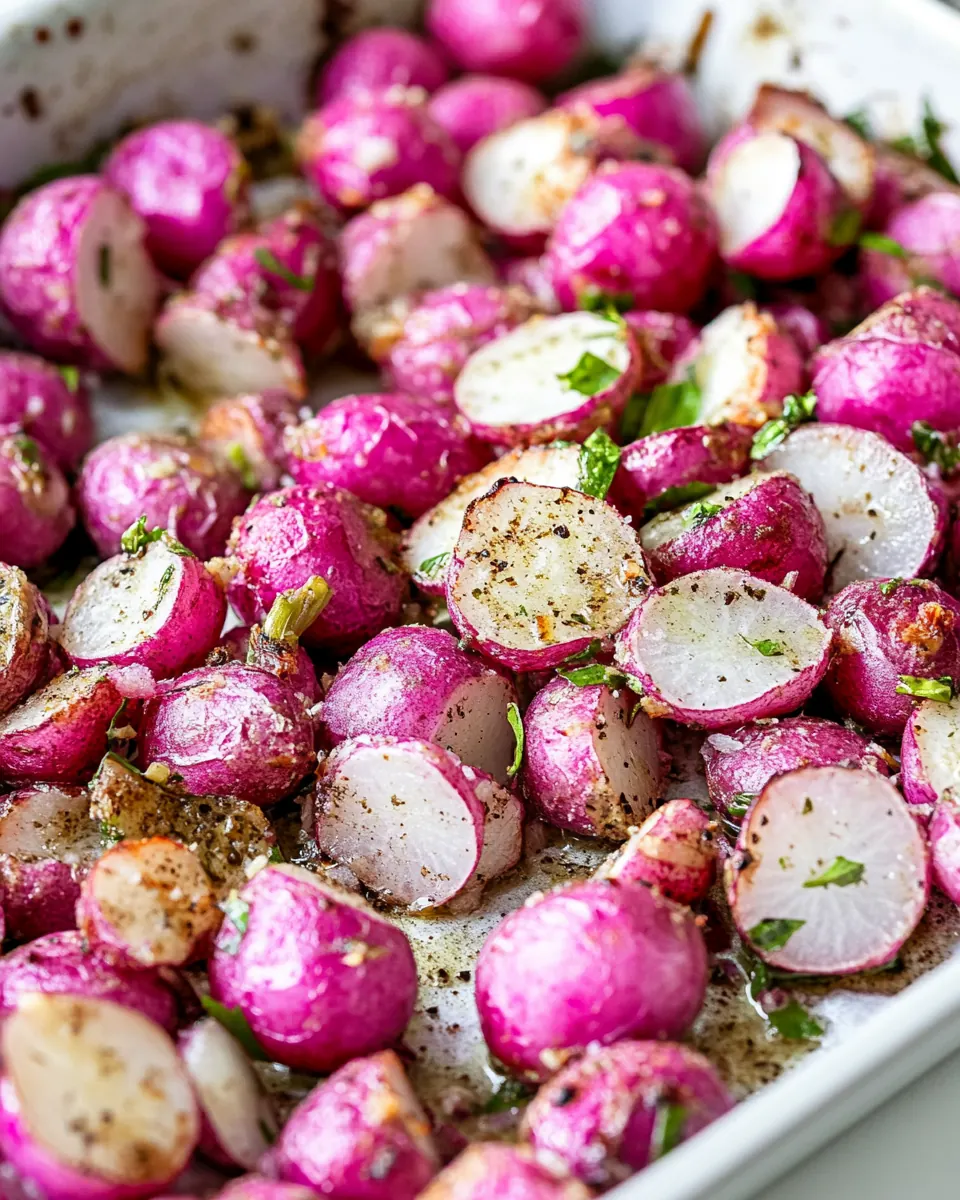
I believe the best recipes start with a small number of well chosen ingredients that play off each other. In this recipe the key players are the radishes themselves, which provide peppery brightness, and the olive oil that helps them crisp and caramelize. The seasoning blend of Italian seasoning, salt, and ground black pepper supports the natural flavor without overwhelming it.
- 1 pound (450 grams) radishes: Trim and halve or quarter to ensure even roasting; adds crisp-tender texture and a peppery, mildly sweet bite that mellows when cooked. Provides bulk and visual color contrast to the finished dish.
- 1 teaspoon Italian seasoning: Season generously before roasting to impart herby, aromatic notes that complement the radishes; blends herbs like oregano, basil, and thyme for a rounded flavor. Enhances savory depth without overpowering the vegetable.
- 1/4 teaspoon salt: Sprinkle sparingly to enhance overall taste balance and suppress bitterness while promoting natural flavors; helps draw out moisture slightly during roasting for better caramelization. Use measuredly to avoid oversalting the dish.
- 1 teaspoon ground black pepper: Grind fresh or use preground to add a sharp, warming heat that highlights roasted flavors and contrasts the radishes' natural sweetness. Adjust to taste to control the dish's spiciness and aromatic intensity.
- 2 tablespoons olive oil: Drizzle evenly to coat radishes for crisp, golden edges and even heat transfer during roasting; contributes a fruity, rich mouthfeel that carries other seasonings. Allows herbs and spices to adhere and promotes caramelization.
Directions for Roasted Radishes
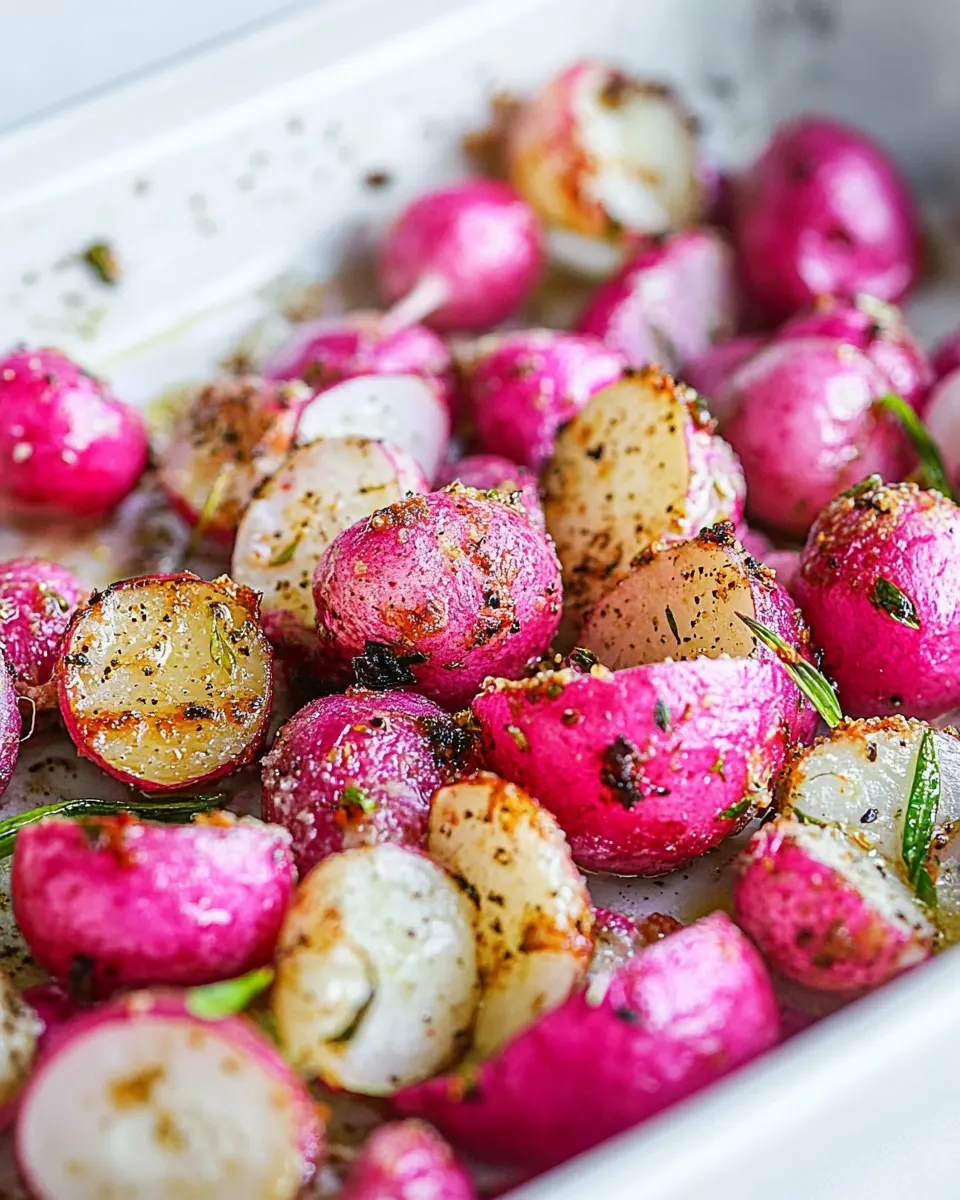
These steps will guide you through a confident roast from start to finish. Read them once, then follow along as you prep and roast, paying attention to visual and sensory cues for the best results.
- Wash and trim the roots, green leaves, or stalks. Cut them in halves in even pieces.: As you rinse the radishes under cool water, notice the earthy scent easing away and the skins brightening; trimming the ends removes woody bits that do not soften during roasting. Use a gentle scrub to keep the flesh intact, and trim only as much as needed to keep the pieces uniform. One common error is over trimming which wastes the tender part, so focus on removing just the root tip and any wilted greens. Pat them dry so they will crisp rather than steam.
- Spread the radishes on a sheet pan, and season them with Italian seasoning, salt, and pepper. Toss with olive oil, and make sure that the radishes are well coated.: You should feel the satisfying snap as you quarter or halve each radish , depending on size, aiming for uniform pieces that will cook at the same rate. The exposed interior will take on a light caramel color as sugars brown, so matching sizes is crucial. If pieces are uneven, smaller ones will overcook and larger ones will stay firm, so take time to make them consistent. Use a sharp knife for clean cuts which also helps prevent crushing the vegetable.
- Arrange in a single layer so that they crisp up. If the sheet pan is too crowded, the radishes will steam rather than roast.: When the pieces hit the pan you will see the arrangement matter, they should sit with a little space between them so air circulates. Sprinkle the Italian seasoning , salt , and ground black pepper evenly so every bite has balanced flavor. A mistake I sometimes make is piling them into a heap, which encourages steaming instead of browning, so take a moment to spread them out.
- Roast at 430°F/220°C for 20 minutes. If your radishes are big in size, they might take a bit longer so start checking after 15 minutes and flip them.: As you drizzle the olive oil , use your hands or a spatula to turn each piece, watching the sheen develop on the surfaces; this oil film is what produces crisp edges and golden color. The oil also helps the herbs cling, and it will fill the pan with a warm, fruity aroma as it heats. Avoid over oiling which can lead to soggy results; a light, even coating is all you need.
- When they’re crisp enough, take them out and serve them warm or at room temperature.: Spacing is the difference between roasted and steamed radishes . Arrange each piece in a single, not crowded layer, giving them room to breathe so evaporation can occur. You should hear a faint sizzle as they hit the hot pan in the oven, and that sound signals the start of caramelization. Crowding the pan traps moisture, so if your sheet pan is too full, use a second pan or roast in batches.
- If the sheet pan is too crowded the radishes will steam rather than roast: When pieces are touching, they create a humid environment and steam, which prevents browning. To test if spacing is sufficient, tip the pan slightly and see that the pieces move freely instead of clumping together. If you accidentally crowd them, pull the pan out and rearrange quickly, because maintaining dry heat is the key to achieving crisp, golden exteriors.
- Roast at 430°F/220°C for 20 minutes: As the oven works, pay attention to the shifting aromas from vegetal to toasty and sweet, and watch the edges develop small browned blisters. The high temperature speeds sugar caramelization while keeping the centers tender. Ovens vary, so start checking visually after 15 minutes to avoid overcooking; aim for a mix of browned spots and tender interiors. Don’t open the oven too often or you will lose heat, but check at the suggested point to ensure perfect timing.
- If your radishes are big in size they might take a bit longer so start checking after 15 minutes and flip them: Large pieces need extra time to soften inside, so when you flip them the exposed sides should show golden patches and the scent will be richer. Use a spatula to turn them gently, and redistribute any that are browning faster. A common misstep is leaving them unturned which can create uneven caramelization, so flipping encourages uniform color and texture.
- When theyre crisp enough take them out and serve them warm or at room temperature: The final cue is tactile and visual, the exterior should be slightly blistered and the interior tender when pierced with a fork, releasing a sweet, nutty aroma. Serve them promptly for optimal crunch, or let them cool a little if you prefer room temperature; both ways highlight different texture contrasts. If you let them sit too long without reheating, the crisp edges will soften, so rewarm briefly if needed before serving.
Helpful Notes about Roasted Radishes
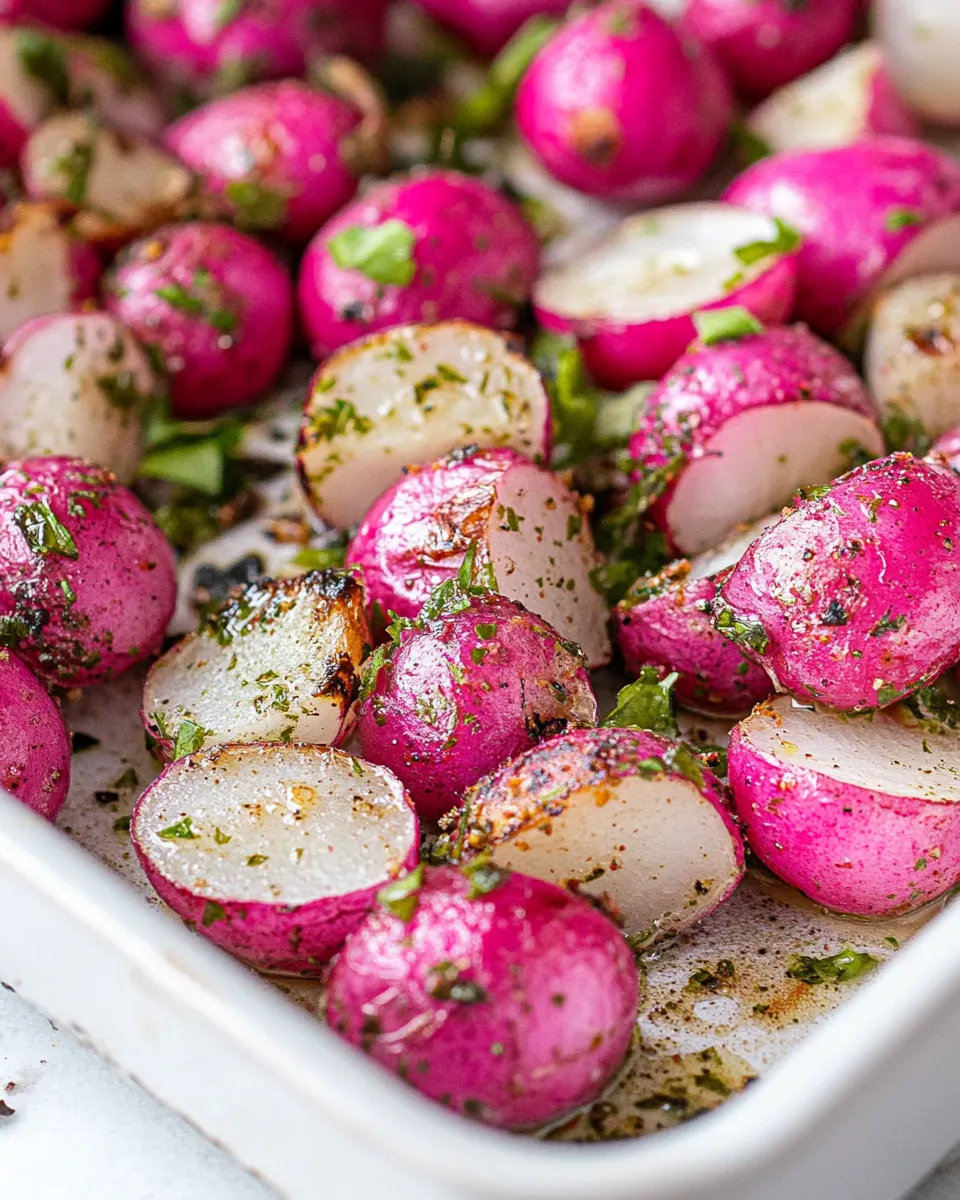
I keep notes handy so I get consistent results every time. Below are tips I use in the kitchen to dial in texture, flavor, and timing for Roasted Radishes.
- Trim carefully Trim only the root tip and any wilted greens to preserve as much of the tender flesh as possible while removing inedible bits.
- Uniform sizing Cut the radishes into pieces of similar size so they roast evenly and finish at the same moment.
- Oil distribution Toss the pieces with the olive oil in a bowl first to ensure every piece has a light, even coating before they hit the pan.
- High heat for color Roast at a high temperature to encourage caramelization and the characteristic toasty edges that make this dish memorable.
- Use a roomy sheet pan If the pan is too small the vegetables will steam; spread them out across a larger pan or use two pans if necessary.
- Finish thoughtfully If serving at room temperature, allow them to rest briefly to settle flavors; if serving warm, plate them right away to showcase the contrast between crisp exterior and tender interior.
Serve This Roasted Radishes With
Roasted Radishes are a flexible side that complements many meals. I like to think about texture and contrast when pairing them, and they work well for casual dinners, spring gatherings, and as part of a mezze or vegetable-forward spread.
- Simple grain bowls Serve the radishes alongside warm grains for a balanced bowl that combines nutty, tender, and crisp elements, ideal for lunch or a light dinner.
- Spring luncheons Pair with fresh salads and steamed vegetables for bright, seasonal menus that celebrate lighter fare and garden produce.
- Holiday sides These make a pleasant counterpoint to richer mains during festive dinners when you want something vegetal and refreshing on the plate.
- Picnic spreads Because they taste great at room temperature, include them on outdoor spreads with breads, cheeses, and olives for varied textures.
- Storage tips Keep leftovers refrigerated in an airtight container for up to three days, then reheat briefly to restore some crispness, or enjoy cold for a different texture profile.
- Seasonal pairings In spring they shine with other early vegetables, while in cooler months they add a bright note next to roasted roots and grains.
FAQ
Conclusion
What makes this recipe special is how a few simple ingredients transform humble radishes into a crisp, caramelized side with surprising depth of flavor. Try this recipe when you want something quick, bright, and a little unexpected to complement mains or grain bowls. I hope you give it a go and find it as rewarding to make and eat as I do, turning an ordinary vegetable into a star of the plate.
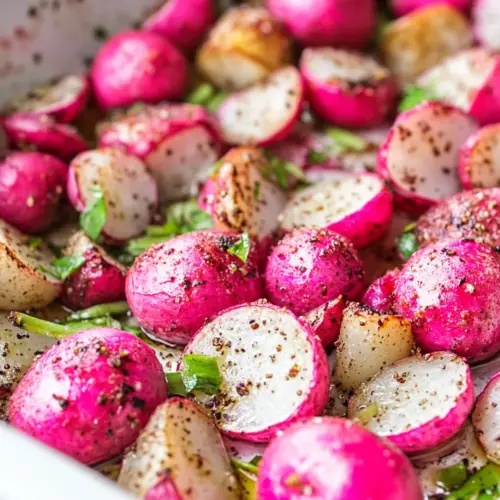
Roasted Radishes
Equipment
- Sheet Pan
Ingredients
- 1 pound (450 grams) radishes Trim and halve or quarter to ensure even roasting; adds crisp-tender texture and a peppery, mildly sweet bite that mellows when cooked. Provides bulk and visual color contrast to the finished dish.
- 1 teaspoon Italian seasoning Season generously before roasting to impart herby, aromatic notes that complement the radishes; blends herbs like oregano, basil, and thyme for a rounded flavor. Enhances savory depth without overpowering the vegetable.
- 1/4 teaspoon salt Sprinkle sparingly to enhance overall taste balance and suppress bitterness while promoting natural flavors; helps draw out moisture slightly during roasting for better caramelization. Use measuredly to avoid oversalting the dish.
- 1 teaspoon ground black pepper Grind fresh or use preground to add a sharp, warming heat that highlights roasted flavors and contrasts the radishes' natural sweetness. Adjust to taste to control the dish's spiciness and aromatic intensity.
- 2 tablespoons olive oil Drizzle evenly to coat radishes for crisp, golden edges and even heat transfer during roasting; contributes a fruity, rich mouthfeel that carries other seasonings. Allows herbs and spices to adhere and promotes caramelization.
Instructions
- Wash and trim the roots, green leaves, or stalks. Cut them in halves in even pieces.: As you rinse the radishes under cool water, notice the earthy scent easing away and the skins brightening; trimming the ends removes woody bits that do not soften during roasting. Use a gentle scrub to keep the flesh intact, and trim only as much as needed to keep the pieces uniform. One common error is over trimming which wastes the tender part, so focus on removing just the root tip and any wilted greens. Pat them dry so they will crisp rather than steam.
- Spread the radishes on a sheet pan, and season them with Italian seasoning, salt, and pepper. Toss with olive oil, and make sure that the radishes are well coated.: You should feel the satisfying snap as you quarter or halve each radish , depending on size, aiming for uniform pieces that will cook at the same rate. The exposed interior will take on a light caramel color as sugars brown, so matching sizes is crucial. If pieces are uneven, smaller ones will overcook and larger ones will stay firm, so take time to make them consistent. Use a sharp knife for clean cuts which also helps prevent crushing the vegetable.
- Arrange in a single layer so that they crisp up. If the sheet pan is too crowded, the radishes will steam rather than roast.: When the pieces hit the pan you will see the arrangement matter, they should sit with a little space between them so air circulates. Sprinkle the Italian seasoning , salt , and ground black pepper evenly so every bite has balanced flavor. A mistake I sometimes make is piling them into a heap, which encourages steaming instead of browning, so take a moment to spread them out.
- Roast at 430°F/220°C for 20 minutes. If your radishes are big in size, they might take a bit longer so start checking after 15 minutes and flip them.: As you drizzle the olive oil , use your hands or a spatula to turn each piece, watching the sheen develop on the surfaces; this oil film is what produces crisp edges and golden color. The oil also helps the herbs cling, and it will fill the pan with a warm, fruity aroma as it heats. Avoid over oiling which can lead to soggy results; a light, even coating is all you need.
- When they’re crisp enough, take them out and serve them warm or at room temperature.: Spacing is the difference between roasted and steamed radishes . Arrange each piece in a single, not crowded layer, giving them room to breathe so evaporation can occur. You should hear a faint sizzle as they hit the hot pan in the oven, and that sound signals the start of caramelization. Crowding the pan traps moisture, so if your sheet pan is too full, use a second pan or roast in batches.
- If the sheet pan is too crowded the radishes will steam rather than roast: When pieces are touching, they create a humid environment and steam, which prevents browning. To test if spacing is sufficient, tip the pan slightly and see that the pieces move freely instead of clumping together. If you accidentally crowd them, pull the pan out and rearrange quickly, because maintaining dry heat is the key to achieving crisp, golden exteriors.
- Roast at 430°F/220°C for 20 minutes: As the oven works, pay attention to the shifting aromas from vegetal to toasty and sweet, and watch the edges develop small browned blisters. The high temperature speeds sugar caramelization while keeping the centers tender. Ovens vary, so start checking visually after 15 minutes to avoid overcooking; aim for a mix of browned spots and tender interiors. Don’t open the oven too often or you will lose heat, but check at the suggested point to ensure perfect timing.
- If your radishes are big in size they might take a bit longer so start checking after 15 minutes and flip them: Large pieces need extra time to soften inside, so when you flip them the exposed sides should show golden patches and the scent will be richer. Use a spatula to turn them gently, and redistribute any that are browning faster. A common misstep is leaving them unturned which can create uneven caramelization, so flipping encourages uniform color and texture.
- When theyre crisp enough take them out and serve them warm or at room temperature: The final cue is tactile and visual, the exterior should be slightly blistered and the interior tender when pierced with a fork, releasing a sweet, nutty aroma. Serve them promptly for optimal crunch, or let them cool a little if you prefer room temperature; both ways highlight different texture contrasts. If you let them sit too long without reheating, the crisp edges will soften, so rewarm briefly if needed before serving.
Notes
- Trim carefully Trim only the root tip and any wilted greens to preserve as much of the tender flesh as possible while removing inedible bits.
- Uniform sizing Cut the radishes into pieces of similar size so they roast evenly and finish at the same moment.
- Oil distribution Toss the pieces with the olive oil in a bowl first to ensure every piece has a light, even coating before they hit the pan.
- High heat for color Roast at a high temperature to encourage caramelization and the characteristic toasty edges that make this dish memorable.
- Use a roomy sheet pan If the pan is too small the vegetables will steam; spread them out across a larger pan or use two pans if necessary.
- Finish thoughtfully If serving at room temperature, allow them to rest briefly to settle flavors; if serving warm, plate them right away to showcase the contrast between crisp exterior and tender interior.