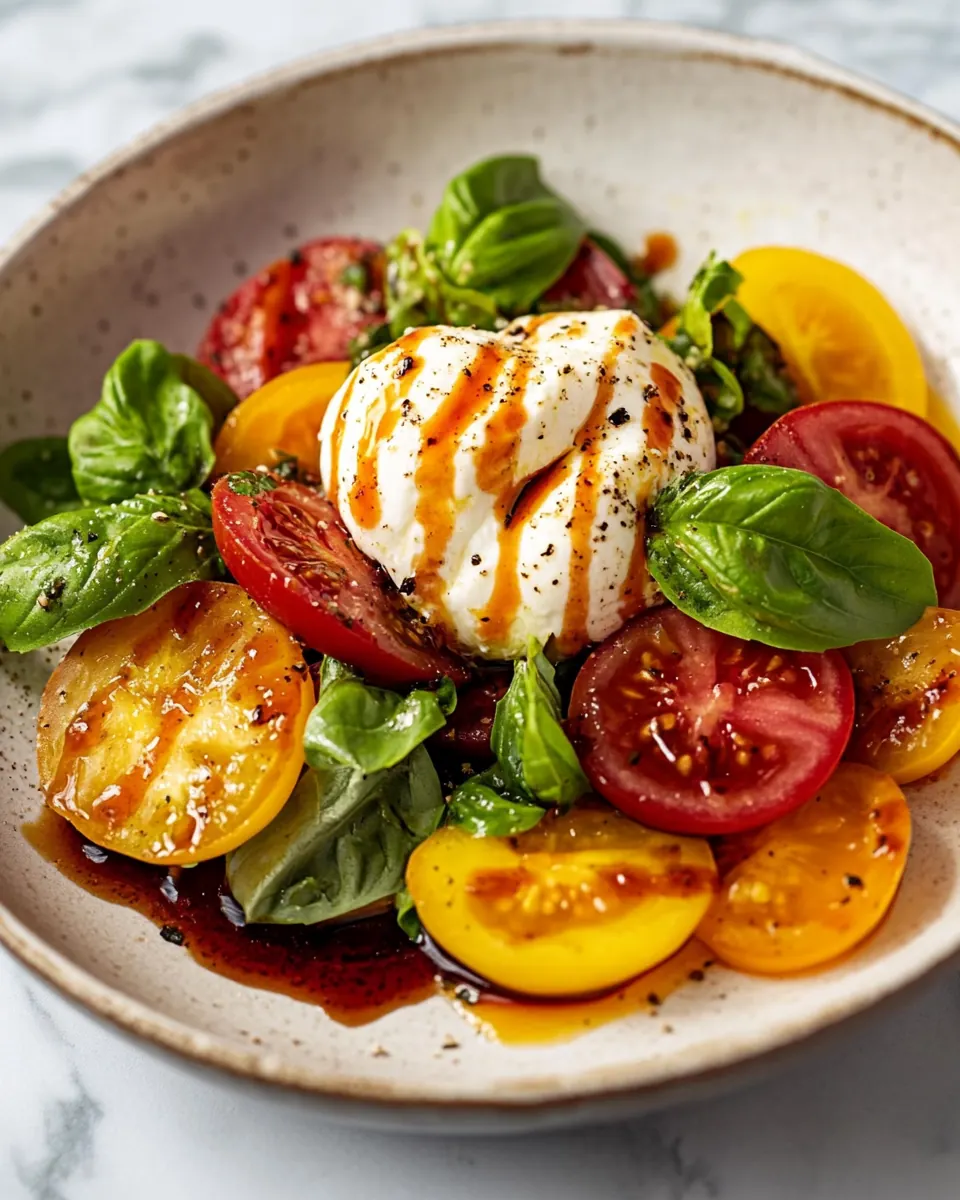
Caprese Salad with Burrata Cheese
Caprese Salad with Burrata Cheese is the kind of dish that transports me back to a hot summer afternoon at a little market stall where the tomatoes were so sweet they practically begged to be eaten on the spot. I remember juggling a paper cone full of sun warm tomatoes while chatting with the farmer about how to spot the ripest fruit. That memory is stitched into every bite of this salad, which balances creamy, milky burrata cheese with the bright, acidic pop of fresh tomato and a glossy drizzle of reduced balsamic vinegar.
Whenever I serve Caprese Salad with Burrata Cheese at a casual dinner, conversation slows down as people take that first forkful. The scent of torn fresh basil leaves rising from the plate always draws a smile, and I find myself telling the story about the market as folks reach for seconds. It is simple, but the contrast between the pillowy burrata cheese and the firm, juicy tomato creates a satisfying tension that feels special without fuss. I like to make the balsamic vinegar reduction ahead of time so I can focus on arranging the layers and enjoying the moment with guests.
Over the years I have learned small details that make this salad sing, and I will share them as we go. There is a rhythm to slicing, layering, and seasoning that turns a handful of ingredients into something worth lingering over. Whether you are serving a relaxed lunch on the patio or presenting an elegant starter, this recipe for Caprese Salad with Burrata Cheese rewards patience and good ingredients. The textures, colors, and aromas combine to create a dish that is as satisfying to prepare as it is to eat.
Recipe Snapshot
20 mins
15 mins
5 mins
Easy
300 kcal
Italian
Keto, Gluten-Free
Salads
Small saucepan, Sharp knife, Serving plates
Why You’ll Love This Caprese Salad with Burrata Cheese
Ingredient Integrity
I love how this salad trusts good ingredients to carry the day. Using ripe tomato and creamy burrata cheese means you do not need heavy sauces or complicated technique. Each component has space to shine, and that honesty in the ingredient list is what makes me come back to this recipe again and again.
Textural Contrast
One of the reasons I reach for this dish when guests arrive is the contrast between the soft, cloud like center of the burrata cheese and the slightly firm bite of the tomato. The reduction made from balsamic vinegar adds a silky glaze that ties everything together, creating a mouthfeel that feels indulgent, yet fresh.
Speed and Ease
I often make this when time is short because it comes together quickly. The greatest effort is simmering the balsamic vinegar to a glaze and arranging slices on the plate. For busy weeknights or impromptu gatherings, it is an easy way to serve something that looks and tastes thoughtful without a lot of work.
Versatility at the Table
I appreciate how adaptable this salad is. Serve it as an appetizer, a light lunch, or a side. You can scale portions for two or for a crowd, and swapping the plate presentation changes the vibe from casual to celebratory. The simple seasoning of salt and freshly ground black pepper keeps the focus on natural flavors.
Make Ahead Friendly
Finally, I like that parts of this are prep friendly. The balsamic vinegar reduction can be made several hours ahead, which frees you to focus on slicing the tomato and pulling apart the burrata cheese when guests arrive. That small bit of prep makes serving feel effortless.
Caprese Salad with Burrata Cheese Ingredients
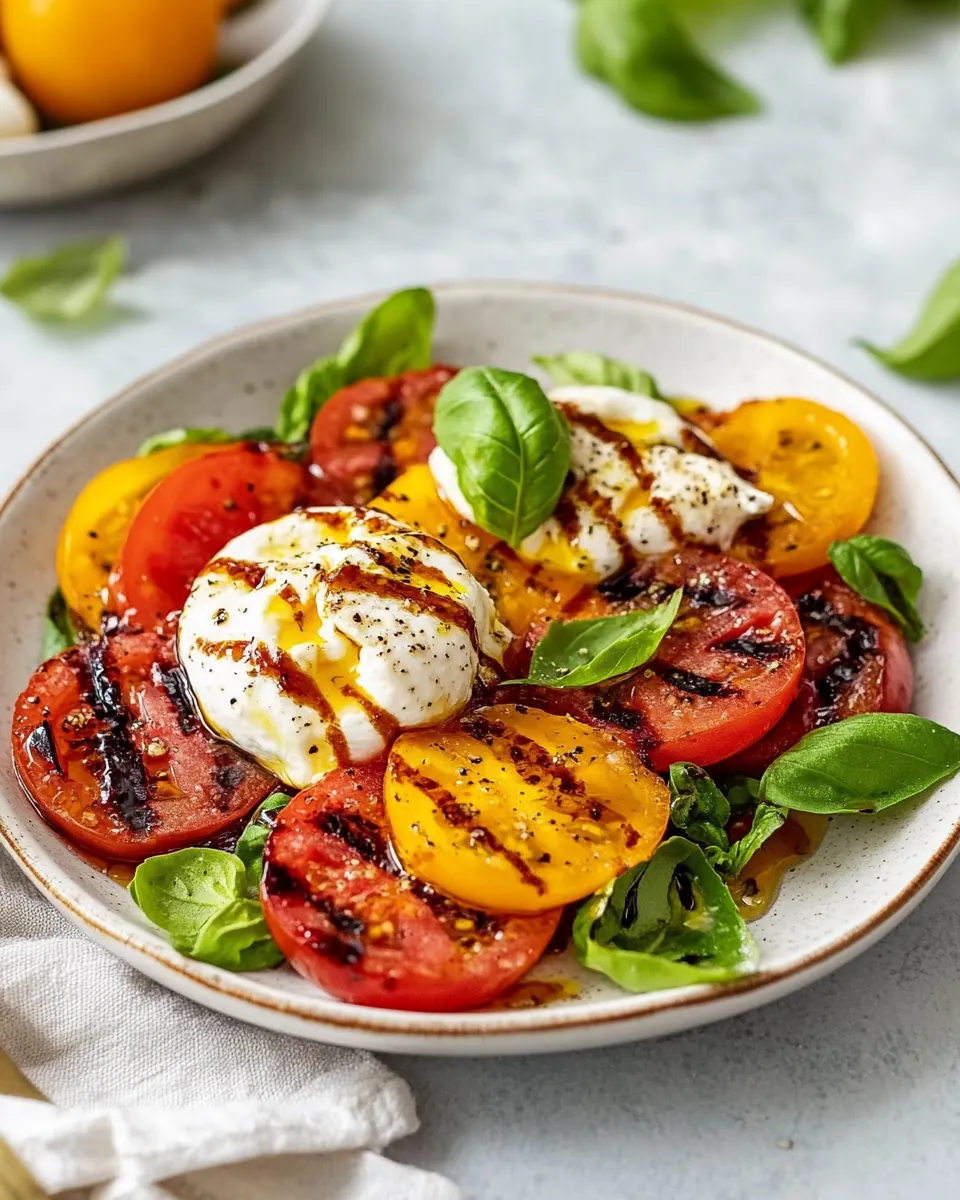
These ingredients are the whole point of the salad. The philosophy here is simplicity with intention, selecting ingredients that complement each other by texture and flavor. The key players are the milky burrata cheese, ripe juicy tomato, and bright herbal fresh basil leaves, while the balsamic vinegar reduction and extra virgin olive oil provide balance and a glossy finishing touch.
- 1/3 cup balsamic vinegar: Adds tangy-sweet acidity to balance the rich burrata; reduced slightly or drizzled as-is to concentrate flavor. Enhances overall brightness and can be simmered briefly to create a thicker glaze for drizzling over tomatoes and cheese.
- 1 large tomato: Provides juicy, slightly acidic flesh to contrast creamy burrata and deliver fresh tomato flavor. Sliced thickly or wedged to retain texture and layered with basil and oil for classic Caprese presentation.
- 1 large yellow tomato: Contributes mild, slightly sweeter tomato notes and vibrant color contrast to the dish. Sliced to match the other tomato and paired with basil leaves to create visual appeal and balanced acidity.
- 2 balls (4 ounces each) burrata cheese: Supplies rich, creamy, and slightly tangy dairy that is the salad's centerpiece and textural star. Torn or halved to reveal the soft interior, it melds with olive oil and balsamic for a luxurious mouthfeel.
- fresh basil leaves: Offers aromatic, peppery-green notes that brighten and lift the salad's flavors when torn and scattered over tomatoes and cheese. Used fresh to preserve fragrance and provide classic Caprese herbal character.
- 2 tablespoons extra virgin olive oil: Provides fruity, peppery fat that coats ingredients and helps carry flavors, particularly basil and balsamic, across the palate. Drizzled sparingly to enrich texture without overwhelming the delicate burrata.
- salt and freshly ground black pepper: Seasoning with salt and freshly ground black pepper enhances natural flavors and balances sweetness and acidity. Added to taste after assembling to avoid drawing out tomato juices prematurely.
How to Cook Caprese Salad with Burrata Cheese
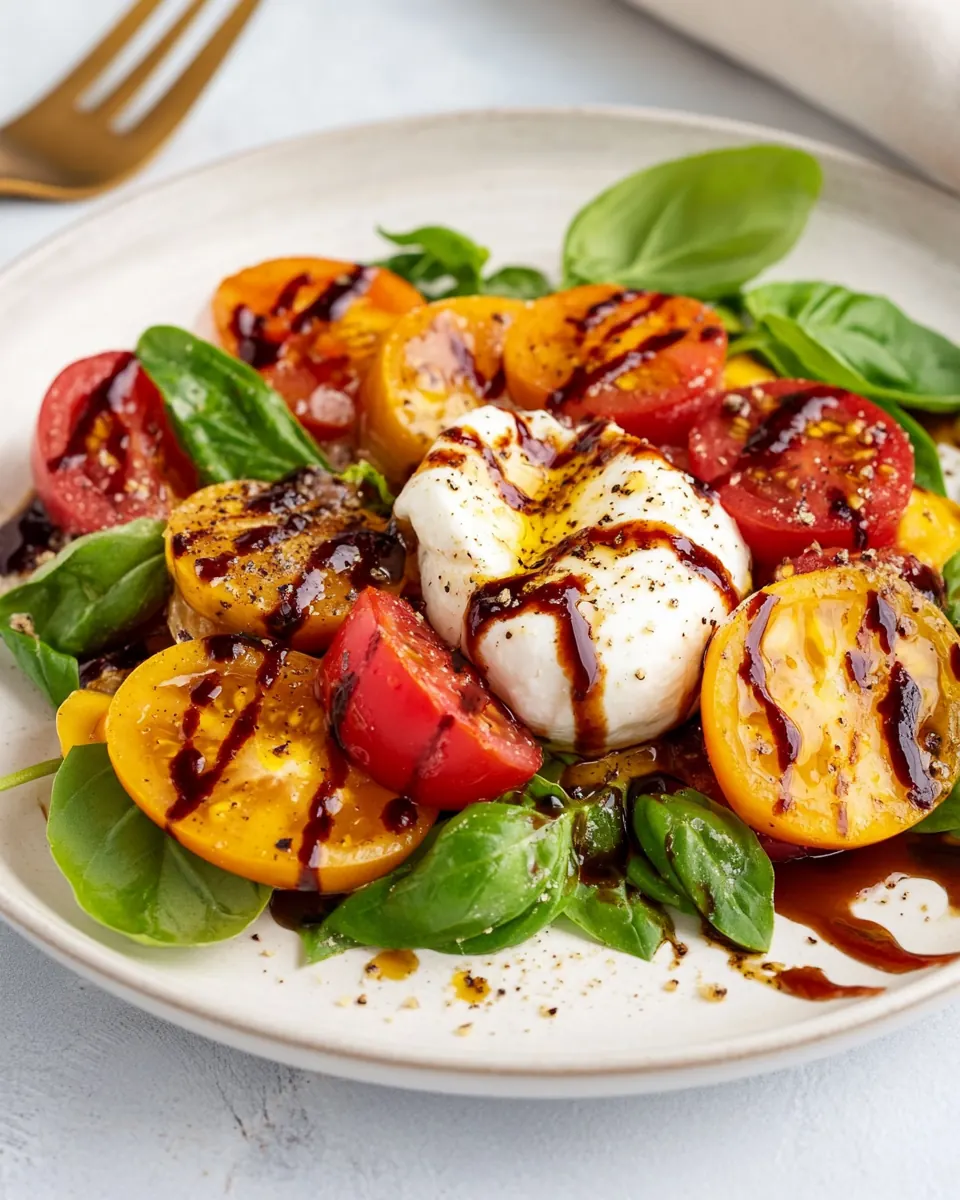
This salad requires minimal technique, but attention to detail will elevate the result. The directions below expand the original steps into sensory rich guidance so you know exactly how the plate should look and feel at each moment, and how to avoid common pitfalls that can dull the flavors.
- In a small saucepan, bring the balsamic vinegar to a boil over medium heat. Reduce the heat to low and simmer until reduced by at least half. It becomes a little bit thicker as it reduces. Remove from heat and chill until ready to drizzle on your salad (can be made ahead).: The kitchen will fill with a bright, tangy steam as the balsamic vinegar warms, and you should hear gentle bubbling as it reaches a rolling simmer. This step concentrates the vinegar's aroma, so keep a close ear and eye on the pan because vigorous boiling can quickly push it to burn. Use a small saucepan to allow the liquid to coat the bottom evenly, and stir occasionally to prevent hot spots. A common mistake is leaving it unattended, which can lead to bitter, scorched vinegar; lower the heat the moment it bubbles firmly.
- On two plates, layer tomato, slice of burrata, and fresh basil – repeat. You should have enough to layer four tomato slices, three slices of burrata and several leaves of basil on each plate. (You may not use all of the burrata you purchased – use the amount that is your preference). Drizzle 1 tablespoon of olive oil on each salad. Drizzle 1 tablespoon of the reduced balsamic on each salad. Top with salt and freshly ground black pepper.: As the balsamic vinegar simmers on low, its volume will visibly shrink and the surface will slow its movement, showing thicker ripples. You will notice the scent deepen from sharp acidity to a more caramel like perfume, and the liquid should coat the back of a spoon with a glossy sheen. Simmer patiently to avoid burning, and skim any foam if needed. If the reduction seems to take too long, check your burner setting, because too high a flame leads to uneven reduction and a bitter edge.
- It becomes a little bit thicker as it reduces.: Watch for the syrup like texture that clings to utensils, and notice the color darken slightly as it concentrates. This visual cue tells you the sugars and acids are balancing, and it will translate to a sweet tang on the tomato and burrata cheese . Stirring gently helps maintain an even reduction, but over stirring is unnecessary and can cool the pan too much. Avoid reducing it down to a sticky, burnt residue by removing it from heat when it still moves slowly across a spoon.
- Remove from heat and chill until ready to drizzle on your salad (can be made ahead).: Once off the stove, the aroma will settle into a warm, syrupy note, and letting it cool thickens it further. Chilling the reduction makes it easier to drizzle in controlled ribbons across the plate, and it also stabilizes the flavor so it does not dominate the fresh components. Store in a small jar in the refrigerator if making ahead, and bring back to room temperature briefly if it becomes too firm. A common oversight is to pour it hot over the salad, which can warm the burrata cheese and change its texture, so always cool first.
- On two plates, layer tomato, slice of burrata, and fresh basil – repeat.: When arranging, you will see a contrast of colors and textures, and the act of layering encourages even distribution of flavor. Use a sharp knife to make clean slices of tomato and place the soft discs of burrata cheese gently so they keep their shape. Tearing the fresh basil leaves and tucking them between layers releases aromatic oils without bruising. A frequent mistake is overcrowding the plate, which prevents the flavors from melding, so give each stack space to breathe.
- You should have enough to layer four tomato slices, three slices of burrata and several leaves of basil on each plate.: This guideline helps with portion balance and ensures each bite includes the creamy, the juicy, and the herbaceous. Visual symmetry matters here, so aim for consistent slice thickness and alternating colors for appeal. If slices vary too widely, the texture balance can be off, so take a moment to arrange thoughtfully. Avoid pressing down on the burrata cheese , as compressing it will release the creamy center prematurely.
- (You may not use all of the burrata you purchased – use the amount that is your preference).: Trust your taste and the visual impression of the plate, because the richness of the burrata cheese can be adjusted to preference. Leftover burrata cheese stores briefly in the refrigerator, but for best texture serve it soon after opening. If you overdo it, the salad can feel overly rich, so taste as you go to maintain balance. A common misstep is adding too much cheese which masks the brightness of the tomato .
- Drizzle 1 tablespoon of olive oil on each salad.: The first scent you will notice is the fruity warmth of the extra virgin olive oil , and a light drizzle adds silk and a subtle peppery finish. Pour slowly so the oil beads on the surface of the tomato and burrata cheese , enhancing mouthfeel without making the plate greasy. Use a spoon if you need more control. Avoid using too much oil, which can overwhelm the delicate flavors and leave the salad heavy.
- Drizzle 1 tablespoon of the reduced balsamic on each salad.: The reduced balsamic vinegar should ribbon across the plate in glossy streams, creating concentrated pockets of sweet tang that contrast with the creamy burrata cheese . The visual of dark glaze against bright tomato is part of the appeal. Apply it sparingly to avoid clumping, and taste a small amount first to ensure the sweetness and acidity are balanced. A typical error is adding too much, which can dominate the fresh flavors.
- Top with salt and freshly ground black pepper.: Finish with a light sprinkle of salt and freshly ground black pepper to lift and clarify the flavors. You will notice the aroma of ground pepper and the way the salt enhances the natural juices of the tomato and the creaminess of the burrata cheese . Season conservatively at first and adjust to taste because it is easier to add more than to remove excess. Over seasoning is the most common mistake here, so taste a bite before adding extra.
Recipe Variations about Caprese Salad with Burrata Cheese
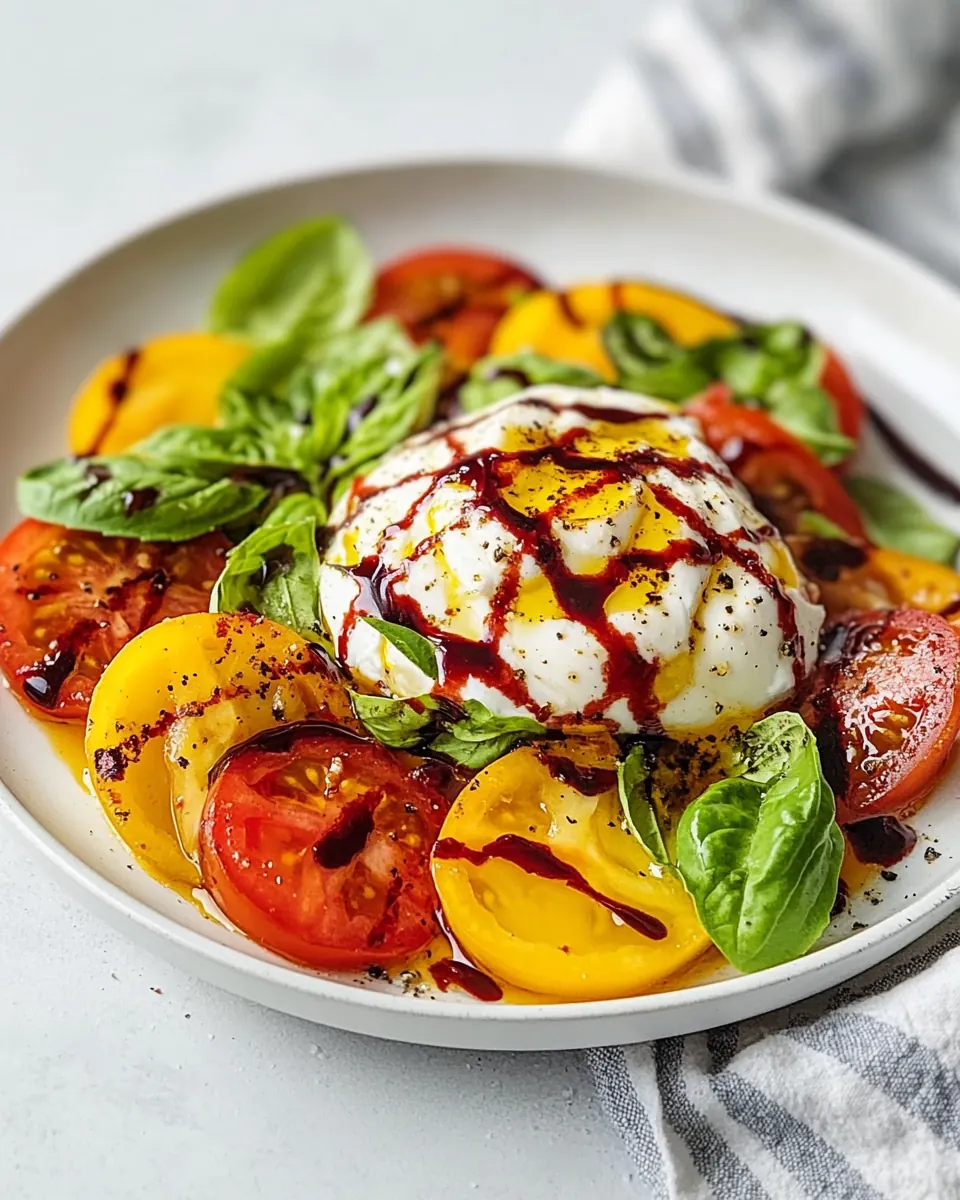
This recipe adapts easily to different occasions and ingredient availability. Below are creative variations and practical notes to customize flavor, texture, and presentation while staying true to the spirit of the dish.
- Heirloom tomato swap Use colorful heirloom tomatoes for a more pronounced sweetness and an eye catching plate, arranging slices so their varied hues create visual interest.
- Mozzarella alternative If you cannot find burrata cheese, use fresh mozzarella balls in similar weight portions for a firmer texture that still pairs beautifully with the tomato.
- Herb twist Add torn fresh basil leaves liberally, or mix in a few small leaves of other mild herbs for subtle variation while keeping basil as the primary aromatic.
- Oil quality Use the best extra virgin olive oil you can find, because its fruitiness plays a silent but crucial role in lifting the salad’s flavors.
- Make ahead balsamic Prepare the balsamic vinegar reduction a day ahead and store it chilled, which makes day of plating smoother and reduces last minute work.
What to Serve Alongside Caprese Salad with Burrata Cheese
This salad pairs well with simple breads, light proteins, and seasonal sides, and it fits a variety of occasions from casual lunches to festive dinners. Below are serving ideas organized so you can pick a direction based on timing, season, or desired formality.
- Crusty bread or crostini A warm crusty bread or crisp crostini is perfect for scooping the creamy burrata cheese and soaking up the balsamic vinegar reduction, making the plate more filling for a light lunch.
- Light protein Serve alongside simply grilled fish or a lemony roasted chicken for a balanced dinner, letting the salad act as a bright, fresh counterpoint to richer proteins.
- Summer sides Add seasonal fruit like melon or a simple green salad to round out a summer meal, matching the salad’s fresh profile for an easy patio dinner.
- Special occasion starter Present the salad as an elegant first course at a dinner party, arranging smaller individual portions so guests can savor the textures before the main course.
- Storage tips Store leftover burrata cheese and tomato separately, and keep the balsamic vinegar reduction refrigerated in a sealed container for up to a week.
- Seasonal pairing This shines in summer when tomatoes are at their peak, but it also works in late spring or early fall when tomatoes remain flavorful.
FAQ
Conclusion
This recipe is special because it celebrates a handful of excellent ingredients working in harmony, from the silky burrata cheese to the juicy tomato and the sweet tang of reduced balsamic vinegar. Give it a try the next time you want a simple yet elegant dish, especially when tomatoes are at their peak. It is unfussy to prepare, rewarding to serve, and a lovely way to slow down and savor fresh summer flavors.
Caprese Salad with Burrata Cheese
Equipment
- Small Saucepan
- Sharp Knife
- Serving plates
Ingredients
- 1/3 cup balsamic vinegar Adds tangy-sweet acidity to balance the rich burrata; reduced slightly or drizzled as-is to concentrate flavor. Enhances overall brightness and can be simmered briefly to create a thicker glaze for drizzling over tomatoes and cheese.
- 1 large tomato Provides juicy, slightly acidic flesh to contrast creamy burrata and deliver fresh tomato flavor. Sliced thickly or wedged to retain texture and layered with basil and oil for classic Caprese presentation.
- 1 large yellow tomato Contributes mild, slightly sweeter tomato notes and vibrant color contrast to the dish. Sliced to match the other tomato and paired with basil leaves to create visual appeal and balanced acidity.
- 2 balls (4 ounces each) burrata cheese Supplies rich, creamy, and slightly tangy dairy that is the salad's centerpiece and textural star. Torn or halved to reveal the soft interior, it melds with olive oil and balsamic for a luxurious mouthfeel.
- fresh basil leaves Offers aromatic, peppery-green notes that brighten and lift the salad's flavors when torn and scattered over tomatoes and cheese. Used fresh to preserve fragrance and provide classic Caprese herbal character.
- 2 tablespoons extra virgin olive oil Provides fruity, peppery fat that coats ingredients and helps carry flavors, particularly basil and balsamic, across the palate. Drizzled sparingly to enrich texture without overwhelming the delicate burrata.
- salt and freshly ground black pepper Seasoning with salt and freshly ground black pepper enhances natural flavors and balances sweetness and acidity. Added to taste after assembling to avoid drawing out tomato juices prematurely.
Instructions
- In a small saucepan, bring the balsamic vinegar to a boil over medium heat. Reduce the heat to low and simmer until reduced by at least half. It becomes a little bit thicker as it reduces. Remove from heat and chill until ready to drizzle on your salad (can be made ahead).: The kitchen will fill with a bright, tangy steam as the balsamic vinegar warms, and you should hear gentle bubbling as it reaches a rolling simmer. This step concentrates the vinegar's aroma, so keep a close ear and eye on the pan because vigorous boiling can quickly push it to burn. Use a small saucepan to allow the liquid to coat the bottom evenly, and stir occasionally to prevent hot spots. A common mistake is leaving it unattended, which can lead to bitter, scorched vinegar; lower the heat the moment it bubbles firmly.
- On two plates, layer tomato, slice of burrata, and fresh basil - repeat. You should have enough to layer four tomato slices, three slices of burrata and several leaves of basil on each plate. (You may not use all of the burrata you purchased - use the amount that is your preference). Drizzle 1 tablespoon of olive oil on each salad. Drizzle 1 tablespoon of the reduced balsamic on each salad. Top with salt and freshly ground black pepper.: As the balsamic vinegar simmers on low, its volume will visibly shrink and the surface will slow its movement, showing thicker ripples. You will notice the scent deepen from sharp acidity to a more caramel like perfume, and the liquid should coat the back of a spoon with a glossy sheen. Simmer patiently to avoid burning, and skim any foam if needed. If the reduction seems to take too long, check your burner setting, because too high a flame leads to uneven reduction and a bitter edge.
- It becomes a little bit thicker as it reduces.: Watch for the syrup like texture that clings to utensils, and notice the color darken slightly as it concentrates. This visual cue tells you the sugars and acids are balancing, and it will translate to a sweet tang on the tomato and burrata cheese . Stirring gently helps maintain an even reduction, but over stirring is unnecessary and can cool the pan too much. Avoid reducing it down to a sticky, burnt residue by removing it from heat when it still moves slowly across a spoon.
- Remove from heat and chill until ready to drizzle on your salad (can be made ahead).: Once off the stove, the aroma will settle into a warm, syrupy note, and letting it cool thickens it further. Chilling the reduction makes it easier to drizzle in controlled ribbons across the plate, and it also stabilizes the flavor so it does not dominate the fresh components. Store in a small jar in the refrigerator if making ahead, and bring back to room temperature briefly if it becomes too firm. A common oversight is to pour it hot over the salad, which can warm the burrata cheese and change its texture, so always cool first.
- On two plates, layer tomato, slice of burrata, and fresh basil - repeat.: When arranging, you will see a contrast of colors and textures, and the act of layering encourages even distribution of flavor. Use a sharp knife to make clean slices of tomato and place the soft discs of burrata cheese gently so they keep their shape. Tearing the fresh basil leaves and tucking them between layers releases aromatic oils without bruising. A frequent mistake is overcrowding the plate, which prevents the flavors from melding, so give each stack space to breathe.
- You should have enough to layer four tomato slices, three slices of burrata and several leaves of basil on each plate.: This guideline helps with portion balance and ensures each bite includes the creamy, the juicy, and the herbaceous. Visual symmetry matters here, so aim for consistent slice thickness and alternating colors for appeal. If slices vary too widely, the texture balance can be off, so take a moment to arrange thoughtfully. Avoid pressing down on the burrata cheese , as compressing it will release the creamy center prematurely.
- (You may not use all of the burrata you purchased - use the amount that is your preference).: Trust your taste and the visual impression of the plate, because the richness of the burrata cheese can be adjusted to preference. Leftover burrata cheese stores briefly in the refrigerator, but for best texture serve it soon after opening. If you overdo it, the salad can feel overly rich, so taste as you go to maintain balance. A common misstep is adding too much cheese which masks the brightness of the tomato .
- Drizzle 1 tablespoon of olive oil on each salad.: The first scent you will notice is the fruity warmth of the extra virgin olive oil , and a light drizzle adds silk and a subtle peppery finish. Pour slowly so the oil beads on the surface of the tomato and burrata cheese , enhancing mouthfeel without making the plate greasy. Use a spoon if you need more control. Avoid using too much oil, which can overwhelm the delicate flavors and leave the salad heavy.
- Drizzle 1 tablespoon of the reduced balsamic on each salad.: The reduced balsamic vinegar should ribbon across the plate in glossy streams, creating concentrated pockets of sweet tang that contrast with the creamy burrata cheese . The visual of dark glaze against bright tomato is part of the appeal. Apply it sparingly to avoid clumping, and taste a small amount first to ensure the sweetness and acidity are balanced. A typical error is adding too much, which can dominate the fresh flavors.
- Top with salt and freshly ground black pepper.: Finish with a light sprinkle of salt and freshly ground black pepper to lift and clarify the flavors. You will notice the aroma of ground pepper and the way the salt enhances the natural juices of the tomato and the creaminess of the burrata cheese . Season conservatively at first and adjust to taste because it is easier to add more than to remove excess. Over seasoning is the most common mistake here, so taste a bite before adding extra.
Notes
- Heirloom tomato swap Use colorful heirloom tomatoes for a more pronounced sweetness and an eye catching plate, arranging slices so their varied hues create visual interest.
- Mozzarella alternative If you cannot find burrata cheese, use fresh mozzarella balls in similar weight portions for a firmer texture that still pairs beautifully with the tomato.
- Herb twist Add torn fresh basil leaves liberally, or mix in a few small leaves of other mild herbs for subtle variation while keeping basil as the primary aromatic.
- Oil quality Use the best extra virgin olive oil you can find, because its fruitiness plays a silent but crucial role in lifting the salad's flavors.
- Make ahead balsamic Prepare the balsamic vinegar reduction a day ahead and store it chilled, which makes day of plating smoother and reduces last minute work.