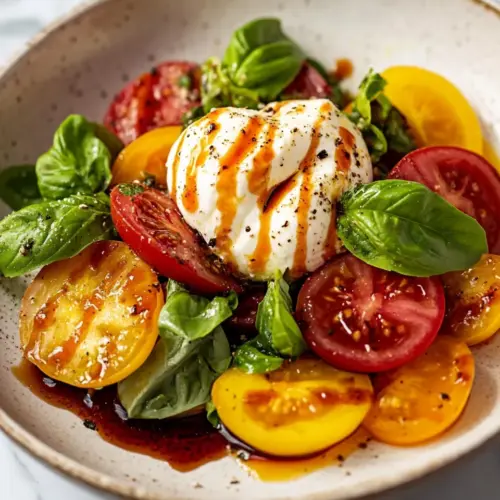
Caprese Salad with Burrata Cheese
Caprese Salad with Burrata Cheese is a creamy, fresh, and easy salad featuring milky burrata, ripe tomatoes, and a glossy balsamic reduction. This elegant starter brings bright basil aroma and silky olive oil together for an easy weeknight dinner or a light entertaining dish, worth making for its perfect balance of texture and flavor.
Equipment
- Small Saucepan
- Sharp Knife
- Serving plates
Ingredients
- 1/3 cup balsamic vinegar Adds tangy-sweet acidity to balance the rich burrata; reduced slightly or drizzled as-is to concentrate flavor. Enhances overall brightness and can be simmered briefly to create a thicker glaze for drizzling over tomatoes and cheese.
- 1 large tomato Provides juicy, slightly acidic flesh to contrast creamy burrata and deliver fresh tomato flavor. Sliced thickly or wedged to retain texture and layered with basil and oil for classic Caprese presentation.
- 1 large yellow tomato Contributes mild, slightly sweeter tomato notes and vibrant color contrast to the dish. Sliced to match the other tomato and paired with basil leaves to create visual appeal and balanced acidity.
- 2 balls (4 ounces each) burrata cheese Supplies rich, creamy, and slightly tangy dairy that is the salad's centerpiece and textural star. Torn or halved to reveal the soft interior, it melds with olive oil and balsamic for a luxurious mouthfeel.
- fresh basil leaves Offers aromatic, peppery-green notes that brighten and lift the salad's flavors when torn and scattered over tomatoes and cheese. Used fresh to preserve fragrance and provide classic Caprese herbal character.
- 2 tablespoons extra virgin olive oil Provides fruity, peppery fat that coats ingredients and helps carry flavors, particularly basil and balsamic, across the palate. Drizzled sparingly to enrich texture without overwhelming the delicate burrata.
- salt and freshly ground black pepper Seasoning with salt and freshly ground black pepper enhances natural flavors and balances sweetness and acidity. Added to taste after assembling to avoid drawing out tomato juices prematurely.
Instructions
- In a small saucepan, bring the balsamic vinegar to a boil over medium heat. Reduce the heat to low and simmer until reduced by at least half. It becomes a little bit thicker as it reduces. Remove from heat and chill until ready to drizzle on your salad (can be made ahead).: The kitchen will fill with a bright, tangy steam as the balsamic vinegar warms, and you should hear gentle bubbling as it reaches a rolling simmer. This step concentrates the vinegar's aroma, so keep a close ear and eye on the pan because vigorous boiling can quickly push it to burn. Use a small saucepan to allow the liquid to coat the bottom evenly, and stir occasionally to prevent hot spots. A common mistake is leaving it unattended, which can lead to bitter, scorched vinegar; lower the heat the moment it bubbles firmly.
- On two plates, layer tomato, slice of burrata, and fresh basil - repeat. You should have enough to layer four tomato slices, three slices of burrata and several leaves of basil on each plate. (You may not use all of the burrata you purchased - use the amount that is your preference). Drizzle 1 tablespoon of olive oil on each salad. Drizzle 1 tablespoon of the reduced balsamic on each salad. Top with salt and freshly ground black pepper.: As the balsamic vinegar simmers on low, its volume will visibly shrink and the surface will slow its movement, showing thicker ripples. You will notice the scent deepen from sharp acidity to a more caramel like perfume, and the liquid should coat the back of a spoon with a glossy sheen. Simmer patiently to avoid burning, and skim any foam if needed. If the reduction seems to take too long, check your burner setting, because too high a flame leads to uneven reduction and a bitter edge.
- It becomes a little bit thicker as it reduces.: Watch for the syrup like texture that clings to utensils, and notice the color darken slightly as it concentrates. This visual cue tells you the sugars and acids are balancing, and it will translate to a sweet tang on the tomato and burrata cheese . Stirring gently helps maintain an even reduction, but over stirring is unnecessary and can cool the pan too much. Avoid reducing it down to a sticky, burnt residue by removing it from heat when it still moves slowly across a spoon.
- Remove from heat and chill until ready to drizzle on your salad (can be made ahead).: Once off the stove, the aroma will settle into a warm, syrupy note, and letting it cool thickens it further. Chilling the reduction makes it easier to drizzle in controlled ribbons across the plate, and it also stabilizes the flavor so it does not dominate the fresh components. Store in a small jar in the refrigerator if making ahead, and bring back to room temperature briefly if it becomes too firm. A common oversight is to pour it hot over the salad, which can warm the burrata cheese and change its texture, so always cool first.
- On two plates, layer tomato, slice of burrata, and fresh basil - repeat.: When arranging, you will see a contrast of colors and textures, and the act of layering encourages even distribution of flavor. Use a sharp knife to make clean slices of tomato and place the soft discs of burrata cheese gently so they keep their shape. Tearing the fresh basil leaves and tucking them between layers releases aromatic oils without bruising. A frequent mistake is overcrowding the plate, which prevents the flavors from melding, so give each stack space to breathe.
- You should have enough to layer four tomato slices, three slices of burrata and several leaves of basil on each plate.: This guideline helps with portion balance and ensures each bite includes the creamy, the juicy, and the herbaceous. Visual symmetry matters here, so aim for consistent slice thickness and alternating colors for appeal. If slices vary too widely, the texture balance can be off, so take a moment to arrange thoughtfully. Avoid pressing down on the burrata cheese , as compressing it will release the creamy center prematurely.
- (You may not use all of the burrata you purchased - use the amount that is your preference).: Trust your taste and the visual impression of the plate, because the richness of the burrata cheese can be adjusted to preference. Leftover burrata cheese stores briefly in the refrigerator, but for best texture serve it soon after opening. If you overdo it, the salad can feel overly rich, so taste as you go to maintain balance. A common misstep is adding too much cheese which masks the brightness of the tomato .
- Drizzle 1 tablespoon of olive oil on each salad.: The first scent you will notice is the fruity warmth of the extra virgin olive oil , and a light drizzle adds silk and a subtle peppery finish. Pour slowly so the oil beads on the surface of the tomato and burrata cheese , enhancing mouthfeel without making the plate greasy. Use a spoon if you need more control. Avoid using too much oil, which can overwhelm the delicate flavors and leave the salad heavy.
- Drizzle 1 tablespoon of the reduced balsamic on each salad.: The reduced balsamic vinegar should ribbon across the plate in glossy streams, creating concentrated pockets of sweet tang that contrast with the creamy burrata cheese . The visual of dark glaze against bright tomato is part of the appeal. Apply it sparingly to avoid clumping, and taste a small amount first to ensure the sweetness and acidity are balanced. A typical error is adding too much, which can dominate the fresh flavors.
- Top with salt and freshly ground black pepper.: Finish with a light sprinkle of salt and freshly ground black pepper to lift and clarify the flavors. You will notice the aroma of ground pepper and the way the salt enhances the natural juices of the tomato and the creaminess of the burrata cheese . Season conservatively at first and adjust to taste because it is easier to add more than to remove excess. Over seasoning is the most common mistake here, so taste a bite before adding extra.
Notes
- Heirloom tomato swap Use colorful heirloom tomatoes for a more pronounced sweetness and an eye catching plate, arranging slices so their varied hues create visual interest.
- Mozzarella alternative If you cannot find burrata cheese, use fresh mozzarella balls in similar weight portions for a firmer texture that still pairs beautifully with the tomato.
- Herb twist Add torn fresh basil leaves liberally, or mix in a few small leaves of other mild herbs for subtle variation while keeping basil as the primary aromatic.
- Oil quality Use the best extra virgin olive oil you can find, because its fruitiness plays a silent but crucial role in lifting the salad's flavors.
- Make ahead balsamic Prepare the balsamic vinegar reduction a day ahead and store it chilled, which makes day of plating smoother and reduces last minute work.