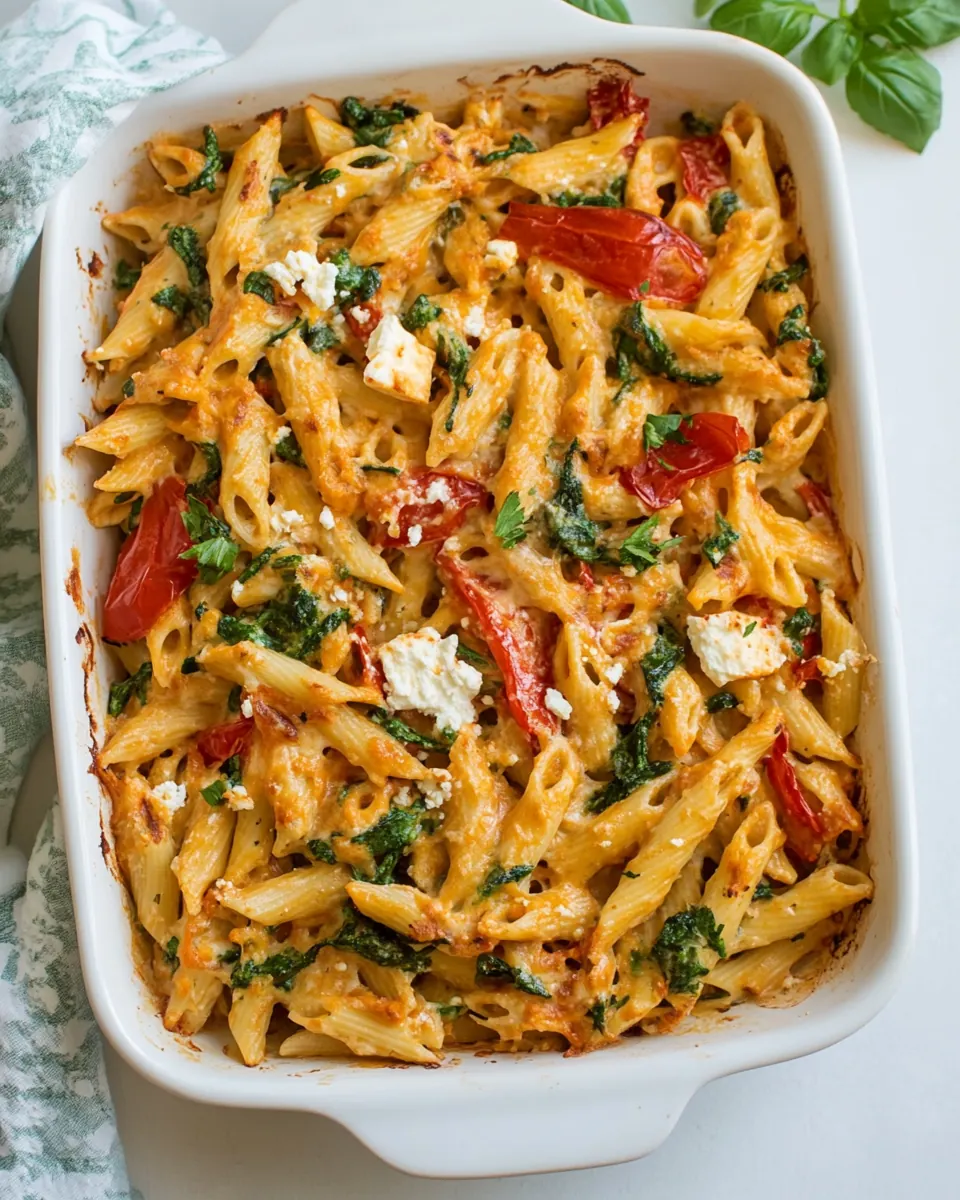
Baked Feta Pasta
Baked Feta Pasta is one of those recipes that felt like a small kitchen miracle the first time I made it, and it keeps surprising me with how deeply satisfying it is despite its simplicity.
I first stumbled onto this dish on a hectic summer evening, when I had a handful of grape tomatoes and a block of feta but not much time or patience to fuss. I remember the smell as the dish roasted, as the olive oil and garlic warmed and the tomatoes began to sigh and pop. The moment I pressed a spoon into the bubbling cheese and tomatoes and saw the sauce come together, I knew I’d found a new weeknight favorite. Since then I have adapted the ways I toss in pasta shapes and greens, learning small tricks each time that nudge the flavor and texture up a notch. Some nights I serve it with a simple salad, other nights it becomes the centerpiece of a lazy dinner party, because everyone loves how approachable and cozy it feels. Cooking this dish has given me a few rituals I stick to now, like wilting greens with the pasta water, and saving a little starchy water to coax the sauce to the perfect silky consistency. These tiny moves make the difference between a good bowl and one that feels intentionally delicious. If you want a reliable recipe that yields creamy, tangy, and slightly spicy notes with minimal fuss, this is the one I return to again and again.
Recipe Snapshot
50 mins
15 mins
35 mins
Medium
450 kcal
Mediterranean
Gluten-Free, Low FODMAP
Dinner
3 quart baking dish, Large pot, Wooden spoon
The Appeal of This Baked Feta Pasta
Comfortably simple but impressive
I love how Baked Feta Pasta looks like a showstopper while being incredibly easy to pull off, which makes it perfect for busy evenings or last minute guests. The oven does most of the work, and that hands off approach gives you time to set the table or open a book while it roasts.
Bold flavor from few ingredients
The combination of roasted grape tomatoes, warm garlic, and tangy feta creates a sauce that tastes richer than the ingredient list suggests. I rely on olive oil and a touch of red pepper flakes to round everything out, and that restrained seasoning means each element contributes meaningfully.
Versatile to different diets and occasions
I appreciate that Baked Feta Pasta adapts well to different pasta shapes and can be dressed up with wilted spinach or fresh basil for brightness. It works for quiet weeknights as well as casual dinner parties, and you can scale it without losing the essence of the dish.
Textural play keeps it interesting
The contrast between burst tomatoes and the creamy, slightly browned feta gives a pleasing mouthfeel. Tossing the warm pasta into the mix softens the cheese into a glossy coating, and reserving pasta water helps achieve that ideal silkiness.
Reliable crowd pleaser
I often choose this recipe when I want something that will make people smile without tying me to the stove. Its nostalgic, cheesy quality combined with herbaceous lifts like parsley and basil make it endlessly popular at the table.
Ingredient List for Baked Feta Pasta
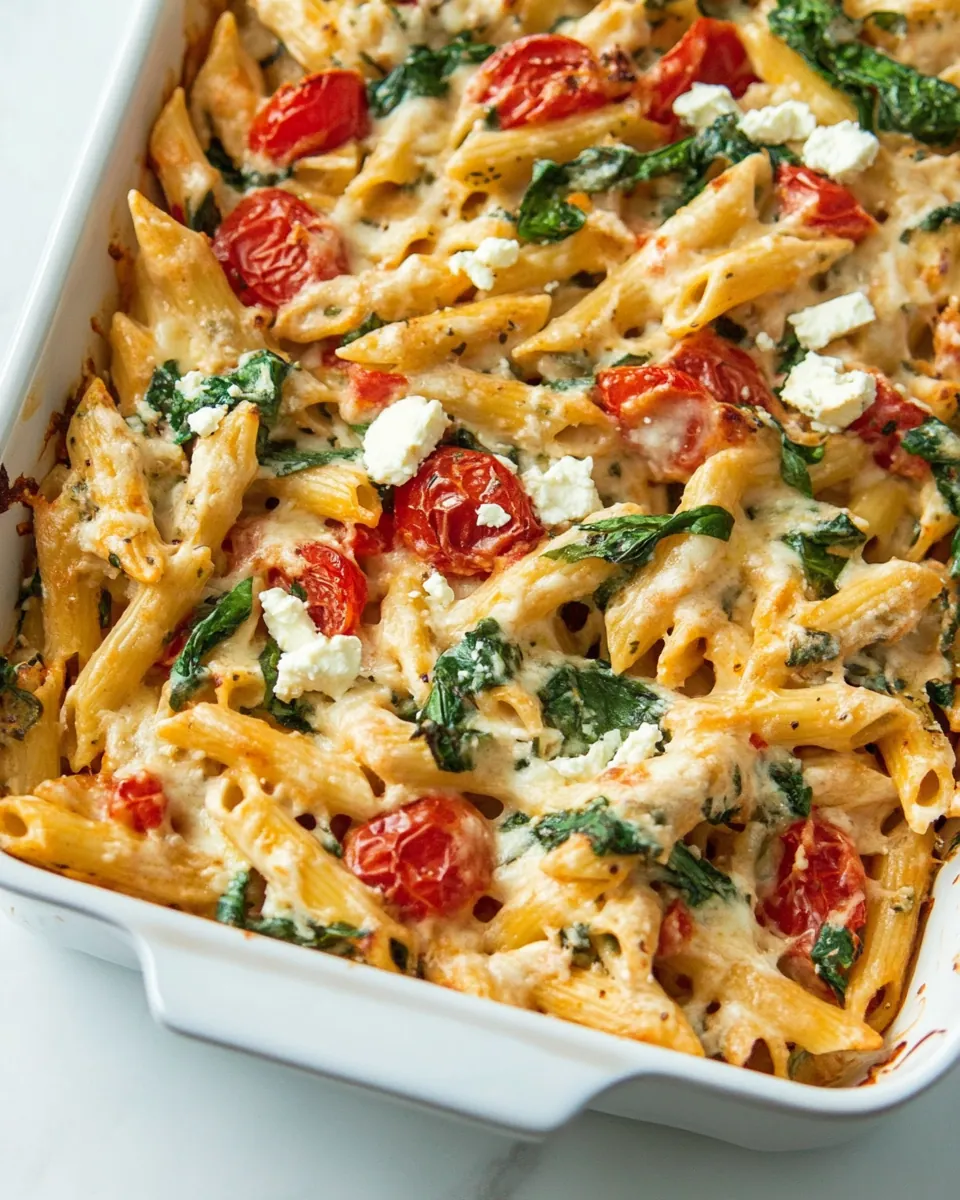
These ingredients are intentionally simple and focused on harmony. The key players are the juicy grape tomatoes, the salty, creamy feta, and the starchy pasta. Olive oil and garlic coax out savory aromatics, while fresh herbs and a handful of spinach add brightness and color. Together they create a sauce that clings to the pasta and carries both tang and richness.
- 2 pints (20 oz) grape tomatoes: Burst with sweetness and acidity to create a juicy, saucy base when roasted, their skins blister and concentrate flavor while releasing liquid that helps form the sauce for the baked feta pasta.
- 5 medium garlic cloves, peeled and halved: Provide pungent, aromatic depth when roasted and softened, mellowing in heat to infuse the tomato mixture with savory garlicky notes that balance the dish.
- 1/2 cup extra-virgin olive oil: Coat and facilitate roasting while adding fruity richness and mouthfeel; olive oil also helps carry flavors and finish the sauce with a silky texture.
- Salt and freshly ground black pepper: Season and enhance overall flavor by balancing acidity and sweetness; salt also draws moisture from tomatoes and encourages flavor concentration during roasting.
- 7 8 oz. block feta cheese (sheep's milk variety, such as Murray's), drained: Offer tangy, creamy, and salty richness that melts into the tomatoes, creating a luscious, cheesy centerpiece whose briny character lifts the entire sauce.
- 10 oz . dry pasta such as campanelle, rigatoni, rotini, penne, bow tie, or cavatappi: Absorb and carry the sauce while providing comforting bite and structure; the chosen shape captures the chunky tomato-feta mixture for balanced mouthfuls.
- 8 oz . spinach, roughly chopped (8 packed cups): Contribute bright, leafy texture and a pop of color while wilting into the hot pasta and sauce to add vegetal freshness and nutritional value.
- 1/4 cup thinly sliced fresh basil: Add fresh, aromatic lift with sweet, peppery notes that brighten the finished dish and complement the creamy feta and roasted tomatoes.
- 2 tbsp minced fresh parsley: Introduce herbaceous, slightly bitter freshness that layers complexity and contrasts the richness of the cheese and olive oil.
- 1/4 tsp crushed red pepper flakes, or more to taste: Bring controlled heat and a spicy kick that can be adjusted to taste, enhancing flavor complexity without overpowering the other components.
- 1/2 cup reserved pasta water: Loosen and emulsify the sauce while adjusting consistency; reserved pasta water’s starches help bind the sauce to the pasta for a cohesive finish.
Preparation Steps for Baked Feta Pasta
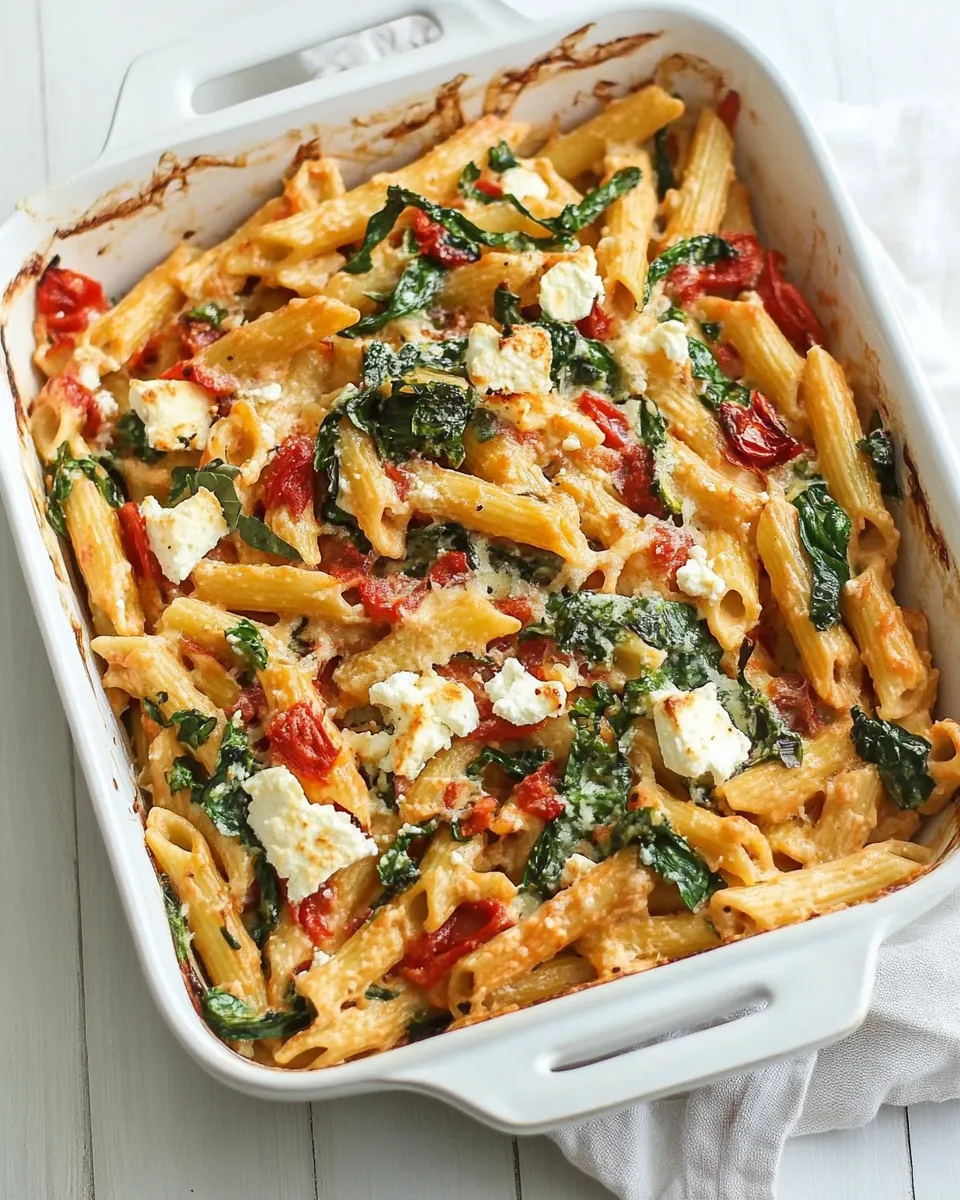
These directions will guide you through an easy but transformative process, from blistered tomatoes to a creamy, tossable sauce. I like to keep my mise en place ready, because things move quickly once the pasta is cooking and the oven work is done.
- Preheat oven to 400 degrees.: As the oven warms it creates a stable environment for the tomatoes and feta to roast evenly, developing deep caramelized flavors and gentle char. You should feel the kitchen temperature begin to shift and smell faint warmth from the oven; that steady heat is important so the tomatoes soften rather than steam. A common mistake is sliding the dish into an oven that is not fully hot, which leads to uneven roasting and less jammy tomatoes. Make sure the rack is positioned mid oven before you begin.
- Add grape tomatoes and garlic to a 3 quart baking dish. Toss with olive oil and a few pinches of salt and pepper. Place feta in the center of tomatoes, turn to coat with oil.: When you toss the grape tomatoes with olive oil , the oil helps encourage browning and carries the aroma of the garlic . Placing the feta block in the center creates a communal melting point so the cheese softens into the tomato juices. You should notice the oil glistening on the tomatoes and the garlic smelling fragrant and warm; this pre roasting mix sets flavor expectations. Avoid piling ingredients too high, which prevents hot air from circulating and inhibits proper roasting.
- Bake in center of preheated oven for 30 minutes.: During this time the tomatoes will begin to burst and release concentrated juices, and the feta will start to soften and warm through. Listen for faint pops from the tomatoes and watch for skin split and juices pooling, which are signs they are roasting correctly. This initial bake builds the sauce base and sweetens the tomatoes. A mistake to avoid is opening the oven repeatedly, which drops the temperature and extends cooking time unnecessarily.
- Then remove the baking dish, raise oven rack up to upper 1/3 of the oven. Return baking dish to oven and increase oven to 450 degrees. Bake until tomatoes and cheese are starting to brown slightly, about 10 minutes longer.: This step intensifies caramelization and encourages a little browning on the feta , adding a toasty complexity. Visually you want golden spots on the cheese and deeper color on tomato skins; aromatically the dish will smell richer and nuttier. Beware of leaving it too long at the higher temperature or you will get bitter char; check frequently near the end.
- Meanwhile boil pasta to al dente in salted water (I use 1 Tbsp salt and about 3 or 4 quarts of water), according to time listed on pasta package.: While the oven finishes, the pot should be at a rolling boil so the pasta cooks evenly. Seasoning the water with a tablespoon of salt seasons the pasta from the inside out, which is critical since the sauce is simple. Cook to al dente so the pasta keeps shape when tossed with hot sauce. Overcooking leads to a mushy final texture and undercooking gives a starchy, raw bite.
- Reserve 1/2 cup pasta water and right before draining pour and submerge spinach in with the pasta (it should wilt almost instantly). Drain pasta and spinach.: The reserved hot pasta water contains starch that will marry the roasted mixture into a silky sauce, so keep it handy. Submerging the spinach briefly wilts it quickly, preserving color and preventing excess water from diluting the sauce. After draining, the pasta should be warm and the greens soft but bright. A common error is discarding the pasta water; without it the sauce may be too thick or clumpy.
- Smash the tomatoes, garlic, oil and feta together with the back of a wooden spoon. Toss pasta in with mixture along with basil, parsley and red pepper flakes.: At this tactile moment you will feel the tomatoes collapse and the feta give way, releasing a fragrant, glossy sauce. The perfume will be a mix of roasted garlic , concentrated tomato sweetness, and salty tang. Using a wooden spoon allows a bit of resistance as you mash, which helps integrate solids into a cohesive sauce. If you skip thorough smashing you may end up with large unincorporated chunks and uneven coating on the pasta .
- Thin mixture with a few tablespoons of pasta water at a time to reach desired consistency. Season with salt and pepper as needed. Serve warm.: Add the hot pasta directly to the baking dish so the residual heat helps the sauce cling to each piece, and fold in aromatic herbs like basil and parsley for lift. You should hear a gentle tinkle as pasta meets the saucy pan and see the strands or shapes become glossy with coating. The red pepper flakes should release a faint warming scent. If you mix too vigorously you can bruise delicate herbs, so fold gently to distribute evenly.
- Thin mixture with a few tablespoons of pasta water at a time to reach desired consistency. Season with salt and pepper as needed. Serve warm: Adding warm reserved pasta water bit by bit will loosen and emulsify the sauce into a silky finish that clings to the pasta . Taste as you go and adjust with salt or pepper; the feta is salty so little may be needed. The final dish should be glossy, slightly saucy, and warmly aromatic. Over thinning will make the dish soupy, while under thinning leaves it clumpy, so aim for a smooth coating that moves when the bowl is tilted.
Pro Tips and Tweaks
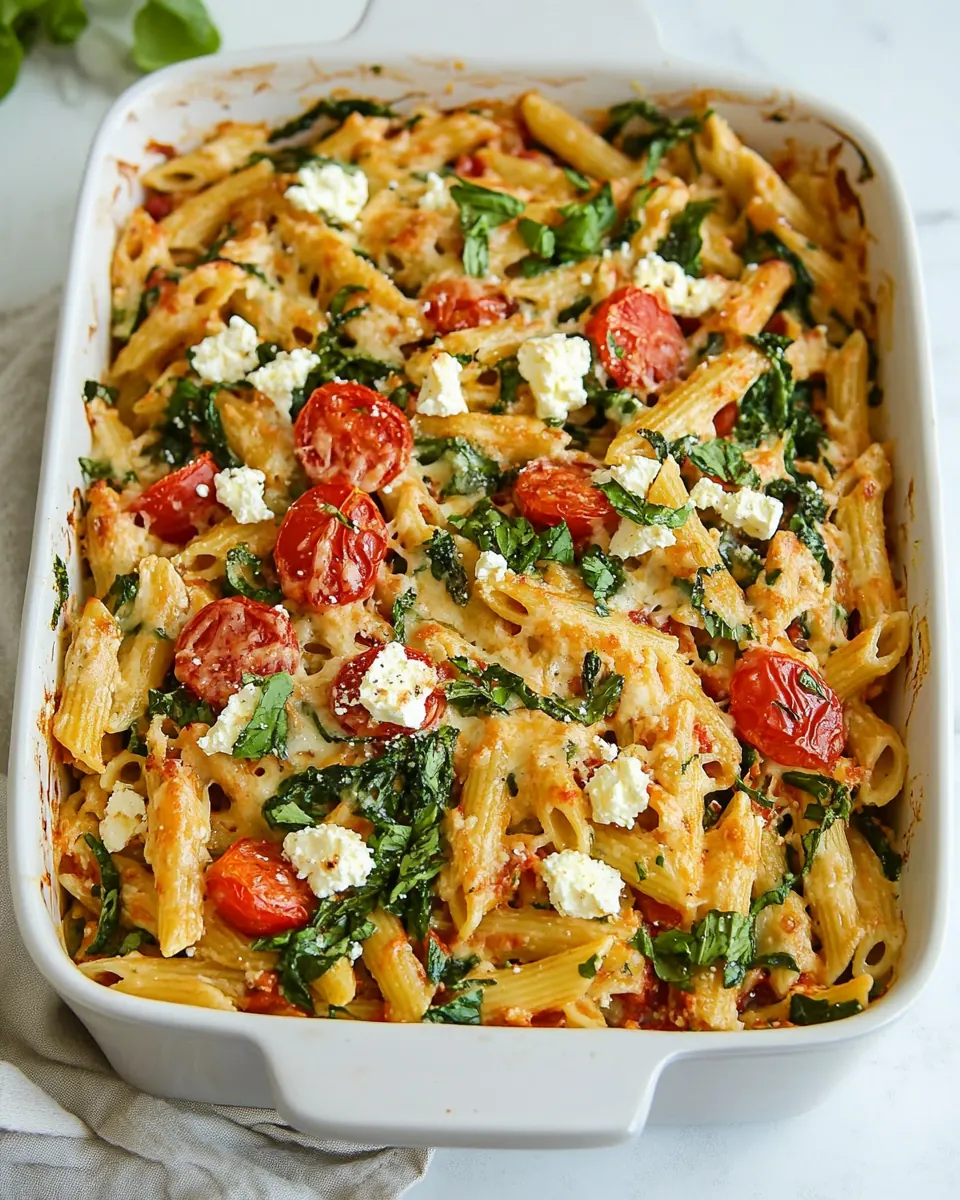
This section expands on small adjustments that elevate the final result. Apply one or two ideas that suit your pantry and preferences, and you will notice a meaningful difference.
- Choose the right pasta shape , pick shapes with ridges or pockets like rigatoni, campanelle, or cavatappi so the sauce clings and every bite has texture.
- Pat the feta dry , if your block is watery, blot it with paper towel so the sauce does not become thin and diluted as it roasts.
- Use hot pasta water , add it gradually to emulsify the oil and cheese into a creamy coating, which prevents clumping and creates a glossy finish.
- Don’t over roast , keep an eye when increasing temperature, you want slight browning not heavy charring, because burnt bits add bitterness.
- Fold gently , when adding herbs and greens, use a light hand so leaves stay bright and do not turn mushy.
What to Serve With Baked Feta Pasta
This dish pairs well with contrasting textures and bright elements that cut through the richness. Think crisp salads, acidic pickles, or simply sliced crusty bread to soak up any leftover sauce.
- Fresh green salad , a crisp salad with a lemony vinaigrette provides a refreshing contrast and brightens the plate.
- Simple roasted vegetables , seasonal roasted vegetables add substance and make the meal more varied in texture and color.
- Crusty bread , warm bread is practical for mopping up sauce and adds a comforting, chewy element to the meal.
- Casual weeknight occasion , this recipe is ideal for a low fuss dinner when you want something satisfying without elaborate prep.
- Small dinner gatherings , it scales well for a few guests and can be served family style for a convivial feeling.
- Storage tips , refrigerate leftovers in an airtight container for up to three days, and gently reheat with a splash of water to loosen the sauce.
- Seasonal pairing , in summer use the ripest tomatoes and finish with extra fresh basil for peak aroma.
FAQ
Conclusion
What makes this recipe special is its ability to transform a handful of humble ingredients into a creamy, tangy, and comforting bowl that feels both effortless and intentional. Give Baked Feta Pasta a try the next time you want a low fuss meal that still delivers big on flavor. You will likely find it becomes a go to for weeknights and casual gatherings alike, a warm reminder that simple cooking can be deeply satisfying.
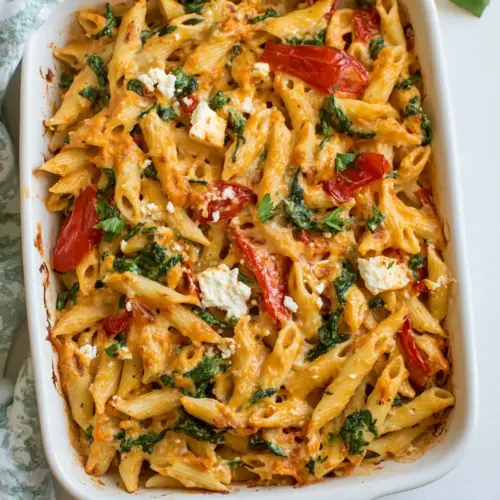
Baked Feta Pasta
Equipment
- 3 quart baking dish
- Large Pot
- Wooden Spoon
Ingredients
- 2 pints (20 oz) grape tomatoes Burst with sweetness and acidity to create a juicy, saucy base when roasted, their skins blister and concentrate flavor while releasing liquid that helps form the sauce for the baked feta pasta.
- 5 medium garlic cloves, peeled and halved Provide pungent, aromatic depth when roasted and softened, mellowing in heat to infuse the tomato mixture with savory garlicky notes that balance the dish.
- 1/2 cup extra-virgin olive oil Coat and facilitate roasting while adding fruity richness and mouthfeel; olive oil also helps carry flavors and finish the sauce with a silky texture.
- Salt and freshly ground black pepper Season and enhance overall flavor by balancing acidity and sweetness; salt also draws moisture from tomatoes and encourages flavor concentration during roasting.
- 7 -8 oz. block feta cheese (sheep's milk variety, such as Murray's), drained Offer tangy, creamy, and salty richness that melts into the tomatoes, creating a luscious, cheesy centerpiece whose briny character lifts the entire sauce.
- 10 oz . dry pasta such as campanelle, rigatoni, rotini, penne, bow tie, or cavatappi Absorb and carry the sauce while providing comforting bite and structure; the chosen shape captures the chunky tomato-feta mixture for balanced mouthfuls.
- 8 oz . spinach, roughly chopped (8 packed cups) Contribute bright, leafy texture and a pop of color while wilting into the hot pasta and sauce to add vegetal freshness and nutritional value.
- 1/4 cup thinly sliced fresh basil Add fresh, aromatic lift with sweet, peppery notes that brighten the finished dish and complement the creamy feta and roasted tomatoes.
- 2 tbsp minced fresh parsley Introduce herbaceous, slightly bitter freshness that layers complexity and contrasts the richness of the cheese and olive oil.
- 1/4 tsp crushed red pepper flakes, or more to taste Bring controlled heat and a spicy kick that can be adjusted to taste, enhancing flavor complexity without overpowering the other components.
- 1/2 cup reserved pasta water Loosen and emulsify the sauce while adjusting consistency; reserved pasta water’s starches help bind the sauce to the pasta for a cohesive finish.
Instructions
- Preheat oven to 400 degrees.: As the oven warms it creates a stable environment for the tomatoes and feta to roast evenly, developing deep caramelized flavors and gentle char. You should feel the kitchen temperature begin to shift and smell faint warmth from the oven; that steady heat is important so the tomatoes soften rather than steam. A common mistake is sliding the dish into an oven that is not fully hot, which leads to uneven roasting and less jammy tomatoes. Make sure the rack is positioned mid oven before you begin.
- Add grape tomatoes and garlic to a 3 quart baking dish. Toss with olive oil and a few pinches of salt and pepper. Place feta in the center of tomatoes, turn to coat with oil.: When you toss the grape tomatoes with olive oil , the oil helps encourage browning and carries the aroma of the garlic . Placing the feta block in the center creates a communal melting point so the cheese softens into the tomato juices. You should notice the oil glistening on the tomatoes and the garlic smelling fragrant and warm; this pre roasting mix sets flavor expectations. Avoid piling ingredients too high, which prevents hot air from circulating and inhibits proper roasting.
- Bake in center of preheated oven for 30 minutes.: During this time the tomatoes will begin to burst and release concentrated juices, and the feta will start to soften and warm through. Listen for faint pops from the tomatoes and watch for skin split and juices pooling, which are signs they are roasting correctly. This initial bake builds the sauce base and sweetens the tomatoes. A mistake to avoid is opening the oven repeatedly, which drops the temperature and extends cooking time unnecessarily.
- Then remove the baking dish, raise oven rack up to upper 1/3 of the oven. Return baking dish to oven and increase oven to 450 degrees. Bake until tomatoes and cheese are starting to brown slightly, about 10 minutes longer.: This step intensifies caramelization and encourages a little browning on the feta , adding a toasty complexity. Visually you want golden spots on the cheese and deeper color on tomato skins; aromatically the dish will smell richer and nuttier. Beware of leaving it too long at the higher temperature or you will get bitter char; check frequently near the end.
- Meanwhile boil pasta to al dente in salted water (I use 1 Tbsp salt and about 3 or 4 quarts of water), according to time listed on pasta package.: While the oven finishes, the pot should be at a rolling boil so the pasta cooks evenly. Seasoning the water with a tablespoon of salt seasons the pasta from the inside out, which is critical since the sauce is simple. Cook to al dente so the pasta keeps shape when tossed with hot sauce. Overcooking leads to a mushy final texture and undercooking gives a starchy, raw bite.
- Reserve 1/2 cup pasta water and right before draining pour and submerge spinach in with the pasta (it should wilt almost instantly). Drain pasta and spinach.: The reserved hot pasta water contains starch that will marry the roasted mixture into a silky sauce, so keep it handy. Submerging the spinach briefly wilts it quickly, preserving color and preventing excess water from diluting the sauce. After draining, the pasta should be warm and the greens soft but bright. A common error is discarding the pasta water; without it the sauce may be too thick or clumpy.
- Smash the tomatoes, garlic, oil and feta together with the back of a wooden spoon. Toss pasta in with mixture along with basil, parsley and red pepper flakes.: At this tactile moment you will feel the tomatoes collapse and the feta give way, releasing a fragrant, glossy sauce. The perfume will be a mix of roasted garlic , concentrated tomato sweetness, and salty tang. Using a wooden spoon allows a bit of resistance as you mash, which helps integrate solids into a cohesive sauce. If you skip thorough smashing you may end up with large unincorporated chunks and uneven coating on the pasta .
- Thin mixture with a few tablespoons of pasta water at a time to reach desired consistency. Season with salt and pepper as needed. Serve warm.: Add the hot pasta directly to the baking dish so the residual heat helps the sauce cling to each piece, and fold in aromatic herbs like basil and parsley for lift. You should hear a gentle tinkle as pasta meets the saucy pan and see the strands or shapes become glossy with coating. The red pepper flakes should release a faint warming scent. If you mix too vigorously you can bruise delicate herbs, so fold gently to distribute evenly.
- Thin mixture with a few tablespoons of pasta water at a time to reach desired consistency. Season with salt and pepper as needed. Serve warm: Adding warm reserved pasta water bit by bit will loosen and emulsify the sauce into a silky finish that clings to the pasta . Taste as you go and adjust with salt or pepper; the feta is salty so little may be needed. The final dish should be glossy, slightly saucy, and warmly aromatic. Over thinning will make the dish soupy, while under thinning leaves it clumpy, so aim for a smooth coating that moves when the bowl is tilted.
Notes
- Choose the right pasta shape , pick shapes with ridges or pockets like rigatoni, campanelle, or cavatappi so the sauce clings and every bite has texture.
- Pat the feta dry , if your block is watery, blot it with paper towel so the sauce does not become thin and diluted as it roasts.
- Use hot pasta water , add it gradually to emulsify the oil and cheese into a creamy coating, which prevents clumping and creates a glossy finish.
- Don't over roast , keep an eye when increasing temperature, you want slight browning not heavy charring, because burnt bits add bitterness.
- Fold gently , when adding herbs and greens, use a light hand so leaves stay bright and do not turn mushy.