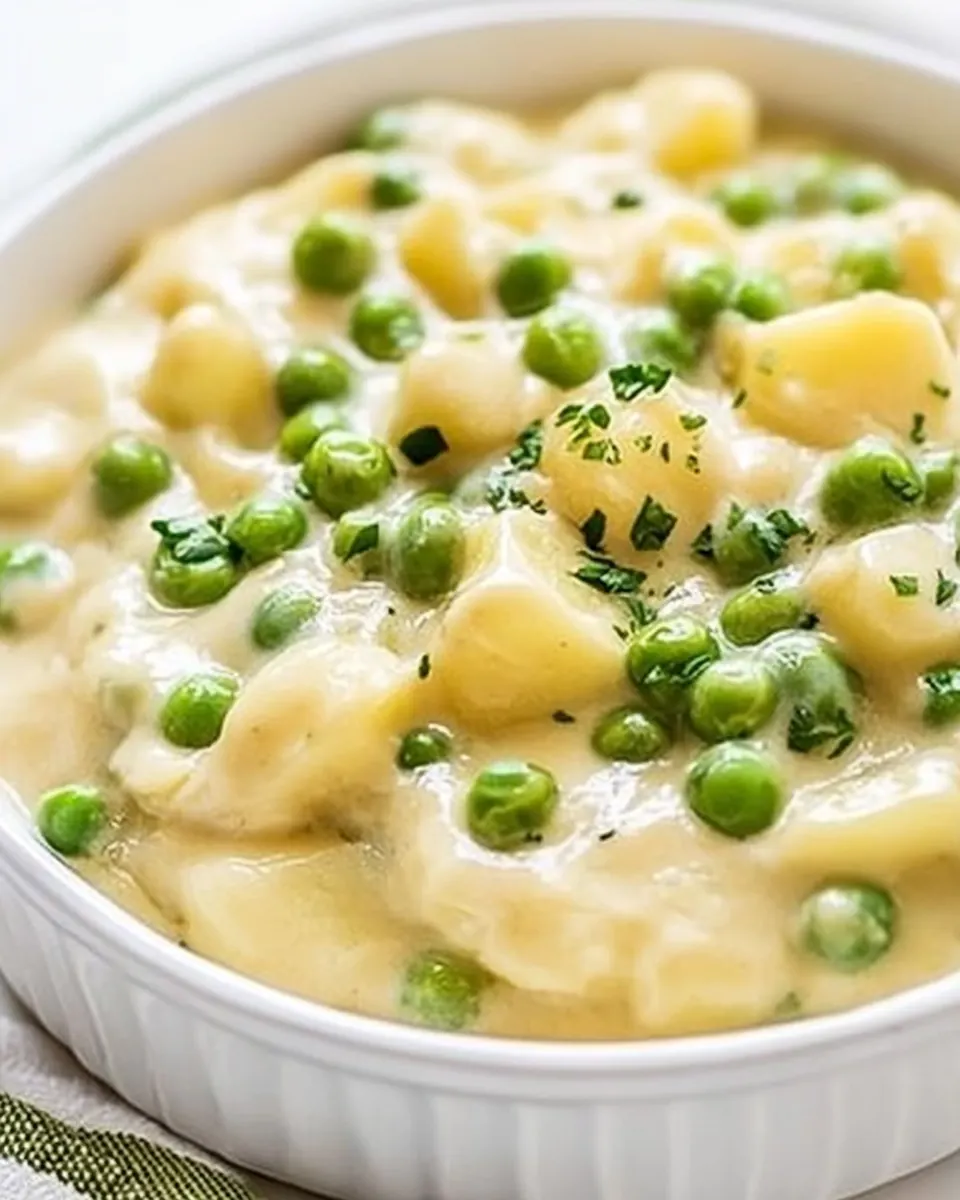
Cheesy Creamed Peas and Potatoes
Cheesy Creamed Peas and Potatoes is one of those cozy, homey dishes I reach for when I want something that feels like a warm kitchen hug. The first time I made it was on an overcast afternoon after a long farmers market run, pockets full of small new potatoes and tender peas. I remember the gentle steam rising from the pot as the potatoes softened, and how the house suddenly smelled rich and inviting when the Velveeta cheese began to melt into the sauce. It felt like comfort food with a little bit of nostalgia tossed in.
Over the years I have tweaked the technique to keep the textures lively, so the peas still pop and the potatoes hold their shape without becoming mealy. I love how simple steps and straightforward ingredients can add up to something that feels special enough for a weeknight supper yet familiar enough for family gatherings. The creamy sauce clings to each piece, so every forkful has both creaminess and a little bite from the peas.
When friends come over and I serve Cheesy Creamed Peas and Potatoes, they often comment on how comforting and effortless it tastes. It’s one of those recipes that bridges childhood memories and adult cooking, and it’s forgiving too, which I appreciate when life gets busy. I like to think of it as the kind of dish that leaves room for conversation and seconds, the sort of recipe you return to because it simply works.
Recipe Snapshot
30 mins
5 mins
25 mins
Medium
300 kcal
American
Gluten-Free, Low FODMAP
Side Dishes
Dutch oven or large saucepan, Whisk, Colander
The Appeal of This Cheesy Creamed Peas and Potatoes
Comfort with Minimal Fuss
I adore how Cheesy Creamed Peas and Potatoes gives maximum comfort with minimal effort. A few straightforward steps transform humble potatoes and peas into a velvety side that tastes like it took longer than it did. That low work to high reward ratio is a major reason I keep this recipe in my rotation.
Textural Contrast
The interplay between tender, slightly firm potatoes and the pop of the peas keeps each bite interesting. The creamy sauce wraps around the ingredients but does not smother them, so you get both silkiness and a little veggie bite. Personally, that contrast makes the dish feel balanced rather than one note.
Family Friendly Flavor
There is something universally pleasing about a cheesy sauce, which is why this dish is a hit around my table. The mild, familiar flavor profile works for picky eaters and adventurous tasters alike, so it’s a dependable choice for holiday dinners, potlucks, or simple weeknight meals when you want everyone content.
Flexible and Forgiving
I appreciate recipes that forgive small timing or measurement slips. Cheesy Creamed Peas and Potatoes tolerates a bit more cooking time or a touch less liquid without falling apart. If your potatoes are slightly larger or your peas are a little sooner to the table, it usually still turns out great, which is a relief when the kitchen gets hectic.
Seasonal and Nostalgic
This feels particularly appropriate when spring peas are at their peak, but it also works with frozen peas year round. For me, the recipe evokes family dinners and simple Sunday lunches, which is a big reason I keep coming back to it.
Key Ingredients for Cheesy Creamed Peas and Potatoes
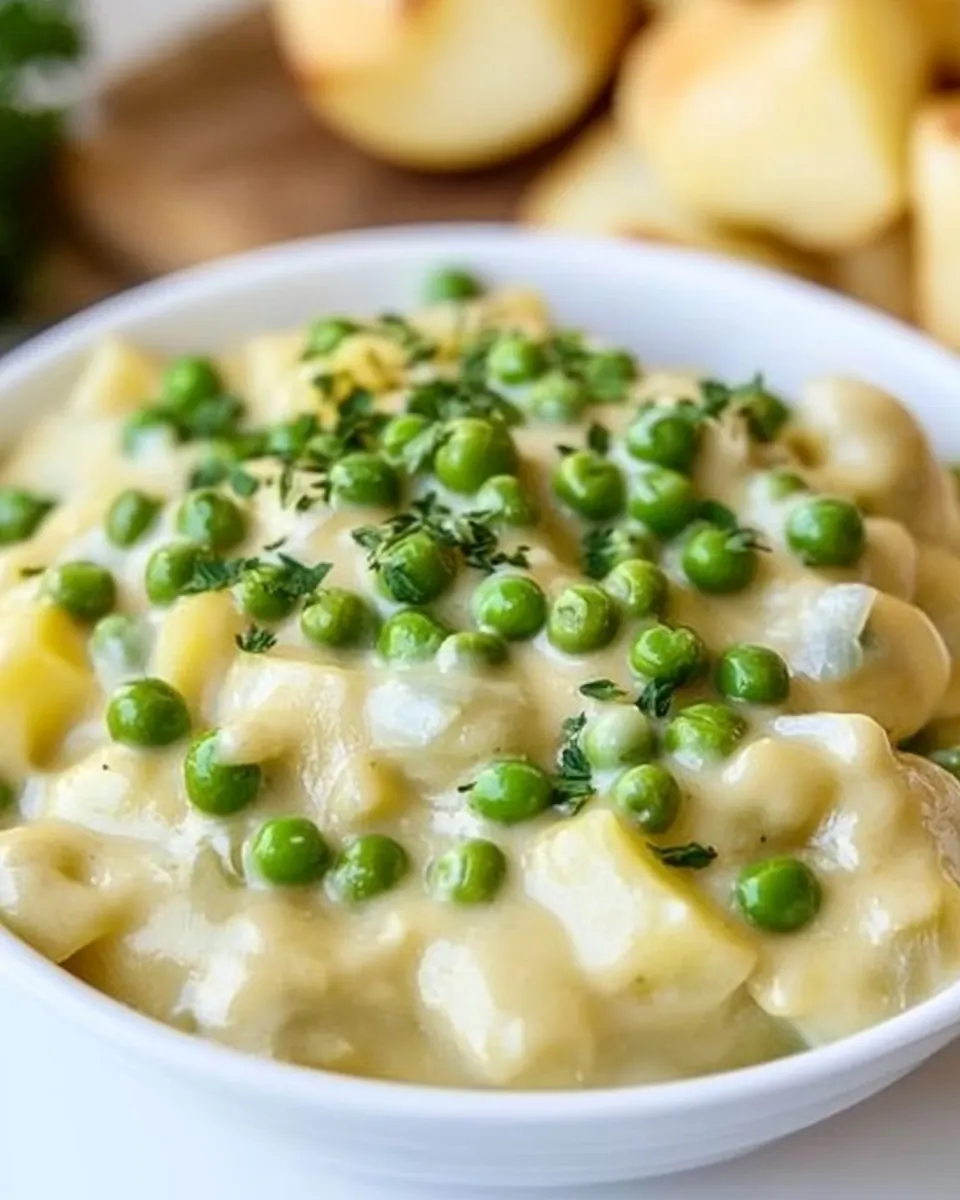
These ingredients are straightforward and play clear roles in the finished dish. The potatoes provide structure and substance, the peas add color and a bright burst, and the creamy sauce unites everything. Together they form a harmonious base that is both filling and comforting, with the cheese acting as the glue that elevates simple vegetables into a rich side.
- 1 1/2 pounds small new potatoes, halved or quartered if larger: Cooked and halved or quartered to provide hearty texture and substance; helps absorb flavors and serve as the dish’s starchy base. Adds a creamy contrast to the peas and cheese while contributing bulk and mouthfeel. Choose small new potatoes for thin skins and even cooking, ensuring tender pieces throughout.
- 2 (10-ounce) packages frozen peas, or 4 cups fresh peas: Blanched or thawed to supply bright, sweet vegetal flavor and a pop of color; balances the richness of the cream and cheese. Contributes moisture and delicate texture while adding nutritional value like fiber and vitamins. Fresh peas offer a fresher taste, while frozen are convenient and reliably tender.
- 3 tablespoons butter: Melted and whisked in at the start to enrich flavor and create the fat component of the roux; provides silkiness and a subtle buttery note. Coats the potatoes and peas, helping carry other seasonings through the dish and improving mouthfeel. Use unsalted or salted butter depending on desired final seasoning.
- 3 tablespoons all-purpose flour: Cooked with butter to form a roux that thickens the half-and-half into a creamy sauce; establishes structure and prevents separation. Adds a mild, toasty flavor while giving the sauce body and clinginess to coat the potatoes and peas. Whisk thoroughly to remove lumps and cook briefly to eliminate raw flour taste.
- 2 cups half-and-half: Simmered into the roux to create a rich, creamy base that binds the components and contributes both fat and liquid. Adds a smooth, velvety texture and mild dairy flavor that complements the cheese and vegetables. Adjust heat gently to avoid scorching and thicken to the desired consistency.
- 1/2 teaspoons seasoned salt: Sprinkled in to season the dish with a balanced savory blend that often includes salt and complementary spices; enhances overall flavor depth. Helps round out the richness of the cream and cheese while providing subtle complexity. Use to taste, remembering Velveeta adds saltiness as well.
- 1/2 teaspoon black pepper: Ground and added to taste to provide a sharp, slightly bitter counterpoint that brightens and seasons the creamy mixture. Enhances overall flavor balance and cuts through richness without overwhelming the other components. Freshly ground pepper yields more aromatic intensity.
- 8 ounces Velveeta cheese, cut into cubes: Melted into the sauce to deliver smooth, gooey cheesiness and full-bodied creamy flavor while acting as a binder. Provides salt, meltability, and a glossy texture that creates the signature cheesy finish for the potatoes and peas. Cube before melting for even incorporation and stir until fully smooth.
Preparation Steps for Cheesy Creamed Peas and Potatoes
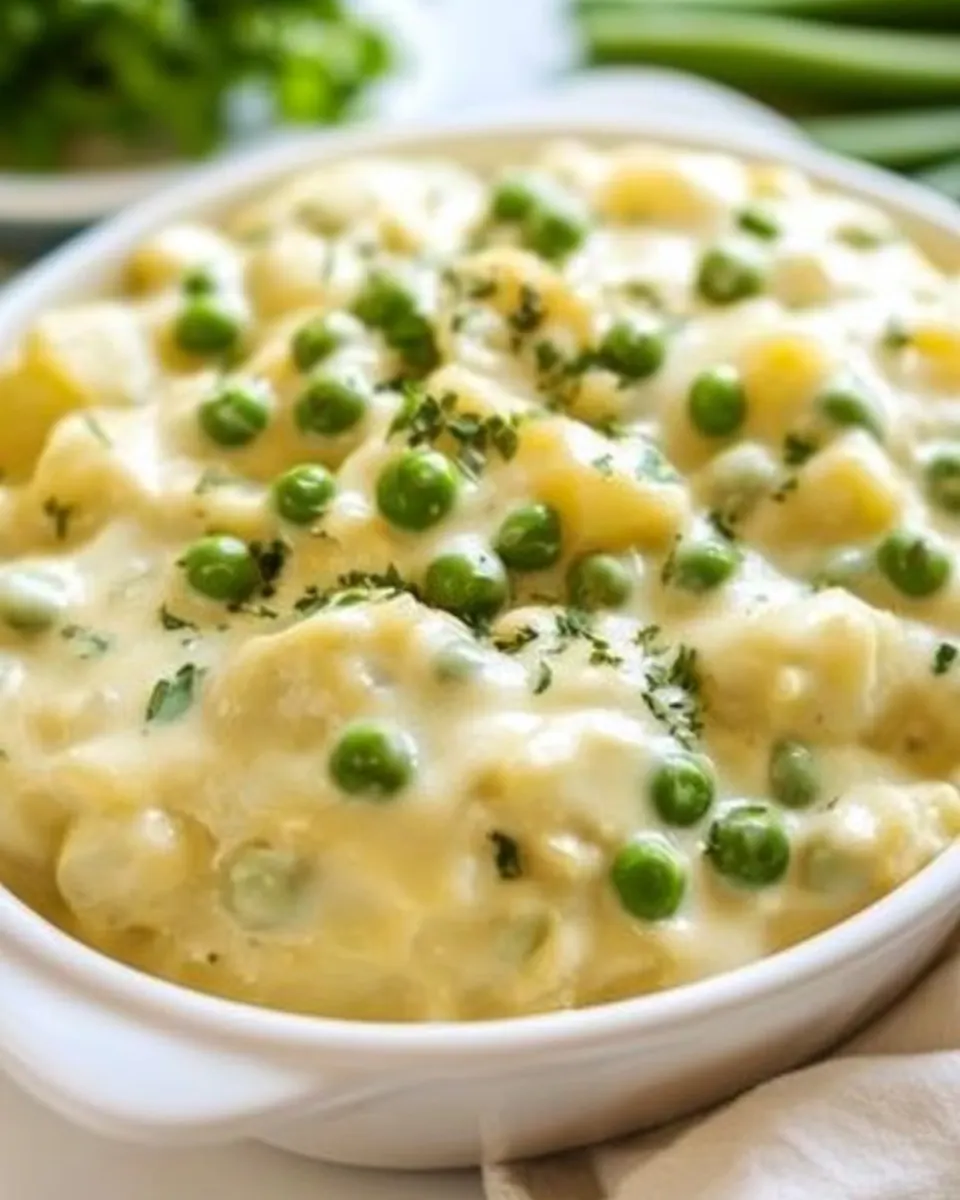
I like to walk through these steps like a quiet kitchen rhythm, paying attention to the little sensory cues that tell you everything is on track. Below you will find the cleaned directions, followed by detailed guidance so you can reproduce the ideal texture and flavor every time.
- Place potatoes in a dutch oven or large saucepan. Add water to cover by about an inch. Add 1 teaspoon salt to water.: The water should gently lap over the potatoes , not be rushing; you want a silent simmer later rather than violent boiling. As the salted water heats, it will start to smell faintly mineral, and the pot will develop a soft hiss as tiny bubbles appear. This stage primes the potatoes to cook evenly from the outside in, which prevents an undercooked center with an overcooked exterior. A common trap is adding too much salt up front; stick to the teaspoon so the potatoes absorb balanced seasoning rather than tasting briny.
- Bring water to a boil and simmer until potatoes are just starting to get tender, about 15 minutes.: You will hear the water shift from rolling boil to gentler, steady simmer, and the surface will show rhythmic bubbling. The potatoes at this stage give slightly when pricked with a fork but still offer resistance. This timing keeps them from turning mushy later when they mingle with the sauce. If you overcook them, they will crumble into the sauce rather than staying pleasantly bite sized.
- Add peas and simmer 5 more minutes. Drain and set aside.: When the peas hit the simmering pot, you may notice a fresh, green aroma rise. After about five minutes their color deepens and they become tender yet still pop when bitten. Drain promptly so residual heat does not overcook them, which would dull their color and texture. Leaving them in the pot too long is the usual oversight, and it robs the dish of that lively pea brightness.
- Add butter to the now empty Dutch oven or saucepan and place over medium heat.: The pan should be dry and warm, ready to accept the butter , which will melt into a glossy pool and start to foam quietly. That foaming signals the right starting temperature for making a roux. If the pan is too hot the butter will brown quickly and alter the flavor; if it is too cool, the butter will not incorporate with the flour evenly.
- Sprinkle flour into pan and whisk it into the butter for 1 minute.: As you whisk, the mixture will thicken into a pale, sandy paste and give off a faint toasty, cooked flour scent. Cooking the flour for a minute removes rawness and ensures a silky final sauce. A frequent mistake is rushing this step, which can leave a starchy bite in the finished cream.
- Gradually whisk in half-and-half.: Pour the half-and-half slowly while whisking so the mixture smooths out without lumps. The sound will shift from a heavy plop to a smooth pour, and the sauce will transform from pastey to fluid and glossy. Adding cold liquid too fast can create lumps, so steady whisking and gradual addition are your best safeguards.
- Add seasoned salt and pepper. Cook and stir until thickened, about 1 to 2 minutes.: The sauce will begin to coat the back of a spoon and move with a slow ribbon when stirred. You will notice the aroma deepen and a sense of silkiness under your spoon. This short cooking time lets the seasonings bloom and the sauce reach body without becoming overly reduced. Overcooking can concentrate salt and change texture, so watch for the first signs of thickening.
- Remove from heat and add Velveeta. Stir until melted.: Off the heat, adding the cubed Velveeta cheese will cause the sauce to become supremely glossy as the cheese melts into the warm base. Stir until the sauce is homogeneous and there are no visible cubes. Melting off heat prevents the cheese from breaking down into an oily separation. A frequent error is returning the pan to high heat while adding cheese, which risks a grainy texture.
- Return potatoes and peas to pan and mix them into the sauce.: As you fold the warm potatoes and peas back in, listen for the soft clink of pieces settling into the sauce, and watch as each piece gets a smooth coat. The visual cue is glossy sauce clinging uniformly, and the aroma becomes richer and rounded. Mixing gently preserves the shape of the potatoes , while also distributing the sauce and seasoning evenly. Vigorous stirring will break the potatoes apart, which is the most common misstep here.
Variations to Try
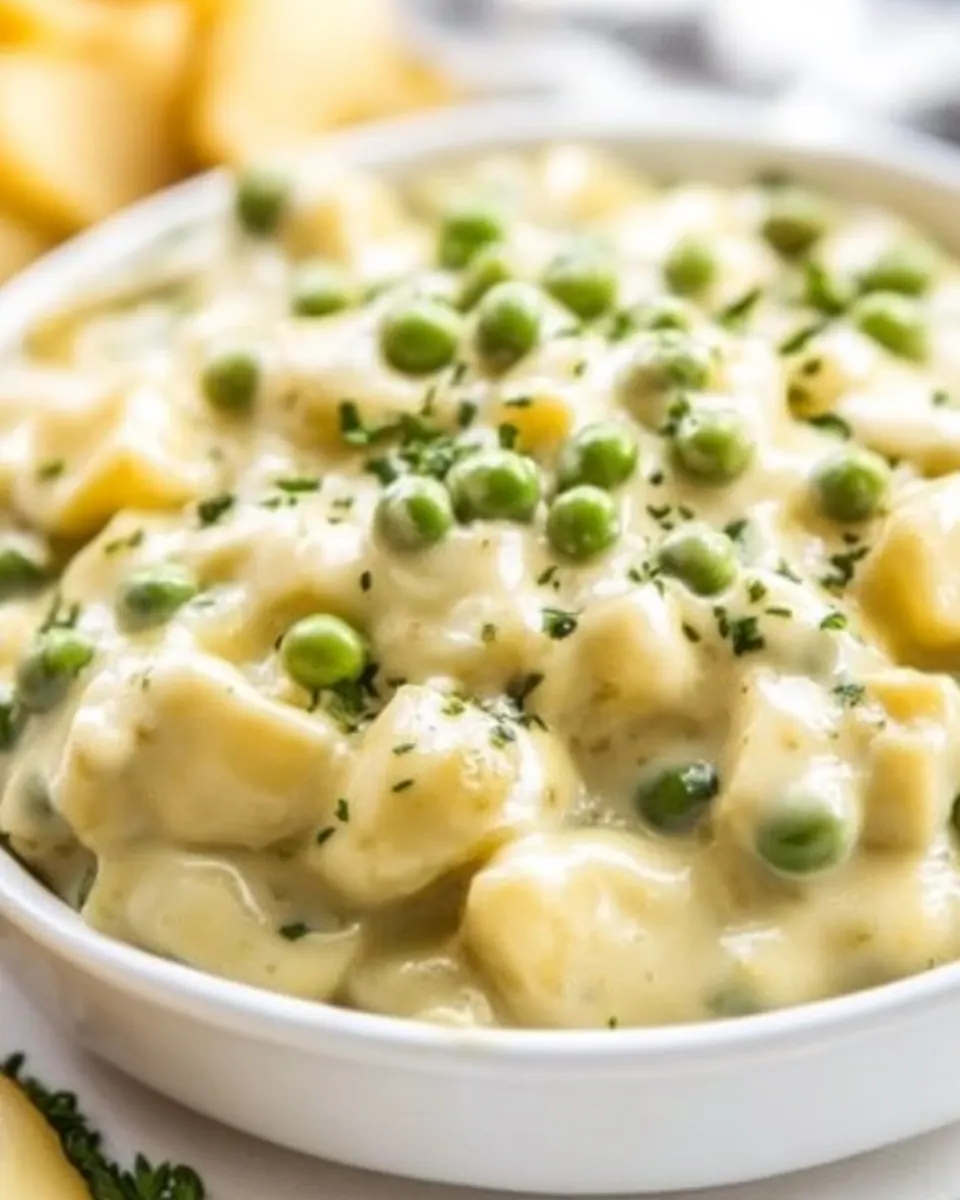
These variations help you tailor Cheesy Creamed Peas and Potatoes to your pantry and the occasion. Each tip highlights a small change that shifts texture or flavor without changing the soul of the dish.
- Swap the cheese approach: Try cutting the Velveeta cheese into smaller cubes so it melts more quickly and evenly, producing an ultra smooth sauce with less stirring.
- Peas timing trick: Add the peas in the last five minutes of potato cooking to preserve their bright color and ensure they keep a slight bite rather than going mushy.
- Roux attention: Whisk the flour into the melted butter for the full minute to cook out any raw flour taste, which ensures a clean, silky mouthfeel in the finished sauce.
- Half and half handling: Pour the half-and-half gradually while whisking to prevent lumps and to create a glossy, lump free sauce that clings to the potatoes and peas.
- Salt control: Start with the specified seasoned salt measure, then taste after combining the potatoes and peas, because pathway variance in brands can change final salt levels.
Accompaniments for Cheesy Creamed Peas and Potatoes
This side pairs wonderfully with a range of mains and occasions, and it stores well for make ahead meals. Below are thoughtful serving ideas and practical storage pointers to help you present it at its best.
- Classic weeknight plate: Serve Cheesy Creamed Peas and Potatoes alongside a simple roasted protein for a balanced, comforting dinner. The creamy texture complements grilled or roasted mains and makes for an easy, satisfying meal.
- Holiday side: This dish works well on a festive spread as a creamy vegetable option. Its gentle flavors are accessible and pair with many traditional holiday proteins, making it a crowd pleasing choice.
- Make ahead and reheat: Store in an airtight container in the refrigerator for up to three days. Reheat gently over low heat while stirring, adding a splash of water or reserved cooking liquid if the sauce tightens, to restore the silky consistency.
- Potluck-ready transport: Keep it warm in a covered casserole and give it a gentle stir before serving to redistribute sauce. The glossy finish will return with a short, gentle reheat.
- Seasonal pairing: In spring, serve with bright salads or steamed asparagus to echo the fresh pea notes. The creaminess of the dish balances crisp, acidic sides beautifully.
- Portioning for guests: Spoon into shallow serving dishes so each portion is easy to plate, and include a garnish of cracked black pepper for immediate aroma and visual contrast.
FAQ
Conclusion
What makes this recipe special is its ability to turn simple potatoes and peas into a creamy, comforting dish that feels both nostalgic and satisfying. I hope you give Cheesy Creamed Peas and Potatoes a try the next time you want an easy side that feels indulgent without fuss. It’s a dependable, crowd friendly recipe that comes together quickly and keeps well for leftovers, making it a practical favorite for busy nights or special gatherings.
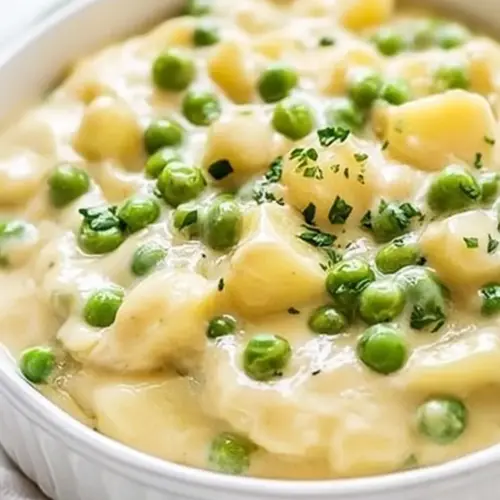
Cheesy Creamed Peas and Potatoes
Equipment
- Dutch oven or large saucepan
- Whisk
- Colander
Ingredients
- 1 1/2 pounds small new potatoes, halved or quartered if larger Cooked and halved or quartered to provide hearty texture and substance; helps absorb flavors and serve as the dish’s starchy base. Adds a creamy contrast to the peas and cheese while contributing bulk and mouthfeel. Choose small new potatoes for thin skins and even cooking, ensuring tender pieces throughout.
- 2 (10-ounce) packages frozen peas, or 4 cups fresh peas Blanched or thawed to supply bright, sweet vegetal flavor and a pop of color; balances the richness of the cream and cheese. Contributes moisture and delicate texture while adding nutritional value like fiber and vitamins. Fresh peas offer a fresher taste, while frozen are convenient and reliably tender.
- 3 tablespoons butter Melted and whisked in at the start to enrich flavor and create the fat component of the roux; provides silkiness and a subtle buttery note. Coats the potatoes and peas, helping carry other seasonings through the dish and improving mouthfeel. Use unsalted or salted butter depending on desired final seasoning.
- 3 tablespoons all-purpose flour Cooked with butter to form a roux that thickens the half-and-half into a creamy sauce; establishes structure and prevents separation. Adds a mild, toasty flavor while giving the sauce body and clinginess to coat the potatoes and peas. Whisk thoroughly to remove lumps and cook briefly to eliminate raw flour taste.
- 2 cups half-and-half Simmered into the roux to create a rich, creamy base that binds the components and contributes both fat and liquid. Adds a smooth, velvety texture and mild dairy flavor that complements the cheese and vegetables. Adjust heat gently to avoid scorching and thicken to the desired consistency.
- 1/2 teaspoons seasoned salt Sprinkled in to season the dish with a balanced savory blend that often includes salt and complementary spices; enhances overall flavor depth. Helps round out the richness of the cream and cheese while providing subtle complexity. Use to taste, remembering Velveeta adds saltiness as well.
- 1/2 teaspoon black pepper Ground and added to taste to provide a sharp, slightly bitter counterpoint that brightens and seasons the creamy mixture. Enhances overall flavor balance and cuts through richness without overwhelming the other components. Freshly ground pepper yields more aromatic intensity.
- 8 ounces Velveeta cheese, cut into cubes Melted into the sauce to deliver smooth, gooey cheesiness and full-bodied creamy flavor while acting as a binder. Provides salt, meltability, and a glossy texture that creates the signature cheesy finish for the potatoes and peas. Cube before melting for even incorporation and stir until fully smooth.
Instructions
- Place potatoes in a dutch oven or large saucepan. Add water to cover by about an inch. Add 1 teaspoon salt to water.: The water should gently lap over the potatoes , not be rushing; you want a silent simmer later rather than violent boiling. As the salted water heats, it will start to smell faintly mineral, and the pot will develop a soft hiss as tiny bubbles appear. This stage primes the potatoes to cook evenly from the outside in, which prevents an undercooked center with an overcooked exterior. A common trap is adding too much salt up front; stick to the teaspoon so the potatoes absorb balanced seasoning rather than tasting briny.
- Bring water to a boil and simmer until potatoes are just starting to get tender, about 15 minutes.: You will hear the water shift from rolling boil to gentler, steady simmer, and the surface will show rhythmic bubbling. The potatoes at this stage give slightly when pricked with a fork but still offer resistance. This timing keeps them from turning mushy later when they mingle with the sauce. If you overcook them, they will crumble into the sauce rather than staying pleasantly bite sized.
- Add peas and simmer 5 more minutes. Drain and set aside.: When the peas hit the simmering pot, you may notice a fresh, green aroma rise. After about five minutes their color deepens and they become tender yet still pop when bitten. Drain promptly so residual heat does not overcook them, which would dull their color and texture. Leaving them in the pot too long is the usual oversight, and it robs the dish of that lively pea brightness.
- Add butter to the now empty Dutch oven or saucepan and place over medium heat.: The pan should be dry and warm, ready to accept the butter , which will melt into a glossy pool and start to foam quietly. That foaming signals the right starting temperature for making a roux. If the pan is too hot the butter will brown quickly and alter the flavor; if it is too cool, the butter will not incorporate with the flour evenly.
- Sprinkle flour into pan and whisk it into the butter for 1 minute.: As you whisk, the mixture will thicken into a pale, sandy paste and give off a faint toasty, cooked flour scent. Cooking the flour for a minute removes rawness and ensures a silky final sauce. A frequent mistake is rushing this step, which can leave a starchy bite in the finished cream.
- Gradually whisk in half-and-half.: Pour the half-and-half slowly while whisking so the mixture smooths out without lumps. The sound will shift from a heavy plop to a smooth pour, and the sauce will transform from pastey to fluid and glossy. Adding cold liquid too fast can create lumps, so steady whisking and gradual addition are your best safeguards.
- Add seasoned salt and pepper. Cook and stir until thickened, about 1 to 2 minutes.: The sauce will begin to coat the back of a spoon and move with a slow ribbon when stirred. You will notice the aroma deepen and a sense of silkiness under your spoon. This short cooking time lets the seasonings bloom and the sauce reach body without becoming overly reduced. Overcooking can concentrate salt and change texture, so watch for the first signs of thickening.
- Remove from heat and add Velveeta. Stir until melted.: Off the heat, adding the cubed Velveeta cheese will cause the sauce to become supremely glossy as the cheese melts into the warm base. Stir until the sauce is homogeneous and there are no visible cubes. Melting off heat prevents the cheese from breaking down into an oily separation. A frequent error is returning the pan to high heat while adding cheese, which risks a grainy texture.
- Return potatoes and peas to pan and mix them into the sauce.: As you fold the warm potatoes and peas back in, listen for the soft clink of pieces settling into the sauce, and watch as each piece gets a smooth coat. The visual cue is glossy sauce clinging uniformly, and the aroma becomes richer and rounded. Mixing gently preserves the shape of the potatoes , while also distributing the sauce and seasoning evenly. Vigorous stirring will break the potatoes apart, which is the most common misstep here.
Notes
- Swap the cheese approach: Try cutting the Velveeta cheese into smaller cubes so it melts more quickly and evenly, producing an ultra smooth sauce with less stirring.
- Peas timing trick: Add the peas in the last five minutes of potato cooking to preserve their bright color and ensure they keep a slight bite rather than going mushy.
- Roux attention: Whisk the flour into the melted butter for the full minute to cook out any raw flour taste, which ensures a clean, silky mouthfeel in the finished sauce.
- Half and half handling: Pour the half-and-half gradually while whisking to prevent lumps and to create a glossy, lump free sauce that clings to the potatoes and peas.
- Salt control: Start with the specified seasoned salt measure, then taste after combining the potatoes and peas, because pathway variance in brands can change final salt levels.
