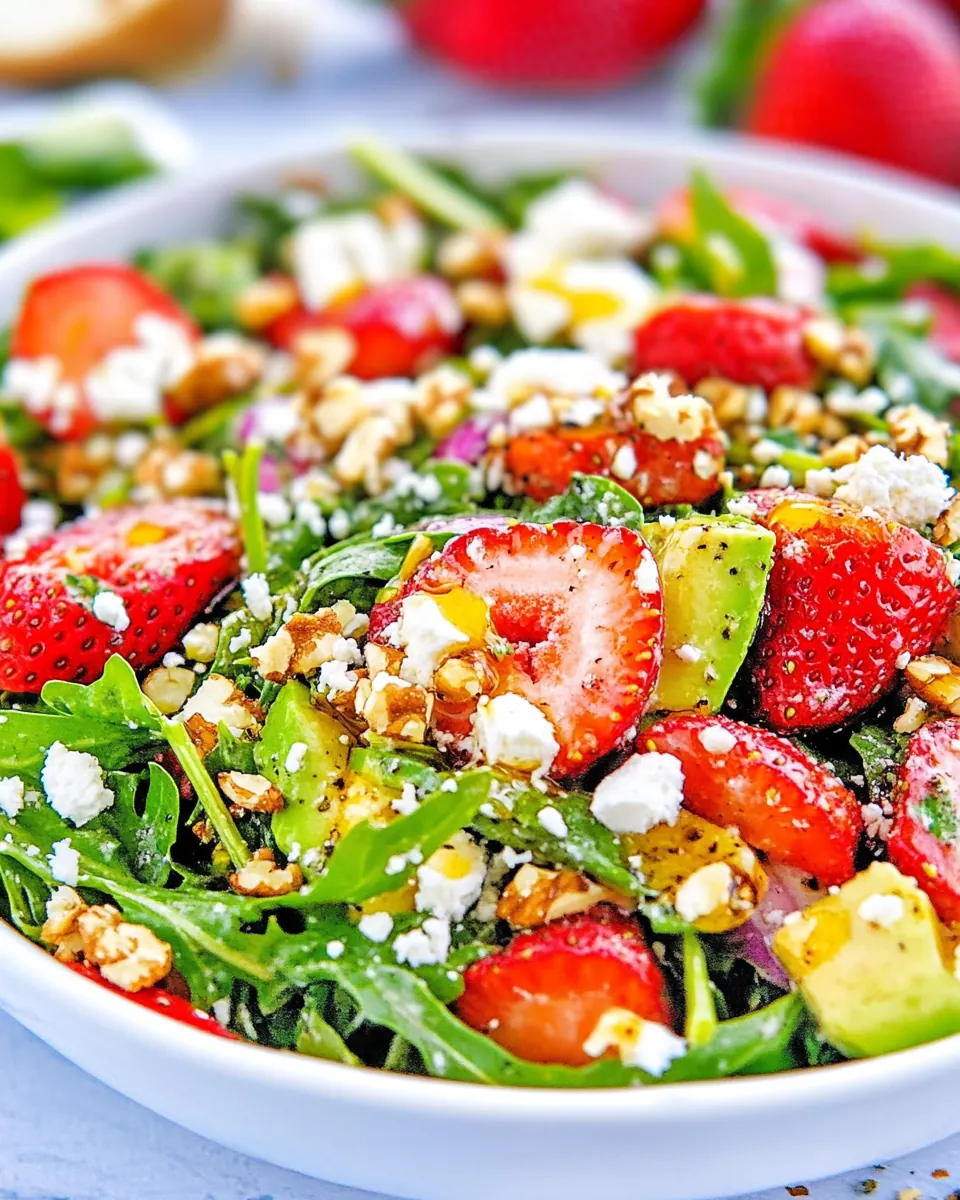
Strawberry Arugula Salad
Strawberry Arugula Salad has been one of my favorite springtime rituals, a bowl I reach for when I want something bright, peppery, and utterly uncomplicated.
I first fell for this combination on a sunlit picnic when a friend tucked a handful of sliced strawberries into a bag of peppery arugula and promised it would change my idea of salad forever. We were hungry after a long walk, and that first bite felt like a small, tart revelation, with the sweetness of the strawberries playing off the bite of the red onion and the creamy crumble of goat cheese.
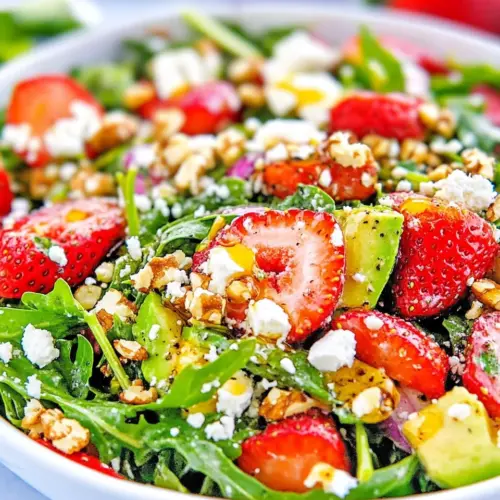
Over the years I have tweaked the balance, adding crunchy pine nuts and buttery walnuts, and sometimes slipping in ripe avocados for silkiness. I love how the textures shift in every forkful, and how a splash of a simple vinaigrette can lift those flavors into something celebratory yet effortless.
This salad became my go to when friends drop by unannounced, and it often shows up at potlucks because it travels well if you keep the dressing separate. I enjoy letting people build their own plates, which keeps the leaves crisp and the flavors distinct until the last possible moment. If you want a salad that feels both elegant and approachable, this one never fails me.
Recipe Snapshot
15 mins
15 mins
Easy
350 kcal
American
Gluten-Free, Vegan
Salads
Salad spinner, Large bowl, Small bowl, Whisk
Why This Strawberry Arugula Salad Is So Good
Bright contrast of flavors
I adore how Strawberry Arugula Salad pairs peppery arugula with sweet strawberries. That contrast keeps every bite interesting, and it makes the salad addictive because your palate wants to chase the next balance of sweet, bitter, and tangy.
Layered textures
The combination of tender greens, crunchy pine nuts and walnuts, creamy goat cheese, and soft avocado creates a mouthfeel that feels complete. I love that each forkful brings a slightly different texture, so the salad never gets monotonous.
Flexible and crowd friendly
This salad is easy to scale and simple to keep fresh by dressing at the last minute. I often bring it to gatherings and let guests dress their own plates, which keeps the leaves crisp and the toppings vibrant. It’s forgiving, so you can swap quantities without losing the essence of the dish.
Quick but impressive
It takes little time to assemble, yet it looks like something you’d order at a bistro. The vinaigrette is straightforward, and it ties everything together without competing with the main flavors. I turn to it when I want a fast, beautiful plate with minimal fuss.
Seasonal star
When strawberries are at their peak this spring, the salad sings. Fresh strawberries and tender arugula are the real stars, and a little care in prepping them makes all the difference. I find it perfect for casual lunches or light dinners when I want something fresh and lively.
Recipe Ingredients for Strawberry Arugula Salad
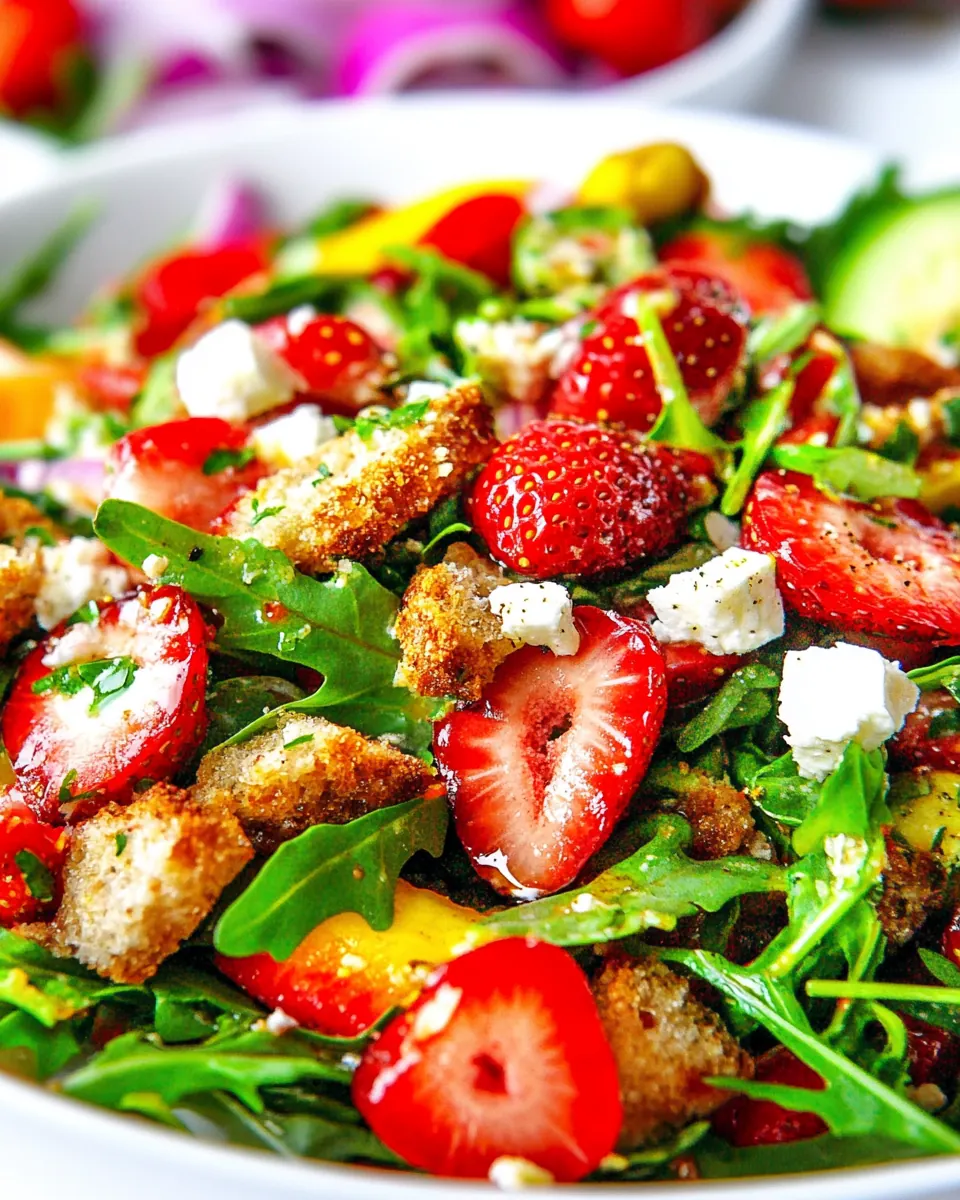
The ingredients here are intentionally simple, focused on freshness and contrast. The key players are the leafy arugula, juicy strawberries, crunchy nuts, and creamy cheese, with a vinaigrette that ties everything together. Each item brings a role, whether it is texture, brightness, or richness, and together they create a balanced salad that feels thoughtful yet easy.
- 1 small package arugula washed: Provide a peppery, leafy base that gives the salad bright, slightly bitter notes and pairs well with sweet fruits; tear or leave whole for texture and to hold dressing without wilting quickly.
- 1 pound strawberries thinly sliced: Offer sweet, juicy fruitiness and vibrant color that balances peppery greens; slice thinly to distribute flavor evenly and release natural juices into the dressing for added sweetness.
- 1 red onion sliced: Add crisp, sharp bite and a subtle sulfurous sweetness that contrasts the fruit and cheese; slice thinly to mellow intensity and spread small amounts throughout the salad for pops of flavor.
- 4 ounces crumbled goat cheese or feta cheese: Contribute a creamy, tangy richness that lends luscious texture and salty contrast to sweet strawberries; crumble over the top for small pockets of savory creaminess in every bite.
- 2 ripe avocados diced: Bring buttery, creamy mouthfeel and mild flavor that enhances richness and balances acidity; dice and add just before serving to prevent browning and maintain texture.
- 1/2 cup pine nuts: Introduce a toasty, slightly sweet crunch that complements softer ingredients and adds nutty depth; lightly toast before adding to amplify flavor and aroma.
- 1/2 cup walnuts: Provide robust, earthy crunch and deeper nutty notes that add heartiness to each bite; chop if desired for easier distribution throughout the salad.
- 1 cup radishes halved and thinly sliced (about 3-4 medium): Deliver crisp, peppery crunch and a mild radish spice that brightens flavors; halve and thinly slice to add visual interest and a satisfying snap.
- 1/2 cup green onions: Offer a mild oniony freshness and subtle green bite that enhances overall aroma; slice finely to disperse delicate bursts of flavor without overpowering other elements.
- 1/2 cup extra-virgin olive oil: Serve as the silky, fruity-fat component of the dressing that carries flavors and coats ingredients; whisk with acids and seasonings for a balanced emulsion.
- 1 tablespoon balsamic vinegar: Contribute concentrated sweet-tart depth and mellow sweetness that complements berries; drizzle into the dressing to add complexity and slight acidity.
- 1 tablespoon lemon juice: Provide bright, citrusy acidity that lifts flavors and balances richness; squeeze fresh for best brightness and add gradually to taste.
- 2 tablespoons maple syrup or honey: Add natural sweetness and a mellow glaze-like quality to the dressing that rounds out acidity; blend with vinegar and oil to achieve a balanced dressing.
- 2 cloves garlic minced: Impart aromatic pungency and savory depth to the dressing, enhancing overall flavor; mince finely and mix well to avoid large raw bits.
- 1 teaspoon poppy seeds: Give subtle crunchy texture and a delicate nutty flavor that enhances visual appeal; sprinkle into the dressing or over the salad for light textural contrast.
- Pinch of fine sea salt to taste: Season lightly to enhance and unify flavors while controlling overall saltiness; start with a small pinch and adjust after tasting to avoid oversalting.
- Freshly ground black pepper to taste: Provide sharp, warm heat that brightens and rounds flavors when freshly ground; add a few twists to taste for immediate aromatic lift.
Strawberry Arugula Salad Instructions
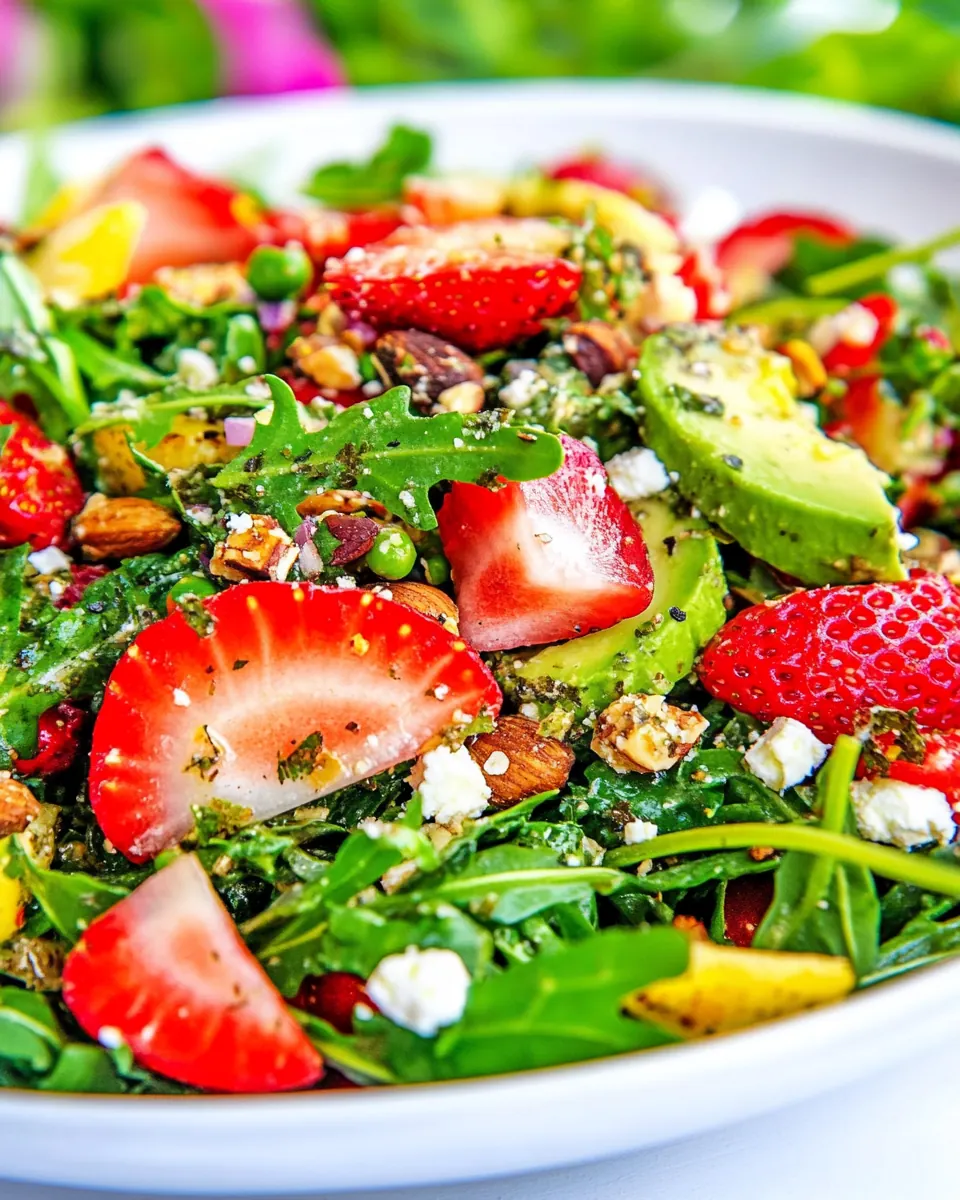
This salad is straightforward, but attention to small details makes each bite sing. Below I expand each direction into rich, sensory guidance so you know what to listen for and what to look for while you build the salad.
- Wash and dry the arugula well using a salad spinner or paper towels. Also, prep the other veggies and fruits.: The leaves should smell fresh and slightly peppery, and when you spin them you should hear the soft swish of water leaving the bowl, a satisfying sound that means your greens will be crisp rather than limp. Drying thoroughly prevents the dressing from diluting and keeps the final salad from becoming watery. I like to spread the leaves on a clean towel after spinning to ensure any lingering moisture evaporates. A common mistake is rushing this step, which results in soggy dressing and limp texture, so be patient when drying and feel the leaves with your fingers to confirm they are dry.
- Add all the salad ingredients to a large bowl.: When you combine the arugula , sliced strawberries , red onion , crumbled goat cheese , diced avocados , pine nuts , walnuts , sliced radishes , and green onions , listen for the soft rustle of leaves and the gentle clink of nuts settling. Visually, you want a mosaic of color with reds, greens, and white flecks of cheese. The large bowl gives you room to toss without bruising the ingredients. Avoid adding the avocados too early as they can break down; adding them at this stage is fine if you're serving immediately, but if not, wait until just before dressing. A common error is overcrowding the bowl which can crush delicate bits, so use a bowl that allows gentle movement.
- In another small bowl, combine the vinaigrette ingredients.: As you whisk together the extra–virgin olive oil , balsamic vinegar , lemon juice , maple syrup or honey , minced garlic , poppy seeds , fine sea salt , and freshly ground black pepper , note the aroma shifting from sharp citrus to rounded oiliness. The dressing should smell bright with a sweet undercurrent from the maple or honey. Emulsifying properly creates a slightly thickened texture that clings to the ingredients, improving flavor distribution. If the dressing separates quickly, whisk more vigorously or add a teaspoon of mustard as an emulsifier, though I often avoid it to keep flavors pure. A typical mistake is over sweetening, so taste and adjust gradually.
- Pour the vinaigrette dressing over the salad and gently toss to combine.: When dressing the salad, aim for a light, even sheen on the leaves and toppings, not a puddle at the bottom of the bowl. Use gentle lifting motions with salad servers so the avocados and cheese stay intact, and stop tossing as soon as the ingredients are well coated. You should hear only quiet movements, and the salad will glisten with a cohesive dressing. The reason gentle tossing matters is texture preservation; vigorous tossing can bruise delicate items and create mush. A common pitfall is overdressing, which masks the natural flavors, so start with a smaller amount and add more if needed.
- Refrigerate and serve.: Chilling briefly gives the vinaigrette a chance to meld and the salad a refreshingly cool temperature. The salad should feel crisp and lively on the plate, and the chilled components will taste brighter. If you plan to hold it beyond an hour, refrigerate the tossed salad loosely covered to keep textures intact, and avoid long storage after dressing as leaves will soften. One error to watch for is leaving the dressed salad at room temperature too long, which causes wilting and loss of freshness, so serve within an hour for the best experience.
Helpful Hints
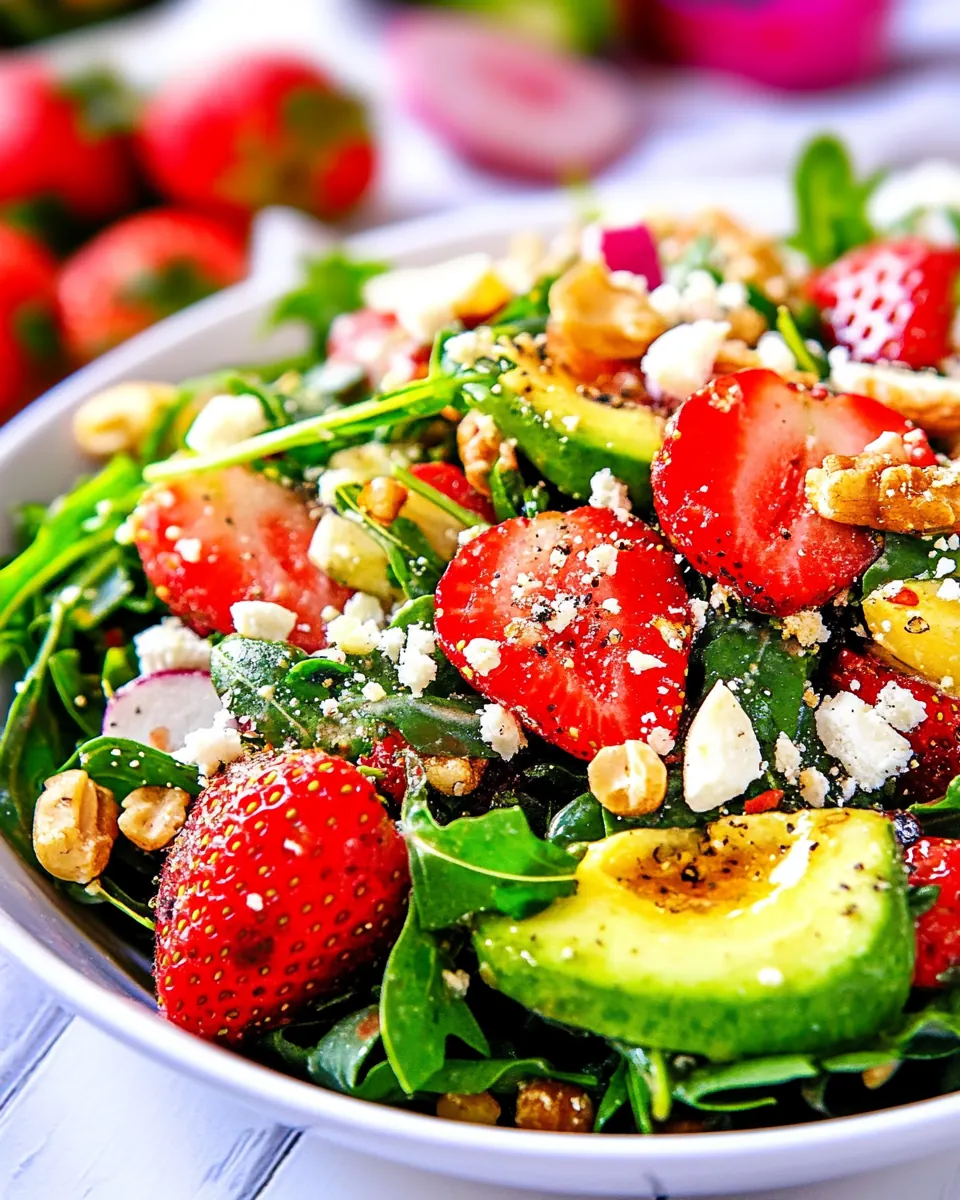
A few thoughtful hints will elevate your salad from good to memorable. These tips focus on timing, texture, and small prep moves that protect freshness and boost flavor. I also expand on the notes provided so you can adapt this salad to different situations and audiences.
- Serve dressing on the side: If you are serving guests who may prefer different levels of dressing, offer the vinaigrette separately so each person can control how much they want. This prevents sogginess and lets the arugula stay crisp for longer, especially useful if you are serving a crowd or a mixed group with varied tastes.
- Do not wash strawberries early: Wash strawberries only right before use. Washing too early introduces moisture that softens the berries and dilutes the dressing. Keeping them unwashed until the last moment preserves firmness and flavor, ensuring they stay visually appealing and texturally satisfying on the plate.
- Dry everything well: Ensure all ingredients are thoroughly dried after washing. Excess water causes the dressing to slip off and creates a watery mix. I pause after washing to pat each element dry and let them air briefly, which keeps the vinaigrette concentrated and flavorful on the salad.
- Blanch to tame bitterness: If you find arugula too bitter, blanch it for thirty seconds, then shock in ice water, drain, and dry. This softens sharpness while keeping structure, but be mindful that blanching will change the mouthfeel and make the leaves more delicate, so handle them carefully during assembly.
- Toast nuts carefully: Toast pine nuts and walnuts in a dry pan over medium heat until fragrant and lightly golden. Stir constantly and remove from heat at the first hint of brown to avoid bitterness. Properly toasted nuts add depth without overwhelming the fresh notes of the salad.
Accompaniments for Strawberry Arugula Salad
This salad pairs well with a range of light main courses, and can be dressed up for special occasions or kept simple for casual meals. Below are serving ideas, storage advice, and seasonal pairings to help you present the salad thoughtfully.
- Light mains: Serve alongside grilled fish or roasted chicken for a spring lunch where the salad brightens richer proteins and offers a refreshing counterpoint.
- Vegetarian plates: Pair with grain bowls or a warm lentil dish to add fresh contrast and a pop of brightness for meat free meals.
- Occasions: Ideal for spring gatherings, brunches, and Ramadan if you want something fresh before iftar. Its color and flavor profile make it festive without being heavy.
- Plating tips: Toss gently and plate in shallow bowls so the toppings sit on top and remain visible, offering a pretty presentation for guests.
- Storage: Store components separately; keep the dressed salad for no more than an hour refrigerated. Leftovers can be kept undressed for a day, but the avocados may brown slightly.
- Seasonal pairing: In spring, pair with early peas or asparagus to echo the seasonality; in summer, add extra ripe strawberries or stone fruit for sweetness.
FAQ
Conclusion
This salad shines because it combines bright, seasonal strawberries with peppery arugula, creamy cheese, and crunchy nuts for a lively contrast in every bite. Give it a try when berries are at their peak and you want something that feels elegant without fuss. It’s an easy way to make a spring or summer meal feel special, whether you are hosting friends or enjoying a quiet, sunny lunch at home.
Strawberry Arugula Salad
Equipment
- Salad spinner
- Large Bowl
- Small Bowl
- Whisk
Ingredients
- 1 small package arugula washed Provide a peppery, leafy base that gives the salad bright, slightly bitter notes and pairs well with sweet fruits; tear or leave whole for texture and to hold dressing without wilting quickly.
- 1 pound strawberries thinly sliced Offer sweet, juicy fruitiness and vibrant color that balances peppery greens; slice thinly to distribute flavor evenly and release natural juices into the dressing for added sweetness.
- 1 red onion sliced Add crisp, sharp bite and a subtle sulfurous sweetness that contrasts the fruit and cheese; slice thinly to mellow intensity and spread small amounts throughout the salad for pops of flavor.
- 4 ounces crumbled goat cheese or feta cheese Contribute a creamy, tangy richness that lends luscious texture and salty contrast to sweet strawberries; crumble over the top for small pockets of savory creaminess in every bite.
- 2 ripe avocados diced Bring buttery, creamy mouthfeel and mild flavor that enhances richness and balances acidity; dice and add just before serving to prevent browning and maintain texture.
- 1/2 cup pine nuts Introduce a toasty, slightly sweet crunch that complements softer ingredients and adds nutty depth; lightly toast before adding to amplify flavor and aroma.
- 1/2 cup walnuts Provide robust, earthy crunch and deeper nutty notes that add heartiness to each bite; chop if desired for easier distribution throughout the salad.
- 1 cup radishes halved and thinly sliced (about 3-4 medium) Deliver crisp, peppery crunch and a mild radish spice that brightens flavors; halve and thinly slice to add visual interest and a satisfying snap.
- 1/2 cup green onions Offer a mild oniony freshness and subtle green bite that enhances overall aroma; slice finely to disperse delicate bursts of flavor without overpowering other elements.
- 1/2 cup extra-virgin olive oil Serve as the silky, fruity-fat component of the dressing that carries flavors and coats ingredients; whisk with acids and seasonings for a balanced emulsion.
- 1 tablespoon balsamic vinegar Contribute concentrated sweet-tart depth and mellow sweetness that complements berries; drizzle into the dressing to add complexity and slight acidity.
- 1 tablespoon lemon juice Provide bright, citrusy acidity that lifts flavors and balances richness; squeeze fresh for best brightness and add gradually to taste.
- 2 tablespoons maple syrup or honey Add natural sweetness and a mellow glaze-like quality to the dressing that rounds out acidity; blend with vinegar and oil to achieve a balanced dressing.
- 2 cloves garlic minced Impart aromatic pungency and savory depth to the dressing, enhancing overall flavor; mince finely and mix well to avoid large raw bits.
- 1 teaspoon poppy seeds Give subtle crunchy texture and a delicate nutty flavor that enhances visual appeal; sprinkle into the dressing or over the salad for light textural contrast.
- Pinch of fine sea salt to taste Season lightly to enhance and unify flavors while controlling overall saltiness; start with a small pinch and adjust after tasting to avoid oversalting.
- Freshly ground black pepper to taste Provide sharp, warm heat that brightens and rounds flavors when freshly ground; add a few twists to taste for immediate aromatic lift.
Instructions
- Wash and dry the arugula well using a salad spinner or paper towels. Also, prep the other veggies and fruits.: The leaves should smell fresh and slightly peppery, and when you spin them you should hear the soft swish of water leaving the bowl, a satisfying sound that means your greens will be crisp rather than limp. Drying thoroughly prevents the dressing from diluting and keeps the final salad from becoming watery. I like to spread the leaves on a clean towel after spinning to ensure any lingering moisture evaporates. A common mistake is rushing this step, which results in soggy dressing and limp texture, so be patient when drying and feel the leaves with your fingers to confirm they are dry.
- Add all the salad ingredients to a large bowl.: When you combine the arugula , sliced strawberries , red onion , crumbled goat cheese , diced avocados , pine nuts , walnuts , sliced radishes , and green onions , listen for the soft rustle of leaves and the gentle clink of nuts settling. Visually, you want a mosaic of color with reds, greens, and white flecks of cheese. The large bowl gives you room to toss without bruising the ingredients. Avoid adding the avocados too early as they can break down; adding them at this stage is fine if you're serving immediately, but if not, wait until just before dressing. A common error is overcrowding the bowl which can crush delicate bits, so use a bowl that allows gentle movement.
- In another small bowl, combine the vinaigrette ingredients.: As you whisk together the extra-virgin olive oil , balsamic vinegar , lemon juice , maple syrup or honey , minced garlic , poppy seeds , fine sea salt , and freshly ground black pepper , note the aroma shifting from sharp citrus to rounded oiliness. The dressing should smell bright with a sweet undercurrent from the maple or honey. Emulsifying properly creates a slightly thickened texture that clings to the ingredients, improving flavor distribution. If the dressing separates quickly, whisk more vigorously or add a teaspoon of mustard as an emulsifier, though I often avoid it to keep flavors pure. A typical mistake is over sweetening, so taste and adjust gradually.
- Pour the vinaigrette dressing over the salad and gently toss to combine.: When dressing the salad, aim for a light, even sheen on the leaves and toppings, not a puddle at the bottom of the bowl. Use gentle lifting motions with salad servers so the avocados and cheese stay intact, and stop tossing as soon as the ingredients are well coated. You should hear only quiet movements, and the salad will glisten with a cohesive dressing. The reason gentle tossing matters is texture preservation; vigorous tossing can bruise delicate items and create mush. A common pitfall is overdressing, which masks the natural flavors, so start with a smaller amount and add more if needed.
- Refrigerate and serve.: Chilling briefly gives the vinaigrette a chance to meld and the salad a refreshingly cool temperature. The salad should feel crisp and lively on the plate, and the chilled components will taste brighter. If you plan to hold it beyond an hour, refrigerate the tossed salad loosely covered to keep textures intact, and avoid long storage after dressing as leaves will soften. One error to watch for is leaving the dressed salad at room temperature too long, which causes wilting and loss of freshness, so serve within an hour for the best experience.
Notes
- Serve dressing on the side: If you are serving guests who may prefer different levels of dressing, offer the vinaigrette separately so each person can control how much they want. This prevents sogginess and lets the arugula stay crisp for longer, especially useful if you are serving a crowd or a mixed group with varied tastes.
- Do not wash strawberries early: Wash strawberries only right before use. Washing too early introduces moisture that softens the berries and dilutes the dressing. Keeping them unwashed until the last moment preserves firmness and flavor, ensuring they stay visually appealing and texturally satisfying on the plate.
- Dry everything well: Ensure all ingredients are thoroughly dried after washing. Excess water causes the dressing to slip off and creates a watery mix. I pause after washing to pat each element dry and let them air briefly, which keeps the vinaigrette concentrated and flavorful on the salad.
- Blanch to tame bitterness: If you find arugula too bitter, blanch it for thirty seconds, then shock in ice water, drain, and dry. This softens sharpness while keeping structure, but be mindful that blanching will change the mouthfeel and make the leaves more delicate, so handle them carefully during assembly.
- Toast nuts carefully: Toast pine nuts and walnuts in a dry pan over medium heat until fragrant and lightly golden. Stir constantly and remove from heat at the first hint of brown to avoid bitterness. Properly toasted nuts add depth without overwhelming the fresh notes of the salad.
