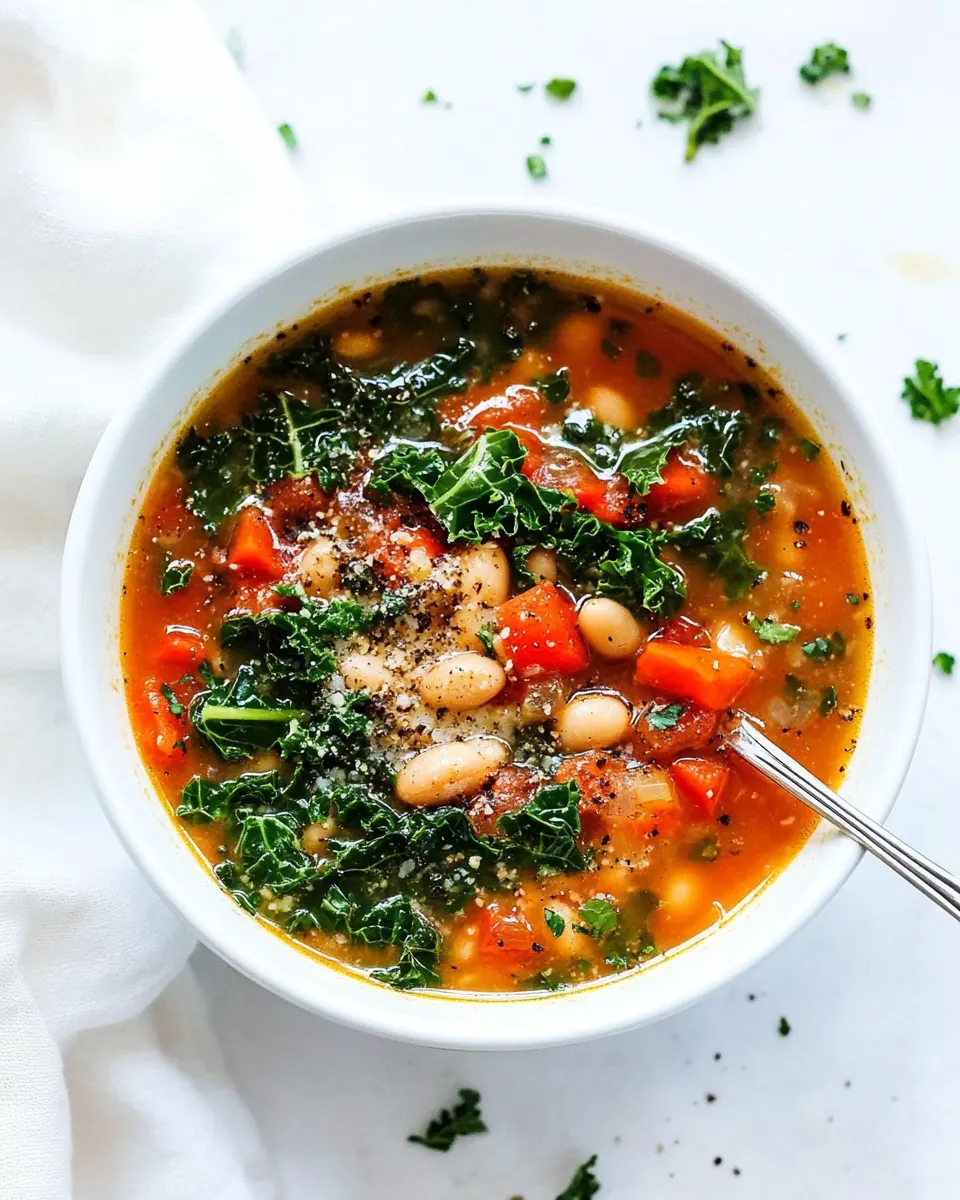
White Bean and Kale Soup
White Bean and Kale Soup has been a quiet weekday hero in my kitchen for years, the kind of recipe I turn to when I want something nourishing without fuss. The first time I made it I was coming in from a gray winter afternoon, hankering for warmth and something that felt both homey and wholesome. I remember standing over the pot as the kitchen filled with the scent of olive oil and garlic, and thinking this simple bowl was exactly what I needed to reset after a long day.
Over time I learned to treat this soup like a canvas. I love how the creamy texture of the cannellini beans plays against the slightly chewy bite of the kale, and how a spoonful of tomato paste can lift the whole bowl into a richer, more savory direction. I often make a double batch, because it reheats beautifully and always seems to taste even better the next day. When friends drop by, I ladle bowls into mismatched mugs and we linger over the steam, talking about the small things that make life easier.
Recipe Snapshot
45 mins
25 mins
20 mins
Medium
250 kcal
Italian
Vegan, Gluten-Free
Soups
Large cast-iron pot
What’s Great About This White Bean and Kale Soup
Comforting yet light
I love that White Bean and Kale Soup can be both reassuring and surprisingly light. The white beans give a creamy, almost velvety mouthfeel without needing cream, while the kale adds structure and a burst of color. It feels like a bowl of comfort that will not weigh you down, perfect for evenings when you want cozy without heaviness.
Simple pantry-driven ingredients
One of my favorite things about this recipe is how it leans on pantry staples. Canned tomatoes, dried herbs, quinoa, and canned beans make it effortless to pull together any night of the week. I often have everything on hand, which makes it my go-to for last minute dinners. It’s reassuring to know a great meal is minutes away.
Nutritionally satisfying
As someone who cooks a lot, I appreciate that White Bean and Kale Soup hits a lot of nutritional boxes. The combination of beans and quinoa boosts plant protein, while the kale supplies vitamins and texture. The result is a balanced bowl that satisfies hunger and supports energy, so you feel nourished, not stuffed.
Flexible and forgiving
I’ve adapted this soup to different kitchens and tastes, and it rarely fails me. It tolerates timing shifts, like simmering a bit longer if life gets busy, or finishing with a splash of lemon juice for brightness. That flexibility makes it a trustworthy recipe to teach friends or to make when you have a drawer of slightly eclectic ingredients.
Great for leftovers and gatherings
I always think of this as a community meal. It stretches to feed a crowd, reheats well for lunches, and the flavors meld overnight so it often tastes better the next day. Whether you’re feeding a family or bringing a pot to a neighbor, White Bean and Kale Soup is one of those recipes that feels generous without being complicated.
Ingredient List for White Bean and Kale Soup
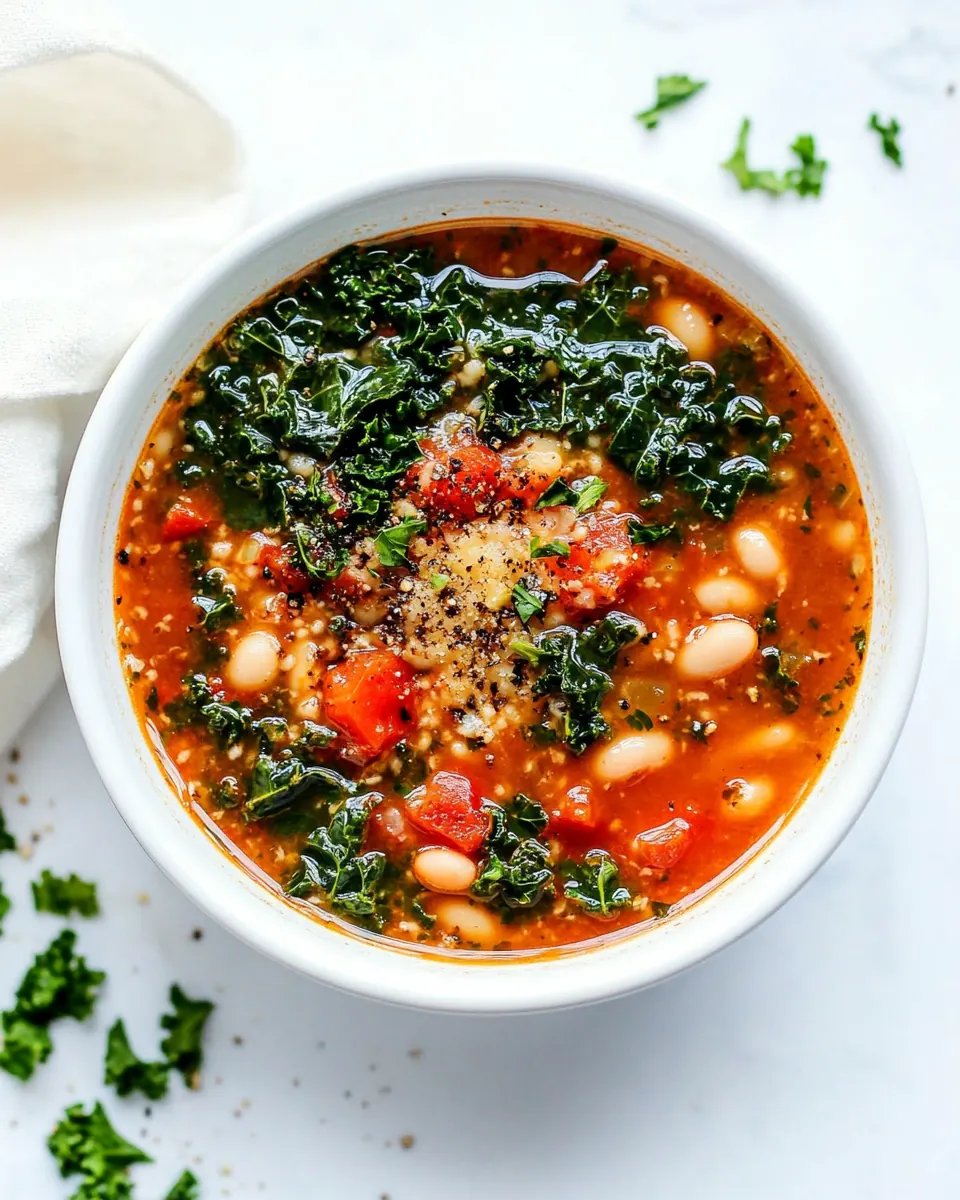
These ingredients create a harmony of savory, bright, and earthy flavors. The key players are the creamy white beans, the leafy kale, and the acidic lift from tomatoes and optional lemon juice. Together they build a soup that is hearty yet fresh, and perfect for winter evenings when you want nourishment and warmth.
- 4 tablespoons olive oil divided: Provide a rich, fruity base fat for sautéing aromatics and adding depth; divide between initial sauté and finishing drizzle to boost mouthfeel and sheen. Use high-quality extra-virgin olive oil for best flavor and to carry herbs and tomato paste into the soup.
- 1 cup diced carrots 2 large carrots: Add a sweet, earthy crunch and natural sweetness that softens during cooking; dice uniformly to ensure even texture and release of flavor into the broth. Use two large carrots to contribute body, color, and subtle sweetness to the soup.
- 1 cup diced onion 1 small onion: Provide a savory, slightly pungent foundation when diced and sautéed; soften until translucent to release sugars that balance tomatoes and herbs. Use one small onion to build aromatic complexity and a savory backbone for the soup.
- 1 cup diced celery 3 celery stalks: Contribute aromatic vegetal flavor and a mild peppery bite that complements onions and carrots; diced celery sweats down and melds into the sofrito. Include three stalks for classic mirepoix structure and added texture.
- 1 heaping tablespoon minced garlic 4 cloves: Impart robust, aromatic pungency and depth; mince finely so garlic disperses evenly and infuses the oil without burning. Use four cloves to brighten flavors and provide a savory lift to the soup.
- 1/4 cup tomato paste: Deliver concentrated tomato flavor, sweetness, and umami; cook briefly with oil and aromatics to mellow acidity and deepen color. Use one-quarter cup to enrich the tomato profile and thicken the broth slightly.
- 1 teaspoon dried parsley: Introduce herbaceous, fresh green notes in a dried form; sprinkle during simmering so parsley rehydrates and distributes flavor. Use one teaspoon to lighten and balance richer tomato and bean elements.
- 1/2 teaspoon dried oregano: Add warm, slightly bitter Mediterranean flavor that enhances tomato and bean combinations; sprinkle early to allow flavor integration. Use half a teaspoon to support Italian seasoning without overpowering other herbs.
- 1/2 teaspoon dried basil: Offer sweet, aromatic Mediterranean herb character that complements tomatoes and beans; add sparingly to avoid clashing with oregano and thyme. Use half a teaspoon to round out the herb profile.
- 1/4 teaspoon dried crushed rosemary: Contribute a piney, resinous note in a small amount; crushed rosemary adds complexity but should be used sparingly to prevent bitterness. Use one-quarter teaspoon for subtle depth in the savory broth.
- 1/4 teaspoon dried thyme: Provide earthy, slightly minty undertones that blend with other dried herbs; thyme helps build a layered, savory aroma during simmering. Use one-quarter teaspoon to complement the Italian herb blend.
- 1/4 teaspoon pepper: Add a mild heat and seasoning balance to taste; grind fresh or use preground pepper to enhance other flavors without dominating. Use one-quarter teaspoon initially and adjust near the end for balance.
- 2 teaspoons Italian seasoning: Bring a classic blend of Mediterranean herbs for an immediate rounded seasoning; add during simmering so flavors meld into the stock and tomatoes. Use two teaspoons to provide coherent Italian flavor throughout the soup.
- 3/4 teaspoons salt: Supply essential saline balance and flavor enhancement; add as called for but taste and adjust near the end since stock may be salty. Use three-quarter teaspoon initially, then fine-tune after simmering.
- 2 (14.5-ounce) cans fire-roasted diced tomatoes I love San Marzano or Muir Glen: Contribute bright, smoky tomato pieces and richness; drained canned fire–roasted diced tomatoes add acidity, texture, and charred flavor for complexity. Use two 14.5-ounce cans to ensure ample tomato presence and body.
- 2 bay leaves: Infuse a subtle aromatic depth and bay leaf fragrance while simmering; remove whole leaves before serving to avoid leathery pieces. Use two bay leaves to impart an undercurrent of herbal warmth to the broth.
- 6 cups vegetable stock or broth; can use chicken stock/broth if not vegetarian: Provide the primary liquid medium, savory backbone, and body for simmering grains and beans; choose vegetable stock for vegetarian versions or chicken stock for non-vegetarian preference. Use six cups to cook quinoa and meld flavors into a hearty soup.
- 3/4 cup white quinoa see note 1: Add a nutty, slightly chewy grain that thickens the soup and adds texture; rinse before cooking if recommended and simmer until tender. Use three-quarter cup white quinoa to provide protein, body, and a pleasant bite.
- 1 (15-ounce) can cannellini beans or Great Northern white beans, drained and rinsed: Offer creamy, tender plant-based protein and body when drained and rinsed; white beans blend with quinoa for a satisfying mouthfeel. Use one 15-ounce can of cannellini or Great Northern beans to enhance creaminess and heartiness.
- 2 cups coarsely chopped kale loosely packed: Introduce leafy green nutrition, color contrast, and a slight bitter note; chop coarsely so kale wilts evenly without becoming mushy. Use two cups loosely packed to add texture, vitamins, and a fresh component near the end of cooking.
- 1 tablespoon lemon juice (optional): Add bright acidity and balance to cut through richness; stir in at the end to preserve freshness and lift flavors. Use one tablespoon as optional to enhance brightness and harmonize tomato and bean elements.
- Freshly grated Parmesan cheese: Provide a salty, savory finishing garnish with umami that enhances mouthfeel; grate freshly over bowls to add richness and a slightly granular texture. Use freshly grated Parmesan to finish bowls for added depth and savory complexity.
- Chopped fresh parsley (optional): Introduce a fresh herbal finish and visual brightness when chopped and sprinkled; parsley adds light, grassy notes that contrast cooked ingredients. Use chopped fresh parsley as an optional garnish to enliven the finished soup.
Step by Step Guide for White Bean and Kale Soup
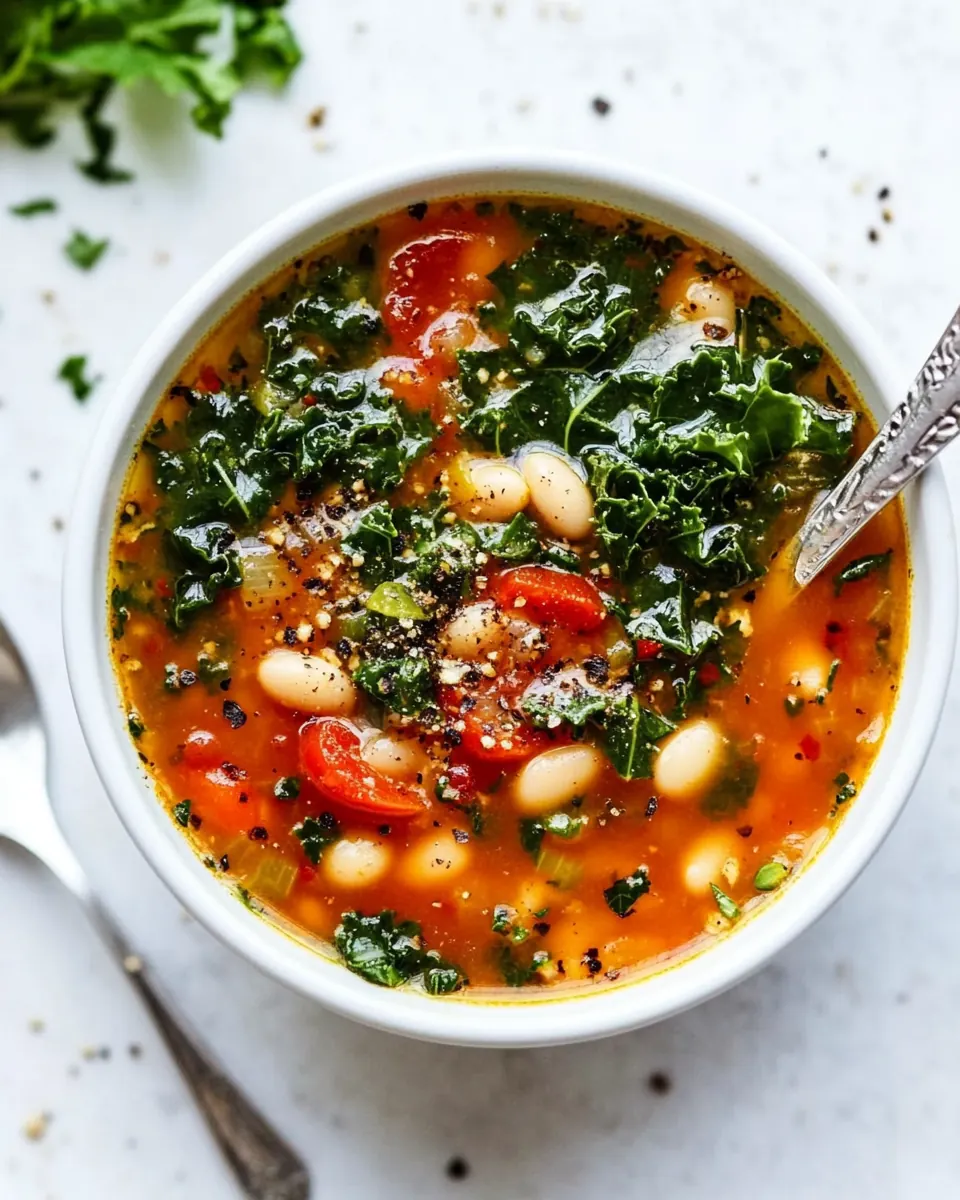
This soup is straightforward but rewarding, and I like to talk you through the small moments that add up to a rich, layered bowl. Follow the sequence below and pay attention to timing and sensory cues, they tell you when to move to the next step.
- Add 3 tablespoons olive oil to a large cast-iron pot. Heat to medium, and once oil is hot, add diced carrots, diced celery, diced onion, and minced garlic. Add a tiny pinch of salt and cook, stirring often, until veggies are tender, about 7–9 minutes. Add in tomato paste and seasonings (dried parsley, dried oregano, dried basil, dried rosemary, dried thyme, pepper, Italian seasoning, and salt.) Cook and stir until fragrant, another 30 seconds.: The oil should shimmer gently in the pan and smell faintly fruity when it is hot enough, but it should not smoke. When you add the diced carrots , celery , onion , and minced garlic , you will hear a soft sizzle, and the vegetables will start to release their scents, creating a warm aromatic base. Stir frequently so the pieces soften evenly and the garlic does not brown too quickly. The purpose of starting with aromatics in oil is to draw out sugars and develop depth, which is the backbone of the soup. If the heat is too high the garlic will scorch and become bitter, so lower the flame if you notice dark edges; patience here pays off in the final flavor.
- Still over medium heat, add both cans of undrained, fire-roasted diced tomatoes and stir 1 minute. Add in the 2 bay leaves and rinsed quinoa. Stir and add in vegetable stock. Increase heat to high and bring the soup to a boil. Once boiling, reduce heat to low and simmer 15 minutes. (Soup should maintain a simmer but not a boil). Stir occasionally.: As you stir the tomato paste into the softened vegetables, it will darken and deepen, releasing a concentrated sweetness and umami that boosts the broth. The dried herbs and spices will bloom in the hot oil and paste, becoming more fragrant in about 30 seconds. You should smell a richer, roasted tomato aroma rather than a raw acidity. This step matters because cooking the paste and herbs mellows harsh edges and binds the flavors together. A common mistake is not cooking the paste long enough, which leaves a flattened tomato taste, so take the moment to toast everything briefly while stirring constantly.
- After 15 minutes, add in drained and rinsed beans and kale. Stir and cook 3–4 more minutes or until quinoa has fully 'popped' and kale is softened. Finish the soup with remaining 1 tablespoon olive oil and, if desired, 1 tablespoon lemon juice. Taste and adjust seasonings as needed. Remove bay leaves.: When you pour in the undrained fire–roasted diced tomatoes , the pot will release a burst of steam and a slightly smoky, tangy aroma. Stir for about a minute to combine, then add the bay leaves and rinsed quinoa . The quinoa will sink and start to sizzle as it hits the hot liquid. This builds layers, and keeping the tomatoes undrained preserves their flavorful juices. Avoid letting the mixture stick to the bottom; if you see browned bits forming too quickly, lower the heat and scrape them up gently to reincorporate their flavor.
- Garnish bowls of soup with grated Parmesan cheese and fresh chopped parsley, if desired.: Adding the 6 cups of vegetable stock should loosen the base into a simmering broth that smells savory and rounded. Increase the heat to high until the soup comes to a brief boil, then immediately reduce to low to maintain a gentle simmer. You will see small, steady bubbles and steam rising, and the aromas will become more integrated. Simmering at the correct temperature allows the quinoa to cook through without becoming gluey, and lets the herbs infuse. A frequent error is boiling too hard, which agitates the quinoa and can create a cloudy, starchy texture, so keep it to a gentle simmer.
- Slow Cooker Instructions: Follow step one, then transfer everything from that pot to a 6-quart slow cooker. Add in diced tomatoes, stock, rinsed quinoa, drained and rinsed beans, and bay leaves. Cook on high 2–3 hours or low 3–5 hours or until quinoa has popped and veggies are tender. Stir in kale, olive oil, and lemon juice. Remove bay leaves. Adjust salt and pepper. Serve in bowls garnished with Parmesan cheese and fresh parsley.: During this simmer the kitchen will fill with a warm, stewy scent as the flavors marry and the quinoa begins to swell. Stir occasionally to ensure even cooking and to prevent sticking. You want the quinoa to fully pop and release tiny rings, indicating doneness. The texture should be tender but not mushy. Over stirring constantly can break down the quinoa too much, and undercooking will leave it with a chalky center, so check visually and by tasting a small pinch toward the end of the time.
- Add in drained and rinsed beans and kale: When you fold in the drained cannellini beans and coarsely chopped kale , the soup will take on a heartier body and brighter color, with the kale wilting slightly while retaining bite. Expect a fresh green scent and a textural contrast between creamy beans and leafy greens. Cook for 3 to 4 more minutes until the kale is tender and the quinoa is fully popped. This timing preserves the integrity of the greens; overcooking will lead to limp, monotonous texture, whereas undercooking leaves the kale tough and fibrous.
- Finish with remaining 1 tablespoon olive oil and optional lemon juice: A final drizzle of olive oil adds sheen and smooths the mouthfeel, while the optional splash of lemon juice brightens and balances the savory elements. The aroma will lift and the flavors will pop. Taste and adjust salt and pepper as needed. The why here is simple: finishing fats and acid accentuate flavors and make the soup sing. Too much acid can overwhelm the bowl, so add conservatively and adjust gradually.
- Remove bay leaves: After finishing the seasoning, remove the bay leaves so they do not impart an astringent or chewy bite to the soup. This small act keeps the texture pleasant and the flavor profile clean. Forgetting to remove the leaves is common and can create an unpleasant mouthfeel if someone bites into one.
- Garnish bowls of soup with grated Parmesan cheese and fresh chopped parsley: Sprinkling freshly grated Parmesan cheese and a scattering of chopped fresh parsley lends a savory, nutty finish and a bright herbaceous top note. The cheese will melt slightly into the hot surface, adding umami, while the parsley keeps the presentation cheerful. Avoid adding toppings too early, because they will lose texture if left to sit in the pot.
- Slow Cooker Instructions: If you transfer the sautéed aromatics into a 6 quart slow cooker with the diced tomatoes , rinsed quinoa , stock , drained beans , and bay leaves , you will notice a patient, slow melding of flavors as it cooks on high for 2 to 3 hours or low for 3 to 5 hours. The low, even heat fills the kitchen with a deep, steady aroma and yields tender vegetables, fully popped quinoa , and cohesive broth. Stir in the kale , remaining olive oil , and lemon juice at the end; this prevents overcooking the greens. A typical mistake is leaving the lid off too long, which stretches cooking time and can change the final texture.
Helpful Hints
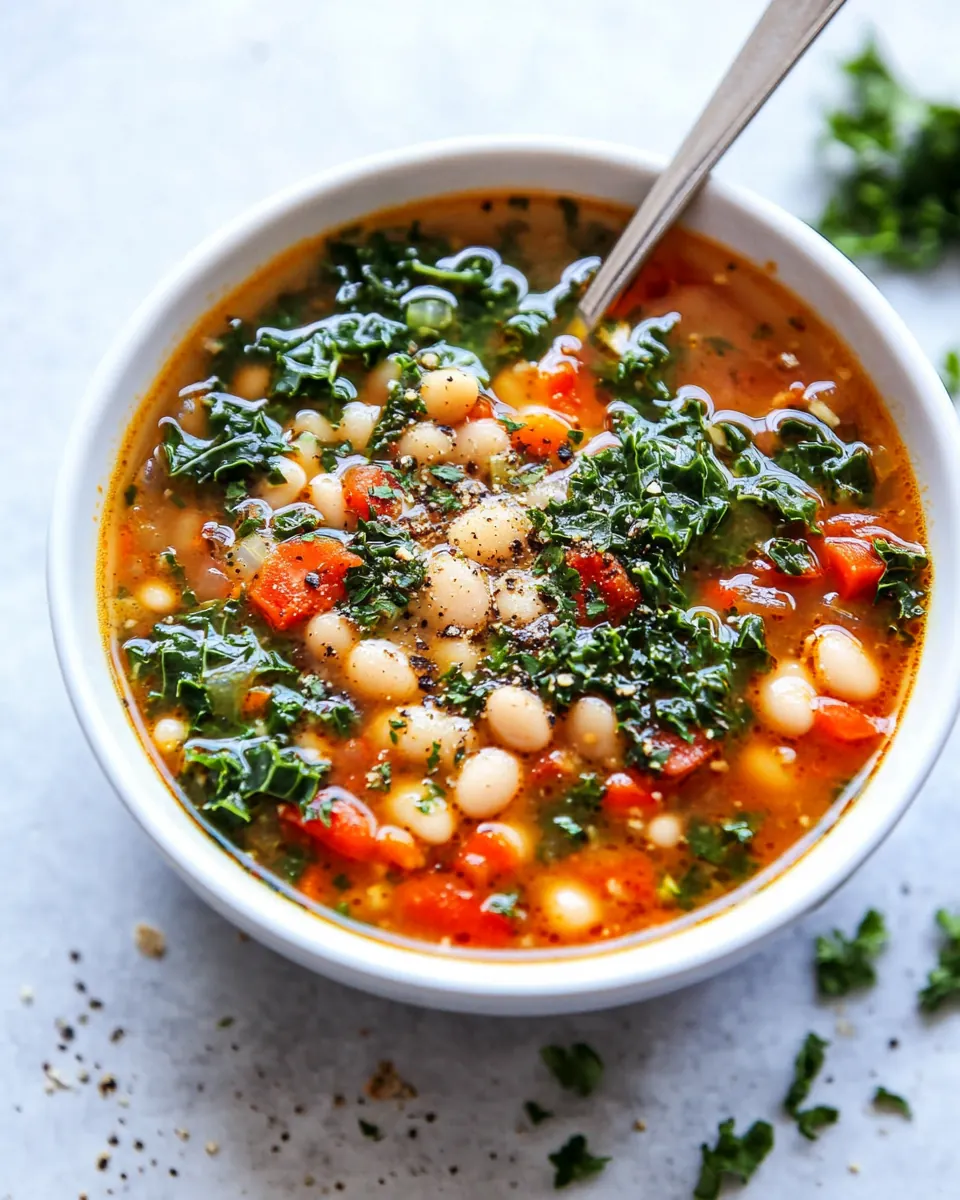
I like to offer practical, kitchen-tested notes that make a big difference when you are cooking. These tips focus on timing, texture, and small adjustments that keep the soup balanced and vibrant. Use them to gain confidence, especially the first few times you make this recipe.
- Choose quality canned tomatoes: Opt for fire–roasted diced tomatoes from trusted brands for a modest smoky note; using undrained tomatoes keeps more flavor in the pot and helps create a deeper broth without extra effort.
- Rinse quinoa if needed: If the package does not confirm pre-rinsed quinoa, place it in a fine mesh sieve and rinse under cold water to remove the bitter saponin coating which can otherwise affect the final taste.
- Reserve oil for finishing: Divide the olive oil so you can sauté the aromatics but also finish the soup with a final tablespoon to add gloss and a rounded mouthfeel right before serving.
- Watch the garlic closely: Minced garlic browns rapidly and can turn bitter; add it to hot oil but lower the heat if it begins to darken too fast, then proceed with the tomato paste and herbs.
- Timing for kale: Add the kale near the end so it softens while preserving some chew and vibrant color, rather than wilting into an indistinguishable mass.
What Complements This White Bean and Kale Soup
This soup pairs well with simple sides and suits many occasions. Think casual weeknight dinners, light lunch gatherings, or warming meals during winter months. Below are serving ideas, storage notes, and seasonal suggestions that elevate the experience.
- Crusty bread or rolls: A warm, crusty loaf is perfect for dipping and soaking up the broth, offering a satisfying contrast to the spoonable texture of the soup.
- Simple green salad: A crisp salad with a lemony vinaigrette refreshes the palate and balances the soup’s richness for a complete meal at lunch or dinner.
- Serving occasions: Serve this soup for casual family dinners, potlucks, or winter gatherings when you want a comforting, crowd friendly dish that accommodates many diets.
- Storage tips: Keep the soup refrigerated for 2 to 3 days; note that the quinoa will continue to absorb liquid and thicken the mixture, so you may want to stir in a splash of broth when reheating to reach your preferred consistency.
- Seasonal pairings: This is especially lovely in cooler months like winter, when hearty leafy greens and beans feel most appropriate, and the warming bowl complements cold evenings.
- Presentation ideas: Garnish with grated Parmesan cheese and chopped fresh parsley for color and umami at the table, adding optional lemon to brighten each serving.
FAQ
Conclusion
This recipe stands out because it marries creamy beans, hearty quinoa, and bright kale into a single, satisfying bowl that is both nourishing and simple to make. Give White Bean and Kale Soup a try when you want a reliable, cozy meal that comforts without complexity, and don’t be surprised if it becomes one of your go to dishes. It’s forgiving, versatile, and perfect for busy weeknights or for making ahead when you need an easy, wholesome meal ready to reheat.
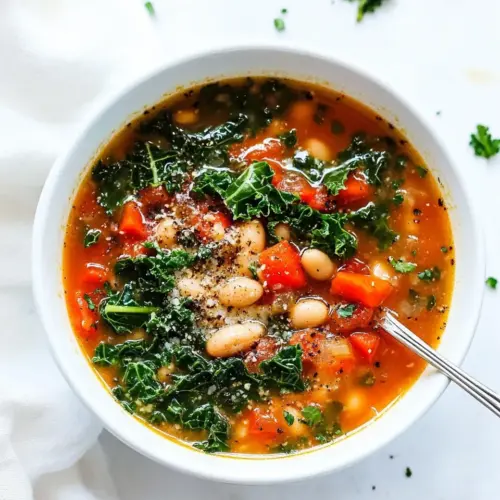
White Bean and Kale Soup
Equipment
- Large cast-iron pot
Ingredients
- 4 tablespoons olive oil divided Provide a rich, fruity base fat for sautéing aromatics and adding depth; divide between initial sauté and finishing drizzle to boost mouthfeel and sheen. Use high-quality extra-virgin olive oil for best flavor and to carry herbs and tomato paste into the soup.
- 1 cup diced carrots 2 large carrots Add a sweet, earthy crunch and natural sweetness that softens during cooking; dice uniformly to ensure even texture and release of flavor into the broth. Use two large carrots to contribute body, color, and subtle sweetness to the soup.
- 1 cup diced onion 1 small onion Provide a savory, slightly pungent foundation when diced and sautéed; soften until translucent to release sugars that balance tomatoes and herbs. Use one small onion to build aromatic complexity and a savory backbone for the soup.
- 1 cup diced celery 3 celery stalks Contribute aromatic vegetal flavor and a mild peppery bite that complements onions and carrots; diced celery sweats down and melds into the sofrito. Include three stalks for classic mirepoix structure and added texture.
- 1 heaping tablespoon minced garlic 4 cloves Impart robust, aromatic pungency and depth; mince finely so garlic disperses evenly and infuses the oil without burning. Use four cloves to brighten flavors and provide a savory lift to the soup.
- 1/4 cup tomato paste Deliver concentrated tomato flavor, sweetness, and umami; cook briefly with oil and aromatics to mellow acidity and deepen color. Use one-quarter cup to enrich the tomato profile and thicken the broth slightly.
- 1 teaspoon dried parsley Introduce herbaceous, fresh green notes in a dried form; sprinkle during simmering so parsley rehydrates and distributes flavor. Use one teaspoon to lighten and balance richer tomato and bean elements.
- 1/2 teaspoon dried oregano Add warm, slightly bitter Mediterranean flavor that enhances tomato and bean combinations; sprinkle early to allow flavor integration. Use half a teaspoon to support Italian seasoning without overpowering other herbs.
- 1/2 teaspoon dried basil Offer sweet, aromatic Mediterranean herb character that complements tomatoes and beans; add sparingly to avoid clashing with oregano and thyme. Use half a teaspoon to round out the herb profile.
- 1/4 teaspoon dried crushed rosemary Contribute a piney, resinous note in a small amount; crushed rosemary adds complexity but should be used sparingly to prevent bitterness. Use one-quarter teaspoon for subtle depth in the savory broth.
- 1/4 teaspoon dried thyme Provide earthy, slightly minty undertones that blend with other dried herbs; thyme helps build a layered, savory aroma during simmering. Use one-quarter teaspoon to complement the Italian herb blend.
- 1/4 teaspoon pepper Add a mild heat and seasoning balance to taste; grind fresh or use preground pepper to enhance other flavors without dominating. Use one-quarter teaspoon initially and adjust near the end for balance.
- 2 teaspoons Italian seasoning Bring a classic blend of Mediterranean herbs for an immediate rounded seasoning; add during simmering so flavors meld into the stock and tomatoes. Use two teaspoons to provide coherent Italian flavor throughout the soup.
- 3/4 teaspoons salt Supply essential saline balance and flavor enhancement; add as called for but taste and adjust near the end since stock may be salty. Use three-quarter teaspoon initially, then fine-tune after simmering.
- 2 (14.5-ounce) cans fire-roasted diced tomatoes I love San Marzano or Muir Glen Contribute bright, smoky tomato pieces and richness; drained canned fire-roasted diced tomatoes add acidity, texture, and charred flavor for complexity. Use two 14.5-ounce cans to ensure ample tomato presence and body.
- 2 bay leaves Infuse a subtle aromatic depth and bay leaf fragrance while simmering; remove whole leaves before serving to avoid leathery pieces. Use two bay leaves to impart an undercurrent of herbal warmth to the broth.
- 6 cups vegetable stock or broth; can use chicken stock/broth if not vegetarian Provide the primary liquid medium, savory backbone, and body for simmering grains and beans; choose vegetable stock for vegetarian versions or chicken stock for non-vegetarian preference. Use six cups to cook quinoa and meld flavors into a hearty soup.
- 3/4 cup white quinoa see note 1 Add a nutty, slightly chewy grain that thickens the soup and adds texture; rinse before cooking if recommended and simmer until tender. Use three-quarter cup white quinoa to provide protein, body, and a pleasant bite.
- 1 (15-ounce) can cannellini beans or Great Northern white beans, drained and rinsed Offer creamy, tender plant-based protein and body when drained and rinsed; white beans blend with quinoa for a satisfying mouthfeel. Use one 15-ounce can of cannellini or Great Northern beans to enhance creaminess and heartiness.
- 2 cups coarsely chopped kale loosely packed Introduce leafy green nutrition, color contrast, and a slight bitter note; chop coarsely so kale wilts evenly without becoming mushy. Use two cups loosely packed to add texture, vitamins, and a fresh component near the end of cooking.
- 1 tablespoon lemon juice optional Add bright acidity and balance to cut through richness; stir in at the end to preserve freshness and lift flavors. Use one tablespoon as optional to enhance brightness and harmonize tomato and bean elements.
- Freshly grated Parmesan cheese Provide a salty, savory finishing garnish with umami that enhances mouthfeel; grate freshly over bowls to add richness and a slightly granular texture. Use freshly grated Parmesan to finish bowls for added depth and savory complexity.
- Chopped fresh parsley optional Introduce a fresh herbal finish and visual brightness when chopped and sprinkled; parsley adds light, grassy notes that contrast cooked ingredients. Use chopped fresh parsley as an optional garnish to enliven the finished soup.
Instructions
- Add 3 tablespoons olive oil to a large cast-iron pot. Heat to medium, and once oil is hot, add diced carrots, diced celery, diced onion, and minced garlic. Add a tiny pinch of salt and cook, stirring often, until veggies are tender, about 7–9 minutes. Add in tomato paste and seasonings (dried parsley, dried oregano, dried basil, dried rosemary, dried thyme, pepper, Italian seasoning, and salt.) Cook and stir until fragrant, another 30 seconds.: The oil should shimmer gently in the pan and smell faintly fruity when it is hot enough, but it should not smoke. When you add the diced carrots , celery , onion , and minced garlic , you will hear a soft sizzle, and the vegetables will start to release their scents, creating a warm aromatic base. Stir frequently so the pieces soften evenly and the garlic does not brown too quickly. The purpose of starting with aromatics in oil is to draw out sugars and develop depth, which is the backbone of the soup. If the heat is too high the garlic will scorch and become bitter, so lower the flame if you notice dark edges; patience here pays off in the final flavor.
- Still over medium heat, add both cans of undrained, fire-roasted diced tomatoes and stir 1 minute. Add in the 2 bay leaves and rinsed quinoa. Stir and add in vegetable stock. Increase heat to high and bring the soup to a boil. Once boiling, reduce heat to low and simmer 15 minutes. (Soup should maintain a simmer but not a boil). Stir occasionally.: As you stir the tomato paste into the softened vegetables, it will darken and deepen, releasing a concentrated sweetness and umami that boosts the broth. The dried herbs and spices will bloom in the hot oil and paste, becoming more fragrant in about 30 seconds. You should smell a richer, roasted tomato aroma rather than a raw acidity. This step matters because cooking the paste and herbs mellows harsh edges and binds the flavors together. A common mistake is not cooking the paste long enough, which leaves a flattened tomato taste, so take the moment to toast everything briefly while stirring constantly.
- After 15 minutes, add in drained and rinsed beans and kale. Stir and cook 3–4 more minutes or until quinoa has fully 'popped' and kale is softened. Finish the soup with remaining 1 tablespoon olive oil and, if desired, 1 tablespoon lemon juice. Taste and adjust seasonings as needed. Remove bay leaves.: When you pour in the undrained fire-roasted diced tomatoes , the pot will release a burst of steam and a slightly smoky, tangy aroma. Stir for about a minute to combine, then add the bay leaves and rinsed quinoa . The quinoa will sink and start to sizzle as it hits the hot liquid. This builds layers, and keeping the tomatoes undrained preserves their flavorful juices. Avoid letting the mixture stick to the bottom; if you see browned bits forming too quickly, lower the heat and scrape them up gently to reincorporate their flavor.
- Garnish bowls of soup with grated Parmesan cheese and fresh chopped parsley, if desired.: Adding the 6 cups of vegetable stock should loosen the base into a simmering broth that smells savory and rounded. Increase the heat to high until the soup comes to a brief boil, then immediately reduce to low to maintain a gentle simmer. You will see small, steady bubbles and steam rising, and the aromas will become more integrated. Simmering at the correct temperature allows the quinoa to cook through without becoming gluey, and lets the herbs infuse. A frequent error is boiling too hard, which agitates the quinoa and can create a cloudy, starchy texture, so keep it to a gentle simmer.
- Slow Cooker Instructions: Follow step one, then transfer everything from that pot to a 6-quart slow cooker. Add in diced tomatoes, stock, rinsed quinoa, drained and rinsed beans, and bay leaves. Cook on high 2–3 hours or low 3–5 hours or until quinoa has popped and veggies are tender. Stir in kale, olive oil, and lemon juice. Remove bay leaves. Adjust salt and pepper. Serve in bowls garnished with Parmesan cheese and fresh parsley.: During this simmer the kitchen will fill with a warm, stewy scent as the flavors marry and the quinoa begins to swell. Stir occasionally to ensure even cooking and to prevent sticking. You want the quinoa to fully pop and release tiny rings, indicating doneness. The texture should be tender but not mushy. Over stirring constantly can break down the quinoa too much, and undercooking will leave it with a chalky center, so check visually and by tasting a small pinch toward the end of the time.
- Add in drained and rinsed beans and kale: When you fold in the drained cannellini beans and coarsely chopped kale , the soup will take on a heartier body and brighter color, with the kale wilting slightly while retaining bite. Expect a fresh green scent and a textural contrast between creamy beans and leafy greens. Cook for 3 to 4 more minutes until the kale is tender and the quinoa is fully popped. This timing preserves the integrity of the greens; overcooking will lead to limp, monotonous texture, whereas undercooking leaves the kale tough and fibrous.
- Finish with remaining 1 tablespoon olive oil and optional lemon juice: A final drizzle of olive oil adds sheen and smooths the mouthfeel, while the optional splash of lemon juice brightens and balances the savory elements. The aroma will lift and the flavors will pop. Taste and adjust salt and pepper as needed. The why here is simple: finishing fats and acid accentuate flavors and make the soup sing. Too much acid can overwhelm the bowl, so add conservatively and adjust gradually.
- Remove bay leaves: After finishing the seasoning, remove the bay leaves so they do not impart an astringent or chewy bite to the soup. This small act keeps the texture pleasant and the flavor profile clean. Forgetting to remove the leaves is common and can create an unpleasant mouthfeel if someone bites into one.
- Garnish bowls of soup with grated Parmesan cheese and fresh chopped parsley: Sprinkling freshly grated Parmesan cheese and a scattering of chopped fresh parsley lends a savory, nutty finish and a bright herbaceous top note. The cheese will melt slightly into the hot surface, adding umami, while the parsley keeps the presentation cheerful. Avoid adding toppings too early, because they will lose texture if left to sit in the pot.
- Slow Cooker Instructions: If you transfer the sautéed aromatics into a 6 quart slow cooker with the diced tomatoes , rinsed quinoa , stock , drained beans , and bay leaves , you will notice a patient, slow melding of flavors as it cooks on high for 2 to 3 hours or low for 3 to 5 hours. The low, even heat fills the kitchen with a deep, steady aroma and yields tender vegetables, fully popped quinoa , and cohesive broth. Stir in the kale , remaining olive oil , and lemon juice at the end; this prevents overcooking the greens. A typical mistake is leaving the lid off too long, which stretches cooking time and can change the final texture.
Notes
- Choose quality canned tomatoes: Opt for fire-roasted diced tomatoes from trusted brands for a modest smoky note; using undrained tomatoes keeps more flavor in the pot and helps create a deeper broth without extra effort.
- Rinse quinoa if needed: If the package does not confirm pre-rinsed quinoa, place it in a fine mesh sieve and rinse under cold water to remove the bitter saponin coating which can otherwise affect the final taste.
- Reserve oil for finishing: Divide the olive oil so you can sauté the aromatics but also finish the soup with a final tablespoon to add gloss and a rounded mouthfeel right before serving.
- Watch the garlic closely: Minced garlic browns rapidly and can turn bitter; add it to hot oil but lower the heat if it begins to darken too fast, then proceed with the tomato paste and herbs.
- Timing for kale: Add the kale near the end so it softens while preserving some chew and vibrant color, rather than wilting into an indistinguishable mass.