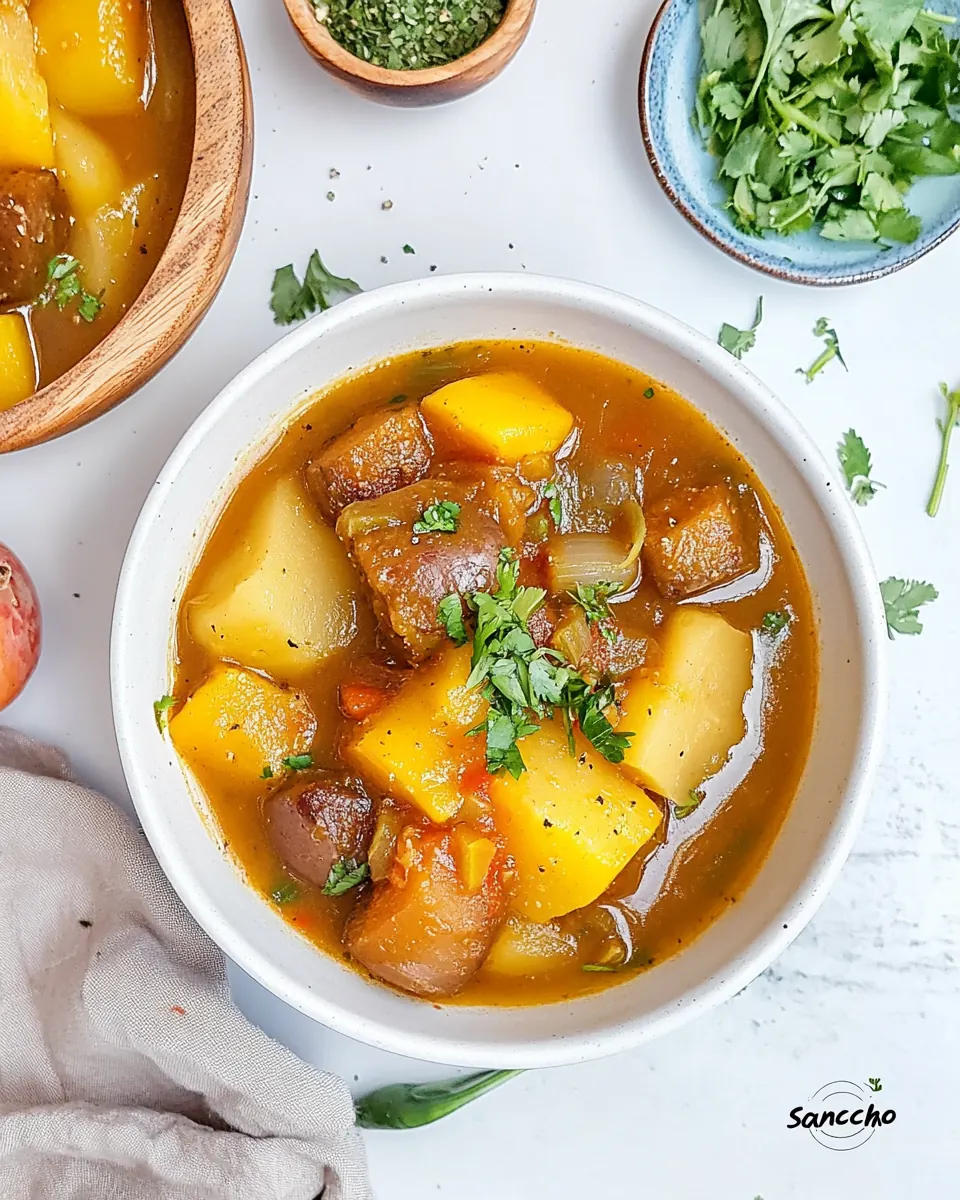
Vegan Sancocho
Vegan Sancocho has been one of those recipes that follows me through cold evenings and slow Sundays, the kind of stew that smells like home before anyone sits down. I first learned this version in a tiny kitchen where a neighbor ladled out steaming bowls and told stories about harvests and market stalls. The aroma of olive oil and sizzling garlic drew me close, and I remember thinking how a handful of humble roots could feel so celebratory.
Over the years I’ve adapted that memory into my own pot of Vegan Sancocho, keeping the bones of the original while nudging textures and seasoning to match my pantry and mood. There is a comforting rhythm to chopping and layering: the soft thud of yuca hitting the board, the sharp snap when a green plantain gives under the knife, and the patient simmer that turns firm roots into melting bites. Each time I stir, I am reminded that cooking is part memory, part science, and all heart.
Sometimes I make it when I need warmth after a long day, sometimes for friends who have never tried a root stew, and often simply because the combination of yellow split peas and dried mushrooms produces an earthy, almost meaty depth that surprises skeptics. Spoonfuls seem to coax stories out of people, and that communal feeling is why this dish lives on my stove. I love how adaptable it is, and how it still manages to feel special without fuss.
Recipe Snapshot
2 hr
30 mins
90 mins
Medium
350 kcal
Vegan
Vegan, Gluten-Free
Dinner
6 qt pot, Knife, Cutting board
What We Adore About This Vegan Sancocho
Hearty, comforting flavor that fills the room
I adore how Vegan Sancocho delivers a deep savory profile without any animal products. The combination of rehydrated dry mushrooms and slow-cooked yellow split peas produces a broth that tastes rounded and satisfying, not thin. When I lift the lid and breathe in the steam, there is a layered aroma of earthiness and gentle herbaceous notes from the oregano, and that keeps me coming back on chilly nights.
Textural variety in every spoonful
One of the things I love most is how the stew balances creamy and firm textures. Soft, almost buttery chunks of auyama sit alongside slightly resistant slices of plantain and the fibrous bite of yuca. This variety makes each mouthful interesting, and it means you never get bored while eating it straight from the pot.
Flexible, forgiving recipe
I appreciate that this version of Vegan Sancocho is forgiving. You can nudge cooking times, add water as necessary, and still end up with a comforting bowl. If the split peas absorb more liquid than expected, adding broth keeps the texture silky. I often tweak salt at the end, tasting and adjusting, which is a small ritual that rewards patience.
Culturally resonant and shareable
Making this stew connects me to a broader tradition of root-based soups across Latin America. I like to serve it to friends who are curious about plant based comfort food because it showcases how simple roots and pantry staples can produce something soulful. The pot invites conversation, and that communal aspect is a big reason I make it when guests are coming.
Shows off pantry stars
Finally, I love that this recipe highlights pantry staples like dry mushrooms, yellow split peas, and a good vegetable broth. These are ingredients you can keep on hand, and they transform into an impressive meal with minimal fuss. For busy nights when I want depth without complexity, Vegan Sancocho is my go to.
Key Ingredients for Vegan Sancocho
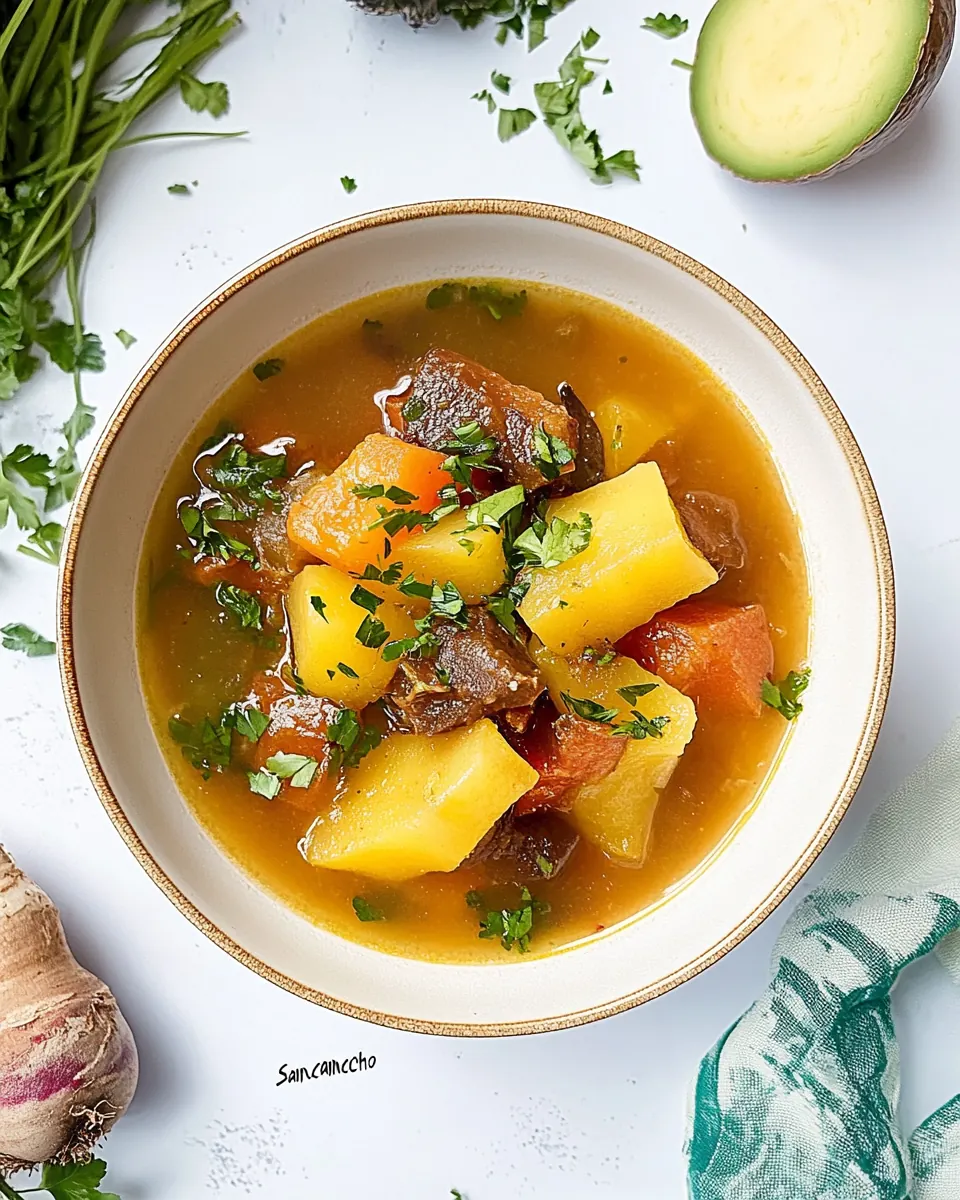
The philosophy behind these ingredients is simple: build a deeply flavored, plant based broth and layer in starchy roots for body and texture. The key players are the legumes and dried mushrooms for umami, the various roots for heft, and herbs and aromatics for brightness. Together they create a stew that feels both rustic and nourishing, perfect for cold weather or any time you crave something grounding.
- 1/4 cup olive oil: Heat and flavor the base of the stew by sautéing to release aromatics and create a fragrant cooking foundation for the sancocho.
- 3 garlic cloves, crushed: Crush and gently simmer to infuse the broth with pungent, savory notes that deepen overall soup complexity.
- 1 teaspoon oregano, (dry leaves) or 1/2 teaspoon of powdered orégano: Add dried herb fragrance and a hint of earthiness to unify flavors; use powdered form for even distribution if preferred.
- 1 cup yellow split peas: Provide protein and body by breaking down during simmering; yield creamy texture and earthy flavor that thickens the broth.
- 1 quart vegetable broth, [1 liter] or homemade vegetable broth recipe: Form the liquid backbone of the dish; supply depth, minerals, and a savory medium for simmering the vegetables and legumes.
- 1 cup dry mushrooms, (about 2 oz [57 g]) of dry porcini (see notes): Rehydrate to impart concentrated umami and smoky, savory mushroom depth; soak and strain liquid into the broth for added intensity.
- 1/4 pound yuca, (cassava) [0.24 kg], peeled and cut into small pieces: Contribute starchy, slightly sweet texture that holds shape while becoming tender; help thicken the stew and add traditional root flavor.
- 1/4 pound yautía, (malanga) [0.24 kg] () (optional): Optional starchy tuber that adds moist, slightly nutty texture; include to increase variety and traditional authenticity when desired.
- 1/4 pound auyama, (kabocha squash) [0.24 kg]: Impart sweet, nutty flesh that breaks down into silky pieces; balance starchy roots and add color and squash sweetness to the stew.
- 1 plantain, (green, unripe) cut into 1/2" slices: Provide firm, starchy texture with mildly sweet, banana-like flavor; hold shape during cooking and add traditional Latin American character.
- 1/4 pound ñame, (yam, read more) [0.24 kg] () (optional): Optional dense tuber that offers creamy, slightly sweet flesh when cooked; use to increase heartiness and traditional texture variety.
- 1 corn cob, cut into 1/2" slices () (optional): Optional corn rounds that release sweet kernels and starch into the broth; add classic corn flavor and visual appeal to the stew.
- 1 bunch cilantro, and parsley, chopped: Add fresh herbal brightness and a clean, citrusy finish; stir in near the end to preserve aroma and enhance overall freshness.
- 1 1/2 teaspoons salt, (or more, to taste): Season the soup to taste and enhance all flavors; dissolve during cooking to bring out savory notes and balance the dish.
- 1/2 teaspoon pepper, (freshly-cracked, or ground) (or more, to taste): Provide subtle heat and aromatic backbone when cracked or ground; balance flavors and add a gentle peppery finish.
- Agrio de naranja, to serve () (optional): Serve as a bright, acidic condiment to cut richness and add zesty citrus tang; squeeze over bowls just before eating if desired.
Directions for Vegan Sancocho
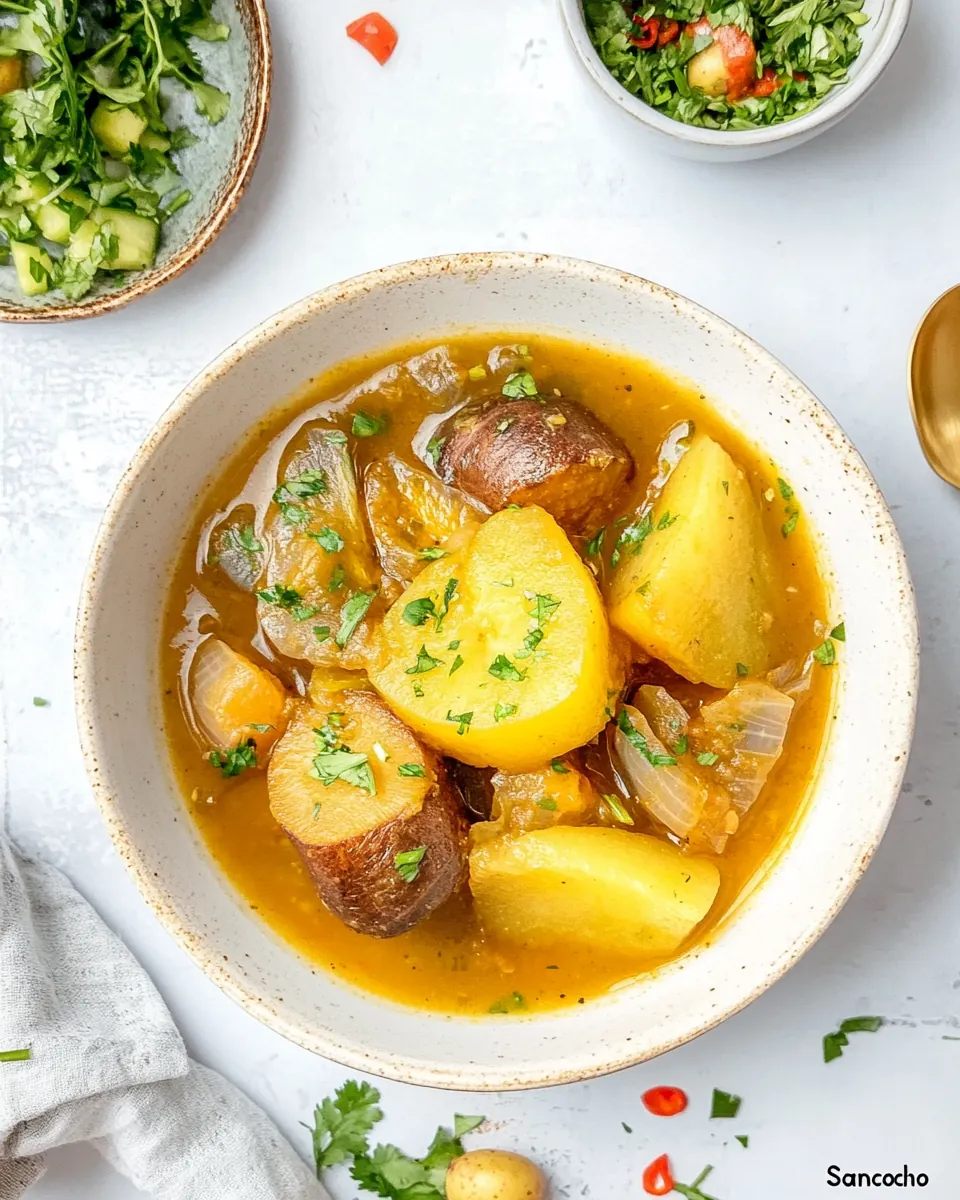
These directions are written to guide you through a leisurely, attentive simmer that transforms tough roots into tender, flavorful pieces. Take your time with each stage and taste frequently, because small adjustments make a big difference in the final bowl.
- Heat the olive oil over medium heat. Add the garlic, orégano, and split peas. Cook and stir for a few seconds.: Close your eyes and notice the pop as the olive oil warms, then the immediate fragrant rush when the crushed garlic hits the pan, releasing a nutty, slightly sweet aroma. As the oregano warms, it releases faintly piney, herbaceous notes that mingle with the oil, and the yellow split peas begin to toast gently, giving a toasty, almost nutlike scent. This is when the kitchen starts to smell like a stew that will stand up on its own. The brief heat helps jumpstart flavor without browning the garlic into bitterness. A common mistake here is overheating so the garlic burns and sours the base, so watch the pan and keep the heat moderate.
- Add 1 qt [1 lt] of vegetable broth plus 1 qt [1 lt] of water. Cover and lower temperature. Simmer until the split peas are very soft. Add more water to maintain the same level and stir when it becomes necessary.: You will hear a gentle simmer start, and within minutes steam will carry those roasted pea and mushroom notes into the air. The liquid should cradle the peas so they can swell and break down, turning the broth into a silky foundation. Stir occasionally to prevent sticking at the bottom, especially as the peas begin to thicken, scraping any bits that cling so they reincorporate flavorfully. The visual cue is the broth becoming more opaque and slightly viscous as the peas soften. If the simmer is too vigorous, the peas can pulverize unevenly, creating a gummy texture, so keep the heat low and patient. A typical misstep is neglecting to adjust liquid, which can lead to drying and uneven cooking.
- When the split peas are cooked through, add the dry mushrooms, cassava, malanga, plantain, pumpkin, yam, and corn. Simmer covered over medium heat until all the vegetables and roots are cooked through.: As you add the rehydrated dry mushrooms , they release concentrated umami back into the pot, deepening the color and scent of the broth. Dropping in the chopped yuca , yautía , auyama , sliced plantain , ñame , and corn brings a chorus of textures. Listen for a low, steady bubbling, and keep the lid mostly closed to trap steam so the roots soften evenly. Visual checks matter here: tender roots will yield to a fork with slight resistance, while squash will become glossy and creamy. Stir gently now and then to ensure even cooking. One common error is overcrowding the pot with unevenly sized pieces, which can leave some roots undercooked while others are falling apart.
- Chop the cilantro and parsley and add to the pot. Season with salt and pepper to taste.: Fresh chopped cilantro and parsley introduce a verdant lift when stirred into the hot stew, and the aroma brightens immediately. This is also the moment to fine tune seasoning; the salt will enhance the natural sweetness of the roots and the savory notes from the dry mushrooms and yellow split peas . Use small pinches of salt followed by a taste, because the stew concentrates as it cools. A troubleshooting tip is to sample a spoon and adjust gradually, since oversalting is difficult to correct, and pepper should be added sparingly to avoid masking the delicate herb fragrance.
- Remove from the heat and serve. Find serving suggestions above the recipe.: When you lift the pot off the burner you will notice how the flavors have settled and the aromas become rounder as the stew relaxes. Ladle into warm bowls so the heat and steam keep the herbs lively. If desired, finish with a splash of Agrio de naranja for a bright citrus counterpoint that cuts through the richness. Be mindful that leaving it on the heat too long can over soften delicate components, so remove promptly. A typical mistake is reheating at too high a temperature, which can break down textures and mute fresh herb aromas.
Pro Tips and Tweaks
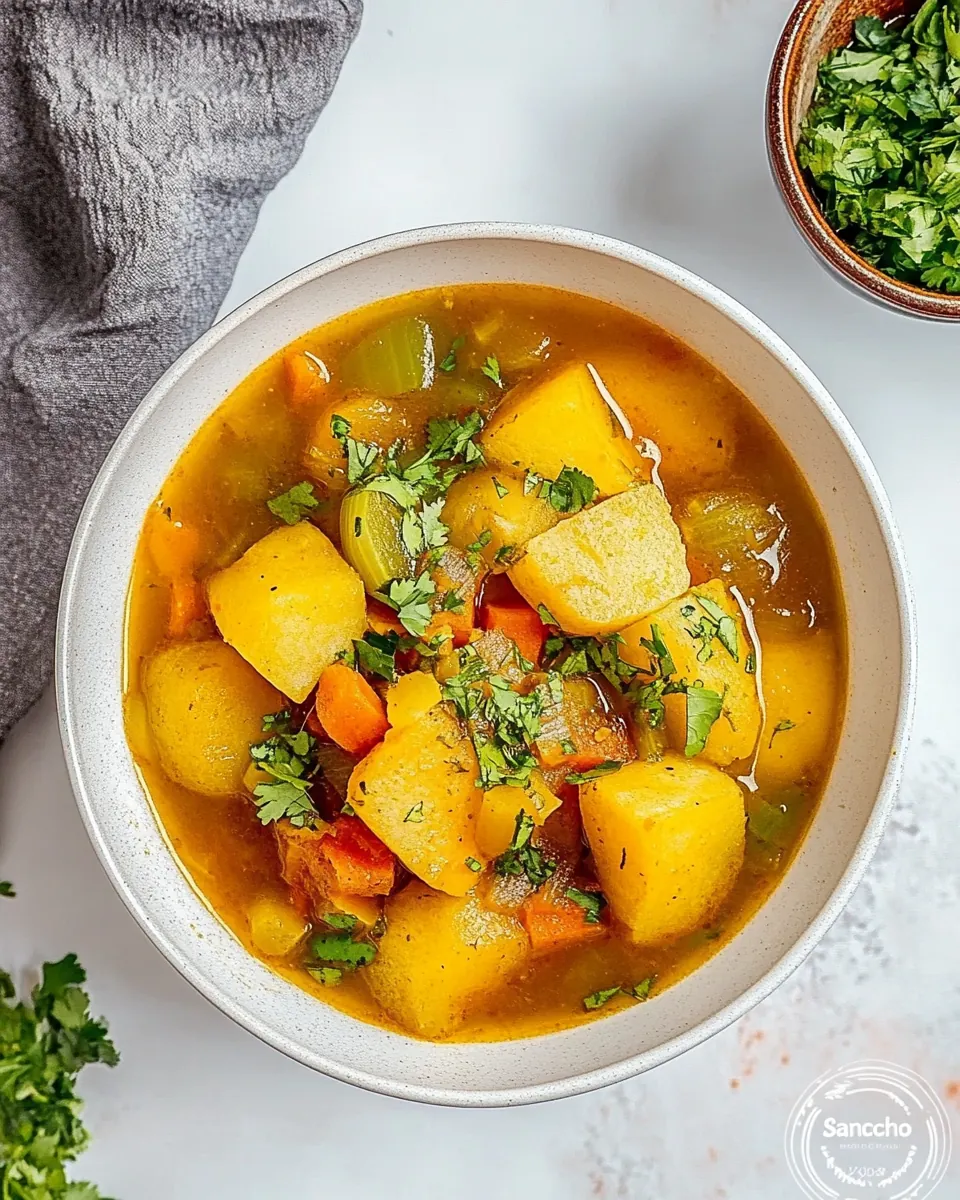
I like to offer a few focused tips that make the cooking smoother and the final bowl more memorable. These notes expand on technique, timing, and small finishing touches to elevate the stew without complicating it.
- Choose sturdy roots when selecting yuca, auyama, and plantain, because freshness affects texture and cooking time.
- Toast the split peas lightly in the oil at the start to build a toasty backbone and deepen the stew’s color and flavor.
- Reserve mushroom soaking liquid after rehydrating dry mushrooms, then strain and add a little to the pot for added umami.
- Stagger additions so softer ingredients like auyama join later, preventing them from turning to puree in the long simmer.
- Finish with fresh herbs at the end, stirring them in off the heat to preserve their bright scent and green color.
What Complements This Vegan Sancocho
This stew is naturally substantial, but thoughtful accompaniments and serving ideas help tailor it to the occasion. Whether you serve it for a casual family dinner or a warming winter lunch, pairing and presentation make a difference.
- Simple side breads like crusty rolls or warm flatbreads allow guests to soak up the broth and share the pot communally, making it feel like a gathering.
- Light salads with crisp greens and a bright vinaigrette contrast the stew’s richness, adding a refreshing textural counterpoint.
- Rice or grains can be offered on the side for those who want to spoon stew over a neutral base, extending the meal and soaking up the broth.
- Seasonal timing makes this ideal for winter evenings, but it also works for early spring when roots are still on the market and you crave something warming.
- Serving style is flexible, from family style in the pot to plated bowls with a garnish of chopped cilantro and a wedge of Agrio de naranja for acidity at the table.
- Storage tips include cooling the stew quickly, storing in airtight containers, and gently reheating over low heat, adding a splash of water or broth if it has thickened.
FAQ
Conclusion
Vegan Sancocho stands out because it turns simple pantry staples into a deeply flavored, nourishing stew that comforts and satisfies. Its balance of creamy split peas, earthy mushrooms, and varied root textures creates a bowlful that is both humble and impressive. Give it a try on a cool evening or when you want a meal that feeds both body and conversation; the pot invites sharing, and the layered flavors reward a bit of patience and love.
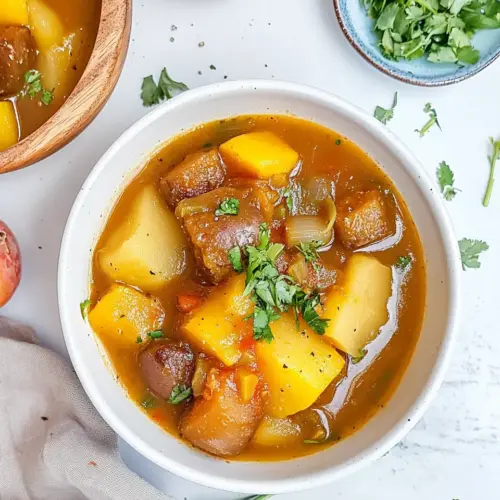
Vegan Sancocho
Equipment
- 6 qt pot
- Knife
- Cutting Board
Ingredients
- 1/4 cup olive oil Heat and flavor the base of the stew by sautéing to release aromatics and create a fragrant cooking foundation for the sancocho.
- 3 garlic cloves, crushed Crush and gently simmer to infuse the broth with pungent, savory notes that deepen overall soup complexity.
- 1 teaspoon oregano, (dry leaves) or 1/2 teaspoon of powdered orégano Add dried herb fragrance and a hint of earthiness to unify flavors; use powdered form for even distribution if preferred.
- 1 cup yellow split peas Provide protein and body by breaking down during simmering; yield creamy texture and earthy flavor that thickens the broth.
- 1 quart vegetable broth, [1 liter] or homemade vegetable broth recipe Form the liquid backbone of the dish; supply depth, minerals, and a savory medium for simmering the vegetables and legumes.
- 1 cup dry mushrooms, (about 2 oz [57 g]) of dry porcini (see notes) Rehydrate to impart concentrated umami and smoky, savory mushroom depth; soak and strain liquid into the broth for added intensity.
- 1/4 pound yuca, (cassava) [0.24 kg], peeled and cut into small pieces Contribute starchy, slightly sweet texture that holds shape while becoming tender; help thicken the stew and add traditional root flavor.
- 1/4 pound yautía, (malanga) [0.24 kg] (optional) Optional starchy tuber that adds moist, slightly nutty texture; include to increase variety and traditional authenticity when desired.
- 1/4 pound auyama, (kabocha squash) [0.24 kg] Impart sweet, nutty flesh that breaks down into silky pieces; balance starchy roots and add color and squash sweetness to the stew.
- 1 plantain, (green, unripe) cut into 1/2" slices Provide firm, starchy texture with mildly sweet, banana-like flavor; hold shape during cooking and add traditional Latin American character.
- 1/4 pound ñame, (yam, read more) [0.24 kg] (optional) Optional dense tuber that offers creamy, slightly sweet flesh when cooked; use to increase heartiness and traditional texture variety.
- 1 corn cob, cut into 1/2" slices (optional) Optional corn rounds that release sweet kernels and starch into the broth; add classic corn flavor and visual appeal to the stew.
- 1 bunch cilantro, and parsley, chopped Add fresh herbal brightness and a clean, citrusy finish; stir in near the end to preserve aroma and enhance overall freshness.
- 1 1/2 teaspoons salt, (or more, to taste) Season the soup to taste and enhance all flavors; dissolve during cooking to bring out savory notes and balance the dish.
- 1/2 teaspoon pepper, (freshly-cracked, or ground) (or more, to taste) Provide subtle heat and aromatic backbone when cracked or ground; balance flavors and add a gentle peppery finish.
- Agrio de naranja, to serve (optional) Serve as a bright, acidic condiment to cut richness and add zesty citrus tang; squeeze over bowls just before eating if desired.
Instructions
- Heat the olive oil over medium heat. Add the garlic, orégano, and split peas. Cook and stir for a few seconds.: Close your eyes and notice the pop as the olive oil warms, then the immediate fragrant rush when the crushed garlic hits the pan, releasing a nutty, slightly sweet aroma. As the oregano warms, it releases faintly piney, herbaceous notes that mingle with the oil, and the yellow split peas begin to toast gently, giving a toasty, almost nutlike scent. This is when the kitchen starts to smell like a stew that will stand up on its own. The brief heat helps jumpstart flavor without browning the garlic into bitterness. A common mistake here is overheating so the garlic burns and sours the base, so watch the pan and keep the heat moderate.
- Add 1 qt [1 lt] of vegetable broth plus 1 qt [1 lt] of water. Cover and lower temperature. Simmer until the split peas are very soft. Add more water to maintain the same level and stir when it becomes necessary.: You will hear a gentle simmer start, and within minutes steam will carry those roasted pea and mushroom notes into the air. The liquid should cradle the peas so they can swell and break down, turning the broth into a silky foundation. Stir occasionally to prevent sticking at the bottom, especially as the peas begin to thicken, scraping any bits that cling so they reincorporate flavorfully. The visual cue is the broth becoming more opaque and slightly viscous as the peas soften. If the simmer is too vigorous, the peas can pulverize unevenly, creating a gummy texture, so keep the heat low and patient. A typical misstep is neglecting to adjust liquid, which can lead to drying and uneven cooking.
- When the split peas are cooked through, add the dry mushrooms, cassava, malanga, plantain, pumpkin, yam, and corn. Simmer covered over medium heat until all the vegetables and roots are cooked through.: As you add the rehydrated dry mushrooms , they release concentrated umami back into the pot, deepening the color and scent of the broth. Dropping in the chopped yuca , yautía , auyama , sliced plantain , ñame , and corn brings a chorus of textures. Listen for a low, steady bubbling, and keep the lid mostly closed to trap steam so the roots soften evenly. Visual checks matter here: tender roots will yield to a fork with slight resistance, while squash will become glossy and creamy. Stir gently now and then to ensure even cooking. One common error is overcrowding the pot with unevenly sized pieces, which can leave some roots undercooked while others are falling apart.
- Chop the cilantro and parsley and add to the pot. Season with salt and pepper to taste.: Fresh chopped cilantro and parsley introduce a verdant lift when stirred into the hot stew, and the aroma brightens immediately. This is also the moment to fine tune seasoning; the salt will enhance the natural sweetness of the roots and the savory notes from the dry mushrooms and yellow split peas . Use small pinches of salt followed by a taste, because the stew concentrates as it cools. A troubleshooting tip is to sample a spoon and adjust gradually, since oversalting is difficult to correct, and pepper should be added sparingly to avoid masking the delicate herb fragrance.
- Remove from the heat and serve. Find serving suggestions above the recipe.: When you lift the pot off the burner you will notice how the flavors have settled and the aromas become rounder as the stew relaxes. Ladle into warm bowls so the heat and steam keep the herbs lively. If desired, finish with a splash of Agrio de naranja for a bright citrus counterpoint that cuts through the richness. Be mindful that leaving it on the heat too long can over soften delicate components, so remove promptly. A typical mistake is reheating at too high a temperature, which can break down textures and mute fresh herb aromas.
Notes
- Choose sturdy roots when selecting yuca, auyama, and plantain, because freshness affects texture and cooking time.
- Toast the split peas lightly in the oil at the start to build a toasty backbone and deepen the stew's color and flavor.
- Reserve mushroom soaking liquid after rehydrating dry mushrooms, then strain and add a little to the pot for added umami.
- Stagger additions so softer ingredients like auyama join later, preventing them from turning to puree in the long simmer.
- Finish with fresh herbs at the end, stirring them in off the heat to preserve their bright scent and green color.
