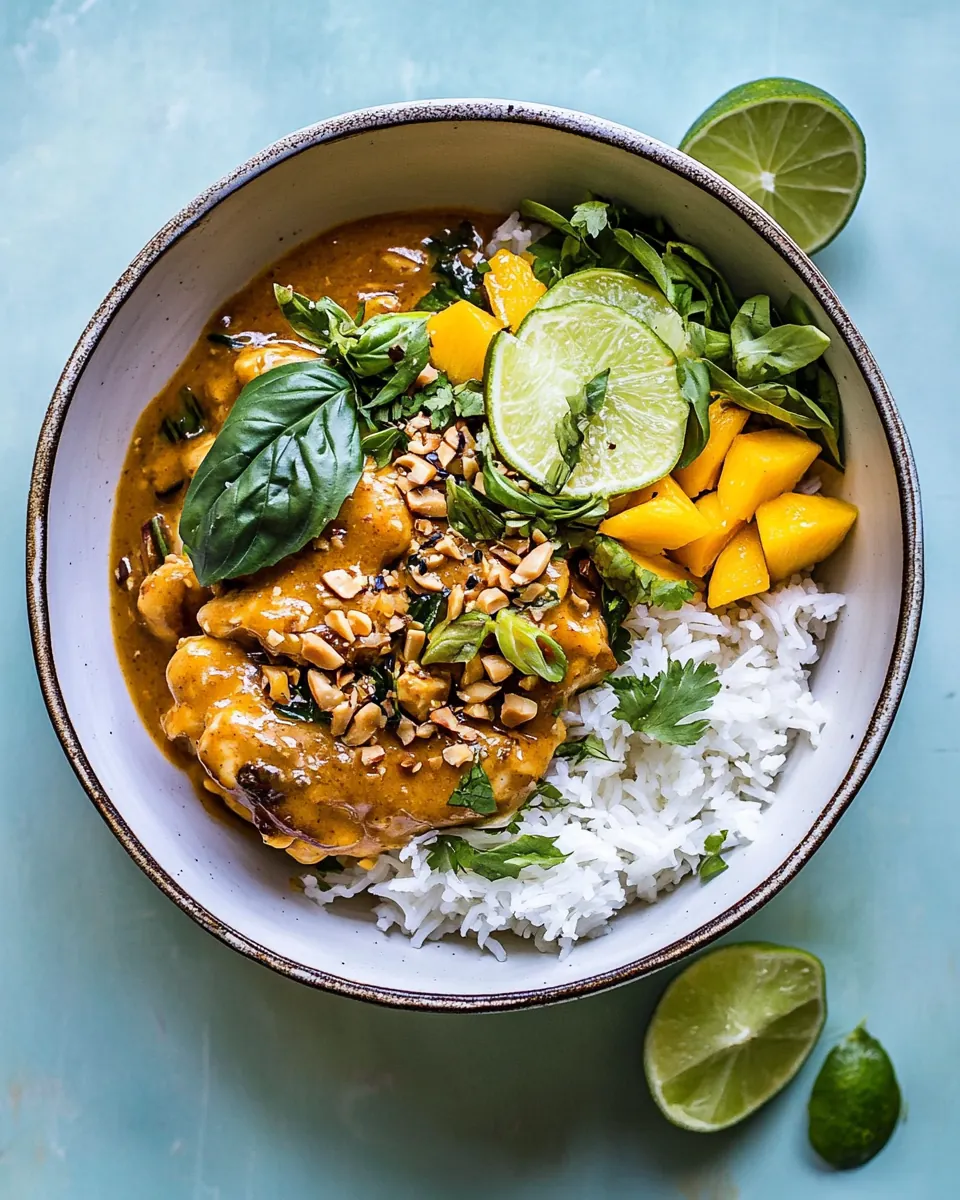
Weeknight Thai Peanut Chicken with Spicy Lime Mango
Weeknight Thai Peanut Chicken with Spicy Lime Mango arrived in my life on a frantic Tuesday when the fridge offered little and my stomach demanded bold flavors. I remember juggling emails while a pan hissed on the stove, and the first spoonful of the sauce convinced me this was a keeper. It felt like a lucky shortcut to a restaurant worthy meal, served straight from my own kitchen. I reached for familiar pantry staples and transformed them into something that tasted far more spent-on than it really was.
That evening I kept thinking about balance, how the creamy, nutty richness of peanut butter contrasts with the bright pop of lime, and how a hit of herbaceous basil and cooling cilantro makes every bite feel lively. The diced mango salsa I tossed together at the last minute turned out to be the showstopper, its spicy lime dressing cutting through the sauce and making the whole plate sing. I loved how the dish scaled from solo dinners to feeding a family, and how leftovers tasted even better the next day.
Recipe Snapshot
30 mins
15 mins
15 mins
Easy
480 kcal
Thai
Gluten-Free, Low FODMAP
Dinner
Large Dutch oven or pot, Mixing bowl, Knife, Cutting board, Spoon
Why Try This Weeknight Thai Peanut Chicken with Spicy Lime Mango
1. A meal that comes together fast
I adore recipes that respect a busy schedule, and Weeknight Thai Peanut Chicken with Spicy Lime Mango does exactly that. With minimal prep and straightforward steps, this dish gives you big flavors without fuss. I often toss the marinade and walk away for a few minutes, which feels like a tiny win when the clock is tight.
2. Complex flavors from simple parts
What makes me keep coming back to this recipe is how a few pantry items combine into something layered. The creamy texture of peanut butter and full fat coconut milk builds a luxurious mouthfeel, while the acid from lime brightens every bite. I love that spicy, sweet, salty, and herbal notes all show up in one spoonful.
3. Versatility on the plate
We can serve this over plain steamed rice for cozy weeknight dinners, or plate it with extra herbs and crunchy peanuts when guests arrive. I find the recipe forgiving, so you can tweak the heat level or herbs and still have a winner. That adaptability makes it a frequent request at my table.
4. Fresh contrast with the mango salsa
The spicy lime mango gives the dish a lively counterpoint to the rich peanut sauce. I love the textural contrast between tender chicken and juicy mango, plus the bright tang of lime zest and juice brings clarity to each bite. In my kitchen it’s the element that turns the meal from comforting to unforgettable.
5. Crowd pleasing and kid friendly
I’ve served this at casual gatherings and watched skeptical eaters come back for seconds. The sauce can be tuned milder for kids, and the crushed roasted peanuts provide a fun crunch for adventurous eaters. It’s the kind of dish I feel confident preparing when I want everyone to leave satisfied.
Shopping List for Weeknight Thai Peanut Chicken with Spicy Lime Mango
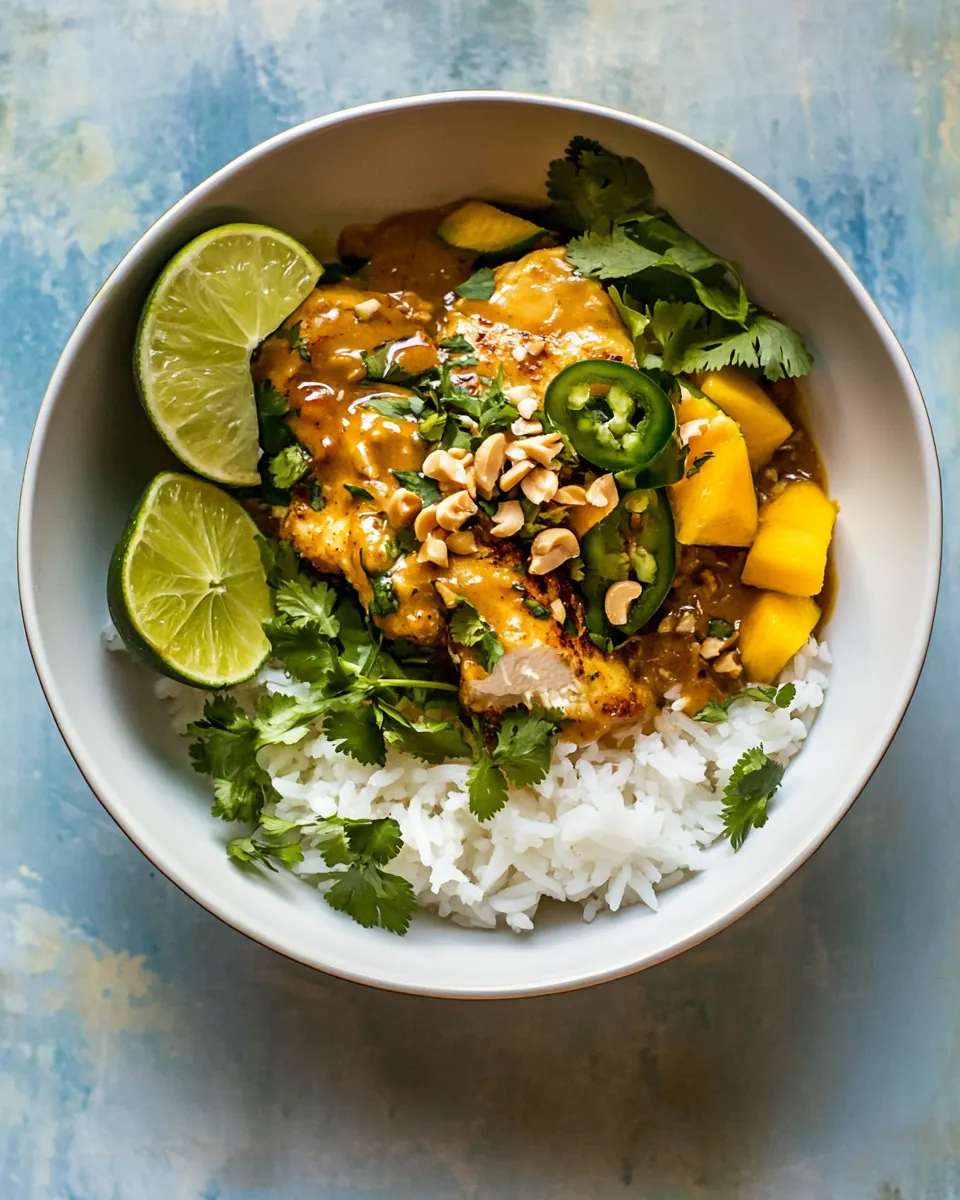
These ingredients work in harmony to create a rich, balanced Thai inspired meal. The sauce relies on creamy and savory staples, while herbs and citrus provide lift. Key players like peanut butter, coconut milk, and Thai red curry paste form the flavor backbone, and fresh elements like mango and cilantro brighten the finish.
- 1 1/2 pounds boneless skinless chicken thighs or breasts: Provide tender, protein-rich meat that serves as the main component and soaks up the sauce flavors during cooking; cut to uniform pieces for even cooking and easy serving.
- 3 4 tablespoons Thai red curry paste using more or less to your taste: Impart concentrated, aromatic heat and complexity to the dish; adjust amount to control spice level and enhance the curry character.
- 2 teaspoons ground ginger: Add warm, slightly peppery earthiness and a hint of zest to the sauce; use ground form for easy dispersion and consistent flavor.
- 3 tablespoons sesame oil or extra virgin olive oil: Contribute a nutty or fruity fat for sautéing and building the sauce base; choose sesame for authentic flavor or olive oil for a milder profile.
- 1/4 cup fresh Thai basil or regular basil chopped: Introduce bright, anise-like herbal notes and freshness when chopped and stirred in at the end; substitute regular basil if Thai basil is unavailable.
- 1/4 cup fresh cilantro, chopped, plus more for serving: Bring fresh, citrusy, slightly peppery herbaceousness when chopped and mixed into the sauce or used as a garnish; reserve extra for finishing to scent the dish.
- 1 (14 ounce) can full fat coconut milk: Provide rich, creamy body and subtle sweetness that forms the sauce's foundation; shake the can and stir well to incorporate solids and liquids.
- 1/4 cup low sodium soy sauce: Supply salty, savory umami and balance the coconut richness; choose low sodium to control overall saltiness and adjust to taste.
- 2 tablespoons fish sauce (, but recommended) (optional): Deliver an additional layer of savory, briny depth and traditional Southeast Asian flavor when used; include sparingly if preferred due to its potency.
- 1/2 cup creamy peanut butter: Create a smooth, creamy texture and prominent peanut flavor that defines the peanut sauce; whisk in gradually to achieve desired consistency.
- juice of 1 lime: Offer bright acidity and aromatic lift to the sauce and mango topping; squeeze fresh juice to balance richness and enhance tang.
- steamed rice, for serving: Serve as a neutral, starchy base to soak up sauce and make the meal more substantial; prepare hot steamed rice and spoon the curry over it.
- roasted peanuts and Persian cucumbers, for serving: Provide crunchy texture and cooling contrast as garnishes alongside the curry; roast peanuts for extra flavor and slice Persian cucumbers thinly.
- 1 mango, diced: Contribute juicy, sweet-tart fruitiness and tropical aroma when diced, forming part of the spicy lime mango topping; choose ripe but firm mango for best texture.
- 1 jalapeño, seeded and chopped: Add bright, grassy heat and a crunchy kick when seeded and chopped; include seeds if extra spice is desired and mince finely for even distribution.
- juice and zest from 1 lime: Deliver intense citrus aroma, bright acidity, and flavor lift through both juice and aromatic zest; use fresh lime and include zest for maximum fragrance.
Step by Step Guide for Weeknight Thai Peanut Chicken with Spicy Lime Mango
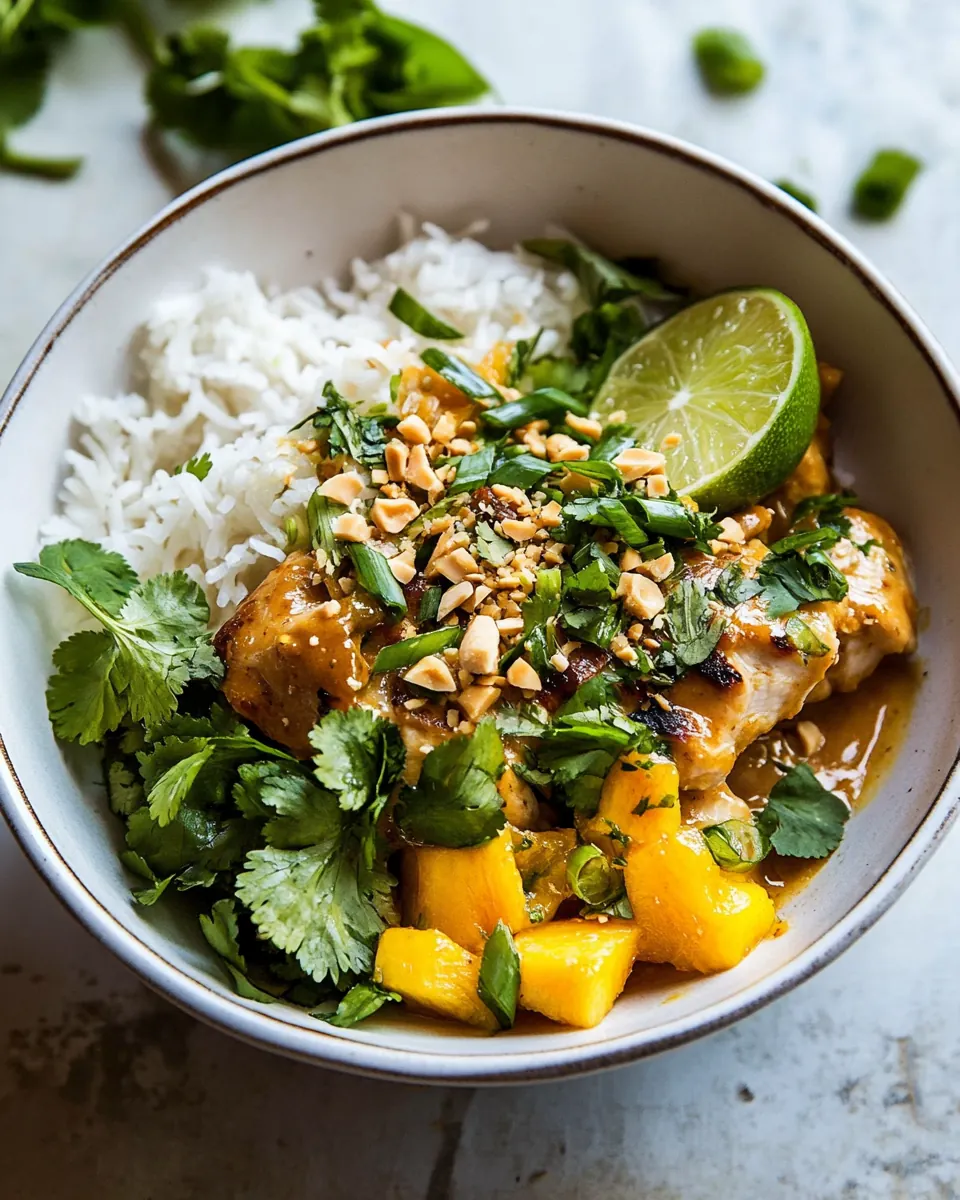
This recipe is straightforward but benefits from attentive cooking. Below I break the directions into clear steps and walk you through sensory cues, rationale, and troubleshooting so you can cook with confidence and enjoy the layered flavors.
- Toss the chicken with the 2 tablespoons Thai red curry paste, the ginger, and 1 tablespoon oil. Let sit 5 minutes. Heat 2 tablespoons oil in a large Dutch oven or pot over medium-high heat. Add the chicken and sear on both sides until browned, about 2 minutes. Add the remaining Thai red curry paste, the basil, and the cilantro.: The aroma of the curry paste and warm scent of ginger should bloom as you rub the mixture into the chicken , giving a fragrant coating. I often press the paste into the meat so every bite picks up flavor. After five minutes you should notice the surface glistening from the oil and paste, not drying out. This brief rest helps the flavors adhere and gently begin to penetrate the meat. If you let it sit much longer without refrigeration, be cautious about food safety. A common error is skimping on the oil which can prevent the paste from spreading evenly, leading to uneven searing.
- Reduce the heat to low. Add the coconut milk, soy sauce, fish sauce (if using), and 1/4 cup water. Partially cover and simmer for 20-30 minutes, or until the chicken is cooked through. Stir in the peanut butter and lime juice. Simmer until thickened, about 5 minutes. Note, there is going to be a lot of sauce.: You want the oil to shimmer and move fluidly when the pot is tilted, a sign it is hot enough to sear. The heat should be high enough to create a sizzle when the chicken hits the pan, but not so high that the paste chars immediately. I listen for a confident sizzle and watch for a thin brown crust forming at the edges within a minute or two. If the oil smokes aggressively, reduce the heat to prevent burnt flavors. Avoid crowding the pot, which causes steaming rather than browning.
- To make the spicy lime mango. Combine all ingredients in a bowl. Serve the chicken and sauce over rice. Top with roasted peanuts, cucumbers, and spicy lime mango.: When you add the chicken , the pan should sing with a steady sizzle and small wisps of steam. Let pieces develop a golden brown crust before flipping, this caramelization gives depth to the final sauce. You’ll see a clear change from pale to golden brown and hear a crispening sound. Resist moving the meat too soon, otherwise it won’t form that desirable crust. A typical pitfall is flipping repeatedly, which prevents proper browning and creates pale, less flavorful meat.
- Add the remaining Thai red curry paste the basil and the cilantro: Adding more curry paste at this stage builds layered heat and aroma, while the fresh chopped basil and cilantro release herbal oils into the pan. As they meet the warm surface, you’ll catch a burst of fragrant, slightly sweet herb notes. Stir gently so the herbs wilt just enough to mingle with the sauce without becoming limp. Overheating them will dull their brightness, so fold them in toward the end of the sear.
- Reduce the heat to low Add the coconut milk soy sauce fish sauce if using and 1/4 cup water Partially cover and simmer for 20 to 30 minutes or until the chicken is cooked through: Lowering the heat lets the coconut milk and sauces meld gently, resulting in a mellow, cohesive sauce. You should see the surface ripple and small bubbles at the edges while the pot emits a warm, fragrant steam. The chicken will change from translucent to opaque and tender as it simmers. I stir occasionally to prevent sticking, but don’t rush the simmer which allows connective tissue to soften and flavors to concentrate. A mistake some cooks make is simmering at high heat which can cause the coconut milk to split or the sauce to reduce too quickly, leaving dry chicken.
- Stir in the peanut butter and lime juice Simmer until thickened about 5 minutes Note there is going to be a lot of sauce: When you add the creamy peanut butter and fresh lime juice, the sauce should become noticeably richer and slightly glossy. Stir until the peanut butter is fully incorporated, giving a velvety texture. The aroma will deepen, with nutty notes and a lifted citrus edge. After about five minutes of gentle bubbling, the sauce will thicken and coat the back of a spoon. If the sauce stays grainy, continue stirring over low heat to smooth it out, and avoid boiling which can break the emulsion. A common oversight is adding the peanut butter at too high a temperature, which can cause separation rather than a silky finish.
- To make the spicy lime mango Combine all ingredients in a bowl: As you dice the sweet mango and mix it with chopped jalapeño , lime zest, and juice, you’ll notice bright citrus oils and a fragrant tropical sweetness that contrast the rich sauce. Tossing immediately after preparing keeps the fruit juicy and vibrant. The salsa should shimmer with juice and present a mix of soft mango flesh and crisp pepper bits. If your mango is underripe and firm, the texture will be less juicy and the salsa won’t blend as well.
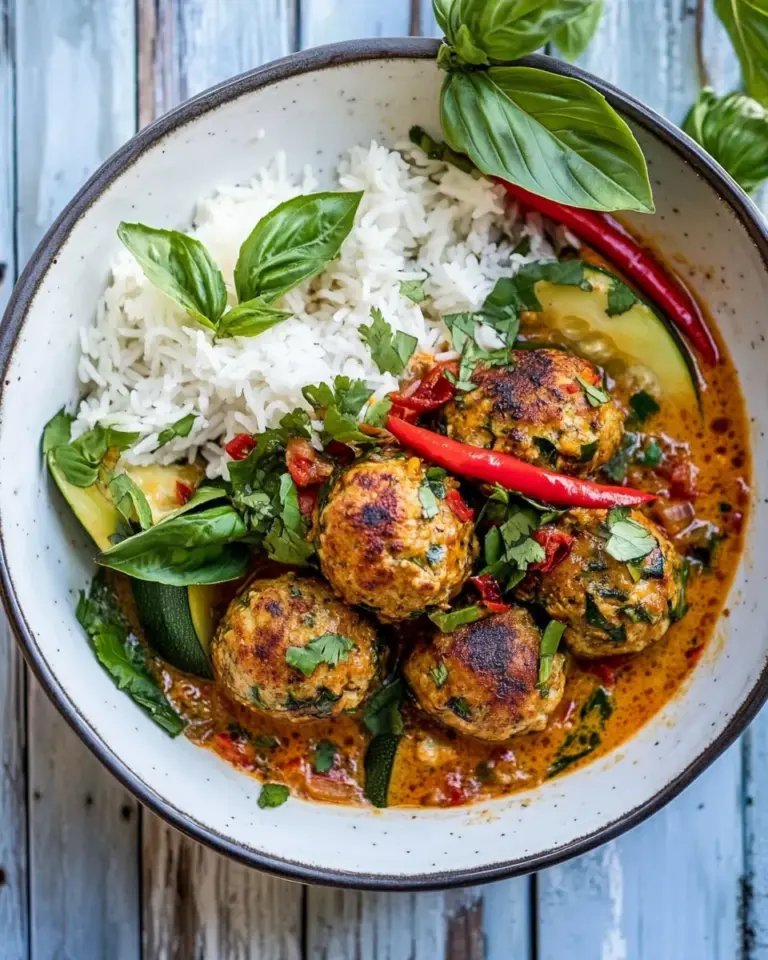
- Serve the chicken and sauce over rice: Spoon the warm sauce over a bed of steamed rice , watching it cascade over the grains and soak in. The plate should look glossy and inviting, with sauce pooling around the rice and coating the chicken . The rice acts as a neutral canvas, allowing each spoonful to balance creamy, salty, and bright notes. If the rice is too dry or cold, reheat or fluff it with a little steam to restore softness.
- Top with roasted peanuts cucumbers and spicy lime mango: Finish with chopped roasted peanuts for crunch, sliced Persian cucumbers for cool snap, and a generous spoonful of the spicy lime mango for contrast. The final plate should present a variety of textures and colors, with the glossy sauce, green herbs, and vibrant mango. I always taste one last time for salt and acidity, adjusting with a squeeze of lime if needed. Avoid adding toppings too early, as the peanuts can soften if left in the sauce for too long.
Tips and Tricks about Weeknight Thai Peanut Chicken with Spicy Lime Mango
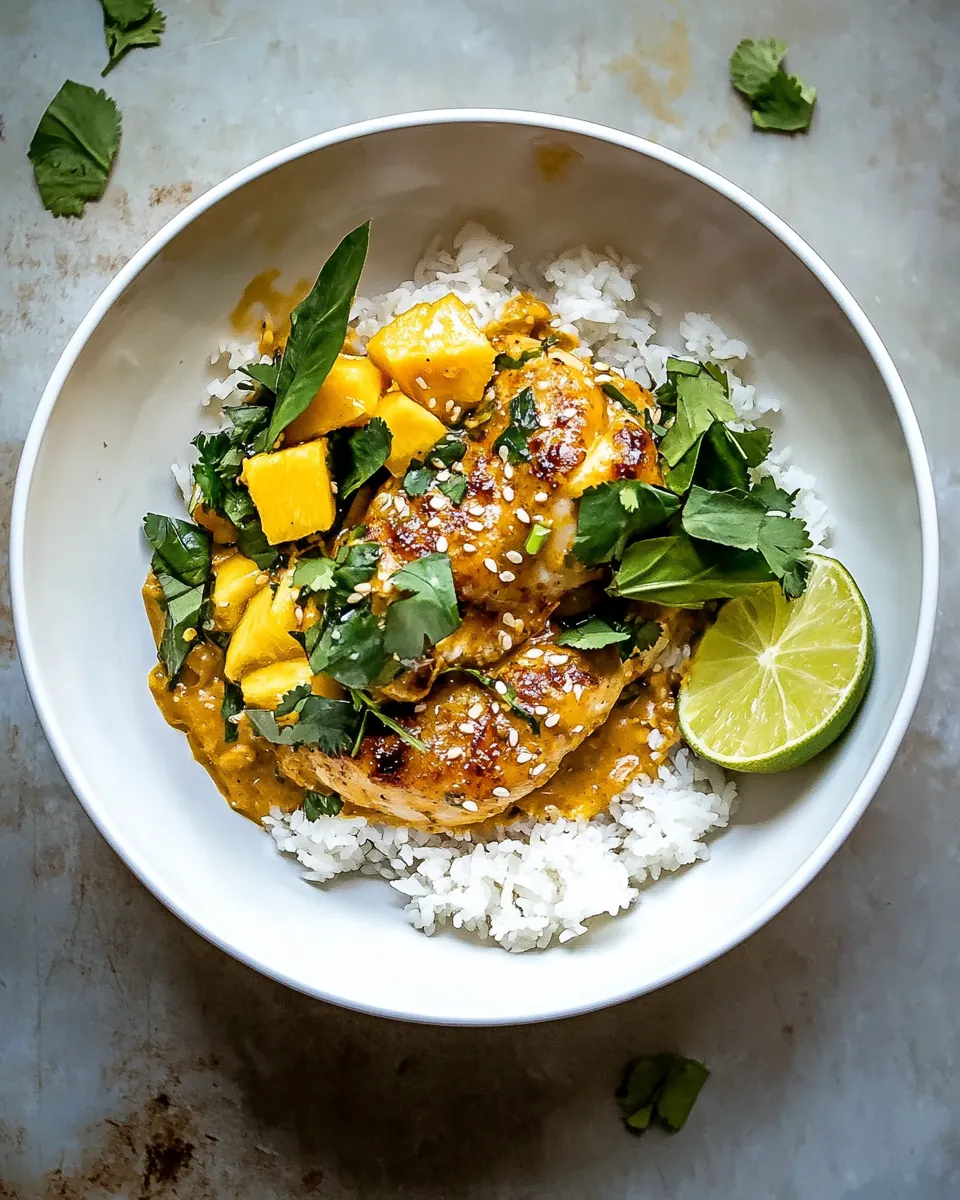
This dish rewards small adjustments, and knowing a few tips will make your weeknight dinner shine. I wrote these notes from things I learned by cooking it multiple times, so you can skip the guesswork and get consistent results.
- Bloom the curry paste: Heat the paste briefly in oil to release its aromatics before adding liquids, which deepens flavor resonance in the sauce.
- Choose the right peanut butter: Use unsweetened creamy peanut butter for a smooth texture and pure nutty taste, avoiding flavored or low fat versions that change mouthfeel.
- Watch the coconut milk: Keep the simmer gentle to prevent curdling, and stir occasionally to maintain a silky emulsion in the sauce.
- Adjust the heat: Start with less Thai red curry paste and jalapeño, then increase gradually to match your preferred spice level without masking other flavors.
- Prep toppings last: Prepare the spicy lime mango and crunchy garnishes right before serving to preserve texture and brightness.
Serving Ideas for Weeknight Thai Peanut Chicken with Spicy Lime Mango
This dish is easy to dress up or down depending on the occasion, and it pairs well with simple, cooling sides that complement the rich sauce. Below are thoughtful serving suggestions and storage notes to help you plan meals for family dinners or festive nights.
- Over steamed jasmine rice: Classic and comforting, the rice absorbs the sauce and provides the perfect neutral base for the bold flavors.
- With extra herbs and lime wedges: Offer bowls of chopped cilantro, basil, and lime wedges so guests can brighten their plates to taste.
- As a casual weeknight family meal: Serve with quick cucumber slices and the mango salsa for a no fuss, balanced plate that kids and adults can adjust.
- For a weekend gathering: Bring the sauce and chicken in a warm serving dish and let guests top their portions with crushed peanuts and mango salsa for interactive serving.
- Storage tips: Refrigerate leftovers in an airtight container for 3 to 4 days. Reheat gently over low heat to preserve sauce texture, adding a splash of water if it has thickened.
- Occasions: Great for weeknight dinners, casual dinner parties, and summer gatherings when ripe mango is available.
FAQ
Conclusion
This recipe shines because it pairs creamy, nutty sauce with a bright, spicy mango topping for vibrant contrast. Give it a try on a busy weeknight and you’ll find bold restaurant level flavors with minimal fuss. I encourage you to play with the heat and herbs so it matches your taste, and enjoy how leftovers deepen in flavor. It’s a warm, satisfying dish that rewards simple attention and fresh ingredients.
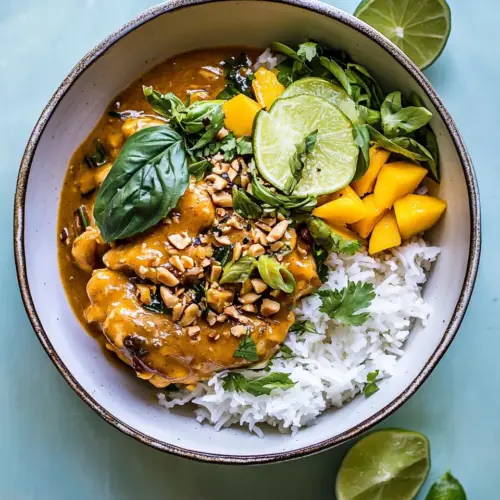
Weeknight Thai Peanut Chicken with Spicy Lime Mango
Equipment
- Large Dutch Oven or Pot
- Mixing Bowl
- Knife
- Cutting Board
- Spoon
Ingredients
- 1 1/2 pounds boneless skinless chicken thighs or breasts Provide tender, protein-rich meat that serves as the main component and soaks up the sauce flavors during cooking; cut to uniform pieces for even cooking and easy serving.
- 3 -4 tablespoons Thai red curry paste using more or less to your taste Impart concentrated, aromatic heat and complexity to the dish; adjust amount to control spice level and enhance the curry character.
- 2 teaspoons ground ginger Add warm, slightly peppery earthiness and a hint of zest to the sauce; use ground form for easy dispersion and consistent flavor.
- 3 tablespoons sesame oil or extra virgin olive oil Contribute a nutty or fruity fat for sautéing and building the sauce base; choose sesame for authentic flavor or olive oil for a milder profile.
- 1/4 cup fresh Thai basil or regular basil chopped Introduce bright, anise-like herbal notes and freshness when chopped and stirred in at the end; substitute regular basil if Thai basil is unavailable.
- 1/4 cup fresh cilantro, chopped, plus more for serving Bring fresh, citrusy, slightly peppery herbaceousness when chopped and mixed into the sauce or used as a garnish; reserve extra for finishing to scent the dish.
- 1 (14 ounce) can full fat coconut milk Provide rich, creamy body and subtle sweetness that forms the sauce's foundation; shake the can and stir well to incorporate solids and liquids.
- 1/4 cup low sodium soy sauce Supply salty, savory umami and balance the coconut richness; choose low sodium to control overall saltiness and adjust to taste.
- 2 tablespoons fish sauce (optional, but recommended) Deliver an additional layer of savory, briny depth and traditional Southeast Asian flavor when used; include sparingly if preferred due to its potency.
- 1/2 cup creamy peanut butter Create a smooth, creamy texture and prominent peanut flavor that defines the peanut sauce; whisk in gradually to achieve desired consistency.
- juice of 1 lime Offer bright acidity and aromatic lift to the sauce and mango topping; squeeze fresh juice to balance richness and enhance tang.
- steamed rice, for serving Serve as a neutral, starchy base to soak up sauce and make the meal more substantial; prepare hot steamed rice and spoon the curry over it.
- roasted peanuts and Persian cucumbers, for serving Provide crunchy texture and cooling contrast as garnishes alongside the curry; roast peanuts for extra flavor and slice Persian cucumbers thinly.
- 1 mango, diced Contribute juicy, sweet-tart fruitiness and tropical aroma when diced, forming part of the spicy lime mango topping; choose ripe but firm mango for best texture.
- 1 jalapeño, seeded and chopped Add bright, grassy heat and a crunchy kick when seeded and chopped; include seeds if extra spice is desired and mince finely for even distribution.
- juice and zest from 1 lime Deliver intense citrus aroma, bright acidity, and flavor lift through both juice and aromatic zest; use fresh lime and include zest for maximum fragrance.
Instructions
- Toss the chicken with the 2 tablespoons Thai red curry paste, the ginger, and 1 tablespoon oil. Let sit 5 minutes. Heat 2 tablespoons oil in a large Dutch oven or pot over medium-high heat. Add the chicken and sear on both sides until browned, about 2 minutes. Add the remaining Thai red curry paste, the basil, and the cilantro.: The aroma of the curry paste and warm scent of ginger should bloom as you rub the mixture into the chicken , giving a fragrant coating. I often press the paste into the meat so every bite picks up flavor. After five minutes you should notice the surface glistening from the oil and paste, not drying out. This brief rest helps the flavors adhere and gently begin to penetrate the meat. If you let it sit much longer without refrigeration, be cautious about food safety. A common error is skimping on the oil which can prevent the paste from spreading evenly, leading to uneven searing.
- Reduce the heat to low. Add the coconut milk, soy sauce, fish sauce (if using), and 1/4 cup water. Partially cover and simmer for 20-30 minutes, or until the chicken is cooked through. Stir in the peanut butter and lime juice. Simmer until thickened, about 5 minutes. Note, there is going to be a lot of sauce.: You want the oil to shimmer and move fluidly when the pot is tilted, a sign it is hot enough to sear. The heat should be high enough to create a sizzle when the chicken hits the pan, but not so high that the paste chars immediately. I listen for a confident sizzle and watch for a thin brown crust forming at the edges within a minute or two. If the oil smokes aggressively, reduce the heat to prevent burnt flavors. Avoid crowding the pot, which causes steaming rather than browning.
- To make the spicy lime mango. Combine all ingredients in a bowl. Serve the chicken and sauce over rice. Top with roasted peanuts, cucumbers, and spicy lime mango.: When you add the chicken , the pan should sing with a steady sizzle and small wisps of steam. Let pieces develop a golden brown crust before flipping, this caramelization gives depth to the final sauce. You’ll see a clear change from pale to golden brown and hear a crispening sound. Resist moving the meat too soon, otherwise it won’t form that desirable crust. A typical pitfall is flipping repeatedly, which prevents proper browning and creates pale, less flavorful meat.
- Add the remaining Thai red curry paste the basil and the cilantro: Adding more curry paste at this stage builds layered heat and aroma, while the fresh chopped basil and cilantro release herbal oils into the pan. As they meet the warm surface, you’ll catch a burst of fragrant, slightly sweet herb notes. Stir gently so the herbs wilt just enough to mingle with the sauce without becoming limp. Overheating them will dull their brightness, so fold them in toward the end of the sear.
- Reduce the heat to low Add the coconut milk soy sauce fish sauce if using and 1/4 cup water Partially cover and simmer for 20 to 30 minutes or until the chicken is cooked through: Lowering the heat lets the coconut milk and sauces meld gently, resulting in a mellow, cohesive sauce. You should see the surface ripple and small bubbles at the edges while the pot emits a warm, fragrant steam. The chicken will change from translucent to opaque and tender as it simmers. I stir occasionally to prevent sticking, but don’t rush the simmer which allows connective tissue to soften and flavors to concentrate. A mistake some cooks make is simmering at high heat which can cause the coconut milk to split or the sauce to reduce too quickly, leaving dry chicken.
- Stir in the peanut butter and lime juice Simmer until thickened about 5 minutes Note there is going to be a lot of sauce: When you add the creamy peanut butter and fresh lime juice, the sauce should become noticeably richer and slightly glossy. Stir until the peanut butter is fully incorporated, giving a velvety texture. The aroma will deepen, with nutty notes and a lifted citrus edge. After about five minutes of gentle bubbling, the sauce will thicken and coat the back of a spoon. If the sauce stays grainy, continue stirring over low heat to smooth it out, and avoid boiling which can break the emulsion. A common oversight is adding the peanut butter at too high a temperature, which can cause separation rather than a silky finish.
- To make the spicy lime mango Combine all ingredients in a bowl: As you dice the sweet mango and mix it with chopped jalapeño , lime zest, and juice, you’ll notice bright citrus oils and a fragrant tropical sweetness that contrast the rich sauce. Tossing immediately after preparing keeps the fruit juicy and vibrant. The salsa should shimmer with juice and present a mix of soft mango flesh and crisp pepper bits. If your mango is underripe and firm, the texture will be less juicy and the salsa won’t blend as well.
- Serve the chicken and sauce over rice: Spoon the warm sauce over a bed of steamed rice , watching it cascade over the grains and soak in. The plate should look glossy and inviting, with sauce pooling around the rice and coating the chicken . The rice acts as a neutral canvas, allowing each spoonful to balance creamy, salty, and bright notes. If the rice is too dry or cold, reheat or fluff it with a little steam to restore softness.
- Top with roasted peanuts cucumbers and spicy lime mango: Finish with chopped roasted peanuts for crunch, sliced Persian cucumbers for cool snap, and a generous spoonful of the spicy lime mango for contrast. The final plate should present a variety of textures and colors, with the glossy sauce, green herbs, and vibrant mango. I always taste one last time for salt and acidity, adjusting with a squeeze of lime if needed. Avoid adding toppings too early, as the peanuts can soften if left in the sauce for too long.
Notes
- Bloom the curry paste: Heat the paste briefly in oil to release its aromatics before adding liquids, which deepens flavor resonance in the sauce.
- Choose the right peanut butter: Use unsweetened creamy peanut butter for a smooth texture and pure nutty taste, avoiding flavored or low fat versions that change mouthfeel.
- Watch the coconut milk: Keep the simmer gentle to prevent curdling, and stir occasionally to maintain a silky emulsion in the sauce.
- Adjust the heat: Start with less Thai red curry paste and jalapeño, then increase gradually to match your preferred spice level without masking other flavors.
- Prep toppings last: Prepare the spicy lime mango and crunchy garnishes right before serving to preserve texture and brightness.