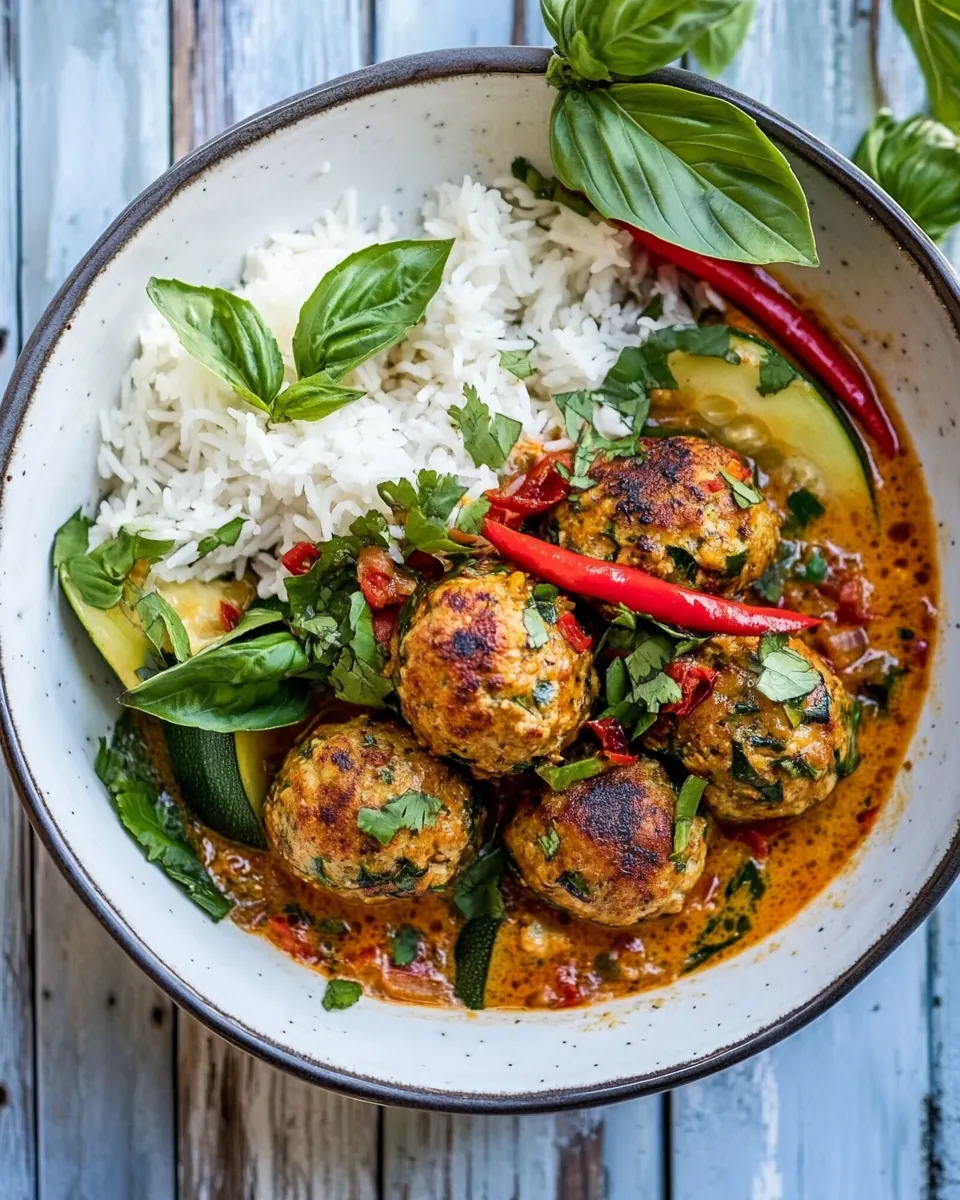
Simple Thai Chicken Zucchini Meatball Curry
Simple Thai Chicken Zucchini Meatball Curry started as one of those weeknight rescues for me, a dish I turned to when I wanted bold flavor without fuss. I remember coming home with a tired mind and a fridge of odds and ends, and the idea of rolling up little chicken meatballs with shredded zucchini felt both comforting and clever. I set up a tiny assembly line on my counter, chatting with a neighbor while forming the balls, and the simple ritual of mixing and pressing helped me breathe out the day.
There is something deeply satisfying about the sound of meat sizzling as it sears, then the gentle bubble when coconut milk meets hot pan and curry paste. That afternoon I tasted a mouthful and felt instantly transported to a casual street stall, but without the chaos. The dish is flexible, so I often tweak how garlicky or gingery I go depending on my mood, and I love that it still sings even when I throw together the ingredients at the last minute. Friends have come over and declared it a keeper, and kids have been convinced to eat more zucchini without complaint.
I learned a handful of small tricks making this recipe repeatedly. Rolling meatballs the same size helps them cook evenly, and using one skillet keeps cleanup mercifully quick. I also like to taste the curry base before adding the meatballs back in, adjusting for salt and brightness with lime and a pinch of extra tamari if needed. Over time, this recipe became my go to for an easy crowd pleaser that is satisfyingly savory and fragrant.
Recipe Snapshot
30 mins
10 mins
20 mins
Easy
400 kcal
Thai
Keto, Gluten-Free
Dinner
Large skillet, Mixing bowl, Tablespoon measure
What We Adore About This Simple Thai Chicken Zucchini Meatball Curry
Bold Thai flavors without the fuss
I love how Simple Thai Chicken Zucchini Meatball Curry captures those classic Thai notes, like citrusy lime and aromatic ginger, without demanding hours on the stove. The balance of creamy coconut milk and red curry paste gives depth, while the meatballs stay tender and juicy. I often tell friends this is a great entry point to Thai food because it delivers complexity in a very approachable way.
Practical and family friendly
We serve this when we want an easy weeknight dinner that still feels special. The small meatballs are perfect for kids to pick up with spoons or chopsticks, and the hidden zucchini adds a gentle vegetable boost. I always appreciate recipes that double as leftovers for lunch, and this one reheats beautifully, keeping both texture and flavor.
Flexible seasoning and make ahead potential
One reason I return to this recipe is how forgiving it is. You can dial the curry paste from shy to bold, tweak the salt with tamari, and finish with fresh herbs for brightness. I sometimes make the meatballs a day ahead and simply simmer them in the sauce before serving, which saves time on busy evenings and actually blends the flavors more deeply.
Textural contrast that keeps every bite interesting
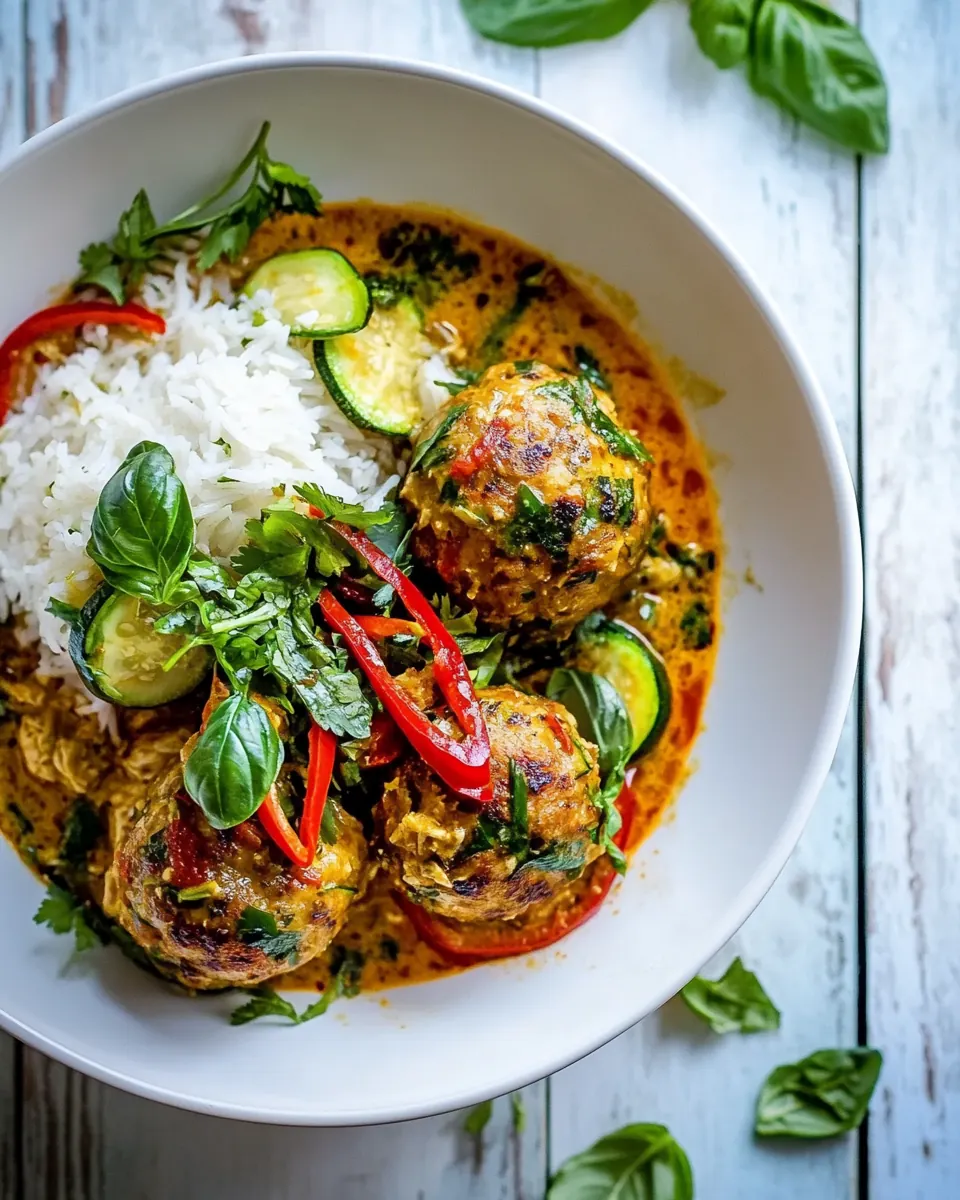
The crisp sear on the outside of each meatball gives a satisfying contrast to the silky coconut curry. Sliced bell pepper adds a tender crunch, and finishing with fresh cilantro and basil brings a fragrant lift. I find that these textural layers make the dish feel thoughtful, even when it comes together quickly.
Accessible ingredients, big payoff
What I adore about this recipe is how accessible the ingredient list is. You do not need specialty stores for most components, and simple pantry swaps like tamari for soy sauce keep things adaptable. That accessibility means I can reliably make this any night of the week and still impress guests.
Key Ingredients for Simple Thai Chicken Zucchini Meatball Curry
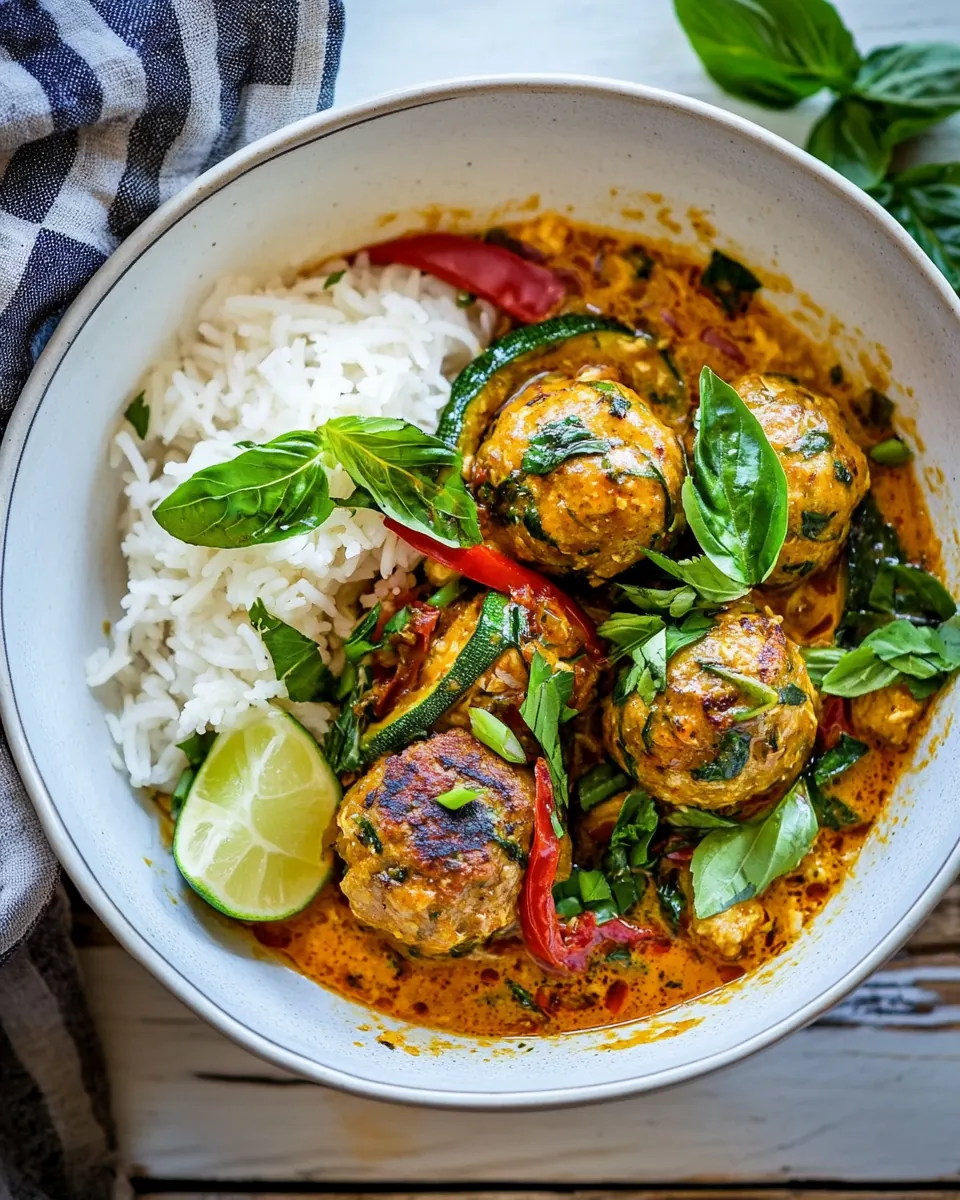
The philosophy here is about balance and teamwork. Each item plays a role: the meat provides body and protein, the zucchini adds moisture and a subtle vegetal note, aromatics like shallots, ginger, and garlic build a fragrant base, while the curry paste and coconut milk create the signature Thai sauce. Together, they form a dish that is creamy, spicy, and bright all at once.
- 1 pound ground chicken: Bind and add lean protein to the dish, forming the base of the meatballs and providing a tender, moist texture when cooked. Season lightly before shaping to ensure well-rounded flavor throughout the curry. Pair with spices and aromatics so the chicken absorbs the Thai-inspired sauce.
- 1/2 cups shredded zucchini (about 1 small): Moisten and lighten the meatball mixture while adding subtle vegetal sweetness and moisture to prevent dryness. Grate finely and squeeze out excess liquid if needed to maintain proper meatball texture. Integrate gently to distribute evenly without overworking the mixture.
- 2 green onions, chopped: Freshen and add mild oniony notes while contributing a crisp, green garnish that complements the curry flavors. Chop finely to incorporate into the meatball mixture or scatter on top at serving for color and brightness. Use both white and green parts to vary texture and intensity.
- 2 shallots, chopped: Mellowly sweeten and introduce a delicate, aromatic foundation when sautéed with garlic and ginger for the curry base. Chop small to blend into the meatball mixture or cook down with aromatics to deepen flavor. Balance shallot sweetness with a touch of acidity if desired.
- 2 teaspoons plus 1 tablespoon grated ginger: Sharpen and warm the flavor profile with bright, peppery heat and aromatic freshness; use the measured amounts to layer intensity in meatballs and sauce. Grate finely to release oils and distribute evenly so the ginger complements garlic and curry paste. Adjust the extra tablespoon to taste for a stronger ginger kick.
- 2 cloves garlic, grated: Punctuate and add pungent savory depth when grated, creating a fragrant base alongside ginger and shallots. Integrate into the meatball mix and sautés to help build complex umami notes. Grate finely to distribute flavor without leaving large pieces.
- 1/4 teaspoon cayenne pepper: Spice and deliver concentrated heat to perk up the meatballs and curry without overwhelming the other flavors when used sparingly. Measure carefully to control the overall spice level, especially if also using spicy curry paste. Combine with black pepper and aromatics for layered heat.
- black pepper: Season and provide rounded pungency that enhances the savory elements throughout the meatballs and sauce. Grind to taste during mixing and finishing to ensure balanced pepperiness. Use in conjunction with salt-based seasonings for full-bodied flavor.
- 2 teaspoons tamari/soy sauce: Season and contribute savory umami and saltiness to both the meatballs and the curry, helping to round and deepen flavors. Add during mixing and adjust for saltiness considering tamari is used elsewhere in the recipe. Choose tamari for gluten-free option and a slightly richer soy profile.
- 3 tablespoons extra virgin olive oil: Cook and add a fruity, slightly bitter fat that helps brown meatballs and sauté vegetables, while carrying aromatic flavors throughout the curry. Use moderate heat to avoid smoking and to develop gentle caramelization on proteins and peppers. Drizzle as needed to coat the pan evenly.
- 1 red bell pepper, sliced: Sweeten and introduce a crisp, juicy texture and vibrant color to the curry, softening when sautéed to release natural sugars. Slice uniformly to ensure even cooking and to create pleasing bite-sized strips in the finished dish. Combine with bell pepper's sweetness to balance the spicy curry paste.
- 2 tablespoons salted butter: Enrich and impart creamy, savory richness when melted into the pan, offering a silky mouthfeel that complements coconut milk. Use to finish the sauce for a rounded buttery flavor and to help meld aromatics and spices. Adjust quantity to taste while being mindful of additional salt from butter.
- 1 3 tablespoons Thai red curry paste: Concentrate and provide the primary Thai red chili flavor, aroma, and heat that define the curry's character; adjust within the given range to control spiciness. Stir into the aromatic base to dissolve evenly and form the core curry taste. Balance with coconut milk and tamari to achieve desired richness and umami.
- 1 can (14-ounce) coconut milk: Enrich and create a creamy, slightly sweet base that tempers the curry paste heat and carries the aromatic flavors throughout the sauce. Shake well before opening to combine solids and liquids for consistent texture; simmer gently to thicken and meld flavors. Use the full can to ensure sufficient sauce volume.
- 3 tablespoons tamari/soy sauce: Enhance and add additional savory depth and saltiness when used in the sauce, reinforcing the umami profile across the dish. Apply the measured amount gradually and taste, since tamari contributes both salt and complexity to the curry. Combine with earlier soy/tamari addition to unify seasoning.
- 1/4 cup fresh cilantro, chopped: Freshen and introduce bright herbal notes that cut through the richness of the coconut curry and add a lively finish. Chop roughly to preserve leaf texture and sprinkle over the finished dish to release aromatic oils. Use liberally as a garnish to complement the Thai flavors.
- basil and limes, for serving: Garnish and offer aromatic herbaceousness and bright acidity for finishing; use basil leaves for fragrant lift and lime wedges for a zesty squeeze at the table. Tear basil to release oils and squeeze limes just before serving to preserve freshness. Serve alongside to allow diners to adjust brightness.
Simple Thai Chicken Zucchini Meatball Curry Instructions
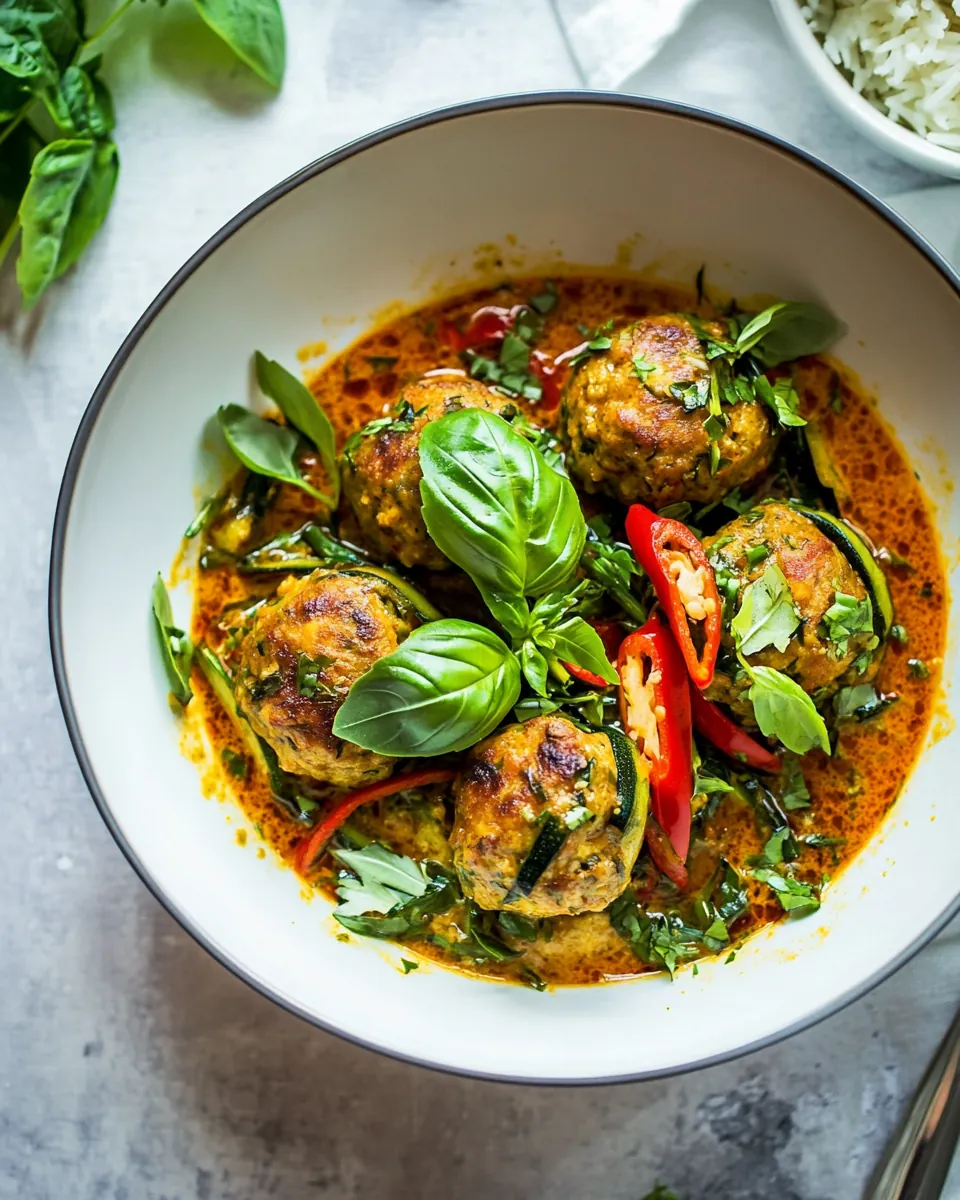
This recipe moves from mixing to searing to simmering, and I always find the rhythm relaxing. Keep your mise en place ready so you can focus on sensory cues as you go, because the visual and aromatic changes tell you when to move on to the next step. Below I expand each direction into full sensory driven guidance to help you nail texture and flavor.
- Add the chicken, zucchini, green onions, 1 shallot, 2 teaspoons ginger, 1 clove garlic, cayenne, a pinch of pepper, and 2 teaspoons tamari/soy sauce to a bowl. Mix to combine. Coat your hands with oil, and roll the meat into tablespoon-size balls (will make 15-16 meatballs). Heat a large skillet with sides over medium-high heat. Add 2 tablespoons of olive oil and the meatballs. Sear until crisp, 4-5 minutes, turning them 2-3 times. Move to a plate. To the same skillet, add the remaining 1 tablespoon of oil, 1 shallot, 1 garlic clove, 1 tablespoon of ginger, the bell peppers, butter, and curry paste. Cook until fragrant, 2 minutes. Stir in the coconut milk and 3 tablespoons of tamari or soy sauce. Slide the meatballs into the curry sauce. Simmer over medium heat until the meatballs are cooked through, 5 minutes. Stir in the cilantro. Serve the meatballs and sauce over rice with a squeeze of fresh lime, some fresh basil, and/or green onions.: As you combine these components, notice the contrast between the pale chicken and the green flecks of shredded zucchini and chopped green onions . The grated ginger and garlic release their aromatics, giving the mixture a lively scent that hints at the final curry. Use a fork or your hands to fold everything gently so the mixture is uniform but not overworked, preserving tenderness. A common misstep is overmixing, which compacts proteins and yields dense meatballs; mix just until cohesive. Texture is key here, so stop when the mixture holds together and you can see even distribution of herbs and seasonings. If the mixture feels too wet, chill it briefly to make rolling easier, and if too dry, a teaspoon of water or coconut milk can help bind.
- Mix to combine: When the mixture comes together, the aroma should be warmly gingery with a faint garlic backbone, and you should see the cayenne speckling the blend for heat. Take a moment to taste a tiny pinch cooked quickly in a pan if you want to check seasoning before forming meatballs. The sensation should be balanced, with umami from the tamari and a gentle nose from the aromatics. Troubleshooting note: if you detect an under seasoned base, add a touch more tamari but be mindful not to oversalt, because the sauce will also contribute salt later.
- Coat your hands with oil, and roll the meat into tablespoon-size balls (will make 15-16 meatballs): Rolling by hand connects you to the process, and the oil prevents sticking while giving the exterior a smoother surface that sears evenly. Aim for uniform tablespoon-size pieces so they cook at the same rate; uneven sizes lead to overcooked small ones and undercooked big ones. Roll gently to form compact balls without pressing too hard, which would toughen them. If the mixture is sticky, chilling for 10 to 15 minutes helps. A typical mistake is making inconsistent sizes, so use a tablespoon measure for consistency if you need to.
- Heat a large skillet with sides over medium-high heat: A large skillet with sides allows for both searing and later sauce simmering in the same pan, keeping flavors concentrated. When the pan is hot, it should shimmer slightly when you add oil, not smoke. This heat is essential for creating those golden brown crusts on the meatballs, which contribute nutty, savory notes. If the pan is not hot enough, the meatballs will steam and not develop a crust, losing flavor depth. If your pan smokes, lower the heat briefly to avoid burnt flavors.
- Add 2 tablespoons of olive oil and the meatballs: When the oil warms, arranging the meatballs without crowding ensures they sear cleanly and produce a satisfying sizzle. That first contact should sound like a confident hiss, signaling Maillard reactions that build flavor. Leave them undisturbed for a couple of minutes on each side to develop a golden exterior, turning 2 to 3 times for even browning. Overcrowding causes steaming and prevents crust formation, so work in batches if needed. A pitfall is flipping too often, which interrupts browning and yields pale meatballs.
- Sear until crisp, 4-5 minutes, turning them 2-3 times: As they sear, smell the savory, roasted aroma that signals caramelization. You want a deep golden to lightly browned surface, not blackened, which would taste bitter. Keep an eye on the color progression and listen for a steady sizzle that calms as the moisture reduces. If the edges brown too quickly, reduce the heat slightly and allow internal cooking to catch up. A common issue is under searing due to low heat, which reduces the depth of flavor in the final dish.
- Move to a plate: Transferring the seared meatballs to a plate preserves the fond in the pan, which is packed with concentrated flavor for the sauce. Leave any browned bits stuck to the pan; they will dissolve into the sauce and deepen its taste. Keep the plate covered loosely so the meatballs remain warm but do not steam, which would soften the crust. Avoid stacking them tightly which traps steam and softens the exterior.
- To the same skillet, add the remaining 1 tablespoon of oil, 1 shallot, 1 garlic clove, 1 tablespoon of ginger, the bell peppers, butter, and curry paste: Adding aromatics back into the hot pan wakes up the fond, and the butter melts to create an inviting glossy base. As you stir, the curry paste releases essential oils and the air fills with fragrant notes of chili and lemongrass. The bell pepper should soften slightly but keep a bright color and texture. Be mindful not to scorch the curry paste, as burnt paste tastes acrid; lower the heat if it begins to darken too fast.
- Cook until fragrant, 2 minutes: In this brief window the aromatics bloom and the curry paste becomes aromatic and glossy, signaling readiness for liquid. You should detect a toasty, spicy perfume that hints at deeper flavors to come. If the mixture smells raw or too sharp, cook an additional minute, stirring, but do not overcook as aromatics can turn bitter. A mistake here is rushing to add liquid before the paste has had a chance to bloom, which yields a dull sauce.
- Stir in the coconut milk and 3 tablespoons of tamari or soy sauce: Pouring in the coconut milk will create immediate steam and a rich creaminess that softens the heat from the paste. The extra tamari deepens umami and balances sweetness. When the liquid meets the hot pan, scrape the browned bits to dissolve them into the sauce, and watch the surface ripple into gentle bubbles as it heats. If the sauce is too thin later, simmer a little longer to reduce and thicken; if too thick, add a splash of water or more coconut milk. Over seasoning with tamari at this stage can make the dish overly salty, so taste before adding more.
- Slide the meatballs into the curry sauce: Returning the meatballs to the pan allows them to finish cooking in the fragrant sauce, absorbing flavors while lending structure to the dish. Nestle them gently so the sauce coats each one, and you will see tiny bubbles form around the edges as the sauce warms. This melding step harmonizes the components, but avoid vigorous stirring which can break the meatballs apart. If meatballs break, handle them with a spoon and gently reposition.
- Simmer over medium heat until the meatballs are cooked through, 5 minutes: A gentle simmer completes internal cooking and lets flavors marry; listen for a low, steady bubble rather than a rolling boil to maintain tenderness. The meatballs should reach a safe temperature and feel springy to the touch, while the sauce thickens slightly. Overcooking will dry the chicken , so check one meatball by cutting into it to ensure it is cooked through but still juicy. If you do not have a thermometer, aim for firm but not hard centers.
- Stir in the cilantro: Folding in fresh cilantro at the end brightens the whole dish with citrusy herbal notes and a fresh green aroma. The heat from the sauce slightly wilts the leaves, releasing perfume without losing their vitality. Add them last to preserve as much freshness as possible. If added too early, delicate herb aromas will dissipate.
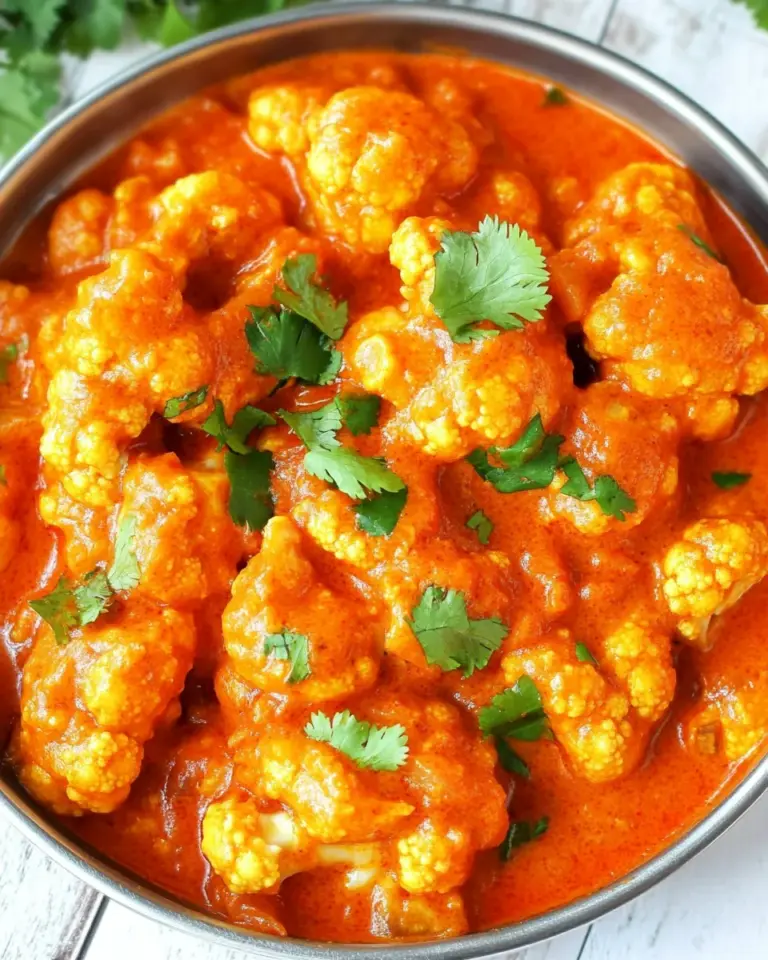
- Serve the meatballs and sauce over rice with a squeeze of fresh lime, some fresh basil, and/or green onions: Serving over steaming rice gives a neutral base that soaks up the sauce, while a squeeze of lime and ribbons of fresh basil add brightness and lift. The final presentation should be colorful, with flecks of green and red against creamy sauce. Encourage diners to add lime to taste, as acidity can vary. A common serving mistake is adding citrus too early, which can flatten the layered flavors; add at table for best freshness.
Making Adjustments
I like to think of adjustments as small nudges that adapt the recipe to the moment. Below are practical tips that let you tune heat, texture, and timing without changing the soul of the dish.
- Spice level Adjust the amount of Thai red curry paste from one to three tablespoons depending on how bold you like it; start with less and add more after tasting the coconut base to avoid overpowering the dish.
- Salt management Because both tamari and salted butter add sodium, taste the sauce before adding extra salt and adjust gradually to prevent oversalting.
- Zucchini moisture If your shredded zucchini seems very watery, pat it lightly with paper towel to prevent the meatball mixture from becoming too loose, but avoid pressing all moisture out which helps keep meatballs tender.
- Make ahead You can form the meatballs a day in advance and keep them covered in the fridge; sear and finish in the sauce when ready to serve for fresher texture and faster dinner prep.
- Garnish timing Add delicate herbs like cilantro and basil at the end or at the table so they retain bright flavor and color rather than wilting into the sauce.
What Complements This Simple Thai Chicken Zucchini Meatball Curry
This dish pairs beautifully with neutral starches and crisp, lightly dressed sides. Think simple steamed rice to soak up sauce, a quick cucumber salad for cooling contrast, and fresh herbs to brighten each bite. It works equally well for a casual family dinner or a small gathering where you want layered flavor without elaborate prep.
- Steamed white or jasmine rice A classic companion that absorbs the curry sauce, making each spoonful harmonious and satisfying for dinner or special nights.
- Light cucumber salad Thinly sliced cucumbers tossed with a touch of lime and salt provide a cool, crunchy counterpoint to the warm, creamy curry, ideal for warm weather meals.
- Fresh herb platter Offer extra cilantro, basil, and sliced green onions so guests can customize brightness and finish, great for family style serving at lunch or dinner.
- Occasions This recipe is suited for easy weeknight dinners, casual dinner parties, and meals during festive periods where you want something flavorful but not fussy, including Ramadan if breaking fast with a balanced meal.
- Storage tips Store in an airtight container in the fridge for up to three days; reheat gently over low heat so the meatballs stay tender and the sauce does not split.
- Seasonal pairing In spring and summer, serve with a citrus forward salad; in cooler months, pair with warm rice and a side of simple sautéed greens for comfort.
FAQ
Conclusion
Simple Thai Chicken Zucchini Meatball Curry shines because it combines comforting, familiar meatballs with vibrant Thai flavors for a dish that is both easy and impressive. Give it a try on a busy weeknight or when you want a cozy meal that still feels special. I hope this recipe becomes one of your quick go to dinners, bringing fragrant, creamy curry and tender meatballs to your table with minimal fuss.
Simple Thai Chicken Zucchini Meatball Curry
Equipment
- Large Skillet
- Mixing Bowl
- Tablespoon measure
Ingredients
- 1 pound ground chicken Bind and add lean protein to the dish, forming the base of the meatballs and providing a tender, moist texture when cooked. Season lightly before shaping to ensure well-rounded flavor throughout the curry. Pair with spices and aromatics so the chicken absorbs the Thai-inspired sauce.
- 1/2 cups shredded zucchini (about 1 small) Moisten and lighten the meatball mixture while adding subtle vegetal sweetness and moisture to prevent dryness. Grate finely and squeeze out excess liquid if needed to maintain proper meatball texture. Integrate gently to distribute evenly without overworking the mixture.
- 2 green onions, chopped Freshen and add mild oniony notes while contributing a crisp, green garnish that complements the curry flavors. Chop finely to incorporate into the meatball mixture or scatter on top at serving for color and brightness. Use both white and green parts to vary texture and intensity.
- 2 shallots, chopped Mellowly sweeten and introduce a delicate, aromatic foundation when sautéed with garlic and ginger for the curry base. Chop small to blend into the meatball mixture or cook down with aromatics to deepen flavor. Balance shallot sweetness with a touch of acidity if desired.
- 2 teaspoons plus 1 tablespoon grated ginger Sharpen and warm the flavor profile with bright, peppery heat and aromatic freshness; use the measured amounts to layer intensity in meatballs and sauce. Grate finely to release oils and distribute evenly so the ginger complements garlic and curry paste. Adjust the extra tablespoon to taste for a stronger ginger kick.
- 2 cloves garlic, grated Punctuate and add pungent savory depth when grated, creating a fragrant base alongside ginger and shallots. Integrate into the meatball mix and sautés to help build complex umami notes. Grate finely to distribute flavor without leaving large pieces.
- 1/4 teaspoon cayenne pepper Spice and deliver concentrated heat to perk up the meatballs and curry without overwhelming the other flavors when used sparingly. Measure carefully to control the overall spice level, especially if also using spicy curry paste. Combine with black pepper and aromatics for layered heat.
- black pepper Season and provide rounded pungency that enhances the savory elements throughout the meatballs and sauce. Grind to taste during mixing and finishing to ensure balanced pepperiness. Use in conjunction with salt-based seasonings for full-bodied flavor.
- 2 teaspoons tamari/soy sauce Season and contribute savory umami and saltiness to both the meatballs and the curry, helping to round and deepen flavors. Add during mixing and adjust for saltiness considering tamari is used elsewhere in the recipe. Choose tamari for gluten-free option and a slightly richer soy profile.
- 3 tablespoons extra virgin olive oil Cook and add a fruity, slightly bitter fat that helps brown meatballs and sauté vegetables, while carrying aromatic flavors throughout the curry. Use moderate heat to avoid smoking and to develop gentle caramelization on proteins and peppers. Drizzle as needed to coat the pan evenly.
- 1 red bell pepper, sliced Sweeten and introduce a crisp, juicy texture and vibrant color to the curry, softening when sautéed to release natural sugars. Slice uniformly to ensure even cooking and to create pleasing bite-sized strips in the finished dish. Combine with bell pepper's sweetness to balance the spicy curry paste.
- 2 tablespoons salted butter Enrich and impart creamy, savory richness when melted into the pan, offering a silky mouthfeel that complements coconut milk. Use to finish the sauce for a rounded buttery flavor and to help meld aromatics and spices. Adjust quantity to taste while being mindful of additional salt from butter.
- 1 -3 tablespoons Thai red curry paste Concentrate and provide the primary Thai red chili flavor, aroma, and heat that define the curry's character; adjust within the given range to control spiciness. Stir into the aromatic base to dissolve evenly and form the core curry taste. Balance with coconut milk and tamari to achieve desired richness and umami.
- 1 can (14-ounce) coconut milk Enrich and create a creamy, slightly sweet base that tempers the curry paste heat and carries the aromatic flavors throughout the sauce. Shake well before opening to combine solids and liquids for consistent texture; simmer gently to thicken and meld flavors. Use the full can to ensure sufficient sauce volume.
- 3 tablespoons tamari/soy sauce Enhance and add additional savory depth and saltiness when used in the sauce, reinforcing the umami profile across the dish. Apply the measured amount gradually and taste, since tamari contributes both salt and complexity to the curry. Combine with earlier soy/tamari addition to unify seasoning.
- 1/4 cup fresh cilantro, chopped Freshen and introduce bright herbal notes that cut through the richness of the coconut curry and add a lively finish. Chop roughly to preserve leaf texture and sprinkle over the finished dish to release aromatic oils. Use liberally as a garnish to complement the Thai flavors.
- basil and limes, for serving Garnish and offer aromatic herbaceousness and bright acidity for finishing; use basil leaves for fragrant lift and lime wedges for a zesty squeeze at the table. Tear basil to release oils and squeeze limes just before serving to preserve freshness. Serve alongside to allow diners to adjust brightness.
Instructions
- Add the chicken, zucchini, green onions, 1 shallot, 2 teaspoons ginger, 1 clove garlic, cayenne, a pinch of pepper, and 2 teaspoons tamari/soy sauce to a bowl. Mix to combine. Coat your hands with oil, and roll the meat into tablespoon-size balls (will make 15-16 meatballs). Heat a large skillet with sides over medium-high heat. Add 2 tablespoons of olive oil and the meatballs. Sear until crisp, 4-5 minutes, turning them 2-3 times. Move to a plate. To the same skillet, add the remaining 1 tablespoon of oil, 1 shallot, 1 garlic clove, 1 tablespoon of ginger, the bell peppers, butter, and curry paste. Cook until fragrant, 2 minutes. Stir in the coconut milk and 3 tablespoons of tamari or soy sauce. Slide the meatballs into the curry sauce. Simmer over medium heat until the meatballs are cooked through, 5 minutes. Stir in the cilantro. Serve the meatballs and sauce over rice with a squeeze of fresh lime, some fresh basil, and/or green onions.: As you combine these components, notice the contrast between the pale chicken and the green flecks of shredded zucchini and chopped green onions . The grated ginger and garlic release their aromatics, giving the mixture a lively scent that hints at the final curry. Use a fork or your hands to fold everything gently so the mixture is uniform but not overworked, preserving tenderness. A common misstep is overmixing, which compacts proteins and yields dense meatballs; mix just until cohesive. Texture is key here, so stop when the mixture holds together and you can see even distribution of herbs and seasonings. If the mixture feels too wet, chill it briefly to make rolling easier, and if too dry, a teaspoon of water or coconut milk can help bind.
- Mix to combine: When the mixture comes together, the aroma should be warmly gingery with a faint garlic backbone, and you should see the cayenne speckling the blend for heat. Take a moment to taste a tiny pinch cooked quickly in a pan if you want to check seasoning before forming meatballs. The sensation should be balanced, with umami from the tamari and a gentle nose from the aromatics. Troubleshooting note: if you detect an under seasoned base, add a touch more tamari but be mindful not to oversalt, because the sauce will also contribute salt later.
- Coat your hands with oil, and roll the meat into tablespoon-size balls (will make 15-16 meatballs): Rolling by hand connects you to the process, and the oil prevents sticking while giving the exterior a smoother surface that sears evenly. Aim for uniform tablespoon-size pieces so they cook at the same rate; uneven sizes lead to overcooked small ones and undercooked big ones. Roll gently to form compact balls without pressing too hard, which would toughen them. If the mixture is sticky, chilling for 10 to 15 minutes helps. A typical mistake is making inconsistent sizes, so use a tablespoon measure for consistency if you need to.
- Heat a large skillet with sides over medium-high heat: A large skillet with sides allows for both searing and later sauce simmering in the same pan, keeping flavors concentrated. When the pan is hot, it should shimmer slightly when you add oil, not smoke. This heat is essential for creating those golden brown crusts on the meatballs, which contribute nutty, savory notes. If the pan is not hot enough, the meatballs will steam and not develop a crust, losing flavor depth. If your pan smokes, lower the heat briefly to avoid burnt flavors.
- Add 2 tablespoons of olive oil and the meatballs: When the oil warms, arranging the meatballs without crowding ensures they sear cleanly and produce a satisfying sizzle. That first contact should sound like a confident hiss, signaling Maillard reactions that build flavor. Leave them undisturbed for a couple of minutes on each side to develop a golden exterior, turning 2 to 3 times for even browning. Overcrowding causes steaming and prevents crust formation, so work in batches if needed. A pitfall is flipping too often, which interrupts browning and yields pale meatballs.
- Sear until crisp, 4-5 minutes, turning them 2-3 times: As they sear, smell the savory, roasted aroma that signals caramelization. You want a deep golden to lightly browned surface, not blackened, which would taste bitter. Keep an eye on the color progression and listen for a steady sizzle that calms as the moisture reduces. If the edges brown too quickly, reduce the heat slightly and allow internal cooking to catch up. A common issue is under searing due to low heat, which reduces the depth of flavor in the final dish.
- Move to a plate: Transferring the seared meatballs to a plate preserves the fond in the pan, which is packed with concentrated flavor for the sauce. Leave any browned bits stuck to the pan; they will dissolve into the sauce and deepen its taste. Keep the plate covered loosely so the meatballs remain warm but do not steam, which would soften the crust. Avoid stacking them tightly which traps steam and softens the exterior.
- To the same skillet, add the remaining 1 tablespoon of oil, 1 shallot, 1 garlic clove, 1 tablespoon of ginger, the bell peppers, butter, and curry paste: Adding aromatics back into the hot pan wakes up the fond, and the butter melts to create an inviting glossy base. As you stir, the curry paste releases essential oils and the air fills with fragrant notes of chili and lemongrass. The bell pepper should soften slightly but keep a bright color and texture. Be mindful not to scorch the curry paste, as burnt paste tastes acrid; lower the heat if it begins to darken too fast.
- Cook until fragrant, 2 minutes: In this brief window the aromatics bloom and the curry paste becomes aromatic and glossy, signaling readiness for liquid. You should detect a toasty, spicy perfume that hints at deeper flavors to come. If the mixture smells raw or too sharp, cook an additional minute, stirring, but do not overcook as aromatics can turn bitter. A mistake here is rushing to add liquid before the paste has had a chance to bloom, which yields a dull sauce.
- Stir in the coconut milk and 3 tablespoons of tamari or soy sauce: Pouring in the coconut milk will create immediate steam and a rich creaminess that softens the heat from the paste. The extra tamari deepens umami and balances sweetness. When the liquid meets the hot pan, scrape the browned bits to dissolve them into the sauce, and watch the surface ripple into gentle bubbles as it heats. If the sauce is too thin later, simmer a little longer to reduce and thicken; if too thick, add a splash of water or more coconut milk. Over seasoning with tamari at this stage can make the dish overly salty, so taste before adding more.
- Slide the meatballs into the curry sauce: Returning the meatballs to the pan allows them to finish cooking in the fragrant sauce, absorbing flavors while lending structure to the dish. Nestle them gently so the sauce coats each one, and you will see tiny bubbles form around the edges as the sauce warms. This melding step harmonizes the components, but avoid vigorous stirring which can break the meatballs apart. If meatballs break, handle them with a spoon and gently reposition.
- Simmer over medium heat until the meatballs are cooked through, 5 minutes: A gentle simmer completes internal cooking and lets flavors marry; listen for a low, steady bubble rather than a rolling boil to maintain tenderness. The meatballs should reach a safe temperature and feel springy to the touch, while the sauce thickens slightly. Overcooking will dry the chicken , so check one meatball by cutting into it to ensure it is cooked through but still juicy. If you do not have a thermometer, aim for firm but not hard centers.
- Stir in the cilantro: Folding in fresh cilantro at the end brightens the whole dish with citrusy herbal notes and a fresh green aroma. The heat from the sauce slightly wilts the leaves, releasing perfume without losing their vitality. Add them last to preserve as much freshness as possible. If added too early, delicate herb aromas will dissipate.
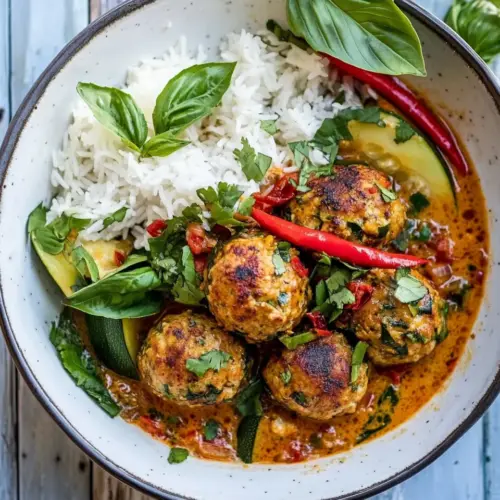
- Serve the meatballs and sauce over rice with a squeeze of fresh lime, some fresh basil, and/or green onions: Serving over steaming rice gives a neutral base that soaks up the sauce, while a squeeze of lime and ribbons of fresh basil add brightness and lift. The final presentation should be colorful, with flecks of green and red against creamy sauce. Encourage diners to add lime to taste, as acidity can vary. A common serving mistake is adding citrus too early, which can flatten the layered flavors; add at table for best freshness.
Notes
- Spice level Adjust the amount of Thai red curry paste from one to three tablespoons depending on how bold you like it; start with less and add more after tasting the coconut base to avoid overpowering the dish.
- Salt management Because both tamari and salted butter add sodium, taste the sauce before adding extra salt and adjust gradually to prevent oversalting.
- Zucchini moisture If your shredded zucchini seems very watery, pat it lightly with paper towel to prevent the meatball mixture from becoming too loose, but avoid pressing all moisture out which helps keep meatballs tender.
- Make ahead You can form the meatballs a day in advance and keep them covered in the fridge; sear and finish in the sauce when ready to serve for fresher texture and faster dinner prep.
- Garnish timing Add delicate herbs like cilantro and basil at the end or at the table so they retain bright flavor and color rather than wilting into the sauce.