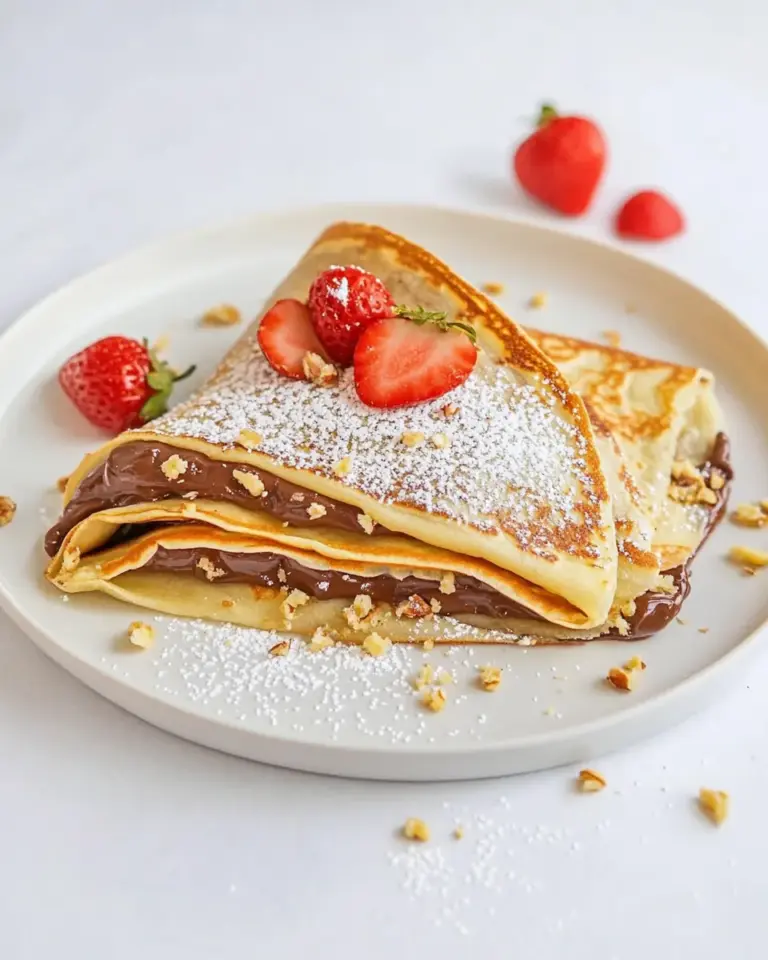
Strawberry Crepes
Strawberry Crepes are one of those recipes that always makes my kitchen feel like a small weekend festival, with the sweet scent of strawberries and warm butter drifting through the house.
I remember the first time I taught myself to swirl batter in a skillet, palms sweating, laughing at the lopsided first crepe that tore. Over time I’ve learned to trust small adjustments, and now making Strawberry Crepes is my go to for relaxed brunches or when I want to treat someone without fuss. I love how the thin pancake gives a delicate canvas for bright strawberries and creamy fillings, and how each fold reveals a new layer of texture and flavor.
These crepes are forgiving, so they eased me into technique while rewarding patience. I use a blender sometimes to save time and get a silky batter, and other times I whisk by hand when I want to slow down and listen to the kitchen sounds. Serving them warm, with a dusting of powdered sugar, always feels like a little celebration. Whether I’m hosting friends or savoring a quiet morning alone, Strawberry Crepes never fail to make the moment feel special, and they bring out the bright notes of fresh strawberries in a way that feels effortless.
Recipe Snapshot
35 mins
15 mins
20 mins
Medium
250 kcal
American
Gluten-Free, Low FODMAP
Breakfast
High powered blender, Mixing bowl, Nonstick crepe pan or nonstick skillet, Spatula, Measuring cup or ladle, Baking sheet
The Beauty of This Strawberry Crepes
Bright, seasonal flavor
I adore how strawberries take center stage here, their natural sweetness and slight acidity cutting through the creamy filling. When the berries are ripe, the contrast between the juicy fruit and the tender crepe makes every bite pop. I often pick the ripest pieces first to taste as I assemble the crepes, because that little moment of freshness tells me everything is on track.
Light but indulgent texture
The thin crepe wrapper creates a delicate mouthfeel, while the reduced fat cream cheese and Greek yogurt filling add a silky, slightly tangy richness without being heavy. I appreciate the balance, because the result feels treat like a dessert, yet bright enough for brunch. The crepe’s crisped edges and soft center give you two textures in one bite, which always wins me over.
Flexible technique
One of the things I value most is how adaptable this recipe is. Use a blender for speed and a perfectly smooth batter, or whisk by hand when you want to savor the process. I’ll often rest the batter to let bubbles settle, which makes for a smoother crepe surface. The recipe works whether you want to make a few crepes or a batch for a crowd, and that flexibility makes it a favorite for last minute plans.
Family friendly and approachable
Kids and adults alike love assembling these, which makes them a great interactive meal. I like to set out the filling and berries and let people create their own combinations, because it transforms cooking into a small event. It’s satisfying to watch someone’s face light up when they fold their first crepe and taste the creamy filling with a bright bite of strawberries.
Make ahead convenience
I often prepare the batter and filling ahead of time, which makes morning assembly nearly effortless. The ability to refrigerate components up to a day ahead keeps these crepes realistic for busy mornings or for entertaining. When I’m pressed for time, this make ahead trick is a lifesaver and still delivers a fresh, just made experience.
What You’ll Need for Strawberry Crepes
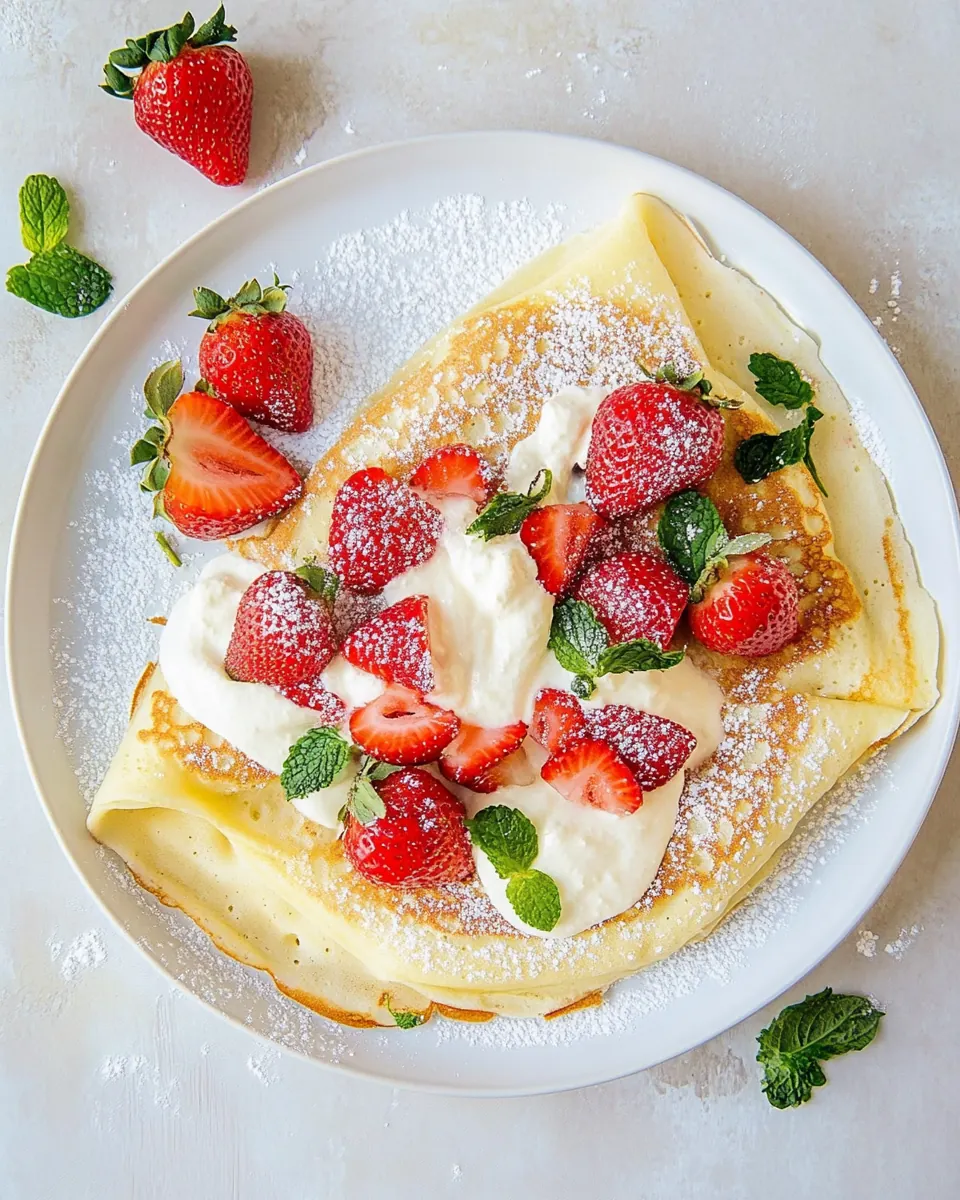
These ingredients come together to create crepes that are thin, tender, and full of bright berry flavor. The flours form the structure, the eggs and milk provide richness and elasticity, and the buttery element helps the crepes cook up with a subtle, toasty edge. The filling combines softened cream cheese with Greek yogurt for creaminess and tang, while the strawberries bring freshness and sweetness that balances the whole dish.
- 1/2 cup all-purpose flour: Provide a tender, neutral base for the crepe batter that develops structure when mixed with liquid and eggs; sifts easily to remove lumps for silky batter texture and blends smoothly with the other dry ingredients for consistent crepes.
- 1/2 cup white whole wheat flour or additional all-purpose flour: Offer a slightly nuttier, whole-grain texture as an alternative to all-purpose flour; can be swapped one-to-one to add fiber and a subtle flavor while maintaining the batter’s consistency and pliability when combined with wet ingredients.
- 1 tablespoon granulated sugar: Sweeten the batter slightly to enhance the crepes’ flavor and balance the tangy strawberry filling; dissolves quickly in the liquid ingredients and helps with light browning during cooking for an attractive finish.
- 1/8 teaspoon kosher salt: Enhance overall flavor by balancing sweetness and improving dough structure; helps strengthen the gluten network slightly and can elevate other flavors without making the crepes taste salty when used sparingly.
- 1/8 teaspoon ground cinnamon (optional): Impart a warm, aromatic note when included, complementing strawberries and cream components; optional use adds depth to the batter without impacting texture when used in small amounts.
- 2 large eggs at room temperature: Bind the batter ingredients while providing richness and structure that allows crepes to hold together; beaten eggs introduce air for tenderness and contribute to browning and a smooth mouthfeel.
- 1 1/3 cups nonfat milk at room temperature: Create a thin, pourable batter when combined with flours and eggs while contributing mild milk sweetness and tenderness; room–temperature milk mixes more evenly and helps prevent scrambled egg spots in the batter.
- 2 tablespoons unsalted butter melted and cool to room temperature, plus additional for cooking: Add richness and mouth-coating fat to the batter, aiding tenderness and preventing sticking during cooking; melted and cooled butter disperses evenly for a glossy batter, and extra butter can be used to grease the pan.
- 2 1/2 cups sliced fresh strawberries from 1 16-ounce box: Provide fresh, juicy fruit filling that adds natural sweetness, acidity, and texture; sliced strawberries brighten flavor, offer a pleasant contrast to cream components, and yield visually appealing color when served.
- 4 ounces reduced fat cream cheese softened to room temperature: Contribute a creamy, slightly tangy filling base that blends into a smooth spread; softened cream cheese whips easily with yogurt and honey to create a rich, stabilizing component for the crepes.
- 2/3 cup nonfat plain Greek yogurt: Add tang, body, and a lighter texture to the cream filling while reducing overall fat; plain Greek yogurt balances sweetness, provides creaminess, and helps thin the cream cheese for easy spreading.
- 2 teaspoons pure vanilla extract: Introduce warm, aromatic flavor to the cream filling and batter components while enhancing overall sweetness perception; pure vanilla extract rounds flavors and deepens the dessert’s aromatic profile.
- 2 tablespoons honey: Sweeten and help emulsify the cream filling naturally while adding floral complexity; honey blends with cream cheese and yogurt to create a smooth, spreadable filling with balanced sweetness.
- Powdered sugar (optional): Add a final decorative touch and extra sweetness when dusted over finished crepes; powdered sugar enhances presentation and provides a light, melt-in-your-mouth sweetness without altering texture significantly.
Cooking Method for Strawberry Crepes

I approach cooking these crepes with a relaxed focus, listening for subtle cues like the batter settling and the crepe edge drying. You will find a rhythm as you swirl batter, flip crepes, and stack warm rounds while keeping the filling chilled and ready.
- To make in a blender (my favorite method): In a high-powered blender, place the all-purpose flour, whole wheat flour, sugar, salt, and cinnamon. Crack in the eggs and pour in the milk. Add the 2 tablespoons melted butter. Blend until the mixture is smooth and creamy, stopping to scrape down the sides a few times if needed. Pour into a mixing bowl, cover and let sit 30 minutes or refrigerate for up to 24 hours. (To make the batter in a mixing bowl: whisk together the dry ingredients. Whisk in the eggs. Once combined, slowly whisk in the milk, then the butter, until smooth. Let rest as directed.): The batter will smell faintly of butter and eggs as it blends into a smooth, glossy liquid. You should notice a uniform pale color with no visible streaks of flour, a creamy sheen on the surface, and the sound of the blender smoothing everything into a steady hum. This method matters because it minimizes lumps and gives you an even pour that spreads easily in the pan, which results in more consistent crepes. A common mistake here is overblending then letting the batter sit too long without covering it, which can develop a skin or change the texture; always scrape the sides once or twice and then transfer to a bowl and cover. If you see little air bubbles, that is normal, and letting it rest helps them settle.
- While the batter rests, prepare the filling: slice the strawberries and place in a bowl. Cover and refrigerate until ready to serve. In a medium mixing bowl, beat the cream cheese and Greek yogurt until smooth and combined. Beat in the vanilla and honey. Taste and adjust the sweetness as desired. Refrigerate until you are ready to cook the crepes.: As you slice the strawberries , you will smell their fresh, fruity aroma and see vibrant red juices that hint at sweetness. The cream cheese and Greek yogurt should whip into a silky, slightly glossy mixture with the vanilla adding a warm perfume. This step is important because a smooth filling spreads easily and contrasts with the crepe's thin texture. Avoid under softening the cream cheese, because cold lumps make the filling uneven; let it come to room temperature and beat until fully smooth.
- To cook: If you’d like to keep the crepes warm between batches, preheat the oven to 200 degrees F. Line a baking sheet with parchment paper and keep it near the stove. Set out the filling and strawberries and let rest at room temperature while you cook the crepes.: The oven provides a gentle, dry environment to keep crepes warm without steaming them, preserving the edges. Place a lined baking sheet near the stove so you can transfer crepes quickly, and you will notice a faint toasty smell as crepes warm in the oven. A common mistake is stacking too many crepes on top of one another while still hot and wet, which traps steam and softens edges; arrange them in a single layer or use parchment between layers if necessary.
- Heat an 8-inch or 10-inch nonstick crepe pan or nonstick skillet over medium heat and let warm for several minutes. Add a small amount of butter and let melt. Give the batter a big stir (if it’s still in the blender, move it to a mixing bowl). With a large spoon, measuring cup, or ladle, pour 1/4 to 1/3-cup batter into the skillet (I do 1/3 cup, which results in a thicker, but easier to flip crepe). Immediately lift and slowly swirl the skillet so that the batter runs evenly around the surface of the pan and the crepe forms a thin layer (the amount of batter you need will vary based on your skillet; adjust as you go).: The pan should feel uniformly warm after several minutes, and a small pat of butter will sizzle softly and spread before browning. You want an even, moderate temperature so the batter cooks through without burning. If the pan is too hot the crepes will brown too quickly on the outside and remain undercooked inside; aim for a gentle shimmering surface rather than aggressive bubbling. Rebutter lightly between batches to maintain a slick surface and prevent sticking.
- Let the crepe cook until the top looks dry, about 1 minute. Flip the crepe over (I use a spatula to loosen the edges then quickly and carefully finish the job with my fingers, but BE CAREFUL not to burn yourself; the pan is hot and you are proceeding at your own risk). Let cook on the other side for 15 to 30 additional seconds, just until set. The crepe should look very slightly brown and golden on each side. Transfer the cooked crepe to the baking sheet and keep warm in the oven (or simply place it on a large plate if you don’t mind the crepe closer to room temperature). The first crepe will tear and needs to be discarded (this happens to the pros also). You’ll get the hang of it as you go.: The butter will foam briefly then calm, leaving a thin glossy film that helps the batter glide and creates a delicate browned edge. This subtle toasty note enhances flavor without making the crepe greasy. Avoid using too much butter which can fry the batter and make the crepe heavy; a thin swipe is enough. If you see pooling oil, blot with a paper towel to keep the crepe surface even.
- Repeat with remaining batter, rebuttering the pan every few crepes as needed and stacking the crepes on top of each other in the oven.: You will notice the batter regain a smooth, uniform consistency and any settled flour will reincorporate. That motion helps prevent streaks and ensures each pour spreads evenly. The why here is that during resting small amounts of flour settle, and stirring reactivates the blend for a consistent pour. One mistake is pouring without stirring, which can yield thicker edges or lumps; always stir before ladling.
- To assemble and serve: Place a crepe on a plate and spread about 2 heaping tablespoons of the cream cheese mixture over half of it so that you create a half moon. Layer sliced strawberries on top of the cream. Fold the uncovered half over the top of the berries so that you have a half circle. Then starting with one point of the half circle, fold the crepe in half over again so that the two points roughly touch and you have a rough triangle shape with a rounded edge (see blog photos). Top with more cream and berries and dust with powdered sugar as desired. Enjoy immediately.: The batter should pour in a steady ribbon and spread quickly; visually, it should create a thin round layer that fills the pan surface. Use a quarter cup for thinner crepes or a third cup if you prefer slightly thicker ones that are easier to flip. This amount matters because it controls thickness and cooking time. A common error is pouring too much batter, which makes flipping difficult and creates uneven cooking; adjust the volume to your pan size as you go.
- Immediately lift and slowly swirl the skillet so that the batter runs evenly: As you tilt the pan, the batter will lap the sides and create a uniform sheet. You should see the center thin out and edges form quickly, with a glossy surface that begins to dull as it sets. This technique matters because even distribution yields uniform cooking and a predictable flip. Avoid rapid jerking which can create uneven thickness; a controlled, smooth swirl will give an even crepe.
- Let the crepe cook until the top looks dry about 1 minute: The surface will shift from glossy to matte and the edges will lift slightly, indicating readiness. You will hear a faint change in the pan sound as moisture evaporates, and the smell will turn lightly toasty. Waiting until the top appears dry ensures the crepe has set enough to flip without tearing. A common mistake is flipping too soon, which leads to tearing; be patient and watch the surface.
- Flip the crepe over Let cook on the other side for 15 to 30 additional seconds: On the flip you will see a delicate golden brown with tiny lacy spots, and the second side needs only a brief touch to finish. This short cook preserves tenderness while adding a subtle caramelized flavor. Avoid overcooking here, which makes the crepe dry and crisp rather than pliable; remove once it takes on slight color and feels set to the touch with a spatula.
- Transfer the cooked crepe to the baking sheet and keep warm in the oven: The crepe will settle and remain soft while the oven preserves warmth without making it soggy. You should notice a gentle warming aroma and the crepe staying pliable as you stack additional rounds. A frequent mistake is stacking crepes immediately without keeping them warm separately, which cools them too fast and can make assembly harder; use the oven or a single plate method depending on your timeline.
- Repeat with remaining batter rebuttering the pan every few crepes as needed: As you cook additional crepes the pan rhythm becomes steady and you will see consistent color and texture develop. Reapplying a small amount of butter keeps the surface slick and supports even browning. Beware of adding too much fat which changes the pan temperature; apply sparingly and adjust heat if crepes brown too quickly.
- To assemble and serve Place a crepe on a plate and spread about 2 heaping tablespoons of the cream cheese mixture over half of it: The filling should be smooth and cool against the warm crepe, offering a creamy contrast. You will feel the soft spread with a knife and notice the filling sit neatly rather than slide, which indicates the right texture. This proportion matters for balance; too much filling overwhelms the crepe and makes folding messy. If the filling seems runny, chill briefly to firm it up before assembling.
- Layer sliced strawberries on top of the cream Fold the uncovered half over the top of the berries then fold again into a rough triangle shape: The sliced strawberries add juicy bursts, and the folding creates neat pockets that keep fillings in place. Visually the red berries against the pale filling look striking, and the folded shape makes the crepes easy to eat. A common pitfall is overfilling which causes the crepe to burst open; use measured amounts and arrange berries evenly.
- Top with more cream and berries and dust with powdered sugar as desired: The final touch provides contrast in texture and a bakery style finish; the powdered sugar melts a bit on contact, adding a delicate sheen. Present them while warm so the cream melds slightly with the berries, creating a luscious mouthfeel. Avoid adding toppings too far in advance, which can make them soggy; garnish just before serving for best texture.
Making Adjustments

These tips help you tailor the recipe to your taste and kitchen tools, while preserving the signature texture and bright strawberry flavor. Read through and pick the adjustments that fit your rhythm and pantry.
- Choose flour balance Use white whole wheat for a nuttier profile, or swap for all purpose flour if you prefer a lighter crepe; small shifts in flour may require a splash more milk to keep the batter pourable.
- Adjust batter thickness For thinner crepes use 1/4 cup per crepe, for easier flipping use 1/3 cup; the amount you pour changes the texture and cook time so watch the first crepe as a test.
- Make it ahead You can prepare batter and filling up to 24 hours in advance and store them separately in the refrigerator, which makes assembly quick and relaxed.
- Keep berries fresh Slice strawberries just before serving if possible, or store sliced berries in a single layer in the fridge for up to three days to avoid mushiness.
- Control sweetness Taste the filling before assembling and add more honey if you like it sweeter, or leave it as is for a tangy, balanced finish with the strawberries.
- Reheating Reheat crepes gently on a baking sheet in a 325 degree F oven or in a nonstick skillet over medium low heat to restore pliability without drying them out.
Serving Suggestions
These serving ideas will help you present Strawberry Crepes beautifully for breakfasts, brunches, or light desserts. Use the list below to mix and pair the crepes with complementary sides and occasions.
- Classic brunch plate Serve a stack of crepes with extra bowl of the cream cheese filling and sliced strawberries on the side for DIY assembly, perfect for guests who like to customize.
- Elegant dessert Fold crepes into triangles, add a dollop of filling and berries on top, then dust with powdered sugar for a simple but refined finish after dinner.
- Casual family breakfast Lay out crepes, filling, and strawberries and let family members build their own; this is ideal for relaxed weekend mornings when you want everyone engaged.
- Make ahead convenience Prepare crepes and fillings up to one day ahead and store separately in the refrigerator; reheat gently and assemble close to serving time for best texture.
- Seasonal pairing Highlight spring or summer fruit by serving these crepes when strawberries are at their peak, and consider a light side salad if serving as a brunch main.
- Storage tips Store leftover crepes in an airtight container for up to one day in the refrigerator, and reheat on a baking sheet at low temperature to preserve pliability.
- Occasions These crepes shine for Mother s Day brunch, lazy weekend mornings, or an intimate brunch with friends because they feel special yet approachable.
FAQ
Conclusion
What makes this recipe special is the balance between thin, tender crepes and a bright, creamy filling that showcases fresh strawberries. The technique is approachable yet rewarding, and the result feels both elegant and homey. I encourage you to give these crepes a try, whether you re making a leisurely weekend brunch or a quick special breakfast during the week. They re flexible, forgiving, and a lovely way to celebrate ripe strawberries and simple ingredients.

Strawberry Crepes
Equipment
- High-Powered Blender
- Mixing Bowl
- Nonstick crepe pan or nonstick skillet
- Spatula
- Measuring cup or ladle
- Baking Sheet
Ingredients
- 1/2 cup all-purpose flour Provide a tender, neutral base for the crepe batter that develops structure when mixed with liquid and eggs; sifts easily to remove lumps for silky batter texture and blends smoothly with the other dry ingredients for consistent crepes.
- 1/2 cup white whole wheat flour or additional all-purpose flour Offer a slightly nuttier, whole-grain texture as an alternative to all-purpose flour; can be swapped one-to-one to add fiber and a subtle flavor while maintaining the batter’s consistency and pliability when combined with wet ingredients.
- 1 tablespoon granulated sugar Sweeten the batter slightly to enhance the crepes’ flavor and balance the tangy strawberry filling; dissolves quickly in the liquid ingredients and helps with light browning during cooking for an attractive finish.
- 1/8 teaspoon kosher salt Enhance overall flavor by balancing sweetness and improving dough structure; helps strengthen the gluten network slightly and can elevate other flavors without making the crepes taste salty when used sparingly.
- 1/8 teaspoon ground cinnamon optional Impart a warm, aromatic note when included, complementing strawberries and cream components; optional use adds depth to the batter without impacting texture when used in small amounts.
- 2 large eggs at room temperature Bind the batter ingredients while providing richness and structure that allows crepes to hold together; beaten eggs introduce air for tenderness and contribute to browning and a smooth mouthfeel.
- 1 1/3 cups nonfat milk at room temperature Create a thin, pourable batter when combined with flours and eggs while contributing mild milk sweetness and tenderness; room-temperature milk mixes more evenly and helps prevent scrambled egg spots in the batter.
- 2 tablespoons unsalted butter melted and cool to room temperature, plus additional for cooking Add richness and mouth-coating fat to the batter, aiding tenderness and preventing sticking during cooking; melted and cooled butter disperses evenly for a glossy batter, and extra butter can be used to grease the pan.
- 2 1/2 cups sliced fresh strawberries from 1 16-ounce box Provide fresh, juicy fruit filling that adds natural sweetness, acidity, and texture; sliced strawberries brighten flavor, offer a pleasant contrast to cream components, and yield visually appealing color when served.
- 4 ounces reduced fat cream cheese softened to room temperature Contribute a creamy, slightly tangy filling base that blends into a smooth spread; softened cream cheese whips easily with yogurt and honey to create a rich, stabilizing component for the crepes.
- 2/3 cup nonfat plain Greek yogurt Add tang, body, and a lighter texture to the cream filling while reducing overall fat; plain Greek yogurt balances sweetness, provides creaminess, and helps thin the cream cheese for easy spreading.
- 2 teaspoons pure vanilla extract Introduce warm, aromatic flavor to the cream filling and batter components while enhancing overall sweetness perception; pure vanilla extract rounds flavors and deepens the dessert’s aromatic profile.
- 2 tablespoons honey Sweeten and help emulsify the cream filling naturally while adding floral complexity; honey blends with cream cheese and yogurt to create a smooth, spreadable filling with balanced sweetness.
- Powdered sugar optional Add a final decorative touch and extra sweetness when dusted over finished crepes; powdered sugar enhances presentation and provides a light, melt-in-your-mouth sweetness without altering texture significantly.
Instructions
- To make in a blender (my favorite method): In a high-powered blender, place the all-purpose flour, whole wheat flour, sugar, salt, and cinnamon. Crack in the eggs and pour in the milk. Add the 2 tablespoons melted butter. Blend until the mixture is smooth and creamy, stopping to scrape down the sides a few times if needed. Pour into a mixing bowl, cover and let sit 30 minutes or refrigerate for up to 24 hours. (To make the batter in a mixing bowl: whisk together the dry ingredients. Whisk in the eggs. Once combined, slowly whisk in the milk, then the butter, until smooth. Let rest as directed.): The batter will smell faintly of butter and eggs as it blends into a smooth, glossy liquid. You should notice a uniform pale color with no visible streaks of flour, a creamy sheen on the surface, and the sound of the blender smoothing everything into a steady hum. This method matters because it minimizes lumps and gives you an even pour that spreads easily in the pan, which results in more consistent crepes. A common mistake here is overblending then letting the batter sit too long without covering it, which can develop a skin or change the texture; always scrape the sides once or twice and then transfer to a bowl and cover. If you see little air bubbles, that is normal, and letting it rest helps them settle.
- While the batter rests, prepare the filling: slice the strawberries and place in a bowl. Cover and refrigerate until ready to serve. In a medium mixing bowl, beat the cream cheese and Greek yogurt until smooth and combined. Beat in the vanilla and honey. Taste and adjust the sweetness as desired. Refrigerate until you are ready to cook the crepes.: As you slice the strawberries , you will smell their fresh, fruity aroma and see vibrant red juices that hint at sweetness. The cream cheese and Greek yogurt should whip into a silky, slightly glossy mixture with the vanilla adding a warm perfume. This step is important because a smooth filling spreads easily and contrasts with the crepe's thin texture. Avoid under softening the cream cheese, because cold lumps make the filling uneven; let it come to room temperature and beat until fully smooth.
- To cook: If you’d like to keep the crepes warm between batches, preheat the oven to 200 degrees F. Line a baking sheet with parchment paper and keep it near the stove. Set out the filling and strawberries and let rest at room temperature while you cook the crepes.: The oven provides a gentle, dry environment to keep crepes warm without steaming them, preserving the edges. Place a lined baking sheet near the stove so you can transfer crepes quickly, and you will notice a faint toasty smell as crepes warm in the oven. A common mistake is stacking too many crepes on top of one another while still hot and wet, which traps steam and softens edges; arrange them in a single layer or use parchment between layers if necessary.
- Heat an 8-inch or 10-inch nonstick crepe pan or nonstick skillet over medium heat and let warm for several minutes. Add a small amount of butter and let melt. Give the batter a big stir (if it’s still in the blender, move it to a mixing bowl). With a large spoon, measuring cup, or ladle, pour 1/4 to 1/3-cup batter into the skillet (I do 1/3 cup, which results in a thicker, but easier to flip crepe). Immediately lift and slowly swirl the skillet so that the batter runs evenly around the surface of the pan and the crepe forms a thin layer (the amount of batter you need will vary based on your skillet; adjust as you go).: The pan should feel uniformly warm after several minutes, and a small pat of butter will sizzle softly and spread before browning. You want an even, moderate temperature so the batter cooks through without burning. If the pan is too hot the crepes will brown too quickly on the outside and remain undercooked inside; aim for a gentle shimmering surface rather than aggressive bubbling. Rebutter lightly between batches to maintain a slick surface and prevent sticking.
- Let the crepe cook until the top looks dry, about 1 minute. Flip the crepe over (I use a spatula to loosen the edges then quickly and carefully finish the job with my fingers, but BE CAREFUL not to burn yourself; the pan is hot and you are proceeding at your own risk). Let cook on the other side for 15 to 30 additional seconds, just until set. The crepe should look very slightly brown and golden on each side. Transfer the cooked crepe to the baking sheet and keep warm in the oven (or simply place it on a large plate if you don’t mind the crepe closer to room temperature). The first crepe will tear and needs to be discarded (this happens to the pros also). You’ll get the hang of it as you go.: The butter will foam briefly then calm, leaving a thin glossy film that helps the batter glide and creates a delicate browned edge. This subtle toasty note enhances flavor without making the crepe greasy. Avoid using too much butter which can fry the batter and make the crepe heavy; a thin swipe is enough. If you see pooling oil, blot with a paper towel to keep the crepe surface even.
- Repeat with remaining batter, rebuttering the pan every few crepes as needed and stacking the crepes on top of each other in the oven.: You will notice the batter regain a smooth, uniform consistency and any settled flour will reincorporate. That motion helps prevent streaks and ensures each pour spreads evenly. The why here is that during resting small amounts of flour settle, and stirring reactivates the blend for a consistent pour. One mistake is pouring without stirring, which can yield thicker edges or lumps; always stir before ladling.
- To assemble and serve: Place a crepe on a plate and spread about 2 heaping tablespoons of the cream cheese mixture over half of it so that you create a half moon. Layer sliced strawberries on top of the cream. Fold the uncovered half over the top of the berries so that you have a half circle. Then starting with one point of the half circle, fold the crepe in half over again so that the two points roughly touch and you have a rough triangle shape with a rounded edge (see blog photos). Top with more cream and berries and dust with powdered sugar as desired. Enjoy immediately.: The batter should pour in a steady ribbon and spread quickly; visually, it should create a thin round layer that fills the pan surface. Use a quarter cup for thinner crepes or a third cup if you prefer slightly thicker ones that are easier to flip. This amount matters because it controls thickness and cooking time. A common error is pouring too much batter, which makes flipping difficult and creates uneven cooking; adjust the volume to your pan size as you go.
- Immediately lift and slowly swirl the skillet so that the batter runs evenly: As you tilt the pan, the batter will lap the sides and create a uniform sheet. You should see the center thin out and edges form quickly, with a glossy surface that begins to dull as it sets. This technique matters because even distribution yields uniform cooking and a predictable flip. Avoid rapid jerking which can create uneven thickness; a controlled, smooth swirl will give an even crepe.
- Let the crepe cook until the top looks dry about 1 minute: The surface will shift from glossy to matte and the edges will lift slightly, indicating readiness. You will hear a faint change in the pan sound as moisture evaporates, and the smell will turn lightly toasty. Waiting until the top appears dry ensures the crepe has set enough to flip without tearing. A common mistake is flipping too soon, which leads to tearing; be patient and watch the surface.
- Flip the crepe over Let cook on the other side for 15 to 30 additional seconds: On the flip you will see a delicate golden brown with tiny lacy spots, and the second side needs only a brief touch to finish. This short cook preserves tenderness while adding a subtle caramelized flavor. Avoid overcooking here, which makes the crepe dry and crisp rather than pliable; remove once it takes on slight color and feels set to the touch with a spatula.
- Transfer the cooked crepe to the baking sheet and keep warm in the oven: The crepe will settle and remain soft while the oven preserves warmth without making it soggy. You should notice a gentle warming aroma and the crepe staying pliable as you stack additional rounds. A frequent mistake is stacking crepes immediately without keeping them warm separately, which cools them too fast and can make assembly harder; use the oven or a single plate method depending on your timeline.
- Repeat with remaining batter rebuttering the pan every few crepes as needed: As you cook additional crepes the pan rhythm becomes steady and you will see consistent color and texture develop. Reapplying a small amount of butter keeps the surface slick and supports even browning. Beware of adding too much fat which changes the pan temperature; apply sparingly and adjust heat if crepes brown too quickly.
- To assemble and serve Place a crepe on a plate and spread about 2 heaping tablespoons of the cream cheese mixture over half of it: The filling should be smooth and cool against the warm crepe, offering a creamy contrast. You will feel the soft spread with a knife and notice the filling sit neatly rather than slide, which indicates the right texture. This proportion matters for balance; too much filling overwhelms the crepe and makes folding messy. If the filling seems runny, chill briefly to firm it up before assembling.
- Layer sliced strawberries on top of the cream Fold the uncovered half over the top of the berries then fold again into a rough triangle shape: The sliced strawberries add juicy bursts, and the folding creates neat pockets that keep fillings in place. Visually the red berries against the pale filling look striking, and the folded shape makes the crepes easy to eat. A common pitfall is overfilling which causes the crepe to burst open; use measured amounts and arrange berries evenly.
- Top with more cream and berries and dust with powdered sugar as desired: The final touch provides contrast in texture and a bakery style finish; the powdered sugar melts a bit on contact, adding a delicate sheen. Present them while warm so the cream melds slightly with the berries, creating a luscious mouthfeel. Avoid adding toppings too far in advance, which can make them soggy; garnish just before serving for best texture.
Notes
- Choose flour balance Use white whole wheat for a nuttier profile, or swap for all purpose flour if you prefer a lighter crepe; small shifts in flour may require a splash more milk to keep the batter pourable.
- Adjust batter thickness For thinner crepes use 1/4 cup per crepe, for easier flipping use 1/3 cup; the amount you pour changes the texture and cook time so watch the first crepe as a test.
- Make it ahead You can prepare batter and filling up to 24 hours in advance and store them separately in the refrigerator, which makes assembly quick and relaxed.
- Keep berries fresh Slice strawberries just before serving if possible, or store sliced berries in a single layer in the fridge for up to three days to avoid mushiness.
- Control sweetness Taste the filling before assembling and add more honey if you like it sweeter, or leave it as is for a tangy, balanced finish with the strawberries.
- Reheating Reheat crepes gently on a baking sheet in a 325 degree F oven or in a nonstick skillet over medium low heat to restore pliability without drying them out.