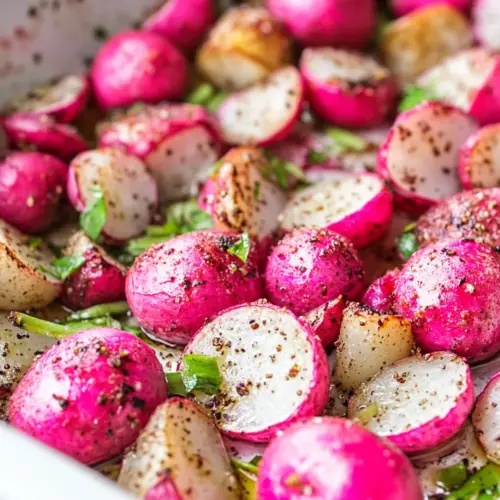
Roasted Radishes
Roasted Radishes transform peppery roots into a crispy edged, tender center side dish that is quick and easy. These caramelized radishes are seasoned with a light blend of Italian seasoning, salt, and ground black pepper, then roasted to golden perfection with olive oil. Perfect for an easy weeknight dinner or spring lunch, they offer a surprising and delicious way to enjoy radishes.
Equipment
- Sheet Pan
Ingredients
- 1 pound (450 grams) radishes Trim and halve or quarter to ensure even roasting; adds crisp-tender texture and a peppery, mildly sweet bite that mellows when cooked. Provides bulk and visual color contrast to the finished dish.
- 1 teaspoon Italian seasoning Season generously before roasting to impart herby, aromatic notes that complement the radishes; blends herbs like oregano, basil, and thyme for a rounded flavor. Enhances savory depth without overpowering the vegetable.
- 1/4 teaspoon salt Sprinkle sparingly to enhance overall taste balance and suppress bitterness while promoting natural flavors; helps draw out moisture slightly during roasting for better caramelization. Use measuredly to avoid oversalting the dish.
- 1 teaspoon ground black pepper Grind fresh or use preground to add a sharp, warming heat that highlights roasted flavors and contrasts the radishes' natural sweetness. Adjust to taste to control the dish's spiciness and aromatic intensity.
- 2 tablespoons olive oil Drizzle evenly to coat radishes for crisp, golden edges and even heat transfer during roasting; contributes a fruity, rich mouthfeel that carries other seasonings. Allows herbs and spices to adhere and promotes caramelization.
Instructions
- Wash and trim the roots, green leaves, or stalks. Cut them in halves in even pieces.: As you rinse the radishes under cool water, notice the earthy scent easing away and the skins brightening; trimming the ends removes woody bits that do not soften during roasting. Use a gentle scrub to keep the flesh intact, and trim only as much as needed to keep the pieces uniform. One common error is over trimming which wastes the tender part, so focus on removing just the root tip and any wilted greens. Pat them dry so they will crisp rather than steam.
- Spread the radishes on a sheet pan, and season them with Italian seasoning, salt, and pepper. Toss with olive oil, and make sure that the radishes are well coated.: You should feel the satisfying snap as you quarter or halve each radish , depending on size, aiming for uniform pieces that will cook at the same rate. The exposed interior will take on a light caramel color as sugars brown, so matching sizes is crucial. If pieces are uneven, smaller ones will overcook and larger ones will stay firm, so take time to make them consistent. Use a sharp knife for clean cuts which also helps prevent crushing the vegetable.
- Arrange in a single layer so that they crisp up. If the sheet pan is too crowded, the radishes will steam rather than roast.: When the pieces hit the pan you will see the arrangement matter, they should sit with a little space between them so air circulates. Sprinkle the Italian seasoning , salt , and ground black pepper evenly so every bite has balanced flavor. A mistake I sometimes make is piling them into a heap, which encourages steaming instead of browning, so take a moment to spread them out.
- Roast at 430°F/220°C for 20 minutes. If your radishes are big in size, they might take a bit longer so start checking after 15 minutes and flip them.: As you drizzle the olive oil , use your hands or a spatula to turn each piece, watching the sheen develop on the surfaces; this oil film is what produces crisp edges and golden color. The oil also helps the herbs cling, and it will fill the pan with a warm, fruity aroma as it heats. Avoid over oiling which can lead to soggy results; a light, even coating is all you need.
- When they’re crisp enough, take them out and serve them warm or at room temperature.: Spacing is the difference between roasted and steamed radishes . Arrange each piece in a single, not crowded layer, giving them room to breathe so evaporation can occur. You should hear a faint sizzle as they hit the hot pan in the oven, and that sound signals the start of caramelization. Crowding the pan traps moisture, so if your sheet pan is too full, use a second pan or roast in batches.
- If the sheet pan is too crowded the radishes will steam rather than roast: When pieces are touching, they create a humid environment and steam, which prevents browning. To test if spacing is sufficient, tip the pan slightly and see that the pieces move freely instead of clumping together. If you accidentally crowd them, pull the pan out and rearrange quickly, because maintaining dry heat is the key to achieving crisp, golden exteriors.
- Roast at 430°F/220°C for 20 minutes: As the oven works, pay attention to the shifting aromas from vegetal to toasty and sweet, and watch the edges develop small browned blisters. The high temperature speeds sugar caramelization while keeping the centers tender. Ovens vary, so start checking visually after 15 minutes to avoid overcooking; aim for a mix of browned spots and tender interiors. Don’t open the oven too often or you will lose heat, but check at the suggested point to ensure perfect timing.
- If your radishes are big in size they might take a bit longer so start checking after 15 minutes and flip them: Large pieces need extra time to soften inside, so when you flip them the exposed sides should show golden patches and the scent will be richer. Use a spatula to turn them gently, and redistribute any that are browning faster. A common misstep is leaving them unturned which can create uneven caramelization, so flipping encourages uniform color and texture.
- When theyre crisp enough take them out and serve them warm or at room temperature: The final cue is tactile and visual, the exterior should be slightly blistered and the interior tender when pierced with a fork, releasing a sweet, nutty aroma. Serve them promptly for optimal crunch, or let them cool a little if you prefer room temperature; both ways highlight different texture contrasts. If you let them sit too long without reheating, the crisp edges will soften, so rewarm briefly if needed before serving.
Notes
- Trim carefully Trim only the root tip and any wilted greens to preserve as much of the tender flesh as possible while removing inedible bits.
- Uniform sizing Cut the radishes into pieces of similar size so they roast evenly and finish at the same moment.
- Oil distribution Toss the pieces with the olive oil in a bowl first to ensure every piece has a light, even coating before they hit the pan.
- High heat for color Roast at a high temperature to encourage caramelization and the characteristic toasty edges that make this dish memorable.
- Use a roomy sheet pan If the pan is too small the vegetables will steam; spread them out across a larger pan or use two pans if necessary.
- Finish thoughtfully If serving at room temperature, allow them to rest briefly to settle flavors; if serving warm, plate them right away to showcase the contrast between crisp exterior and tender interior.