Roasted Potatoes and Asparagus
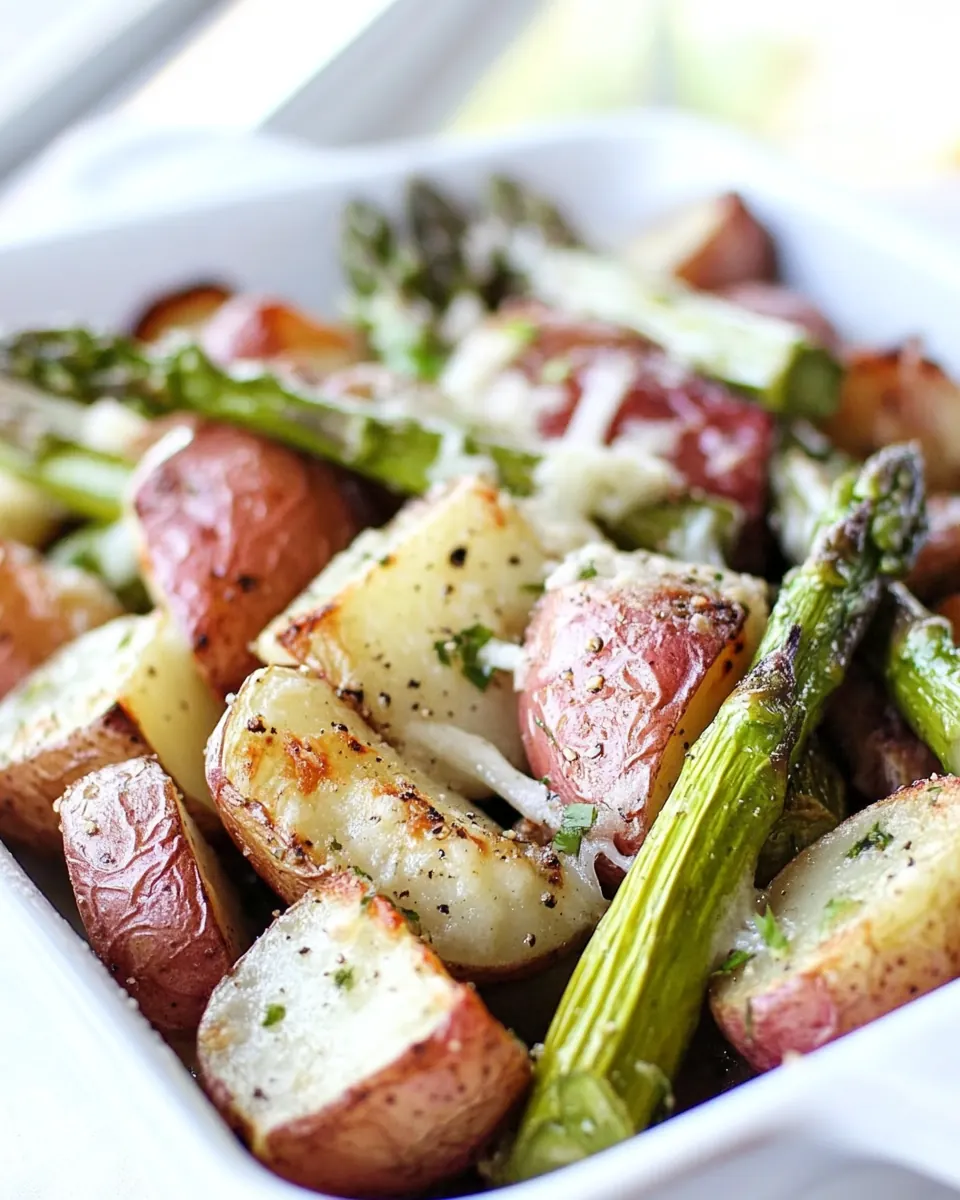
Roasted Potatoes and Asparagus started showing up on my weeknight table the moment spring pushed its way into our neighborhood farmers market. On the first Saturday that the asparagus stands looked peaky and proud, I bought a bunch, a few bright red potatoes, and headed home with a plan to make something simple that celebrated each vegetable. I love that this recipe lets the produce sing while still giving you that comfort of warm roasted starch, it feels both fresh and grounding.
There is a memory tied to this dish for me, a rainy evening when I tossed everything on a sheet pan and served it straight from the oven while my partner poured tea. The smell of hot oil and garlic filled the kitchen, and we ate standing at the counter, laughing about a ridiculous movie. That casual, honest vibe is what keeps me coming back to Roasted Potatoes and Asparagus, because it is easy to make, but feels like you cared.
Recipe Snapshot
25 mins
5 mins
20 mins
Easy
200 kcal
American
Gluten-Free, Paleo
Side Dishes
Baking sheet, Parchment paper, Mixing bowl
The Magic of This Roasted Potatoes and Asparagus
Bright seasonal flavor
I love how Roasted Potatoes and Asparagus showcases spring produce. The asparagus provides a snap of freshness and a hint of green bitterness that plays beautifully against the earthy, soft potatoes. When roasted, the vegetables develop toasted edges and concentrated flavor, making every bite satisfying.
Simple technique, big payoff
I often pick recipes that are fuss free, and this is one of them. A light toss with olive oil and a sprinkle of salt and pepper are all it takes to coax out complex aromas. The roasting process caramelizes natural sugars, creating little golden pockets of crispness that keep people coming back for more.
Flexible for any meal
We use this at breakfast, lunch, and dinner, swapping how we plate it. It works alone as a clean, vegetable forward dish, or as a robust side for busier meals. Because the recipe scales easily, I’ll double it when guests pop over, and it still heats up beautifully the next day.
Comfort that feels light
There is comfort in roasted potatoes, but paired with tender asparagus, the dish never feels heavy. That balance is exactly why I reach for it when I want something homey without collapsing into a food coma. The final sprinkle of Shredded Parmesan cheese adds a savory lift that ties everything together.
Great for learning roasting
If you are new to roasting vegetables, this recipe is forgiving. I often use it to teach friends how heat transforms texture and flavor. Watch the visual cues, and you will soon trust your oven rather than a clock. I promise you will feel proud when those edges turn golden and the scent tells you dinner is ready.
Ingredients You’ll Need for Roasted Potatoes and Asparagus
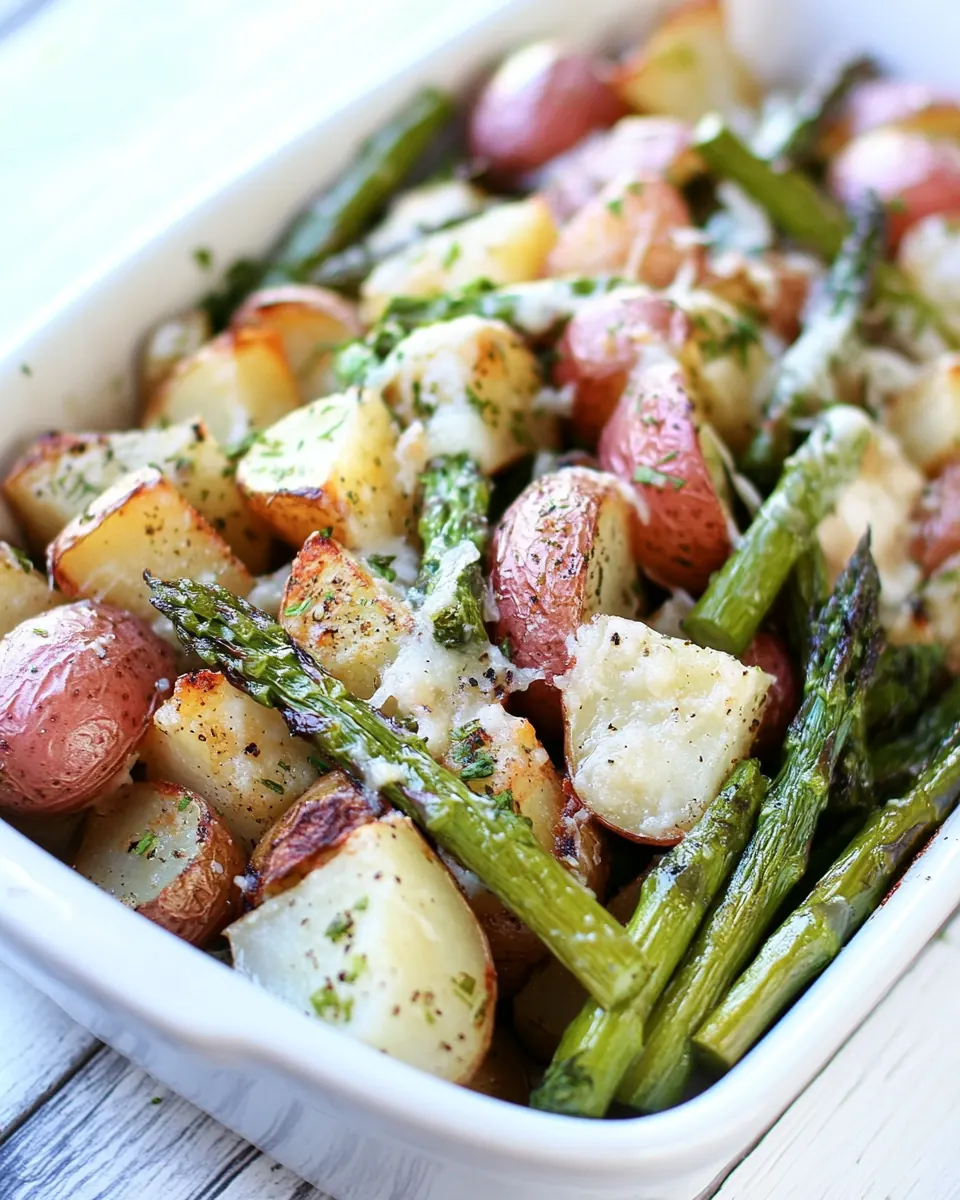
I believe in ingredient honesty, where each item plays a clear role. For Roasted Potatoes and Asparagus, the cast is small and intentional. The potatoes supply weight and creaminess, the asparagus brings brightness and textural contrast, and the olive oil helps develop those browned, caramelized edges that make roasted vegetables irresistible. A touch of garlic, salt and pepper, and a finish of Shredded Parmesan cheese lift everything into a cohesive plate.
- 1 bunch fresh asparagus: Trimmed and vibrant, provides a tender-crisp green vegetable element when roasted; adds color, fiber, and a fresh slightly grassy flavor to balance richer components. Keeps its shape when cooked quickly at high heat, contributing texture contrast to the dish.
- 4 5 red potatoes cut into 1" pieces: Cubed and starchy, delivers a hearty base and satisfying bite after roasting; crisps on the outside while becoming fluffy inside. Absorbs oil and seasonings well, helping to carry savory flavors throughout the plate.
- 4 tablespoons olive oil divided: Divided and used for roasting and finishing, supplies the necessary fat to promote browning and prevent sticking; enhances mouthfeel and carries aromatics. Using it in portions allows for controlled flavor distribution between potatoes and asparagus.
- 1 teaspoon minced garlic: Minced finely to release aromatic sulfur compounds, imparts pungent savory depth and subtle sweetness when roasted; helps build an underlying garlicky note that complements both vegetables. A small amount goes a long way toward enhancing overall flavor complexity.
- salt and pepper: Seasoned to taste, provides essential flavor enhancement and balance; salt amplifies natural vegetable sweetness while pepper adds gentle heat and aromatic bite. Proper seasoning ensures the finished dish is vibrant rather than flat.
- Shredded Parmesan cheese: Shredded finely to add a nutty, salty finishing touch; melts slightly over warm vegetables to contribute savory umami and a delicate creamy texture. Sprinkling it at the end brightens flavor and adds a pleasing visual speckling.
The Method for Roasted Potatoes and Asparagus
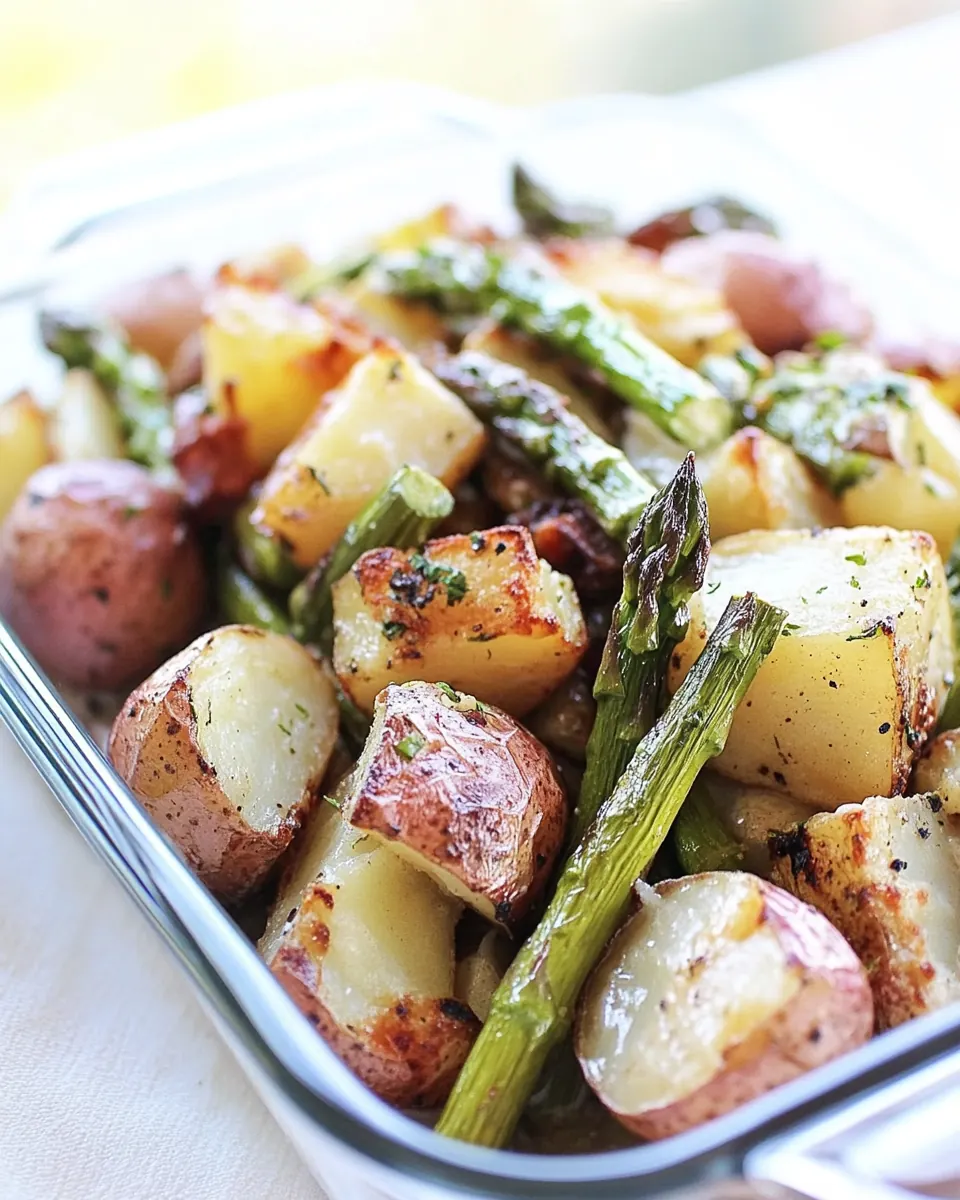
This method keeps things approachable while giving you clear indicators to get perfect texture. I like to prep everything before the oven heats so once it is hot you move with confidence. Below I expand each direction into sensory cues, reasons, and troubleshooting so you know what to expect.
- Preheat oven to 400 and line a baking sheet with parchment paper.: You will smell the oven warming as it approaches 400 degrees, and that initial heat is what sets the stage for blistering and browning. Using parchment creates a nonstick surface that makes turning and removing vegetables easier, and it also prevents excessive sticking that can tear delicate asparagus. A common mistake is not preheating fully, which leads to longer cooking and less crispness, so wait until the oven reaches temperature before sliding the pan in.
- Place potatoes in a mixing bowl with garlic and 2 tablespoons olive oil. Mix well to evenly coat.: As you toss the chopped potatoes with minced garlic and 2 tablespoons olive oil , you should notice the oil glossing each piece and the garlic beginning to cling to the skin. This coating encourages even browning and infuses the interior with savory aroma as the potatoes roast. Avoid undercoating, which can produce dry, pale potatoes, and also avoid overmixing which can bruise them.
- Break the ends off of the fresh asparagus and discard. Place asparagus on baking sheet and drizzle with remaining 2 tablespoons olive oil. Use your hands to mix the asparagus and coat evenly. Spread asparagus in a single layer on the baking sheet. Add potatoes to baking sheet, keeping in a single layer.: When you snap the woody ends from the asparagus , listen for the crisp break, a good sign of freshness. Rubbing the oil into the stalks by hand warms them slightly, helping the oil adhere and promoting more even roasting. Laying vegetables in a single layer avoids steaming, and spreading them gives each piece room to brown. Overcrowding the pan frequently causes soggy results, so if your pan feels packed, use a second sheet.
- Sprinkle with salt and pepper.: As the scent of olive oil and garlic mingles on the pan, a measured dusting of salt and pepper sharpens those aromas and helps the surface moisture draw out, which assists browning. Seasoning before roasting also seasons the interior as the vegetables release steam. A common mistake is waiting to salt until after cooking, which can result in flatter flavor and less integrated seasoning.
- Roast vegetables for 20 minutes. Check the doneness of the potatoes and if necessary continue to roast for 2-5 minutes or until tender. Remove from oven and serve with shredded cheese.: Around the 20 minute mark the kitchen will fill with a toasty, nutty scent, and you should see golden edges on the potatoes and slight char on the tips of the asparagus . Test a potato piece with a fork for tenderness, it should pierce easily and reveal a fluffy interior. If they need a few more minutes, continue watching closely to avoid drying out the asparagus. A frequent error is leaving them too long, which can make the asparagus limp and the potatoes dry, so err on the side of checking early.
Customization Ideas
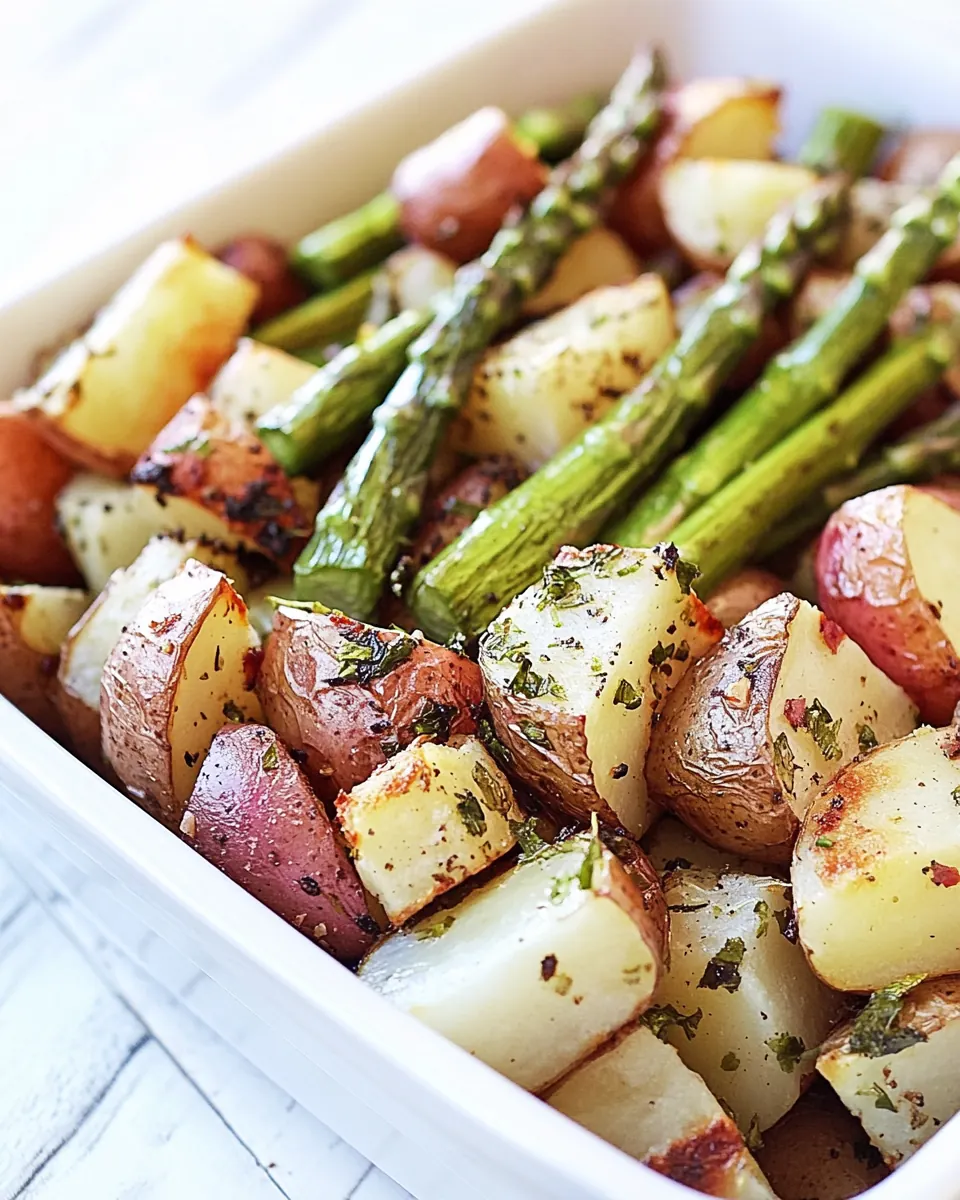
This dish is a great canvas for small tweaks that reflect your pantry or mood. Below are ideas to customize texture, flavor, and presentation while still staying true to the simple heart of Roasted Potatoes and Asparagus.
- Swap potato variety Try Yukon Golds for creamier interiors, they roast to a tender center and provide a buttery mouthfeel without extra fat.
- Change cheese finish Use a grating of a different hard cheese if you prefer, it will alter the umami profile and the kind of melt you get.
- Add citrus at the end A squeeze of lemon just before serving brightens the whole dish and complements the vegetal notes of asparagus.
- Adjust oil amount Reduce oil slightly for a lighter result, but keep enough so the vegetables can brown and not dry out during roasting.
- Use parchment or foil Parchment helps with nonstick removal, while foil can give sharper browning in spots, choose based on your texture preference.
How to Serve Roasted Potatoes and Asparagus
This dish is versatile enough to appear on casual weeknight plates or a special seasonal table. Below are detailed serving suggestions framed as options so you can pick what fits your meal and mood.
- As a simple weeknight side Pair with a roasted protein for a balanced plate, the roasted vegetables add color and texture without overwhelming the main.
- Light vegetarian meal Serve a generous portion with a slice of crusty bread and a green salad for an easy vegetarian dinner that feels complete.
- Brunch addition Offer alongside eggs and toast for a spring brunch, the tender asparagus is especially nice with soft scrambled eggs.
- Seasonal entertaining Present on a large platter with a sprinkle of Shredded Parmesan cheese and lemon wedges, it makes an attractive spring side for gatherings.
- Storage tips Cool fully then refrigerate in an airtight container for up to three days. Reheat in a hot oven to revive crisp edges, avoiding the microwave which can make them soggy.
FAQ
Conclusion
What makes this recipe special is its perfect balance of crisp roasted potatoes and bright, tender asparagus, all achieved with a few pantry ingredients. Give it a try on a busy weeknight or as part of a spring gathering, because it delivers restaurant worthy results with very little fuss. I hope you enjoy the contrast of textures and the simple, satisfying flavors, and that it becomes one of your go to recipes for celebrating seasonal produce.
Roasted Potatoes and Asparagus
Equipment
- Baking Sheet
- Parchment Paper
- Mixing Bowl
Ingredients
- 1 bunch fresh asparagus Trimmed and vibrant, provides a tender-crisp green vegetable element when roasted; adds color, fiber, and a fresh slightly grassy flavor to balance richer components. Keeps its shape when cooked quickly at high heat, contributing texture contrast to the dish.
- 4 -5 red potatoes cut into 1" pieces Cubed and starchy, delivers a hearty base and satisfying bite after roasting; crisps on the outside while becoming fluffy inside. Absorbs oil and seasonings well, helping to carry savory flavors throughout the plate.
- 4 tablespoons olive oil divided Divided and used for roasting and finishing, supplies the necessary fat to promote browning and prevent sticking; enhances mouthfeel and carries aromatics. Using it in portions allows for controlled flavor distribution between potatoes and asparagus.
- 1 teaspoon minced garlic Minced finely to release aromatic sulfur compounds, imparts pungent savory depth and subtle sweetness when roasted; helps build an underlying garlicky note that complements both vegetables. A small amount goes a long way toward enhancing overall flavor complexity.
- salt and pepper Seasoned to taste, provides essential flavor enhancement and balance; salt amplifies natural vegetable sweetness while pepper adds gentle heat and aromatic bite. Proper seasoning ensures the finished dish is vibrant rather than flat.
- Shredded Parmesan cheese Shredded finely to add a nutty, salty finishing touch; melts slightly over warm vegetables to contribute savory umami and a delicate creamy texture. Sprinkling it at the end brightens flavor and adds a pleasing visual speckling.
Instructions
- Preheat oven to 400 and line a baking sheet with parchment paper.: You will smell the oven warming as it approaches 400 degrees, and that initial heat is what sets the stage for blistering and browning. Using parchment creates a nonstick surface that makes turning and removing vegetables easier, and it also prevents excessive sticking that can tear delicate asparagus. A common mistake is not preheating fully, which leads to longer cooking and less crispness, so wait until the oven reaches temperature before sliding the pan in.
- Place potatoes in a mixing bowl with garlic and 2 tablespoons olive oil. Mix well to evenly coat.: As you toss the chopped potatoes with minced garlic and 2 tablespoons olive oil , you should notice the oil glossing each piece and the garlic beginning to cling to the skin. This coating encourages even browning and infuses the interior with savory aroma as the potatoes roast. Avoid undercoating, which can produce dry, pale potatoes, and also avoid overmixing which can bruise them.
- Break the ends off of the fresh asparagus and discard. Place asparagus on baking sheet and drizzle with remaining 2 tablespoons olive oil. Use your hands to mix the asparagus and coat evenly. Spread asparagus in a single layer on the baking sheet. Add potatoes to baking sheet, keeping in a single layer.: When you snap the woody ends from the asparagus , listen for the crisp break, a good sign of freshness. Rubbing the oil into the stalks by hand warms them slightly, helping the oil adhere and promoting more even roasting. Laying vegetables in a single layer avoids steaming, and spreading them gives each piece room to brown. Overcrowding the pan frequently causes soggy results, so if your pan feels packed, use a second sheet.
- Sprinkle with salt and pepper.: As the scent of olive oil and garlic mingles on the pan, a measured dusting of salt and pepper sharpens those aromas and helps the surface moisture draw out, which assists browning. Seasoning before roasting also seasons the interior as the vegetables release steam. A common mistake is waiting to salt until after cooking, which can result in flatter flavor and less integrated seasoning.
- Roast vegetables for 20 minutes. Check the doneness of the potatoes and if necessary continue to roast for 2-5 minutes or until tender. Remove from oven and serve with shredded cheese.: Around the 20 minute mark the kitchen will fill with a toasty, nutty scent, and you should see golden edges on the potatoes and slight char on the tips of the asparagus . Test a potato piece with a fork for tenderness, it should pierce easily and reveal a fluffy interior. If they need a few more minutes, continue watching closely to avoid drying out the asparagus. A frequent error is leaving them too long, which can make the asparagus limp and the potatoes dry, so err on the side of checking early.
Notes
- Swap potato variety Try Yukon Golds for creamier interiors, they roast to a tender center and provide a buttery mouthfeel without extra fat.
- Change cheese finish Use a grating of a different hard cheese if you prefer, it will alter the umami profile and the kind of melt you get.
- Add citrus at the end A squeeze of lemon just before serving brightens the whole dish and complements the vegetal notes of asparagus.
- Adjust oil amount Reduce oil slightly for a lighter result, but keep enough so the vegetables can brown and not dry out during roasting.
- Use parchment or foil Parchment helps with nonstick removal, while foil can give sharper browning in spots, choose based on your texture preference.