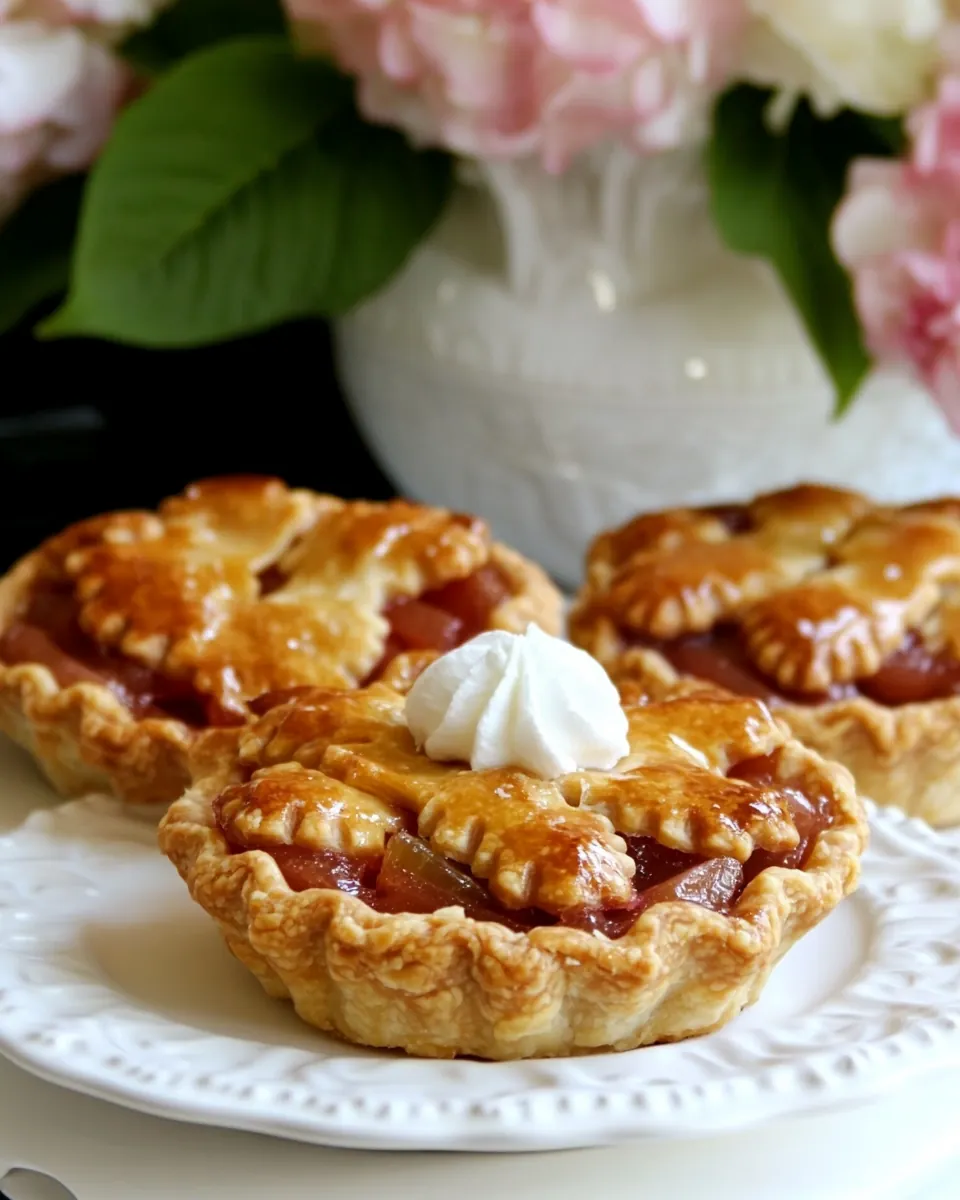
Rhubarb Pie Tartlets
Rhubarb Pie Tartlets are the kind of pastry that brings me back to my grandmother’s sunlit kitchen, where the scent of simmering fruit and buttered dough meant company was coming over. I remember hovering on a stool, hands sticky with fruit juice, while she coaxed a simple filling into a flaky crust and encouraged me to tuck the edges with gentle, confident folds. That memory is a big part of why I make these tartlets whenever rhubarb is at its brightest in spring.
There is something quietly theatrical about a tray of individual tarts, each one a little jewel of ruby filling and golden pastry. I like serving them warm so the filling is tender and slightly bubbling, but I also love the way they keep their character at room temperature, making them perfect for casual gatherings. Over the years I have learned small things, like chilling the dough long enough and letting the rhubarb cool before filling, which make all the difference between a good tart and a great one.
Recipe Snapshot
1 hr 25 mins
60 mins
25 mins
Medium
300 kcal
American
Gluten-Free, Low FODMAP
Desserts
Food processor, Medium saucepan, Rolling pin, Baking sheet, Parchment paper
What Makes This Rhubarb Pie Tartlets Special
They showcase seasonal rhubarb
I adore these tartlets because they let the tart, grassy flavor of rhubarb shine. When rhubarb is in season in spring, it has a brightness that cuts through the richness of the crust, and this recipe captures that energy without drowning it in sugar. I love that every bite feels fresh, the fruit’s texture sitting somewhere between jammy and chunky.
Perfect crust to filling ratio
The combination of all purpose flour and cornmeal in the crust gives a subtle grit and structure, which I find helps the shell stay crisp against the juicy filling. In practice, this means you get a satisfying contrast of textures, each forkful offering a buttery flake followed by a tender, rhubarb-packed center.
Great for entertaining
I often make a batch of Rhubarb Pie Tartlets for guests because they look fancy while being straightforward to portion. Making individual tartlets means everyone can take a whole small pastry, making service effortless and elegant, and cleanup minimal.
Flexible prep and make ahead friendly
The dough in this recipe freezes beautifully, so you can prepare discs ahead of time and bake later. I appreciate the way this gives me breathing room the day of a gathering. The filling itself can be made while the dough chills, which turns the whole process into a satisfying rhythm rather than a scramble.
Textural and flavor balance
This recipe balances sweetness, acidity, and texture. The two sugars provide depth, the cornstarch gives a glossy, set filling, and the egg wash plus sanding sugar on the crust add a little sparkle. Together they create a tiny pastry that feels complete on its own, yet plays nicely with a dollop of cream.
What You’ll Need for Rhubarb Pie Tartlets
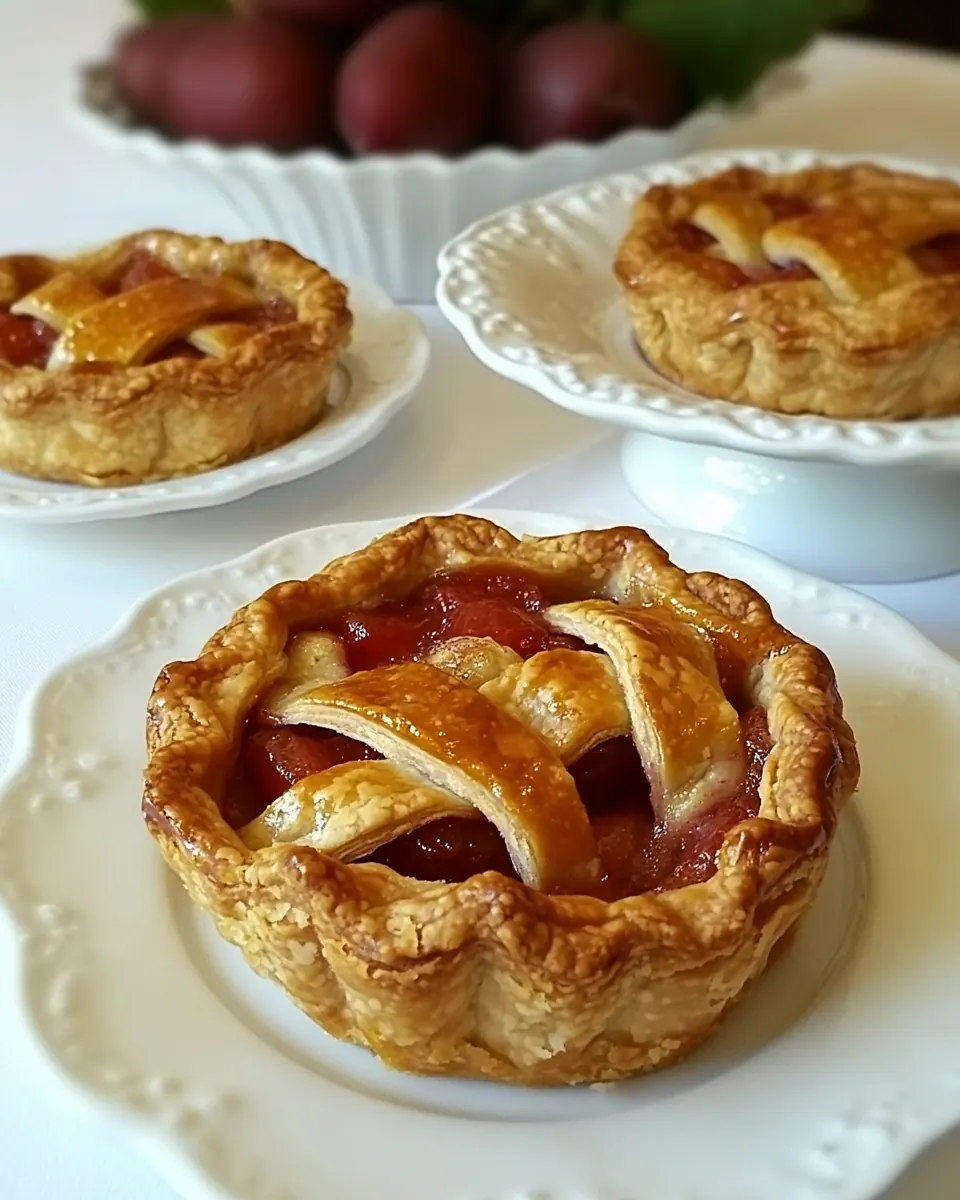
The philosophy here is simple: let the vibrant rhubarb do the talking while the crust offers a sturdy, buttery support. The crust ingredients create a texture that is both flaky and slightly granular thanks to the cornmeal. The filling ingredients thicken and sweeten the rhubarb just enough to highlight its tartness without masking it.
- 2 cup (250 g) all-purpose flour: Provide a sturdy base and structure for the tartlet crust, contributing gluten for tenderness and chew while absorbing fats and liquids to form a cohesive dough.
- 1/2 cup (79.5 g) cornmeal: Add a subtle grainy texture and slight nuttiness to the crust, helping create a crisp, crumbly bite and improving drainage so crusts stay flaky.
- 1 teaspoon salt: Enhance overall flavor balance by seasoning the dough, tighten gluten slightly for structure, and help control yeast or fermentation if present.
- 1 teaspoon granulated sugar: Contribute a touch of sweetness to balance the rhubarb filling and enhance browning of the crust during baking for visual appeal.
- 1 cup (227 g) unsalted butter, cold, cut into small pieces (8 ounces): Create a rich, flaky texture by coating flour proteins with fat; cold, solid pieces produce distinct layers and tender crumb when baked.
- 1/4 to 1/2 cup (60 to 120 ml) ice water: Bind the dry ingredients while activating gluten minimally and allow for easy rolling; ice-cold water prevents butter from melting for flakiness.
- 1 to 1 1/2 pounds (450 to 680 g) rhubarb, about 5 cups 1/2-inch diced: Provide the tart, tangy primary filling component with natural pectin and moisture; dicing ensures even cooking and distributes flavor throughout each tartlet.
- 1/2 cup (100 g) granulated sugar: Sweeten the rhubarb filling to counter its tartness, assist in maceration, and contribute to the syrupy consistency when combined with juices.
- 1/4 cup (55 g) light brown sugar: Add deeper, caramel-like sweetness and moisture to the filling, supporting complex flavor and helping maintain a tender mouthfeel in the cooked fruit.
- 1/4 cup (32 g) cornstarch: Thicken the fruit juices released by rhubarb during baking, stabilizing the filling so it sets properly without becoming runny.
- 1/4 teaspoon (0.25 teaspoon) salt: Enhance and balance sweetness by seasoning the filling lightly, ensuring the tartlet flavor is bright without being overly sour.
- 1/2 teaspoon (0.5 teaspoon) vanilla extract: Amplify the filling's aromatic profile with warm, mellow notes, rounding out the tart fruit flavors and adding depth to each bite.
- 1 egg, lightly beaten (for the egg wash): Provide a golden, glossy finish to crust edges and surfaces, helping sugars adhere and promoting attractive color during baking.
- Sanding sugar or granulated sugar, for sprinkling: Add sparkle and a sweet, crunchy finish to the tartlet tops, creating contrast with the tender crust and preserving visual appeal.
The Method for Rhubarb Pie Tartlets
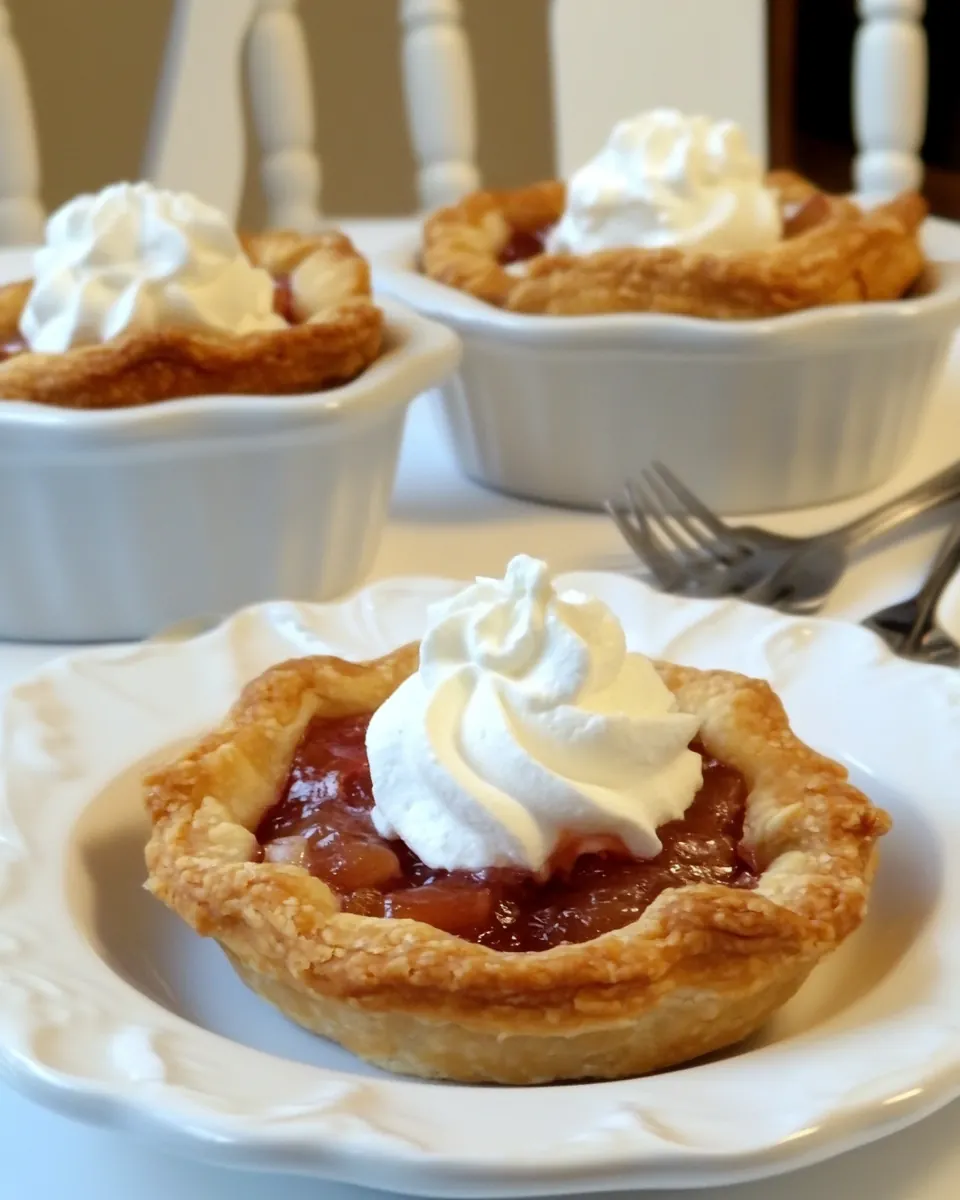
Methodically building these tartlets is a satisfying, rhythmic process. I like to work in stages so the dough can rest, the filling can cool, and each component does its job. Below I expand each CSV direction into rich, sensory forward guidance so you know what to listen and look for.
- Make the crust. Place the flour, cornmeal, salt and sugar in the bowl of a food processor, and pulse several times to combine. Add the butter, and process until the mixture resembles coarse meal, about 10 seconds. With the machine running, pour the ice water through the feed tube in a slow, steady stream, until the dough just holds together (do not process for more than 30 seconds). Turn the dough out onto a clean work surface. Divide in half, and place each half on a piece of plastic wrap. Flatten each to form a disk. Wrap, and refrigerate at least 1 hour.: The dry ingredients should smell faintly of corn and grain, a gentle foundation that signals structure. As you pulse, listen for short, staccato bursts rather than a continuous whirr, which keeps the mixture airy. The goal is an even blend before adding the butter . A common mistake at this phase is over-pulsing, which warms the fat; keep pulses quick and cool to preserve flakiness.
- While the crust chills, make the rhubarb filling. Combine the diced rhubarb, both sugars, the cornstarch and salt in a medium saucepan and place over medium-low heat. Cook, stirring occasionally, until the rhubarb releases its liquid and begins to breakdown, creating a thick, chunky sauce, about 10 minutes. Remove the pan from the heat and stir in the vanilla extract. Set aside to cool to room temperature.: You want visible pea sized bits of butter distributed through the flour. These cold pockets will steam in the oven and create flakiness. Stop once you see a coarse meal texture, do not process until smooth. If the mixture becomes pasty, the dough may be dense after baking.
- One at a time, roll each disk of dough into a 14-inch circle. Using freehand or an upside-down bowl, cut out 5-inch circles and place on a large, parchment-lined baking sheet. Refrigerate for at least 1 hour. Meanwhile, preheat the oven to 375 degrees F.: Add the ice water sparingly, watching as the mixture begins to clump. It should not form a cohesive ball in the processor, rather a mass that holds when pinched. The sound will change from dry to a softly clumping patter. Over-hydrating can cause stickiness that is hard to roll, so err on the side of slightly drier dough.
- Spoon rhubarb filling into the center of each dough round (about 2 big spoonfuls), leaving about an inch border around the edge. Fold the border over the rhubarb mixture, overlapping where necessary and pressing gently to adhere the folds.: The dough will feel cool and slightly tacky. Press it gently to bring it together, gathering any loose bits. If it seems crumbly, fold it a couple times rather than kneading, to avoid developing gluten, which makes the crust tough. Avoid warming the dough with your hands, which can soften the butter .
- Brush the edges of the dough with egg, and sprinkle with sugar. Bake until the crust is golden brown and the filling bubbles a bit, 20 to 25 minutes. Serve warm or at room temperature. Top with whipped cream or vanilla ice cream.: Portioning here gives you manageable disks that chill evenly. Flatten each into a disk shape so they chill quickly and uniformly, which makes rolling much easier later. A frequent error is wrapping the dough too thickly, which delays chilling time and makes rolling uneven.
- Note: The dough can be frozen, wrapped well in plastic, for up to three weeks before using.: As the dough chills, the butter firms up and the gluten relaxes. You should feel the dough tighten as it cools. Chilling at least 1 hour yields a dough that rolls without tearing and produces a crisper crust. Rushing this rest often causes shrinkage during baking.
- While the crust chills, make the rhubarb filling. Combine the diced rhubarb, both sugars, the cornstarch and salt in a medium saucepan and place over medium-low heat: When the pan first warms, you will hear an initial soft simmer and see juices start to bead around the fruit. The sugars draw moisture out, and the cornstarch dissolves into those juices. Stirring helps distribute heat for even breakdown. A common misstep is using too high a flame which can over cook the rhubarb too quickly and darken the flavor.
- Cook, stirring occasionally, until the rhubarb releases its liquid and begins to breakdown, creating a thick, chunky sauce, about 10 minutes: Watch the texture change from firm stalks to chunks suspended in glossy syrup, and inhale the fruity, slightly green aroma as the acid mellows. The sound will be gentle bubbling, not a violent boil. If you overcook, it can turn mushy and lose pleasant texture, so remove it when it reaches a chunky but cohesive consistency.
- Remove the pan from the heat and stir in the vanilla extract: Aromatics like vanilla extract bloom off-heat, so adding it now preserves its fragrance. The filling should steam lightly as you stir, releasing a warm scent. Allowing it to cool prevents the heat from weakening the structure of the dough when you fill it. Adding vanilla too early can cause the flavor to fade through long cooking.
- Set aside to cool to room temperature: Cooling is crucial, because warm filling can soften the dough and make it soggy. As it comes to room temperature, the filling will thicken slightly as the cornstarch sets, and its glossy appearance becomes more pronounced. Rushing to fill while hot often results in runny tartlets.
- One at a time, roll each disk of dough into a 14-inch circle: The dough should be cool and slightly firm under the rolling pin. Aim for even thickness so each tartlet bakes consistently. Rolling on a lightly floured surface with short, even strokes avoids sticking and tearing. If the dough resists, return it to the fridge briefly rather than forcing it, which risks losing flakiness.
- Using freehand or an upside-down bowl, cut out 5-inch circles and place on a large, parchment-lined baking sheet: The cut circles should have clean edges and sit chilled on the sheet. The parchment prevents sticking and helps the bottoms brown evenly. If circles become misshapen, pop them back in the fridge for a few minutes to firm up before folding.
- Refrigerate for at least 1 hour: Chilling the shaped rounds firms the layers again, reducing spreading in the oven and ensuring a flaky finish. You will notice the surface becomes matte as the fat firms. Skipping this step can lead to flatter, less textured crusts.
- Meanwhile, preheat the oven to 375 degrees F: A properly preheated oven ensures the crust begins to set quickly, creating flake and lift from the steam of melting butter . The oven should be fully up to temperature before the tartlets go in, or they may bake unevenly. A slow oven can yield soggy bottoms.
- Spoon rhubarb filling into the center of each dough round (about 2 big spoonfuls), leaving about an inch border around the edge: Place the filling so it sits slightly high in the center, making room to fold the rim over. The filling will be glossy and thick, and you should feel a gentle weight as you drop it in. Overfilling will cause leakage and soggy edges, so keep to the recommended portion.
- Fold the border over the rhubarb mixture, overlapping where necessary and pressing gently to adhere the folds: The folded edge should look rustic and secure, with small pleats where needed. Press gently so the dough sticks without sealing completely; the open center allows steam to escape and the filling to bubble. Pressing too firmly can prevent the crust from puffing at the edges.
- Brush the edges of the dough with egg, and sprinkle with sugar: The egg wash gives a golden gloss while the sanding sugar adds crunch and shimmer. Apply the egg lightly with a brush in long strokes for an even sheen. Too much egg can pool and create darker spots.
- Bake until the crust is golden brown and the filling bubbles a bit, 20 to 25 minutes: In the oven you will see the edges color to a warm gold and hear faint bubbling as the filling simmers. The aroma will be a mix of baked butter and fruit. Pull them when the crust has good color and the filling shows occasional bubbles, as underbaking leaves the filling loose and overbaking dries the pastry.
- Serve warm or at room temperature: Warm tartlets have a silky filling and crisp crust, while room temperature ones slice cleanly and make for easier transport. If you wait until cold, the filling firms up and the texture changes; plan your serving time accordingly.
- Top with whipped cream or vanilla ice cream: A cool dollop of cream tempers the fruit's tang and adds richness to each bite. The contrast of hot filling and cold cream creates a lovely mouthfeel. Avoid heavy toppings that overwhelm the delicate rhubarb flavor.
- Note: The dough can be frozen, wrapped well in plastic, for up to three weeks before using : Freezing chilled dough disks extends prep flexibility without sacrificing texture. Thaw in the refrigerator overnight before rolling, and handle gently to retain the fat pockets. Refreezing after thawing will degrade the dough's final quality, so use thawed dough promptly.
Recipe Variations about Rhubarb Pie Tartlets
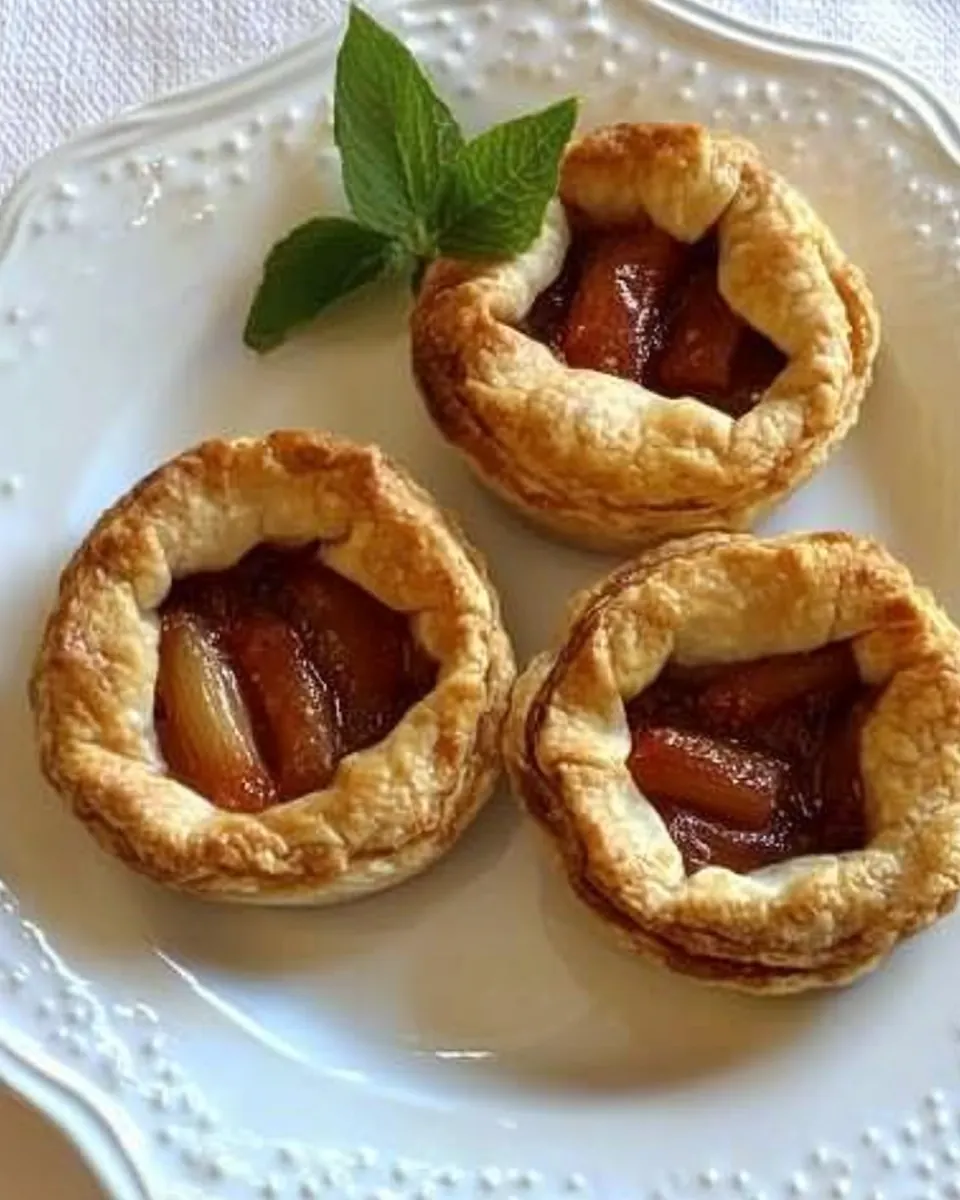
These small tartlets invite gentle variations depending on your mood and pantry. Below are practical ideas to tweak texture, flavor, and make ahead strategy while keeping the heart of the recipe intact.
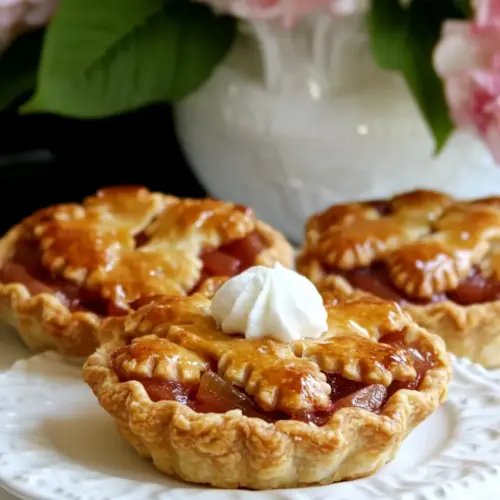
- Make a rustic lattice — Instead of folding the border, weave thin strips for a classic look that lets more filling peek through, adding visual drama while maintaining crisp edges.
- Add a citrus note — Stir a little fresh citrus zest into the filling after cooking to brighten the profile, adding a complementary lift without changing the fundamental balance.
- Use coarse sugar — Sprinkle coarse sanding sugar on the rim for extra crunch and sparkle, which also highlights the golden bake when serving.
- Portion and freeze — Freeze fully assembled, unbaked tartlets on a sheet first, then transfer to a bag to bake from frozen with a slightly longer baking time for fresh results.
- Adjust rhubarb chunkiness — Chop finer for a smoother filling or larger for a more pronounced texture, tailoring mouthfeel without altering other ingredient amounts.
Perfect Pairings for Rhubarb Pie Tartlets
These tartlets pair beautifully with light accompaniments that complement their bright, slightly tart flavor. Below I outline serving ideas, seasonal suggestions, storage notes, and occasions where these small pies shine.
- Serve with softly whipped cream, which adds a silky counterpoint to the tart filling and enhances mouthfeel during dessert service.
- Top with vanilla ice cream for a classic hot and cold contrast that works well at the end of a spring dinner, turning each tartlet into a composed plate.
- Bring to a picnic at room temperature; the individual portions travel easily and make a charming portable dessert for outdoor gatherings.
- Feature at a brunch alongside coffee and tea, where the pastries offer a fruity option among heavier breakfast dishes.
- Gift for holiday or hostess during spring celebrations, because the tartlets present beautifully in a box and feel thoughtful without being fussy.
- Store in an airtight container at room temperature for up to two days, or refrigerate for up to four days to preserve the filling texture and crust crispness.
- Freeze baked tartlets layered with parchment for up to one month, then thaw overnight in the refrigerator and reheat briefly to refresh the crust.
- Pair with light wines or non alcoholic tea during afternoon gatherings, where the fruitiness of the tartlets complements bright beverages.
- Use seasonal presentation such as fresh herbs or edible flowers to echo the spring timing and make the plate feel celebratory.
- Serve as part of a dessert platter with a variety of small sweets to offer guests a sampler experience that highlights the tartlets’ unique tang and texture.
FAQ
Conclusion
What makes these Rhubarb Pie Tartlets special is their balance of bright, tangy filling and a flaky, buttery crust that holds up to juicy fruit. Give them a try when rhubarb is in season, and you will find a dessert that feels both nostalgic and fresh. They are forgiving to make ahead and elegant to serve, so whether you bake for family or guests, these small tarts are a reliable crowd pleaser.
Rhubarb Pie Tartlets
Equipment
- Food Processor
- Medium Saucepan
- Rolling Pin
- Baking Sheet
- Parchment Paper
Ingredients
- 2 cup (250 g) all-purpose flour Provide a sturdy base and structure for the tartlet crust, contributing gluten for tenderness and chew while absorbing fats and liquids to form a cohesive dough.
- 1/2 cup (79.5 g) cornmeal Add a subtle grainy texture and slight nuttiness to the crust, helping create a crisp, crumbly bite and improving drainage so crusts stay flaky.
- 1 teaspoon salt Enhance overall flavor balance by seasoning the dough, tighten gluten slightly for structure, and help control yeast or fermentation if present.
- 1 teaspoon granulated sugar Contribute a touch of sweetness to balance the rhubarb filling and enhance browning of the crust during baking for visual appeal.
- 1 cup (227 g) unsalted butter, cold, cut into small pieces (8 ounces) Create a rich, flaky texture by coating flour proteins with fat; cold, solid pieces produce distinct layers and tender crumb when baked.
- 1/4 to 1/2 cup (60 to 120 ml) ice water Bind the dry ingredients while activating gluten minimally and allow for easy rolling; ice-cold water prevents butter from melting for flakiness.
- 1 to 1 1/2 pounds (450 to 680 g) rhubarb, about 5 cups 1/2-inch diced Provide the tart, tangy primary filling component with natural pectin and moisture; dicing ensures even cooking and distributes flavor throughout each tartlet.
- 1/2 cup (100 g) granulated sugar Sweeten the rhubarb filling to counter its tartness, assist in maceration, and contribute to the syrupy consistency when combined with juices.
- 1/4 cup (55 g) light brown sugar Add deeper, caramel-like sweetness and moisture to the filling, supporting complex flavor and helping maintain a tender mouthfeel in the cooked fruit.
- 1/4 cup (32 g) cornstarch Thicken the fruit juices released by rhubarb during baking, stabilizing the filling so it sets properly without becoming runny.
- 1/4 teaspoon (0.25 teaspoon) salt Enhance and balance sweetness by seasoning the filling lightly, ensuring the tartlet flavor is bright without being overly sour.
- 1/2 teaspoon (0.5 teaspoon) vanilla extract Amplify the filling's aromatic profile with warm, mellow notes, rounding out the tart fruit flavors and adding depth to each bite.
- 1 egg, lightly beaten (for the egg wash) Provide a golden, glossy finish to crust edges and surfaces, helping sugars adhere and promoting attractive color during baking.
- Sanding sugar or granulated sugar, for sprinkling Add sparkle and a sweet, crunchy finish to the tartlet tops, creating contrast with the tender crust and preserving visual appeal.
Instructions
- Make the crust. Place the flour, cornmeal, salt and sugar in the bowl of a food processor, and pulse several times to combine. Add the butter, and process until the mixture resembles coarse meal, about 10 seconds. With the machine running, pour the ice water through the feed tube in a slow, steady stream, until the dough just holds together (do not process for more than 30 seconds). Turn the dough out onto a clean work surface. Divide in half, and place each half on a piece of plastic wrap. Flatten each to form a disk. Wrap, and refrigerate at least 1 hour.: The dry ingredients should smell faintly of corn and grain, a gentle foundation that signals structure. As you pulse, listen for short, staccato bursts rather than a continuous whirr, which keeps the mixture airy. The goal is an even blend before adding the butter . A common mistake at this phase is over-pulsing, which warms the fat; keep pulses quick and cool to preserve flakiness.
- While the crust chills, make the rhubarb filling. Combine the diced rhubarb, both sugars, the cornstarch and salt in a medium saucepan and place over medium-low heat. Cook, stirring occasionally, until the rhubarb releases its liquid and begins to breakdown, creating a thick, chunky sauce, about 10 minutes. Remove the pan from the heat and stir in the vanilla extract. Set aside to cool to room temperature.: You want visible pea sized bits of butter distributed through the flour. These cold pockets will steam in the oven and create flakiness. Stop once you see a coarse meal texture, do not process until smooth. If the mixture becomes pasty, the dough may be dense after baking.
- One at a time, roll each disk of dough into a 14-inch circle. Using freehand or an upside-down bowl, cut out 5-inch circles and place on a large, parchment-lined baking sheet. Refrigerate for at least 1 hour. Meanwhile, preheat the oven to 375 degrees F.: Add the ice water sparingly, watching as the mixture begins to clump. It should not form a cohesive ball in the processor, rather a mass that holds when pinched. The sound will change from dry to a softly clumping patter. Over-hydrating can cause stickiness that is hard to roll, so err on the side of slightly drier dough.
- Spoon rhubarb filling into the center of each dough round (about 2 big spoonfuls), leaving about an inch border around the edge. Fold the border over the rhubarb mixture, overlapping where necessary and pressing gently to adhere the folds.: The dough will feel cool and slightly tacky. Press it gently to bring it together, gathering any loose bits. If it seems crumbly, fold it a couple times rather than kneading, to avoid developing gluten, which makes the crust tough. Avoid warming the dough with your hands, which can soften the butter .
- Brush the edges of the dough with egg, and sprinkle with sugar. Bake until the crust is golden brown and the filling bubbles a bit, 20 to 25 minutes. Serve warm or at room temperature. Top with whipped cream or vanilla ice cream.: Portioning here gives you manageable disks that chill evenly. Flatten each into a disk shape so they chill quickly and uniformly, which makes rolling much easier later. A frequent error is wrapping the dough too thickly, which delays chilling time and makes rolling uneven.
- Note: The dough can be frozen, wrapped well in plastic, for up to three weeks before using.: As the dough chills, the butter firms up and the gluten relaxes. You should feel the dough tighten as it cools. Chilling at least 1 hour yields a dough that rolls without tearing and produces a crisper crust. Rushing this rest often causes shrinkage during baking.
- While the crust chills, make the rhubarb filling. Combine the diced rhubarb, both sugars, the cornstarch and salt in a medium saucepan and place over medium-low heat: When the pan first warms, you will hear an initial soft simmer and see juices start to bead around the fruit. The sugars draw moisture out, and the cornstarch dissolves into those juices. Stirring helps distribute heat for even breakdown. A common misstep is using too high a flame which can over cook the rhubarb too quickly and darken the flavor.
- Cook, stirring occasionally, until the rhubarb releases its liquid and begins to breakdown, creating a thick, chunky sauce, about 10 minutes: Watch the texture change from firm stalks to chunks suspended in glossy syrup, and inhale the fruity, slightly green aroma as the acid mellows. The sound will be gentle bubbling, not a violent boil. If you overcook, it can turn mushy and lose pleasant texture, so remove it when it reaches a chunky but cohesive consistency.
- Remove the pan from the heat and stir in the vanilla extract: Aromatics like vanilla extract bloom off-heat, so adding it now preserves its fragrance. The filling should steam lightly as you stir, releasing a warm scent. Allowing it to cool prevents the heat from weakening the structure of the dough when you fill it. Adding vanilla too early can cause the flavor to fade through long cooking.
- Set aside to cool to room temperature: Cooling is crucial, because warm filling can soften the dough and make it soggy. As it comes to room temperature, the filling will thicken slightly as the cornstarch sets, and its glossy appearance becomes more pronounced. Rushing to fill while hot often results in runny tartlets.
- One at a time, roll each disk of dough into a 14-inch circle: The dough should be cool and slightly firm under the rolling pin. Aim for even thickness so each tartlet bakes consistently. Rolling on a lightly floured surface with short, even strokes avoids sticking and tearing. If the dough resists, return it to the fridge briefly rather than forcing it, which risks losing flakiness.
- Using freehand or an upside-down bowl, cut out 5-inch circles and place on a large, parchment-lined baking sheet: The cut circles should have clean edges and sit chilled on the sheet. The parchment prevents sticking and helps the bottoms brown evenly. If circles become misshapen, pop them back in the fridge for a few minutes to firm up before folding.
- Refrigerate for at least 1 hour: Chilling the shaped rounds firms the layers again, reducing spreading in the oven and ensuring a flaky finish. You will notice the surface becomes matte as the fat firms. Skipping this step can lead to flatter, less textured crusts.
- Meanwhile, preheat the oven to 375 degrees F: A properly preheated oven ensures the crust begins to set quickly, creating flake and lift from the steam of melting butter . The oven should be fully up to temperature before the tartlets go in, or they may bake unevenly. A slow oven can yield soggy bottoms.
- Spoon rhubarb filling into the center of each dough round (about 2 big spoonfuls), leaving about an inch border around the edge: Place the filling so it sits slightly high in the center, making room to fold the rim over. The filling will be glossy and thick, and you should feel a gentle weight as you drop it in. Overfilling will cause leakage and soggy edges, so keep to the recommended portion.
- Fold the border over the rhubarb mixture, overlapping where necessary and pressing gently to adhere the folds: The folded edge should look rustic and secure, with small pleats where needed. Press gently so the dough sticks without sealing completely; the open center allows steam to escape and the filling to bubble. Pressing too firmly can prevent the crust from puffing at the edges.
- Brush the edges of the dough with egg, and sprinkle with sugar: The egg wash gives a golden gloss while the sanding sugar adds crunch and shimmer. Apply the egg lightly with a brush in long strokes for an even sheen. Too much egg can pool and create darker spots.
- Bake until the crust is golden brown and the filling bubbles a bit, 20 to 25 minutes: In the oven you will see the edges color to a warm gold and hear faint bubbling as the filling simmers. The aroma will be a mix of baked butter and fruit. Pull them when the crust has good color and the filling shows occasional bubbles, as underbaking leaves the filling loose and overbaking dries the pastry.
- Serve warm or at room temperature: Warm tartlets have a silky filling and crisp crust, while room temperature ones slice cleanly and make for easier transport. If you wait until cold, the filling firms up and the texture changes; plan your serving time accordingly.
- Top with whipped cream or vanilla ice cream: A cool dollop of cream tempers the fruit's tang and adds richness to each bite. The contrast of hot filling and cold cream creates a lovely mouthfeel. Avoid heavy toppings that overwhelm the delicate rhubarb flavor.
- Note: The dough can be frozen, wrapped well in plastic, for up to three weeks before using : Freezing chilled dough disks extends prep flexibility without sacrificing texture. Thaw in the refrigerator overnight before rolling, and handle gently to retain the fat pockets. Refreezing after thawing will degrade the dough's final quality, so use thawed dough promptly.
Notes
- Make a rustic lattice — Instead of folding the border, weave thin strips for a classic look that lets more filling peek through, adding visual drama while maintaining crisp edges.
- Add a citrus note — Stir a little fresh citrus zest into the filling after cooking to brighten the profile, adding a complementary lift without changing the fundamental balance.
- Use coarse sugar — Sprinkle coarse sanding sugar on the rim for extra crunch and sparkle, which also highlights the golden bake when serving.
- Portion and freeze — Freeze fully assembled, unbaked tartlets on a sheet first, then transfer to a bag to bake from frozen with a slightly longer baking time for fresh results.
- Adjust rhubarb chunkiness — Chop finer for a smoother filling or larger for a more pronounced texture, tailoring mouthfeel without altering other ingredient amounts.