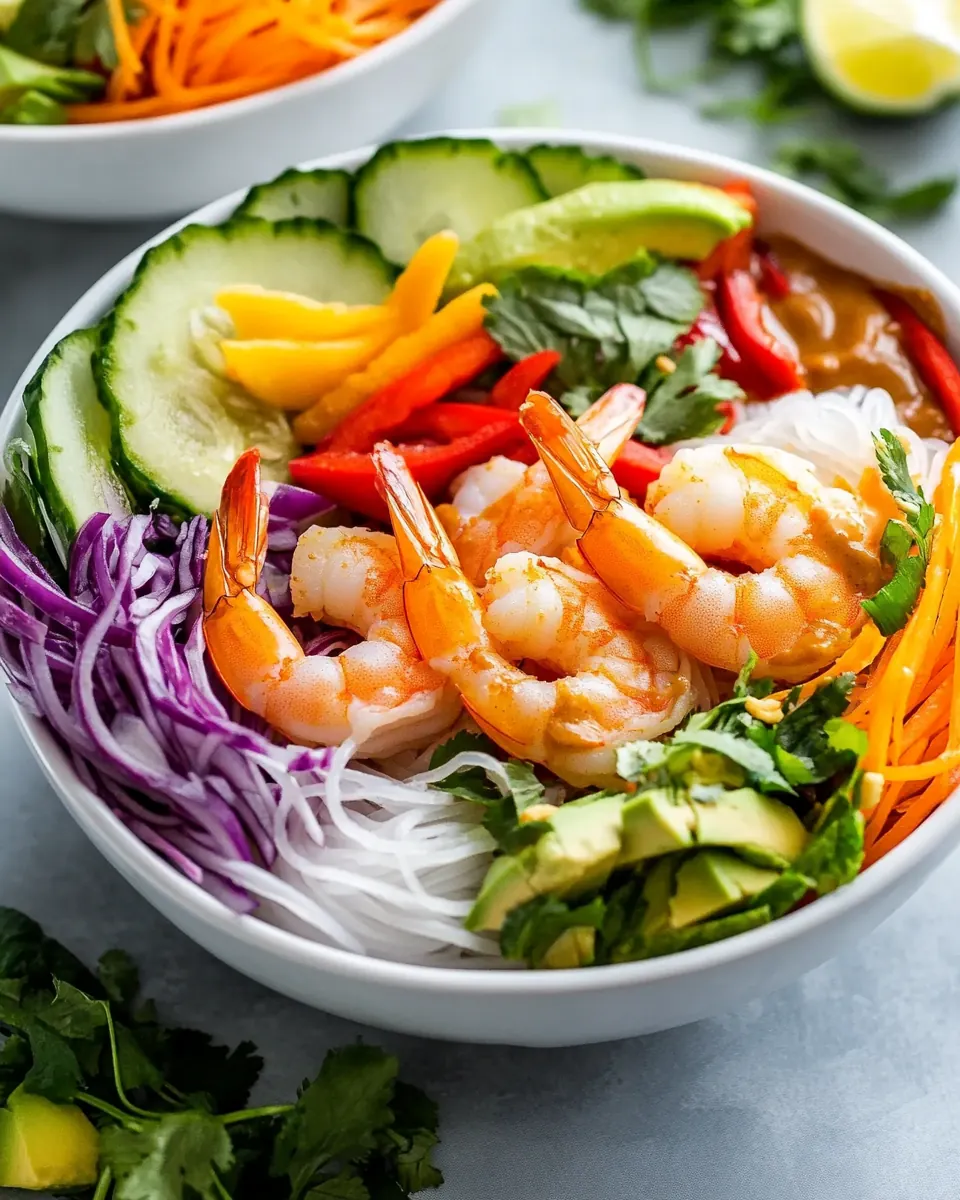
Rainbow Spring Roll Bowls with Shrimp or Chicken and Peanut Sauce
Rainbow Spring Roll Bowls with Shrimp or Chicken and Peanut Sauce has been one of my go to, bright weeknight meals when I want something fresh, colorful, and texturally satisfying.
I remember the first time I tossed together a bowl like this on a rainy spring evening, wanting the crunch of raw vegetables, the silky hit of rice noodles, and a punchy peanut sauce to pull it all together. I grabbed a mix of herbs from my windowsill, a ripe avocado that felt like butter, and a handful of shrimp from the market. While the shrimp sizzled in the pan the kitchen filled with a warm, toasty aroma, and the contrast with the cool, crisp vegetables felt like a mini celebration.
Over time I learned tiny swaps that made these bowls uniquely mine, like cutting the carrot extra thin so it curls just so, or adding a squeeze more lime to the sauce for a brighter lift. Friends always ask how I keep the noodles from clumping, and I tell them it is all about timing and a quick rinse in cool water. I also love how this dish adapts easily if you want chicken instead of shrimp, without losing any of the freshness.
Recipe Snapshot
45 mins
30 mins
15 mins
Medium
450 kcal
Asian
Gluten-Free, Low FODMAP
Dinner
12 inch non stick skillet, Large pot, Mixing bowl
Why This Rainbow Spring Roll Bowls with Shrimp or Chicken and Peanut Sauce Shines
Fresh, crunchy contrast
I adore how Rainbow Spring Roll Bowls with Shrimp or Chicken and Peanut Sauce layers textures. The crisp red cabbage, the snappy bell pepper, and the tender rice noodles create a delightful bite every time. I find that alternating textures in the bowl keeps each forkful exciting and prevents flavor fatigue.
Customizable protein
Whether I am using shrimp or chicken, the protein soaks up flavor while still letting the herbs shine. I often switch between proteins depending on what I have in the fridge, and both work exceptionally well with the peanut sauce. This makes the recipe a reliable choice for busy evenings.
Speedy prep for weeknights
I appreciate how quickly the components come together. While the noodles and protein cook fast, you can prep herbs and vegetables in the same time. For me this means a satisfying meal on nights I want flavorful food without a long commitment. The short cook time keeps the vegetables bright and the protein perfectly cooked.
Balanced, bright peanut sauce
The sauce here is creamy but not cloying, thanks to lime and soy that add acidity and umami. I love that the sauce can be thinned or thickened depending on whether I want it as a drizzle or a more substantial coating. The seasoning elements are easy to tweak, so I often make small changes to suit the mood of the meal.
Visual appeal and healthy vibe
These bowls are striking on the table, which makes them perfect for casual gatherings. The vibrant avocado, purple cabbage, and orange carrot practically invite people to dig in. I find that food that looks good often tastes better, and these bowls never disappoint.
Ingredients Required for Rainbow Spring Roll Bowls with Shrimp or Chicken and Peanut Sauce
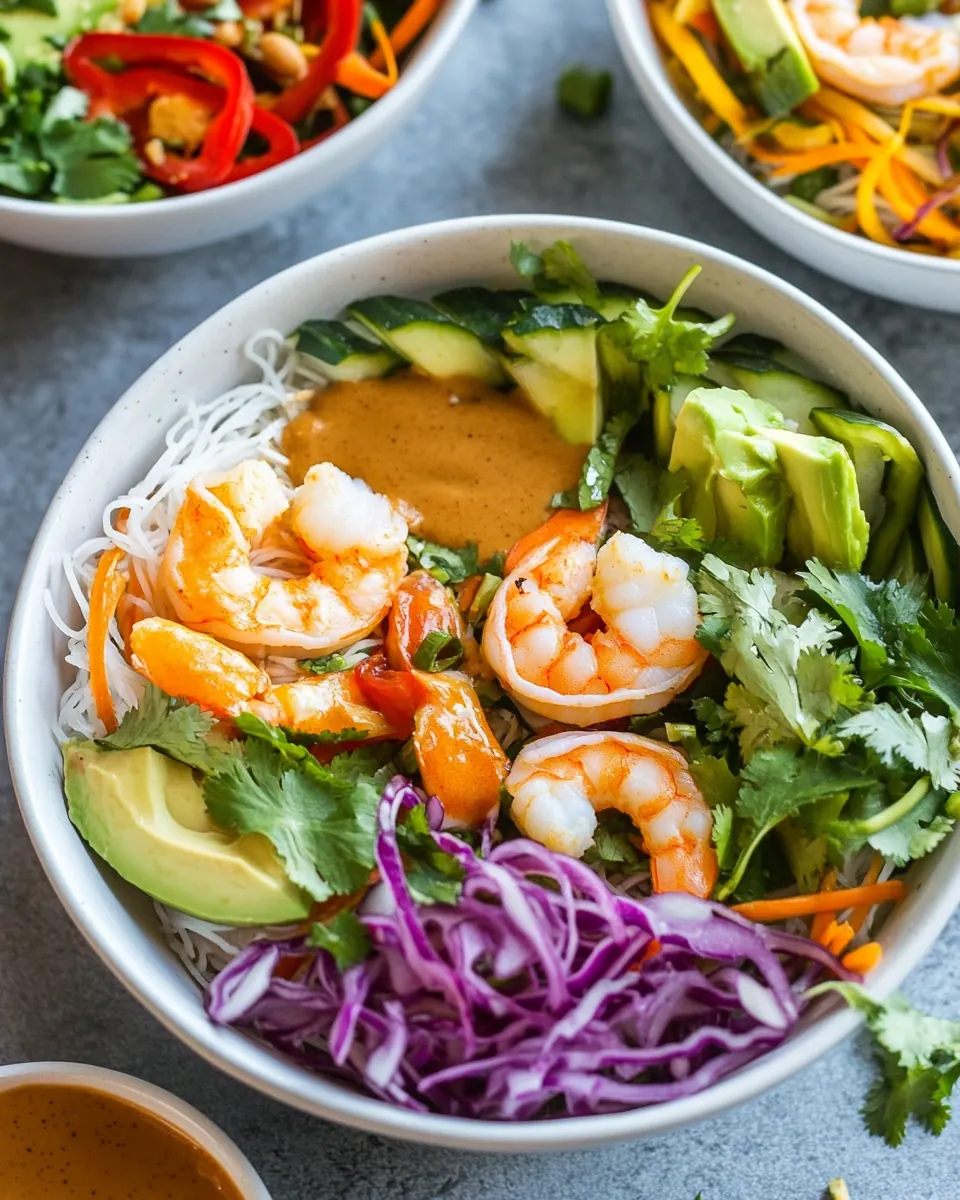
I think of these ingredients as a team where each player has a clear role. The herbs and vegetables bring crunch and brightness, the noodles deliver comforting texture, the protein offers savory satisfaction, and the peanut sauce unites everything with sweet salty tang. When assembled thoughtfully, the bowl is balanced in flavor and pleasing to the eye.
- 1 1/4 lbs large shrimp, peeled and deveined or 1 lb chicken, diced into 1-inch cubes: Provide protein and body to the dish, supplying a tender, savory base when using shrimp or a hearty, bite-sized option when using diced chicken; cook until just done to preserve moisture and texture and season lightly to complement the bright fresh elements.
- 1/3 cup chopped fresh cilantro: Add bright, herbaceous flavor and a fresh aroma that lifts the bowl; chop coarsely to distribute pops of citrusy, slightly peppery cilantro throughout salads and sauces for balanced freshness.
- 1/3 cup chopped fresh mint or basil: Contribute cooling, aromatic green notes that contrast rich elements; finely chop mint or basil and mix in to lend sweet, cooling or slightly anise-like layers depending on choice, enhancing overall herb complexity.
- 1/3 cup chopped green onions: Provide mild oniony sharpness and delicate crunch to layers and garnishes; slice thin so the green onion imparts savory aromatics without overpowering, integrating smoothly into noodles and vegetables.
- 1 red bell pepper, cored and julienned: Introduce sweet, crisp, and colorful crunch with vibrant red color; core and julienne to create long, tender strips that add texture contrast and visual appeal in each bite.
- 1 large carrot, peeled and julienned: Offer natural sweetness and firm crunch when peeled and julienned; use long thin ribbons of carrot to add color, fiber, and a pleasant chew that pairs well with vinaigrettes and peanut sauce.
- 1 large avocado, sliced: Bring creamy richness and buttery texture to contrast crisp vegetables; slice avocado just before serving to avoid browning and provide a smooth mouthfeel that balances spicy or tangy flavors.
- 1/3 english cucumber, halved and thinly sliced: Supply cool, hydrating crunch and subtle cucumber freshness; halve and thinly slice to create delicate rounds that add moisture and a clean, crisp counterpoint to richer components.
- 1 cup very thinly sliced red cabbage: Deliver vibrant color and firm, slightly peppery crunch to the bowl; very thinly slice red cabbage to create tender shreds that retain a satisfying snap and make the dish visually striking.
- 10 oz . medium thick white or brown rice noodles, cooked according to package instructions: Provide a neutral, comforting starch that soaks up sauces and binds ingredients; cook medium–thick rice noodles according to package directions until tender and rinse to prevent sticking before assembling bowls.
- 1/2 cup creamy low-sodium peanut butter: Contribute creamy, nutty richness and body to the peanut sauce; use low-sodium creamy peanut butter for smooth consistency and adjust seasoning to create a balanced, velvety dressing.
- 2 tsp finely peeled and minced fresh ginger: Infuse bright, warming spice and zesty heat when peeled and minced finely; ginger adds aromatic sharpness and depth to the peanut sauce and pairs well with lime and soy flavors.
- 1 tsp minced garlic: Add pungent savory depth and aromatic bite to the sauce; mince garlic finely so it blends smoothly and enhances umami without overwhelming the delicate herbs and vegetables.
- 1 1/2 tbsp fresh lime juice: Provide bright acidity and citrusy lift to balance richness in the dressing; squeeze fresh lime juice just before mixing to brighten flavors and cut through peanut butter's creaminess.
- 1 1/2 tbsp low-sodium soy sauce (or regular): Contribute salty, savory umami and deepen the sauce's flavor profile; use low-sodium soy sauce to control overall saltiness while enhancing the savory backbone of the dressing.
- 2 tsp sriracha: Introduce concentrated chili heat and a touch of vinegar tang to the sauce; measure sriracha carefully to achieve desired spiciness and complement the sweet and nutty elements.
- 1 1/2 tbsp packed light-brown sugar: Add caramel-like sweetness and complex molasses notes to balance salty and acidic components; pack light–brown sugar into the tablespoon and dissolve fully into the warm sauce for harmony.
- 1 1/2 tbsp honey: Provide natural floral sweetness and viscosity to the dressing; drizzle honey in gradually to adjust sweetness and help achieve a smooth, glossy texture in the peanut sauce.
- 1 tsp fish sauce () (optional): Offer an optional burst of savory, fish-forward umami for depth; add fish sauce sparingly if desired to intensify flavor without adding overt fishiness, keeping it optional per preference.
- 6 Tbs hot water: Thin and loosen the peanut sauce to a pourable consistency using hot water; add gradually while whisking to reach a silky, coating texture that clings to noodles and vegetables.
How to Prepare Rainbow Spring Roll Bowls with Shrimp or Chicken and Peanut Sauce
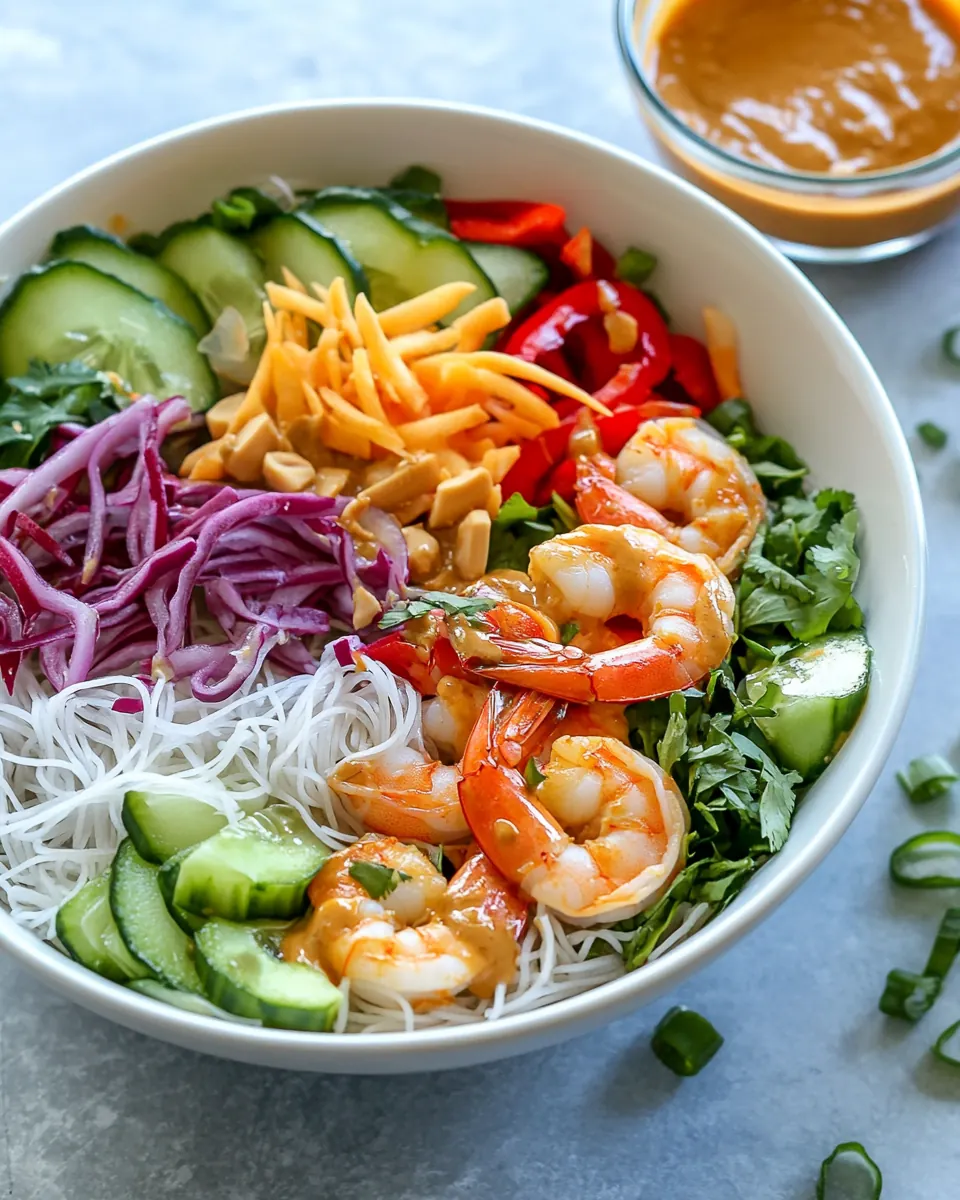
These steps will walk you through making the bowls with confidence. Work in stages, prepping vegetables and herbs first, then the sauce, followed by cooking the protein and noodles. I like to plate quickly so textures stay vibrant and the sauce stays glossy.
- In a mixing bowl whisk together all of the peanut sauce ingredients while adding in enough water to create a runny sauce. Set aside.: As the kitchen fills with the warm, nutty aroma of peanut butter and the zing from lime juice , you will notice the sauce start to gloss and thin into a pourable consistency, which signals it has reached the right texture. Whisking briskly brings air pockets that soften the sauce body and helps the flavors marry, while the hot water temp gently warms the mixture, unlocking the aromatic punch of the ginger and mellowing the sugar. If your sauce seems grainy or too thick, add a little more hot water, a teaspoon at a time, until it pours like heavy cream. A common mistake is adding cold water which can cause clumps, so always use hot water and whisk continuously. If the sauce tastes overly salty from the soy sauce , a touch more honey will balance it without masking the peanut notes. The final sauce should cling lightly to a spoon and glide off in a ribbon, signaling ideal consistency for drizzling over the bowls.
- Heat 1 Tbsp olive oil to a 12-inch non-stick skillet over medium heat. Add shrimp, season lightly with salt and cook through, about 1 1/2 – 2 minutes per side.: When the skillet is hot enough the oil will shimmer and move easily, a sign you are ready to add the shrimp . As the shrimp hits the pan you will hear a quick sizzle, and the scent of the sea will begin to warm the room. Cook until the flesh becomes opaque and a delicate pink appears, flipping once to encourage even browning that brings out caramelized sweetness. The sound will soften as the shrimp finish, and the edges will firm without shrinking excessively. Overcooking is the most common error here, producing rubbery texture, so remove them promptly when done. Allow the cooked shrimp to rest briefly, which lets juices redistribute and keeps them tender. If you prefer more color, give them a slightly higher heat but watch carefully to prevent charring, which introduces bitterness.
- If using chicken cook on medium-high heat about 7 minutes, turning once halfway through, until 165 in center.: The moment the diced chicken hits the pan you will hear a lively sizzle, and the surface will begin to sear, releasing a toasty aroma. Searing on medium high heat locks in juices and creates a golden exterior, which adds both flavor and visual appeal. Turn the pieces once so both sides develop even color, and use an instant read thermometer to check for 165 in the center for safe doneness. The smell will shift to a roasted, savory note as proteins brown, and the juices should run clear when pierced. A common mistake is crowding the pan, which causes steaming rather than searing, so give the chicken room to brown. If pieces are too large they may cook unevenly, so keep them about 1 inch for consistent timing. Rest the chicken briefly to let fibers relax, preserving succulence.
- Meanwhile bring lightly salted water to a boil in a large pot. Cook noodles according to package instructions after you've prepped all of the ingredients so noodles don't stick together. Drain and rinse.: As the water reaches a rolling boil it will release steam and a faint metallic note, which means it is ready for the rice noodles . Add a pinch of salt to season the noodles internally as they hydrate. Cooking time varies by noodle thickness, but your aim is tender yet slightly resilient, commonly called al dente, which helps them hold up against the sauce and toppings. Once drained, rinse under cool water to stop cooking and to remove surface starch, preventing clumping and keeping strands separate and glossy. A frequent pitfall is overcooking, leading to limp noodles that collapse under the other ingredients, so test a strand early. Tossing the noodles with a small drizzle of oil after rinsing can add extra protection against sticking if you plan to sit before assembling.
- Divide noodles among 4 plates. Sprinkle with cilantro, mint and green onions.: When you portion the warm, slippery noodles into bowls you will notice their neutral, comforting aroma which serves as a backdrop for the brighter elements. Scatter the chopped cilantro , mint or basil , and green onions over the noodles so each bite receives herbaceous pops and a mild allium lift. The fresh herbs release their volatile oils on contact with the warm noodles, enhancing aroma and taste. Avoid adding herbs too early in advance, as they can wilt; instead, scatter them just before serving to preserve color and vibrancy. If you place the herbs under the hot noodles they may steam and lose texture, so layer on top for best effect.
- Top with bell pepper, carrot, avocado, cucumber, cabbage and shrimp.: Layering the prepared vegetables and either shrimp or chicken creates a mosaic of color and texture. The crisp bell pepper and carrot contrast with the creamy avocado , while the cooling cucumber and crunchy red cabbage add structural interest. Arrange the shrimp or chicken on top so it is the visual anchor, and aim for balance so each portion includes a bit of everything. A typical error is piling everything in one clump, which prevents mixing; spread items around the bowl for varied flavors in each forkful. The visual contrast will be inviting, and the textures will combine to create a satisfying mouthfeel.
- Drizzle each serving with peanut sauce.: Drizzling the sauce slowly lets it gloss the ingredients without drowning them, adding a velvety, nutty sheen and a fragrant lift from the ginger and lime juice . The sauce should cling to noodle strands and pool slightly around the vegetables, creating pockets of concentrated flavor. Taste as you go, adding more sauce if you like robust coating or less if you prefer tasting the raw vegetables distinctly. Avoid pouring all the sauce in one spot, which can oversaturate and wilt delicate items like avocado . Instead, drizzle evenly to achieve a harmonious bite with each forkful.
- Pictured in the ingredient photo are actually wide rice noodles but I actually preferred the medium ones here, which is what is pictured in the bowls. You want to have the noodles ready at the very end so they don't get sticky.: The note about noodle width reflects how texture influences the bowl; wider noodles give a silkier mouthfeel while medium ones mingle better with the toppings. Preparing the noodles last keeps them tender and prevents them from absorbing moisture from the other components, which can make them gluey. You will observe that freshly rinsed noodles separate easily and appear glossy rather than clumped. Common mistakes include preparing noodles too early and letting them sit, which causes them to stick and become less pleasant. If you must hold them briefly, toss with a touch of neutral oil to preserve their integrity.
- Recipe source: inspired by Pinch of Yum: Crediting inspiration acknowledges where the idea started and how it evolved. When I draw on a familiar source I take cues about balance and assembly, then tweak seasoning or cuts of vegetables to suit my palate. A useful practice is to note what you changed so that next time you can replicate the elements that worked best. Avoid copying blindly without tasting at each stage, because the best versions emerge from small adjustments based on your ingredients and equipment.
How to Switch It Up
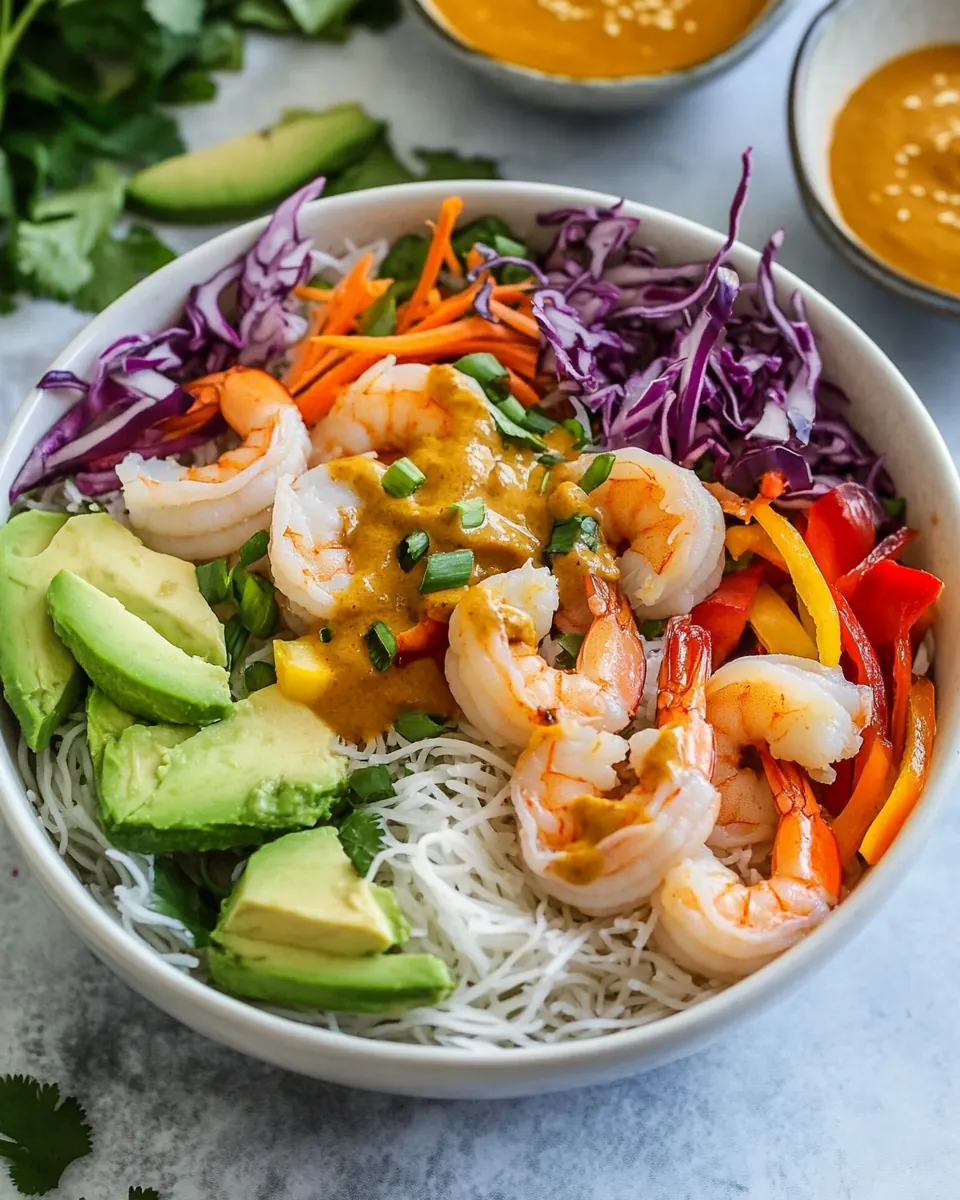
This section offers practical variations and ideas to keep Rainbow Spring Roll Bowls with Shrimp or Chicken and Peanut Sauce interesting. Below are focused tips you can apply immediately to shift texture, spice, or presentation.
- Flip the protein: Swap shrimp for chicken when you want a heartier bowl, adjusting cook time so the chicken reaches 165 in the center for safety.
- Herb swaps: Try replacing mint with basil for a sweeter aromatic profile that pairs nicely with the peanut sauce.
- Sauce thickness: Make the sauce thicker for a more clingy coating by reducing hot water, or thin it further for a light drizzle that just accents the bowl.
- Veg prep: Use a mandoline for uniform julienne on carrots and cucumbers to create an elegant, restaurant style presentation.
- Heat level: Increase sriracha gradually if you prefer more spice, tasting between additions to keep the heat balanced with sweetness.
- Make ahead: Prep vegetables and the sauce a day ahead but keep noodles and proteins separate for the freshest texture when serving.
Perfect Pairings for Rainbow Spring Roll Bowls with Shrimp or Chicken and Peanut Sauce
These bowls shine when served with light, complementary sides and in casual settings. They are ideal for spring lunches, quick dinners, or sharing at a relaxed gathering. Below are ideas for pairings, occasions, and storage.
- Light side salads: A simple cucumber and rice vinegar salad complements the bowl without competing with the peanut sauce, adding extra crunch and acidity.
- Pickled vegetables: Quick pickles such as thinly sliced radish or carrot bring tang and a contrasting texture that brightens each bite.
- Casual occasions: These bowls are perfect for informal lunches, picnic style meals, or weeknight dinners when you want freshness without fuss.
- Serving style: Serve family style with bowls of herbs and extra sauce on the side so guests can customize their portions for heat and herb intensity.
- Storage tips: Keep components separate in airtight containers; store the sauce in the fridge for up to four days, and refrigerate cooked protein for up to three days.
- Seasonal pairing: This recipe sings in spring and early summer when herbs and peppers are at their peak, but it is enjoyable year round with pantry staples.
FAQ
Conclusion
What makes this recipe special is the way vibrant vegetables, tender noodles, and a creamy peanut sauce come together to create a balanced bowl that is both nourishing and exciting. Give the assembly a try and you will find it an effortless way to serve a fresh, colorful meal that adapts to what you have on hand. Enjoy the process of layering textures and flavors, and don’t be afraid to personalize the herbs or heat level to make it your signature bowl.
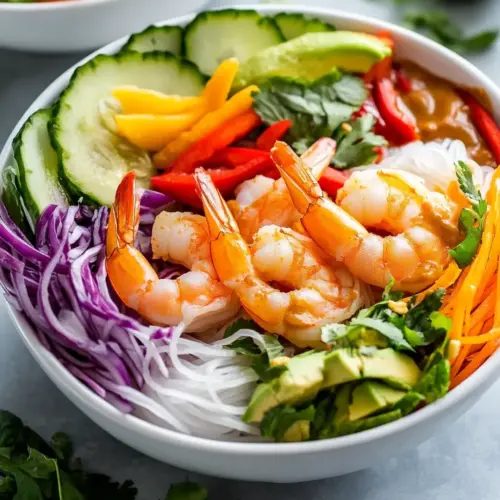
Rainbow Spring Roll Bowls with Shrimp or Chicken and Peanut Sauce
Equipment
- 12-inch Non-Stick Skillet
- Large Pot
- Mixing Bowl
Ingredients
- 1 1/4 lbs large shrimp, peeled and deveined or 1 lb chicken, diced into 1-inch cubes Provide protein and body to the dish, supplying a tender, savory base when using shrimp or a hearty, bite-sized option when using diced chicken; cook until just done to preserve moisture and texture and season lightly to complement the bright fresh elements.
- 1/3 cup chopped fresh cilantro Add bright, herbaceous flavor and a fresh aroma that lifts the bowl; chop coarsely to distribute pops of citrusy, slightly peppery cilantro throughout salads and sauces for balanced freshness.
- 1/3 cup chopped fresh mint or basil Contribute cooling, aromatic green notes that contrast rich elements; finely chop mint or basil and mix in to lend sweet, cooling or slightly anise-like layers depending on choice, enhancing overall herb complexity.
- 1/3 cup chopped green onions Provide mild oniony sharpness and delicate crunch to layers and garnishes; slice thin so the green onion imparts savory aromatics without overpowering, integrating smoothly into noodles and vegetables.
- 1 red bell pepper, cored and julienned Introduce sweet, crisp, and colorful crunch with vibrant red color; core and julienne to create long, tender strips that add texture contrast and visual appeal in each bite.
- 1 large carrot, peeled and julienned Offer natural sweetness and firm crunch when peeled and julienned; use long thin ribbons of carrot to add color, fiber, and a pleasant chew that pairs well with vinaigrettes and peanut sauce.
- 1 large avocado, sliced Bring creamy richness and buttery texture to contrast crisp vegetables; slice avocado just before serving to avoid browning and provide a smooth mouthfeel that balances spicy or tangy flavors.
- 1/3 english cucumber, halved and thinly sliced Supply cool, hydrating crunch and subtle cucumber freshness; halve and thinly slice to create delicate rounds that add moisture and a clean, crisp counterpoint to richer components.
- 1 cup very thinly sliced red cabbage Deliver vibrant color and firm, slightly peppery crunch to the bowl; very thinly slice red cabbage to create tender shreds that retain a satisfying snap and make the dish visually striking.
- 10 oz . medium thick white or brown rice noodles, cooked according to package instructions Provide a neutral, comforting starch that soaks up sauces and binds ingredients; cook medium-thick rice noodles according to package directions until tender and rinse to prevent sticking before assembling bowls.
- 1/2 cup creamy low-sodium peanut butter Contribute creamy, nutty richness and body to the peanut sauce; use low-sodium creamy peanut butter for smooth consistency and adjust seasoning to create a balanced, velvety dressing.
- 2 tsp finely peeled and minced fresh ginger Infuse bright, warming spice and zesty heat when peeled and minced finely; ginger adds aromatic sharpness and depth to the peanut sauce and pairs well with lime and soy flavors.
- 1 tsp minced garlic Add pungent savory depth and aromatic bite to the sauce; mince garlic finely so it blends smoothly and enhances umami without overwhelming the delicate herbs and vegetables.
- 1 1/2 tbsp fresh lime juice Provide bright acidity and citrusy lift to balance richness in the dressing; squeeze fresh lime juice just before mixing to brighten flavors and cut through peanut butter's creaminess.
- 1 1/2 tbsp low-sodium soy sauce (or regular) Contribute salty, savory umami and deepen the sauce's flavor profile; use low-sodium soy sauce to control overall saltiness while enhancing the savory backbone of the dressing.
- 2 tsp sriracha Introduce concentrated chili heat and a touch of vinegar tang to the sauce; measure sriracha carefully to achieve desired spiciness and complement the sweet and nutty elements.
- 1 1/2 tbsp packed light-brown sugar Add caramel-like sweetness and complex molasses notes to balance salty and acidic components; pack light-brown sugar into the tablespoon and dissolve fully into the warm sauce for harmony.
- 1 1/2 tbsp honey Provide natural floral sweetness and viscosity to the dressing; drizzle honey in gradually to adjust sweetness and help achieve a smooth, glossy texture in the peanut sauce.
- 1 tsp fish sauce (optional) Offer an optional burst of savory, fish-forward umami for depth; add fish sauce sparingly if desired to intensify flavor without adding overt fishiness, keeping it optional per preference.
- 6 Tbs hot water Thin and loosen the peanut sauce to a pourable consistency using hot water; add gradually while whisking to reach a silky, coating texture that clings to noodles and vegetables.
Instructions
- In a mixing bowl whisk together all of the peanut sauce ingredients while adding in enough water to create a runny sauce. Set aside.: As the kitchen fills with the warm, nutty aroma of peanut butter and the zing from lime juice , you will notice the sauce start to gloss and thin into a pourable consistency, which signals it has reached the right texture. Whisking briskly brings air pockets that soften the sauce body and helps the flavors marry, while the hot water temp gently warms the mixture, unlocking the aromatic punch of the ginger and mellowing the sugar. If your sauce seems grainy or too thick, add a little more hot water, a teaspoon at a time, until it pours like heavy cream. A common mistake is adding cold water which can cause clumps, so always use hot water and whisk continuously. If the sauce tastes overly salty from the soy sauce , a touch more honey will balance it without masking the peanut notes. The final sauce should cling lightly to a spoon and glide off in a ribbon, signaling ideal consistency for drizzling over the bowls.
- Heat 1 Tbsp olive oil to a 12-inch non-stick skillet over medium heat. Add shrimp, season lightly with salt and cook through, about 1 1/2 - 2 minutes per side.: When the skillet is hot enough the oil will shimmer and move easily, a sign you are ready to add the shrimp . As the shrimp hits the pan you will hear a quick sizzle, and the scent of the sea will begin to warm the room. Cook until the flesh becomes opaque and a delicate pink appears, flipping once to encourage even browning that brings out caramelized sweetness. The sound will soften as the shrimp finish, and the edges will firm without shrinking excessively. Overcooking is the most common error here, producing rubbery texture, so remove them promptly when done. Allow the cooked shrimp to rest briefly, which lets juices redistribute and keeps them tender. If you prefer more color, give them a slightly higher heat but watch carefully to prevent charring, which introduces bitterness.
- If using chicken cook on medium-high heat about 7 minutes, turning once halfway through, until 165 in center.: The moment the diced chicken hits the pan you will hear a lively sizzle, and the surface will begin to sear, releasing a toasty aroma. Searing on medium high heat locks in juices and creates a golden exterior, which adds both flavor and visual appeal. Turn the pieces once so both sides develop even color, and use an instant read thermometer to check for 165 in the center for safe doneness. The smell will shift to a roasted, savory note as proteins brown, and the juices should run clear when pierced. A common mistake is crowding the pan, which causes steaming rather than searing, so give the chicken room to brown. If pieces are too large they may cook unevenly, so keep them about 1 inch for consistent timing. Rest the chicken briefly to let fibers relax, preserving succulence.
- Meanwhile bring lightly salted water to a boil in a large pot. Cook noodles according to package instructions after you've prepped all of the ingredients so noodles don't stick together. Drain and rinse.: As the water reaches a rolling boil it will release steam and a faint metallic note, which means it is ready for the rice noodles . Add a pinch of salt to season the noodles internally as they hydrate. Cooking time varies by noodle thickness, but your aim is tender yet slightly resilient, commonly called al dente, which helps them hold up against the sauce and toppings. Once drained, rinse under cool water to stop cooking and to remove surface starch, preventing clumping and keeping strands separate and glossy. A frequent pitfall is overcooking, leading to limp noodles that collapse under the other ingredients, so test a strand early. Tossing the noodles with a small drizzle of oil after rinsing can add extra protection against sticking if you plan to sit before assembling.
- Divide noodles among 4 plates. Sprinkle with cilantro, mint and green onions.: When you portion the warm, slippery noodles into bowls you will notice their neutral, comforting aroma which serves as a backdrop for the brighter elements. Scatter the chopped cilantro , mint or basil , and green onions over the noodles so each bite receives herbaceous pops and a mild allium lift. The fresh herbs release their volatile oils on contact with the warm noodles, enhancing aroma and taste. Avoid adding herbs too early in advance, as they can wilt; instead, scatter them just before serving to preserve color and vibrancy. If you place the herbs under the hot noodles they may steam and lose texture, so layer on top for best effect.
- Top with bell pepper, carrot, avocado, cucumber, cabbage and shrimp.: Layering the prepared vegetables and either shrimp or chicken creates a mosaic of color and texture. The crisp bell pepper and carrot contrast with the creamy avocado , while the cooling cucumber and crunchy red cabbage add structural interest. Arrange the shrimp or chicken on top so it is the visual anchor, and aim for balance so each portion includes a bit of everything. A typical error is piling everything in one clump, which prevents mixing; spread items around the bowl for varied flavors in each forkful. The visual contrast will be inviting, and the textures will combine to create a satisfying mouthfeel.
- Drizzle each serving with peanut sauce.: Drizzling the sauce slowly lets it gloss the ingredients without drowning them, adding a velvety, nutty sheen and a fragrant lift from the ginger and lime juice . The sauce should cling to noodle strands and pool slightly around the vegetables, creating pockets of concentrated flavor. Taste as you go, adding more sauce if you like robust coating or less if you prefer tasting the raw vegetables distinctly. Avoid pouring all the sauce in one spot, which can oversaturate and wilt delicate items like avocado . Instead, drizzle evenly to achieve a harmonious bite with each forkful.
- Pictured in the ingredient photo are actually wide rice noodles but I actually preferred the medium ones here, which is what is pictured in the bowls. You want to have the noodles ready at the very end so they don't get sticky.: The note about noodle width reflects how texture influences the bowl; wider noodles give a silkier mouthfeel while medium ones mingle better with the toppings. Preparing the noodles last keeps them tender and prevents them from absorbing moisture from the other components, which can make them gluey. You will observe that freshly rinsed noodles separate easily and appear glossy rather than clumped. Common mistakes include preparing noodles too early and letting them sit, which causes them to stick and become less pleasant. If you must hold them briefly, toss with a touch of neutral oil to preserve their integrity.
- Recipe source: inspired by Pinch of Yum: Crediting inspiration acknowledges where the idea started and how it evolved. When I draw on a familiar source I take cues about balance and assembly, then tweak seasoning or cuts of vegetables to suit my palate. A useful practice is to note what you changed so that next time you can replicate the elements that worked best. Avoid copying blindly without tasting at each stage, because the best versions emerge from small adjustments based on your ingredients and equipment.
Notes
- Flip the protein: Swap shrimp for chicken when you want a heartier bowl, adjusting cook time so the chicken reaches 165 in the center for safety.
- Herb swaps: Try replacing mint with basil for a sweeter aromatic profile that pairs nicely with the peanut sauce.
- Sauce thickness: Make the sauce thicker for a more clingy coating by reducing hot water, or thin it further for a light drizzle that just accents the bowl.
- Veg prep: Use a mandoline for uniform julienne on carrots and cucumbers to create an elegant, restaurant style presentation.
- Heat level: Increase sriracha gradually if you prefer more spice, tasting between additions to keep the heat balanced with sweetness.
- Make ahead: Prep vegetables and the sauce a day ahead but keep noodles and proteins separate for the freshest texture when serving.