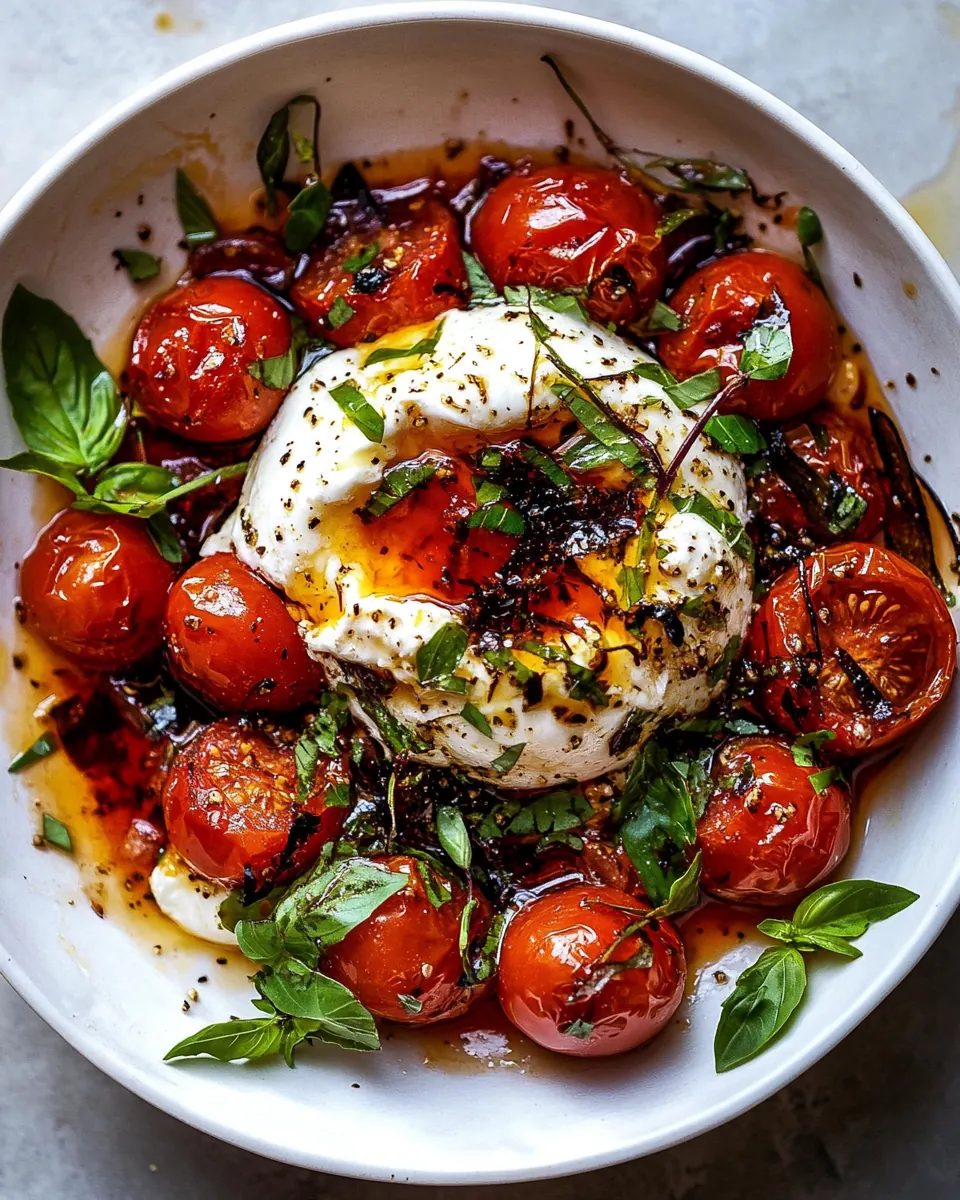
Roasted Garlic Tomato Burrata Caprese
Roasted Garlic Tomato Burrata Caprese is one of those recipes that feels celebratory without any fuss, and I still remember the first warm summer evening I served it to friends on my tiny apartment balcony. The scent of roasted garlic and sweet tomatoes filled the air as we passed around slices of grilled bread, laughing over mismatched plates. I loved how the creamy center of the burrata broke open slowly, mingling with glossy olive oil and torn basil, creating a spoonable, indulgent mess that everyone was more than happy to tackle.
That night taught me that the best dishes are often the simplest, where each element is allowed to shine. I found myself making this again and again for casual dinners, potlucks, and lazy weekend lunches. The contrast between warm roasted tomatoes and cool, milky burrata became my go to way to impress without stress. I also discovered small techniques that deliver big payoff, like gently squeezing the roasted garlic into a paste to awaken the oil, and scattering fresh basil at the end so its aroma stays vibrant.
Recipe Snapshot
30 mins
10 mins
20 mins
Easy
350 kcal
Italian
Gluten-Free, Paleo
Appetizers
Baking dish, Oven, Cutting board, Knife, Spoon
The Appeal of This Roasted Garlic Tomato Burrata Caprese
Pure, bright flavors
I adore how Roasted Garlic Tomato Burrata Caprese keeps things straightforward yet flavorful. When tomatoes roast they concentrate their natural sugars, and that caramelized note plays beautifully with the creamy burrata. I always say the difference between good and great is letting each ingredient do its thing, and here every bite sings.
Textural contrast
I value texture in food, and this recipe delivers. The juicy burst of roasted tomatoes, the silky interior of the burrata, and the crunchy bite of grilled bread all work together. I often pinch myself at how satisfying that combination is, especially when the oil pools and carries flavor across the plate.
Effortless entertaining
I rely on this dish for guests because it looks impressive but is deceptively simple. You can roast a pan of tomatoes while chatting, then assemble in minutes. Trust me, you will get compliments and still have time to socialize, which is why I reach for it for last minute invites.
Flexible and forgiving
I love that the recipe adapts well. Use whatever tomatoes you have, tear more basil for aroma, or add extra chili flakes for heat. I never stress about exact measurements, because the method is forgiving and the result consistently delicious.
Visually beautiful
I care about how food looks on the table, and this one always photographs like a dream. The glossy reds, verdant basil, and the pristine white of the burrata make for an inviting plate. I often arrange slices of grilled bread around the bowl to create a communal, shareable centerpiece.
Ingredient List for Roasted Garlic Tomato Burrata Caprese
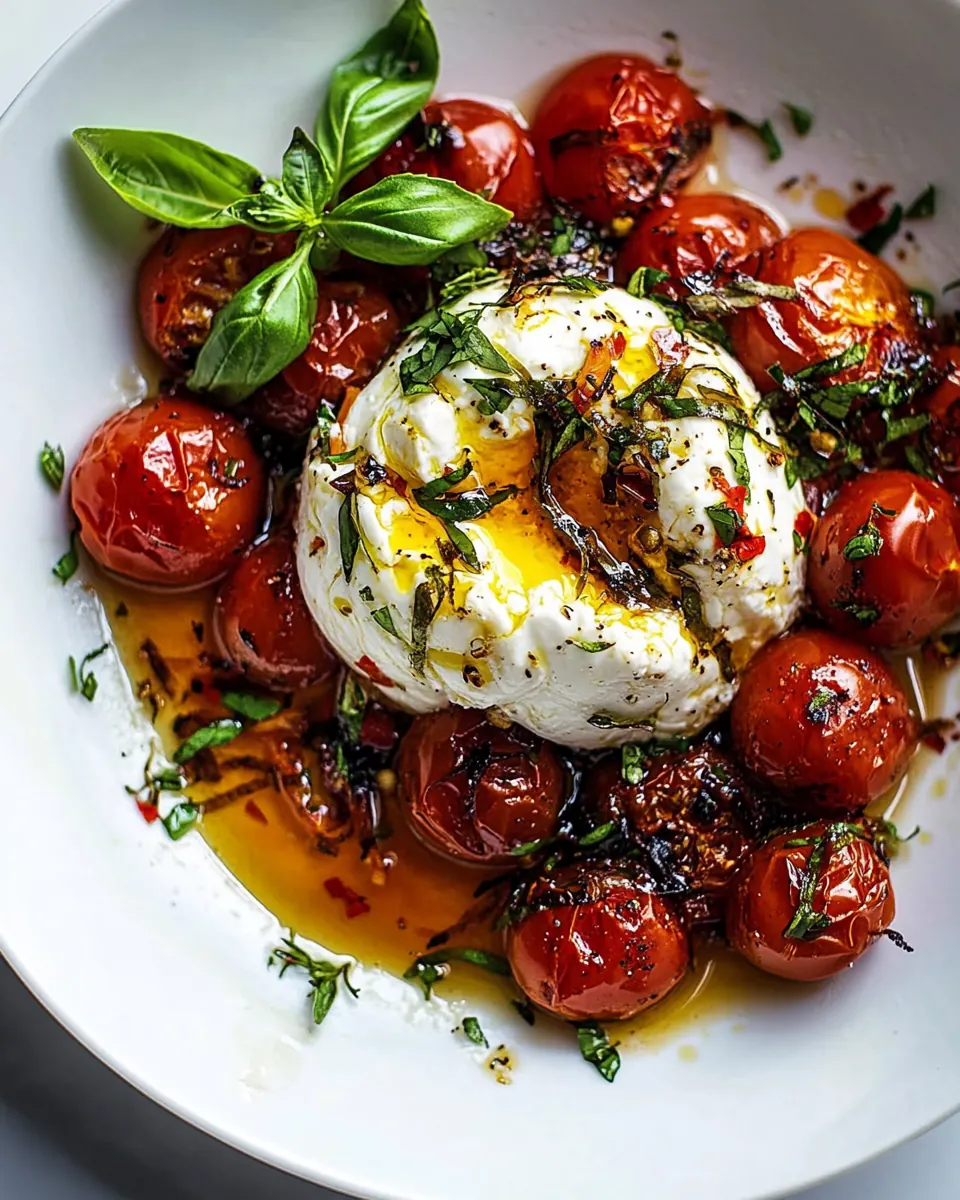
These ingredients are deliberately simple and focused, each playing a specific role. The roasted garlic and shallot create a savory backbone, the olive oil carries flavor and silkiness, while the tomatoes offer brightness and body. Fresh basil uplifts the whole dish with aromatic lift, and the burrata provides a luscious, creamy center that ties everything together. Think of the list as a kit where harmony matters more than complexity.
- 6 7 garlic cloves, peeled: Roast to mellow sharpness and develop a sweet, nutty flavor that infuses the oil and tomatoes; peeled cloves soften and spreadable interior complements burrata for rich, savory bites. Use whole or mashed into a dressing to add depth and a caramelized garlic aroma throughout the dish.
- 1 shallot, halved: Halve to release mild oniony sweetness and gentle aromatics that balance roasted garlic; softened shallot provides a subtle background flavor when tossed with tomatoes or blended into the dressing. Sear or roast alongside garlic to create a lightly caramelized, nuanced base.
- 1/3 cup extra virgin olive oil: Drizzle to bind and carry flavors, helping roast garlic and tomatoes caramelize while providing a silky mouthfeel; extra virgin olive oil contributes fruity, peppery notes that enrich the final plate. Use enough to coat ingredients evenly and to form a luscious vinaigrette when combined with herbs and seasonings.
- 2 tablespoons fresh thyme leaves: Scatter fresh leaves to add bright, floral, and slightly lemony herbal notes that contrast roasted elements; thyme withstands roasting and imparts an earthy complexity to tomatoes and oil. Use whole or stripped leaves to distribute aromatic bursts across the salad.
- salt and black pepper: Season to enhance overall balance, coaxing out natural sweetness from roasted garlic and tomatoes while controlling savory depth; salt elevates flavors and black pepper adds a warming bite. Season gradually and taste as you combine components to avoid over-salting.
- chili flakes: Sprinkle sparingly to introduce a smoky heat that lifts the dish and contrasts creamy burrata; chili flakes provide intermittent spice and visual flecks. Adjust amount to preference so heat complements rather than overpowers delicate flavors.
- 4 cups cherry tomatoes: Roast to concentrate sweetness and develop blistered skins that burst with intense tomato flavor; cherry tomatoes offer juicy bursts and a bright acidity that balance creamy cheese. Halve or leave whole after roasting and toss with oil, garlic, herbs, and seasoning for vibrant texture.
- 1 cup fresh basil leaves: Tear to release aromatic oils and deliver fresh, peppery, slightly sweet basil notes that brighten roasted components; basil adds a classic caprese freshness that complements burrata. Scatter leaves just before serving to preserve color and fragrance.
- handful of micro basil () (optional): Garnish for delicate, concentrated herb flavor and an elegant visual touch; micro basil provides intense basil aroma in small, tender leaves that enhance presentation. Add right before plating to maintain freshness and avoid wilting from heat.
- 2 3 balls burrata cheese, at room temperature: Bring to room temperature and gently tear or spoon onto the plate to provide a creamy, luscious centerpiece; burrata’s rich interior pairs with roasted tomatoes and garlic for a luxurious texture contrast. Place near warm ingredients so cheese softens slightly without melting completely.
- grilled bread or crackers, for serving: Serve alongside to provide crunch or a vehicle for scooping and spreading the burrata-tomato mixture; grilled bread or crackers add smoky char and textural contrast. Offer warm slices or crisp crackers so they complement the creamy, saucy topping.
Making This Roasted Garlic Tomato Burrata Caprese
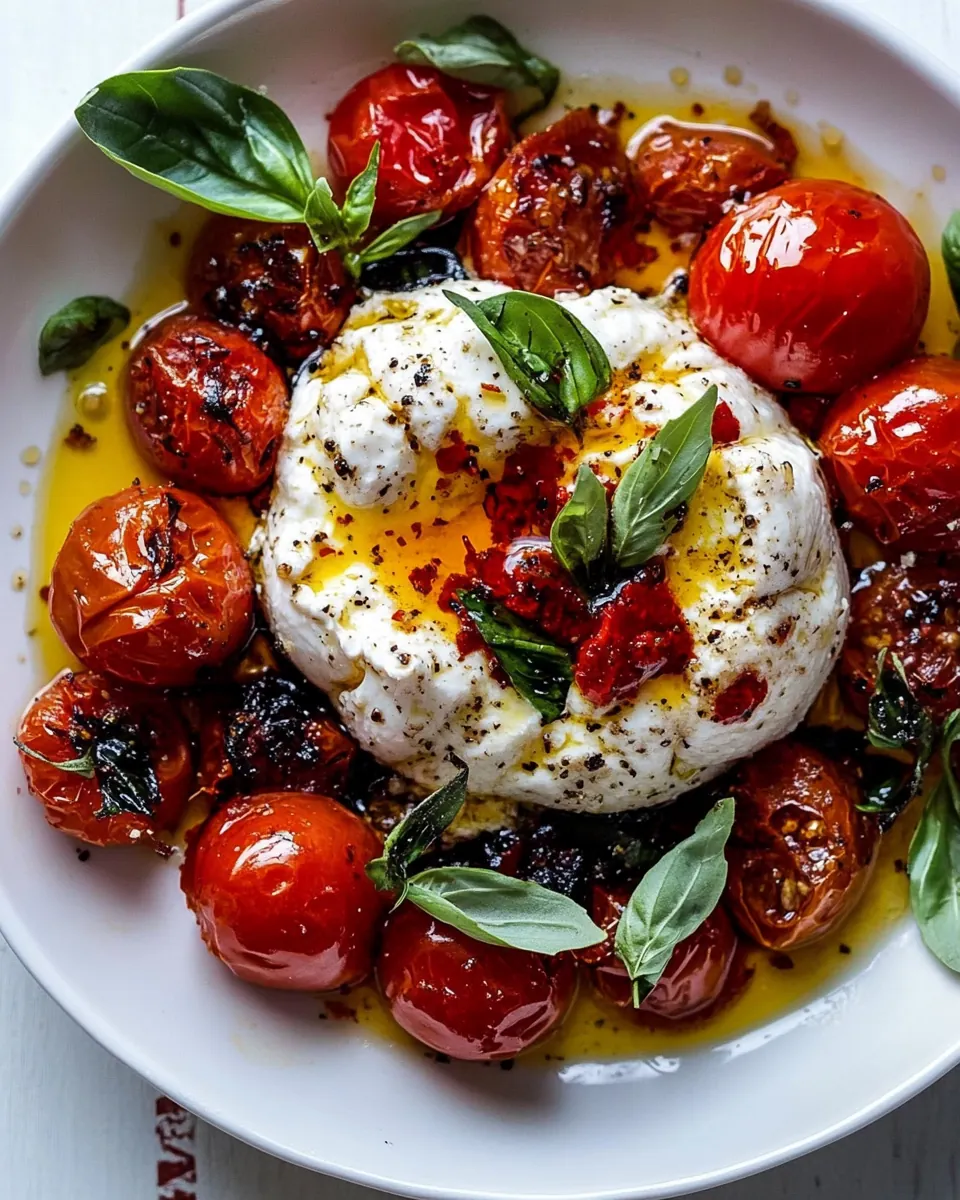
I always approach assembly like setting a scene, so the flavors develop while you relax. Follow the roasting and mash the aromatics into the oil, then take your time layering so each bite has balance. The directions below translate the original steps into sensory guidance, so you know exactly how things should look, smell, and feel at each moment.
- Preheat the oven to 400° F. Place the garlic, shallots, 3 cups tomatoes, and thyme in a baking dish. Drizzle with 1/4 cup olive oil. Season with salt, pepper, and chili flakes. Bake for 20 minutes, until the tomatoes burst. Meanwhile, arrange the burrata in a salad bowl. Slice the remaining tomatoes. Squeeze the garlic cloves and shallots onto a cutting board. Mash/chop into a paste. Mix with the tomatoes in the baking dish, add the remaining 1/4 cup olive oil, and season with pepper. Spoon the roasted tomatoes and oil over and around the burrata. Top with lots of basil and the sliced tomatoes. Add salt and chili flakes! Dig in with bread and/or crackers.: Warmth fills the kitchen as the oven comes to temperature, and you should notice a gentle ambient heat that promises caramelization. This oven temperature is ideal because it encourages the tomatoes and aromatics to blister and concentrate without drying out. A common mistake is to rush and use a higher temperature, which can scorch the edges before the centers soften. Aim for even heat so the skins split and juices begin to glisten, producing sweet, slightly roasted aromas that hint at deeper flavors to come.
- Place the garlic, shallots, 3 cups tomatoes, and thyme in a baking dish: At this point you will smell the fresh thyme and raw garlic , bright and vegetal. Arrange the ingredients so they sit comfortably in the dish, giving each tomato room to roast rather than steam. The visual cue you want is tomatoes nestled against each other with herbs scattered on top, not piled into a mound. A frequent error is overcrowding the pan, which leads to steaming instead of roasting, so use a dish that allows air circulation and browning.
- Drizzle with 1/4 cup olive oil: As the golden oil flows, it gleams on the tomatoes and herbs, promising silkiness in the finished dish. The oil helps transmit heat evenly and carries roasted flavor into the burrata later. If you skimp on oil the mixture can dry and the garlic may remain harsh, while too much oil can make the result slick and heavy. Look for a slight sheen on the tomatoes indicating they are coated but not swimming.
- Season with salt, pepper, and chili flakes: You will notice the aromatics lift as the seasoning hits them, and that faint kick from the chili flakes will start to peek through. Seasoning before roasting allows flavors to concentrate into the juices, contributing depth. A common misstep is under seasoning, which leaves the roasted mix bland, so be bold but taste as you go. The right amount of salt will make the tomato sweetness pop without tasting overtly salty.
- Bake for 20 minutes, until the tomatoes burst: The oven will sing with a toasty perfume, and you should see skins blister and juices begin to bubble. The sound is subtle, like tiny pops as tomatoes release steam. This timing yields soft, syrupy tomatoes with browned edges. Avoid opening the oven repeatedly, which can lengthen the cook time and reduce even browning. When the tomatoes burst, their concentrated flavor will be noticeably sweeter and more complex.
- Meanwhile, arrange the burrata in a salad bowl: When you bring the chilled burrata to room temperature and place it in a shallow bowl, its exterior looks pristine while you can sense the creamy interior lurking beneath. This presentation prepares the burrata to receive hot tomatoes so it can melt slightly and mingle. A common pitfall is serving burrata too cold, which keeps its center firm and prevents the delightful, creamy spread from forming.
- Slice the remaining tomatoes: Fresh sliced tomatoes add bright contrast to the roasted ones. Their crisp, fresh texture should be evident, and the juices will offer pops of acidity against the rich burrata . Avoid over slicing so they retain body; thin, limp slices get lost in the mix. The contrast between fresh and roasted is essential for complexity in each bite.
- Squeeze the garlic cloves and shallots onto a cutting board: As you press, a roasted, sweet aroma will emerge that is far gentler than raw garlic . This action releases softened flesh and oils for easier mashing. If you squeeze too forcefully you may spray oil or seeds, so gentle pressure works best. The sensory cue is a mellow, caramel like scent rather than sharp raw pungency.
- Mash or chop into a paste: The texture transforms under your knife as the roasted garlic and shallot become a spreadable paste, which blends seamlessly with the tomatoes and oil. This paste is important because it distributes flavor evenly without biting into large chunks. Over processing into a puree removes texture, while under processing leaves fibrous bits. Aim for a cohesive paste that still has a little rustic texture.
- Mix with the tomatoes in the baking dish, add the remaining 1/4 cup olive oil, and season with pepper: At this stage the scent of roasted aromatics melding with warm tomatoes becomes heady and savory. Adding the remaining oil rounds out the mouthfeel and ensures the mixture glistens when spooned. Pepper adds a finishing warmth that balances sweetness. A common mistake is failing to taste and adjust seasoning after combining, so sample and tweak as needed.
- Spoon the roasted tomatoes and oil over and around the burrata: The moment you spoon warm, glossy tomatoes onto the cool burrata , the center begins to soften and ooze, creating that signature luscious texture. Visually the contrast is striking, and you will hear soft sighs of approval from the table. Avoid dumping everything in one spot, instead layer so each guest can get a balanced scoop of both roasted and fresh elements. If the oil pools too heavily in one area, gently swirl it with a spoon to distribute.
- Top with lots of basil and the sliced tomatoes: Fresh basil scattered on top adds vibrant aroma and color, while sliced fresh tomatoes bring brightness and texture. Tear the basil to release its oils and arrange the slices for visual appeal. A common oversight is adding herbs too early, which causes wilting; finishing with basil preserves its fragrance and snap.
- Add salt and chili flakes: Finish with a final seasoning to lift flavors, watching as the salt dissolves into the warm juices and the chili flakes provide subtle heat. This final touch refines the balance. Be careful not to overdo the chili, as it can overpower the delicate burrata . Serve immediately with grilled bread or crackers for the best contrast of textures.
- Dig in with bread and or crackers: Using grilled bread or sturdy crackers, scoop up the creamy, roasted mixture and enjoy the full range of textures. The crunch complements the soft burrata and simmered tomatoes , and the oil helps everything adhere to the bite. A mistake here is using overly flimsy bread that disintegrates; choose something with structure so you can savor each mouthful.
Change It Up
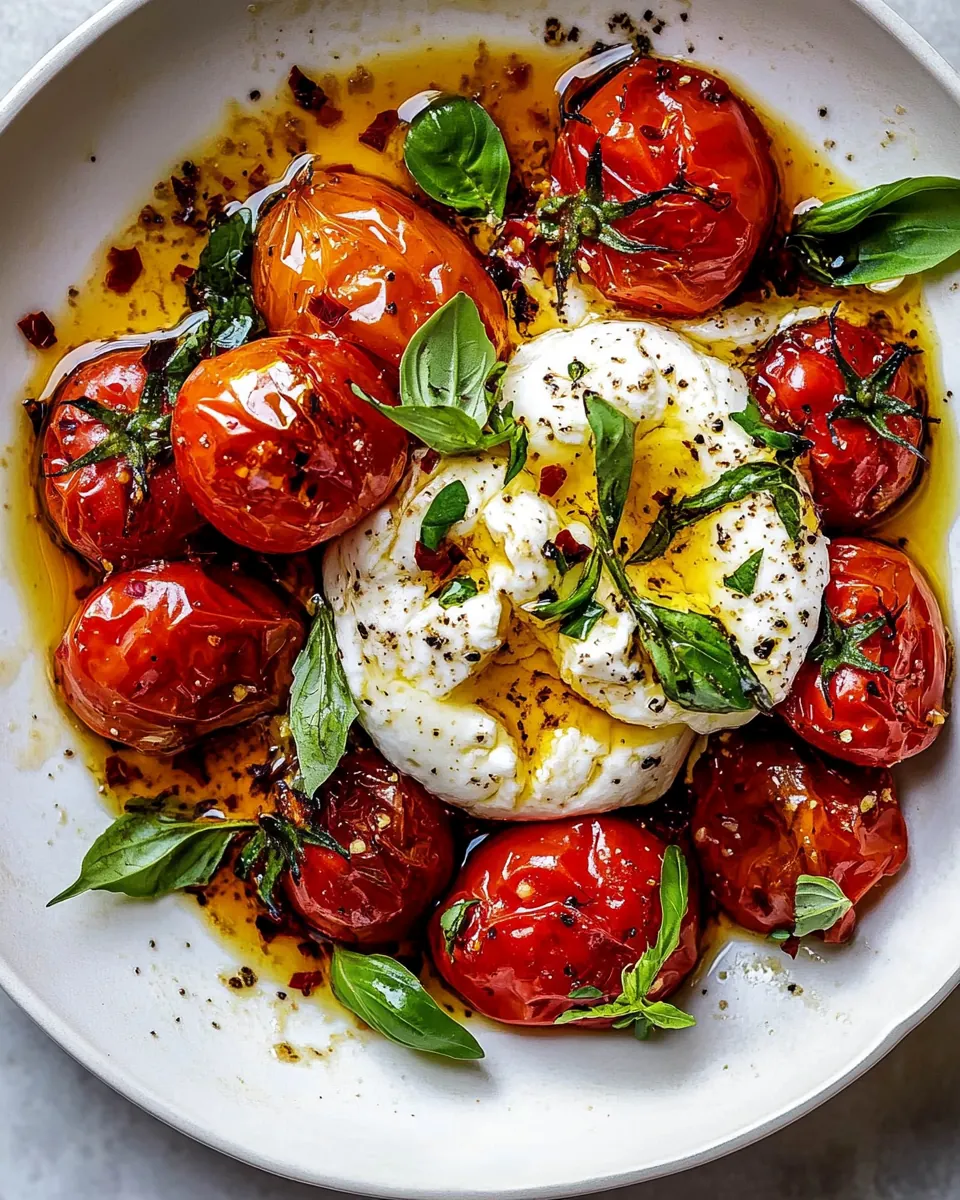
I like offering variations so the dish stays fresh across seasons and moods. Below are practical ideas to tweak texture, presentation, and flavor while preserving the heart of the recipe. Each tip starts with a bold phrase to help you scan quickly, then explains how to implement the change.
- Toast seeds for crunch: If you want extra texture, quickly toast a handful of pumpkin or sunflower seeds and sprinkle them on top right before serving to add a nutty crunch that contrasts the creamy burrata.
- Make it herby: Double the fresh basil and add some torn baby arugula if you like a peppery lift, tossing lightly so the leaves remain vibrant and not wilted.
- Swap tomatoes by season: Use cherry tomatoes in summer for sweetness, and plum or heirloom tomatoes in other months to vary texture and acidity while still roasting beautifully.
- Infuse the oil: Warm the olive oil gently with a strip of lemon zest or a sprig of thyme before drizzling to add subtle aromatic layers to the finished dish.
- Use different bread: Try a crusty baguette, sourdough, or seeded cracker for varied crunch and flavor, matching the bread intensity to the richness of the burrata.
- Add a touch of acid: A splash of aged balsamic or a few drops of good sherry vinegar at the end brightens the plate and balances the richness without overwhelming the roasted tomatoes.
- Garnish with micro herbs: Use micro basil or micro arugula for a refined presentation and delicate texture that elevates the dish visually.
Side Dish Ideas for Roasted Garlic Tomato Burrata Caprese
This dish is wonderfully versatile and pairs well with a range of sides depending on occasion and appetite. Below are serving ideas, seasonal pairings, and storage notes to help you present it beautifully. Use the bold phrases to find practical serving suggestions quickly.
- Casual lunch or brunch: Serve with a simple green salad tossed in lemon vinaigrette to add a bright counterpoint to the rich burrata, making a balanced midday meal.
- Summer dinner centerpiece: Present the dish with grilled vegetables like zucchini and bell peppers to create a colorful, vegetable forward spread that complements the roasted tomatoes.
- Ramadan or special gatherings: Include warm pita or grilled flatbread for communal dipping, and place the bowl centrally so everyone can share and dig in together.
- Cocktail hour pairing: Offer small crostini alongside the bowl and serve as an elegant appetizer that guests can enjoy standing or seated.
- Make ahead and store: Roast the tomatoes and mash the aromatics up to one day ahead, refrigerate separately, and assemble just before serving to maintain texture and temperature contrast.
- Seasonal pairing: In peak summer use the ripest tomatoes and abundant basil for the brightest flavor; in cooler months rely on colorful cherry tomatoes and micro herbs to keep it vibrant.
- Plate for sharing: Serve the burrata in a shallow bowl with roasted tomatoes spooned around, and arrange toasted bread in a fan on the side so guests can build their own bites.
- Occasion suggestions: This recipe works well for casual weeknight dinners, elegant al fresco meals, and relaxed weekend entertaining where easy preparation and big flavor are priorities.
- Storage tip: Leftovers keep best if separated; store roasted tomatoes in an airtight container and keep the burrata chilled, assembling only when ready to serve so the cheese remains fresh.
- Serving temperature: Aim for the tomatoes to be warm and the burrata at room temperature so textures feel deliberate and balanced on the plate.
FAQ
Conclusion
What makes Roasted Garlic Tomato Burrata Caprese special is the elegant simplicity where roasted sweetness, silky cheese, and fresh herbs come together in every spoonful. The dish is unfussy to prepare yet feels celebratory, perfect for casual get togethers or a relaxed dinner that still impresses. Try it the next time you want a shareable, flavor forward centerpiece that requires little hands on time but delivers a big payoff. You will love how little effort yields such memorable results, and it often becomes one of those recipes friends request again and again.
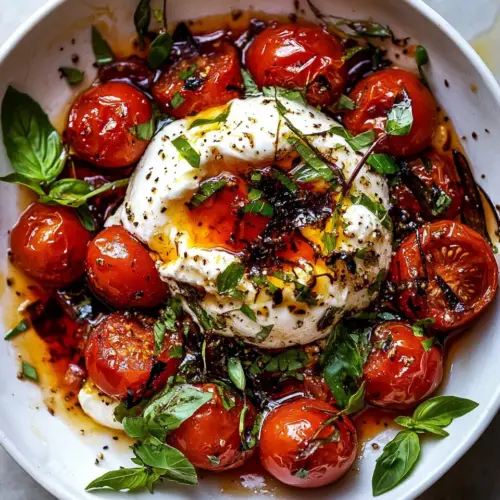
Roasted Garlic Tomato Burrata Caprese
Equipment
- Baking Dish
- Oven
- Cutting Board
- Knife
- Spoon
Ingredients
- 6 -7 garlic cloves, peeled Roast to mellow sharpness and develop a sweet, nutty flavor that infuses the oil and tomatoes; peeled cloves soften and spreadable interior complements burrata for rich, savory bites. Use whole or mashed into a dressing to add depth and a caramelized garlic aroma throughout the dish.
- 1 shallot, halved Halve to release mild oniony sweetness and gentle aromatics that balance roasted garlic; softened shallot provides a subtle background flavor when tossed with tomatoes or blended into the dressing. Sear or roast alongside garlic to create a lightly caramelized, nuanced base.
- 1/3 cup extra virgin olive oil Drizzle to bind and carry flavors, helping roast garlic and tomatoes caramelize while providing a silky mouthfeel; extra virgin olive oil contributes fruity, peppery notes that enrich the final plate. Use enough to coat ingredients evenly and to form a luscious vinaigrette when combined with herbs and seasonings.
- 2 tablespoons fresh thyme leaves Scatter fresh leaves to add bright, floral, and slightly lemony herbal notes that contrast roasted elements; thyme withstands roasting and imparts an earthy complexity to tomatoes and oil. Use whole or stripped leaves to distribute aromatic bursts across the salad.
- salt and black pepper Season to enhance overall balance, coaxing out natural sweetness from roasted garlic and tomatoes while controlling savory depth; salt elevates flavors and black pepper adds a warming bite. Season gradually and taste as you combine components to avoid over-salting.
- chili flakes Sprinkle sparingly to introduce a smoky heat that lifts the dish and contrasts creamy burrata; chili flakes provide intermittent spice and visual flecks. Adjust amount to preference so heat complements rather than overpowers delicate flavors.
- 4 cups cherry tomatoes Roast to concentrate sweetness and develop blistered skins that burst with intense tomato flavor; cherry tomatoes offer juicy bursts and a bright acidity that balance creamy cheese. Halve or leave whole after roasting and toss with oil, garlic, herbs, and seasoning for vibrant texture.
- 1 cup fresh basil leaves Tear to release aromatic oils and deliver fresh, peppery, slightly sweet basil notes that brighten roasted components; basil adds a classic caprese freshness that complements burrata. Scatter leaves just before serving to preserve color and fragrance.
- handful of micro basil (optional) Garnish for delicate, concentrated herb flavor and an elegant visual touch; micro basil provides intense basil aroma in small, tender leaves that enhance presentation. Add right before plating to maintain freshness and avoid wilting from heat.
- 2 -3 balls burrata cheese, at room temperature Bring to room temperature and gently tear or spoon onto the plate to provide a creamy, luscious centerpiece; burrata’s rich interior pairs with roasted tomatoes and garlic for a luxurious texture contrast. Place near warm ingredients so cheese softens slightly without melting completely.
- grilled bread or crackers, for serving Serve alongside to provide crunch or a vehicle for scooping and spreading the burrata-tomato mixture; grilled bread or crackers add smoky char and textural contrast. Offer warm slices or crisp crackers so they complement the creamy, saucy topping.
Instructions
- Preheat the oven to 400° F. Place the garlic, shallots, 3 cups tomatoes, and thyme in a baking dish. Drizzle with 1/4 cup olive oil. Season with salt, pepper, and chili flakes. Bake for 20 minutes, until the tomatoes burst. Meanwhile, arrange the burrata in a salad bowl. Slice the remaining tomatoes. Squeeze the garlic cloves and shallots onto a cutting board. Mash/chop into a paste. Mix with the tomatoes in the baking dish, add the remaining 1/4 cup olive oil, and season with pepper. Spoon the roasted tomatoes and oil over and around the burrata. Top with lots of basil and the sliced tomatoes. Add salt and chili flakes! Dig in with bread and/or crackers.: Warmth fills the kitchen as the oven comes to temperature, and you should notice a gentle ambient heat that promises caramelization. This oven temperature is ideal because it encourages the tomatoes and aromatics to blister and concentrate without drying out. A common mistake is to rush and use a higher temperature, which can scorch the edges before the centers soften. Aim for even heat so the skins split and juices begin to glisten, producing sweet, slightly roasted aromas that hint at deeper flavors to come.
- Place the garlic, shallots, 3 cups tomatoes, and thyme in a baking dish: At this point you will smell the fresh thyme and raw garlic , bright and vegetal. Arrange the ingredients so they sit comfortably in the dish, giving each tomato room to roast rather than steam. The visual cue you want is tomatoes nestled against each other with herbs scattered on top, not piled into a mound. A frequent error is overcrowding the pan, which leads to steaming instead of roasting, so use a dish that allows air circulation and browning.
- Drizzle with 1/4 cup olive oil: As the golden oil flows, it gleams on the tomatoes and herbs, promising silkiness in the finished dish. The oil helps transmit heat evenly and carries roasted flavor into the burrata later. If you skimp on oil the mixture can dry and the garlic may remain harsh, while too much oil can make the result slick and heavy. Look for a slight sheen on the tomatoes indicating they are coated but not swimming.
- Season with salt, pepper, and chili flakes: You will notice the aromatics lift as the seasoning hits them, and that faint kick from the chili flakes will start to peek through. Seasoning before roasting allows flavors to concentrate into the juices, contributing depth. A common misstep is under seasoning, which leaves the roasted mix bland, so be bold but taste as you go. The right amount of salt will make the tomato sweetness pop without tasting overtly salty.
- Bake for 20 minutes, until the tomatoes burst: The oven will sing with a toasty perfume, and you should see skins blister and juices begin to bubble. The sound is subtle, like tiny pops as tomatoes release steam. This timing yields soft, syrupy tomatoes with browned edges. Avoid opening the oven repeatedly, which can lengthen the cook time and reduce even browning. When the tomatoes burst, their concentrated flavor will be noticeably sweeter and more complex.
- Meanwhile, arrange the burrata in a salad bowl: When you bring the chilled burrata to room temperature and place it in a shallow bowl, its exterior looks pristine while you can sense the creamy interior lurking beneath. This presentation prepares the burrata to receive hot tomatoes so it can melt slightly and mingle. A common pitfall is serving burrata too cold, which keeps its center firm and prevents the delightful, creamy spread from forming.
- Slice the remaining tomatoes: Fresh sliced tomatoes add bright contrast to the roasted ones. Their crisp, fresh texture should be evident, and the juices will offer pops of acidity against the rich burrata . Avoid over slicing so they retain body; thin, limp slices get lost in the mix. The contrast between fresh and roasted is essential for complexity in each bite.
- Squeeze the garlic cloves and shallots onto a cutting board: As you press, a roasted, sweet aroma will emerge that is far gentler than raw garlic . This action releases softened flesh and oils for easier mashing. If you squeeze too forcefully you may spray oil or seeds, so gentle pressure works best. The sensory cue is a mellow, caramel like scent rather than sharp raw pungency.
- Mash or chop into a paste: The texture transforms under your knife as the roasted garlic and shallot become a spreadable paste, which blends seamlessly with the tomatoes and oil. This paste is important because it distributes flavor evenly without biting into large chunks. Over processing into a puree removes texture, while under processing leaves fibrous bits. Aim for a cohesive paste that still has a little rustic texture.
- Mix with the tomatoes in the baking dish, add the remaining 1/4 cup olive oil, and season with pepper: At this stage the scent of roasted aromatics melding with warm tomatoes becomes heady and savory. Adding the remaining oil rounds out the mouthfeel and ensures the mixture glistens when spooned. Pepper adds a finishing warmth that balances sweetness. A common mistake is failing to taste and adjust seasoning after combining, so sample and tweak as needed.
- Spoon the roasted tomatoes and oil over and around the burrata: The moment you spoon warm, glossy tomatoes onto the cool burrata , the center begins to soften and ooze, creating that signature luscious texture. Visually the contrast is striking, and you will hear soft sighs of approval from the table. Avoid dumping everything in one spot, instead layer so each guest can get a balanced scoop of both roasted and fresh elements. If the oil pools too heavily in one area, gently swirl it with a spoon to distribute.
- Top with lots of basil and the sliced tomatoes: Fresh basil scattered on top adds vibrant aroma and color, while sliced fresh tomatoes bring brightness and texture. Tear the basil to release its oils and arrange the slices for visual appeal. A common oversight is adding herbs too early, which causes wilting; finishing with basil preserves its fragrance and snap.
- Add salt and chili flakes: Finish with a final seasoning to lift flavors, watching as the salt dissolves into the warm juices and the chili flakes provide subtle heat. This final touch refines the balance. Be careful not to overdo the chili, as it can overpower the delicate burrata . Serve immediately with grilled bread or crackers for the best contrast of textures.
- Dig in with bread and or crackers: Using grilled bread or sturdy crackers, scoop up the creamy, roasted mixture and enjoy the full range of textures. The crunch complements the soft burrata and simmered tomatoes , and the oil helps everything adhere to the bite. A mistake here is using overly flimsy bread that disintegrates; choose something with structure so you can savor each mouthful.
Notes
- Toast seeds for crunch: If you want extra texture, quickly toast a handful of pumpkin or sunflower seeds and sprinkle them on top right before serving to add a nutty crunch that contrasts the creamy burrata.
- Make it herby: Double the fresh basil and add some torn baby arugula if you like a peppery lift, tossing lightly so the leaves remain vibrant and not wilted.
- Swap tomatoes by season: Use cherry tomatoes in summer for sweetness, and plum or heirloom tomatoes in other months to vary texture and acidity while still roasting beautifully.
- Infuse the oil: Warm the olive oil gently with a strip of lemon zest or a sprig of thyme before drizzling to add subtle aromatic layers to the finished dish.
- Use different bread: Try a crusty baguette, sourdough, or seeded cracker for varied crunch and flavor, matching the bread intensity to the richness of the burrata.
- Add a touch of acid: A splash of aged balsamic or a few drops of good sherry vinegar at the end brightens the plate and balances the richness without overwhelming the roasted tomatoes.
- Garnish with micro herbs: Use micro basil or micro arugula for a refined presentation and delicate texture that elevates the dish visually.
