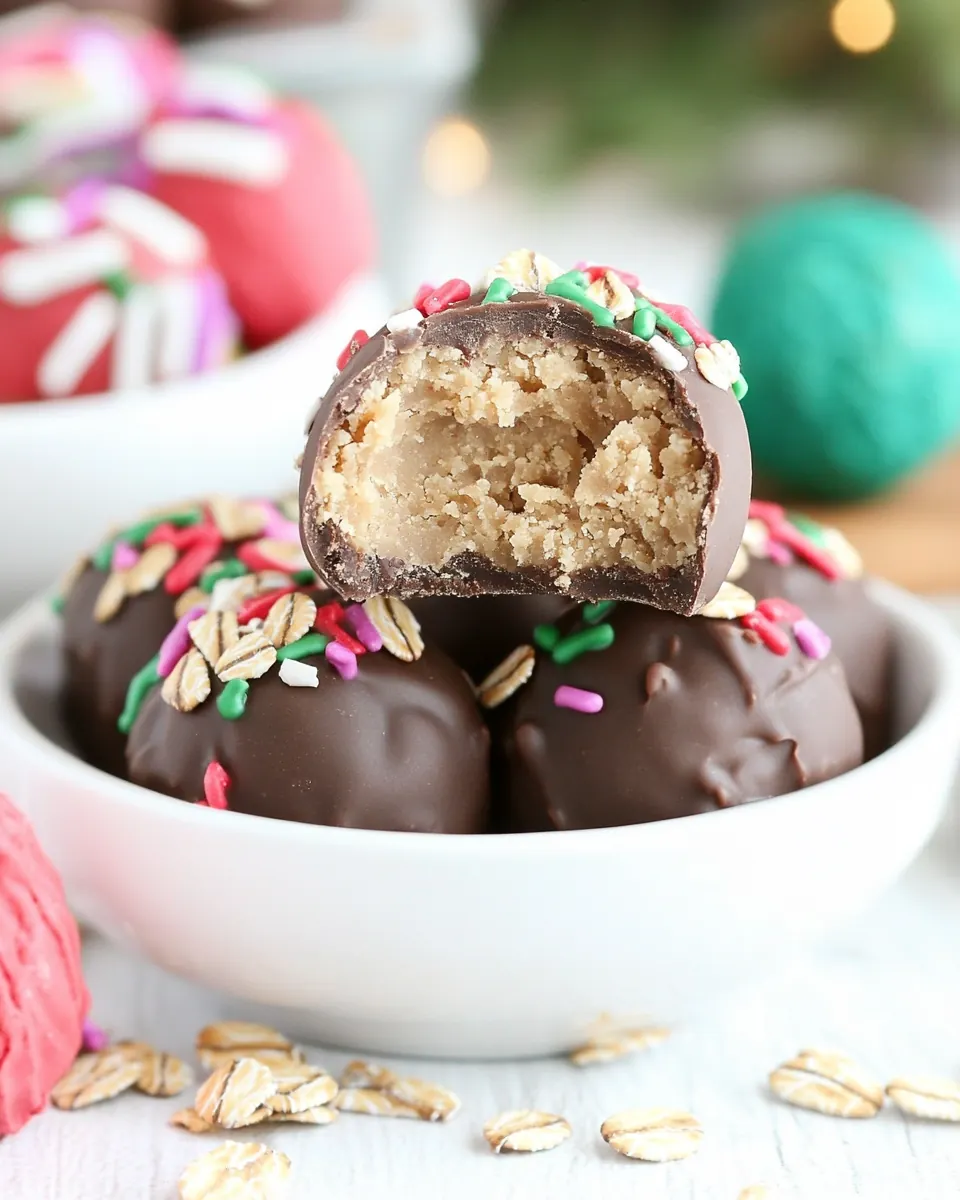
Peanut Butter Oatmeal Cookie Dough Truffles
Peanut Butter Oatmeal Cookie Dough Truffles came into my life on an evening when I wanted something nostalgic yet effortless, and they hit that sweet spot perfectly. I remember standing in my kitchen with a jar of peanut butter and a bag of old fashioned oats, thinking about the cookie dough I used to sneak as a kid. The idea of turning that into bite sized truffles felt whimsical, playful, and absolutely doable on a busy weeknight.
Over the years I have pared this treat down to its essentials, keeping the texture chewy and the coating crisp, so every bite is pleasantly contrasted. I like to make a double batch when guests stop by, because they vanish faster than any of my other sweets. When I roll them, I think about balance, making sure the brown sugar and peanut butter marry into a soft, scoopable dough that holds its shape once chilled.
There is something comforting about the simplicity here. No complicated tempering, no oven time, just mixing, chilling, and dipping, which means the kitchen smells like warm toast and sugar rather than baked goods. I’ve learned little tricks, like chilling the dough long enough so it firms up but remains tender, and using a sturdy coating of melted chocolate to create that satisfying snap when you bite into a truffle. These small choices make the difference between a good snack and a recipe I keep coming back to.
Recipe Snapshot
60 mins
30 mins
30 mins
Medium
120 kcal
American
Gluten-Free, Vegan
Desserts
Stand mixer, Paddle attachment, Cookie scoop, Wax paper, Microwave safe bowl
Why This Peanut Butter Oatmeal Cookie Dough Truffles Is So Good
They are irresistibly approachable
I love how Peanut Butter Oatmeal Cookie Dough Truffles feel unpretentious, yet special. You do not need fancy equipment, and the method is forgiving. I often bring them to gatherings because they travel well and require no last minute prep. The texture is creamy inside and crisp outside when coated with chocolate.
Perfect blend of texture and flavor
The combination of creamy peanut butter, grainy old fashioned oats, and sweet brown sugar creates a satisfying chew. The shredded sweetened coconut adds a light chew and tropical note, while a chocolate coating contributes snap and richness. I find that each component enhances the next, producing a truffle that is layered yet simple.
Quick to assemble, crowd pleasing
From my experience, these come together in under an hour of hands on time, most of which is chilling. They are ideal when you want something that looks fancy but requires very little technique. Guests often ask for the recipe, and I love that such a small effort yields big returns.
Flexible and forgiving
I appreciate recipes I can tweak, and this one is flexible. Swap the chocolate or change the topping, and it still works. If your dough seems too soft, a short chill solves it. If it is too dry, a splash of extra peanut butter restores creaminess. That makes it approachable whether you are an experienced baker or new to treats.
Kid friendly and nostalgic
These truffles tap into that cookie dough nostalgia without raw eggs, so I feel comfortable sharing them with kids. They are fun to roll, and decorating with additional coconut or sprinkles becomes a family activity. I love seeing them light up when they bite into something familiar, but a little more grown up because of the chocolate coating.
Essential Ingredients for Peanut Butter Oatmeal Cookie Dough Truffles
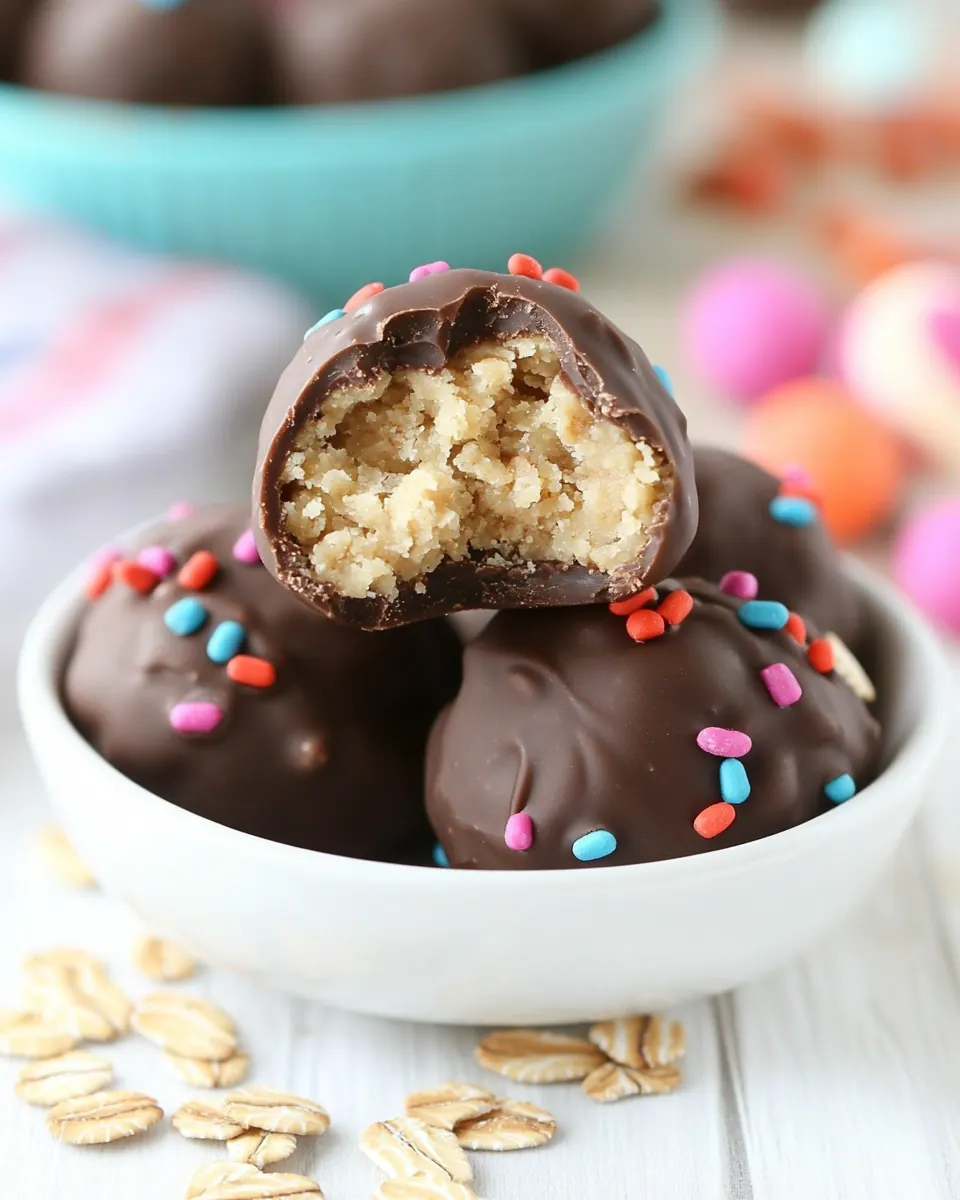
The ingredients in this recipe come together like a tiny team where each player has a clear role. I treat peanut butter as the binder and flavor anchor, while old fashioned oats deliver texture. Brown sugar brings caramel notes and tenderness, and the shredded sweetened coconut adds chew and a hint of sweetness. Finally, melted chocolate seals the truffles and gives a crisp contrast. Together, they produce a bite that feels indulgent but simple.
- 1 cup peanut butter: Creamy and binding, provides fat and structure that helps the truffle centers hold together while adding rich peanut flavor and moistness to the dough.
- 3/4 cup brown sugar: Sweetening and caramel notes, helps dissolve into the peanut butter to create a pliable, lightly chewy base while balancing salt and enhancing overall sweetness.
- 1 teaspoon vanilla: Aromatic and flavor-enhancing, adds depth and a warm, vanilla backbone to the mixture that brightens the peanut and sugar flavors without altering texture.
- 1 cup old fashioned oats quick oats would be fine too: Textural and absorbent, contributes whole-grain chew and body to the dough; quick oats can be used interchangeably for a softer texture while still providing structure.
- 1/2 cups shredded sweetened coconut: Flaky and sweet, offers a tropical, chewy contrast that contributes a subtle crunch and additional sweetness; it also helps distribute moisture throughout the dough.
- 10 ounces chocolate Candiquik or almond bark: Melting and coating, provides the outer chocolate shell when melted and tempered, creating a firm, glossy exterior that seals in the truffle centers and adds rich chocolate flavor.
- Additional coconut or sprinkles for topping (optional): Decorative and finishing, adds visual appeal and a final textural contrast when sprinkled on top; can be used to indicate flavor and make each truffle look polished and festive.
Step by Step Guide for Peanut Butter Oatmeal Cookie Dough Truffles
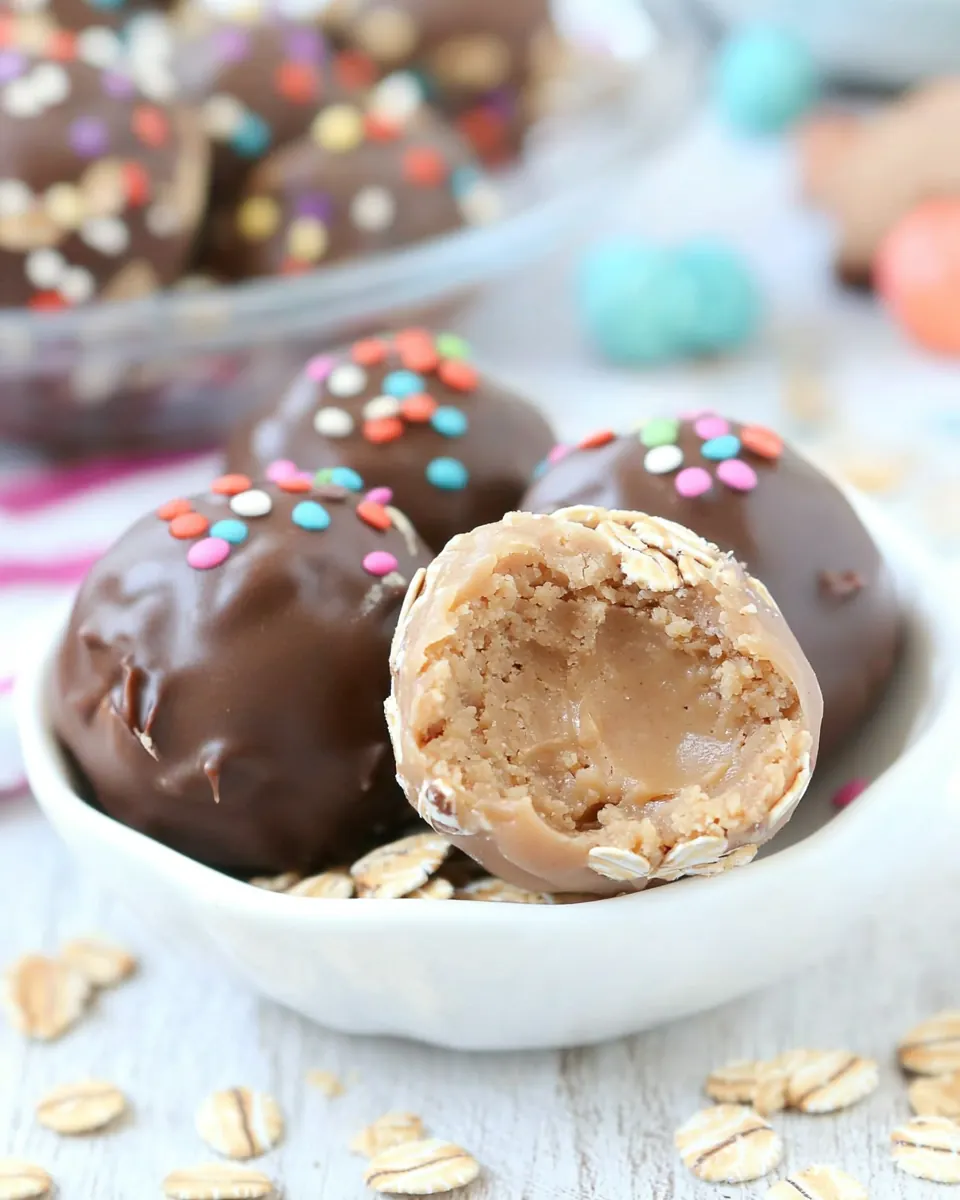
I like to think of the method as a gentle rhythm of mixing, chilling, and coating. The directions are straightforward, but small sensory cues guide you to perfect texture and flavor. Below, I expand each step with details to help you replicate the result every time.
- Add peanut butter and brown sugar to a stand mixer fitted with the paddle attachment. (You can also use a hand mixer!) Beat until incorporated, about 1 minute.: The bowl should smell warmly of caramel and roasted nuts as the peanut butter and brown sugar combine, creating a glossy, slightly thick batter. I watch for the mixture to pull away from the sides a little, which indicates good incorporation. Mixing for about one minute ensures the sugars dissolve into the peanut butter , producing a smooth, cohesive base texture. You want to avoid overbeating, which can warm the fats and make the dough too soft; if it looks oily, stop and chill briefly. A common mistake is under mixing, leaving sugar pockets, which makes the texture grainy rather than unified.
- Add vanilla, oats, and coconut and mix until the dough comes together.: Right after adding the vanilla , the aroma brightens, and folding in the oats and shredded sweetened coconut introduces a coarse, tactile feel. The mixture will transform from creamy to a shaped dough that holds together when pinched. I pay attention to the sound, a soft rustle as the oats are incorporated, and the look, where flakes of coconut disperse evenly. Why this matters: proper distribution creates uniform bites. A typical error is adding too much mix time which breaks down oats, producing a pasty texture; stop mixing as soon as the dough is cohesive.
- Scoop 2 tablespoon sized balls onto a cookie sheet covered with wax paper. Roll into balls. Chill for 30 minutes.: When you scoop and roll, the dough should feel tender and slightly tacky rather than sticky. Rolling creates a smooth exterior and helps compact the mixture, which aids in dipping later. Place each ball on wax paper so they do not stick, and chill until firm to the touch. The cold tightens the fats and stabilizes the shape, which is crucial for dipping. If you skip chilling, the balls may fall apart in the chocolate. A common pitfall is making balls too large; keep them uniform for even chilling and portion control.
- Melt candy according to package directions. Dip each truffle in the chocolate and tap off the excess. Place back onto the wax paper lined cookie sheet and top with sprinkles or extra coconut, if desired.: As you melt the chocolate , the kitchen fills with a rich aroma, signaling readiness for dipping. The chocolate should be fluid but not scorching, so follow the package guidance for temperature and stirring intervals. When you dunk a chilled truffle, the coating should flow smoothly and set with a glossy sheen. Tapping off the excess avoids pools of chocolate and yields a thin, even shell. Immediately add your optional sprinkles or extra coconut while the coating is still wet. Troubleshoot by rescuing a cracked shell with a spoonful of melted chocolate and a quick chill. A frequent error is overheating the coating, which can make it dull and grainy when cooled.
Expert Tips about Peanut Butter Oatmeal Cookie Dough Truffles
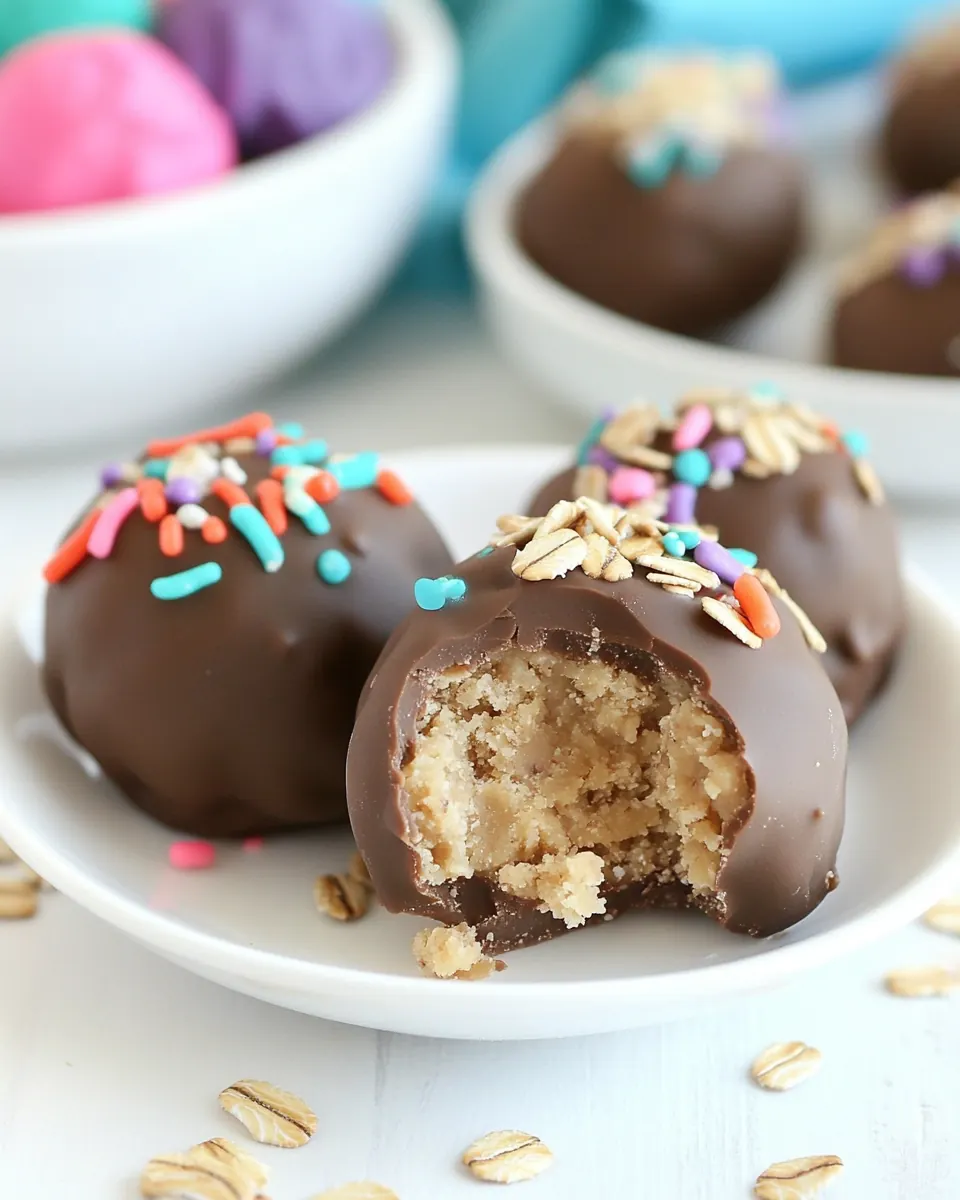
These tips reflect what I have learned from making truffles over and over. They focus on texture, timing, and simple tricks that elevate the final result. Use them to avoid common missteps and to personalize the recipe.
- Measure accurately: Use a scale for the best results, because small shifts in the ratio of peanut butter to oats change the dough texture significantly. I learned that eyeballing works sometimes, but weighing avoids surprises.
- Chill properly: Give the dough enough time to firm up, not just because it is easier to roll, but because a firmer center maintains structure when dipping in warm chocolate. I usually set a timer to avoid impatience.
- Choose the right coating: Candiquik or almond bark sets more sturdily than some plain baking chocolates, which is helpful if you want a neat shell. If you prefer real chocolate, temper it carefully for a glossy finish.
- Prevent seizing: If your melted chocolate thickens, a small splash of neutral oil can smooth it, but add sparingly. I only do this when necessary, because too much oil can thin the coating excessively.
- Top while wet: Apply sprinkles or extra coconut immediately after dipping so they adhere well. Waiting until the coating sets is a common mistake that makes decorations fall off.
What to Pair With Peanut Butter Oatmeal Cookie Dough Truffles
These truffles are versatile and work across occasions, from casual snacks to festive gatherings. They pair well with beverages and small plates that balance their sweetness. Below are serving ideas, storage tips, and occasion suggestions to help you present them thoughtfully.
- Casual coffee break: Serve a few truffles alongside a cup of hot coffee or black tea, letting the bitterness contrast the sweet, nutty center.
- After dinner dessert platter: Arrange truffles with fresh fruit and a couple of small cookies for a varied dessert course that lets guests graze and chat.
- Party finger food: Place on a pretty platter with small paper liners so guests can easily pick them up, perfect for showers, birthdays, or brunch gatherings.
- Gift boxes: Pack truffles in a small box lined with parchment for homemade edible gifts during holidays or special occasions, keeping them cool to maintain the shell integrity.
- Storage tips: Store in an airtight container in the refrigerator for up to two weeks, or freeze in layers separated by parchment for up to three months. Thaw overnight in the refrigerator before serving.
- Seasonal twist: For warmer months, keep them chilled until serving and consider a lighter topping like toasted coconut. In cooler months, pair with spiced tea for cozy contrast.
FAQ
Conclusion
These Peanut Butter Oatmeal Cookie Dough Truffles shine because they blend familiar, comforting flavors into a playful, bite sized treat that is easy to make and share. Give them a try the next time you want a no bake dessert that feels special yet approachable. They are forgiving, adaptable, and a consistently popular choice with both kids and adults, so enjoy making and gifting them with confidence.
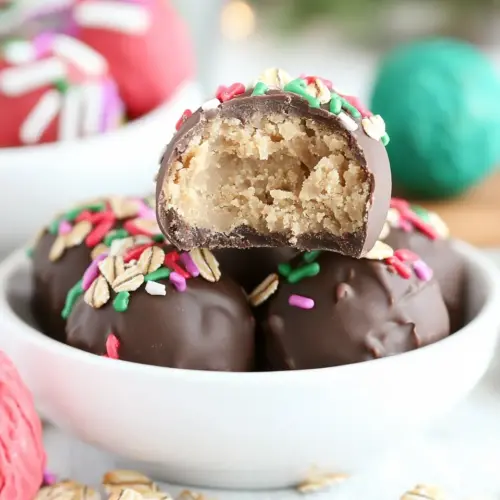
Peanut Butter Oatmeal Cookie Dough Truffles
Equipment
- Stand mixer
- Paddle attachment
- Cookie Scoop
- Wax paper
- Microwave-safe Bowl
Ingredients
- 1 cup peanut butter Creamy and binding, provides fat and structure that helps the truffle centers hold together while adding rich peanut flavor and moistness to the dough.
- 3/4 cup brown sugar Sweetening and caramel notes, helps dissolve into the peanut butter to create a pliable, lightly chewy base while balancing salt and enhancing overall sweetness.
- 1 teaspoon vanilla Aromatic and flavor-enhancing, adds depth and a warm, vanilla backbone to the mixture that brightens the peanut and sugar flavors without altering texture.
- 1 cup old fashioned oats quick oats would be fine too Textural and absorbent, contributes whole-grain chew and body to the dough; quick oats can be used interchangeably for a softer texture while still providing structure.
- 1/2 cups shredded sweetened coconut Flaky and sweet, offers a tropical, chewy contrast that contributes a subtle crunch and additional sweetness; it also helps distribute moisture throughout the dough.
- 10 ounces chocolate Candiquik or almond bark Melting and coating, provides the outer chocolate shell when melted and tempered, creating a firm, glossy exterior that seals in the truffle centers and adds rich chocolate flavor.
- Additional coconut or sprinkles for topping optional Decorative and finishing, adds visual appeal and a final textural contrast when sprinkled on top; can be used to indicate flavor and make each truffle look polished and festive.
Instructions
- Add peanut butter and brown sugar to a stand mixer fitted with the paddle attachment. (You can also use a hand mixer!) Beat until incorporated, about 1 minute.: The bowl should smell warmly of caramel and roasted nuts as the peanut butter and brown sugar combine, creating a glossy, slightly thick batter. I watch for the mixture to pull away from the sides a little, which indicates good incorporation. Mixing for about one minute ensures the sugars dissolve into the peanut butter , producing a smooth, cohesive base texture. You want to avoid overbeating, which can warm the fats and make the dough too soft; if it looks oily, stop and chill briefly. A common mistake is under mixing, leaving sugar pockets, which makes the texture grainy rather than unified.
- Add vanilla, oats, and coconut and mix until the dough comes together.: Right after adding the vanilla , the aroma brightens, and folding in the oats and shredded sweetened coconut introduces a coarse, tactile feel. The mixture will transform from creamy to a shaped dough that holds together when pinched. I pay attention to the sound, a soft rustle as the oats are incorporated, and the look, where flakes of coconut disperse evenly. Why this matters: proper distribution creates uniform bites. A typical error is adding too much mix time which breaks down oats, producing a pasty texture; stop mixing as soon as the dough is cohesive.
- Scoop 2 tablespoon sized balls onto a cookie sheet covered with wax paper. Roll into balls. Chill for 30 minutes.: When you scoop and roll, the dough should feel tender and slightly tacky rather than sticky. Rolling creates a smooth exterior and helps compact the mixture, which aids in dipping later. Place each ball on wax paper so they do not stick, and chill until firm to the touch. The cold tightens the fats and stabilizes the shape, which is crucial for dipping. If you skip chilling, the balls may fall apart in the chocolate. A common pitfall is making balls too large; keep them uniform for even chilling and portion control.
- Melt candy according to package directions. Dip each truffle in the chocolate and tap off the excess. Place back onto the wax paper lined cookie sheet and top with sprinkles or extra coconut, if desired.: As you melt the chocolate , the kitchen fills with a rich aroma, signaling readiness for dipping. The chocolate should be fluid but not scorching, so follow the package guidance for temperature and stirring intervals. When you dunk a chilled truffle, the coating should flow smoothly and set with a glossy sheen. Tapping off the excess avoids pools of chocolate and yields a thin, even shell. Immediately add your optional sprinkles or extra coconut while the coating is still wet. Troubleshoot by rescuing a cracked shell with a spoonful of melted chocolate and a quick chill. A frequent error is overheating the coating, which can make it dull and grainy when cooled.
Notes
- Measure accurately: Use a scale for the best results, because small shifts in the ratio of peanut butter to oats change the dough texture significantly. I learned that eyeballing works sometimes, but weighing avoids surprises.
- Chill properly: Give the dough enough time to firm up, not just because it is easier to roll, but because a firmer center maintains structure when dipping in warm chocolate. I usually set a timer to avoid impatience.
- Choose the right coating: Candiquik or almond bark sets more sturdily than some plain baking chocolates, which is helpful if you want a neat shell. If you prefer real chocolate, temper it carefully for a glossy finish.
- Prevent seizing: If your melted chocolate thickens, a small splash of neutral oil can smooth it, but add sparingly. I only do this when necessary, because too much oil can thin the coating excessively.
- Top while wet: Apply sprinkles or extra coconut immediately after dipping so they adhere well. Waiting until the coating sets is a common mistake that makes decorations fall off.
