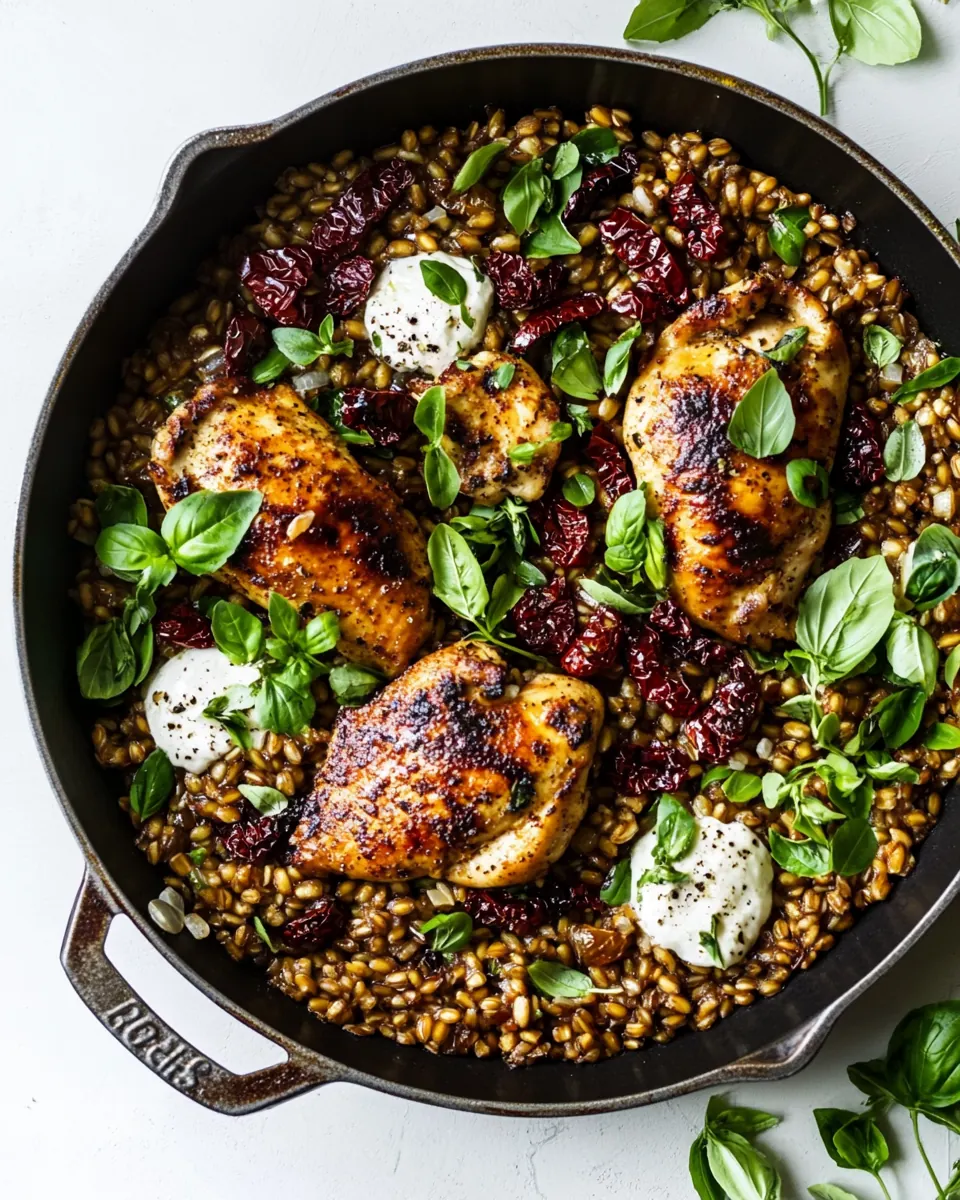
One Skillet Greek Sun Dried Tomato Chicken and Farro
One Skillet Greek Sun Dried Tomato Chicken and Farro came into my weeknight rotation the evening I needed something honest, bright, and forgiving after a long day in the kitchen and an even longer day at the office.
I remember pulling a tired pan from the cupboard, opening the fridge, and spotting a jar of sun dried tomatoes that had stubbornly refused to be used. I grabbed a handful of pantry staples and some leftover farro that I had cooked earlier in the week, and the rest became a very happy accident. The dish was rustic, with the tang of kalamata olives and the briny crumble of feta cheese cutting through the richness of pan seared chicken. Everyone around my table dug in without asking for substitutions, which to me is the highest compliment.
That night taught me two things: first, a single skillet can hold an entire story, and second, simple herbs like fresh dill and oregano are changemakers. I started treating this as my portable Mediterranean comfort food. It travels well to potlucks, and I’ve even scaled it up for a casual dinner with friends. The textures are satisfying, the flavors are layered, and it feels like a hug with a little attitude.
Recipe Snapshot
55 mins
15 mins
40 mins
Medium
450 kcal
Mediterranean
Gluten-Free, Keto
Dinner
Dutch oven, Cast iron skillet, Mixing bowl, Spatula
The Magic of This One Skillet Greek Sun Dried Tomato Chicken and Farro
Bold Mediterranean flavors in one pan
I love that One Skillet Greek Sun Dried Tomato Chicken and Farro concentrates bright, sun kissed flavors without demanding complicated technique. The combo of sun dried tomatoes, kalamata olives, and feta cheese gives you salty, sweet, and tangy notes in every bite, which keeps the dish from tasting flat. I often say that when the backbone of a dish is bold, you need fewer bells and whistles, and this recipe proves that point beautifully.
Easy weeknight friendly, yet dinner party worthy
I’m a fan of recipes that bridge the gap between weekday practicality and weekend showmanship. This skillet transitions from stovetop sear to oven roast with minimal fuss, so you get restaurant worthy texture without babysitting every minute. I’ve brought this to casual gatherings and never felt embarrassed about presenting it straight from the pan, because it always looks and tastes composed.
Texture play that feels intentional
Farro adds a chewy, nutty base that complements juicy seared chicken. The contrast between the tender grain, crisped edges of seared meat, and creamy cubes of feta cheese is what keeps forks moving. I appreciate how the toasted pine nuts add a final crunch when I have them on hand, lifting the whole plate.
Very forgiving technique
One of the reasons I keep this in regular rotation is that it’s incredibly forgiving. If your farro needs a touch more time, the oven roast finishes everything evenly. If your chicken is slightly thicker, simply slice thinner to serve. The seasoning is robust, so small timing or temperature tweaks rarely derail the final flavor, which is a comfort on busier nights.
Fresh herbs make it sing
I always double down on finishing herbs. Adding extra chopped dill at the end brightens every bite and makes it feel freshly plated. It’s an inexpensive step that transforms the finished dish from homey to vibrant, and I often recommend keeping a herb stash for exactly that reason.
Main Ingredients for One Skillet Greek Sun Dried Tomato Chicken and Farro
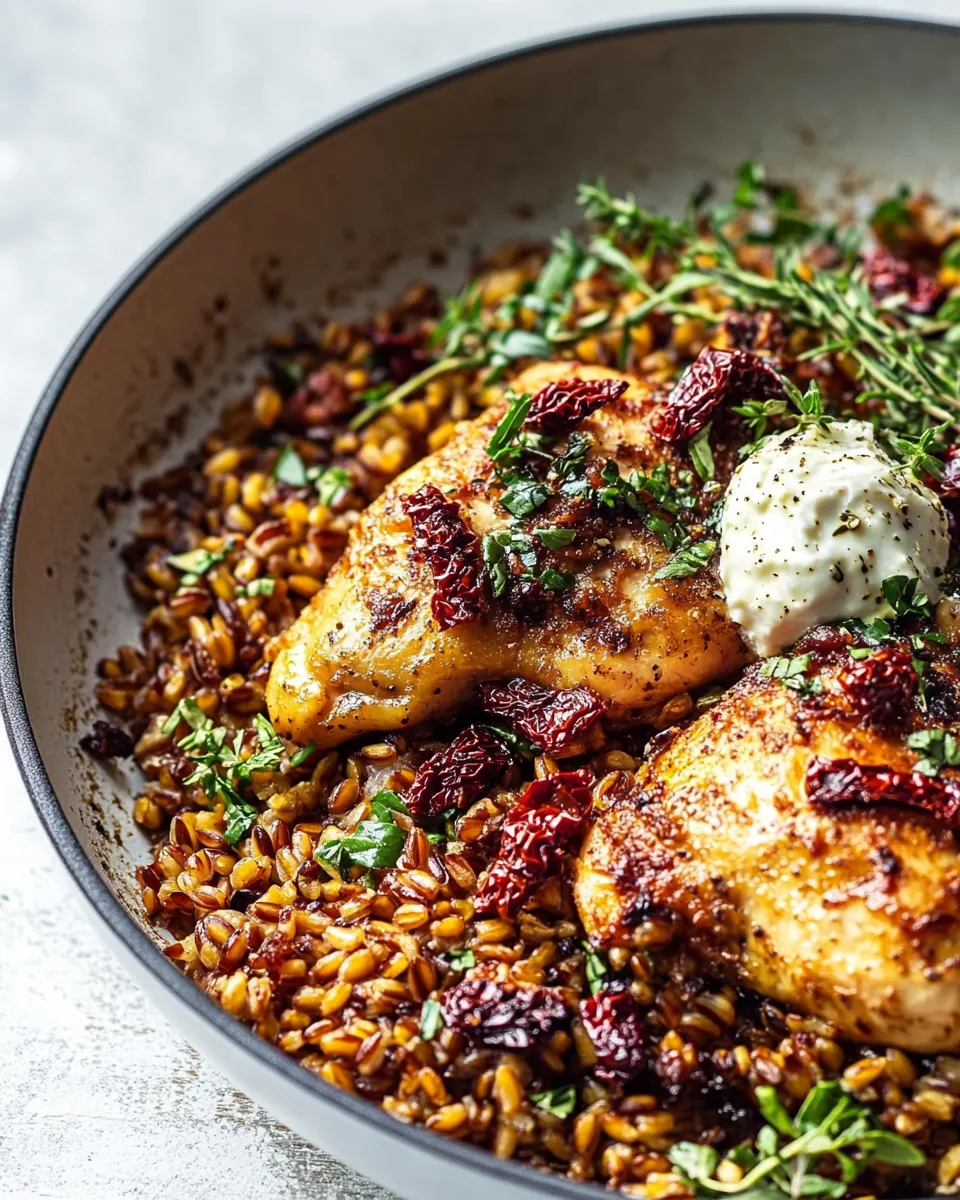
These ingredients form a harmony of Mediterranean comfort. The key players include protein for substance, a hearty grain for chew, and bright, salty accoutrements that lift the overall profile. Together they create a meal that is satisfying on the tongue and simple to assemble.
- 2 tablespoons extra virgin olive oil: Enhance and meld flavors by sautéing or drizzling; provides a fruity, peppery base and helps brown proteins while carrying aromatics throughout the dish. Use as a primary cooking fat to develop the skillet’s savory foundation and finish with a little extra for richness.
- 1 pound boneless, skinless chicken breasts, or small thighs: Supply tender, lean protein that crisps at the edges when seared; slices or cubes cook quickly and absorb marinade flavors. Choose breasts or small thighs based on preference for texture and juiciness, adjusting cook time to avoid drying out.
- 1/4 cup extra virgin olive oil: Add richness and body to marinades or dressings; contributes a smooth mouthfeel and helps emulsify balsamic for even coating of the chicken. Reserve a portion for finishing the dish to boost gloss and flavor depth.
- 2 tablespoons balsamic vinegar: Introduce bright, tangy acidity that balances oil and richness while cutting through the feta’s saltiness; also helps tenderize the chicken during marination. Whisk into the olive oil and herbs to create a flavorful dressing for pan-seared chicken.
- 1 tablespoon chopped fresh dill: Bring a fresh, aromatic herb note with light anise-like brightness; complements lemon and balsamic to lift heavier flavors. Sprinkle into marinades and finishings to add herbaceous complexity and a clean finish.
- 1 tablespoon chopped fresh oregano: Offer earthy, slightly minty flavors that pair well with lemon and tomato; adds Mediterranean authenticity and savory depth. Chop finely and use in the marinade and as a finishing garnish for layered herb presence.
- 1 tablespoon paprika: Provide smoky warmth and color to the chicken and farro; enhances savory depth and ties together roasted and bright elements. Use measurably to avoid overpowering the herbs and citrus, giving the dish a gentle paprika aroma.
- 2 cloves garlic, minced or grated: Supply pungent, aromatic savory flavor that infuses oil and chicken with depth; fresh–minced garlic browns quickly to release sweet, roasted notes. Add during searing and to the sauce base for a foundational savory backbone.
- kosher salt and black pepper: Season and balance flavors by amplifying savory notes and controlling overall saltiness; also add a touch of heat with black pepper for complexity. Adjust to taste during cooking and after combining with feta and olives for harmony.
- 1 cup uncooked farro or quinoa: Provide chewy, nutty whole-grain texture and absorbent body that takes on broth and flavors; farro or quinoa serve as the hearty grain base of the skillet. Cook in the same pan to soak up pan juices and meld all components into one-pot comfort.
- 2 1/2 cups low sodium chicken broth: Supply savory liquid and gentle seasoning to cook the grain while infusing it with chicken flavor; low sodium allows control of final salt levels. Pour over the grain to simmer until tender, creating a flavorful, cohesive risotto-like base.
- 2 cups baby spinach: Add bright, tender green leaves that wilt into the warm farro, contributing freshness, color, and a slight vegetal contrast. Stir in near the end of cooking so the spinach retains vibrant color and delicate texture.
- 1/2 cup oil packed sun-dried tomatoes: Contribute concentrated sweet-tangy tomato flavor and chewy texture; oil-packed sun-dried tomatoes add umami and richness that infuses the dish. Chop and stir in to distribute intense tomato notes throughout the grain and sauce.
- 1/3 cup kalamata olives, pitted: Introduce briny, fruity-salty complexity that contrasts with creamy feta and bright lemon; pitted kalamata olives add Mediterranean depth and savoury pops. Scatter in towards the end to preserve their texture and bold flavor bursts.
- juice of 1 lemon: Provide bright, acidic citrus notes that cut through oil, cheese, and richness while lifting the overall flavor profile. Squeeze over the finished skillet to add fresh tang and to brighten the herb and tomato elements.
- 8 ounces feta cheese, cubed: Add creamy, tangy, and salty crumbles that melt slightly into the warm grain; cubed feta delivers a rich, briny contrast and luxurious mouthfeel. Fold in gently so chunks remain distinct while contributing savory creaminess.
- 1 tablespoon chopped fresh dill: Supply a repeat herbaceous boost with fresh dill to layer green, slightly lemony flavors; used as a garnish or stirred in for additional aroma. Sprinkle over the finished dish to reinforce the dill profile and add freshness.
- 3 tablespoons toasted pine nuts () (optional): Provide crunchy, nutty texture and buttery flavor as an optional finishing touch; toasted pine nuts add a delicate crunch that complements the grain and cheese. Scatter lightly to introduce texture contrast and a toasted fragrance.
How to Assemble One Skillet Greek Sun Dried Tomato Chicken and Farro
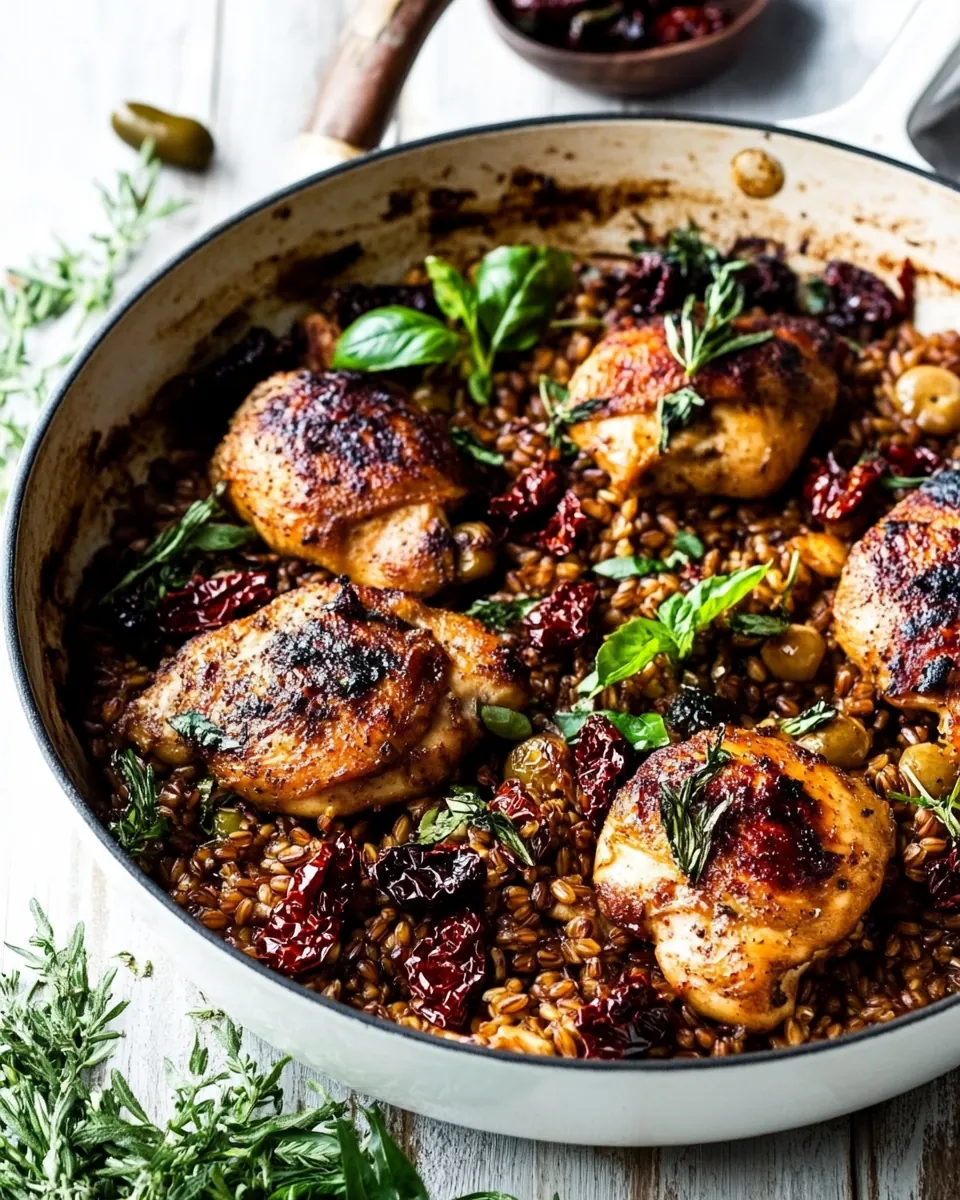
I like to think of the assembly as a short performance where timing and little sensory cues make the final act shine. The following steps take you from marinating to a perfectly roasted finish, with guidance on what to smell, see, and avoid along the way.
- Preheat the oven to 400 degrees F. In a medium bowl, combine 2 tablespoons olive oil, the chicken, balsamic vinegar, dill, oregano, paprika, garlic, and a large pinch of both salt and pepper. Toss well to evenly coat the chicken. Heat the remaining 2 tablespoons olive oil in a large dutch oven or cast iron skillet, set over medium high heat. When the oil is shimmering, add the chicken and sear on both sides until golden, about 3-5 minutes per side. Remove the chicken from the skillet. To the same skillet, add the farro. Cook 2-3 minutes. Add the chicken broth, spinach, sun-dried tomatoes, olives, and lemon juice. Bring to a boil over high heat and stir. Slide in the chicken and any juices left on the plate back into the skillet. Transfer to the oven and roast for 20 minutes or until the chicken is cooked through and the farro becomes soft. Serve the chicken topped with feta, dill, and pine nuts.: Your first sensory cue is a steadily warming kitchen, a dry heat that promises browning. The purpose of preheating is to ensure the oven is fully hot so the skillet finishes evenly, producing a slightly roasted top and tender interior. A common mistake is putting the pan into a cold oven, which results in uneven cooking and gummy textures. If your oven takes longer, wait until it reaches a stable temperature and use the middle rack for the best circulation.
- In a medium bowl, combine 2 tablespoons olive oil, the chicken, balsamic vinegar, dill, oregano, paprika, garlic, and a large pinch of both salt and pepper: As you mix, inhale the herbaceous steam and the tart sweet pop from the vinegar, which helps the chicken develop flavor beyond salt alone. This marinade coats the surface so that when seared, the spices create a fragrant crust. Avoid overmassing the bowl for too long, which can bruise delicate herbs and make the marinade muddy. Toss gently until everything looks evenly glossy and speckled with herbs.
- Toss well to evenly coat the chicken: You should notice the chicken takes on a darker sheen and the spices adhere to its surface, which is what creates flavor during searing. The why here is simple, a well coated exterior caramelizes more readily. A common slip is leaving cold, wet chicken in a crowded bowl; pat pieces dry first for better browning, and give them space while searing.
- Heat the remaining 2 tablespoons olive oil in a large dutch oven or cast iron skillet, set over medium high heat: Watch the oil shimmer and thin to coat the pan, that visual cue means it is ready. The right pan and temperature create Maillard reaction, that lovely browning that deepens flavor. Avoid letting the oil smoke, because burned oil will impart bitterness. If it starts smoking, lower the heat and let it calm before adding the chicken .
- When the oil is shimmering, add the chicken and sear on both sides until golden, about 3 to 5 minutes per side: You will hear a purposeful sizzle, and the edges will deepen to a warm brown. This initial sear locks in juices and creates texture contrast between the crunchy exterior and the juicy interior. Be mindful not to flip too often, since constant flipping prevents a proper crust. If the chicken releases and sticks, it likely needs more time to form the crust; use a thin spatula to ease it up.
- Remove the chicken from the skillet: When you lift the chicken , note the caramelized fond left behind, that brown residue is flavor gold for the next stage. Removing the meat temporarily prevents overcooking while you build the base with the grain. A common error is leaving the chicken in and adding liquid immediately, which can cool the pan and interrupt browning, so set the pieces on a plate to rest temporarily.
- To the same skillet, add the farro: You should hear a light toasting sound and smell a nutty warmth as the farro hits the hot pan. Toasting briefly enhances nuttiness and helps the grain remain distinct rather than mushy. Stir it so the grains pick up fond, but avoid toasting until smoking. If your farro is already pre cooked from the pantry, reduce this step and proceed gently to avoid crushing the grains.
- Cook 2 to 3 minutes: During this short period the farro develops a slightly deeper hue and a toasty aroma. This step matters because it layers flavor and slightly firms the exterior so the grain keeps its bite after simmering. A frequent misstep is leaving the heat too high and scorching the grains, so adjust the flame if you smell charring.
- Add the chicken broth, spinach, sun dried tomatoes, olives, and lemon juice: The moment you pour in the warm chicken broth you will see steam rise and hear a gentle bubbling begin, which signals the cooking process. The liquids combine with the fond to create a rich braising base, while the spinach wilts and integrates into the mixture. Stir to distribute ingredients evenly so every grain gets contact with liquid. Avoid adding cold broth straight from the fridge, because it can shock the pan and slow the cooking down.
- Bring to a boil over high heat and stir: Look for steady rolling bubbles and a lively aroma of herbs and lemon. Boiling briefly ensures the whole pan reaches an even temperature before the oven finishes the job. Over vigorous boiling can agitate the grains and create a porridge like texture, so once it reaches a boil, reduce heat just enough to maintain movement while you arrange the chicken .
- Slide in the chicken and any juices left on the plate back into the skillet: The return of the chicken and its juices enriches the braising liquid and promises cohesive flavor. You should hear a soft interaction as the pieces nestle among the farro and tomatoes, and the sight of bubbling liquid surrounding meat is reassuring. A typical mistake is crowding the pan so much the liquid cannot circulate; arrange the pieces with small gaps for even cooking.
- Transfer to the oven and roast for 20 minutes or until the chicken is cooked through and the farro becomes soft: The oven will produce gentle, enveloping heat that finishes the chicken and allows flavors to marry. Visual cues include bubbling edges and slightly reduced liquid, while the aroma becomes deeper and more cohesive. Use an instant read thermometer if you have one; the safe internal temperature for poultry ensures doneness without drying. Over roasting can dry the meat and desiccate the grains, so check a few minutes early if your pieces are thin.
- Serve the chicken topped with feta, dill, and pine nuts: As you plate, the combination of creamy feta cheese , fresh dill , and toasted pine nuts offers contrast and brightness. You will notice a final pop of salt from the cheese and a toasty crunch from the nuts, which rounds the mouthfeel. A mistake I often see is adding the feta before giving the dish a few minutes to rest; add it after baking so it retains some texture and does not completely melt away.
Making Adjustments
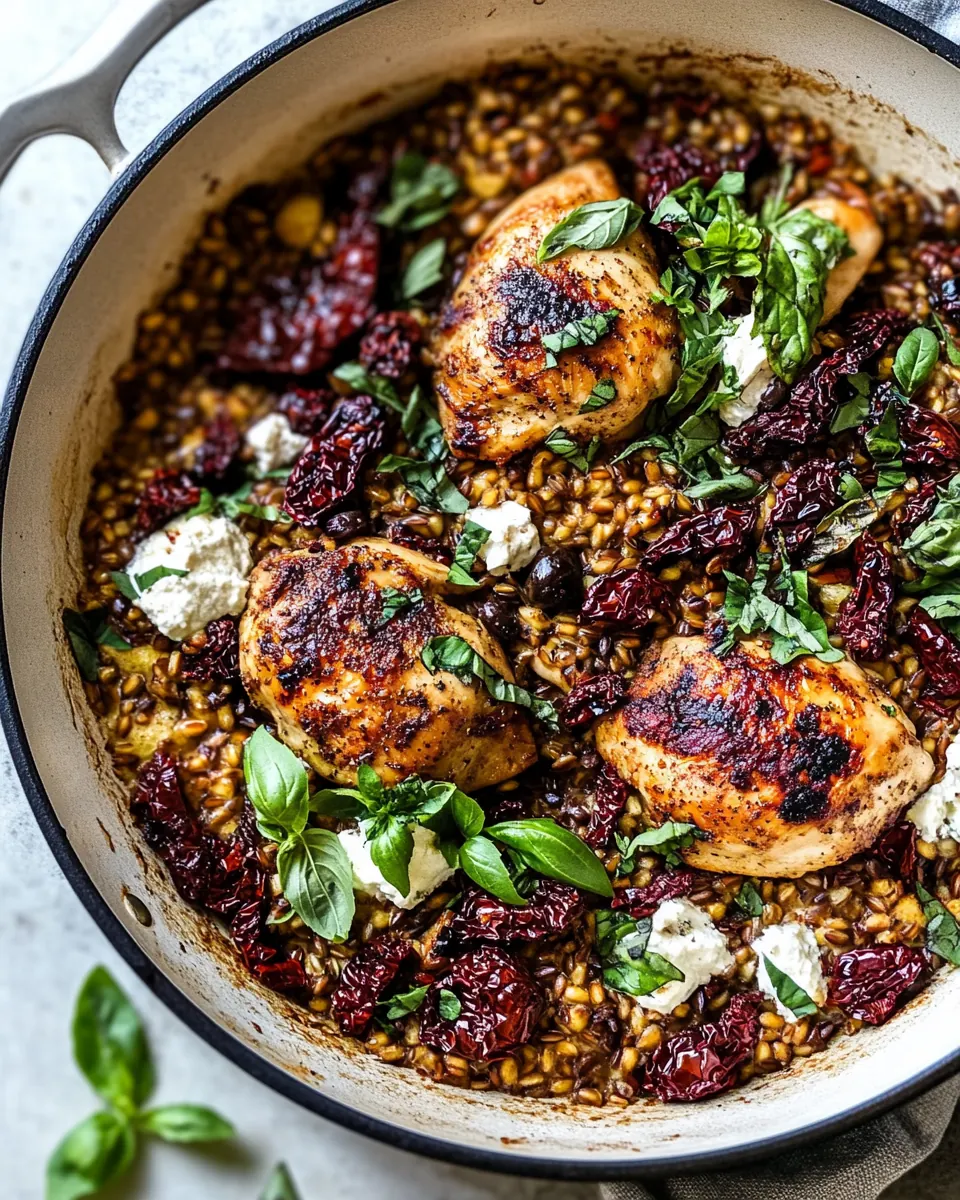
I often adapt recipes to the moment, whether I am short on time, feeding picky eaters, or working with pantry substitutions. Below are practical adjustments I use frequently to keep the spirit of One Skillet Greek Sun Dried Tomato Chicken and Farro intact, while accommodating what I have on hand.
- Substitute grain carefully: If you swap farro for quinoa, reduce the liquid slightly and check for doneness earlier because quinoa cooks faster and absorbs liquid differently.
- Make it leaner or richer: Choose boneless skinless chicken breasts for a lighter dish or small thighs for juicier results, remembering thighs may need a couple more minutes to reach safe temperature.
- Adjust salt mindfully: Because feta cheese and kalamata olives bring brine, season lightly at first and finish with a taste test after baking to avoid oversalting.
- Boost herb freshness: Add most of the chopped dill at the end to preserve its bright aroma, and reserve a little for garnish to create visual and flavor contrast.
- Pine nut alternative: If you do not have pine nuts, lightly toasted chopped walnuts or almonds provide a similar textural lift and a nutty echo.
- Batch and reheat tips: Store leftovers covered in the fridge and reheat gently with a splash of broth to revive moisture, finishing with fresh dill and a sprinkle of feta cheese.
Side Dish Ideas for One Skillet Greek Sun Dried Tomato Chicken and Farro
This dish stands well on its own but also pairs nicely with simple, bright sides that echo the Mediterranean influence. Here are serving ideas for different occasions and storage notes to help you plan.
- For a light lunch: Serve a small wedge of the skillet with a crisp green tossed with lemon vinaigrette, the acidity complements the sun dried tomatoes and feta cheese.
- For a cozy dinner: Add a warm, crusty bread to soak up the braising juices, which is satisfying and communal when served family style.
- For Ramadan or special gatherings: Offer alongside simple roasted vegetables and an herb yogurt dip, so guests can compose plates to taste and enjoy varied textures.
- Serve at potlucks: Bring the skillet to the table for a rustic presentation, and provide small bowls of extra feta cheese, lemon wedges, and toasted pine nuts for customization.
- Storage tips: Refrigerate in an airtight container for up to three days; when reheating, add a splash of chicken broth and warm gently to avoid drying the chicken.
- Seasonal pairings: In spring, pair with a simple salad of baby greens and radishes; in cooler months, roasted root vegetables echo the dish’s warm flavors.
FAQ
Conclusion
What makes this recipe special is its confident layering of Mediterranean flavors and its one skillet convenience that yields both texture and brightness. It brings together seared chicken, nutty farro, briny kalamata olives, and creamy feta cheese into a cohesive, flavorful meal that feels both homey and a little elevated. I encourage you to try it the next time you want a simple, satisfying dinner that impresses without fuss. Serve it straight from the pan, add a scattering of fresh herbs, and enjoy the way those contrasting elements sing together around your table.
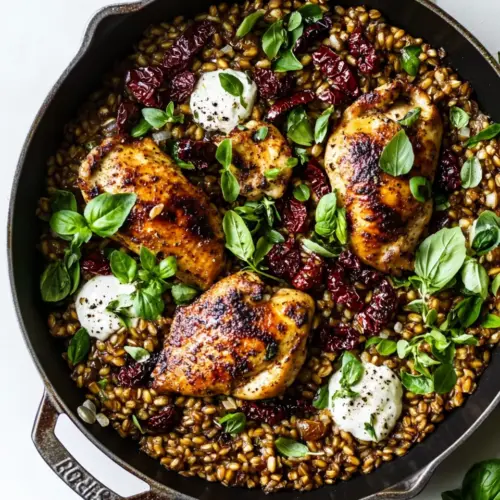
One Skillet Greek Sun Dried Tomato Chicken and Farro
Equipment
- Dutch Oven
- Cast-Iron Skillet
- Mixing Bowl
- Spatula
Ingredients
- 2 tablespoons extra virgin olive oil Enhance and meld flavors by sautéing or drizzling; provides a fruity, peppery base and helps brown proteins while carrying aromatics throughout the dish. Use as a primary cooking fat to develop the skillet’s savory foundation and finish with a little extra for richness.
- 1 pound boneless, skinless chicken breasts, or small thighs Supply tender, lean protein that crisps at the edges when seared; slices or cubes cook quickly and absorb marinade flavors. Choose breasts or small thighs based on preference for texture and juiciness, adjusting cook time to avoid drying out.
- 1/4 cup extra virgin olive oil Add richness and body to marinades or dressings; contributes a smooth mouthfeel and helps emulsify balsamic for even coating of the chicken. Reserve a portion for finishing the dish to boost gloss and flavor depth.
- 2 tablespoons balsamic vinegar Introduce bright, tangy acidity that balances oil and richness while cutting through the feta’s saltiness; also helps tenderize the chicken during marination. Whisk into the olive oil and herbs to create a flavorful dressing for pan-seared chicken.
- 1 tablespoon chopped fresh dill Bring a fresh, aromatic herb note with light anise-like brightness; complements lemon and balsamic to lift heavier flavors. Sprinkle into marinades and finishings to add herbaceous complexity and a clean finish.
- 1 tablespoon chopped fresh oregano Offer earthy, slightly minty flavors that pair well with lemon and tomato; adds Mediterranean authenticity and savory depth. Chop finely and use in the marinade and as a finishing garnish for layered herb presence.
- 1 tablespoon paprika Provide smoky warmth and color to the chicken and farro; enhances savory depth and ties together roasted and bright elements. Use measurably to avoid overpowering the herbs and citrus, giving the dish a gentle paprika aroma.
- 2 cloves garlic, minced or grated Supply pungent, aromatic savory flavor that infuses oil and chicken with depth; fresh-minced garlic browns quickly to release sweet, roasted notes. Add during searing and to the sauce base for a foundational savory backbone.
- kosher salt and black pepper Season and balance flavors by amplifying savory notes and controlling overall saltiness; also add a touch of heat with black pepper for complexity. Adjust to taste during cooking and after combining with feta and olives for harmony.
- 1 cup uncooked farro or quinoa Provide chewy, nutty whole-grain texture and absorbent body that takes on broth and flavors; farro or quinoa serve as the hearty grain base of the skillet. Cook in the same pan to soak up pan juices and meld all components into one-pot comfort.
- 2 1/2 cups low sodium chicken broth Supply savory liquid and gentle seasoning to cook the grain while infusing it with chicken flavor; low sodium allows control of final salt levels. Pour over the grain to simmer until tender, creating a flavorful, cohesive risotto-like base.
- 2 cups baby spinach Add bright, tender green leaves that wilt into the warm farro, contributing freshness, color, and a slight vegetal contrast. Stir in near the end of cooking so the spinach retains vibrant color and delicate texture.
- 1/2 cup oil packed sun-dried tomatoes Contribute concentrated sweet-tangy tomato flavor and chewy texture; oil-packed sun-dried tomatoes add umami and richness that infuses the dish. Chop and stir in to distribute intense tomato notes throughout the grain and sauce.
- 1/3 cup kalamata olives, pitted Introduce briny, fruity-salty complexity that contrasts with creamy feta and bright lemon; pitted kalamata olives add Mediterranean depth and savoury pops. Scatter in towards the end to preserve their texture and bold flavor bursts.
- juice of 1 lemon Provide bright, acidic citrus notes that cut through oil, cheese, and richness while lifting the overall flavor profile. Squeeze over the finished skillet to add fresh tang and to brighten the herb and tomato elements.
- 8 ounces feta cheese, cubed Add creamy, tangy, and salty crumbles that melt slightly into the warm grain; cubed feta delivers a rich, briny contrast and luxurious mouthfeel. Fold in gently so chunks remain distinct while contributing savory creaminess.
- 1 tablespoon chopped fresh dill Supply a repeat herbaceous boost with fresh dill to layer green, slightly lemony flavors; used as a garnish or stirred in for additional aroma. Sprinkle over the finished dish to reinforce the dill profile and add freshness.
- 3 tablespoons toasted pine nuts (optional) Provide crunchy, nutty texture and buttery flavor as an optional finishing touch; toasted pine nuts add a delicate crunch that complements the grain and cheese. Scatter lightly to introduce texture contrast and a toasted fragrance.
Instructions
- Preheat the oven to 400 degrees F. In a medium bowl, combine 2 tablespoons olive oil, the chicken, balsamic vinegar, dill, oregano, paprika, garlic, and a large pinch of both salt and pepper. Toss well to evenly coat the chicken. Heat the remaining 2 tablespoons olive oil in a large dutch oven or cast iron skillet, set over medium high heat. When the oil is shimmering, add the chicken and sear on both sides until golden, about 3-5 minutes per side. Remove the chicken from the skillet. To the same skillet, add the farro. Cook 2-3 minutes. Add the chicken broth, spinach, sun-dried tomatoes, olives, and lemon juice. Bring to a boil over high heat and stir. Slide in the chicken and any juices left on the plate back into the skillet. Transfer to the oven and roast for 20 minutes or until the chicken is cooked through and the farro becomes soft. Serve the chicken topped with feta, dill, and pine nuts.: Your first sensory cue is a steadily warming kitchen, a dry heat that promises browning. The purpose of preheating is to ensure the oven is fully hot so the skillet finishes evenly, producing a slightly roasted top and tender interior. A common mistake is putting the pan into a cold oven, which results in uneven cooking and gummy textures. If your oven takes longer, wait until it reaches a stable temperature and use the middle rack for the best circulation.
- In a medium bowl, combine 2 tablespoons olive oil, the chicken, balsamic vinegar, dill, oregano, paprika, garlic, and a large pinch of both salt and pepper: As you mix, inhale the herbaceous steam and the tart sweet pop from the vinegar, which helps the chicken develop flavor beyond salt alone. This marinade coats the surface so that when seared, the spices create a fragrant crust. Avoid overmassing the bowl for too long, which can bruise delicate herbs and make the marinade muddy. Toss gently until everything looks evenly glossy and speckled with herbs.
- Toss well to evenly coat the chicken: You should notice the chicken takes on a darker sheen and the spices adhere to its surface, which is what creates flavor during searing. The why here is simple, a well coated exterior caramelizes more readily. A common slip is leaving cold, wet chicken in a crowded bowl; pat pieces dry first for better browning, and give them space while searing.
- Heat the remaining 2 tablespoons olive oil in a large dutch oven or cast iron skillet, set over medium high heat: Watch the oil shimmer and thin to coat the pan, that visual cue means it is ready. The right pan and temperature create Maillard reaction, that lovely browning that deepens flavor. Avoid letting the oil smoke, because burned oil will impart bitterness. If it starts smoking, lower the heat and let it calm before adding the chicken .
- When the oil is shimmering, add the chicken and sear on both sides until golden, about 3 to 5 minutes per side: You will hear a purposeful sizzle, and the edges will deepen to a warm brown. This initial sear locks in juices and creates texture contrast between the crunchy exterior and the juicy interior. Be mindful not to flip too often, since constant flipping prevents a proper crust. If the chicken releases and sticks, it likely needs more time to form the crust; use a thin spatula to ease it up.
- Remove the chicken from the skillet: When you lift the chicken , note the caramelized fond left behind, that brown residue is flavor gold for the next stage. Removing the meat temporarily prevents overcooking while you build the base with the grain. A common error is leaving the chicken in and adding liquid immediately, which can cool the pan and interrupt browning, so set the pieces on a plate to rest temporarily.
- To the same skillet, add the farro: You should hear a light toasting sound and smell a nutty warmth as the farro hits the hot pan. Toasting briefly enhances nuttiness and helps the grain remain distinct rather than mushy. Stir it so the grains pick up fond, but avoid toasting until smoking. If your farro is already pre cooked from the pantry, reduce this step and proceed gently to avoid crushing the grains.
- Cook 2 to 3 minutes: During this short period the farro develops a slightly deeper hue and a toasty aroma. This step matters because it layers flavor and slightly firms the exterior so the grain keeps its bite after simmering. A frequent misstep is leaving the heat too high and scorching the grains, so adjust the flame if you smell charring.
- Add the chicken broth, spinach, sun dried tomatoes, olives, and lemon juice: The moment you pour in the warm chicken broth you will see steam rise and hear a gentle bubbling begin, which signals the cooking process. The liquids combine with the fond to create a rich braising base, while the spinach wilts and integrates into the mixture. Stir to distribute ingredients evenly so every grain gets contact with liquid. Avoid adding cold broth straight from the fridge, because it can shock the pan and slow the cooking down.
- Bring to a boil over high heat and stir: Look for steady rolling bubbles and a lively aroma of herbs and lemon. Boiling briefly ensures the whole pan reaches an even temperature before the oven finishes the job. Over vigorous boiling can agitate the grains and create a porridge like texture, so once it reaches a boil, reduce heat just enough to maintain movement while you arrange the chicken .
- Slide in the chicken and any juices left on the plate back into the skillet: The return of the chicken and its juices enriches the braising liquid and promises cohesive flavor. You should hear a soft interaction as the pieces nestle among the farro and tomatoes, and the sight of bubbling liquid surrounding meat is reassuring. A typical mistake is crowding the pan so much the liquid cannot circulate; arrange the pieces with small gaps for even cooking.
- Transfer to the oven and roast for 20 minutes or until the chicken is cooked through and the farro becomes soft: The oven will produce gentle, enveloping heat that finishes the chicken and allows flavors to marry. Visual cues include bubbling edges and slightly reduced liquid, while the aroma becomes deeper and more cohesive. Use an instant read thermometer if you have one; the safe internal temperature for poultry ensures doneness without drying. Over roasting can dry the meat and desiccate the grains, so check a few minutes early if your pieces are thin.
- Serve the chicken topped with feta, dill, and pine nuts: As you plate, the combination of creamy feta cheese , fresh dill , and toasted pine nuts offers contrast and brightness. You will notice a final pop of salt from the cheese and a toasty crunch from the nuts, which rounds the mouthfeel. A mistake I often see is adding the feta before giving the dish a few minutes to rest; add it after baking so it retains some texture and does not completely melt away.
Notes
- Substitute grain carefully: If you swap farro for quinoa, reduce the liquid slightly and check for doneness earlier because quinoa cooks faster and absorbs liquid differently.
- Make it leaner or richer: Choose boneless skinless chicken breasts for a lighter dish or small thighs for juicier results, remembering thighs may need a couple more minutes to reach safe temperature.
- Adjust salt mindfully: Because feta cheese and kalamata olives bring brine, season lightly at first and finish with a taste test after baking to avoid oversalting.
- Boost herb freshness: Add most of the chopped dill at the end to preserve its bright aroma, and reserve a little for garnish to create visual and flavor contrast.
- Pine nut alternative: If you do not have pine nuts, lightly toasted chopped walnuts or almonds provide a similar textural lift and a nutty echo.
- Batch and reheat tips: Store leftovers covered in the fridge and reheat gently with a splash of broth to revive moisture, finishing with fresh dill and a sprinkle of feta cheese.
