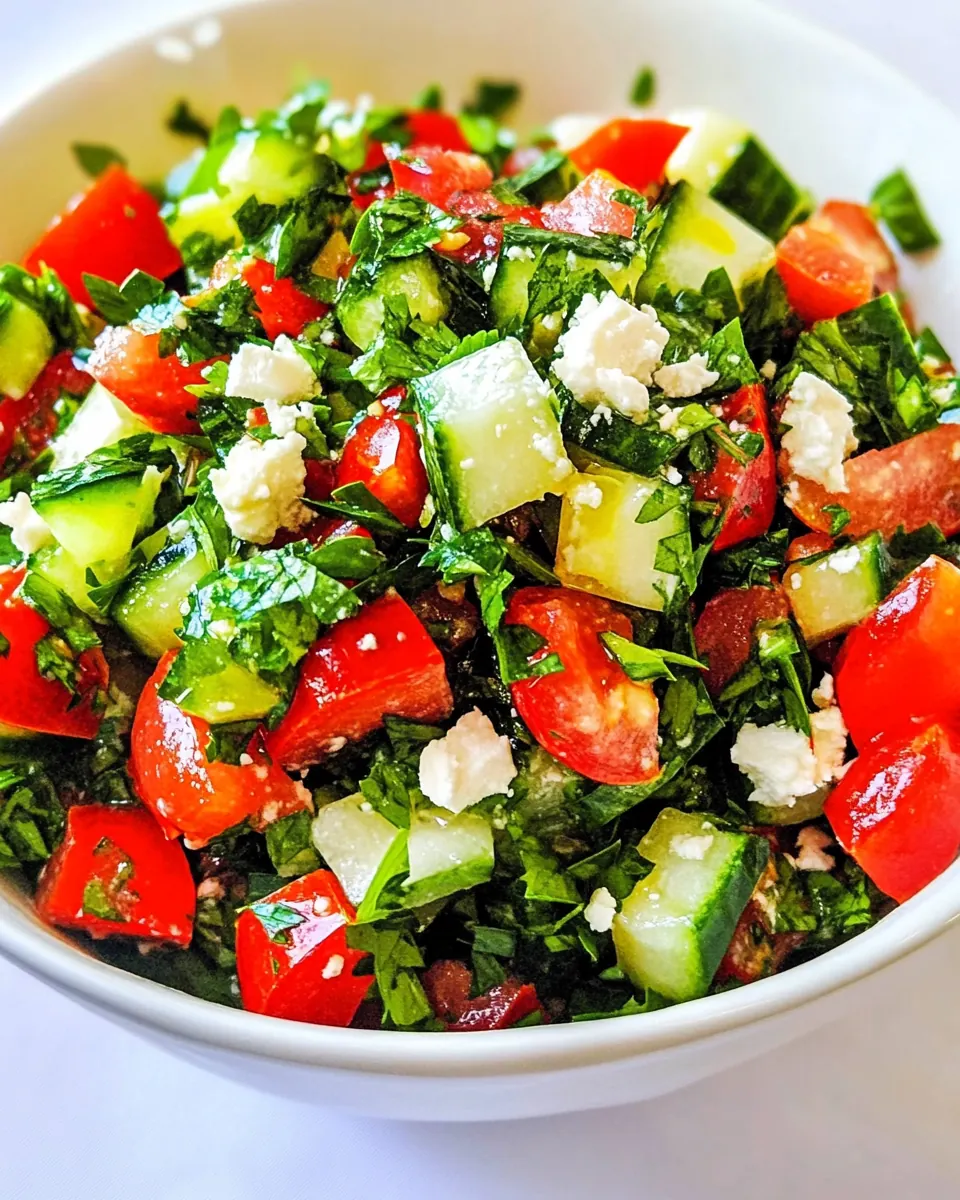
Middle Eastern Tomato Salad
Middle Eastern Tomato Salad arrived at my kitchen table on a scorching summer afternoon, brought by a neighbor who swore it was the only thing that could rescue us from the heat. I remember the first bite, how the bright tomato juice met the cool snap of cucumber and the fragrant lift of heaps of parsley and mint. It felt like a small, refreshing celebration in a bowl, and ever since I have kept the recipe in my weeknight rotation.
Over time I’ve adjusted the balance, nudging in a little extra olive oil or a splash more lemon juice depending on the tomatoes. Some days I let it sit a short while so the flavors marry, other times I toss it together at the last minute for peak crunch. What never changes is the simplicity and the way it brightens heavier mains, or stands proudly as a light lunch with warm flatbread.
Recipe Snapshot
15 mins
15 mins
Medium
150 kcal
Mediterranean
Vegan, Gluten-Free
Salads
Mixing bowl, Colander, Knife, Cutting board
Why This Middle Eastern Tomato Salad Shines
Freshness That Speaks
I love how Middle Eastern Tomato Salad champions truly fresh produce. When the tomato and cucumber are at their peak, the salad needs almost nothing else to sing, and that honest flavor is one of the main reasons I reach for it again and again.
Herb-Forward Brightness
The generous handfuls of parsley and mint bring aromatic complexity, cutting through the acidity of the lemon juice and the lushness of the olive oil. I find this herb-forward approach makes the salad feel sophisticated without fuss.
Ridiculously Versatile
I use this salad as a side for grilled vegetables, a topping for falafel, or a cooling counterpoint to spicy dishes. Its simplicity lets it adapt to many meals, which is why I always keep the ingredients on hand during summer.
Speed and Ease
This comes together in minutes, making it perfect for last-minute gatherings. The minimal technique means you spend more time enjoying company and less time prepping, and that convenience is huge for busy evenings.
Healthy and Satisfying
Between the herbs, vegetables, and heart healthy olive oil, this salad feels light but substantial. I often reach for it when I want something nourishing that still tastes indulgent, and that balance is what keeps me coming back.
Ingredients Required for Middle Eastern Tomato Salad
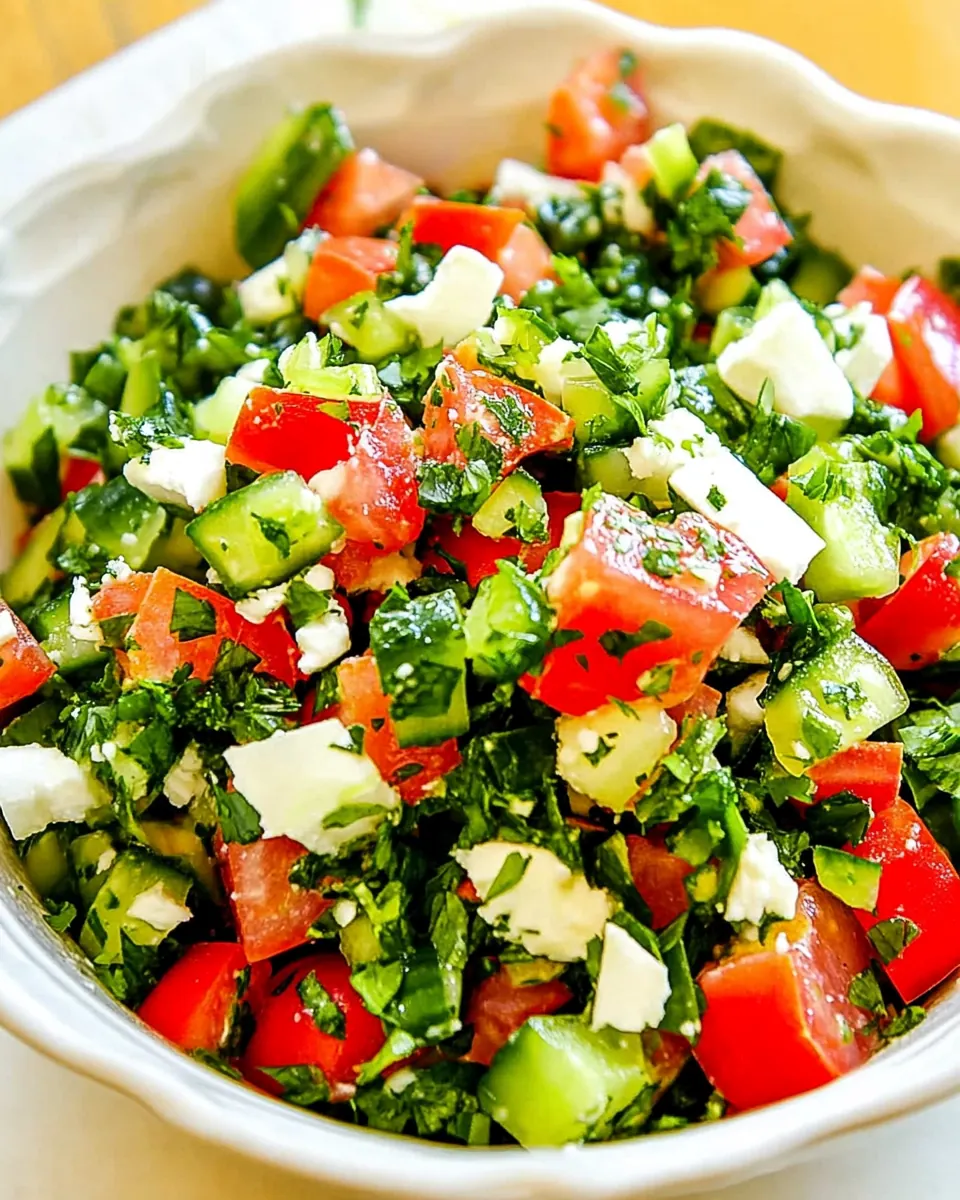
I treat these ingredients as a small, harmonious team. The juicy tomato and crisp cucumber provide texture contrast, while the sharpness of the onion is mellowed by the bright acidity of lemon juice and the richness of olive oil. The real magic comes from the herbs, parsley and mint, which lift the whole salad into something aromatic and memorable.
- 1 cup finely diced cucumber (remove seeds if they are large): Finely diced to add crisp, refreshing texture and bright, cooling flavor; removes excess water and seeds to prevent salad from becoming soggy and to maintain a balanced consistency.
- 1 cup finely diced tomato: Finely diced to contribute juicy, sweet-tart tomato flavor and vibrant color; provides body and moisture that binds with herbs and dressing for classic salad character.
- 3/4 cup finely diced onion (see notes): Finely diced to supply sharp, pungent bite and aromatic depth; can be soaked or rinsed to mellow intensity and achieve a more balanced overall flavor profile.
- 1 cup finely chopped parsley (more or less, to taste): Finely chopped to deliver herbaceous, slightly peppery freshness and aromatic lift; bulk and green color create contrast with tomatoes while contributing bright, savory notes.
- 1 cup finely chopped mint (more or less, to taste): Finely chopped to bring cool, sweet-menthol aroma and refreshing contrast; complements parsley and tomato while enhancing complexity and palate-cleansing qualities.
- 3 T olive oil, (more or less to taste): Used as the primary fat to coat ingredients, carry flavor, and add silkiness; enriches mouthfeel while melding lemon and herbs into a cohesive dressing.
- 2 T fresh lemon juice (more or less to taste): Used to provide bright acidity that balances oil and herbs; brightens flavors, cuts through richness, and livens the overall taste with citrusy tartness.
- salt and fresh-ground black pepper to taste: Used to season and enhance all flavors while providing subtle heat from freshly ground pepper; adjust to taste to achieve desired savory balance and depth.
How to Make Middle Eastern Tomato Salad
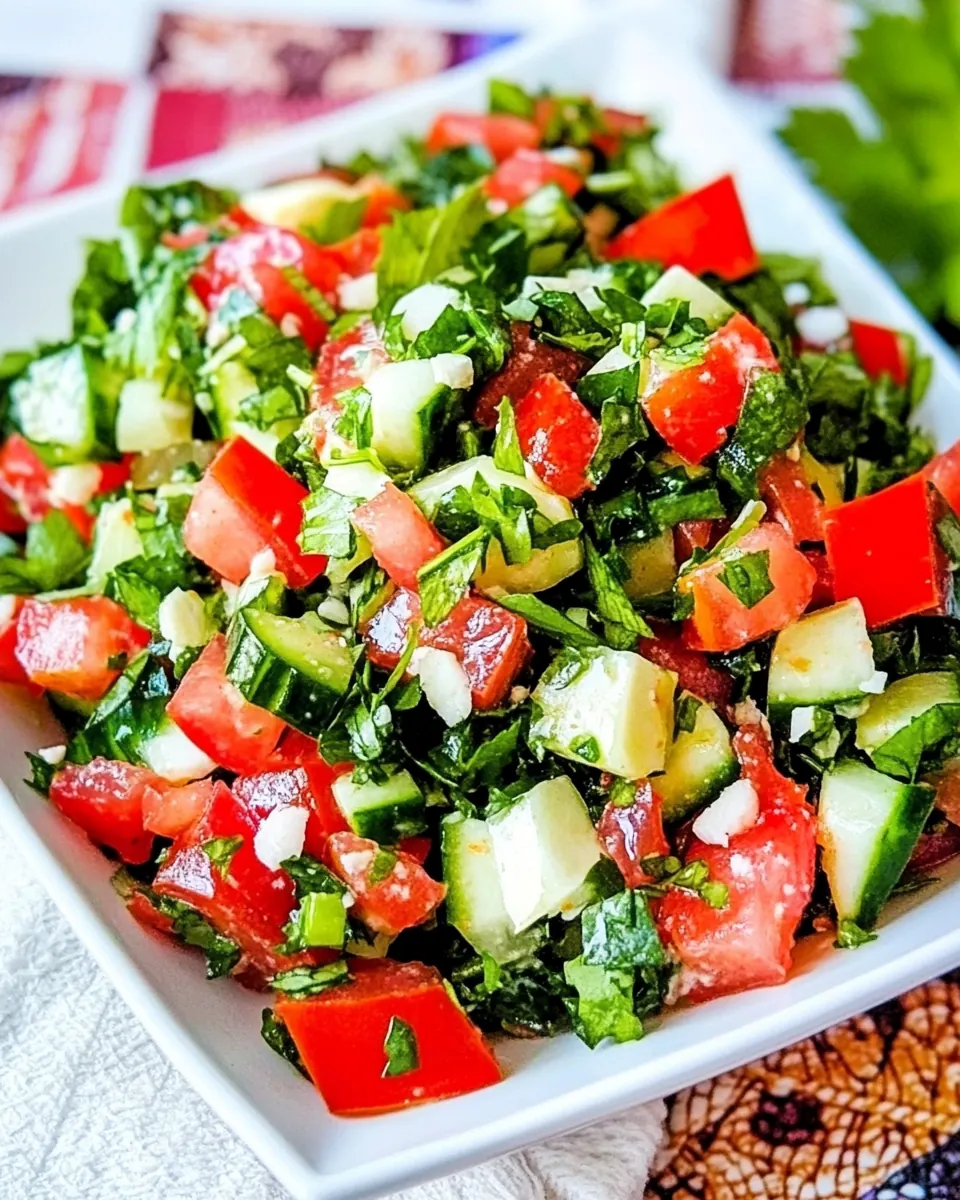
This salad requires only basic chopping and a light toss, but attention to texture and seasoning elevates it. Take your time with the herbs and match dice sizes so each bite is balanced. Below are the original steps, expanded into detailed guidance to help you get consistent results.
- Chop cucumber in pieces less than 1/2 inch and put in colander.: The cucumber should be diced small so it blends with the other elements, providing a crisp, cool counterpoint. As you chop, you'll hear a clean, watery snap as the knife hits firm flesh, and the pale green cubes should glisten. Placing them in a colander helps excess water drain away, preventing a soggy salad. A common mistake is cutting unevenly, which leads to inconsistent texture. If your pieces are too large the salad becomes uneven, so aim for uniformity.
- Add a generous amount of salt and let sit while you chop other ingredients.: Salting the cucumber draws out excess moisture and concentrates flavor, creating a firmer bite. You may notice tiny beads of liquid pooling in the colander after a few minutes; that is the salt doing its work. This step also seasons from within, so you need less finishing salt. Avoid over salting early on, or the salad can become too saline; if you do oversalt, briefly rinse and drain the cucumber.
- Chop tomatoes in same-size pieces as the cucumbers. If the tomatoes are juicy I sometimes put them in a colander and let the juice run out.: Matching the tomato dice to the cucumber ensures every forkful combines textures. When you cut into ripe tomatoes you'll see seeds and juice; letting them drain reduces liquid in the bowl and keeps the dressing from thinning. The sound is quieter than cucumber, more of a soft thud when your knife hits the flesh. A typical error is using overripe tomatoes that mush apart, so choose tomatoes that are ripe yet structurally sound.
- Chop onions (Cucumbers, tomatoes, and onions should be cut in same-size pieces.): Finely dicing the onion gives sharpness without dominating. As you chop you may notice a sulfurous scent that will mellow once mixed and lightly salted. Uniform pieces help the onion integrate, giving balanced pops of sharpness. Avoid large chunks that can overpower; if raw onion seems too pungent, brief cold water soak can tame it.
- Parsley and mint should be chopped very finely.: The herbs are aromatic powerhouses, so chopping them finely releases essential oils and ensures they distribute evenly. You'll smell a bright, herbaceous fragrance as you work, and finely cut leaves create a green, feathery texture. Large leaves can be chewy and create uneven herb pockets, so take the extra minute to mince them. Keep herbs cold and dry to avoid bruising and losing volatile aromas.
- When all ingredients are chopped, combine in mixing bowl.: At this point the colors come alive in the bowl, with bright red tomato , pale green cucumber , and flecks of green herbs. Combining them allows flavors to begin marrying even before dressing is added. Use a large bowl so you can gently toss without bruising the herbs. A common slip is overcrowding the bowl which can crush delicate leaves, so use space and gentle hands.
- Mix in olive oil, lemon juice, salt and pepper.: Adding olive oil and lemon juice at this stage coats the vegetables and brings harmony. As you toss the salad you'll notice a glossy sheen and a citrusy brightness lifting the herbs and vegetables. Grind fresh black pepper and add salt incrementally, tasting as you go. The biggest mistake is adding too much acid at once; balance with oil and adjust seasoning slowly.
- Serve immediately.: This salad shines when fresh, with crisp textures and bright aromatics. Serve right away to preserve the herb fragrance and cucumber crunch. If you must wait, chill briefly but know the herbs will soften over time and the salad will become more melded. Do not leave it too long or it will lose its lively character; short resting is okay, extended sitting flattens the flavors.
Making Adjustments
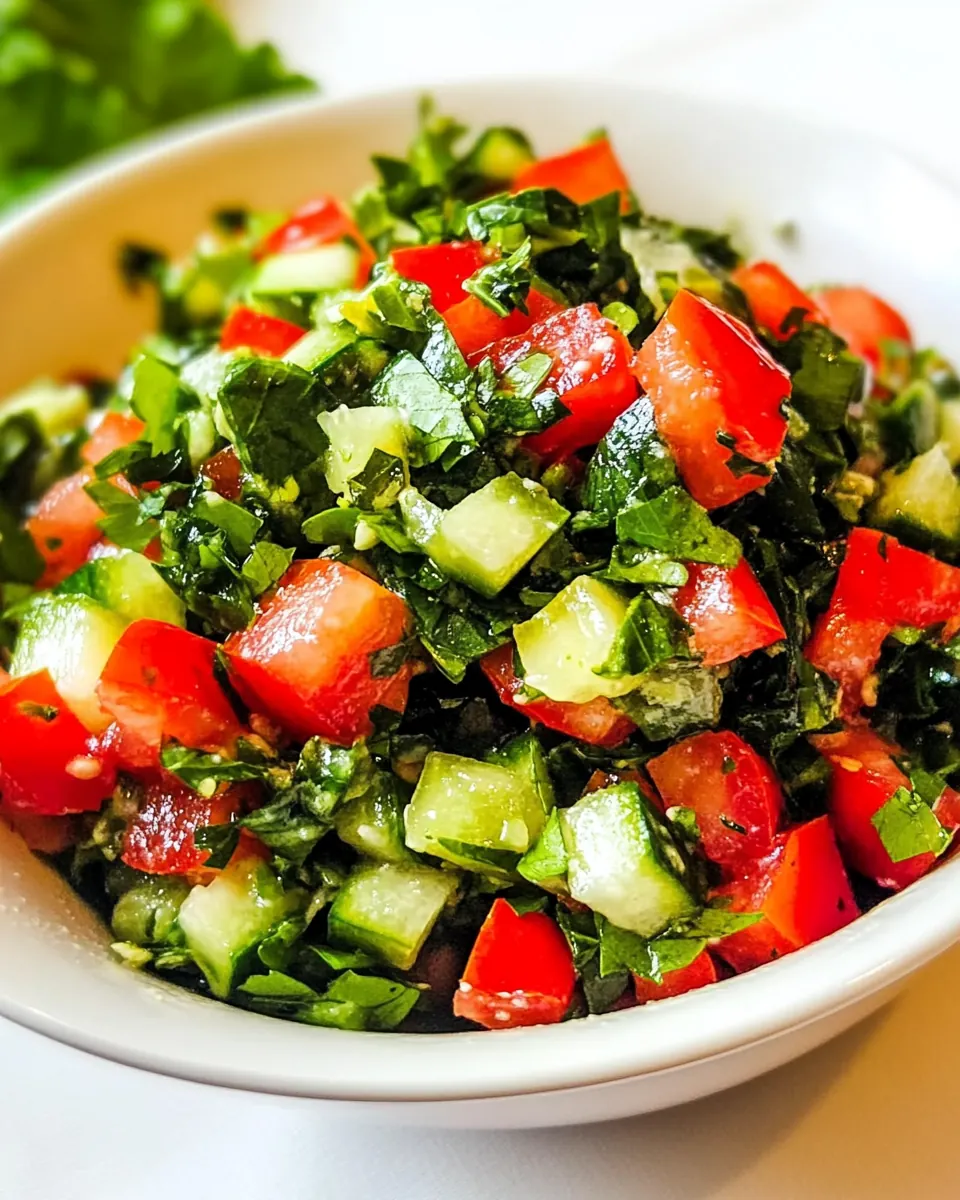
If you want to tweak the salad for different occasions I have a handful of go to adjustments that keep the core intact. These are practical, testable changes you can make without losing the character of the dish.
- Adjust herb ratio Increase or decrease the parsley and mint to suit your palate; more mint for a cooling feel, more parsley for a green, peppery backbone.
- Control juiciness If your tomatoes are very ripe drain them briefly in a colander to avoid diluting the dressing and thinning flavor.
- Salt mindfully Salt the cucumber first to draw moisture, then finish seasoning after dressing to avoid over salting.
- Oil and acid balance Start with the listed amounts of olive oil and lemon juice, then add small increments while tasting to reach the balance you prefer.
- Chopping uniformity Keep all diced elements similar in size so each bite combines cucumber, tomato, and onion harmoniously.
Serving Suggestions
This salad is wonderfully flexible, and how you serve it can change the mood of a meal. It plays well beside grilled mains or as a light, herbaceous plate on its own. Below are detailed serving ideas and storage notes to help you match it to the occasion.
- Casual lunch Serve with warm flatbread or pita for a light, satisfying midday meal that highlights the fresh herbs and textures.
- Side for grilled mains Pair with grilled vegetables or skewers to add brightness and a cooling contrast on hot summer evenings.
- Ramadan or festive tables Offer as part of a mezze spread; its freshness complements richer dishes and helps cleanse the palate between heavier bites.
- Make ahead guidance Chop and salt the cucumber a short time ahead but dress close to serving to preserve herb aroma and cucumber crunch.
- Storage tips Keep in an airtight container refrigerated for up to one day, noting that herb texture and vegetable crispness soften over time.
- Seasonal pairing This is best in summer when tomatoes and herbs are at their peak, but can be used year round if you find good produce.
FAQ
Conclusion
This recipe stands out for its brilliant simplicity and herb forward brightness. Give it a try next time you want something that feels both light and substantial, especially during warm weather. It is easy to prepare, forgiving with ingredient variations, and reliably lifts an entire meal with very little effort.
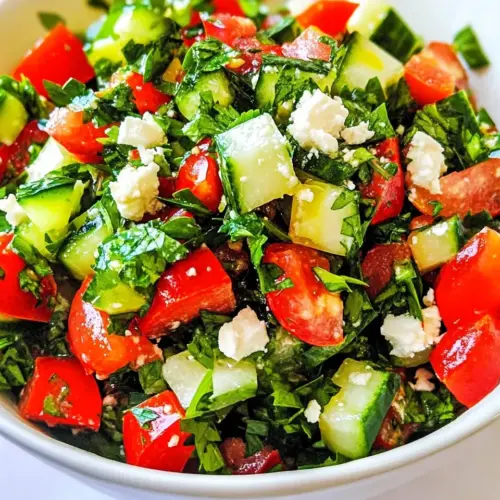
Middle Eastern Tomato Salad
Equipment
- Mixing Bowl
- Colander
- Knife
- Cutting Board
Ingredients
- 1 cup finely diced cucumber (remove seeds if they are large) Finely diced to add crisp, refreshing texture and bright, cooling flavor; removes excess water and seeds to prevent salad from becoming soggy and to maintain a balanced consistency.
- 1 cup finely diced tomato Finely diced to contribute juicy, sweet-tart tomato flavor and vibrant color; provides body and moisture that binds with herbs and dressing for classic salad character.
- 3/4 cup finely diced onion (see notes) Finely diced to supply sharp, pungent bite and aromatic depth; can be soaked or rinsed to mellow intensity and achieve a more balanced overall flavor profile.
- 1 cup finely chopped parsley (more or less, to taste) Finely chopped to deliver herbaceous, slightly peppery freshness and aromatic lift; bulk and green color create contrast with tomatoes while contributing bright, savory notes.
- 1 cup finely chopped mint (more or less, to taste) Finely chopped to bring cool, sweet-menthol aroma and refreshing contrast; complements parsley and tomato while enhancing complexity and palate-cleansing qualities.
- 3 T olive oil, (more or less to taste) Used as the primary fat to coat ingredients, carry flavor, and add silkiness; enriches mouthfeel while melding lemon and herbs into a cohesive dressing.
- 2 T fresh lemon juice (more or less to taste) Used to provide bright acidity that balances oil and herbs; brightens flavors, cuts through richness, and livens the overall taste with citrusy tartness.
- salt and fresh-ground black pepper to taste Used to season and enhance all flavors while providing subtle heat from freshly ground pepper; adjust to taste to achieve desired savory balance and depth.
Instructions
- Chop cucumber in pieces less than 1/2 inch and put in colander.: The cucumber should be diced small so it blends with the other elements, providing a crisp, cool counterpoint. As you chop, you'll hear a clean, watery snap as the knife hits firm flesh, and the pale green cubes should glisten. Placing them in a colander helps excess water drain away, preventing a soggy salad. A common mistake is cutting unevenly, which leads to inconsistent texture. If your pieces are too large the salad becomes uneven, so aim for uniformity.
- Add a generous amount of salt and let sit while you chop other ingredients.: Salting the cucumber draws out excess moisture and concentrates flavor, creating a firmer bite. You may notice tiny beads of liquid pooling in the colander after a few minutes; that is the salt doing its work. This step also seasons from within, so you need less finishing salt. Avoid over salting early on, or the salad can become too saline; if you do oversalt, briefly rinse and drain the cucumber.
- Chop tomatoes in same-size pieces as the cucumbers. If the tomatoes are juicy I sometimes put them in a colander and let the juice run out.: Matching the tomato dice to the cucumber ensures every forkful combines textures. When you cut into ripe tomatoes you'll see seeds and juice; letting them drain reduces liquid in the bowl and keeps the dressing from thinning. The sound is quieter than cucumber, more of a soft thud when your knife hits the flesh. A typical error is using overripe tomatoes that mush apart, so choose tomatoes that are ripe yet structurally sound.
- Chop onions (Cucumbers, tomatoes, and onions should be cut in same-size pieces.): Finely dicing the onion gives sharpness without dominating. As you chop you may notice a sulfurous scent that will mellow once mixed and lightly salted. Uniform pieces help the onion integrate, giving balanced pops of sharpness. Avoid large chunks that can overpower; if raw onion seems too pungent, brief cold water soak can tame it.
- Parsley and mint should be chopped very finely.: The herbs are aromatic powerhouses, so chopping them finely releases essential oils and ensures they distribute evenly. You'll smell a bright, herbaceous fragrance as you work, and finely cut leaves create a green, feathery texture. Large leaves can be chewy and create uneven herb pockets, so take the extra minute to mince them. Keep herbs cold and dry to avoid bruising and losing volatile aromas.
- When all ingredients are chopped, combine in mixing bowl.: At this point the colors come alive in the bowl, with bright red tomato , pale green cucumber , and flecks of green herbs. Combining them allows flavors to begin marrying even before dressing is added. Use a large bowl so you can gently toss without bruising the herbs. A common slip is overcrowding the bowl which can crush delicate leaves, so use space and gentle hands.
- Mix in olive oil, lemon juice, salt and pepper.: Adding olive oil and lemon juice at this stage coats the vegetables and brings harmony. As you toss the salad you'll notice a glossy sheen and a citrusy brightness lifting the herbs and vegetables. Grind fresh black pepper and add salt incrementally, tasting as you go. The biggest mistake is adding too much acid at once; balance with oil and adjust seasoning slowly.
- Serve immediately.: This salad shines when fresh, with crisp textures and bright aromatics. Serve right away to preserve the herb fragrance and cucumber crunch. If you must wait, chill briefly but know the herbs will soften over time and the salad will become more melded. Do not leave it too long or it will lose its lively character; short resting is okay, extended sitting flattens the flavors.
Notes
- Adjust herb ratio Increase or decrease the parsley and mint to suit your palate; more mint for a cooling feel, more parsley for a green, peppery backbone.
- Control juiciness If your tomatoes are very ripe drain them briefly in a colander to avoid diluting the dressing and thinning flavor.
- Salt mindfully Salt the cucumber first to draw moisture, then finish seasoning after dressing to avoid over salting.
- Oil and acid balance Start with the listed amounts of olive oil and lemon juice, then add small increments while tasting to reach the balance you prefer.
- Chopping uniformity Keep all diced elements similar in size so each bite combines cucumber, tomato, and onion harmoniously.