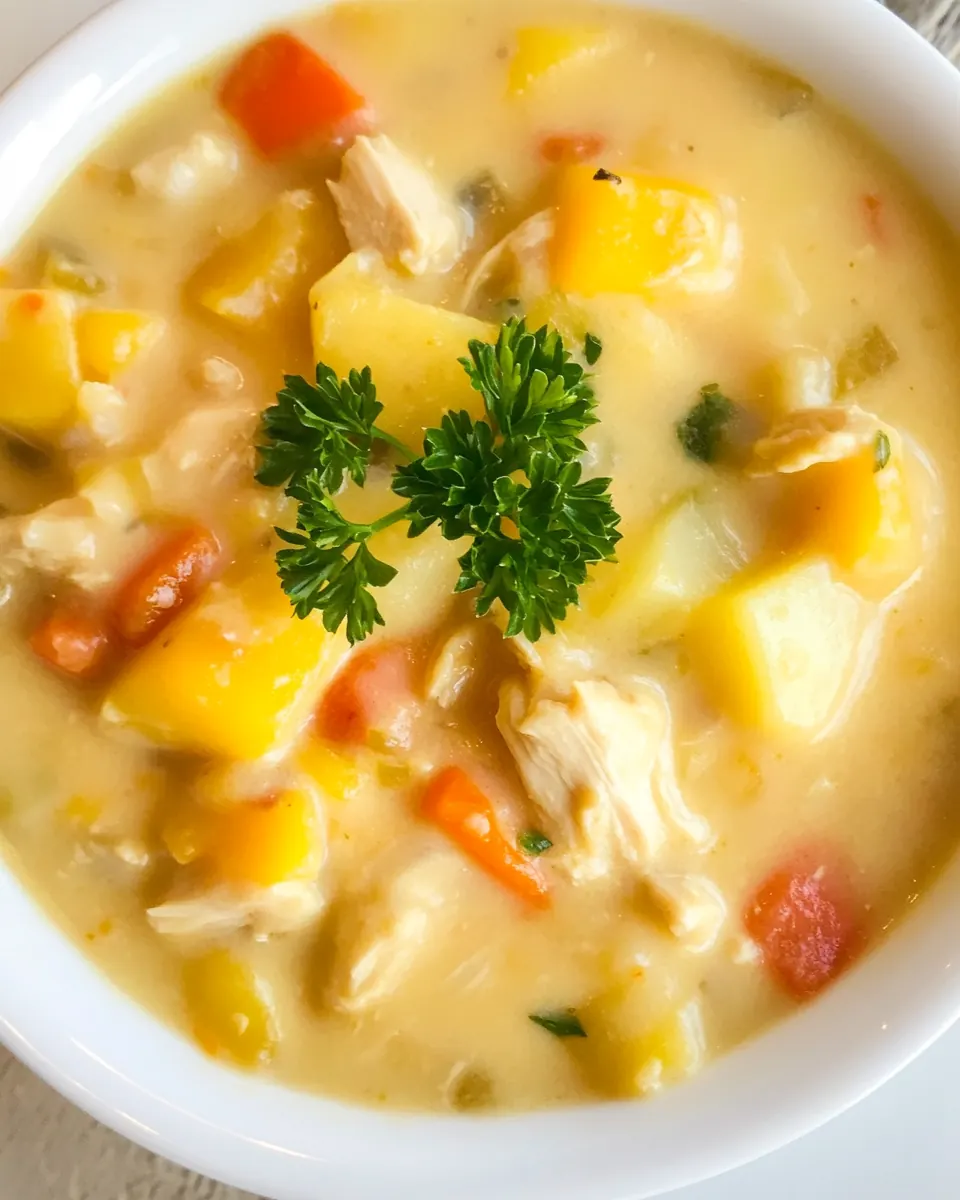
Loaded Cheesy Chicken Potato Chowder
Loaded Cheesy Chicken Potato Chowder is the kind of warm, honest food I reach for on a gray afternoon when I want comfort without fuss. I remember the first time I made this chowder for a neighborhood potluck, how the creamy aroma drifted through the door and had neighbors wandering in, bowls in hand. That evening taught me that a humble bowl of Loaded Cheesy Chicken Potato Chowder can be the centerpiece of a shared moment, a bridge between hurried days and slow conversation.
On a solo weeknight, I’ll throw a pot on the stove and let the house transform. The browning onions and sautéing vegetables create a base that smells of home, while the bubbling chowder invites small comforts. Over the years I tweaked the rhythm of this recipe so it becomes almost meditative: a steady stir, a careful addition of cheese, a final scatter of parsley. Each adjustment helped keep the texture silky and the flavors layered.
Recipe Snapshot
40 mins
10 mins
30 mins
Medium
450 kcal
American
Gluten-Free, Low FODMAP
Soups
Dutch oven, Whisk, Box grater, Wooden spoon
Why This Loaded Cheesy Chicken Potato Chowder Is a Winner
Hearty, comforting texture
I love that the Loaded Cheesy Chicken Potato Chowder feels like a hug in a bowl, with tender potatoes adding body and melted cheddar cheese bringing richness. The contrast between chunky vegetables and a creamy broth gives it depth, so every spoonful is satisfying.
Speed without compromise
We often want something fast that still tastes like effort was made. Using pre cooked rotisserie chicken and a straightforward sauté to build flavor means you get a full flavored chowder in under an hour, perfect for an easy weeknight meal.
Layered savory flavors
I rely on simple pantry herbs like dried thyme and oregano, plus aromatic onion and garlic, to create complexity. The roux with flour and the combination of chicken broth and milk craft a velvety base that carries the sharper tang of extra sharp cheddar cheese.
Family friendly and flexible
This chowder appeals to kids and adults alike, and I often stretch it by adding a cup more milk if I want a looser consistency, or extra herbs if I want a brighter finish. The recipe tolerates small swaps, but still rewards you with consistent results.
Easy to scale and store
I appreciate that you can make a big pot for leftovers. The chowder reheats gently, and the flavors often meld overnight, making lunches or second dinners even better. That reliability makes it a go to when I plan meals for the week.
What You Need for Loaded Cheesy Chicken Potato Chowder

These ingredients are chosen to build a chowder that is creamy, savory, and texturally satisfying. The foundation comes from sautéed aromatics and a roux, which give body and depth. Starchy Russet potatoes thicken naturally while diced vegetables add bite. Protein from pre cooked rotisserie chicken and sharp cheddar cheese create richness and a savory finish. Together, they form a balanced bowl that warms from the inside out.
- 3 to 4 tablespoons olive oil: Use to sauté aromatics and create a flavorful fat base that prevents sticking; adds a subtle fruity richness to the chowder while helping brown vegetables and dissolve flour for thickening.
- 2 cups sweet Vidalia or yellow onions, peeled and diced small (about 1 medium/large onion): Provide a sweet, mellow onion flavor and aromatic depth when diced small and softened; contribute body and natural sweetness that balances savory and creamy elements in the soup.
- 1 cup carrots, peeled and diced small (about 2 large carrots): Add earthy sweetness and texture when peeled and diced finely; help build the soup's background flavor and add slight textural contrast to potatoes and corn.
- 1 cup celery, diced small (about 2 stalks): Offer crisp, herbaceous flavor and aromatic support when diced small; soften during cooking to blend into the chowder base without overpowering other vegetables.
- 4 garlic cloves, finely minced: Deliver a sharp, pungent boost when finely minced; infuse the broth with savory notes and enhance overall flavor complexity in small amounts.
- 1/4 cup all-purpose flour: Act as a thickening agent when cooked into the oil and vegetables; forms a roux that binds liquid to solids and gives the chowder a silky, body-rich texture.
- 32 ounces (4 cups) low-sodium chicken broth: Provide concentrated savory liquid and depth of flavor while controlling sodium; serves as the primary savory base that hydrates vegetables and dissolves the roux.
- 3 cups milk, or as needed (I use Silk Unsweetened Cashew milk): Supply creamy liquid and mouthfeel while mellowing flavors; used to create a smooth, milky broth and adjust consistency to preference.
- 3 cups Russet potatoes, peeled and diced into 1/4-inch cubes (about 3 large potatoes): Contribute starchy body and hearty texture when peeled and diced small; release starch during cooking to naturally thicken the chowder and make it filling.
- 1 teaspoon dried thyme: Add warm, slightly floral herbal notes and subtle earthiness; pair with oregano to build a classic savory herb profile in the soup.
- 1 teaspoon dried oregano: Introduce savory, slightly peppery herbaceousness and Mediterranean warmth; complements thyme and enhances the overall seasoning blend.
- 1 teaspoon salt, or to taste: Season the chowder to taste by enhancing and balancing flavors; control salt level to avoid over-salting the creamy base.
- 1 teaspoon pepper, or to taste: Provide basic heat and brightness when freshly ground and adjusted to taste; helps awaken flavors and balances richness.
- pinch cayenne pepper, and to taste (optional): Offer a quick, concentrated heat kick when added sparingly; brings dimension and optional spice without overwhelming other flavors.
- 2 cups cooked shredded rotisserie chicken, use storebought to save time: Contribute tender, savory protein and convenience when pre-cooked and shredded; adds satisfying substance and chicken flavor that complements the chowder.
- 3/4 cup corn, I used frozen and added it straight from the freezer: Bring sweet, summery kernels and pop of texture; frozen corn can be added directly to maintain color, sweetness, and slight crunch.
- 8 ounces extra-sharp cheddar cheese, grate it yourself, pre-grated cheese in plastic bags is resistant to melting: Deliver sharp, cheesy intensity and creamy melt when freshly grated; enriches flavor and helps thicken and smooth the chowder through melted fat and proteins.
- 1/3 cup fresh flat-leaf parsley leaves, finely chopped: Provide fresh, bright herbal finish and color when finely chopped; scattered over servings to lift richness and add a clean, peppery leaf note.
Cooking Instructions for Loaded Cheesy Chicken Potato Chowder
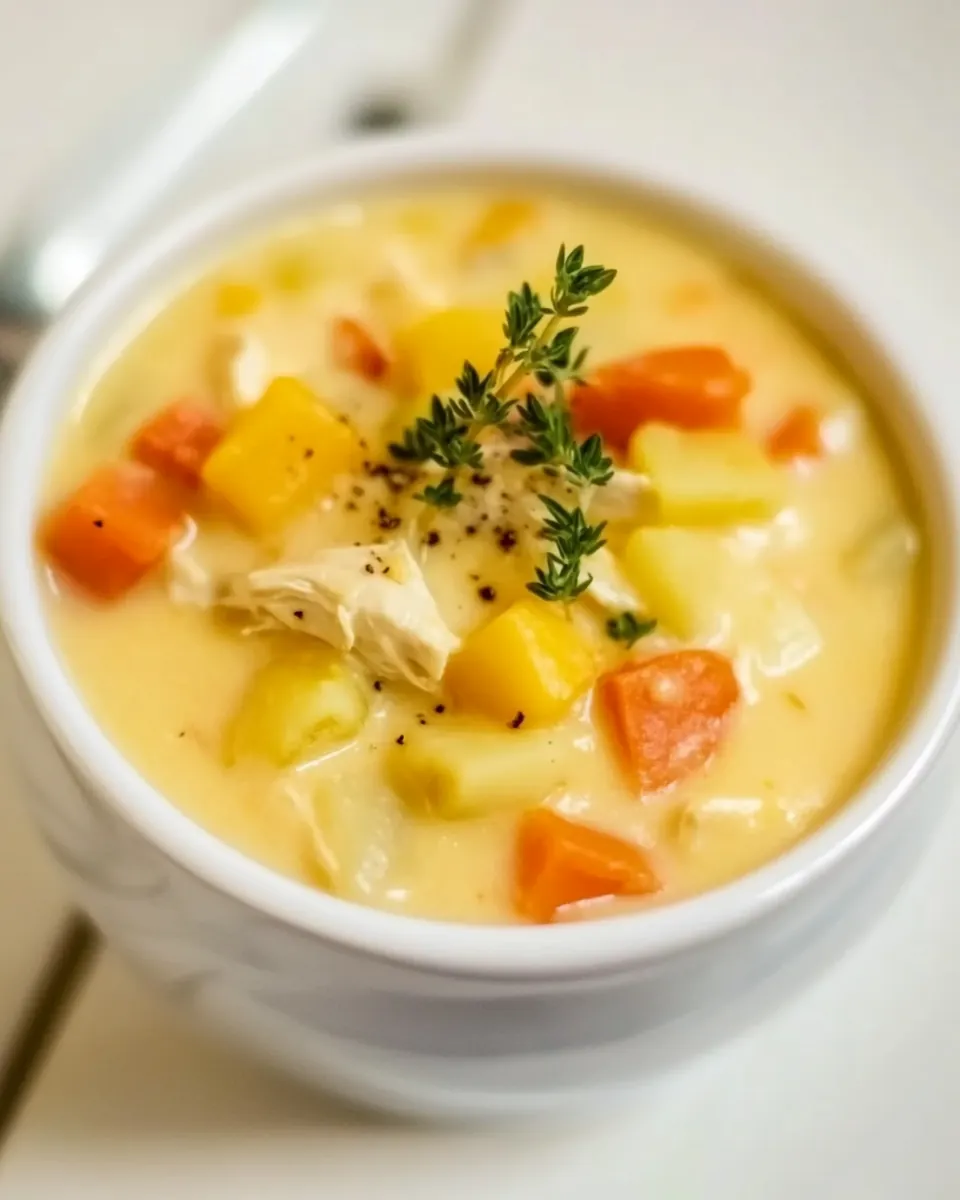
These directions guide you through building flavor step by step, from sweating aromatics to finishing with cheese and herbs. Take your time with the early sauté and the roux so you get a smooth, well seasoned chowder at the end. Have your ingredients measured and ready so the process flows without hurry.
- To a large Dutch oven or stockpot, add the oil and heat over medium-high heat to warm.: You should feel the warmth of the pot as the olive oil shimmers, not smokes, which signals the correct temperature. This hot but controlled surface encourages the vegetables to sizzle gently and develop flavor, rather than steeping blandly. A common mistake is overheating the oil until it smokes, which can impart bitterness; keep a medium high setting and tilt the pan to test heat. You'll hear a soft sizzle when the first vegetable hits the oil, and the aroma will begin to open, setting the stage for depth.
- Add the onion, carrots, celery, and sauté for about 7 to 9 minutes, or until vegetables begin to soften. Stir intermittently.: As the diced onion , carrots , and celery cook, you will notice the onions turn translucent and the edges gain gentle golden flecks. The mixture should smell sweet and savory, with sugars releasing and mingling with the oil. Stir every minute or two to ensure even browning and prevent sticking. If you rush this step or cook on too high a heat, the vegetables may brown too quickly on the outside while remaining hard inside, so watch for tender edges as the clue to readiness.
- Add the garlic and sauté for another 1 to 2 minutes.: When you add the minced garlic , it releases a fragrant, almost nutty aroma very quickly, so keep it moving in the pan. You want a golden scent, not a burnt odor. This brief addition layers in savory complexity that carries through the chowder. Burnt garlic will taste acrid, so reduce heat slightly if the garlic begins to darken too fast.
- Add the flour and whisk constantly until lightly browned, about 1 minute.: The flour forms a roux with the oil and cooked vegetables, which thickens the chowder and gives it a smooth, velvety texture. Whisk constantly and watch for the raw flour scent to fade and a faint nutty aroma to appear. If you do not cook the flour sufficiently, the final broth can taste pasty. Conversely, browning the roux too dark will change the color and introduce a toasty note that may clash here.
- Add the chicken broth, milk, and whisk constantly until slightly thickened, about 1 to 2 minutes.: As you pour in the chicken broth and milk , whisking encourages a seamless integration of liquid and roux so lumps do not form. The mixture will go from glossy to gently thickened, coating the whisk. Maintaining a moderate simmer ensures the starch activates and creates body. If you stop whisking or pour too quickly, you risk clumps that are hard to dissolve, so keep a steady hand until the texture evens out.
- Add potatoes, thyme, oregano, salt, pepper, optional cayenne, and bring to a boil. Allow chowder to boil fairly rapidly for about 15 minutes or until potatoes are fork-tender; stir intermittently. At any time while the chowder is boiling, if the overall liquid level is lower than you like and the chowder is too thick, adding a cup of extra milk is okay. At the end you will adjust the seasoning levels.: Adding the diced Russet potatoes and dried herbs creates the core of the chowder. As the pot comes to a boil, the starch from the potatoes begins to release, contributing to the thickness. You should see a steady bubbling that looks vigorous but controlled; reduce the flame slightly if it threatens to spatter. Simmer for about 15 minutes until the potatoes are fork tender. A common misstep is undercooking the potatoes, leaving them chalky, or over boiling which can break them down too much and make the chowder gluey.
- After potatoes are soft, add the chicken, corn, and boil for 1 to 2 minutes to warm the chicken and corn through.: While the chowder boils, the scent will deepen into a warm, savory chorus of herbs, chicken , and dairy. Stirring intermittently prevents the bottom from catching and helps gauge thickness. If the chowder becomes thicker than you like, add extra milk a cup at a time to loosen it. Beware of constant rapid boiling which can cause dairy separation; a lively simmer is enough to finish the potatoes without breaking the texture.
- Reduce the heat to low, add the cheese slowly, and stir continuously until melted and combined.: At this point, the aroma feels rounded and full. The pre cooked rotisserie chicken and frozen corn simply need to heat through, so a quick boil brings them up to temperature while keeping the chicken tender. Overcooking the chicken here can dry it out and make it stringy, so keep this step brief and watch the visual cue of steaming heat rising from the pot.
- Add the parsley and stir to combine.: Lowering the heat prevents the cheddar cheese from seizing or clumping as it melts. Add the grated cheese in small handfuls, stirring until each portion dissolves into a creamy ribbon. The finished texture should be silky and cohesive, with a glossy surface and no stray curds. If you add cheese too quickly or at high temperature, it can separate into oily lumps, so patience here ensures a smooth result.
- Taste chowder and add salt to taste. I added another teaspoon but this will vary based on how salty the brand of chicken broth used is, how salty the rotisserie chicken and cheese are, and personal preference. Make any necessary seasoning adjustments (i. e. more salt, pepper, herbs, etc.) and serve immediately.: The fresh parsley folded in at the end brings a brisk herbal brightness and a lift of color against the rich base. Stir just enough to distribute the leaves; their aroma will remain fresh and green. Adding parsley earlier will cause it to lose its vibrancy, so this timing preserves the lively finish.
- Taste chowder and add salt to taste: Final seasoning is crucial because the saltiness of the chicken broth , rotisserie chicken , and cheddar cheese varies by brand. Taste a warm spoonful and adjust with additional salt and pepper as needed until flavors sing together. Over salting is hard to fix, so add gradually and reassess between adjustments.
- Make any necessary seasoning adjustments and serve immediately: At the finish, the chowder should be rich, balanced, and piping hot, with tender potatoes and a silky body. Serve right away to enjoy the ideal texture and flavor. Reheating later is fine, but do so gently to avoid separation. A common mistake is letting the chowder sit uncovered too long, which can thicken and lose the freshly blended character.
Helpful Hints

I keep these hints close when I cook Loaded Cheesy Chicken Potato Chowder, because small adjustments make the final bowl sing. Each tip focuses on technique, timing, or ingredient handling so your chowder turns out creamy and balanced.
- Choose the right pot Use a heavy bottom pot or Dutch oven so heat disperses evenly, preventing hot spots that can scorch the bottom while the chowder simmers.
- Watch the oil heat Heat the olive oil until it shimmers but does not smoke, which gives a perfect surface for the aromatics to sauté without burning.
- Sweat the vegetables Allow the onion, carrots, and celery to become tender and lightly colored, this builds sweetness and depth that the rest of the chowder leans on.
- Whisk the roux well When you add the flour, whisk constantly so it cooks evenly and avoids forming gritty lumps in the final chowder.
- Temper the liquids Add the chicken broth and milk gradually while whisking, which prevents clumps and ensures a smooth, slightly thickened base.
- Add cheese slowly Reduce heat before adding grated cheddar cheese and stir continuously so it melts into a glossy, cohesive texture rather than clumping.
- Adjust thickness last If the chowder thickens too much as it sits, stir in a splash of milk until you reach the consistency you like, then re taste and adjust seasoning.
- Mind the salt Because rotisserie chicken, broth, and cheese can be salty, add extra salt cautiously at the end after tasting the finished chowder.
- Layer flavors early Browning the vegetables properly at the start makes a huge difference to overall depth, so don’t rush the sautéing stage.
- Reheat gently For leftovers, warm over low heat with a splash of milk to prevent separation and restore creaminess.
Pairing Suggestions for Loaded Cheesy Chicken Potato Chowder
This chowder makes a flexible main course for casual or cozy occasions. Think about simple side additions and serving styles that complement the rich bowl. Below I list pairing ideas, storage notes, and serving occasions to match different moods and seasons.
- Crusty bread or rolls A warm crusty loaf or soft dinner rolls are ideal for dipping, their chew and crumb soaking up the creamy chowder, making each bite more substantial for a lunch or weeknight dinner.
- Simple green salad A crisp salad with a bright vinaigrette provides a refreshing counterpoint to the creamy chowder, cutting through the richness and adding a crisp texture contrast for dinner or casual gatherings.
- Family dinners Serve the chowder as a centerpiece for a family meal, with extra grated cheddar cheese and chopped parsley on the side for customization; it’s comforting and approachable for all ages.
- Meal prep and storage Store leftovers in airtight containers in the refrigerator for five to seven days, reheating gently on low with a splash of milk to avoid separation; this makes it convenient for packed lunches or quick dinners.
- Seasonal pairing In winter months, the chowder stands alone as a warming main; in transitional seasons, serve smaller bowls as a starter alongside roasted vegetables or a light grain salad.
- Occasions This recipe works well for casual potlucks, cozy weeknight dinners, and anytime you want a simple, crowd pleasing bowl that feels thoughtfully made without fuss.
- Make it a platter Offer bowls of chowder alongside small plates of extra grated cheddar, chopped parsley, and warm bread so guests can tailor their serving to taste.
- Leftover ideas Thinner leftover chowder makes a comforting sauce for steamed vegetables or a pour over baked potatoes when gently reheated and thinned with a little milk.
- Portioning for guests Ladle into warmed bowls to maintain temperature longer when serving a group, and keep a pot on low heat to refill as needed for continuous serving.
- Presentation Finish each bowl with a small sprinkle of fresh chopped parsley for color and an extra grating of cheddar cheese if you like an indulgent finish.
FAQ
Conclusion
What makes Loaded Cheesy Chicken Potato Chowder special is how simple ingredients come together to create a rich, comforting bowl with layered savory flavors and a silky, satisfying texture. Give it a try on a chilly evening or when you want a fuss free, crowd pleasing meal. I hope this recipe becomes one of those dependable dishes you reach for when you want to feel nourished and content; it’s forgiving, flavorful, and endlessly comforting.
Loaded Cheesy Chicken Potato Chowder
Equipment
- Dutch Oven
- Whisk
- Box grater
- Wooden Spoon
Ingredients
- 3 to 4 tablespoons olive oil Use to sauté aromatics and create a flavorful fat base that prevents sticking; adds a subtle fruity richness to the chowder while helping brown vegetables and dissolve flour for thickening.
- 2 cups sweet Vidalia or yellow onions, peeled and diced small (about 1 medium/large onion) Provide a sweet, mellow onion flavor and aromatic depth when diced small and softened; contribute body and natural sweetness that balances savory and creamy elements in the soup.
- 1 cup carrots, peeled and diced small (about 2 large carrots) Add earthy sweetness and texture when peeled and diced finely; help build the soup's background flavor and add slight textural contrast to potatoes and corn.
- 1 cup celery, diced small (about 2 stalks) Offer crisp, herbaceous flavor and aromatic support when diced small; soften during cooking to blend into the chowder base without overpowering other vegetables.
- 4 garlic cloves, finely minced Deliver a sharp, pungent boost when finely minced; infuse the broth with savory notes and enhance overall flavor complexity in small amounts.
- 1/4 cup all-purpose flour Act as a thickening agent when cooked into the oil and vegetables; forms a roux that binds liquid to solids and gives the chowder a silky, body-rich texture.
- 32 ounces (4 cups) low-sodium chicken broth Provide concentrated savory liquid and depth of flavor while controlling sodium; serves as the primary savory base that hydrates vegetables and dissolves the roux.
- 3 cups milk, or as needed (I use Silk Unsweetened Cashew milk) Supply creamy liquid and mouthfeel while mellowing flavors; used to create a smooth, milky broth and adjust consistency to preference.
- 3 cups Russet potatoes, peeled and diced into 1/4-inch cubes (about 3 large potatoes) Contribute starchy body and hearty texture when peeled and diced small; release starch during cooking to naturally thicken the chowder and make it filling.
- 1 teaspoon dried thyme Add warm, slightly floral herbal notes and subtle earthiness; pair with oregano to build a classic savory herb profile in the soup.
- 1 teaspoon dried oregano Introduce savory, slightly peppery herbaceousness and Mediterranean warmth; complements thyme and enhances the overall seasoning blend.
- 1 teaspoon salt, or to taste Season the chowder to taste by enhancing and balancing flavors; control salt level to avoid over-salting the creamy base.
- 1 teaspoon pepper, or to taste Provide basic heat and brightness when freshly ground and adjusted to taste; helps awaken flavors and balances richness.
- pinch cayenne pepper, optional and to taste Offer a quick, concentrated heat kick when added sparingly; brings dimension and optional spice without overwhelming other flavors.
- 2 cups cooked shredded rotisserie chicken, use storebought to save time Contribute tender, savory protein and convenience when pre-cooked and shredded; adds satisfying substance and chicken flavor that complements the chowder.
- 3/4 cup corn, I used frozen and added it straight from the freezer Bring sweet, summery kernels and pop of texture; frozen corn can be added directly to maintain color, sweetness, and slight crunch.
- 8 ounces extra-sharp cheddar cheese, grate it yourself, pre-grated cheese in plastic bags is resistant to melting Deliver sharp, cheesy intensity and creamy melt when freshly grated; enriches flavor and helps thicken and smooth the chowder through melted fat and proteins.
- 1/3 cup fresh flat-leaf parsley leaves, finely chopped Provide fresh, bright herbal finish and color when finely chopped; scattered over servings to lift richness and add a clean, peppery leaf note.
Instructions
- To a large Dutch oven or stockpot, add the oil and heat over medium-high heat to warm.: You should feel the warmth of the pot as the olive oil shimmers, not smokes, which signals the correct temperature. This hot but controlled surface encourages the vegetables to sizzle gently and develop flavor, rather than steeping blandly. A common mistake is overheating the oil until it smokes, which can impart bitterness; keep a medium high setting and tilt the pan to test heat. You'll hear a soft sizzle when the first vegetable hits the oil, and the aroma will begin to open, setting the stage for depth.
- Add the onion, carrots, celery, and sauté for about 7 to 9 minutes, or until vegetables begin to soften. Stir intermittently.: As the diced onion , carrots , and celery cook, you will notice the onions turn translucent and the edges gain gentle golden flecks. The mixture should smell sweet and savory, with sugars releasing and mingling with the oil. Stir every minute or two to ensure even browning and prevent sticking. If you rush this step or cook on too high a heat, the vegetables may brown too quickly on the outside while remaining hard inside, so watch for tender edges as the clue to readiness.
- Add the garlic and sauté for another 1 to 2 minutes.: When you add the minced garlic , it releases a fragrant, almost nutty aroma very quickly, so keep it moving in the pan. You want a golden scent, not a burnt odor. This brief addition layers in savory complexity that carries through the chowder. Burnt garlic will taste acrid, so reduce heat slightly if the garlic begins to darken too fast.
- Add the flour and whisk constantly until lightly browned, about 1 minute.: The flour forms a roux with the oil and cooked vegetables, which thickens the chowder and gives it a smooth, velvety texture. Whisk constantly and watch for the raw flour scent to fade and a faint nutty aroma to appear. If you do not cook the flour sufficiently, the final broth can taste pasty. Conversely, browning the roux too dark will change the color and introduce a toasty note that may clash here.
- Add the chicken broth, milk, and whisk constantly until slightly thickened, about 1 to 2 minutes.: As you pour in the chicken broth and milk , whisking encourages a seamless integration of liquid and roux so lumps do not form. The mixture will go from glossy to gently thickened, coating the whisk. Maintaining a moderate simmer ensures the starch activates and creates body. If you stop whisking or pour too quickly, you risk clumps that are hard to dissolve, so keep a steady hand until the texture evens out.
- Add potatoes, thyme, oregano, salt, pepper, optional cayenne, and bring to a boil. Allow chowder to boil fairly rapidly for about 15 minutes or until potatoes are fork-tender; stir intermittently. At any time while the chowder is boiling, if the overall liquid level is lower than you like and the chowder is too thick, adding a cup of extra milk is okay. At the end you will adjust the seasoning levels.: Adding the diced Russet potatoes and dried herbs creates the core of the chowder. As the pot comes to a boil, the starch from the potatoes begins to release, contributing to the thickness. You should see a steady bubbling that looks vigorous but controlled; reduce the flame slightly if it threatens to spatter. Simmer for about 15 minutes until the potatoes are fork tender. A common misstep is undercooking the potatoes, leaving them chalky, or over boiling which can break them down too much and make the chowder gluey.
- After potatoes are soft, add the chicken, corn, and boil for 1 to 2 minutes to warm the chicken and corn through.: While the chowder boils, the scent will deepen into a warm, savory chorus of herbs, chicken , and dairy. Stirring intermittently prevents the bottom from catching and helps gauge thickness. If the chowder becomes thicker than you like, add extra milk a cup at a time to loosen it. Beware of constant rapid boiling which can cause dairy separation; a lively simmer is enough to finish the potatoes without breaking the texture.
- Reduce the heat to low, add the cheese slowly, and stir continuously until melted and combined.: At this point, the aroma feels rounded and full. The pre cooked rotisserie chicken and frozen corn simply need to heat through, so a quick boil brings them up to temperature while keeping the chicken tender. Overcooking the chicken here can dry it out and make it stringy, so keep this step brief and watch the visual cue of steaming heat rising from the pot.
- Add the parsley and stir to combine.: Lowering the heat prevents the cheddar cheese from seizing or clumping as it melts. Add the grated cheese in small handfuls, stirring until each portion dissolves into a creamy ribbon. The finished texture should be silky and cohesive, with a glossy surface and no stray curds. If you add cheese too quickly or at high temperature, it can separate into oily lumps, so patience here ensures a smooth result.
- Taste chowder and add salt to taste. I added another teaspoon but this will vary based on how salty the brand of chicken broth used is, how salty the rotisserie chicken and cheese are, and personal preference. Make any necessary seasoning adjustments (i. e. more salt, pepper, herbs, etc.) and serve immediately.: The fresh parsley folded in at the end brings a brisk herbal brightness and a lift of color against the rich base. Stir just enough to distribute the leaves; their aroma will remain fresh and green. Adding parsley earlier will cause it to lose its vibrancy, so this timing preserves the lively finish.
- Taste chowder and add salt to taste: Final seasoning is crucial because the saltiness of the chicken broth , rotisserie chicken , and cheddar cheese varies by brand. Taste a warm spoonful and adjust with additional salt and pepper as needed until flavors sing together. Over salting is hard to fix, so add gradually and reassess between adjustments.
- Make any necessary seasoning adjustments and serve immediately: At the finish, the chowder should be rich, balanced, and piping hot, with tender potatoes and a silky body. Serve right away to enjoy the ideal texture and flavor. Reheating later is fine, but do so gently to avoid separation. A common mistake is letting the chowder sit uncovered too long, which can thicken and lose the freshly blended character.
Notes
- Choose the right pot Use a heavy bottom pot or Dutch oven so heat disperses evenly, preventing hot spots that can scorch the bottom while the chowder simmers.
- Watch the oil heat Heat the olive oil until it shimmers but does not smoke, which gives a perfect surface for the aromatics to sauté without burning.
- Sweat the vegetables Allow the onion, carrots, and celery to become tender and lightly colored, this builds sweetness and depth that the rest of the chowder leans on.
- Whisk the roux well When you add the flour, whisk constantly so it cooks evenly and avoids forming gritty lumps in the final chowder.
- Temper the liquids Add the chicken broth and milk gradually while whisking, which prevents clumps and ensures a smooth, slightly thickened base.
- Add cheese slowly Reduce heat before adding grated cheddar cheese and stir continuously so it melts into a glossy, cohesive texture rather than clumping.
- Adjust thickness last If the chowder thickens too much as it sits, stir in a splash of milk until you reach the consistency you like, then re taste and adjust seasoning.
- Mind the salt Because rotisserie chicken, broth, and cheese can be salty, add extra salt cautiously at the end after tasting the finished chowder.
- Layer flavors early Browning the vegetables properly at the start makes a huge difference to overall depth, so don’t rush the sautéing stage.
- Reheat gently For leftovers, warm over low heat with a splash of milk to prevent separation and restore creaminess.
