Lemon Asparagus Couscous Salad with Tomatoes
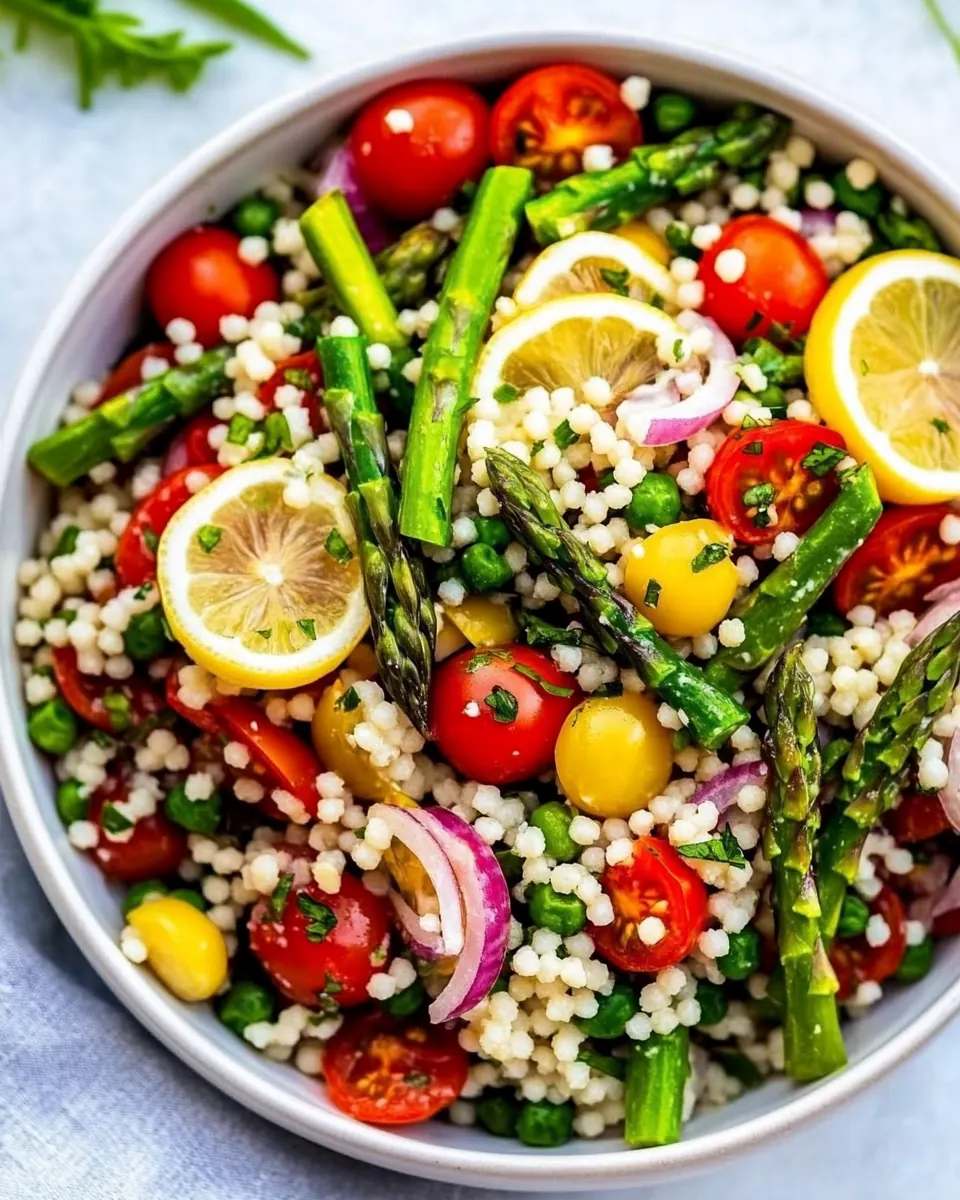
Lemon Asparagus Couscous Salad with Tomatoes is one of those recipes I reach for when I want something bright, textural, and impossibly simple.
I remember the first time I made this salad on a sunlit spring afternoon, hauling a bundle of glossy asparagus home from the market and wondering how to keep its snap while letting citrus sing through. I tossed tender pearls of whole wheat pearl couscous with roasted sweet grape tomatoes, a little zing from freshly squeezed lemons, and crunchy, cold-blanched asparagus. The result felt like sunshine in a bowl, something you can serve at a casual lunch or bring to a potluck and watch it disappear.
Over the years I have tweaked this into a go to when I want a make ahead salad that actually tastes vibrant the next day. The trick is timing the blanch of the asparagus and rinsing the couscous under cold water, so each ingredient keeps its texture and color. Every bite balances nutty, citrus, and fresh herb notes, which is why this version has become my spring staple. I love how it travels well and how simple pantry staples like extra virgin olive oil lift the whole bowl.
Recipe Snapshot
30 mins
5 mins
25 mins
Medium
220 kcal
Mediterranean
Vegan, Gluten-Free
Salads
Large pot, Large slotted spoon, Colander, Large bowl
The Beauty of This Lemon Asparagus Couscous Salad with Tomatoes
Bright seasonal flavors that sing
I love this salad because the combination of lemon and asparagus is an unmistakable spring anthem. The citrus cuts through the nuttiness of the whole wheat pearl couscous, and the tomatoes add a juicy pop, creating a layered flavor profile that keeps you coming back for another forkful.
Textural contrast that excites
We get creamy tender pearls from the couscous, crisp snap from the blanched asparagus, and slight chew from the quartered grape tomatoes. That contrast is what makes each mouthful interesting and satisfying, whether you eat it right away or later when chilled.
Simple, pantry friendly, and fast
I often make this when I need something quick yet special. With minimal ingredients like extra virgin olive oil, parsley, and lemons, it comes together fast and scales easily when I have friends coming over.
Flexible for many occasions
This salad fits so many settings, I use it for picnics, light dinners, or a springtime side dish. It pairs well with grilled mains or vegetarian spreads, and because it keeps well chilled, you can make it ahead and relax when company arrives.
Healthy and balanced
With whole grain couscous, bright vegetables, and fresh herbs, this dish feels wholesome without being heavy. It’s a great example of food that nourishes and tastes joyful at the same time.
Ingredients to Make Lemon Asparagus Couscous Salad with Tomatoes
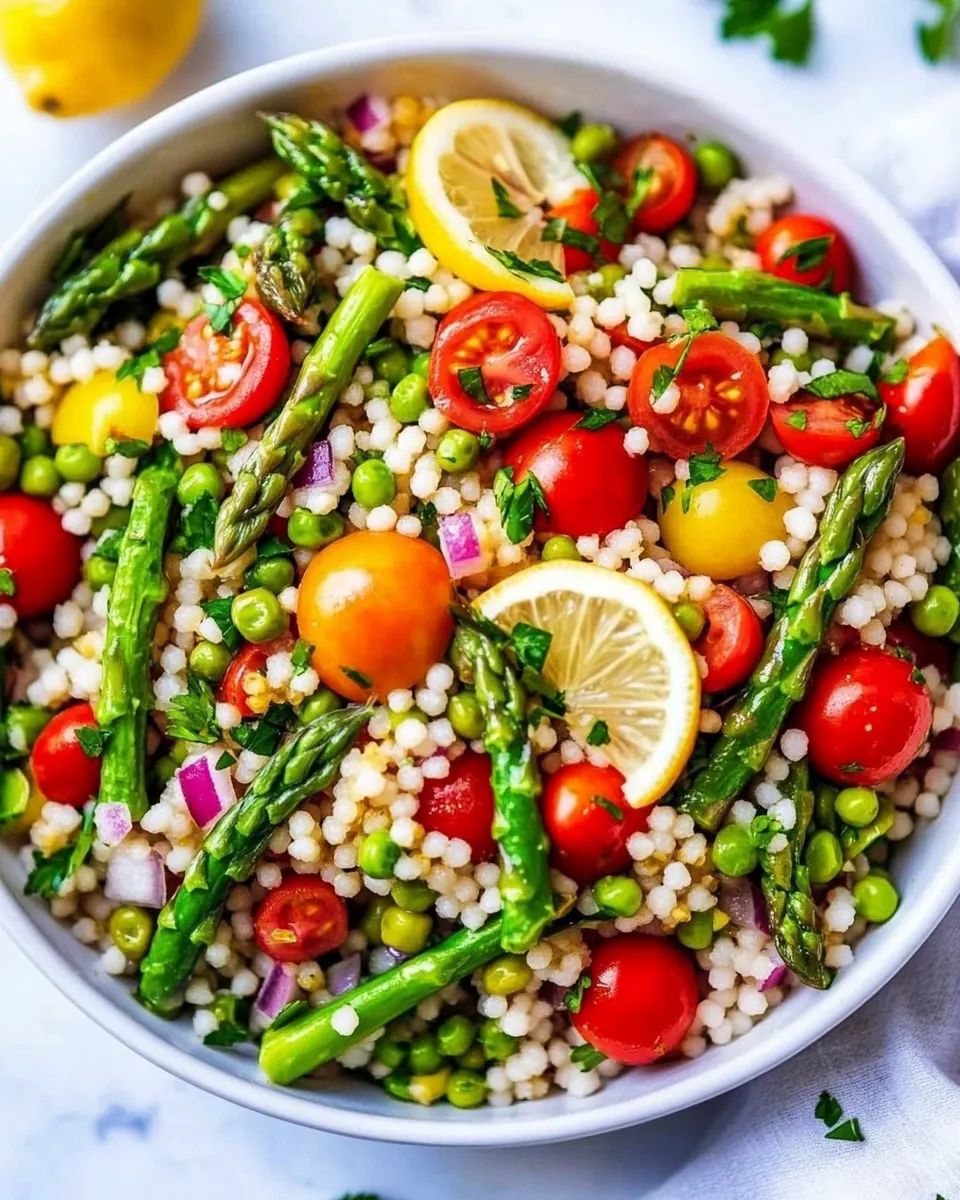
These ingredients are chosen to create a harmonious spring salad where freshness, texture, and brightness take center stage. The whole wheat pearl couscous provides a nutty, chewy base, while the asparagus and grape tomatoes add crisp and juicy contrast. A drizzle of extra virgin olive oil and the acid of fresh lemon juice tie everything together, and a touch of fresh parsley gives herbal lift.
- 6 oz whole wheat pearl couscous: Cook to tender, chewy pearls that form the salad base and soak up dressing flavors; rinse after cooking to stop starch and cool for salad assembly. Provide whole-grain texture and nutty flavor while adding bulk and heartiness to the dish.
- 3/4 lb thin asparagus spears, tough ends trimmed: Trim to remove tough woody ends and blanch or roast briefly to maintain bright color and tender-crisp bite patterned through the salad. Offer fresh vegetal notes, seasonal crunch, and a subtle earthy sweetness that contrasts with the couscous.
- 1 1/2 cups grape tomatoes, quartered: Quarter to release juicy bursts of acidity and sweetness that balance the dish; stir in at the end to preserve shape and freshness. Contribute vibrant color, refreshing moisture, and a lightly tart finish to complement lemon and herbs.
- 1/4 cup red onion, minced: Mince finely to distribute sharp, pungent aromatics throughout the salad without overpowering; mix in sparingly to control intensity. Add subtle savory depth and a faintly sweet onion character that enhances other flavors.
- 1 1/2 lemons, juiced: Juice to provide bright, zesty acidity that lifts and brightens all components; adjust amount to taste and strain to remove seeds. Impart citrus tang and freshness that highlights the vegetables and cuts through the richness of the oil and couscous.
- 1 tbsp extra virgin olive oil: Measure to lightly coat ingredients and help emulsify with lemon juice, carrying flavors and preventing dryness; drizzle evenly and toss. Deliver smooth mouthfeel, subtle fruitiness, and healthy fat that rounds the salad.
- 2 tbsp fresh parsley, minced: Minced to scatter herbaceous, slightly bitter-green notes uniformly; fold in at the end to retain fresh color and aroma. Bring lively, aromatic complexity and a clean, savory finish that ties the ingredients together.
- Kosher salt, to taste: Season to taste to enhance and balance all flavors; add incrementally and taste between additions to avoid over-salting. Provide essential savory backbone and amplify natural tastes of vegetables, grains, and citrus.
- fresh cracked pepper, to taste: Grind to taste to introduce aromatic heat and complexity; add fresh for best flavor and adjust coarseness to preference. Supply bright, biting warmth and subtle floral notes that lift the overall flavor profile.
Preparation Steps for Lemon Asparagus Couscous Salad with Tomatoes
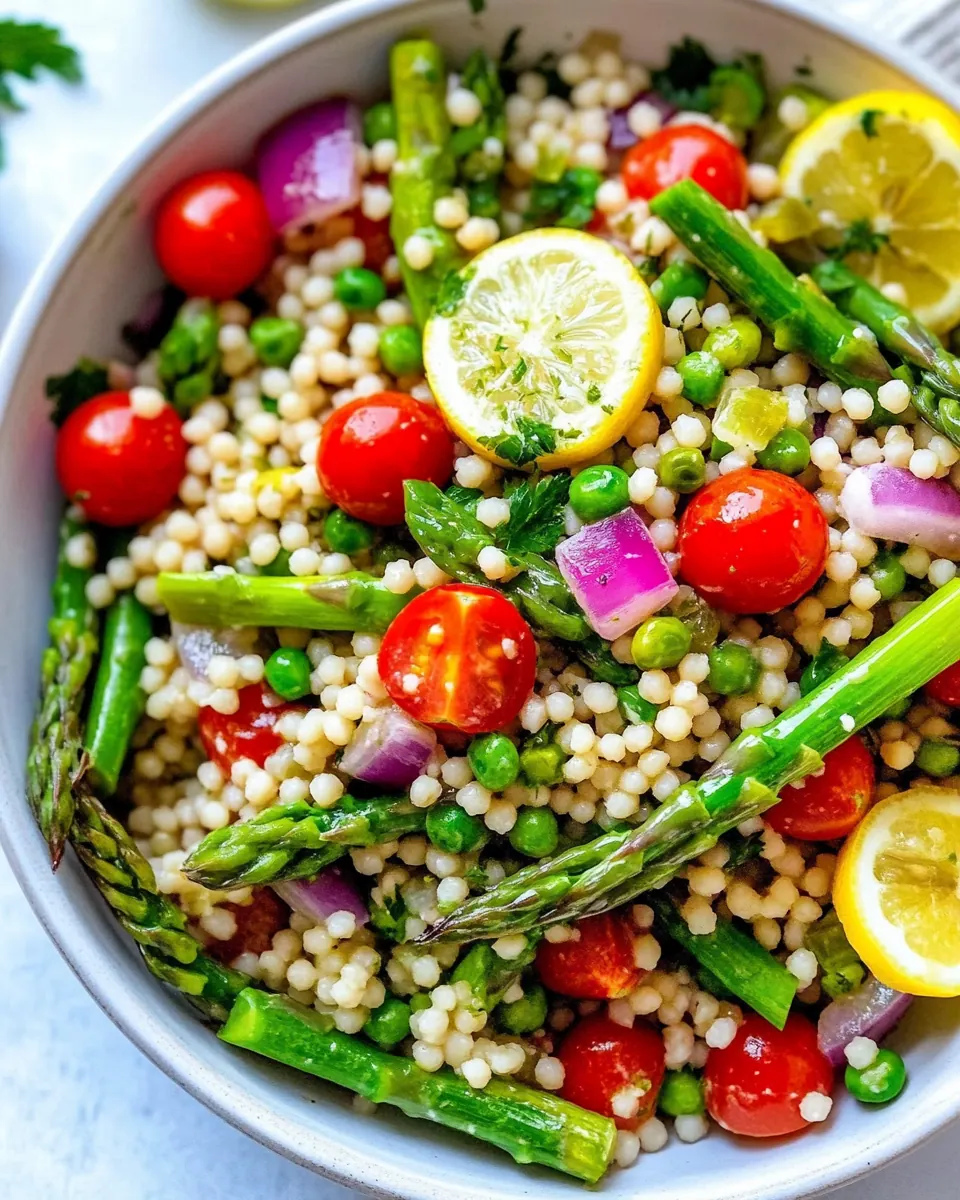
These steps will walk you through blanching the asparagus, cooking the couscous, and bringing everything together. Take your time with the cold rinses, they make the salad sing and help maintain crisp textures.
- Bring a large pot of salted water to a boil, add asparagus and cook until tender, about 3 minutes.: The moment the water reaches a rolling boil you will smell the metallic steam and see the tiny white bubbles racing across the surface; when you drop in the asparagus the water will briefly quiet as it returns to a boil. Blanching for around three minutes softens the fibrous stalks while preserving their emerald color and a pleasant snap; this keeps the texture lively against the softer couscous . A common mistake is overcooking, which makes the asparagus limp and dull in flavor, so set a timer and check the stalks for a tender but firm bite. After they reach the right tenderness, move quickly to cool them down to halt further cooking and lock in that vivid green.
- Remove with a large slotted spoon and rinse in a colander in the sink under cold water to stop it from cooking.: Once you lift the asparagus from the pot you will notice its color is brighter and the steam is fragrant with green, vegetal notes. Rinsing under cold water or shocking in an ice bath immediately arrests the cooking and preserves both texture and color. This step matters because residual heat will continue softening the stalks, so rapid cooling keeps a crisp bite. The trap here is to skip the cooling or to let the asparagus sit in hot water, which results in a soggy, overcooked texture that will flatten the salad.
- Add the couscous to the boiling water and cook according to package directions.: When you return the pot to a boil and add the whole wheat pearl couscous , you will hear a steady simmer and see the pearls tumble as they hydrate. Cooking times vary by brand, but you should look for pearls that are tender with a slight chew at the center. Properly cooked couscous will be plump and springy rather than gummy; that texture keeps the salad pleasant and avoids a pasty mouthfeel. Overcooking is an easy mistake that leads to mushy grains, so follow the package and test a pearl a minute or two before the lower end of the time range.
- Chop the asparagus into small 1/2 inch pieces.: After shocking and draining, chopping the asparagus into uniform half inch pieces creates a consistent texture and makes the salad easy to eat by the forkful. You will feel the slight give as you slice through tender stalks and see the vibrant green cross sections. Uniformity is important because uneven pieces lead to some bites dominated by stalks and others by couscous, which disrupts balance. Avoid cutting pieces that are too large, which makes it awkward to mix and eat, or too small, which diminishes pleasant crunch.
- Drain the couscous and rinse under cold water, place in a large bowl.: Drained and rinsed couscous will feel cool and slightly separated, with individual pearls glistening. Rinsing removes surface starch that can cause clumping and ensures the grains stay distinct so they can absorb the dressing without becoming pasty. Place the cooled grains into a spacious bowl to give yourself room to fold in vegetables and dressing; this helps maintain texture and prevents crushing the ingredients. Skipping the rinse often leaves the salad sticky and clumped together, which dulls the light, airy quality you want.
- Add the chopped asparagus, tomatoes, red onion, lemon juice, olive oil, parsley, salt and pepper to the bowl.: At this assembly stage you will notice the aroma of bright lemon juice mingling with herbal parsley and the sweet perfume of halved grape tomatoes . Toss gently so each couscous pearl is coated with the dressing and every piece of asparagus and tomato is evenly distributed; the visual contrast of green, red, and golden pearls is part of the pleasure of this salad. The olive oil smooths the mouthfeel while the citrus keeps things lively. An easy mistake is overdressing, which can weigh the salad down, so add seasonings gradually and taste as you go.
- Taste for salt and pepper and serve room temperature or chilled.: When you taste the finished salad you should experience brightness from the lemon , a gentle richness from the extra virgin olive oil , and balanced seasoning from the salt and fresh cracked pepper . Serving at room temperature allows the flavors to be more pronounced, while chilling tightens the texture and makes it a refreshing option on warm days. If you refrigerate, give it a gentle toss before serving to redistribute dressing and bring back some liveliness. A common oversight is underseasoning, so adjust incrementally and taste on a cold spoon if serving chilled.
Ways to Customize
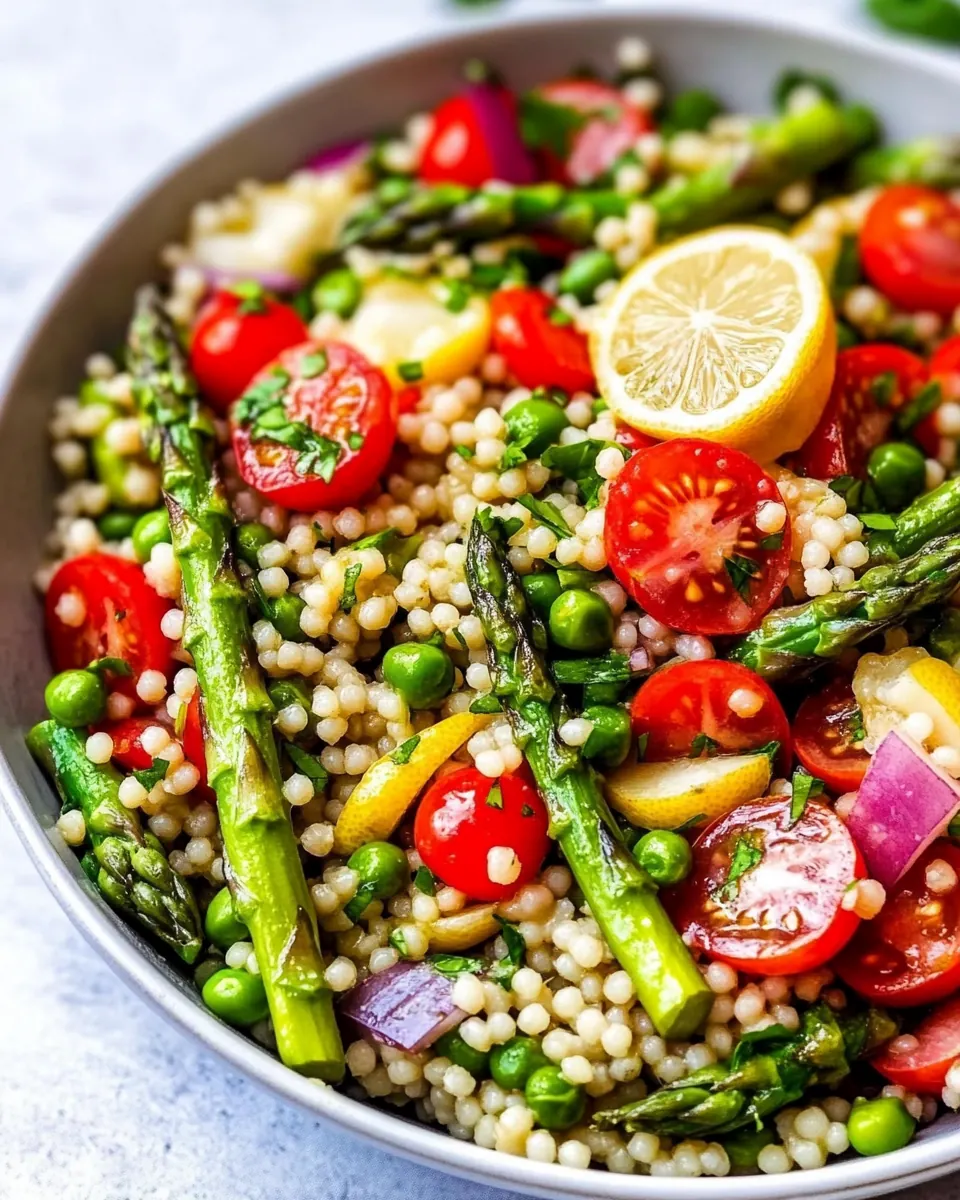
If you want to tweak the salad, there are many simple ways to tailor it without losing the bright spring character. Below are practical customizations to switch textures, increase protein, or emphasize herbaceousness.
- Boost heartiness Add toasted nuts or seeds for extra crunch and a toasty note, which pairs beautifully with the nutty whole wheat pearl couscous.
- Increase herbs Amp up the herb component by doubling the fresh parsley for a greener, fresher flavor that lifts the citrus and vegetables.
- Chill or serve warm Serve chilled for picnics or room temperature for dinner, both bring different textures and allow the flavors to present in unique ways.
- Adjust acidity Tweak the lemon to olive oil ratio to taste; more lemon brightens, more oil softens and rounds the overall mouthfeel.
- Make ahead strategy Prepare the components separately and combine a few hours before serving so textures remain distinct and the salad does not become soggy.
What Complements This Lemon Asparagus Couscous Salad with Tomatoes
This salad pairs beautifully with a wide range of accompaniments and occasions. Its light, fresh profile makes it perfect for lunch spreads, spring dinners, and potlucks. Consider pairing suggestions and serving notes below to make the most of its bright flavors.
- Light mains Pair with grilled fish or roasted vegetables for a balanced, spring inspired meal that keeps the plate fresh and vibrant.
- Picnic friendly This salad travels well for outdoor meals, making it ideal for casual picnics or park lunches when served chilled.
- Potluck star Bring it to a gathering as a colorful side; it complements heavier dishes by adding acidity and a whole grain element.
- Weeknight dinner Serve as a main for a meatless evening, perhaps alongside a warm grain bowl or simple soup for a satisfying plate.
- Storage tips Store in an airtight container in the fridge up to three days, and toss again before serving to revive textures and redistribute dressing.
- Seasonal pairing This shines in spring and early summer when asparagus and tomatoes are at their peak, but it also works well whenever you can source fresh produce.
FAQ
Conclusion
This salad stands out for its bright citrus lift, satisfying textures, and effortless preparation. You get nutty whole grain pearls, crisp asparagus, and juicy tomatoes all tied together with lemon and olive oil, making it a versatile dish for spring gatherings or weeknight meals. I encourage you to try it this season, tweak the acidity to your taste, and enjoy how easily it adapts to different occasions while staying light and flavorful.
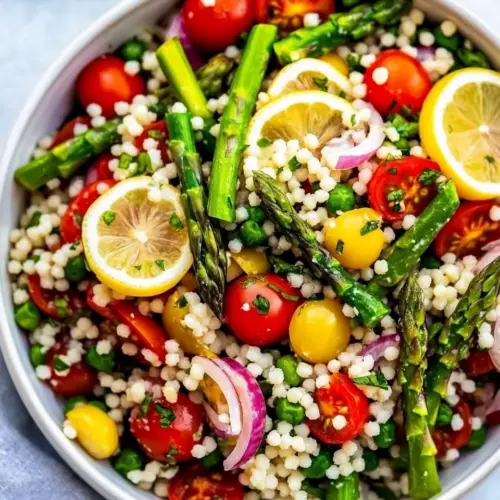
Lemon Asparagus Couscous Salad with Tomatoes
Equipment
- Large Pot
- Large slotted spoon
- Colander
- Large Bowl
Ingredients
- 6 oz whole wheat pearl couscous Cook to tender, chewy pearls that form the salad base and soak up dressing flavors; rinse after cooking to stop starch and cool for salad assembly. Provide whole-grain texture and nutty flavor while adding bulk and heartiness to the dish.
- 3/4 lb thin asparagus spears, tough ends trimmed Trim to remove tough woody ends and blanch or roast briefly to maintain bright color and tender-crisp bite patterned through the salad. Offer fresh vegetal notes, seasonal crunch, and a subtle earthy sweetness that contrasts with the couscous.
- 1 1/2 cups grape tomatoes, quartered Quarter to release juicy bursts of acidity and sweetness that balance the dish; stir in at the end to preserve shape and freshness. Contribute vibrant color, refreshing moisture, and a lightly tart finish to complement lemon and herbs.
- 1/4 cup red onion, minced Mince finely to distribute sharp, pungent aromatics throughout the salad without overpowering; mix in sparingly to control intensity. Add subtle savory depth and a faintly sweet onion character that enhances other flavors.
- 1 1/2 lemons, juiced Juice to provide bright, zesty acidity that lifts and brightens all components; adjust amount to taste and strain to remove seeds. Impart citrus tang and freshness that highlights the vegetables and cuts through the richness of the oil and couscous.
- 1 tbsp extra virgin olive oil Measure to lightly coat ingredients and help emulsify with lemon juice, carrying flavors and preventing dryness; drizzle evenly and toss. Deliver smooth mouthfeel, subtle fruitiness, and healthy fat that rounds the salad.
- 2 tbsp fresh parsley, minced Minced to scatter herbaceous, slightly bitter-green notes uniformly; fold in at the end to retain fresh color and aroma. Bring lively, aromatic complexity and a clean, savory finish that ties the ingredients together.
- Kosher salt, to taste Season to taste to enhance and balance all flavors; add incrementally and taste between additions to avoid over-salting. Provide essential savory backbone and amplify natural tastes of vegetables, grains, and citrus.
- fresh cracked pepper, to taste Grind to taste to introduce aromatic heat and complexity; add fresh for best flavor and adjust coarseness to preference. Supply bright, biting warmth and subtle floral notes that lift the overall flavor profile.
Instructions
- Bring a large pot of salted water to a boil, add asparagus and cook until tender, about 3 minutes.: The moment the water reaches a rolling boil you will smell the metallic steam and see the tiny white bubbles racing across the surface; when you drop in the asparagus the water will briefly quiet as it returns to a boil. Blanching for around three minutes softens the fibrous stalks while preserving their emerald color and a pleasant snap; this keeps the texture lively against the softer couscous . A common mistake is overcooking, which makes the asparagus limp and dull in flavor, so set a timer and check the stalks for a tender but firm bite. After they reach the right tenderness, move quickly to cool them down to halt further cooking and lock in that vivid green.
- Remove with a large slotted spoon and rinse in a colander in the sink under cold water to stop it from cooking.: Once you lift the asparagus from the pot you will notice its color is brighter and the steam is fragrant with green, vegetal notes. Rinsing under cold water or shocking in an ice bath immediately arrests the cooking and preserves both texture and color. This step matters because residual heat will continue softening the stalks, so rapid cooling keeps a crisp bite. The trap here is to skip the cooling or to let the asparagus sit in hot water, which results in a soggy, overcooked texture that will flatten the salad.
- Add the couscous to the boiling water and cook according to package directions.: When you return the pot to a boil and add the whole wheat pearl couscous , you will hear a steady simmer and see the pearls tumble as they hydrate. Cooking times vary by brand, but you should look for pearls that are tender with a slight chew at the center. Properly cooked couscous will be plump and springy rather than gummy; that texture keeps the salad pleasant and avoids a pasty mouthfeel. Overcooking is an easy mistake that leads to mushy grains, so follow the package and test a pearl a minute or two before the lower end of the time range.
- Chop the asparagus into small 1/2 inch pieces.: After shocking and draining, chopping the asparagus into uniform half inch pieces creates a consistent texture and makes the salad easy to eat by the forkful. You will feel the slight give as you slice through tender stalks and see the vibrant green cross sections. Uniformity is important because uneven pieces lead to some bites dominated by stalks and others by couscous, which disrupts balance. Avoid cutting pieces that are too large, which makes it awkward to mix and eat, or too small, which diminishes pleasant crunch.
- Drain the couscous and rinse under cold water, place in a large bowl.: Drained and rinsed couscous will feel cool and slightly separated, with individual pearls glistening. Rinsing removes surface starch that can cause clumping and ensures the grains stay distinct so they can absorb the dressing without becoming pasty. Place the cooled grains into a spacious bowl to give yourself room to fold in vegetables and dressing; this helps maintain texture and prevents crushing the ingredients. Skipping the rinse often leaves the salad sticky and clumped together, which dulls the light, airy quality you want.
- Add the chopped asparagus, tomatoes, red onion, lemon juice, olive oil, parsley, salt and pepper to the bowl.: At this assembly stage you will notice the aroma of bright lemon juice mingling with herbal parsley and the sweet perfume of halved grape tomatoes . Toss gently so each couscous pearl is coated with the dressing and every piece of asparagus and tomato is evenly distributed; the visual contrast of green, red, and golden pearls is part of the pleasure of this salad. The olive oil smooths the mouthfeel while the citrus keeps things lively. An easy mistake is overdressing, which can weigh the salad down, so add seasonings gradually and taste as you go.
- Taste for salt and pepper and serve room temperature or chilled.: When you taste the finished salad you should experience brightness from the lemon , a gentle richness from the extra virgin olive oil , and balanced seasoning from the salt and fresh cracked pepper . Serving at room temperature allows the flavors to be more pronounced, while chilling tightens the texture and makes it a refreshing option on warm days. If you refrigerate, give it a gentle toss before serving to redistribute dressing and bring back some liveliness. A common oversight is underseasoning, so adjust incrementally and taste on a cold spoon if serving chilled.
Notes
- Boost heartiness Add toasted nuts or seeds for extra crunch and a toasty note, which pairs beautifully with the nutty whole wheat pearl couscous.
- Increase herbs Amp up the herb component by doubling the fresh parsley for a greener, fresher flavor that lifts the citrus and vegetables.
- Chill or serve warm Serve chilled for picnics or room temperature for dinner, both bring different textures and allow the flavors to present in unique ways.
- Adjust acidity Tweak the lemon to olive oil ratio to taste; more lemon brightens, more oil softens and rounds the overall mouthfeel.
- Make ahead strategy Prepare the components separately and combine a few hours before serving so textures remain distinct and the salad does not become soggy.