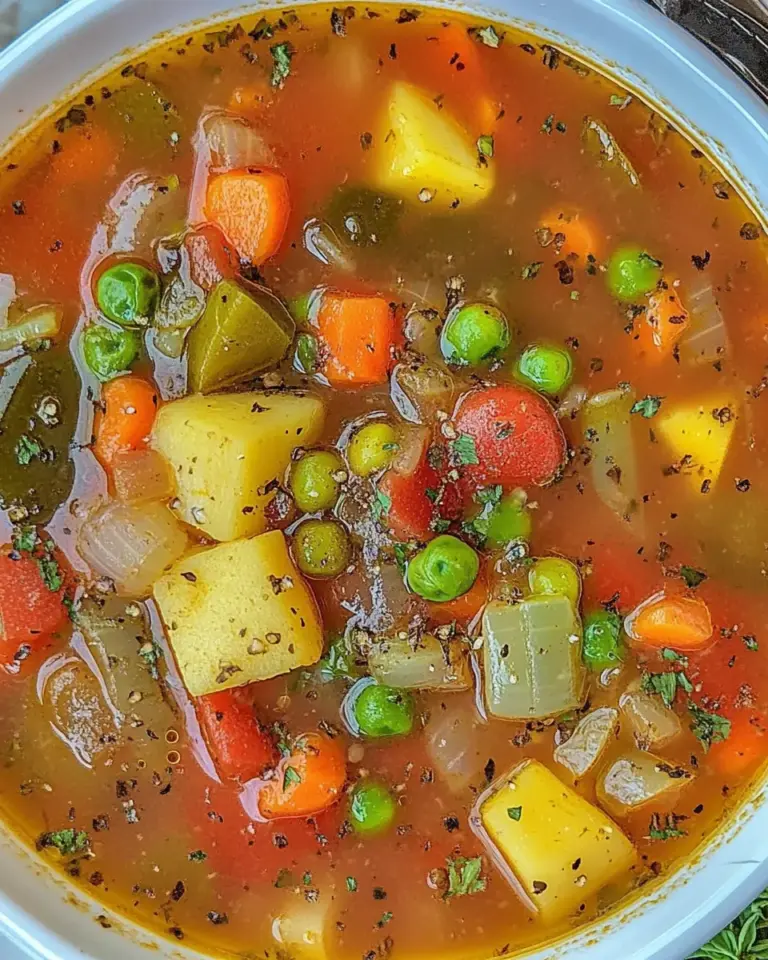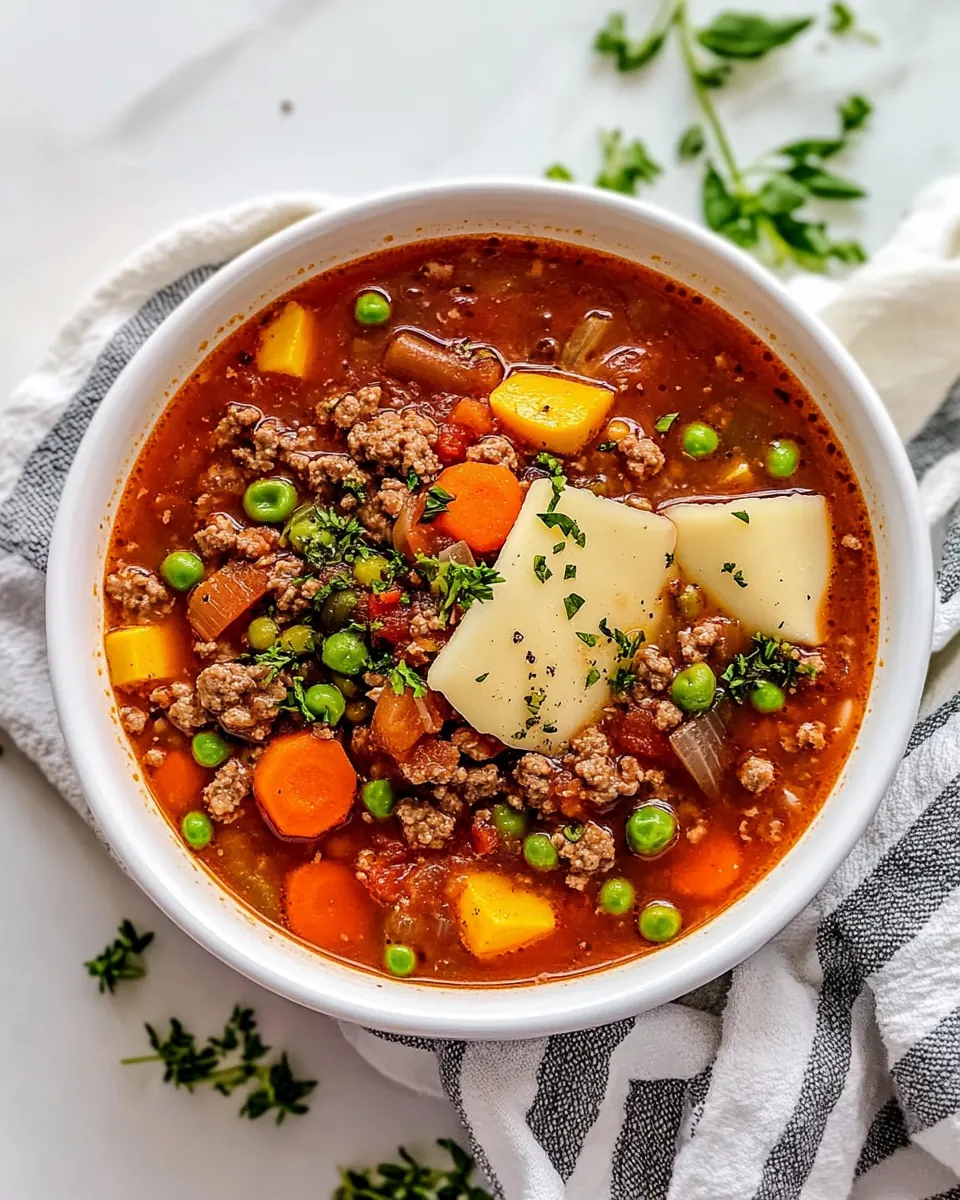
Hamburger Soup
Hamburger Soup is the kind of bowl I come back to when the day has been long, the air is cold, and I want something honest and filling without fuss.
Years ago, this recipe started as a midweek rescue for me, a pot of warmth that could be stretched across hungry mouths and different cravings. I remember the night my partner and I had just moved into our first apartment, the heat was spotty, and we had nothing but a pound of ground beef, a few vegetables, and a stubborn will to not order takeout. The way the kitchen filled with a savory aroma as the beef browned, then the vegetables softened and tomatoes joined in, that smell became the scent of home for us. Every spoonful felt like comfort, yet it was balanced and bright thanks to parsley and a splash of Worcestershire.
Over time, I learned little tricks that made the flavors sing: browning the ground beef well for caramelized bits, not overcooking the potatoes so they keep some texture, and adding the frozen peas at the end to preserve their pop. I like serving this pot on a weeknight when we need something simple but nourishing. It also travels well to friends who need a meal, because it reheats like a dream and tastes even better the next day.
Recipe Snapshot
55 mins
15 mins
40 mins
Medium
350 kcal
American
Gluten-Free, Low FODMAP
Soups
6 Quart Dutch Oven
The Best Thing About This Hamburger Soup
Hearty, trustworthy comfort
I love Hamburger Soup because it fills the house with that deep, savory aroma that says dinner is sorted. The combination of ground beef and beef broth gives the soup body and a rich base without being heavy. When life is busy, I turn to recipes that give calm and reliability, and this one always does.
Simple pantry cooking with maximum flavor
This recipe shines because it uses everyday ingredients that most home cooks already have. Canned diced tomatoes add acidity and umami, while the Worcestershire sauce layers in complexity. I often find that a few humble staples, treated with attention, can feel gourmet without a lot of effort.
Flexible and forgiving
I appreciate how adaptable Hamburger Soup is. You can tweak vegetable sizes, the broth level, or use a different protein and still end up with something comforting. That flexibility makes it a go to when I peek in the fridge and need to improvise.
Family friendly and crowd pleasing
From picky eaters to grown up appetites, the textures and flavors here appeal broadly. The soft potatoes, tender carrots, and little bursts from the peas create a bowl that kids and adults both reach for. I love serving it when friends stop by unexpectedly.
Great for meal prep and leftovers
One of my favorite things about this soup is how well it stores. The flavors deepen overnight, and reheating is straightforward. I often make a double batch for busy weeks, knowing I have several easy dinners at the ready.
Shopping List for Hamburger Soup
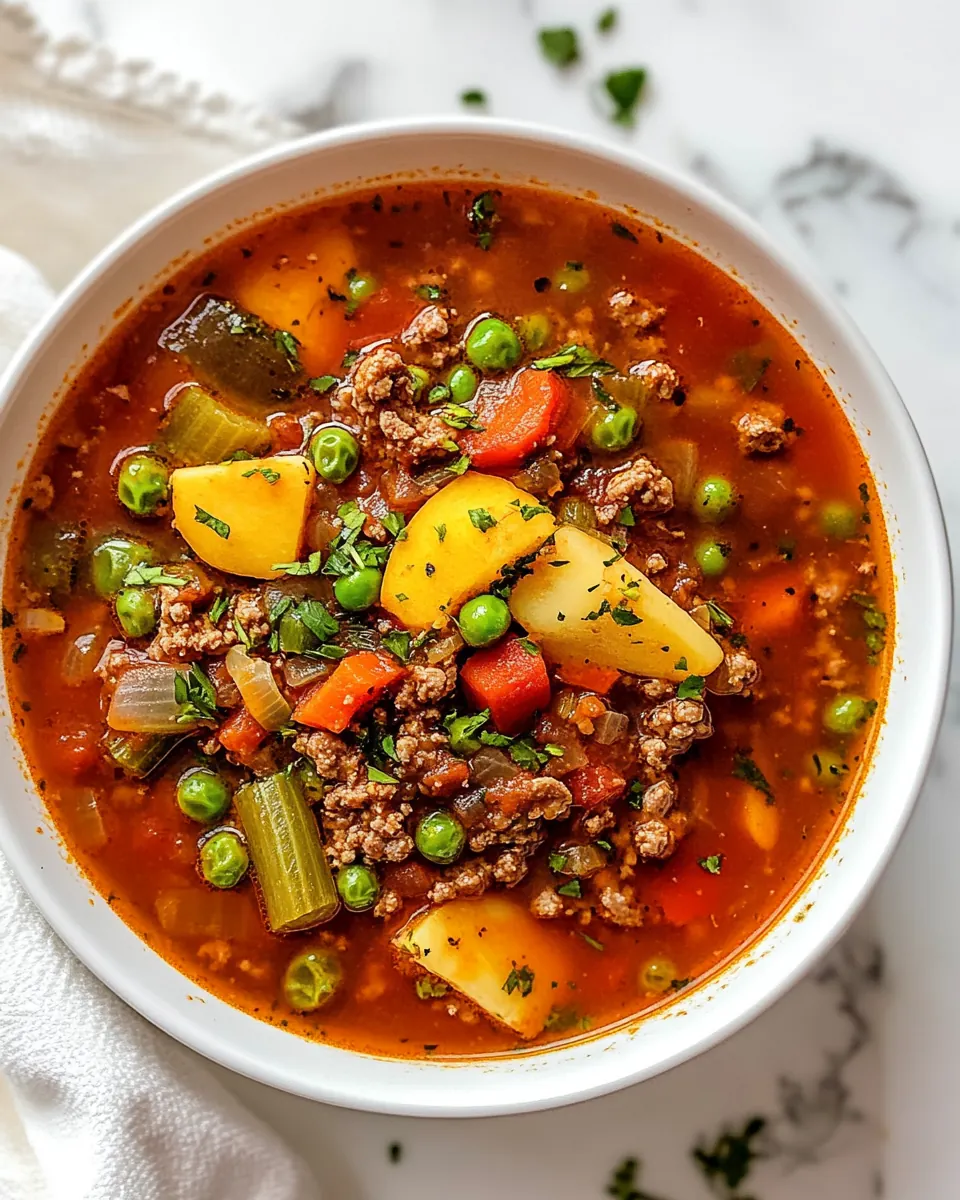
Think of these ingredients as players in an ensemble. The cast lead is the ground beef, anchoring the broth, while starchy potatoes and sweet carrots provide texture. Aromatics like onion and garlic build depth, and the diced tomatoes and Worcestershire sauce brighten and round the flavor. Together they create a balanced, warming bowl.
- 1 tablespoon olive oil: Heat and sauté to create the flavor base for the soup; olive oil helps brown the beef and soften aromatics while adding a subtle fruitiness. Use a tablespoon to prevent sticking without making the broth greasy, and choose extra-virgin for a richer mouthfeel or regular for a neutral profile.
- 1 pound ground beef: Brown thoroughly to develop savory depth and Maillard flavors; ground beef provides the hearty protein and body for the soup. Drain excess fat if desired to keep the broth clear, and choose leaner meat for a lighter soup or fattier for extra richness.
- 1 medium onion (chopped): Sweat until translucent to release sweetness and aromatic complexity; chopped onion contributes savory balance and natural sugars to the broth. Add early in cooking so it melds with the beef and other vegetables, enhancing overall flavor structure.
- 3 medium carrots (diced): Simmer until tender to add natural sweetness, texture, and color; diced carrots bring an earthy brightness and slight crunch if underset. Cut evenly for uniform cooking, and add with the potatoes to ensure both vegetables reach doneness together.
- 2 stalks celery (chopped): Cook until softened to contribute fragrant vegetal notes and subtle sweetness; chopped celery supplies aromatic backbone and a slight crunch that contrasts with softer vegetables. Include early so celery flavor infuses the broth, and trim fibrous strings for a smoother bite.
- 3 cloves garlic (minced): Lightly cook to release pungent, savory aromatics; minced garlic intensifies umami and rounds out the soup's flavor profile. Add toward the end of sautéing onions to avoid burning, which would create bitterness.
- 14 ounces diced tomatoes (1 can): Add with liquid to introduce acidity, sweetness, and tomatoey texture; canned diced tomatoes enrich the broth and provide body without requiring fresh tomatoes. Use the juice in the can to contribute to the liquid base and balance savory components.
- 4 6 cups beef broth (low sodium): Pour to form the soup's liquid base and control consistency; low-sodium beef broth supplies concentrated meat flavor while allowing salt adjustments. Start with less and add up to 6 cups to reach desired thickness and to accommodate evaporation during simmering.
- 2 large potatoes (diced): Simmer until tender to offer a starchy, comforting element and to thicken the broth slightly; diced potatoes absorb flavors and make the soup more filling. Use even cubes for consistent cooking and add early enough to become fork-tender.
- 1 tablespoon Worcestershire sauce: Stir in to add depth and a tangy, savory boost; Worcestershire sauce enhances umami and layers of flavor without extra salt. Add sparingly and taste as it concentrates during simmering, adjusting to personal preference.
- 1 teaspoon Italian seasoning: Sprinkle to impart an herby, aromatic blend that complements the beef and vegetables; Italian seasoning adds basil, oregano, and thyme notes for Mediterranean-inspired warmth. Use the teaspoon early so the herbs infuse the broth during simmering.
- 1 2 cubes beef bouillon: Dissolve as needed to intensify beef flavor and enrich the broth; beef bouillon cubes are a convenient way to fortify the stock, especially if the broth is too weak. Start with one cube and taste before adding a second to avoid over-salting.
- salt and pepper (to taste): Season to taste to balance and enhance all flavors; salt and pepper adjust brightness and heat while bringing out the soup's complexity. Add gradually, tasting after simmering, since broth and bouillon can contribute significant sodium.
- 1 cup frozen peas: Stir in near the end to introduce a pop of sweetness, color, and tender texture; frozen peas thaw quickly and preserve fresh vegetal flavor. Add in the last few minutes of cooking to keep peas vibrant and prevent mushiness.
- 2 tablespoons fresh parsley (chopped): Garnish fresh to brighten and add a clean herbal finish; chopped parsley lends color, freshness, and a mild peppery note that lifts the soup. Sprinkle on top just before serving to retain fragrance and visual appeal.
How to Cook Hamburger Soup
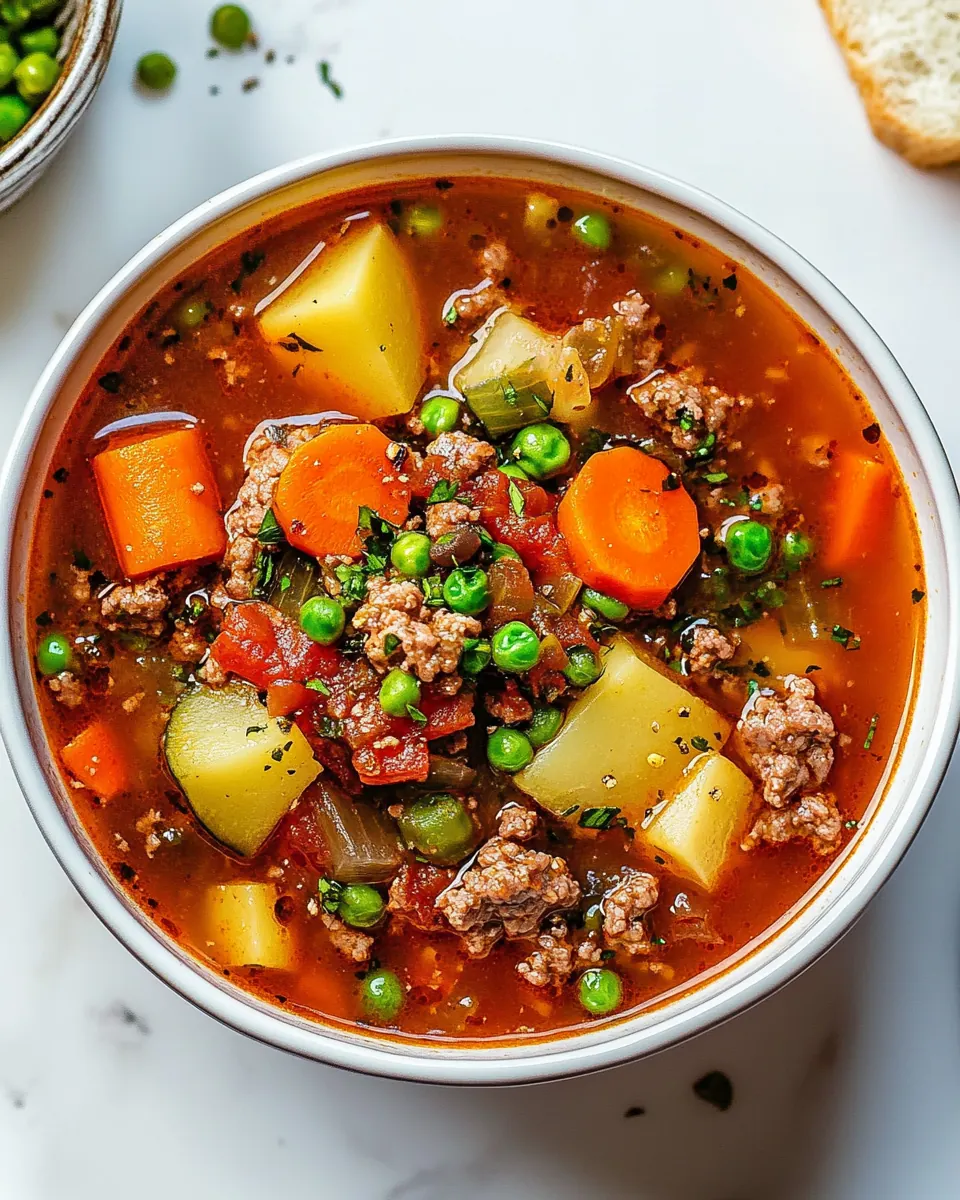
Cooking this soup is straightforward and comforting. The method relies on layering flavors, from browning the ground beef to simmering until the potatoes are tender. Move through the steps with attention to aroma and texture, and you will be rewarded with a deeply flavored bowl.
- In a large pot over medium heat, warm the oil. Add the ground beef and cook until browned, breaking it up with a spatula.: The moment you heat the olive oil and hear the sizzle as the ground beef hits the pan, you know flavor is forming. You should notice a steady bubbling and small pockets of fat rendering out, and the meat will change from pink to a rich brown; these browned bits are the foundation of the soup. Use a firm spatula to separate the meat into small, even pieces so each piece browns rather than steams. Browning builds caramelization that gives the broth depth, and it prevents a flat, boiled taste. A common mistake here is overcrowding the pot which causes the meat to steam; if the pot seems too full, lift some meat out and brown in batches or increase the heat slightly to encourage evaporation.
- In the same pot, toss in the onions, carrots, and celery. Cook until the onions become translucent and the veggies soften a bit.: At this stage the pan will smell sweet and savory as the residual fond lifts from the bottom when you stir in the onion , carrots , and celery . Cook until the onion glints translucent, and the edges of the carrots start to lose stiffness; this usually takes a few minutes. Softening these aromatics releases sugars and mellows any sharpness, blending seamlessly with the meat. Stir frequently so nothing sticks, scraping up those browned morsels. Avoid rushing this step, because undercooked vegetables will taste raw in the final bowl.
- Stir in the minced garlic and cook just until fragrant—about a minute.: When you add the garlic , the aroma will lift immediately, sharp and pungent in the best way. Keep the heat moderate and watch closely, because garlic becomes bitter if it burns. Cooking it only until fragrant preserves its sweet, savory qualities and infuses the oil that carries flavor through the soup. If you smell any bitterness, remove the pot from heat quickly and lower your stove next time.
- Add in the diced tomatoes, beef broth, diced potatoes, Worcestershire sauce, Italian seasoning and beef bouillon. Season with salt and pepper. Bring to a boil.: Pouring in the diced tomatoes and beef broth will create a hiss and a burst of steam, and the pot will start to smell complex and savory. Add the diced potatoes so they cook evenly, and stir in the Worcestershire sauce and Italian seasoning for layered flavor. If you use beef bouillon , it will dissolve and deepen the broth color. Bring everything up to a rolling boil; the surface should bubble energetically, showing that the liquid is fully heated through. Season lightly with salt and pepper because you can always adjust later. A common error is over salting at this point, especially if your broth or bouillon is already salty.
- Reduce heat, cover, and let simmer for about 25-30 minutes or until the potatoes are tender.: Lowering the heat and covering the pot turns the boil into a gentle simmer, where flavors marry slowly. You will notice the bubbling soften to small, steady ripples and the aroma become fuller and more cohesive. Check the potatoes after about 20 minutes by piercing with a fork; they should be tender but not falling apart. This gentle simmer helps meld the flavors without breaking down ingredients into mush. Stir occasionally to ensure even cooking and to prevent sticking. A mistake here is lifting the lid too often which lets heat escape and lengthens cooking time.
- Stir in the green peas and cook for an additional 5 minutes. Taste and adjust the seasoning if needed.: Adding the frozen peas at the end preserves their bright color and sweet pop. As they heat, you will see the pot regain a light shimmer, and the peas will soften while still keeping a slight bite. Taste a spoonful to check salt and pepper balance, and adjust with small increments. If the soup tastes flat, a pinch more salt or a touch more Worcestershire sauce can bring it forward. Avoid adding too much salt at once; it is easier to add than to remove.
- Ladle the soup into bowls, sprinkle with some freshly chopped parsley, and serve with a side of crusty bread.: When you serve, the steam will carry a warm, savory bouquet and the surface will glisten with little droplets of fat. Sprinkle the chopped parsley for a green contrast and a fresh herbal note. The soup should feel balanced in the mouth, with tender potatoes , soft vegetables, and flavorful bits of ground beef . A common serving mistake is letting the soup sit too long before eating, which can mute the brightness of the herbs; serve while hot for the best experience.
Substitutions and Tips

This section offers practical variations and tips to tailor Hamburger Soup to your pantry and preferences. The list below expands the notes into specific, useful suggestions that I use in my kitchen.
- Meat Options: While the base uses ground beef, you can swap in ground turkey or chicken for a leaner bowl. When using leaner meats, watch for reduced fat rendering and consider a tablespoon of oil to compensate so the soup still has mouthfeel. Also, lean meats brown differently, so be patient and scrape the pot to capture any fond.
- Vegetable Variations: You can add or substitute vegetables like green beans, corn, or bell peppers. If you include denser vegetables, chop them to a similar size so they cook evenly. Softer vegetables should be added later in the cook time to avoid turning mushy.
- Broth Adjustments: For a richer finish, stick with beef broth; for something lighter, chicken or vegetable broth works fine. If switching broths, taste as you go and adjust the seasoning because different broths have varying salt and flavor profiles.
- Bouillon Use: If your broth is weak, adding 1 bouillon cube enhances depth. Dissolve the cube completely and taste before adding more, because bouillon can be salty. Consider diluting a second cube in a small amount of hot water before stirring it into the pot.
- Herb Timing: Dried herbs like the Italian seasoning can be added earlier for depth, while fresh parsley should be saved for the end to preserve brightness. If you prefer a stronger herbal presence, increase dried herbs slightly, but add fresh herbs last.
Perfect Matches for Hamburger Soup
Hamburger Soup pairs beautifully with simple sides and suits many occasions. Below are serving ideas, storage tips, and pairing suggestions to make each meal feel intentional.
- Crusty bread or rolls: A slice of warm crusty bread is classic, great for dipping and absorbing the savory broth, making each spoonful more satisfying.
- Simple salad: A light green salad with a vinaigrette cuts through the soup’s richness and adds a fresh contrast, ideal for balancing textures at dinner.
- Occasions: This soup works well for weeknight dinners, casual get togethers, or as a comforting dish during winter evenings. It is also excellent for bringing to someone who is under the weather.
- Storage: Cool the soup to room temperature, then refrigerate in airtight containers for up to four days. For longer storage, freeze in portions for up to three months, thawing gently before reheating.
- Reheating: Warm gently on the stovetop over medium low heat, stirring occasionally, until steaming. Add a splash of broth or water if the soup has thickened too much after chilling.
- Seasonal pairings: In winter, serve with roasted root vegetables or a hearty grain side; in milder months, pair with light steamed greens to keep the meal bright.
FAQ
Conclusion
Hamburger Soup stands out for its straightforward ingredients and deep, comforting flavor that comes from simple techniques like browning and gentle simmering. Try it because it is both unfussy and satisfying, perfect for warming up chilly evenings or feeding a family with minimal fuss. I hope this recipe becomes one of your reliable weeknight dinners and that the small rituals of browning, tasting, and garnishing bring as much comfort to your table as they do to mine.

Hamburger Soup
Equipment
- 6-quart Dutch Oven
Ingredients
- 1 tablespoon olive oil Heat and sauté to create the flavor base for the soup; olive oil helps brown the beef and soften aromatics while adding a subtle fruitiness. Use a tablespoon to prevent sticking without making the broth greasy, and choose extra-virgin for a richer mouthfeel or regular for a neutral profile.
- 1 pound ground beef Brown thoroughly to develop savory depth and Maillard flavors; ground beef provides the hearty protein and body for the soup. Drain excess fat if desired to keep the broth clear, and choose leaner meat for a lighter soup or fattier for extra richness.
- 1 medium onion (chopped) Sweat until translucent to release sweetness and aromatic complexity; chopped onion contributes savory balance and natural sugars to the broth. Add early in cooking so it melds with the beef and other vegetables, enhancing overall flavor structure.
- 3 medium carrots (diced) Simmer until tender to add natural sweetness, texture, and color; diced carrots bring an earthy brightness and slight crunch if underset. Cut evenly for uniform cooking, and add with the potatoes to ensure both vegetables reach doneness together.
- 2 stalks celery (chopped) Cook until softened to contribute fragrant vegetal notes and subtle sweetness; chopped celery supplies aromatic backbone and a slight crunch that contrasts with softer vegetables. Include early so celery flavor infuses the broth, and trim fibrous strings for a smoother bite.
- 3 cloves garlic (minced) Lightly cook to release pungent, savory aromatics; minced garlic intensifies umami and rounds out the soup's flavor profile. Add toward the end of sautéing onions to avoid burning, which would create bitterness.
- 14 ounces diced tomatoes (1 can) Add with liquid to introduce acidity, sweetness, and tomatoey texture; canned diced tomatoes enrich the broth and provide body without requiring fresh tomatoes. Use the juice in the can to contribute to the liquid base and balance savory components.
- 4 -6 cups beef broth (low sodium) Pour to form the soup's liquid base and control consistency; low-sodium beef broth supplies concentrated meat flavor while allowing salt adjustments. Start with less and add up to 6 cups to reach desired thickness and to accommodate evaporation during simmering.
- 2 large potatoes (diced) Simmer until tender to offer a starchy, comforting element and to thicken the broth slightly; diced potatoes absorb flavors and make the soup more filling. Use even cubes for consistent cooking and add early enough to become fork-tender.
- 1 tablespoon Worcestershire sauce Stir in to add depth and a tangy, savory boost; Worcestershire sauce enhances umami and layers of flavor without extra salt. Add sparingly and taste as it concentrates during simmering, adjusting to personal preference.
- 1 teaspoon Italian seasoning Sprinkle to impart an herby, aromatic blend that complements the beef and vegetables; Italian seasoning adds basil, oregano, and thyme notes for Mediterranean-inspired warmth. Use the teaspoon early so the herbs infuse the broth during simmering.
- 1 -2 cubes beef bouillon Dissolve as needed to intensify beef flavor and enrich the broth; beef bouillon cubes are a convenient way to fortify the stock, especially if the broth is too weak. Start with one cube and taste before adding a second to avoid over-salting.
- salt and pepper (to taste) Season to taste to balance and enhance all flavors; salt and pepper adjust brightness and heat while bringing out the soup's complexity. Add gradually, tasting after simmering, since broth and bouillon can contribute significant sodium.
- 1 cup frozen peas Stir in near the end to introduce a pop of sweetness, color, and tender texture; frozen peas thaw quickly and preserve fresh vegetal flavor. Add in the last few minutes of cooking to keep peas vibrant and prevent mushiness.
- 2 tablespoons fresh parsley (chopped) Garnish fresh to brighten and add a clean herbal finish; chopped parsley lends color, freshness, and a mild peppery note that lifts the soup. Sprinkle on top just before serving to retain fragrance and visual appeal.
Instructions
- In a large pot over medium heat, warm the oil. Add the ground beef and cook until browned, breaking it up with a spatula.: The moment you heat the olive oil and hear the sizzle as the ground beef hits the pan, you know flavor is forming. You should notice a steady bubbling and small pockets of fat rendering out, and the meat will change from pink to a rich brown; these browned bits are the foundation of the soup. Use a firm spatula to separate the meat into small, even pieces so each piece browns rather than steams. Browning builds caramelization that gives the broth depth, and it prevents a flat, boiled taste. A common mistake here is overcrowding the pot which causes the meat to steam; if the pot seems too full, lift some meat out and brown in batches or increase the heat slightly to encourage evaporation.
- In the same pot, toss in the onions, carrots, and celery. Cook until the onions become translucent and the veggies soften a bit.: At this stage the pan will smell sweet and savory as the residual fond lifts from the bottom when you stir in the onion , carrots , and celery . Cook until the onion glints translucent, and the edges of the carrots start to lose stiffness; this usually takes a few minutes. Softening these aromatics releases sugars and mellows any sharpness, blending seamlessly with the meat. Stir frequently so nothing sticks, scraping up those browned morsels. Avoid rushing this step, because undercooked vegetables will taste raw in the final bowl.
- Stir in the minced garlic and cook just until fragrant—about a minute.: When you add the garlic , the aroma will lift immediately, sharp and pungent in the best way. Keep the heat moderate and watch closely, because garlic becomes bitter if it burns. Cooking it only until fragrant preserves its sweet, savory qualities and infuses the oil that carries flavor through the soup. If you smell any bitterness, remove the pot from heat quickly and lower your stove next time.
- Add in the diced tomatoes, beef broth, diced potatoes, Worcestershire sauce, Italian seasoning and beef bouillon. Season with salt and pepper. Bring to a boil.: Pouring in the diced tomatoes and beef broth will create a hiss and a burst of steam, and the pot will start to smell complex and savory. Add the diced potatoes so they cook evenly, and stir in the Worcestershire sauce and Italian seasoning for layered flavor. If you use beef bouillon , it will dissolve and deepen the broth color. Bring everything up to a rolling boil; the surface should bubble energetically, showing that the liquid is fully heated through. Season lightly with salt and pepper because you can always adjust later. A common error is over salting at this point, especially if your broth or bouillon is already salty.
- Reduce heat, cover, and let simmer for about 25-30 minutes or until the potatoes are tender.: Lowering the heat and covering the pot turns the boil into a gentle simmer, where flavors marry slowly. You will notice the bubbling soften to small, steady ripples and the aroma become fuller and more cohesive. Check the potatoes after about 20 minutes by piercing with a fork; they should be tender but not falling apart. This gentle simmer helps meld the flavors without breaking down ingredients into mush. Stir occasionally to ensure even cooking and to prevent sticking. A mistake here is lifting the lid too often which lets heat escape and lengthens cooking time.
- Stir in the green peas and cook for an additional 5 minutes. Taste and adjust the seasoning if needed.: Adding the frozen peas at the end preserves their bright color and sweet pop. As they heat, you will see the pot regain a light shimmer, and the peas will soften while still keeping a slight bite. Taste a spoonful to check salt and pepper balance, and adjust with small increments. If the soup tastes flat, a pinch more salt or a touch more Worcestershire sauce can bring it forward. Avoid adding too much salt at once; it is easier to add than to remove.
- Ladle the soup into bowls, sprinkle with some freshly chopped parsley, and serve with a side of crusty bread.: When you serve, the steam will carry a warm, savory bouquet and the surface will glisten with little droplets of fat. Sprinkle the chopped parsley for a green contrast and a fresh herbal note. The soup should feel balanced in the mouth, with tender potatoes , soft vegetables, and flavorful bits of ground beef . A common serving mistake is letting the soup sit too long before eating, which can mute the brightness of the herbs; serve while hot for the best experience.
Notes
- Meat Options: While the base uses ground beef, you can swap in ground turkey or chicken for a leaner bowl. When using leaner meats, watch for reduced fat rendering and consider a tablespoon of oil to compensate so the soup still has mouthfeel. Also, lean meats brown differently, so be patient and scrape the pot to capture any fond.
- Vegetable Variations: You can add or substitute vegetables like green beans, corn, or bell peppers. If you include denser vegetables, chop them to a similar size so they cook evenly. Softer vegetables should be added later in the cook time to avoid turning mushy.
- Broth Adjustments: For a richer finish, stick with beef broth; for something lighter, chicken or vegetable broth works fine. If switching broths, taste as you go and adjust the seasoning because different broths have varying salt and flavor profiles.
- Bouillon Use: If your broth is weak, adding 1 bouillon cube enhances depth. Dissolve the cube completely and taste before adding more, because bouillon can be salty. Consider diluting a second cube in a small amount of hot water before stirring it into the pot.
- Herb Timing: Dried herbs like the Italian seasoning can be added earlier for depth, while fresh parsley should be saved for the end to preserve brightness. If you prefer a stronger herbal presence, increase dried herbs slightly, but add fresh herbs last.