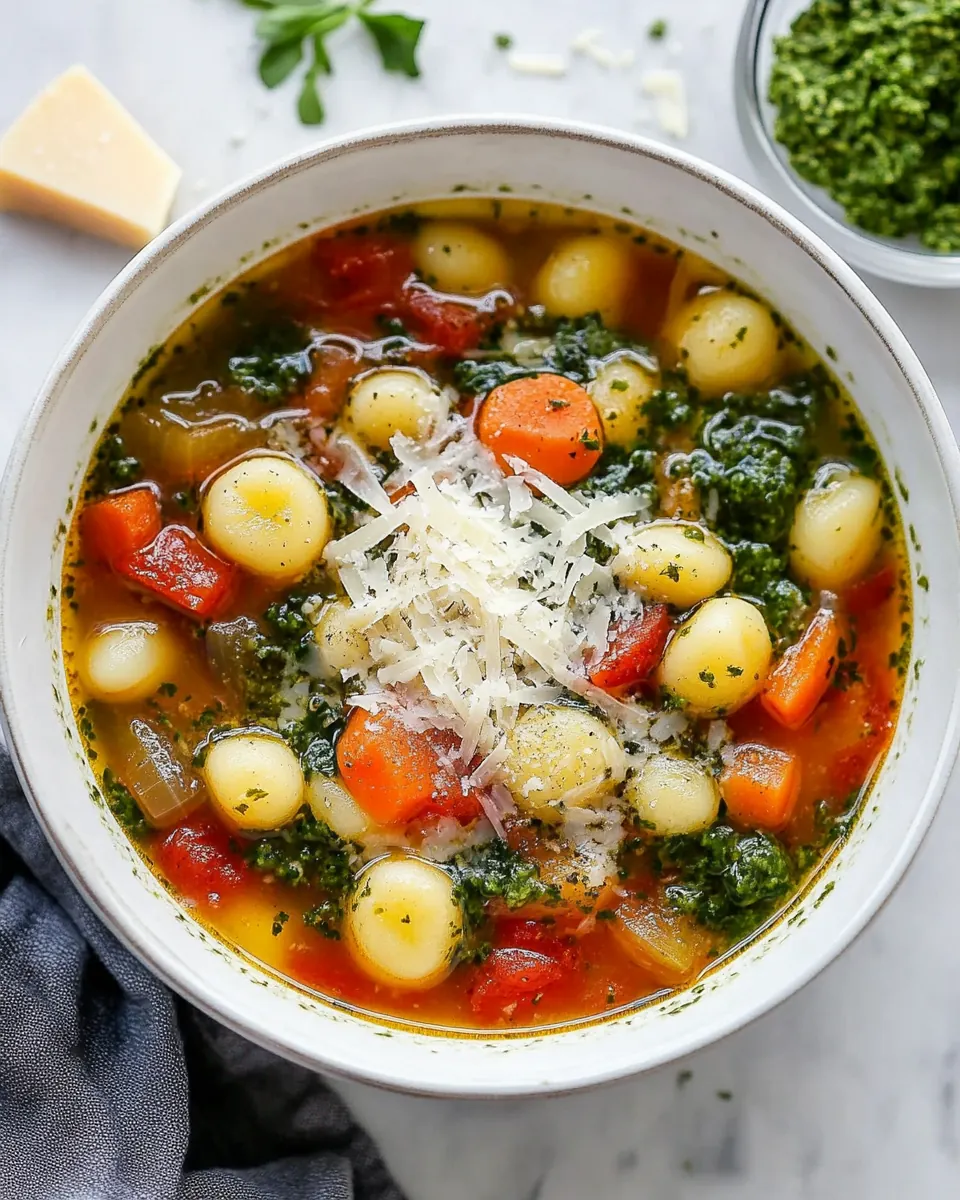
Gnocchi Vegetable Soup with Pesto and Parmesan
Gnocchi Vegetable Soup with Pesto and Parmesan is the kind of bowl I crave on a chilly evening, when I want something cozy but not fussy.
I first made Gnocchi Vegetable Soup with Pesto and Parmesan on a snowed in Wednesday, and the steam from the pot fogged up my kitchen window while the aroma of sautéed onion and garlic filled the house. I remember stirring the pot and thinking how the little potato dumplings gave the broth a gentle, pillowy thickness without any cream. That night my partner and I ate straight from the pot, trading spoonfuls and comments about the bright basil pesto cutting through the savory broth. It felt simple and nourishing, the sort of meal that soothes and satisfies without complicated steps.
Since then I’ve adapted the recipe a few times depending on what vegetables I have on hand, but the heart of it remains the same: a savory broth, tender gnocchi, a medley of vegetables, and finishing touches of parmesan and fragrant pesto. When I want to make it extra fast, I prep the pesto ahead and keep it in the fridge. On other nights I let the soup simmer a little longer so the vegetables fall into that perfect almost-falling-apart tenderness that I love. Either way, it always feels like a hug in a bowl.
Recipe Snapshot
55 mins
20 mins
35 mins
Medium
320 kcal
Italian
Gluten-Free, Vegan
Soups
Large pot, Food processor, Wooden spoon
Why You’ll Love This Gnocchi Vegetable Soup with Pesto and Parmesan
Comfort with Elegance
I love how Gnocchi Vegetable Soup with Pesto and Parmesan marries humble pantry staples with a touch of brightness. The soup is approachable, but when you scoop pesto and sprinkle parmesan on top it instantly becomes special. I often serve it when friends pop by unexpectedly because it looks and tastes like effort without requiring complicated prep.
Versatile Vegetable Medley
The lineup of onion, carrots, celery, green beans, and zucchini gives the bowl varied textures and colors. I appreciate that each vegetable contributes differently; some add sweetness, others a gentle crunch, and together they make the broth layered and interesting. You can stretch the soup to feed more people without losing depth.
Quick Satisfaction
This recipe comes together rapidly, which is a lifesaver on busy nights. Once the base is simmering, the gnocchi cooks in minutes, so you get a hearty meal with minimal waiting. I’ve turned to it as an easy weeknight dinner when I want something warming that does not take over the evening.
Bright Finishing Touches
The pesto and grated parmesan transform the soup from good to memorable. The basil pesto adds herbaceous lift and a silky mouthfeel, while the parmesan contributes umami and salt. I often spoon extra pesto at the table so everyone can control how bold they like it.
Healthy and Balanced
I recommend this soup when you want a nourishing, vegetable forward meal that still feels indulgent. With a savory broth and tender gnocchi, it balances carbs, vegetables, and savory fat. I find it comforting after outdoor winter walks, or as a cozy solo dinner when I want something restorative.
Ingredients Required for Gnocchi Vegetable Soup with Pesto and Parmesan
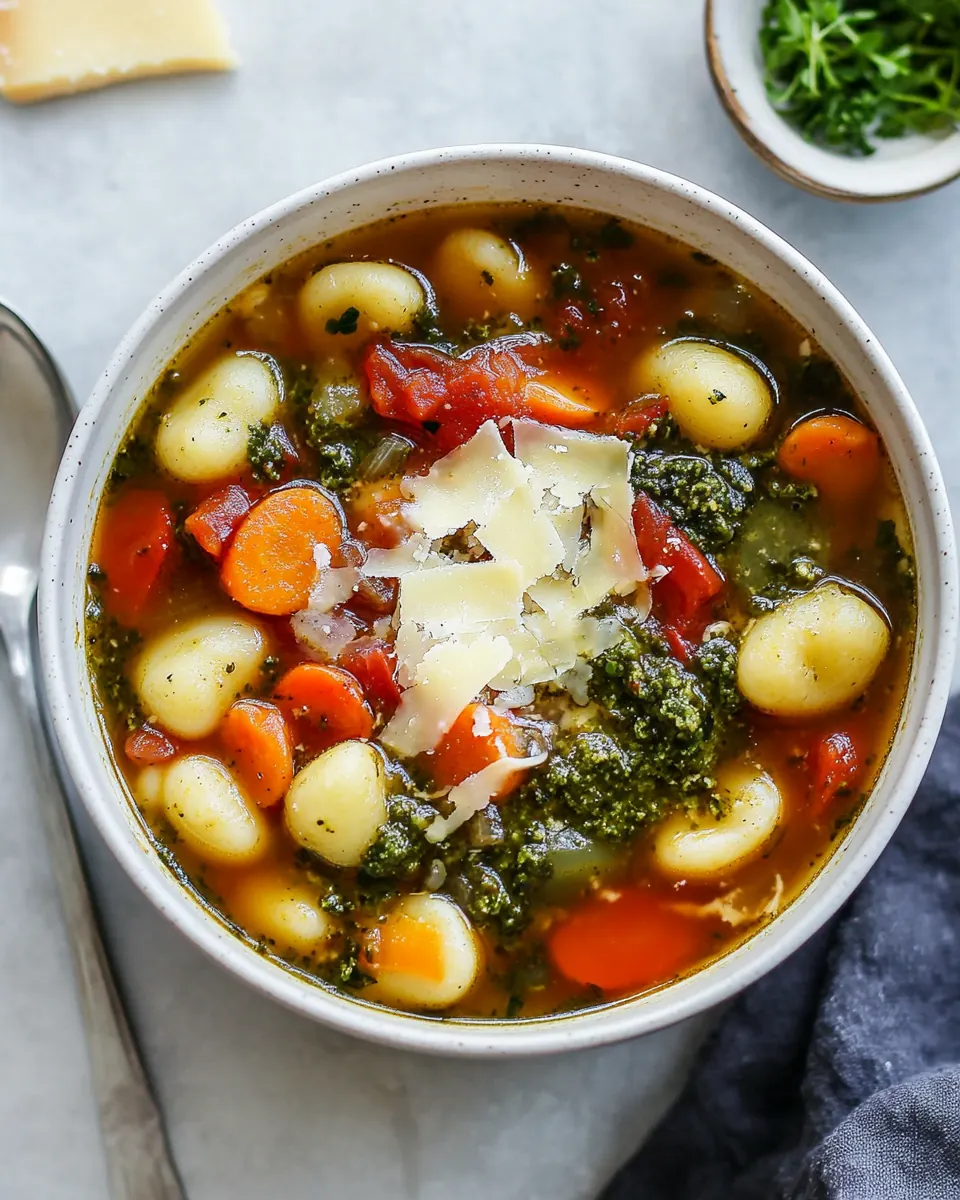
These ingredients are chosen to create a balanced, aromatic soup that highlights texture and flavor. The aromatic trio of onion, carrot, and celery builds a savory base, while canned tomatoes and broth supply depth. The gnocchi brings a pillowy element, and fresh spinach and zucchini add brightness. Finally, homemade pesto and shredded parmesan lift and finish the bowl.
- 2 tbsp olive oil: Sauté in a large pot to create a flavorful base and help soften aromatics while carrying heat for browning.
- 1 1/4 cups diced yellow onion (1 small): Provide a sweet, savory foundation when diced and gently cooked; release moisture and deepen soup flavor as they caramelize.
- 1 cup diced carrots (about 3 medium): Add natural sweetness and body when softened; contribute texture and balance to savory broth components.
- 1 cup diced celery (about 3 medium): Contribute aromatic, slightly bitter notes and crunchy texture when cooked; help build classic soup mirepoix.
- 1 tbsp minced garlic: Infuse pungent, savory depth when minced and briefly softened; lift other flavors and add garlic aroma.
- 6 cups low-sodium chicken broth or vegetable broth: Form the liquid backbone of the soup, supplying savory umami and carrying dissolved flavors throughout the dish.
- 2 (14.5 oz) cans diced tomatoes: Bring acidity, sweetness, and chunky tomato texture that brightens the broth and rounds out savory elements.
- 1 1/2 cups frozen cut Italian green beans: Supply tender vegetable bite and familiar Italian flavor; add color and a slightly crisp texture when warmed.
- 1/2 tsp dried thyme: Introduce warm, herbal undertones to complement vegetables and enhance the overall aromatic profile of the soup.
- Salt and freshly ground black pepper: Season to taste for balance; enhance natural flavors and control overall saltiness and peppery heat in each serving.
- 1 1/2 cups halved and sliced zucchini (about 1 medium): Deliver mild tenderness and moisture; help create textural contrast with gnocchi while absorbing surrounding flavors.
- 1 (16 oz) pkg potato gnocchi (mini or regular): Provide chewy, pillowy starch that makes the soup hearty and comforting while thickening the broth slightly.
- 3 cups (packed) fresh spinach, roughly chopped: Add leafy green nutrients and a tender, wilted texture that brightens the soup and blends with the broth.
- 3/4 cup finely shredded parmesan cheese, for serving: Garnish with a salty, nutty finishing touch; sprinkle over bowls to add savory richness and a creamy mouthfeel.
- 1 1/3 cups (packed, 40g) fresh basil leaves: Offer bright, herbaceous notes when processed into pesto; contribute fresh basil flavor and aromatic lift.
- 3 tbsp finely shredded parmesan cheese: Enhance pesto and finishing sprinkle with concentrated umami and salty richness for depth in each spoonful.
- 3/4 tsp minced garlic (1 small): Give an additional fresh garlic punch for the pesto when minced finely; melds into oil for aromatic complexity.
- 1/4 cup olive oil (extra-virgin or regular): Bind and emulsify basil and garlic into a smooth pesto; provide fruity richness and mouthfeel when whisked.
How to Prepare Gnocchi Vegetable Soup with Pesto and Parmesan
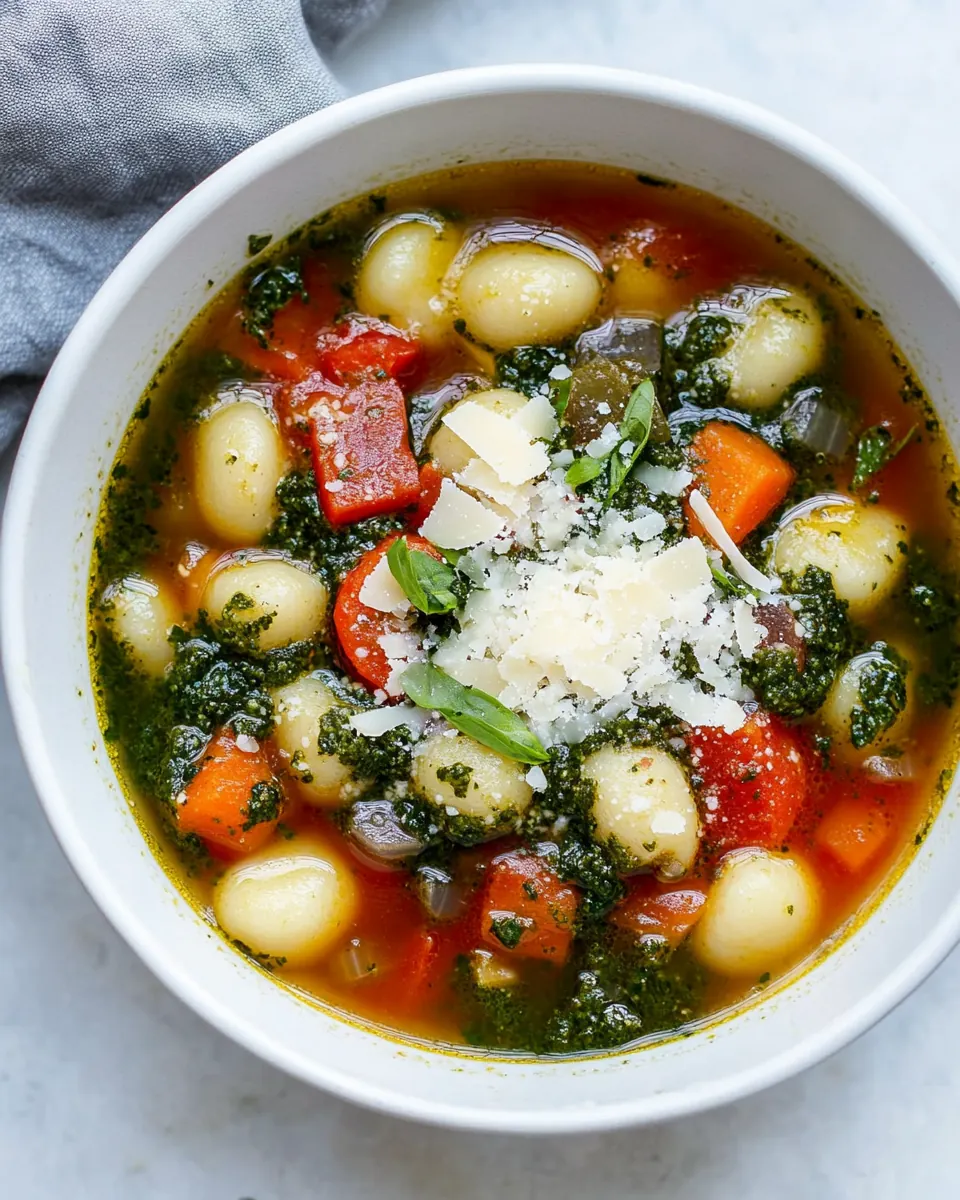
This soup comes together in a few clear stages, from building the aromatic base to finishing with tender gnocchi and bright pesto. The directions below expand each stage so you can cook confidently, notice the sensory cues, and avoid common pitfalls.
- Heat olive oil in a large pot over medium heat. Add onion, carrots, and celery and saute 7 minutes, add garlic and saute 2 more.: You should smell the sweet transformation of the onion and carrot as they soften, the kitchen filling with a warm, savory perfume. The vegetables will glisten and begin to turn translucent, and you may hear a gentle sizzle as moisture releases. This step develops the foundation of flavor through gentle browning, which creates subtle caramel notes that enrich the broth. Stir occasionally to prevent sticking and watch the edges of the vegetables; if they brown too quickly the heat is too high. A common mistake is rushing the sauté, which leaves raw, sharp flavors and a flat base. If you notice any burned bits, lower the heat and deglaze with a splash of broth, scraping the bottom to incorporate those fond flavors into the pot.
- Add chicken broth, tomatoes, green beans, thyme and season with salt and pepper to taste.: At this stage you will hear a louder simmer as the liquid hits the hot pot, and the aroma will shift to a rounder, more balanced scent with tomato brightness. The canned tomatoes introduce acidity and body, while the green beans begin to rehydrate and color the soup. Herbs like thyme release woody, savory notes when they meet warm liquid. This addition not only builds volume but it integrates the flavors so they can meld while simmering. Avoid over-salting now since the broth and canned tomatoes may already contain sodium; season lightly and adjust later. A typical error here is adding too much salt early, which is harder to correct than adding more later.
- Bring to a boil over medium-high heat. Then add in zucchini, reduce heat to medium low, cover and simmer until veggies are almost fully tender, about 12 – 15 minutes.: When the pot comes to a boil you will see active bubbling and smell a concentrated, savory steam. After boiling briefly, adding the zucchini ensures it softens without turning to mush. Reducing to medium low creates a gentle simmer where flavors meld gradually and vegetables cook evenly. Visually, the zucchini will become paler and slightly translucent at the edges when it is nearly done. A mistake is leaving the lid off too long during this simmer, which causes excessive evaporation and can concentrate salt; keep the lid seated to maintain a steady simmer. If the vegetables are still firm after the time window, continue a few minutes longer, checking texture periodically.
- Stir in gnocchi, cover and simmer until gnocchi are tender, about 4 minutes. Stir in spinach and let wilt, about 1 minute.: Adding the gnocchi will thicken the broth slightly as the dumplings release starch, making the soup feel silkier. You might hear a faint, irregular bubbling as the gnocchi shift and cook. The gnocchi will float and their texture will change from dense to pillowy; test one to assess tenderness. Immediately after, stirring in the spinach produces a bright flash of green as it wilts, and you will smell a fresh, green aroma. Overcooking the gnocchi can cause them to fall apart, so keep an eye on the clock and avoid stirring aggressively. If you find some gnocchi sticking together, add a small splash of broth and gently separate them with a spoon.
- Serve warm with parmesan and pesto over each serving.: The final bowl should release steam carrying herbaceous notes from the pesto and salty umami from the parmesan . As the cheese melts into the hot broth it will create silky ribbons and deepen the savory profile. Spoon a dollop of pesto on top to add a glossy, herbal finish and let guests stir it in to their preference. A common serving mistake is adding cheese too early during kept heat, which can clump; add at plating for best texture. If you want extra brightness, finish with a small drizzle of the pesto oil.
- In a food processor pulse basil, parmesan, garlic and salt to taste until well minced. With processor running pour in olive oil.: While this is technically a separate assembly step, the pesto is essential for the soup's final character. As you pulse the basil , the leaves will break down into a fragrant green paste and you will smell their fresh, peppery notes. Adding the parmesan and garlic builds savory depth and bite. Pouring the olive oil in slowly emulsifies the mixture, creating a glossy, silky pesto. Avoid overprocessing to a puree if you prefer a slight texture; conversely under-processing may leave large pieces of basil. If the pesto seems too thick, add a touch more oil sparingly until you reach a spoonable consistency.
- Recipe source: Cooking Classy: Cooking Classy : Recognize that this recipe has origins, and honoring the source helps you understand its balance and intent. While not a cooking action, remembering the provenance encourages respect for the method and typical flavor profile. If you wish to experiment, use this note as a starting point for small adjustments rather than wholesale rewrites. A common pitfall is changing too many elements at once, which makes it difficult to trace what altered the final taste; tweak one variable at a time to learn the impact.
Variations to Try
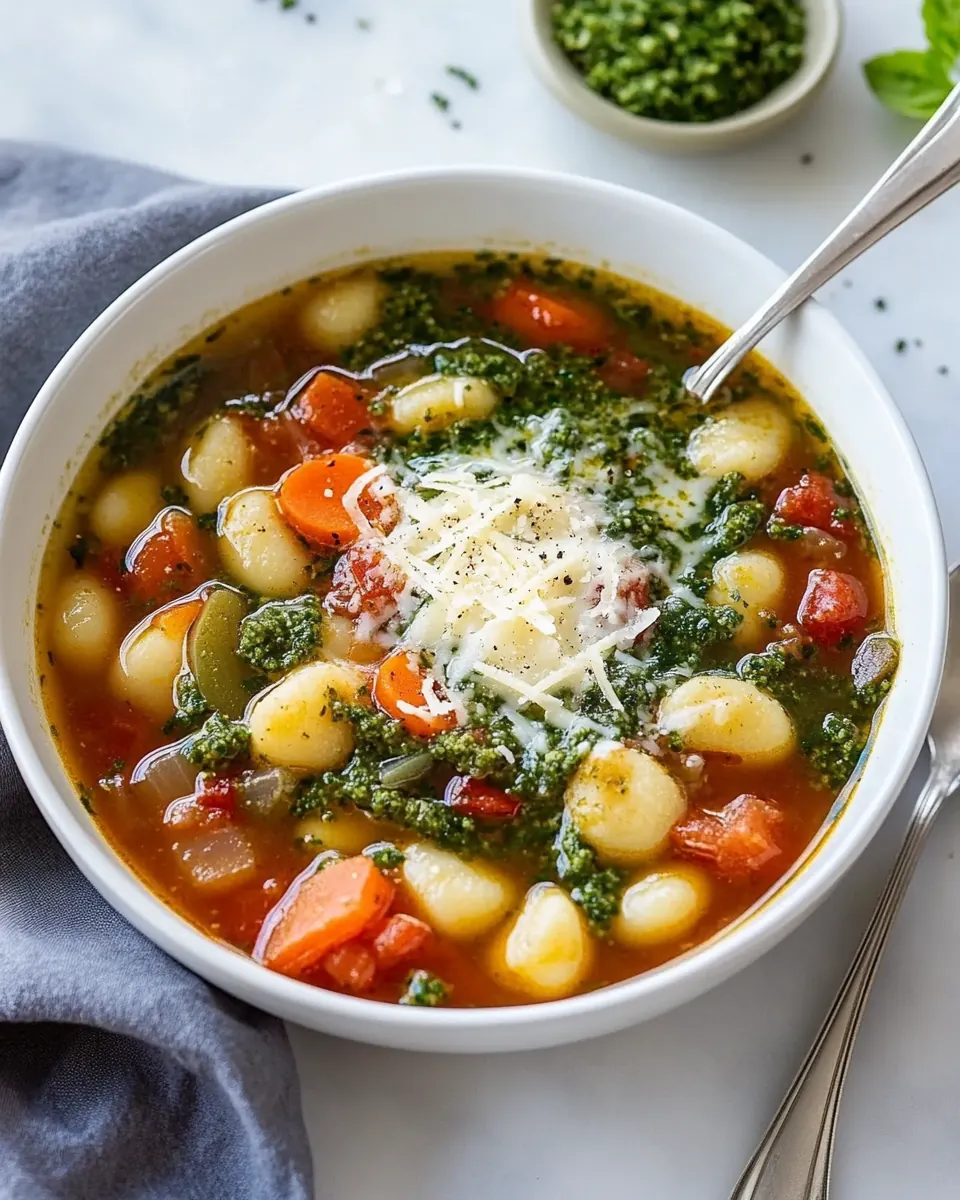
This soup adapts easily, and small swaps can change the character while keeping the heart intact. Below are ideas to explore that respect the original ingredient list and technique.
- Heartier Vegetables: Double the quantity of carrots and celery for a more rustic, chunky bowl that stands up to crusty bread.
- Extra Greens: Stir in more chopped spinach at the end for added color and nutrients without altering cooking times significantly.
- Pesto Intensity: Increase the basil to amp the pesto, or blend in a spoonful of the soup broth to loosen and mellow the raw garlic if it tastes sharp.
- Tomato Texture: Crush the canned tomatoes slightly with a spoon for a thicker, more blended broth, or leave them whole for more pronounced tomato bites.
- Make Ahead: Prepare the broth and vegetables a day ahead and refrigerate, adding freshly cooked gnocchi and spinach just before serving to preserve texture.
What Goes Well With This Gnocchi Vegetable Soup with Pesto and Parmesan
This soup pairs wonderfully with simple sides and suits many occasions from casual weeknights to cozy winter dinners. Below are serving ideas, storage tips, and seasonal pairings to enhance your meal.
- Crusty Bread: A warm loaf or slices of crusty bread are perfect for sopping up the savory broth, making the meal feel complete and comforting.
- Simple Salad: A crisp green salad with a light vinaigrette provides a refreshing contrast, adding a crunchy counterpoint to the soup’s tender textures.
- Light Appetizers: Serve small marinated vegetable plates or olives to start, offering bright, salty flavors that complement the soup’s herbaceous notes.
- Occasions: This dish is ideal for chilly winter nights, casual family dinners, or when you want an easy weeknight dinner that still feels thoughtful and satisfying.
- Storage: Refrigerate leftovers in an airtight container for up to three days; reheat gently on the stovetop to preserve the gnocchi texture, or store soup and pesto separately for best results.
- Seasonal Pairings: In winter, pair the soup with roasted root vegetables or a warm grain side. In spring, emphasize fresh herbs and a lighter salad to complement the basil pesto.
FAQ
Conclusion
This soup shines because it balances pillowy gnocchi, vibrant vegetables, and a bright basil pesto for a bowl that is both comforting and lively. I encourage you to give it a try on a chilly night, because it comes together quickly and always leaves the kitchen smelling inviting. It is an approachable, forgiving recipe that rewards small attentions like a careful sauté and a fresh pesto finish, resulting in a meal you will want to make again and share.
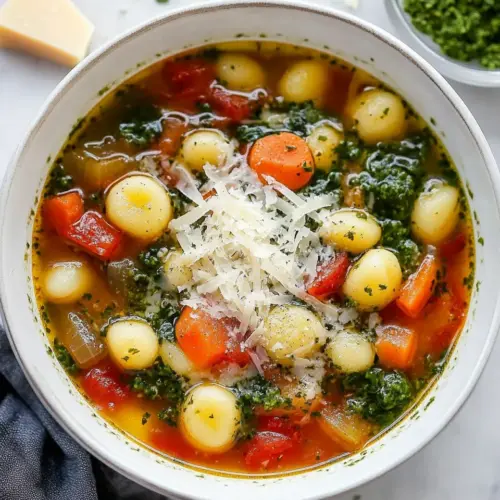
Gnocchi Vegetable Soup with Pesto and Parmesan
Equipment
- Large Pot
- Food Processor
- Wooden Spoon
Ingredients
- 2 tbsp olive oil Sauté in a large pot to create a flavorful base and help soften aromatics while carrying heat for browning.
- 1 1/4 cups diced yellow onion (1 small) Provide a sweet, savory foundation when diced and gently cooked; release moisture and deepen soup flavor as they caramelize.
- 1 cup diced carrots (about 3 medium) Add natural sweetness and body when softened; contribute texture and balance to savory broth components.
- 1 cup diced celery (about 3 medium) Contribute aromatic, slightly bitter notes and crunchy texture when cooked; help build classic soup mirepoix.
- 1 tbsp minced garlic Infuse pungent, savory depth when minced and briefly softened; lift other flavors and add garlic aroma.
- 6 cups low-sodium chicken broth or vegetable broth Form the liquid backbone of the soup, supplying savory umami and carrying dissolved flavors throughout the dish.
- 2 (14.5 oz) cans diced tomatoes Bring acidity, sweetness, and chunky tomato texture that brightens the broth and rounds out savory elements.
- 1 1/2 cups frozen cut Italian green beans Supply tender vegetable bite and familiar Italian flavor; add color and a slightly crisp texture when warmed.
- 1/2 tsp dried thyme Introduce warm, herbal undertones to complement vegetables and enhance the overall aromatic profile of the soup.
- Salt and freshly ground black pepper Season to taste for balance; enhance natural flavors and control overall saltiness and peppery heat in each serving.
- 1 1/2 cups halved and sliced zucchini (about 1 medium) Deliver mild tenderness and moisture; help create textural contrast with gnocchi while absorbing surrounding flavors.
- 1 (16 oz) pkg potato gnocchi (mini or regular) Provide chewy, pillowy starch that makes the soup hearty and comforting while thickening the broth slightly.
- 3 cups (packed) fresh spinach, roughly chopped Add leafy green nutrients and a tender, wilted texture that brightens the soup and blends with the broth.
- 3/4 cup finely shredded parmesan cheese, for serving Garnish with a salty, nutty finishing touch; sprinkle over bowls to add savory richness and a creamy mouthfeel.
- 1 1/3 cups (packed, 40g) fresh basil leaves Offer bright, herbaceous notes when processed into pesto; contribute fresh basil flavor and aromatic lift.
- 3 tbsp finely shredded parmesan cheese Enhance pesto and finishing sprinkle with concentrated umami and salty richness for depth in each spoonful.
- 3/4 tsp minced garlic (1 small) Give an additional fresh garlic punch for the pesto when minced finely; melds into oil for aromatic complexity.
- 1/4 cup olive oil (extra-virgin or regular) Bind and emulsify basil and garlic into a smooth pesto; provide fruity richness and mouthfeel when whisked.
Instructions
- Heat olive oil in a large pot over medium heat. Add onion, carrots, and celery and saute 7 minutes, add garlic and saute 2 more.: You should smell the sweet transformation of the onion and carrot as they soften, the kitchen filling with a warm, savory perfume. The vegetables will glisten and begin to turn translucent, and you may hear a gentle sizzle as moisture releases. This step develops the foundation of flavor through gentle browning, which creates subtle caramel notes that enrich the broth. Stir occasionally to prevent sticking and watch the edges of the vegetables; if they brown too quickly the heat is too high. A common mistake is rushing the sauté, which leaves raw, sharp flavors and a flat base. If you notice any burned bits, lower the heat and deglaze with a splash of broth, scraping the bottom to incorporate those fond flavors into the pot.
- Add chicken broth, tomatoes, green beans, thyme and season with salt and pepper to taste.: At this stage you will hear a louder simmer as the liquid hits the hot pot, and the aroma will shift to a rounder, more balanced scent with tomato brightness. The canned tomatoes introduce acidity and body, while the green beans begin to rehydrate and color the soup. Herbs like thyme release woody, savory notes when they meet warm liquid. This addition not only builds volume but it integrates the flavors so they can meld while simmering. Avoid over-salting now since the broth and canned tomatoes may already contain sodium; season lightly and adjust later. A typical error here is adding too much salt early, which is harder to correct than adding more later.
- Bring to a boil over medium-high heat. Then add in zucchini, reduce heat to medium low, cover and simmer until veggies are almost fully tender, about 12 - 15 minutes.: When the pot comes to a boil you will see active bubbling and smell a concentrated, savory steam. After boiling briefly, adding the zucchini ensures it softens without turning to mush. Reducing to medium low creates a gentle simmer where flavors meld gradually and vegetables cook evenly. Visually, the zucchini will become paler and slightly translucent at the edges when it is nearly done. A mistake is leaving the lid off too long during this simmer, which causes excessive evaporation and can concentrate salt; keep the lid seated to maintain a steady simmer. If the vegetables are still firm after the time window, continue a few minutes longer, checking texture periodically.
- Stir in gnocchi, cover and simmer until gnocchi are tender, about 4 minutes. Stir in spinach and let wilt, about 1 minute.: Adding the gnocchi will thicken the broth slightly as the dumplings release starch, making the soup feel silkier. You might hear a faint, irregular bubbling as the gnocchi shift and cook. The gnocchi will float and their texture will change from dense to pillowy; test one to assess tenderness. Immediately after, stirring in the spinach produces a bright flash of green as it wilts, and you will smell a fresh, green aroma. Overcooking the gnocchi can cause them to fall apart, so keep an eye on the clock and avoid stirring aggressively. If you find some gnocchi sticking together, add a small splash of broth and gently separate them with a spoon.
- Serve warm with parmesan and pesto over each serving.: The final bowl should release steam carrying herbaceous notes from the pesto and salty umami from the parmesan . As the cheese melts into the hot broth it will create silky ribbons and deepen the savory profile. Spoon a dollop of pesto on top to add a glossy, herbal finish and let guests stir it in to their preference. A common serving mistake is adding cheese too early during kept heat, which can clump; add at plating for best texture. If you want extra brightness, finish with a small drizzle of the pesto oil.
- In a food processor pulse basil, parmesan, garlic and salt to taste until well minced. With processor running pour in olive oil.: While this is technically a separate assembly step, the pesto is essential for the soup's final character. As you pulse the basil , the leaves will break down into a fragrant green paste and you will smell their fresh, peppery notes. Adding the parmesan and garlic builds savory depth and bite. Pouring the olive oil in slowly emulsifies the mixture, creating a glossy, silky pesto. Avoid overprocessing to a puree if you prefer a slight texture; conversely under-processing may leave large pieces of basil. If the pesto seems too thick, add a touch more oil sparingly until you reach a spoonable consistency.
- Recipe source: Cooking Classy: Cooking Classy : Recognize that this recipe has origins, and honoring the source helps you understand its balance and intent. While not a cooking action, remembering the provenance encourages respect for the method and typical flavor profile. If you wish to experiment, use this note as a starting point for small adjustments rather than wholesale rewrites. A common pitfall is changing too many elements at once, which makes it difficult to trace what altered the final taste; tweak one variable at a time to learn the impact.
Notes
- Heartier Vegetables: Double the quantity of carrots and celery for a more rustic, chunky bowl that stands up to crusty bread.
- Extra Greens: Stir in more chopped spinach at the end for added color and nutrients without altering cooking times significantly.
- Pesto Intensity: Increase the basil to amp the pesto, or blend in a spoonful of the soup broth to loosen and mellow the raw garlic if it tastes sharp.
- Tomato Texture: Crush the canned tomatoes slightly with a spoon for a thicker, more blended broth, or leave them whole for more pronounced tomato bites.
- Make Ahead: Prepare the broth and vegetables a day ahead and refrigerate, adding freshly cooked gnocchi and spinach just before serving to preserve texture.