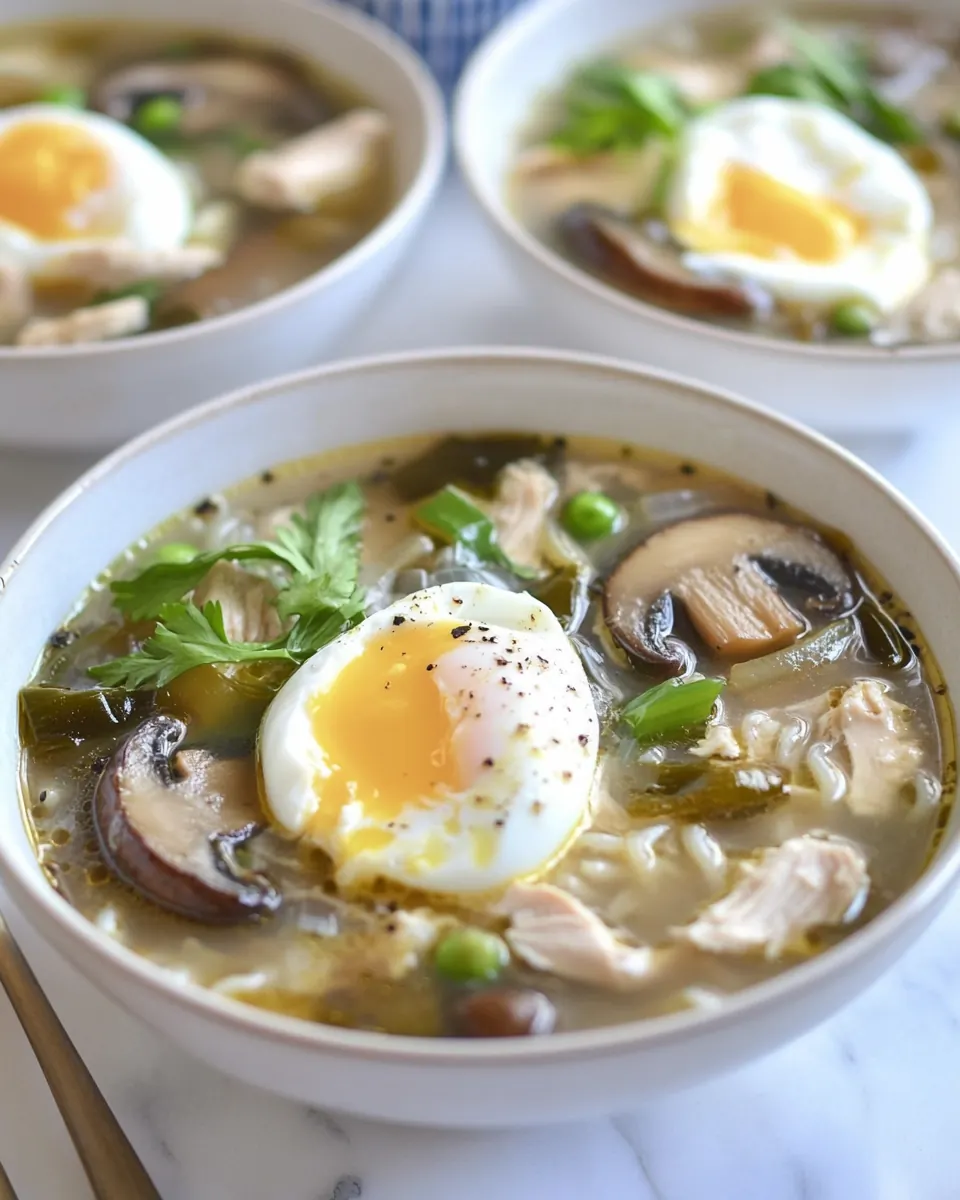
Mushroom Chicken Noodle Soup with Poached Eggs
Mushroom Chicken Noodle Soup with Poached Eggs is the kind of bowl I reach for when the weather feels elemental and I want something both nourishing and a little indulgent. The first time I made it, I was still unpacking boxes after a move, and the aroma of chicken, sautéed mushrooms, and garlic made the new apartment feel like home. I remember pausing with a wooden spoon in my hand, thinking that a single bowl could really steady the day.
Over the years I have tweaked this recipe to balance comfort with bright, clean flavors. The combination of dried porcini and fresh cremini gives the broth an earthy depth, while a quick poached egg on top creates a silky finish that makes every spoonful feel luxurious. I like the way the noodles soak up the broth but still have bounce, and the green onions bring a fresh counterpoint that keeps the soup lively.
Recipe Snapshot
35 mins
10 mins
25 mins
Easy
350 kcal
American
Gluten-Free, Keto
Soups
Large pot, Slotted spoon
What We Adore About This Mushroom Chicken Noodle Soup with Poached Eggs
Deep, layered mushroom flavor
I love how using both cremini mushrooms and dried porcini mushrooms builds an umami backbone that feels rich without being heavy. The dried mushrooms rehydrate into a concentrated, almost meaty stock, giving the soup a depth that single-mushroom soups often lack. I often steep the porcini in the cooking liquid, and that extra step multiplies flavor in a way you can actually taste in the second bowl.
Comfort with a light finish
While this recipe is undeniably comforting, the choice of whole wheat or soba noodles and a bright handful of sliced green onions keeps it from becoming cloying. I appreciate that it sits in that sweet spot where it satisfies hunger yet feels clean and restorative the next morning. I find it perfect for a late winter lunch after a walk in the cold.
Protein that stays tender
Cooking the chicken first and then returning it to the pot is a simple trick I swear by. It develops color and a little caramelized flavor, while finishing in the broth keeps it tender and juicy. This two stage approach changes the texture completely, giving you pieces that are both flavorful and moist.
Eggs as a finishing flourish
Adding a poached or fried egg on top transforms the bowl from soup to experience. The warm yolk becomes part of the broth, turning each spoonful creamy without heavy dairy. It is one of those touches that makes guests say, quote unquote, I did not expect that, and then reach for seconds.
Fast but impressive
Even though the flavors feel layered and slow cooked, this recipe comes together quickly. That means you can serve something that looks and tastes like you spent hours on it, all within about thirty five minutes. I use that to my advantage on weeknights when I want to impress without the fuss.
Everything You Need for Mushroom Chicken Noodle Soup with Poached Eggs
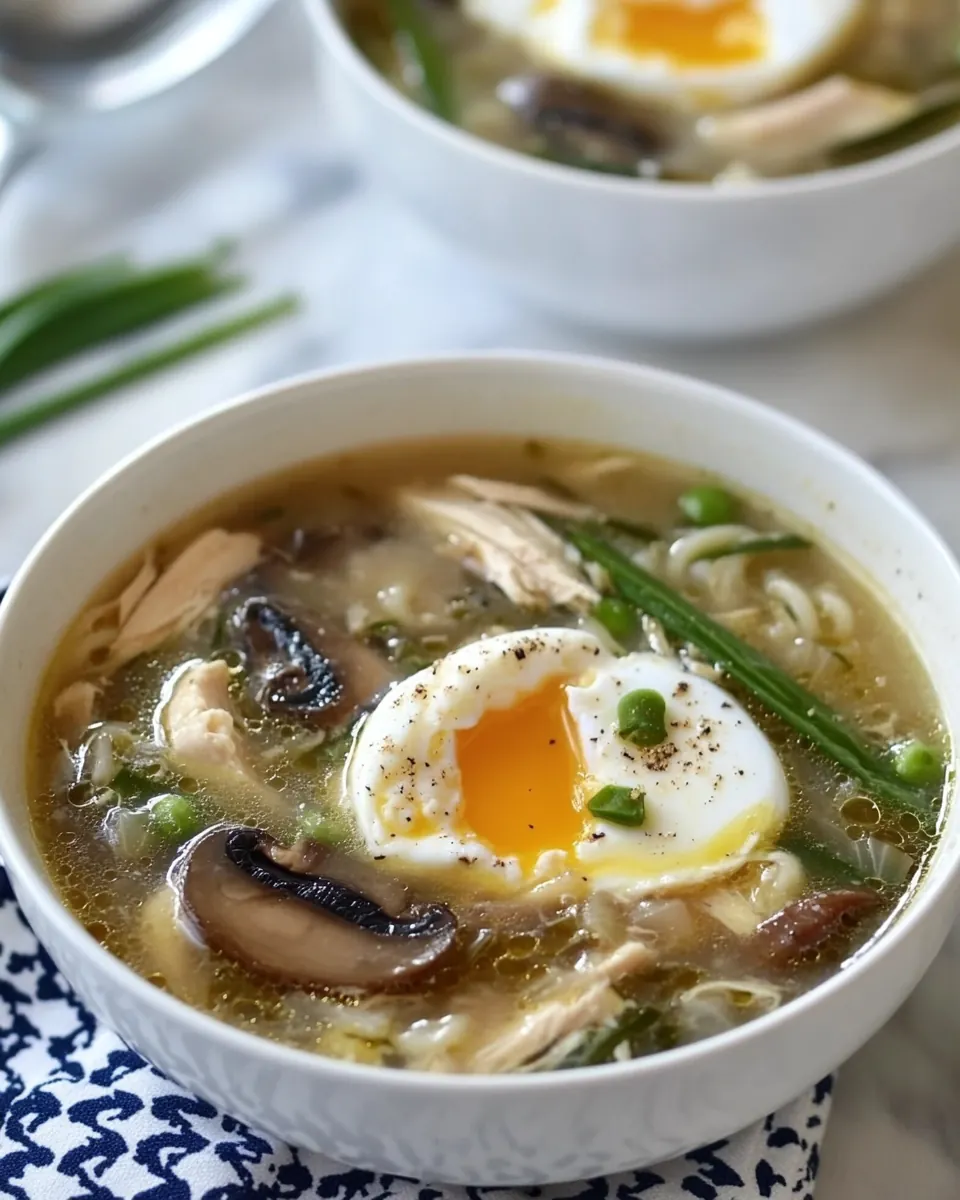
The ingredient list here is all about balance. I combine fresh and dried mushrooms for an umami rich base, add simple aromatics to lift the flavors, and finish with noodles and a runny egg for texture. Each component plays a clear role, from the savory stock to the pinch of red pepper flakes that adds a little warmth at the end.
- 2 boneless, skinless chicken breasts, cut into pieces: Cut and cook to provide lean protein and body to the soup; tender pieces add substance and soak up the broth flavors while keeping the dish hearty and satisfying.
- 1/4 teaspoons salt: Season lightly to enhance overall flavor balance; a small amount helps bring out savory notes in the chicken and mushrooms without overwhelming the broth.
- 1/4 teaspoon pepper: Season with a touch of heat and aromatic sharpness; cracked pepper brightens savory components and complements the mushrooms and stock.
- 2 tablespoons olive oil: Saute and brown to build flavor and prevent sticking; oil provides a medium for cooking aromatics and helps distribute richness through the broth.
- 1 shallot, sliced: Sliced thinly to add a sweet, mild onion flavor and textural contrast; shallot melts into the broth and enhances the soup's savory complexity.
- 2 garlic cloves, minced: Mince finely to release pungent, aromatic oils; garlic infuses the broth with savory depth and pairs well with mushrooms and chicken.
- 12 ounces sliced cremini mushrooms: Sauté to develop umami and a meaty texture; cremini mushrooms contribute earthy flavor, absorb the broth, and add substantial mouthfeel.
- 32 ounces low-sodium chicken stock: Pour as the primary savory liquid base; low-sodium chicken stock supplies depth, collagen, and a balanced backbone for the soup's flavors.
- 16 ounces water: Add to extend and dilute the stock while simmering; water helps control concentration and allows ingredients to gently cook without becoming overly salty.
- 4 ounces dried porcini mushrooms: Rehydrate and steep to intensify mushroom umami; dried porcini impart deep, concentrated earthy flavor and enrich the broth's savory profile.
- 1/2 pound whole wheat or soba noodles: Cook until tender to provide chew and substance; whole wheat or soba noodles add fiber and structure, making the soup more filling and balanced.
- 6 green onions, sliced: Slice and sprinkle as a fresh garnish; green onions add sharp, bright oniony notes and a pop of color to finish each bowl.
- 2 to 4 eggs, poached or fried: Poach or fry to add a rich, silky element and extra protein; eggs contribute creamy yolk that enriches the broth when broken into the soup.
- a pinch of red pepper flakes: Pinch in sparingly to introduce background heat and complexity; red pepper flakes lift the flavors and provide a subtle spicy contrast to the umami.
Preparation Steps for Mushroom Chicken Noodle Soup with Poached Eggs
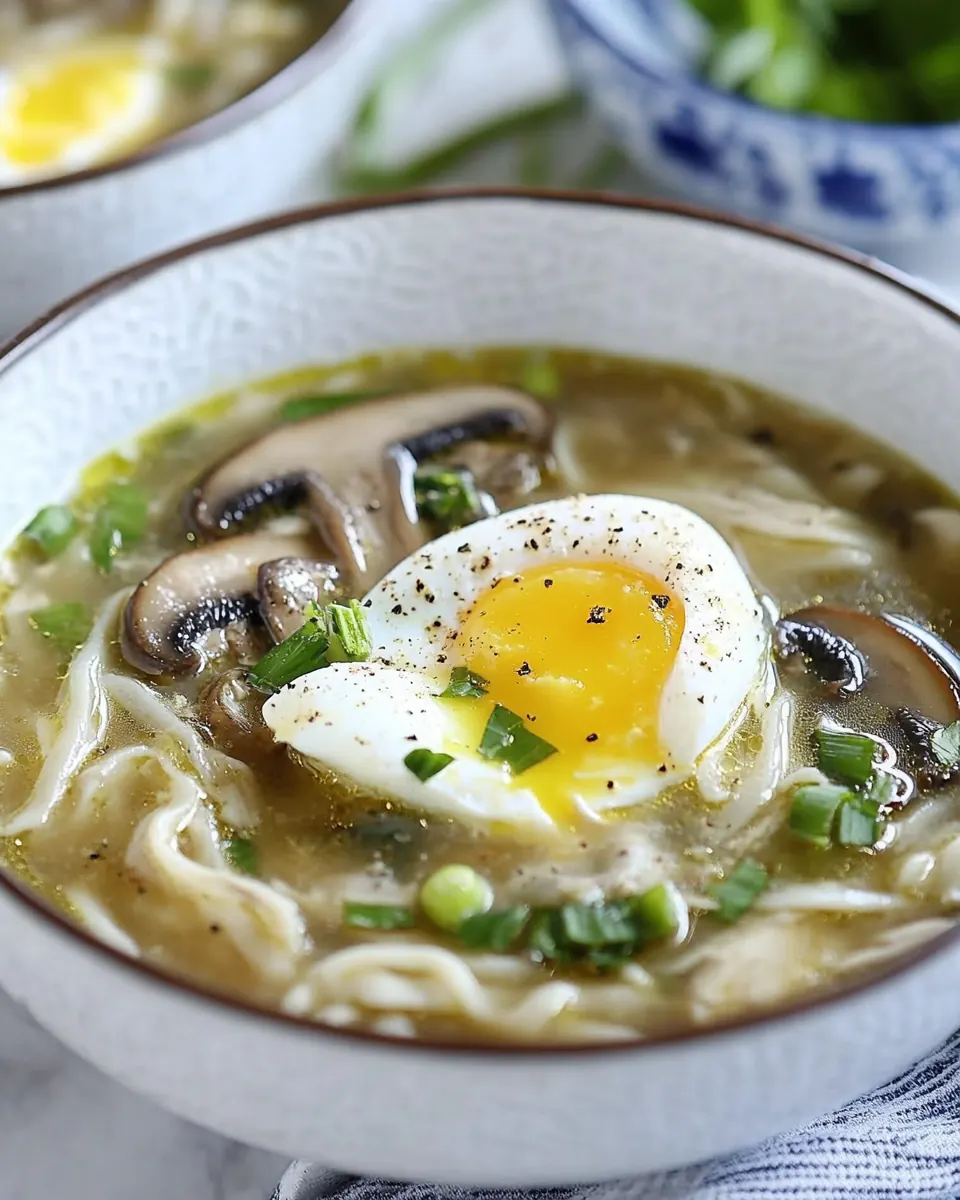
This recipe moves quickly, but each stage matters for texture and flavor. Below I break the directions into clear steps and offer sensory cues, the reasoning behind the technique, and troubleshooting tips so you get consistently great results.
- Season the chicken with the salt and the pepper.: The aroma of seasoned chicken is the first signal that the bowl will be savory and balanced. Salt draws out natural juices and helps form a golden exterior when you sear it, while the pepper provides a subtle aromatic bite. If you under-season, the final broth can taste flat, and if you over-season too early, the liquid can concentrate and become too salty. A common oversight is not patting the chicken dry before seasoning, which prevents proper browning. You should notice a faint sheen and a light grain on the surface where the seasoning clings, and the oil in the pan should gently ripple when the pieces hit it.
- Heat a large pot over medium heat and add olive oil. Add the chicken and cover, cooking until golden brown, tossing once or twice during cook time, about 10 minutes. Reduce the heat to low and remove the chicken with a slotted spoon, placing it in a bowl. Add the shallot, garlic and mushrooms, stirring well. Cover and cook until the mushrooms soften, about 5 to 6 minutes.: When the oil shimmers, it is ready for the chicken . The sound should be a gentle sizzle as pieces hit the surface, not a violent spit, which means the pan is too hot. Heating the pot properly ensures even browning and prevents sticking. If the pan is cold, the chicken will steam and fail to develop that flavorful crust. Test by placing one piece down first; it should release easily after a minute if it has formed a crust.
- Add the chicken back in along with the stock and the water. Bring the mixture to a boil, then add the dried mushrooms and noodles. Cook for 8 to 10 minutes. Add in the green onions. Serve with the soup with an egg on top, topped with a pinch of red pepper flakes.: As the chicken sears, listen for a steady sizzle and watch for rich, golden color to develop on the edges. Covering helps the inside cook through without drying out, but I make sure to uncover briefly to check the color so the pieces do not oversteam. If you move the pieces constantly they will not brown, so be deliberate about just one or two turns. A common mistake is assuming color equals doneness; use a fork to check the center for opaque flesh.
- Reduce the heat to low and remove the chicken with a slotted spoon, placing it in a bowl: After initial browning, lowering the heat prevents the pan from burning and preserves the fond, those caramelized bits that cling to the bottom. Removing the chicken keeps it from overcooking while you soften the shallot and mushrooms. You should hear a quieter hiss when the heat is reduced, and the fond will look concentrated and slightly glossy. Scrape gently if needed to lift those flavor bits into the broth later.
- Add the shallot, garlic and mushrooms, stirring well: At this stage the pan will smell aromatic and sweet from the shallot, with a savory hit from the garlic. The mushrooms will release moisture and begin to darken at the edges, which is when flavor concentrates. Stirring ensures even color and prevents any one area from scorching. If the garlic browns too quickly it will taste bitter, so move it around the pan and lower the heat if necessary. You want the shallot translucent and the mushroom edges just beginning to caramelize.
- Cover and cook until the mushrooms soften, about 5 to 6 minutes: As the mushrooms cook, they will exhale a deep, earthy scent and shrink in volume. Covering traps steam so they soften evenly, but I lift the lid at least once to assess texture and encourage browning. The visual cue is a reduction in size and a satin sheen on the mushroom caps. If they are still rubbery, continue cooking a minute or two. Overcrowding here can cause the mushrooms to stew rather than brown, muting their flavor.
- Add the chicken back in along with the stock and the water: Returning the chicken and adding the liquid is where the pot starts to harmonize. You will notice the kitchen fill with an intensified aroma as the fond lifts into the broth. Pouring warm stock and water minimizes temperature shock so the broth comes up to simmer more quickly. If you add cold liquid, the pot can take longer to recover and the chicken may cool down. Stir to combine and use a wooden spoon to loosen any caramelized bits.
- Bring the mixture to a boil, then add the dried mushrooms and noodles: As the pot climbs to a boil you will see lively bubbling across the surface and steam rise rapidly. Adding the dried porcini mushrooms now helps them rehydrate in a flavorful environment, while the noodles cook in the broth and absorb the savory liquid. Keep an eye on the boil; vigorous boiling can make the noodles break apart and the chicken toughen. A gentle rolling boil is ideal to cook the dried mushrooms thoroughly and give the noodles a springy texture.
- Cook for 8 to 10 minutes: During this time the broth will develop body and the noodles will reach al dente. You will hear a steady, less aggressive bubble and see the broth slightly thicken from released starches. Taste the noodles early to avoid overcooking, which leads to a mushy mouthfeel and diluted broth. If the soup tastes under-seasoned at this point, add a small pinch of salt and re-taste after a minute.
- Add in the green onions: Tossing the sliced green onions into the pot at the end gives the soup a crisp, fresh note and a burst of color. They will soften slightly but retain a bright, oniony flavor that lifts each spoonful. Adding them too early will make them limp and mute their brightness. You should see their color remain vivid and smell a lively, grassy aroma when they hit the hot broth.
- Serve with the soup with an egg on top, topped with a pinch of red pepper flakes: When plating, place a poached or fried egg gently atop each bowl so the hot broth warms the yolk and it melds into the soup. The moment the yolk breaks the texture becomes silky and luxurious, coating the noodles and chicken . Finish with a pinch of red pepper flakes for a subtle lift. A common serving error is overcrowding the bowl which cools the broth quickly, so serve immediately for best texture and temperature.
Ways to Customize
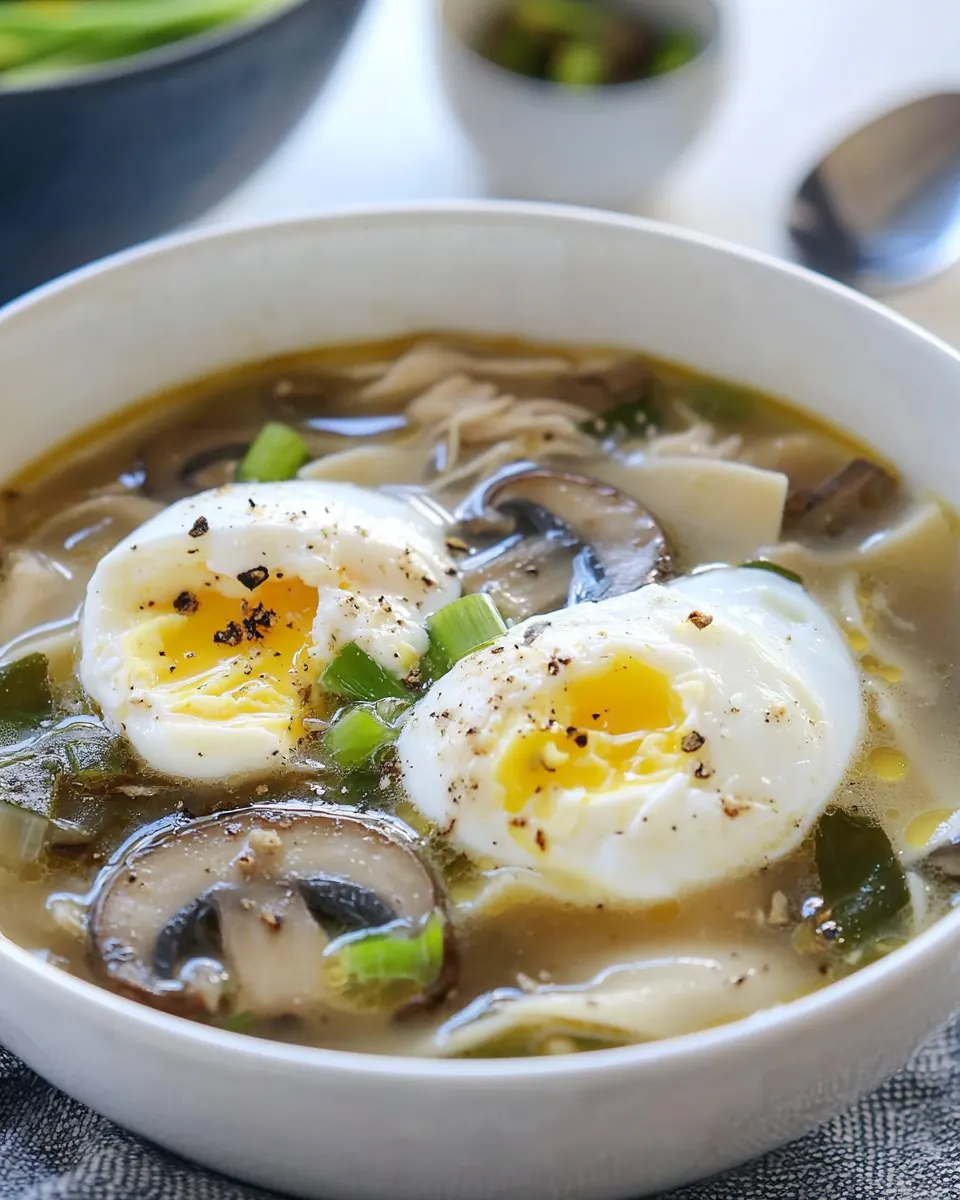
I like to offer small, easy swaps that personalize the bowl without changing its spirit. Below are practical ways to tune heat, texture, and aromatics so each serving feels tailored to your taste.
- Swap the noodles — Use whole wheat for nuttiness or soba for an earthy, slightly firm bite that pairs beautifully with mushrooms.
- Adjust spice — Add more or less red pepper flakes at the end to control warmth without altering the base flavors.
- Make it heartier — Increase the chicken quantity if you want bigger pieces and more protein per bowl.
- Egg options — Poach for silky yolks or fry for crisp edges and a different texture contrast on top.
- Broth intensity — Steep the dried porcini mushrooms longer in the hot liquid before adding other components for a deeper, more concentrated mushroom stock.
Accompaniments for Mushroom Chicken Noodle Soup with Poached Eggs
This soup is versatile enough for weeknight dinners and comforting enough for quieter weekend lunches. I usually pair it with simple sides that complement the warm, earthy flavors without overwhelming them. Think crusty bread, light salads, or pickles to cut through the richness. The list below ranges from quick to slightly more involved, and I highlight serving styles so you can match the meal to the occasion.
- Crusty whole grain bread — Tear and dip into the broth to soak up every last bit, making each spoonful more satisfying.
- Light green salad — A tossed salad with lemon vinaigrette refreshes the palate between comforting sips of soup.
- Simple steamed greens — Quick blanched spinach or bok choy adds color and a mild vegetal note that complements the mushrooms.
- Pickled vegetables — A small side of quick pickled cucumbers or radishes brings acidity and contrast to the bowl.
- Occasions — Serve this for a cozy winter dinner, a restorative post-illness meal, or a special Sunday lunch when you want something soulful but not fussy.
- Storage tips — Refrigerate leftovers in an airtight container up to three days; store noodles separately if possible to avoid them absorbing all the broth. Reheat gently over low heat to maintain texture.
- Seasonal pairings — In colder months double down on mushrooms and warming spices. In milder seasons, finish with extra green onions and a squeeze of fresh citrus if you like a brighter note.
FAQ
Conclusion
This Mushroom Chicken Noodle Soup with Poached Eggs combines deep mushroom savoriness, tender chicken, and the comforting silk of a warm egg to create a bowl that feels both restorative and refined. Give it a try the next time you want a meal that is quick to make but rich in flavor, and serve it when you need something that feels like a hug in a bowl. I hope this recipe becomes one of your go to soups for chilly evenings and easy entertaining alike.
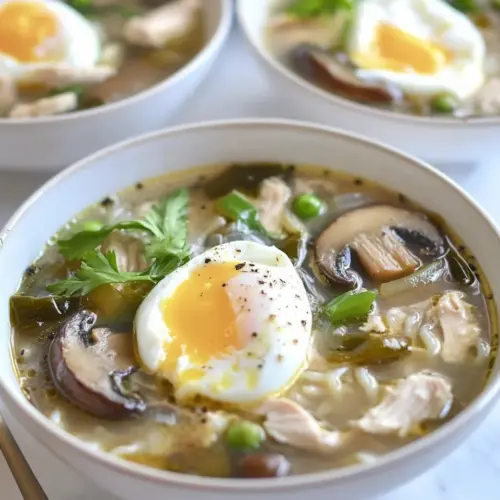
Mushroom Chicken Noodle Soup with Poached Eggs
Equipment
- Large Pot
- Slotted Spoon
Ingredients
- 2 boneless, skinless chicken breasts, cut into pieces Cut and cook to provide lean protein and body to the soup; tender pieces add substance and soak up the broth flavors while keeping the dish hearty and satisfying.
- 1/4 teaspoons salt Season lightly to enhance overall flavor balance; a small amount helps bring out savory notes in the chicken and mushrooms without overwhelming the broth.
- 1/4 teaspoon pepper Season with a touch of heat and aromatic sharpness; cracked pepper brightens savory components and complements the mushrooms and stock.
- 2 tablespoons olive oil Saute and brown to build flavor and prevent sticking; oil provides a medium for cooking aromatics and helps distribute richness through the broth.
- 1 shallot, sliced Sliced thinly to add a sweet, mild onion flavor and textural contrast; shallot melts into the broth and enhances the soup's savory complexity.
- 2 garlic cloves, minced Mince finely to release pungent, aromatic oils; garlic infuses the broth with savory depth and pairs well with mushrooms and chicken.
- 12 ounces sliced cremini mushrooms Sauté to develop umami and a meaty texture; cremini mushrooms contribute earthy flavor, absorb the broth, and add substantial mouthfeel.
- 32 ounces low-sodium chicken stock Pour as the primary savory liquid base; low-sodium chicken stock supplies depth, collagen, and a balanced backbone for the soup's flavors.
- 16 ounces water Add to extend and dilute the stock while simmering; water helps control concentration and allows ingredients to gently cook without becoming overly salty.
- 4 ounces dried porcini mushrooms Rehydrate and steep to intensify mushroom umami; dried porcini impart deep, concentrated earthy flavor and enrich the broth's savory profile.
- 1/2 pound whole wheat or soba noodles Cook until tender to provide chew and substance; whole wheat or soba noodles add fiber and structure, making the soup more filling and balanced.
- 6 green onions, sliced Slice and sprinkle as a fresh garnish; green onions add sharp, bright oniony notes and a pop of color to finish each bowl.
- 2 to 4 eggs, poached or fried Poach or fry to add a rich, silky element and extra protein; eggs contribute creamy yolk that enriches the broth when broken into the soup.
- a pinch of red pepper flakes Pinch in sparingly to introduce background heat and complexity; red pepper flakes lift the flavors and provide a subtle spicy contrast to the umami.
Instructions
- Season the chicken with the salt and the pepper.: The aroma of seasoned chicken is the first signal that the bowl will be savory and balanced. Salt draws out natural juices and helps form a golden exterior when you sear it, while the pepper provides a subtle aromatic bite. If you under-season, the final broth can taste flat, and if you over-season too early, the liquid can concentrate and become too salty. A common oversight is not patting the chicken dry before seasoning, which prevents proper browning. You should notice a faint sheen and a light grain on the surface where the seasoning clings, and the oil in the pan should gently ripple when the pieces hit it.
- Heat a large pot over medium heat and add olive oil. Add the chicken and cover, cooking until golden brown, tossing once or twice during cook time, about 10 minutes. Reduce the heat to low and remove the chicken with a slotted spoon, placing it in a bowl. Add the shallot, garlic and mushrooms, stirring well. Cover and cook until the mushrooms soften, about 5 to 6 minutes.: When the oil shimmers, it is ready for the chicken . The sound should be a gentle sizzle as pieces hit the surface, not a violent spit, which means the pan is too hot. Heating the pot properly ensures even browning and prevents sticking. If the pan is cold, the chicken will steam and fail to develop that flavorful crust. Test by placing one piece down first; it should release easily after a minute if it has formed a crust.
- Add the chicken back in along with the stock and the water. Bring the mixture to a boil, then add the dried mushrooms and noodles. Cook for 8 to 10 minutes. Add in the green onions. Serve with the soup with an egg on top, topped with a pinch of red pepper flakes.: As the chicken sears, listen for a steady sizzle and watch for rich, golden color to develop on the edges. Covering helps the inside cook through without drying out, but I make sure to uncover briefly to check the color so the pieces do not oversteam. If you move the pieces constantly they will not brown, so be deliberate about just one or two turns. A common mistake is assuming color equals doneness; use a fork to check the center for opaque flesh.
- Reduce the heat to low and remove the chicken with a slotted spoon, placing it in a bowl: After initial browning, lowering the heat prevents the pan from burning and preserves the fond, those caramelized bits that cling to the bottom. Removing the chicken keeps it from overcooking while you soften the shallot and mushrooms. You should hear a quieter hiss when the heat is reduced, and the fond will look concentrated and slightly glossy. Scrape gently if needed to lift those flavor bits into the broth later.
- Add the shallot, garlic and mushrooms, stirring well: At this stage the pan will smell aromatic and sweet from the shallot, with a savory hit from the garlic. The mushrooms will release moisture and begin to darken at the edges, which is when flavor concentrates. Stirring ensures even color and prevents any one area from scorching. If the garlic browns too quickly it will taste bitter, so move it around the pan and lower the heat if necessary. You want the shallot translucent and the mushroom edges just beginning to caramelize.
- Cover and cook until the mushrooms soften, about 5 to 6 minutes: As the mushrooms cook, they will exhale a deep, earthy scent and shrink in volume. Covering traps steam so they soften evenly, but I lift the lid at least once to assess texture and encourage browning. The visual cue is a reduction in size and a satin sheen on the mushroom caps. If they are still rubbery, continue cooking a minute or two. Overcrowding here can cause the mushrooms to stew rather than brown, muting their flavor.
- Add the chicken back in along with the stock and the water: Returning the chicken and adding the liquid is where the pot starts to harmonize. You will notice the kitchen fill with an intensified aroma as the fond lifts into the broth. Pouring warm stock and water minimizes temperature shock so the broth comes up to simmer more quickly. If you add cold liquid, the pot can take longer to recover and the chicken may cool down. Stir to combine and use a wooden spoon to loosen any caramelized bits.
- Bring the mixture to a boil, then add the dried mushrooms and noodles: As the pot climbs to a boil you will see lively bubbling across the surface and steam rise rapidly. Adding the dried porcini mushrooms now helps them rehydrate in a flavorful environment, while the noodles cook in the broth and absorb the savory liquid. Keep an eye on the boil; vigorous boiling can make the noodles break apart and the chicken toughen. A gentle rolling boil is ideal to cook the dried mushrooms thoroughly and give the noodles a springy texture.
- Cook for 8 to 10 minutes: During this time the broth will develop body and the noodles will reach al dente. You will hear a steady, less aggressive bubble and see the broth slightly thicken from released starches. Taste the noodles early to avoid overcooking, which leads to a mushy mouthfeel and diluted broth. If the soup tastes under-seasoned at this point, add a small pinch of salt and re-taste after a minute.
- Add in the green onions: Tossing the sliced green onions into the pot at the end gives the soup a crisp, fresh note and a burst of color. They will soften slightly but retain a bright, oniony flavor that lifts each spoonful. Adding them too early will make them limp and mute their brightness. You should see their color remain vivid and smell a lively, grassy aroma when they hit the hot broth.
- Serve with the soup with an egg on top, topped with a pinch of red pepper flakes: When plating, place a poached or fried egg gently atop each bowl so the hot broth warms the yolk and it melds into the soup. The moment the yolk breaks the texture becomes silky and luxurious, coating the noodles and chicken . Finish with a pinch of red pepper flakes for a subtle lift. A common serving error is overcrowding the bowl which cools the broth quickly, so serve immediately for best texture and temperature.
Notes
- Swap the noodles — Use whole wheat for nuttiness or soba for an earthy, slightly firm bite that pairs beautifully with mushrooms.
- Adjust spice — Add more or less red pepper flakes at the end to control warmth without altering the base flavors.
- Make it heartier — Increase the chicken quantity if you want bigger pieces and more protein per bowl.
- Egg options — Poach for silky yolks or fry for crisp edges and a different texture contrast on top.
- Broth intensity — Steep the dried porcini mushrooms longer in the hot liquid before adding other components for a deeper, more concentrated mushroom stock.
