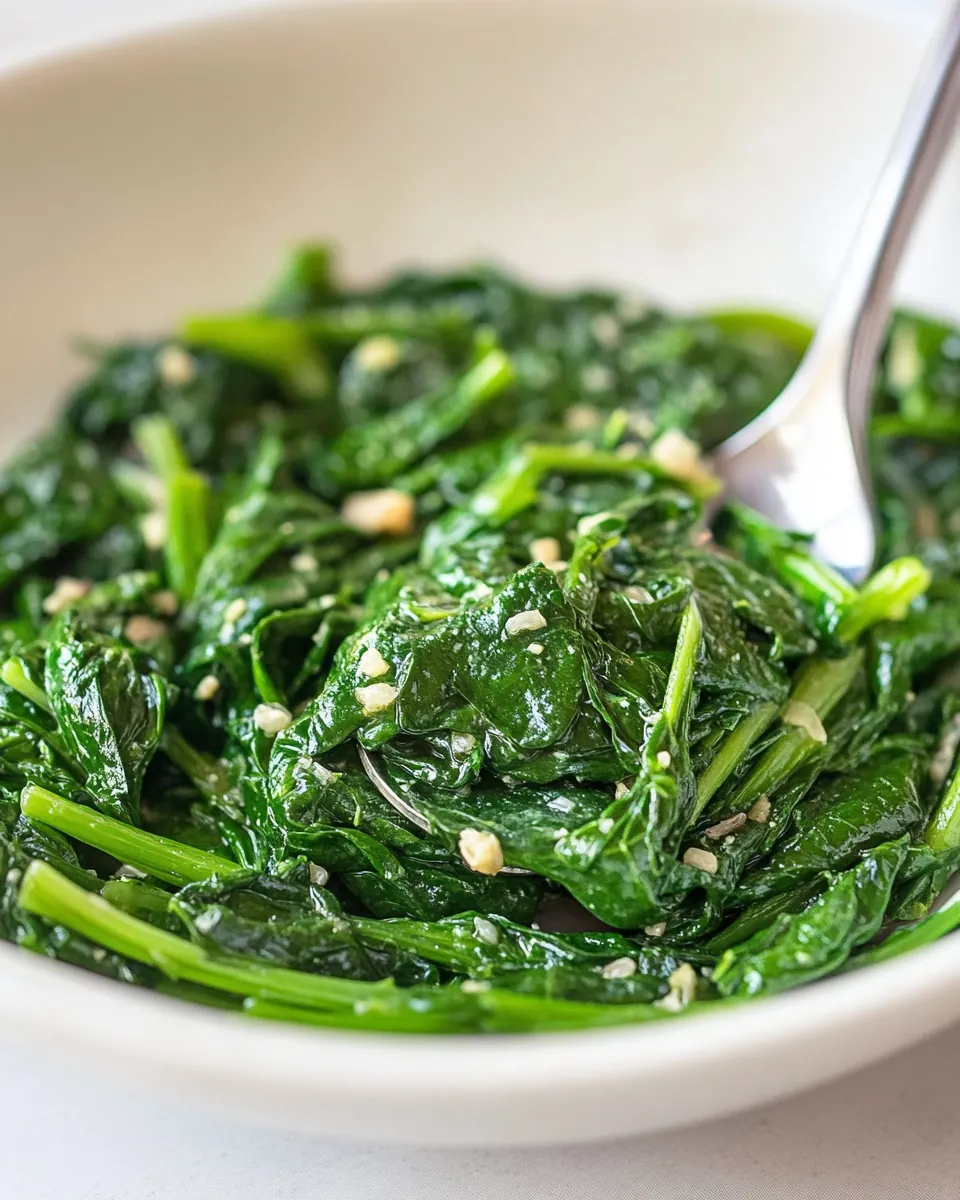
Garlic Sautéed Spinach
Garlic Sautéed Spinach is one of those dishes I reach for when I want something fast, bright, and deeply satisfying.
I first learned this simple technique in a busy restaurant kitchen where we needed a green side that held its color, flavor, and texture under pressure. I remember the skillet singing as the olive oil warmed and the fragrant burst of garlic filled the room. It was a small lesson in how a few quality ingredients can change a meal. Over the years I adapted that lesson for home cooking, prioritizing quick timing and bold taste so the spinach stays tender but not limp. When I make Garlic Sautéed Spinach at home, I love serving it alongside roasted proteins or folded into warm grains, because the garlicky oil clings to everything, creating tiny flavor pockets you want to savor.
There are times when a lengthy recipe feels wrong, and this is the exact opposite. I rely on texture, heat control, and timing rather than complex steps, which lets the natural sweetness of the baby spinach shimmer through. If you are new to cooking greens, you will find this approach forgiving and joyful. I often cook an extra batch just so I can nibble straight from the pan while I finish the rest of dinner. It’s humble, swift, and endlessly adaptable, which is why it sits in my weekly rotation.
Recipe Snapshot
10 mins
5 mins
5 mins
Easy
100 kcal
American
Vegan, Gluten-Free
Side Dishes
Large skillet, Tongs, Knife, Cutting board
What Makes This Garlic Sautéed Spinach Special
Fast, reliable weeknight side
I adore how Garlic Sautéed Spinach turns out in under ten minutes, making it perfect when time is short. The method prioritizes speed, so the leaves wilt quickly but keep a fresh bite. This makes it an ideal partner for any easy weeknight main, and I often toss it with warm grains to make a whole meal.
Big flavor from minimal ingredients
With just olive oil, garlic, salt, and pepper, the dish showcases how minimalism can be powerful. I like to let the garlic bloom in the oil just long enough to perfume it, which produces a deep savory note that coats each leaf. When guests comment on the flavor, they always assume more complex seasoning went into it, which is a lovely kitchen trick.
Flexible and forgiving
This recipe is remarkably forgiving. Whether your spinach is slightly damp or perfectly dry, the technique still works. I find leaving a bit of moisture on the leaves helps create gentle steam that speeds wilting without overcooking. It’s a method that accommodates slight variations in heat, pan size, and ingredient amounts, which is why I recommend it to cooks at any skill level.
Healthy and versatile
Spinach brings vitamins and a leafy texture that complements heavier mains. I appreciate that baby spinach cooks quickly and absorbs the garlicky oil, creating a balance of nutrition and indulgence. Use it as a side, layer it into sandwiches, or fold it into pasta for a nutrient boost that still feels decadent.
Consistent results every time
Because the technique focuses on timing and sensory cues, you can recreate the same outcome repeatedly. I pay attention to the sound of the oil and the scent of the garlic, and those little cues have never let me down. If you follow that rhythm, you will slice, sauté, and serve with confidence.
What You’ll Need for Garlic Sautéed Spinach
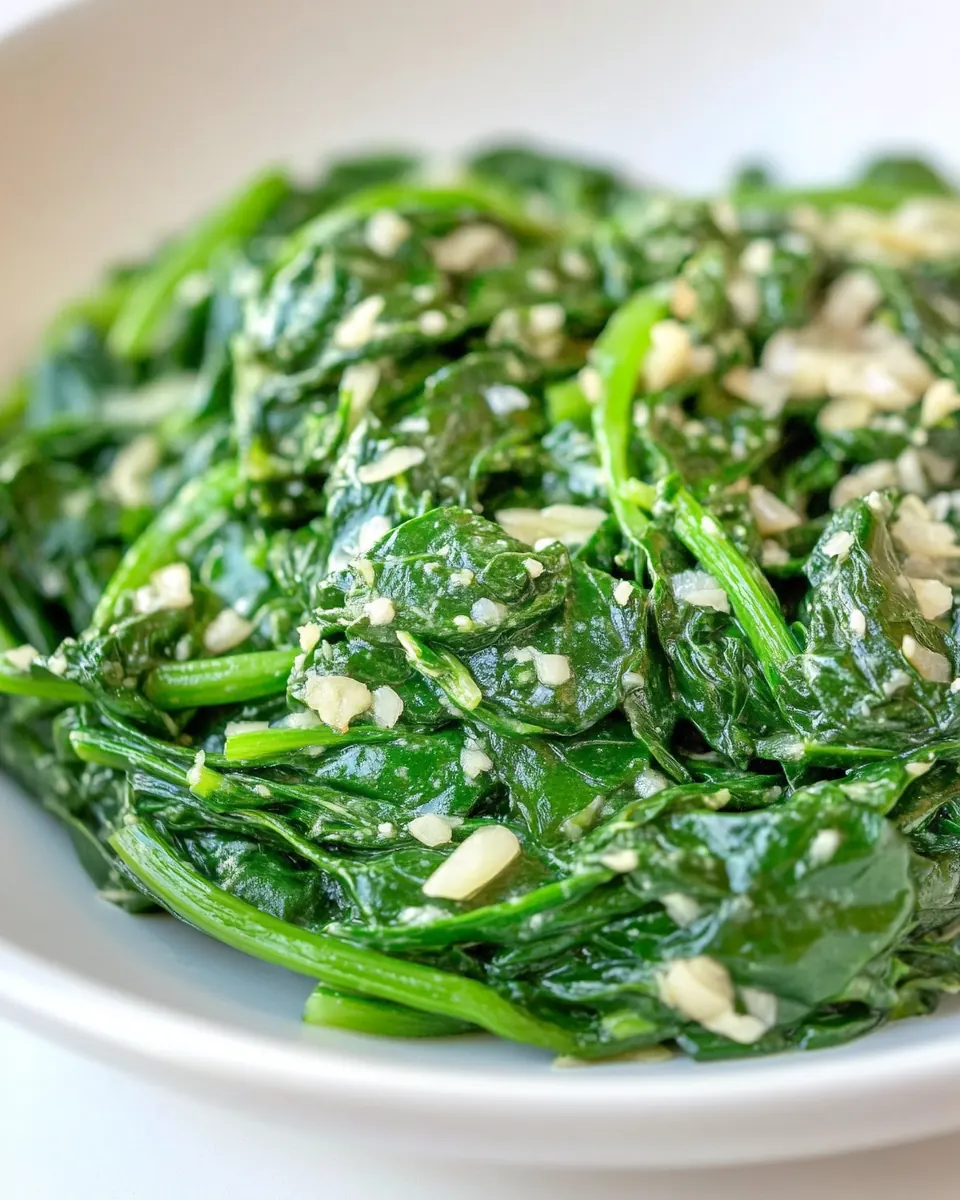
This short ingredient list is all about harmony. The baby spinach is the star, the garlic provides aromatic depth, and the olive oil carries and softens flavors. A pinch of kosher salt and a few twists of freshly ground black pepper refine the dish, highlighting the greens without masking them. Together these items create a bright, silky side that complements many mains.
- 1 pound baby spinach: Wilt and provide the tender leafy base for the dish, offering a mild, slightly sweet green flavor and high nutrients; cook briefly to retain bright color and delicate texture while releasing some water to create a silky pan sauce.
- 2 garlic cloves minced: Infuse and elevate the dish with a pungent, aromatic bite; finely mince to distribute its flavor evenly, sauté briefly in oil to mellow sharpness and develop a golden, toasty note that complements the spinach.
- 2 tablespoons olive oil: Sear and carry the garlic’s flavor while preventing sticking, supplying a smooth, fruity fat that helps cook and lightly brown the greens; use a modest amount to coat the pan and gently flavor the entire dish.
- Kosher salt to taste: Season and enhance the natural flavors, bringing out the spinach’s sweetness and balancing the oil and garlic; add gradually and taste as you go to avoid over-salting given spinach’s volume reduction.
- Freshly ground black pepper to taste: Season and add a bright, slightly spicy contrast that sharpens flavors; grind directly over the finished greens to provide fresh aroma and a subtle heat that complements the salt and garlic.
Making This Garlic Sautéed Spinach
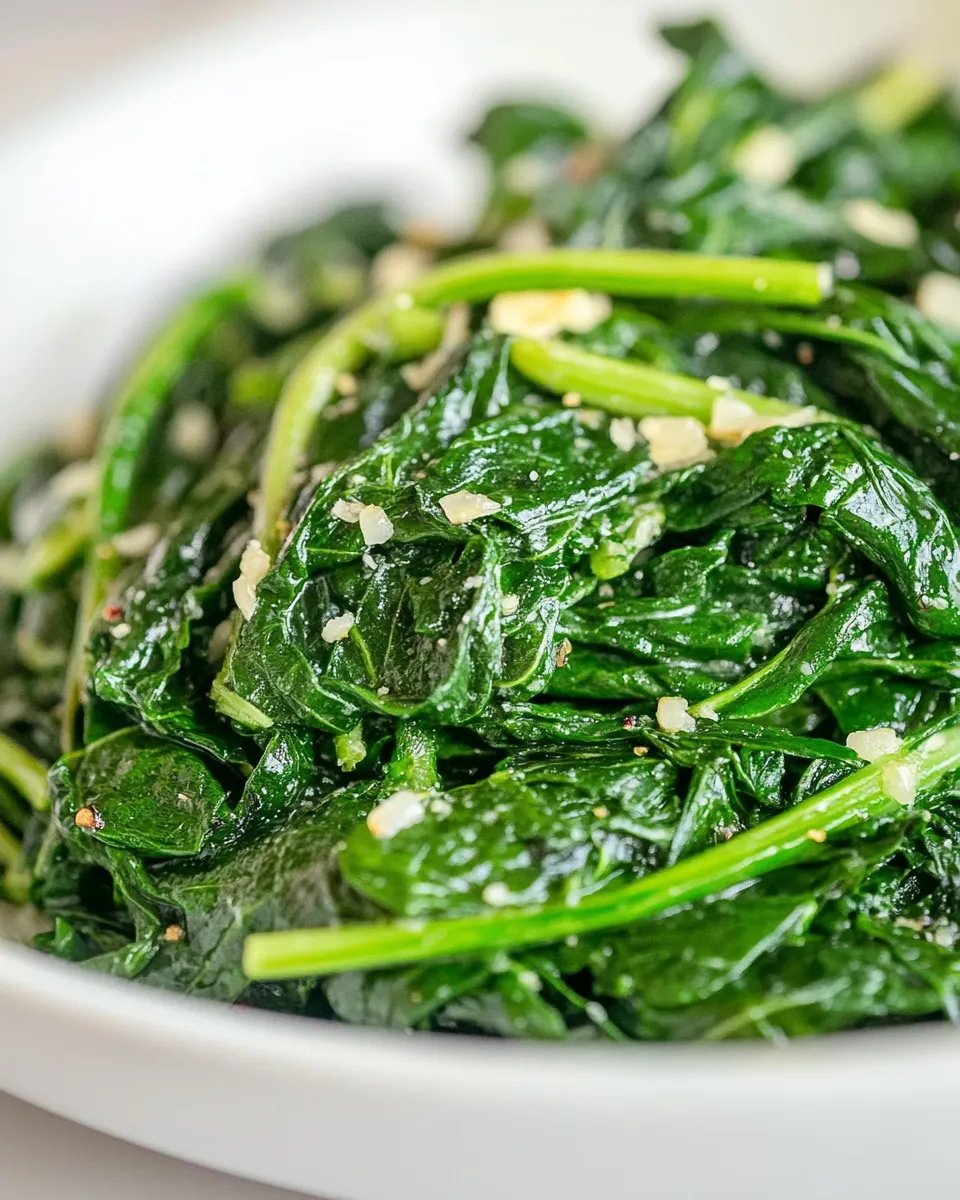
I keep the instructions short because the technique is straightforward but precise. The key is to listen and watch for visual cues, while moving quickly so the spinach wilts but remains vibrant. Below I expand each direction into detailed, sensory steps so you can cook with confidence.
- Rinse the baby spinach leaves and shake off excess water but keep them slightly damp.: The leaves should glisten with a hint of moisture, which helps build gentle steam when they hit the pan. You will feel and see tiny droplets clinging to the surface, and that steam shortens cooking time while keeping the leaves glossy rather than soggy. If the leaves are bone dry, the pan can stick and the spinach may crisp at the edges instead of wilting evenly. One common mistake is over drying, which reduces that comforting steam. To avoid this, shake the colander well and blot the largest drops with a clean towel, leaving a light sheen for best results.
- Peel and mince the garlic cloves.: When you mince the garlic , notice the sharp, citrusy aroma that hits immediately, signaling freshness. Tiny, evenly minced pieces release more flavor into the olive oil and create little pockets of garlicky richness across the spinach. A too coarse chop yields uneven flavor, while overly fine paste can burn faster in the pan. A frequent error is letting the minced garlic sit too long before cooking, which can lose its brightness; mince right before you heat the oil for the liveliest result.
- Heat olive oil in a large skillet over medium-high heat. Add minced garlic and sauté for 30 seconds, ensuring not to let it brown too much. Add the baby spinach to the skillet. It might seem like a lot at first but will quickly wilt.: Warm the olive oil until it shimmers but does not smoke, the surface moving with a slow ripple. This shimmering is your cue that the oil is hot enough to perfume without burning. If the oil smokes, the pan is too hot and it will impart bitter notes to the dish. A common pitfall is cranking the heat too high to speed things up; moderate heat yields a cleaner, fruitier oil flavor and preserves the garlic's sweet notes.
- Use tongs to turn over the spinach, ensuring all leaves are coated with oil and garlic. Cook for about 5 minutes, or until all the spinach has wilted. Season with kosher salt and freshly ground black pepper to taste.: As the minced garlic hits the oil you should hear a soft sizzle and smell an immediate savory, aromatic lift. Sautéing for roughly 30 seconds allows the garlic to release its oils and fragrance into the pan. Watch carefully, because once it begins to color the aroma shifts from sweet to bitter. If it starts to brown, reduce the heat and remove the pan from direct flame briefly to cool it down. Burning the garlic is the usual mistake here and it will introduce an unpleasant taste.
- Add the baby spinach to the skillet: Add the baby spinach in batches if needed, watching it collapse as steam carries through the pile. Initially it will look like an enormous mound, but within moments the leaves will glossy wilt and shrink. You want to see a mix of deep green and the tiniest pale stems as visual proof that the greens are turning tender. A common error is overcrowding a small pan without enough heat or steam; use a large skillet to give the spinach room to wilt properly.
- Use tongs to turn over the spinach ensuring all leaves are coated with oil and garlic: With tongs, gently lift and toss the leaves so that each one catches the garlicky oil. You should hear a soft rustle and see glossy coating on every leaf, giving a uniform sheen and flavor. This action ensures even seasoning and prevents pockets of under flavored greens. If you skip this motion the result can be uneven, with some leaves over seasoned and others bland. Mistakes often come from stirring too roughly, which can bruise the leaves, so be gentle yet thorough.
- Cook for about 5 minutes or until all the spinach has wilted: During the five minute window you will notice the leaves turn a deeper emerald green and soften to the touch, releasing a fresh, green aroma. The pan will emit a warm, verdant scent combined with garlicky notes. The texture should be tender but not mushy, with a slight give when pinched. Overcooking leads to a watery, limp result and drains color, so watch the clock and the leaves. A mistake to avoid is assuming more time always equals better flavor; here, restraint preserves brightness.
- Season with kosher salt and freshly ground black pepper to taste: Finish by sprinkling kosher salt and turning the pepper mill for freshly ground black pepper , then taste a leaf for balance. Salt enhances the spinach's natural sweetness, while the pepper adds a touch of warmth. Add seasoning slowly and taste as you go, because it is easy to over salt delicate greens. A typical error is adding all the salt at the beginning, which can lead to an overly intense finish; seasoning at the end lets you calibrate the final flavor.
Variations to Try
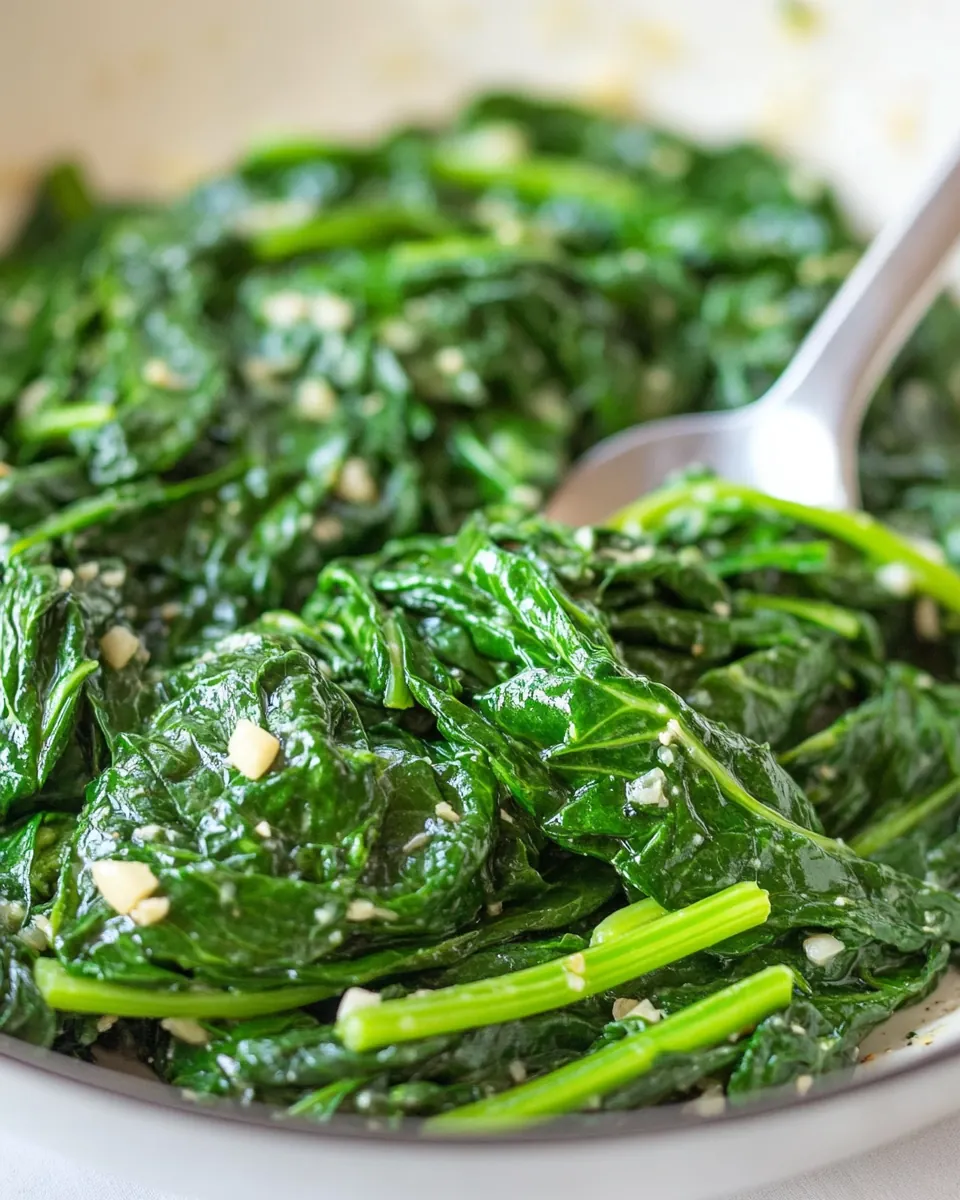
Once you have the base technique down, small variations can change the dish while keeping the core simplicity intact. Below are practical ideas to adapt the recipe without altering the main steps.
- Garlic intensity — Increase or decrease the amount of minced garlic to suit your taste; remember that longer cooking mellows its sharpness, while a quick finish preserves a brighter bite.
- Oil choice — Swap the olive oil for a milder oil if you prefer less pronounced fruitiness, but keep the quantity the same so the leaves still glide in the pan.
- Salt control — Use less kosher salt during cooking and finish with a light sprinkle after tasting, this helps you avoid oversalting.
- Pepper finish — Grind the black pepper fresh at the end to keep its floral spice and aroma vibrant against the tender greens.
- Serve hot — Serve the spinach immediately from the pan to preserve its texture and sheen, as it can become watery if left to sit for long.
What to Serve With Garlic Sautéed Spinach
This simple side pairs well with many mains and occasions. Its quick cook time and bright flavor make it suitable for weeknight dinners, elegant suppers, and seasonal menus. Below are ideas for pairing, occasions, and storage in list form so you can choose based on your meal plan.
- Roasted proteins — Serve next to roasted chicken or beef for a vibrant green contrast and a garlicky lift that complements richer meats.
- Grain bowls — Toss with warm rice or quinoa to add color, nutrients, and a silky texture that makes bowls feel complete and balanced.
- Pasta accomplice — Fold into warm pasta with a touch more olive oil for a quick, leafy addition that brightens the dish without heavy sauces.
- Weeknight dinners — Keep it on rotation for quick family meals where you need a nutritious side that cooks in minutes.
- Special occasions — It works well at holiday meals or gatherings when you want a graceful green that complements many traditional mains.
- Storage tips — Cool quickly and store in an airtight container up to two days; reheat gently to avoid turning the leaves mushy.
- Seasonal pairings — In spring try serving with lemon brightened dishes, while in cooler months pair with roasted root vegetables for balance.
FAQ
Conclusion
Garlic Sautéed Spinach shines because it transforms a few humble ingredients into a flavorful, quick side that complements many mains. I encourage you to try it tonight, paying attention to the aromatic moment when the garlic hits the warm oil and the visual cue of the leaves wilting to a deep emerald. It’s a small recipe that rewards mindful cooking, and once you master the timing you will find it becomes a dependable favorite for weeknights and special meals alike. Enjoy the simple pleasure of something fast, fresh, and delicious.
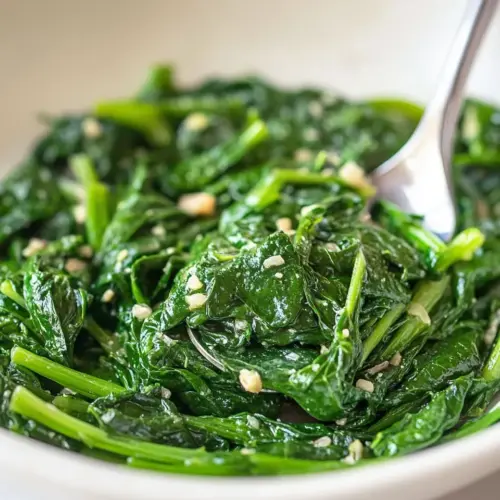
Garlic Sautéed Spinach
Equipment
- Large Skillet
- Tongs
- Knife
- Cutting Board
Ingredients
- 1 pound baby spinach Wilt and provide the tender leafy base for the dish, offering a mild, slightly sweet green flavor and high nutrients; cook briefly to retain bright color and delicate texture while releasing some water to create a silky pan sauce.
- 2 garlic cloves minced Infuse and elevate the dish with a pungent, aromatic bite; finely mince to distribute its flavor evenly, sauté briefly in oil to mellow sharpness and develop a golden, toasty note that complements the spinach.
- 2 tablespoons olive oil Sear and carry the garlic’s flavor while preventing sticking, supplying a smooth, fruity fat that helps cook and lightly brown the greens; use a modest amount to coat the pan and gently flavor the entire dish.
- Kosher salt to taste Season and enhance the natural flavors, bringing out the spinach’s sweetness and balancing the oil and garlic; add gradually and taste as you go to avoid over-salting given spinach’s volume reduction.
- Freshly ground black pepper to taste Season and add a bright, slightly spicy contrast that sharpens flavors; grind directly over the finished greens to provide fresh aroma and a subtle heat that complements the salt and garlic.
Instructions
- Rinse the baby spinach leaves and shake off excess water but keep them slightly damp.: The leaves should glisten with a hint of moisture, which helps build gentle steam when they hit the pan. You will feel and see tiny droplets clinging to the surface, and that steam shortens cooking time while keeping the leaves glossy rather than soggy. If the leaves are bone dry, the pan can stick and the spinach may crisp at the edges instead of wilting evenly. One common mistake is over drying, which reduces that comforting steam. To avoid this, shake the colander well and blot the largest drops with a clean towel, leaving a light sheen for best results.
- Peel and mince the garlic cloves.: When you mince the garlic , notice the sharp, citrusy aroma that hits immediately, signaling freshness. Tiny, evenly minced pieces release more flavor into the olive oil and create little pockets of garlicky richness across the spinach. A too coarse chop yields uneven flavor, while overly fine paste can burn faster in the pan. A frequent error is letting the minced garlic sit too long before cooking, which can lose its brightness; mince right before you heat the oil for the liveliest result.
- Heat olive oil in a large skillet over medium-high heat. Add minced garlic and sauté for 30 seconds, ensuring not to let it brown too much. Add the baby spinach to the skillet. It might seem like a lot at first but will quickly wilt.: Warm the olive oil until it shimmers but does not smoke, the surface moving with a slow ripple. This shimmering is your cue that the oil is hot enough to perfume without burning. If the oil smokes, the pan is too hot and it will impart bitter notes to the dish. A common pitfall is cranking the heat too high to speed things up; moderate heat yields a cleaner, fruitier oil flavor and preserves the garlic's sweet notes.
- Use tongs to turn over the spinach, ensuring all leaves are coated with oil and garlic. Cook for about 5 minutes, or until all the spinach has wilted. Season with kosher salt and freshly ground black pepper to taste.: As the minced garlic hits the oil you should hear a soft sizzle and smell an immediate savory, aromatic lift. Sautéing for roughly 30 seconds allows the garlic to release its oils and fragrance into the pan. Watch carefully, because once it begins to color the aroma shifts from sweet to bitter. If it starts to brown, reduce the heat and remove the pan from direct flame briefly to cool it down. Burning the garlic is the usual mistake here and it will introduce an unpleasant taste.
- Add the baby spinach to the skillet: Add the baby spinach in batches if needed, watching it collapse as steam carries through the pile. Initially it will look like an enormous mound, but within moments the leaves will glossy wilt and shrink. You want to see a mix of deep green and the tiniest pale stems as visual proof that the greens are turning tender. A common error is overcrowding a small pan without enough heat or steam; use a large skillet to give the spinach room to wilt properly.
- Use tongs to turn over the spinach ensuring all leaves are coated with oil and garlic: With tongs, gently lift and toss the leaves so that each one catches the garlicky oil. You should hear a soft rustle and see glossy coating on every leaf, giving a uniform sheen and flavor. This action ensures even seasoning and prevents pockets of under flavored greens. If you skip this motion the result can be uneven, with some leaves over seasoned and others bland. Mistakes often come from stirring too roughly, which can bruise the leaves, so be gentle yet thorough.
- Cook for about 5 minutes or until all the spinach has wilted: During the five minute window you will notice the leaves turn a deeper emerald green and soften to the touch, releasing a fresh, green aroma. The pan will emit a warm, verdant scent combined with garlicky notes. The texture should be tender but not mushy, with a slight give when pinched. Overcooking leads to a watery, limp result and drains color, so watch the clock and the leaves. A mistake to avoid is assuming more time always equals better flavor; here, restraint preserves brightness.
- Season with kosher salt and freshly ground black pepper to taste: Finish by sprinkling kosher salt and turning the pepper mill for freshly ground black pepper , then taste a leaf for balance. Salt enhances the spinach's natural sweetness, while the pepper adds a touch of warmth. Add seasoning slowly and taste as you go, because it is easy to over salt delicate greens. A typical error is adding all the salt at the beginning, which can lead to an overly intense finish; seasoning at the end lets you calibrate the final flavor.
Notes
- Garlic intensity — Increase or decrease the amount of minced garlic to suit your taste; remember that longer cooking mellows its sharpness, while a quick finish preserves a brighter bite.
- Oil choice — Swap the olive oil for a milder oil if you prefer less pronounced fruitiness, but keep the quantity the same so the leaves still glide in the pan.
- Salt control — Use less kosher salt during cooking and finish with a light sprinkle after tasting, this helps you avoid oversalting.
- Pepper finish — Grind the black pepper fresh at the end to keep its floral spice and aroma vibrant against the tender greens.
- Serve hot — Serve the spinach immediately from the pan to preserve its texture and sheen, as it can become watery if left to sit for long.
