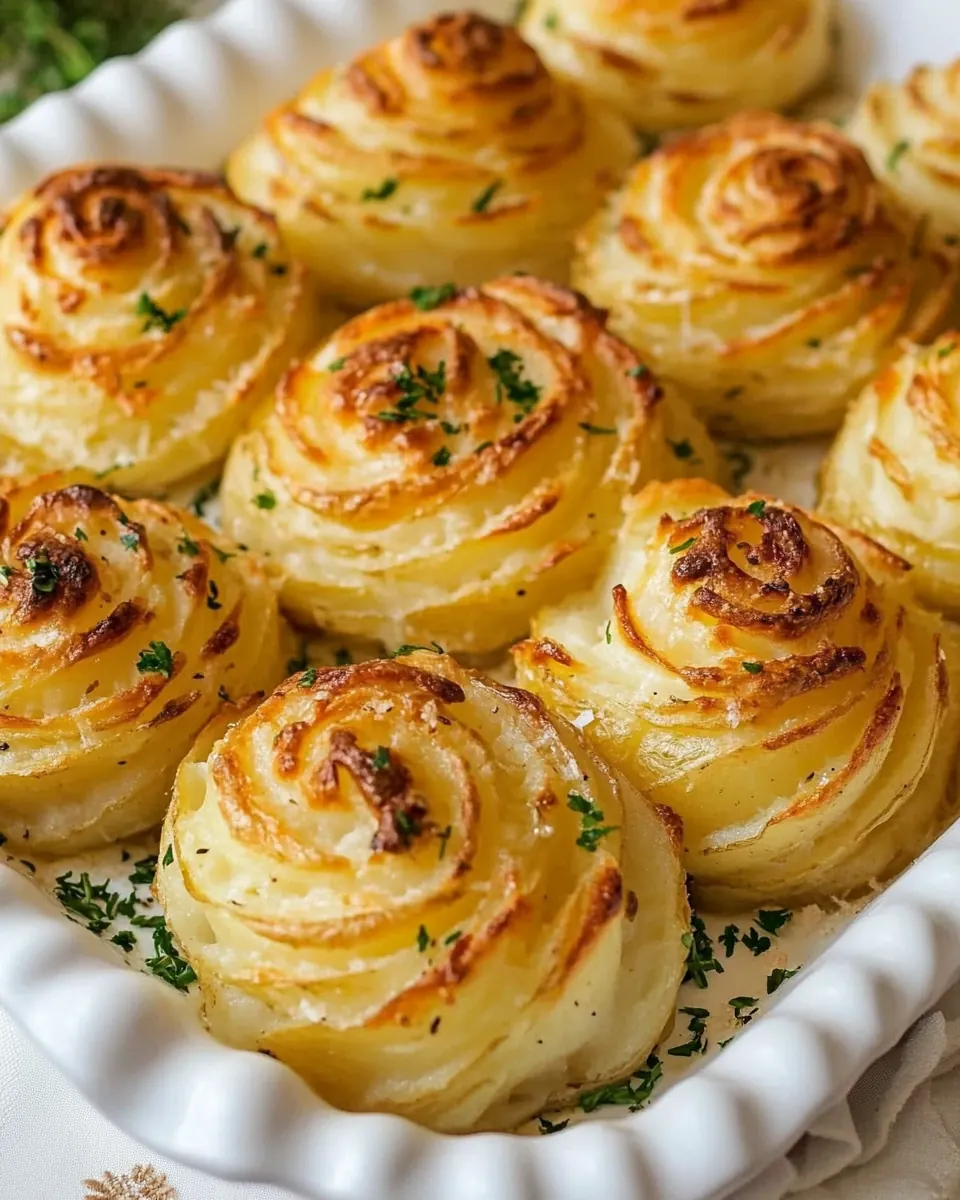
Garlic Parmesan Duchess Potatoes
Garlic Parmesan Duchess Potatoes have been my go to for family gatherings ever since I first learned how a little garlic and cheese can transform a humble tuber into something elegant and comforting.
The first time I made these, I remember standing at my grandmother s kitchen counter, stirring warm, buttery potatoes as the garlic perfume filled the room and my kids begged for a sneak taste. We laughed about the fancy name while I piped the mounds onto a baking sheet, feeling secretly proud that a dish so simple could look so refined.
Over the years I ve tweaked the balance between creamy potato, savory garlic, and nutty parmesan so each bite feels both rich and light. I love serving these when I want something that reads celebratory without being fussy, the kind of side that pairs with roasted mains yet shines on its own. There s a comforting ritual to mashing, folding in yolks, and brushing with butter that makes the whole process almost as satisfying as the first crunchy bite.
Recipe Snapshot
1 hr 10 mins
20 mins
50 mins
Medium
200 kcal
American
Gluten-Free, Keto
Side Dishes
Large pot, Small saucepan, Potato masher or ricer, Mixing bowl, Piping bag with large star tip, Baking sheet, Parchment paper
The Beauty of This Garlic Parmesan Duchess Potatoes
Comfort with elegance
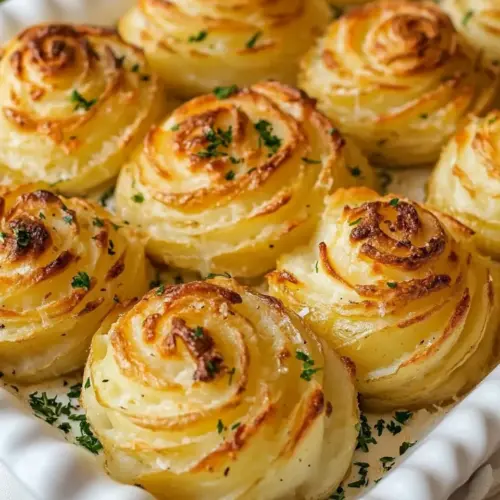
I adore how Garlic Parmesan Duchess Potatoes take simple pantry staples and elevate them into a dish that looks like it came from a restaurant. The creamy interior and golden exterior create a contrast that always wins at the table.
Flavor layering that sings
We build flavor in stages here. First, simmering the potatoes gently infuses them with seasoning. Then the browned butter and sauteed garlic add a toasty, aromatic note that the parmesan amplifies with umami. Those layers mean every bite is complex and comforting.
Texture that delights
I love the contrast between the pillowy center and crisp exterior. Piping the mixture creates ridges that brown beautifully, giving a satisfying crunch followed by a luxuriously smooth mouthfeel.
Versatile and crowd friendly
These are ideal for holiday spreads or weeknight dinners when you want to impress without stress. You can pipe or spoon them, make them ahead, or finish them quickly before serving, so they adapt to busy kitchens and celebratory menus alike.
Reliable technique
I appreciate that the method is forgiving. Gentle boiling until the potatoes nearly fall apart, cooling slightly before adding egg yolks, and brushing with melted butter are small steps that guarantee success. Once you understand the cues, it becomes a dependable dish you ll return to again and again.
What Goes Into Garlic Parmesan Duchess Potatoes
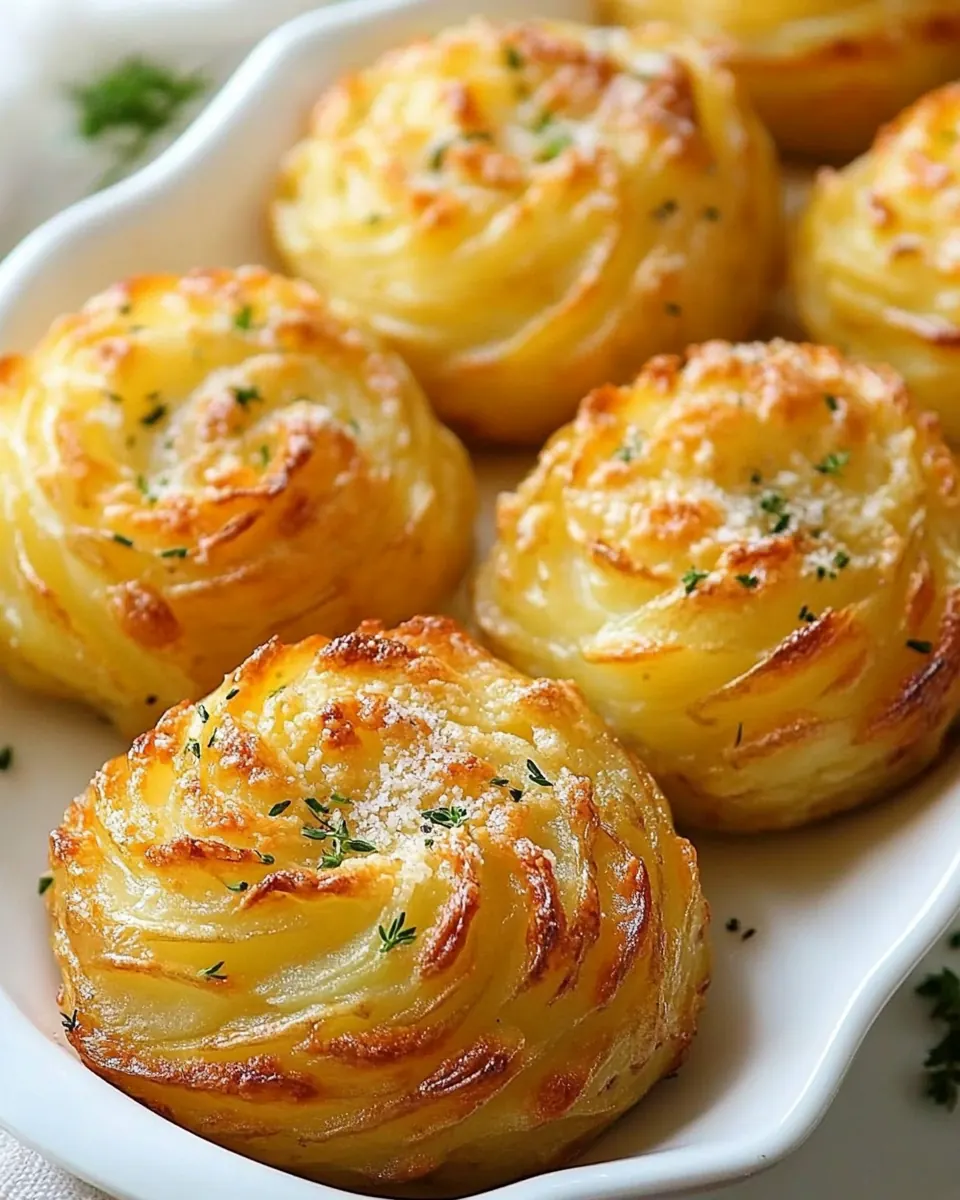
These ingredients are selected to create a rich, silky filling with a bronzed exterior. The key players are starchy potatoes for creaminess, butter and half and half for silkiness, parmesan for savory depth, and egg yolks for structure so the mounds hold their shape while baking.
- 2 1/2 lbs Yukon gold potatoes, peeled and diced into 1 1/2-inch portions: Provide creamy body and structure when boiled and mashed, offering a naturally buttery flavor and smooth texture ideal for duchess potatoes; peeling and cutting into uniform 1 1/2-inch portions ensures even cooking and a consistent final puree.
- Salt and freshly ground black pepper: Season generously to enhance and balance flavors, bringing out the natural richness of the potatoes and Parmesan while controlling overall taste; use salt for depth and freshly ground black pepper for bright, slightly spicy contrast.
- 6 tbsp butter, divided: Add rich butterfat and silky mouthfeel, with divided portions allowing some to be incorporated into the mash and some to finish the mixture for glossy texture; melting into hot potatoes creates a creamy, cohesive emulsion.
- 4 cloves garlic, finely minced: Infuse sharp, aromatic garlic notes when finely minced so the flavor disperses evenly through the mash without large pungent bites; brief cooking in butter mellows raw heat and deepens savory complexity.
- 4 tbsp half and half: Contribute light creaminess and loosen the potato mixture for pipeable consistency, with half and half providing a balance between richness and fluidity without overpowering the cheese; add gradually to reach desired smoothness.
- 1/2 cup (slightly packed) finely shredded parmesan cheese: Introduce nutty, salty umami and a granular texture that enriches the potato paste, with slightly packed finely shredded Parmesan melding into the mixture to create savory depth and a subtle cheesy backbone.
- 4 large egg yolks: Bind and enrich the mixture while lending structure and a luxuriously custardy texture when incorporated, with egg yolks helping the duchess potatoes hold piped shapes and brown attractively during baking.
- Minced fresh parsley, for garnish () (optional): Garnish with fresh herbal brightness and color, supplying a mild peppery-grassy lift when minced and sprinkled over the finished duchess potatoes; optional use adds visual appeal and a fresh contrast to the rich mash.
- Finely grated parmesan, for serving () (optional): Finish with extra savory intensity and a delicate salty crust when finely grated over the baked potatoes, offering optional added Parmesan for sharper flavor and an attractive cheesy topping.
How to Prepare Garlic Parmesan Duchess Potatoes
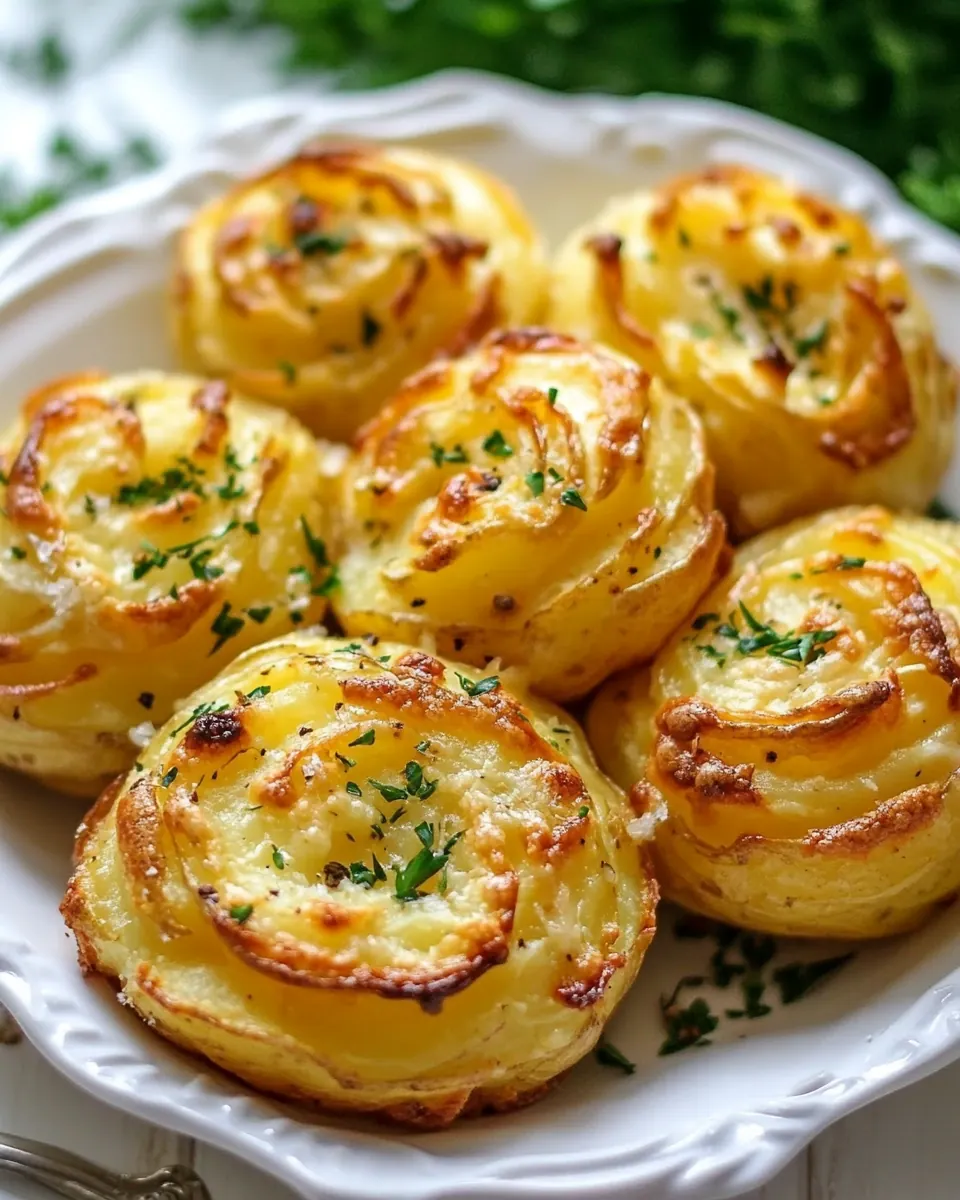
These steps guide you from boiling to piping to golden perfection. I walk you through sensory cues so you can trust what you feel and see, not just the clock. Follow each step and pay attention to texture and aroma for the best results.
- Preheat oven to 425 degrees. Line a baking sheet with parchment paper.: You will feel the anticipation as the warm oven prepares to transform creamy mounds into crisp, golden domes. Preheating ensures an immediate blast of heat that promotes browning, and the parchment prevents sticking and helps the bottoms brown evenly. A common mistake is not fully preheating, which can lead to pale, soft exteriors instead of a crisp finish. Listen for the oven fan settling and give it a few extra minutes after it signals ready to ensure the interior air is uniformly hot, which matters for even baking.
- Boil potatoes: Add potatoes to a large pot. Cover with cold water (covering the potatoes by about 1 – 2 inches) and season with 1 Tbsp of salt. Bring to a boil over medium-high heat, then reduce heat to medium-low, cover pot with lid and allow to simmer until very tender, about 15 – 20 minutes (they should nearly fall apart when pierced). Drain potatoes well.: Add potatoes to a large pot. Cover with cold water covering the potatoes by about 1 to 2 inches and season with 1 Tbsp of salt. Bring to a boil over medium-high heat, then reduce heat to medium-low, cover pot with lid and allow to simmer until very tender, about 15 to 20 minutes they should nearly fall apart when pierced. Drain potatoes well. : You will notice the kitchen filling with a gentle, earthy aroma as the potatoes heat. Starting in cold water ensures even cooking, and the salty water seasons the starch throughout for better flavor. The key sensory cue is when a fork slides through and the pieces almost crumble, which means the texture will mash into a velvety base. Overcooking can make the potatoes waterlogged, so drain thoroughly and let them steam dry briefly to avoid a runny mixture.
- Saute garlic in butter: Meanwhile, dice 4 Tbsp of the butter into 1 Tbsp pieces and add to a small saucepan. Melt over medium heat then add garlic and saute until lightly golden and softened, about 1 – 2 minutes.: Meanwhile, dice 4 Tbsp of the butter into 1 Tbsp pieces and add to a small saucepan. Melt over medium heat then add garlic and saute until lightly golden and softened, about 1 to 2 minutes. : The sizzling sound when the butter hits the pan is a good sign, and you should smell the sweet, toasty notes of softened garlic almost immediately. Browning lightly concentrates flavor, but watch closely because garlic can go from golden to bitter very quickly. If it browns too fast, remove the pan from the heat to cool briefly, which prevents an acrid taste from carrying into the mashed mixture.
- Stir in half and half: Remove from heat, stir in 3 Tbsp of the half and half then pour mixture into a small bowl (so the garlic doesn't burn) and set aside.: Remove from heat, stir in 3 Tbsp of the half and half then pour mixture into a small bowl so the garlic doesn't burn and set aside. : Adding half and half chills the butter just enough and creates a silky sauce that blends into the potatoes . You will see a glossy sheen as the dairy emulsifies with the melted fat. Letting it rest prevents any residual heat from overcooking the garlic and keeps the flavors bright. A common error is pouring hot butter directly onto cold ingredients which can congeal fats unevenly, so keep this warm but not scalding.
- Mash potatoes: Pour drained potatoes into a large mixing bowl. Mash well with a potato masher until there are no longer any lumps (or press through a potato ricer).: Pour drained potatoes into a large mixing bowl. Mash well with a potato masher until there are no longer any lumps or press through a potato ricer. : As you mash, notice the texture turning from chunky to satin smooth, releasing a faint, sweet potato aroma. The goal is lump free, which gives the duchess mounds a consistent, luxurious mouthfeel. If lumps remain, the final product will be uneven and may not pipe well. Avoid overworking the potatoes with a blender or food processor as that can make them gluey by releasing too much starch.
- Stir in cheese and butter mixture: Stir in parmesan cheese and warm butter/garlic mixture with a wooden spoon and season with salt and pepper to taste.: Stir in parmesan cheese and warm butter garlic mixture with a wooden spoon and season with salt and pepper to taste. : The parmesan melts into the warm potatoes , releasing nutty, savory notes that deepen the flavor. The mixture will become silkier and slightly glossy as the fats blend. Taste and adjust salt and pepper; proper seasoning at this stage ensures every bite is balanced. A pitfall is under seasoning, which leaves the dish flat, or over seasoning, which can mask the delicate buttery and cheesy balance.
- Blend in yolks: Let mixture cool a few minutes then quickly stir in egg yolks one at a time with a wooden spoon. At this point if mixture is very thick you can add remaining 1 Tbsp half and half if needed.: Let mixture cool a few minutes then quickly stir in egg yolks one at a time with a wooden spoon. At this point if mixture is very thick you can add remaining 1 Tbsp half and half if needed. : Cooling slightly prevents the egg yolks from scrambling, which would ruin texture. As you fold them in, the mixture becomes richer and binds together, giving it the structure needed for piping. If it feels too loose, the mounds will slump; if too stiff, they may not set well internally. One common mistake is adding yolks while the mix is piping hot, so always check the warmth first.
- Pipe into domes: Transfer mixture to a large piping fitted with a large star tip that's about 3/4 inch wide at tip (or you can just spoon mounds onto baking sheet vs. piping). Pipe into 12 mounds spaced evenly apart, about 2 1/2-inches wide by 2 1/2-inches tall. Gently brush with remaining 2 Tbsp butter, melted.: Transfer mixture to a large piping fitted with a large star tip that's about 3/4 inch wide at tip or you can just spoon mounds onto baking sheet vs. piping. Pipe into 12 mounds spaced evenly apart, about 2 1/2-inches wide by 2 1/2-inches tall. Gently brush with remaining 2 Tbsp butter melted. : The act of piping creates ridges that brown and crisp attractively. As you pipe, you should feel a slight resistance from the dense, creamy mixture, and see peaks that hold their shape. Brushing with melted butter ensures the ridges sear to a golden finish. If you pipe too close together they will bake into one another, and if the mixture is too warm they will flatten, so space them and chill briefly if needed.
- Bake: Bake in preheated oven until golden brown, about 16 – 19 minutes. Serve immediately garnished with parsley and parmesan if desired.: Bake in preheated oven until golden brown, about 16 to 19 minutes. Serve immediately garnished with parsley and parmesan if desired. : The oven transforms the soft mounds into crisp, bronzed domes with a buttery aroma filling the kitchen. You ll hear a faint sizzle as the exteriors finish and the top turns a deep golden color. Serve hot to enjoy the contrast between warm, crunchy exterior and pillowy interior. A common mistake is leaving them in too long; they will dry out and lose their creamy center, so watch the color carefully and remove once evenly golden.
- Recipe source: Cooking Classy: Cooking Classy : This gives context to the origins of the method and reminds you that the technique is inspired by a trusted recipe developer. It s useful to credit sources and to know where to reference for variations or troubleshooting. If you re unsure about any step, checking the original source can provide clarity and alternate approaches.
Helpful Notes about Garlic Parmesan Duchess Potatoes
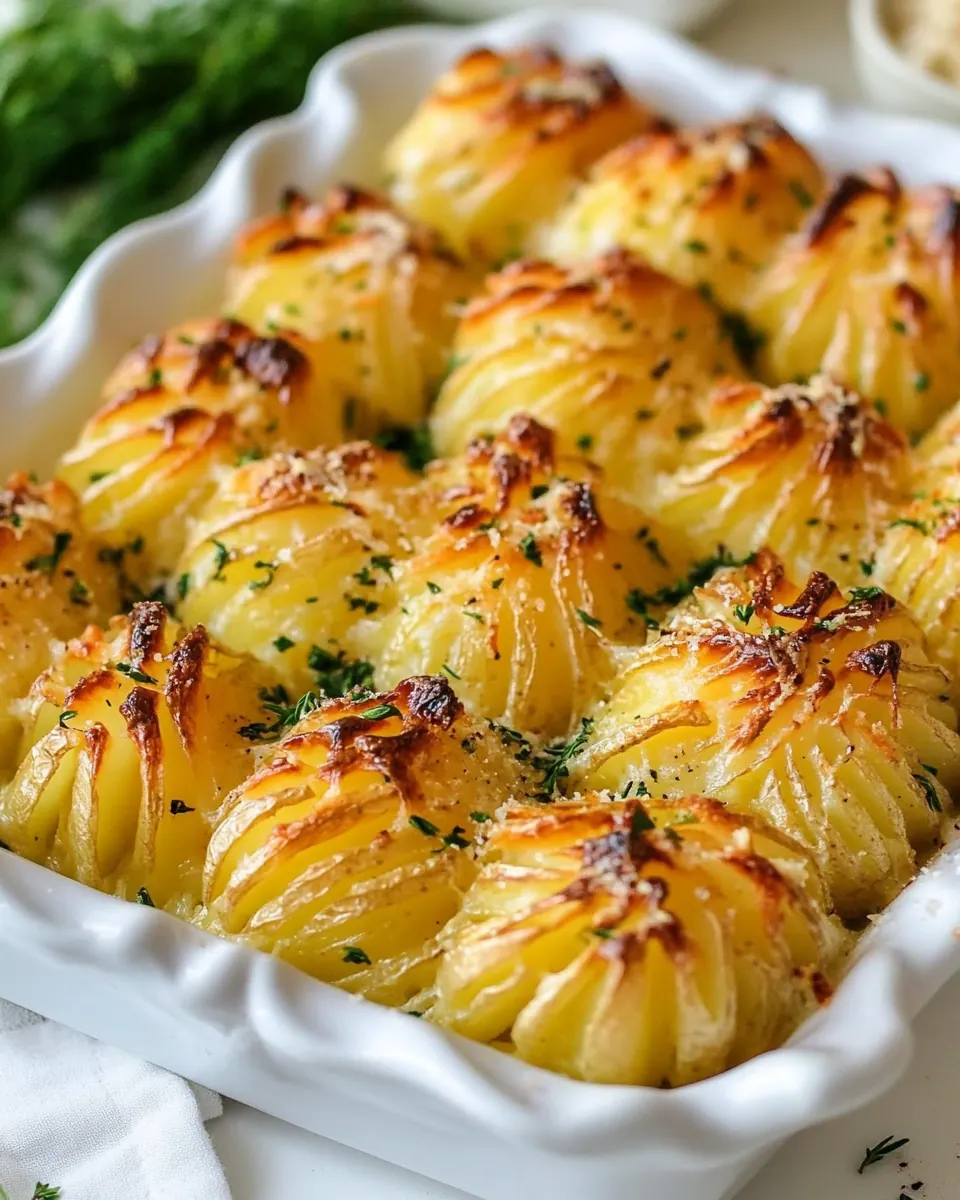
These notes expand on small techniques that make a big difference. They cover texture, timing, and presentation so your duchess potatoes come out consistent and impressive each time.
- Choose the right potato: Yukon golds are ideal because their medium starch content yields a naturally creamy texture without needing excess liquid, ensuring a stable piping mixture.
- Don t overboil: Cook the potatoes until they are just falling apart to avoid waterlogged mash that requires extra binding agents.
- Control garlic color: Saute the garlic on medium heat and remove at the first golden note to keep it sweet rather than bitter.
- Temper the yolks: Let the potato mixture cool briefly before adding egg yolks, which prevents curdling and keeps the texture silky.
- Space the mounds: Pipe or spoon with even spacing so each duchess potato browns on all sides and bakes uniformly.
Best Served With
These duchess potatoes pair beautifully with roasted mains and festive spreads. They are great for special dinners and holiday tables, and they re a comforting side for cozy autumn or winter meals.
- Roasted or braised mains: Serve alongside roasted beef, chicken, or a hearty vegetarian roast to complement the creamy texture of the potatoes.
- Holiday tables: These are a lovely addition to Thanksgiving, Christmas, or fall gatherings where a slightly elevated side dish is welcome.
- Weeknight dinners: For a simple weeknight uplift, pair with a roasted vegetable and a simple green salad for contrast in texture and freshness.
- Serving tips: Serve immediately out of the oven to maintain the contrast between a crisp exterior and soft interior. If you must hold them, keep in a warm oven no hotter than 200 degrees to avoid drying out.
- Storage: Leftovers keep for a day refrigerated in an airtight container. Reheat briefly in a 350 degree oven to restore some crispness, though they will be softer than fresh.
- Seasonal pairings: During fall, highlight earthy roasted root vegetables and bright apple or pear salads; in winter, pair with braised greens and hearty gratins for a cozy plate.
FAQ
Conclusion
What makes this recipe special is the way simple ingredients combine to create a luxurious, textural contrast between a crisp exterior and a silky interior. The harmony of garlic, butter, and parmesan transforms everyday potatoes into an elegant side that works for both casual dinners and festive occasions. Give these duchess potatoes a try the next time you want a reliable, crowd pleasing dish; once you master the cues for texture and seasoning, it becomes a go to that never fails to impress.
Garlic Parmesan Duchess Potatoes
Equipment
- Large Pot
- Small Saucepan
- Potato masher or ricer
- Mixing Bowl
- Piping bag with large star tip
- Baking Sheet
- Parchment Paper
Ingredients
- 2 1/2 lbs Yukon gold potatoes, peeled and diced into 1 1/2-inch portions Provide creamy body and structure when boiled and mashed, offering a naturally buttery flavor and smooth texture ideal for duchess potatoes; peeling and cutting into uniform 1 1/2-inch portions ensures even cooking and a consistent final puree.
- Salt and freshly ground black pepper Season generously to enhance and balance flavors, bringing out the natural richness of the potatoes and Parmesan while controlling overall taste; use salt for depth and freshly ground black pepper for bright, slightly spicy contrast.
- 6 tbsp butter, divided Add rich butterfat and silky mouthfeel, with divided portions allowing some to be incorporated into the mash and some to finish the mixture for glossy texture; melting into hot potatoes creates a creamy, cohesive emulsion.
- 4 cloves garlic, finely minced Infuse sharp, aromatic garlic notes when finely minced so the flavor disperses evenly through the mash without large pungent bites; brief cooking in butter mellows raw heat and deepens savory complexity.
- 4 tbsp half and half Contribute light creaminess and loosen the potato mixture for pipeable consistency, with half and half providing a balance between richness and fluidity without overpowering the cheese; add gradually to reach desired smoothness.
- 1/2 cup (slightly packed) finely shredded parmesan cheese Introduce nutty, salty umami and a granular texture that enriches the potato paste, with slightly packed finely shredded Parmesan melding into the mixture to create savory depth and a subtle cheesy backbone.
- 4 large egg yolks Bind and enrich the mixture while lending structure and a luxuriously custardy texture when incorporated, with egg yolks helping the duchess potatoes hold piped shapes and brown attractively during baking.
- Minced fresh parsley, for garnish (optional) Garnish with fresh herbal brightness and color, supplying a mild peppery-grassy lift when minced and sprinkled over the finished duchess potatoes; optional use adds visual appeal and a fresh contrast to the rich mash.
- Finely grated parmesan, for serving (optional) Finish with extra savory intensity and a delicate salty crust when finely grated over the baked potatoes, offering optional added Parmesan for sharper flavor and an attractive cheesy topping.
Instructions
- Preheat oven to 425 degrees. Line a baking sheet with parchment paper.: You will feel the anticipation as the warm oven prepares to transform creamy mounds into crisp, golden domes. Preheating ensures an immediate blast of heat that promotes browning, and the parchment prevents sticking and helps the bottoms brown evenly. A common mistake is not fully preheating, which can lead to pale, soft exteriors instead of a crisp finish. Listen for the oven fan settling and give it a few extra minutes after it signals ready to ensure the interior air is uniformly hot, which matters for even baking.
- Boil potatoes: Add potatoes to a large pot. Cover with cold water (covering the potatoes by about 1 - 2 inches) and season with 1 Tbsp of salt. Bring to a boil over medium-high heat, then reduce heat to medium-low, cover pot with lid and allow to simmer until very tender, about 15 - 20 minutes (they should nearly fall apart when pierced). Drain potatoes well.: Add potatoes to a large pot. Cover with cold water covering the potatoes by about 1 to 2 inches and season with 1 Tbsp of salt. Bring to a boil over medium-high heat, then reduce heat to medium-low, cover pot with lid and allow to simmer until very tender, about 15 to 20 minutes they should nearly fall apart when pierced. Drain potatoes well. : You will notice the kitchen filling with a gentle, earthy aroma as the potatoes heat. Starting in cold water ensures even cooking, and the salty water seasons the starch throughout for better flavor. The key sensory cue is when a fork slides through and the pieces almost crumble, which means the texture will mash into a velvety base. Overcooking can make the potatoes waterlogged, so drain thoroughly and let them steam dry briefly to avoid a runny mixture.
- Saute garlic in butter: Meanwhile, dice 4 Tbsp of the butter into 1 Tbsp pieces and add to a small saucepan. Melt over medium heat then add garlic and saute until lightly golden and softened, about 1 - 2 minutes.: Meanwhile, dice 4 Tbsp of the butter into 1 Tbsp pieces and add to a small saucepan. Melt over medium heat then add garlic and saute until lightly golden and softened, about 1 to 2 minutes. : The sizzling sound when the butter hits the pan is a good sign, and you should smell the sweet, toasty notes of softened garlic almost immediately. Browning lightly concentrates flavor, but watch closely because garlic can go from golden to bitter very quickly. If it browns too fast, remove the pan from the heat to cool briefly, which prevents an acrid taste from carrying into the mashed mixture.
- Stir in half and half: Remove from heat, stir in 3 Tbsp of the half and half then pour mixture into a small bowl (so the garlic doesn't burn) and set aside.: Remove from heat, stir in 3 Tbsp of the half and half then pour mixture into a small bowl so the garlic doesn't burn and set aside. : Adding half and half chills the butter just enough and creates a silky sauce that blends into the potatoes . You will see a glossy sheen as the dairy emulsifies with the melted fat. Letting it rest prevents any residual heat from overcooking the garlic and keeps the flavors bright. A common error is pouring hot butter directly onto cold ingredients which can congeal fats unevenly, so keep this warm but not scalding.
- Mash potatoes: Pour drained potatoes into a large mixing bowl. Mash well with a potato masher until there are no longer any lumps (or press through a potato ricer).: Pour drained potatoes into a large mixing bowl. Mash well with a potato masher until there are no longer any lumps or press through a potato ricer. : As you mash, notice the texture turning from chunky to satin smooth, releasing a faint, sweet potato aroma. The goal is lump free, which gives the duchess mounds a consistent, luxurious mouthfeel. If lumps remain, the final product will be uneven and may not pipe well. Avoid overworking the potatoes with a blender or food processor as that can make them gluey by releasing too much starch.
- Stir in cheese and butter mixture: Stir in parmesan cheese and warm butter/garlic mixture with a wooden spoon and season with salt and pepper to taste.: Stir in parmesan cheese and warm butter garlic mixture with a wooden spoon and season with salt and pepper to taste. : The parmesan melts into the warm potatoes , releasing nutty, savory notes that deepen the flavor. The mixture will become silkier and slightly glossy as the fats blend. Taste and adjust salt and pepper; proper seasoning at this stage ensures every bite is balanced. A pitfall is under seasoning, which leaves the dish flat, or over seasoning, which can mask the delicate buttery and cheesy balance.
- Blend in yolks: Let mixture cool a few minutes then quickly stir in egg yolks one at a time with a wooden spoon. At this point if mixture is very thick you can add remaining 1 Tbsp half and half if needed.: Let mixture cool a few minutes then quickly stir in egg yolks one at a time with a wooden spoon. At this point if mixture is very thick you can add remaining 1 Tbsp half and half if needed. : Cooling slightly prevents the egg yolks from scrambling, which would ruin texture. As you fold them in, the mixture becomes richer and binds together, giving it the structure needed for piping. If it feels too loose, the mounds will slump; if too stiff, they may not set well internally. One common mistake is adding yolks while the mix is piping hot, so always check the warmth first.
- Pipe into domes: Transfer mixture to a large piping fitted with a large star tip that's about 3/4 inch wide at tip (or you can just spoon mounds onto baking sheet vs. piping). Pipe into 12 mounds spaced evenly apart, about 2 1/2-inches wide by 2 1/2-inches tall. Gently brush with remaining 2 Tbsp butter, melted.: Transfer mixture to a large piping fitted with a large star tip that's about 3/4 inch wide at tip or you can just spoon mounds onto baking sheet vs. piping. Pipe into 12 mounds spaced evenly apart, about 2 1/2-inches wide by 2 1/2-inches tall. Gently brush with remaining 2 Tbsp butter melted. : The act of piping creates ridges that brown and crisp attractively. As you pipe, you should feel a slight resistance from the dense, creamy mixture, and see peaks that hold their shape. Brushing with melted butter ensures the ridges sear to a golden finish. If you pipe too close together they will bake into one another, and if the mixture is too warm they will flatten, so space them and chill briefly if needed.
- Bake: Bake in preheated oven until golden brown, about 16 - 19 minutes. Serve immediately garnished with parsley and parmesan if desired.: Bake in preheated oven until golden brown, about 16 to 19 minutes. Serve immediately garnished with parsley and parmesan if desired. : The oven transforms the soft mounds into crisp, bronzed domes with a buttery aroma filling the kitchen. You ll hear a faint sizzle as the exteriors finish and the top turns a deep golden color. Serve hot to enjoy the contrast between warm, crunchy exterior and pillowy interior. A common mistake is leaving them in too long; they will dry out and lose their creamy center, so watch the color carefully and remove once evenly golden.
- Recipe source: Cooking Classy: Cooking Classy : This gives context to the origins of the method and reminds you that the technique is inspired by a trusted recipe developer. It s useful to credit sources and to know where to reference for variations or troubleshooting. If you re unsure about any step, checking the original source can provide clarity and alternate approaches.
Notes
- Choose the right potato: Yukon golds are ideal because their medium starch content yields a naturally creamy texture without needing excess liquid, ensuring a stable piping mixture.
- Don t overboil: Cook the potatoes until they are just falling apart to avoid waterlogged mash that requires extra binding agents.
- Control garlic color: Saute the garlic on medium heat and remove at the first golden note to keep it sweet rather than bitter.
- Temper the yolks: Let the potato mixture cool briefly before adding egg yolks, which prevents curdling and keeps the texture silky.
- Space the mounds: Pipe or spoon with even spacing so each duchess potato browns on all sides and bakes uniformly.
