
Frosted Lemon Sugar Cookies
Frosted Lemon Sugar Cookies have been my go to when I want a bright, nostalgic treat that still feels a little grown up. The first time I baked these I was chasing sunshine after a gray week, and the punch of lemon zest paired with that pillowy sugar cookie was exactly the mood lifter I needed. I remember standing at the counter with a mug of tea, the citrus scent lifting the room, and thinking that a simple cookie could feel so celebratory.
Every batch since has been slightly different, because I love tinkering with texture and frosting thickness until it hits the sweet spot. Sometimes I press the dough a hair thinner for crisper edges, other times I keep them thick and cakey. Guests always comment on the frosting first, so I learned to whip it until it is impossibly smooth without losing that bright lemon note.
Recipe Snapshot
50 mins
30 mins
20 mins
Medium
150 kcal
American
Gluten-Free, Low FODMAP
Desserts
Stand mixer, Mixing bowl, Electric hand mixer, Silpat or baking mat, Wire rack
What’s Great About This Frosted Lemon Sugar Cookies
Bright citrus flavor that feels seasonal
I love how Frosted Lemon Sugar Cookies bring a burst of lemon without overwhelming sweetness. The lemon zest and juice are layered carefully so the cookie and frosting each carry their own citrus personality. When I bite into one, I notice a clean citrus spark up front, then a gentle sugar cookie base, which keeps the flavors balanced for any spring gathering.
Texture you can control
One reason I keep making these is the versatility. You can aim for a tender, cake like crumb or press for a slightly crisper edge, all by small adjustments to thickness and baking time. I often experiment with the press technique to achieve a uniform round, which means every cookie bakes evenly and looks bakery ready on the plate.
Frosting that finishes with finesse
The lemon frosting is straightforward, yet it makes a big impression. Whipping the frosting until it is airy creates a light coat that sets nicely, and adding a touch of yellow shows personality without tasting artificial. I value that this frosting remains silky when spread properly, so each bite feels creamy and fresh rather than cloying.
Friendly for gatherings and gifting
These cookies travel well, and they stack neatly when the frosting has set. I bring them to potlucks and they disappear fast, because they are familiar yet special. I also appreciate that the recipe scales reliably, so I can double the batch when I have a cookie swap or bake sale planned.
Easy techniques with professional results
Finally, the methods are approachable, even if you are not a seasoned baker. Chilling the dough, using a press to flatten, and whipping the frosting are small steps that yield consistently excellent texture and appearance. I always walk readers through these little moves because they matter more than you might expect.
Ingredients for Frosted Lemon Sugar Cookies

These ingredients work together to create a delicate, lemon forward sugar cookie. The base relies on a light flour blend and cornstarch to keep the crumb tender, while the combination of butter and unflavored shortening gives structure and a soft mouthfeel. Granulated sugar and powdered sugar play distinct roles, granulated lending sweetness and creaming lift, powdered creating a silky frosting texture. Finally, the lemon elements are the stars, contributing aroma and bright acidity that cuts the richness.
- 2 1/2 cups cake flour: Provide a tender, delicate crumb and light texture to the cookie; sifting cake flour helps prevent toughness and ensures even mixing with other dry ingredients. Balance with other leaveners for consistent rise and a fine mouthfeel.
- 2 tsp cornstarch: Add lightness and slightly tenderizing starch; cornstarch softens the dough structure and helps produce a softer, almost melt-in-your-mouth cookie. Use combined with cake flour to control gluten development.
- 1 1/2 tsp baking powder: Leaven the dough gently to give a subtle lift and airy texture without creating large holes; distribute evenly in the dry mix for consistent rise. Reacts with moisture and warmth to help cookies expand properly.
- 1/2 tsp salt: Enhance overall flavor balance by reducing sweetness and rounding flavors; salt also strengthens gluten slightly and helps bring out lemon notes. Dissolve into dry ingredients to ensure even seasoning.
- 1/2 cup butter, at room temperature: Contribute richness, flavor, and tender texture while aiding spread; creaming with sugar incorporates air for a light cookie. At room temperature, butter blends smoothly for an even dough consistency.
- 1/4 cup all vegetable shortening (unflavored), at room temperature: Provide stability, additional tenderness, and a neutral fat to control spreading; vegetable shortening helps cookies keep a soft, slightly cakey texture. Use at room temperature for even incorporation with butter.
- 1 cup granulated sugar: Sweeten the dough and help create structure when creamed with fats; granulated sugar also promotes spreading and caramelization at the cookie edges. Proper creaming results in an aerated, lighter cookie.
- Zest of 1 large lemon (1 Tbsp): Deliver bright citrus aroma and concentrated lemon flavor; zest adds essential oils that elevate freshness without adding acidity. Grate finely to distribute fragrant bits throughout the dough.
- 1 large egg: Bind ingredients, add moisture, and contribute to structure through coagulation when baked; eggs help with richness and mouthfeel. Use at room temperature to ensure smooth emulsion with fats.
- 1 large egg white: Provide additional binding and reduced fat compared with a whole egg, contributing to a slightly firmer structure and glossy finish in the cookie. Whites also help with stability when combined with yolk in recipes.
- 1 tsp lemon extract: Introduce concentrated lemon flavor without extra liquid; extract boosts overall lemon profile and pairs well with zest and juice. Add during wet mixing for even distribution.
- 1 tsp vanilla extract: Contribute warm, familiar background flavor that complements lemon; vanilla rounds and enhances the cookie's overall aroma. Use alongside lemon extract to build a more complex flavor profile.
- 1/3 cup salted butter, at room temperature: Add creamy richness and a slightly tangy-salty depth to the frosting or filling when creamed; salted butter balances sweetness and improves spreadability. Ensure softened to room temperature for smooth mixing.
- 2 1/2 cups powdered sugar: Provide smooth, sweet sweetness and structure to frostings; powdered sugar dissolves easily for a silky texture. Sift to prevent lumps and achieve a glossy, spreadable frosting consistency.
- 1/2 tsp lemon extract: Boost lemon flavor in the frosting with a concentrated aromatic note; a small amount of extract intensifies citrus without thinning the icing. Stir in gradually and taste to avoid overpowering.
- 2 1/2 3 Tbsp fresh lemon juice: Adjust frosting consistency while adding fresh, bright acidity and natural lemon flavor; fresh juice balances sweetness and creates a tangy finish. Add gradually to reach desired thickness between 2 1/2 and 3 tablespoons.
- yellow food coloring or yellow sprinkles (optional): Add optional color or a crunchy, festive finish to decorated cookies; yellow coloring or sprinkles enhance visual appeal and theme. Use sparingly to achieve a cheerful presentation or textural contrast.
Cooking Method for Frosted Lemon Sugar Cookies

I like to walk into the method feeling calm and organized, because these little steps reward patience. The technique focuses on proper creaming, gentle mixing, chilling, and a simple flattening method so every cookie bakes evenly and looks tidy. Follow the sequence and take the sensory cues to know when you are on track.
- In a bowl combine flour, cornstarch, baking powder and salt and whisk for 30 seconds, set aside. In the bowl of an electric stand mixer, whip together butter, shortening, sugar and lemon zest on medium speed until very pale and fluffy, about 4 minutes, occasionally scraping down the sides of the bowl.: As you whisk, notice the fine powder taking on an even tone, and smell a faint, neutral wheaty scent. This quick mix distributes the cake flour and cornstarch so pockets of leavening do not create uneven rise. The visual cue is a uniform pale mixture without streaks of any single powder. Doing this step prevents dense spots in the baked cookie, so avoid skimping on the whisk time; a common misstep is tossing dry ingredients together without mixing thoroughly, which leads to inconsistent texture.
- Add in egg and mix until combined, then add egg white, lemon extract and vanilla extract and mix until combined. With mixer running, slowly add in dry ingredients and mix just until combined.: When creaming, you should smell the bright oils from the lemon zest mingle with the sweet, creamy aroma of butter . The mixture will gradually lighten in color and triple slightly in volume, feeling airy when you lift the paddle. Pause to scrape the bowl so no uncreamed pockets remain, which ensures even aeration. If you rush this step or use overly warm butter, the mixture will look greasy instead of fluffy, and the cookies may spread too much during baking.
- Transfer dough to an airtight container and refrigerate 2 hours. Preheat oven to 375ºF during the last 10 minutes of refrigeration.: After adding the egg , the batter will look smoother and will gain cohesion; the egg helps bind the fats and sugar. The subsequent egg white lightens the texture further while keeping fat lower, and the extracts add concentrated citrus and aromatic depth. Stir until you no longer see streaks of egg, the surface should glisten slightly. Overbeating after the eggs can introduce too much air, causing the cookies to rise and fall, so mix only until incorporated.
- Scoop dough out an even 1/4 cup at a time and roll into a ball. Place dough ball on a lightly floured surface, sprinkle top lightly with flour, then using something flat and smooth (such as the storage container lid), press and evenly flatten dough to 1/2" thick (so you should have about a 2 2/3" – 2 3/4" circular cookie).: As you fold in the dry mix, watch for the dough to come together into a cohesive mass with no visible streaks of flour. The sound changes from a thumping of air to a denser, smoother hum. This restrained mixing prevents gluten development, keeping the cookies tender. If you overmix here, the dough will tighten and the resulting cookie will be tougher and less delicate.
- Transfer flattened dough to a Silpat lined cookie sheet (fitting 6 cookies per cookie sheet) and repeat process with remaining dough.: Chilling solidifies the fats, which prevents excessive spreading and concentrates flavors. In the refrigerator the dough firms and the aromas settle, giving a more controlled bake. The feel of the chilled dough should be cool and slightly pliable. A typical error is under chilling, which leads to flat, greasy cookies in the oven; be patient and give the full two hours for best structure.
- Bake in preheated oven 9 – 11 minutes. Allow to cool 5 minutes on baking sheet before transferring to a wire rack to cool. Cool completely then frost.: Preheating in the final minutes means the oven is at the correct steady heat as soon as the cookies go in, promoting immediate and even rise at the top surface. You should notice the oven's preheat light turning off and the temperature stabilizing. If you skip preheating, baking becomes uneven, and cookies may spread improperly. Always confirm actual oven temperature with a thermometer if unsure.
- For the Lemon Frosting: Combine all ingredients in a large mixing bowl, using an electric hand mixer, whip until frosting is smooth and fluffy. Mix in food coloring if desired or sprinkle cookies with yellow sprinkles.: Using a 1 4 cup scoop yields cookies that bake consistently, and rolling to a smooth ball ensures even browning. The dough should feel slightly tacky but hold shape when rounded. Inconsistent scooping leads to mismatched baking times, so measure carefully. Avoid packing the scoop too tightly, which would make dense cookies.
- Place dough ball on a lightly floured surface, sprinkle top lightly with flour, then using something flat and smooth such as the storage container lid press and evenly flatten dough to 1/2" thick: Pressing produces uniform thickness so each cookie bakes to the same doneness, with edges and centers aligned. The tactile cue is a smooth, slightly powdered top and an even circular silhouette roughly two and two thirds to two three quarters inches across. If the surface sticks, add a touch more flour, but do not over flour or the cookie will dry. Common mishap is pressing unevenly, which creates cookies with thin edges that brown faster than the center.
- Transfer flattened dough to a Silpat lined cookie sheet fitting 6 cookies per cookie sheet and repeat process with remaining dough: Lining pans ensures gentle heat distribution and easy release, while spacing ensures airflow so cookies bake evenly. You should hear a soft clunk as the dough meets the pan, and visually the rounds should sit flat and not crowd each other. Overcrowding leads to merging cookies, so keep to the six per sheet guideline for even baking.
- Bake in preheated oven 9 to 11 minutes: During baking, watch for the edges to set and the tops to look matte but not deeply browned; the aroma will turn from sweet dough to warm citrus and butter. The sound is quiet, a soft oven hum, and the visual cue is a very slight golden tint on the bottoms. Pulling too early leaves raw centers, while overbaking yields dry cookies, so aim for the lower end for a tender interior and the higher end for slightly firmer texture.
- Allow to cool 5 minutes on baking sheet before transferring to a wire rack to cool: The cookies continue to set as they cool, and the brief rest on the hot sheet helps them finish structure without tearing. You will feel residual warmth and the cookie will hold shape when moved. Transfer gently to avoid breakage, and let them cool completely before frosting. If you frost while warm, the frosting will melt, so patience is essential here.
- Cool completely then frost: A fully cooled cookie accepts frosting cleanly, and the texture of the frosting remains stable. The surface should be room temperature with no heat radiating. Rushing this step causes frosting to slide off or become runny, which ruins the look. Wait until cool for best presentation and texture.
- For the Lemon Frosting Combine all ingredients in a large mixing bowl using an electric hand mixer whip until frosting is smooth and fluffy: As you whip the butter with powdered sugar and the lemon components, the frosting goes from grainy to pillowy, and you will smell the bright lemon aroma intensify. The mixture should be creamy and hold soft peaks for easy spreading. If it becomes too thin, add a touch more powdered sugar; if too stiff, add a small splash of lemon juice. A frequent error is adding too much liquid at once, which makes the frosting runny and difficult to control.
- Mix in food coloring if desired or sprinkle cookies with yellow sprinkles: Adding a small amount of yellow color or a dusting of sprinkles gives visual appeal while keeping the flavor intact. Stir until the color is evenly distributed, and test on a single cookie to ensure you like the result. Too much coloring can alter taste and appearance, so add gradually. If you choose sprinkles, wait until frosting has set slightly so they adhere without sinking.
Recipe Notes about Frosted Lemon Sugar Cookies
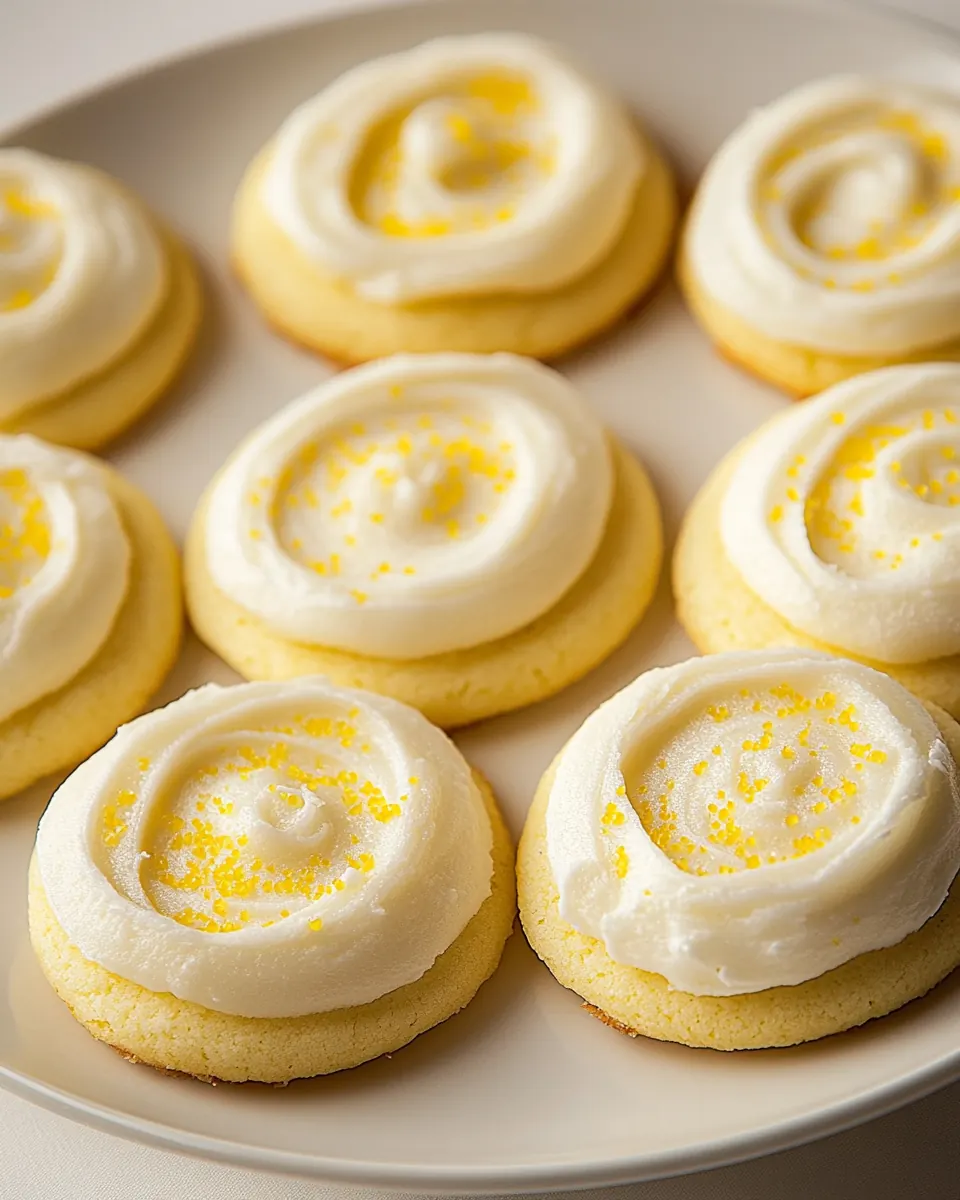
These notes expand the small decisions that make a big difference. I include step by step adjustments and storage suggestions so your batch turns out reliably. Read through the list and pick the tips that match how you like your cookies, chewy or tender.
- Room temperature ingredients: Bring both the butter and the eggs to room temperature before creaming for an even, airy texture; cold ingredients can result in a lumpy mixture that will not trap air properly.
- Shortening choice: Use unflavored all vegetable shortening as specified, because butter flavored varieties add an off note; shortening helps cookies retain a soft, tender crumb and consistent shape during baking.
- Adjusting lemon intensity: If you prefer a subtler lemon, reduce the lemon extract by half and rely more on zest; extracts are potent and can become artificial tasting when overused.
- Powdered sugar handling: Sift the powdered sugar before mixing into the frosting to avoid lumps and ensure a silky finish; if frosting is grainy, continue whipping gently until smooth or add a teaspoon of lemon juice to help dissolve.
- Storage: Store unfrosted cookies in an airtight container at room temperature for up to three days, or freeze baked cookies in a single layer then transfer to a bag for up to two months; frost after thawing for best results.
Best Served With
These cookies make a sunny addition to many occasions. Below are detailed serving ideas organized so you can match them to your event, season, or storage needs. I include pairing notes and presentation tips to make them feel special.
- Afternoon tea or coffee: Serve Frosted Lemon Sugar Cookies on a small platter alongside a pot of tea or a mug of coffee, the citrus cuts the richness and creates a bright palate contrast that guests will appreciate during casual visits.
- Spring gatherings and showers: Their fresh lemon theme is ideal for spring baby showers or garden brunches, present the cookies on tiered trays and add a few edible flowers or yellow sprinkles for a seasonal touch that looks festive.
- Gift boxes: Layer cookies with parchment in a decorative box for gifting, and include a small note about keeping them cool before frosting to maintain presentation; they travel well for neighborly treats or baked goods exchanges.
- Holiday cookie trays: Add these to mixed holiday trays to bring a citrus note among richer cookies, they provide balance and a palate cleanser that guests will gravitate toward after heavier choices.
- Storage and make ahead: Bake and freeze unfrosted cookies, then thaw and frost on the day you plan to serve; this keeps frosting fresh and prevents moisture migration that can make decorations runny.
- Seasonal pairing: Pair with light fruit salads in spring or chilled lemonades in warm weather, the shared citrus theme amplifies the brightness and keeps the dessert course feeling uplifting rather than heavy.
FAQ
Conclusion
These Frosted Lemon Sugar Cookies stand out because they pair a tender, delicate cookie with a bright, whipped lemon frosting that truly sings. I encourage you to try them when you want a cheerful bake that impresses without fuss, whether for a small gathering or a thoughtful homemade gift. The straightforward steps reward a little patience, and tweaking thickness and frosting lets you customize texture and presentation. Enjoy the process as much as the result, and don’t be afraid to make them your own.

Frosted Lemon Sugar Cookies
Equipment
- Stand mixer
- Mixing Bowl
- electric hand mixer
- Silpat or baking mat
- Wire Rack
Ingredients
- 2 1/2 cups cake flour Provide a tender, delicate crumb and light texture to the cookie; sifting cake flour helps prevent toughness and ensures even mixing with other dry ingredients. Balance with other leaveners for consistent rise and a fine mouthfeel.
- 2 tsp cornstarch Add lightness and slightly tenderizing starch; cornstarch softens the dough structure and helps produce a softer, almost melt-in-your-mouth cookie. Use combined with cake flour to control gluten development.
- 1 1/2 tsp baking powder Leaven the dough gently to give a subtle lift and airy texture without creating large holes; distribute evenly in the dry mix for consistent rise. Reacts with moisture and warmth to help cookies expand properly.
- 1/2 tsp salt Enhance overall flavor balance by reducing sweetness and rounding flavors; salt also strengthens gluten slightly and helps bring out lemon notes. Dissolve into dry ingredients to ensure even seasoning.
- 1/2 cup butter, at room temperature Contribute richness, flavor, and tender texture while aiding spread; creaming with sugar incorporates air for a light cookie. At room temperature, butter blends smoothly for an even dough consistency.
- 1/4 cup all vegetable shortening (unflavored), at room temperature Provide stability, additional tenderness, and a neutral fat to control spreading; vegetable shortening helps cookies keep a soft, slightly cakey texture. Use at room temperature for even incorporation with butter.
- 1 cup granulated sugar Sweeten the dough and help create structure when creamed with fats; granulated sugar also promotes spreading and caramelization at the cookie edges. Proper creaming results in an aerated, lighter cookie.
- Zest of 1 large lemon (1 Tbsp) Deliver bright citrus aroma and concentrated lemon flavor; zest adds essential oils that elevate freshness without adding acidity. Grate finely to distribute fragrant bits throughout the dough.
- 1 large egg Bind ingredients, add moisture, and contribute to structure through coagulation when baked; eggs help with richness and mouthfeel. Use at room temperature to ensure smooth emulsion with fats.
- 1 large egg white Provide additional binding and reduced fat compared with a whole egg, contributing to a slightly firmer structure and glossy finish in the cookie. Whites also help with stability when combined with yolk in recipes.
- 1 tsp lemon extract Introduce concentrated lemon flavor without extra liquid; extract boosts overall lemon profile and pairs well with zest and juice. Add during wet mixing for even distribution.
- 1 tsp vanilla extract Contribute warm, familiar background flavor that complements lemon; vanilla rounds and enhances the cookie's overall aroma. Use alongside lemon extract to build a more complex flavor profile.
- 1/3 cup salted butter, at room temperature Add creamy richness and a slightly tangy-salty depth to the frosting or filling when creamed; salted butter balances sweetness and improves spreadability. Ensure softened to room temperature for smooth mixing.
- 2 1/2 cups powdered sugar Provide smooth, sweet sweetness and structure to frostings; powdered sugar dissolves easily for a silky texture. Sift to prevent lumps and achieve a glossy, spreadable frosting consistency.
- 1/2 tsp lemon extract Boost lemon flavor in the frosting with a concentrated aromatic note; a small amount of extract intensifies citrus without thinning the icing. Stir in gradually and taste to avoid overpowering.
- 2 1/2 - 3 Tbsp fresh lemon juice Adjust frosting consistency while adding fresh, bright acidity and natural lemon flavor; fresh juice balances sweetness and creates a tangy finish. Add gradually to reach desired thickness between 2 1/2 and 3 tablespoons.
- yellow food coloring or yellow sprinkles, optional Add optional color or a crunchy, festive finish to decorated cookies; yellow coloring or sprinkles enhance visual appeal and theme. Use sparingly to achieve a cheerful presentation or textural contrast.
Instructions
- In a bowl combine flour, cornstarch, baking powder and salt and whisk for 30 seconds, set aside. In the bowl of an electric stand mixer, whip together butter, shortening, sugar and lemon zest on medium speed until very pale and fluffy, about 4 minutes, occasionally scraping down the sides of the bowl.: As you whisk, notice the fine powder taking on an even tone, and smell a faint, neutral wheaty scent. This quick mix distributes the cake flour and cornstarch so pockets of leavening do not create uneven rise. The visual cue is a uniform pale mixture without streaks of any single powder. Doing this step prevents dense spots in the baked cookie, so avoid skimping on the whisk time; a common misstep is tossing dry ingredients together without mixing thoroughly, which leads to inconsistent texture.
- Add in egg and mix until combined, then add egg white, lemon extract and vanilla extract and mix until combined. With mixer running, slowly add in dry ingredients and mix just until combined.: When creaming, you should smell the bright oils from the lemon zest mingle with the sweet, creamy aroma of butter . The mixture will gradually lighten in color and triple slightly in volume, feeling airy when you lift the paddle. Pause to scrape the bowl so no uncreamed pockets remain, which ensures even aeration. If you rush this step or use overly warm butter, the mixture will look greasy instead of fluffy, and the cookies may spread too much during baking.
- Transfer dough to an airtight container and refrigerate 2 hours. Preheat oven to 375ºF during the last 10 minutes of refrigeration.: After adding the egg , the batter will look smoother and will gain cohesion; the egg helps bind the fats and sugar. The subsequent egg white lightens the texture further while keeping fat lower, and the extracts add concentrated citrus and aromatic depth. Stir until you no longer see streaks of egg, the surface should glisten slightly. Overbeating after the eggs can introduce too much air, causing the cookies to rise and fall, so mix only until incorporated.
- Scoop dough out an even 1/4 cup at a time and roll into a ball. Place dough ball on a lightly floured surface, sprinkle top lightly with flour, then using something flat and smooth (such as the storage container lid), press and evenly flatten dough to 1/2" thick (so you should have about a 2 2/3" - 2 3/4" circular cookie).: As you fold in the dry mix, watch for the dough to come together into a cohesive mass with no visible streaks of flour. The sound changes from a thumping of air to a denser, smoother hum. This restrained mixing prevents gluten development, keeping the cookies tender. If you overmix here, the dough will tighten and the resulting cookie will be tougher and less delicate.
- Transfer flattened dough to a Silpat lined cookie sheet (fitting 6 cookies per cookie sheet) and repeat process with remaining dough.: Chilling solidifies the fats, which prevents excessive spreading and concentrates flavors. In the refrigerator the dough firms and the aromas settle, giving a more controlled bake. The feel of the chilled dough should be cool and slightly pliable. A typical error is under chilling, which leads to flat, greasy cookies in the oven; be patient and give the full two hours for best structure.
- Bake in preheated oven 9 - 11 minutes. Allow to cool 5 minutes on baking sheet before transferring to a wire rack to cool. Cool completely then frost.: Preheating in the final minutes means the oven is at the correct steady heat as soon as the cookies go in, promoting immediate and even rise at the top surface. You should notice the oven's preheat light turning off and the temperature stabilizing. If you skip preheating, baking becomes uneven, and cookies may spread improperly. Always confirm actual oven temperature with a thermometer if unsure.
- For the Lemon Frosting: Combine all ingredients in a large mixing bowl, using an electric hand mixer, whip until frosting is smooth and fluffy. Mix in food coloring if desired or sprinkle cookies with yellow sprinkles.: Using a 1 4 cup scoop yields cookies that bake consistently, and rolling to a smooth ball ensures even browning. The dough should feel slightly tacky but hold shape when rounded. Inconsistent scooping leads to mismatched baking times, so measure carefully. Avoid packing the scoop too tightly, which would make dense cookies.
- Place dough ball on a lightly floured surface, sprinkle top lightly with flour, then using something flat and smooth such as the storage container lid press and evenly flatten dough to 1/2" thick: Pressing produces uniform thickness so each cookie bakes to the same doneness, with edges and centers aligned. The tactile cue is a smooth, slightly powdered top and an even circular silhouette roughly two and two thirds to two three quarters inches across. If the surface sticks, add a touch more flour, but do not over flour or the cookie will dry. Common mishap is pressing unevenly, which creates cookies with thin edges that brown faster than the center.
- Transfer flattened dough to a Silpat lined cookie sheet fitting 6 cookies per cookie sheet and repeat process with remaining dough: Lining pans ensures gentle heat distribution and easy release, while spacing ensures airflow so cookies bake evenly. You should hear a soft clunk as the dough meets the pan, and visually the rounds should sit flat and not crowd each other. Overcrowding leads to merging cookies, so keep to the six per sheet guideline for even baking.
- Bake in preheated oven 9 to 11 minutes: During baking, watch for the edges to set and the tops to look matte but not deeply browned; the aroma will turn from sweet dough to warm citrus and butter. The sound is quiet, a soft oven hum, and the visual cue is a very slight golden tint on the bottoms. Pulling too early leaves raw centers, while overbaking yields dry cookies, so aim for the lower end for a tender interior and the higher end for slightly firmer texture.
- Allow to cool 5 minutes on baking sheet before transferring to a wire rack to cool: The cookies continue to set as they cool, and the brief rest on the hot sheet helps them finish structure without tearing. You will feel residual warmth and the cookie will hold shape when moved. Transfer gently to avoid breakage, and let them cool completely before frosting. If you frost while warm, the frosting will melt, so patience is essential here.
- Cool completely then frost: A fully cooled cookie accepts frosting cleanly, and the texture of the frosting remains stable. The surface should be room temperature with no heat radiating. Rushing this step causes frosting to slide off or become runny, which ruins the look. Wait until cool for best presentation and texture.
- For the Lemon Frosting Combine all ingredients in a large mixing bowl using an electric hand mixer whip until frosting is smooth and fluffy: As you whip the butter with powdered sugar and the lemon components, the frosting goes from grainy to pillowy, and you will smell the bright lemon aroma intensify. The mixture should be creamy and hold soft peaks for easy spreading. If it becomes too thin, add a touch more powdered sugar; if too stiff, add a small splash of lemon juice. A frequent error is adding too much liquid at once, which makes the frosting runny and difficult to control.
- Mix in food coloring if desired or sprinkle cookies with yellow sprinkles: Adding a small amount of yellow color or a dusting of sprinkles gives visual appeal while keeping the flavor intact. Stir until the color is evenly distributed, and test on a single cookie to ensure you like the result. Too much coloring can alter taste and appearance, so add gradually. If you choose sprinkles, wait until frosting has set slightly so they adhere without sinking.
Notes
- Room temperature ingredients: Bring both the butter and the eggs to room temperature before creaming for an even, airy texture; cold ingredients can result in a lumpy mixture that will not trap air properly.
- Shortening choice: Use unflavored all vegetable shortening as specified, because butter flavored varieties add an off note; shortening helps cookies retain a soft, tender crumb and consistent shape during baking.
- Adjusting lemon intensity: If you prefer a subtler lemon, reduce the lemon extract by half and rely more on zest; extracts are potent and can become artificial tasting when overused.
- Powdered sugar handling: Sift the powdered sugar before mixing into the frosting to avoid lumps and ensure a silky finish; if frosting is grainy, continue whipping gently until smooth or add a teaspoon of lemon juice to help dissolve.
- Storage: Store unfrosted cookies in an airtight container at room temperature for up to three days, or freeze baked cookies in a single layer then transfer to a bag for up to two months; frost after thawing for best results.
