Flag Cake
Flag Cake has been my go to centerpiece for summer get togethers ever since I first tried decorating a simple sheet cake into a flag with fresh fruit. I remember the first time I set that platter on the picnic table, watching neighbors smile as the blueberries and strawberries caught the sun, and hearing kids plan who would get which slice. It’s a recipe that reads like celebration on a plate, and I still reach for it when I want something festive but unfussy.
On a humid July afternoon I made this again, thinking about how a few smart steps and the right butter and cream cheese turn ordinary cake into something worth photographing. I like how the texture of the crumb holds up under a generous coat of frosting, and how the fruit gives bright, juicy contrast to the rich, sweet icing. Friends always ask for the method, and I tell them the secret is patience and good timing, not skill.
Recipe Snapshot
1 hr 15 mins
45 mins
30 mins
Medium
350 kcal
American
Gluten-Free, Low FODMAP
Desserts
Electric mixer, 18 x 13 by 1 1/2 inch sheet pan, Spatula, Pastry bag with star tip
The Appeal of This Flag Cake
It looks like a celebration
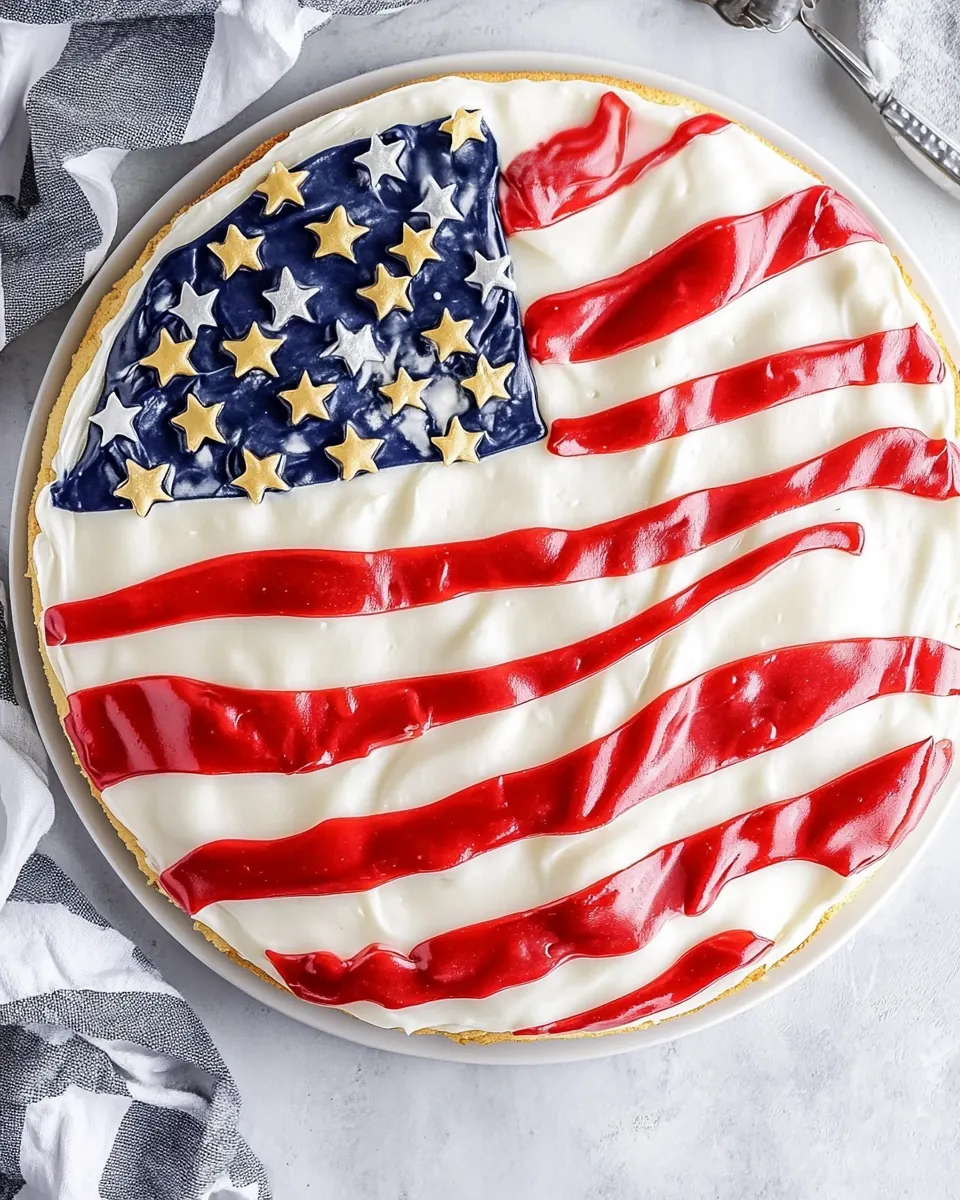
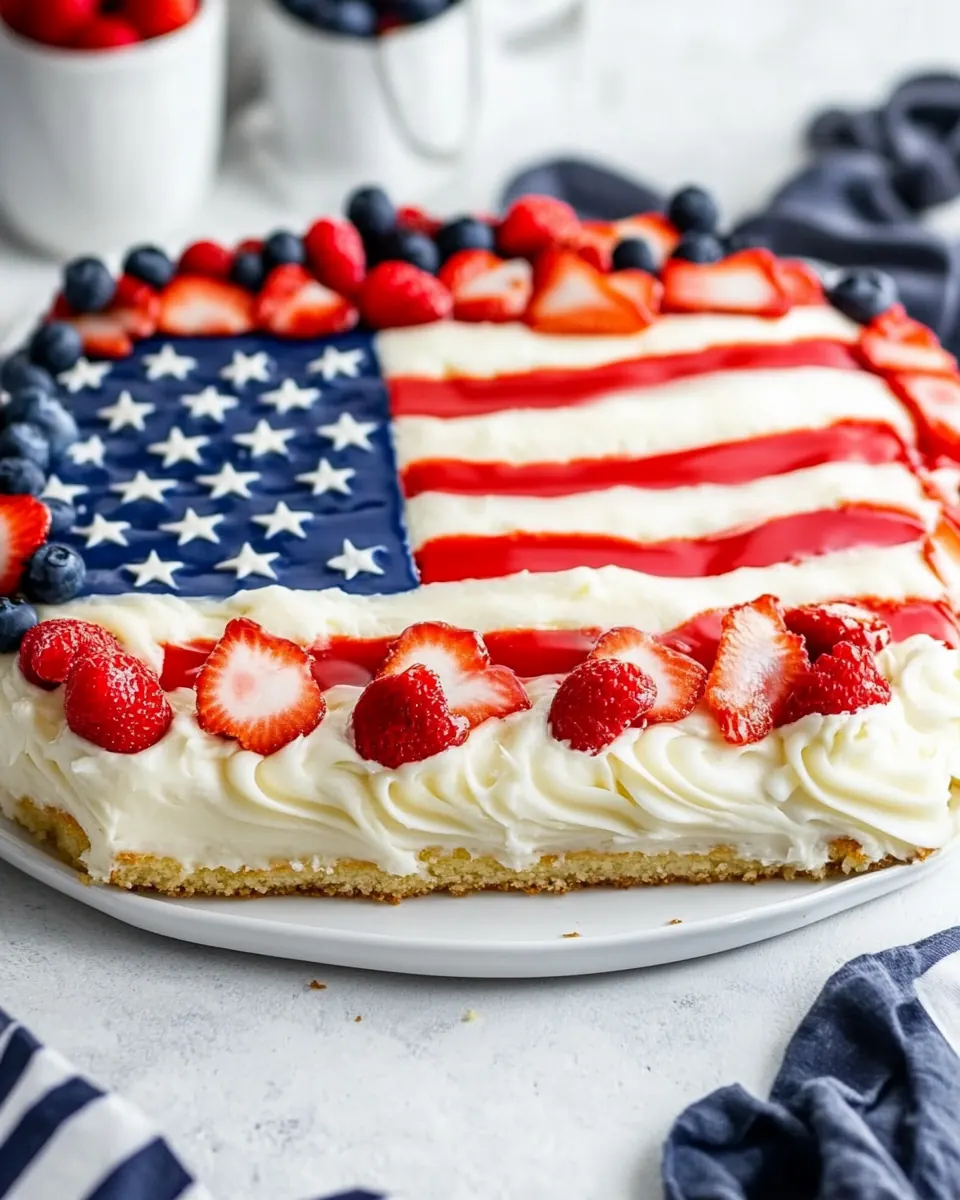
I love that Flag Cake arrives at the table already doing the talking. The visual impact of the blue berry corner and clean red and white stripes makes an ordinary dessert feel like an event. I often bake it for neighborhood potlucks where presentation matters, because you get applause before anyone even tastes it.
Texture that holds up
The balance between a tender sheet cake and a sturdy, creamy frosting means slices stay neat. I appreciate that this recipe does not collapse when you cut across rows of fruit. When I serve it, guests notice the soft crumb and the smooth mouthfeel from the frosting, and that consistency is something I aim for every time.
Fresh fruit adds brightness
I pick ripe strawberries and firm blueberries because they bring natural sweetness and a pleasant burst of juice. I like the contrast between the buttery cake and the fruit’s acidity, it keeps each bite lively. There’s also a crowd pleasing quality, since fruit makes it feel lighter than a purely buttercream laden dessert.
Reliable techniques for home bakers
I’ve taught this recipe to friends who are new to baking, and they succeed consistently. The steps are approachable, the equipment is common, and the sensory cues are clear. Because the method uses room temperature butter, room temperature eggs, and gentle folding, the chemistry behaves predictably, which I find comforting and practical.
Flexible for occasions
Whether I need something for a casual barbecue or a patriotic holiday table, Flag Cake adapts. You can scale it or change fruit arrangements and still keep the spirit of the cake. That flexibility is why I reach for this recipe when I want something special without overcomplicating the day.
Everything You Need for Flag Cake
The philosophy behind these ingredients is simple, they work together to create a tender, rich sheet cake with a smooth, stable frosting that can hold fresh fruit without seeping. The cake relies on a combination of butter, sugar, and eggs for structure and richness, while cornstarch and all purpose flour lighten the crumb. The frosting uses additional butter and lots of creamy cream cheese for spreadability and tang, which pairs beautifully with the seasonal strawberries and blueberries.
- 1 8 tablespoon s (2 1/4 sticks) unsalted butter, at room temperature: Soften to room temperature to ensure easy creaming and even incorporation into batters; provides richness, moisture, and tender crumb to the cake. Contributes to structure by trapping air when creamed with sugar and helps dissolve flavorings for a smooth batter.
- 3 cups granulated white sugar: Sweeten the batter while aiding in aeration when creamed with butter; balances flavors and promotes browning during baking. Granulated sugar also influences texture by drawing moisture and creating a fine crumb in the finished cake.
- 6 extra large eggs, at room temperature: Bring to room temperature to create a stable emulsion with fats and sugar; add moisture, structure, and leavening support through steam during baking. Eggs also contribute to richness, color, and help bind dry ingredients together for a cohesive crumb.
- 1 cup sour cream, at room temperature: Remain at room temperature to blend smoothly into the batter and add tangy moisture that tenderizes the crumb; helps balance sweetness and enrich flavor. Sour cream contributes to a moist texture and acidity that can react with baking soda for lift.
- 1 1/2 teaspoons vanilla extract: Provide aromatic sweetness and enhance overall flavor profile; add depth and a familiar vanilla note throughout the cake. Use at room temperature to disperse evenly and complement the dairy and egg flavors.
- 3 cups all purpose flour: Supply the primary dry structure and bulk for the cake, forming gluten when mixed with liquids to create the crumb. All-purpose flour balances tenderness and strength, yielding a sturdy yet tender cake that supports frostings and fillings.
- 1/3 cup cornstarch: Lighten the texture by reducing gluten formation when combined with flour; contribute to a finer, more delicate crumb. Cornstarch also absorbs moisture and helps stabilize the cake structure for a softer mouthfeel.
- 1 teaspoon kosher salt: Season the batter lightly to enhance and balance sweetness while strengthening gluten structure slightly; prevent flat flavor. Kosher salt also intensifies other flavors and can affect yeast or chemical leavening reactions subtly.
- 1 teaspoon baking soda: React with acidic ingredients to produce carbon dioxide for leavening, helping the cake rise; ensure even distribution in the batter for uniform lift. Baking soda also helps neutralize excess acidity from sour cream, promoting proper texture and color.
- 2 cups (4 sticks) unsalted butter, at room temperature: Soften to room temperature for smooth creaming and easy incorporation into frostings; provide rich, stable fat content for buttercream structure. Extra butter in the frosting creates a spreadable consistency and contributes to flavor richness.
- Three 8-ounce packages cream cheese, at room temperature: Soften at room temperature to blend smoothly into frosting, providing tangy richness and creamy texture; stabilize and thicken the cream cheese layer. Multiple packages ensure enough volume and body for a dense, flavorful cream cheese frosting.
- 1 pound powdered sugar, sifted: Sift to remove lumps for a silky, smooth frosting texture; sweeten and stabilize the cream cheese mixture while providing structure. Powdered sugar dissolves readily, giving consistent sweetness and contributing to the frosting's firmness.
- 1 1/2 teaspoons vanilla extract: Provide aromatic vanilla flavor to the frosting and help round out sweetness; add warmth and complexity to the cream cheese mixture. Using vanilla at room temperature blends evenly and enhances the overall taste profile of the icing.
- 2 1/2 cups blueberries: Add fresh fruity flavor, natural sweetness, and vibrant color as a decorative topping or filling; contribute slight tartness and juiciness to balance rich frosting. Blueberries also offer visual contrast and a burst of acidity that complements cream cheese.
- 3 cups sliced strawberries: Provide bright, sweet-tart flavor and striking color for decoration or layering; contribute texture and freshness to the final presentation. Sliced strawberries pair with cream cheese frosting to create appealing visuals and a balanced fruitiness.
Step by Step Instructions for Flag Cake
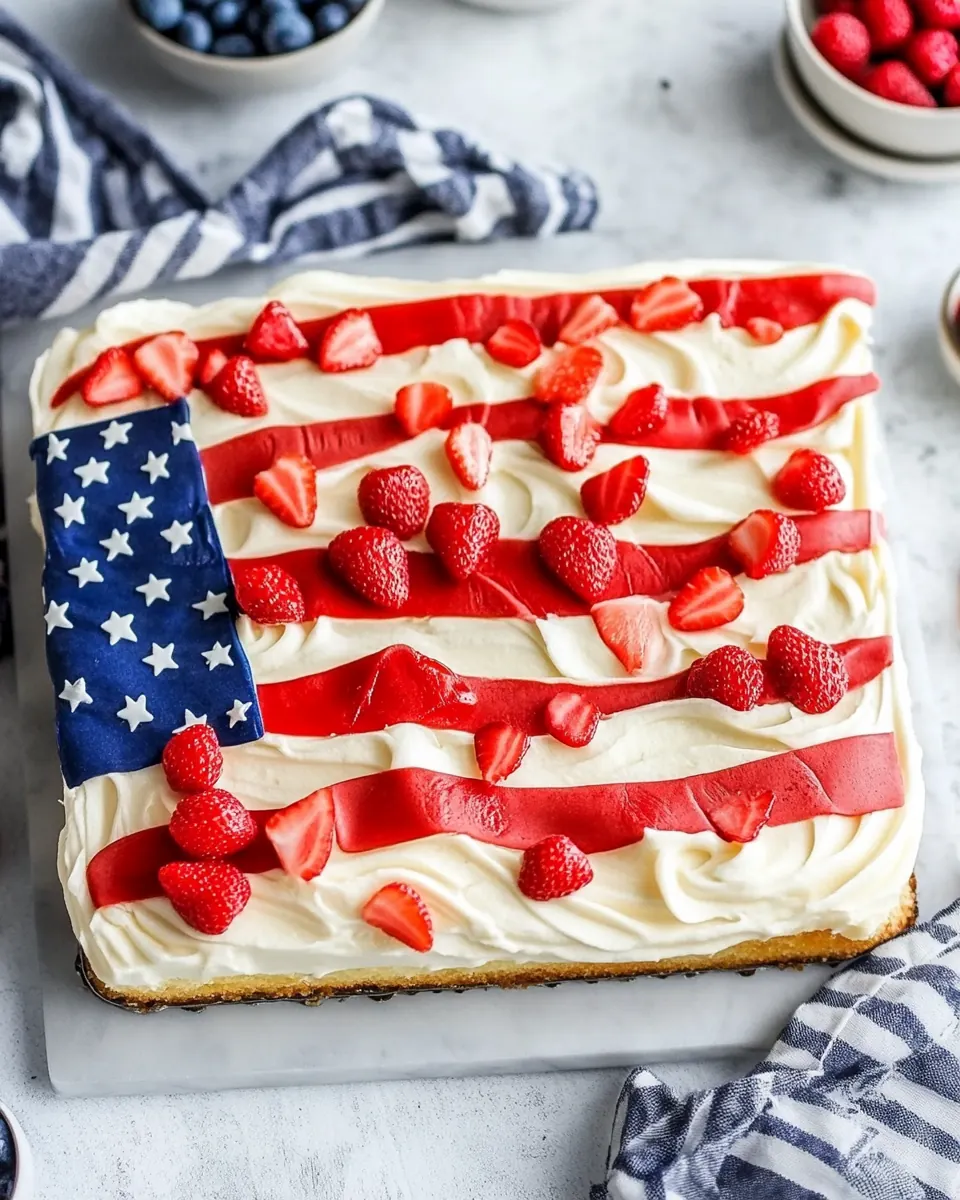
This cake is straightforward but benefits from attention to detail. I’ll walk you through each step and share sensory cues so your sheet cake comes out tender, evenly baked, and beautifully decorated with fruit. Keep your mixing speeds moderate and your ingredients at room temperature for smooth emulsification.
- Preheat the oven to 350°F. Butter and flour an 18 x 13 by 1 1/2-inch sheet pan.: As the oven warms you will notice a dry heat that promises lift and browning. Greasing and flouring the pan prevents the cake from sticking; run your finger along the sides to check for even coating. A common mistake is skipping the flour after buttering which can cause the cake to cling to the pan's surface. If you see uneven shine on the pan, add a touch more flour and tap out the excess so the cake releases cleanly after cooling.
- In a large bowl, use an electric mixer to cream the butter and sugar on high speed, until light and fluffy. On medium speed, add the eggs, 2 at a time, then add the sour cream and vanilla. Scrape down the sides and stir until smooth.: While creaming you should hear a steady whir and see the mixture transform from grainy to paler and airy; this aeration is what gives the cake lift. When adding the eggs , the batter will momentarily look broken, but it should emulsify again with continued mixing. If the batter looks curdled or watery, you probably added cold eggs ; let ingredients come to room temperature next time. Scrape the bowl well so pockets of unincorporated butter do not remain, otherwise you risk dense spots in the cake.
- In a medium bowl, sift together the flour, cornstarch, salt, and baking soda. Blend the flour mixture into the butter mixture until just combined. Pour into the prepared pan. Smooth the top with a spatula. Bake in the center of the oven for 20 to 30 minutes, until a toothpick comes out clean. Cool to room temperature.: The dry ingredients will smell faintly of grain and give a fine, dusty texture when sifted. When you fold them into the wet mix, stop as soon as you no longer see streaks of flour; over mixing activates gluten and makes the cake tough. After pouring, smooth gently so the surface is even; this helps the frosting sit flat. While baking, the kitchen fills with a warm vanilla aroma and the top should become lightly golden. A common error is opening the oven too soon which can cause the cake to sink in the middle; wait until the final minutes before testing with a toothpick. Letting the cake cool fully prevents the frosting from melting into the crumb.
- In a large bowl, use an electric mixer to combine the butter, cream cheese, sugar, and vanilla, mixing just until smooth.: As you beat, the frosting should look glossy and feel silky, with no visible specks of cream cheese . Keep the speed moderate to avoid incorporating too much air which can make piping unstable. If the frosting looks grainy, sift the powdered sugar again and beat at low speed until smooth. A frequent pitfall is using chilled cream cheese , which leaves lumps; ensure it's fully softened for an even, spreadable finish.
- Spread three-fourths of the frosting on the top of the cooled sheet cake. Outline the flag on the top of the cake with a toothpick. Fill the upper left corner with blueberries. Place 2 rows of strawberries across the top of the cake like a red stripe. Put the remaining frosting in a pastry bag fitted with a star tip and pipe two rows of white stripes below the strawberries. Alternate rows of strawberries and frosting until the flag is completed. Pipe stars on top of the blueberries.: The moment you spread frosting you will feel a creamy resistance under the spatula, and the cake should not crumble as you smooth it. Use a toothpick to mark the flag proportions so the layout stays balanced. Press the blueberries gently into the frosting so they anchor without releasing excess juice. When arranging strawberries , align slices for clean red lines, and pipe the white stripes with steady pressure to create crisp ridges. A typical mistake is overpressing fruit into the frosting which squeezes juice and softens the pattern, so handle fruit with a light touch and wipe any run off immediately.
Substitutions and Tips
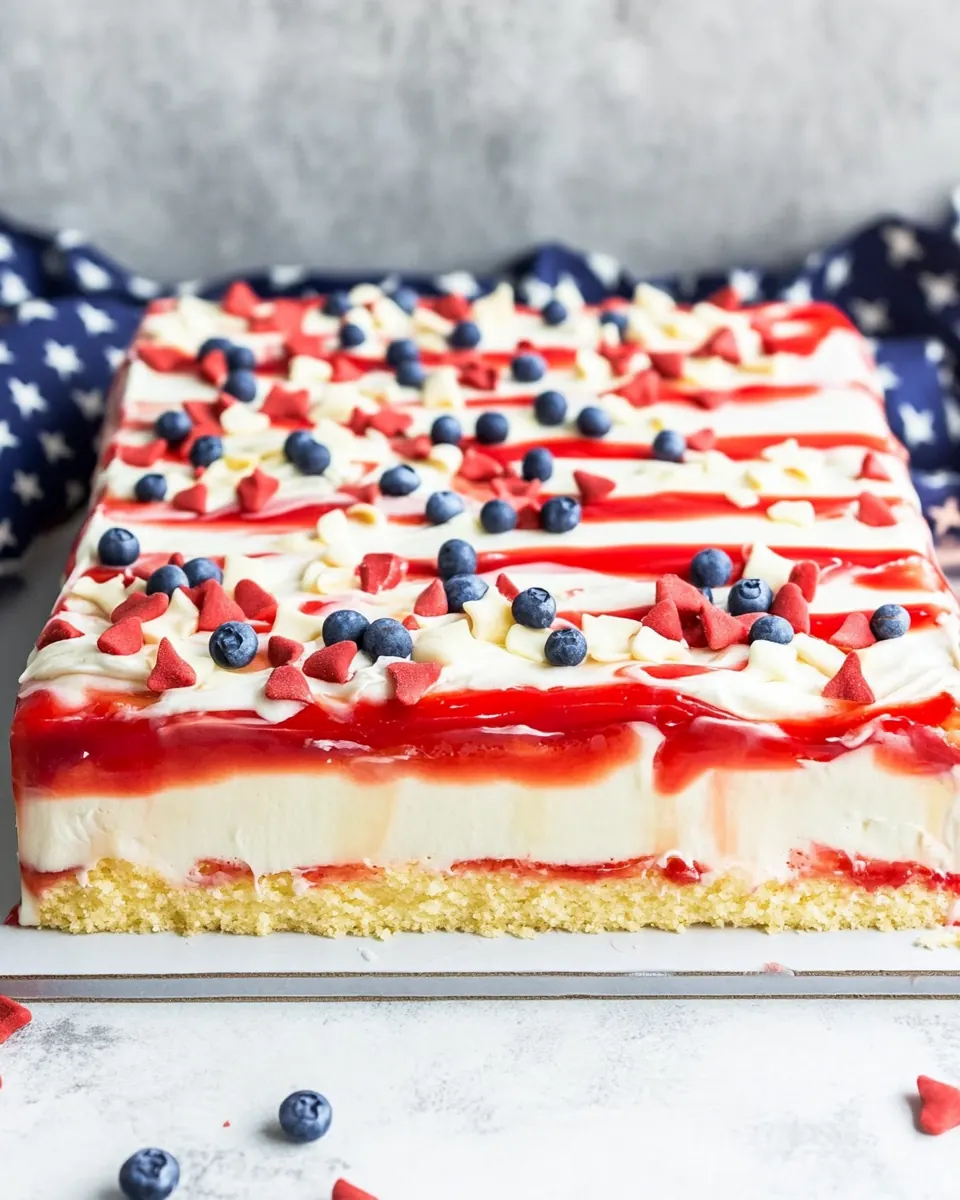
This section lists practical tips and small substitutions to help you succeed with Flag Cake. Each tip begins with a highlighted actionable phrase so you can scan quickly while baking. These expanded tips are based on the ingredients and techniques used in the recipe.
- Soften without melting: If you need to soften butter quickly, cut it into small cubes and leave at room temperature for 10 to 15 minutes rather than microwaving, to avoid an oily texture.
- Check egg temperature: If your eggs are cold, drop a few minutes in warm water in their shells to bring them closer to room temperature which helps the batter emulsify cleanly.
- Sift powdered sugar: To ensure a silky frosting, always sift the powdered sugar before beating with cream cheese and butter, which prevents grit and improves spreadability.
- Even fruit slices: Use a sharp knife to slice strawberries uniformly so the rows look neat and adhere evenly to the frosting when you press them lightly into place.
- Stabilize for travel: If you need to transport the cake, chill it for 30 minutes after decorating so the frosting firms and the fruit stays in place during transit.
- Prevent seeping: Gently blot any juicy blueberries that leak before placing them, and avoid overcrowding the fruit so excess juice does not soften the frosting.
Perfect Matches for Flag Cake
Flag Cake pairs well with light beverages and simple sides that let the cake remain the star. It is well suited to outdoor gatherings, holiday picnics, and casual celebrations where sharing is part of the fun. Below are serving suggestions, storage tips, and occasion match ups in a practical list format.
- Serve chilled or room temperature: I often chill the cake briefly so slices hold their shape, but serve at room temperature for the best flavor and texture.
- Great for summer barbecues: The fresh strawberries and blueberries make this perfect for long afternoons outdoors and pair nicely with grilled mains.
- Holiday table winner: It makes a festive centerpiece for patriotic holidays, and guests appreciate the homemade look when you slice into neat portions.
- Storage tip: Refrigerate leftovers in an airtight container for up to three days, but bring back to room temperature before serving to restore the frosting softness.
- Portioning: With 24 servings listed, cut smaller squares for large crowds, and label slices if you want to reserve a few for later in a covered container.
- Seasonal pairing: Use the freshest local strawberries and blueberries you can find for the sweetest, juiciest results, especially during summer.
FAQ
Conclusion
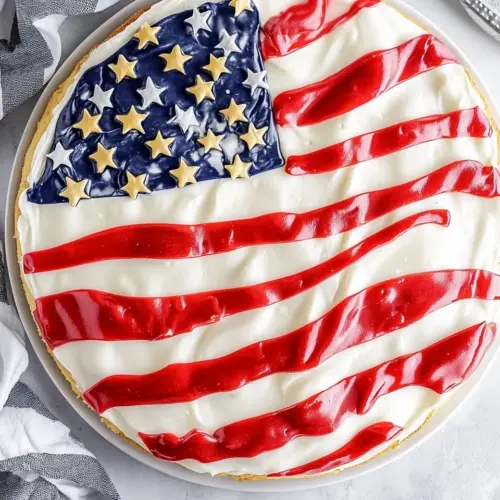
This Flag Cake stands out because it combines a reliable, tender sheet cake with a silky cream cheese frosting and the fresh brightness of seasonal fruit, creating a dessert that is both celebratory and approachable. Give it a try the next time you need a show stopping centerpiece for a picnic or holiday gathering, because its visual impact is impressive and the flavor is universally appealing. I encourage you to bake it with confidence, enjoy the decorating process, and share slices with friends and family for a memorable sweet moment.
Flag Cake
Equipment
- Electric Mixer
- 18 x 13 by 1 1/2 inch sheet pan
- Spatula
- Pastry bag with star tip
Ingredients
- 1 8 tablespoon s (2 1/4 sticks) unsalted butter, at room temperature Soften to room temperature to ensure easy creaming and even incorporation into batters; provides richness, moisture, and tender crumb to the cake. Contributes to structure by trapping air when creamed with sugar and helps dissolve flavorings for a smooth batter.
- 3 cups granulated white sugar Sweeten the batter while aiding in aeration when creamed with butter; balances flavors and promotes browning during baking. Granulated sugar also influences texture by drawing moisture and creating a fine crumb in the finished cake.
- 6 extra large eggs, at room temperature Bring to room temperature to create a stable emulsion with fats and sugar; add moisture, structure, and leavening support through steam during baking. Eggs also contribute to richness, color, and help bind dry ingredients together for a cohesive crumb.
- 1 cup sour cream, at room temperature Remain at room temperature to blend smoothly into the batter and add tangy moisture that tenderizes the crumb; helps balance sweetness and enrich flavor. Sour cream contributes to a moist texture and acidity that can react with baking soda for lift.
- 1 1/2 teaspoons vanilla extract Provide aromatic sweetness and enhance overall flavor profile; add depth and a familiar vanilla note throughout the cake. Use at room temperature to disperse evenly and complement the dairy and egg flavors.
- 3 cups all purpose flour Supply the primary dry structure and bulk for the cake, forming gluten when mixed with liquids to create the crumb. All-purpose flour balances tenderness and strength, yielding a sturdy yet tender cake that supports frostings and fillings.
- 1/3 cup cornstarch Lighten the texture by reducing gluten formation when combined with flour; contribute to a finer, more delicate crumb. Cornstarch also absorbs moisture and helps stabilize the cake structure for a softer mouthfeel.
- 1 teaspoon kosher salt Season the batter lightly to enhance and balance sweetness while strengthening gluten structure slightly; prevent flat flavor. Kosher salt also intensifies other flavors and can affect yeast or chemical leavening reactions subtly.
- 1 teaspoon baking soda React with acidic ingredients to produce carbon dioxide for leavening, helping the cake rise; ensure even distribution in the batter for uniform lift. Baking soda also helps neutralize excess acidity from sour cream, promoting proper texture and color.
- 2 cups (4 sticks) unsalted butter, at room temperature Soften to room temperature for smooth creaming and easy incorporation into frostings; provide rich, stable fat content for buttercream structure. Extra butter in the frosting creates a spreadable consistency and contributes to flavor richness.
- Three 8-ounce packages cream cheese, at room temperature Soften at room temperature to blend smoothly into frosting, providing tangy richness and creamy texture; stabilize and thicken the cream cheese layer. Multiple packages ensure enough volume and body for a dense, flavorful cream cheese frosting.
- 1 pound powdered sugar, sifted Sift to remove lumps for a silky, smooth frosting texture; sweeten and stabilize the cream cheese mixture while providing structure. Powdered sugar dissolves readily, giving consistent sweetness and contributing to the frosting's firmness.
- 1 1/2 teaspoons vanilla extract Provide aromatic vanilla flavor to the frosting and help round out sweetness; add warmth and complexity to the cream cheese mixture. Using vanilla at room temperature blends evenly and enhances the overall taste profile of the icing.
- 2 1/2 cups blueberries Add fresh fruity flavor, natural sweetness, and vibrant color as a decorative topping or filling; contribute slight tartness and juiciness to balance rich frosting. Blueberries also offer visual contrast and a burst of acidity that complements cream cheese.
- 3 cups sliced strawberries Provide bright, sweet-tart flavor and striking color for decoration or layering; contribute texture and freshness to the final presentation. Sliced strawberries pair with cream cheese frosting to create appealing visuals and a balanced fruitiness.
Instructions
- Preheat the oven to 350°F. Butter and flour an 18 x 13 by 1 1/2-inch sheet pan.: As the oven warms you will notice a dry heat that promises lift and browning. Greasing and flouring the pan prevents the cake from sticking; run your finger along the sides to check for even coating. A common mistake is skipping the flour after buttering which can cause the cake to cling to the pan's surface. If you see uneven shine on the pan, add a touch more flour and tap out the excess so the cake releases cleanly after cooling.
- In a large bowl, use an electric mixer to cream the butter and sugar on high speed, until light and fluffy. On medium speed, add the eggs, 2 at a time, then add the sour cream and vanilla. Scrape down the sides and stir until smooth.: While creaming you should hear a steady whir and see the mixture transform from grainy to paler and airy; this aeration is what gives the cake lift. When adding the eggs , the batter will momentarily look broken, but it should emulsify again with continued mixing. If the batter looks curdled or watery, you probably added cold eggs ; let ingredients come to room temperature next time. Scrape the bowl well so pockets of unincorporated butter do not remain, otherwise you risk dense spots in the cake.
- In a medium bowl, sift together the flour, cornstarch, salt, and baking soda. Blend the flour mixture into the butter mixture until just combined. Pour into the prepared pan. Smooth the top with a spatula. Bake in the center of the oven for 20 to 30 minutes, until a toothpick comes out clean. Cool to room temperature.: The dry ingredients will smell faintly of grain and give a fine, dusty texture when sifted. When you fold them into the wet mix, stop as soon as you no longer see streaks of flour; over mixing activates gluten and makes the cake tough. After pouring, smooth gently so the surface is even; this helps the frosting sit flat. While baking, the kitchen fills with a warm vanilla aroma and the top should become lightly golden. A common error is opening the oven too soon which can cause the cake to sink in the middle; wait until the final minutes before testing with a toothpick. Letting the cake cool fully prevents the frosting from melting into the crumb.
- In a large bowl, use an electric mixer to combine the butter, cream cheese, sugar, and vanilla, mixing just until smooth.: As you beat, the frosting should look glossy and feel silky, with no visible specks of cream cheese . Keep the speed moderate to avoid incorporating too much air which can make piping unstable. If the frosting looks grainy, sift the powdered sugar again and beat at low speed until smooth. A frequent pitfall is using chilled cream cheese , which leaves lumps; ensure it's fully softened for an even, spreadable finish.
- Spread three-fourths of the frosting on the top of the cooled sheet cake. Outline the flag on the top of the cake with a toothpick. Fill the upper left corner with blueberries. Place 2 rows of strawberries across the top of the cake like a red stripe. Put the remaining frosting in a pastry bag fitted with a star tip and pipe two rows of white stripes below the strawberries. Alternate rows of strawberries and frosting until the flag is completed. Pipe stars on top of the blueberries.: The moment you spread frosting you will feel a creamy resistance under the spatula, and the cake should not crumble as you smooth it. Use a toothpick to mark the flag proportions so the layout stays balanced. Press the blueberries gently into the frosting so they anchor without releasing excess juice. When arranging strawberries , align slices for clean red lines, and pipe the white stripes with steady pressure to create crisp ridges. A typical mistake is overpressing fruit into the frosting which squeezes juice and softens the pattern, so handle fruit with a light touch and wipe any run off immediately.
Notes
- Soften without melting: If you need to soften butter quickly, cut it into small cubes and leave at room temperature for 10 to 15 minutes rather than microwaving, to avoid an oily texture.
- Check egg temperature: If your eggs are cold, drop a few minutes in warm water in their shells to bring them closer to room temperature which helps the batter emulsify cleanly.
- Sift powdered sugar: To ensure a silky frosting, always sift the powdered sugar before beating with cream cheese and butter, which prevents grit and improves spreadability.
- Even fruit slices: Use a sharp knife to slice strawberries uniformly so the rows look neat and adhere evenly to the frosting when you press them lightly into place.
- Stabilize for travel: If you need to transport the cake, chill it for 30 minutes after decorating so the frosting firms and the fruit stays in place during transit.
- Prevent seeping: Gently blot any juicy blueberries that leak before placing them, and avoid overcrowding the fruit so excess juice does not soften the frosting.