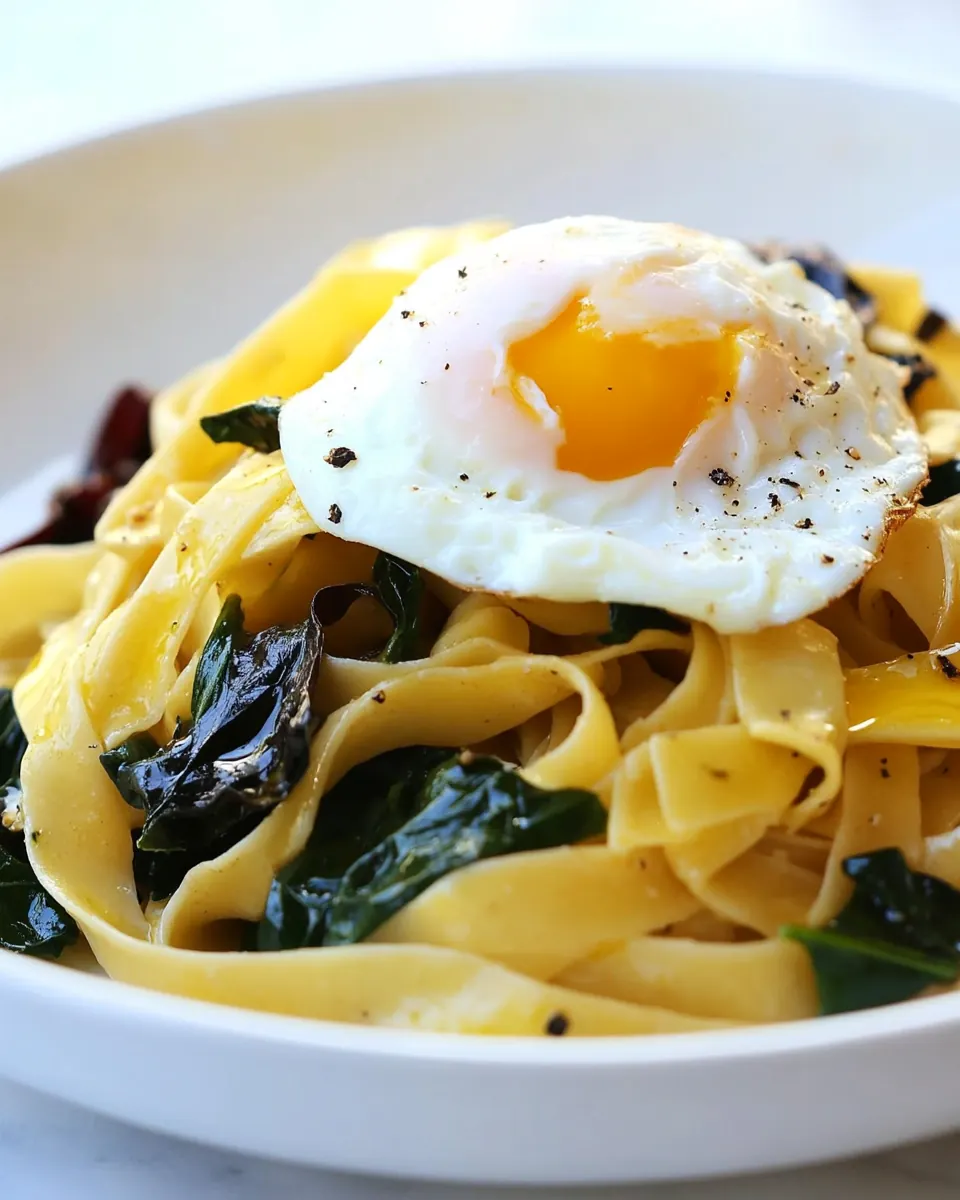
Fettuccini with Winter Greens and Poached Egg
Fettuccini with Winter Greens and Poached Egg arrived in my kitchen on a gray afternoon when I needed something bright, honest, and comforting without fuss. I remember standing at the stove with a small pot of boiling water and a bunch of leafy winter greens, thinking about how simple ingredients can feel luxurious when treated with care. I wanted that warm, silky bite of pasta, the green lift from the vegetables, and a runny egg yolk to tie everything together.
That afternoon I peeled and sliced a small red onion, tossed a handful of winter greens into a pan, and poached two eggs while the egg fettuccini cooked. The kitchen filled with gentle onion sweetness and the herb fragrance of thyme, and I knew this was a meal I would reach for on busy nights and quiet weekends alike. The result is humble yet elegant, an easy way to feel nourished with pantry staples and a few fresh touches.
Recipe Snapshot
20 mins
5 mins
15 mins
Easy
450 kcal
Italian
Keto, Paleo
Dinner
Medium pot, Large deep skillet, Slotted spoon
Why You Need This Fettuccini with Winter Greens and Poached Egg
Comfort with restraint
I love how Fettuccini with Winter Greens and Poached Egg gives you comfort without heaviness. The egg fettuccini delivers a silky, substantial mouthfeel while the greens keep the plate bright. The contrast between a warm, creamy yolk and the slightly crisped onion is what keeps me coming back.
Fast but sophisticated
This dish works for nights when time is short, and I still want something that feels intentionally made. You get pasta cooked to the right tension, delicate poached eggs, and greens that are vibrant, not soggy. It looks like effort, but it comes together in a flash.
Flexible and forgiving
I appreciate recipes that allow small swaps, and this one is forgiving. Use whatever tender winter greens you have, choose a coarser or finer pasta, and adjust the yolk texture to your mood. The technique rewards attention but forgives small missteps.
Textural interplay
The dish balances soft strands of fettuccini, silky yolk, tender wilted leaves, and the sweet bits of caramelized red onion. Each forkful feels composed and layered, which is rare for a recipe this simple.
Minimalist ingredient list
I often cook with what I have, and this recipe proves that a handful of thoughtful ingredients can create a memorable meal. A little olive oil, a clove of garlic, fresh thyme, and a sprinkling of Parmesan go a long way. I find myself recommending it when people ask for easy weeknight inspiration.
Fettuccini with Winter Greens and Poached Egg Ingredients
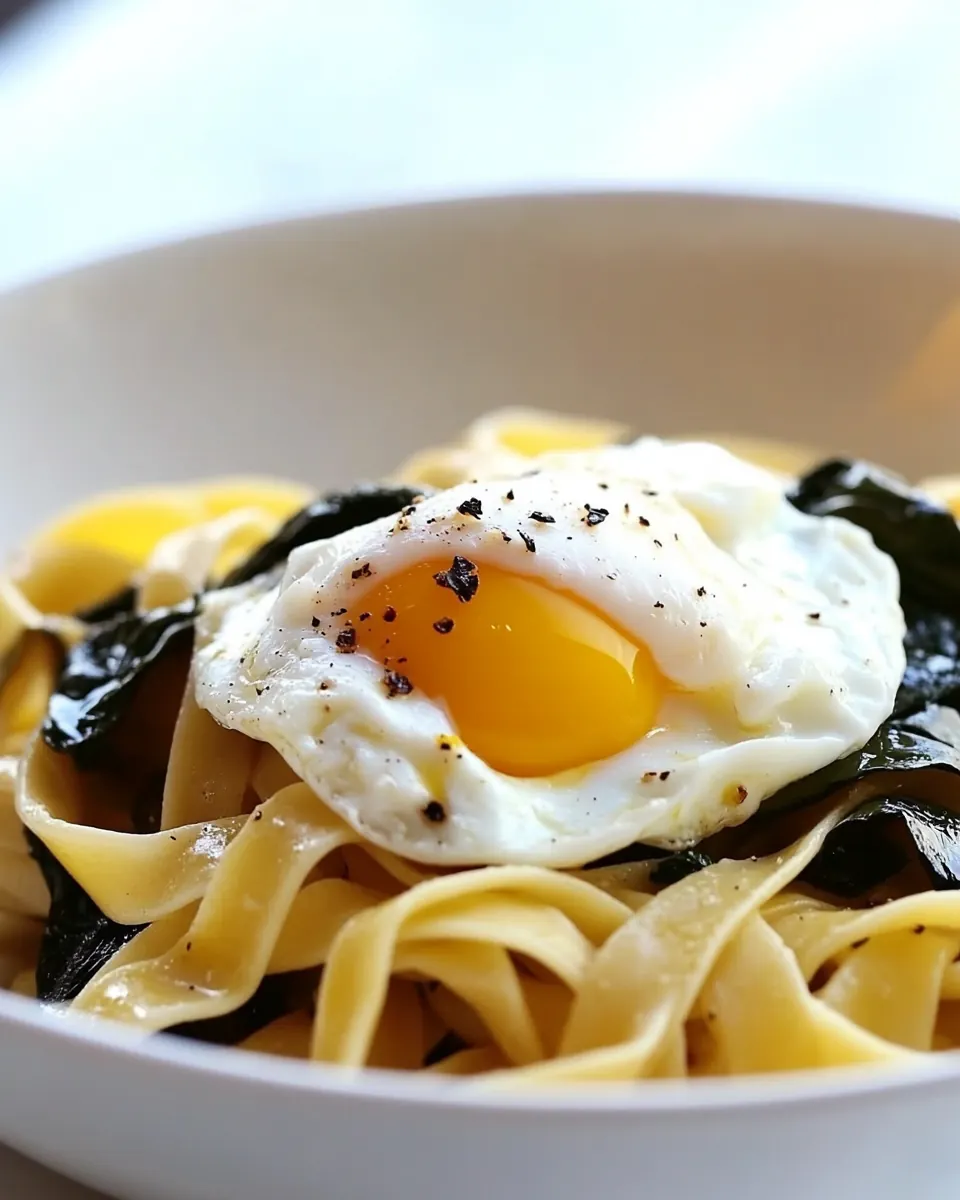
These ingredients are built around a simple philosophy: a starchy base, fragrant aromatics, bright greens, and a silky egg to finish. The egg fettuccini is the backbone, holding sauce and water, while the winter greens and red onion provide contrast in flavor and texture. A small amount of olive oil, garlic, and thyme add aromatic depth and cohesion.
- 4 ounces egg fettuccini: Cook briefly to tender texture and provide the pasta base that carries the sauce and toppings; use high-quality egg fettuccini for richness and silkiness in the final dish.
- 1/2 tbsp olive oil: Dress the pan to prevent sticking and add a fruity, aromatic backbone; heat the olive oil gently before adding aromatics to bloom their flavors.
- 1/2 small red onion, sliced thin: Slice thin to release sweetness and gentle pungency that complements the greens and pasta; sweat the red onion until translucent to build a mellow savory base.
- 1/4 teaspoon kosher salt: Season lightly to enhance and balance flavors throughout the dish; sprinkle the kosher salt into the cooking water and the sauté to draw out moisture and deepen taste.
- 1 clove garlic, chopped: Mince or chop finely to infuse a sharp, savory note that brightens the greens and sauce; add the garlic toward the end of sautéing to avoid bitterness and preserve aroma.
- 1 sprig fresh thyme, leaves stripped from stem: Strip leaves and scatter to contribute herbaceous, slightly floral notes; cook briefly with the aromatics so the thyme releases essential oils without overpowering the dish.
- 4 ounces chopped winter greens, such as chard, escarole, spinach or kale: Chop coarsely or finely to provide the primary vegetable component offering texture, color, and a slightly bitter green note; wilt the winter greens into the sauté for a tender, flavorful addition.
- 2 large eggs: Poach or cook gently to create a silky, runny yolk that enriches the pasta when broken; time the eggs so they finish just as the pasta and greens are ready.
- fresh shaved Parmesan, for serving (optional): Shave sparingly to finish with nutty, salty umami that elevates the dish; sprinkle fresh shaved Parmesan at service for a bright, savory contrast.
Step by Step Instructions for Fettuccini with Winter Greens and Poached Egg
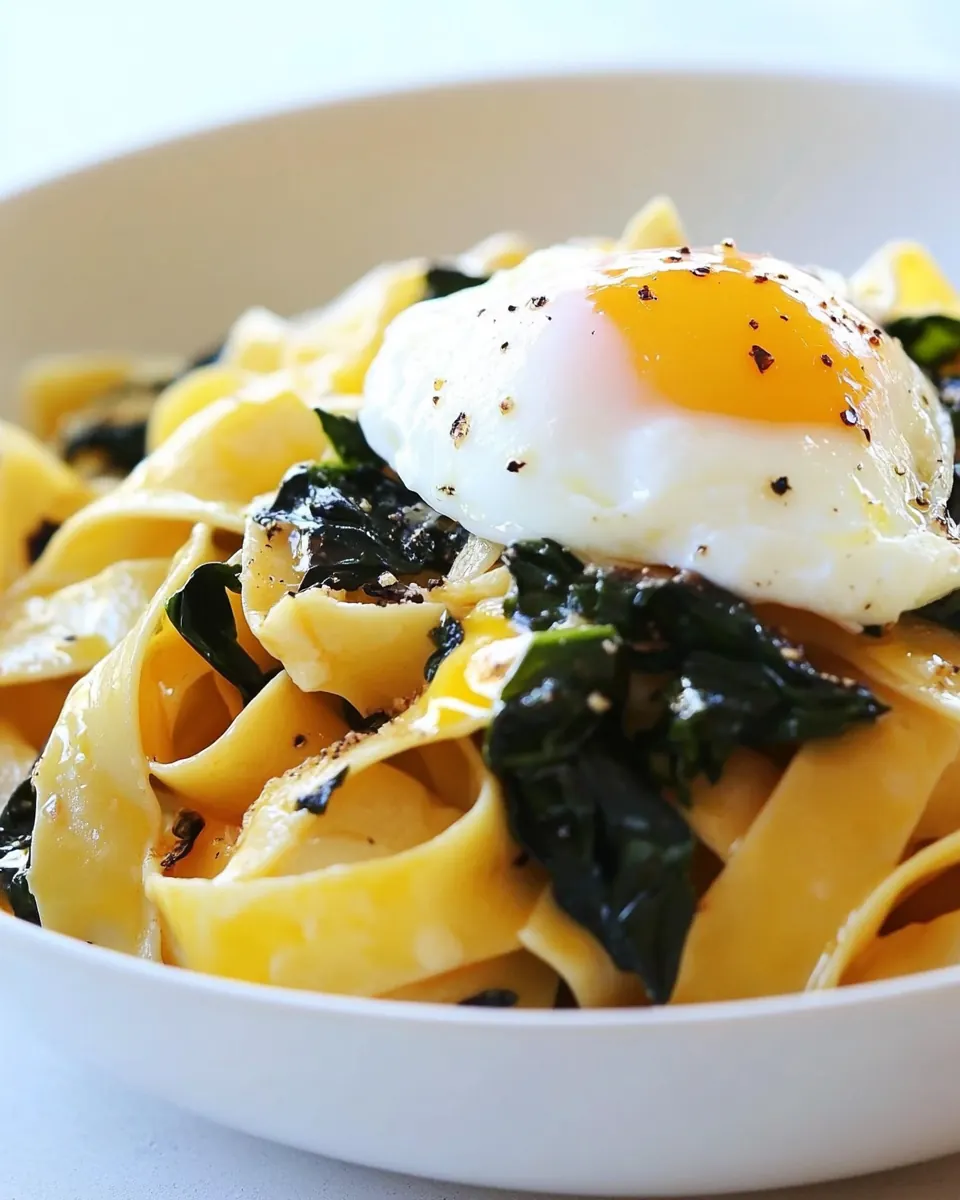
These directions guide you through a few parallel processes, so setting up your mise en place is helpful. I like to have a bowl for cracked eggs, a cup ready to reserve pasta water, and my herbs stripped before I start. Work in small, deliberate motions and taste as you go to tune the seasoning.
- Bring a medium pot of salted water to a boil. Add the pasta and cook according to package directions for al dente. Drain, reserving 1 cup of the cooking water.: The aroma of the water as it comes to a rolling boil should be clean and slightly metallic from the salt. This aggressive heat helps the pasta cook evenly and prevents sticking. One mistake is under-salting the water, which results in bland noodles, so be generous and stir the pot once the fettuccini is added to avoid clumping.
- Meanwhile, to poach the eggs fill a large deep skillet with about 1 1/2 to 2 inches of water and bring to a boil, then reduce to a simmer. Crack the eggs into individual bowls. Gently slide eggs one at a time into the simmering water. Using a spoon, gently nudge the egg whites toward center of yolk. Cook for 2-3 minutes for a semi-soft yolk or 3-4 minutes for a firmer-set yolk. With a slotted spoon or spatula, remove eggs one at a time and drain on paper towels.: You will hear the pasta whisper as it softens, and the texture should be tender yet with a slight bite at the center. Reserve some of the cooking liquid before draining, which will be savory and slightly starchy, perfect for loosening the sauce. A common error is overcooking, which makes the ribbons limp and unable to hold sauce, so check a strand early.
- While the pasta and eggs cook, in a large pan over medium-high heat, add the oil, red onion, season with 1/8 tsp salt, and cook, stirring occasionally, until starting to caramelize, about 3 minutes. Stir in the garlic and thyme and cook over medium-high heat until fragrant, about 1 minute.: The reserved cup will have a silky mouthfeel and a touch of saltiness. Use it to bring the greens and pasta together later, as it helps the oil and starch bind. Avoid pouring all the water away because you will need that liquid to finish the dish with the right consistency.
- Add the greens and 3/4 cup of the reserved cooking water. Bring to a boil, reduce to a simmer, and cook until the greens turn bright green and are just tender, 2 to 3 minutes. Stir in the pasta and cook until heated through, 1 minute. Remove from the heat and season to taste with salt and pepper.: The water will steam and sigh as it cools from a boil to a gentle simmer. This calm surface keeps the eggs intact, and the heat must be steady. If the water is too vigorous the whites will break up and become feathery rather than neat, so keep it just below boiling.
- Transfer the pasta to two individual bowls, about 1 1/2 cups each. Top with the egg and serve with grated cheese and fresh cracked pepper, if desired.: By cracking each egg into its own bowl you can slide them gently into the simmering water without breaking the yolks. The yolk should sit rounded and glossy in the bowl before transfer. A typical slip is cracking directly over the water which risks shells or bursting yolks, so use bowls for control.
- Gently slide eggs one at a time into the simmering water: As each egg meets the water you will hear a soft, almost inaudible sizzle. Use a steady wrist to lower them close to the surface, which keeps the whites from dispersing. If the whites spread too widely, it often means the water was too turbulent or the egg was too cold, so let eggs come to room temperature a few minutes if possible.
- Using a spoon, gently nudge the egg whites toward center of yolk: The tactile motion of coaxing the whites inward helps them set around the yolk in a compact shape. You will feel a slight resistance as the whites firm. Rushing this step can create ragged edges, so be patient and use gentle circular movements to encourage a tidy poach.
- Cook for 2 to 3 minutes for a semi-soft yolk or 3 to 4 minutes for a firmer-set yolk: The cooking window is when the yolk transforms from liquid to syrupy to almost set. For a runnier center aim for the shorter time and keep watch, because a minute can change the texture significantly. Overcooking is the usual issue here, which leads to chalky yolks, so test one egg early if you are unsure.
- With a slotted spoon or spatula, remove eggs one at a time and drain on paper towels: Lifting the eggs you should see glossy whites wrapped around a plump yolk, and the spoon will drip gently. Draining briefly on paper towels removes excess water that would otherwise dilute the pasta sauce when plated. Leaving them in the water too long can continue cooking the yolk, so transfer promptly.
- While the pasta and eggs cook, in a large pan over medium-high heat, add the oil, red onion, season with 1/8 tsp salt, and cook, stirring occasionally, until starting to caramelize, about 3 minutes: The pan should give off a soft sizzling and the onion will turn translucent and then take on golden edges, offering sweet, toasted aromas. This forms a flavor base that complements the greens and egg . If you crowd the pan the onions will steam instead of caramelize, so keep heat steady and give them space to develop color.
- Stir in the garlic and thyme and cook over medium-high heat until fragrant, about 1 minute: The moment you add the chopped garlic the scent will become floral and lively, and the tiny thyme leaves will release an herbaceous whisper. This brief cook time protects the garlic from burning, which would create bitterness. Avoid leaving it unattended because garlic can shift from fragrant to bitter very quickly.
- Add the greens and 3/4 cup of the reserved cooking water: When the winter greens meet the pan and warm water they will immediately change color, becoming vivid and glossy. The reserved water helps steam them gently and creates an emulsion with the oil and starch. Adding too much water will make the mixture soupy, so start with the measured amount and add more only if needed.
- Bring to a boil, reduce to a simmer, and cook until the greens turn bright green and are just tender, 2 to 3 minutes: You will see obvious visual cues as the leaves wilt and the edges soften. Cooked properly the greens remain vivid and have a slight chew that contrasts the soft pasta . Overcooking is easy here and yields limp, lifeless greens, so watch the color and test a leaf for tenderness.
- Stir in the pasta and cook until heated through, 1 minute: The pasta will pick up the pan flavors and the reserved cooking water will help form a light coating around the ribbons. The sound is a gentle bubbling and the aroma becomes unified. Avoid long cooking here as it will over soften the noodles and dilute the texture.
- Remove from the heat and season to taste with salt and pepper: Once off the flame the flavors sit and harmonize, and a final seasoning adjustment is often all that is needed. Taste before adding more salt because the reserved pasta water and optional Parmesan may already provide sufficient seasoning. Oversalting at this stage is the common pitfall.
- Transfer the pasta to two individual bowls, about 1 1/2 cups each: Serving in warmed bowls helps maintain temperature and keeps the dish inviting. The visual appeal of twirled ribbons and bright greens makes it feel composed. Packing too much into one bowl can cool the dish faster, so portion evenly for the best experience.
- Top with the egg and serve with grated cheese and fresh cracked pepper, if desired: When the glossy poached egg meets the warm pasta the yolk will break and create a silky sauce that coats each bite. A dusting of grated Parmesan and a twist of cracked pepper adds savory lift and aroma. Let guests break their own yolks if you want interactive plating, and avoid heavy garnishes that mask the delicate flavors.
Recipe Tips about Fettuccini with Winter Greens and Poached Egg
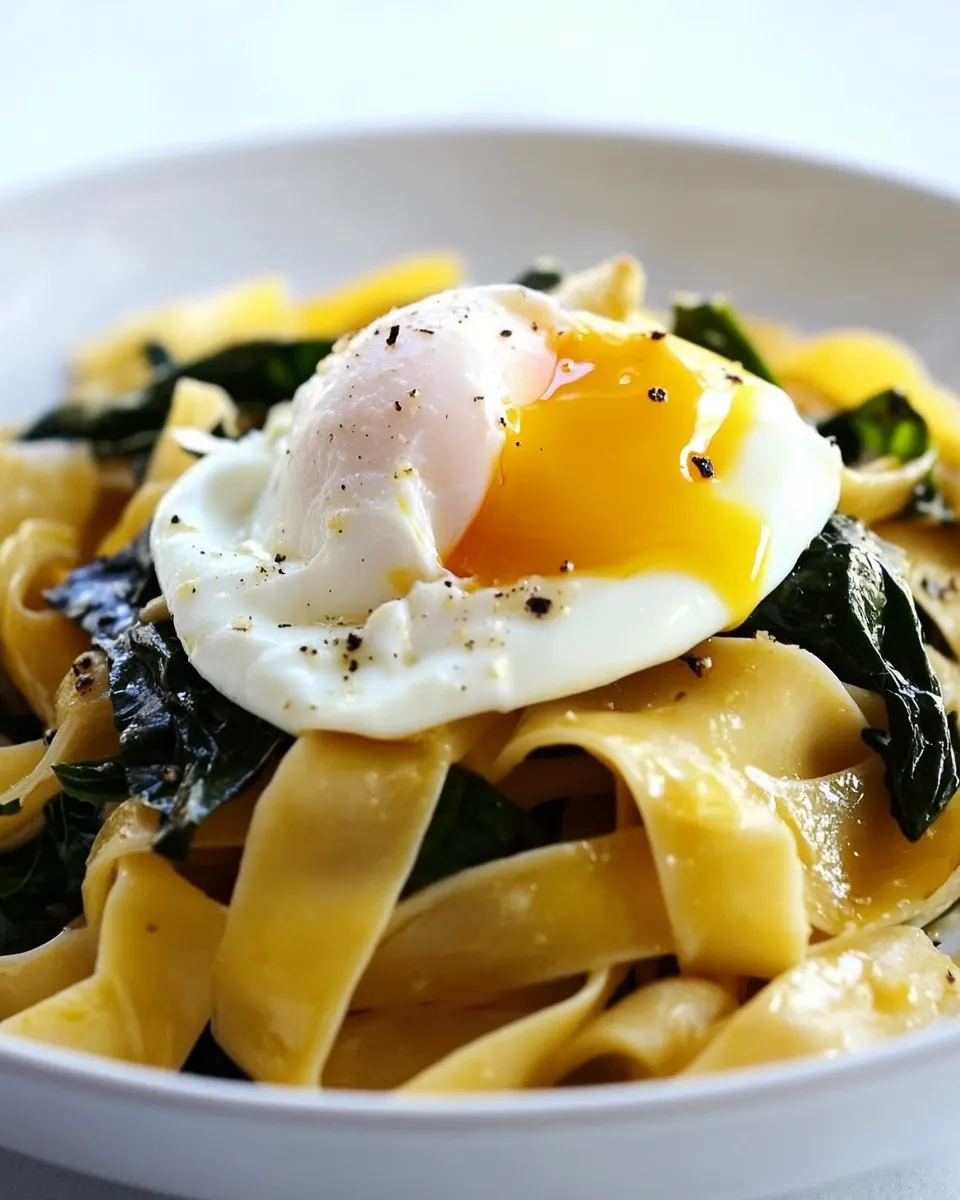
This collection of tips expands on the small techniques that make a big difference. I often return to a few habits when I make Fettuccini with Winter Greens and Poached Egg, and the tips below reflect those practical choices that improve texture, seasoning, and timing.
- Warm your eggs briefly before poaching if they come straight from the fridge; letting them sit at room temperature for 10 minutes helps the whites set more predictably when they hit the simmering water.
- Salt the pasta water well so the noodles are seasoned internally; it should taste like a faint sea water when you sip a drop, this makes the finished dish more balanced.
- Slice the onion thinly to ensure quick caramelization and even distribution; thicker slices will take longer and can create uneven sweet pockets in the pan.
- Use the reserved pasta water incrementally when tossing the pasta with the greens; add a few tablespoons at a time until you reach a silky, clingy texture rather than a watery sauce.
- Keep the poaching water at a gentle simmer by adjusting the heat under the pan, this avoids broken whites and gives you precise control over yolk doneness.
- Shave Parmesan fresh at the end for the best melt and flavor; pre-grated cheese will not marry as well with the warm strands and may feel less fresh.
Best Served With
This dish is versatile in how you present it and when you serve it. It shines as a cozy solo dinner, an intimate weekend lunch, or a satisfying plate after a long day. The following suggestions focus on complementary sides, occasions, and storage tips to keep the meal practical and enjoyable.
- Light green salad for contrast Serve a crisp side salad of lightly dressed greens to provide a crunchy counterpoint to the soft fettuccini and runny egg.
- Crusty bread for sopping A wedge of warm crusty bread is ideal for catching any leftover yolk and sauce, making every bite count.
- Weeknight dinner The recipe is perfect for an easy weeknight dinner when you want something fast but composed, especially during colder months when winter greens are at their peak.
- Brunch option Featuring the poached egg this makes a lovely brunch centerpiece, paired with fresh fruit and a light coffee or tea.
- Make ahead and store Cook the components separately if you need to prep ahead; keep the pasta and greens refrigerated and reheat gently in a skillet with a splash of reserved cooking water, then poach eggs to order.
- Seasonal pairing Embrace the winter season by using heartier greens like chard or escarole; they stand up to the brief cooking and provide a satisfying texture.
FAQ
Conclusion
What makes this recipe special is its ability to feel both elegant and effortless at the same time, combining silky fettuccini, bright winter greens, and a tender poached egg. You should try it because it demonstrates how a few quality ingredients, treated with simple techniques, can create a deeply satisfying meal without hours in the kitchen. I hope you give it a go on a weekday evening when you want something quick but thoughtful, and enjoy how the yolk transforms the whole dish into a luxurious, comforting plate.
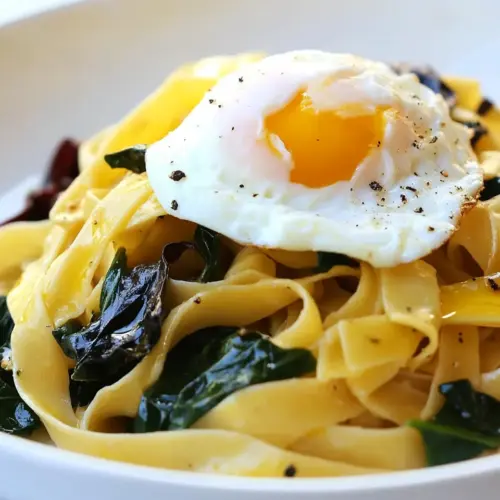
Fettuccini with Winter Greens and Poached Egg
Equipment
- Medium Pot
- Large deep skillet
- Slotted Spoon
Ingredients
- 4 ounces egg fettuccini Cook briefly to tender texture and provide the pasta base that carries the sauce and toppings; use high-quality egg fettuccini for richness and silkiness in the final dish.
- 1/2 tbsp olive oil Dress the pan to prevent sticking and add a fruity, aromatic backbone; heat the olive oil gently before adding aromatics to bloom their flavors.
- 1/2 small red onion, sliced thin Slice thin to release sweetness and gentle pungency that complements the greens and pasta; sweat the red onion until translucent to build a mellow savory base.
- 1/4 teaspoon kosher salt Season lightly to enhance and balance flavors throughout the dish; sprinkle the kosher salt into the cooking water and the sauté to draw out moisture and deepen taste.
- 1 clove garlic, chopped Mince or chop finely to infuse a sharp, savory note that brightens the greens and sauce; add the garlic toward the end of sautéing to avoid bitterness and preserve aroma.
- 1 sprig fresh thyme, leaves stripped from stem Strip leaves and scatter to contribute herbaceous, slightly floral notes; cook briefly with the aromatics so the thyme releases essential oils without overpowering the dish.
- 4 ounces chopped winter greens, such as chard, escarole, spinach or kale Chop coarsely or finely to provide the primary vegetable component offering texture, color, and a slightly bitter green note; wilt the winter greens into the sauté for a tender, flavorful addition.
- 2 large eggs Poach or cook gently to create a silky, runny yolk that enriches the pasta when broken; time the eggs so they finish just as the pasta and greens are ready.
- fresh shaved Parmesan, optional for serving Shave sparingly to finish with nutty, salty umami that elevates the dish; sprinkle fresh shaved Parmesan at service for a bright, savory contrast.
Instructions
- Bring a medium pot of salted water to a boil. Add the pasta and cook according to package directions for al dente. Drain, reserving 1 cup of the cooking water.: The aroma of the water as it comes to a rolling boil should be clean and slightly metallic from the salt. This aggressive heat helps the pasta cook evenly and prevents sticking. One mistake is under-salting the water, which results in bland noodles, so be generous and stir the pot once the fettuccini is added to avoid clumping.
- Meanwhile, to poach the eggs fill a large deep skillet with about 1 1/2 to 2 inches of water and bring to a boil, then reduce to a simmer. Crack the eggs into individual bowls. Gently slide eggs one at a time into the simmering water. Using a spoon, gently nudge the egg whites toward center of yolk. Cook for 2-3 minutes for a semi-soft yolk or 3-4 minutes for a firmer-set yolk. With a slotted spoon or spatula, remove eggs one at a time and drain on paper towels.: You will hear the pasta whisper as it softens, and the texture should be tender yet with a slight bite at the center. Reserve some of the cooking liquid before draining, which will be savory and slightly starchy, perfect for loosening the sauce. A common error is overcooking, which makes the ribbons limp and unable to hold sauce, so check a strand early.
- While the pasta and eggs cook, in a large pan over medium-high heat, add the oil, red onion, season with 1/8 tsp salt, and cook, stirring occasionally, until starting to caramelize, about 3 minutes. Stir in the garlic and thyme and cook over medium-high heat until fragrant, about 1 minute.: The reserved cup will have a silky mouthfeel and a touch of saltiness. Use it to bring the greens and pasta together later, as it helps the oil and starch bind. Avoid pouring all the water away because you will need that liquid to finish the dish with the right consistency.
- Add the greens and 3/4 cup of the reserved cooking water. Bring to a boil, reduce to a simmer, and cook until the greens turn bright green and are just tender, 2 to 3 minutes. Stir in the pasta and cook until heated through, 1 minute. Remove from the heat and season to taste with salt and pepper.: The water will steam and sigh as it cools from a boil to a gentle simmer. This calm surface keeps the eggs intact, and the heat must be steady. If the water is too vigorous the whites will break up and become feathery rather than neat, so keep it just below boiling.
- Transfer the pasta to two individual bowls, about 1 1/2 cups each. Top with the egg and serve with grated cheese and fresh cracked pepper, if desired.: By cracking each egg into its own bowl you can slide them gently into the simmering water without breaking the yolks. The yolk should sit rounded and glossy in the bowl before transfer. A typical slip is cracking directly over the water which risks shells or bursting yolks, so use bowls for control.
- Gently slide eggs one at a time into the simmering water: As each egg meets the water you will hear a soft, almost inaudible sizzle. Use a steady wrist to lower them close to the surface, which keeps the whites from dispersing. If the whites spread too widely, it often means the water was too turbulent or the egg was too cold, so let eggs come to room temperature a few minutes if possible.
- Using a spoon, gently nudge the egg whites toward center of yolk: The tactile motion of coaxing the whites inward helps them set around the yolk in a compact shape. You will feel a slight resistance as the whites firm. Rushing this step can create ragged edges, so be patient and use gentle circular movements to encourage a tidy poach.
- Cook for 2 to 3 minutes for a semi-soft yolk or 3 to 4 minutes for a firmer-set yolk: The cooking window is when the yolk transforms from liquid to syrupy to almost set. For a runnier center aim for the shorter time and keep watch, because a minute can change the texture significantly. Overcooking is the usual issue here, which leads to chalky yolks, so test one egg early if you are unsure.
- With a slotted spoon or spatula, remove eggs one at a time and drain on paper towels: Lifting the eggs you should see glossy whites wrapped around a plump yolk, and the spoon will drip gently. Draining briefly on paper towels removes excess water that would otherwise dilute the pasta sauce when plated. Leaving them in the water too long can continue cooking the yolk, so transfer promptly.
- While the pasta and eggs cook, in a large pan over medium-high heat, add the oil, red onion, season with 1/8 tsp salt, and cook, stirring occasionally, until starting to caramelize, about 3 minutes: The pan should give off a soft sizzling and the onion will turn translucent and then take on golden edges, offering sweet, toasted aromas. This forms a flavor base that complements the greens and egg . If you crowd the pan the onions will steam instead of caramelize, so keep heat steady and give them space to develop color.
- Stir in the garlic and thyme and cook over medium-high heat until fragrant, about 1 minute: The moment you add the chopped garlic the scent will become floral and lively, and the tiny thyme leaves will release an herbaceous whisper. This brief cook time protects the garlic from burning, which would create bitterness. Avoid leaving it unattended because garlic can shift from fragrant to bitter very quickly.
- Add the greens and 3/4 cup of the reserved cooking water: When the winter greens meet the pan and warm water they will immediately change color, becoming vivid and glossy. The reserved water helps steam them gently and creates an emulsion with the oil and starch. Adding too much water will make the mixture soupy, so start with the measured amount and add more only if needed.
- Bring to a boil, reduce to a simmer, and cook until the greens turn bright green and are just tender, 2 to 3 minutes: You will see obvious visual cues as the leaves wilt and the edges soften. Cooked properly the greens remain vivid and have a slight chew that contrasts the soft pasta . Overcooking is easy here and yields limp, lifeless greens, so watch the color and test a leaf for tenderness.
- Stir in the pasta and cook until heated through, 1 minute: The pasta will pick up the pan flavors and the reserved cooking water will help form a light coating around the ribbons. The sound is a gentle bubbling and the aroma becomes unified. Avoid long cooking here as it will over soften the noodles and dilute the texture.
- Remove from the heat and season to taste with salt and pepper: Once off the flame the flavors sit and harmonize, and a final seasoning adjustment is often all that is needed. Taste before adding more salt because the reserved pasta water and optional Parmesan may already provide sufficient seasoning. Oversalting at this stage is the common pitfall.
- Transfer the pasta to two individual bowls, about 1 1/2 cups each: Serving in warmed bowls helps maintain temperature and keeps the dish inviting. The visual appeal of twirled ribbons and bright greens makes it feel composed. Packing too much into one bowl can cool the dish faster, so portion evenly for the best experience.
- Top with the egg and serve with grated cheese and fresh cracked pepper, if desired: When the glossy poached egg meets the warm pasta the yolk will break and create a silky sauce that coats each bite. A dusting of grated Parmesan and a twist of cracked pepper adds savory lift and aroma. Let guests break their own yolks if you want interactive plating, and avoid heavy garnishes that mask the delicate flavors.
Notes
- Warm your eggs briefly before poaching if they come straight from the fridge; letting them sit at room temperature for 10 minutes helps the whites set more predictably when they hit the simmering water.
- Salt the pasta water well so the noodles are seasoned internally; it should taste like a faint sea water when you sip a drop, this makes the finished dish more balanced.
- Slice the onion thinly to ensure quick caramelization and even distribution; thicker slices will take longer and can create uneven sweet pockets in the pan.
- Use the reserved pasta water incrementally when tossing the pasta with the greens; add a few tablespoons at a time until you reach a silky, clingy texture rather than a watery sauce.
- Keep the poaching water at a gentle simmer by adjusting the heat under the pan, this avoids broken whites and gives you precise control over yolk doneness.
- Shave Parmesan fresh at the end for the best melt and flavor; pre-grated cheese will not marry as well with the warm strands and may feel less fresh.
