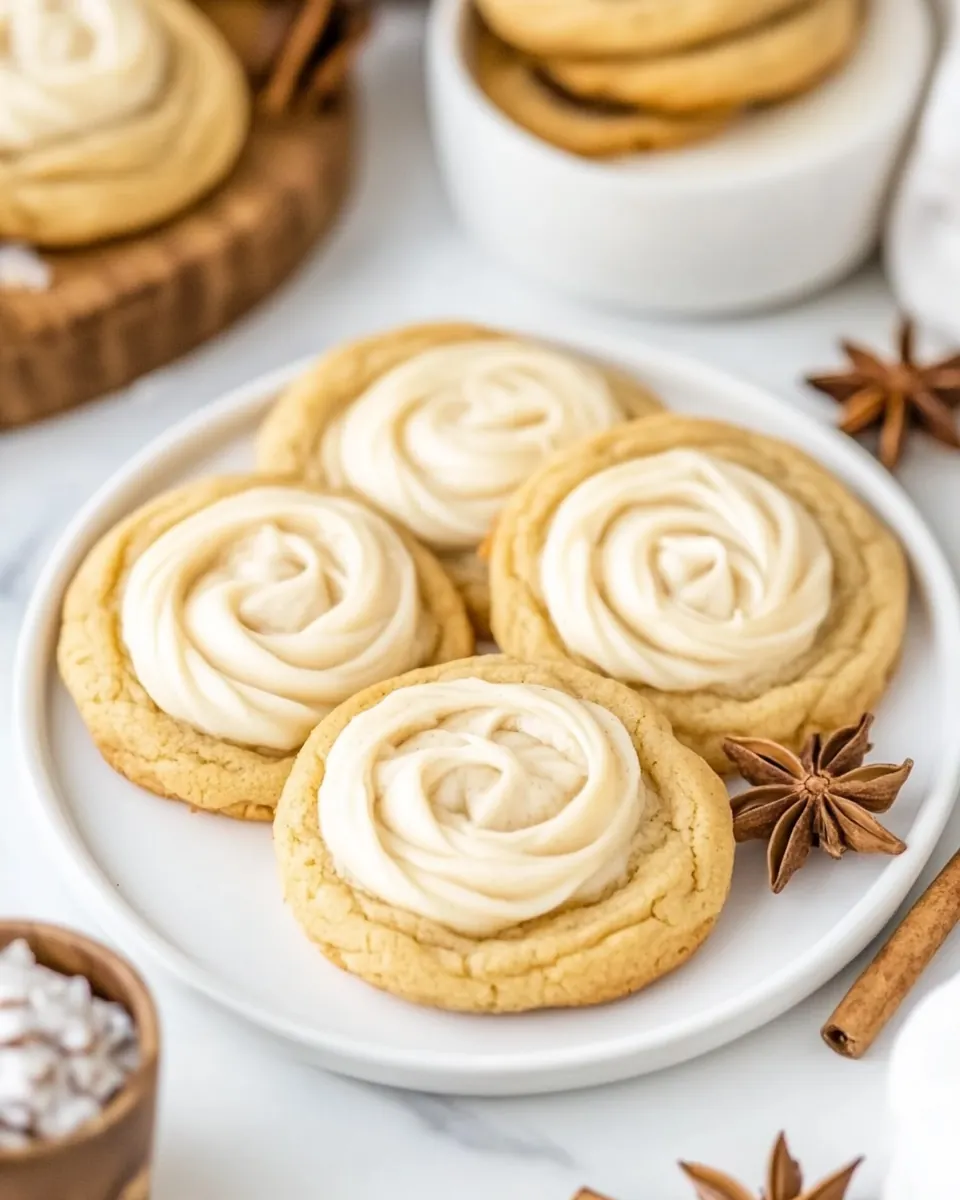
Eggnog Cookies
Eggnog Cookies are the kind of treat that turns a simple afternoon into a warm memory, and the first time I baked them the whole kitchen smelled like a holiday kitchen should. I was elbow deep in flour and listening to an old holiday record while a pot of simmering spice tea kept the air sweet, and those cookies came out soft, gently spiced, and impossibly tender. Right away I knew this version would become my go to when I wanted something festive but unfussy.
There is a small ritual I follow when I make these Eggnog Cookies. I measure the spices carefully, because freshly ground nutmeg is the quiet star. While the dough chills in little sticky mounds on the counter, I take a minute to wipe down the countertops and admire how the butter and sugars have become light and creamy. Those simple steps are the kind of tiny acts that make baking feel like self care to me. Over time I learned which cues to watch for, like the way the cookies just begin to brown at the edges, or how the frosting smooths to a glossy finish when the cookies are fully cooled.
When friends come by during the holidays I often put a plate of these Eggnog Cookies out beside a carafe of spiced tea. They vanish so quickly that I started doubling the batch without thinking. The cream cheese frosting gives a soft tang that balances the brown sugar sweetness, and the gentle warmth of nutmeg and cinnamon keeps them from tasting cloying. I’ve gifted these cookies in little boxes more times than I can count, and every time someone tells me they love the chewy center and the cozy aroma, I smile because these cookies always do what I hoped they would: make people slow down.
Recipe Snapshot
17 mins
5 mins
12 mins
Medium
150 kcal
American
Gluten-Free, Low FODMAP
Desserts
Mixing bowl, Stand mixer or hand mixer, Baking sheet, Parchment paper, Wire cooling rack
What We Adore About This Eggnog Cookies
They smell like the holidays
From the moment the Eggnog Cookies hit the oven you get a warm, inviting aroma of freshly ground nutmeg and cinnamon. I love how that scent fills the house and makes guests relax. For me the scent alone often wins over new tasters before they even try one.
Balanced sweetness and tang
The brown sugar creates a deep, caramel like sweetness while the cream cheese frosting adds a bright, tangy counterpoint. I find that balance keeps each bite interesting, so you never feel like you are just eating sugar. I always appreciate when a cookie has layers of flavor, not just one flat note.
Comfortable, forgiving texture
These cookies are soft and slightly chewy in the center, with edges that just begin to crisp. That texture is very forgiving, so even if your oven runs a touch hot, the cookies often still turn out pleasant. I usually tell people to watch for visual cues rather than strictly timing, because that gives better results across different ovens.
Easy to make and scale
I love recipes that are simple enough for a busy week but charming enough for guests. The Eggnog Cookies use straightforward mixing and a brief bake time, and you can double the batch for a party without extra fuss. I’ve baked them for last minute gatherings more than once and never regretted it.
Customizable finishing touch
The frosting is optional but I think it elevates the cookies. You can pipe it or simply spread it with a knife, and it always looks inviting. I enjoy how a simple swirl of frosting can transform a plain cookie into something that looks gift worthy.
Ingredients for Eggnog Cookies
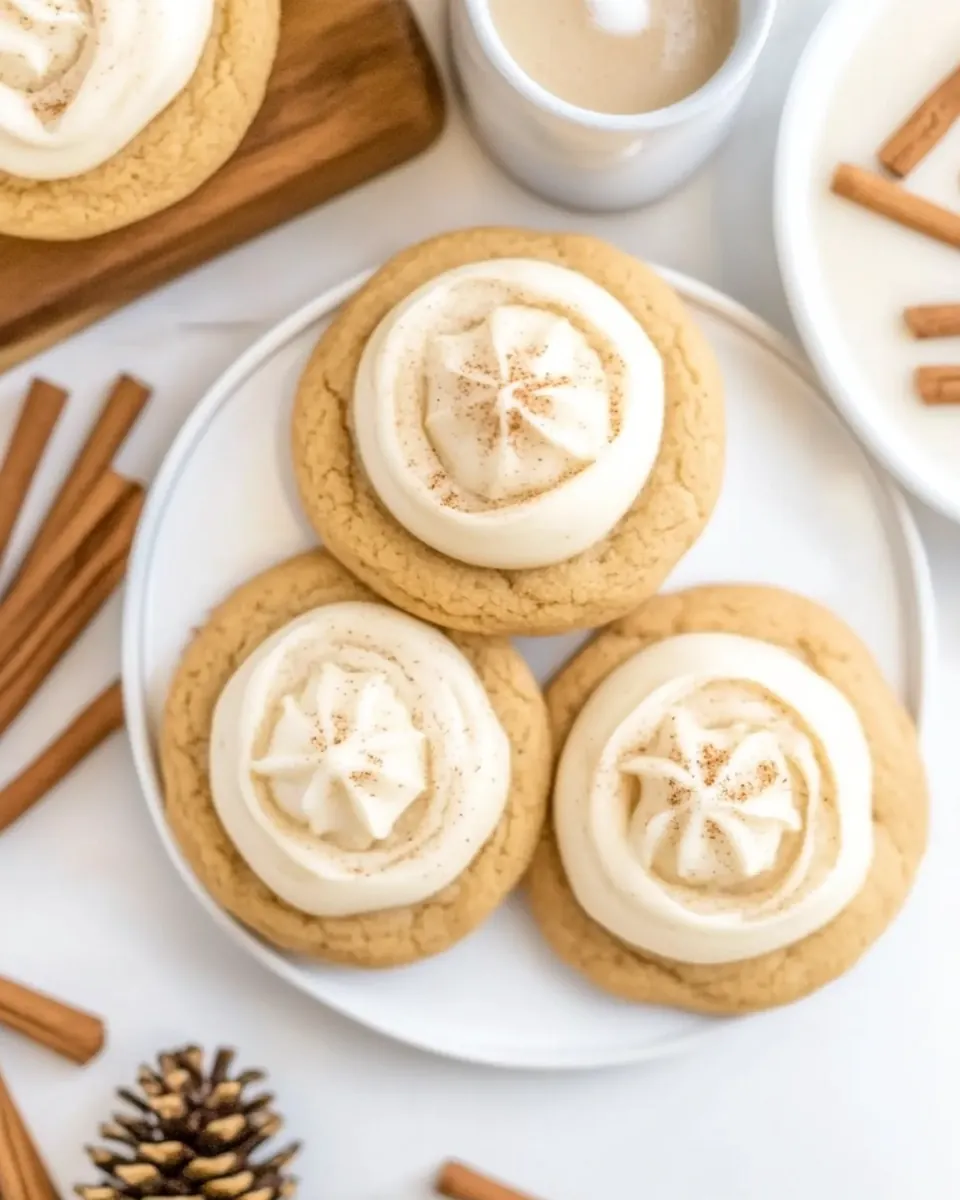
These ingredients work together to create a soft, spice kissed cookie with a creamy frosting. The base is a classic combination of butter and sugars for structure and chew, while the flour and leaveners give a tender crumb. The small amounts of ground nutmeg and ground cinnamon add warmth without overpowering the delicate eggnog notes. The cream cheese and extra eggnog in the frosting bring moisture and a pleasant tang that pairs with the cookie’s sweetness.
- 1/2 cup unsalted butter softened: Creamed until light and fluffy to provide the cookie base and tender texture; unsalted butter allows precise control of overall saltiness and richness in the dough.
- 2/3 cup brown sugar: Sweetened and moistening agent that adds deep caramel flavor and chewiness; brown sugar contributes to cookie spread and gives a slightly fudgy interior.
- 1/4 cup granulated sugar: Balances sweetness and aids in spreading while contributing tiny crisp edges; granulated sugar helps with structure and caramelization during baking.
- 1 egg yolk room temperature: Beaten and incorporated to bind the dough while adding richness and a dense, tender crumb; room–temperature yolk emulsifies fats and helps create a smooth batter.
- 1 teaspoon vanilla extract: Added for aromatic depth and to enhance the overall flavor profile; vanilla extract complements the eggnog notes and rounds out sweetness.
- 7 tablespoons eggnog (just shy of 1/2 cup): Mixed into the dough to add liquid, creamy flavor, and characteristic eggnog notes; measured just below 1/2 cup to achieve proper dough consistency.
- 2 cups all purpose flour spooned and leveled: Provides the primary structure and bulk through gluten formation when combined with liquids; spooned and leveled measurement ensures accurate texture and density.
- 1 to 1 1/2 teaspoons ground nutmeg freshly ground if possible: Sprinkled in for warm, nutty flavor and signature eggnog aroma; freshly ground nutmeg delivers more vibrant and complex spice notes to the cookies.
- 1/2 teaspoon ground cinnamon: Blended for warm, sweet-spicy undertones that complement nutmeg; ground cinnamon enhances flavor harmony without overpowering other spices.
- 1/2 teaspoon baking soda: Incorporated as a leavening component to help the cookies spread and lift slightly during baking; baking soda also affects browning and texture with acidic ingredients.
- 1/2 teaspoon baking powder: Used alongside baking soda to provide a balanced rise and finer crumb; baking powder contributes gentle aeration for a tender cookie interior.
- 1/2 teaspoon salt: Added to balance flavor and control overall seasoning; salt enhances sweetness and strengthens gluten slightly for better texture.
- 4 ounces cream cheese softened: Softened and folded into the frosting or filling to provide tangy richness and creamy stability; cream cheese adds moisture and a smooth mouthfeel.
- 2 tablespoons eggnog: Whisked into the cream cheese to impart eggnog flavor and thin the frosting to a spreadable consistency; small amount ensures pronounced holiday taste.
- 3 to 4 cups powdered sugar: Sifted and mixed into the frosting to create sweetness and structure while achieving a smooth, pipeable texture; powdered sugar controls thickness and sweetness level.
Eggnog Cookies Instructions
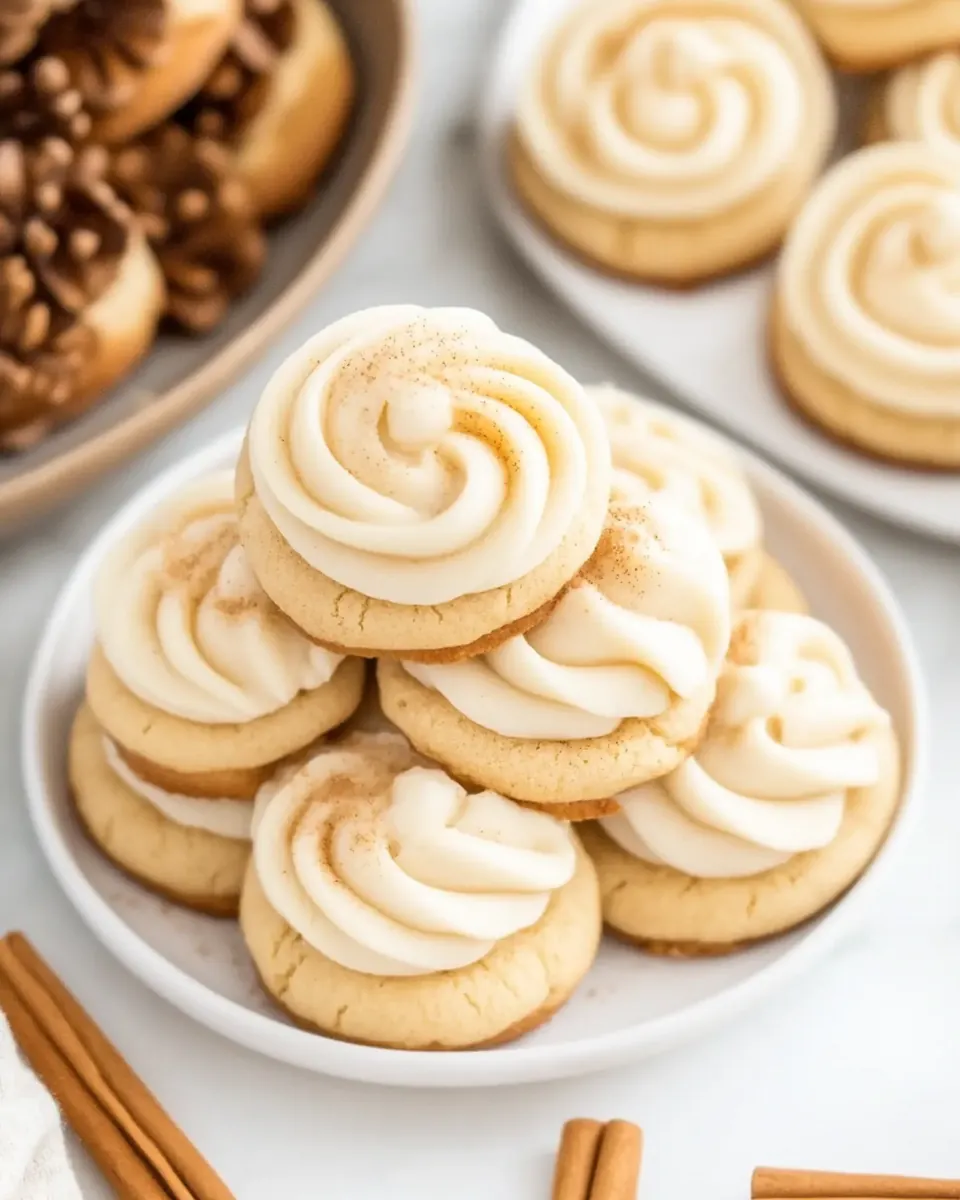
This recipe moves quickly once you start, and the steps are straightforward. I like to have all ingredients measured and at room temperature before mixing, because it makes the process calm and efficient. Expect mixing, shaping, and a short bake time, followed by a silky frosting that ties everything together.
- Preheat the oven to 350°F. Line a large baking sheet with parchment paper and set aside.: The moment you preheat the oven you begin the setup for the right texture, because a properly heated oven gives a consistent spread and edge browning. You should feel a warm wave when you open the oven door, and the oven should register a steady 350°F on the dial. If you skip preheating the cookies may bake unevenly, leading to centers that remain underdone while edges overbrown. A common mistake is not allowing the oven to fully reach temperature, so wait until the indicator light shows it is ready.
- In a large mixing bowl or the bowl of a stand mixer, beat together butter, brown sugar and granulated sugar until light and creamy, scraping down the sides and bottom of bowl as necessary.: Lining the sheet prevents sticking and makes cleanup simple, and parchment gives a slightly insulated surface that promotes even browning. When you press the parchment it should lie flat and not ripple; if it does, smooth it out so the cookies bake evenly. Avoid greasing the parchment, as that can cause excess spreading. People often forget to set the prepared sheet aside, which leads to pauses while the dough waits and can cool the butter too much.
- Add in the egg yolk, vanilla extract and eggnog and beat until smooth and combined, scraping down the sides and bottom of bowl as necessary.: As you beat the butter and sugars you will see the mixture turn paler and fluff up, which traps air that helps the cookies rise and create a tender bite. The sound changes from a slosh to a gentle whir as the mixture becomes smooth. Scrape down the sides and bottom of the bowl so all ingredients incorporate evenly; otherwise you risk pockets of unmixed butter or sugar. A common error is under beating, which leads to dense cookies, or over beating, which can warm the butter too much.
- In a separate bowl, whisk together all purpose flour, ground nutmeg, ground cinnamon, baking soda, baking powder and salt.: When you add the egg yolk , vanilla , and eggnog , the mixture should appear glossy and homogeneous. You may notice a faint fragrance of dairy and spice as the eggnog blends in. If the mixture seems curdled, it usually smooths out with a bit more beating; however do not overwork the dough. One slip is adding cold eggnog or egg yolk, which can cause the butter to seize, so ensure these are room temperature.
- Add the flour mixture in two additions, mixing just until combined.: In the separate bowl the all purpose flour and spices should be evenly mixed, so each bite has a balanced flavor. You will see a uniform tan color when the ground nutmeg and ground cinnamon are well distributed. Sifting or whisking also helps break up any lumps in the leaveners. A common misstep is not mixing the dry ingredients thoroughly, which can leave pockets of baking powder or soda, causing uneven rise and flavor.
- Scoop out cookie dough, roll into 1 inch balls (dough will be a bit sticky) and place them on the prepared baking sheet.: Adding the dry mix in two parts helps avoid over mixing, which preserves a tender texture. After each addition stir just until you no longer see streaks of flour, the dough should look cohesive but still slightly soft. Over mixing will develop gluten and make the cookies tough, so stop as soon as the dough comes together. Many home bakers keep stirring until perfect uniformity, but that extra mixing can harm the final bite.
- Bake the cookies for 11 to 13 minutes or until just beginning to turn golden brown on the edges and the centers no longer appear wet.: The dough will be a bit sticky, and when you roll it into 1 inch balls you should feel a slight tackiness that indicates moisture and tenderness. Place the balls with space between them so they can spread slightly, and if the dough is too sticky chill briefly to make rolling easier. If you press the balls too flat they will bake thin and crispy rather than soft and tender, which some people prefer but is not the intended texture here.
- Remove from the oven, let sit on the baking sheet for a few minutes and then transfer to a wire cooling rack to cool.: While baking you will hear a quiet oven hum, and the edges will shift from pale to a warm golden brown, which signals they are ready to come out. The centers should look set rather than glossy; they continue to firm as they cool. Leaving them in too long will make them dry, and underbaking leaves a raw center, so use visual cues more than the timer if your oven runs hot or cool.
- In a medium bowl, add cream cheese, eggnog and powdered sugar. Beat until nice and smooth.: Letting the cookies rest on the hot sheet allows carryover cooking to finish the centers while the edges stabilize. You will feel a gentle heat when you touch the rack after a minute or two. If you pull them off the sheet immediately they may fall apart, and if you leave them on the sheet too long they can overcook from the residual heat. Use a thin spatula to lift them to the rack carefully to avoid breaking.
- Frost the cooled cookies with a knife or piping bag. Enjoy!: The cream cheese , extra eggnog , and powdered sugar should form a glossy, smooth frosting that spreads easily. The texture should be thick but pipeable; if it looks grainy it needs more beating or sifting of powdered sugar. Overbeating can incorporate air and make the frosting too loose, while underbeating leaves lumps of cream cheese.
- Frost the cooled cookies with a knife or piping bag.: The final step is a tactile pleasure, smoothing the frosting until it looks inviting and slightly glossy. Spread or pipe the frosting when cookies are completely cool so it holds shape and does not melt. A frequent error is frosting warm cookies, which leads to a runny finish and loses the defined look.
- Enjoy!: Take a moment to savor the aroma and texture, and share them while warm or store according to preference. If cookies are stored improperly they can become stale; keeping them in an airtight container preserves freshness. I love pairing a cookie with a warm cup of tea while they are still slightly soft in the center.
Recipe Notes about Eggnog Cookies
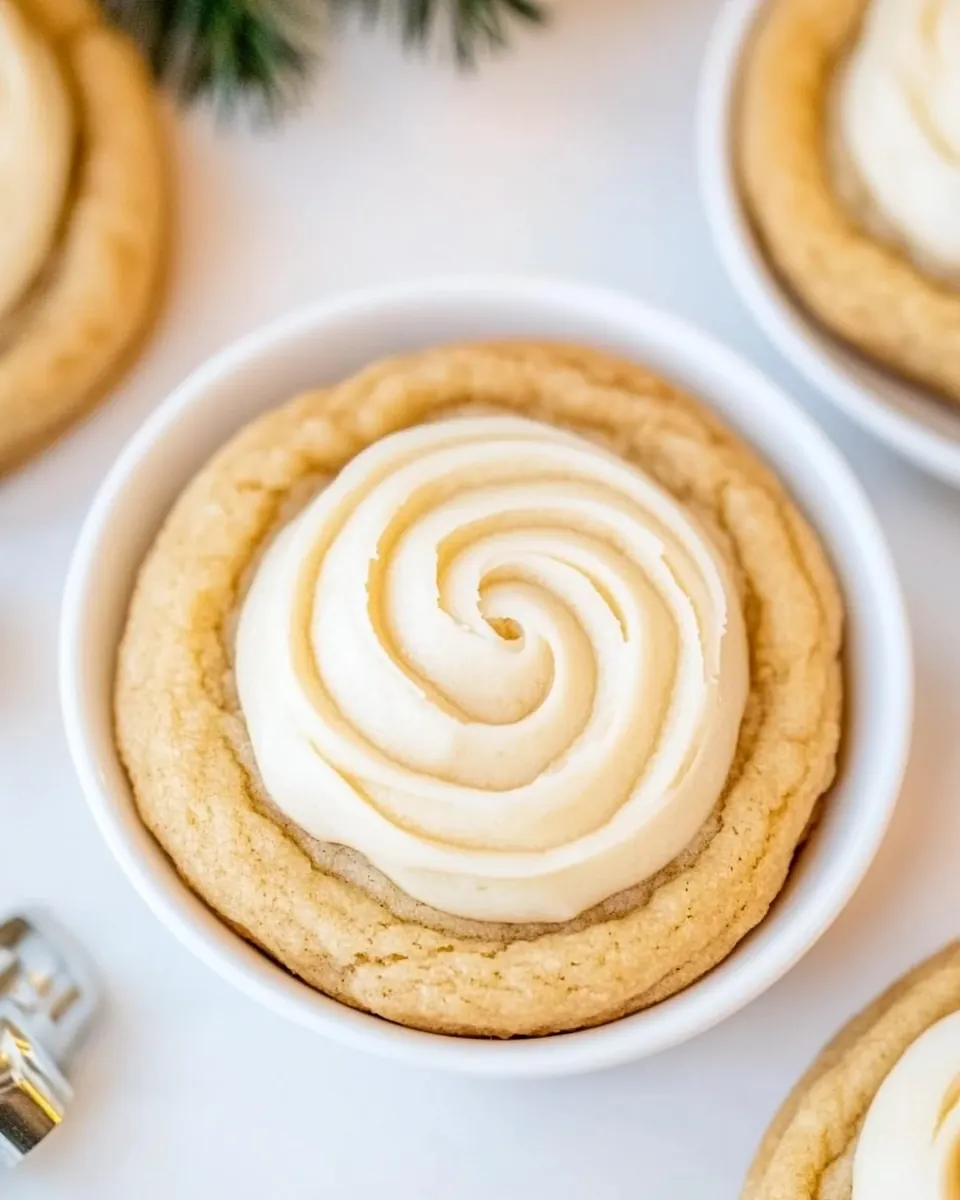
These notes will help you get reliably lovely cookies and keep them tasting fresh. I often refer to these points while baking so I don’t forget small adjustments that make a big difference.
- Use full fat eggnog: Full fat eggnog gives the best mouthfeel and flavor. Low fat or light versions thin the batter and change the texture of the cookies and frosting, so stick to full fat when possible.
- Room temperature ingredients: Bringing the butter, egg yolk, and cream cheese to room temperature ensures they incorporate smoothly. Cold ingredients can lead to lumps and uneven mixing.
- Adjust powdered sugar for frosting consistency: Start with less powdered sugar and add until the frosting is spreadable; too much will make it stiff and overly sweet. If it becomes too thick, add a teaspoon of eggnog at a time to loosen.
- Storage at room temperature: Store cookies in an airtight container for up to three days to maintain softness. If you prefer a firmer texture refrigerate for up to one week, but bring to room temperature before serving.
- Freezing tips: Freeze baked cookies in a freezer safe container for up to three months, or freeze scooped dough balls on a sheet for thirty minutes then transfer to a bag for longer storage.
Great Combinations for Eggnog Cookies
These serving ideas help frame the cookies for different occasions, from casual tea to holiday gifting. Below I outline pairings, storage suggestions, and occasions where these make a fitting treat.
- Holiday dessert spread: Arrange the Eggnog Cookies on a platter with other small sweets for a festive table. They pair well with subtle, nonalcoholic beverages and create a balanced dessert selection.
- Afternoon tea or coffee: Serve cookies with a pot of spiced tea or strong coffee for a comforting afternoon indulgence. The spices in the cookie complement hot beverages nicely.
- Gift boxes: Pack cooled cookies in small boxes or tins lined with parchment for thoughtful homemade gifts during the winter season. They travel well when stacked with parchment between layers.
- Occasions: These cookies are ideal for winter gatherings and holiday parties, particularly around Christmas and casual get togethers. Their aroma makes arriving guests feel welcome immediately.
- Storage recommendations: Keep cookies at room temperature in an airtight container for up to three days, refrigerate up to one week, or freeze baked cookies for up to three months. Thaw frozen cookies at room temperature before serving for best texture.
- Seasonal pairing: The warm spices make these perfect for chilly weather, and they fit well in winter dessert menus or holiday cookie exchanges.
FAQ
Conclusion
These cookies stand out because they capture the warm, spiced charm of eggnog in a tender, frosted cookie that feels both nostalgic and fresh. Give them a try the next time you want a holiday treat that is simple to make but impressive to share. I hope baking them becomes a little ritual for you, a small way to slow down and enjoy fragrant, cozy flavors with friends and family.
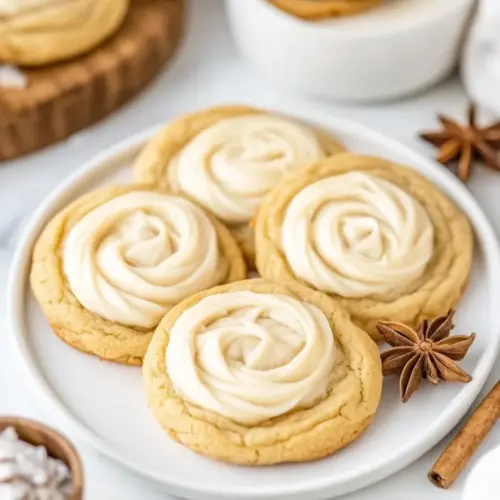
Eggnog Cookies
Equipment
- Mixing Bowl
- Stand mixer or hand mixer
- Baking Sheet
- Parchment Paper
- wire cooling rack
Ingredients
- 1/2 cup unsalted butter softened Creamed until light and fluffy to provide the cookie base and tender texture; unsalted butter allows precise control of overall saltiness and richness in the dough.
- 2/3 cup brown sugar Sweetened and moistening agent that adds deep caramel flavor and chewiness; brown sugar contributes to cookie spread and gives a slightly fudgy interior.
- 1/4 cup granulated sugar Balances sweetness and aids in spreading while contributing tiny crisp edges; granulated sugar helps with structure and caramelization during baking.
- 1 egg yolk room temperature Beaten and incorporated to bind the dough while adding richness and a dense, tender crumb; room-temperature yolk emulsifies fats and helps create a smooth batter.
- 1 teaspoon vanilla extract Added for aromatic depth and to enhance the overall flavor profile; vanilla extract complements the eggnog notes and rounds out sweetness.
- 7 tablespoons eggnog (just shy of 1/2 cup) Mixed into the dough to add liquid, creamy flavor, and characteristic eggnog notes; measured just below 1/2 cup to achieve proper dough consistency.
- 2 cups all purpose flour spooned and leveled Provides the primary structure and bulk through gluten formation when combined with liquids; spooned and leveled measurement ensures accurate texture and density.
- 1 to 1 1/2 teaspoons ground nutmeg freshly ground if possible Sprinkled in for warm, nutty flavor and signature eggnog aroma; freshly ground nutmeg delivers more vibrant and complex spice notes to the cookies.
- 1/2 teaspoon ground cinnamon Blended for warm, sweet-spicy undertones that complement nutmeg; ground cinnamon enhances flavor harmony without overpowering other spices.
- 1/2 teaspoon baking soda Incorporated as a leavening component to help the cookies spread and lift slightly during baking; baking soda also affects browning and texture with acidic ingredients.
- 1/2 teaspoon baking powder Used alongside baking soda to provide a balanced rise and finer crumb; baking powder contributes gentle aeration for a tender cookie interior.
- 1/2 teaspoon salt Added to balance flavor and control overall seasoning; salt enhances sweetness and strengthens gluten slightly for better texture.
- 4 ounces cream cheese softened Softened and folded into the frosting or filling to provide tangy richness and creamy stability; cream cheese adds moisture and a smooth mouthfeel.
- 2 tablespoons eggnog Whisked into the cream cheese to impart eggnog flavor and thin the frosting to a spreadable consistency; small amount ensures pronounced holiday taste.
- 3 to 4 cups powdered sugar Sifted and mixed into the frosting to create sweetness and structure while achieving a smooth, pipeable texture; powdered sugar controls thickness and sweetness level.
Instructions
- Preheat the oven to 350°F. Line a large baking sheet with parchment paper and set aside.: The moment you preheat the oven you begin the setup for the right texture, because a properly heated oven gives a consistent spread and edge browning. You should feel a warm wave when you open the oven door, and the oven should register a steady 350°F on the dial. If you skip preheating the cookies may bake unevenly, leading to centers that remain underdone while edges overbrown. A common mistake is not allowing the oven to fully reach temperature, so wait until the indicator light shows it is ready.
- In a large mixing bowl or the bowl of a stand mixer, beat together butter, brown sugar and granulated sugar until light and creamy, scraping down the sides and bottom of bowl as necessary.: Lining the sheet prevents sticking and makes cleanup simple, and parchment gives a slightly insulated surface that promotes even browning. When you press the parchment it should lie flat and not ripple; if it does, smooth it out so the cookies bake evenly. Avoid greasing the parchment, as that can cause excess spreading. People often forget to set the prepared sheet aside, which leads to pauses while the dough waits and can cool the butter too much.
- Add in the egg yolk, vanilla extract and eggnog and beat until smooth and combined, scraping down the sides and bottom of bowl as necessary.: As you beat the butter and sugars you will see the mixture turn paler and fluff up, which traps air that helps the cookies rise and create a tender bite. The sound changes from a slosh to a gentle whir as the mixture becomes smooth. Scrape down the sides and bottom of the bowl so all ingredients incorporate evenly; otherwise you risk pockets of unmixed butter or sugar. A common error is under beating, which leads to dense cookies, or over beating, which can warm the butter too much.
- In a separate bowl, whisk together all purpose flour, ground nutmeg, ground cinnamon, baking soda, baking powder and salt.: When you add the egg yolk , vanilla , and eggnog , the mixture should appear glossy and homogeneous. You may notice a faint fragrance of dairy and spice as the eggnog blends in. If the mixture seems curdled, it usually smooths out with a bit more beating; however do not overwork the dough. One slip is adding cold eggnog or egg yolk, which can cause the butter to seize, so ensure these are room temperature.
- Add the flour mixture in two additions, mixing just until combined.: In the separate bowl the all purpose flour and spices should be evenly mixed, so each bite has a balanced flavor. You will see a uniform tan color when the ground nutmeg and ground cinnamon are well distributed. Sifting or whisking also helps break up any lumps in the leaveners. A common misstep is not mixing the dry ingredients thoroughly, which can leave pockets of baking powder or soda, causing uneven rise and flavor.
- Scoop out cookie dough, roll into 1 inch balls (dough will be a bit sticky) and place them on the prepared baking sheet.: Adding the dry mix in two parts helps avoid over mixing, which preserves a tender texture. After each addition stir just until you no longer see streaks of flour, the dough should look cohesive but still slightly soft. Over mixing will develop gluten and make the cookies tough, so stop as soon as the dough comes together. Many home bakers keep stirring until perfect uniformity, but that extra mixing can harm the final bite.
- Bake the cookies for 11 to 13 minutes or until just beginning to turn golden brown on the edges and the centers no longer appear wet.: The dough will be a bit sticky, and when you roll it into 1 inch balls you should feel a slight tackiness that indicates moisture and tenderness. Place the balls with space between them so they can spread slightly, and if the dough is too sticky chill briefly to make rolling easier. If you press the balls too flat they will bake thin and crispy rather than soft and tender, which some people prefer but is not the intended texture here.
- Remove from the oven, let sit on the baking sheet for a few minutes and then transfer to a wire cooling rack to cool.: While baking you will hear a quiet oven hum, and the edges will shift from pale to a warm golden brown, which signals they are ready to come out. The centers should look set rather than glossy; they continue to firm as they cool. Leaving them in too long will make them dry, and underbaking leaves a raw center, so use visual cues more than the timer if your oven runs hot or cool.
- In a medium bowl, add cream cheese, eggnog and powdered sugar. Beat until nice and smooth.: Letting the cookies rest on the hot sheet allows carryover cooking to finish the centers while the edges stabilize. You will feel a gentle heat when you touch the rack after a minute or two. If you pull them off the sheet immediately they may fall apart, and if you leave them on the sheet too long they can overcook from the residual heat. Use a thin spatula to lift them to the rack carefully to avoid breaking.
- Frost the cooled cookies with a knife or piping bag. Enjoy!: The cream cheese , extra eggnog , and powdered sugar should form a glossy, smooth frosting that spreads easily. The texture should be thick but pipeable; if it looks grainy it needs more beating or sifting of powdered sugar. Overbeating can incorporate air and make the frosting too loose, while underbeating leaves lumps of cream cheese.
- Frost the cooled cookies with a knife or piping bag.: The final step is a tactile pleasure, smoothing the frosting until it looks inviting and slightly glossy. Spread or pipe the frosting when cookies are completely cool so it holds shape and does not melt. A frequent error is frosting warm cookies, which leads to a runny finish and loses the defined look.
- Enjoy!: Take a moment to savor the aroma and texture, and share them while warm or store according to preference. If cookies are stored improperly they can become stale; keeping them in an airtight container preserves freshness. I love pairing a cookie with a warm cup of tea while they are still slightly soft in the center.
Notes
- Use full fat eggnog: Full fat eggnog gives the best mouthfeel and flavor. Low fat or light versions thin the batter and change the texture of the cookies and frosting, so stick to full fat when possible.
- Room temperature ingredients: Bringing the butter, egg yolk, and cream cheese to room temperature ensures they incorporate smoothly. Cold ingredients can lead to lumps and uneven mixing.
- Adjust powdered sugar for frosting consistency: Start with less powdered sugar and add until the frosting is spreadable; too much will make it stiff and overly sweet. If it becomes too thick, add a teaspoon of eggnog at a time to loosen.
- Storage at room temperature: Store cookies in an airtight container for up to three days to maintain softness. If you prefer a firmer texture refrigerate for up to one week, but bring to room temperature before serving.
- Freezing tips: Freeze baked cookies in a freezer safe container for up to three months, or freeze scooped dough balls on a sheet for thirty minutes then transfer to a bag for longer storage.