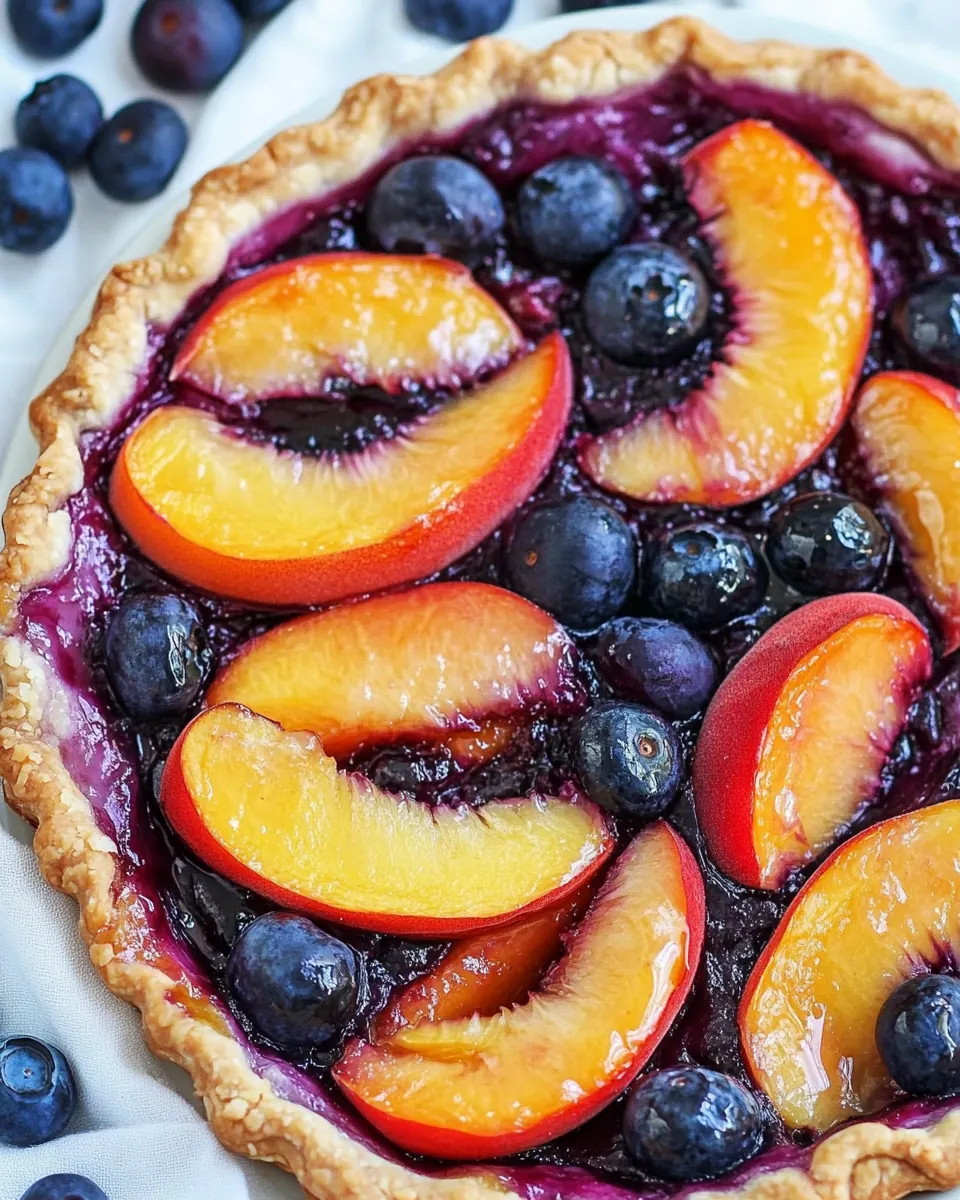
Easy Blueberry Peach Tart
Easy Blueberry Peach Tart is one of those recipes I turn to when summer fruit hits peak sweetness and I want something that feels fancy without the fuss. The first time I made this tart I was juggling a messy kitchen, a hungry neighbor at the door, and a basket of peaches that smelled like sunshine. I remember the warm, fruity aroma filling the house as the pastry browned, and how everyone lingered in the kitchen hoping for a slice. That memory still makes me smile whenever I pull a tart from the oven.
Over the years I refined the approach so the fruit keeps its brightness and the crust stays flaky. I learned to trust simple techniques like keeping the pastry cold and arranging the slices tightly so every bite has peach and a burst of blueberries. The glossy vanilla glaze ties everything together with a whisper of sweetness, and it always earns compliments even from people who say they do not like fruit desserts. I like serving it warm, but it also travels well to potlucks and picnics.
Recipe Snapshot
40 mins
20 mins
20 mins
Medium
300 kcal
American
Gluten-Free, Low FODMAP
Desserts
Baking sheet, Parchment paper, Mixing bowl, Small bowl, Whisk, Pastry brush
The Magic of This Easy Blueberry Peach Tart
Fruit Forward Flavor
I love how the combination of peaches and blueberries lets the fruit shine. The peaches bring soft, juicy sweetness while the blueberries add bright, slightly tart pops. Together they create a balance that feels both summery and restrained, so you do not need heavy sauces to impress.
Effortless Elegance
One sheet of puff pastry makes this tart look store bought without hours of work. I value tricks that save time but do not sacrifice texture, and this recipe proves you can get a golden, layered crust with almost no shaping. For busy afternoons, this is my go to for a last minute dessert that still wows guests.
Textural Contrast
The crisp, buttery layers of the puff pastry contrast beautifully with the tender, syrupy fruit. When you bite into it you get a satisfying crunch followed by soft, juicy peach slices and tiny bursts from blueberries. That interplay of textures makes each forkful interesting and keeps people coming back for more.
Simple, Trustworthy Ingredients
I appreciate recipes that rely on pantry staples and fresh fruit. With just a sheet of puff pastry, some sugar, and a few flavoring touches like cinnamon and vanilla extract, this tart comes together fast. It is one of those dishes where technique matters more than exotic ingredients, so you can always count on consistent results.
Versatile Serving Options
This tart works for breakfast, dessert, or a casual brunch. Serve it warm with a scoop of ice cream for a classic ending, or let it cool and pack slices for picnics. I often change the presentation depending on the occasion, and it always fits in.
Ingredients You’ll Need for Easy Blueberry Peach Tart
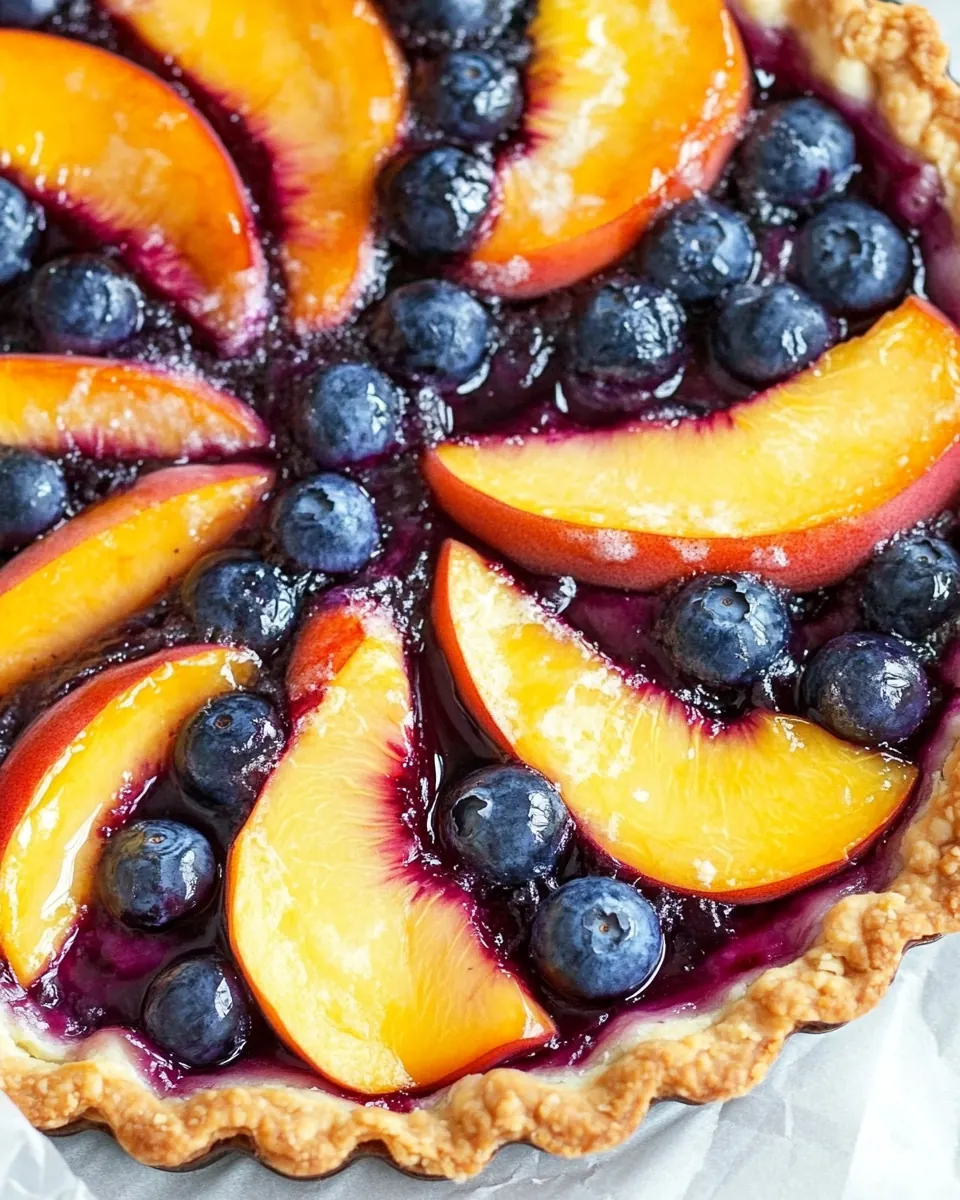
These ingredients are chosen to highlight fresh summer fruit while keeping the build process simple. The star players are the puff pastry for flaky texture, the peaches and blueberries for bright, seasonal flavor, and a little cornstarch plus sugar to help the filling set and sing. The glaze finishes with smooth sweetness and a hint of vanilla extract, tying the tart together without overpowering the fruit.
- 1 sheet of puffed pastry, thawed for 20 minutes: Folded and flaky pastry that provides a buttery, crisp base for the tart; thaw briefly to become pliable for rolling and shaping. Helps hold the fruit and fillings while baking without becoming soggy, creating a golden, textured crust. Supports the finished tart structure and contrasts the soft fruit with a tender crunch.
- 1 large egg: Beaten binder that contributes richness and color when brushed over the pastry edges; helps achieve a glossy, golden finish. Adds slight flavor depth and helps toppings adhere to the crust. Provides a subtle egg wash sheen that improves presentation.
- 1 tablespoon water: Simple liquid binder used to thin the egg for an even egg wash; helps create a smooth, spreadable glaze for the pastry surface. Encourages uniform browning and ensures the egg coats the crust without clumping. Also aids in sealing edges when needed.
- 3 large peaches, peeled, pitted, and thinly sliced: Sweet, juicy fruit that brings fresh flavor and a tender texture once baked; slice thinly for even layering and quick cooking. Adds natural sweetness and a pleasant aroma while contributing to the tart's visual appeal. Provides a soft contrast to the crisp pastry and pairs well with complementary berries.
- 1 1/2 cups fresh blueberries: Small, flavorful berries that add bright burst of tartness and juicy pockets throughout the filling; sprinkle among the peaches for balance. Provide color contrast and a boost of antioxidants while releasing juices that mingle with the sugar and thickener. Enhance flavor complexity with occasional pops of fresh berry taste.
- 1/4 cup granulated sugar: Crystalized sweetener used to lightly sweeten the fruit and macerate juices for a syrupy filling; sprinkle evenly over the fruit before baking. Helps balance natural tartness and promotes caramelization on the fruit surface. Works with cornstarch to create a cohesive, not watery, filling.
- 1/4 teaspoons salt: Tiny amount of mineral seasoning that enhances overall flavor balance; mix with the sugar to lift the sweetness and round out fruit flavors. Helps accentuate natural fruit notes without imparting saltiness, making flavors more pronounced. Essential for flavor contrast and depth.
- 1/4 teaspoon cinnamon: Warm, aromatic spice that complements the stone fruit and berries; sprinkle lightly to add cozy complexity to the filling. Enhances perceived sweetness and provides a subtle background note that pairs well with baked peaches. Should be used sparingly to avoid overpowering delicate fruit flavors.
- 1 teaspoon cornstarch: Fine starch used to thicken the fruit juices released during baking; combine with sugar to prevent a runny filling. Creates a glossy, slightly gelled texture that helps the filling set when cooled. Ensures slices hold together neatly without excessive liquid.
- 1 cup of confectioners' sugar: Powdered sweetener for making a smooth glaze or icing to finish the tart; sift to remove lumps before mixing. Provides a silky, sweet coating that can be flavored with vanilla for extra aroma. Drizzled over the cooled tart, it adds sweetness and a professional-looking finish.
- 1 teaspoon vanilla extract: Warm flavoring extract that adds aromatic vanilla notes to the glaze or filling; stir into the confectioners' sugar for depth. Enhances sweetness perception and rounds out the pastry's overall flavor profile. A small amount goes a long way in boosting aroma and richness.
- 2 tablespoons of milk OR heavy cream, more if needed to achieve desired consistency: Creamy liquid that thins the confectioners' sugar to a pourable glaze and adds richness; adjust amount to reach desired consistency. Can use milk for a lighter glaze or heavy cream for a richer, silkier finish. Ensures the icing spreads smoothly and sets with a pleasant mouthfeel.
Step by Step Guide for Easy Blueberry Peach Tart
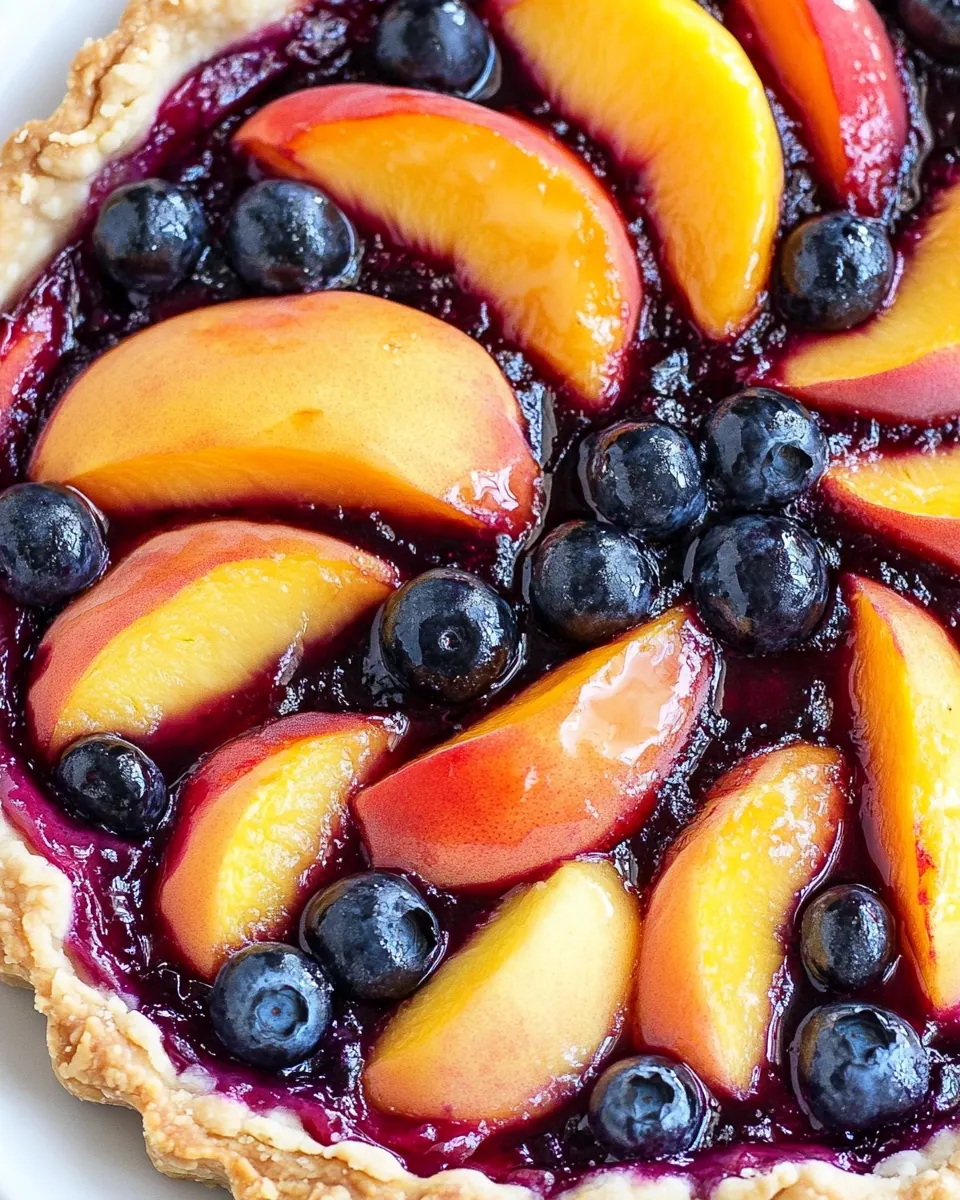
I like to walk through this recipe at a measured pace so nothing feels rushed. Read each step fully before you begin, set out your ingredients, and preheat the oven when instructed. With practice the routine becomes second nature, and the sensory cues will tell you when things are just right.
- Remove 1 sheet of puffed pastry from the freeze; thaw for 15-20 minutes at room temperature, or until it can easily be unfolded without cracking.: The first thing you will notice is the pastry changing from rigid to slightly flexible, almost like a cold book warming in your hands, which is the right time to work with it. If you rush this stage the layers can crack and separate when you try to unfold it, leading to uneven rise; if it still snaps, set it aside for a few more minutes. Keep it on parchment or a lightly floured surface and avoid excessive handling, because warm hands will make the dough sticky and hard to lift. A common mistake is leaving it out too long, which causes the butter layers to soften and the pastry to lose its lift, so return it to the fridge for ten minutes if it becomes overly warm.
- Preheat oven to 400°(F). Line a large baking sheet with parchment paper; set aside.: You will smell a faint warmth from the oven as it nears temperature, and having it fully preheated ensures the pastry puffs quickly and evenly for crisp, flaky layers. The parchment prevents sticking and makes transfer simple, so do not skip it. Using a baking sheet with a light rim helps contain juices that bubble out, otherwise they can drip onto the oven floor and smoke. A frequent error is not preheating long enough, which can cause the pastry to cook unevenly and the fruit to steam rather than roast into caramelized edges.
- In a small bowl combine the egg and water; beat until well combined; set aside.: As you whisk the egg and water together you will see a uniform pale wash that spreads smoothly across a pastry brush, giving the crust a glossy finish. Apply the wash just before baking so it does not absorb into the dough and weigh it down. If the wash is lumpy or the egg appears odd, discard it and use a fresh egg to avoid off flavors. People often brush too heavily, causing the wash to drip into the filling and darken spots unevenly, so use a light, even coating.
- Thinly slice peaches and place them in a large mixing bowl. Add in the sugar, salt, cinnamon, and cornstarch; toss well ensuring all peaches and are coated in the cinnamon sugar mix; set aside.: When you toss the sliced peaches with the dry ingredients, you will notice the fruit glistening as sugar draws out juices and the cornstarch clings to each slice. This coating helps the filling thicken as it bakes and seasons the fruit uniformly, building layers of flavor. Use gentle movements so the slices keep their shape; overly vigorous tossing can turn slices mushy and release too much liquid. A frequent misstep is skimping on the cornstarch, which leads to a runny tart, so measure carefully and distribute it evenly.
- Gently unfold the puffed pastry. If it does crack, gently press the tears back together and mend with slightly wet fingers.: The pastry will unfold with a faint flake and a whisper of flour dusting the layers, and if there are tiny tears you can patch them by pressing the edges gently with your fingertips moistened slightly. This preserves the sheet as one surface for the fruit and avoids leaks through which filling can escape. Avoid overworking the dough while mending, because excessive pressure can compress the layers and reduce puff. A common mistake is using too much water to mend, which makes the dough soggy and prevents proper lift, so use just a touch.
- Place puffed pastry on prepared baking sheet.: As you set the pastry on the parchment it will sit flat and smooth, ready to receive the filling; lift it carefully to avoid stretching the corners. Center it on the sheet so heat circulates evenly around the edges for uniform browning. If the sheet is cluttered with other items, the tart may bake unevenly, so clear space for circulation. People sometimes slide the pastry directly onto a hot surface by mistake, which can cause one side to overbrown, so always place it on a lined, room temperature sheet.
- Layer the peaches evenly (and very tightly) on the puffed pastry, making 3 tidy rows, leaving a 1" border around the pastry. Sprinkle the blueberries on top.: When you arrange the peaches in tight rows the tart looks beautiful and each slice will contain fruit from edge to center; the snug layering helps the slices soften into each other as they bake, creating a cohesive filling. Scatter the blueberries across the peaches so they nestle into gaps rather than pile up, which prevents large wet pockets. Keep that one inch border clear so the crust can puff and brown; if fruit touches the edge it can steam the pastry and make it soggy. An easy error is overcrowding the pastry with fruit, which causes excess juices and a heavy center that does not crisp.
- Lightly brush exposed pastry crust with egg wash.: The moment you brush the exposed rim you will see it gleam slightly, promising a deep golden finish after baking. Use a gentle stroke to prevent wash from dripping onto fruit, and re-dip the brush briefly rather than swishing vigorously. Too much wash can pool and create uneven dark spots, so a thin, even coat is ideal. People sometimes forget to brush the edge and the crust bakes pale and uninviting, so take this small step for big visual impact.
- Bake for 16-18 minutes, rotating once during baking, or until the crust is puffed up and golden brown and the peaches are tender.: As the tart bakes you will hear a faint sizzling and smell the fruit sweetening, and the pastry will visibly puff and turn a warm golden color, which are the cues the tart is nearly done. Rotating the sheet halfway promotes even browning, especially if your oven has hot spots. Peek through the oven window rather than opening the door too often, because temperature loss can flatten the pastry. A common mistake is overbaking, which dries the fruit and makes the crust brittle, so remove the tart when the juices are bubbling gently and the crust shows an inviting deep gold.
- While the tart bakes, make the vanilla glaze!: The glaze comes together quickly and you will notice its smooth, thick texture as you whisk; the aroma of vanilla extract blooms and brightens the sweet powdered sugar. Prepare it while the tart bakes so you can drizzle it warm over slices, which allows it to set lightly without becoming hard. If the glaze is too thick it will sit like a paste, so thin it with small amounts of milk or heavy cream until just pourable. A frequent slip is adding too much liquid at once, making the glaze overly runny, so add cream gradually until you reach the right consistency.
- In a small bowl combine the confectioners' sugar, vanilla, and cream; whisk until smooth, adding more cream as needed to reach desired consistency. Drizzle over the tart right before serving.: The glaze should be glossy and ribbon smooth as it falls from the spoon, and when drizzled it will create delicate lines that catch light and add subtle sweetness. Pour slowly to control coverage and avoid masking the fruit's natural color. If you drizzle too early while the tart is piping hot the glaze can melt and disappear, so wait until the tart is warm rather than scalding. One common mistake is making the glaze overly thin, which causes it to run off the edges instead of decorating the top, so aim for a slightly thick, pourable texture.
- Serve warm with vanilla glaze and maybe even a scoop of ice cream!?: When served warm the tart releases fragrant steam and the fruit is soft, making each forkful comforting and aromatic, and a scoop of chilled ice cream adds creamy contrast. Plate slices on a warmed dish to keep them from cooling too fast and watch how the glaze sets into delicate ribbons. Avoid storing warm slices in a closed container right away, because trapped steam can soften the crust. A usual mistake is serving it too cold; gently reheating slices for a few minutes restores that freshly baked character.
Expert Tips about Easy Blueberry Peach Tart
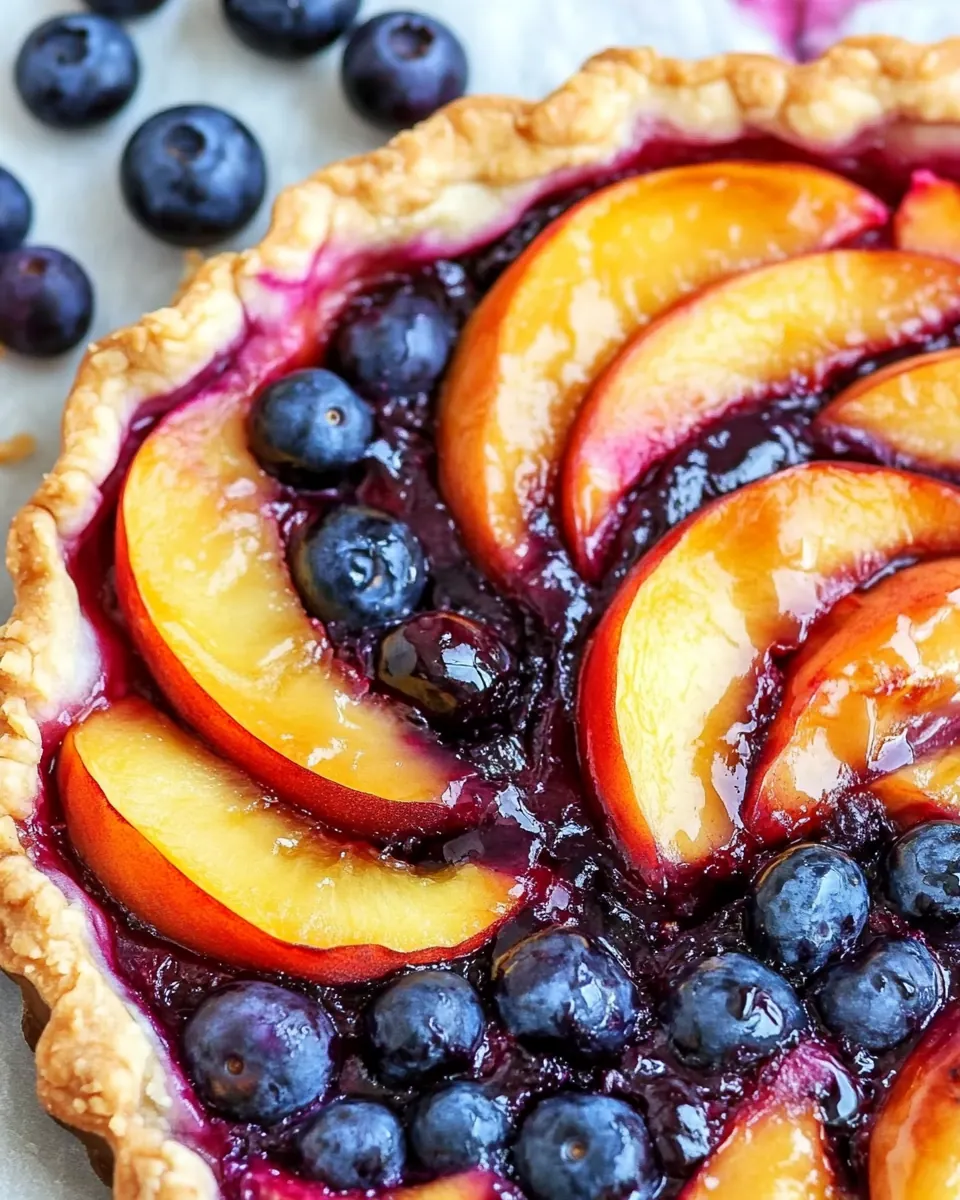
This tart benefits from small timing and temperature tricks as well as mindful fruit handling. Below are detailed, practical tips I use in my kitchen to get consistent, beautiful results every time.
- Chill between steps Keep the puff pastry cold until it goes into the oven to ensure maximum puff and flakiness; if it softens, a short chill on a parchment lined tray helps it firm back up.
- Even slicing matters Slice the peaches uniformly so they cook at the same rate, giving you a cohesive texture rather than some slices underdone and others falling apart.
- Control fruit moisture Toss the fruit with the measured cornstarch and sugar to bind extra juices during baking, which results in a glossy, sliceable filling instead of a watery mess.
- Watch for golden color Rely on the crust color and gentle bubbling juices as your doneness cues rather than strictly timing, since oven performance varies and visual signs are more reliable.
- Make the glaze last minute Whisk the confectioners’ sugar with vanilla extract and milk or heavy cream right before serving so it retains a fresh, bright aroma and perfect drizzle texture.
Side Dish Ideas for Easy Blueberry Peach Tart
This tart plays well across meals and occasions, from casual brunches to festive dessert tables. Below are ideas about how to serve it, what to pair it with, and tips for storage and seasonal presentation to keep the experience delightful.
- Serve with ice cream A scoop of vanilla ice cream adds creamy coolness that contrasts with the warm fruit, making it ideal for dessert after a light summer dinner.
- Brunch centerpiece Pair slices with coffee and a simple green salad for a relaxed brunch that feels celebratory without being heavy.
- Picnic friendly Let the tart cool fully and pack slices in a rigid container for outdoor meals; a chilled tart travels well and keeps its shape.
- Occasion ideas This tart fits holidays like summer gatherings or casual dinner parties, offering a seasonal, fruit forward finale that is approachable for most guests.
- Storage tips Store leftovers covered in the refrigerator for up to three days; reheat gently in a low oven to restore crispness to the crust before serving.
- Seasonal pairing Highlight it during summer when peaches and blueberries are at their peak, and serve alongside light cheeses and fresh herbs for a rustic spread.
FAQ
Conclusion
This Easy Blueberry Peach Tart stands out for its combination of bold fruit flavor and effortless technique, delivering a flaky crust, tender peaches, and popping blueberries in every slice. Give it a try when summer stone fruit is at its best, and you will likely find it becoming a regular in your dessert rotation. The recipe is approachable, forgiving, and designed to let fresh ingredients shine, so invite friends over or save a slice for yourself, and enjoy the warm, fruity simplicity of a homemade tart.
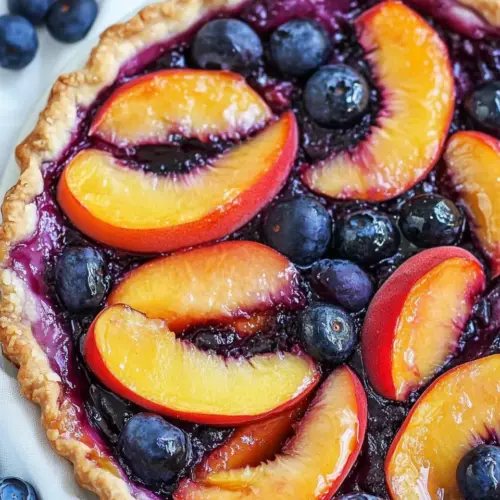
Easy Blueberry Peach Tart
Equipment
- Baking Sheet
- Parchment Paper
- Mixing Bowl
- Small Bowl
- Whisk
- Pastry Brush
Ingredients
- 1 sheet of puffed pastry, thawed for 20 minutes Folded and flaky pastry that provides a buttery, crisp base for the tart; thaw briefly to become pliable for rolling and shaping. Helps hold the fruit and fillings while baking without becoming soggy, creating a golden, textured crust. Supports the finished tart structure and contrasts the soft fruit with a tender crunch.
- 1 large egg Beaten binder that contributes richness and color when brushed over the pastry edges; helps achieve a glossy, golden finish. Adds slight flavor depth and helps toppings adhere to the crust. Provides a subtle egg wash sheen that improves presentation.
- 1 tablespoon water Simple liquid binder used to thin the egg for an even egg wash; helps create a smooth, spreadable glaze for the pastry surface. Encourages uniform browning and ensures the egg coats the crust without clumping. Also aids in sealing edges when needed.
- 3 large peaches, peeled, pitted, and thinly sliced Sweet, juicy fruit that brings fresh flavor and a tender texture once baked; slice thinly for even layering and quick cooking. Adds natural sweetness and a pleasant aroma while contributing to the tart's visual appeal. Provides a soft contrast to the crisp pastry and pairs well with complementary berries.
- 1 1/2 cups fresh blueberries Small, flavorful berries that add bright burst of tartness and juicy pockets throughout the filling; sprinkle among the peaches for balance. Provide color contrast and a boost of antioxidants while releasing juices that mingle with the sugar and thickener. Enhance flavor complexity with occasional pops of fresh berry taste.
- 1/4 cup granulated sugar Crystalized sweetener used to lightly sweeten the fruit and macerate juices for a syrupy filling; sprinkle evenly over the fruit before baking. Helps balance natural tartness and promotes caramelization on the fruit surface. Works with cornstarch to create a cohesive, not watery, filling.
- 1/4 teaspoons salt Tiny amount of mineral seasoning that enhances overall flavor balance; mix with the sugar to lift the sweetness and round out fruit flavors. Helps accentuate natural fruit notes without imparting saltiness, making flavors more pronounced. Essential for flavor contrast and depth.
- 1/4 teaspoon cinnamon Warm, aromatic spice that complements the stone fruit and berries; sprinkle lightly to add cozy complexity to the filling. Enhances perceived sweetness and provides a subtle background note that pairs well with baked peaches. Should be used sparingly to avoid overpowering delicate fruit flavors.
- 1 teaspoon cornstarch Fine starch used to thicken the fruit juices released during baking; combine with sugar to prevent a runny filling. Creates a glossy, slightly gelled texture that helps the filling set when cooled. Ensures slices hold together neatly without excessive liquid.
- 1 cup of confectioners' sugar Powdered sweetener for making a smooth glaze or icing to finish the tart; sift to remove lumps before mixing. Provides a silky, sweet coating that can be flavored with vanilla for extra aroma. Drizzled over the cooled tart, it adds sweetness and a professional-looking finish.
- 1 teaspoon vanilla extract Warm flavoring extract that adds aromatic vanilla notes to the glaze or filling; stir into the confectioners' sugar for depth. Enhances sweetness perception and rounds out the pastry's overall flavor profile. A small amount goes a long way in boosting aroma and richness.
- 2 tablespoons of milk OR heavy cream, more if needed to achieve desired consistency Creamy liquid that thins the confectioners' sugar to a pourable glaze and adds richness; adjust amount to reach desired consistency. Can use milk for a lighter glaze or heavy cream for a richer, silkier finish. Ensures the icing spreads smoothly and sets with a pleasant mouthfeel.
Instructions
- Remove 1 sheet of puffed pastry from the freeze; thaw for 15-20 minutes at room temperature, or until it can easily be unfolded without cracking.: The first thing you will notice is the pastry changing from rigid to slightly flexible, almost like a cold book warming in your hands, which is the right time to work with it. If you rush this stage the layers can crack and separate when you try to unfold it, leading to uneven rise; if it still snaps, set it aside for a few more minutes. Keep it on parchment or a lightly floured surface and avoid excessive handling, because warm hands will make the dough sticky and hard to lift. A common mistake is leaving it out too long, which causes the butter layers to soften and the pastry to lose its lift, so return it to the fridge for ten minutes if it becomes overly warm.
- Preheat oven to 400°(F). Line a large baking sheet with parchment paper; set aside.: You will smell a faint warmth from the oven as it nears temperature, and having it fully preheated ensures the pastry puffs quickly and evenly for crisp, flaky layers. The parchment prevents sticking and makes transfer simple, so do not skip it. Using a baking sheet with a light rim helps contain juices that bubble out, otherwise they can drip onto the oven floor and smoke. A frequent error is not preheating long enough, which can cause the pastry to cook unevenly and the fruit to steam rather than roast into caramelized edges.
- In a small bowl combine the egg and water; beat until well combined; set aside.: As you whisk the egg and water together you will see a uniform pale wash that spreads smoothly across a pastry brush, giving the crust a glossy finish. Apply the wash just before baking so it does not absorb into the dough and weigh it down. If the wash is lumpy or the egg appears odd, discard it and use a fresh egg to avoid off flavors. People often brush too heavily, causing the wash to drip into the filling and darken spots unevenly, so use a light, even coating.
- Thinly slice peaches and place them in a large mixing bowl. Add in the sugar, salt, cinnamon, and cornstarch; toss well ensuring all peaches and are coated in the cinnamon sugar mix; set aside.: When you toss the sliced peaches with the dry ingredients, you will notice the fruit glistening as sugar draws out juices and the cornstarch clings to each slice. This coating helps the filling thicken as it bakes and seasons the fruit uniformly, building layers of flavor. Use gentle movements so the slices keep their shape; overly vigorous tossing can turn slices mushy and release too much liquid. A frequent misstep is skimping on the cornstarch, which leads to a runny tart, so measure carefully and distribute it evenly.
- Gently unfold the puffed pastry. If it does crack, gently press the tears back together and mend with slightly wet fingers.: The pastry will unfold with a faint flake and a whisper of flour dusting the layers, and if there are tiny tears you can patch them by pressing the edges gently with your fingertips moistened slightly. This preserves the sheet as one surface for the fruit and avoids leaks through which filling can escape. Avoid overworking the dough while mending, because excessive pressure can compress the layers and reduce puff. A common mistake is using too much water to mend, which makes the dough soggy and prevents proper lift, so use just a touch.
- Place puffed pastry on prepared baking sheet.: As you set the pastry on the parchment it will sit flat and smooth, ready to receive the filling; lift it carefully to avoid stretching the corners. Center it on the sheet so heat circulates evenly around the edges for uniform browning. If the sheet is cluttered with other items, the tart may bake unevenly, so clear space for circulation. People sometimes slide the pastry directly onto a hot surface by mistake, which can cause one side to overbrown, so always place it on a lined, room temperature sheet.
- Layer the peaches evenly (and very tightly) on the puffed pastry, making 3 tidy rows, leaving a 1" border around the pastry. Sprinkle the blueberries on top.: When you arrange the peaches in tight rows the tart looks beautiful and each slice will contain fruit from edge to center; the snug layering helps the slices soften into each other as they bake, creating a cohesive filling. Scatter the blueberries across the peaches so they nestle into gaps rather than pile up, which prevents large wet pockets. Keep that one inch border clear so the crust can puff and brown; if fruit touches the edge it can steam the pastry and make it soggy. An easy error is overcrowding the pastry with fruit, which causes excess juices and a heavy center that does not crisp.
- Lightly brush exposed pastry crust with egg wash.: The moment you brush the exposed rim you will see it gleam slightly, promising a deep golden finish after baking. Use a gentle stroke to prevent wash from dripping onto fruit, and re-dip the brush briefly rather than swishing vigorously. Too much wash can pool and create uneven dark spots, so a thin, even coat is ideal. People sometimes forget to brush the edge and the crust bakes pale and uninviting, so take this small step for big visual impact.
- Bake for 16-18 minutes, rotating once during baking, or until the crust is puffed up and golden brown and the peaches are tender.: As the tart bakes you will hear a faint sizzling and smell the fruit sweetening, and the pastry will visibly puff and turn a warm golden color, which are the cues the tart is nearly done. Rotating the sheet halfway promotes even browning, especially if your oven has hot spots. Peek through the oven window rather than opening the door too often, because temperature loss can flatten the pastry. A common mistake is overbaking, which dries the fruit and makes the crust brittle, so remove the tart when the juices are bubbling gently and the crust shows an inviting deep gold.
- While the tart bakes, make the vanilla glaze!: The glaze comes together quickly and you will notice its smooth, thick texture as you whisk; the aroma of vanilla extract blooms and brightens the sweet powdered sugar. Prepare it while the tart bakes so you can drizzle it warm over slices, which allows it to set lightly without becoming hard. If the glaze is too thick it will sit like a paste, so thin it with small amounts of milk or heavy cream until just pourable. A frequent slip is adding too much liquid at once, making the glaze overly runny, so add cream gradually until you reach the right consistency.
- In a small bowl combine the confectioners' sugar, vanilla, and cream; whisk until smooth, adding more cream as needed to reach desired consistency. Drizzle over the tart right before serving.: The glaze should be glossy and ribbon smooth as it falls from the spoon, and when drizzled it will create delicate lines that catch light and add subtle sweetness. Pour slowly to control coverage and avoid masking the fruit's natural color. If you drizzle too early while the tart is piping hot the glaze can melt and disappear, so wait until the tart is warm rather than scalding. One common mistake is making the glaze overly thin, which causes it to run off the edges instead of decorating the top, so aim for a slightly thick, pourable texture.
- Serve warm with vanilla glaze and maybe even a scoop of ice cream!?: When served warm the tart releases fragrant steam and the fruit is soft, making each forkful comforting and aromatic, and a scoop of chilled ice cream adds creamy contrast. Plate slices on a warmed dish to keep them from cooling too fast and watch how the glaze sets into delicate ribbons. Avoid storing warm slices in a closed container right away, because trapped steam can soften the crust. A usual mistake is serving it too cold; gently reheating slices for a few minutes restores that freshly baked character.
Notes
- Chill between steps Keep the puff pastry cold until it goes into the oven to ensure maximum puff and flakiness; if it softens, a short chill on a parchment lined tray helps it firm back up.
- Even slicing matters Slice the peaches uniformly so they cook at the same rate, giving you a cohesive texture rather than some slices underdone and others falling apart.
- Control fruit moisture Toss the fruit with the measured cornstarch and sugar to bind extra juices during baking, which results in a glossy, sliceable filling instead of a watery mess.
- Watch for golden color Rely on the crust color and gentle bubbling juices as your doneness cues rather than strictly timing, since oven performance varies and visual signs are more reliable.
- Make the glaze last minute Whisk the confectioners' sugar with vanilla extract and milk or heavy cream right before serving so it retains a fresh, bright aroma and perfect drizzle texture.
