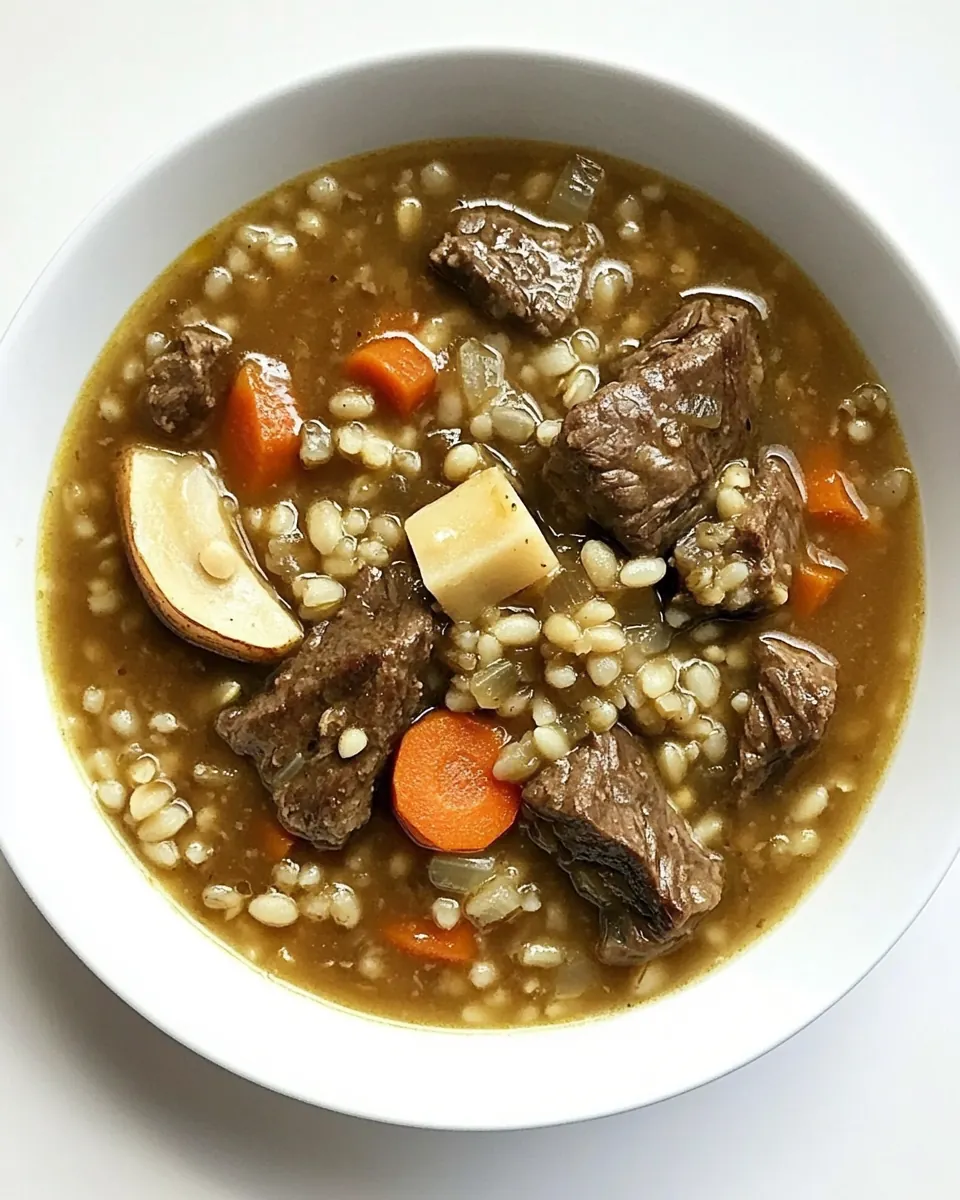
Duff Goldmans Beef Barley Soup
Duff Goldmans Beef Barley Soup has been one of those recipes I reach for when I want real comfort, food that feels like a warm hug on a chilly night. The very first time I made it I remember the house filling with a deep, savory aroma that made neighbors peek over the fence, and I stood at the stove, bowl in hand, savoring the steam and the promise of rich, meaty broth.
I learned this version from an old family note that circulated among friends, and each time I cook Duff Goldmans Beef Barley Soup I find a small moment of calm in the slow, patient simmering. The short ribs break down into tender shreds, the vegetables release their sweetness, and the barley swells to a comforting texture. It is the kind of recipe that rewards the wait, and it always brings people to the table.
There was a night when a surprise snowstorm stranded two neighbors, and I ladled steaming bowls while we listened to the wind. We compared stories, tore off pieces of bread, and the simple meal stretched into an evening of laughter. That memory is part of why I keep this in my rotation, a dish that feeds more than hunger.
Recipe Snapshot
3 hr 15 mins
45 mins
150 mins
Hard
300 kcal
American
Vegan, Whole30
Soups
large heavy pot, medium saucepan, coffee filter, colander or mesh strainer, bowl
What You’ll Enjoy About This Duff Goldmans Beef Barley Soup
Deep, layered flavor
I love how this soup builds complexity from humble parts. Starting with dried mushrooms and slow simmered short ribs, the broth develops shades of umami that you cannot achieve with shortcuts, and that richness carries through every spoonful.
Textural satisfaction
The combination of tender shredded beef and chewy barley gives the soup body and interest. I appreciate how the barley soaks up the broth yet keeps a pleasant bite, so each mouthful feels substantial and warming.
Make ahead advantage
I often make Duff Goldmans Beef Barley Soup a day ahead because the flavors marry beautifully overnight. Reheating the next day intensifies the stock, and the soup tastes even more cohesive than fresh off the stove.
Simple, pantry friendly
This recipe relies on straightforward ingredients like carrots, onion, and celery, yet the dried mushrooms and short ribs elevate it. It feels fancy without requiring hard to find elements, which is why I reach for it when I want something impressive but not complicated.
Comfort with versatility
You can serve it as a hearty weeknight centerpiece or ladle it into thermoses for a warming lunch on the go. I like that it works for quiet family dinners and for feeding an unexpected guest list.
What You Need for Duff Goldmans Beef Barley Soup
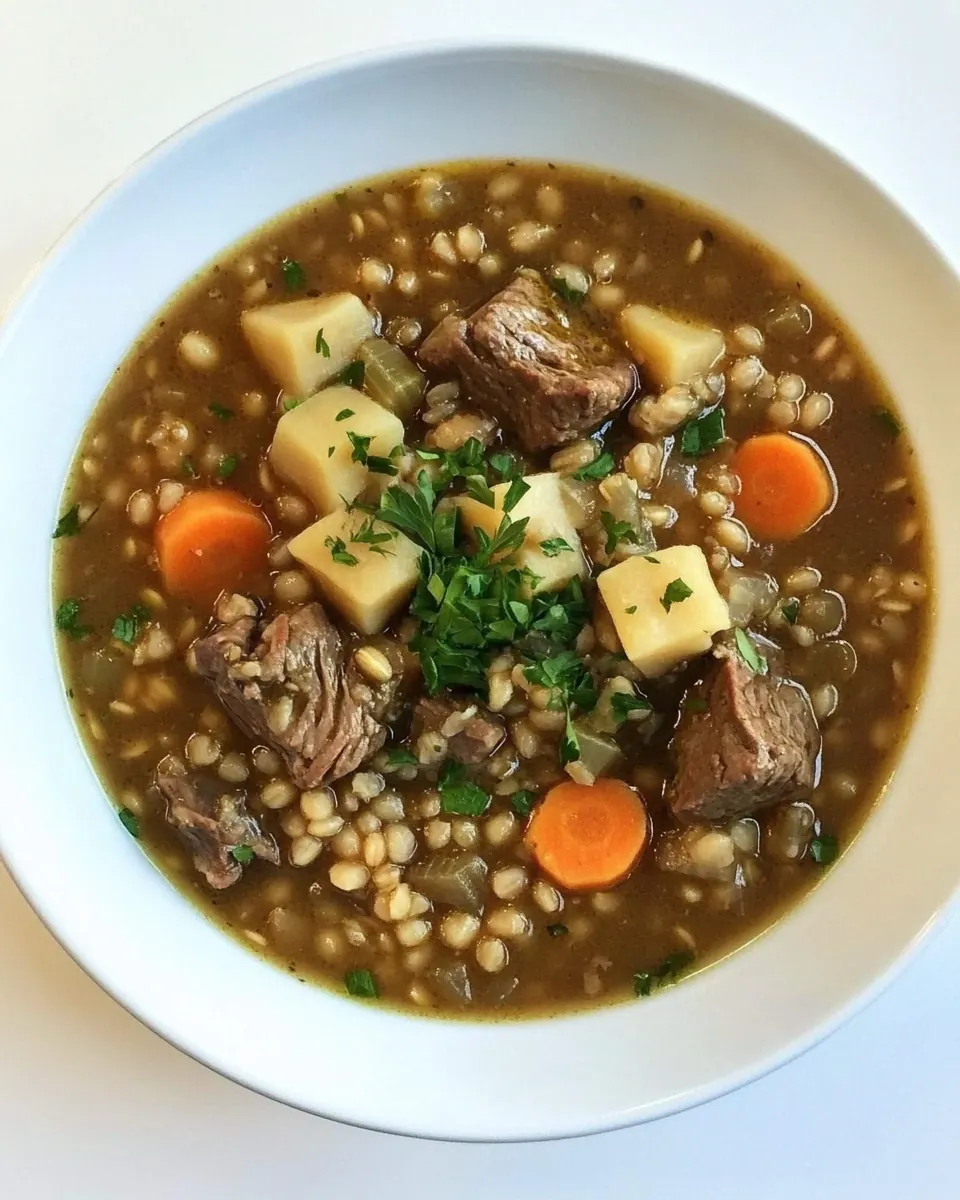
These ingredients form a classic, hearty broth that balances meatiness with vegetal sweetness and a nutty grain. The short ribs and dried mushrooms are the heavy hitters, building an umami forward stock, while barley gives body and a pleasing chew. The root vegetables and onion add layers of natural sugar that round the flavor, and a touch of sugar and salt lifts everything into balance.
- 2 ounces dried mushrooms: Soak to rehydrate and concentrate umami flavors; dried mushrooms add depth to the broth when simmered and impart an earthy aroma that complements the beef.
- 6 large, meaty short ribs: Braise to release rich marrow and collagen; meaty short ribs create a gelatinous, flavorful base when cooked low and slow, providing hearty texture and beefy intensity to the soup.
- 3 whole celery stalks: Chop and simmer to build aromatic complexity; celery contributes subtle vegetal sweetness and savory backbone that balances richer elements in the stock.
- 2 large whole carrots, peeled: Peel and simmer to introduce natural sweetness and body; carrots lend a gentle sweetness and color while softening into tender pieces that enhance mouthfeel.
- 2 medium whole parsnips, peeled: Peel and simmer to add mild, sweet earthiness; parsnips bring a nutty, slightly spicy flavor that deepens the soup’s root-vegetable profile and complements the barley.
- 1 whole onion, pierced 2 times with a knife: Pierce and simmer to release savory aromatics; piercing the onion allows its juices to infuse the broth, adding layered flavor and rounded sweetness as it cooks down.
- 3/4 cup barley (or more if you want a very thick soup): Rinse and simmer to thicken and add chew; barley absorbs liquid and releases starches that create a satisfying, slightly chewy texture and help bind the soup together.
- 1/2 teaspoons sugar: Dissolve to balance flavors and enhance natural sweetness; a small amount of sugar can round harsh edges in the broth and lift savory notes without making the soup noticeably sweet.
- Salt and black pepper: Season to taste to enhance and balance the dish; salt and black pepper bring out flavors, control seasoning levels, and add mild heat and depth when adjusted during cooking.
Making Duff Goldmans Beef Barley Soup
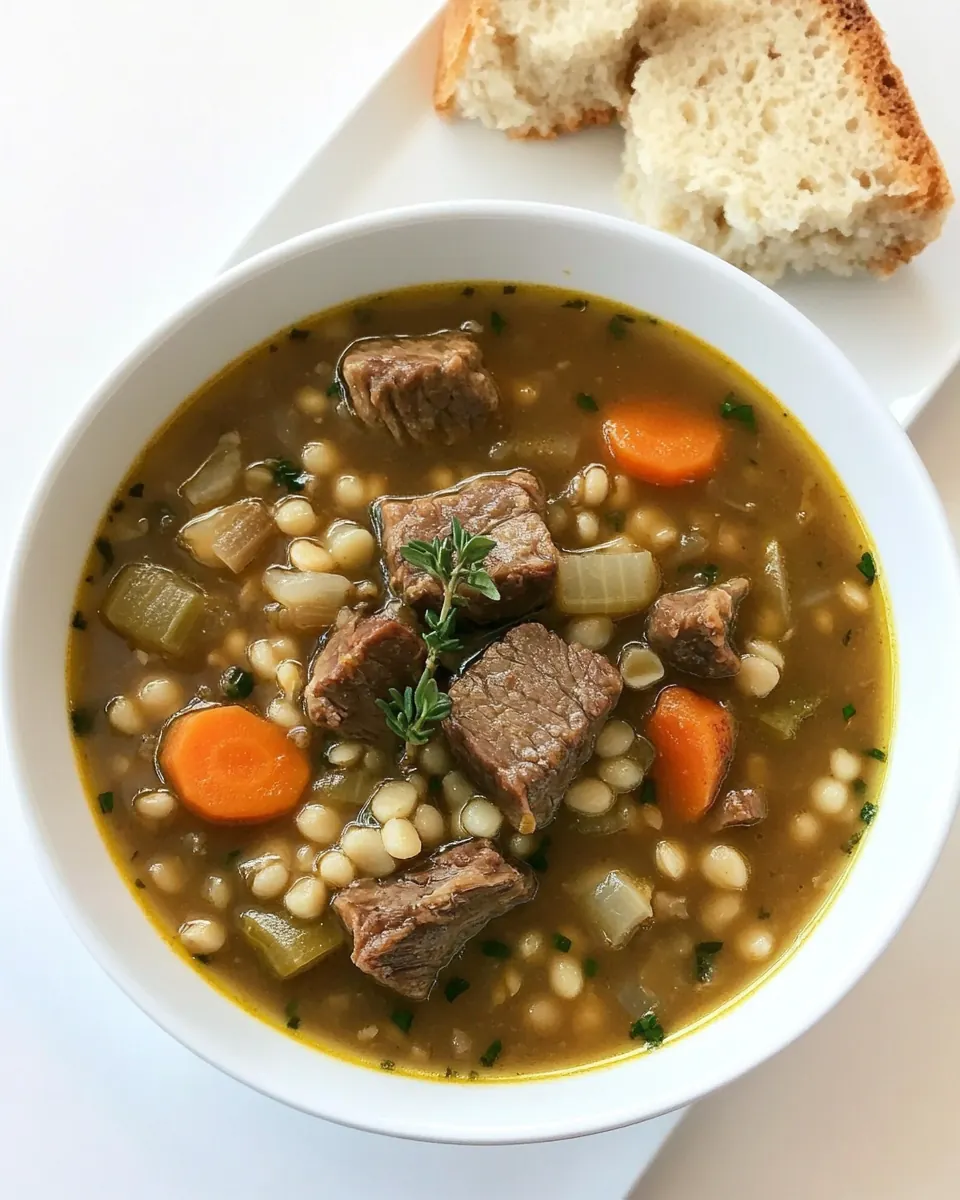
These directions favor patience and attention, guiding you through each stage so the broth becomes rich and the meat tender. Read each step slowly before you begin, and keep an eye on simmering so you can maintain gentle heat. The result is a bowl that tastes like time and care went into it.
- Place dried mushrooms in the bottom of a saucepan. Dried mushrooms are important here, they’ll give the soup a lot more flavor than fresh ones. You can find them in cellophane packages in the produce section of most grocery stores. Duff’s mom didn’t specify which kind of mushrooms to use, so I chose a combination of shitake and porcini, which gave a terrific flavor to the broth. Add 1 quart (4 cups) of water to the saucepan and bring to a boil over high heat. As soon as the water comes to a rolling boil, remove saucepan from heat and let the mushrooms soak for 20 minutes. While mushrooms are soaking, place the short ribs in the bottom of a large, heavy pot and cover with 3 quarts hot water. Bring to a boil, skimming the foam that rises to the top, till the water is fairly clear.: As the mushrooms steep, your kitchen will fill with a deep, woody fragrance that signals the start of the soup's umami foundation, and you should notice the aroma intensify as they rehydrate; this soaking extracts concentrated flavor into the water, which becomes an essential component of the stock, and a typical error is discarding the soaking liquid which holds much of the mushroom essence, so always reserve it for later use.
- Add the whole celery, carrots, parsnips, and brown onion to the pot. Bring back to a boil, then reduce to a simmer.: When the water hits a rolling boil, it will smell more intense and steam will rise quickly, which helps open the mushroom cells to release flavor; removing the pan from heat right after boiling preserves the delicate mushroom notes without cooking them aggressively, and avoid boiling too long because it can concentrate and slightly bitter the mushroom liquid.
- Drain the mushrooms by straining them through a coffee filter, reserving the mushroom soaking liquid in a bowl (use a mesh strainer or colander to hold the filter in place while you strain). Discard the filter, which will contain any residue that was left on the mushrooms.: During this rest, the texture of the mushrooms softens and the liquid turns darker and deeply aromatic, a sign the broth will have layered flavor, and soaking also plumps the mushrooms so they contribute texture if you return them later; one mistake is rushing this step, which yields weaker mushroom flavor.
- Pour the mushrooms and the mushroom liquid into the soup pot. Add the barley, sugar, 1/2 tbsp salt, and 1/4 tsp black pepper. If you’re salt sensitive, you can reduce the salt to 1 tsp, but don’t skimp on it too much… it really helps to balance the sweetness of the cooked vegetables. Bring soup back to a gentle simmer. Let it cook uncovered for 2 1/2 hours, stirring every so often and adding water to the pot as needed to keep the soup from getting dry. In the end, you want the soup to be nicely thickened with a rich, meaty stock and tender, fall-off-the-bone meat.: As the pot comes to a simmer and you skim the foam, you'll see the surface clear and the smell turn meaty and pure, indicating impurities are leaving the stock, and skimming is important for a clean broth; skipping skimming can leave cloudy stock with an off taste.
- When the soup is finished cooking, remove the onion and celery and discard. Remove the carrots and parsnips and slice them into rounds. Return the sliced cooked vegetables to the soup and stir. You can add more salt or pepper to taste at this point, if you need to. I thought it was absolutely perfect as-is.: The boiling and skimming will produce a clearer, brighter flavored stock, and the sound will change from a rolling boil to a gentler, cleaner simmer as you remove surface scum; a common oversight is not skimming often enough, which results in a greasy or cloudy mouthfeel.
- You can shred the meat and remove the bones, or serve one short rib per bowl of soup. Make the soup a day ahead and refrigerate overnight to allow the flavors to develop more. Duff's mom recommends serving with a slice of rye bread and a little horseradish on the side.: These aromatics will begin releasing sweet and savory compounds into the stock, creating a rounded foundation, and keeping them whole makes them easy to remove later while letting their flavors infuse fully; chopping too early can overextract and cloud the final broth.
- Bring back to a boil, then reduce to a simmer: Returning to boil then lowering to a simmer ensures the bones and meat release collagen steadily, which will give the soup body and a silky texture, and you should see small gentle bubbles and smell the meatiness intensify; boiling too hard at this stage can emulsify fat and make the broth greasy.
- Drain the mushrooms through a coffee filter, reserving the soaking liquid: Straining through a filter removes fine grit and any debris while preserving the dark, aromatic soaking liquid, which you will add back to the pot to deepen the flavor, and failing to filter can introduce unwanted grit into the final soup.
- Pour the mushrooms and the mushroom liquid into the soup pot: Once added, the soup will take on an immediate layer of earthiness, and stirring them in distributes that concentrated mushroom flavor through the stock; if you do not incorporate the mushrooms now you miss out on the integrated umami boost.
- Add the barley, sugar, 1/2 tbsp salt, and 1/4 tsp black pepper: The moment you add barley the soup gains a thickening agent that absorbs flavor, and the small amount of sugar and seasoning start the essential balancing act between sweet and savory; be cautious with salt because barley will swell and concentrate flavors as it cooks.
- Bring soup back to a gentle simmer and cook uncovered for 2 1/2 hours: Over this long, slow simmer the short ribs will become fall off the bone tender and the broth will reduce into a rich glaze around the barley , and you will hear a low murmur from the pot and smell layers of beef and vegetable sweetness developing; a frequent mistake is letting it dry out, so stir occasionally and add water as needed to maintain the consistency you want.
- Remove the onion and celery and discard, slice the carrots and parsnips: Taking out the whole aromatics cleans the texture while returning the sliced cooked carrots and parsnips keeps pleasant bite and presentation, and the visual change from whole roots to neat rounds signals the soup is nearing readiness; be careful when handling hot vegetables so you do not tear them into mush.
- Shred the meat and remove the bones or serve one short rib per bowl: Shredded beef blends into the soup for fork friendly bites while serving an intact rib makes a dramatic presentation, and the meat will carry the deep broth flavor throughout each spoonful; a common error is leaving too much fat on the pieces, which can make the soup overly greasy.
- Make the soup a day ahead and refrigerate overnight to allow flavors to develop: Chilling lets the flavors marry and the texture settle so reheated portions taste more cohesive, and any fat will congeal on top allowing easy removal for a leaner bowl; reheating slowly on low prevents the barley from over swelling and becoming mushy.
- Serve with a slice of rye bread and a little horseradish on the side: The pungent bite of horseradish and the hearty grain of rye complement the rich broth and cut through fat, making each spoonful more lively, and offering accompaniments lets guests tailor the final flavor; avoid overpowering the soup with too much horseradish at once.
Recipe Notes about Duff Goldmans Beef Barley Soup
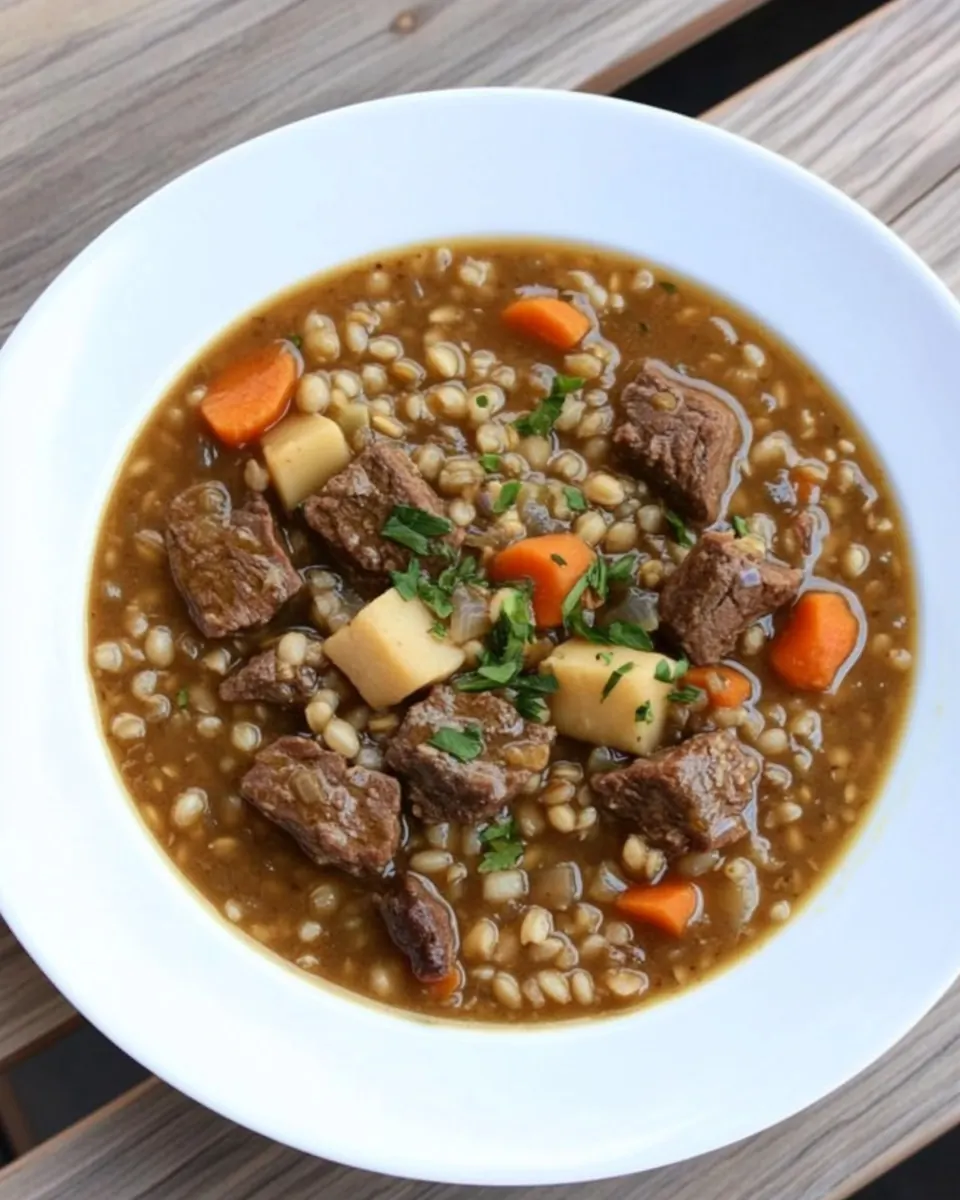
This recipe benefits from technique and small adjustments. Below are detailed tips to help you get the most from the ingredients and the long simmer. Read them before you begin so you can set expectations and gather tools.
- Use the mushroom soaking water, always save and strain it through a coffee filter to keep delicate mushroom flavor without grit, which deepens the broth substantially.
- Maintain a gentle simmer, consistent low heat yields clear stock and tender meat, while a vigorous boil can emulsify fat and cloud the soup.
- Adjust barley for desired thickness, add more for a stew like consistency or less for a brothy outcome, remembering it continues to absorb liquid as it cools.
- Skim the stock early and often, removing foam keeps the broth clean tasting and improves presentation, especially when serving guests.
- Make ahead for better flavor, refrigerate overnight so the flavors marry and the fat solidifies for easy removal, producing a polished final bowl.
Serving Ideas for Duff Goldmans Beef Barley Soup
This soup is versatile and substantial, perfect for winter dinners, casual lunches, or a comforting Ramadan iftar. Consider accompaniments that add texture and brightness. Below are serving suggestions and storage ideas to make the most of each batch.
- Serve with rye bread, the dense crumb soaks up broth and adds a nutty contrast that I find irresistible alongside a steaming bowl.
- Offer horseradish on the side, a small spoonful adds a sharp lift that cuts through richness, letting diners brighten their own bowls.
- Family dinner, dish it into large bowls and place bread on the table for a casual, shareable meal that warms everyone up.
- Make ahead, refrigerate for up to three days after cooling, then skim the congealed fat before reheating slowly for best texture.
- Freezing, portion into airtight containers and freeze for up to three months, remembering that barley may continue to soften with freezing and reheating.
- Seasonal pairings, serve during winter or early spring when root vegetables are at their best, and pair with simple salads or roasted greens to add freshness.
- Lunch idea, pour into thermoses for a portable, warming midday meal that stays satisfying for hours.
- Occasion, ideal for cozy family gatherings or feeding unexpected guests since it scales well in large pots.
FAQ
Conclusion
This soup stands out for its deep, slow brewed flavor and the satisfying texture of tender beef with chewy barley. It rewards patience and small attentions, from reserving the mushroom soaking liquid to gentle simmering and skimming. Give it a try on a quiet weekend or when you need a meal that warms both kitchen and company. Once you taste how the flavors deepen after a day, I think you will find it earns a regular spot in your rotation.
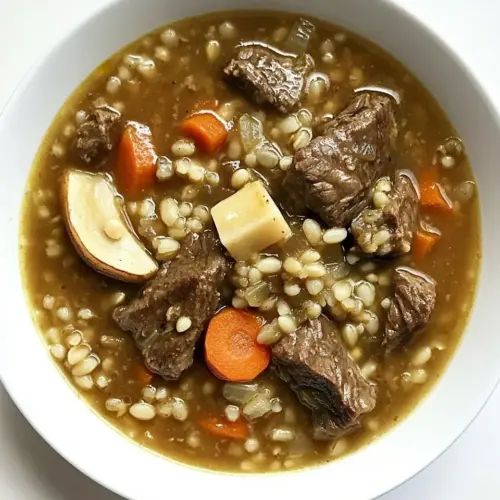
Duff Goldmans Beef Barley Soup
Equipment
- Large heavy pot
- Medium Saucepan
- coffee filter
- colander or mesh strainer
- Bowl
Ingredients
- 2 ounces dried mushrooms Soak to rehydrate and concentrate umami flavors; dried mushrooms add depth to the broth when simmered and impart an earthy aroma that complements the beef.
- 6 large, meaty short ribs Braise to release rich marrow and collagen; meaty short ribs create a gelatinous, flavorful base when cooked low and slow, providing hearty texture and beefy intensity to the soup.
- 3 whole celery stalks Chop and simmer to build aromatic complexity; celery contributes subtle vegetal sweetness and savory backbone that balances richer elements in the stock.
- 2 large whole carrots, peeled Peel and simmer to introduce natural sweetness and body; carrots lend a gentle sweetness and color while softening into tender pieces that enhance mouthfeel.
- 2 medium whole parsnips, peeled Peel and simmer to add mild, sweet earthiness; parsnips bring a nutty, slightly spicy flavor that deepens the soup’s root-vegetable profile and complements the barley.
- 1 whole onion, pierced 2 times with a knife Pierce and simmer to release savory aromatics; piercing the onion allows its juices to infuse the broth, adding layered flavor and rounded sweetness as it cooks down.
- 3/4 cup barley (or more if you want a very thick soup) Rinse and simmer to thicken and add chew; barley absorbs liquid and releases starches that create a satisfying, slightly chewy texture and help bind the soup together.
- 1/2 teaspoons sugar Dissolve to balance flavors and enhance natural sweetness; a small amount of sugar can round harsh edges in the broth and lift savory notes without making the soup noticeably sweet.
- Salt and black pepper Season to taste to enhance and balance the dish; salt and black pepper bring out flavors, control seasoning levels, and add mild heat and depth when adjusted during cooking.
Instructions
- Place dried mushrooms in the bottom of a saucepan. Dried mushrooms are important here, they’ll give the soup a lot more flavor than fresh ones. You can find them in cellophane packages in the produce section of most grocery stores. Duff’s mom didn’t specify which kind of mushrooms to use, so I chose a combination of shitake and porcini, which gave a terrific flavor to the broth. Add 1 quart (4 cups) of water to the saucepan and bring to a boil over high heat. As soon as the water comes to a rolling boil, remove saucepan from heat and let the mushrooms soak for 20 minutes. While mushrooms are soaking, place the short ribs in the bottom of a large, heavy pot and cover with 3 quarts hot water. Bring to a boil, skimming the foam that rises to the top, till the water is fairly clear.: As the mushrooms steep, your kitchen will fill with a deep, woody fragrance that signals the start of the soup's umami foundation, and you should notice the aroma intensify as they rehydrate; this soaking extracts concentrated flavor into the water, which becomes an essential component of the stock, and a typical error is discarding the soaking liquid which holds much of the mushroom essence, so always reserve it for later use.
- Add the whole celery, carrots, parsnips, and brown onion to the pot. Bring back to a boil, then reduce to a simmer.: When the water hits a rolling boil, it will smell more intense and steam will rise quickly, which helps open the mushroom cells to release flavor; removing the pan from heat right after boiling preserves the delicate mushroom notes without cooking them aggressively, and avoid boiling too long because it can concentrate and slightly bitter the mushroom liquid.
- Drain the mushrooms by straining them through a coffee filter, reserving the mushroom soaking liquid in a bowl (use a mesh strainer or colander to hold the filter in place while you strain). Discard the filter, which will contain any residue that was left on the mushrooms.: During this rest, the texture of the mushrooms softens and the liquid turns darker and deeply aromatic, a sign the broth will have layered flavor, and soaking also plumps the mushrooms so they contribute texture if you return them later; one mistake is rushing this step, which yields weaker mushroom flavor.
- Pour the mushrooms and the mushroom liquid into the soup pot. Add the barley, sugar, 1/2 tbsp salt, and 1/4 tsp black pepper. If you’re salt sensitive, you can reduce the salt to 1 tsp, but don’t skimp on it too much… it really helps to balance the sweetness of the cooked vegetables. Bring soup back to a gentle simmer. Let it cook uncovered for 2 1/2 hours, stirring every so often and adding water to the pot as needed to keep the soup from getting dry. In the end, you want the soup to be nicely thickened with a rich, meaty stock and tender, fall-off-the-bone meat.: As the pot comes to a simmer and you skim the foam, you'll see the surface clear and the smell turn meaty and pure, indicating impurities are leaving the stock, and skimming is important for a clean broth; skipping skimming can leave cloudy stock with an off taste.
- When the soup is finished cooking, remove the onion and celery and discard. Remove the carrots and parsnips and slice them into rounds. Return the sliced cooked vegetables to the soup and stir. You can add more salt or pepper to taste at this point, if you need to. I thought it was absolutely perfect as-is.: The boiling and skimming will produce a clearer, brighter flavored stock, and the sound will change from a rolling boil to a gentler, cleaner simmer as you remove surface scum; a common oversight is not skimming often enough, which results in a greasy or cloudy mouthfeel.
- You can shred the meat and remove the bones, or serve one short rib per bowl of soup. Make the soup a day ahead and refrigerate overnight to allow the flavors to develop more. Duff's mom recommends serving with a slice of rye bread and a little horseradish on the side.: These aromatics will begin releasing sweet and savory compounds into the stock, creating a rounded foundation, and keeping them whole makes them easy to remove later while letting their flavors infuse fully; chopping too early can overextract and cloud the final broth.
- Bring back to a boil, then reduce to a simmer: Returning to boil then lowering to a simmer ensures the bones and meat release collagen steadily, which will give the soup body and a silky texture, and you should see small gentle bubbles and smell the meatiness intensify; boiling too hard at this stage can emulsify fat and make the broth greasy.
- Drain the mushrooms through a coffee filter, reserving the soaking liquid: Straining through a filter removes fine grit and any debris while preserving the dark, aromatic soaking liquid, which you will add back to the pot to deepen the flavor, and failing to filter can introduce unwanted grit into the final soup.
- Pour the mushrooms and the mushroom liquid into the soup pot: Once added, the soup will take on an immediate layer of earthiness, and stirring them in distributes that concentrated mushroom flavor through the stock; if you do not incorporate the mushrooms now you miss out on the integrated umami boost.
- Add the barley, sugar, 1/2 tbsp salt, and 1/4 tsp black pepper: The moment you add barley the soup gains a thickening agent that absorbs flavor, and the small amount of sugar and seasoning start the essential balancing act between sweet and savory; be cautious with salt because barley will swell and concentrate flavors as it cooks.
- Bring soup back to a gentle simmer and cook uncovered for 2 1/2 hours: Over this long, slow simmer the short ribs will become fall off the bone tender and the broth will reduce into a rich glaze around the barley , and you will hear a low murmur from the pot and smell layers of beef and vegetable sweetness developing; a frequent mistake is letting it dry out, so stir occasionally and add water as needed to maintain the consistency you want.
- Remove the onion and celery and discard, slice the carrots and parsnips: Taking out the whole aromatics cleans the texture while returning the sliced cooked carrots and parsnips keeps pleasant bite and presentation, and the visual change from whole roots to neat rounds signals the soup is nearing readiness; be careful when handling hot vegetables so you do not tear them into mush.
- Shred the meat and remove the bones or serve one short rib per bowl: Shredded beef blends into the soup for fork friendly bites while serving an intact rib makes a dramatic presentation, and the meat will carry the deep broth flavor throughout each spoonful; a common error is leaving too much fat on the pieces, which can make the soup overly greasy.
- Make the soup a day ahead and refrigerate overnight to allow flavors to develop: Chilling lets the flavors marry and the texture settle so reheated portions taste more cohesive, and any fat will congeal on top allowing easy removal for a leaner bowl; reheating slowly on low prevents the barley from over swelling and becoming mushy.
- Serve with a slice of rye bread and a little horseradish on the side: The pungent bite of horseradish and the hearty grain of rye complement the rich broth and cut through fat, making each spoonful more lively, and offering accompaniments lets guests tailor the final flavor; avoid overpowering the soup with too much horseradish at once.
Notes
- Use the mushroom soaking water, always save and strain it through a coffee filter to keep delicate mushroom flavor without grit, which deepens the broth substantially.
- Maintain a gentle simmer, consistent low heat yields clear stock and tender meat, while a vigorous boil can emulsify fat and cloud the soup.
- Adjust barley for desired thickness, add more for a stew like consistency or less for a brothy outcome, remembering it continues to absorb liquid as it cools.
- Skim the stock early and often, removing foam keeps the broth clean tasting and improves presentation, especially when serving guests.
- Make ahead for better flavor, refrigerate overnight so the flavors marry and the fat solidifies for easy removal, producing a polished final bowl.