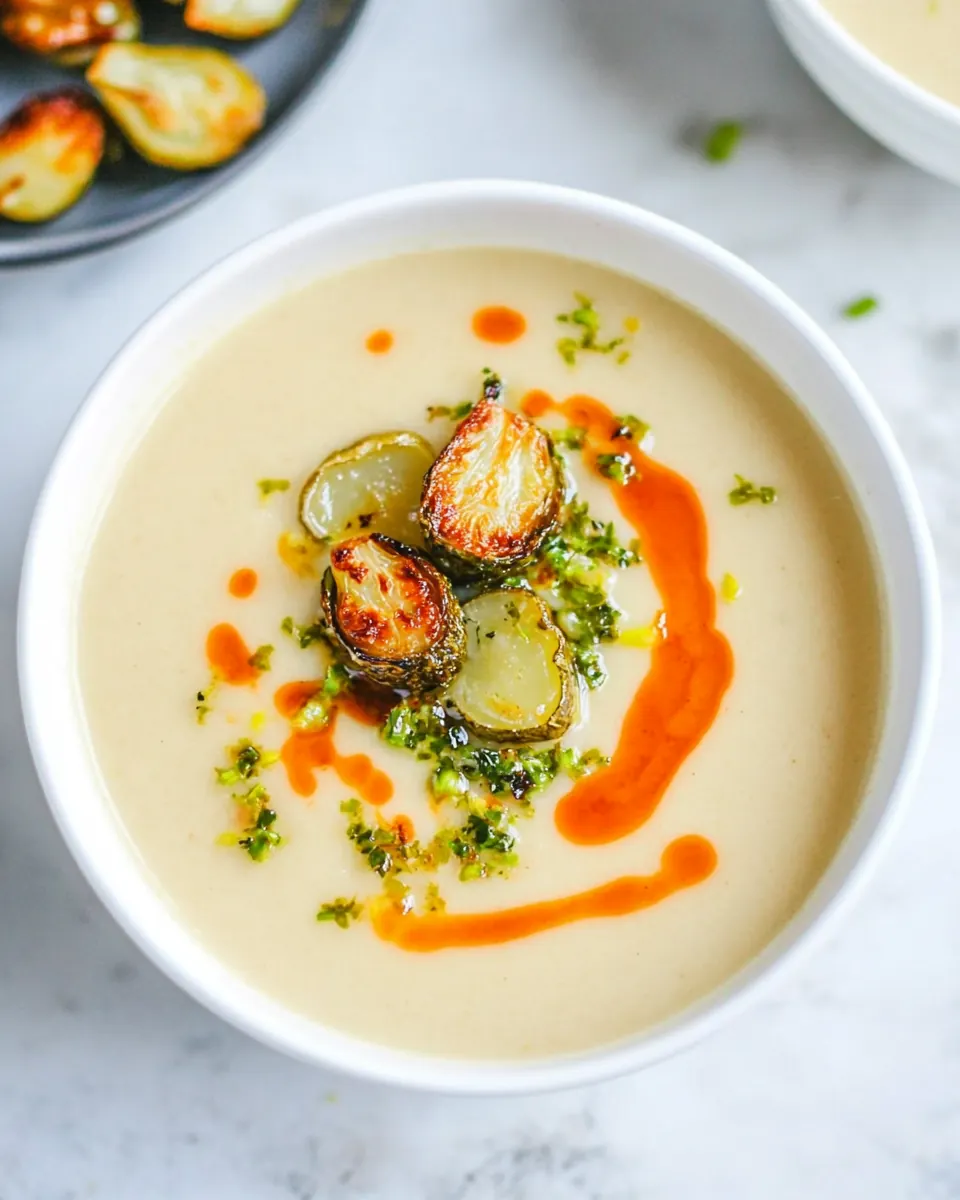
Creamy Roasted Garlic Potato Soup
Creamy Roasted Garlic Potato Soup has been my go to on chilly evenings when I want something that feels like a warm hug in a bowl. The first time I made it I remember coming home with cold hands and a head full of errands, then getting hit by that rich garlic aroma once the soup warmed on the stove. That moment turned a hectic day into a quiet one, and I kept thinking about how simple ingredients can turn into something comforting and elegant.
I learned a few things from those early attempts, like how much softer the texture becomes when you let the potatoes simmer until they practically fall apart, and how roasted garlic lends a mellow sweetness that plain raw garlic cannot match. I also discovered that crisped up brussels sprouts leaves bring a playful crunch and contrast to the velvety soup, and a drizzle of chili oil brightens every spoonful.
Recipe Snapshot
40 mins
10 mins
30 mins
Easy
250 kcal
American
Gluten-Free, Low FODMAP
Soups
Large stock pot, Blender, Candy thermometer, Slotted spoon, Paper towels
The Best Thing About This Creamy Roasted Garlic Potato Soup
I love the creamy texture
The way the potatoes melt into the stock creates a creamy base that feels luxurious without being heavy. I usually pulse the soup in a blender until it is silk smooth, which gives that velvety mouthfeel that makes people go back for seconds.
Roasted garlic adds depth
Roasting the garlic transforms its flavor from sharp to sweet and nutty, and that depth is what makes this bowl memorable. I often tell friends that roasted garlic is the secret weapon here, because it layers flavor rather than just adding heat.
The crispy element matters
Adding crunchy fried brussels sprouts leaves and a finishing drizzle of chili oil gives texture contrast and a flash of spice. I love how the crisp topping breaks the monotony of pureed soup, making each bite interesting.
Flexible and forgiving
This soup is forgiving if your measurements are not exact. Use more or less stock to adjust consistency, and swap stock types if you need to. I appreciate recipes that let me improvise without losing their soul.
Great for sharing and seasons
Because it scales easily, I often make a big pot for friends or for a cozy meal with family. Its rich, comforting profile is perfect for cold weather and evening gatherings, and it stores well for an easy reheat day.
Key Ingredients for Creamy Roasted Garlic Potato Soup
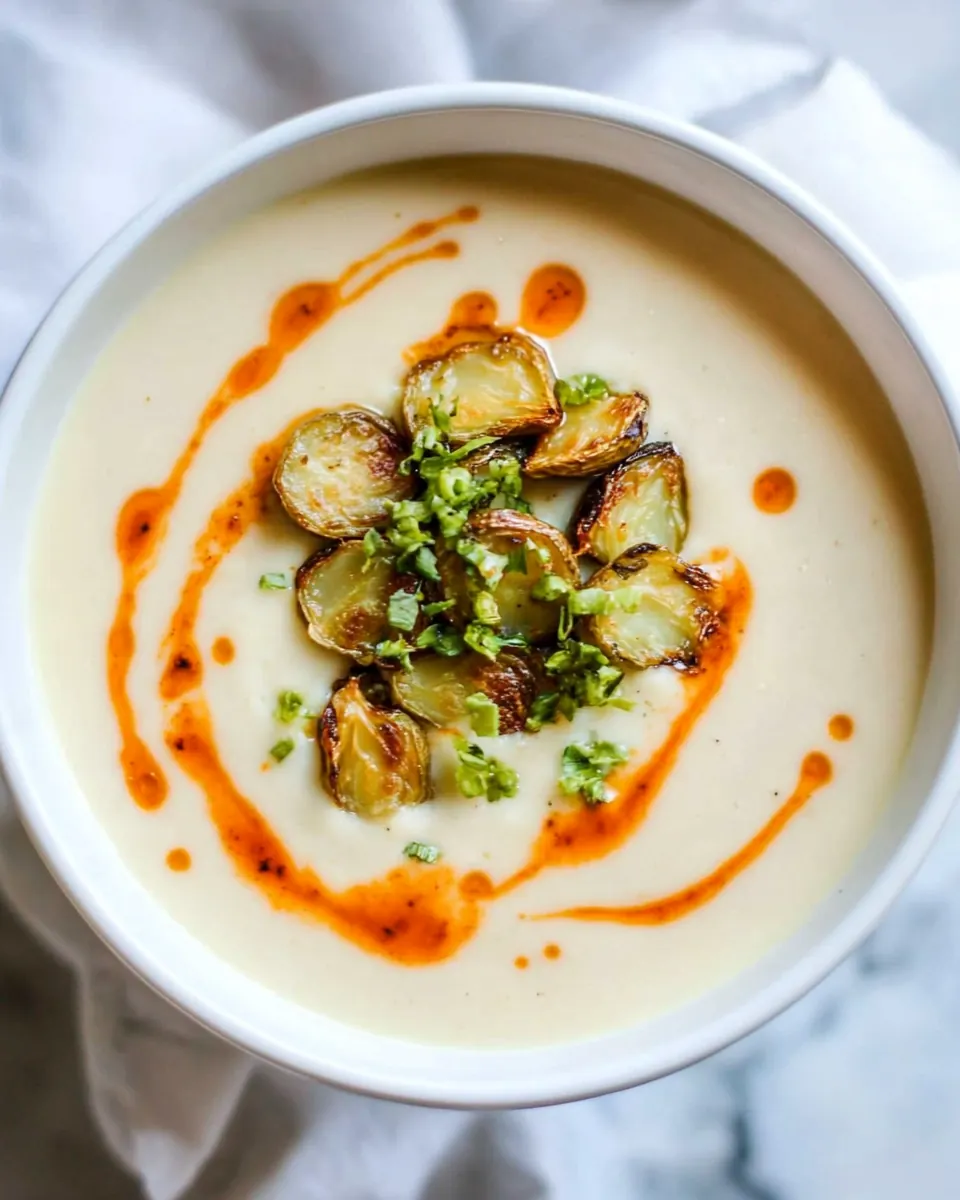
These components come together with a simple philosophy: a starchy base for body, roasted aromatics for depth, and crunchy contrast for interest. The key players are the potatoes for structure, the roasted garlic for flavor complexity, and the fried brussels sprouts leaves for texture. The stock and cream round out the mouthfeel so each spoonful is rich and satisfying without being overly heavy.
- 1 tablespoon olive oil: Sauté gently to create a flavorful fat base for the soup, contributing fruity olive notes and helping soften aromatics before adding liquids.
- 1 tablespoon unsalted butter: Melt slowly to provide a rich, creamy mouthfeel and add a subtle, nutty depth that complements the olive oil during sautéing.
- 1 sweet onion, diced: Dice finely to release sweet, savory flavors and aromatic compounds that build the soup's foundational taste when softened and caramelized.
- 3 pounds russet potatoes, peeled and chopped: Peel and chop into uniform pieces to ensure even cooking; provide hearty body, starchiness, and a smooth texture when puréed into the soup.
- 4 to 5 cups low-sodium chicken or vegetable stock: Simmer to adjust consistency and infuse savory depth; use low-sodium stock to control salt levels while contributing layered savory flavors.
- 2 bulbs roasted garlic: Roast first to develop deep, mellow, caramelized garlic flavor; mash or squeeze into the soup to add a sweet, aromatic garlic character.
- 1/3 cup cream: Add sparingly to enrich the soup with silkiness and a creamy finish, balancing the starchiness of the potatoes and rounding out flavors.
- 1/4 teaspoon salt: Season lightly to enhance and balance flavors without overpowering; used to moderately season the soup during cooking and final adjustments.
- 1/4 teaspoon pepper: Season subtly to provide gentle heat and enhance aroma; freshly ground pepper brightens the overall flavor profile when added.
- chili oil for serving: Drizzle at serving to introduce a spicy, aromatic finish and a hint of heat that contrasts with the soup's creamy richness.
- 4 cups vegetable oil: Heat to high temperature for frying or roasting tasks where a neutral, high-smoke-point oil is needed; useful for preparing crisp garnishes.
- 1/2 pound brussels sprouts, stems removed and leaves removed: Trim and separate leaves to prepare for frying or roasting as a crispy garnish, adding a bitter, vegetal contrast and textural crunch.
- salt and pepper to taste: Season freely to finish dishes according to taste; used to adjust both saltiness and peppery heat for a balanced final seasoning.
Step by Step Instructions for Creamy Roasted Garlic Potato Soup
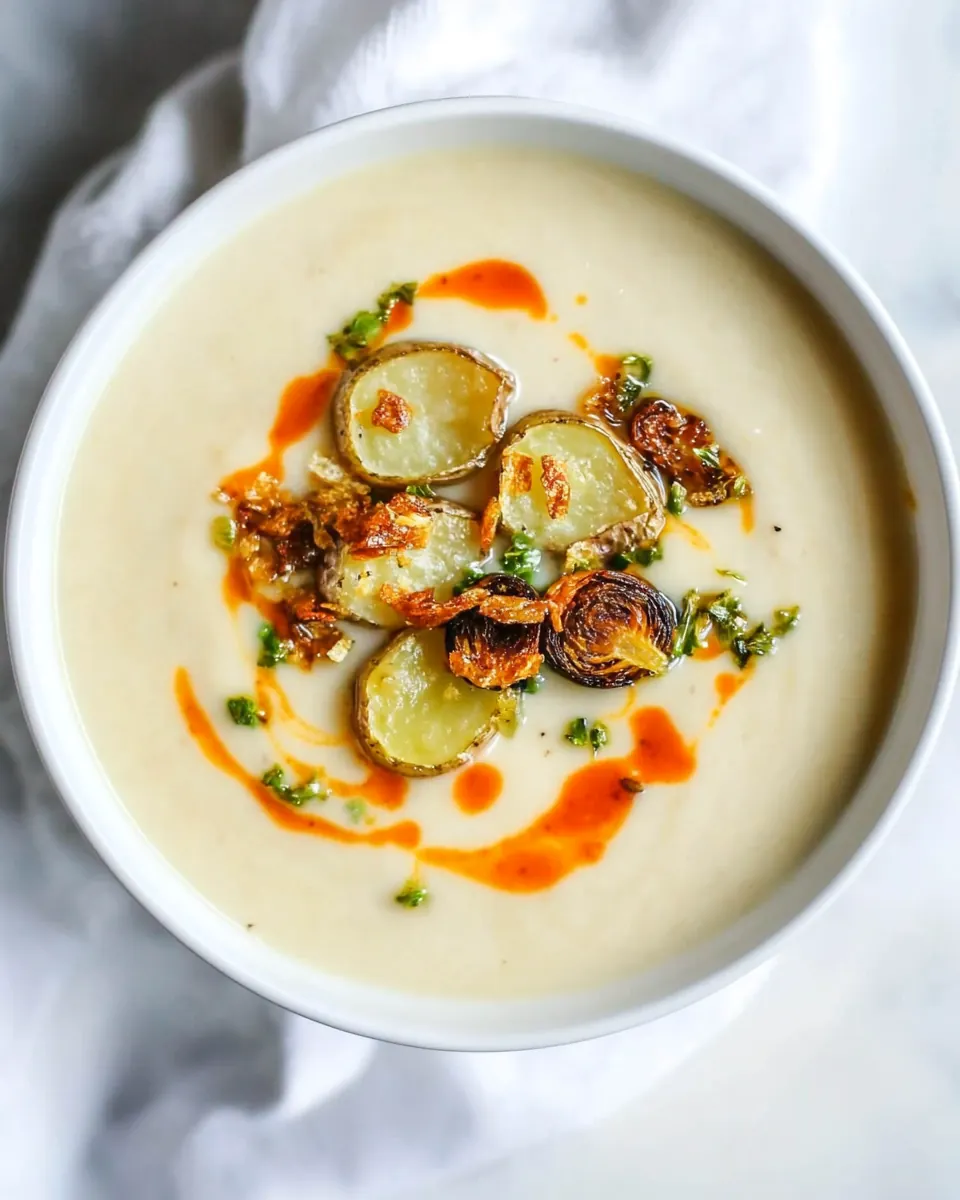
These instructions walk you through the soup with sensory cues so you can trust each decision. Take your time to notice aromas and textures, and adjust gently as you go.
- Heat a large stock pot over medium heat and add olive oil and butter. Once melted, stir in the onion with a pinch of salt and cook until softened, about 5 minutes. Add the potatoes and enough stock to cover the potatoes – starting with 4 cups and using more if needed. Bring the mixture to a simmer. Cover and cook until the potatoes are tender and falling apart, about 20 to 30 minutes. Turn off the heat.: The pot should feel warm to the touch underneath and you will hear a soft gentle sizzle when the olive oil and butter meet. As the onion softens, it releases a sweet savory fragrance that fills the kitchen and signals progress. Visually, the onion should turn translucent and glossy rather than brown, so keep the heat moderate. Stir every minute or two to prevent sticking and ensure even softening. If you notice browning, lower the heat immediately because burned onion will add an unpleasant bitterness. A common mistake is rushing with high heat which leads to unevenly cooked pieces and sharp flavors.
- Carefully add the mixture to a blender. Squeeze out the roasted garlic cloves and add them to the blender too. Puree the soup until totally creamy and smooth. Pour the mixture back into the pot and heat over low heat. Add the cream, salt and pepper. Taste and season additionally with salt and pepper if needed.: Once the chopped potatoes join the pot, the sound changes to a gentle simmer as the stock begins to warm. You should see small bubbles forming around the edges, not a rolling boil. The key visual cue is that the potatoes are submerged but not swimming in excess liquid. Using just enough stock concentrates the flavor, while adding more creates a thinner consistency. If the liquid is simmering too aggressively, lower the heat to avoid breaking the starch into glue. A frequent error is adding all the stock at once which can make the soup thinner than intended, so start with four cups and assess after cooking.
- Serve the soup and drizzle the chili oil on top. Add the brussels as garnish and eat!: The pot will emit savory steam and the surface will show steady small bubbles as the flavors meld. Keep the lid on to trap heat and minimize evaporation until the potatoes start to soften. You may smell the starch and stock blending into a comforting aroma that announces the soup is coming together. If the liquid seems to cook down too quickly, slightly crack the lid to slow evaporation. Avoid a vigorous boil because that can cause the potatoes to break unevenly and produce a gluey texture.
- While the potatoes are simmering, heat a pot over medium heat and add the vegetable oil. Attach a candy thermometer if you have one – you want the temperature to be around 325 to 350 degrees – no higher! Add the brussels sprouts leaves a few handfuls at a time and fry until crispy, about 2 to 3 minutes. Remove with a slotted spoon and place on a paper towel to drain, covering with salt and pepper.: Test doneness by piercing a chunk with a fork; it should slide off easily and break with little pressure. As they soften, you will notice the broth thickening and a richer scent from the melded ingredients. The sound becomes quieter as the pot settles into a low simmer. If the pieces hold their shape when pressed, continue cooking and check every 5 minutes. A typical pitfall is undercooking, which leaves a grainy or chunky texture after blending.
- Turn off the heat: The pot will still be hot and steaming, and turning off the heat prevents oversoftening. Leaving it on high risks losing too much liquid and concentrating flavors unevenly. Letting the soup rest briefly makes transferring safer and reduces splatter in the blender. Do not leave it covered and forgotten for too long, because it can cool down excessively before you puree.
- Carefully add the mixture to a blender: When you transfer the hot contents, you will see silky swirls as the ladle pours into the blender. The warmth amplifies the aromatics, and you should hold the lid slightly askew with a towel to allow steam to escape safely. The visual cue of a smooth stream indicates a good transfer. A major safety mistake is sealing the blender fully while hot contents are inside which can cause pressure buildup, so vent the lid carefully.
- Squeeze out the roasted garlic cloves and add them to the blender too: Roasted garlic will be soft and golden, emitting a sweet almost caramel like fragrance. As you press the cloves out, they should slide freely from their skins. The roasted cloves integrate seamlessly, giving the puree a mellow savory backbone. If the garlic feels firm or tastes sharp, it likely needs more roasting time, which will affect the final flavor balance.
- Puree the soup until totally creamy and smooth: As the blender runs, you will hear a consistent hum and watch the texture change from chunk to a glossy, uniform consistency. The surface should appear silky and free of visible lumps. This smoothness is what gives the soup its luxurious mouthfeel. Overblending is less of a problem than underblending here, but be mindful of hot steam venting and pulse if needed. A common mistake is leaving small unmixed chunks that give a gritty mouthfeel.
- Pour the mixture back into the pot and heat over low heat: The soup will steam gently as it returns to the pot, and the heat will help marry the flavors. Stirring slowly, you should see the surface sheen and feel the warm velvety texture when you test a spoonful. Maintain low heat so you do not scald the dairy addition. Boiling at this stage can change the texture of the cream and make it separate.
- Add the cream salt and pepper: When you stir in the cream , the soup's aroma becomes rounder and sweeter while the texture becomes noticeably richer. The salt and pepper should be added gradually, tasting as you go because flavors concentrate as the soup reduces. A misstep is over-salting early on, which is hard to correct later, so always season to taste in small increments.
- Serve the soup and drizzle the chili oil on top: The final presentation is a smooth, steaming bowl with a glossy top. The chili oil lands as vibrant droplets that give both heat and visual contrast. The aroma will be a blend of roasted sweet garlic , warm potatoes , and spicy oil. Add the oil sparingly then increase to taste because it can quickly dominate the bowl.
- Add the brussels as garnish and eat: Crispy brussels sprouts leaves add immediate texture contrast, their toasted scent and crackle against the spoon bringing delightful complexity. Sprinkle them on just before serving so they remain crisp. If they sit in the soup for too long they will soften and lose their crisp appeal, so time this garnish to coincide with plating.
- While the potatoes are simmering heat a pot over medium heat and add the vegetable oil: The oil should shimmer slightly when ready, signaling the right temperature for frying. Using a candy thermometer helps maintain the target range, and you will hear a lively sizzle when you add the leaves. If the oil smokes, lower the heat because overheated oil imparts off flavors and becomes unsafe. Not preheating enough leads to oily, soggy leaves instead of crisp chips.
- Attach a candy thermometer if you have one you want the temperature to be around 325 to 350 degrees no higher: The thermometer gives a clear visual cue as the number climbs, and maintaining that narrow band ensures the brussels sprouts leaves crisp quickly without burning. The sizzling sound will be steady and vigorous during frying. Going above the recommended temperature causes scorching and bitter notes, while too low yields greasy, limp results.
- Add the brussels sprouts leaves a few handfuls at a time and fry until crispy about 2 to 3 minutes: You will see the leaves bubble and shrink as moisture evaporates, transforming into brittle chips. Their color should shift to a deeper green with toasted edges. Work in batches to avoid crowding, which cools the oil and prevents crisping. A common mistake is adding too many at once, producing unevenly cooked pieces.
- Remove with a slotted spoon and place on a paper towel to drain covering with salt and pepper: The draining step is crucial because it absorbs excess oil and preserves the delicate crunch. Sprinkling salt while they are hot helps it adhere and enhances flavor. If you let them rest too long before seasoning, the salt may not stick properly and the chips can lose some crispness.
Recipe Variations about Creamy Roasted Garlic Potato Soup

I like to think of variations as friendly detours that respect the recipe’s soul. These tweaks let you adapt the soup to your pantry and mood without losing what makes it special.
- Swap stock smartly Use vegetable stock for a vegetarian friendly bowl, or low sodium chicken stock if you prefer deeper savory notes, adjusting salt at the end.
- Adjust cream level Increase the cream slightly for a richer finish, or reduce it to keep a lighter texture and let the potato starch carry more mouthfeel.
- Control the heat Add more or less chili oil when serving to calibrate spice for guests, spooning a little on each bowl for control.
- Make it ahead The soup keeps well refrigerated for a few days, and reheats gently over low heat, stirring to reincorporate any separation.
- Crunch timing Fry the brussels sprouts leaves just before serving to preserve crispness and maximize textural contrast.
Pairing Suggestions for Creamy Roasted Garlic Potato Soup
This soup pairs beautifully with crunchy textures and bright salads, creating a balanced meal. I often serve it for a cozy dinner, but it also fits lunch spreads and special gatherings in colder months. Consider the ideas below when planning your plate.
- Light crisp salads Serve with a simple green salad dressed with lemon and olive oil to cut the soup’s richness and add freshness.
- Crusty bread A warm crusty loaf is perfect for dipping, offering chew and structure against the soup’s creamy body.
- Seasonal occasions Ideal for winter suppers and intimate dinners, this bowl fits a relaxed evening when you want comfort food that feels thoughtful.
- Storage tips Refrigerate in an airtight container for up to three days, reheating gently over low heat to preserve texture and flavor.
- Serving style Ladle into warmed bowls, finish with a drizzle of chili oil and a scattering of crispy brussels sprouts leaves for contrast and a lively presentation.
FAQ
Conclusion
This soup stands out because it balances silky texture with bold roasted garlic flavor and a crunchy finish. You should make it when you want something both comforting and a bit special, whether for a quiet weeknight or to share with friends. The method is forgiving, and the contrast of creamy soup with crisp toppings makes every spoonful interesting. Give it a go, and tweak the finishing touches to match your taste.

Creamy Roasted Garlic Potato Soup
Equipment
- Large stock pot
- Blender
- Candy thermometer
- Slotted Spoon
- Paper towels
Ingredients
- 1 tablespoon olive oil Sauté gently to create a flavorful fat base for the soup, contributing fruity olive notes and helping soften aromatics before adding liquids.
- 1 tablespoon unsalted butter Melt slowly to provide a rich, creamy mouthfeel and add a subtle, nutty depth that complements the olive oil during sautéing.
- 1 sweet onion, diced Dice finely to release sweet, savory flavors and aromatic compounds that build the soup's foundational taste when softened and caramelized.
- 3 pounds russet potatoes, peeled and chopped Peel and chop into uniform pieces to ensure even cooking; provide hearty body, starchiness, and a smooth texture when puréed into the soup.
- 4 to 5 cups low-sodium chicken or vegetable stock Simmer to adjust consistency and infuse savory depth; use low-sodium stock to control salt levels while contributing layered savory flavors.
- 2 bulbs roasted garlic Roast first to develop deep, mellow, caramelized garlic flavor; mash or squeeze into the soup to add a sweet, aromatic garlic character.
- 1/3 cup cream Add sparingly to enrich the soup with silkiness and a creamy finish, balancing the starchiness of the potatoes and rounding out flavors.
- 1/4 teaspoon salt Season lightly to enhance and balance flavors without overpowering; used to moderately season the soup during cooking and final adjustments.
- 1/4 teaspoon pepper Season subtly to provide gentle heat and enhance aroma; freshly ground pepper brightens the overall flavor profile when added.
- chili oil for serving Drizzle at serving to introduce a spicy, aromatic finish and a hint of heat that contrasts with the soup's creamy richness.
- 4 cups vegetable oil Heat to high temperature for frying or roasting tasks where a neutral, high-smoke-point oil is needed; useful for preparing crisp garnishes.
- 1/2 pound brussels sprouts, stems removed and leaves removed Trim and separate leaves to prepare for frying or roasting as a crispy garnish, adding a bitter, vegetal contrast and textural crunch.
- salt and pepper to taste Season freely to finish dishes according to taste; used to adjust both saltiness and peppery heat for a balanced final seasoning.
Instructions
- Heat a large stock pot over medium heat and add olive oil and butter. Once melted, stir in the onion with a pinch of salt and cook until softened, about 5 minutes. Add the potatoes and enough stock to cover the potatoes – starting with 4 cups and using more if needed. Bring the mixture to a simmer. Cover and cook until the potatoes are tender and falling apart, about 20 to 30 minutes. Turn off the heat.: The pot should feel warm to the touch underneath and you will hear a soft gentle sizzle when the olive oil and butter meet. As the onion softens, it releases a sweet savory fragrance that fills the kitchen and signals progress. Visually, the onion should turn translucent and glossy rather than brown, so keep the heat moderate. Stir every minute or two to prevent sticking and ensure even softening. If you notice browning, lower the heat immediately because burned onion will add an unpleasant bitterness. A common mistake is rushing with high heat which leads to unevenly cooked pieces and sharp flavors.
- Carefully add the mixture to a blender. Squeeze out the roasted garlic cloves and add them to the blender too. Puree the soup until totally creamy and smooth. Pour the mixture back into the pot and heat over low heat. Add the cream, salt and pepper. Taste and season additionally with salt and pepper if needed.: Once the chopped potatoes join the pot, the sound changes to a gentle simmer as the stock begins to warm. You should see small bubbles forming around the edges, not a rolling boil. The key visual cue is that the potatoes are submerged but not swimming in excess liquid. Using just enough stock concentrates the flavor, while adding more creates a thinner consistency. If the liquid is simmering too aggressively, lower the heat to avoid breaking the starch into glue. A frequent error is adding all the stock at once which can make the soup thinner than intended, so start with four cups and assess after cooking.
- Serve the soup and drizzle the chili oil on top. Add the brussels as garnish and eat!: The pot will emit savory steam and the surface will show steady small bubbles as the flavors meld. Keep the lid on to trap heat and minimize evaporation until the potatoes start to soften. You may smell the starch and stock blending into a comforting aroma that announces the soup is coming together. If the liquid seems to cook down too quickly, slightly crack the lid to slow evaporation. Avoid a vigorous boil because that can cause the potatoes to break unevenly and produce a gluey texture.
- While the potatoes are simmering, heat a pot over medium heat and add the vegetable oil. Attach a candy thermometer if you have one – you want the temperature to be around 325 to 350 degrees – no higher! Add the brussels sprouts leaves a few handfuls at a time and fry until crispy, about 2 to 3 minutes. Remove with a slotted spoon and place on a paper towel to drain, covering with salt and pepper.: Test doneness by piercing a chunk with a fork; it should slide off easily and break with little pressure. As they soften, you will notice the broth thickening and a richer scent from the melded ingredients. The sound becomes quieter as the pot settles into a low simmer. If the pieces hold their shape when pressed, continue cooking and check every 5 minutes. A typical pitfall is undercooking, which leaves a grainy or chunky texture after blending.
- Turn off the heat: The pot will still be hot and steaming, and turning off the heat prevents oversoftening. Leaving it on high risks losing too much liquid and concentrating flavors unevenly. Letting the soup rest briefly makes transferring safer and reduces splatter in the blender. Do not leave it covered and forgotten for too long, because it can cool down excessively before you puree.
- Carefully add the mixture to a blender: When you transfer the hot contents, you will see silky swirls as the ladle pours into the blender. The warmth amplifies the aromatics, and you should hold the lid slightly askew with a towel to allow steam to escape safely. The visual cue of a smooth stream indicates a good transfer. A major safety mistake is sealing the blender fully while hot contents are inside which can cause pressure buildup, so vent the lid carefully.
- Squeeze out the roasted garlic cloves and add them to the blender too: Roasted garlic will be soft and golden, emitting a sweet almost caramel like fragrance. As you press the cloves out, they should slide freely from their skins. The roasted cloves integrate seamlessly, giving the puree a mellow savory backbone. If the garlic feels firm or tastes sharp, it likely needs more roasting time, which will affect the final flavor balance.
- Puree the soup until totally creamy and smooth: As the blender runs, you will hear a consistent hum and watch the texture change from chunk to a glossy, uniform consistency. The surface should appear silky and free of visible lumps. This smoothness is what gives the soup its luxurious mouthfeel. Overblending is less of a problem than underblending here, but be mindful of hot steam venting and pulse if needed. A common mistake is leaving small unmixed chunks that give a gritty mouthfeel.
- Pour the mixture back into the pot and heat over low heat: The soup will steam gently as it returns to the pot, and the heat will help marry the flavors. Stirring slowly, you should see the surface sheen and feel the warm velvety texture when you test a spoonful. Maintain low heat so you do not scald the dairy addition. Boiling at this stage can change the texture of the cream and make it separate.
- Add the cream salt and pepper: When you stir in the cream , the soup's aroma becomes rounder and sweeter while the texture becomes noticeably richer. The salt and pepper should be added gradually, tasting as you go because flavors concentrate as the soup reduces. A misstep is over-salting early on, which is hard to correct later, so always season to taste in small increments.
- Serve the soup and drizzle the chili oil on top: The final presentation is a smooth, steaming bowl with a glossy top. The chili oil lands as vibrant droplets that give both heat and visual contrast. The aroma will be a blend of roasted sweet garlic , warm potatoes , and spicy oil. Add the oil sparingly then increase to taste because it can quickly dominate the bowl.
- Add the brussels as garnish and eat: Crispy brussels sprouts leaves add immediate texture contrast, their toasted scent and crackle against the spoon bringing delightful complexity. Sprinkle them on just before serving so they remain crisp. If they sit in the soup for too long they will soften and lose their crisp appeal, so time this garnish to coincide with plating.
- While the potatoes are simmering heat a pot over medium heat and add the vegetable oil: The oil should shimmer slightly when ready, signaling the right temperature for frying. Using a candy thermometer helps maintain the target range, and you will hear a lively sizzle when you add the leaves. If the oil smokes, lower the heat because overheated oil imparts off flavors and becomes unsafe. Not preheating enough leads to oily, soggy leaves instead of crisp chips.
- Attach a candy thermometer if you have one you want the temperature to be around 325 to 350 degrees no higher: The thermometer gives a clear visual cue as the number climbs, and maintaining that narrow band ensures the brussels sprouts leaves crisp quickly without burning. The sizzling sound will be steady and vigorous during frying. Going above the recommended temperature causes scorching and bitter notes, while too low yields greasy, limp results.
- Add the brussels sprouts leaves a few handfuls at a time and fry until crispy about 2 to 3 minutes: You will see the leaves bubble and shrink as moisture evaporates, transforming into brittle chips. Their color should shift to a deeper green with toasted edges. Work in batches to avoid crowding, which cools the oil and prevents crisping. A common mistake is adding too many at once, producing unevenly cooked pieces.
- Remove with a slotted spoon and place on a paper towel to drain covering with salt and pepper: The draining step is crucial because it absorbs excess oil and preserves the delicate crunch. Sprinkling salt while they are hot helps it adhere and enhances flavor. If you let them rest too long before seasoning, the salt may not stick properly and the chips can lose some crispness.
Notes
- Swap stock smartly Use vegetable stock for a vegetarian friendly bowl, or low sodium chicken stock if you prefer deeper savory notes, adjusting salt at the end.
- Adjust cream level Increase the cream slightly for a richer finish, or reduce it to keep a lighter texture and let the potato starch carry more mouthfeel.
- Control the heat Add more or less chili oil when serving to calibrate spice for guests, spooning a little on each bowl for control.
- Make it ahead The soup keeps well refrigerated for a few days, and reheats gently over low heat, stirring to reincorporate any separation.
- Crunch timing Fry the brussels sprouts leaves just before serving to preserve crispness and maximize textural contrast.